-
Out of stock
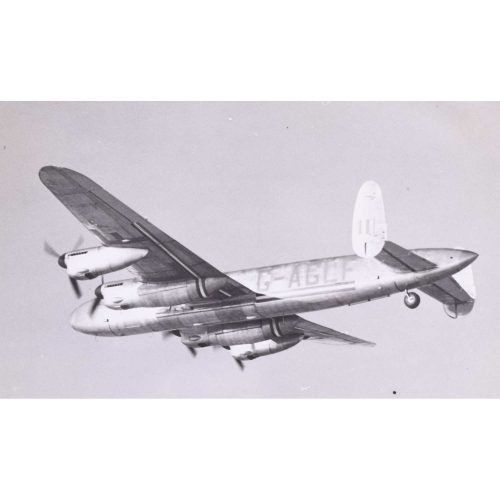
Lancastrian airliner G-AGLF
Original Silver Gelatin photograph, c. 1945 20 x 29 cm Stamped to reverse 'Daily Herald, 2 Chester Street, Oxford Road, Manchester; Copyright photo' In 1945, deliveries commenced of 30 British-built Lancastrians for BOAC. On a demonstration flight on 23 April 1945, G-AGLF flew 13,500 mi (21,700 km) from England to Auckland, New Zealand in three days, 14 hours at an average speed of 220 mph (354 km/h). G-AGLF's last flight was on Sunday 11 May 1947 when it crashed while landing at a pipeline station in the desert between Cairo and Busreh. The Lancastrian was fast, had a long range, and was capable of carrying a heavy load, but space inside was very limited as the Lancaster had been designed with space for its seven crew dispersed throughout the fuselage, and with the majority of the load being carried in the 33 ft (10.05 m) long bomb bay. Consequently, as passengers are bulky but low in weight, it was not suited to carry large numbers of passengers, but was suitable for mail and a small number of VIP passengers. BOAC used it for flights between England and Australia from 31 May 1945. It also served with the RAF; RAF Lancaster I serial number PD328, was converted to a Lancastrian and renamed Aries, as well as serving with Qantas and Flota Aérea Mercante Argentina. Lancastrians were used during the Berlin Airlift to transport petrol; 15 aircraft made over 5,000 trips. In 1946 a Lancastrian operated by BSAA was the first aircraft to make a scheduled flight from the then-newly opened London Heathrow Airport. Provenance: from the collection of Philip J R Moyes, author of many books on the RAF, most notably The Pictorial History which ran to several volumes. Condition: Marginal creases, a little foxing to reverse -
Out of stock
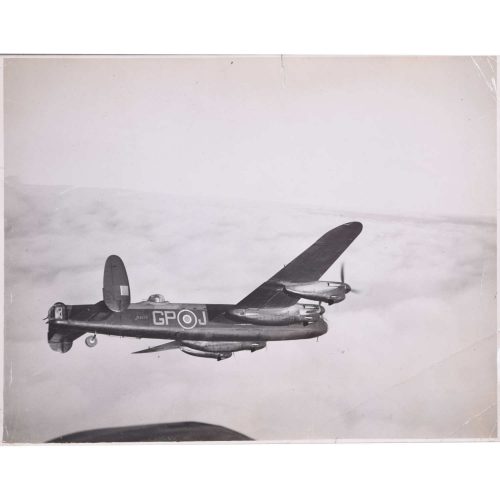
Lancaster Bomber W4113 GP-J
Original Silver Gelatin photograph, c. 1944 19 x 24 cm Published in Aeroplane Magazine, 4 February 1944. Stamped to reverse 'Wanted by 31 Janary' making this the original photograph used by the editing team at Aeroplane; and 'T[emple] P[ress] Ltd'. Photograph in official Air Ministry Second World War Collection, glass plate negative taken by F/O S A Devon. Lancaster B Mark I, W4113 ‘GP-J’, of No. 1661 Heavy Conversion Unit based at Winthorpe, Nottinghamshire, in flight. W4113 was a veteran aircraft having flown on a number of raids with Nos. 49 and 156 Squadrons RAF in 1942 and 1943, and was sent to a Heavy Conversion Unit where airmen were trained to operate the Lancaster. Became 4969M on 9/12/44, being reclassified as a ground instruction aircraft. W4113 took part in the following bombing raids: No. 49 Squadron; 1) Düsseldorf, 15-16/08/42; 2) Osnabrück, 17-18/08/42; 3) Flensburg, 18-19/08/42; 4) Gardening, Bornholm, 20-21/08/42; 5) Kassel, 27-28/08/42; 6) Saarbrücken, 01-02/09/42; 7) Duisburg, 06-07/09/42; 8.) Frankfurt, 08-09/09/42; 9) Bremen, 13-14/09/42; 10) Wilhelmshaven, 14-15/09/42; 11) Gardening, Kattegatt, 18-19/09/42; 12) Wismar, 01-02/10/42; 13) Aachen, 05-06/10/42; 14) Wismar, 12-13/10/42; 15) Kiel, 13-14/10/42; 16) Cologne, 15-16/10/42; 17) Genoa, 22-23/10/42; 18.) Genoa, 07-08/11/42; 19) Hamburg, 09/10/11/42; 20) Genoa, 15-16/11/42; 21) Stuttgart, 22-23/11/42; 22) Turin, 28-29/11/42; 23) Mannheim, 06-07/12/42, 24) 20-21/12/42. No. 156 Squadron.: a) Nuremburg, 25-26/02/43. It was produced in the third production batch of 207 aircraft ordered from A. V. Roe Co., Ltd., as part of Contract No. B69274/40 (as extended) under Works Order No. 7671, W4102-W4140, W4154-W4201, W4230-4279, W4301-W4340 and W4355-W4384. Deliveries commenced 07/42, completed 11/42 (average rate of production, approximately 13 aircraft per week). Merlin XX and XXII engines. Original Contract covered 453 aircraft in this batch but 243 were cancelled (W4385-W4900, W4414-4463, W4481-W4524, W4537-W4385, W4600-W4641 and W4655-W4700). Provenance: from the collection of Philip J R Moyes, author of many books on the RAF, most notably The Pictorial History which ran to several volumes. Condition: a couple of old edge tears and creases, visible in image. -
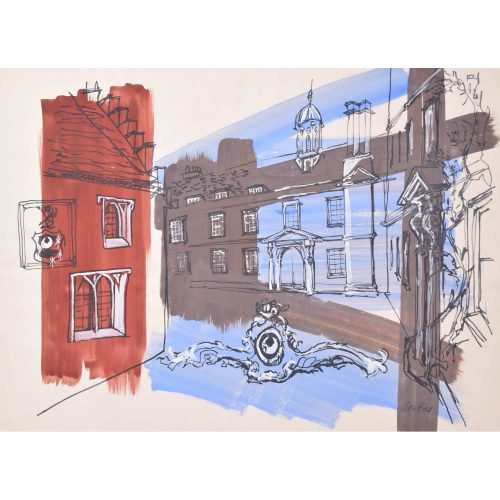
Margaret Souttar (1914 - 1987)
Trinity Hall, Cambridge I
Acrylic paint 55 x 76 cm Signed in pencil lower right. Souttar was a Scottish painter and printmaker known for her images of town- and cityscapes. In the early 1960s, she was commissioned to produce a series of prints of the Cambridge colleges. She captures the modernity and optimism of 1960s Cambridge; the fact that a female artist was commissioned to create the prints reflects the changing attitudes of the University towards women. Trinity Hall was one of the first Cambridge colleges to admit women as students - it did not do so until 1976. Provenance: the artist's studio sale. Condition: generally very good, a few handling marks. If you are interested, please email info@manningfineart.co.uk or call us on 07929 749056. Click here for other views of Trinity Hall. -
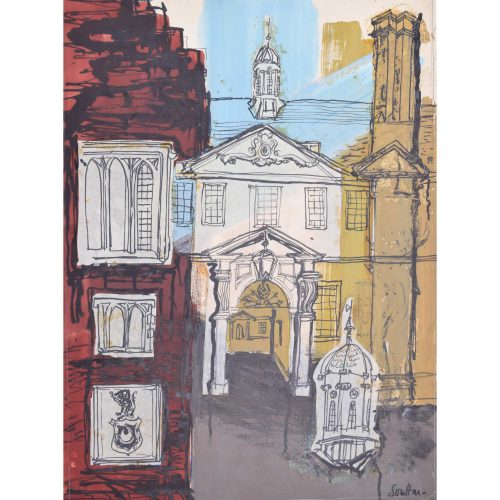
Margaret Souttar (1914-1987)
Trinity Hall, Cambridge
Acrylic on paper 76 x 56 cm Signed lower right. Souttar was a Scottish painter and printmaker known for her images of town- and cityscapes. In the early 1960s, she was commissioned to produce a series of prints of the Cambridge colleges. She captures the modernity and optimism of 1960s Cambridge; the fact that a female artist was commissioned to create the prints reflects the changing attitudes of the University towards women. Trinity Hall was one of the first Cambridge colleges to admit women as students - it did not do so until 1976. Provenance: the artist's studio sale. Condition: generally very good; some small glue stains around collaging. If you are interested, please email info@manningfineart.co.uk or call us on 07929 749056. Click here for other views of Trinity Hall. -
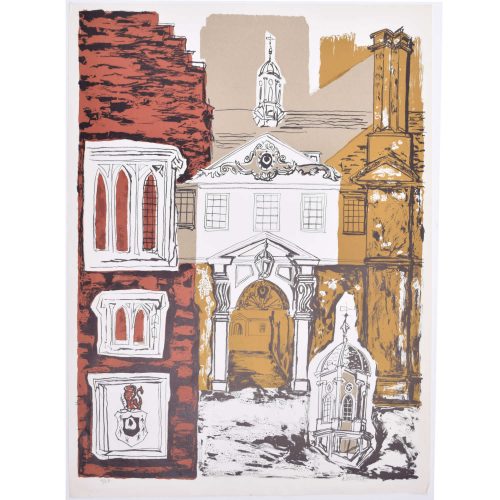
Margaret Souttar (1914 - 1987)
Trinity Hall, Cambridge
Lithograph 76 x 56 cm Signed and numbered 4/50 in pencil. Souttar was a Scottish painter and printmaker known for her images of town- and cityscapes. In the early 1960s, she was commissioned to produce a series of prints of the Cambridge colleges. She captures the modernity and optimism of 1960s Cambridge; the fact that a female artist was commissioned to create the prints reflects the changing attitudes of the University towards women. Trinity Hall was one of the first Cambridge colleges to admit women as students - it did not do so until 1976. Provenance: the artist's studio sale. Condition: generally very good; a few handling marks. If you are interested, please email info@manningfineart.co.uk or call us on 07929 749056. Click here for other views of Trinity Hall. -
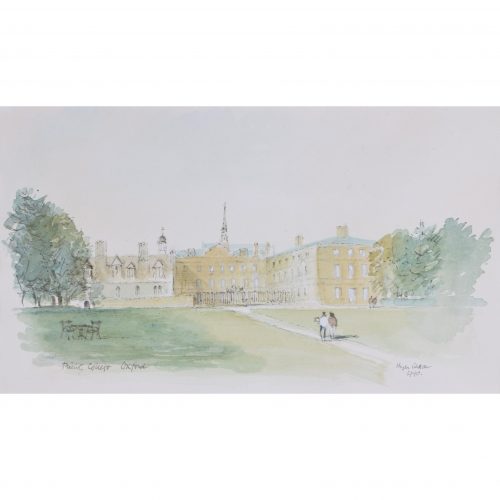
Hugh Casson (1910 - 1999)
Trinity College, Oxford (1990)
Watercolour 20 x 33 cm (38 x 50 cm framed) Casson's marvellous watercolour of Trinity and its perfectly manicured lawns, adorned with strolling undergraduates. Sir Hugh Casson was educated at Eastbourne College; St John’s College, Cambridge; and the Bartlett School of Architecture. Trained in the 1930s in the early modernist style, he taught at the Cambridge School of Architecture. After employment as a camoufleur during World War 2 by the Air Ministry, in 1948 he was appointed as director of architecture for the Festival of Britain. A close friend of the Royal Family, he undertook designs for the 1953 coronation, designed the interior of the Royal Yacht Britannia (“The overall idea was to give the impression of a country house at sea”), and taught the young Charles III to paint in watercolours. Amongst his architectural achievements are the Elephant House at London Zoo, the 1978 redevelopment of Bristol Docks, the Raised Staff Building for The University of Cambridge, and a building for the Royal College of Art. He published a number of illustrated books, of which Casson’s Oxford and Casson’s Cambridge are probably the best known. A limited edition series of prints was produced from the paintings. Condition: excellent. If you’d like to know more, please email info@manningfineart.co.uk or call us on 07929 749056. Click here for other views of Trinity College, Oxford. -
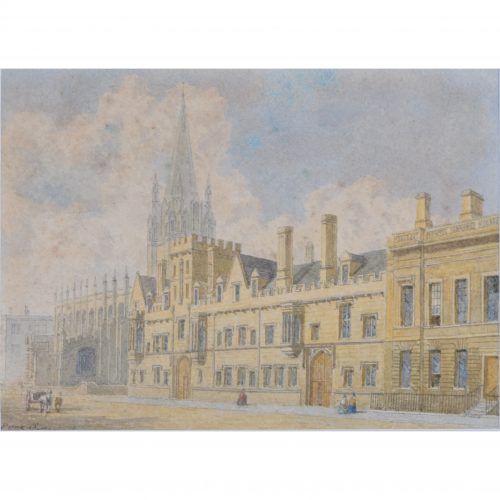
George Pyne (1800 - 1884) The High, Oxford
Watercolour 15 x 21 cm Signed and dated indiscriminately lower left. A 19th-century view of the High Street, Oxford. The spire of the University Church of St Mary the Virgin towers over the street; a horse and cart and brightly-dressed pedestrians pass by. George Pyne was related to two founders of the Society of Painters in Watercolours – William Henry Pyne was his father, and John Varley his father-in-law. Pyne trained as an architectural draughtsman and lived in Oxford from the 1850s until his death in 1884, specialising in views of the city and its colleges. His Oxford pictures are both architecturally-minded and romantically creative, often combining intensely detailed depictions of college buildings with imagined pedestrian scenes. Pyne was also noted for his views of Cambridge and Eton, and for his drawing manuals ‘A Rudimentary and Practical Treatise on Perspective for Beginners’ (1848) and ‘Practical Rules on Drawing for the Operative Builder, and Young Student in Architecture’ (1854); the latter texts offer an insight into his method of depicting architecture and its surroundings. Condition: generally good; some spotting and toning to sky. If you’d like to know more, please email info@manningfineart.co.uk or call us on 07929 749056. -
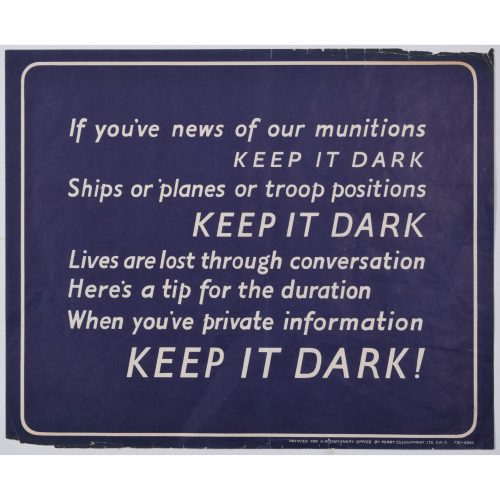
Keep It Dark (1939 - 1945)
Lithographic poster 25 x 31 cm Sponsored by Her Majesty's Stationery Office; printed by Perry Colourprint. A copy of this poster is held by the Imperial War Museum. This poster, bearing lyrics designed to be sung to the tune of "She'll be coming round the mountain", was designed for the Ministry of Information during the Second World War. It urges the population to avoid talking carelessly about details of Britain's operational movements, which might unwittingly end up in the wrong hands. Condition: good. Some small losses to extreme margins. If you’d like to know more, please email info@manningfineart.co.uk or call us on 07929 749056. -
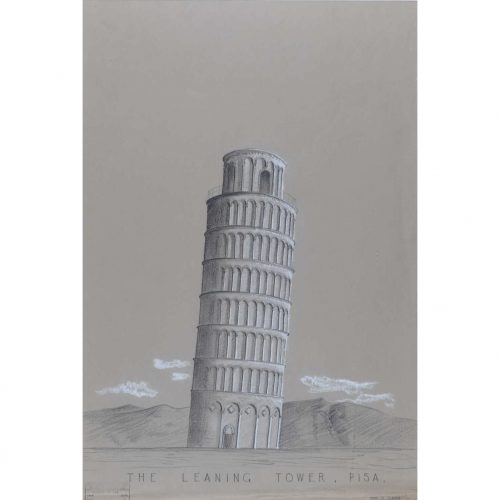
John D Paxton
The Leaning Tower, Pisa
Pencil and white chalk 75 x 50 cm Stamped bottom left indistinctly "Edinburgh School of Art, School of Architecture". An architectural drawing of Pisa's famous Leaning Tower. -
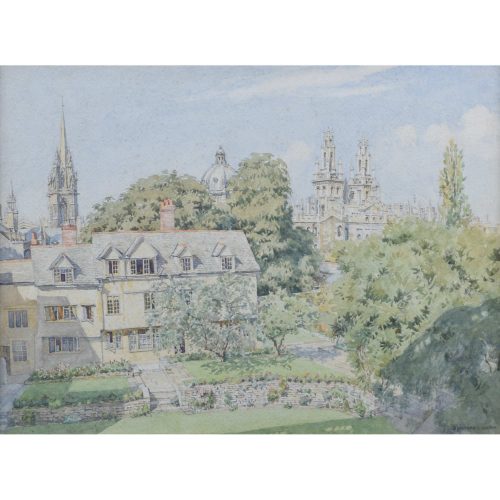
Bernard Cecil Gotch (1876-1964)
Queen's College, Oxford
Watercolour 28 x 39 cm (51 x 64 cm framed) Signed lower right. Queen's College in all its leafy glory. The dreaming spires of the University Church of St Mary the Virgin, the Radcliffe Camera, and All Souls peep over the quad. Bernard Cecil Gotch was a Winchester-born artist who is best known for his atmospheric watercolours of Britain's towns and cities (most notably Oxford). He moved to Oxford in 1927, painting many watercolours of the interiors and exteriors of Oxford’s many buildings. His works concentrate on the grand exteriors and interiors of the University's colleges, and he exhibited frequently - including an exhibition every term at Oriel College. His first notable commission was for the publisher Methuen, illustrating 'A Shepherd’s Life' by W H Hudson. Whilst in London he was invited to illustrate a book on the Public Schools of England (which was sadly never completed). He exhibited watercolours at the Fine Art Society and Lincolns Inn, and also exhibited at the Royal Academy. In 1952 Gotch was given an Honorary MA by the University of Oxford, and, after his death in 1963, a memorial was held for him at Oriel. Condition: very good; original frame & mount (some ageing to the latter). If you’d like to know more, please email info@manningfineart.co.uk or call us on 07929 749056. Click here for other views of Queen's College, Oxford. -
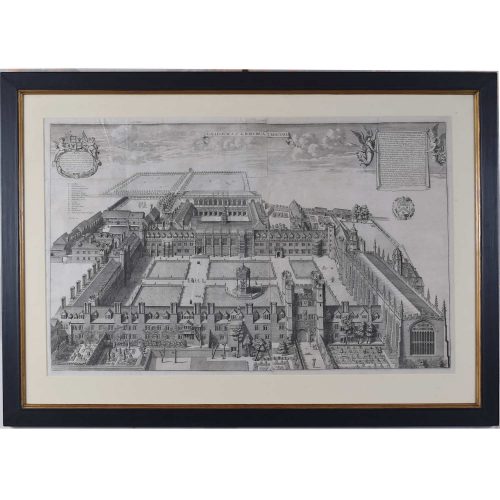
David Loggan (1634 - 1692)
Trinity College, Cambridge (1690)
Engraving 80 x 50 cm Loggan was born to English and Scottish parents, and was baptised in Danzig in 1634. After studying engraving in Danzig with Willem Hondius (1598-1652 or 1658), he moved to London in the late 1650s, going on to produce the engraved title-page for the folio 1662 Book of Common Prayer. He married in 1663 and moved to Nuffield in Oxfordshire in 1665. Loggan was appointed Public Sculptor to the nearby University of Oxford in the late 1660s, having been commissioned to produce bird’s-eye views of all the Oxford colleges. He lived in Holywell Street as he did this. The 'Oxonia Illustrata' was published in 1675, with the help of Robert White (1645 - 1704). Following its completion, Loggan began work on his equivalent work for Cambridge; the 'Cantabrigia Illustrata' was finally published in 1690, when he was made engraver to Cambridge University. The 'Oxonia Illustrata' also includes an engraving of Winchester College (Winchester and New College share William of Wykeham as their founder) whilst the 'Cantabrigia Illustrata' includes one of Eton College (which shares its founder, Henry VIII, with King’s College). Bird’s-eye views from this era required a particular talent as an architectural perspectivist; it was not until 1783 that it became possible for artists to ascend via hot air balloons and view the scenes they were depicting from above. Loggan thus had to rely on his imagination in conceiving the views. Loggan’s views constitute the first accurate depictions of the two Universities, in many ways unchanged today. Whilst the Oxford engravings were produced in reasonable numbers and ran to a second edition by Henry Overton (on thicker paper and with a plate number in Roman numerals in the bottom right-hand corner), those of Cambridge were printed in much smaller numbers. The Dutchman Pieter van der Aa published some miniature versions of the engravings for James Beverell’s guidebook to the UK, 'Les Delices de la Grande Bretagne' (circa 1708). The contemporary artist Andrew Ingamells has produced a highly-acclaimed series of etchings which bring Loggan’s original vision up to date. Condition: generally very good; printed on two sheets, folds as issued. A few creases to top area. As a multi-folded plate in the published book, Trinity has normally suffered and is normally trimmed closely and has damage; this particular example has instead good margins outside the platemark and without damage to the folds. A very good copy of Trinity. If you’d like to know more, please email info@manningfineart.co.uk or call us on 07929 749056. -
Out of stock
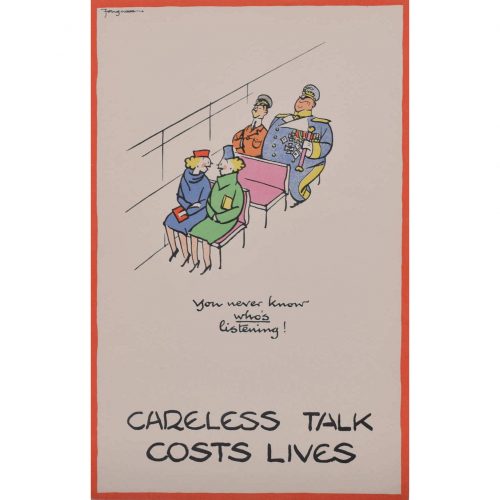
Cyril Kenneth Bird ‘Fougasse’ (1887 - 1965)
Careless Talk Costs Lives (circa 1940)
Lithographic poster 32 x 20 cm (12.5 x 8 in) Version printed on thinner paper. Fougasse was a British cartoonist. He was art editor of Punch between 1937 and 1949, and subsequently editor until 1953. He is best known for his ‘Careless Talk Costs Lives’ series of posters, and the other posters for the Ministry of Information and London Transport. As the Second World War progressed, the Ministry of Information’s poster campaign had become less and less effective. There were posters instructing the population to save old clothes for rags, turn off the lights, save food, dig for victory, watch out for spies, and keep calm and carry on. With this instruction overload, the population had ceased paying attention to the posters. Fougasse noticed this, and offered his services unpaid to the Ministry of Information, with a view to bringing a touch of humour to the posters. His amusing designs with pithy captions, reminiscent of newspaper cartoons, helped to get the Ministry's messages across in a novel way. Fougasse's distinctive poster style, with the red border, was subsequently adopted by other Ministry artists. Condition: if you’d like to know more, please email info@manningfineart.co.uk or call us on 07929 749056. -
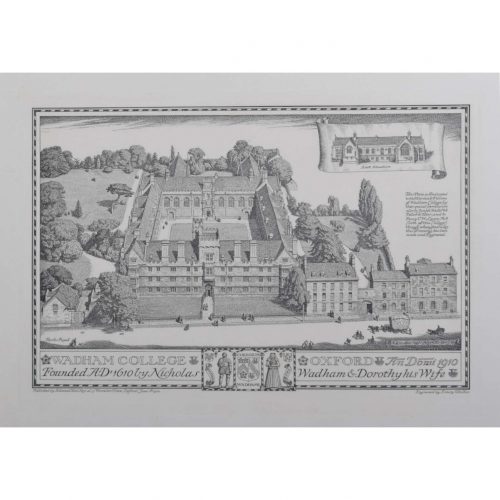
Emery Walker (1851 - 1933) after Edmund Hort New (1871 - 1931)
Wadham College, Oxford
Photogravure 27 x 41 cm New produced a series of pen-and-ink drawings of Oxford colleges, of which this is one. They paid homage to the artist David Loggan, often using the same aerial viewpoint as him, but showing the colleges two hundred years later. Emery Walker turned New's drawings into photoengravings in the early 20th century. Probably no more than two hundred prints of each engraving were produced, and the plates were destroyed in the blitz. Edmund Hort New was an English artist. He was a member of the Birmingham Group of Arts and Crafts-associated painters and craftsmen, and is known as a leading illustrator of his period. He specialised in pen and ink drawings of rural and urban landscapes, old buildings and their interiors, architectural features, and also designed bookplates. He provided illustrations for the English Illustrated Magazine and was commissioned by Bodley Head publishers to illustrate critically acclaimed editions of books, such as Walton's The Compleat Angler. In 1895, New met William Morris and began designing for the Kelmscott Press. He also taught drawing to T E Lawrence. In 1905, he began his drawings of the Oxford colleges, and spent the rest of his life working on the (sadly unfinished) project. In 1921 he exhibited at the first exhibition of the Society of Graphic Art. Sir Emery Walker FSA was an English engraver, photographer, and printer. He was very involved with the Arts and Crafts movement, a Master of the Art Workers' Guild, President of the Arts and Crafts Exhibition Society, a Trustee of the Wallace Collection, and a Fellow of the Society of Antiquaries. He was also a close friend of William Morris. Walker's expertise and his collection of 16th-century typefaces inspired Morris to create the Kelmscott Press. In 1910, Walker photographed the notable Rice portrait of Jane Austen. He was knighted in 1930. Condition: very good; modern printing. If you’d like to know more, please email info@manningfineart.co.uk or call us on 07929 749056. Click here for other views of Wadham. -
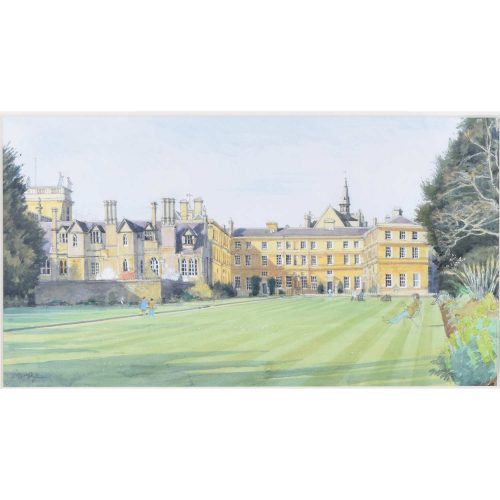
John Doyle (born 1928)
Trinity College, Oxford
Watercolour 24 x 46 cm Signed lower left. Doyle's striking portrayal of Trinity's architecture, complete with undergraduates variously strolling, sitting, and reading in the foreground. Afternoon sun slants over the immaculately mown lawns. John Doyle was born in London and works in watercolours, pastels, and oils. He studied at the Maidstone School of Art in his 30s, later showing at the Royal Academy Summer Exhibition. Much of his work focuses on landscape and architecture; he has produced a series of views of Oxford and its colleges. Condition: excellent. If you’d like to know more, please email info@manningfineart.co.uk or call us on 07929 749056. Click here for more views of Trinity College, Oxford. -
Out of stock
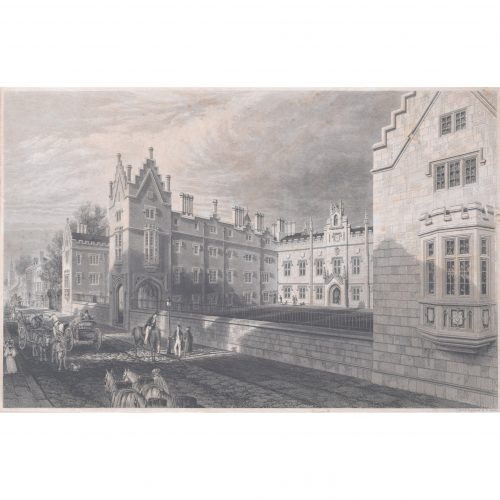
Ebenezer Challis (1806 - 1881)
Sidney Sussex College, Cambridge (1834)
Engraving 27 x 43 cm A 19th century view of Sidney Sussex, complete with Victorian undergraduates in academic dress, horse and cart, and behatted rider. Condition: good. Trimmed. Otherwise generally good with the occasional tiny spot. If you’d like to know more, please email info@manningfineart.co.uk or call us on 07929 749056. Click here for more views of Sidney Sussex. -
Out of stock
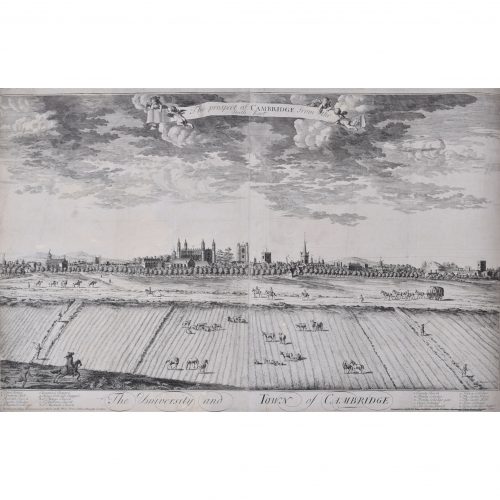
Johannes Kip (1652 - 1722) after R Whitehand
Prospect of Cambridge from the South East (1724)
Engraving 57 x 88 cm A view of the city of Cambridge, replete with college spires, by Johannes ''Jan'' Kip, the Dutch draughtsman, engraver and print dealer. The engraving illustrates an 18th century Cambridge defined by livestock and farmhands, as well as its University. The largest and best view of Cambridge, extremely rare - we have not traced any other copies at auction. Condition: good. Previously folded, occasional small losses and the odd slightly toned patch; two joined sheets. Trimmed to within platemark; very rare. If you’d like to know more, please email info@manningfineart.co.uk or call us on 07929 749056. -
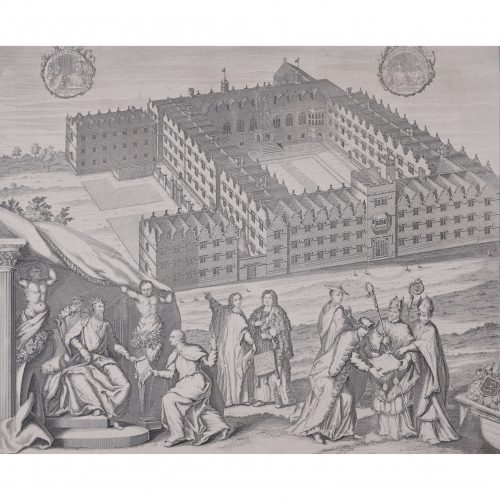
Oriel College, Oxford (1736)
Engraving 35 x 43 cm This fantasia on Oriel, featuring a sublime rendering of the College's architecture and a parade of sound Oriel men, was featured in the 1736 edition of the Oxford Almanack. The Oxford Almanack was an annual almanack published by the Oxford University Press for the University of Oxford from 1674 through 2019 (when printing sadly ceased due to "dwindling interest"). The almanack traditionally included engravings or lithographs of the University and information about the upcoming year. Other almanack artists have included Michael Burghers, J. M. W. Turner, and John Piper. Basire and Dayes collaborated on several views of Oxford during the courses of their careers. Floreat Oriel! Condition: good. Trimmed. If you’d like to know more, please email info@manningfineart.co.uk or call us on 07929 749056. Click here for more views of Oriel. -
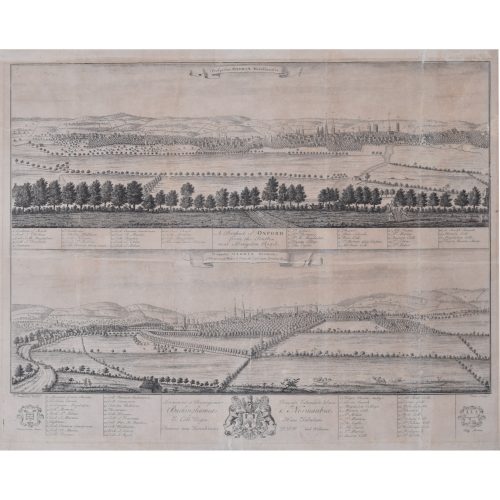
William Williams (Welsh, active 1724 - 1733)
Jesus College, Oxford (circa 1732)
Engraving 43 x 44 cm This engraving of the city of Oxford, adorned with its eponymous dreaming spires, comes from the 'Oxonia Depicta', a large folio of engraved plates illustrating Oxford's halls and colleges. Condition: previously folded; some losses to folds, some toning. If you’d like to know more, please email info@manningfineart.co.uk or call us on 07929 749056. -
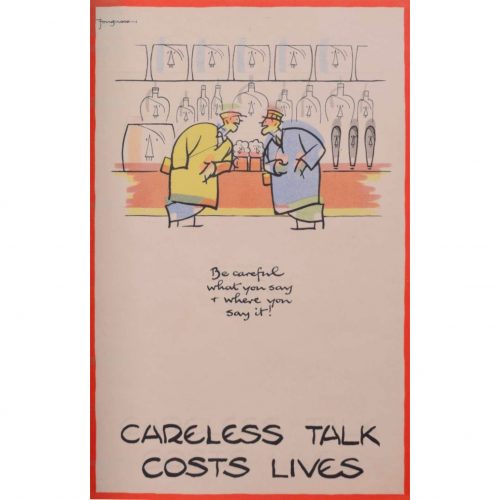
Cyril Kenneth Bird ‘Fougasse’ (1887 - 1965)
Careless Talk Costs Lives (circa 1940)
Lithographic poster 32 x 20 cm (12.5 x 8 in) Version printed on thinner paper. Fougasse was a British cartoonist. He was art editor of Punch between 1937 and 1949, and subsequently editor until 1953. He is best known for his ‘Careless Talk Costs Lives’ series of posters, and the other posters for the Ministry of Information and London Transport. As the Second World War progressed, the Ministry of Information’s poster campaign had become less and less effective. There were posters instructing the population to save old clothes for rags, turn off the lights, save food, dig for victory, watch out for spies, and keep calm and carry on. With this instruction overload, the population had ceased paying attention to the posters. Fougasse noticed this, and offered his services unpaid to the Ministry of Information, with a view to bringing a touch of humour to the posters. His amusing designs with pithy captions, reminiscent of newspaper cartoons, helped to get the Ministry's messages across in a novel way. Fougasse's distinctive poster style, with the red border, was subsequently adopted by other Ministry artists. Condition: if you’d like to know more, please email info@manningfineart.co.uk or call us on 07929 749056. -

Colin Moss (1914 - 2005)
The Cedars, Kensington
Watercolour and gouache 57 x 40 cm Signed and dated '50 lower right. Moss' view of the Cedars, complete with passers-by and a stormy, jagged sky. Colin Moss was a noted British painter, draughtsman, printmaker, and teacher who served as a camoufleur during the Second World War. Moss was born in Ipswich but grew up in Plymouth following the death of his father at the Battle of Passchendaele in 1917. Moss studied at the Plymouth Art School from 1930 to 1934 and then went on to the Royal College of Art, where he studied under Gilbert Spencer and Charles Mahoney. He worked on murals for the British Pavilion at the 1939 New York World's Fair. During the war, Moss made a series of watercolours depicting his time as a camoufleur. He had designed the camouflage scheme for Stonebridge Power Station in Wembley, and produced several watercolours of the camouflaged structure. These pictures, as well as several others painted during his WWII deployment, are now held by the Imperial War Museum, having been purchased by the War Artists' Advisory Committee. In 1947 Moss' military service ended, and he became a teacher at the Ipswich School of Art. He had solo exhibitions at the Kensington Art Gallery in 1951 and the Zwemmer Gallery in 1955, and his work began to be acquired by the national collections. He became a founder member of the New Ipswich Art Group in 1958, and the Six in Suffolk Group in 1976. In the 1970s he exhibited at the Royal Academy and the Royal Watercolour Society, and retrospective exhibitions of his work were held at various British art galleries throughout the 1980s. He continued to hold numerous solo exhibitions after his retirement, and taught artists Brian Eno and Maggi Hambling. Provenance: "Britain in Watercolours" exhibition. Condition: excellent. If you’d like to know more, please email info@manningfineart.co.uk or call us on 07929 749056. -
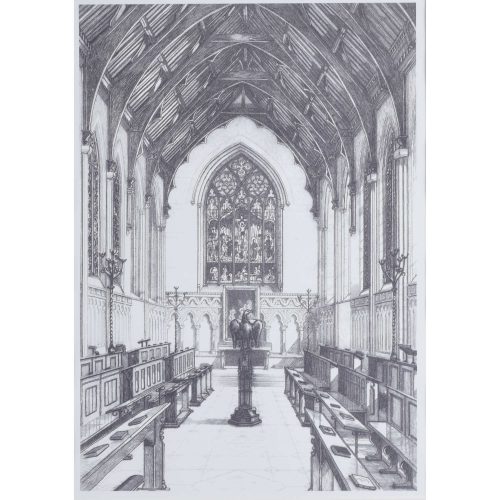
Tony Broderick (late 20th century) Chapel of Corpus Christi College, Cambridge
Print 37 x 25 cm A Lincoln-based artist known for his pictures of Lincoln and also of Cambridge's colleges. Condition: very good. If you’d like to know more, please email info@manningfineart.co.uk or call us on 07929 749056. Click here for other views of Corpus Christi. -
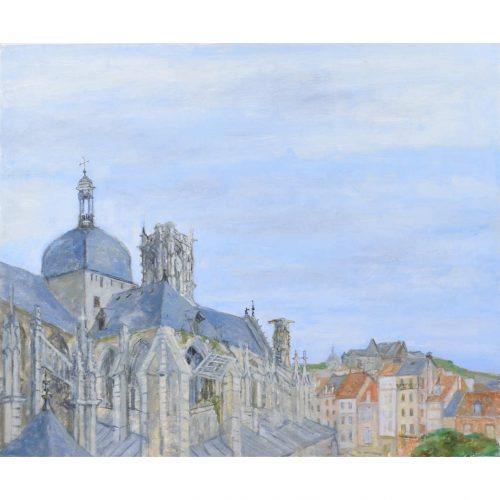
Richard Beer (1928 - 2017)
Dieppe Cathedral
Oil on canvas 66 x 76 cm A mountaintop cathedral and surrounding houses; broad blue sky fills the rest of the canvas. This oil painting is a fantastic example of Beer's focus on architecture, the central and recurring theme of his pictorial idiom. Born in London in 1928, just too late to serve in the Second World War, Richard Beer studied between 1945 - 1950 at the Slade School. Subsequently, a French Government scholarship allowed him to spend time in Paris at Atelier 17, working under Stanley William Hayter (1901 - 1988), one of the most significant print makers of the 20th Century – having spent the War in New York, advising as a camofleur, Hayter only returned to Paris in 1950. Subsequently Beer studied at the École des Beaux Arts, Paris. Working for John Cranko, choreographer for the Royal Ballet, Beer designed the sets and costumes for his The Lady and the Fool at Covent Garden, subsequently working for him following his move in 1961 to Stuttgart Ballet. Additionally he produced book illustrations and designed book jackets. Beer later taught print-making at the Chelsea School of Art, where he was a popular teacher. Probably his greatest work was a collaboration with John Betjeman to produce a portfolio of prints of ten Wren Churches in the City for Editions Alecto, copies of which are in The Government Art Collection. That collection contains a total of 54 prints by Beer, and the Tate Gallery’s collection holds seven. His Oxford series was also produced for Editions Alecto as was a series of predominantly architectural views in Southern Europe. Most of his prints are of architectural subjects. Condition: excellent. If you’d like to know more, please email info@manningfineart.co.uk or call us on 07929 749056. Click here for other views by Richard Beer. -
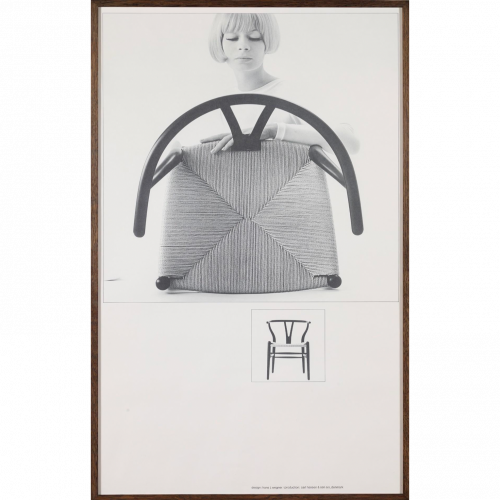
Paul Salomonsen (active 1960s) Y Chair (1964)
Lithographic poster (2014) 99 x 61 cm The poster features Hans J Wegner's famous 'Y chair', also known as the 'Wishbone chair'. Carl Hansen & Søn commissioned the poster from a photograph by Salomonsen, a 1960s photographer. The stylish and typically Danish woman examining the chair marks it as a piece of typically Danish design. The chair was known as "The Chair" when it was used in the TV-transmitted debate between John F Kennedy and Richard Nixon in 1959. The Chair subsequently became an icon of Danish mid-century furniture design. Condition: Excellent. If you’d like to know more, please email info@manningfineart.co.uk or call us on 07929 749056. -
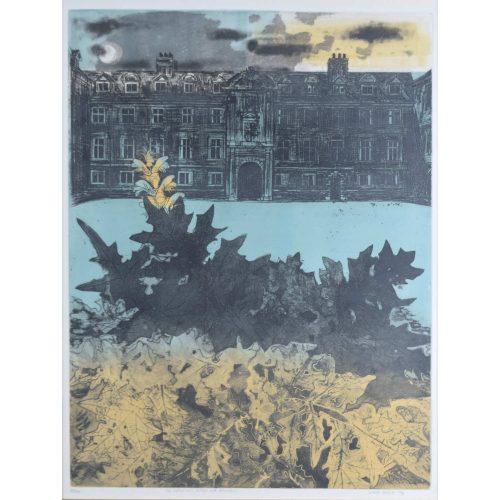
Walter Hoyle (1922-2000)
St Catharine's College, Cambridge (1973)
Linocut 72 x 56 cm Signed and dated '73 lower right, numbered 85 / 200 lower left, and signed below. Hoyle trained at Beckenham School of Art and the Royal College of Art. At the RA, he was strongly influenced by Edward Bawden, one of Britain’s greatest linocut printers. Bawden had been commissioned by the 1951 Festival of Britain to produce a mural for the South Bank, and chose Hoyle, a promising student, as his assistant. Hoyle moved to Great Bardfield in Essex and became part of the Great Bardfield group of artists: diverse in style, they created figurative work in stark contrast to the abstract art of the St Ives artists at the other end of the country. Hoyle taught at St Martin’s School of Art from 1951 - 1960, the Central School of Arts and Crafts from 1960 - 1964, and the Cambridge School of Art from 1964 - 1985, during which time he launched Cambridge Print Editions. His work is held in the collections of the Tate Gallery, the Victoria and Albert Museum, The British Museum, Kettle’s Yard, and the Fry Art Gallery. Condition: very good. If you are interested, please email info@manningfineart.co.uk or call us on 07929 749056. -
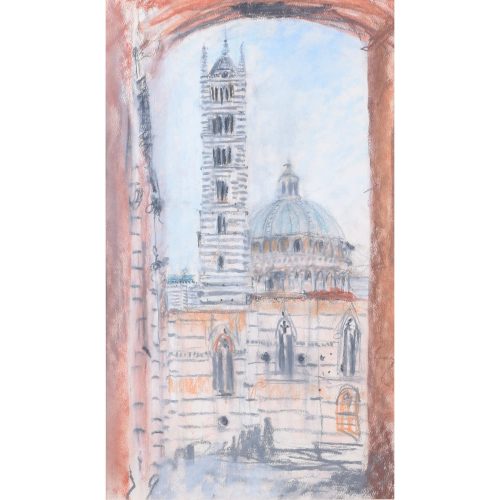
Selina Thorp (born 1968)
View Through an Archway, Sienna (1993)
Pastel 47 x 26 cm A view of the Duomo di Siena. Sienna has been defined architecturally by this cathedral since it was built in mediaeval times; Thorp's view of it through an archway emphasises its status as a seen symbol of the city, an object of cultural, religious, and aesthetic significance. Selina Thorp was born in Leeds in 1968 and studied at the Edinburgh College of Art. Much of her work focuses on architecture and landscape. Condition: very good. If you’d like to know more, please email info@manningfineart.co.uk or call us on 07929 749056. -
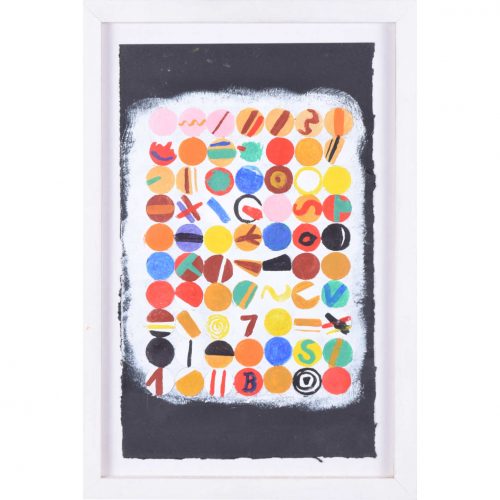
Wilhelmina Barns-Graham (1912 - 2004)
Card for Sandra Blow's 75th birthday (1995)
Gouache and collage 34 x 21 cm Inscribed to reverse "For Sandra, Happy Birthday, with love Willie, 13/9/95". Barns-Graham's modern design features 70 vividly coloured circles; each one is different from the last, but all are geometrically aligned in neat rows and columns. Sandra Blow's initials appear separately as "S" and "B" in the design. Blow and Barns-Graham became friends in the 1950s; both spent lengthy periods of time in St Ives, and made major contributions to Britain's catalogue of post-war art. Wilhelmina Barns-Graham, known as Willie, was born in St Andrews, Fife, on 8 June 1912. Her parents were second cousins, and their respective families were well established representatives of minor Scottish gentry from both the east and west of the country. As a child, Barns-Graham showed very early signs of creative ability. It was at school that Wilhelmina decided that she wanted to be an artist, stating later in life that "painting chose me, not I it". After school she set her sights on Edinburgh College of Art where, after some dispute with her father (who was an emotional man prone to uncontrolled anger), she enrolled in 1931. During her time at Edinburgh College, Barns-Graham was taught by tutors including portrait painter David Alison and painter William MacTaggart. Her friends there included the influential Scottish painters Robert MacBryde, Robert Colquhoun, and William Gear. After her education, Barns-Graham made study trips to Paris, London, and St Tropez before moving to St Ives, Cornwall, in 1940 (at the suggestion of the Edinburgh College of Art's Principal Hubert Wellington). Barns-Graham moved near to where a group of modernist artists had settled, at Carbis Bay - this was a pivotal moment in her life. On one of her first evenings there she met the sculptor Barbara Hepworth, who made an immediate and lasting impression on her. She then went on to meet Borlase Smart, Alfred Wallis, and Bernard Leach, as well as the painter Ben Nicholson and the sculptors Naum Gabo and Margaret Mellis. After two weeks in St Ives, Barns-Graham acquired her first studio, directly below the Porthmeor Gallery which was the administrative headquarters of the St Ives Society of Artists. Her paintings at the time were heavily influenced by the Cornish landscapes and the St Ives harbour. During 1940 and 1941, Barns-Graham contributed to the war effort by volunteering in a factory making camouflage nets. In 1942 Barns-Graham became a member of the Newlyn Society of Artists, in which she exhibited with every year, and the St Ives Society of Artists. Whilst establishing herself in St Ives, Barns-Graham also continued to send work back to Scotland for major exhibitions held there such as the Royal Scottish Academy's 117th Exhibition in 1943. The 1940s were an active time for the St Ives Society of Artists who received a number of invitations to send exhibitions and groups of works to galleries in the UK and abroad, Barns-Graham's work was always included in these as the Society's secretary, Borlase Smart, thought highly of her work. Barns-Graham's first opportunity to exhibit in London came when her work was included in a group exhibition of six at the Redfern Gallery. This was due to the introduction and support of Patrick Heron, who had visited Barns-Graham's studio in St Ives and was excited by her work. Barns-Graham would later have her first one-person exhibition in London at Redfern in 1952. After a few years of tension, Barns-Graham eventually left the St Ives Society of Artists in 1949, becoming one of the founding members of a new breakaway group named Penwith Society of Arts. The first Penwith Society exhibition opened in June 1949 to huge success - 2755 paying visitors came to see it. Provenance: the Jonathan Grimble Estate; the Sandra Blow Estate. Condition: very good; in original frame. If you’d like to know more, please email info@manningfineart.co.uk or call us on 07929 749056. -
Out of stock
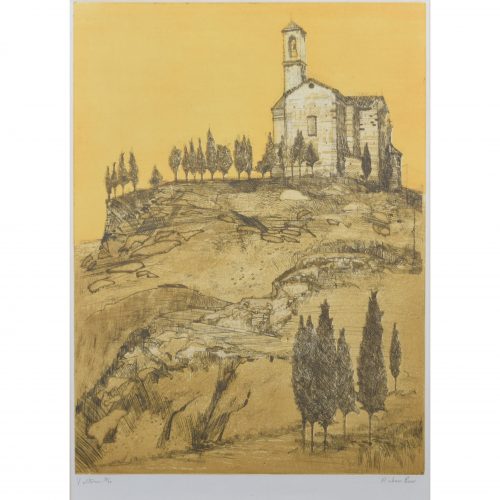
Richard Beer (1928 - 2017)
Volterra
Etching and aquatint 60 x 45 cm Titled and numbered 4/70 lower left, and signed lower right, both in pencil. Beer's yellow-hued view of Volterra, a mountain town in Tuscany. Overseen by the beating Italian sun, a church perches atop a hill marked by trees and rocky outcrops. Born in London in 1928, just too late to serve in the Second World War, Richard Beer studied between 1945 - 1950 at the Slade School. Subsequently, a French Government scholarship allowed him to spend time in Paris at Atelier 17, working under Stanley William Hayter (1901 - 1988), one of the most significant print makers of the 20th Century – having spent the War in New York, advising as a camofleur, Hayter only returned to Paris in 1950. Subsequently Beer studied at the École des Beaux Arts, Paris. Working for John Cranko, choreographer for the Royal Ballet, Beer designed the sets and costumes for his The Lady and the Fool at Covent Garden, subsequently working for him following his move in 1961 to Stuttgart Ballet. Additionally he produced book illustrations and designed book jackets. Beer later taught print-making at the Chelsea School of Art, where he was a popular teacher. Probably his greatest work was a collaboration with John Betjeman to produce a portfolio of prints of ten Wren Churches in the City for Editions Alecto, copies of which are in The Government Art Collection. That collection contains a total of 54 prints by Beer, and the Tate Gallery’s collection holds seven. His Oxford series was also produced for Editions Alecto as was a series of predominantly architectural views in Southern Europe. Most of his prints are of architectural subjects. Condition: very good. If you’d like to know more, please email info@manningfineart.co.uk or call us on 07929 749056. -
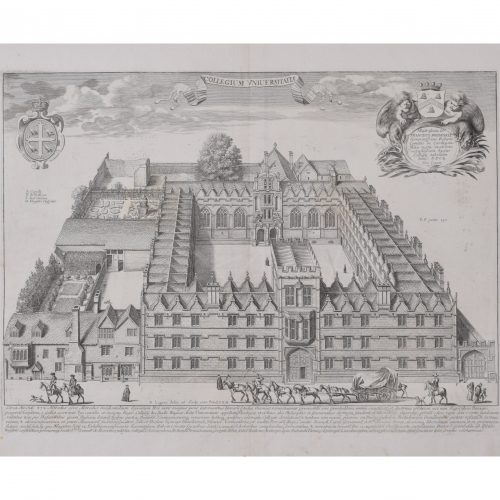
David Loggan (1634 - 1692)
University College, Oxford (1675)
Engraving 29 x 40 cm Loggan's view of Univ from the 'Oxonia Illustrata'. Loggan was born to English and Scottish parents, and was baptised in Danzig in 1634. After studying engraving in Danzig with Willem Hondius (1598-1652 or 1658), he moved to London in the late 1650s, going on to produce the engraved title-page for the folio 1662 Book of Common Prayer. He married in 1663 and moved to Nuffield in Oxfordshire in 1665. Loggan was appointed Public Sculptor to the nearby University of Oxford in the late 1660s, having been commissioned to produce bird’s-eye views of all the Oxford colleges. He lived in Holywell Street as he did this. The 'Oxonia Illustrata' was published in 1675, with the help of Robert White (1645 - 1704). Following its completion, Loggan began work on his equivalent work for Cambridge; the 'Cantabrigia Illustrata' was finally published in 1690, when he was made engraver to Cambridge University. The 'Oxonia Illustrata' also includes an engraving of Winchester College (Winchester and New College share William of Wykeham as their founder) whilst the 'Cantabrigia Illustrata' includes one of Eton College (which shares its founder, Henry VIII, with King’s College). Bird’s-eye views from this era required a particular talent as an architectural perspectivist; it was not until 1783 that it became possible for artists to ascend via hot air balloons and view the scenes they were depicting from above. Loggan thus had to rely on his imagination in conceiving the views. Loggan’s views constitute the first accurate depictions of the two Universities, in many ways unchanged today. Whilst the Oxford engravings were produced in reasonable numbers and ran to a second edition by Henry Overton (on thicker paper and with a plate number in Roman numerals in the bottom right-hand corner), those of Cambridge were printed in much smaller numbers. The Dutchman Pieter van der Aa published some miniature versions of the engravings for James Beverell’s guidebook to the UK, 'Les Delices de la Grande Bretagne' (circa 1708). The contemporary artist Andrew Ingamells has produced a highly-acclaimed series of etchings which bring Loggan’s original vision up to date. Condition: generally very good. If you’d like to know more, please email info@manningfineart.co.uk or call us on 07929 749056. -
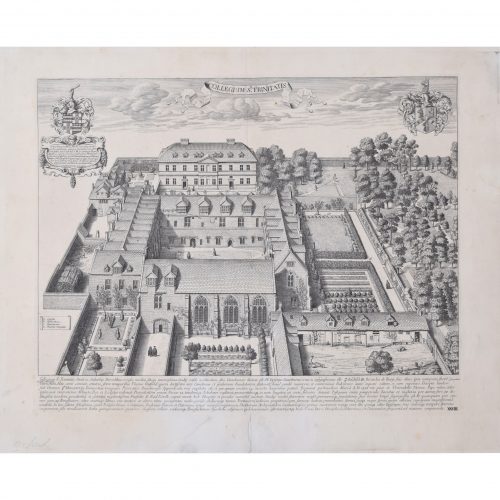
David Loggan (1634 - 1692)
Trinity College, Oxford (1705)
Engraving 32 x 41 cm Loggan's view of Trinity from the second edition of the 'Oxonia Illustrata'. Loggan was born to English and Scottish parents, and was baptised in Danzig in 1634. After studying engraving in Danzig with Willem Hondius (1598-1652 or 1658), he moved to London in the late 1650s, going on to produce the engraved title-page for the folio 1662 Book of Common Prayer. He married in 1663 and moved to Nuffield in Oxfordshire in 1665. Loggan was appointed Public Sculptor to the nearby University of Oxford in the late 1660s, having been commissioned to produce bird’s-eye views of all the Oxford colleges. He lived in Holywell Street as he did this. The 'Oxonia Illustrata' was published in 1675, with the help of Robert White (1645 - 1704). Following its completion, Loggan began work on his equivalent work for Cambridge; the 'Cantabrigia Illustrata' was finally published in 1690, when he was made engraver to Cambridge University. The 'Oxonia Illustrata' also includes an engraving of Winchester College (Winchester and New College share William of Wykeham as their founder) whilst the 'Cantabrigia Illustrata' includes one of Eton College (which shares its founder, Henry VIII, with King’s College). Bird’s-eye views from this era required a particular talent as an architectural perspectivist; it was not until 1783 that it became possible for artists to ascend via hot air balloons and view the scenes they were depicting from above. Loggan thus had to rely on his imagination in conceiving the views. Loggan’s views constitute the first accurate depictions of the two Universities, in many ways unchanged today. Whilst the Oxford engravings were produced in reasonable numbers and ran to a second edition by Henry Overton (on thicker paper and with a plate number in Roman numerals in the bottom right-hand corner), those of Cambridge were printed in much smaller numbers. The Dutchman Pieter van der Aa published some miniature versions of the engravings for James Beverell’s guidebook to the UK, 'Les Delices de la Grande Bretagne' (circa 1708). The contemporary artist Andrew Ingamells has produced a highly-acclaimed series of etchings which bring Loggan’s original vision up to date. Condition: generally very good; second edition. If you’d like to know more, please email info@manningfineart.co.uk or call us on 07929 749056. -
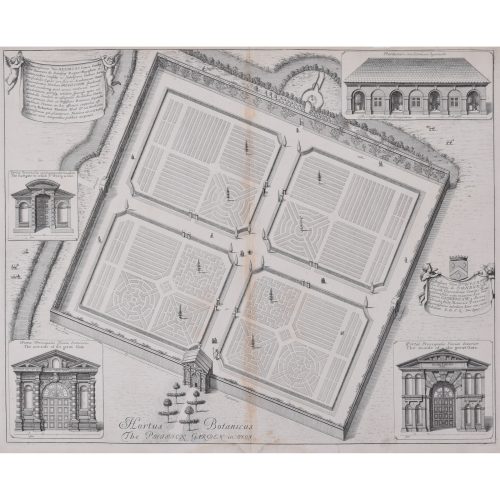
David Loggan (1634 - 1692)
The University of Oxford Botanic Garden (1675)
Engraving 40 x 50 cm An eighteenth-century view of one of Oxford's dreamiest spaces: the Botanic Garden, engraved by David Loggan, the noted engraver, draughtsman, and painter. The University of Oxford Botanic Garden was founded in 1621 and is the oldest botanical garden in Great Britain. Loggan's engraving focuses on its architectural qualities, with four features of the garden highlighted for their beauty, symmetry, and prowess of design. Of particular interest in this etching are the six trompe l'oeil pieces: four gently curling pieces of paper which frame the gates of the garden, and two heraldic banners borne by cherubs and sporting legends about the garden's foundation. The Danby Gate (bottom left) at the front entrance to the garden is one of the three entrances designed by Nicholas Stone between 1632 and 1633. The gateway consists of three bays, each with a pediment; the niches contain statues of Charles I and Charles II in classical pose, and the niche in the the central pediment contains a bust of the Earl of Danby (hence the gate's name). Loggan was born to English and Scottish parents, and was baptised in Danzig in 1634. After studying engraving in Danzig with Willem Hondius (1598-1652 or 1658), he moved to London in the late 1650s, going on to produce the engraved title-page for the folio 1662 Book of Common Prayer. He married in 1663 and moved to Nuffield in Oxfordshire in 1665. Loggan was appointed Public Sculptor to the nearby University of Oxford in the late 1660s, having been commissioned to produce bird’s-eye views of all the Oxford colleges. He lived in Holywell Street as he did this. The 'Oxonia Illustrata' was published in 1675, with the help of Robert White (1645 - 1704). Following its completion, Loggan began work on his equivalent work for Cambridge; the 'Cantabrigia Illustrata' was finally published in 1690, when he was made engraver to Cambridge University. The 'Oxonia Illustrata' also includes an engraving of Winchester College (Winchester and New College share William of Wykeham as their founder) whilst the 'Cantabrigia Illustrata' includes one of Eton College (which shares its founder, Henry VIII, with King’s College). Bird’s-eye views from this era required a particular talent as an architectural perspectivist; it was not until 1783 that it became possible for artists to ascend via hot air balloons and view the scenes they were depicting from above. Loggan thus had to rely on his imagination in conceiving the views. Loggan’s views constitute the first accurate depictions of the two Universities, in many ways unchanged today. Whilst the Oxford engravings were produced in reasonable numbers and ran to a second edition by Henry Overton (on thicker paper and with a plate number in Roman numerals in the bottom right-hand corner), those of Cambridge were printed in much smaller numbers. The Dutchman Pieter van der Aa published some miniature versions of the engravings for James Beverell’s guidebook to the UK, 'Les Delices de la Grande Bretagne' (circa 1708). The contemporary artist Andrew Ingamells has produced a highly-acclaimed series of etchings which bring Loggan’s original vision up to date. Condition: slight toning to central margin, odd marginal losses. If you’d like to know more, please email info@manningfineart.co.uk or call us on 07929 749056. -
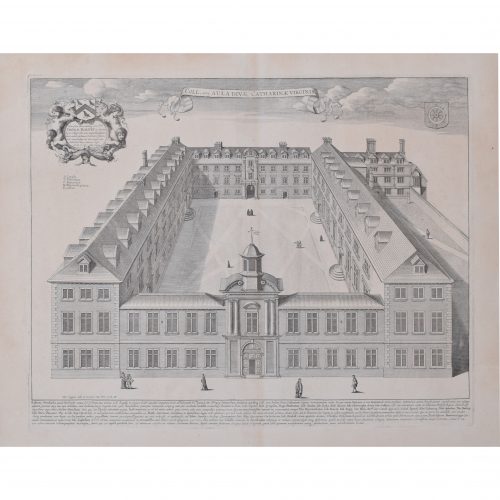
David Loggan (1634 - 1692)
St Catharine's College, Cambridge (1690)
Engraving 35 x 46 cm Loggan was born to English and Scottish parents, and was baptised in Danzig in 1634. After studying engraving in Danzig with Willem Hondius (1598-1652 or 1658), he moved to London in the late 1650s, going on to produce the engraved title-page for the folio 1662 Book of Common Prayer. He married in 1663 and moved to Nuffield in Oxfordshire in 1665. Loggan was appointed Public Sculptor to the nearby University of Oxford in the late 1660s, having been commissioned to produce bird’s-eye views of all the Oxford colleges. He lived in Holywell Street as he did this. The 'Oxonia Illustrata' was published in 1675, with the help of Robert White (1645 - 1704). Following its completion, Loggan began work on his equivalent work for Cambridge; the 'Cantabrigia Illustrata' was finally published in 1690, when he was made engraver to Cambridge University. The 'Oxonia Illustrata' also includes an engraving of Winchester College (Winchester and New College share William of Wykeham as their founder) whilst the 'Cantabrigia Illustrata' includes one of Eton College (which shares its founder, Henry VIII, with King’s College). Bird’s-eye views from this era required a particular talent as an architectural perspectivist; it was not until 1783 that it became possible for artists to ascend via hot air balloons and view the scenes they were depicting from above. Loggan thus had to rely on his imagination in conceiving the views. Loggan’s views constitute the first accurate depictions of the two Universities, in many ways unchanged today. Whilst the Oxford engravings were produced in reasonable numbers and ran to a second edition by Henry Overton (on thicker paper and with a plate number in Roman numerals in the bottom right-hand corner), those of Cambridge were printed in much smaller numbers. The Dutchman Pieter van der Aa published some miniature versions of the engravings for James Beverell’s guidebook to the UK, 'Les Delices de la Grande Bretagne' (circa 1708). The contemporary artist Andrew Ingamells has produced a highly-acclaimed series of etchings which bring Loggan’s original vision up to date. Condition: has previously been washed, otherwise generally very good. If you’d like to know more, please email info@manningfineart.co.uk or call us on 07929 749056. -
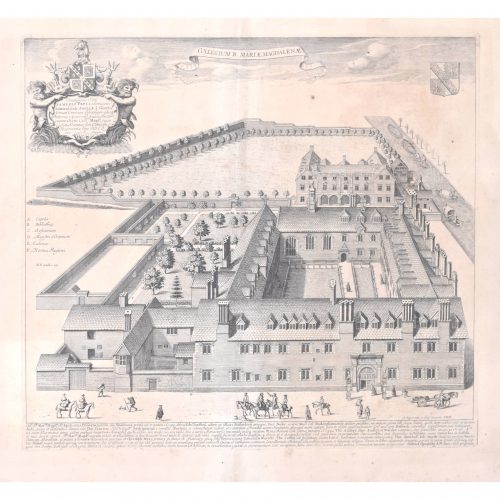
David Loggan (1634 - 1692)
Magdalene College, Cambridge (1690)
Engraving 38 x 43 cm Loggan was born to English and Scottish parents, and was baptised in Danzig in 1634. After studying engraving in Danzig with Willem Hondius (1598-1652 or 1658), he moved to London in the late 1650s, going on to produce the engraved title-page for the folio 1662 Book of Common Prayer. He married in 1663 and moved to Nuffield in Oxfordshire in 1665. Loggan was appointed Public Sculptor to the nearby University of Oxford in the late 1660s, having been commissioned to produce bird’s-eye views of all the Oxford colleges. He lived in Holywell Street as he did this. The 'Oxonia Illustrata' was published in 1675, with the help of Robert White (1645 - 1704). Following its completion, Loggan began work on his equivalent work for Cambridge; the 'Cantabrigia Illustrata' was finally published in 1690, when he was made engraver to Cambridge University. The 'Oxonia Illustrata' also includes an engraving of Winchester College (Winchester and New College share William of Wykeham as their founder) whilst the 'Cantabrigia Illustrata' includes one of Eton College (which shares its founder, Henry VIII, with King’s College). Bird’s-eye views from this era required a particular talent as an architectural perspectivist; it was not until 1783 that it became possible for artists to ascend via hot air balloons and view the scenes they were depicting from above. Loggan thus had to rely on his imagination in conceiving the views. Loggan’s views constitute the first accurate depictions of the two Universities, in many ways unchanged today. Whilst the Oxford engravings were produced in reasonable numbers and ran to a second edition by Henry Overton (on thicker paper and with a plate number in Roman numerals in the bottom right-hand corner), those of Cambridge were printed in much smaller numbers. The Dutchman Pieter van der Aa published some miniature versions of the engravings for James Beverell’s guidebook to the UK, 'Les Delices de la Grande Bretagne' (circa 1708). The contemporary artist Andrew Ingamells has produced a highly-acclaimed series of etchings which bring Loggan’s original vision up to date. Condition: enerally even all-over toning; old repair to lower central fold with small loss. If you’d like to know more, please email info@manningfineart.co.uk or call us on 07929 749056. -
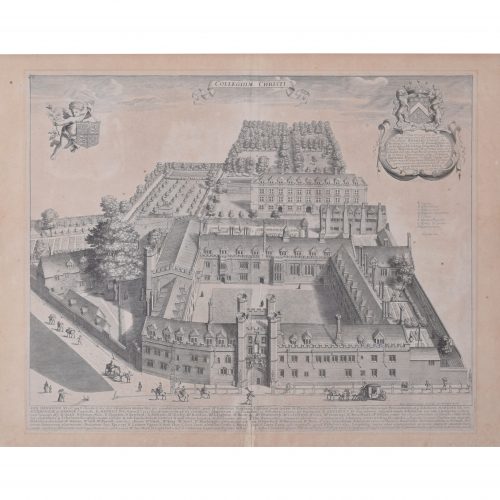
David Loggan (1634 - 1692)
Christ's College, Cambridge (1690)
Engraving 39 x 48 cm Loggan was born to English and Scottish parents, and was baptised in Danzig in 1634. After studying engraving in Danzig with Willem Hondius (1598-1652 or 1658), he moved to London in the late 1650s, going on to produce the engraved title-page for the folio 1662 Book of Common Prayer. He married in 1663 and moved to Nuffield in Oxfordshire in 1665. Loggan was appointed Public Sculptor to the nearby University of Oxford in the late 1660s, having been commissioned to produce bird’s-eye views of all the Oxford colleges. He lived in Holywell Street as he did this. The 'Oxonia Illustrata' was published in 1675, with the help of Robert White (1645 - 1704). Following its completion, Loggan began work on his equivalent work for Cambridge; the 'Cantabrigia Illustrata' was finally published in 1690, when he was made engraver to Cambridge University. The 'Oxonia Illustrata' also includes an engraving of Winchester College (Winchester and New College share William of Wykeham as their founder) whilst the 'Cantabrigia Illustrata' includes one of Eton College (which shares its founder, Henry VIII, with King’s College). Bird’s-eye views from this era required a particular talent as an architectural perspectivist; it was not until 1783 that it became possible for artists to ascend via hot air balloons and view the scenes they were depicting from above. Loggan thus had to rely on his imagination in conceiving the views. Loggan’s views constitute the first accurate depictions of the two Universities, in many ways unchanged today. Whilst the Oxford engravings were produced in reasonable numbers and ran to a second edition by Henry Overton (on thicker paper and with a plate number in Roman numerals in the bottom right-hand corner), those of Cambridge were printed in much smaller numbers. The Dutchman Pieter van der Aa published some miniature versions of the engravings for James Beverell’s guidebook to the UK, 'Les Delices de la Grande Bretagne' (circa 1708). The contemporary artist Andrew Ingamells has produced a highly-acclaimed series of etchings which bring Loggan’s original vision up to date. Condition: generally even all-over toning; old repair to lower central fold with small loss. If you’d like to know more, please email info@manningfineart.co.uk or call us on 07929 749056. -
Out of stock
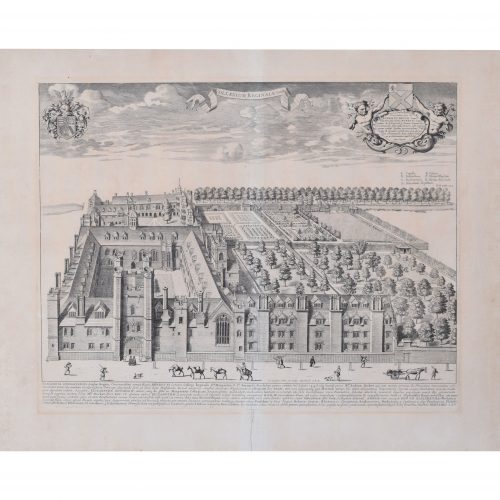
David Loggan (1634 - 1692)
Queen's College, Cambridge (1690)
Engraving 36 x 46 cm Loggan was born to English and Scottish parents, and was baptised in Danzig in 1634. After studying engraving in Danzig with Willem Hondius (1598-1652 or 1658), he moved to London in the late 1650s, going on to produce the engraved title-page for the folio 1662 Book of Common Prayer. He married in 1663 and moved to Nuffield in Oxfordshire in 1665. Loggan was appointed Public Sculptor to the nearby University of Oxford in the late 1660s, having been commissioned to produce bird’s-eye views of all the Oxford colleges. He lived in Holywell Street as he did this. The 'Oxonia Illustrata' was published in 1675, with the help of Robert White (1645 - 1704). Following its completion, Loggan began work on his equivalent work for Cambridge; the 'Cantabrigia Illustrata' was finally published in 1690, when he was made engraver to Cambridge University. The 'Oxonia Illustrata' also includes an engraving of Winchester College (Winchester and New College share William of Wykeham as their founder) whilst the 'Cantabrigia Illustrata' includes one of Eton College (which shares its founder, Henry VIII, with King’s College). Bird’s-eye views from this era required a particular talent as an architectural perspectivist; it was not until 1783 that it became possible for artists to ascend via hot air balloons and view the scenes they were depicting from above. Loggan thus had to rely on his imagination in conceiving the views. Loggan’s views constitute the first accurate depictions of the two Universities, in many ways unchanged today. Whilst the Oxford engravings were produced in reasonable numbers and ran to a second edition by Henry Overton (on thicker paper and with a plate number in Roman numerals in the bottom right-hand corner), those of Cambridge were printed in much smaller numbers. The Dutchman Pieter van der Aa published some miniature versions of the engravings for James Beverell’s guidebook to the UK, 'Les Delices de la Grande Bretagne' (circa 1708). The contemporary artist Andrew Ingamells has produced a highly-acclaimed series of etchings which bring Loggan’s original vision up to date. Condition: generally good; mostly even over-all toning, fraction lighter down central fold; has previously been washed. If you’d like to know more, please email info@manningfineart.co.uk or call us on 07929 749056. -
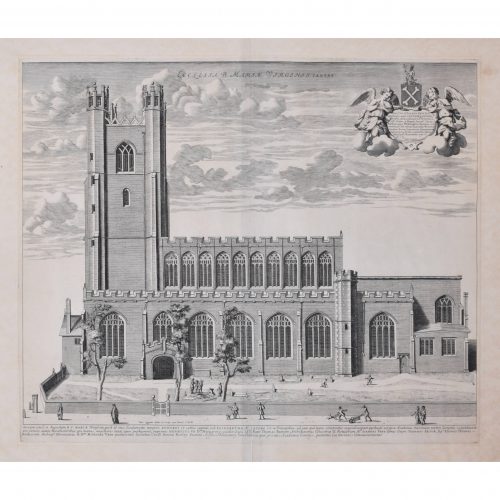
David Loggan (1634 - 1692)
The Church of St Mary the Virgin, Cambridge (1690)
Engraving 38 x 47 cm Loggan was born to English and Scottish parents, and was baptised in Danzig in 1634. After studying engraving in Danzig with Willem Hondius (1598-1652 or 1658), he moved to London in the late 1650s, going on to produce the engraved title-page for the folio 1662 Book of Common Prayer. He married in 1663 and moved to Nuffield in Oxfordshire in 1665. Loggan was appointed Public Sculptor to the nearby University of Oxford in the late 1660s, having been commissioned to produce bird’s-eye views of all the Oxford colleges. He lived in Holywell Street as he did this. The 'Oxonia Illustrata' was published in 1675, with the help of Robert White (1645 - 1704). Following its completion, Loggan began work on his equivalent work for Cambridge; the 'Cantabrigia Illustrata' was finally published in 1690, when he was made engraver to Cambridge University. The 'Oxonia Illustrata' also includes an engraving of Winchester College (Winchester and New College share William of Wykeham as their founder) whilst the 'Cantabrigia Illustrata' includes one of Eton College (which shares its founder, Henry VIII, with King’s College). Bird’s-eye views from this era required a particular talent as an architectural perspectivist; it was not until 1783 that it became possible for artists to ascend via hot air balloons and view the scenes they were depicting from above. Loggan thus had to rely on his imagination in conceiving the views. Loggan’s views constitute the first accurate depictions of the two Universities, in many ways unchanged today. Whilst the Oxford engravings were produced in reasonable numbers and ran to a second edition by Henry Overton (on thicker paper and with a plate number in Roman numerals in the bottom right-hand corner), those of Cambridge were printed in much smaller numbers. The Dutchman Pieter van der Aa published some miniature versions of the engravings for James Beverell’s guidebook to the UK, 'Les Delices de la Grande Bretagne' (circa 1708). The contemporary artist Andrew Ingamells has produced a highly-acclaimed series of etchings which bring Loggan’s original vision up to date. Condition: has been previously washed; generally good. If you’d like to know more, please email info@manningfineart.co.uk or call us on 07929 749056. -
Out of stock
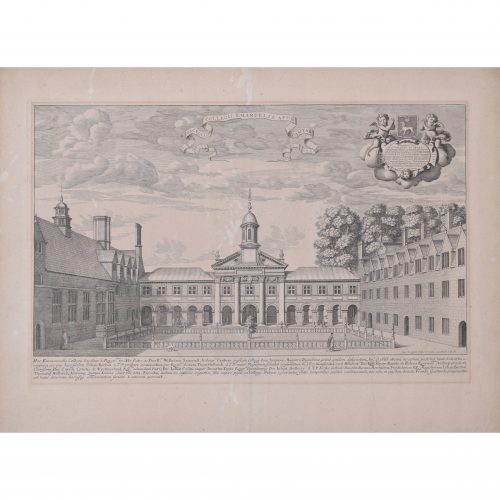
David Loggan (1634 - 1692)
Emmanuel College, Cambridge (1690)
Engraving 31 x 47 cm Loggan was born to English and Scottish parents, and was baptised in Danzig in 1634. After studying engraving in Danzig with Willem Hondius (1598-1652 or 1658), he moved to London in the late 1650s, going on to produce the engraved title-page for the folio 1662 Book of Common Prayer. He married in 1663 and moved to Nuffield in Oxfordshire in 1665. Loggan was appointed Public Sculptor to the nearby University of Oxford in the late 1660s, having been commissioned to produce bird’s-eye views of all the Oxford colleges. He lived in Holywell Street as he did this. The 'Oxonia Illustrata' was published in 1675, with the help of Robert White (1645 - 1704). Following its completion, Loggan began work on his equivalent work for Cambridge; the 'Cantabrigia Illustrata' was finally published in 1690, when he was made engraver to Cambridge University. The 'Oxonia Illustrata' also includes an engraving of Winchester College (Winchester and New College share William of Wykeham as their founder) whilst the 'Cantabrigia Illustrata' includes one of Eton College (which shares its founder, Henry VIII, with King’s College). Bird’s-eye views from this era required a particular talent as an architectural perspectivist; it was not until 1783 that it became possible for artists to ascend via hot air balloons and view the scenes they were depicting from above. Loggan thus had to rely on his imagination in conceiving the views. Loggan’s views constitute the first accurate depictions of the two Universities, in many ways unchanged today. Whilst the Oxford engravings were produced in reasonable numbers and ran to a second edition by Henry Overton (on thicker paper and with a plate number in Roman numerals in the bottom right-hand corner), those of Cambridge were printed in much smaller numbers. The Dutchman Pieter van der Aa published some miniature versions of the engravings for James Beverell’s guidebook to the UK, 'Les Delices de la Grande Bretagne' (circa 1708). The contemporary artist Andrew Ingamells has produced a highly-acclaimed series of etchings which bring Loggan’s original vision up to date. Condition: generally very good; mostly even all-over toning. If you’d like to know more, please email info@manningfineart.co.uk or call us on 07929 749056. -
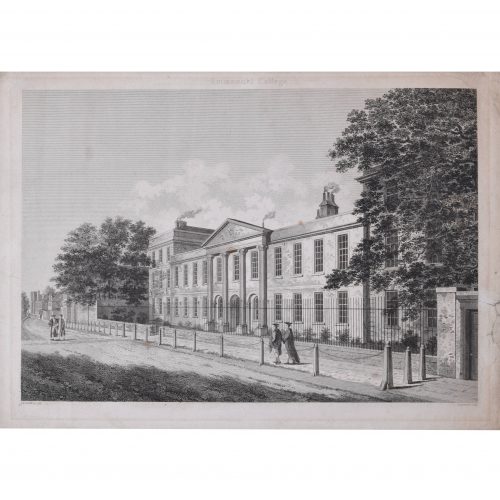
Samuel Sparrow (active 1800) after John Kirby Baldrey (1750 - 1823)
Emmanuel College, Cambridge
Engraving 35 x 49 cm An engraving of Emmanuel College's neoclassical facade, complete with strolling undergraduates in pairs. The engraving was printed in the Cambridge Almanack in 1806. Samuel Sparrow was a British engraver of landscapes and architectural scenes after his fellow artists, often published as bookplates. John Kirkby Baldrey was a draughtsman and engraver who provided designs for the Cambridge University Almanack between 1803 and 1810. Condition: generally very good; some age toning. If you’d like to know more, please email info@manningfineart.co.uk or call us on 07929 749056. -
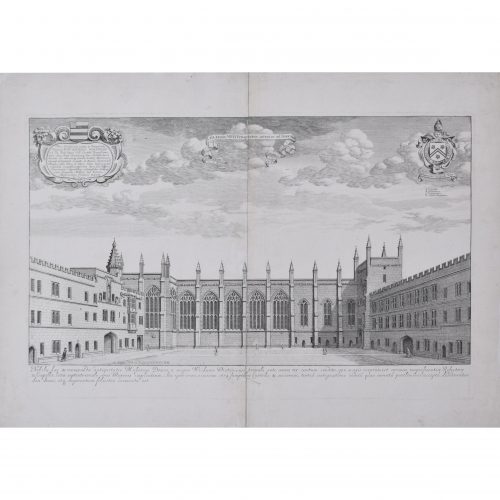
David Loggan (1634 - 1692)
New College, Oxford (1705)
Engraving 31 x 49 cm Loggan was born to English and Scottish parents, and was baptised in Danzig in 1634. After studying engraving in Danzig with Willem Hondius (1598-1652 or 1658), he moved to London in the late 1650s, going on to produce the engraved title-page for the folio 1662 Book of Common Prayer. He married in 1663 and moved to Nuffield in Oxfordshire in 1665. Loggan was appointed Public Sculptor to the nearby University of Oxford in the late 1660s, having been commissioned to produce bird’s-eye views of all the Oxford colleges. He lived in Holywell Street as he did this. The 'Oxonia Illustrata' was published in 1675, with the help of Robert White (1645 - 1704). Following its completion, Loggan began work on his equivalent work for Cambridge; the 'Cantabrigia Illustrata' was finally published in 1690, when he was made engraver to Cambridge University. The 'Oxonia Illustrata' also includes an engraving of Winchester College (Winchester and New College share William of Wykeham as their founder) whilst the 'Cantabrigia Illustrata' includes one of Eton College (which shares its founder, Henry VIII, with King’s College). Bird’s-eye views from this era required a particular talent as an architectural perspectivist; it was not until 1783 that it became possible for artists to ascend via hot air balloons and view the scenes they were depicting from above. Loggan thus had to rely on his imagination in conceiving the views. Loggan’s views constitute the first accurate depictions of the two Universities, in many ways unchanged today. Whilst the Oxford engravings were produced in reasonable numbers and ran to a second edition by Henry Overton (on thicker paper and with a plate number in Roman numerals in the bottom right-hand corner), those of Cambridge were printed in much smaller numbers. The Dutchman Pieter van der Aa published some miniature versions of the engravings for James Beverell’s guidebook to the UK, 'Les Delices de la Grande Bretagne' (circa 1708). The contemporary artist Andrew Ingamells has produced a highly-acclaimed series of etchings which bring Loggan’s original vision up to date. Condition: repaired tear to central fold; has been washed. If you’d like to know more, please email info@manningfineart.co.uk or call us on 07929 749056. -
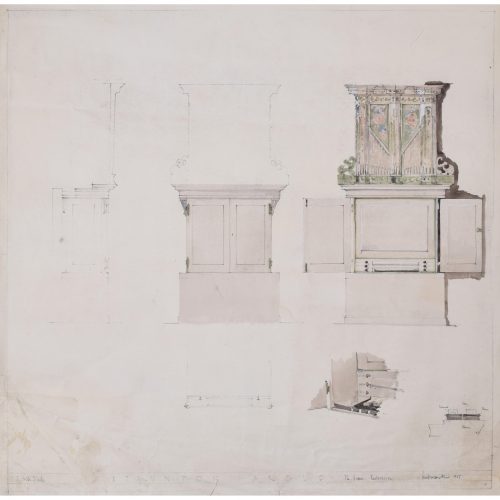
Louis Osman FRIBA (1914 - 1996)
Staunton Harold: Restoration of the Organ (1953)
Pen, ink, and watercolour 63 x 63 cm Titled below, signed lower right, and labelled in Osman's hand. Osman's architectural design for the restoration of the organ at Staunton Harold Church, part of the Staunton Harold estate. The church, known as the Chapel of the Holy Trinity, is a 1653-built Gothic chapel. It was commissioned by Sir Robert Shirley (the Shirley family were Anglicans and Royalists, and the ornate design of the church is likely why Sir Robert was imprisoned under Oliver Cromwell). Osman was as much an artist as an architect. This is likely a portfolio piece from his time studying at the Bartlett School of Architecture, and is as such a piece of architectural history as well as a beautiful Osman design. Osman was awarded a First Class degree and the Donaldson Medal of the RIBA (for the best result in his year group) by the Bartlett, and then went on to the Slade School of Art. He subsequently trained with Sir Albert Richardson - we also have several Richardson works in our collection. After the war, Osman busied himself as an architect. His work included contributions to Westminster Abbey, and Lincoln, Exeter, Ely, and Lichfield Cathedrals, Staunton Harold Church in Ashby de la Zouch for the National Trust, and of course his folly: the Grade I listed Elizabethan manor house, Canons Ashby in Northamptonshire, now a National Trust property. At Canons Ashby he established a workshop and had a team of silversmiths and goldsmiths working for him. In 1976 he made the gold enamelled coffin that holds the copy of the Magna Carta on view in the United States Capitol, Washington, DC. Condition: some age toning, and signs of having been a working drawing. If you’d like to know more, please email info@manningfineart.co.uk or call us on 07929 749056. -
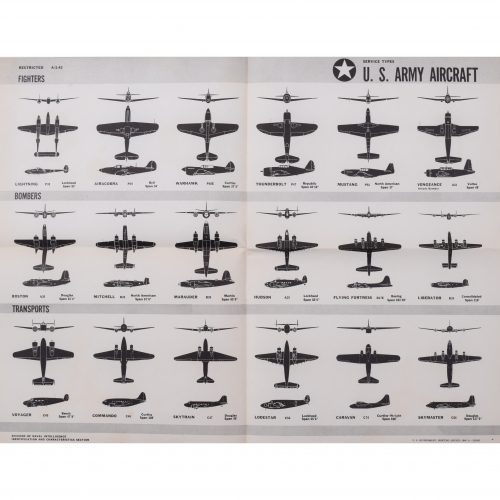
1943 Army World War II USA (1942)
Original aeroplane recognition poster 44 x 59 cm A summary of US aeroplanes from the series of US Navy identification posters that we have in stock. Fighters: P38 Lightning; P39 Airacobra; Curtiss P40E Warhawk; P47 Thunderbolt; P51 Mustang; A31 Vengeance. Bombers: A20 Boston; B25 Mitchell; B26 Marauder; Lockheed Hudson; Boeing B17E Flying Fortress; B24 Consolidated Liberator. Transports: C45 Voyager; C46 Commando; C47 Douglas Skytrain; Lockheed Lodestar; C76 Caravan; C54 Douglas Skymaster. Condition: generally very good, occasional handling marks. Folds as issued. If you’d like to know more, please email info@manningfineart.co.uk or call us on 07929 749056. -
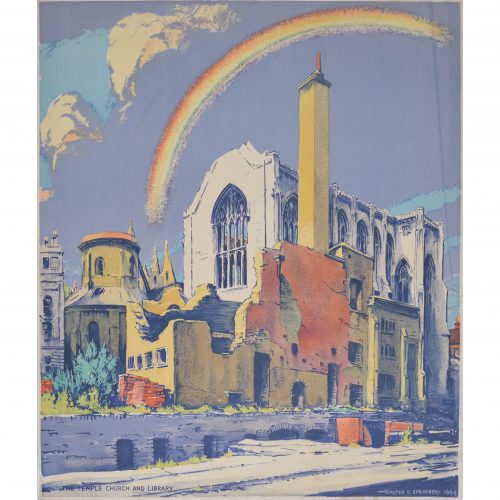
Walter Ernest Spradbery (1889 - 1969)
Temple Church and Library after Bombardment (1944)
Lithograph 66 x 57 cm Walter Spradbery's poster for the London Underground depicting a bombed Temple Church; a rainbow strikes hopefully out of the church's remains, and the sun shines on the golden stone of the building. The full poster bears the legend 'The Proud City' above Spradbery's design, and, beneath it, a quote from Charles Lamb: 'So may the winged horse, your ancient badge and cognisance, still flourish!'. This is a fantastic piece of British and London history, as well as a fantastically designed poster by a notable 20th century artist. The London Transport Museum has a copy of the poster, reference 1983/4/5751. 'The Proud City' was a series of six posters, all designed by Spradbery. They were commissioned by London Transport in 1944 as a defiant celebration of London's surviving the Blitz, and each poster also included a literary quotation. Walter Ernest Spradbery was a designer, painter, and poet who lived through the First and Second World Wars. He produced posters for LNER, Southern Railways, and London Transport, and was noted for his fascination with architecture and landscape. He studied, and later taught, at the Walthamstow School of Art. He was a pacifist and campaigned for nuclear disarmament, serving in the Medical Corps during the First World War and painting scenes of warfare for its duration, as well as during the Second World War. His anti-war stance and the horrors he had witnessed as a medic fed into his post-war poster design, especially 'The Proud City' poster series. Condition: generally very good. If you’d like to know more, please email info@manningfineart.co.uk or call us on 07929 749056. -
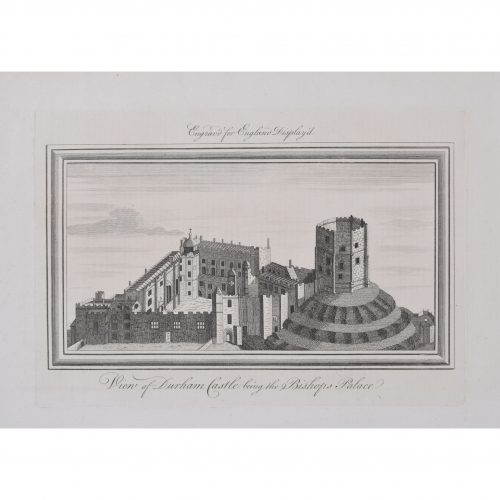
after Samuel Buck (1696 - 1779) and Nathaniel Buck (active 1724 - 1759)
View of Durham Castle being the Bishops Palace (1769)
Engraving 18 x 26 cm An engraved view of Durham Castle, complete with engraved frame in the plate. Empty of any inhabitants, the magnificence of the castle's architecture, is made all the more evident. This engraving was produced for 'England Displayed, published in London in 1769 or 1770 by Adlard and Brown; it was made after the original by Samuel and Nathaniel Buck, originally published in their 'Views of Ruins of Castles & Abbeys in England', created between 1726 and 1742. Durham Castle is a Norman castle in Durham, England, which has been occupied since 1837 by Castle - that is, University College, Durham. Previously, it was the residence of the Bishops of Durham; it stands on top of a hill above the River Wear on Durham's peninsula, opposite Durham Cathedral. Samuel and Nathaniel Buck were brothers and notable 18th century architectural artists, best known for their depictions of ancient castles and monasteries entitled 'Buck's Antiquities' and those of townscapes of England and Wales, ''Sea-Ports and Capital Towns''. LIttle is known about the brothers' lives. Samuel was born in Yorkshire and died in penury in London in 1779, and was buried in the churchyard of St Clement Danes. Nathaniel pre-deceased him, dying between 1759 and 1774. Condition: very good. If you’d like to know more, please email info@manningfineart.co.uk or call us on 07929 749056. -
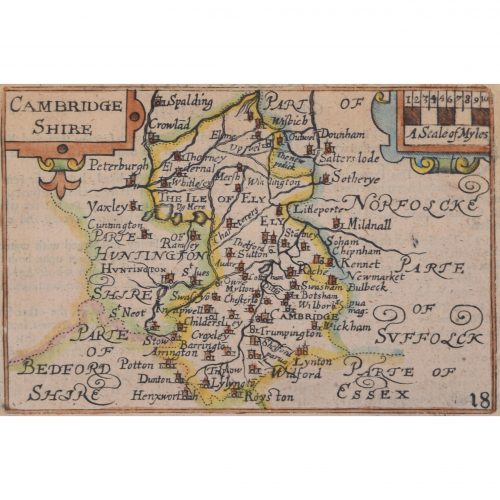
Pieter van den Keere (1571 - circa 1646) after John Speed (1551 or 1552 - 1629)
Map of Cambridgeshire (1627)
Engraving 8 x 12 cm A beautifully coloured map of Cambridgeshire, with an antique description of the county to the reverse. The map, along with many others, was published in Speed's atlas, 'The Theatre of the Empire of Great Britaine', first published in 1611. This particular miniature edition of the 'Theatre' was published in miniature by George Humble in 1627, entitled 'England Wales Scotland and Ireland Described and Abridged With ye Historic Relation of things worthy memory from a farr larger Voulume. Done by John Speed.’ Speed's original map was likely engraved for this edition by Peter van den Keere. van den Keere's maps soon came to be known as "Miniature Speeds". John Speed was an English cartographer, chronologer and historian. The son of a citizen and Merchant Taylor in London, he rose from his family occupation to accept the task of drawing together and revising the histories, topographies and maps of the Kingdoms of Great Britain as an exposition of the union of their monarchies in the person of King James I and VI. He accomplished this with remarkable success, with the support and assistance of the leading antiquarian scholars of his generation. He drew upon and improved the shire maps of Christopher Saxton, John Norden and others, being the first to incorporate the hundred-boundaries into them, and he was the surveyor and originator of many of the town or city plans inset within them. His work helped to define early modern concepts of British national identity. His Biblical genealogies were also formally associated with the first edition of the King James Bible. He is among the most famous of English mapmakers. George Humble (1572 - 1640) was an English publisher, known for his publication of John Speed's 'The theatre of the empire of Great Britaine,' the first comprehensive atlas depicting the British Isles, and his later 'A prospect of the most famous parts of the World,' the first English world atlas. Pieter van den Keere was a Flemish engraver, publisher, and globe maker who worked in England and the Dutch Republic. Condition: generally very good; some age toning. If you’d like to know more, please email info@manningfineart.co.uk or call us on 07929 749056. -
Sutton Nichols (1668 - 1729)
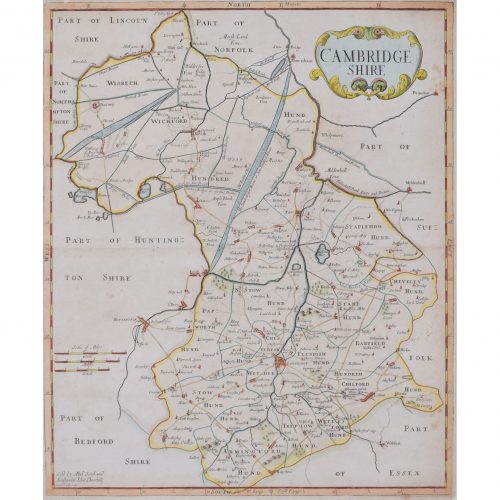
Map of Cambridgeshire
Engraving 43 x 36 cm Signed in plate lower left. A beautifully coloured 18th century map engraving of Cambridgeshire. The map was produced by Robert Morden for publication in Edward Gibson's 1695 translation of William Camden's Britannia, a topographical and historical survey of Great Britain and Ireland produced to "restore antiquity to Britaine, and Britain to his antiquity" - a most noble aim. William Camden (1551 - 1623) was an English antiquarian, historian, topographer, and herald, best known as the author of Britannia, the first chorographical survey of the islands of Great Britain and Ireland, and the Annales, the first detailed historical account of the Queen Elizabeth I's reign. Sutton Nicholls was a draughtsman and engraver best known for his panoramic views of the cities of London and Westminster. Almost all of his engravings were commissioned by publishers. Nicholls specialised in topographical and architectural designs; he also produced many maps, notably illustrating John Strype’s edition of John Stowe’s ‘Survey of London’ in 1720. Condition: good. Mounted to board. If you’d like to know more, please email info@manningfineart.co.uk or call us on 07929 749056. -
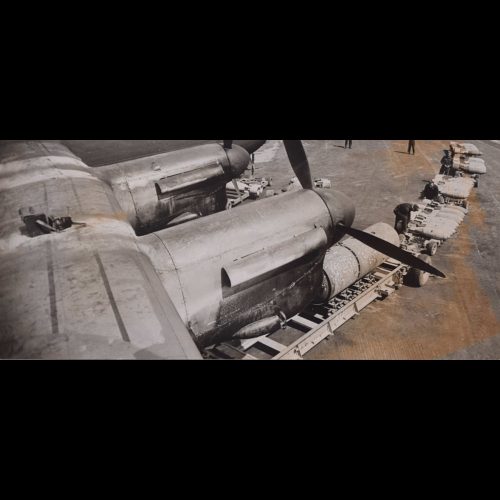
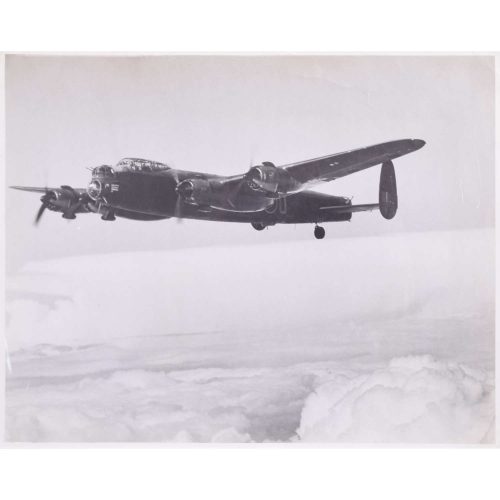
Lancaster Bomber Arming D-Day + 1
Original Silver Gelatin photograph, c. 1944 11 x 25 cm Stamped to reverse "Certified by Fox Photos Ltd as passed by censor, Press and Censorship Bureau" "Thousands of Planes Keep Up the Offensive "Thousands of planes are continuously taking part in the new offensive for the liberation of Europe. "Photograph shows: Ground staff loading up a Lancaster with a cookie and 1,000 lb bombs, ready for the new offensive. The air crew and bomb train are dwarfed when seen on the ground from one of the huge bombers. "Fox June 7 '44." D-Day was 6 June 1944 Provenance: from the collection of Philip J R Moyes, author of many books on the RAF, most notably The Pictorial History which ran to several volumes. Condition: photograph has discoloured in some areas. -
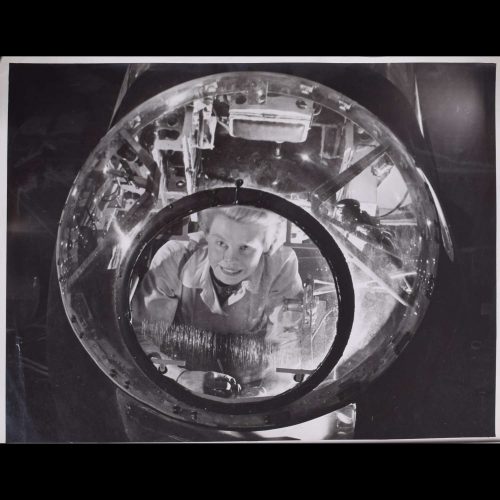
Birth of a Lancaster
Original Silver Gelatin photograph, 1942 19 x 25 cm Stamped to reverse "Topical Press Agency Limited, Red Lion Court, Fleet Street London" and (partially obscured) "Certified by Topical Press Agency as passed by censor" "The Avro Lancaster - the fastest and greatest load carrier of all the world's heavy bombers, and scourge of the Germans from Cologne to Gdynia, Rostock to Augsburg near Munich, is now being produced so speedily that fresh squadrons are being equipped weekly, and nightly spread terror and destruction through the German industrial centres. "Photo shown: a girl inspector goes over every detail of fitting work in the bomber's nose. She is occupying the position that the bomb aimer will take on operational work. Every small part of the plane has undergone stringent inspection. "Ref number Y7119 Topical Press 2/9/42" There is nothing new in the world, a pretty girl always captures the attention of the photographer. In war-torn Britain, of course, the contribution of women to the war effort was hugely important, replacing men in factories so that the men could go off to war. Provenance: from the collection of Philip J R Moyes, author of many books on the RAF, most notably The Pictorial History which ran to several volumes. Condition: mostly good. -
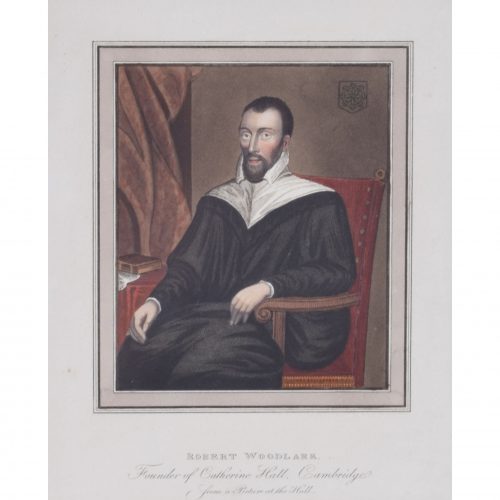
Robert Woodlark, Founder of Catherine Hall, Cambridge from a Picture at the Hall (1815)
Hand-coloured aquatint 24 x 20 cm Published by Rudolph Ackermann (1764 - 1834). A copy of this engraving is held by the National Portrait Gallery, reference NPG D4871. Robert Woodlark (also spelt Wodelarke) was an English academic and priest. He was the Provost of King's College, Cambridge, and the founder of St Catharine's College, Cambridge. He drew up the original statutes for the governance of the college and obtained a charter from Edward IV, 16 August 1475. Woodlark was a professor of sacred theology at the University and served as Chancellor of the University of Cambridge from 1459 to 1460, and again from 1462 to 1463. Rudolph Ackermann was an Anglo-German bookseller, inventor, lithographer, publisher and businessman. In 1795 he established a print-shop and drawing-school at 96 Strand. Here Ackermann set up a lithographic press and began a trade in prints. He later began to manufacture colours and thick carton paper for landscape and miniature painters. Within three years the premises had become too small and he moved to 101 Strand, in his own words "four doors nearer to Somerset House", the seat of the Royal Academy of Arts. Between 1797 and 1800 Ackermann rapidly developed his print and book publishing business, encompassing many different genres including topography, caricature, portraits, transparencies and decorative prints. Condition: good. Some gentle age toning. Handsome gilded frame with elaborate wash line mount. If you’d like to know more, please email info@manningfineart.co.uk or call us on 07929 749056.