-
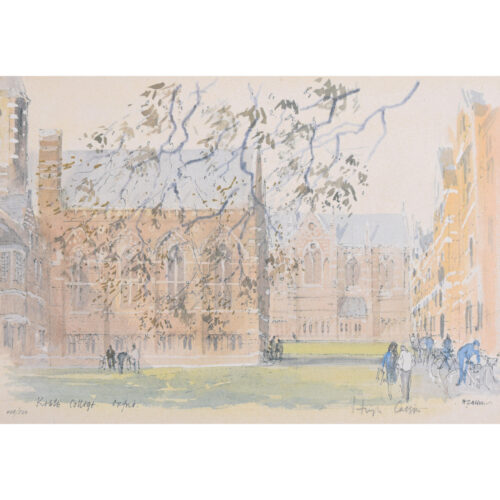
Hugh Casson (1910 - 1999)
Keble College, Oxford
Lithograph 25 x 36 cm Signed and numbered 408/500, both in pencil. Casson's autumnal depiction of Keble, complete with students and ubiquitous bicycles. Sir Hugh Casson was educated at Eastbourne College; St John’s College, Cambridge; and the Bartlett School of Architecture. Trained in the 1930s in the early modernist style, he taught at the Cambridge School of Architecture. After employment as a camoufleur during World War 2 by the Air Ministry, in 1948 he was appointed as director of architecture for the Festival of Britain. A close friend of the Royal Family, he undertook designs for the 1953 coronation, designed the interior of the Royal Yacht Britannia (“The overall idea was to give the impression of a country house at sea”), and taught the young Charles III to paint in watercolours. Amongst his architectural achievements are the Elephant House at London Zoo, the 1978 redevelopment of Bristol Docks, the Raised Faculty Building for The University of Cambridge, and a building for the Royal College of Art. He published a number of illustrated books, of which Casson’s Oxford and Casson’s Cambridge are probably the best known. A limited edition series of prints was produced from the paintings. Condition: generally very good. If you’d like to know more, please email info@manningfineart.co.uk or call us on 07929 749056. Click here for other views of Keble College, Oxford. -
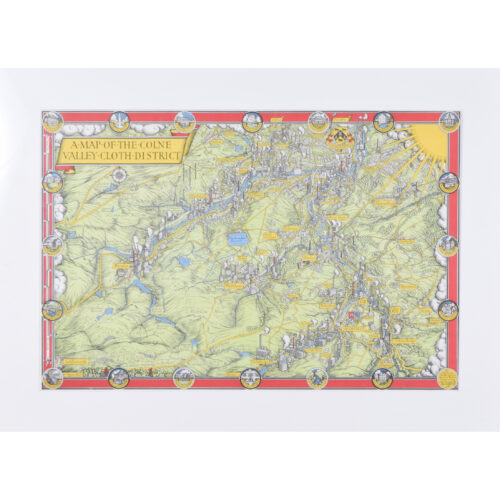
Leslie Macdonald "Max" Gill (1884 - 1947)
A Map of the Colne Valley Cloth District (1946)
Engraving with later hand-colouring 32 x 48 cm Signed in the plate and dated 1946. Produced for Huddersfield and District Woollen Export Group. Gill's vibrant and detailed map depicts the Colne Valley District. The Colne Valley was a loom-weaving area which played a significant role in the development of the Industrial Revolution when water-powered textile mills were brought in. Born in Brighton, Max Gill was the second son in a family of thirteen children; his elder brother was Eric Gill, the typographer and sculptor. Both Gills exhibited significant talent at a young age. Max Gill’s first map was made for a school map-drawing project following which he entered maps into competitions in boys’ magazines. In 1903 he moved to London as assistant to the ecclesiastical architects Sir Charles Nicholson and Hubert Corlette. By 1908 he had started his own architectural practice, but in 1909 Sir Edwin Lutyens commissioned Gill to paint a “wind dial” map for Nashdom, a large house in Buckinghamshire. The wind dial was set over the fireplace and attached to a weather vane on the roof, allowing the occupant to know the direction of the wind from the comfort of the house. He produced seven further wind dials including for Lutyens’s Lindisfarne Castle and for the Allhusen Room at Trinity College, Cambridge. Although Gill continued to practice as an architect, Frank Pick commissioned him to create seven pictorial maps for the Underground, the first being the famous 1913 ‘Wonderground Map of London Town.’ In 1917 he joined the Imperial War Graves Commission’s headstone design committee, designing the typeface and regimental badges. Gill’s memorials for the fallen in the First World War include for Balliol and Worcester Colleges and Christ Church in Oxford. During the 1920s and 30s Gill undertook many commercial commissions for advertising materials. The Empire Marketing Board and Shell-Mex as well as further maps for the Underground. He designed in 1922 the first diagrammatic map of the Underground which provided the foundation for Beck’s more famous map. By the 1930s his major works were murals. Those of the Arctic and Antarctic on the ceilings of the Scott Polar Research Institute in Cambridge are beautiful, but the most impressive is the map of the North Atlantic in the first-class dining room of the Queen Mary (maiden voyage: 1936, now moored at Long Beach, California). During the Second World War he created a series of propaganda posters for the Ministry of Information. Condition: very good. In new hand-finished frame. If you are interested, please email info@manningfineart.co.uk or call us on 07929 749056. Click here for other decorative maps. -
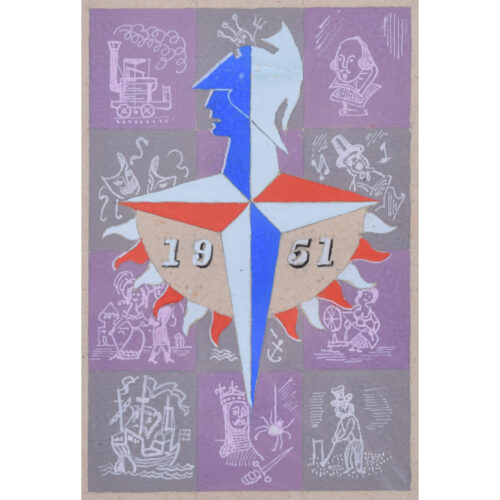
Peter J Wright after Abram Games (1914 - 1996)
Festival of Britain Logo (1951)
Gouache 21 x 13 cm A gouache painting of Abram Games' fantastic Art Deco Modern design for the logo advertising the Festival of Britain. Games' design, called the Festival Star, includes a modernist Britannia in profile with bunting below, all set on the four points of the compass and in the Union Jack colours of red, white, and blue. Games was one of twelve artists invited to submit designs to the Arts Council and the Council of Industrial Design in 1948. The Festival of Britain was a national exhibition and fair that reached millions of visitors throughout the United Kingdom in the summer of 1951. It was devised as a celebration of a hundred years since the Great Exhibition of 1851, but focused entirely on Britain and its achievements rather than adopting the international outlook of the Great Exhibition. The Festival's purpose was to highlight and celebrate how far Britain had come in the wake of the Second World War's devastation. Abram Games OBE RDI was a celebrated British graphic artist. His parents were Eastern European Jews and changed their family name from Gamse to Games after moving to Britain. Games studied at Saint Martin's School of Art in London but left after two terms; aged 21, he won a poster competition for the London County Council and then began to work as a freelance poster designer. In 1937 the journal Art and Industry featured him in an article and this resulted inseveral high-profile graphic design commissions from the General Post Office, London Transport, Royal Dutch Shell, and more. He also designed stamps for the Israeli Post Office, covers for The Jewish Chronicle and synagogue prayer book prints, and designed several posters promoting Jewish organisations and initiatives. Condition: generally very good. If you are interested, please email info@manningfineart.co.uk or call us on 07929 749056. Click here for other Modern British design. -
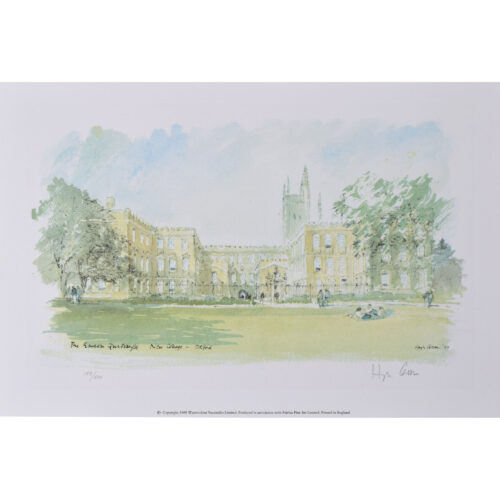
Hugh Casson (1910 - 1999)
The Garden Quadrangle, New College, Oxford (1989)
Lithograph 25 x 39 cm Signed, titled and dated in plate, and numbered 153/500 and signed lower right in pencil. Casson's view of New College's Garden Quad, complete with picnicking undergraduates. Sir Hugh Casson was educated at Eastbourne College; St John’s College, Cambridge; and the Bartlett School of Architecture. Trained in the 1930s in the early modernist style, he taught at the Cambridge School of Architecture. After employment as a camoufleur during World War 2 by the Air Ministry, in 1948 he was appointed as director of architecture for the Festival of Britain. A close friend of the Royal Family, he undertook designs for the 1953 coronation, designed the interior of the Royal Yacht Britannia (“The overall idea was to give the impression of a country house at sea”), and taught the young Charles III to paint in watercolours. Amongst his architectural achievements are the Elephant House at London Zoo, the 1978 redevelopment of Bristol Docks, the Raised Faculty Building for The University of Cambridge, and a building for the Royal College of Art. He published a number of illustrated books, of which Casson’s Oxford and Casson’s Cambridge are probably the best known. A limited edition series of prints was produced from the paintings. Condition: generally very good. If you’d like to know more, please email info@manningfineart.co.uk or call us on 07929 749056. Click here for other views of New College, Oxford. -
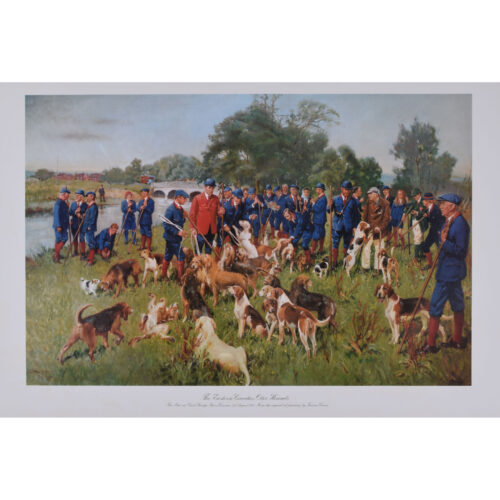
Terrence Cuneo (1907 - 1996)
Eastern Counties Otter Hounds (1971)
Lithograph 56 x 80 cm The meet at Guist Bridge, River Wensum, 31 August 1970. Terence Tenison Cuneo CVO OBE RGI FGRA trained at the Slade School of Art. He worked for the War Artists' Advisory Committee during the Second World War and also produced anti-Nazi propaganda. He most known for his postwar pictures of railways, locomotives, and industry. He was the official artist for the Coronation of Queen Elizabeth II in 1953. Condition: very good. Unsigned proof copy. If you are interested, please email info@manningfineart.co.uk or call us on 07929 749056. Click here for other hunting pictures. -
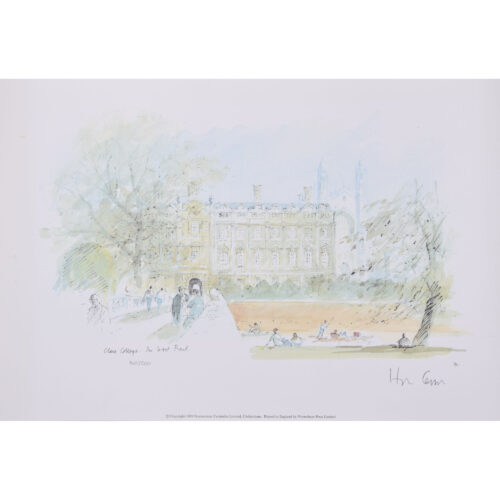
Hugh Casson (1910 - 1999)
Clare College - The West Front
Lithograph 24 x 40 cm Titled in plate lower left; numbered 160/500 lower left and signed lower right, both in pencil. Casson's view of a bustling Clare College, complete with students punting on the Backs. Sir Hugh Casson was educated at Eastbourne College; St John’s College, Cambridge; and the Bartlett School of Architecture. Trained in the 1930s in the early modernist style, he taught at the Cambridge School of Architecture. After employment as a camoufleur during World War 2 by the Air Ministry, in 1948 he was appointed as director of architecture for the Festival of Britain. A close friend of the Royal Family, he undertook designs for the 1953 coronation, designed the interior of the Royal Yacht Britannia (“The overall idea was to give the impression of a country house at sea”), and taught the young Charles III to paint in watercolours. Amongst his architectural achievements are the Elephant House at London Zoo, the 1978 redevelopment of Bristol Docks, the Raised Faculty Building for The University of Cambridge, and a building for the Royal College of Art. He published a number of illustrated books, of which Casson’s Oxford and Casson’s Cambridge are probably the best known. A limited edition series of prints was produced from the paintings. Condition: very good. If you are interested, please email info@manningfineart.co.uk or call us on 07929 749056. Click here for other views of Clare College, Cambridge. -

Norman Wade (20th century)
Durham Cathedral (1972)
Silkscreen print 24 x 43 cmNumbered 50/100 and titled lower left, and signed and dated lower right, all in pencil.An imposing view of the cathedral by British artist Norman Wade, who is known for his depictions of Durham Cathedral.Condition: very good. If you are interested, please email info@manningfineart.co.uk or call us on 07929 749056. Click here for other views of St John’s College, Cambridge. -
Out of stock

Hugh Casson (1910 - 1999) The Gatehouse, Girton College
Lithograph 31 x 26 cm Signed and numbered 263/500, both in pencil. Casson's warm-hued view of Girton, with students strolling under the the neo-Tudor gatehouse. Sir Hugh Casson was educated at Eastbourne College; St John’s College, Cambridge; and the Bartlett School of Architecture. Trained in the 1930s in the early modernist style, he taught at the Cambridge School of Architecture. After employment as a camoufleur during World War 2 by the Air Ministry, in 1948 he was appointed as director of architecture for the Festival of Britain. A close friend of the Royal Family, he undertook designs for the 1953 coronation, designed the interior of the Royal Yacht Britannia (“The overall idea was to give the impression of a country house at sea”), and taught the young Charles III to paint in watercolours. Amongst his architectural achievements are the Elephant House at London Zoo, the 1978 redevelopment of Bristol Docks, the Raised Faculty Building for The University of Cambridge, and a building for the Royal College of Art. He published a number of illustrated books, of which Casson’s Oxford and Casson’s Cambridge are probably the best known. A limited edition series of prints was produced from the paintings. For other views of Girton College, click here. -
Out of stock

Hugh Casson (1910 - 1999) St John's College, Cambridge
Lithograph 29 x 37 cm Signed and numbered 427/500, both in pencil. Sir Hugh Casson was educated at Eastbourne College; St John’s College, Cambridge; and the Bartlett School of Architecture. Trained in the 1930s in the early modernist style, he taught at the Cambridge School of Architecture. After employment as a camoufleur during World War 2 by the Air Ministry, in 1948 he was appointed as director of architecture for the Festival of Britain. A close friend of the Royal Family, he undertook designs for the 1953 coronation, designed the interior of the Royal Yacht Britannia (“The overall idea was to give the impression of a country house at sea”), and taught the young Charles III to paint in watercolours. Amongst his architectural achievements are the Elephant House at London Zoo, the 1978 redevelopment of Bristol Docks, the Raised Faculty Building for The University of Cambridge, and a building for the Royal College of Art. He published a number of illustrated books, of which Casson’s Oxford and Casson’s Cambridge are probably the best known. A limited edition series of prints was produced from the paintings. This lithograph depicts a view over Kitchen Bridge in St John's College. As is typical in many of his works, Casson expertly captures the architecture of this Cambridge college, while also portraying the everyday comings-and-goings of college life. In this case, a punt floats past a group of students basking in the sun and another group crosses over the bridge, perhaps on their way to get their lunch from the cafe. Condition: Generally very good.If you would like to know more, please email info@manningfineart.co.uk or call us on 07929 749056.
For other views of St John's College, click here. -
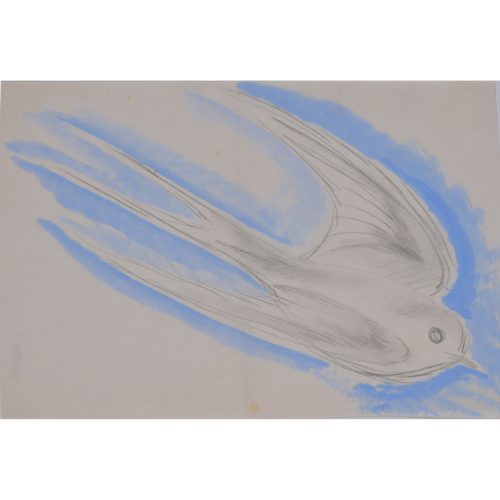
Clifford Ellis (1907-1985) Swallow
16x25cm Watercolour and pencil Provenance: the family of the artist, by descent. Born in Bognor in Sussex and trained at St Martin’s School of Art and Regent Street Polytechnic, Ellis was a graphic artist and illustrator who is best known for the posters he produced for London Transport during the 1930s. He generally collaborated with his wife Rosemary – whom he married in 1931 – on their posters. The General Post Office, Shell, and The Empire Marketing Board were also clients for their posters. They signed their posters C&RE, their initials being in alphabetical order and they are readily recognisable by their ebullient use of colour and form. Employed during the war as a camoufleur, along with so many other artists, Clifford was also an official war artist, serving with the Grenadier Guards. Rosemary, meanwhile, was an artist for the Recording Britain project. Following the war they trained art teachers at Bath Academy of Art. They also designed a series of nearly one hundred book jackets for Collins New Naturalist series, published between 1945 and 1982 and were always fascinated by animals and natural history, as with this sketch. If you are interested email info@manningfineart.co.uk or call us on 07929 749056. Condition: Generally very good. -
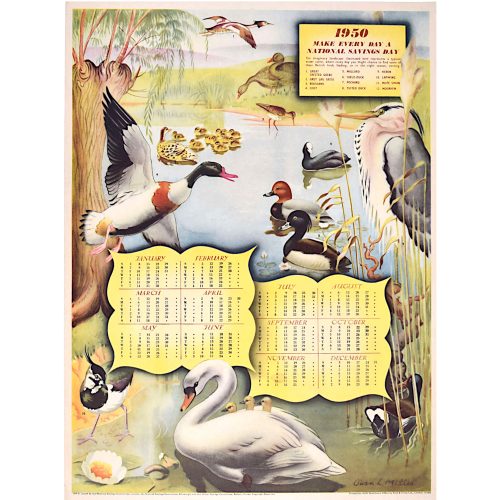
Owen Miller (1907-1960) Owen Miller National Savings original vintage calendar poster (1950)
Lithographic poster 50 x 37 cm Printed for HMSO by Fosh & Cross. A fantastic original lithographic poster advertising the National Savings scheme and featuring a calendar for the year 1950. Born in Auckland and educated at Wellington College, Miller worked as an artist in New Zealand. His illustrations often appeared in Wellington newspapers. He found life difficult in New Zealand during the Depression, and eventually signed on to a boat as a deckhand, working his passage to the UK. When he arrived at the Port of London, he had only £5 to his name. His first job was an illustrator for J Lyons & Co; his greatest work there was to decorate the directors’ dining room as an aircraft interior. When the Second World War began, Miller started work for the Ministry of Aircraft Production. Following the war, Collins produced several posters advertising National Savings. If you are interested, please email info@manningfineart.co.uk or call us on 07929 749056. Condition: Generally very good. -
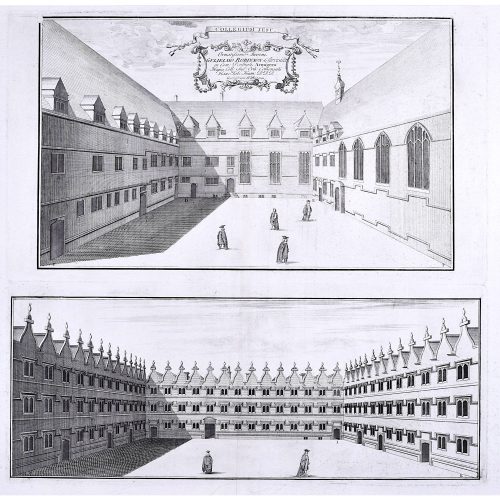
William Williams (Welsh, fl. 1724-1733) Jesus College, Oxford
Engraving c. 1732 for Oxonia Depicta (pub. London 1732-33) 43x44cm If you are interested email info@manningfineart.co.uk or call us on 07929 749056. Condition: Fair, gentle staining towards top and usual handling marks to margins, as illustrated. -
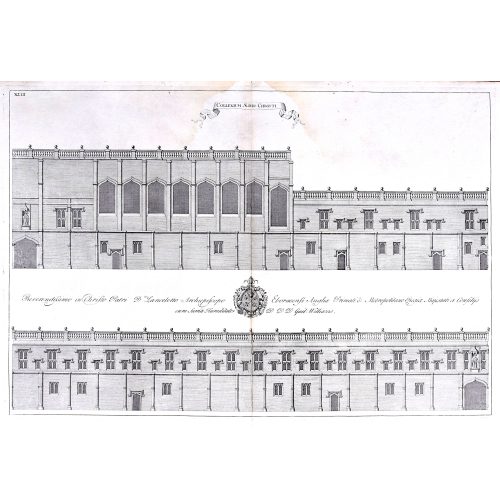
William Williams (Welsh, fl. 1724-1733) Christ Church, Oxford
Engraving c. 1732 for Oxonia Depicta (pub. London 1732-33) 41x60cm If you are interested email info@manningfineart.co.uk or call us on 07929 749056. Condition: Fair, gentle staining towards top and usual handling marks to margins, as illustrated. -
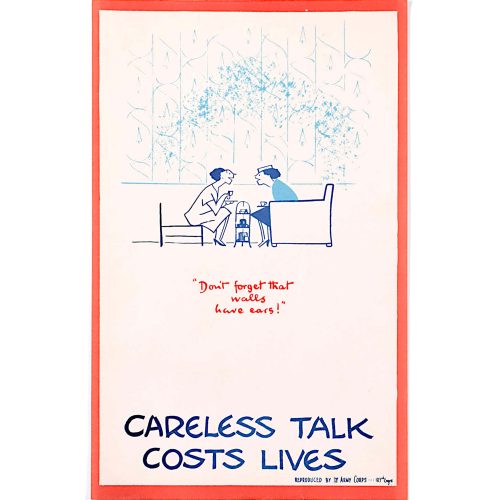
Cyril Kenneth Bird ‘Fougasse’ (British, 1887-1965) Careless Talk Costs Lives IV
Lithographic poster c.1940 32 x 20 cm (12.5 x 8 in) Reprinted by the IV Army Corps by the 103rd Engineers Lacking the normal Fougasse edition, the IV Army Corps commissioned their Engineers - the 103rd Engineers - to produce their own edition. Indescribably rare, one of the ones in this series is inscribed 'To Al, with sincerest regards Warren C Guggenheim'. The cartoonist Fougasse, was a British cartoonist who was art editor of Punch 1937-1949, and subsequently editor until 1953. He is best known for his ‘Careless Talk Costs Lives’ series of posters, and the other posters both for the Ministry of Information, London Underground and others. The Ministry of Information’s wartime poster campaign was soon regarded as dull and uninspiring on account of its hectoring messages such as ‘Keep Calm and Carry On.’ There were posters telling the population how to conduct virtually every minute of their daily lives – for instance by saving old clothes for rags, turning off the lights, saving food, digging for victory, or watching out for spies. With this instruction overload the population ceased paying attention to the posters, so Fougasse offered his services to the Ministry of Information unpaid, with a view to bringing a touch of humour to serious messages. An amusing picture and a pithy caption helped to get the message across to the reader. His distinctive style, with the red border, was adopted by other Ministry artists. If you are interested email info@manningfineart.co.uk or call us on 07929 749056. Condition: Generally very good, a few very soft creases as normal. -
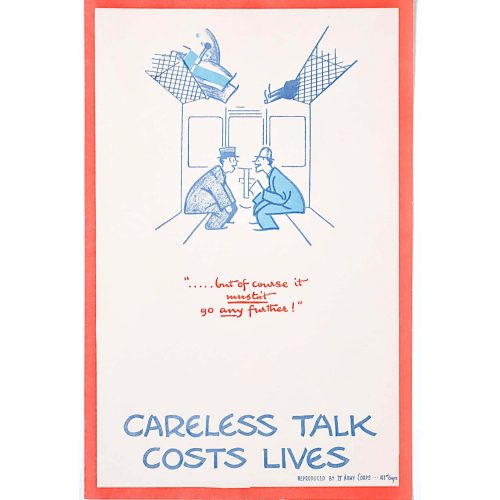
Cyril Kenneth Bird ‘Fougasse’ (British, 1887-1965) Careless Talk Costs Lives V
Lithographic poster c.1940 32 x 20 cm (12.5 x 8 in) Reprinted by the IV Army Corps by the 103rd Engineers Lacking the normal Fougasse edition, the IV Army Corps commissioned their Engineers - the 103rd Engineers - to produce their own edition. Indescribably rare, one of the ones in this series is inscribed 'To Al, with sincerest regards Warren C Guggenheim'. The cartoonist Fougasse, was a British cartoonist who was art editor of Punch 1937-1949, and subsequently editor until 1953. He is best known for his ‘Careless Talk Costs Lives’ series of posters, and the other posters both for the Ministry of Information, London Underground and others. The Ministry of Information’s wartime poster campaign was soon regarded as dull and uninspiring on account of its hectoring messages such as ‘Keep Calm and Carry On.’ There were posters telling the population how to conduct virtually every minute of their daily lives – for instance by saving old clothes for rags, turning off the lights, saving food, digging for victory, or watching out for spies. With this instruction overload the population ceased paying attention to the posters, so Fougasse offered his services to the Ministry of Information unpaid, with a view to bringing a touch of humour to serious messages. An amusing picture and a pithy caption helped to get the message across to the reader. His distinctive style, with the red border, was adopted by other Ministry artists. If you are interested email info@manningfineart.co.uk or call us on 07929 749056. Condition: Generally very good, a few very soft creases as normal. -
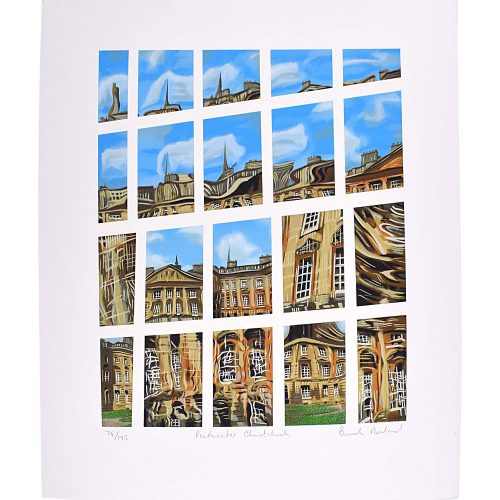
Brendon Neiland (b. 1941) Peckwater Christ Church 74/195
Screen print 68.5x56cm Here he surreally captures Peckwater Quad in Christchurch, experimenting with pictorial structure with vivacious dashes of blue, orange and yellow. It is emblematic of his later work that increasingly uses bold and dynamic colour palettes. For biographical details and other works by the artist click here. If you are interested email info@manningfineart.co.uk or call us on 07929 749056. Condition: Excellent. -
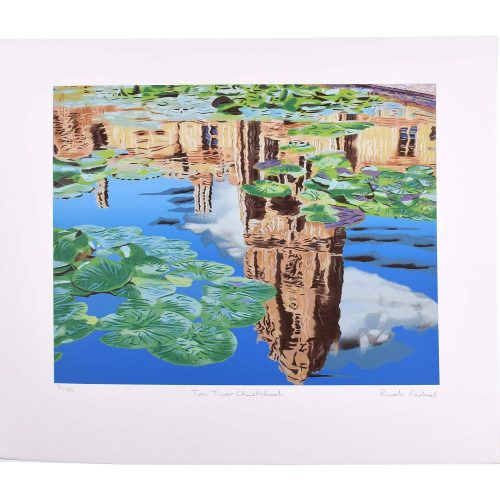 Brendon Neiland (b. 1941) Tom Tower Christ Church 38/195 Screenprint 66x58cm Here he surreally captures rippling reflection of Tom Tower in Christchurch. The style is emblematic of his later work that increasingly uses bold and dynamic colour palettes. For biographical details and other works by the artist click here. If you are interested email info@manningfineart.co.uk or call us on 07929 749056. Condition: Excellent.
 -
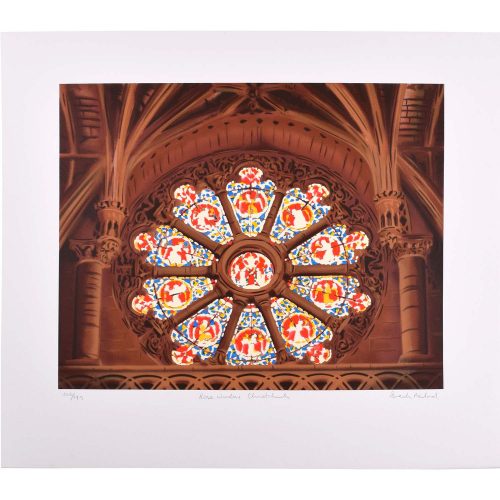
Brendon Neiland (b. 1941) Gilbert Scott's Rose Window Christ Church Oxford 106/195
Screenprint 66x58cm Here Neiland captures the colours of the new window installed in the cathedral by George Gilbert Scott (Junior) c. 1870. The style is emblematic of his later work that increasingly uses bold and dynamic colour palettes. For biographical details and other works by the artist click here. If you are interested email info@manningfineart.co.uk or call us on 07929 749056. Condition: Excellent. -
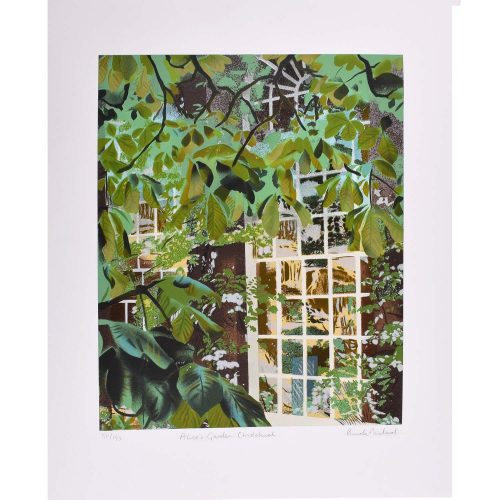
Brendon Neiland (b. 1941) Alice's Garden Oxford 50/195
Screenprint 66.5x57cm Here he surreally captures rippling reflection of Tom Tower in Christchurch. The style is emblematic of his later work that increasingly uses bold and dynamic colour palettes. For biographical details and other works by the artist click here. If you are interested email info@manningfineart.co.uk or call us on 07929 749056. Condition: Excellent. -
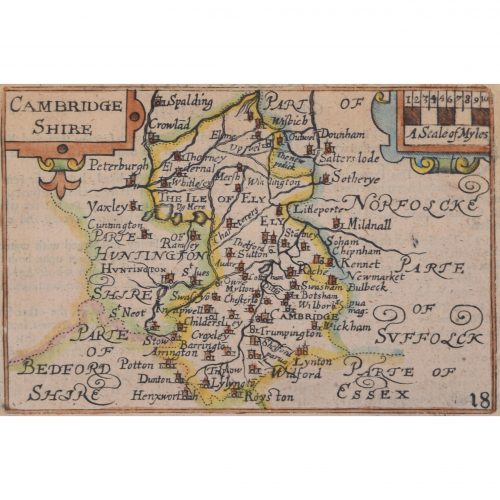
Pieter van den Keere (1571 - circa 1646) after John Speed (1551 or 1552 - 1629)
Map of Cambridgeshire (1627)
Engraving 8 x 12 cm A beautifully coloured map of Cambridgeshire, with an antique description of the county to the reverse. The map, along with many others, was published in Speed's atlas, 'The Theatre of the Empire of Great Britaine', first published in 1611. This particular miniature edition of the 'Theatre' was published in miniature by George Humble in 1627, entitled 'England Wales Scotland and Ireland Described and Abridged With ye Historic Relation of things worthy memory from a farr larger Voulume. Done by John Speed.’ Speed's original map was likely engraved for this edition by Peter van den Keere. van den Keere's maps soon came to be known as "Miniature Speeds". John Speed was an English cartographer, chronologer and historian. The son of a citizen and Merchant Taylor in London, he rose from his family occupation to accept the task of drawing together and revising the histories, topographies and maps of the Kingdoms of Great Britain as an exposition of the union of their monarchies in the person of King James I and VI. He accomplished this with remarkable success, with the support and assistance of the leading antiquarian scholars of his generation. He drew upon and improved the shire maps of Christopher Saxton, John Norden and others, being the first to incorporate the hundred-boundaries into them, and he was the surveyor and originator of many of the town or city plans inset within them. His work helped to define early modern concepts of British national identity. His Biblical genealogies were also formally associated with the first edition of the King James Bible. He is among the most famous of English mapmakers. George Humble (1572 - 1640) was an English publisher, known for his publication of John Speed's 'The theatre of the empire of Great Britaine,' the first comprehensive atlas depicting the British Isles, and his later 'A prospect of the most famous parts of the World,' the first English world atlas. Pieter van den Keere was a Flemish engraver, publisher, and globe maker who worked in England and the Dutch Republic. Condition: generally very good; some age toning. If you’d like to know more, please email info@manningfineart.co.uk or call us on 07929 749056. -
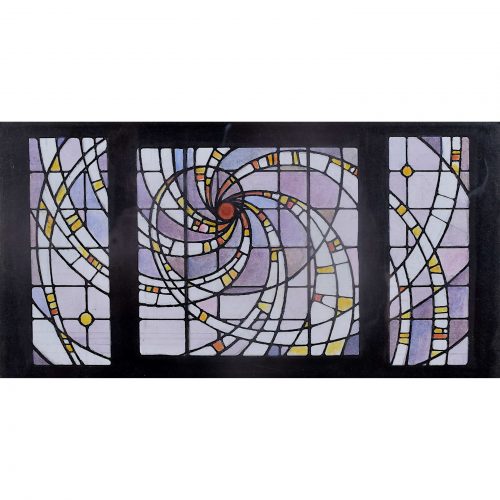
Jane Gray (b.1931)
Mount Vernon Hospital, Design for Stained Glass Window (1982)
Watercolour 10.5 x 20 cmDated and artist label verso.
Mount Vernon Hospital is located in Northwood, in north-west Greater London and was founded as The North London Hospital for Consumption and Diseases of the Chest in a mansion on Hampstead High Street in 1860. A purpose-built but beautiful hospital at Mount Vernon was built in 1881 in the French Renaissance style but in 1901, it was decided to build a more-modern facility on part of the Northwood Park Estate which was opened in 1904.
Provenance: the artist’s studio sale. Condition: very good. If you are interested, please email info@manningfineart.co.uk or call us on 07929 749056. For other works by Jane Gray and more information about her, please click here. -
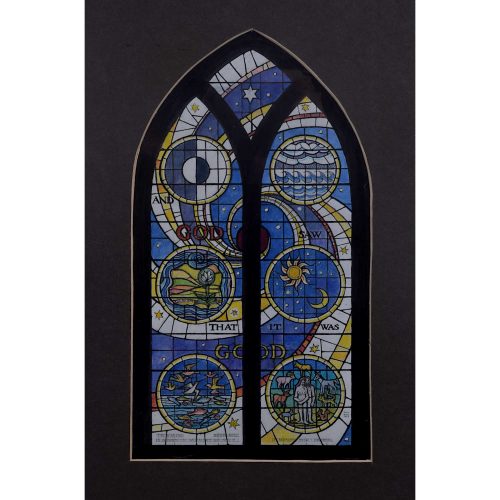
Jane Gray (b.1931)
St Paul’s Church, Marton, Design for Stained Glass Window (1984)
Watercolour 25.5 x 14 cmSigned, dated and artist label verso.
Worship at Marton, a township-chapelry in Poulton-le-Fylde parish, Lancashire, began in 1760 but it wasn’t until 1800 that Marton got it’s own church dedicated to St Paul. Gray’s vibrant design for the church’s south wall window depicts the stages of creation against a swirling night sky and features the biblical line, ‘and God saw that it was good’, from Genesis 1:31. This design fantastically demonstrates Gray’s modernist style, with her simple yet detailed, geometrical delineation of her subjects.
Provenance: the artist’s studio sale. Condition: very good. If you are interested, please email info@manningfineart.co.uk or call us on 07929 749056. For other works by Jane Gray and more information about her, please click here. -
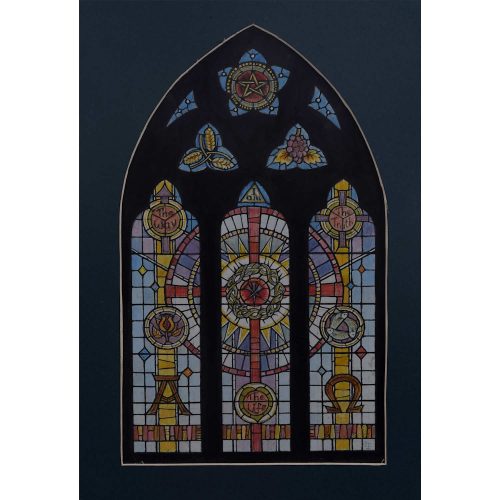
Jane Gray (b.1931)
Holy Trinity Church, Weston Lullingfields, Shropshire, Design for Stained Glass Window (1990)
Watercolour 26 x 15.5 cmSigned, dated and studio stamp verso.
Holy Trinity Church in Weston Lullingfields was built in 1857 by the late Miss Barrett, of Prescott to join the expanding development of Weston Wharf. However, with the advent of the Railway in nearby Baschurch, the canal fell into disuse and plans for major expansion of the village declined. The church is built in the Early English style and houses a rare Hilditch organ.
Provenance: the artist’s studio sale. Condition: very good. If you are interested, please email info@manningfineart.co.uk or call us on 07929 749056. For other works by Jane Gray and more information about her, please click here. -
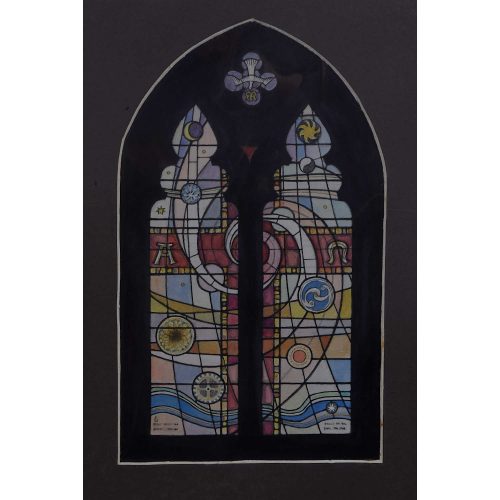
Jane Gray (b.1931)
St Mary’s Church, Bushbury, Wolverhampton, Design for Stained Glass Window (1989)
Watercolour 23 x 13.5 cmSigned, dated and studio stamp verso.
St Mary’s Church was built in the mid 14th century but underwent substantial renovations in the 19th century to the designs of Wolverhampton architect, Edward Banks with advice from the notable, Sir Gilbert Scott. St Mary’s is thought to have inspired the church at ‘M’ visited by Borrow and the Petulengroes in Chapter VIII of George Borrow’s 1857 novel, The Romany Rye. One of Gray’s most interesting and beautiful designs, this stained glass window demonstrates the artist’s distinctly modern approach, capturing something of her artistic predecessor, Hilma af Klint’s characteristic geometric style and colour palette.
Provenance: the artist’s studio sale. Condition: very good. If you are interested, please email info@manningfineart.co.uk or call us on 07929 749056. For other works by Jane Gray and more information about her, please click here. -
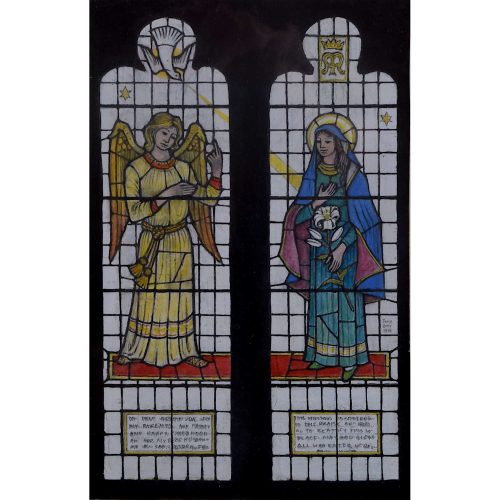
Jane Gray (b.1931)
St Mary the Virgin, Ebony, Tenterden, Design for Stained Glass Window (1983)
Watercolour 15.5 x 10 cmDated in artist's hand and artist label verso.
Worship at Ebony has taken place for some one thousand years but St Mary the Virgin Church, as it exists today, was not built until 1858. A church had previously existed on the island of Ebony where, standing 30 metres above sea level and visible for miles around, it provided a prominent landmark to ships coming up the sea creek. This church, however, was devastated by a fire in the 16th century, and from its ruins, a much smaller church, built in a simple rectangle of Kentish ragstone, was erected, serving the parish until 1858. In this year, the church was taken down, stone by stone, and moved to the nearby hamlet of Reading Street where it stands today. Gray’s design centres on the Anunciation, featuring the figures of Mary and Gabriel, and was installed in the church in 1984.
Provenance: the artist’s studio sale. Literature: Jane Gray, Playing with Rainbows. (Shropshire: Ellingham Press, 2011), p.78. Condition: very good. If you are interested, please email info@manningfineart.co.uk or call us on 07929 749056. For other works by Jane Gray and more information about her, please click here. -
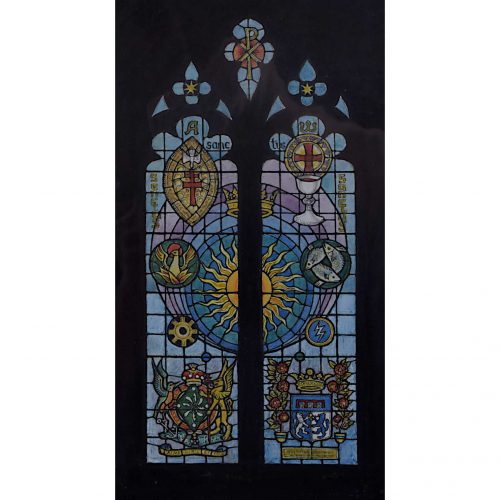
Jane Gray (b.1931)
Writtle Church, Essex, Design for Stained Glass Window (1989)
Watercolour 23 x 12.5 cmSigned, dated and studio stamp verso.
All Saints Church in Writtle, Essex has stood at the heart of the ancient manor of Writtle for over one thousand years and dates back to the early 13th century, although, a Saxon church likely existed on the site prior to this. The living of Writtle church was handed over in 1399 to the Warden and Fellows of New College Oxford in whose patronage the church has remained to this day. This window design features the Arms of Baroness Platt of Writtle linked with those of Guglielmo Marconi as well as the phoenix, and three fishes of Trinity. The window was installed in 1992.
Provenance: the artist’s studio sale. Literature: Jane Gray, Playing with Rainbows. (Shropshire: Ellingham Press, 2011), p.81. Condition: very good. If you are interested, please email info@manningfineart.co.uk or call us on 07929 749056. For other works by Jane Gray and more information about her, please click here. -
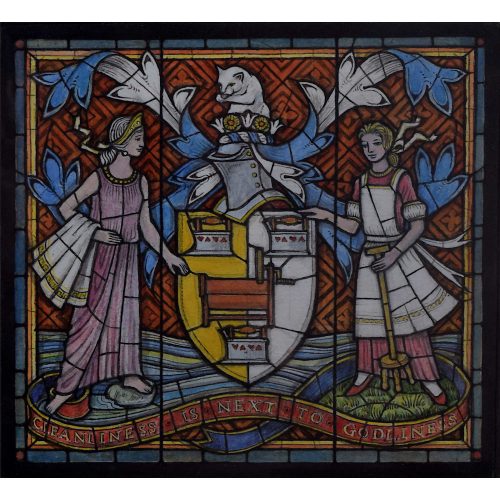
Jane Gray (b.1931)
Arms of the Worshipful Company of Launderers, Design for Stained Glass Window (1985)
Watercolour 12.5 x 13.5 cmDated and detailed in artist's hand with studio label verso.
This window was commissioned by the Worshipful Company of Launderers to oversee their banqueting hall (which belongs to the Worshipful Company of Glaziers, of which Gray was the first female member). Besides the traditional symbols of aprons, irons, and mangles, Gray’s design also humorously includes a white cat licking itself clean. Alongside this window, Gray also designed a roundel containing the Company’s Arms.
Provenance: the artist’s studio sale. Literature: Jane Gray, Playing with Rainbows. (Shropshire: Ellingham Press, 2011), p.39. Condition: very good. If you are interested, please email info@manningfineart.co.uk or call us on 07929 749056. For other works by Jane Gray and more information about her, please click here. -
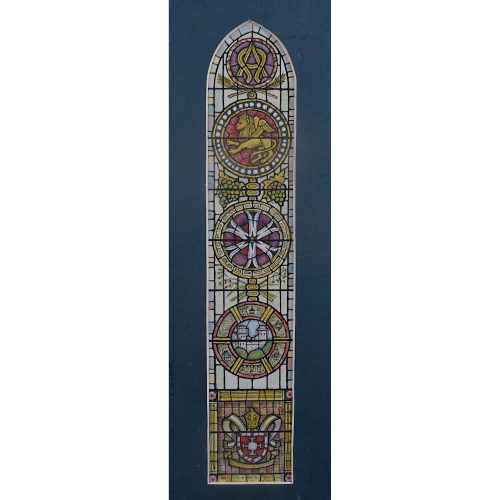
Jane Gray (b.1931)
St Paul’s Church, Warwick, Design for One of Two Stained Glass Windows (1991)
Watercolour 27.5 x 5 cmStudio stamp and notes in artist's hand verso.
Rapid population expansion in Warwick in the early 1800s, due to the opening of the canal and industrialisation, saw the churchyards of St Mary and St Nicholas unable to cope. In 1823 both churches petitioned the Bishop of Worcester for extra burial space, but it wasn’t until 1918 that the Coventry diocese was finally created. A cemetery and chapel, known as St Mary’s Episcopal Chapel were built in 1824 on the site where St Paul’s sits today but was used exclusively for burials. In 1844 the Parish of St Paul's was formed and the church was consecrated on 26th July 1844 by the Bishop of Worcester. This window was installed in 1992.
Provenance: the artist’s studio sale. Literature: Jane Gray, Playing with Rainbows. (Shropshire: Ellingham Press, 2011), p.81. Condition: very good. If you are interested, please email info@manningfineart.co.uk or call us on 07929 749056. For other works by Jane Gray and more information about her, please click here. -
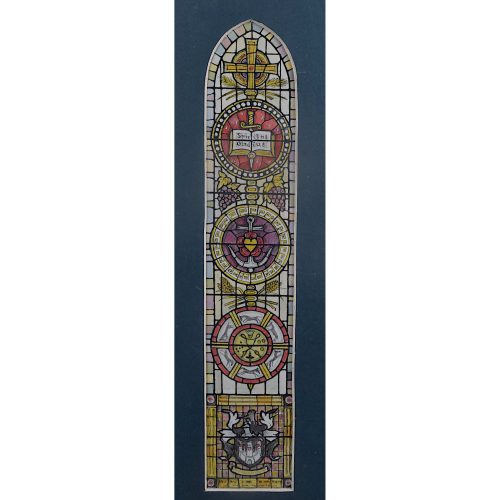
Jane Gray (b.1931)
St Paul’s Church, Warwick, Design for One of Two Stained Glass Windows (1991)
Watercolour 27.5 x 5 cmSigned, dated and studio stamp verso.
Rapid population expansion in Warwick in the early 1800s, due to the opening of the canal and industrialisation, saw the churchyards of St Mary and St Nicholas unable to cope. In 1823 both churches petitioned the Bishop of Worcester for extra burial space, but it wasn’t until 1918 that the Coventry diocese was finally created. A cemetery and chapel, known as St Mary’s Episcopal Chapel were built in 1824 on the site where St Paul’s sits today but was used exclusively for burials. In 1844 the Parish of St Paul's was formed and the church was consecrated on 26th July 1844 by the Bishop of Worcester. This window was installed in 1992.
Provenance: the artist’s studio sale. Literature: Jane Gray, Playing with Rainbows. (Shropshire: Ellingham Press, 2011), p.81. Condition: very good. If you are interested, please email info@manningfineart.co.uk or call us on 07929 749056. For other works by Jane Gray and more information about her, please click here. -
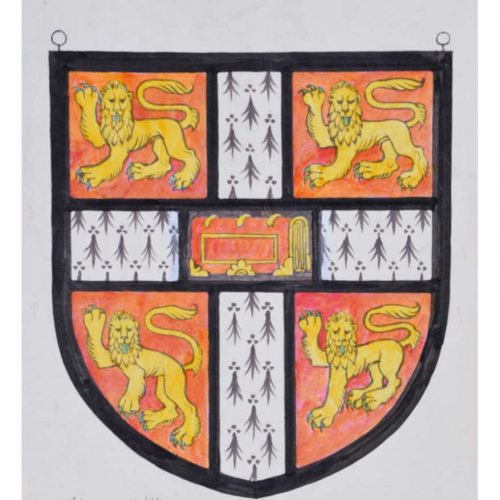
Jane Gray (b.1931)
Arms of University of Cambridge Design for Stained Glass Window
Watercolour 23 x 21 cm Detailed in artist's handThe University of Cambridge is one of the world’s oldest universities, with groups of scholars first congregating at the ancient Roman trading post of Cambridge for the purpose of study in 1209, the first college (Peterhouse) being founded in 1284. The university was granted its arms some years later in 1573 by Robert Cooke, Clarenceux King of Arms and a graduate of St. John's College. The granted arms are described in heraldic terminology, or blazon, as follows: Gules on a Cross Ermine between four Lions passant guardant Or a Bible fesswise Gules clasped and garnished Or the clasps in base.
Provenance: the artist’s studio sale. Condition: very good. If you are interested, please email info@manningfineart.co.uk or call us on 07929 749056. For other works by Jane Gray and more information about her, please click here. -
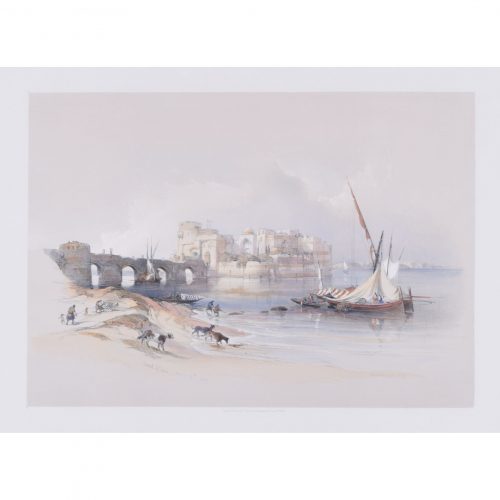
David Roberts (1769 - 1864)
Citadel of Sidon - April 28th, 1839 (published 1943)
Lithograph with hand-colouring 23 x 35 cm (sheet size 17.5 x 24.5 cm) The Citadel of Sidon, or Sidon Sea Castle, was built by crusaders in the thirteenth century as a fortress of the holy land. This lithograph is part of David Roberts' series of views of the Holy Land, which he produced from sketches made during lengthy tours of the Near East in the 1830s. Egypt was much in vogue at this time, and travellers, collectors and lovers of antiquities were keen to buy works inspired by the East or depicting the great monuments of ancient Egypt; Roberts was more than happy to produce pictures on this lucrative theme. Queen Victoria was one of his 400 subscribers, and her set of lithographs is still held by the Royal Collection Trust. The lithographer Louis Haghe worked with Roberts to turn the original sketches into high-quality lithographs, which were then published in the 1840s by the printer F. G. Moon in London. David Roberts RA RBA was a Scottish painter known for his Orientalist pictures. He was elected as a Royal Academician in 1841. -
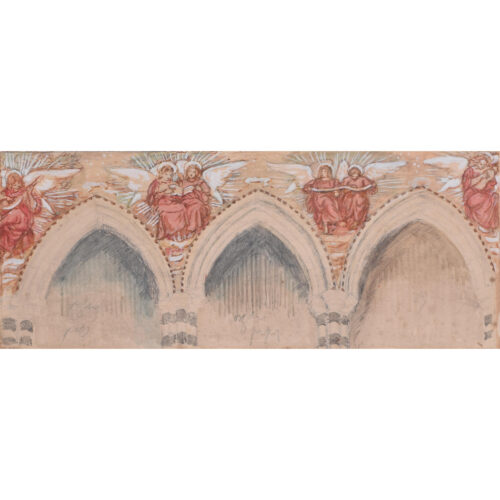
Reginald Hallward (1858 - 1948)
Design for a church wall painting (1904)
Pencil and watercolour on paper 6 x 12 cm With pencil annotations by the artist. A romantic design for a wall painting above a church organ, featuring angels variously reading, singing, and playing the lute. Reginald Hallward was born on the Isle of Wight, and was a painter, poet, glassmaker and book designer. He is best known for his stained glass window designs and the tempera murals he painted in several churches. A great exponent of the English Arts and Crafts movement, he often used black paint for outlines, rather than leaded glass. A consumate craftsman, he insisted on painting, firing and leading with his own hands. Condition: generally very good. If you are interested, please email info@manningfineart.co.uk or call us on 07929 749056. Click here for other pictures by Reginald Hallward. -
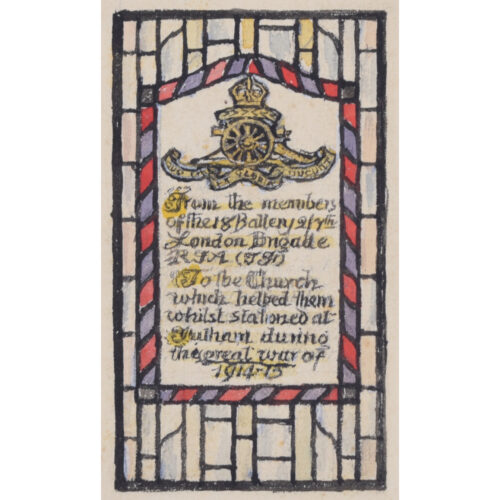
Reginald Hallward (1858 - 1948)
Stained glass window design for St Etheldreda's, Fulham
Pencil and gouache 12 x 7 cm With pencil annotations by the artist. Hallward's design for a stained glass window thanking St Etheldreda's Church for its support of soldiers stationed in Fulham during the First World War. Reginald Hallward was born on the Isle of Wight, and was a painter, poet, glassmaker and book designer. He is best known for his stained glass window designs and the tempera murals he painted in several churches. A great exponent of the English Arts and Crafts movement, he often used black paint for outlines, rather than leaded glass. A consumate craftsman, he insisted on painting, firing and leading with his own hands. Condition: generally very good. If you are interested, please email info@manningfineart.co.uk or call us on 07929 749056. Click here for other pictures by Reginald Hallward. -
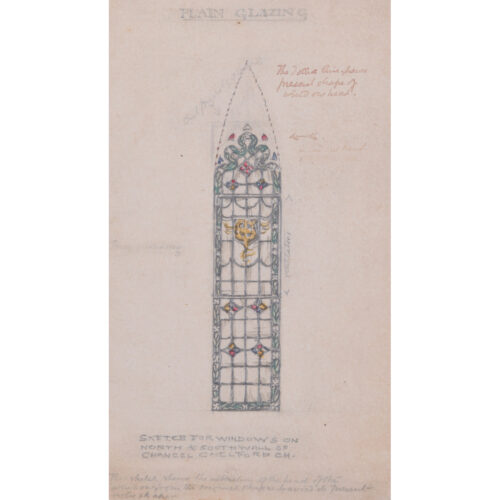
Reginald Hallward (1858 - 1948)
Stained glass memorial design for Chelford Church
Pencil and gouache 12 x 7 cm With pencil annotations by the artist. Reginald Hallward was born on the Isle of Wight, and was a painter, poet, glassmaker and book designer. He is best known for his stained glass window designs and the tempera murals he painted in several churches. A great exponent of the English Arts and Crafts movement, he often used black paint for outlines, rather than leaded glass. A consumate craftsman, he insisted on painting, firing and leading with his own hands. Condition: generally very good. If you are interested, please email info@manningfineart.co.uk or call us on 07929 749056. Click here for other pictures by Reginald Hallward. -

Leslie Carr (1891 - 1969)
1440 Great Northern Railway (1910)
Pen and ink 19 x 41 cm Signed and dated lower right. The Great Northern Railway (GNR) was a British railway company incorporated in 1846 with the object of building a line from London to York. Although many local lines have been closed, much of the network remains active today. Leslie Carr was a painter and poster designer from London. He served in the Tank Corps in the First World War and then became a professional artist, mainly producing maritime and architectural scenes. He designed posters for Southern Railway, the London and North Eastern Railway, and British Railways (among others). Carr served as a fireman in the Second World War and was a part of several firemen artists' exhibitions. Carr was a member of the Society of Marine Artists. Condition: very good. If you are interested, please email info@manningfineart.co.uk or call us on 07929 749056. Click here for other pictures by the artist. -
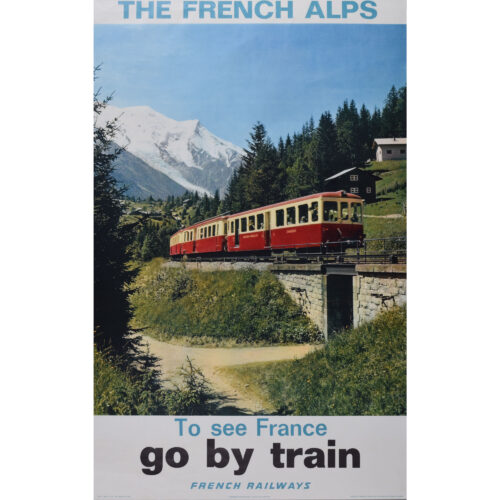
The French Alps - To See France, Go by Train (1966)
Original vintage poster 100 x 66 cm This French Railways poster encourages tourism to the French Alps, where the railway views are (and always have been) particularly charming. Condition: generally very good. If you are interested, please email info@manningfineart.co.uk or call us on 07929 749056. Click here for other original vintage travel posters. -
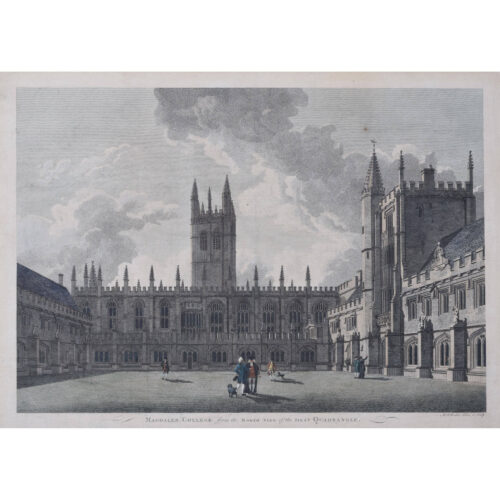
Michael Angelo Rooker (1743/6 - 1801)
Magdalen College from the North Side of the First Quadrangle (1778)
Engraving 32.5 x 46 cm A copy of this print is held by the Wellcome Collection. The Oxford Almanack was an annual almanack published by the Oxford University Press for the University of Oxford from 1674 through 2019 (when printing sadly ceased due to "dwindling interest"). The almanack traditionally included engravings or lithographs of the University and information about the upcoming year. Other almanack artists have included Michael Burghers, J. M. W. Turner, and John Piper. Basire and Dayes collaborated on several views of Oxford during the courses of their careers. Michael Angelo Rooker ARA was an English oil and watercolour painter of architecture and landscapes, illustrator, and engraver. Condition: generally good. Later hand colouring. From an entire Almanac page, cut down. If you are interested, please email info@manningfineart.co.uk or call us on 07929 749056. Click here for other views of Magdalen College, Oxford. -

M R A Hollis The Old Bluecoat School
Pencil drawing 56 x 77 cm Professor Malcolm A Hollis was a chartered surveyor, arbitrator and professor of Building Pathology. He produced this architectural sketch while studying at the Liverpool College of Building. The work is characterised by clean lines and a strong sense of architectural perspective. His appreciation of architecture and attention to detail particularly shine through, however, in his careful depiction of the plaster mouldings on the columns. The Bluecoat School is the oldest building in both central Liverpool and the city's UNESCO World Heritage Site. It was originally built in 1717 to house the Blue Coat School for Orphans. After almost 200 years, the school moved to a different premises in 1906 and in 1907 the Sandon Studios Society, a breakaway from University of Liverpool’s School of Applied Art, moved into the vacant building, establishing one of the first dedicated art centres in the world. It continues to serve this purpose today and celebrated its 300 year anniversary in 2017. -

M R A Hollis The Old Bluecoat School
Pencil drawing 56 x 77 cm Professor Malcolm A Hollis was a chartered surveyor, arbitrator and professor of Building Pathology. He produced this architectural sketch while studying at the Liverpool College of Building. The study depicts a frontal view of the Bluecoat School, showcasing its grand 18th-century architecture and is characterised by clean lines and a strong sense of architectural perspective. The Bluecoat School is the oldest building in both central Liverpool and the city's UNESCO World Heritage Site. It was originally built in 1717 to house the Blue Coat School for Orphans. After almost 200 years, the school moved to a different premises in 1906 and in 1907 the Sandon Studios Society, a breakaway from University of Liverpool’s School of Applied Art, moved into the vacant building, establishing one of the first dedicated art centres in the world. It continues to serve this purpose today and celebrated its 300 year anniversary in 2017. -

M R A Hollis Rufford Old Hall, Charles II Wing
Pencil drawing 56 x 77 cm Professor Malcolm A Hollis was a chartered surveyor, arbitrator and professor of Building Pathology. He produced this architectural sketch while studying at the Liverpool College of Building. The study depicts a view of the Charles II Wing at Rufford Old Hall. As is typical of Hollis' drawings, the sketch is characterised by extremely clean lines, attention to detail and a strong architectural perspective. Particular attention is paid to the grouting of the brick work and the building's crest, signalling that it was originally built in 1662. Rufford Old Hall is a historic Tudor manor house in Rufford, Lancashire, England. It was built in the 16th century and was the home of the Hesketh family for over 400 years. It is also notable as a stomping ground for the young William Shakespeare. It is now managed as a National Trust property and is a popular tourist attraction. -

M R A Hollis Rufford Old Hall, Door Details
Pencil drawing 56 x 77 cm Professor Malcolm A Hollis was a chartered surveyor, arbitrator and professor of Building Pathology. He produced this architectural sketch while studying at the Liverpool College of Building. The study depicts details of the door at Rufford Old Hall. Hollis' accuracy is impressive: the clean lines all seem to be perfectly spaced, the presumably metal detailing on the door symmetrical and aesthetically pleasing. His commendable precision make this a striking piece. Rufford Old Hall is a historic Tudor manor house in Rufford, Lancashire, England. It was built in the 16th century and was the home of the Hesketh family for over 400 years. It is also notable as a stomping ground for the young William Shakespeare. It is now managed as a National Trust property and is a popular tourist attraction. -

Daniel Havell (1785 - 1822) after Augustus Charles Pugin (1762 - 1832) Library of Trinity College, Cambridge (1814)
Aquatint with original hand colouring 20 x 27 cm Published by Rudolph Ackermann (1764 - 1834). An engraving of the Wren library, Trinity College, Cambridge, from Ackermann's 'A History of the University of Cambridge, Its Colleges, Halls and Public Buildings'. Augustus Charles Pugin was an Anglo-French artist and architectural draughtsman. Pugin produced views of London, jointly creating the illustrations for the 'Microcosm of London' published by Rudolph Ackermann in 1811, followed by plates for Ackermann's books about Westminster Abbey, Oxford and Cambridge universities, and Winchester College. His later works included illustrations for Specimens of Gothic Architecture (1821–1823), The Royal Pavilion at Brighton (1826), Architectural Antiquities of Great Britain (1826), Specimens of the Architectural Antiquities of Normandy (1827), Illustrations of the Public Buildings of London (1825 to 1828), Paris and its Environs (1829 to 1831), and Examples of Gothic Architecture (1831). He also produced a book of furniture designs called Gothic Furniture, and assisted architects with detailing for their gothic designs. He ran a drawing school at his house in Bloomsbury. Daniel Havell was a member of the Havell family of Reading, Berkshire, England, which included a number of notable engravers, etchers and painters, as well as writers, publishers, educators, and musicians. Daniel and his brother Robert set up in partnership as aquatint engravers. Soon Daniel began to work independently, engraving plates for Rudolph Ackermann's History of Cambridge (1815) and hid history of various public schools including Eton, Winchester, and Rugby (1816), as well as a celebrated views of St Paul's Cathedral (1818) and various other London landmarks for Ackermann's Repository of Arts. Rudolph Ackermann was an Anglo-German bookseller, inventor, lithographer, publisher and businessman. In 1795 he established a print-shop and drawing-school at 96 Strand. Here Ackermann set up a lithographic press and began a trade in prints. He later began to manufacture colours and thick carton paper for landscape and miniature painters. Within three years the premises had become too small and he moved to 101 Strand, in his own words "four doors nearer to Somerset House", the seat of the Royal Academy of Arts. Between 1797 and 1800 Ackermann rapidly developed his print and book publishing business, encompassing many different genres including topography, caricature, portraits, transparencies and decorative prints. Condition: Generally very good; slight toning to within platemark.If you would like to know more, please email info@manningfineart.co.uk or call us on 07929 749056.
-

Daniel Havell (1785 - 1822) after Frederick Mackenzie (1788 - 1854) West Entrance to the Chapel of Magdalen College (1814)
Hand-coloured aquatint 24 x 29 cm Published by Rudolph Ackermann (1764 - 1834). An engraving of the glorious entrance to Magdalen Chapel from St John's Quad. Frederick Mackenzie (circa 1788 - 1854) was a British watercolourist and architectural draughtsman. He first exhibited at the Royal Academy in 1804, and contributed eleven drawings between that year and 1828. He contributed to the Society of Painters in Water Colours exhibitions from 1813, becoming an associate in 1822, and a full member the following year. From 30 November 1831 until, his death he was treasurer to the society. In later life Mackenzie was no longer commissioned to illustrate books. Daniel Havell was a member of the Havell family of Reading, Berkshire, England, which included a number of notable engravers, etchers and painters, as well as writers, publishers, educators, and musicians. Daniel and his brother Robert set up in partnership as aquatint engravers. Soon Daniel began to work independently, engraving plates for Rudolph Ackermann's History of Cambridge (1815) and hid history of various public schools including Eton, Winchester, and Rugby (1816), as well as a celebrated views of St Paul's Cathedral (1818) and various other London landmarks for Ackermann's Repository of Arts. Rudolph Ackermann was an Anglo-German bookseller, inventor, lithographer, publisher and businessman. In 1795 he established a print-shop and drawing-school at 96 Strand. Here Ackermann set up a lithographic press and began a trade in prints. He later began to manufacture colours and thick carton paper for landscape and miniature painters. Within three years the premises had become too small and he moved to 101 Strand, in his own words "four doors nearer to Somerset House", the seat of the Royal Academy of Arts. Between 1797 and 1800 Ackermann rapidly developed his print and book publishing business, encompassing many different genres including topography, caricature, portraits, transparencies and decorative prints. Condition: Generally very good.If you would like to know more, please email info@manningfineart.co.uk or call us on 07929 749056.
-
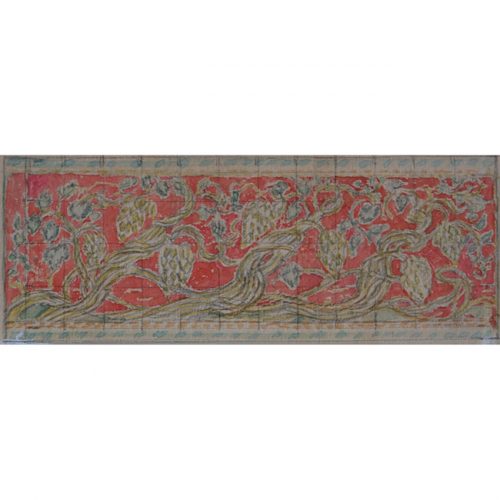
Reginald Hallward Grapevine Altar Cloth Design
Reginald Hallward Grapevine Altar Cloth Design Watercolour and pencil Click here for biographical details and other works by the artist. If you are interested email info@manningfineart.co.uk or call us on 07929 749056. -

John Bluck (early 19th century) after Augustus Charles Pugin (1762 - 1832) All Souls - taken from the top of the Radcliffe Library (1814)
Aquatint with original hand colouring 21 x 27 cm Published by Rudolph Ackermann (1764 - 1834). An engraving of serene All Souls from Ackermann's 'History of Oxford'. Augustus Charles Pugin was an Anglo-French artist and architectural draughtsman. Pugin produced views of London, jointly creating the illustrations for the 'Microcosm of London' published by Rudolph Ackermann in 1811, followed by plates for Ackermann's books about Westminster Abbey, Oxford and Cambridge universities, and Winchester College. His later works included illustrations for Specimens of Gothic Architecture (1821–1823), The Royal Pavilion at Brighton (1826), Architectural Antiquities of Great Britain (1826), Specimens of the Architectural Antiquities of Normandy (1827), Illustrations of the Public Buildings of London (1825 to 1828), Paris and its Environs (1829 to 1831), and Examples of Gothic Architecture (1831). He also produced a book of furniture designs called Gothic Furniture, and assisted architects with detailing for their gothic designs. He ran a drawing school at his house in Bloomsbury. John Bluck was an aquatint engraver, mainly of topographical views, but also of marine and sporting subjects after his contemporaries. He produced plates for numerous publications. Rudolph Ackermann was an Anglo-German bookseller, inventor, lithographer, publisher and businessman. In 1795 he established a print-shop and drawing-school at 96 Strand. Here Ackermann set up a lithographic press and began a trade in prints. He later began to manufacture colours and thick carton paper for landscape and miniature painters. Within three years the premises had become too small and he moved to 101 Strand, in his own words "four doors nearer to Somerset House", the seat of the Royal Academy of Arts. Between 1797 and 1800 Ackermann rapidly developed his print and book publishing business, encompassing many different genres including topography, caricature, portraits, transparencies and decorative prints. Condition: Generally very good.If you would like to know more, please email info@manningfineart.co.uk or call us on 07929 749056.
-

John Hill (1770 - 1850) after Augustus Charles Pugin (1762 - 1832) St Aldate's From Carfax (1813)
Aquatint with original hand colouring 27 x 21 cm Published by Rudolph Ackermann (1764 - 1834). An engraving of St Aldate's, overlooked by Christ Church's pale and magnificent Tom Tower. John Hill was born in London in 1770, and was an engraver's apprentice. He worked in aquatint and largely produced book illustration aquatints. He went to America in 1816 and produced the notable Picturesque Views of American Scenery amongst other books of prints. Augustus Charles Pugin was an Anglo-French artist and architectural draughtsman. Pugin produced views of London, jointly creating the illustrations for the 'Microcosm of London' published by Rudolph Ackermann in 1811, followed by plates for Ackermann's books about Westminster Abbey, Oxford and Cambridge universities, and Winchester College. His later works included illustrations for Specimens of Gothic Architecture (1821–1823), The Royal Pavilion at Brighton (1826), Architectural Antiquities of Great Britain (1826), Specimens of the Architectural Antiquities of Normandy (1827), Illustrations of the Public Buildings of London (1825 to 1828), Paris and its Environs (1829 to 1831), and Examples of Gothic Architecture (1831). He also produced a book of furniture designs called Gothic Furniture, and assisted architects with detailing for their gothic designs. He ran a drawing school at his house in Bloomsbury. Ackermann was an Anglo-German bookseller, inventor, lithographer, publisher and businessman. He attended the Latin school in Stollberg, but his wish to study at the university was made impossible by lack of financial means, and he therefore became a saddler like his father. He worked as a saddler and coach-builder in different German cities, moved from Dresden to Basel and Paris, and then, 23 years old, settled in London. He established himself in Long Acre, the centre of coach-making in London and close to the market at Covent Garden. Ackermann then moved to Little Russell Street where he published Imitations of Drawings of Fashionable Carriages (1791) to promote his coach-making. Other publications followed. In 1795 he established a print-shop and drawing-school at 96 Strand. Here Ackermann set up a lithographic press and began a trade in prints. He later began to manufacture colours and thick carton paper for landscape and miniature painters. Within three years the premises had become too small and he moved to 101 Strand, in his own words "four doors nearer to Somerset House", the seat of the Royal Academy of Arts. Between 1797 and 1800 Ackermann rapidly developed his print and book publishing business, encompassing many different genres including topography, caricature, portraits, transparencies and decorative prints. During the Napoleonic wars, Ackermann was an energetic supporter of the Allied cause and made significant contributions to British propaganda through his publication of anti-Napoleonic prints and military manuals. He became a naturalised British citizen in March 1809. As one of the pioneers of modern publishing methods, Ackermann developed an international distribution network for his publications and came to have significant commercial interests in South America. The business he founded in London flourished throughout the 19th century under the management of his descendants. He was buried at St. Clement Danes in the Strand, London. In 2020, the St. Louis Mercantile Library wrote that: "Ackermann excelled in the creation of landscape and architectural engravings. He created beautiful illustrations of the city of London, his adopted home, as well as two volumes of classic views of Westminster Abbey, along with exquisite views of river scenes. One of our favorite collections are four massive volumes of lovingly illustrated exterior and interior landmarks of Oxford and Cambridge Universities created just over two hundred years ago. These publications show Ackermann’s hand at every turn of the page along with the team of assistant designers and engravers he employed to create these works. Perhaps they were a way by which the artist could lay to rest his own regret at not being able to attend [an Oxbridge] college himself in a fondly depicted idyll to learning which these prints so aptly represent." Condition: Generally very good.If you would like to know more, please email info@manningfineart.co.uk or call us on 07929 749056.