-

Joseph Constantine Stadler (1755 - 1828) after William Henry Pyne (1769 - 1843 Kitchen of Trinity College, Cambridge (1815)
Aquatint with original hand colouring 27 x 21 cm Published by Rudolph Ackermann (1764 - 1834). The kitchen of Trinity College at the beginning of the nineteenth century, complete with scullery maids, dogs, and turning spits. Joseph Constantine Stadler was a prolific German émigré engraver of images after his contemporaries - here, 18th-century English landscape painter and diarist Joseph Farington. Stadler's engravings are wide-ranging in subject matter and include landscapes, seascapes and portraits, as well as military, sporting and decorative subjects. Stadler was employed by the leading print publisher of the time, John Boydell. Stadler lived in Knightsbridge when he died at the age of 73. William Henry Pyne was an English writer, illustrator, and painter, who also wrote under the name of Ephraim Hardcastle. He trained at the drawing academy of Henry Pars in London and first exhibited at the Royal Academy in 1790. Rudolph Ackermann was an Anglo-German bookseller, inventor, lithographer, publisher and businessman. In 1795 he established a print-shop and drawing-school at 96 Strand. Here Ackermann set up a lithographic press and began a trade in prints. He later began to manufacture colours and thick carton paper for landscape and miniature painters. Within three years the premises had become too small and he moved to 101 Strand, in his own words "four doors nearer to Somerset House", the seat of the Royal Academy of Arts. Between 1797 and 1800 Ackermann rapidly developed his print and book publishing business, encompassing many different genres including topography, caricature, portraits, transparencies and decorative prints. Condition:Generally very good; slight toning to within platemark.If you would like to know more, please email info@manningfineart.co.uk or call us on 07929 749056.
-
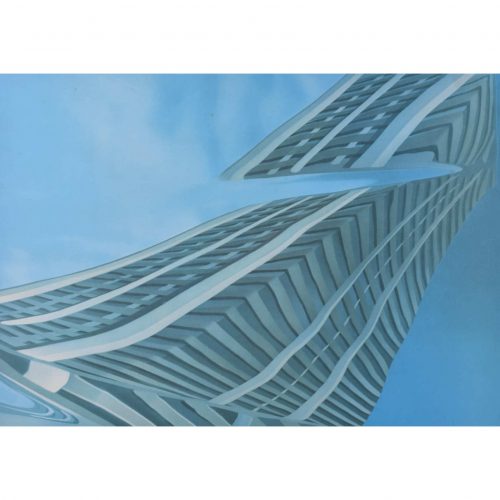
Brendan Neiland (b.1941) R.A. (Expelled)
Hyde Park Barracks, Knightsbridge (1979)
Screenprint 35 x 51 cm Signed, titled, dated and numbered 153/300 in pencil. A print of the facade of Hyde Park Barracks, reflected in still water and backed by a bright blue sky. Reflected architecture is one of Neiland's most recurring themes. The Hyde Park Barracks (often known as Knightsbridge Barracks) on the southern edge of Hyde Park. The barracks are 3⁄4 mile from Buckingham Palace, enabling the officers and soldiers of the Household Cavalry to be available to respond speedily to any emergency at the Palace, practice drills on the Horse Guards Parade, and conduct their ceremonial duties. Neiland is known for his interpretations of city life. His work is widely exhibited in major museums and galleries worldwide including, in Britain, the Victoria and Albert Museum, The Tate Gallery London, The Collections of the British Council and the Arts Council of Great Britain. He is represented by the Redfern Gallery and has had numerous shows internationally, including at the Galerie Belvedere in Singapore, who represent him in Singapore and the Far East. Condition: slight browning to sheet; small stain to top right corner. When mounted this will not be perceptible. If you’d like to know more, please email info@manningfineart.co.uk or call us on 07929 749056. -
 KUKRYNIKSY Новый «Болшой Скачок» Пекина [The new Great Leap of Peking [Beijing]] Moscow, Izadetelstvo 'Plakat' 1979 54 x 37 cm, 11 (of 12) posters loosely inserted in a printed paper portfolio featuring two further designs, two short tears to the portfolio spine, else fine. A striking series of posters with an anti-Mao tone, from the time of the Sino-Vietman war. Taking a satirical look at the process of modernization in China, a process that involves embracing imperialism and shunning world socialism and communist, to create a united anti-socialist front. The Kukryniksi - a portmanteau name derived from the names of the three artists, Mikhail Kupryanov (Ku), Porfiri Krylov (Kry), and Nikolai Sokolov (Niks) - are arguably the most successful Russian caricaturists. Favoured by the establishment, they were rarely privileged in being allowed to travel, producing views of Europe as well as a variety of spirited propaganda drawings in support of the Russian war effort, and illustrating many classic Russian texts.
 -
 KUKRYNIKSY Новый «Болшой Скачок» Пекина [The new Great Leap of Peking [Beijing]] Moscow, Izadetelstvo 'Plakat' 1977 54 x 37 cm, 12 posters loosely inserted in a printed paper portfolio featuring one further designs, portfolio lightly worn with numerous short tears, else fine. A dramatic collection of irreverent depictions of Imperialism in inimitable Kukryniksi style, from the 1970s. The posters pillory many prominent motifs of the 20th century, including Hitler, NATO, the BBC, and American civil rights. The Kukryniksi - a portmanteau name derived from the names of the three artists, Mikhail Kupryanov (Ku), Porfiri Krylov (Kry), and Nikolai Sokolov (Niks) - are arguably the most successful Russian caricaturists. Favoured by the establishment, they were rarely privileged in being allowed to travel, producing views of Europe as well as a variety of spirited propaganda drawings in support of the Russian war effort, and illustrating many classic Russian texts.
 -

R C Meaux
La Plagne - Bobsleigh (1990)
Original vintage poster 80 x 53 cm An original vintage poster printed in colour in 1990 by L’Avenir Graphic. The poster was designed to promote the 1992 Olympic Winter Games in Albertville. A similar design was also used for a limited edition French postage stamp in 1992. Condition: generally very good; 1cm neatly repaired tear to bottom right. If you are interested, please email info@manningfineart.co.uk or call us on 07929 749056. Click here for other original vintage skiing posters. -
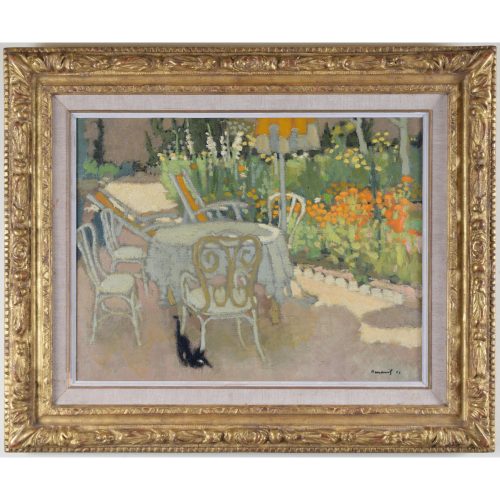
Michel Dureil (1929 - 2011)
La Table du Jardin / Garden Table with a Black Cat
Oil on canvas 35 x 44 cm A black cat stretches beside a typical French table, observed by bright orange flowers. Orange cushions and an orange sun-umbrella complete the scene. Condition: very good. If you are interested, please email info@manningfineart.co.uk or call us on 07929 749056. -
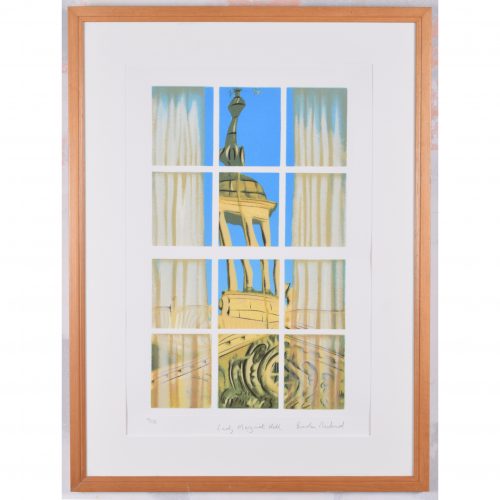
Brendan Neiland (b. 1941) R.A. (Expelled)
Lady Margaret Hall
Screenprint 46 x 27 cm Signed, titled, and numbered 42/175 in pencil. A screenprint of the cupola atop Lady Margaret Hall's Talbot Building. Reflected architecture is one of Neiland’s most recurring themes. Neiland's work is widely exhibited in major museums and galleries worldwide including, in Britain, the Victoria and Albert Museum, The Tate Gallery London, The Collections of the British Council, and the Arts Council of Great Britain. He is represented by the Redfern Gallery and has had numerous shows internationally, including at the Galerie Belvedere in Singapore, who represent him in Singapore and the Far East. Condition: very good. If you are interested, please email info@manningfineart.co.uk or call us on 07929 749056. Click here for other views of Lady Margaret Hall. -

F. L. Griggs Lady Margaret Hall, Oxford
Lithograph 31 x 47 cm Frederick Landseer Maur Griggs was a British etcher, draughtsman, and illustrator known for his highly detailed and atmospheric depictions of the English countryside. Born in Hitchin, Hertfordshire, in 1876, he trained at the Slade School of Fine Art in London before working as an illustrator for The Highways and Byways book series. Griggs became one of the leading figures of the British etching revival in the early 20th century. His works, often depicting medieval-inspired landscapes and architectural scenes, evoke a deep sense of nostalgia and romanticism. His meticulous technique and ability to capture mood through fine lines and shading earned him a place in the Royal Academy and the Royal Society of Painter-Etchers. Later in life, he settled in Chipping Campden, where he dedicated himself to preserving traditional English architecture. His etchings remain celebrated for their poetic detail and craftsmanship. Griggs passed away in 1938, leaving behind a legacy as one of Britain’s finest etchers. This lithograph of an etching he completed of Lady Margaret Hall depicts the entrance of the college. His attention to detail is clear as he captures the minutiae of the college's masonry, surrounding the circular window on the façade, for example. He also captures the unique atmosphere of the early 19th century, depicting two well-dressed women walking down the street. As one of the more modern Oxford colleges, founded in 1878 as one of the first two lady's colleges, Lady Margaret Hall it is rare for Lady Margaret Hall to be depicted by such distinguished artists, making this lithograph a unique find. Condition: Generally very good.If you would like to know more, please email info@manningfineart.co.uk or call us on 07929 749056.
-

George Bissill (1896-1973) Lake District View of a U-Shaped Valley
Pencil sketch 28 x 40 cm Born in 1896, George Bissill was a British miner, painter and furniture designer. Raised in the mining village of Langley Mill, Derbyshire, Bissill became a miner at the age of 13, before leaving to join the war effort in 1915. Upon his return from the war after being gassed, Bissill chose to become a pavement artist outside the newly erected Bush House in Aldwych, painting from his memory and his sketch book the uncompromising underground world he had inhabited. In 1935 he moved to the countryside near Newbury, where he lived and worked as a landscape painter, art restorer and dealer until his death in 1973. This painting forms part of a larger collection, 'unseen since they were taken from George Bissil's studio in 1983' and restored by Kate Pattinson. A series of planned exhibitions were cancelled due to Covid, but two shows, one in Oxford and one in Ilkeston, did take place. Through such exhibitions, Pattinson hoped to 'restore the reputation of an artist who, through mighty endeavour, conquered the art world in the 1920s with his powerful, authentic and experimental pictures.' Bissill's paintings are also held in a number of important public collections, including the Tate Gallery, National Museum of Ireland and the Manchester Art Gallery. This pencil sketch depicts a view over a U-Shaped Valley in the Lake District. While other peaks dominate the background of this minimalistic sketch, Bissill draws a quaint farmhouse, cradled in the steep slopes of this formerly glacial landscape. -
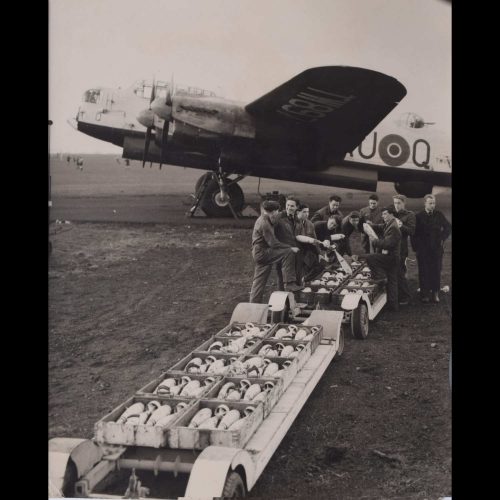
Lancaster Bomber AU-Q loading bombs
Original Silver Gelatin photograph 25 x 20 cm Stamped to reverse 'Copyright Associated Press Photograph' Press release states:LAST MINUTE PREPARATIONS FOR TOMORROW'S ATTACK ON THE FLEET At RAF Station Upwood, Hunts, today, Dec 8th last minute preparations were being carried out for tomorrow's attack on the fleet. Photo shows airmen of 148 Squadron no 3 Bomber Command look over smoke bombs with a Lancaster in background. WOR 339888 Provenance: from the collection of Philip J R Moyes, author of many books on the RAF, most notably The Pictorial History which ran to several volumes. Condition: generally good. -
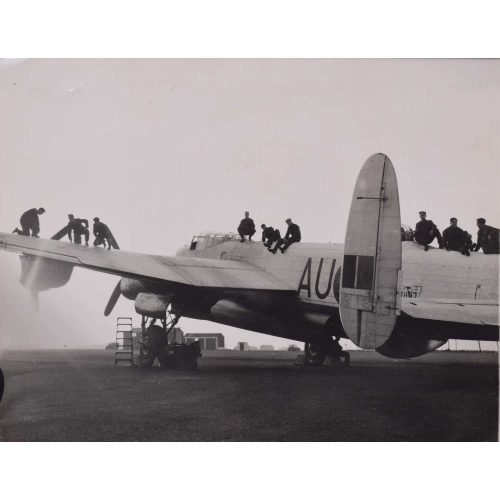
Lancaster Bomber AU-Q loading bombs
Original Silver Gelatin photograph 21 x 25 cm Stamped to reverse 'Copyright Associated Press Photograph' Press release states:LAST MINUTE PREPARATIONS FOR TOMORROW'S ATTACK ON THE FLEET At RAF Station Upwood, Hunts, today, Dec 8th last minute preparations were being carried out for tomorrow's attack on the fleet. Photo shows a Lancaster being made ready for a dawn take off tomorrow photographed this evening against the setting sun. WOR 339889 Associated Press Photo Provenance: from the collection of Philip J R Moyes, author of many books on the RAF, most notably The Pictorial History which ran to several volumes. -
Out of stock
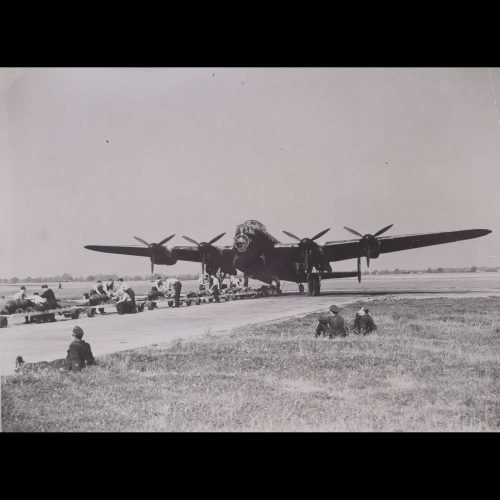
Lancaster Bomber being armed
Original Silver Gelatin photograph, c. 1942 16 x 21 cm Stamped to reverse 'Copyright this photograph must not be reproduced without the permission of Aeroplane' and 'This photograph has been passed by censor'. The photograph of the Swinderby based 50 Sqn - was taken in 1942. Either at the June reopening of the aerodrome with its new concrete runways (replacing grass) or in August when the photographers descended on the aerodrome again to take photographs for aircraft recognition purposes. Everitt survived the war - having flown 56 operations for which he was decorated three times, subsequently he was a bombing instructor, commanded a V-bomber squadron, and played golf into his nineties. He died in 2012 and the Telegraph published an excellent obituary. Provenance: from the collection of Philip J R Moyes, author of many books on the RAF, most notably The Pictorial History which ran to several volumes. -
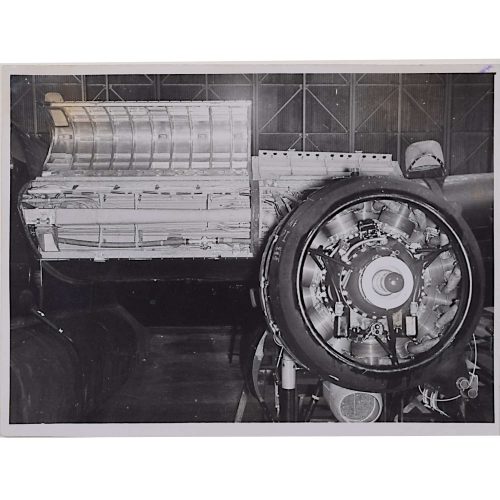
Lancaster Bomber De-icing System
Silver Gelatin photograph 1943 12 x 16 cm Stamped to reverse 'This photograph has been passed by censor. 17 Dec 1943' 'Copyright This TP copyright illustration from "The Aeroplane" must not be reproduced without the written permission of Temple Press Ltd.' 'De-icing system. - Cold air is passed into the flame-trap exhaust and forces hot air into wing leading edge.' Condition: good. Provenance: from the collection of Philip J R Moyes, author of many books on the RAF, most notably The Pictorial History which ran to several volumes. -
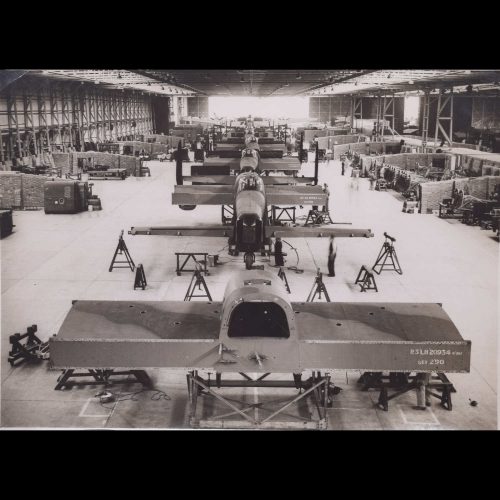
Lancaster Bombers under Construction
Original Silver Gelatin photograph 17 x 21 cm Stamped to reverse 'Certified by Photographic News Agencies Ltd as passed by Censor' '23 Oct 1942' This photograph shows the parts of a Lancaster bomber being assembled. At the back of the photograph, facing away from the viewer, are two nearly or newly completed aircraft, their airscrews visible attached to the wings. The factory buzzes with activity as important war work is undertaken. We have been unable to trace any other copy of this photograph. Provenance: from the collection of Philip J R Moyes, author of many books on the RAF, most notably The Pictorial History which ran to several volumes. -
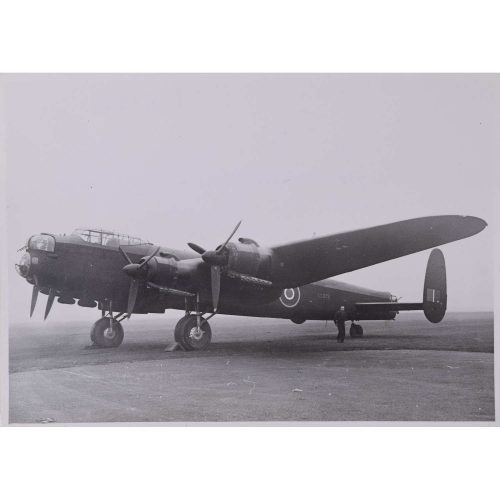
Lancaster LL678 'Lily Mars' - 1
Silver Gelatin photograph, December 1943 12 x 16 cm Stamped to reverse 'The Photograph has been passed by Censor' 'Copyright This TP copyright illustration from "The Aeroplane" must not be reproduced without the written permission of Temple Press Ltd'. 'A general view of an Avro Lancaster II with Hercules radial motors.' 300 Lancaster II aeroplanes were made, fitted with Bristol Hercules radial engines, as there was a worry that there would be a shortage of Merlin engines, reserved for the Spitfire and Hurricane. Lily Mars was named after the 1943 American musical starring Judy Garland and was based at RAF Waterbeach, in Cambridgeshire. An excellent podcast (click) gives details of the final flight on 13 June 1944 which was to be the final raid of the crew's tour. The bombing raid was of 303 Lancasters against the Nordstern synthetic oil plant at Gelsenkichen in the Ruhr, deep inside Germany and the aircraft took off at 23.12 hrs. On the home run LL678 was intercepted and shot down by a night fighter capitained by Oberleutnant Schmidt in a Bf 110 at 01.24 hrs at Zuidloo, a small hamlet, where five of the eight crew are buried; the other three crew members baled out and escaped. A memorial plaque was laid on 4 May 2016 and a Lancaster flypast was arranged. Owing to technical problems a Dakota from the BBMF was sent instead. On 4 May 2022 the Lancaster of the BBMF undertook a flypast which can be seen here. Dietrich Schmidt (1919-?) had 29 confirmed night kills by the time of LL678, achieving 41 kills by the end of the war off 171 missions and was awarded the Ritterkreuz - Knight's Cross. In 1999 the living crewmembers, Dutch resistance and Schmidt and his wireless operator met in the Netherlands. -
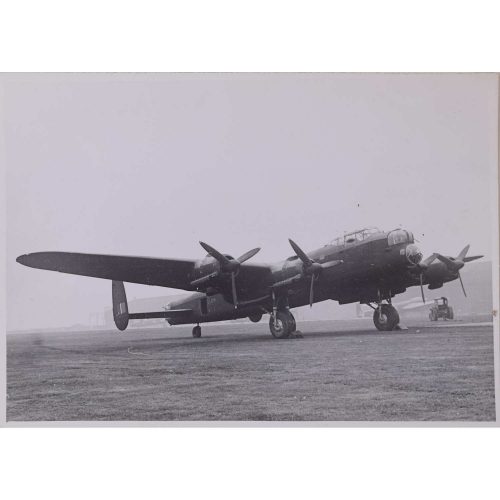
Lancaster LL678 'Lily Mars' - 2
Original Silver Gelatin photograph, December 1943 12 x 16 cm Stamped to reverse 'The Photograph has been passed by Censor' 'Copyright This TP copyright illustration from "The Aeroplane" must not be reproduced without the written permission of Temple Press Ltd'. 'Lancaster II heavy bombers are now flying with RAF BOMBER COMMAND.' 300 Lancaster II aeroplanes were made, fitted with Bristol Hercules radial engines, as there was a worry that there would be a shortage of Merlin engines, reserved for the Spitfire and Hurricane. Lily Mars was named after the 1943 American musical starring Judy Garland and was based at RAF Waterbeach, in Cambridgeshire. A podcast (click) gives details of the final flight on 13 June 1944 which was to be the final raid of the crew's tour. The bombing raid was of 303 Lancasters against the Nordstern synthetic oil plant at Gelsenkichen in the Ruhr, deep inside Germany and the aircraft took off at 23.12 hrs. On the home run LL678 was intercepted and shot down by a night fighter capitained by Oberleutnant Schmidt in a Bf 110 at 01.24 hrs at Zuidloo, a small hamlet, where five of the eight crew are buried; the other three crew members baled out and escaped. A memorial plaque was laid on 4 May 2016 and a Lancaster flypast was arranged. Owing to technical problems a Dakota from the BBMF was sent instead. On 4 May 2022 the Lancaster of the BBMF undertook a flypast which can be seen here. Dietrich Schmidt (1919-?) had 29 confirmed night kills by the time of LL678, achieving 41 kills by the end of the war off 171 missions and was awarded the Ritterkreuz - Knight's Cross. In 1999 the living crewmembers, Dutch resistance, and Schmidt and his wireless operator met in the Netherlands. Provenance: from the collection of Philip J R Moyes, author of many books on the RAF, most notably The Pictorial History which ran to several volumes. -
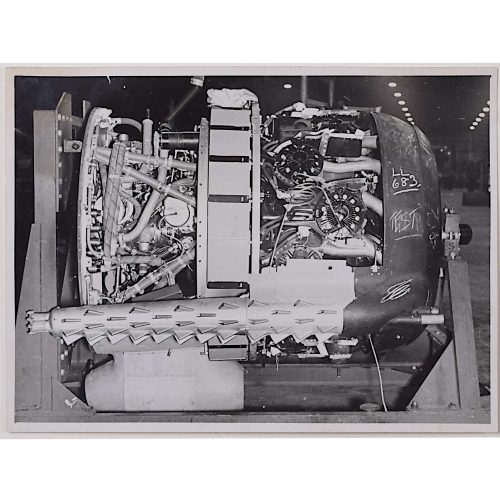
Lancaster bomber LL683 General View of Hercules Power Egg
Silver Gelatin photograph 17 December 1943 12 x 16 cm LL683 JI-P was a Lancaster II and therefore fitted with Bristol Hercules engines rather than the Rolls-Royce Merlin. 350 aircraft were outfitted thus, as a result of fears of shortages of the Merlin. The Hercules came complete as a 'power egg' which is a modular engine installation including ancillary equipment which could be swapped over rapidly for maintenance purposes. LL683 was assigned to 514 Squadron RAF, stationed at Waterbeach from December 1943 with an operational strength of thirty aircraft. The squadron eventually received sixty-seven such Lancasters (fifty-nine of which were destroyed by enemy action or accident). Stationed at Waterbeach from December 1943, the squadron had previously been stationed at RAF Foulsham in Norfolk. Three of the bombers made the move between the two airfields via a bombing raid on Berlin, the crew members' kit - including bicycles - also travelling via Berlin. LL683, serving with 514 Squadron RAF and stationed at Waterbeach had John Clare Gilbertson-Pritchard as pilot for a bombing raid on Stuttgart on the night of 01/02 March 1944. Back in action on 30/31 March for a 795-bomber raid raid on Nurnberg and piloted by W/O WL McGown, the aeroplane suffered a forced landing at Sawbridgeworth; all crew members survived though one broke his back and never flew again. Condition: good. Provenance: from the collection of Philip J R Moyes, author of many books on the RAF, most notably The Pictorial History which ran to several volumes. -
Out of stock
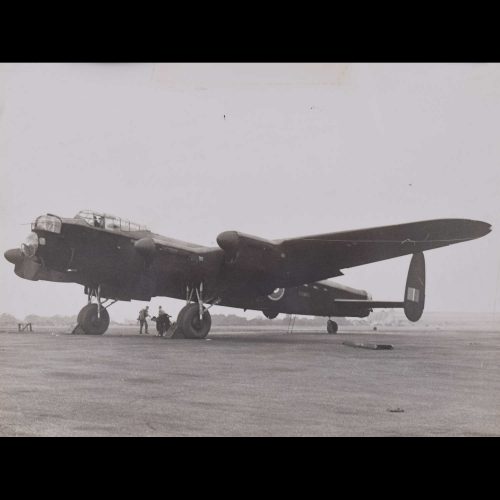
Lancaster Bomber at RAF Waddington
Original Silver Gelatin photograph 16 x 22 cm Stamped to reverse 'Passed by censor' and 'Copyright This photograph must not be reproduced without permission of 'The Aeroplane.' Unfortunately the serial number of the aeroplane is unclear. It may be RAF Waddington-based R5905 of 44 Sqn which crash landed near Madum in Denmark on 24 September 1942. The crew all survived the landing and were taken prisoner, spending the rest of the war in a PoW camp (where one died in March 1945) before returning home. Further details regarding their exploits are here. Alternatively it is R5903 also of 44 Sqn which crashed at Klosterholte on 7 October 1942 having left RAF Waddington; five of the crew survived the crash, with the two airgunners dying. -
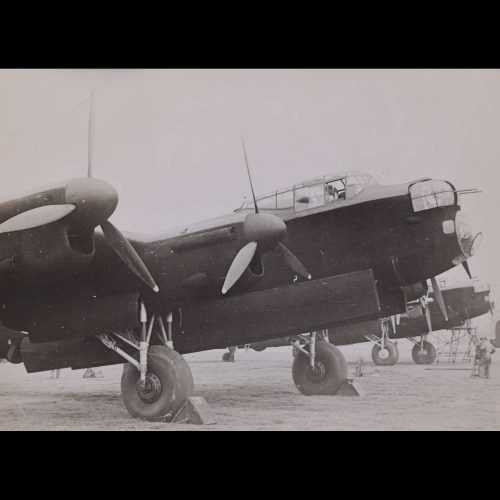
Lancaster Bombers
Original Silver Gelatin photograph for Aeroplane magazine 16 x 21 cm Stamped to reverse 'Copyright This photograph must not be reproduced without permission of Aeroplane'. -
Out of stock
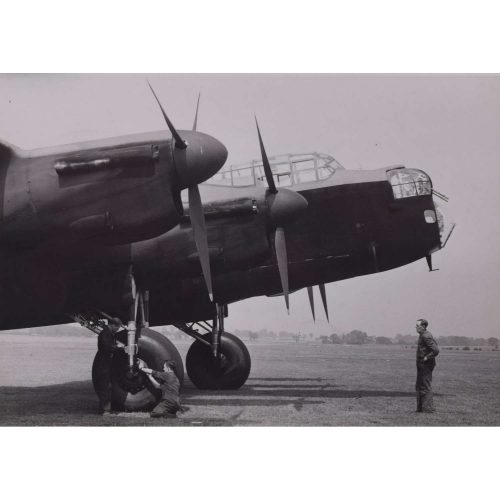
Lancaster Bomber
Original Silver Gelatin photograph, July 1942 11 x 16 cm Stamped to reverse 'Passed for Publication 2 July 1942 Press and Censorship Bureau', 'Public Relations Branch MAP'. A fine photograph; two erks are adjusting the starboard undercarriage of a Lancaster bomber whilst being supervised - the supervisor apparently with his hands in his pockets in very unmilitary fashion! The sun is high in the sky, casting a rather fine shadow under the bomber. -
Out of stock
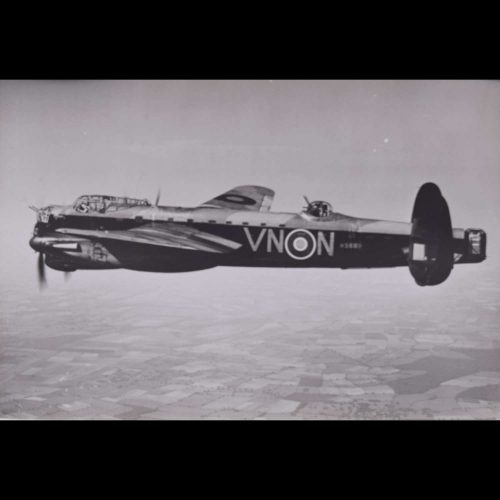
Lancaster Bomber VN-N R5689
Original Silver Gelatin photograph 11 x 16 cm Stamped to reverse 'This TP Copyright illustration from 'The Aeroplane' must not be reproduced without the written permission of Temple Press.' The photograph - and several others of the Swinderby based R5689 of 50 Sqn - was taken on 28 August 1942. The pilot was Sqn Ldr Hugh Everitt. One of the most photographed Lancasters of the RAF's fleet, it was utilised for literature that trained aircrew to recognise the Lancaster. It is also proposed that it be imortalised by the Bomber Gateway Trust with a lifesize replica spraying poppies across the country, just a short distance from its crash site in Lincolnshire. Further funding is required before the project can be completed. R5689 was destroyed on the night of 18/19 September that year. It had been on a sea mining mission and crashed on landing when both port engines failed. Four crew members were killed and three further were injured. Everitt was not flying R5689 on the night it crashed. He survived the war - having flown 56 operations for which he was decorated three times, commanded a V-bomber squadron and played golf into his nineties. He died in 2012 and the Telegraph published an obituary. We have another photograph that includes him sitting on the grass in front of a Lancaster that is being armed. -
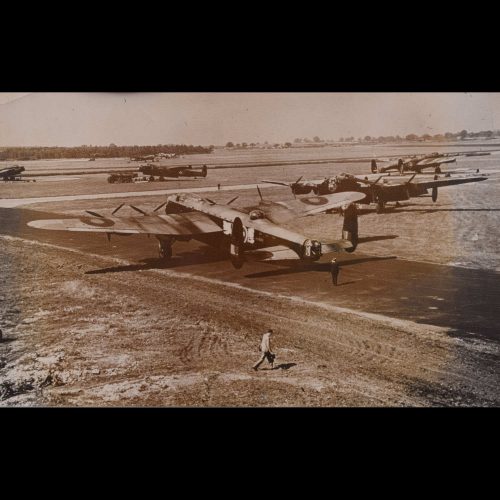
Lancaster Bomber VN-N R5689
Original Silver Gelatin photograph 11 x 16 cm Stamped to reverse 'This TP Copyright illustration from 'The Aeroplane' must not be reproduced without the written permission of Temple Press.' The photograph - and several others of the Swinderby based R5689 of 50 Sqn - was taken on the base open day in June 1942, a week or so after the aerodrome had reopened having been improved with concrete - rather than grass - runways. R5689 was destroyed on the night of 18/19 September that year. It had been on a sea mining mission and crashed on landing when both port engines failed. Four crew members were killed and three further were injured. It is also proposed that R5689 be imortalised by the Bomber Gateway Trust with a lifesize replica spraying poppies across the country, just a short distance from its crash site in Lincolnshire. Further funding is required before the project can be completed. They have 'colourised' a copy of this photograph on their website, see here. Condition: the photograph has discoloured and taken on a sepia hue as may be seen in the image. Provenance: from the collection of Philip J R Moyes, author of many books on the RAF, most notably The Pictorial History which ran to several volumes. -
Out of stock
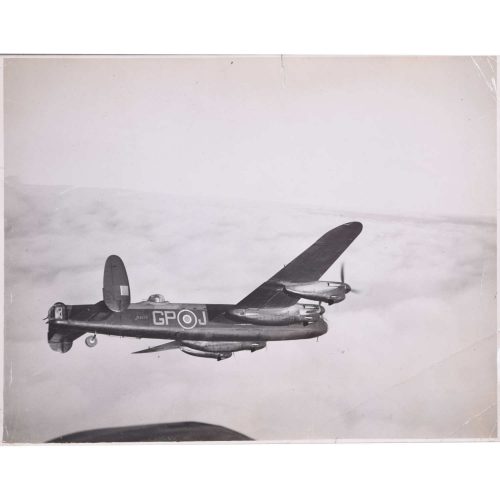
Lancaster Bomber W4113 GP-J
Original Silver Gelatin photograph, c. 1944 19 x 24 cm Published in Aeroplane Magazine, 4 February 1944. Stamped to reverse 'Wanted by 31 Janary' making this the original photograph used by the editing team at Aeroplane; and 'T[emple] P[ress] Ltd'. Photograph in official Air Ministry Second World War Collection, glass plate negative taken by F/O S A Devon. Lancaster B Mark I, W4113 ‘GP-J’, of No. 1661 Heavy Conversion Unit based at Winthorpe, Nottinghamshire, in flight. W4113 was a veteran aircraft having flown on a number of raids with Nos. 49 and 156 Squadrons RAF in 1942 and 1943, and was sent to a Heavy Conversion Unit where airmen were trained to operate the Lancaster. Became 4969M on 9/12/44, being reclassified as a ground instruction aircraft. W4113 took part in the following bombing raids: No. 49 Squadron; 1) Düsseldorf, 15-16/08/42; 2) Osnabrück, 17-18/08/42; 3) Flensburg, 18-19/08/42; 4) Gardening, Bornholm, 20-21/08/42; 5) Kassel, 27-28/08/42; 6) Saarbrücken, 01-02/09/42; 7) Duisburg, 06-07/09/42; 8.) Frankfurt, 08-09/09/42; 9) Bremen, 13-14/09/42; 10) Wilhelmshaven, 14-15/09/42; 11) Gardening, Kattegatt, 18-19/09/42; 12) Wismar, 01-02/10/42; 13) Aachen, 05-06/10/42; 14) Wismar, 12-13/10/42; 15) Kiel, 13-14/10/42; 16) Cologne, 15-16/10/42; 17) Genoa, 22-23/10/42; 18.) Genoa, 07-08/11/42; 19) Hamburg, 09/10/11/42; 20) Genoa, 15-16/11/42; 21) Stuttgart, 22-23/11/42; 22) Turin, 28-29/11/42; 23) Mannheim, 06-07/12/42, 24) 20-21/12/42. No. 156 Squadron.: a) Nuremburg, 25-26/02/43. It was produced in the third production batch of 207 aircraft ordered from A. V. Roe Co., Ltd., as part of Contract No. B69274/40 (as extended) under Works Order No. 7671, W4102-W4140, W4154-W4201, W4230-4279, W4301-W4340 and W4355-W4384. Deliveries commenced 07/42, completed 11/42 (average rate of production, approximately 13 aircraft per week). Merlin XX and XXII engines. Original Contract covered 453 aircraft in this batch but 243 were cancelled (W4385-W4900, W4414-4463, W4481-W4524, W4537-W4385, W4600-W4641 and W4655-W4700). Provenance: from the collection of Philip J R Moyes, author of many books on the RAF, most notably The Pictorial History which ran to several volumes. Condition: a couple of old edge tears and creases, visible in image. -
Out of stock
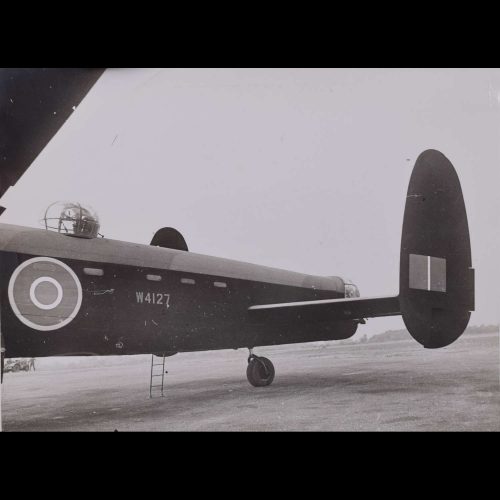
Lancaster Bomber W4127
Original Silver Gelatin photograph 16 x 21 cm Stamped to reverse 'Copyright this photograph must not be reproduced without the written permission of The Aeroplane.' W4127, of Sqn 419 (RCAF) was lost on the night of 20/21 April 1944 whilst returning from a mission to bomb the railway yards at La Chappelle. Having taken off from Dunholme Lodge at 22.07 and completed its bombing raid, it was attacked by a night fighter, suffering a fire in one wing, crashing north of Paris. The yards were badly damaged by the bombing, the mission a success. Six of the crew were killed and are buried in Poix de la Somme churchyard, whilst one, Bob Hortie, evaded escape. The Comet line - the escape line that took downed airmen to Spain whereby they could return to England - found it hard to operate with the destruction of rail and road infrastructure in the period leading up to D-Day and the invasion of Europe. Airey Neave of MI9 therefore set up three camps in isolated forests in Northern France where downed airmen could await the invading allied forces. The camps were supplied - and manned - by the allies through parachute drops. Hortie was one of 152 allied airmen to be in the camp at Fréteval - codenamed 'Sherwood Camp'. Neave went to France in the middle of August, to Le Mans which was controlled by the Americans and was 75 miles from Sherwood Camp. The Americans distrusted Neave and refused to provide him with transport. He managed to come up with some trucks and buses, which - decked out with flowers and French flags and guarded by a civilians armed with rifles and a handful of SAS men - set out to Fréteval on 14 August 1944 returning the same day with 132 airmen. A further 20 were recovered the following day. Most returned to active service and 38 died before the end of the war. A souvenir from the camp is published here on the internet. The camps were due to be set up by a team that included Belgian resistance member Michelle Dumon, who at the age of 22 (with an identity card that showed she was 16) had exfiltrated 250 airmen by this point. However she unmasked a German infiltrator into the Comet line just as the camps were being set up and was therefore sought by the Gestapo and had to flee to England. That seemingly simple journey of course meant a perilous journey across France to Spain, crossing the Pyrenees on foot, and being rescued by the RAF. In this photograph L4127 is without its squadron letters, suggesting that it is fresh out of the factory at the time of the photograph. -
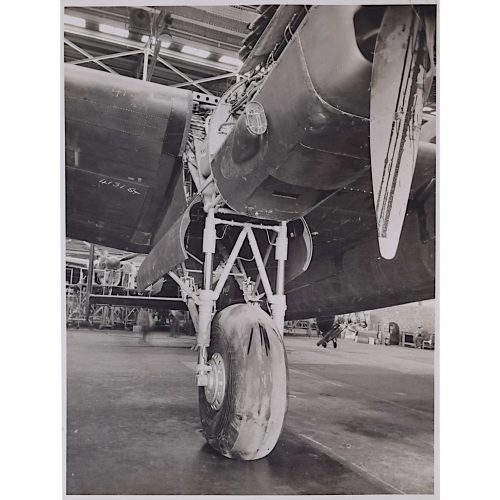
Lancaster Bomber W4131 Undercarriage
Original silver gelatin photograph c. 1943 21 x 16 cm Stamped 'Copyright Aeroplane Magazine' Stamped 'Passed by Censor' Rare; we have been unable to trace another copy of this photograph in any collection. W4131 served with 50 Squadron, based at Swinderby. On 18 August 1942 W4131 crash landed at Swinderby on return from a training flight at 17.15. The wheels were retracted too soon on take-off by pilot SGT PH Blaskey, damaging the undercarriage. The pilot and crew were uninjured. It is possible that this photograph records repairs to the undercarriage following this incident. On 28 March 1943 W4131 was involved in another incident, again at Swinderby. Although the aeroplane landed safely, the airframe was found to have been strained during a fighter affiliation exercise as a result of violent movements. On 1 June 1943 while serving with 1660 HCU (Heavy Conversion Unit) the undercarriage collapsed following an engine failure during take-off from Swinderby. The aircraft was written off on 12 June 1943. Condition: good. Provenance: from the collection of Philip J R Moyes, author of many books on the RAF, most notably The Pictorial History which ran to several volumes. -
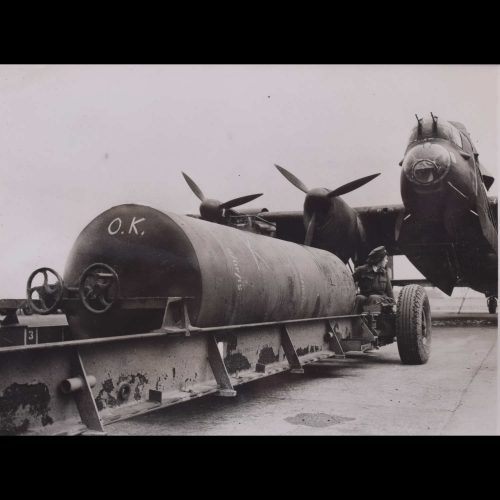
Lancaster Bomber with 8000lb cookie bomb
Original Silver Gelatin photograph, September 1943 19 x 25 cm Stamped to reverse 'Copyright this photograph must not be reproduced without the written permission of The Aeroplane.' BRITISH OFFICIAL PHOTOGRAPH CH 10939(WK) Air Ministry Photo- Crown Copyright Reserved (Picture issued September 1943) THE RAF's EIGHT THOUSAND POUND BOMB Stamped to reverse 'British Official Photograph, Crown Copyright Reserved, Supplied by BIPPA, Passed for publication by Ministry of Information'. The press release states: First official photographs of the RAF's 8,000 lb and 4,000 lb bombs are now released. Their weight has been felt with devastating effect on enemy targets in Italy and Germany. Picture shows:- Close-up of an 8,000 lb bomb in front of the Lancaster which will carry it on the night's raid. The 8000 lb 'super cookie' was a 'blockbuster' bomb, so-called because it could destroy an entire block of flats on its own. The Germans called these large bombs 'Luftminen' - airmines - as during the Blitz the large bombs used by the Luftwaffe were adapted marine mines. Judging by the length of the hair of the person sitting by the bomb, this is a member of the WAAF. WAAFs were often used to drive tractors on aerodromes during the war. Condition: generally good Provenance: from the collection of Philip J R Moyes, author of many books on the RAF, most notably The Pictorial History which ran to several volumes. -
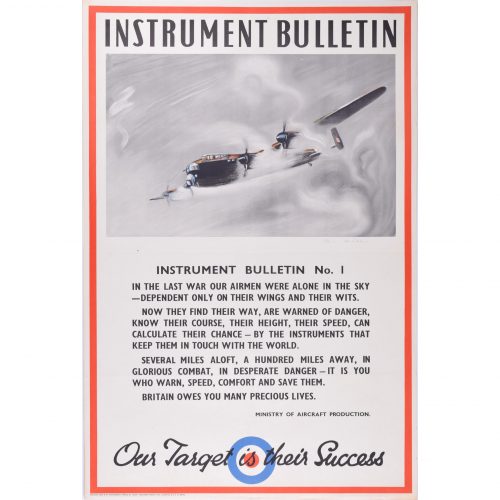
Owen Miller (1907-1960)
Instrument Bulletin No. 1 - Lancaster Bomber
Our Target is Their Success Original poster c. 1943 75x49cm Printed for HMSO by Multi Machine Plates Ltd for the Ministry of Aircraft Production In the last war our airmen were alone in the sky - dependent only on their wings and their wits. Now they find their way, are warned of danger, know their course, their height, their speed, can calculate their change - by the instruments that keep them in touch with the world. Several miles aloft, a hundred miles away, in glorious combat, in desperate danger - it is you who warn, speed, comfort and save them. Britain owes you many precious lives. Click here for biographical details and other works by the artist. If you are interested email info@manningfineart.co.uk or call us on 07929 749056. -

Lance Cattermole (1898-1992)
St John's College, Cambridge
Gouache 37 x 50 cm Lance Cattermole was born in Ireland in 1898 to a long line of artists. At the age of 24, Cattermole began his studies at the Central School of Arts and Crafts (1922-3), before continuing at the prestigious Slade School of fine art (1923–6), under such artists as Henry Tonks and Philip Wilson Steer. As well as various travel posters, notably advertising rail travel in England, he also went on to create numerous paintings of famous military figures, many of which are now on display at the National Army Museum. This vibrant gouache was painted for an unknown purpose, perhaps for a guidebook cover. It presents an idyllic view of the River Cam running through St John's College. The orange-browns of the tree leaves suggest autumn, but the beaming sun and blue water are more evocative of a bucolic summer day: the perfect painting to brighten up any room. Condition: very good. If you are interested, please email info@manningfineart.co.uk or call us on 07929 749056. Click here for other views of St John's College, Cambridge. -
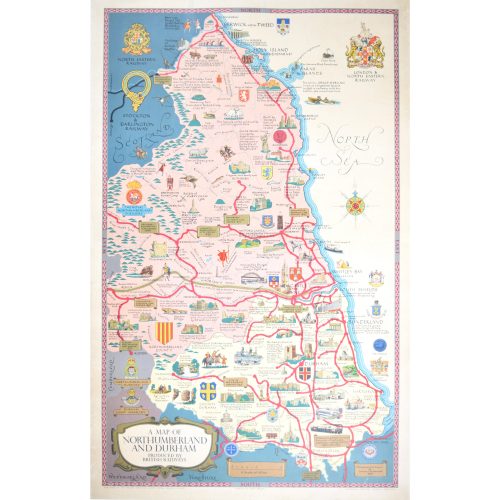
Lance Cottermole A Map of Northumberland & Durham, UK
1949 Lithographic poster Published for Railway Executive 102x63cm If you are interested email info@manningfineart.co.uk or call us on 07929 749056. Condition: Good. Backed to linen, repaired tear, presents very well. -

George Bissill (1896-1973) Landscape view with barn and church, Devon
Pencil sketch 25 x 35 cm Born in 1896, George Bissill was a British miner, painter and furniture designer. Raised in the mining village of Langley Mill, Derbyshire, Bissill became a miner at the age of 13, before leaving to join the war effort in 1915. Upon his return from the war after being gassed, Bissill chose to become a pavement artist outside the newly erected Bush House in Aldwych, painting from his memory and his sketch book the uncompromising underground world he had inhabited. In 1935 he moved to the countryside near Newbury, where he lived and worked as a landscape painter, art restorer and dealer until his death in 1973. This painting forms part of a larger collection, 'unseen since they were taken from George Bissil's studio in 1983' and restored by Kate Pattinson. A series of planned exhibitions were cancelled due to Covid, but two shows, one in Oxford and one in Ilkeston, did take place. Through such exhibitions, Pattinson hoped to 'restore the reputation of an artist who, through mighty endeavour, conquered the art world in the 1920s with his powerful, authentic and experimental pictures.' Bissill's paintings are also held in a number of important public collections, including the Tate Gallery, National Museum of Ireland and the Manchester Art Gallery. This pencil sketch depicts a bucolic view of a Devonshire landscape. In amongst the rolling hills of Devon, traces of rural life are discernible, with a barn standing prominent in the foreground and the spire of a church peeking above the canopy of trees. Condition: Generally very good.If you would like to know more, please email info@manningfineart.co.uk or call us on 07929 749056.
-

George Bissill (1896-1973) Landscape view
Pencil sketch 13 x 18 cm Born in 1896, George Bissill was a British miner, painter and furniture designer. Raised in the mining village of Langley Mill, Derbyshire, Bissill became a miner at the age of 13, before leaving to join the war effort in 1915. Upon his return from the war after being gassed, Bissill chose to become a pavement artist outside the newly erected Bush House in Aldwych, painting from his memory and his sketch book the uncompromising underground world he had inhabited. In 1935 he moved to the countryside near Newbury, where he lived and worked as a landscape painter, art restorer and dealer until his death in 1973. This painting forms part of a larger collection, 'unseen since they were taken from George Bissil's studio in 1983' and restored by Kate Pattinson. A series of planned exhibitions were cancelled due to Covid, but two shows, one in Oxford and one in Ilkeston, did take place. Through such exhibitions, Pattinson hoped to 'restore the reputation of an artist who, through mighty endeavour, conquered the art world in the 1920s with his powerful, authentic and experimental pictures.' Bissill's paintings are also held in a number of important public collections, including the Tate Gallery, National Museum of Ireland and the Manchester Art Gallery. This pencil sketch depicts a bucolic view of an English landscape. Although minimalistic in style, Bissill incorporates subtle details, such as a man at work in what appears to be a small stream adjacent to the farm house. Condition: Generally very good.If you would like to know more, please email info@manningfineart.co.uk or call us on 07929 749056.
-

George Bissill (1896-1973) View through the village
Watercolour 26 x 31 cm Initialled to bottom right Born in 1896, George Bissill was a British miner, painter and furniture designer. Raised in the mining village of Langley Mill, Derbyshire, Bissill became a miner at the age of 13, before leaving to join the war effort in 1915. Upon his return from the war after being gassed, Bissill chose to become a pavement artist outside the newly erected Bush House in Aldwych, painting from his memory and his sketch book the uncompromising underground world he had inhabited. In 1935 he moved to the countryside near Newbury, where he lived and worked as a landscape painter, art restorer and dealer until his death in 1973. This watercolour forms part of a larger collection, 'unseen since they were taken from George Bissil's studio in 1983' and restored by Kate Pattinson. A series of planned exhibitions were cancelled due to Covid, but two shows, one in Oxford and one in Ilkeston, did take place. Through such exhibitions, Pattinson hoped to 'restore the reputation of an artist who, through mighty endeavour, conquered the art world in the 1920s with his powerful, authentic and experimental pictures.' Bissill's paintings are also held in a number of important public collections, including the Tate Gallery, National Museum of Ireland and the Manchester Art Gallery. Condition: generally very good.If you would like to know more, please email info@manningfineart.co.uk or call us on 07929 749056.
-
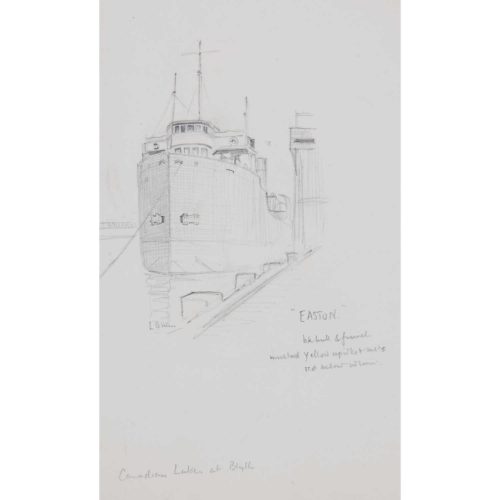
Laurence Dunn (1910-2006)
Drawing of the 'Easton' Canadian laker steamer (c.1950s)
21 x 12.5 cm Pencil Extensively inscribed. Sketch of the ship of the "Easton" in harbour. Dunn has included notes about its colour, presumably for a future painting. Dunn was a well known marine artist and writer. The World Ship Society published the following obituary for Dunn. DUNN, Laurence. [December 15 2006 — Lloyds List] Many readers will be saddened by the death of well-known marine artist and writer Laurence Dunn in his 97th year. A man of encyclopaedic knowledge, he began his lifelong love of ships in Brixham, where he meticulously recorded passing traffic with the exquisitely accurate line drawings which later became something of a trademark. While studying at London’s Central School of Art his work was noticed by the Southern Railway, which commissioned profiles of its fleet, and this in turn led to work for Orient Line, where he also designed the well-known corn-coloured hull, and later Thorneycroft, where he helped with shaping draft plans for a new royal yacht. During the second world was he worked for naval intelligence at the Admiralty, where his technique did much to improve recognition standards, and greatly expanded his shipping clientele, becoming personally known to many chairmen. As well as the shipping press he worked for mainstream publications such as Everybody’s, Sphere and the upmarket comic Eagle. Through his many contacts he enjoyed going to sea in a great variety of ships from aircraft carriers to colliers. Laurence wrote several books, starting with ship recognition titles which introduced new standards of layout, but his best known work was probably Passenger Liners, which was widely taken up by the travel trade. His love of Greece, where he was an early publicist of island cruising, let to involvement in reshaping various passenger liners beginning with Greek Line’s OLYMPIA. In later life he designed several sets of shipping stamps for the Crown Agents, produced photographic volumes on Thames and Mediterranean shipping and still found time to enjoy the passing Thames traffic. Our sympathies go to his wife Jennifer, who provided succour to the many ship lovers who beat a path to the welcoming door of their Gravesend home. -
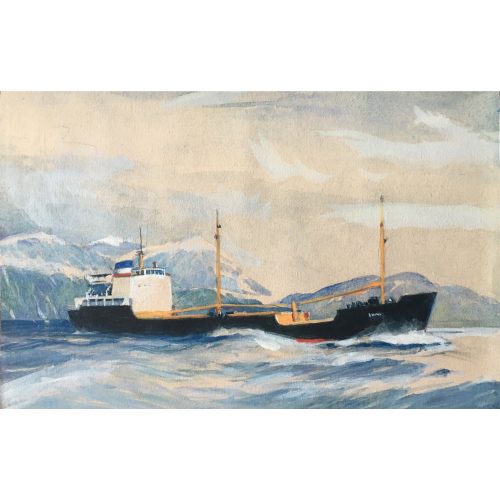
Laurence Dunn (1910-2006) Otra
Gouache 11.5x18cm Inscribed to reverse 'Rough sketch for painting of "Otra" commissioned for Capt. F.E. Eagle, whose favourite command she was' and signed 'Laurence Dunn' The World Ship Society published the following obituary for Dunn: DUNN, Laurence. [December 15 2006 — Lloyds List] Many readers will be saddened by the death of well-known marine artist and writer Laurence Dunn in his 97th year. A man of encyclopaedic knowledge, he began his lifelong love of ships in Brixham, where he meticulously recorded passing traffic with the exquisitely accurate line drawings which later became something of a trademark. While studying at London’s Central School of Art his work was noticed by the Southern Railway, which commissioned profiles of its fleet, and this in turn led to work for Orient Line, where he also designed the well-known corn-coloured hull, and later Thorneycroft, where he helped with shaping draft plans for a new royal yacht. During the second world was he worked for naval intelligence at the Admiralty, where his technique did much to improve recognition standards, and greatly expanded his shipping clientele, becoming personally known to many chairmen. As well as the shipping press he worked for mainstream publications such as Everybody’s, Sphere and the upmarket comic Eagle. Through his many contacts he enjoyed going to sea in a great variety of ships from aircraft carriers to colliers. Laurence wrote several books, starting with ship recognition titles which introduced new standards of layout, but his best known work was probably Passenger Liners, which was widely taken up by the travel trade. His love of Greece, where he was an early publicist of island cruising, let to involvement in reshaping various passenger liners beginning with Greek Line’s OLYMPIA. In later life he designed several sets of shipping stamps for the Crown Agents, produced photographic volumes on Thames and Mediterranean shipping and still found time to enjoy the passing Thames traffic. Our sympathies go to his wife Jennifer, who provided succour to the many ship lovers who beat a path to the welcoming door of their Gravesend home. If you are interested email info@manningfineart.co.uk or call us on 07929 749056. Condition: Excellent. -
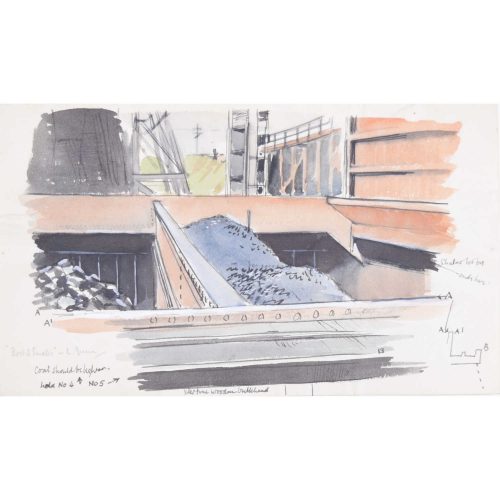
Laurence Dunn (1910-2006)
Coal Barge (c.1950)
12.5 x 25 cm Watercolour and ink Signed 'L Dunn' lower left Extensively inscribed to bottom corners, including comments 'coal should be lighter' indicating this is a preliminary watercolour for a future painting. He also makes reference to the continued existence of a 'wartime wooden bulkhead' - added to make the ship more resilient in the event of enemy action. Laurence Dunn (1910-2006) was a well-known British marine artist and writer. The World Ship Society published the following obituary for Dunn: DUNN, Laurence. [December 15 2006 — Lloyds List] Many readers will be saddened by the death of well-known marine artist and writer Laurence Dunn in his 97th year. A man of encyclopaedic knowledge, he began his lifelong love of ships in Brixham, where he meticulously recorded passing traffic with the exquisitely accurate line drawings which later became something of a trademark. While studying at London’s Central School of Art his work was noticed by the Southern Railway, which commissioned profiles of its fleet, and this in turn led to work for Orient Line, where he also designed the well-known corn-coloured hull, and later Thorneycroft, where he helped with shaping draft plans for a new royal yacht. During the second world was he worked for naval intelligence at the Admiralty, where his technique did much to improve recognition standards, and greatly expanded his shipping clientele, becoming personally known to many chairmen. As well as the shipping press he worked for mainstream publications such as Everybody’s, Sphere and the upmarket comic Eagle. Through his many contacts he enjoyed going to sea in a great variety of ships from aircraft carriers to colliers. Laurence wrote several books, starting with ship recognition titles which introduced new standards of layout, but his best known work was probably Passenger Liners, which was widely taken up by the travel trade. His love of Greece, where he was an early publicist of island cruising, let to involvement in reshaping various passenger liners beginning with Greek Line’s OLYMPIA. In later life he designed several sets of shipping stamps for the Crown Agents, produced photographic volumes on Thames and Mediterranean shipping and still found time to enjoy the passing Thames traffic. Our sympathies go to his wife Jennifer, who provided succour to the many ship lovers who beat a path to the welcoming door of their Gravesend home. -
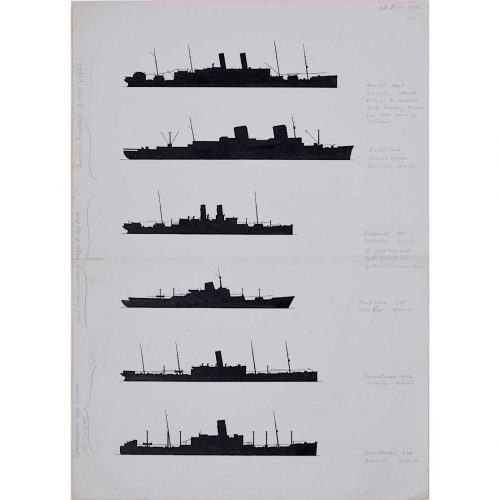
Laurence Dunn (1910-2006)
A Series of Coastal Tramp Silhouettes
34.5 x 24 cm Bodycolour on paper Dunn’s depictions of coastal tramps are early works, likely captured from the side of the Thames estuary near his home. This work contains extensive notes on the featured ships.Laurence Dunn (1910-2006) was a well-known British marine artist and writer known for his depictions of ships. He grew up in Devon, where he practised drawing passing ships, and went on to study at the Central School of Art. He then worked for shipbuilding firm John I. Thornycroft & Company Limited, where he contributed to the design of the Royal Yacht. During the Second World War, Dunn worked in naval intelligence. In the early 1960s, he created many line drawings of Atlantic ocean liners.
Upon his death in 2006, the World Ship Society published the following obituary:
DUNN, Laurence. [December 15 2006 — Lloyds List] Many readers will be saddened by the death of well-known marine artist and writer Laurence Dunn in his 97th year. A man of encyclopaedic knowledge, he began his lifelong love of ships in Brixham, where he meticulously recorded passing traffic with the exquisitely accurate line drawings which later became something of a trademark. While studying at London’s Central School of Art his work was noticed by the Southern Railway, which commissioned profiles of its fleet, and this in turn led to work for Orient Line, where he also designed the well-known corn-coloured hull, and later Thorneycroft, where he helped with shaping draft plans for a new royal yacht. During the second world was he worked for naval intelligence at the Admiralty, where his technique did much to improve recognition standards, and greatly expanded his shipping clientele, becoming personally known to many chairmen. As well as the shipping press he worked for mainstream publications such as Everybody’s, Sphere and the upmarket comic Eagle. Through his many contacts he enjoyed going to sea in a great variety of ships from aircraft carriers to colliers. Laurence wrote several books, starting with ship recognition titles which introduced new standards of layout, but his best known work was probably Passenger Liners, which was widely taken up by the travel trade. His love of Greece, where he was an early publicist of island cruising, let to involvement in reshaping various passenger liners beginning with Greek Line’s OLYMPIA. In later life he designed several sets of shipping stamps for the Crown Agents, produced photographic volumes on Thames and Mediterranean shipping and still found time to enjoy the passing Thames traffic. Our sympathies go to his wife Jennifer, who provided succour to the many ship lovers who beat a path to the welcoming door of their Gravesend home.
-
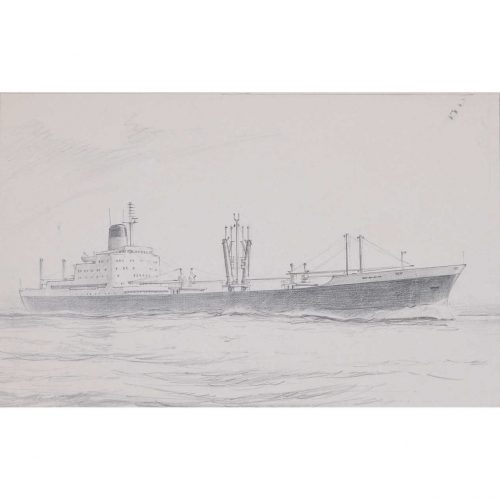
Laurence Dunn (1910-2006)
Coastal Ship
19.5 x 31.5 cm
Pencil on paperLaurence Dunn (1910-2006) was a well-known British marine artist and writer known for his depictions of ships. He grew up in Devon, where he practised drawing passing ships, and went on to study at the Central School of Art. He then worked for shipbuilding firm John I. Thornycroft & Company Limited, where he contributed to the design of the Royal Yacht. During the Second World War, Dunn worked in naval intelligence. In the early 1960s, he created many line drawings of Atlantic ocean liners.
Upon his death in 2006, the World Ship Society published the following obituary:
DUNN, Laurence. [December 15 2006 — Lloyds List] Many readers will be saddened by the death of well-known marine artist and writer Laurence Dunn in his 97th year. A man of encyclopaedic knowledge, he began his lifelong love of ships in Brixham, where he meticulously recorded passing traffic with the exquisitely accurate line drawings which later became something of a trademark. While studying at London’s Central School of Art his work was noticed by the Southern Railway, which commissioned profiles of its fleet, and this in turn led to work for Orient Line, where he also designed the well-known corn-coloured hull, and later Thorneycroft, where he helped with shaping draft plans for a new royal yacht. During the second world was he worked for naval intelligence at the Admiralty, where his technique did much to improve recognition standards, and greatly expanded his shipping clientele, becoming personally known to many chairmen. As well as the shipping press he worked for mainstream publications such as Everybody’s, Sphere and the upmarket comic Eagle. Through his many contacts he enjoyed going to sea in a great variety of ships from aircraft carriers to colliers. Laurence wrote several books, starting with ship recognition titles which introduced new standards of layout, but his best known work was probably Passenger Liners, which was widely taken up by the travel trade. His love of Greece, where he was an early publicist of island cruising, let to involvement in reshaping various passenger liners beginning with Greek Line’s OLYMPIA. In later life he designed several sets of shipping stamps for the Crown Agents, produced photographic volumes on Thames and Mediterranean shipping and still found time to enjoy the passing Thames traffic. Our sympathies go to his wife Jennifer, who provided succour to the many ship lovers who beat a path to the welcoming door of their Gravesend home.
-
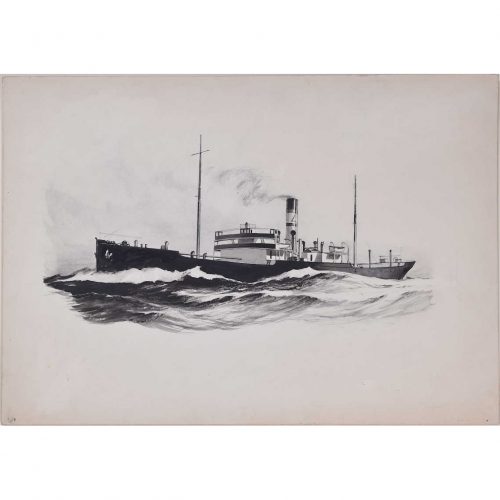
Laurence Dunn (1910-2006)
Coastal Tramp
36 x 50.5 cm
Ink on paper Signed versoLaurence Dunn (1910-2006) was a well-known British marine artist and writer known for his depictions of ships. He grew up in Devon, where he practised drawing passing ships, and went on to study at the Central School of Art. He then worked for shipbuilding firm John I. Thornycroft & Company Limited, where he contributed to the design of the Royal Yacht. During the Second World War, Dunn worked in naval intelligence. In the early 1960s, he created many line drawings of Atlantic ocean liners.
Upon his death in 2006, the World Ship Society published the following obituary:
DUNN, Laurence. [December 15 2006 — Lloyds List] Many readers will be saddened by the death of well-known marine artist and writer Laurence Dunn in his 97th year. A man of encyclopaedic knowledge, he began his lifelong love of ships in Brixham, where he meticulously recorded passing traffic with the exquisitely accurate line drawings which later became something of a trademark. While studying at London’s Central School of Art his work was noticed by the Southern Railway, which commissioned profiles of its fleet, and this in turn led to work for Orient Line, where he also designed the well-known corn-coloured hull, and later Thorneycroft, where he helped with shaping draft plans for a new royal yacht. During the second world was he worked for naval intelligence at the Admiralty, where his technique did much to improve recognition standards, and greatly expanded his shipping clientele, becoming personally known to many chairmen. As well as the shipping press he worked for mainstream publications such as Everybody’s, Sphere and the upmarket comic Eagle. Through his many contacts he enjoyed going to sea in a great variety of ships from aircraft carriers to colliers. Laurence wrote several books, starting with ship recognition titles which introduced new standards of layout, but his best known work was probably Passenger Liners, which was widely taken up by the travel trade. His love of Greece, where he was an early publicist of island cruising, let to involvement in reshaping various passenger liners beginning with Greek Line’s OLYMPIA. In later life he designed several sets of shipping stamps for the Crown Agents, produced photographic volumes on Thames and Mediterranean shipping and still found time to enjoy the passing Thames traffic. Our sympathies go to his wife Jennifer, who provided succour to the many ship lovers who beat a path to the welcoming door of their Gravesend home.
-
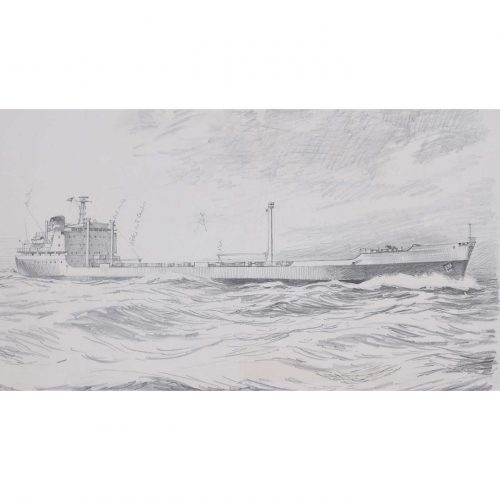
Laurence Dunn (1910-2006)
Coastal Tramp
25 x 38.5 cm Pencil on paperLaurence Dunn (1910-2006) was a well-known British marine artist and writer known for his depictions of ships. He grew up in Devon, where he practised drawing passing ships, and went on to study at the Central School of Art. He then worked for shipbuilding firm John I. Thornycroft & Company Limited, where he contributed to the design of the Royal Yacht. During the Second World War, Dunn worked in naval intelligence. In the early 1960s, he created many line drawings of Atlantic ocean liners.
Upon his death in 2006, the World Ship Society published the following obituary:
DUNN, Laurence. [December 15 2006 — Lloyds List] Many readers will be saddened by the death of well-known marine artist and writer Laurence Dunn in his 97th year. A man of encyclopaedic knowledge, he began his lifelong love of ships in Brixham, where he meticulously recorded passing traffic with the exquisitely accurate line drawings which later became something of a trademark. While studying at London’s Central School of Art his work was noticed by the Southern Railway, which commissioned profiles of its fleet, and this in turn led to work for Orient Line, where he also designed the well-known corn-coloured hull, and later Thorneycroft, where he helped with shaping draft plans for a new royal yacht. During the second world was he worked for naval intelligence at the Admiralty, where his technique did much to improve recognition standards, and greatly expanded his shipping clientele, becoming personally known to many chairmen. As well as the shipping press he worked for mainstream publications such as Everybody’s, Sphere and the upmarket comic Eagle. Through his many contacts he enjoyed going to sea in a great variety of ships from aircraft carriers to colliers. Laurence wrote several books, starting with ship recognition titles which introduced new standards of layout, but his best known work was probably Passenger Liners, which was widely taken up by the travel trade. His love of Greece, where he was an early publicist of island cruising, let to involvement in reshaping various passenger liners beginning with Greek Line’s OLYMPIA. In later life he designed several sets of shipping stamps for the Crown Agents, produced photographic volumes on Thames and Mediterranean shipping and still found time to enjoy the passing Thames traffic. Our sympathies go to his wife Jennifer, who provided succour to the many ship lovers who beat a path to the welcoming door of their Gravesend home.
-
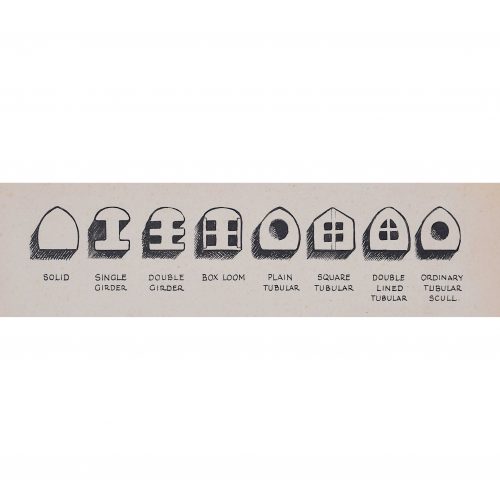
Laurence Dunn (1910-2006)
Fashions in Oars and Sculls
6 x 25 cm Ink on paperThis series of eight neat, ink illustrations depicts, as the title suggests, the various fashions of oars and sculls. These fashions include the Solid, Single Girder, Double Girder, Box Loom, Plain Tubular, Square Tubular, Double Lined Tubular and Ordinary Tubular Scull designs.
Laurence Dunn (1910-2006) was a well-known British marine artist and writer known for his depictions of ships. He grew up in Devon, where he practised drawing passing ships, and went on to study at the Central School of Art. He then worked for shipbuilding firm John I. Thornycroft & Company Limited, where he contributed to the design of the Royal Yacht. During the Second World War, Dunn worked in naval intelligence. In the early 1960s, he created many line drawings of Atlantic ocean liners.
Upon his death in 2006, the World Ship Society published the following obituary:
DUNN, Laurence. [December 15 2006 — Lloyds List] Many readers will be saddened by the death of well-known marine artist and writer Laurence Dunn in his 97th year. A man of encyclopaedic knowledge, he began his lifelong love of ships in Brixham, where he meticulously recorded passing traffic with the exquisitely accurate line drawings which later became something of a trademark. While studying at London’s Central School of Art his work was noticed by the Southern Railway, which commissioned profiles of its fleet, and this in turn led to work for Orient Line, where he also designed the well-known corn-coloured hull, and later Thorneycroft, where he helped with shaping draft plans for a new royal yacht. During the second world was he worked for naval intelligence at the Admiralty, where his technique did much to improve recognition standards, and greatly expanded his shipping clientele, becoming personally known to many chairmen. As well as the shipping press he worked for mainstream publications such as Everybody’s, Sphere and the upmarket comic Eagle. Through his many contacts he enjoyed going to sea in a great variety of ships from aircraft carriers to colliers. Laurence wrote several books, starting with ship recognition titles which introduced new standards of layout, but his best known work was probably Passenger Liners, which was widely taken up by the travel trade. His love of Greece, where he was an early publicist of island cruising, let to involvement in reshaping various passenger liners beginning with Greek Line’s OLYMPIA. In later life he designed several sets of shipping stamps for the Crown Agents, produced photographic volumes on Thames and Mediterranean shipping and still found time to enjoy the passing Thames traffic. Our sympathies go to his wife Jennifer, who provided succour to the many ship lovers who beat a path to the welcoming door of their Gravesend home.
-
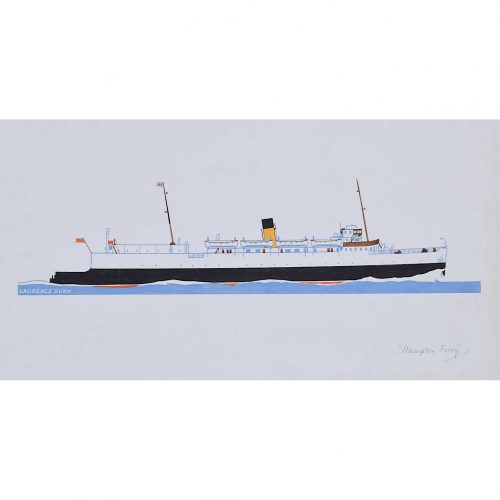
Laurence Dunn (1910-2006)
Hampton Ferry
19.5 x 31.5 cm
Bodycolour and ink on paper Signed l.l.Laurence Dunn (1910-2006) was a well-known British marine artist and writer known for his depictions of ships. He grew up in Devon, where he practised drawing passing ships, and went on to study at the Central School of Art. He then worked for shipbuilding firm John I. Thornycroft & Company Limited, where he contributed to the design of the Royal Yacht. During the Second World War, Dunn worked in naval intelligence. In the early 1960s, he created many line drawings of Atlantic ocean liners.
Upon his death in 2006, the World Ship Society published the following obituary:
DUNN, Laurence. [December 15 2006 — Lloyds List] Many readers will be saddened by the death of well-known marine artist and writer Laurence Dunn in his 97th year. A man of encyclopaedic knowledge, he began his lifelong love of ships in Brixham, where he meticulously recorded passing traffic with the exquisitely accurate line drawings which later became something of a trademark. While studying at London’s Central School of Art his work was noticed by the Southern Railway, which commissioned profiles of its fleet, and this in turn led to work for Orient Line, where he also designed the well-known corn-coloured hull, and later Thorneycroft, where he helped with shaping draft plans for a new royal yacht. During the second world was he worked for naval intelligence at the Admiralty, where his technique did much to improve recognition standards, and greatly expanded his shipping clientele, becoming personally known to many chairmen. As well as the shipping press he worked for mainstream publications such as Everybody’s, Sphere and the upmarket comic Eagle. Through his many contacts he enjoyed going to sea in a great variety of ships from aircraft carriers to colliers. Laurence wrote several books, starting with ship recognition titles which introduced new standards of layout, but his best known work was probably Passenger Liners, which was widely taken up by the travel trade. His love of Greece, where he was an early publicist of island cruising, let to involvement in reshaping various passenger liners beginning with Greek Line’s OLYMPIA. In later life he designed several sets of shipping stamps for the Crown Agents, produced photographic volumes on Thames and Mediterranean shipping and still found time to enjoy the passing Thames traffic. Our sympathies go to his wife Jennifer, who provided succour to the many ship lovers who beat a path to the welcoming door of their Gravesend home.
-
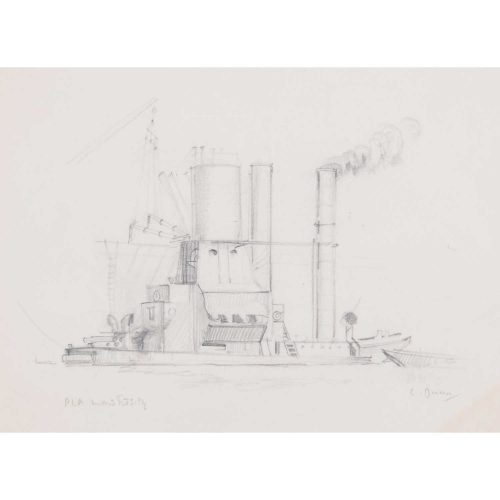
Laurence Dunn (1910-2006)
Port of London Authority 'PLA' Monstrosity Boat Drawing (c.1950s)
17 x 22.5 cm Signed Pencil drawing of PLA ship before industrial plant, inscribed 'PLA Monstrosity.' Dunn was a well known marine artist and writer. The World Ship Society published the following obituary for Dunn. DUNN, Laurence. [December 15 2006 — Lloyds List] Many readers will be saddened by the death of well-known marine artist and writer Laurence Dunn in his 97th year. A man of encyclopaedic knowledge, he began his lifelong love of ships in Brixham, where he meticulously recorded passing traffic with the exquisitely accurate line drawings which later became something of a trademark. While studying at London’s Central School of Art his work was noticed by the Southern Railway, which commissioned profiles of its fleet, and this in turn led to work for Orient Line, where he also designed the well-known corn-coloured hull, and later Thorneycroft, where he helped with shaping draft plans for a new royal yacht. During the second world was he worked for naval intelligence at the Admiralty, where his technique did much to improve recognition standards, and greatly expanded his shipping clientele, becoming personally known to many chairmen. As well as the shipping press he worked for mainstream publications such as Everybody’s, Sphere and the upmarket comic Eagle. Through his many contacts he enjoyed going to sea in a great variety of ships from aircraft carriers to colliers. Laurence wrote several books, starting with ship recognition titles which introduced new standards of layout, but his best known work was probably Passenger Liners, which was widely taken up by the travel trade. His love of Greece, where he was an early publicist of island cruising, let to involvement in reshaping various passenger liners beginning with Greek Line’s OLYMPIA. In later life he designed several sets of shipping stamps for the Crown Agents, produced photographic volumes on Thames and Mediterranean shipping and still found time to enjoy the passing Thames traffic. Our sympathies go to his wife Jennifer, who provided succour to the many ship lovers who beat a path to the welcoming door of their Gravesend home. -
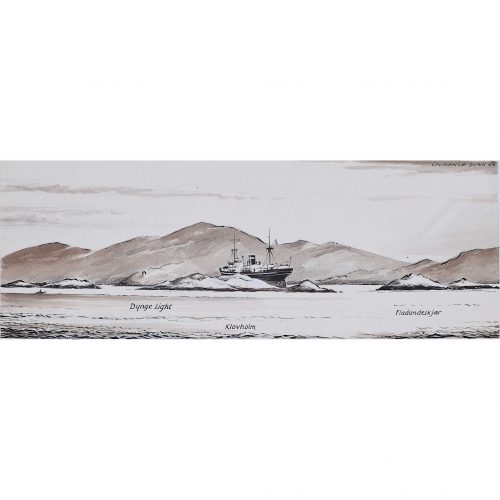
Laurence Dunn (1910-2006)
The Stranded Astoria 4454
11.5 x 31.5 cm Watercolour on paperThis delicately coloured marine watercolour depicts the stranded Astoria, as Dunn notes in detail below the image: ‘The stranded Danish ship ASTORIA as seen from the bridge of the searching destroyer BERGEN after the former had sent a call for aid. As the ASTORIA proved to be in no immediate danger the destroyer did not venture in among the treacherous fringe of skerries, leaving salvage operations to more suitable naval salvage craft which later reflected the ship. The ASTORIA 4454 was bound for Kristiansand from the Baltic in ballast approaching the harbour entrance during the night fog, washed soon ashore close to the Dynge Light some 15 miles away.’
Laurence Dunn (1910-2006) was a well-known British marine artist and writer known for his depictions of ships. He grew up in Devon, where he practised drawing passing ships, and went on to study at the Central School of Art. He then worked for shipbuilding firm John I. Thornycroft & Company Limited, where he contributed to the design of the Royal Yacht. During the Second World War, Dunn worked in naval intelligence. In the early 1960s, he created many line drawings of Atlantic ocean liners.
Upon his death in 2006, the World Ship Society published the following obituary:
DUNN, Laurence. [December 15 2006 — Lloyds List] Many readers will be saddened by the death of well-known marine artist and writer Laurence Dunn in his 97th year. A man of encyclopaedic knowledge, he began his lifelong love of ships in Brixham, where he meticulously recorded passing traffic with the exquisitely accurate line drawings which later became something of a trademark. While studying at London’s Central School of Art his work was noticed by the Southern Railway, which commissioned profiles of its fleet, and this in turn led to work for Orient Line, where he also designed the well-known corn-coloured hull, and later Thorneycroft, where he helped with shaping draft plans for a new royal yacht. During the second world was he worked for naval intelligence at the Admiralty, where his technique did much to improve recognition standards, and greatly expanded his shipping clientele, becoming personally known to many chairmen. As well as the shipping press he worked for mainstream publications such as Everybody’s, Sphere and the upmarket comic Eagle. Through his many contacts he enjoyed going to sea in a great variety of ships from aircraft carriers to colliers. Laurence wrote several books, starting with ship recognition titles which introduced new standards of layout, but his best known work was probably Passenger Liners, which was widely taken up by the travel trade. His love of Greece, where he was an early publicist of island cruising, let to involvement in reshaping various passenger liners beginning with Greek Line’s OLYMPIA. In later life he designed several sets of shipping stamps for the Crown Agents, produced photographic volumes on Thames and Mediterranean shipping and still found time to enjoy the passing Thames traffic. Our sympathies go to his wife Jennifer, who provided succour to the many ship lovers who beat a path to the welcoming door of their Gravesend home.
-
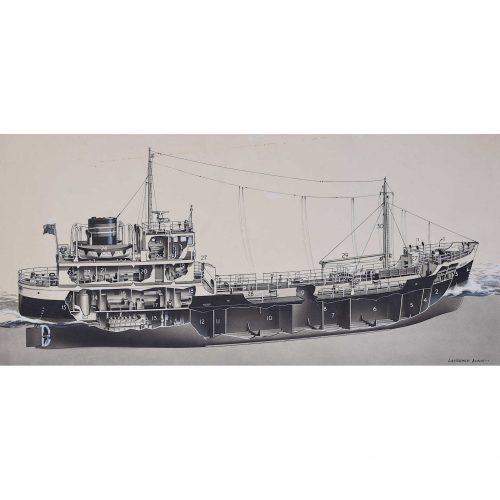
Laurence Dunn (1910-2006)
WELDER, Merchant Ship
25.5 x 56 cm
Ink on paper Signed l.r.Laurence Dunn (1910-2006) was a well-known British marine artist and writer known for his depictions of ships. He grew up in Devon, where he practised drawing passing ships, and went on to study at the Central School of Art. He then worked for shipbuilding firm John I. Thornycroft & Company Limited, where he contributed to the design of the Royal Yacht. During the Second World War, Dunn worked in naval intelligence. In the early 1960s, he created many line drawings of Atlantic ocean liners.
Upon his death in 2006, the World Ship Society published the following obituary:
DUNN, Laurence. [December 15 2006 — Lloyds List] Many readers will be saddened by the death of well-known marine artist and writer Laurence Dunn in his 97th year. A man of encyclopaedic knowledge, he began his lifelong love of ships in Brixham, where he meticulously recorded passing traffic with the exquisitely accurate line drawings which later became something of a trademark. While studying at London’s Central School of Art his work was noticed by the Southern Railway, which commissioned profiles of its fleet, and this in turn led to work for Orient Line, where he also designed the well-known corn-coloured hull, and later Thorneycroft, where he helped with shaping draft plans for a new royal yacht. During the second world was he worked for naval intelligence at the Admiralty, where his technique did much to improve recognition standards, and greatly expanded his shipping clientele, becoming personally known to many chairmen. As well as the shipping press he worked for mainstream publications such as Everybody’s, Sphere and the upmarket comic Eagle. Through his many contacts he enjoyed going to sea in a great variety of ships from aircraft carriers to colliers. Laurence wrote several books, starting with ship recognition titles which introduced new standards of layout, but his best known work was probably Passenger Liners, which was widely taken up by the travel trade. His love of Greece, where he was an early publicist of island cruising, let to involvement in reshaping various passenger liners beginning with Greek Line’s OLYMPIA. In later life he designed several sets of shipping stamps for the Crown Agents, produced photographic volumes on Thames and Mediterranean shipping and still found time to enjoy the passing Thames traffic. Our sympathies go to his wife Jennifer, who provided succour to the many ship lovers who beat a path to the welcoming door of their Gravesend home.
-
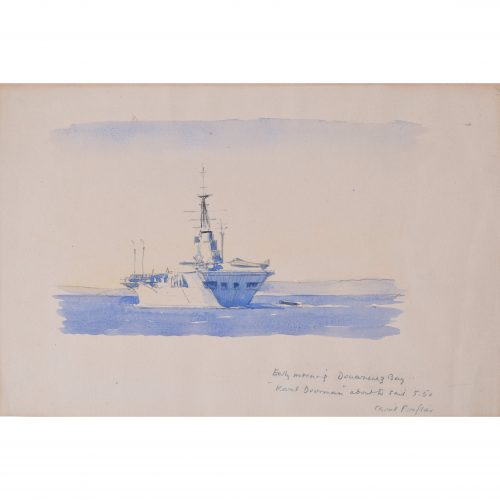
Laurence Dunn (1910-2006)
Karel Doorman About to Sail
Watercolour 15 x 23 cm (sheet size 99 x 73 cm) Signed to backing board, with extensive inscription by Dunn. HNLMS Karel Doorman (R81) was a Colossus-class aircraft carrier of the Royal Netherlands Navy. Formerly the British ship HMS Venerable, she was sold to the Netherlands in 1948 as a light attack carrier. In 1960, she was involved in the decolonization conflict in Western New Guinea with Indonesia. In the mid 1960s, her role was changed to anti-submarine warfare carrier and only ASW aircraft and helicopters were carried. An engine room fire took her out of service in 1968. She was sold to Argentina in 1969 and renamed ARA Veinticinco de Mayo. Laurence Dunn was an artist known for his depictions of ships. He grew up in Devon, where he practised drawing passing ships, and went on to study at the Central School of Art. He then worked for shipbuilding firm John I. Thornycroft & Company Limited, where he assisted with the design of the royal yacht.During the Second World War, Dunn worked for naval intelligence. In the early 1960s he created many line drawings of Atlantic ocean liners. The World Ship Society published the following obituary for Laurence Dunn in 2006: DUNN, Laurence. [December 15 2006 — Lloyds List] Many readers will be saddened by the death of well-known marine artist and writer Laurence Dunn in his 97th year. A man of encyclopaedic knowledge, he began his lifelong love of ships in Brixham, where he meticulously recorded passing traffic with the exquisitely accurate line drawings which later became something of a trademark. While studying at London’s Central School of Art his work was noticed by the Southern Railway, which commissioned profiles of its fleet, and this in turn led to work for Orient Line, where he also designed the well-known corn-coloured hull, and later Thorneycroft, where he helped with shaping draft plans for a new royal yacht. During the second world was he worked for naval intelligence at the Admiralty, where his technique did much to improve recognition standards, and greatly expanded his shipping clientele, becoming personally known to many chairmen. As well as the shipping press he worked for mainstream publications such as Everybody’s, Sphere and the upmarket comic Eagle. Through his many contacts he enjoyed going to sea in a great variety of ships from aircraft carriers to colliers. Laurence wrote several books, starting with ship recognition titles which introduced new standards of layout, but his best known work was probably Passenger Liners, which was widely taken up by the travel trade. His love of Greece, where he was an early publicist of island cruising, let to involvement in reshaping various passenger liners beginning with Greek Line’s OLYMPIA. In later life he designed several sets of shipping stamps for the Crown Agents, produced photographic volumes on Thames and Mediterranean shipping and still found time to enjoy the passing Thames traffic. Our sympathies go to his wife Jennifer, who provided succour to the many ship lovers who beat a path to the welcoming door of their Gravesend home. Condition: very good. If you'd like to know more, please email info@manningfineart.co.uk or call us on 07929 749056. -
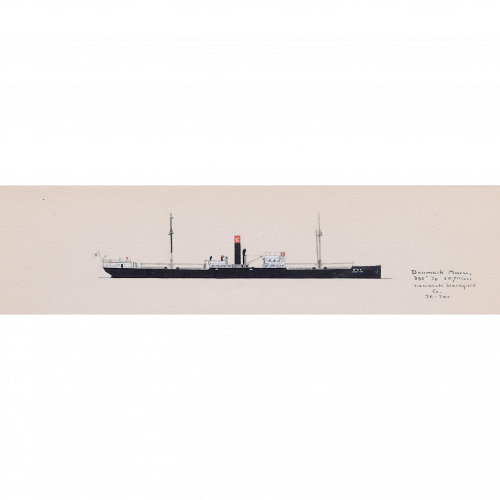
Laurence Dunn (1910-2006)
SS Denmark Maru (c.1927)
4 x 17 cm Ink and bodycolour on paper SS Denmark Maru was built by Kawasaki Shipyard Co in Japan. Until 1935 she was in service on K Line's Hamburg - New York route. Dunn's drawings of coastal tramps are early works, likely sketched from the side of the Thames estuary near his home. The World Ship Society published the following obituary for the well-published maritime artist and writer in 2006: DUNN, Laurence. [December 15 2006 — Lloyds List] Many readers will be saddened by the death of well-known marine artist and writer Laurence Dunn in his 97th year. A man of encyclopaedic knowledge, he began his lifelong love of ships in Brixham, where he meticulously recorded passing traffic with the exquisitely accurate line drawings which later became something of a trademark. While studying at London’s Central School of Art his work was noticed by the Southern Railway, which commissioned profiles of its fleet, and this in turn led to work for Orient Line, where he also designed the well-known corn-coloured hull, and later Thorneycroft, where he helped with shaping draft plans for a new royal yacht. During the second world was he worked for naval intelligence at the Admiralty, where his technique did much to improve recognition standards, and greatly expanded his shipping clientele, becoming personally known to many chairmen. As well as the shipping press he worked for mainstream publications such as Everybody’s, Sphere and the upmarket comic Eagle. Through his many contacts he enjoyed going to sea in a great variety of ships from aircraft carriers to colliers. Laurence wrote several books, starting with ship recognition titles which introduced new standards of layout, but his best known work was probably Passenger Liners, which was widely taken up by the travel trade. His love of Greece, where he was an early publicist of island cruising, let to involvement in reshaping various passenger liners beginning with Greek Line’s OLYMPIA. In later life he designed several sets of shipping stamps for the Crown Agents, produced photographic volumes on Thames and Mediterranean shipping and still found time to enjoy the passing Thames traffic. Our sympathies go to his wife Jennifer, who provided succour to the many ship lovers who beat a path to the welcoming door of their Gravesend home. Condition: Generally very good, slight toning to paper. If you'd like to know more, please email info@manningfineart.co.uk or call us on 07929 749056. -
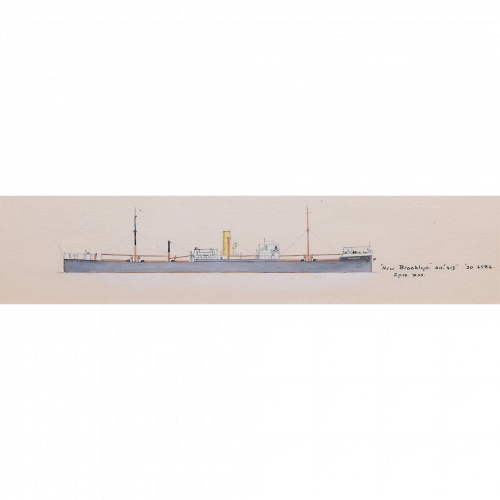
Laurence Dunn (1910-2006)
SS New Brooklyn (c.1927)
4 x 17 cm Ink and bodycolour on paper SS New Brooklyn was built in Belfast by Harland & Wolff in 1920 for Elder Dempster & Co, and was known initially as New Romance. In 1954, she was sold to Mageolia Nav SA, Panama and renamed Marianna. She was scrapped in 1959 at La Spezia. She was an 'N' Type fabricated ship with straight frames which was introduced in 1917 to utilise the capacity of bridge building companies which had very little of their normal bridge-building work to do during the war. Dunn's drawings of coastal tramps are early works, likely sketched from the side of the Thames estuary near his home. The World Ship Society published the following obituary for the well-published maritime artist and writer in 2006: DUNN, Laurence. [December 15 2006 — Lloyds List] Many readers will be saddened by the death of well-known marine artist and writer Laurence Dunn in his 97th year. A man of encyclopaedic knowledge, he began his lifelong love of ships in Brixham, where he meticulously recorded passing traffic with the exquisitely accurate line drawings which later became something of a trademark. While studying at London’s Central School of Art his work was noticed by the Southern Railway, which commissioned profiles of its fleet, and this in turn led to work for Orient Line, where he also designed the well-known corn-coloured hull, and later Thorneycroft, where he helped with shaping draft plans for a new royal yacht. During the second world was he worked for naval intelligence at the Admiralty, where his technique did much to improve recognition standards, and greatly expanded his shipping clientele, becoming personally known to many chairmen. As well as the shipping press he worked for mainstream publications such as Everybody’s, Sphere and the upmarket comic Eagle. Through his many contacts he enjoyed going to sea in a great variety of ships from aircraft carriers to colliers. Laurence wrote several books, starting with ship recognition titles which introduced new standards of layout, but his best known work was probably Passenger Liners, which was widely taken up by the travel trade. His love of Greece, where he was an early publicist of island cruising, let to involvement in reshaping various passenger liners beginning with Greek Line’s OLYMPIA. In later life he designed several sets of shipping stamps for the Crown Agents, produced photographic volumes on Thames and Mediterranean shipping and still found time to enjoy the passing Thames traffic. Our sympathies go to his wife Jennifer, who provided succour to the many ship lovers who beat a path to the welcoming door of their Gravesend home. Condition: Generally very good, slight toning to paper. If you'd like to know more, please email info@manningfineart.co.uk or call us on 07929 749056.