-
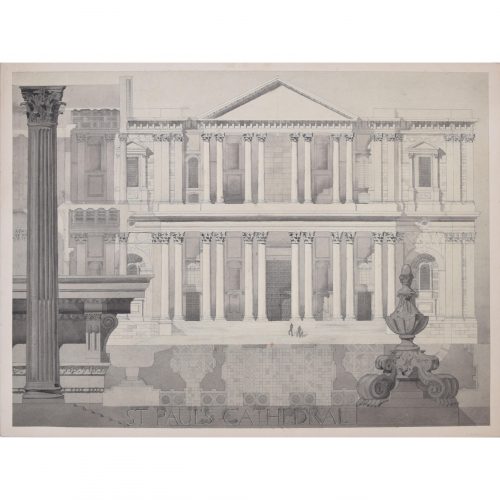
S Clapham (active 1940 - 1960)
St Paul's Cathedral
Watercolour 51 x 68 cm Signed lower right. This architectural watercolour is a panegyric to the English Baroque grandeur of St Paul's Cathedral. Three small figures climb the steps, emphasising the size and magnificence of the architecture around them. St Paul's was built between 1675 and 1711 by Sir Christopher Wren. The foundation stone was laid in 1675 when Wren was 43 years old, and the building works were completed 35 years later by Wren's son. Its construction was part of a major rebuilding programme in the city after the Great Fire of London. Clapham was an architect based in Stockwell in London. Condition: generally very good; a couple of spots. Mounted to board by artist and signed to board. If you are interested, please email info@manningfineart.co.uk or call us on 07929 749056. Click here for other works by the artist. -
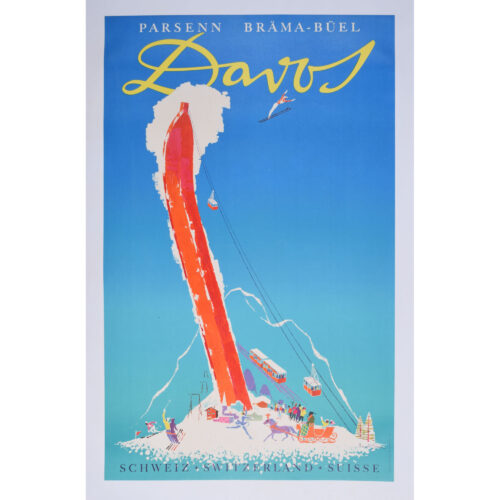
Donald Brun (1909-1999)
Davos (1970s)
Original vintage poster 102 x 64 cm Donald Brun produced his famous series of posters for Switzerland as global travel became more popular. Davos is depicted as a marvellous and brightly-coloured resort full of beauteous skiers, pony sleds, and ice skaters. Cable cars travel up to the tip of a bright red ski, and a bold skier launches himself into the wide blue yonder. Condition: very good. Backed to linen. If you are interested, please email info@manningfineart.co.uk or call us on 07929 749056. Click here for other original vintage skiing posters. -

Abram Games (1914-1996)
Guinness 5 Million Daily
Original vintage poster 152 x 102 cm This advertising poster dates from the early 1960s. It features a playful use of text, with the correct orientation of the poster varying depending on whether you first read 'Guinness' or '5 Million daily.' In a further act of advertising mischief, it also disguises a simple illustration of a pint of Guinness within the text. This masterful use of typography is typical of his broader practice, as his works are characterised by his use of striking colour, bold graphic ideas, and beautifully integrated typography. Throughout the 20th century, Abram Games distinguished himself as one of the greatest British graphic designers of the time and his oeuvre now offers a scintillating record of social history. Other notable works of his include the 'Blonde Bombshell’ ATS poster of 1941 and the 'Festival Star', designed for the 1951 Festival of Britain. If you are interested, please email info@manningfineart.co.uk or call us on 07929 749056. -
 KUKRYNIKSY Новый «Болшой Скачок» Пекина [The new Great Leap of Peking [Beijing]] Moscow, Izadetelstvo 'Plakat' 1977 54 x 37 cm, 12 posters loosely inserted in a printed paper portfolio featuring one further designs, portfolio lightly worn with numerous short tears, else fine. A dramatic collection of irreverent depictions of Imperialism in inimitable Kukryniksi style, from the 1970s. The posters pillory many prominent motifs of the 20th century, including Hitler, NATO, the BBC, and American civil rights. The Kukryniksi - a portmanteau name derived from the names of the three artists, Mikhail Kupryanov (Ku), Porfiri Krylov (Kry), and Nikolai Sokolov (Niks) - are arguably the most successful Russian caricaturists. Favoured by the establishment, they were rarely privileged in being allowed to travel, producing views of Europe as well as a variety of spirited propaganda drawings in support of the Russian war effort, and illustrating many classic Russian texts.
 -

Louis Osman
Plans for workshops at Canon's Ashby
Pen, ink and pencil 50 x 38 cm Louis Osman (30 January 1914 – 11 April 1996) was an architect, artist, goldsmith, silversmith and medallist. Few people matched his creations as a goldsmith, and consequently he was chosen to make the crown for the Investiture of the Prince of Wales in 1968. Many of his other works are in public collections in the UK and worldwide. After Hele’s school in Exeter he studied at the Bartlett School of Architecture – part of University College London – from 1931. Also attending the Slade, he left the Bartlett being awarded the top first, which brings with it the Donaldson Medal of the RIBA. ollowing the war he was busy as an architect, works including for Westminster Abbey, and Lincoln, Exeterm, Ely and Lichfield Cathedrals. Staunton Harold Church in Ashby de la Zouch for the National Trust, and of course his own folly, the Grade I listed Elizabethan manor house, Canons Ashby in Northamptonshire – which was given to the National Trust in 1981 when Osman was not able to keep the tenancy any longer. At Canons Ashby, the plans of which are shown here, he established a workshop and had a team of silversmiths and goldsmiths working for him. In 1974 he created the exhibition celebrated by this lavishly illustrated catalogue. His 1969 crown for the Investiture of the Prince of Wales was on display, together with many other items of his own creation, and also by other silversmiths such as Malcolm Green, Philip Noaks and Stephen Nunn, also acknowledging the work of Desmond Clenn-Murphy, Peter Musgrove and Christopher Philipson in his own works. Condition: Very good, on tracing paper; five sheets -

Cecil King (1881-1942)
The Thames and Tower Bridge
Watercolour 26 x 37 cm Cecil King was a British painter. He studied at the Goldsmiths’ Institute College School of Art, the Westminster School of Art, and in Paris with Jean-Paul Laurens and Théophile Steinlen. King notably competed in the art competition of the 1928 Summer Olympics held in Amsterdam. The 1928 competition went down in Olympic memory as being particularly well celebrated, spanning multiple categories, art competitions were, however, part of the Olympic programme between 1912 and 1948. This particular watercolour depicts London industrial docks with the Thames and Tower Bridge in the background, capturing the unique atmosphere of London in the early 20th century. -

Louis Osman (1914 - 1996)
Oxford skyline with proposed tower for St Edmund Hall
Reproduction plus hand colouring, signed and dated. 31 x 98 cm Provenance: artist's studio sale Louis Osman (30 January 1914 – 11 April 1996) was an architect, artist, goldsmith, silversmith and medallist. Few people matched his creations as a goldsmith, and consequently he was chosen to make the crown for the Investiture of the Prince of Wales in 1968. Many of his other works are in public collections in the UK and worldwide. After Hele’s school in Exeter he studied at the Bartlett School of Architecture – part of University College London – from 1931. Also attending the Slade, he left the Bartlett being awarded the top first, which brings with it the Donaldson Medal of the RIBA. Following the war he was busy as an architect, works including for Westminster Abbey, and Lincoln, Exeterm, Ely and Lichfield Cathedrals. Staunton Harold Church in Ashby de la Zouch for the National Trust, and of course his own folly, the Grade I listed Elizabethan manor house, Canons Ashby in Northamptonshire – which was given to the National Trust in 1981 when Osman was not able to keep the tenancy any longer. This architectural sketch depicts the Oxford skyline with his proposed brutalist tower at St Edmund Hall. Condition: Generally very good. If you are interested, please email info@manningfineart.co.uk or call us on 07929 749056. Click here for other works by the artist. -

George Bissill (1896-1973) 'Two Woodcutters'
Watercolour 29 x 39 cm Born in 1896, George Bissill was a British miner, painter and furniture designer. Raised in the mining village of Langley Mill, Derbyshire, Bissill became a miner at the age of 13, before leaving to join the war effort in 1915. Upon his return from the war after being gassed, Bissill chose to become a pavement artist outside the newly erected Bush House in Aldwych, painting from his memory and his sketch book the uncompromising underground world he had inhabited. In 1935 he moved to the countryside near Newbury, where he lived and worked as a landscape painter, art restorer and dealer until his death in 1973. This painting forms part of a larger collection, 'unseen since they were taken from George Bissil's studio in 1983' and restored by Kate Pattinson. A series of planned exhibitions were cancelled due to Covid, but two shows, one in Oxford and one in Ilkeston, did take place. Through such exhibitions, Pattinson hoped to 'restore the reputation of an artist who, through mighty endeavour, conquered the art world in the 1920s with his powerful, authentic and experimental pictures.' Bissill's paintings are also held in a number of important public collections, including the Tate Gallery, National Museum of Ireland and the Manchester Art Gallery. This watercolour depicts two woodcutters, preparing timber in a woodland area. The cool colours and leafless trees suggest a wintry scene, while the men at work evoke Bissill's earlier paintings of miner's labouring in the pits. Through his typical paired back style and strong lines, Bissell skilfully achieves what he does so well: the freezing of an everyday moment in time. Condition: Generally very good.If you would like to know more, please email info@manningfineart.co.uk or call us on 07929 749056.
-

George Bissill (1896-1973) 'Lone Woodcutter'
Watercolour 39 x 48 cm Born in 1896, George Bissill was a British miner, painter and furniture designer. Raised in the mining village of Langley Mill, Derbyshire, Bissill became a miner at the age of 13, before leaving to join the war effort in 1915. Upon his return from the war after being gassed, Bissill chose to become a pavement artist outside the newly erected Bush House in Aldwych, painting from his memory and his sketch book the uncompromising underground world he had inhabited. In 1935 he moved to the countryside near Newbury, where he lived and worked as a landscape painter, art restorer and dealer until his death in 1973. This painting forms part of a larger collection, 'unseen since they were taken from George Bissil's studio in 1983' and restored by Kate Pattinson. A series of planned exhibitions were cancelled due to Covid, but two shows, one in Oxford and one in Ilkeston, did take place. Through such exhibitions, Pattinson hoped to 'restore the reputation of an artist who, through mighty endeavour, conquered the art world in the 1920s with his powerful, authentic and experimental pictures.' Bissill's paintings are also held in a number of important public collections, including the Tate Gallery, National Museum of Ireland and the Manchester Art Gallery. This watercolour depicts a lone woodcutter, preparing timber in a woodland area. The warm colours and soft tones suggest a summer evening, while the strong lines of the man's form evoke Bissill's earlier paintings of miners labouring in the pits. Through his typical paired back style and strong lines, Bissell skilfully achieves what he does so well: the freezing of an everyday moment in time. Condition: Generally very good.If you would like to know more, please email info@manningfineart.co.uk or call us on 07929 749056.
-

George Bissill (1896-1973) Rural Landscape Scene
Watercolour 39 x 48 cm Born in 1896, George Bissill was a British miner, painter and furniture designer. Raised in the mining village of Langley Mill, Derbyshire, Bissill became a miner at the age of 13, before leaving to join the war effort in 1915. Upon his return from the war after being gassed, Bissill chose to become a pavement artist outside the newly erected Bush House in Aldwych, painting from his memory and his sketch book the uncompromising underground world he had inhabited. In 1935 he moved to the countryside near Newbury, where he lived and worked as a landscape painter, art restorer and dealer until his death in 1973. This painting forms part of a larger collection, 'unseen since they were taken from George Bissil's studio in 1983' and restored by Kate Pattinson. A series of planned exhibitions were cancelled due to Covid, but two shows, one in Oxford and one in Ilkeston, did take place. Through such exhibitions, Pattinson hoped to 'restore the reputation of an artist who, through mighty endeavour, conquered the art world in the 1920s with his powerful, authentic and experimental pictures.' Bissill's paintings are also held in a number of important public collections, including the Tate Gallery, National Museum of Ireland and the Manchester Art Gallery. This watercolour depicts a rural landscape. Fields occupy the foreground of the painting, while the background is filled with Bissill's fluffy watercolour clouds. Yellow fields suggest a rapeseed crop ready to harvest, bringing with it long and warm summer days. Condition: Generally very good.If you would like to know more, please email info@manningfineart.co.uk or call us on 07929 749056.
-

James Basire & John Carter Floor plan of St Albans Cathedral
Engraving 61 x 95 cm This engraving was originally published by the Society of Antiquaries of London, an organisation dedicated to studying and preserving historical monuments. Recognising it as one of England's most significant medieval structures, the society commissioned a series of engravings of St Albans Cathedral by James Basire, based on drawings by the architectural draughtsman John Carter. In doing so, the Antiquaries hoped to preserve and disseminate knowledge of England’s architectural heritage. This particular edition depicts a cross section of St Alban's Cathedral, offering a unique insight into both the architectural features of the building and its finer masonry and design details. Condition: Generally very good, slight spotting to the central fold.If you would like to know more, please email info@manningfineart.co.uk or call us on 07929 749056.
-

James Basire & John Carter Architectural View of Exeter Cathedral
Engraving 61 x 95 cm This engraving was originally published by the Society of Antiquaries of London, an organisation dedicated to studying and preserving historical monuments. The society commissioned a series of architectural engravings by James Basire, based on drawing by the English architect and draughtsman John Carter. In doing so, the Antiquaries hoped to preserve and disseminate knowledge of England’s architectural heritage. This particular edition depicts a side-view of Exeter Cathedral. Basire's creation of contrasts between light and dark creates a strong sense of architectural perspective as the arms of the transept protrude away from the nave. Basire's strong command of the medium also allows him to expertly capture the fine details of the stained glass windows, presenting a lovely view over this majestic building. Condition: Generally very good, slight spotting to the central fold.If you would like to know more, please email info@manningfineart.co.uk or call us on 07929 749056.
-

A. E. Halliwell (1905-1987) Defending the Wicket
Airbrush and pen 13 x 13 cm c.1930 Signed to the bottom right Provenance: Family of the artist A.E. Halliwell (1905–1986) was a British artist, illustrator, and designer best known for his vibrant poster designs created for British railway companies during the mid-20th century. Born in Southport, Halliwell developed a strong foundation in art and design early in life. He studied at the Southport School of Art from 1923 to 1926 before graduating to the Royal College of Art in London and subsequently practising as a professional designer from the 1930s. Following his studies, Halliwell married Doris Doyle in Strood Kent, and went on to have a significant teaching career himself, most notably as a lecturer at the Central School of Arts and Crafts (later part of Central Saint Martins), where he influenced a new generation of designers and illustrators. Halliwell is perhaps best remembered for his vibrant and engaging poster designs created for British railway companies during the 1930s. His work was characterised by a bright, graphic style that balanced charm with clarity, often depicting idealised scenes of British holiday destinations—from sunny seaside towns to tranquil countryside vistas. Beyond posters, his artistic output included book illustration, commercial design, and stage costume sketches, showcasing his versatility across mediums. His posters continue to remain enduring symbols of a golden age of British travel and design and are displayed in major collections including the London Transport Museum and the V&A. This striking poster design by A. E. Halliwell features a young man defending the wickets during a cricket match. Halliwell creates a strong sense of contrast in this design, using the airbrush technique to create a dense background of spots and to emphasise shadow, and then leaving the cricketer's whites plain by contrast. This creates an eye-catching effect, suggesting the brightness of the whites reflecting the sun on a warm summer's day. Condition: Generally very good.If you would like to know more, please email info@manningfineart.co.uk or call us on 07929 749056.
-
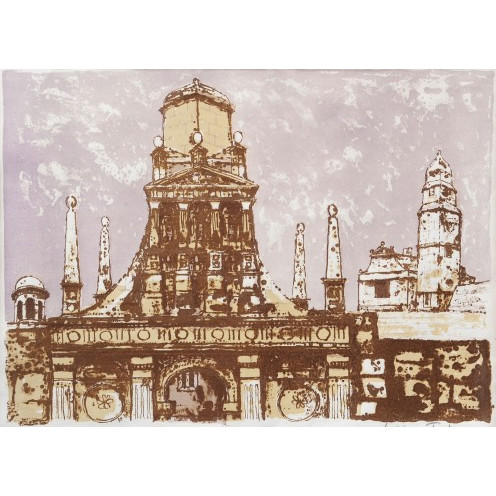
Julian Otto Trevelyan, RA (1910 -1988)
Caius College II, Cambridge (1959/1962)
Signed by the artist and numbered 4/70 in pencil. The edition consisted of 70 numbered proofs and 30 artist’s proofs. 37x51cm (14.5×20 inches) This comes from Julian Trevelyan’s Cambridge Suite which consisted of 10 lithographs: Caius College, Caius College II, Christ’s College, Corpus Christi College, Downing College, Emmanuel College, Jesus College, Peterhouse, St Catharine’s College and Sidney Sussex College. The Government Art Collection has copies of several of the prints in this series. Click here for biographical details and other works by the artist. If you are interested email info@manningfineart.co.uk or call us on 07929 749056. -
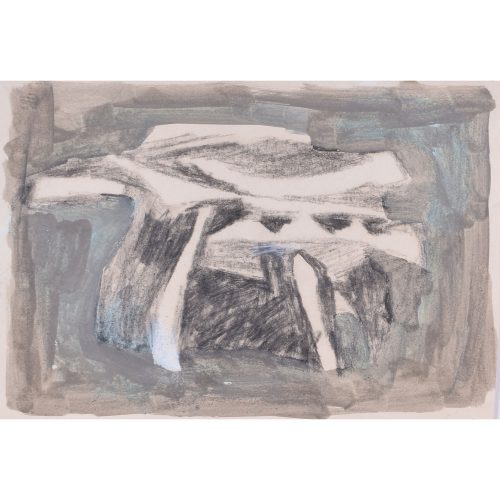
Clifford Ellis (1907-1985)
Form
Gouache 21x30cm Provenance: the family of the artist, by descent. Click here for biographical details and other works by the artist. If you are interested email info@manningfineart.co.uk or call us on 07929 749056. -
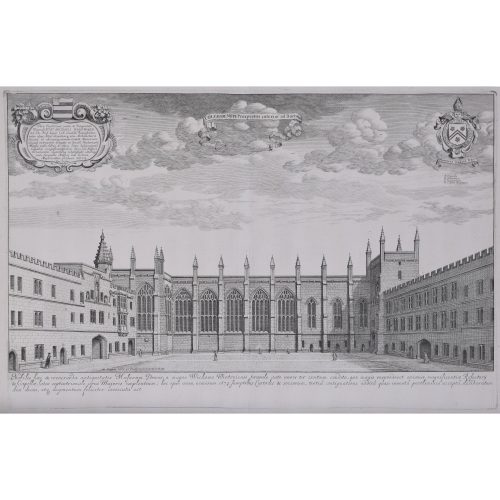
David Loggan (1634-1692) New College, Oxford
Collegium Novum Engraving (1690) mounted to board 32x49cm To see biographical details and other works by the artist please click here. If you are interested email info@manningfineart.co.uk or call us on 07929 749056. Condition: Good. -
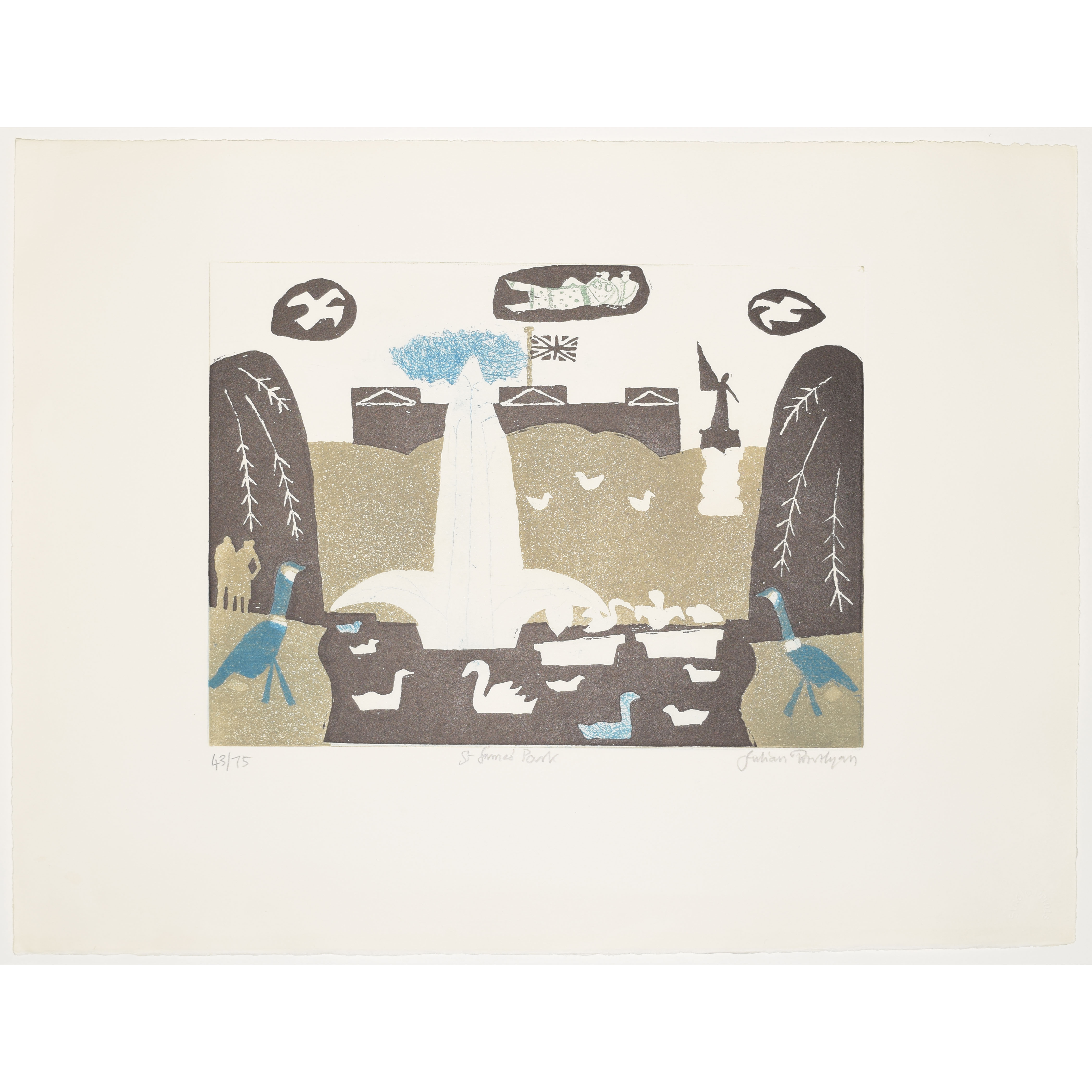
Julian Trevelyan (1910-1988)
St James' Park (1969-70)
Etching and aquatint, signed, numbered 48/75 35x48cm Click here for biographical details and other works by the artist. If you are interested email info@manningfineart.co.uk or call us on 07929 749056. -
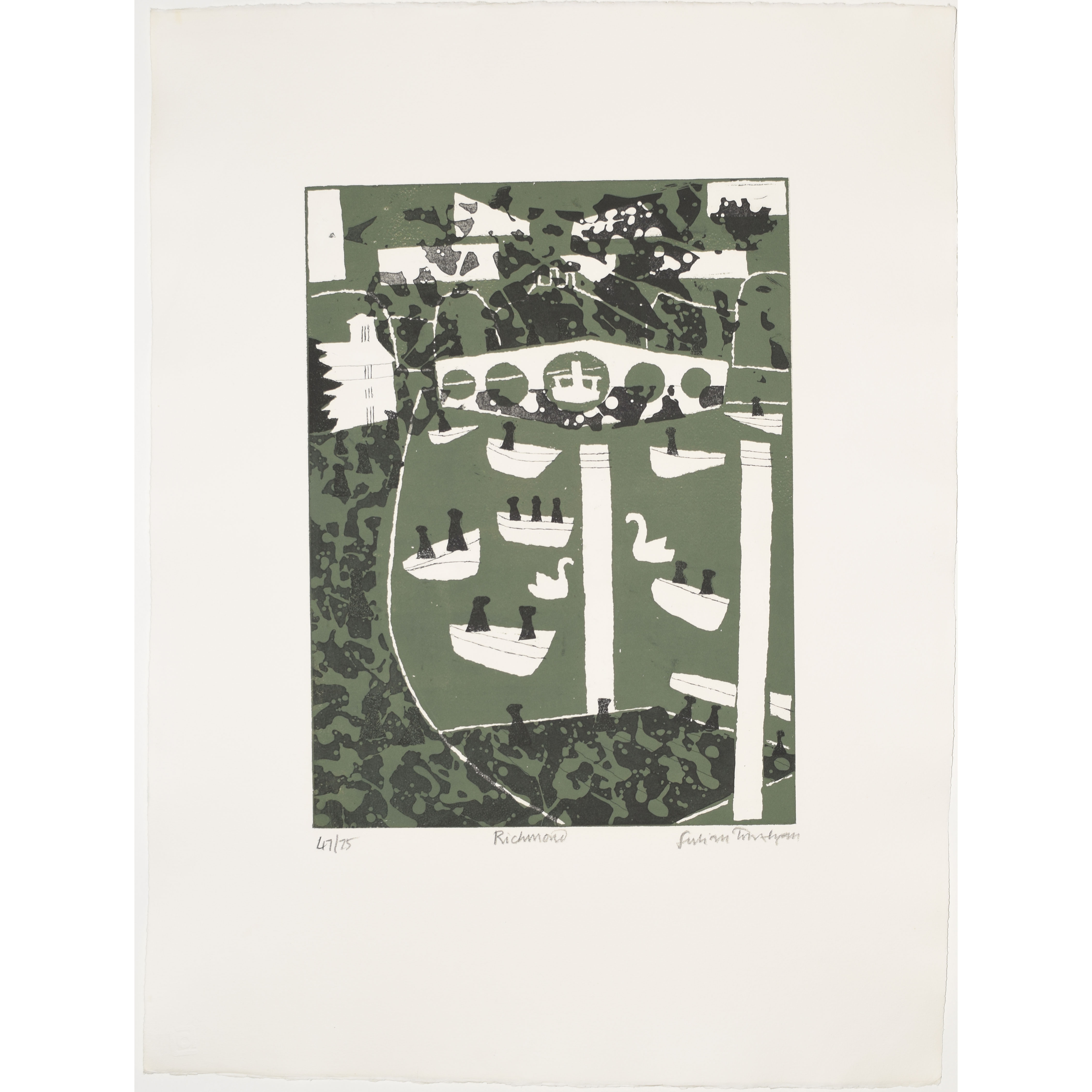
Julian Trevelyan (1910-1988)
Richmond (1969)
Etching and aquatint, signed, numbered 47/75 48x35cm Click here for biographical details and other works by the artist. If you are interested email info@manningfineart.co.uk or call us on 07929 749056. -
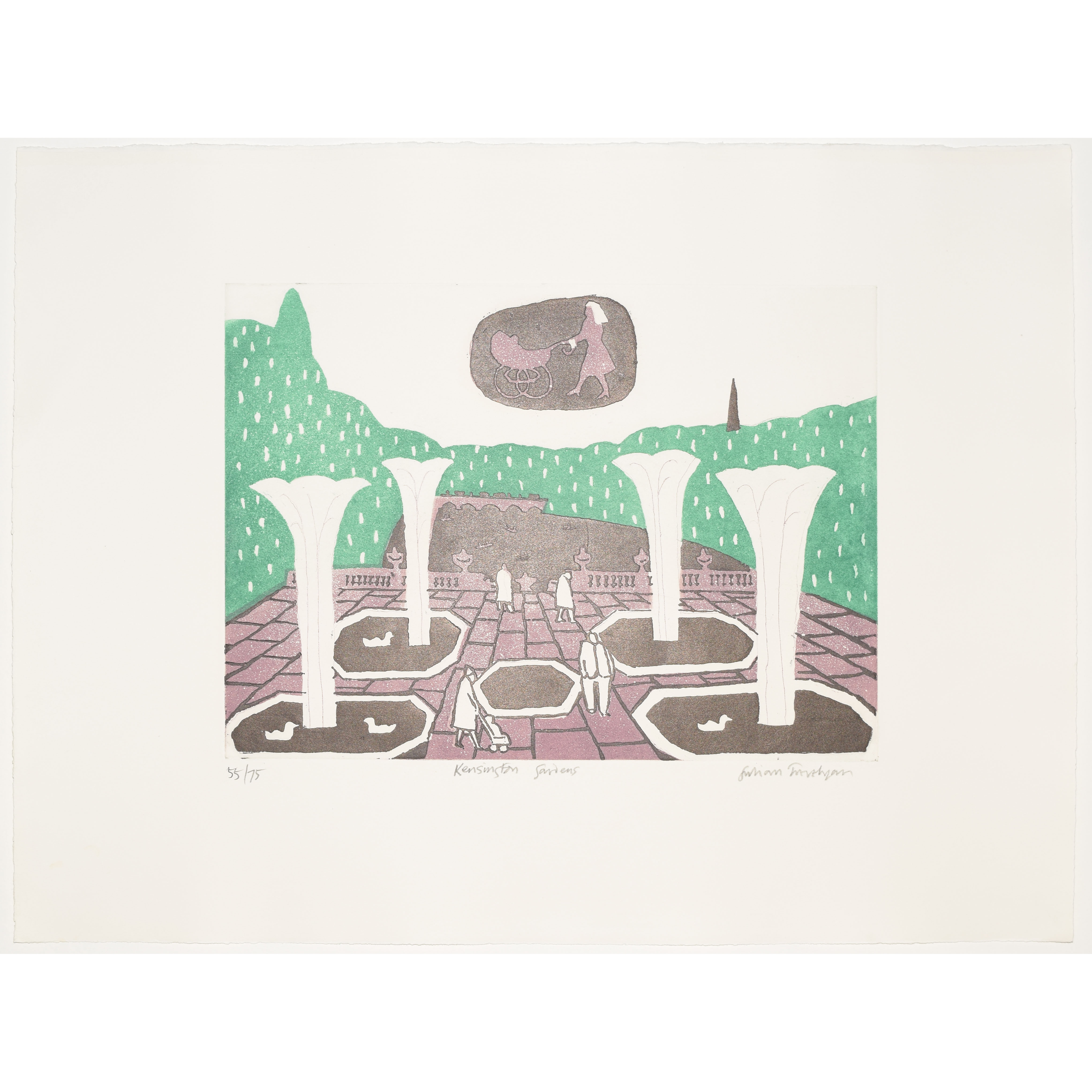
Julian Trevelyan (1910-1988)
Kensington Gardens (1969)
Etching and aquatint, signed, numbered 55/75 35x48cm Click here for biographical details and other works by the artist. If you are interested email info@manningfineart.co.uk or call us on 07929 749056. -
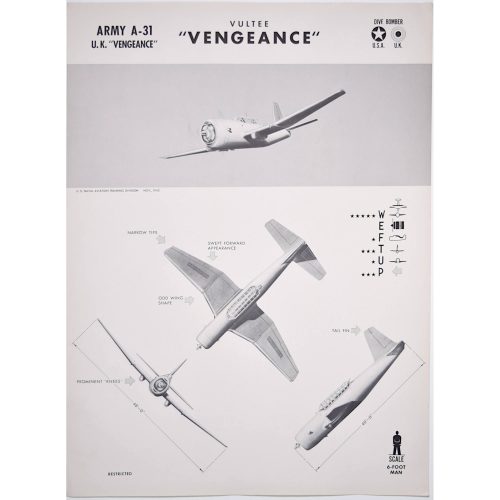
US Naval Aviation Training Division
1943 Vultee Vengeance World War 2 US airplane
Aeroplane identification poster, 1943 63 x 47 cm A particularly unusual style of aeroplane identification poster, owing to the very arty images. Most such posters rely on very plain silhouettes, this series - and we have several in this series (click here) - have a much more arty approach to the task with shading and an interesting angle view. Designed in 1940 as a single-engined dive bomber for the French Armée de l'Air, with deliveries scheduled for October 1940. With the fall of France in June 1940 the order was cancelled, but the British Royal Air Force ordered 200 of these dive bombers having been impressed by the Stuka. It was a reliable aircraft, stable in flight and in a dive. It was much used in Burma, this forgotten theatre of the war being regarded as a repository for otherwise unpopular and unwanted equipment, but where it proved very effective in bombing Japanese positions. If you are interested, please email info@manningfineart.co.uk or call us on 07929 749056. -
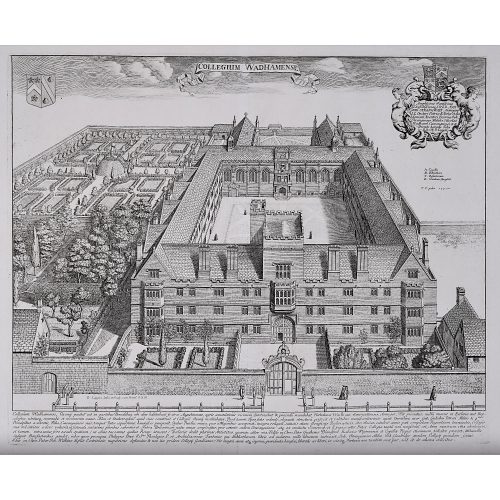
David Loggan (1634-1692)
Wadham College Oxford
Engraving (1675) 34x42cm If you are interested email info@manningfineart.co.uk or call us on 07929 749056. -
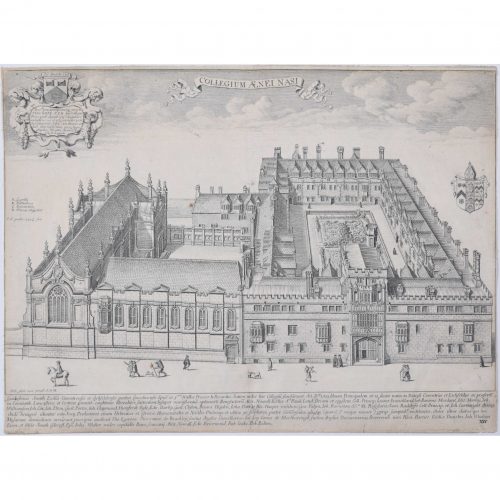
David Loggan (1634-1692)
Brasenose College Oxford
Engraving (1675) 30x40cm To view biographical details and other prints by Loggan click here. Trimmed to within platemark and backed to linen (very many years ago). Otherwise generally good condition. If you are interested email info@manningfineart.co.uk or call us on 07929 749056. -
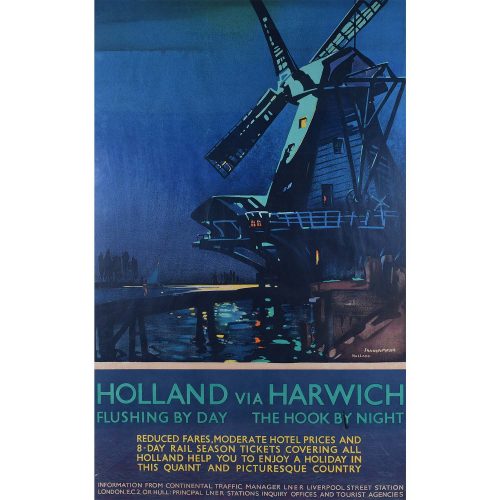
Anonymous
Holland via Harwich Original Vintage Poster
Lithograph 98.5x61cm 102x64cm including frame If you are interested email info@manningfineart.co.uk or call us on 07929 749056. Condition: Generally good, slight water mark in upper left corner. -
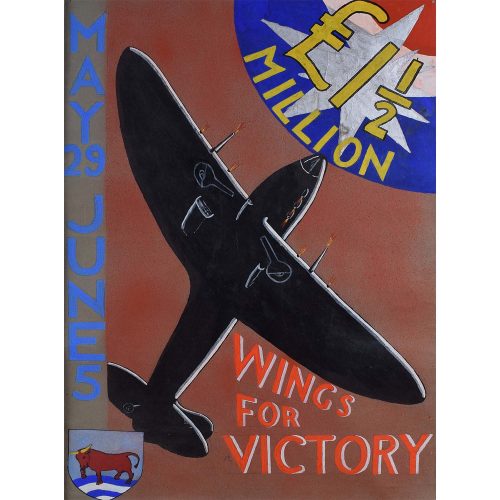
Anonymous
Oxford Wings for Victory Poster Design
56x38cm 62x44cm including hand-finished black frame. Gouache on paper c. 1943 Click here to see other posters from this series and for more information on Wings for Victory campaigns. If you are interested email info@manningfineart.co.uk or call us on 07929 749056. Condition: excellent, framed. -
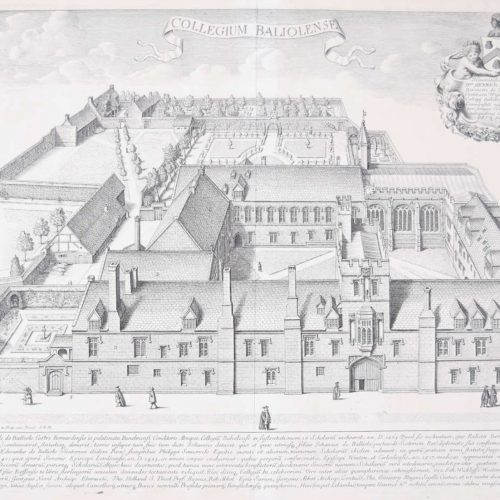
David Loggan (1634-1692)
Balliol College, Oxford
Engraving, 1675 30x40cm Loggan was born to English and Scottish parents, and was baptised in Danzig in 1634. After studying engraving in Danzig with Willem Hondius (1598-1652 or 1658), he moved to London in the late 1650s, going on to produce the engraved title-page for the folio 1662 Book of Common Prayer. He married in 1663 and moved to Nuffield in Oxfordshire in 1665. Loggan was appointed Public Sculptor to the nearby University of Oxford in the late 1660s, having been commissioned to produce bird’s-eye views of all the Oxford colleges. He lived in Holywell Street as he did this. The 'Oxonia Illustrata' was published in 1675, with the help of Robert White (1645-1704). Following its completion, Loggan began work on his equivalent work for Cambridge; the 'Cantabrigia Illustrata' was finally published in 1690, when he was made engraver to Cambridge University. The 'Oxonia Illustrata' also includes an engraving of Winchester College (Winchester and New College share William of Wykeham as their founder) whilst the 'Cantabrigia Illustrata' includes one of Eton College (which shares its founder, Henry VIII, with King’s College). Bird’s-eye views from this era required a particular talent as an architectural perspectivist; it was not until 1783 that it became possible for artists to ascend via hot air balloons and view the scenes they were depicting from above. Loggan thus had to rely on his imagination in conceiving the views. Loggan’s views constitute the first accurate depictions of the two Universities, in many ways unchanged today. Whilst the Oxford engravings were produced in reasonable numbers and ran to a second edition by Henry Overton (on thicker paper and with a plate number in Roman numerals in the bottom right-hand corner), those of Cambridge were printed in much smaller numbers. The Dutchman Pieter van der Aa published some miniature versions of the engravings for James Beverell’s guidebook to the UK, 'Les Delices de la Grande Bretagne' (c. 1708). The contemporary artist Andrew Ingamells (b.1956) has produced a highly-acclaimed series of etchings which bring Loggan’s original vision up to date. If you’d like to know more, please email info@manningfineart.co.uk or call us on 07929 749056. Condition: Generally good. -
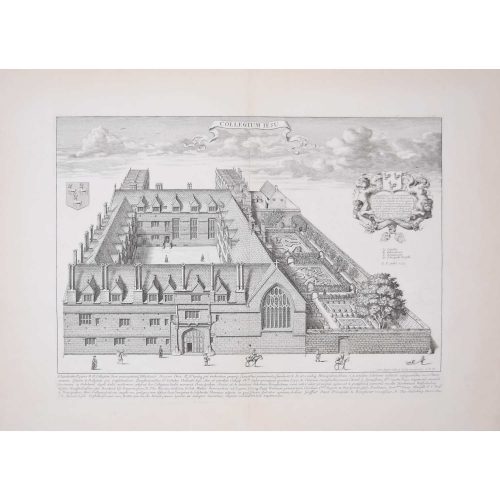
David Loggan (1634-1692)
Jesus College, Oxford
Engraving, 1675 30 x 41cm Loggan was born to English and Scottish parents, and was baptised in Danzig in 1634. After studying engraving in Danzig with Willem Hondius (1598-1652 or 1658), he moved to London in the late 1650s, going on to produce the engraved title-page for the folio 1662 Book of Common Prayer. He married in 1663 and moved to Nuffield in Oxfordshire in 1665. Loggan was appointed Public Sculptor to the nearby University of Oxford in the late 1660s, having been commissioned to produce bird’s-eye views of all the Oxford colleges. He lived in Holywell Street as he did this. The 'Oxonia Illustrata' was published in 1675, with the help of Robert White (1645-1704). Following its completion, Loggan began work on his equivalent work for Cambridge; the 'Cantabrigia Illustrata' was finally published in 1690, when he was made engraver to Cambridge University. The 'Oxonia Illustrata' also includes an engraving of Winchester College (Winchester and New College share William of Wykeham as their founder) whilst the 'Cantabrigia Illustrata' includes one of Eton College (which shares its founder, Henry VIII, with King’s College). Bird’s-eye views from this era required a particular talent as an architectural perspectivist; it was not until 1783 that it became possible for artists to ascend via hot air balloons and view the scenes they were depicting from above. Loggan thus had to rely on his imagination in conceiving the views. Loggan’s views constitute the first accurate depictions of the two Universities, in many ways unchanged today. Whilst the Oxford engravings were produced in reasonable numbers and ran to a second edition by Henry Overton (on thicker paper and with a plate number in Roman numerals in the bottom right-hand corner), those of Cambridge were printed in much smaller numbers. The Dutchman Pieter van der Aa published some miniature versions of the engravings for James Beverell’s guidebook to the UK, 'Les Delices de la Grande Bretagne' (c. 1708). The contemporary artist Andrew Ingamells (b.1956) has produced a highly-acclaimed series of etchings which bring Loggan’s original vision up to date. Condition: excellent. If you’d like to know more, please email info@manningfineart.co.uk or call us on 07929 749056. -
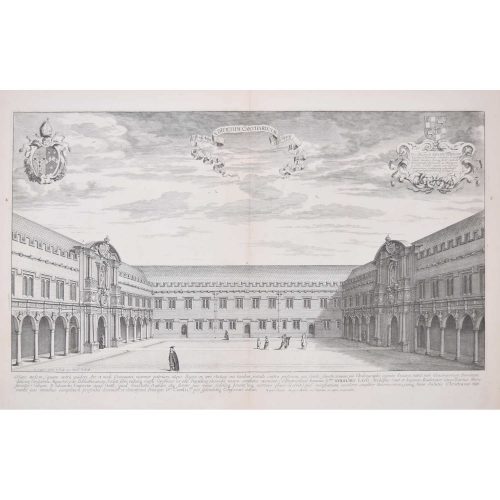
David Loggan (1634-1692)
Canterbury Quad, St John's College, Oxford
Engraving, 1675 32 x 51cm Loggan was born to English and Scottish parents, and was baptised in Danzig in 1634. After studying engraving in Danzig with Willem Hondius (1598-1652 or 1658), he moved to London in the late 1650s, going on to produce the engraved title-page for the folio 1662 Book of Common Prayer. He married in 1663 and moved to Nuffield in Oxfordshire in 1665. Loggan was appointed Public Sculptor to the nearby University of Oxford in the late 1660s, having been commissioned to produce bird’s-eye views of all the Oxford colleges. He lived in Holywell Street as he did this. The 'Oxonia Illustrata' was published in 1675, with the help of Robert White (1645-1704). Following its completion, Loggan began work on his equivalent work for Cambridge; the 'Cantabrigia Illustrata' was finally published in 1690, when he was made engraver to Cambridge University. The 'Oxonia Illustrata' also includes an engraving of Winchester College (Winchester and New College share William of Wykeham as their founder) whilst the 'Cantabrigia Illustrata' includes one of Eton College (which shares its founder, Henry VIII, with King’s College). Bird’s-eye views from this era required a particular talent as an architectural perspectivist; it was not until 1783 that it became possible for artists to ascend via hot air balloons and view the scenes they were depicting from above. Loggan thus had to rely on his imagination in conceiving the views. Loggan’s views constitute the first accurate depictions of the two Universities, in many ways unchanged today. Whilst the Oxford engravings were produced in reasonable numbers and ran to a second edition by Henry Overton (on thicker paper and with a plate number in Roman numerals in the bottom right-hand corner), those of Cambridge were printed in much smaller numbers. The Dutchman Pieter van der Aa published some miniature versions of the engravings for James Beverell’s guidebook to the UK, 'Les Delices de la Grande Bretagne' (c. 1708). The contemporary artist Andrew Ingamells (b.1956) has produced a highly-acclaimed series of etchings which bring Loggan’s original vision up to date. Condition: excellent. If you’d like to know more, please email info@manningfineart.co.uk or call us on 07929 749056. -
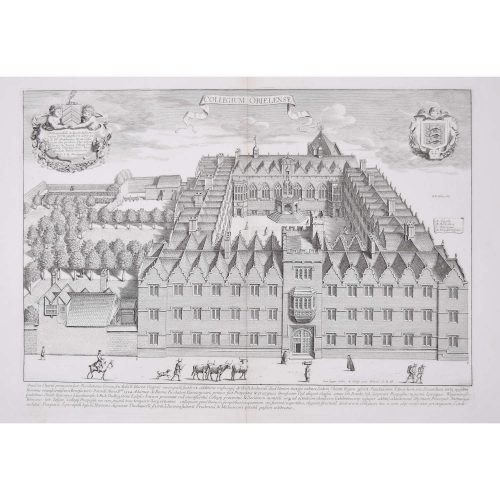
David Loggan (1634-1692)
Oriel College, Oxford (1674)
Engraving, 40 x 26.7cm Loggan was born to English and Scottish parents, and was baptised in Danzig in 1634. After studying engraving in Danzig with Willem Hondius (1598-1652 or 1658), he moved to London in the late 1650s, going on to produce the engraved title-page for the folio 1662 Book of Common Prayer. He married in 1663 and moved to Nuffield in Oxfordshire in 1665. Loggan was appointed Public Sculptor to the nearby University of Oxford in the late 1660s, having been commissioned to produce bird’s-eye views of all the Oxford colleges. He lived in Holywell Street as he did this. The 'Oxonia Illustrata' was published in 1675, with the help of Robert White (1645-1704). Following its completion, Loggan began work on his equivalent work for Cambridge; the 'Cantabrigia Illustrata' was finally published in 1690, when he was made engraver to Cambridge University. The 'Oxonia Illustrata' also includes an engraving of Winchester College (Winchester and New College share William of Wykeham as their founder) whilst the 'Cantabrigia Illustrata' includes one of Eton College (which shares its founder, Henry VIII, with King’s College). Bird’s-eye views from this era required a particular talent as an architectural perspectivist; it was not until 1783 that it became possible for artists to ascend via hot air balloons and view the scenes they were depicting from above. Loggan thus had to rely on his imagination in conceiving the views. Loggan’s views constitute the first accurate depictions of the two Universities, in many ways unchanged today. Whilst the Oxford engravings were produced in reasonable numbers and ran to a second edition by Henry Overton (on thicker paper and with a plate number in Roman numerals in the bottom right-hand corner), those of Cambridge were printed in much smaller numbers. The Dutchman Pieter van der Aa published some miniature versions of the engravings for James Beverell’s guidebook to the UK, 'Les Delices de la Grande Bretagne' (c. 1708). The contemporary artist Andrew Ingamells (b.1956) has produced a highly-acclaimed series of etchings which bring Loggan’s original vision up to date. Condition: generally very good. If you’d like to know more, please email info@manningfineart.co.uk or call us on 07929 749056. -
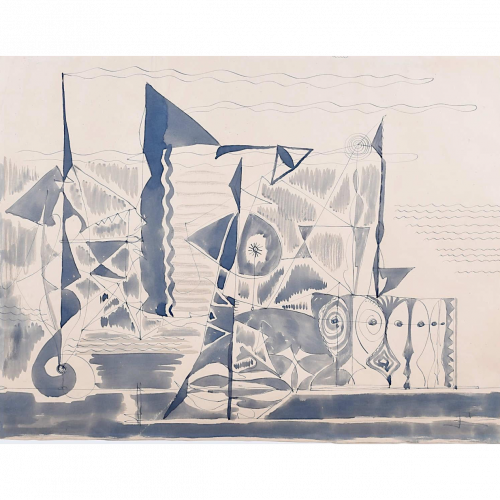
Charles Pulsford ARSA (1912-1989)
Abstract Harbour
Watercolour 36 x 46 cm Signed lower right. Pulsford was born in Staffordshire to Scottish parents. His family returned to Dunfermline when he was a child, and he subsequently attended Edinburgh College of Art (ECA) between 1933 and 1937. He, along with other prominent Scottish artists, embraced modernism and abstraction following the end of the war. Alan Davie, William Turnbull, William Gear and Eduardo Paolozzi are the key artists of the group with which he was association, and the National Galleries of Scotland regard Pulsford as the 'fifth man' of the group. Between 1952 and 1960 he taught at ECA and then at Canterbury College of Art. Provenance: the artist, the residual stock of William Hardie Gallery. Condition: Generally very good, in fine hand-finished frame. If you are interested, email info@manningfineart.co.uk or call us on 07929 749056. -
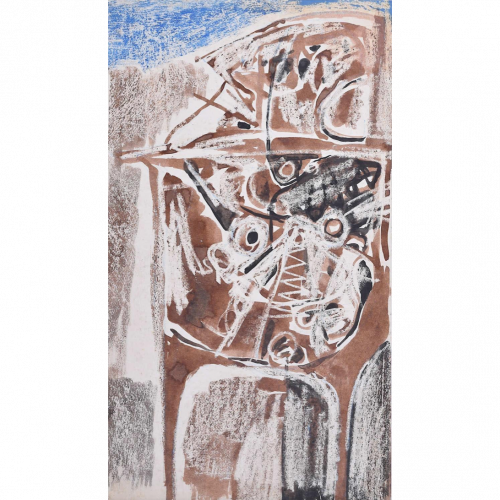
Charles Pulsford ARSA (1912-1989)
Abstract Landscape
Watercolour with wax resist 55 x 31 cm Provenance: the artist; the residual stock of William Hardie. Pulsford was born in Staffordshire to Scottish parents. His family returned to Dunfermline when he was a child, and he subsequently attended Edinburgh College of Art (ECA) between 1933 and 1937. He, along with other prominent Scottish artists, embraced modernism and abstraction following the end of the war. Alan Davie, William Turnbull, William Gear and Eduardo Paolozzi are the key artists of the group with which he was association, and the National Galleries of Scotland regard Pulsford as the 'fifth man' of the group. Between 1952 and 1960 he taught at ECA and then at Canterbury College of Art. Condition: Generally very good. If you are interested, please email info@manningfineart.co.uk or call us on 07929 749056. -
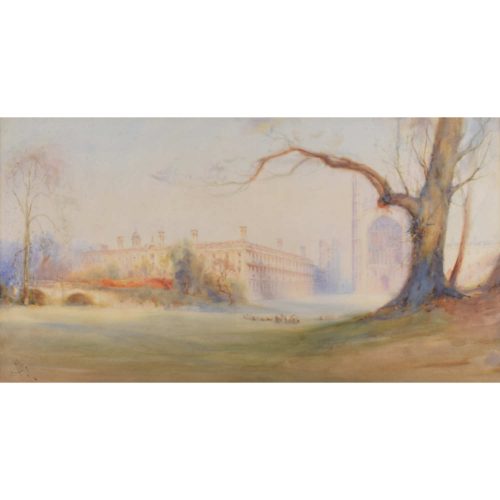 Charles March Gere R.A. R.W.S. (1869 - 1957) King's College from the Backs Watercolour 36 x 69 cm Monogrammed lower left. An atmospheric watercolour of one of Cambridge's most exalted sights: King's College chapel from the Backs, together with Clare College. Charles March Gere R.A. R.W.S. was an English painter, illustrator of books, and stained glass and embroidery designer associated with the Arts and Crafts movement.
 -
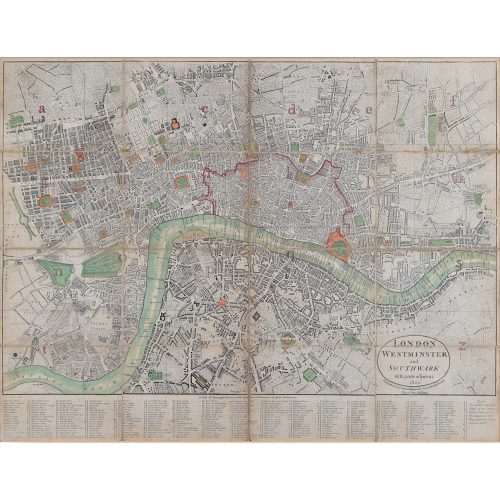
Darton and Harvey (publisher)
Map of London, Southwark, and parts adjacent (1800)
Engraving 42 x 56 cm Condition: generally very good; backed to linen with some evidence of use. -
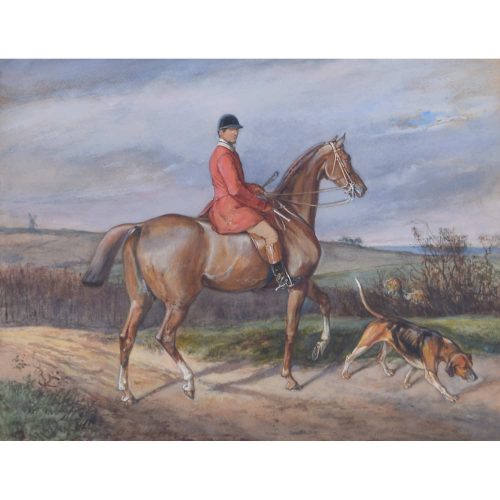
H. Fluiss
Charles Payne, Huntsman to the Pytchley Hounds on Redtape with the hound Trueman (1862)
Watercolour with body colour 36 x 43 cm A mid-nineteenth century watercolour depicting Charles Payne (1884–1967), huntsman to the Pytchley. Condition: very good. If you are interested, please email info@manningfineart.co.uk or call us on 07929 749056. -
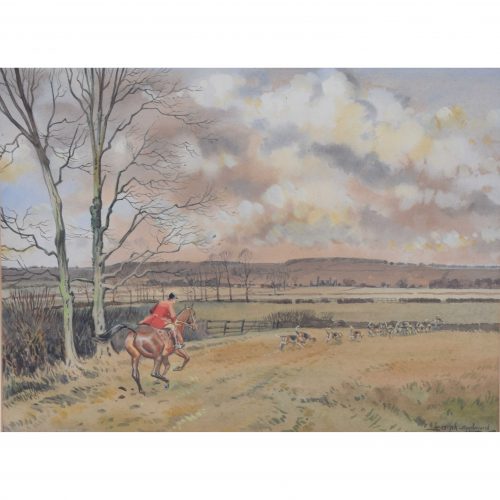
John Appleyard (1908 - 1960)
The Middleton Hunt at Sherriff Hutton
Watercolour 28 x 37 cm Signed lower right. The Huntsman and hounds of North Yorkshire's Middleton Hunt. Condition: very good. If you’d like to know more, please email info@manningfineart.co.uk or call us on 07929 749056. -
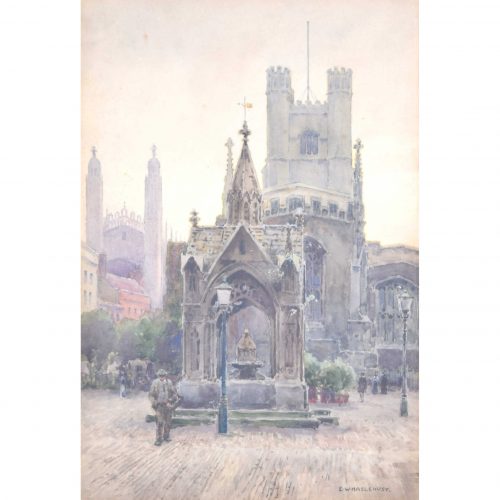
Ernest William Haslehurst (1866 - 1949)
The Market Place, Cambridge, with a view of Great St Mary’s Church and King's College Chapel
Watercolour 33.5 x 23 cm Haslehurst's watercolour of Cambridge's marketplace, overlooked by the spires of King's College Chapel and Great St Mary's. Ernest William Haslehust was an English landscape painter and book illustrator who worked in watercolours. He was a member of the Royal Institute of Painters in Water Colours (RI), Royal Society of British Artists (RBA), Royal West of England Academy (RWA) and Royal British Colonial Society of Artists (RBC), and exhibited regularly at many venues including the Royal Academy in London. He also designed posters for the LNER and LMS railway companies, and his art was featured in many magazines of the day including the Illustrated London News and The Tatler. Condition: generally good. Some spotting. If you’d like to know more, please email info@manningfineart.co.uk or call us on 07929 749056. -
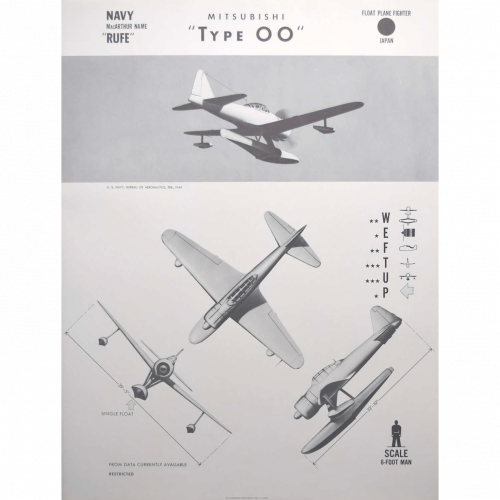
"Rufe" Mitsubishi "Type OO"
Aeroplane identification poster, published 1942 63 x 47 cm A particularly unusual style of aeroplane identification poster, owing to the very arty images. Most such posters rely on very plain silhouettes, this series - and we have several in this series; view them here - have a much more arty approach to the task with shading and an interesting angle view. This Japanese floatplane, known to the Allies as a "Rufe", was developed from the Mitsubishi A6M Type 0 - the famous ''Zero'' figher, mainly to support amphibious operations and defend remote bases. It was based on the A6M-2 Model 11 fuselage, with a modified tail and added floats. A total of 327 were built, including the original prototype. The aircraft was deployed in 1942 and was only used in operations taking place in the Aleutians and Solomon Islands. Such seaplanes were effective in harassing American patrol torpedo boats at night. They could also drop flares to illuminate the American boats which were vulnerable to destroyer gunfire, and depended on cover of darkness. Condition: generally very good. If you are interested, please email info@manningfineart.co.uk or call us on 07929 749056. -
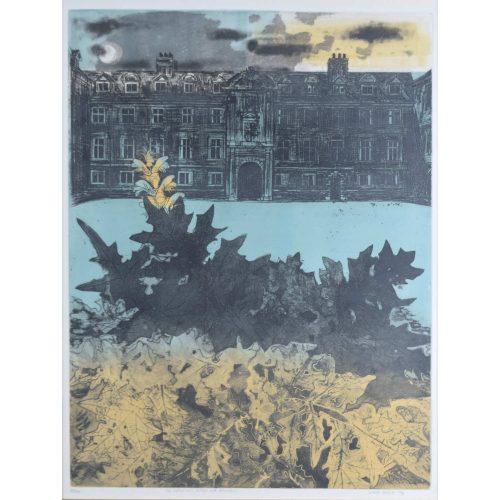
Walter Hoyle (1922-2000)
St Catharine's College, Cambridge (1973)
Linocut 72 x 56 cm Signed and dated '73 lower right, numbered 85 / 200 lower left, and signed below. Hoyle trained at Beckenham School of Art and the Royal College of Art. At the RA, he was strongly influenced by Edward Bawden, one of Britain’s greatest linocut printers. Bawden had been commissioned by the 1951 Festival of Britain to produce a mural for the South Bank, and chose Hoyle, a promising student, as his assistant. Hoyle moved to Great Bardfield in Essex and became part of the Great Bardfield group of artists: diverse in style, they created figurative work in stark contrast to the abstract art of the St Ives artists at the other end of the country. Hoyle taught at St Martin’s School of Art from 1951 - 1960, the Central School of Arts and Crafts from 1960 - 1964, and the Cambridge School of Art from 1964 - 1985, during which time he launched Cambridge Print Editions. His work is held in the collections of the Tate Gallery, the Victoria and Albert Museum, The British Museum, Kettle’s Yard, and the Fry Art Gallery. Condition: very good. If you are interested, please email info@manningfineart.co.uk or call us on 07929 749056. -
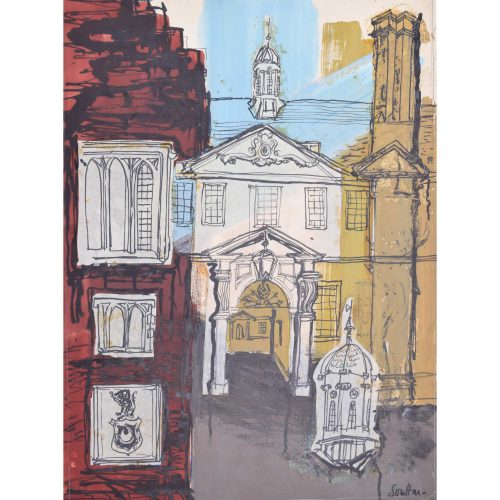
Margaret Souttar (1914-1987)
Trinity Hall, Cambridge
Acrylic on paper 76 x 56 cm Signed lower right. Souttar was a Scottish painter and printmaker known for her images of town- and cityscapes. In the early 1960s, she was commissioned to produce a series of prints of the Cambridge colleges. She captures the modernity and optimism of 1960s Cambridge; the fact that a female artist was commissioned to create the prints reflects the changing attitudes of the University towards women. Trinity Hall was one of the first Cambridge colleges to admit women as students - it did not do so until 1976. Provenance: the artist's studio sale. Condition: generally very good; some small glue stains around collaging. If you are interested, please email info@manningfineart.co.uk or call us on 07929 749056. Click here for other views of Trinity Hall. -
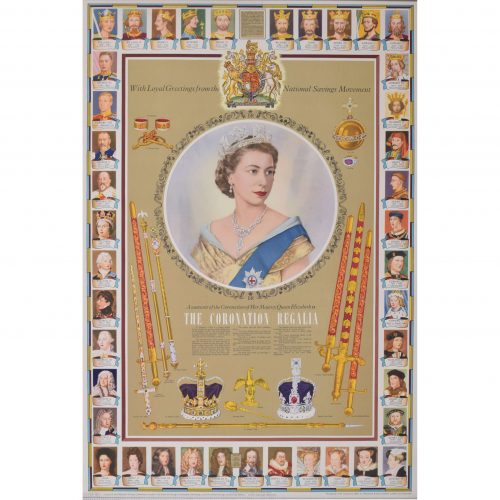
after Dorothy Wilding (1893 - 1976)
The Coronation Regalia (1953)
Original vintage poster 75 x 50 cm Issued by the National Savings Committee, London, the Scottish Savings Committee, Edinburgh, and the Ulster Savings Committee, Belfast. Crown Copyright Reserved. Printed for H.M. Stationery Office by Waterloo & Sons Limited, London and Dunstable. A fantastic piece of royalist British history. The famous portrait photographer Dorothy Wilding captured Queen Elizabeth II at her Coronation in 1952 - the photograph, used as the centrepiece of this poster, was also used on Britain's postage stamps until 1967. This particular poster was designed to be a Coronation souvenir, and features all the regalia and trappings of the United Kingdom's coronation ceremony, including crown, sword, orb, and sceptres, to name a few. The poster's margins are decorated with portraits of Britain's monarchs past, dating back to William the Conqueror. The National Savings Movement was a government-backed savings movement which began during the First World War to finance the government's wartime deficit. Savings products promoted by the movement typically offered a low level of return but the safety of a government guarantee. Various poster designs were issued by the movement to encourage ordinary people to save - we have several different designs in stock. Condition: generally very good. If you are interested, please email info@manningfineart.co.uk or call us on 07929 749056. Click here for other National Savings posters. -
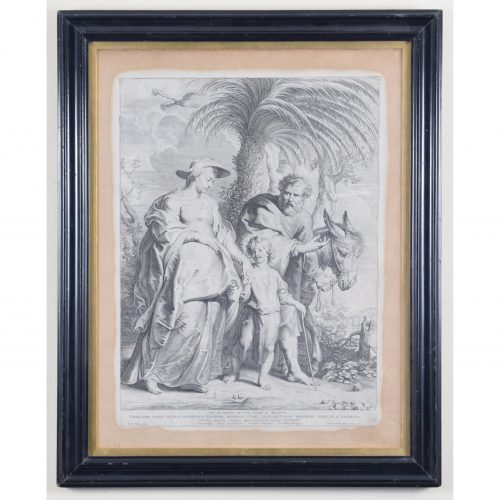
Lucas Vorsterman (1595 - 1675) after Peter Paul Rubens (1577 - 1640)
The Flight into Egypt (1620)
Engraving 30 x 45 cm Rare. We have only been able to trace one copy at auction, 2019, Izegem, Belgium. A copy of this print is held by the British Museum (R,3.50). Mary, Joseph, and the infant Christ escape into Egypt on a donkey. Lucas Vorsterman was a Baroque engraver. He worked with the artists Peter Paul Rubens and Anthony van Dyck, as well as for patrons such as Thomas Howard, 21st Earl of Arundel and Charles I of England. Condition: mounted to old paper; trimmed to platemarks; two areas of repair in region of Mary's left hand and Christ's right knee (see photo). In old ebonised frame. If you are interested, please email info@manningfineart.co.uk or call us on 07929 749056. -
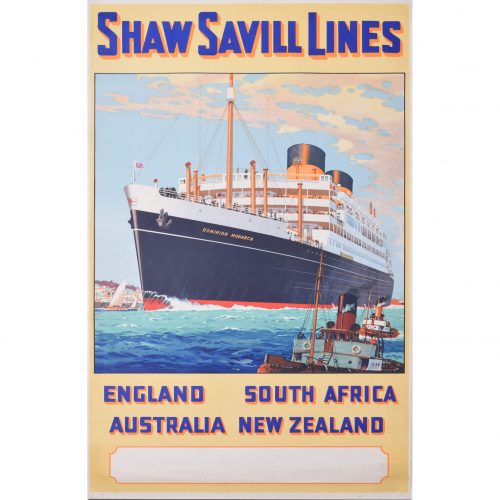
William McDowell (1888 - 1950)
Shaw Savill Lines - Dominion Monarch
Original vintage poster 103 x 64 cm McDowell's poster advertises the magnitude and majesty of the Dominion Monarch, which dwarfs other boats and sails boldly forwards. Dominion Monarch was a UK passenger and refrigerated cargo liner. Her name was a reference to the Dominion of New Zealand, and she was built for Shaw, Savill & Albion Line (the shipping line of P Henderson & Company, a British shipping firm). McDowell was a painter, draughtsman and commercial artist, born in the shipbuilding town of Barrow-in-Furness, Lancashire. After leaving school he was apprenticed in the drawing office of the engineering firm Vickers, and eventually became a member of the Institute of Naval Architects. Shortly after the First World War, McDowell left naval architecture to become a full-time artist, producing murals for the liner Mauretania and other vessels, eventually settling in Wallasey, Cheshire. Many of his own paintings were of historical or maritime subjects, shown at the Walker Art Gallery and elsewhere. In 1919 he had a picture included in the RA Summer Exhibition. During the Second World War he was commissioned in the Royal Naval Scientific Service. Condition: generally very good, occasional repaired short edge tears, a little spotting primarily to blank panel at bottom and slightly creased at edges. If you are interested, please email info@manningfineart.co.uk or call us on 07929 749056. Click here for other original vintage posters. -
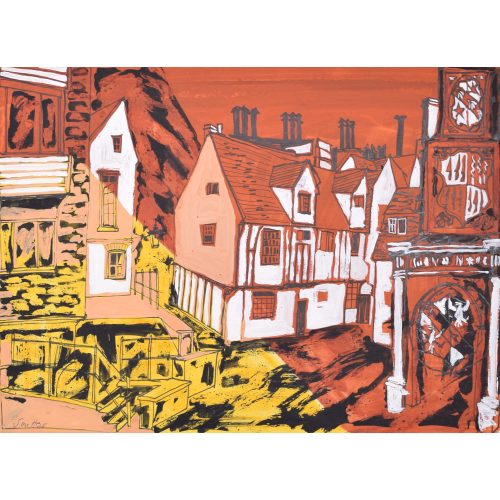
Margaret Souttar (1914 - 1987)
Magdalene College, Cambridge I
Acrylic paint 49 x 66 cm Signed lower left; titled in margin upper left. Souttar was a Scottish painter and printmaker known for her images of town- and cityscapes. In the early 1960s, she was commissioned to produce a series of prints of the Cambridge colleges. She captures the modernity and optimism of 1960s Cambridge; the fact that a female artist was commissioned to create the prints reflects the changing attitudes of the University towards women. These views highlight the layers of history and architectural styles which make up a Cambridge college. Provenance: the artist's studio sale. Condition: generally very good. If you are interested, please email info@manningfineart.co.uk or call us on 07929 749056. Click here for other views of Magdalene College, Cambridge. -
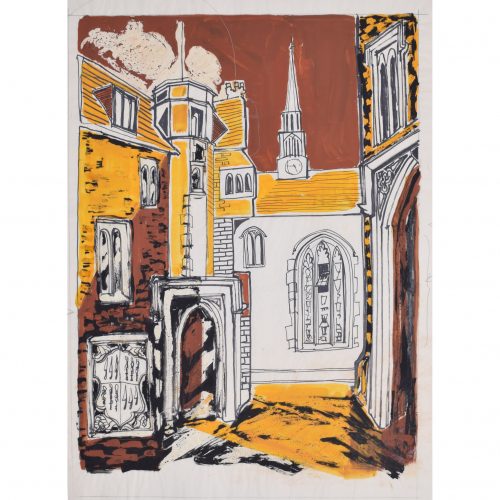
Margaret Souttar (1914 - 1987)
Magdalene College, Cambridge III
Acrylic paint 75 x 55 cm Signed lower left; titled in margin upper left. Souttar was a Scottish painter and printmaker known for her images of town- and cityscapes. In the early 1960s, she was commissioned to produce a series of prints of the Cambridge colleges. She captures the modernity and optimism of 1960s Cambridge; the fact that a female artist was commissioned to create the prints reflects the changing attitudes of the University towards women. These views highlight the layers of history and architectural styles which make up a Cambridge college. Provenance: the artist's studio sale. Condition: generally very good; some crinkling as a result of using water-based paints on thin paper. If you are interested, please email info@manningfineart.co.uk or call us on 07929 749056. Click here for other views of Magdalene College, Cambridge. -
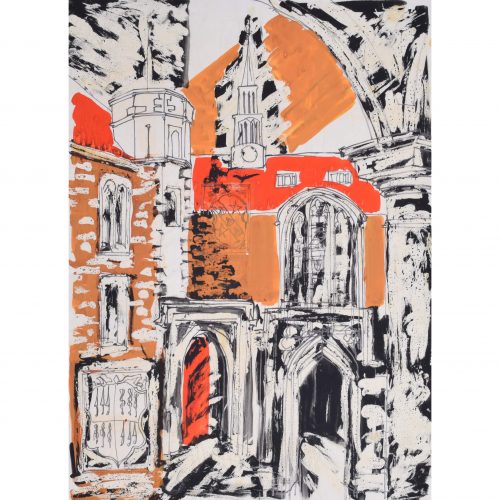
Margaret Souttar (1914 - 1987)
Magdalene College, Cambridge V
Acrylic paint 75 x 55 cm Signed lower left; titled in margin upper left. Souttar was a Scottish painter and printmaker known for her images of town- and cityscapes. In the early 1960s, she was commissioned to produce a series of prints of the Cambridge colleges. She captures the modernity and optimism of 1960s Cambridge; the fact that a female artist was commissioned to create the prints reflects the changing attitudes of the University towards women. These views highlight the layers of history and architectural styles which make up a Cambridge college. Provenance: the artist's studio sale. Condition: generally very good; some crinkling as a result of using water-based paints on thin paper; slight toning to paper in some areas. If you are interested, please email info@manningfineart.co.uk or call us on 07929 749056. Click here for other views of Magdalene College, Cambridge. -
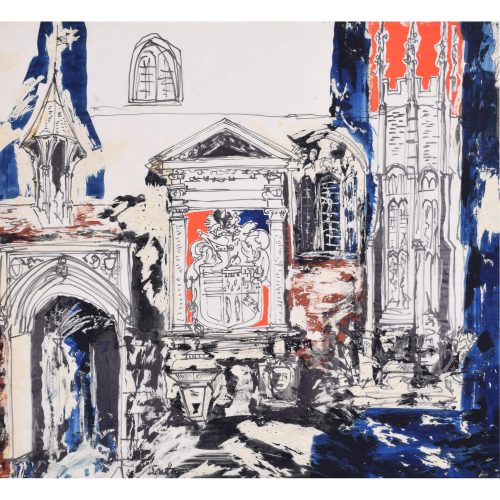
Margaret Souttar (1914 - 1987)
Queens' College, Cambridge I
Acrylic paint 67 x 74 cm Signed below. Souttar was a Scottish painter and printmaker known for her images of town- and cityscapes. In the early 1960s, she was commissioned to produce a series of prints of the Cambridge colleges. She captures the modernity and optimism of 1960s Cambridge; the fact that a female artist was commissioned to create the prints reflects the changing attitudes of the University towards women. These views highlight the layers of history and architectural styles which make up a Cambridge college. Provenance: the artist's studio sale. Condition: generally very good, on thin paper; some crinkling to paper as a result of being painted. Possible slight discolouration around pediment. If you are interested, please email info@manningfineart.co.uk or call us on 07929 749056. Click here for other views of Queens' College, Cambridge.