-
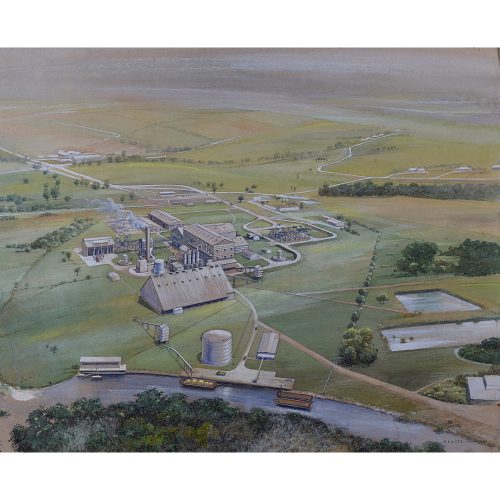
W. A. A. Cox ARIBA Architectural Design for a Factory in the United Kingdom
Watercolour, pencil 53x64 cm Signed and dated, lower right 'W. A. A. Cox ARIBA 1966' If you are interested email info@manningfineart.co.uk or call us on 07929 749056. Condition: Good. -
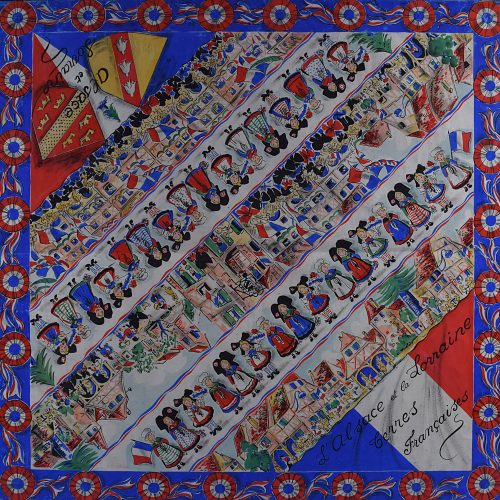
Design for Bianchi Ferier, Lyon for a silk scarf 5 March 1945
Gouache, pen and ink 78cm x 76cm Provenance: The Bianchi Ferrier archive sale at Christies On 9 February 1945 the 'Colmar Pocket' was finally cleared of Germans - a process that had started in November 1944 - and the province of Alsace changed hands between France and Germany for the fourth time in 75 years. Happily in the succeeding 75 years Alsace has not changed ownership. If you are interested email info@manningfineart.co.uk or call us on 07929 749056. Condition: Good. -
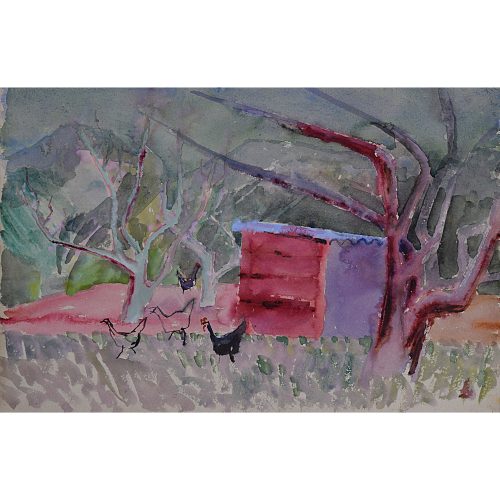
Clifford Ellis (1907-1985) Hens by a chicken shed at Corsham Court
Watercolour 37x56cm Provenance: the family of the artist, by descent. Here Ellis paints the hens at Corsham Court together with their chicken shed. Born in Bognor in Sussex and trained at St Martin’s School of Art and Regent Street Polytechnic, Ellis was a graphic artist and illustrator who is best known for the posters he produced for London Transport during the 1930s. He generally collaborated with his wife Rosemary – whom he married in 1931 – on their posters. The General Post Office, Shell, and The Empire Marketing Board were also clients for their posters. They signed their posters C&RE, their initials being in alphabetical order and they are readily recognisable by their ebullient use of colour and form. Employed during the war as a camoufleur, along with so many other artists, Clifford was also an official war artist, serving with the Grenadier Guards. Rosemary, meanwhile, was an artist for the Recording Britain project. Following the war they trained art teachers at Bath Academy of Art. They also designed a series of nearly one hundred book jackets for Collins New Naturalist series, published between 1945 and 1982. Clifford Ellis studied illustration at the Regent Street Polytechnic, an institution that specialised in ’practical trade classes’, from 1924-27. He went on to design book covers (notably for Collins’ ‘New Naturalist’ series) and posters for London Transport, the General Post Office, Shell-Mex, the Empire Marketing Board and J. Lyons & Co., along with his wife, Rosemary Ellis, whom he married in 1931 while he was teaching at the Polytechnic. The couple’s poster designs combine striking colour with bold typography and depict stylised scenes of the countryside, birds and animals. In the 1930s London Transport commissioned over forty posters a year from well-known artists such as Laura Knight, CRW Nevinson, Edward Wadsworth, Eric Ravilious, Paul Nash, Graham Sutherland and Edward McKnight Kauffer – a bold policy that did much to popularise avant-garde artistic styles that stemmed from Cubism, Futurism and Abstraction. Such an influence is clear in the Ellises poster ‘It’s better to shop early’ (above, 1935) in which arms, hands and parcels are disjointed and angular with the text on a slant, like the collaged newsprint insertions of synthetic Cubism. This strong foundation in graphic art clearly influenced his approach to composition for the rest of his career. Even his later abstract work, though tonally subtle, is based on a simple but powerful linear design. ‘The Coming of the Ice Age’, a series of watercolour and crayon studies (one large finished canvas, ‘Advance of an Ice Age’, exists in the collection of Derbyshire and Derby School Library Services) reduces natural forms to simplified shapes and colour planes, though retaining the texture of brushstrokes and crayon. The Ellises visited the Devon coastal town of Teignmouth to carry out a commission for Lyons for a lithograph in 1947, and the rocky bay with its whitewashed buildings and sailboats (below) caught Clifford’s imagination. He painted numerous preparatory watercolour views for the lithograph, while both the grey-blue colour palette as well as the pleasing repetitive geometry of sails reflected on water might be discerned in later abstract works. During the Second World War Ellis served as a camouflage artist and official war artist with the Grenadier Guards. Roland Penrose was another British artist who worked in this area and wrote ‘The Home Guard Manual of Camouflage’ which effectively adapted modern painting techniques for use in warfare. The tonal colour range of many of Ellis’s post-war paintings and the abstract network of shapes – for instance the pale blue patchwork ‘glacier’ in the ‘Coming of the Ice Age III’ (below) – seem to hark back to the art of the modernist camoufleur. Ellis played another important role during the war, painting and drawing scenes of Bath for the Recording Britain project. This project was conceived by Kenneth Clark, then Director of the National Gallery, alongside the official War Artists scheme; its aim was to document Britain’s landscape and architectural heritage in the face of the imminent threat of invasion and bomb damage. It also had a propaganda motive; the resulting works were exhibited during the war and aimed to boost the nation’s morale (they are now in the collection of the V&A). The paintings were predominantly in watercolour, a traditional British medium that Clark was keen to promote and felt would complement the subject matter. Two of Ellis’ pupils, discussing his watercolour sketch of VE Day in Bath, recall him as quietly observant but also someone who enjoyed life; the painting is spontaneous and full of the movement of dancing figures and waving flags. In particular, Ellis was commissioned to depict examples of Bath’s decorative architectural ironwork before it was removed to help the war effort and he also recorded the effects of bombing raids on the city. Meanwhile Ellis had joined the staff of the Bath School of Art (or Bath Technical College). Its temporary residence was destroyed by bombs in 1942 and Walter Sickert’s house at Bathampton offered as a refuge (Sickert, who had taught at the School, died in January 1942). After the war the School began its transformation into the Bath Academy of Art based at Corsham Court, of which Ellis was the Head from 1937-72, training art teachers and developing a pioneering new syllabus. If you are interested email info@manningfineart.co.uk or call us on 07929 749056. Condition: Excellent. In a conservation mount. -
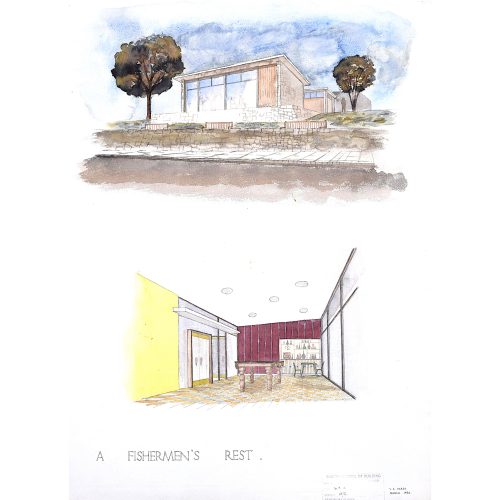
V A Hards (British, c. 1930-c. 2012) Design for Modernist Fisherman's Hut
Watercolour on wove Signed and dated March 1956 and stamped for Brixton School of Building. 77x55cm Hards was educated at Brixton School of Building and Woolwich Polytechnic between 1948 and 1956, during which period he produced some very competent work including this rather fun modernist brutalist design for a fisherman's hut, not designed to blend in with the scenery. Brixton School of Building was incorporated into the Polytechnic of the South Bank - now London South Bank University. To view more of his work we have listed, scroll down to 'View more from this seller' and click on 'View all from this seller' and then search for 'Hards'. If you are interested email info@manningfineart.co.uk or call us on 07929 749056. Condition: Good. Some edge wear and isolated spots. -
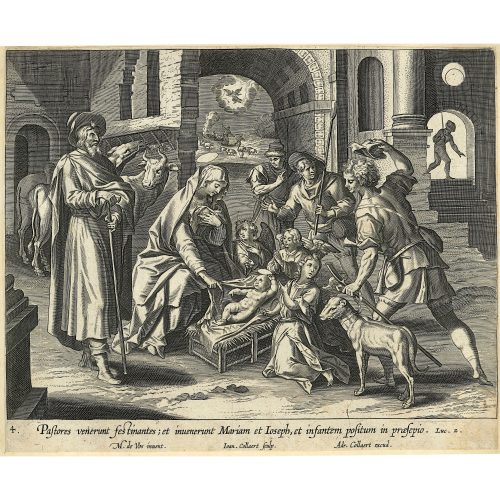
Adriaen Collaert (c. 1560-1618) after Maerten de Vos (1532 - 1603) "Pastores venerunt festinantes; et inuenerunt Mariam et Ioseph, et infantem positum in praesepio" - Luke 2
Engraving, From Vita, Passio, et Resurrectio Iesu Christi first published 1598, this a later edition published by Joannes Galle (1600-1676) 16.5x21.8cm From the Gospel of Luke, Chapter 2 Verse 16 - And the shepherds came with haste, and found Mary, and Joseph, and the babe lying in a manger. Adriaen Collaert was born in Antwerp between 1555 and 1565, becoming wijnmeester of the Guild of St Luke in 1580 - a title reserved for the sons of guild members. The guild of St Luke was generally the city guild for artists. Working for Philip Galle, a Dutch publisher best known for his old master prints, he married Galle's daughter Justa. After learning the principles of engraving in the Netherlands, he spent some years in Italy improving his skill. Upon returning to Flanders he engraved, in accomplished fashion, a great number of plates. His brother, Jan Collaert II, his son, Jan Baptist Collaert II and a grandson were all printmakers. These particular plates are after paintings by Maerten de Vos, a Flemish painter and draughtsman. His father was Pieter de Vos, from whom he learned. From 1550 - 1558 he travelled in Italy, visiting Rome and Venice and becoming master of the Antwerp Guild of St Luke upon his return in 1558. After 1575 he was mainly engaged in producing print designs. If you are interested email info@manningfineart.co.uk or call us on 07929 749056. Condition: Trimmed to plate margins, generally good condition commensurate with age, slight age toning and handling marks as evident from image. -
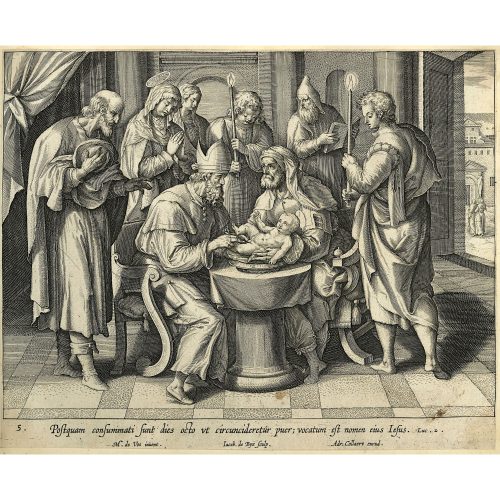
Adriaen Collaert (c. 1560-1618) after Maerten de Vos (1532 - 1603) 5. "Postquam consummati sunt dies octo ut circuncideretur puer; vocatum est nomen eius Iesus" - Luke 2
Engraving, From Vita, Passio, et Resurrectio Iesu Christi first published 1598, this a later edition published by Joannes Galle (1600-1676) 16.5x21.8cm From the Gospel of Luke, Chapter 2 Verse 21 - And when eight days were accomplished for the circumcising of the child, his name was called Jesus. Adriaen Collaert was born in Antwerp between 1555 and 1565, becoming wijnmeester of the Guild of St Luke in 1580 - a title reserved for the sons of guild members. The guild of St Luke was generally the city guild for artists. Working for Philip Galle, a Dutch publisher best known for his old master prints, he married Galle's daughter Justa. After learning the principles of engraving in the Netherlands, he spent some years in Italy improving his skill. Upon returning to Flanders he engraved, in accomplished fashion, a great number of plates. His brother, Jan Collaert II, his son, Jan Baptist Collaert II and a grandson were all printmakers. These particular plates are after paintings by Maerten de Vos, a Flemish painter and draughtsman. His father was Pieter de Vos, from whom he learned. From 1550 - 1558 he travelled in Italy, visiting Rome and Venice and becoming master of the Antwerp Guild of St Luke upon his return in 1558. After 1575 he was mainly engaged in producing print designs. If you are interested email info@manningfineart.co.uk or call us on 07929 749056. Condition: Trimmed to plate margins, generally good condition commensurate with age, slight age toning and handling marks as evident from image. -
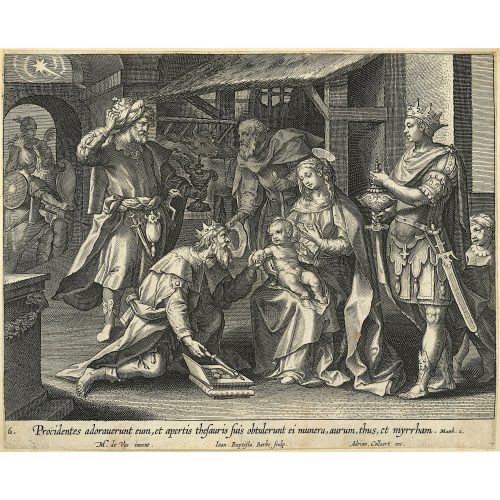
Jean Baptist Barbé (1578?-1649) Adriaen Collaert (c. 1560-1618) after Maerten de Vos (1532 - 1603) 6. "Procidentes adoravuerunt eum, et apertis thesauris suis obtulerunt ei munera, aurum, thus, et myrrham" - Matth 2
Engraving From Vita, Passio, et Resurrectio Iesu Christi first published 1598, this a later edition published by Joannes Galle (1600-1676) 16.5x21.8cm From the Gospel of Matthew, Chapter 2 Verse 11 - and fell down and worshipped him: and when they had opened their treasures, they presented unto him gifts; gold, and frankincense and myrrh. The star hangs over the stable door, as the three Magi present their treasures to Our Lord, sitting upon Mary's knee, St Joseph in attendance behind. Adriaen Collaert was born in Antwerp between 1555 and 1565, becoming wijnmeester of the Guild of St Luke in 1580 - a title reserved for the sons of guild members. The guild of St Luke was generally the city guild for artists. Working for Philip Galle, a Dutch publisher best known for his old master prints, he married Galle's daughter Justa. After learning the principles of engraving in the Netherlands, he spent some years in Italy improving his skill. Upon returning to Flanders he engraved, in accomplished fashion, a great number of plates. His brother, Jan Collaert II, his son, Jan Baptist Collaert II and a grandson were all printmakers. These particular plates are after paintings by Maerten de Vos, a Flemish painter and draughtsman. His father was Pieter de Vos, from whom he learned. From 1550 - 1558 he travelled in Italy, visiting Rome and Venice and becoming master of the Antwerp Guild of St Luke upon his return in 1558. After 1575 he was mainly engaged in producing print designs. If you are interested email info@manningfineart.co.uk or call us on 07929 749056. Condition: Trimmed to plate margins, generally good condition commensurate with age, slight age toning and handling marks as evident from image. -
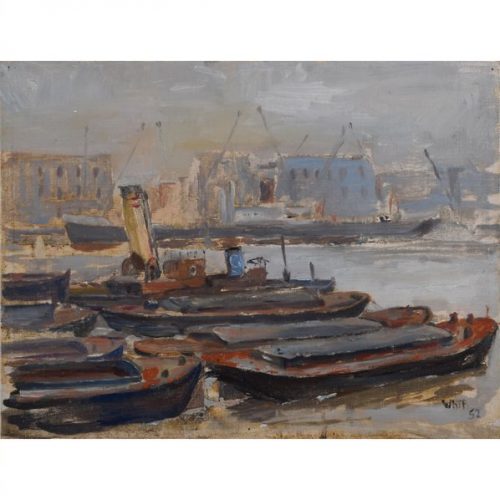
Roy M Whittenbury (fl. 1920-1955) The Pool of London
Oil on canvasboard 29 x 39.5 cm Whittenbury concentrated on marine subjects. Here he captures the Pool of London - that stretch of the River Thames from London Bridge to just below Tower Bridge which is controlled by the Port of London. Although no longer the busy port depicted in the painting, it is one of the reasons for London's political and economical pre-eminence over the last thousand years. If you are interested email info@manningfineart.co.uk or call us on 07929 749056. Condition: Good. -
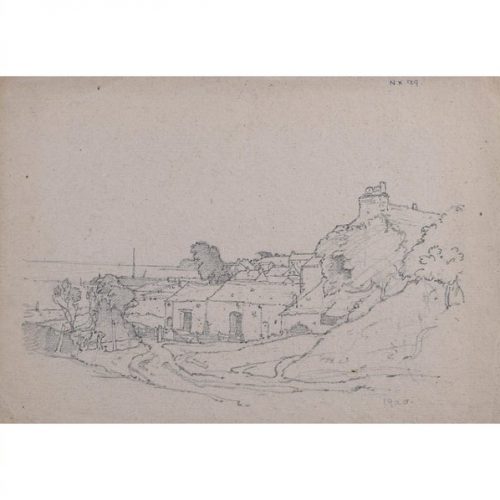
Claude Muncaster (1903-1974) Canal Foot, The Ulverston Canal
1920 Inscribed to reverse and numbered NX129 in the artist's catalogue Pencil Sketch 21x30cm Provenance: The estate of the artist and by descent Muncaster's watercolours capture the English countryside feel with great competence. Here he records the old swing bridge across the lock at the foot of the now-derelict Ulverston Canal. It was Britain's straightest canal, running two miles from Morecambe Bay to Ulverston but has long stood unused. Oliver Hall, Muncaster's father, lived at Ulverston in his latter years. Claude Grahame Muncaster, RWS, ROI, RBA, SMA was the son of Oliver Hall RA. At the age of fifteen his career as a landscape painter began, and he soon took to the seas, spending the 1920s and 30s travelling the world with his sketchbook in a series of vessels. With the outbreak of war and he joined the RNVR training as a navigator. Having left school at fifteen his mathematics was very weak and it was a relief for all when his artistic talents meant he was recruited as a camofleur. A master of capturing seascapes he was therefore able to hide huge ships ‘in plain sight’ with clever disguises. After the war he painted for the Royal Family and was a frequent guest at Sandringham. Claude Muncaster was a watercolourist known for his landscapes and maritime scenes. He was born Grahame Hall, the son of the Royal Academician Oliver Hall who taught his son to paint from an early age; Grahame first exhibited his work aged 15 and a few years later was showing at the RA. However, he adopted the name Claude Muncaster in 1922 to dissociate his career from that of his father. Muncaster’s primary choice of subject matter came from a genuine love of the sea. He made several long-distance sea voyages, including one around the Horn as a deckhand in the windjammer Olivebank in 1931, which he described in ‘Rolling Round the Horn’, published in 1933. Armed with a sketchbook, his aim was to be able to ‘paint ships and the sea with greater authority’. This he certainly achieved, perfectly capturing the limpid first light of morning over the Port of Aden, the choppy rain-grey waters of the Bay of Biscay and a streak of sunlight through gathering storm clouds at dusk in Exeter. He became an Associate of the Royal Watercolour Society in 1931 and was a founder member, and later President, of the Royal Society of Marine Artists. During the Second World War, Muncaster served in the Royal Naval Volunteer Reserve (RNVR) from 1940-44, training as a navigator before going on to advise on the camouflage of ships, and also worked as an official war artist. In ‘Still Morning at Aden’ (1944) he depicts Allied warships in this safe anchorage in the Middle East; the back is stamped with Admiralty approval. In 1946-7 he was commissioned by the Queen to produce watercolours of the royal residences at Windsor, Sandringham and Balmoral; the Duke of Edinburgh, in a foreword to a biography of Muncaster, recalls looking at these and considering the artist’s ‘unerring instinct for a subject’, his sense of atmosphere. Other commissions included large panoramas of the Thames and of Bradford. His career also included work as an etcher, illustrator, writer, lecturer and broadcaster, and his paintings can be found in the Royal Academy, Tate, National Maritime Museum Cornwall, National Railway Museum and Royal Air Force Museum. If you are interested email info@manningfineart.co.uk or call us on 07929 749056. Condition: Good. Conservation mounted and wrapped in transparent sleeve for protection -
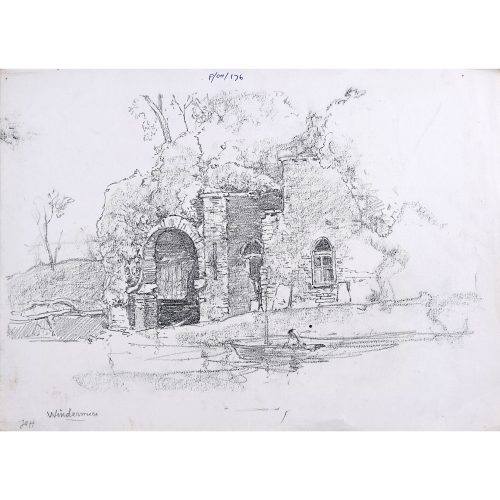
Oliver Hall R.A., R.E., R.W.S. (1869-1957) Boat House, Windermere, Lake District, UK
26x37cm Pencil drawing Provenance: Martin Muncaster, the artist's grandson Inscribed to reverse in pen by Claude or Martin Muncaster Hall was landscape painter in oil and watercolour with a fondness for both Spanish and rugged moorland as subjects. Having studied at the RCA between 1887-90 he attended evening classes at Westminster and Lambeth Schools of Art. Travelling extensively in Spain, France and Italy he began exhibiting etchings at the RA in 1890. Originally from Pulborough he moved in later life to Ulverston, Lancashire. His son was Claude Muncaster. If you are interested email info@manningfineart.co.uk or call us on 07929 749056. Condition: Good. -
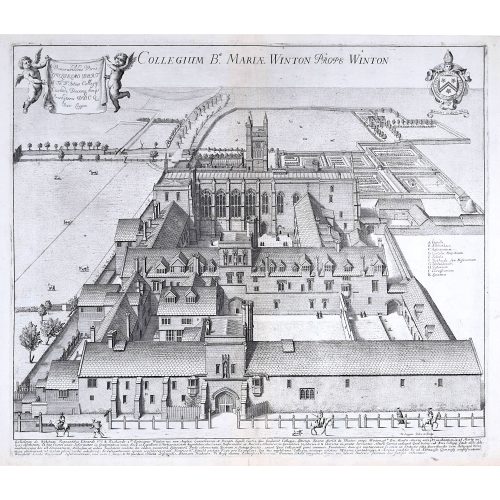
David Loggan (1634-1692) Winchester College
Engraving 1675 40x46cm Baptised in Danzig in 1634 Loggan's parents were English and Scottish. Studying engraving in Danzig with Willem Hondius (1598-1652 or 1658) he moved to London in the late 1650s producing the engraved title-page for the folio 1662 Book of Common Prayer. Marrying in 1663 he moved to Nuffield, Oxfordshire in 1665 to avoid the Plague and was in 1668/9 appointed Public Sculptor to the nearby University of Oxford having been commissioned to produce bird’s-eye views of all the Oxford Colleges. He lived in Holywell Street as he did this. Oxonia illustrata was published in 1675, with the help of Robert White (1645-1704). Following its completion he commenced work on his equivalent work for Cambridge, Cantabrigia Illustrata which was finally published in 1690 when he was made engraver to Cambridge University. Oxonia illustrata also includes an engraving of Winchester College (sharing its founder – William of Wykeham – with New College) whilst Cantabrigia illustrata includes one of Eton College (which shares its founder – Henry VIII – with King’s College). Bird’s-eye views required a particular talent as an architectural perspectivist of that era as it was not until 1783 that the first living thing (a sheep, named Montauciel ‘climb to the sky’) was sent aloft by the Mongolfier brothers in a balloon. Loggan thus had to rely on his imagination in conceiving the views. Loggan’s views constitute the first accurate depictions of the two Universities, in many ways unchanged today. Whilst the Oxford engravings were produced in reasonable numbers and ran to a second edition (on thicker paper and with a plate number in the bottom right-hand corner), those of Cambridge were printed in smaller numbers and no second edition was produced. The Dutchman Pieter van der Aa published some miniature versions of the engravings for James Beverell’s guidebook to the UK Les Delices de la Grande Bretagne c. 1708. Edmund Hort New (1871-1931) produced a series of pen-and-ink drawings of views of Oxford that paid homage to Loggan showing the development of the city in the following two hundred years. They were turned into photoengravings by Emery Walker who published the series. Probably no more than two hundred of each engraving were produced and the plates were destroyed in the blitz. The contemporary artist Andrew Ingamells (b.1956) has produced a highly-acclaimed series of etchings again bringing Loggan’s vision up to date. If you are interested email info@manningfineart.co.uk or call us on 07929 749056. Condition: Centre fold, as issued. Some age toning as visible in photograph; usual handling wear and marks to edges. Generally very good. -
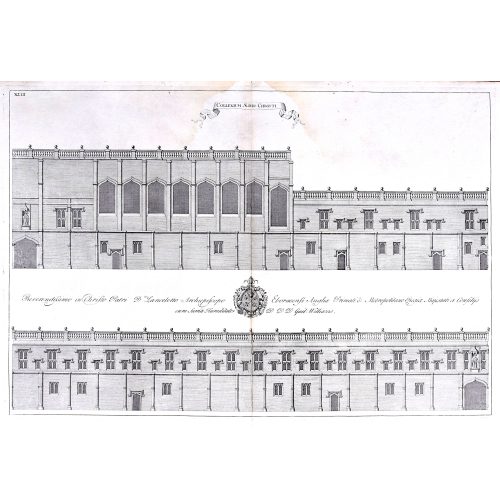
William Williams (Welsh, fl. 1724-1733) Christ Church, Oxford
Engraving c. 1732 for Oxonia Depicta (pub. London 1732-33) 41x60cm If you are interested email info@manningfineart.co.uk or call us on 07929 749056. Condition: Fair, gentle staining towards top and usual handling marks to margins, as illustrated. -
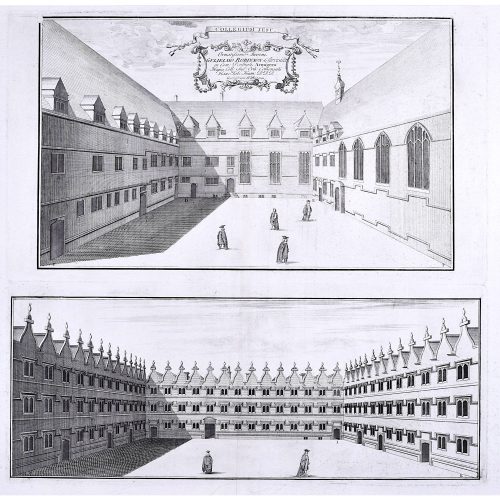
William Williams (Welsh, fl. 1724-1733) Jesus College, Oxford
Engraving c. 1732 for Oxonia Depicta (pub. London 1732-33) 43x44cm If you are interested email info@manningfineart.co.uk or call us on 07929 749056. Condition: Fair, gentle staining towards top and usual handling marks to margins, as illustrated. -
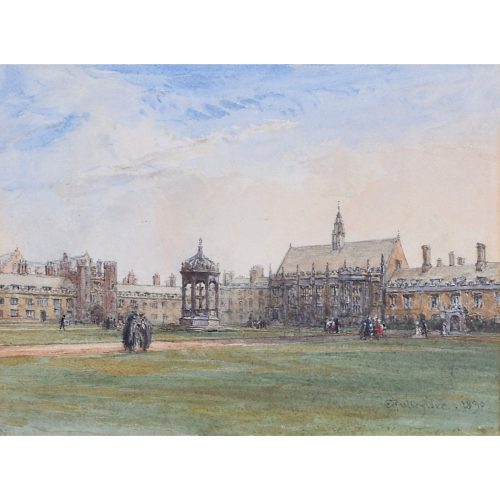
John Fulleylove (1845-1908) Trinity College, Cambridge - Great Court
Watercolour 13x17cm Born in Leicester, John Fulleylove trained as an architect with a Leicester firm before becoming a full-time painter. He exhibited widely in the UK, at such venues as the Royal Academy, the Fine Art Society, and the Royal Society of British Artists. His paintings were the subject of illustrated topographical books, including one on ‘Oxford’ published by the Fine Art Society. If you are interested email info@manningfineart.co.uk or call us on 07929 749056. Condition: Good. -
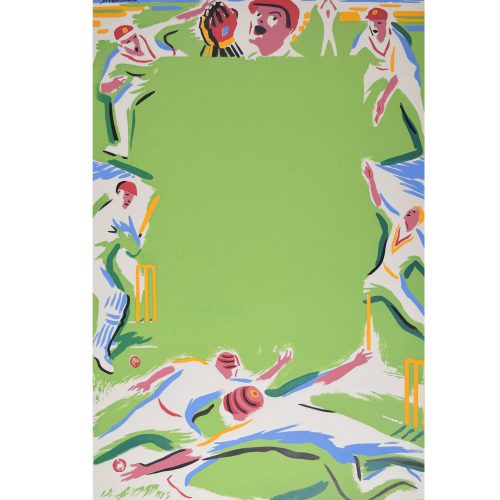
Percy Drake Brookshaw (1907-1993) Cricket
Original coach poster Lithograph c. 1950s 76x50cm A poster for advertising details of coaches to cricket matches such as The Ashes or other Test Matches. Brookshaw was born in Southwark, in London, and educated at the Central School of Arts and Crafts. He was a particularly accomplished lithographer, skilled also as a painter in both oil and watercolour. Identifying the former talent, F Gregory Brown - the poster and textile designer - encouraged him to become an illustrator and poster designer. Producing posters for London Transport and Shell, inter alia, between 1928 and 1958, many of his posters depict sporting events. His two posters for the annual University Boat Race are well known and highly sought after, and his wonderful posters often evoke a feeling of movement, whether rowers straining on their oars, or horses or greyhounds racing. If you are interested email info@manningfineart.co.uk or call us on 07929 749056. Conditon: Generally very good, a few short edge tears and soft creases, see photograph. -
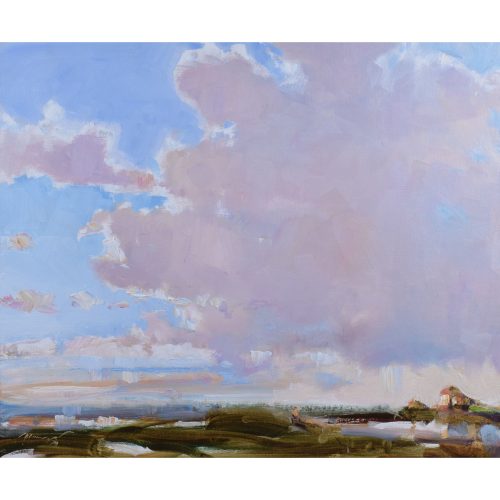
Ken Moroney (British, 1948-) The Fens, Norfolk (c. 1990)
Oil on canvas board 48 x 58 cm Provenance: Bonhams (2003) Of Anglo-Irish parentage, Moroney was born in South London, and showed early artistic talent. His Irish father, finding it unmanly, encouraged him to box, and whilst a teenager Moroney won a gold medal. However this did not distract him from art, and once his boxing hobby came to an end the paints continued to show his flair. Self-taught, his impressionistic style, with bold use of colour, has found widespread favour and his works now hang in many important collections. Here he captures the many colours often visible in a fenland sky, where the flat landscape makes for huge skies. If you are interested email info@manningfineart.co.uk or call us on 07929 749056. Condition: Excellent. -
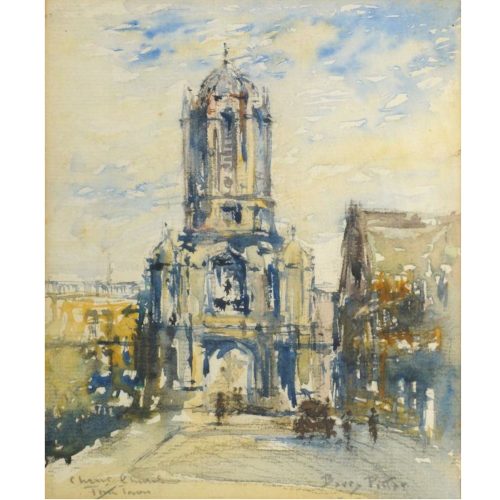
J F Barry Pittar (British 1880-1948) Tom Tower, Christ Church Oxford
Watercolour 15.5x13cm If you are interested email info@manningfineart.co.uk or call us on 07929 749056. Condition: Good. -
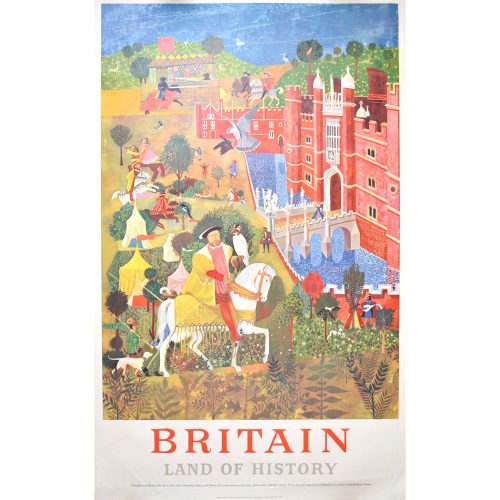
Britain Land of History Original Vintage Poster c. 1960
Published by the British Travel and Holidays Association and printed in Great Britain by Harrison and Sons Ltd 59/60.14 'Throughout the British Isles can be seen many interesting castles, royal palaces and country houses which have played a part in Britain's history. This is an artist's impression of Hampton Court Palace beside the River Thames.' If you are interested email info@manningfineart.co.uk or call us on 07929 749056. Condition: Generally good condition, a few very short repaired edge tears and the odd marginal crease. Mounted and framed the edge tears will not be visible. -
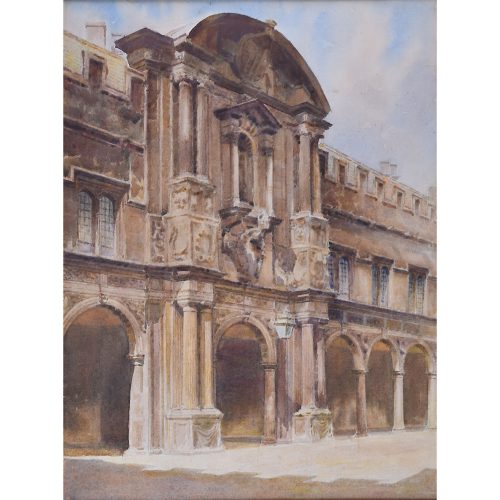
John Fulleylove (1845-1908) attributed Canterbury Quad, St John's College Oxford
Watercolour over pencil, unsigned 40.5x30.5cm Born in Leicester, John Fulleylove trained as an architect with a Leicester firm before becoming a full-time painter. He exhibited widely in the UK, at such venues as the Royal Academy, the Fine Art Society, and the Royal Society of British Artists. His paintings were the subject of illustrated topographical books, including one on ‘Oxford’ published by the Fine Art Society. If you are interested email info@manningfineart.co.uk or call us on 07929 749056. Condition: Laid to thick card support; generally very good, two small spots to sky visible in photograph. -
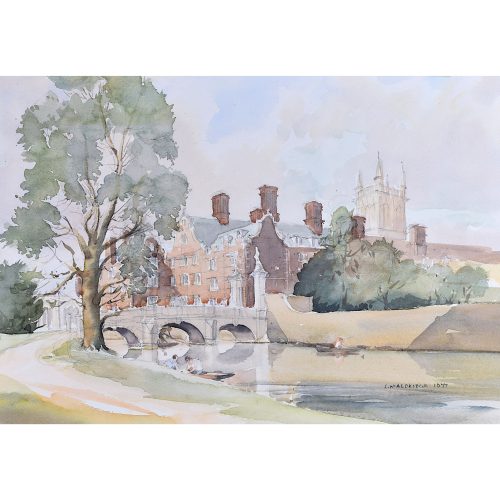
Rowland de Winton Aldridge (1906-1997) The Backs, St John's College Cambridge
34x51cm watercolour Born in Kent he was given 'de Winton' after his grandmother, who was related to the De Wintons of the Welsh engineering company De Winton & Co (1854-1901) that built narrow-gauge railways. He was a protégé of Edward Wesson, one of Britian's most important twentieth century watercolourists, and was a prolific artist of landscapes and urban riverscapes. St John's College Cambridge was one of his favourite views to paint, combining as it does an urban riverscape, a landscape and late 17th century buildings. Aldridge was an authority on 18th century architecture and was adviser to Baron Iliffe during his restoration of Basildon Park. If you are interested email info@manningfineart.co.ukor call us on 07929 749056. Condition: Good. -
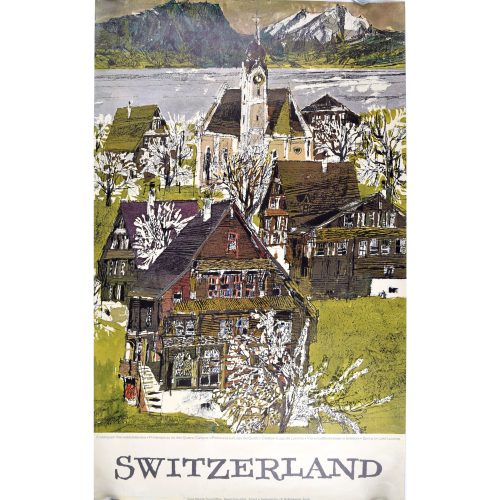
Hugo Wetli (1916-1972) Spring on Lake Lucerne Fruhling am Vierwalkstaettersee Printemps au lac des Quatre-Cantons Primavera sul Lago dei Quattro Caontoni Lago de Lucerna
Original Poster c. 1960s 40x25" -
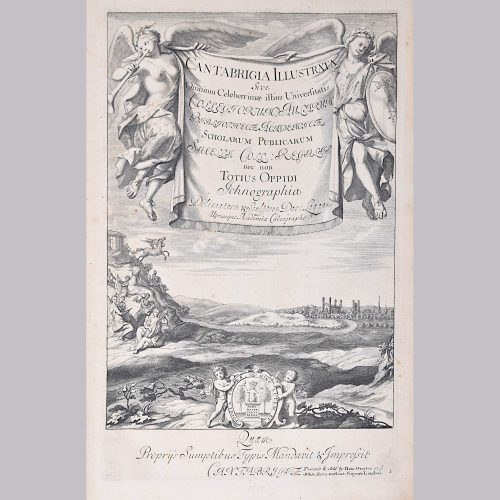
David Loggan (1634-1692) View of Cambridge
Engraving after 1690, this is a slightly later Henry Overton printing, shortly after 1700 35x51cm Baptised in Danzig in 1634 Loggan's parents were English and Scottish. Studying engraving in Danzig with Willem Hondius (1598-1652 or 1658) he moved to London in the late 1650s producing the engraved title-page for the folio 1662 Book of Common Prayer. Marrying in 1663 he moved to Nuffield, Oxfordshire in 1665 to avoid the Plague and was in 1668/9 appointed Public Sculptor to the nearby University of Oxford having been commissioned to produce bird’s-eye views of all the Oxford Colleges. He lived in Holywell Street as he did this. Oxonia illustrata was published in 1675, with the help of Robert White (1645-1704). Following its completion he commenced work on his equivalent work for Cambridge, Cantabrigia Illustrata which was finally published in 1690 when he was made engraver to Cambridge University. Oxonia illustrata also includes an engraving of Winchester College (sharing its founder – William of Wykeham – with New College) whilst Cantabrigia illustrata includes one of Eton College (which shares its founder – Henry VIII – with King’s College). Bird’s-eye views required a particular talent as an architectural perspectivist of that era as it was not until 1783 that the first living thing (a sheep, named Montauciel ‘climb to the sky’) was sent aloft by the Mongolfier brothers in a balloon. Loggan thus had to rely on his imagination in conceiving the views. Loggan’s views constitute the first accurate depictions of the two Universities, in many ways unchanged today. Whilst the Oxford engravings were produced in reasonable numbers and ran to a second edition by Henry Overton (on thicker paper and with a plate number in the bottom right-hand corner), those of Cambridge were printed in smaller numbers and it is thought largely no second edition was produced, although this frontispiece proudly claims to have been published by Overton and a pencil note on the print suggests 1715 as a date. The Dutchman Pieter van der Aa published some miniature versions of the engravings for James Beverell’s guidebook to the UK Les Delices de la Grande Bretagne c. 1708. Edmund Hort New (1871-1931) produced a series of pen-and-ink drawings of views of Oxford that paid homage to Loggan showing the development of the city in the following two hundred years. They were turned into photoengravings by Emery Walker who published the series between . Probably no more than two hundred of each engraving were produced and the plates were destroyed in the blitz. The contemporary artist Andrew Ingamells (b.1956) has produced a highly-acclaimed series of etchings again bringing Loggan’s vision up to date. If you are interested email info@manningfineart.co.uk or call us on 07929 749056. Condition: Good. Some age toning as visible in photograph; usual handling wear and marks to edges. -
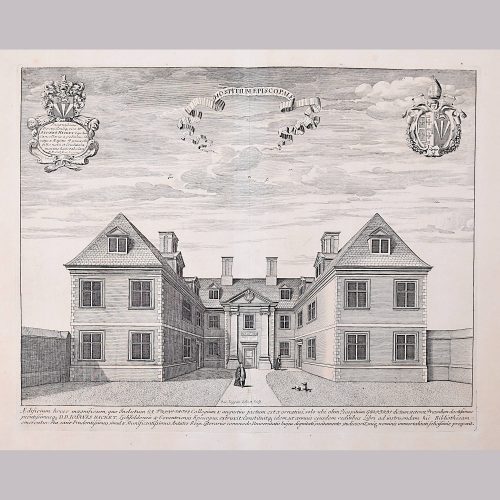
David Loggan (1634-1692) The Bishop's Hostal, Trinity College Cambridge
Engraving 1690 35x50cm Loggan was born to English and Scottish parents, and was baptised in Danzig in 1634. After studying engraving in Danzig with Willem Hondius (1598-1652 or 1658), he moved to London in the late 1650s, going on to produce the engraved title-page for the folio 1662 Book of Common Prayer. He married in 1663 and moved to Nuffield in Oxfordshire in 1665. Loggan was appointed Public Sculptor to the nearby University of Oxford in the late 1660s, having been commissioned to produce bird’s-eye views of all the Oxford colleges. He lived in Holywell Street as he did this. The 'Oxonia Illustrata' was published in 1675, with the help of Robert White (1645-1704). Following its completion, Loggan began work on his equivalent work for Cambridge; the 'Cantabrigia Illustrata' was finally published in 1690, when he was made engraver to Cambridge University. The 'Oxonia Illustrata' also includes an engraving of Winchester College (Winchester and New College share William of Wykeham as their founder) whilst the 'Cantabrigia Illustrata' includes one of Eton College (which shares its founder, Henry VIII, with King’s College). Bird’s-eye views from this era required a particular talent as an architectural perspectivist; it was not until 1783 that it became possible for artists to ascend via hot air balloons and view the scenes they were depicting from above. Loggan thus had to rely on his imagination in conceiving the views. Loggan’s views constitute the first accurate depictions of the two Universities, in many ways unchanged today. Whilst the Oxford engravings were produced in reasonable numbers and ran to a second edition by Henry Overton (on thicker paper and with a plate number in Roman numerals in the bottom right-hand corner), those of Cambridge were printed in much smaller numbers. The Dutchman Pieter van der Aa published some miniature versions of the engravings for James Beverell’s guidebook to the UK, 'Les Delices de la Grande Bretagne' (c. 1708). The contemporary artist Andrew Ingamells (b.1956) has produced a highly-acclaimed series of etchings which bring Loggan’s original vision up to date. If you are interested email info@manningfineart.co.uk or call us on 07929 749056. Condition: Some age toning as visible in photograph; usual handling wear and marks to edges, generally very good. -
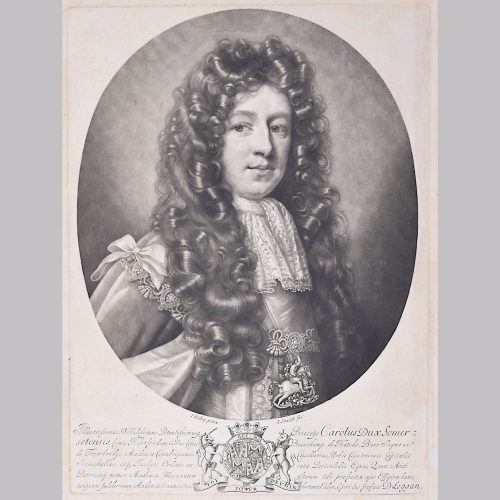
David Loggan (1634-1692) Charles Duke of Somerset
Mezzotint 1690 35x25cm Chancellor of Cambridge University, the Duke of Somerset's portrait was in Loggan's Cantabrigia Illustrata. Baptised in Danzig in 1634 Loggan's parents were English and Scottish. Studying engraving in Danzig with Willem Hondius (1598-1652 or 1658) he moved to London in the late 1650s producing the engraved title-page for the folio 1662 Book of Common Prayer. Marrying in 1663 he moved to Nuffield, Oxfordshire in 1665 to avoid the Plague and was in 1668/9 appointed Public Sculptor to the nearby University of Oxford having been commissioned to produce bird’s-eye views of all the Oxford Colleges. He lived in Holywell Street as he did this. Oxonia illustrata was published in 1675, with the help of Robert White (1645-1704). Following its completion he commenced work on his equivalent work for Cambridge, Cantabrigia Illustrata which was finally published in 1690 when he was made engraver to Cambridge University. Oxonia illustrata also includes an engraving of Winchester College (sharing its founder – William of Wykeham – with New College) whilst Cantabrigia illustrata includes one of Eton College (which shares its founder – Henry VIII – with King’s College). Bird’s-eye views required a particular talent as an architectural perspectivist of that era as it was not until 1783 that the first living thing (a sheep, named Montauciel ‘climb to the sky’) was sent aloft by the Mongolfier brothers in a balloon. Loggan thus had to rely on his imagination in conceiving the views. Loggan’s views constitute the first accurate depictions of the two Universities, in many ways unchanged today. Whilst the Oxford engravings were produced in reasonable numbers and ran to a second edition by Henry Overton (on thicker paper and with a plate number in the bottom right-hand corner), those of Cambridge were printed in smaller numbers and it is thought largely no second edition was produced, although this frontispiece proudly claims to have been published by Overton and a pencil note on the print suggests 1715 as a date. The Dutchman Pieter van der Aa published some miniature versions of the engravings for James Beverell’s guidebook to the UK Les Delices de la Grande Bretagne c. 1708. Edmund Hort New (1871-1931) produced a series of pen-and-ink drawings of views of Oxford that paid homage to Loggan showing the development of the city in the following two hundred years. They were turned into photoengravings by Emery Walker who published the series between . Probably no more than two hundred of each engraving were produced and the plates were destroyed in the blitz. The contemporary artist Andrew Ingamells (b.1956) has produced a highly-acclaimed series of etchings again bringing Loggan’s vision up to date. If you are interested email info@manningfineart.co.uk or call us on 07929 749056. Condition: Good. -
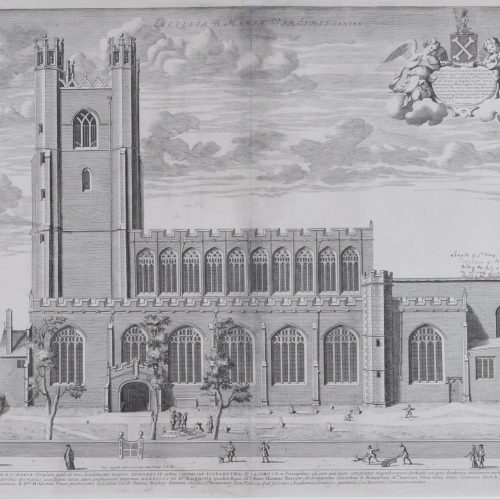
David Loggan (1634-1692) Great St Mary's Church, Cambridge University Church (1690)
Engraving 35 x 50 cm Loggan was born to English and Scottish parents, and was baptised in Danzig in 1634. After studying engraving in Danzig with Willem Hondius (1598-1652 or 1658), he moved to London in the late 1650s, going on to produce the engraved title-page for the folio 1662 Book of Common Prayer. He married in 1663 and moved to Nuffield in Oxfordshire in 1665. Loggan was appointed Public Sculptor to the nearby University of Oxford in the late 1660s, having been commissioned to produce bird’s-eye views of all the Oxford colleges. He lived in Holywell Street as he did this. The 'Oxonia Illustrata' was published in 1675, with the help of Robert White (1645-1704). Following its completion, Loggan began work on his equivalent work for Cambridge; the 'Cantabrigia Illustrata' was finally published in 1690, when he was made engraver to Cambridge University. The 'Oxonia Illustrata' also includes an engraving of Winchester College (Winchester and New College share William of Wykeham as their founder) whilst the 'Cantabrigia Illustrata' includes one of Eton College (which shares its founder, Henry VIII, with King’s College). Bird’s-eye views from this era required a particular talent as an architectural perspectivist; it was not until 1783 that it became possible for artists to ascend via hot air balloons and view the scenes they were depicting from above. Loggan thus had to rely on his imagination in conceiving the views. Loggan’s views constitute the first accurate depictions of the two Universities, in many ways unchanged today. Whilst the Oxford engravings were produced in reasonable numbers and ran to a second edition by Henry Overton (on thicker paper and with a plate number in Roman numerals in the bottom right-hand corner), those of Cambridge were printed in much smaller numbers. The Dutchman Pieter van der Aa published some miniature versions of the engravings for James Beverell’s guidebook to the UK, 'Les Delices de la Grande Bretagne' (c. 1708). The contemporary artist Andrew Ingamells (b.1956) has produced a highly-acclaimed series of etchings which bring Loggan’s original vision up to date. If you’d like to know more, please email info@manningfineart.co.uk or call us on 07929 749056. Condition: has been cleaned; scholarly observations in ink; crease in paper lower left before printing. Usual handling wear and marks to edges. -
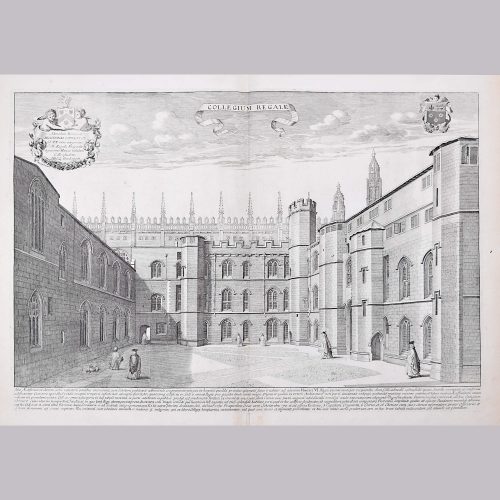
David Loggan (1634-1692) King's College Cambridge
Engraving 1690 40x51cm Baptised in Danzig in 1634 Loggan's parents were English and Scottish. Studying engraving in Danzig with Willem Hondius (1598-1652 or 1658) he moved to London in the late 1650s producing the engraved title-page for the folio 1662 Book of Common Prayer. Marrying in 1663 he moved to Nuffield, Oxfordshire in 1665 to avoid the Plague and was in 1668/9 appointed Public Sculptor to the nearby University of Oxford having been commissioned to produce bird’s-eye views of all the Oxford Colleges. He lived in Holywell Street as he did this. Oxonia illustrata was published in 1675, with the help of Robert White (1645-1704). Following its completion he commenced work on his equivalent work for Cambridge, Cantabrigia Illustrata which was finally published in 1690 when he was made engraver to Cambridge University. Oxonia illustrata also includes an engraving of Winchester College (sharing its founder – William of Wykeham – with New College) whilst Cantabrigia illustrata includes one of Eton College (which shares its founder – Henry VIII – with King’s College). Bird’s-eye views required a particular talent as an architectural perspectivist of that era as it was not until 1783 that the first living thing (a sheep, named Montauciel ‘climb to the sky’) was sent aloft by the Mongolfier brothers in a balloon. Loggan thus had to rely on his imagination in conceiving the views. Loggan’s views constitute the first accurate depictions of the two Universities, in many ways unchanged today. Whilst the Oxford engravings were produced in reasonable numbers and ran to a second edition by Henry Overton (on thicker paper and with a plate number in the bottom right-hand corner), those of Cambridge were printed in smaller numbers and it is thought largely no second edition was produced. The Dutchman Pieter van der Aa published some miniature versions of the engravings for James Beverell’s guidebook to the UK Les Delices de la Grande Bretagne c. 1708. Edmund Hort New (1871-1931) produced a series of pen-and-ink drawings of views of Oxford that paid homage to Loggan showing the development of the city in the following two hundred years. They were turned into photoengravings by Emery Walker who published the series between . Probably no more than two hundred of each engraving were produced and the plates were destroyed in the blitz. The contemporary artist Andrew Ingamells (b.1956) has produced a highly-acclaimed series of etchings again bringing Loggan’s vision up to date. If you are interested email info@manningfineart.co.uk or call us on 07929 749056. Condition: Some age toning as visible in photograph; usual handling wear and marks to edges, generally very good. -
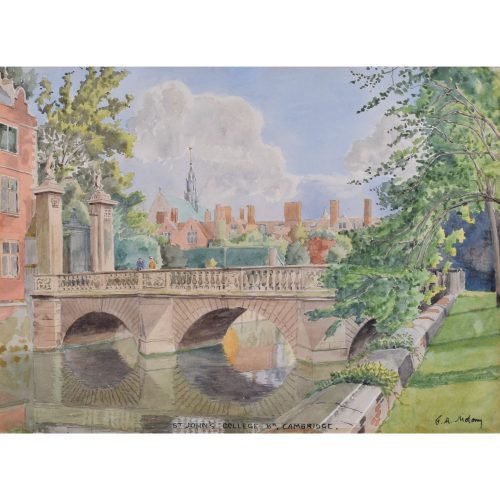
Major F A Molony (c. 1865 - ?) St John's College, Cambridge
watercolour, probably early twentieth century 7x10" Molony was member of the Royal Engineers and a talented watercolourist. 25 July 1882: Promoted to the rank of Lieutenant. 1885: Served in the 10th Company, Royal Engineers during the Suakin Expedition. 22 October 1890: Promoted to the rank of Captain. 27 October 1899: Promoted to the rank of Major. Fought at Battle of Pieters Hill, in the Anglo-Boer war. 23 June 1902: Mentioned in Lord Kitchener's Despatches.m, If you are interested email info@manningfineart.co.uk or call us on 07929 749056. Condition: Good. -
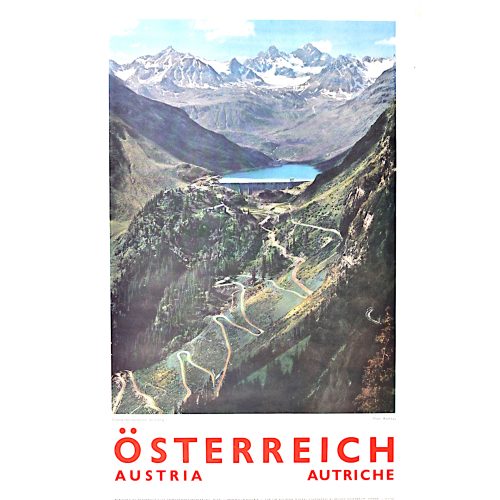
Risch Lau (publisher) Silvretta-Hochalpenstrasse, Vorarlberg, Austria / Osterreich
Original poster c. 1950s 61x43cm If you are interested email info@manningfineart.co.uk or call us on 07929 749056. Condition: Generally very good. -
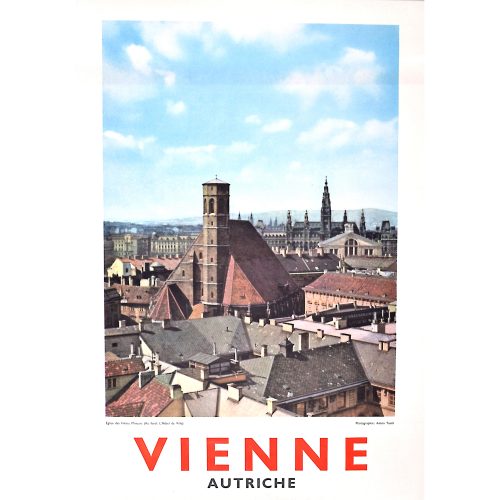
Anton Tusch (photographer) Eglise des Freres Mineurs, Vienna, Austria / Osterreich
Original poster c. 1950s 61x43cm If you are interested email info@manningfineart.co.uk or call us on 07929 749056. Condition: Generally very good. -
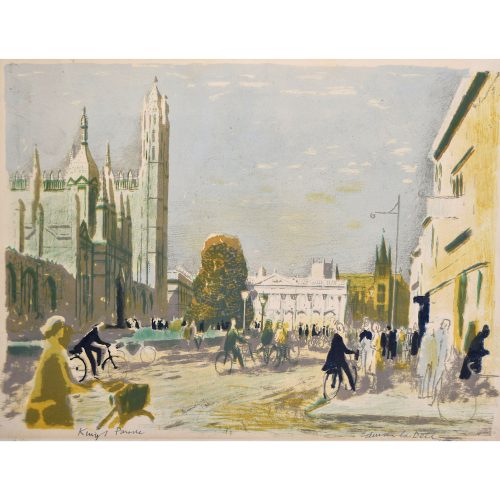
Edwin La Dell (1914-1970) King's Parade, Cambridge
Signed in pencil and titled 35x47cm A copy of this print is in the Government Art Collection. Lithograph Born in Coventry, La Dell's father was a Sheffield-born bookbinder. After study at Sheffield School of Art, he was the winner of a scholarship to the Royal College of Art where the head of print making was John Nash (from 1934 to 1940). La Dell became head of lithography there from 1948 until his death. During the war he was an official war artist and a camofleur, but he is probably best known for his lithographs of Oxford and Cambridge that he published himself, together with those he published for the School Prints scheme and Lyons Tea Rooms. His works are widely held in the public collections, including the Royal Academy and the Government Art Collection, the latter having a copy of this print. If you are interested email info@manningfineart.co.uk or call us on 07929 749056. Condition: In conservation mount, some age toning to print as visible in photograph. -
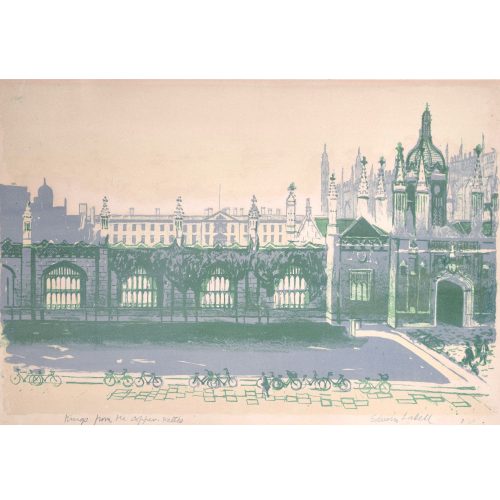
Edwin La Dell (1914-1970) King's College from the Copper Kettle, Cambridge
Signed in pencil and titled 32x48cm A copy of this print is in the Government Art Collection. Lithograph Born in Coventry, La Dell's father was a Sheffield-born bookbinder. After study at Sheffield School of Art, he was the winner of a scholarship to the Royal College of Art where the head of print making was John Nash (from 1934 to 1940). La Dell became head of lithography there from 1948 until his death. During the war he was an official war artist and a camofleur, but he is probably best known for his lithographs of Oxford and Cambridge that he published himself, together with those he published for the School Prints scheme and Lyons Tea Rooms. His works are widely held in the public collections, including the Royal Academy and the Government Art Collection, the latter having a copy of this print. If you are interested email info@manningfineart.co.uk or call us on 07929 749056. Condition: In conservation mount, some age toning to print as visible in photograph. -
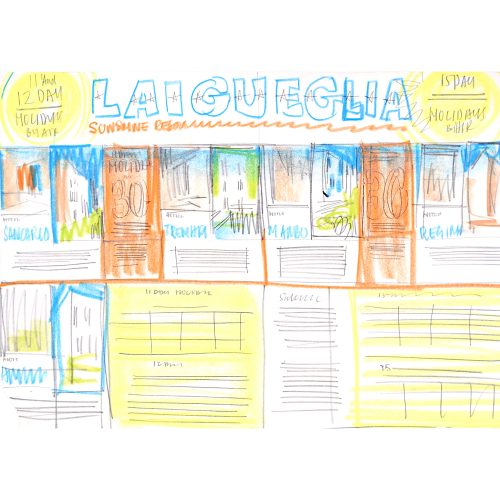
Peter Collins ARCA (1923-2001) Design for Holiday Brochure for Laigueglia Italy (for BEA Panorama Holidays)
Mixed media 30x45cm Provenance: The Artist's Studio As a graphic designer, Collins produced many brochures such as these. With his fondness for life drawing, he was perhaps a natural choice for the bikini-clad inhabitants of the pages of a holiday brochure. Collins's first job was at an advertising agency, in the commercial studio, whilst he attended evening art classes. World War II interrupted his career and he joined the Royal Artillery (of the British Army), teaching painting and drawing in the Education Corps - whilst simultaneously teaching at St Martin's School of Art, part time. Following the war Collins studied at the Royal College of Art, winning a scholarship. Leaving in 1950 he then worked as a commercial artist producing some well-known posters for clients including British Railways and British European Airways. He was the Art Director at Odhams Press and spent time designing for both ICI and Shell. With his wife Georgette he created the 'Bacombe Galleries' in Sussex, converting a group of buildings. In 1975 they again converted buildings, this time Stanley Studios in Chelsea which were scheduled for redevelopment; many artists had worked there, probably the most famous being Elizabeth Frink. Combining an artist's studio and a single residence at Stanley Studios the Collinses were immersed in Chelsea's art scene and proceeded to fill the place with art, antiques, scupture and curios. If you are interested email info@manningfineart.co.uk or call us on 07929 749056. Condition: Generally very good. -
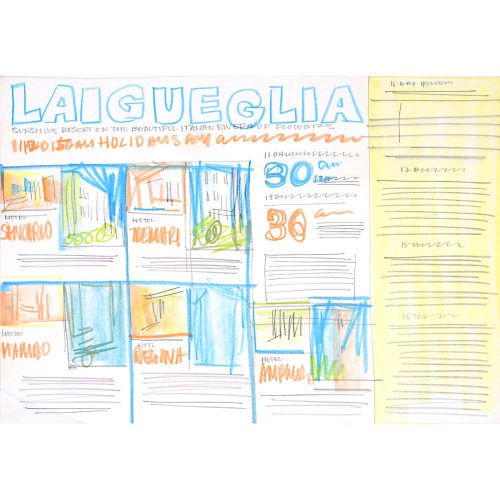
Peter Collins ARCA (1923-2001) Design for Holiday Brochure for Laigueglia Italy (for BEA Panorama Holidays) 2
Mixed media 30x45cm Provenance: The Artist's Studio As a graphic designer, Collins produced many brochures such as these. With his fondness for life drawing, he was perhaps a natural choice for the bikini-clad inhabitants of the pages of a holiday brochure. Collins's first job was at an advertising agency, in the commercial studio, whilst he attended evening art classes. World War II interrupted his career and he joined the Royal Artillery (of the British Army), teaching painting and drawing in the Education Corps - whilst simultaneously teaching at St Martin's School of Art, part time. Following the war Collins studied at the Royal College of Art, winning a scholarship. Leaving in 1950 he then worked as a commercial artist producing some well-known posters for clients including British Railways and British European Airways. He was the Art Director at Odhams Press and spent time designing for both ICI and Shell. With his wife Georgette he created the 'Bacombe Galleries' in Sussex, converting a group of buildings. In 1975 they again converted buildings, this time Stanley Studios in Chelsea which were scheduled for redevelopment; many artists had worked there, probably the most famous being Elizabeth Frink. Combining an artist's studio and a single residence at Stanley Studios the Collinses were immersed in Chelsea's art scene and proceeded to fill the place with art, antiques, scupture and curios. If you are interested email info@manningfineart.co.uk or call us on 07929 749056. Condition: Generally very good. -
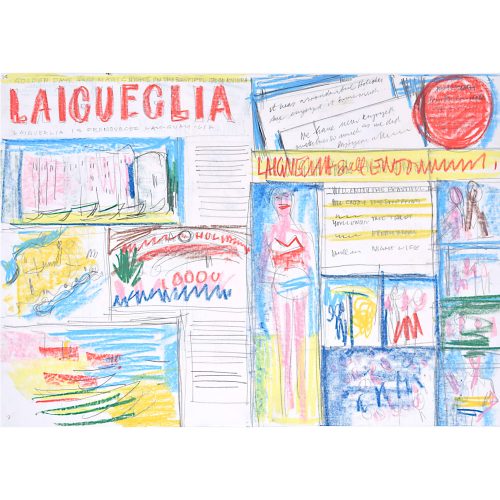
Peter Collins ARCA (1923-2001) Design for Holiday Brochure for Laigueglia Italy (for BEA Panorama Holidays) 4
Mixed media 30x45cm Provenance: The Artist's Studio As a graphic designer, Collins produced many brochures such as these. With his fondness for life drawing, he was perhaps a natural choice for the bikini-clad inhabitants of the pages of a holiday brochure. Collins's first job was at an advertising agency, in the commercial studio, whilst he attended evening art classes. World War II interrupted his career and he joined the Royal Artillery (of the British Army), teaching painting and drawing in the Education Corps - whilst simultaneously teaching at St Martin's School of Art, part time. Following the war Collins studied at the Royal College of Art, winning a scholarship. Leaving in 1950 he then worked as a commercial artist producing some well-known posters for clients including British Railways and British European Airways. He was the Art Director at Odhams Press and spent time designing for both ICI and Shell. With his wife Georgette he created the 'Bacombe Galleries' in Sussex, converting a group of buildings. In 1975 they again converted buildings, this time Stanley Studios in Chelsea which were scheduled for redevelopment; many artists had worked there, probably the most famous being Elizabeth Frink. Combining an artist's studio and a single residence at Stanley Studios the Collinses were immersed in Chelsea's art scene and proceeded to fill the place with art, antiques, scupture and curios. If you are interested email info@manningfineart.co.uk or call us on 07929 749056. Condition: Generally very good. -
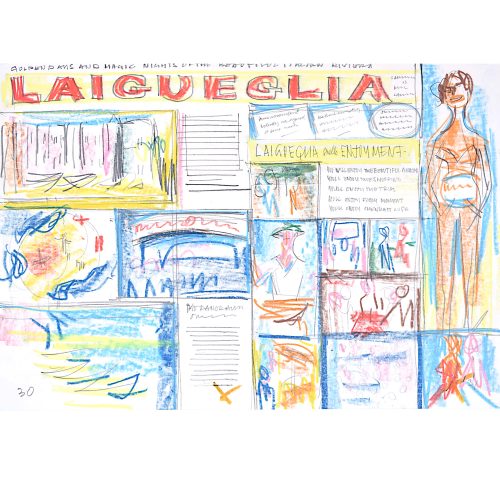
Peter Collins ARCA (1923-2001) Design for Holiday Brochure for Laigueglia Italy (for BEA Panorama Holidays) 3
Mixed media 30x45cm Provenance: The Artist's Studio As a graphic designer, Collins produced many brochures such as these. With his fondness for life drawing, he was perhaps a natural choice for the bikini-clad inhabitants of the pages of a holiday brochure. Collins's first job was at an advertising agency, in the commercial studio, whilst he attended evening art classes. World War II interrupted his career and he joined the Royal Artillery (of the British Army), teaching painting and drawing in the Education Corps - whilst simultaneously teaching at St Martin's School of Art, part time. Following the war Collins studied at the Royal College of Art, winning a scholarship. Leaving in 1950 he then worked as a commercial artist producing some well-known posters for clients including British Railways and British European Airways. He was the Art Director at Odhams Press and spent time designing for both ICI and Shell. With his wife Georgette he created the 'Bacombe Galleries' in Sussex, converting a group of buildings. In 1975 they again converted buildings, this time Stanley Studios in Chelsea which were scheduled for redevelopment; many artists had worked there, probably the most famous being Elizabeth Frink. Combining an artist's studio and a single residence at Stanley Studios the Collinses were immersed in Chelsea's art scene and proceeded to fill the place with art, antiques, scupture and curios. If you are interested email info@manningfineart.co.uk or call us on 07929 749056. Condition: Generally very good. -
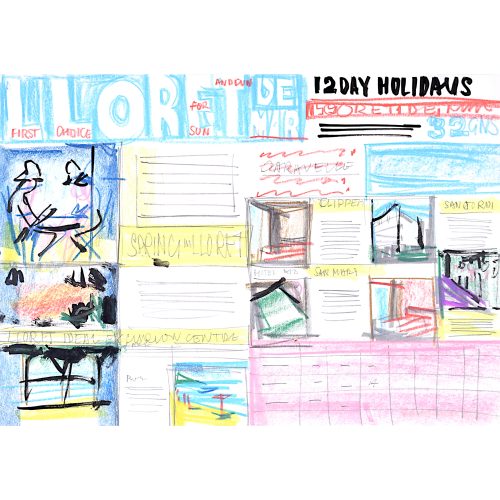
Peter Collins ARCA (1923-2001) Lloret, Spain - Design for Holiday Brochure (for BEA Panorama Holidays)
Mixed media 30x45cm Provenance: The Artist's Studio As a graphic designer, Collins produced many brochures such as these. With his fondness for life drawing, he was perhaps a natural choice for the bikini-clad inhabitants of the pages of a holiday brochure. Collins's first job was at an advertising agency, in the commercial studio, whilst he attended evening art classes. World War II interrupted his career and he joined the Royal Artillery (of the British Army), teaching painting and drawing in the Education Corps - whilst simultaneously teaching at St Martin's School of Art, part time. Following the war Collins studied at the Royal College of Art, winning a scholarship. Leaving in 1950 he then worked as a commercial artist producing some well-known posters for clients including British Railways and British European Airways. He was the Art Director at Odhams Press and spent time designing for both ICI and Shell. With his wife Georgette he created the 'Bacombe Galleries' in Sussex, converting a group of buildings. In 1975 they again converted buildings, this time Stanley Studios in Chelsea which were scheduled for redevelopment; many artists had worked there, probably the most famous being Elizabeth Frink. Combining an artist's studio and a single residence at Stanley Studios the Collinses were immersed in Chelsea's art scene and proceeded to fill the place with art, antiques, scupture and curios. If you are interested email info@manningfineart.co.uk or call us on 07929 749056. Condition: Generally very good. -
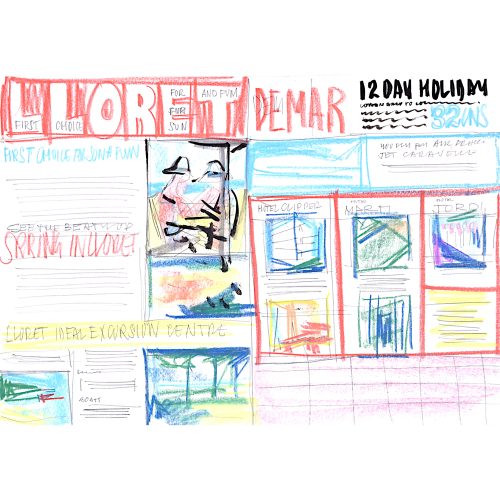
Peter Collins ARCA (1923-2001) Lloret, Spain 2 - Design for Holiday Brochure (for BEA Panorama Holidays)
Mixed media 30x45cm Provenance: The Artist's Studio As a graphic designer, Collins produced many brochures such as these. With his fondness for life drawing, he was perhaps a natural choice for the bikini-clad inhabitants of the pages of a holiday brochure. Collins's first job was at an advertising agency, in the commercial studio, whilst he attended evening art classes. World War II interrupted his career and he joined the Royal Artillery (of the British Army), teaching painting and drawing in the Education Corps - whilst simultaneously teaching at St Martin's School of Art, part time. Following the war Collins studied at the Royal College of Art, winning a scholarship. Leaving in 1950 he then worked as a commercial artist producing some well-known posters for clients including British Railways and British European Airways. He was the Art Director at Odhams Press and spent time designing for both ICI and Shell. With his wife Georgette he created the 'Bacombe Galleries' in Sussex, converting a group of buildings. In 1975 they again converted buildings, this time Stanley Studios in Chelsea which were scheduled for redevelopment; many artists had worked there, probably the most famous being Elizabeth Frink. Combining an artist's studio and a single residence at Stanley Studios the Collinses were immersed in Chelsea's art scene and proceeded to fill the place with art, antiques, scupture and curios. If you are interested email info@manningfineart.co.uk or call us on 07929 749056. Condition: Generally very good. -
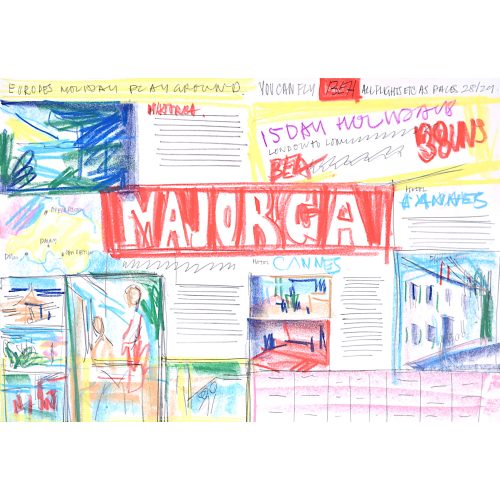
Peter Collins ARCA (1923-2001) Design for Holiday Brochure for Majorca 3 (for BEA Panorama Holidays)
Mixed media 30x45cm Provenance: The Artist's Studio As a graphic designer, Collins produced many brochures such as these. With his fondness for life drawing, he was perhaps a natural choice for the bikini-clad inhabitants of the pages of a holiday brochure. Collins's first job was at an advertising agency, in the commercial studio, whilst he attended evening art classes. World War II interrupted his career and he joined the Royal Artillery (of the British Army), teaching painting and drawing in the Education Corps - whilst simultaneously teaching at St Martin's School of Art, part time. Following the war Collins studied at the Royal College of Art, winning a scholarship. Leaving in 1950 he then worked as a commercial artist producing some well-known posters for clients including British Railways and British European Airways. He was the Art Director at Odhams Press and spent time designing for both ICI and Shell. With his wife Georgette he created the 'Bacombe Galleries' in Sussex, converting a group of buildings. In 1975 they again converted buildings, this time Stanley Studios in Chelsea which were scheduled for redevelopment; many artists had worked there, probably the most famous being Elizabeth Frink. Combining an artist's studio and a single residence at Stanley Studios the Collinses were immersed in Chelsea's art scene and proceeded to fill the place with art, antiques, sculpture and curios. If you are interested email info@manningfineart.co.uk or call us on 07929 749056. Condition: Generally very good. -
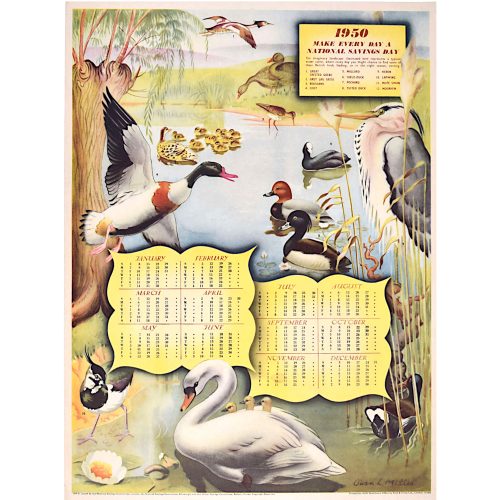
Owen Miller (1907-1960) Owen Miller National Savings original vintage calendar poster (1950)
Lithographic poster 50 x 37 cm Printed for HMSO by Fosh & Cross. A fantastic original lithographic poster advertising the National Savings scheme and featuring a calendar for the year 1950. Born in Auckland and educated at Wellington College, Miller worked as an artist in New Zealand. His illustrations often appeared in Wellington newspapers. He found life difficult in New Zealand during the Depression, and eventually signed on to a boat as a deckhand, working his passage to the UK. When he arrived at the Port of London, he had only £5 to his name. His first job was an illustrator for J Lyons & Co; his greatest work there was to decorate the directors’ dining room as an aircraft interior. When the Second World War began, Miller started work for the Ministry of Aircraft Production. Following the war, Collins produced several posters advertising National Savings. If you are interested, please email info@manningfineart.co.uk or call us on 07929 749056. Condition: Generally very good. -
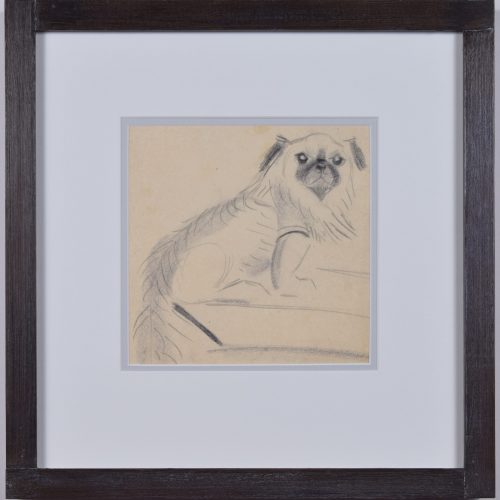
Clifford Ellis (1907-1985) William the Pug - on the Table
36x25cm including frame 17x17cm excluding frame Pencil sketch Provenance: the family of the artist, by descent. Born in Bognor in Sussex and trained at St Martin’s School of Art and Regent Street Polytechnic, Ellis was a graphic artist and illustrator who is best known for the posters he produced for London Transport during the 1930s. He generally collaborated with his wife Rosemary – whom he married in 1931 – on their posters. The General Post Office, Shell, and The Empire Marketing Board were also clients for their posters. They signed their posters C&RE, their initials being in alphabetical order and they are readily recognisable by their ebullient use of colour and form. Employed during the war as a camoufleur, along with so many other artists, Clifford was also an official war artist, serving with the Grenadier Guards. Rosemary, meanwhile, was an artist for the Recording Britain project. Following the war they trained art teachers at Bath Academy of Art. They also designed a series of nearly one hundred book jackets for Collins New Naturalist series, published between 1945 and 1982 and were always fascinated by animals and natural history, as with this sketch. If you are interested email info@manningfineart.co.uk or call us on 07929 749056. Condition: Good. In hand-finished Nicholson butt-jointed frame. Some toning to paper. -
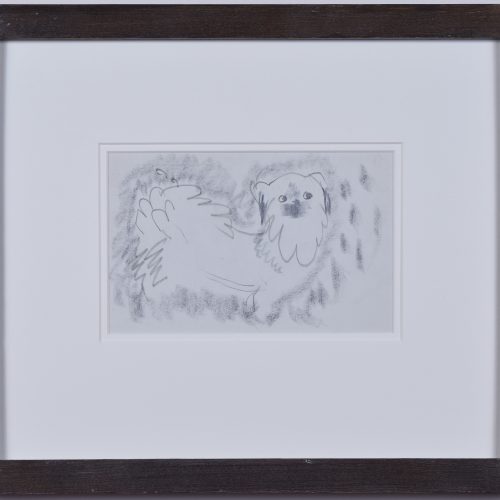
Clifford Ellis (1907-1985) William the Pug - facing right
31x36cm including frame 13x19cm excluding frame Pencil sketch Provenance: the family of the artist, by descent. Born in Bognor in Sussex and trained at St Martin’s School of Art and Regent Street Polytechnic, Ellis was a graphic artist and illustrator who is best known for the posters he produced for London Transport during the 1930s. He generally collaborated with his wife Rosemary – whom he married in 1931 – on their posters. The General Post Office, Shell, and The Empire Marketing Board were also clients for their posters. They signed their posters C&RE, their initials being in alphabetical order and they are readily recognisable by their ebullient use of colour and form. Employed during the war as a camoufleur, along with so many other artists, Clifford was also an official war artist, serving with the Grenadier Guards. Rosemary, meanwhile, was an artist for the Recording Britain project. Following the war they trained art teachers at Bath Academy of Art. They also designed a series of nearly one hundred book jackets for Collins New Naturalist series, published between 1945 and 1982 and were always fascinated by animals and natural history, as with this sketch. If you are interested email info@manningfineart.co.uk or call us on 07929 749056. Condition: Good. In hand-finished Nicholson butt-jointed frame. -
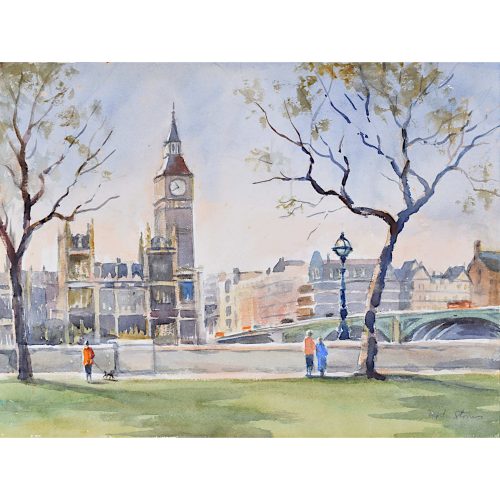
Angela Stones (1914-1995) Westminster Bridge and the Houses of Parliament
Watercolour 31x41 cm Stones was a member of an artistic dynasty. Her mother Dorothy Bradshaw (1893-1983) studied under Jack Merriott - the artist famous for his British Rail posters, and her son, Christopher Assheton-Stones (1947-1999) was probably the foremost pastel artist of his time. If you are interested email info@manningfineart.co.uk or call us on 07929 749056. Condition: Good. -
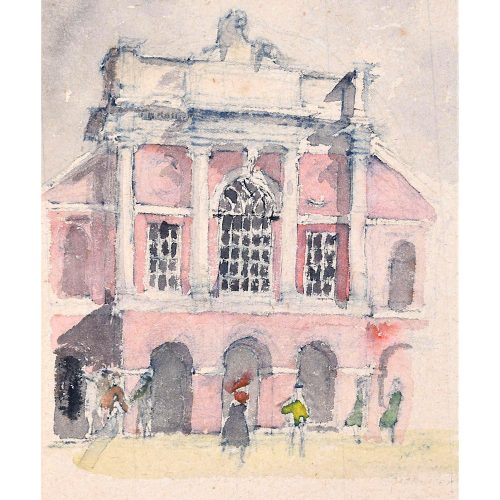
Prof. Sir Albert Richardson PRA (1880-1964) A Classical Building with elegant figures
28x43cm watercolour Signed, with further detail to backboard (title, date etc.) Sir Albert Edward Richardson K.C.V.O., F.R.I.B.A, F.S.A., P.R.A. (1880-1964) was a traditionalist, renowned for his distaste of modern architecture. Rooted firmly in the classical period, he lived a Georgian life, refusing to have electricity in his Georgian house – until his wife finally insisted. Professor of Architecture at UCL’s Bartlett School of Architecture from 1929-1955, this was evacuated to Cambridge during the war and he became a fellow of St Catharine’s College. Amongst his other achievements, Richardson was President of the RA, editor of Architect’s Journal and founder of the Georgian Group. For pleasure he painted architectural fantasies; capriccios of buildings he pictured in his mind. If you are interested email info@manningfineart.co.uk or call us on 07929 749056. Condition: Some toning to paper. -
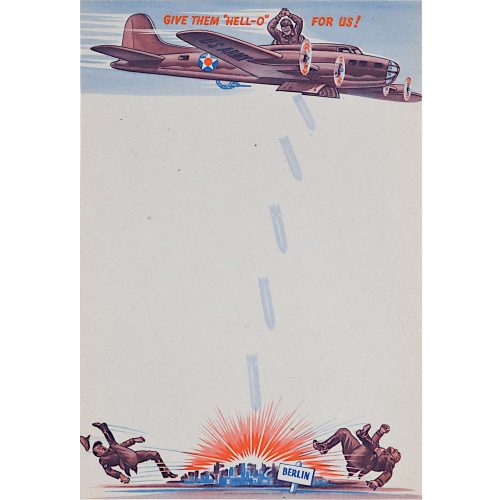
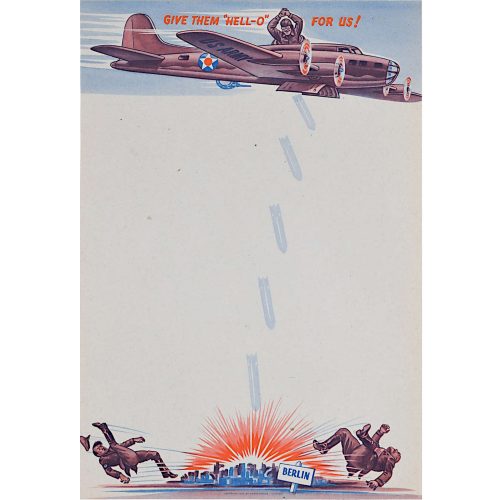
Porto-Service, Chicago Give them "Hell-o from us!"
Lithograph 26.5x18cm 1942 What better writing paper to send to a serving serviceman than one encouraging him to fight. Porto-Service of Chicago published a series of illustrated writing resources for sweethearts and friends to write to their brave servicemen, in this case in a four-engined bomber over Berlin. Lavishly produced and printed, the Americans brought some much-needed colour and glamour to dull war-torn Britain. If you are interested email info@manningfineart.co.uk or call us on 07929 749056. Condition: Very good. -
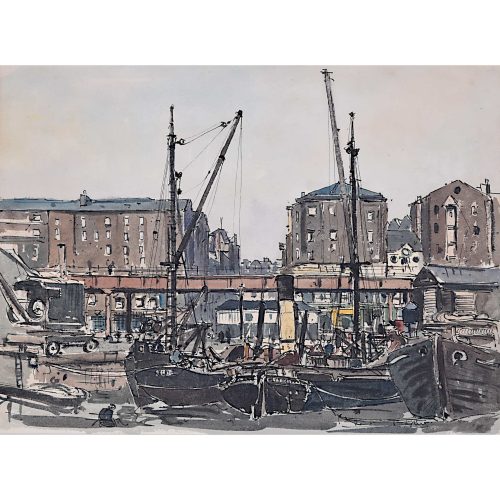
Claude Muncaster (1903-1974) Liverpool Docks
Dated 1928 Inscribed to reverse Watercolour 28x37cm Muncaster's watercolours capture the English countryside feel with great competence and feeling. Here he records the docks at Liverpool, a busy scene with splashes of bright paint enlivening the otherwise dull smoky port. Liverpool Claude Grahame Muncaster, RWS, ROI, RBA, SMA was the son of Oliver Hall RA. At the age of fifteen his career as a landscape painter began, and he soon took to the seas, spending the 1920s and 30s travelling the world with his sketchbook in a series of vessels. With the outbreak of war and he joined the RNVR training as a navigator. Having left school at fifteen his mathematics was very weak and it was a relief for all when his artistic talents meant he was recruited as a camofleur. A master of capturing seascapes he was therefore able to hide huge ships ‘in plain sight’ with clever disguises. After the war he painted for the Royal Family and was a frequent guest at Sandringham. Claude Muncaster was a watercolourist known for his landscapes and maritime scenes. He was born Grahame Hall, the son of the Royal Academician Oliver Hall who taught his son to paint from an early age; Grahame first exhibited his work aged 15 and a few years later was showing at the RA. However, he adopted the name Claude Muncaster in 1922 to dissociate his career from that of his father. Muncaster’s primary choice of subject matter came from a genuine love of the sea. He made several long-distance sea voyages, including one around the Horn as a deckhand in the windjammer Olivebank in 1931, which he described in ‘Rolling Round the Horn’, published in 1933. Armed with a sketchbook, his aim was to be able to ‘paint ships and the sea with greater authority’. This he certainly achieved, perfectly capturing the limpid first light of morning over the Port of Aden, the choppy rain-grey waters of the Bay of Biscay and a streak of sunlight through gathering storm clouds at dusk in Exeter. He became an Associate of the Royal Watercolour Society in 1931 and was a founder member, and later President, of the Royal Society of Marine Artists. During the Second World War, Muncaster served in the Royal Naval Volunteer Reserve (RNVR) from 1940-44, training as a navigator before going on to advise on the camouflage of ships, and also worked as an official war artist. In ‘Still Morning at Aden’ (1944) he depicts Allied warships in this safe anchorage in the Middle East; the back is stamped with Admiralty approval. In 1946-7 he was commissioned by the Queen to produce watercolours of the royal residences at Windsor, Sandringham and Balmoral; the Duke of Edinburgh, in a foreword to a biography of Muncaster, recalls looking at these and considering the artist’s ‘unerring instinct for a subject’, his sense of atmosphere. Other commissions included large panoramas of the Thames and of Bradford. His career also included work as an etcher, illustrator, writer, lecturer and broadcaster, and his paintings can be found in the Royal Academy, Tate, National Maritime Museum Cornwall, National Railway Museum and Royal Air Force Museum. If you are interested email info@manningfineart.co.uk or call us on 07929 749056. Condition: Conservation mounted and wrapped in transparent sleeve for protection; slight toning to extremities and possibly some loss of colour from sky. -
Porto-Service, Chicago Keep 'em Running Right off the Map!
Lithograph 26.5x18cm 1942 What better writing paper to send to a serving serviceman than that encouraging him to fight. Porto-Service of Chicago published a series of illustrated writing resources for sweethearts and friends to write to their brave servicemen, in this case teasing the three Axis dictators. Lavishly produced and printed, the Americans brought some much-needed colour and glamour to dull war-torn Britain. If you are interested email info@manningfineart.co.uk or call us on 07929 749056. Condition: Very good. -
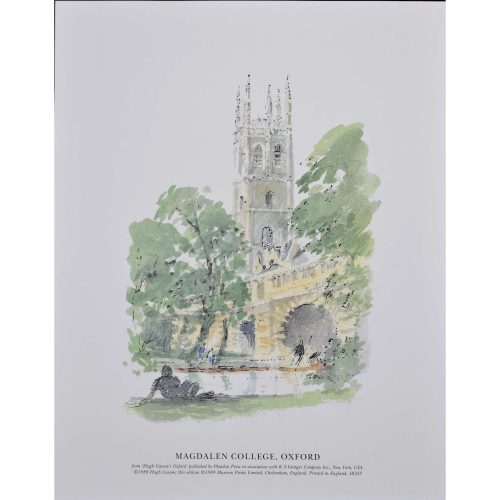
Sir Hugh Casson (1910-1999) Magdalen College Oxford
Unsigned proof print 25x20cm From Casson’s ever-popular Oxford series of prints. Sir Hugh Casson was educated at Eastbourne College, St John’s College Cambridge and the Bartlett School of Architecture. Trained in the 1930s in the early modernist style, he taught at the Cambridge School of Architecture. After employment as a camoufleur during World War 2 by the Air Ministry, in 1948 he was appointed as director of architecture for the Festival of Britain. A close friend of the Royal Family, he undertook designs for the 1953 coronation, designed the interior of the Royal Yacht Britannia (“The overall idea was to give the impression of a country house at sea”), and taught the Prince of Wales to paint in watercolours. Amongst his architectural achievements are the Elephant House at London Zoo, the 1978 redevelopment of Bristol Docks, the Raised Faculty Building for The University of Cambridge, and a building for the Royal College of Art. He published a number of illustrated books, of which Casson’s Oxford and Casson’s Cambridge are probably the best known. A limited edition series of prints was produced from the paintings. If you are interested email info@manningfineart.co.uk or call us on 07929 749056. Condition: Excellent.