-
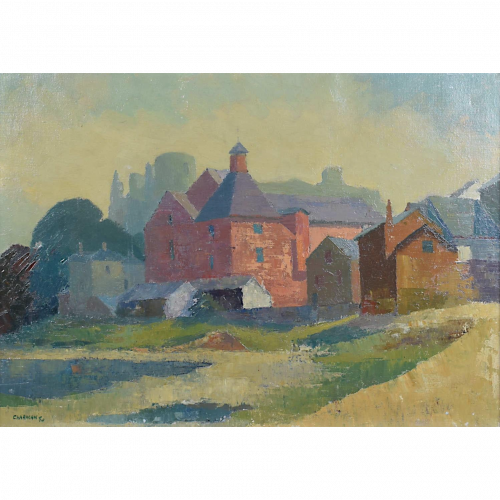
Clifford Charman (1910-1993)
Landscape with Farmhouses
Oil on canvas 38 x 55 cm Provenance: the artist's studio sale, Bonhams, London 1993. Born in Bexleyheath in Kent, Charman studied at Regent Street Polytechnic just before, and just after, the Second World War. He exhibited widely, including at the Royal Academy, the RBA, Chelsea Arts Society, and abroad. Elected in 1954 to the ROI, he also won the James Bourlet Prize in 1982. His work is in collections including that of the Guildhall. If you'd like to know more, please email info@manningfineart.co.uk or call us on 07929 749056. Condition: Generally very good. -
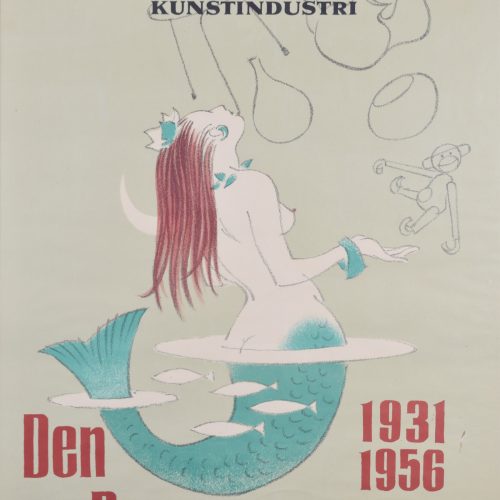
Arne Ungermann (1902-1981)
'Den Permanente', "The Permanente Exhibition" (1956)
Lithographic poster 84 x 61 cm The Danish artist Arne Ungermann designed this poster in 1956 to celebrate the 25th anniversary of Den Permanente in Copenhagen. Den Permanente, or the Permanent Exhibition, celebrated Danish art, craft, and design, and operated between the 1930s and 1980s. The Danish silversmith Kay Bojesen came up with the idea for the exhibition, which also served as a shop where customers could buy Danish art and crafts. Bojesen's idea became a reality when Christian Grauballe, director of the iconic Danish design company Holmegaard, invested in it in 1931. Den Permanente became an icon of Danish 20th century design, selling furniture, glassware, lighting, ceramics, jewellery, and textiles. Bojesen is most famous for his wooden monkey design, which Ungermann features in his poster. The motif of the mermaid emerging from the sea could be a motif drawn from Hans Christian Andersen, but made modern - she breaks the surface of the ocean in order to marvel at the treasure trove of man-made objects exhibited at Den Permanente. The notable Little Mermaid statue on Copenhagen's promenade, installed in 1913, is also inspired by Andersen's fairy tale. If you'd like to know more, please email info@manningfineart.co.uk or call us on 07929 749056. Condition: Excellent. -
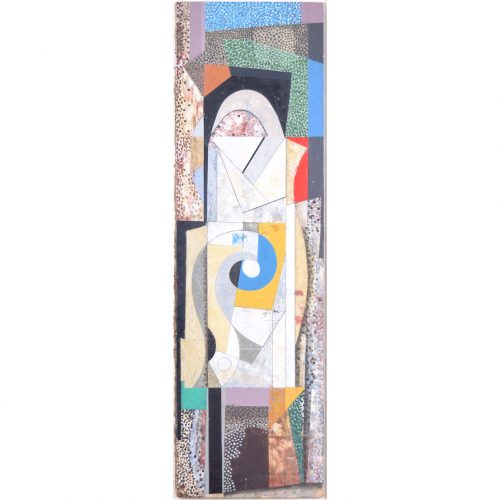
Bryan Ingham (1936-1997)
Upright Jug (1993-95)
Pencil and oil on board 64 x 19 cm Provenance: Bohun Galleries, Paintings in Hospitals. Signed, titled and dated 1993-95 (on backboard). Bryan Ingham was born in Yorkshire. For his National Service he joined the RAF, and spent his time in Germany as an airman. After demobilisation, his final report included the statement that "Ingham is an artistic sort of airman." In his spare time he had started painting in oils, and by the time he left the RAF he had completed a large number of paintings. He studied at St Martin's School of Art in London, where he had the tuition of a fine post-war generation of teachers who helped him to hone his draughtsmanship and other skills, and he swiftly showed a capacity for painting that drew the attention of his tutors and peers. On graduating he was offered and accepted a post-graduate place at the Royal College of Art, where in his second year he was awarded a Royal Scholarship and was a contemporary of a number of now better-known names including David Hockney. Ingham applied for and received a Leverhulme travel award to explore the sites of the great Renaissance painters, and spent many happy months engaged in this expedition. He spent time at the English Art school in Rome, where he lived well and busied himself the same studio that Barbara Hepworth had used. At this stage of his career, Ingham consciously rejected the prospect of pursuing a career as an establishment artist, although the RA was open to him, and he went to live in remote cottage in Cornwall. The subsequent years were varied and highly productive, and Ingham's personal artistic voice emerged in his oeuvre in the form of an always-developing dialogue with influences both of landscape and other artists of every age. His preoccupation with etching resulted in several hundred plates, some very large, and the results are as unmistakable as they are varied, but invariably of outstanding quality. He produced a number of sculptures in bronze and in plaster, while his lifelong output of paintings remained small but again of very high quality. He taught etching regularly until about 5 years before his death, latterly at Falmouth Art School, and also at Farnham Art College. During the late eighties he established a relationship with the art dealer Francis Graham-Dixon, who had a London gallery. This meant that his paintings were professionally marketed for the first time, and prices for his work rose steadily in the last ten years of his life, and subsequently. He was able to purchase a cottage in Helston for his parents, who lived there until their deaths. He then moved into a fine set of converted-barn studios with a patch of garden, quietly situated off the High St in Helston, and it was here, on 22 September 1997, that he died, having quietly suffered from cancer for nearly a year. If you'd like to know more, please email info@manningfineart.co.uk or call us on 07929 749056. Condition: Generally excellent; framed. -
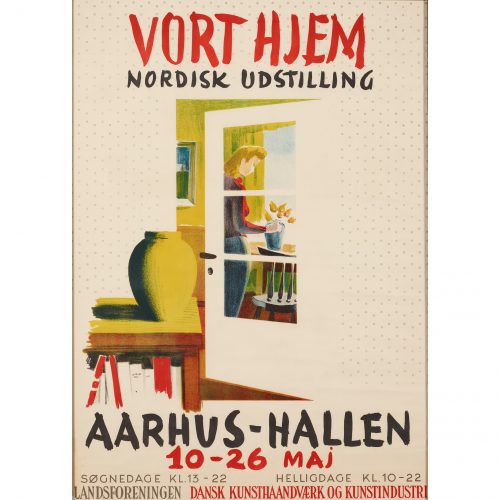
Danish Society of Arts and Crafts
'Vort Hjem', "Our Home" poster (c. 1950)
Lithographic poster 80.5 x 57 cm A poster advertising the 'Vort Hjem Nordisk Udstilling' - the "Our Home: Nordic Exhibition". The exhibition explored Nordic interior design and was commissioned by the Danish Society of Arts and Crafts. The poster presents a domestic scene of a woman arranging flowers; we see her through the glass panels of an ajar door, which invites us into the typically Danish interior. If you'd like to know more, please email info@manningfineart.co.uk or call us on 07929 749056. Condition: Excellent. -
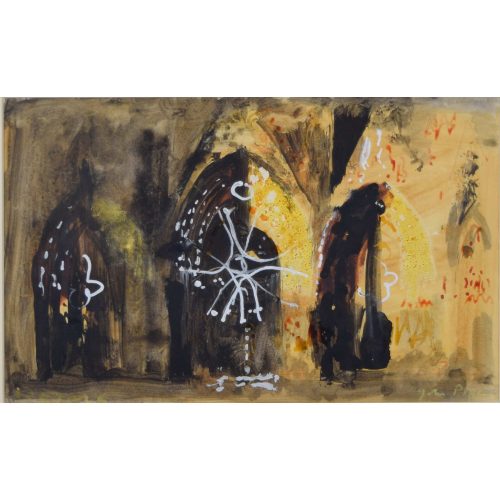
John Piper (1903-1992)
Reims Cathedral (c. 1960)
Ink, watercolour and gouache 21x35cm Inscribed 'Reims' lower left and signed 'John Piper' lower right. Piper loved all things France, and all things Cathedral; in this work, he brings the cathedral of Reims, where France's monarchs were crowned, to life. Piper also produced an aquatint of Reims which was published in 1972. For other works by the artist and biographical details, click here. If you are interested email info@manningfineart.co.uk or call us on 07929 749056. Condition: Generally excellent; framed. -
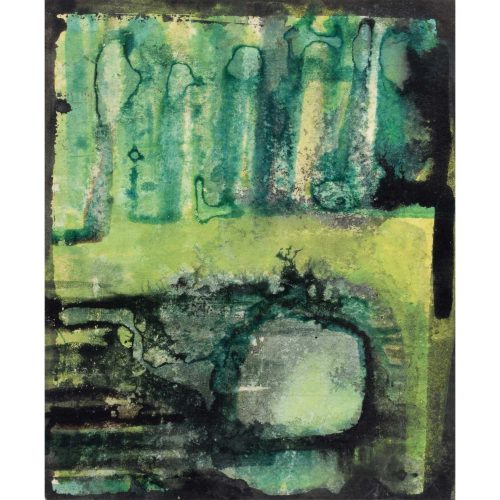
John Piper (1903-1992)
Study for the Piper Building mural
Gouache 14.5x11.5cm Provenance: P Manzareli (who built the fibreglass murals for Piper), gift from the artist; Milne & Moller Fine Art; Katharine House Gallery; private collection, Scotland. This study is a fascinating part of London's architectural history. The Piper Building is a mid-century architectural icon in Fulham. Built in the 1950s as 'Watson House', it was a laboratory complex for the North Thames Gas Board and has an innovative concrete structure. Piper was commissioned to produce the murals surrounding the building. The Gas Board moved out in the mid 1980s. Scheduled for demolition in the 1990s, the building was instead converted into seventy apartments and renamed the Piper Building. With double-height ceilings, the apartments were sold as shells, and purchasers were free to commission their own architects and builders. Condition: Generally excellent; framed. For other works by the artist and biographical details, click here. If you are interested email info@manningfineart.co.uk or call us on 07929 749056. -
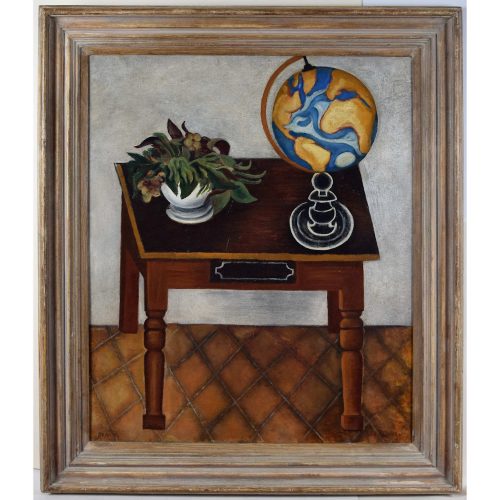
John Aldridge RA (1905 - 1983)
Still Life with Globe Painted at El Porche, Dejà, Mallorca 1932
Oil on Board 74 x 62 cm Signed ‘John Aldridge’ lower right, inscribed 'Deja 32' lower left, and titled to reverse. A British oil painter, designer of wallpapers and textiles, book illustrator, art teacher and enthusiastic plantsman, John Aldridge was born in Woolwich, England, and grew up in a comparatively wealthy military family. After reading Greats at the University of Oxford, Aldridge graduated in 1928 with a Bachelor of Arts degree, settling in London and teaching himself to paint. Invited by Ben Nicholson, Aldridge joined artists such as Hepworth, Moore and Piper in the ‘Seven and Five Society’ with whom he held his first mixed exhibition in 1931. Despite being based in London during this time, Aldridge made excursions to Paris, Germany, Italy, Tenerife and Mallorca. As a dear friend of the poet Robert Graves, the two spent endless holidays together in Mallorca near Deià, Graves having a house there which can be visited to this day. This work is inscribed ‘Deyà 32’ in the lower left corner, thus it is likely that it was painted during one of these periods. Exhibitions held with the ‘Seven and Five Society’ at Leicester Galleries in this period lead to numerous other exhibitions of his work, both with the ‘Seven and Five Society’ and otherwise. Aldridge was elected an Associate of the Royal Academy (ARA) in 1954, then a full member (RA) in 1963. Despite this, during his later years Aldridge’s art went out of fashion, his somewhat nostalgic works out of style with the arrival of the swinging 60s and 70s that treated old England as an abomination that needed to be forgotten. Since then, Aldridge’s art has been brought back into the eyes of the fine arts industry and recognised as it deserves. True to Aldridge’s diverse output, this work reflects the rapid-spreading modernist movement of the early twentieth century. It mimics Cézanne’s dual perspective, looking down yet looking forwards. The technique encapsulates the human experience of multiple viewpoints while simultaneously creating a sense of instability. The globe, often associated with knowledge, exploration and a symbol of human control over the world, is juxtaposed with the wilting pot plant, a motif of the transience and uncontrollability of nature. On account of the unsteadiness, the globe appears precarious, teetering on the edge of the table, while the plant stands firmly in the centre, perhaps signifying that nature is ultimately more dominant that a futile human attempt at control over the world. Although the objects appear simple or mundane, Aldridge uses this altar-like setup, pedestalling them to encourage the viewer to contemplate objects which would otherwise go unnoticed. The objects themselves are traditional, the globe a contemplative symbol shared with Holbein’s ‘The Ambassadors’, yet Aldridge follows in the footsteps of the emerging modernists, breaking the mould through perspective and abstraction, opening an opportunity for reception theory; the meaning of the painting changes and evolves for each new spectator. His art is in major public collections such as the Tate, the British Council, the National Portrait Gallery, the Royal Academy and the Victoria and Albert Museum. The Fry Art Gallery in Saffron Walden, which specialises in East Anglian pictures, has a significant holding of his work. Condition: generally very good. Distressed frame with occasional loss, and board slightly bowed. -
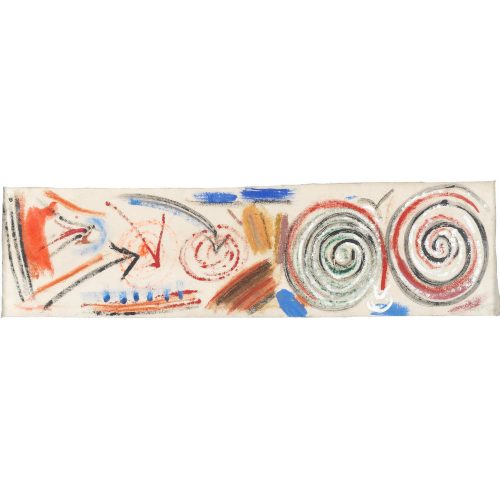
Terry Frost (1915-2003)
'Untitled Landscape'
Oil on canvas, laid on board 22 x 81.5cm Exhibited London, Coram Gallery, Terry Frost: Works on Paper and Small Paintings, 23 September-29 October 1994 Click here for biographical details and other works by the artist. If you are interested email info@manningfineart.co.uk or call us on 07929 749056. -
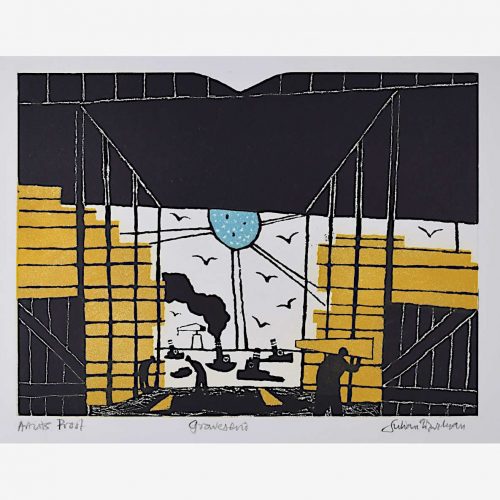
Julian Trevelyan (1910-1988)
Gravesend (1969)
Etching and aquatint, signed, titled, and inscribed 'Artist's Proof' in pencil 35x48cm (sheet size 59x77cm) On J Green paper Condition: generally excellent, never previously framed, see image. Click here for biographical details and other works by the artist. If you are interested email info@manningfineart.co.uk or call us on 07929 749056. -
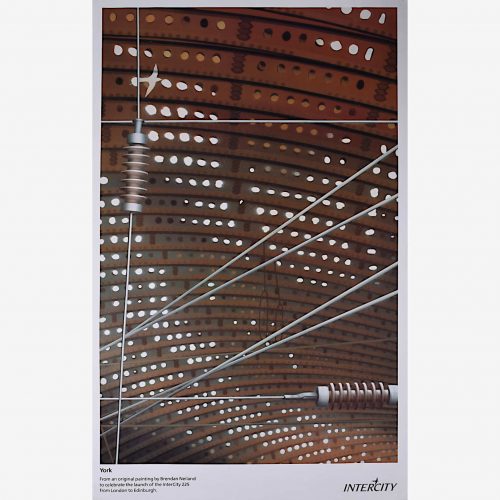
Brendan Neiland (b.1941)
York Intercity Poster
Original Vintage Poster - lithograph 102x64cm (40×25 inches) each 1991 Click here for biographical details and other works by the artist. If you are interested email info@manningfineart.co.uk or call us on 07929 749056. -
Out of stock
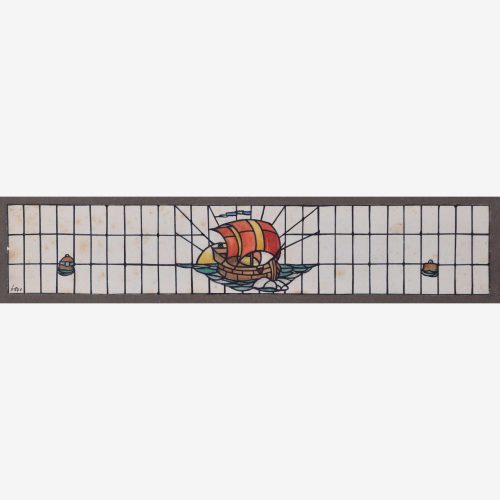
Florence Camm (1874-1960)
Stained Glass Window Design with Red Sailing Ship
Watercolour 6.5x34cm Condition: Some spotting to image; mounted to board - see image. Click for biographical details and other works by Camm. If you are interested email info@manningfineart.co.uk or call us on 07929 749056. -
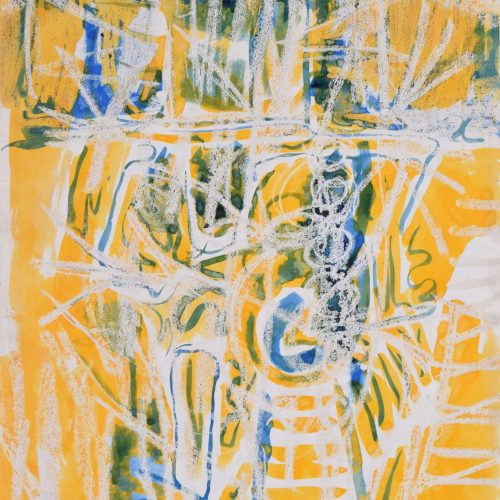
Charles Pulsford ARSA (1912 - 1989)
Abstract Figure in Yellow and Blue
Watercolour and ink 56 x 38 cm Signed lower right. An abstract figure in arresting colours. The artist plays with the intersection of round and lateral mark-making to form a human figure, perhaps reminiscent of a crucifixion. Pulsford's skill as an abstract landscape artist is also evident here, with the form suggestive of natural and industrial topography like fields, rivers, railway tracks, and electric pylons. Pulsford was born in Staffordshire to Scottish parents. His family returned to Dunfermline when he was a child, and he subsequently attended Edinburgh College of Art (ECA) between 1933 and 1937. He, along with other prominent Scottish artists, embraced modernism and abstraction following the end of the war. Alan Davie, William Turnbull, William Gear and Eduardo Paolozzi are the key artists of the group with which he was association, and the National Galleries of Scotland regard Pulsford as the 'fifth man' of the group. Between 1952 and 1960 he taught at ECA and then at Canterbury College of Art. Condition: generally very good, old tape stains to extreme margins. If you are interested email info@manningfineart.co.uk or call us on 07929 749056. Provenance: the artist, the residual stock of William Hardie. -
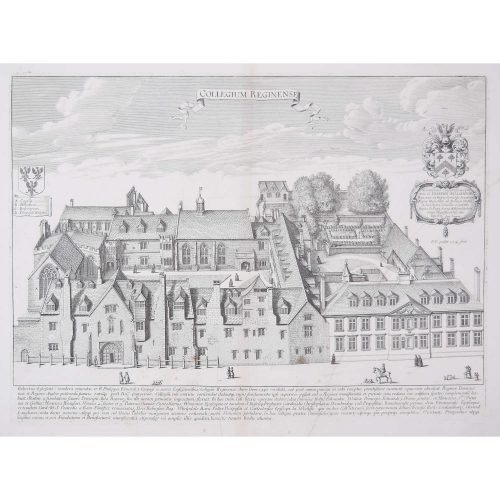
David Loggan (1634-1692)
Queen's College, Oxford (1674)
Engraving, 30 x 41cm Loggan was born to English and Scottish parents, and was baptised in Danzig in 1634. After studying engraving in Danzig with Willem Hondius (1598-1652 or 1658), he moved to London in the late 1650s, going on to produce the engraved title-page for the folio 1662 Book of Common Prayer. He married in 1663 and moved to Nuffield in Oxfordshire in 1665. Loggan was appointed Public Sculptor to the nearby University of Oxford in the late 1660s, having been commissioned to produce bird’s-eye views of all the Oxford colleges. He lived in Holywell Street as he did this. The 'Oxonia Illustrata' was published in 1675, with the help of Robert White (1645-1704). Following its completion, Loggan began work on his equivalent work for Cambridge; the 'Cantabrigia Illustrata' was finally published in 1690, when he was made engraver to Cambridge University. The 'Oxonia Illustrata' also includes an engraving of Winchester College (Winchester and New College share William of Wykeham as their founder) whilst the 'Cantabrigia Illustrata' includes one of Eton College (which shares its founder, Henry VIII, with King’s College). Bird’s-eye views from this era required a particular talent as an architectural perspectivist; it was not until 1783 that it became possible for artists to ascend via hot air balloons and view the scenes they were depicting from above. Loggan thus had to rely on his imagination in conceiving the views. Loggan’s views constitute the first accurate depictions of the two Universities, in many ways unchanged today. Whilst the Oxford engravings were produced in reasonable numbers and ran to a second edition by Henry Overton (on thicker paper and with a plate number in Roman numerals in the bottom right-hand corner), those of Cambridge were printed in much smaller numbers. The Dutchman Pieter van der Aa published some miniature versions of the engravings for James Beverell’s guidebook to the UK, 'Les Delices de la Grande Bretagne' (c. 1708). The contemporary artist Andrew Ingamells (b.1956) has produced a highly-acclaimed series of etchings which bring Loggan’s original vision up to date. Condition: good, crease bottom right hand corner. If you’d like to know more, please email info@manningfineart.co.uk or call us on 07929 749056. -
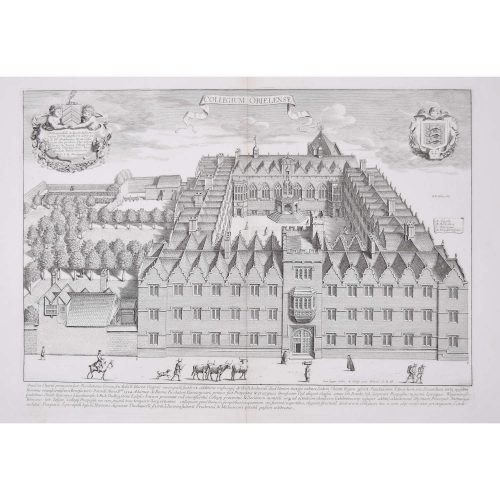
David Loggan (1634-1692)
Oriel College, Oxford (1674)
Engraving, 40 x 26.7cm Loggan was born to English and Scottish parents, and was baptised in Danzig in 1634. After studying engraving in Danzig with Willem Hondius (1598-1652 or 1658), he moved to London in the late 1650s, going on to produce the engraved title-page for the folio 1662 Book of Common Prayer. He married in 1663 and moved to Nuffield in Oxfordshire in 1665. Loggan was appointed Public Sculptor to the nearby University of Oxford in the late 1660s, having been commissioned to produce bird’s-eye views of all the Oxford colleges. He lived in Holywell Street as he did this. The 'Oxonia Illustrata' was published in 1675, with the help of Robert White (1645-1704). Following its completion, Loggan began work on his equivalent work for Cambridge; the 'Cantabrigia Illustrata' was finally published in 1690, when he was made engraver to Cambridge University. The 'Oxonia Illustrata' also includes an engraving of Winchester College (Winchester and New College share William of Wykeham as their founder) whilst the 'Cantabrigia Illustrata' includes one of Eton College (which shares its founder, Henry VIII, with King’s College). Bird’s-eye views from this era required a particular talent as an architectural perspectivist; it was not until 1783 that it became possible for artists to ascend via hot air balloons and view the scenes they were depicting from above. Loggan thus had to rely on his imagination in conceiving the views. Loggan’s views constitute the first accurate depictions of the two Universities, in many ways unchanged today. Whilst the Oxford engravings were produced in reasonable numbers and ran to a second edition by Henry Overton (on thicker paper and with a plate number in Roman numerals in the bottom right-hand corner), those of Cambridge were printed in much smaller numbers. The Dutchman Pieter van der Aa published some miniature versions of the engravings for James Beverell’s guidebook to the UK, 'Les Delices de la Grande Bretagne' (c. 1708). The contemporary artist Andrew Ingamells (b.1956) has produced a highly-acclaimed series of etchings which bring Loggan’s original vision up to date. Condition: generally very good. If you’d like to know more, please email info@manningfineart.co.uk or call us on 07929 749056. -
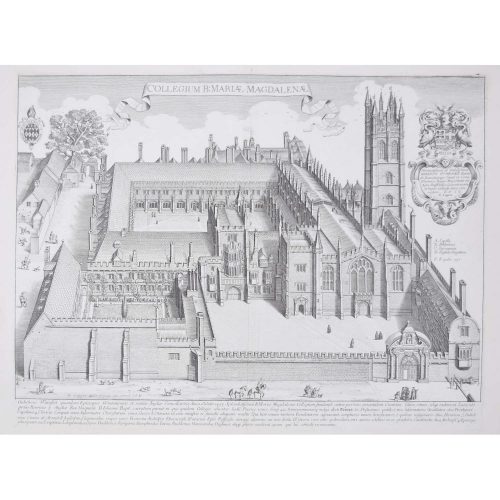
David Loggan (1634-1692)
Magdalen College, Oxford (1674)
Engraving, 32 x 42cm Loggan was born to English and Scottish parents, and was baptised in Danzig in 1634. After studying engraving in Danzig with Willem Hondius (1598-1652 or 1658), he moved to London in the late 1650s, going on to produce the engraved title-page for the folio 1662 Book of Common Prayer. He married in 1663 and moved to Nuffield in Oxfordshire in 1665. Loggan was appointed Public Sculptor to the nearby University of Oxford in the late 1660s, having been commissioned to produce bird’s-eye views of all the Oxford colleges. He lived in Holywell Street as he did this. The 'Oxonia Illustrata' was published in 1675, with the help of Robert White (1645-1704). Following its completion, Loggan began work on his equivalent work for Cambridge; the 'Cantabrigia Illustrata' was finally published in 1690, when he was made engraver to Cambridge University. The 'Oxonia Illustrata' also includes an engraving of Winchester College (Winchester and New College share William of Wykeham as their founder) whilst the 'Cantabrigia Illustrata' includes one of Eton College (which shares its founder, Henry VIII, with King’s College). Bird’s-eye views from this era required a particular talent as an architectural perspectivist; it was not until 1783 that it became possible for artists to ascend via hot air balloons and view the scenes they were depicting from above. Loggan thus had to rely on his imagination in conceiving the views. Loggan’s views constitute the first accurate depictions of the two Universities, in many ways unchanged today. Whilst the Oxford engravings were produced in reasonable numbers and ran to a second edition by Henry Overton (on thicker paper and with a plate number in Roman numerals in the bottom right-hand corner), those of Cambridge were printed in much smaller numbers. The Dutchman Pieter van der Aa published some miniature versions of the engravings for James Beverell’s guidebook to the UK, 'Les Delices de la Grande Bretagne' (c. 1708). The contemporary artist Andrew Ingamells (b.1956) has produced a highly-acclaimed series of etchings which bring Loggan’s original vision up to date. Condition: generally very good. If you’d like to know more, please email info@manningfineart.co.uk or call us on 07929 749056. -
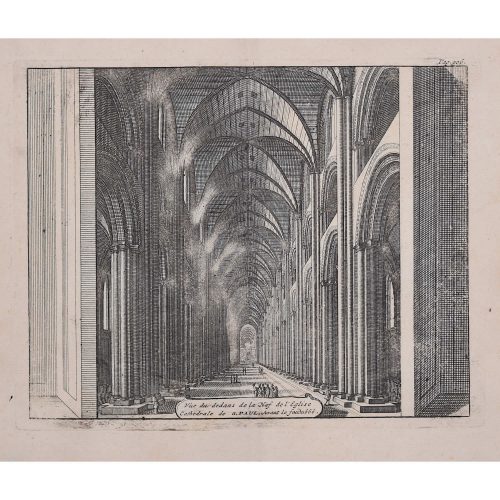
Pieter van der Aa (1659-1733), after Jan Kip (1652/3-1722)
Old St Paul's Cathedral (1707)
Engraving, 14 x 17 cm A view of the nave of Old St Paul's Cathedral, engraved by Pieter van der Aa after Johannes 'Jan' Kip, the Dutch draftsman, engraver and print dealer. Pieter van der Aa of Leiden was a Dutch publisher best known for preparing maps and atlases, though he also printed editions of foreign bestsellers and illustrated volumes. He is noted for the many engravings he produced after David Loggan's series of Oxford and Cambridge colleges and costumes. In 1727 Van Der Aa illustrated "Les Delices de la Grande Bretagne & de L'Irelande" by James Beeverell, the book in which this engraving appears. Condition: Generally very good. -
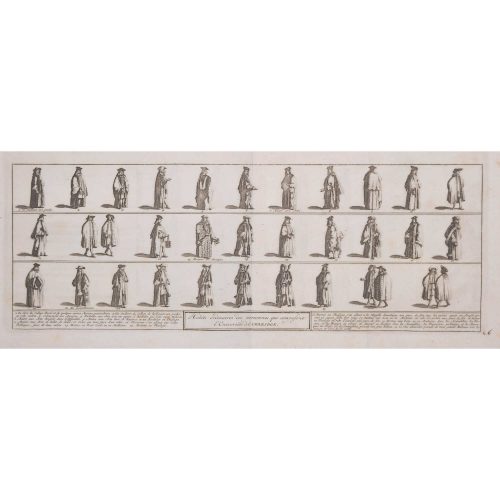
Pieter van der Aa (1659-1733), after David Loggan (1634-1692)
The Costumes of the University of Cambridge
Engraving, 14 x 36 cm Early 18th century This engraving by van der Aa (based on a prior design by David Loggan) illustrates the various forms of academic dress worn by members of the University of Cambridge. Pieter van der Aa of Leiden was a Dutch publisher best known for preparing maps and atlases, though he also printed editions of foreign bestsellers and illustrated volumes. He is noted for the many engravings he produced after David Loggan's series of Oxford and Cambridge colleges and costumes. Condition: Generally very good; slight age toning, and spotting to margins. -

Mabel Oliver Rae
Great Court, Trinity College, Cambridge
Etching, circa 1920 20 x 27cm Signed lower left. Mabel Oliver Rae was born in Cambridge, Cambridgeshire, and trained at the Slade School of Fine Art between 1888 and 1890. Rae is known for her skilled etchings of various rural scenes and townscapes, particularly those of the colleges of Oxford and Cambridge. She signed works with the pseudonym 'M.Oliver Rae', a ruse to conceal the fact she was a female artist, so as not to reduce her chances with commercial dealers and agents. Condition: Generally very good. -
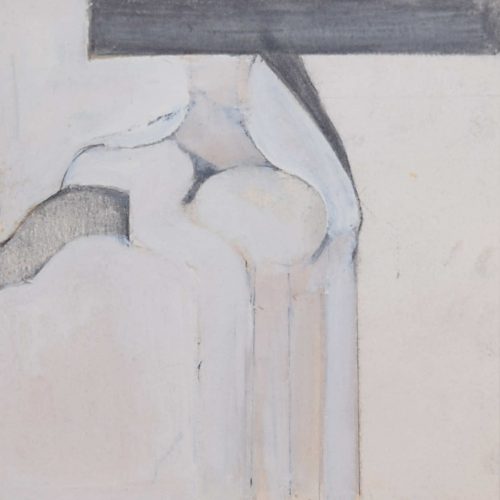
Adrian Heath Abstract Study III (1975)
Acrylic and pencil on paper 22 x 22cm Heath was born in Burma in 1920 and arrived in England aged five. In 1938 he studied art under Stanhope Forbes at Newlyn and later at the Slade School of Art. While serving in WWII, he was captured and placed in a prisoner-of-war camp in Bavaria. Heath attempted to escape from the camp but was recaptured and placed in solitary confinement; this isolation proved crucial to the development of his artistic style, as he spent much of his time there experimenting with abstract forms. When released from confinement, Heath befriended a fellow prisoner of war: Terry Frost. Together they explored the methods of painting which they had developed during their time in the camps, and following the war both became celebrated artists. We have several Terry Frost pieces available too. In 1949 and 1951, Heath returned to Cornwall. He spent time with artists like Ben Nicholson, Victor Pasmore, and Anthony Hill, and became the main link between the emerging St Ives School of artists and the British Constructivist movement back in London. He is further credited with promoting British abstract art through informal exhibitions in his studio on Fitzroy Street, as well as his manifesto-like text entitled 'Abstract Art: Its Origins and Meaning', which was published in 1953. Over time, Heath's paintings of abstract geometry and symmetry became increasingly dynamic and heavily textured, the result of layering paint on paint over the course of several days. This study features a muted colour palette and abstract asymmetric form. If you'd like to know more, please email info@manningfineart.co.uk or call us on 07929 749056. Condition: Good. Signed lower right. -
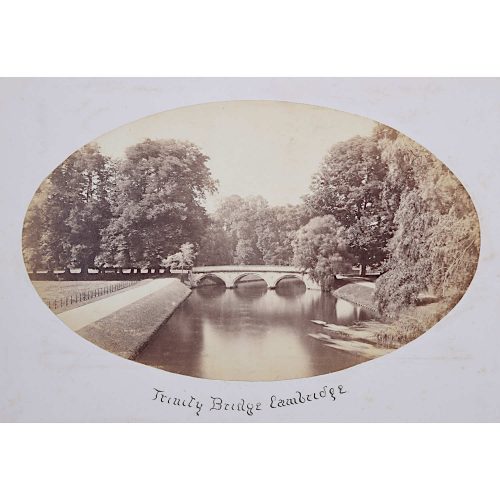
Trinity Bridge, Cambridge
Albumen print of a photograph, circa 1850 Mounted to board and inscribed 'Trinity Bridge Cambridge'. Trinity Bridge is a stone built tripled-arched road bridge across the River Cam. It was built from Portland stone in 1765 to the designs of James Essex to replace an earlier bridge built in 1651, and is a Grade I listed building. Trinity College is a constituent college of the University of Cambridge, and was founded in 1546 by King Henry VIII. Trinity is one of the oldest and largest colleges in Cambridge, with the largest financial endowment of any college at either Cambridge or Oxford. Trinity has some of the most distinctive architecture within Cambridge, with its Great Court reputed to be the largest enclosed courtyard in Europe. Condition: generally very good. If you’d like to know more, please email info@manningfineart.co.uk or call us on 07929 749056. -
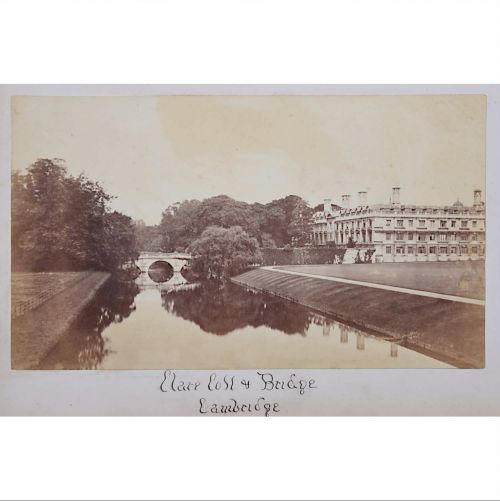
Clare College and Bridge, Cambridge
Albumen print of a photograph, circa 1850 Mounted to board and inscribed 'Clare Coll + Bridge Cambridge'. Clare College is a constituent college of the University of Cambridge in Cambridge. The college was founded in 1326 as University Hall, making it the second-oldest surviving college of the University after Peterhouse. It was refounded in 1338 as Clare Hall after an endowment from Elizabeth de Clare, and took on its current name in 1856. Clare is famous for its chapel choir and for its gardens on The Backs, overlooking the River Cam. Condition: generally very good, slight toning to sky. If you’d like to know more, please email info@manningfineart.co.uk or call us on 07929 749056. -
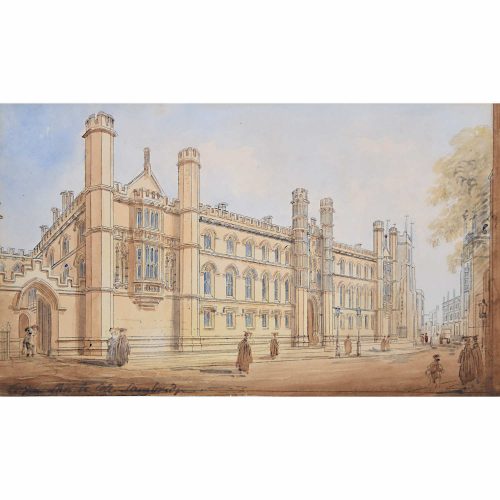
View of Corpus Christi College, Cambridge
Watercolour on paper 13.5 x 23cm A charming view of Corpus Christi College and assorted denizens of Cambridge. The college is notable as the only one founded by Cambridge townspeople; it was established in 1352 by the Guild of Corpus Christi and the Guild of the Blessed Virgin Mary, making it the sixth-oldest college in Cambridge. With around 250 undergraduates and 200 postgraduates, it also has the second smallest student body of the traditional colleges of the University, after Peterhouse. The College has traditionally been one of the more academically successful colleges in the University of Cambridge. It also ranks among the wealthiest Cambridge colleges in terms of fixed assets, being exceptionally rich in silver. Unsigned; labelled 'Corpus Christi Coll. Cambridge' in ink, lower left. If you’d like to know more, please email info@manningfineart.co.uk or call us on 07929 749056. -
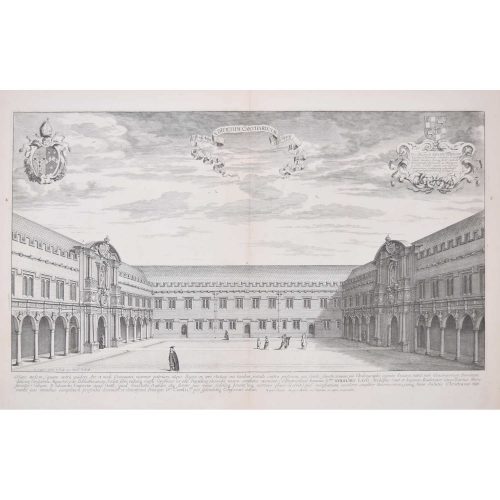
David Loggan (1634-1692)
Canterbury Quad, St John's College, Oxford
Engraving, 1675 32 x 51cm Loggan was born to English and Scottish parents, and was baptised in Danzig in 1634. After studying engraving in Danzig with Willem Hondius (1598-1652 or 1658), he moved to London in the late 1650s, going on to produce the engraved title-page for the folio 1662 Book of Common Prayer. He married in 1663 and moved to Nuffield in Oxfordshire in 1665. Loggan was appointed Public Sculptor to the nearby University of Oxford in the late 1660s, having been commissioned to produce bird’s-eye views of all the Oxford colleges. He lived in Holywell Street as he did this. The 'Oxonia Illustrata' was published in 1675, with the help of Robert White (1645-1704). Following its completion, Loggan began work on his equivalent work for Cambridge; the 'Cantabrigia Illustrata' was finally published in 1690, when he was made engraver to Cambridge University. The 'Oxonia Illustrata' also includes an engraving of Winchester College (Winchester and New College share William of Wykeham as their founder) whilst the 'Cantabrigia Illustrata' includes one of Eton College (which shares its founder, Henry VIII, with King’s College). Bird’s-eye views from this era required a particular talent as an architectural perspectivist; it was not until 1783 that it became possible for artists to ascend via hot air balloons and view the scenes they were depicting from above. Loggan thus had to rely on his imagination in conceiving the views. Loggan’s views constitute the first accurate depictions of the two Universities, in many ways unchanged today. Whilst the Oxford engravings were produced in reasonable numbers and ran to a second edition by Henry Overton (on thicker paper and with a plate number in Roman numerals in the bottom right-hand corner), those of Cambridge were printed in much smaller numbers. The Dutchman Pieter van der Aa published some miniature versions of the engravings for James Beverell’s guidebook to the UK, 'Les Delices de la Grande Bretagne' (c. 1708). The contemporary artist Andrew Ingamells (b.1956) has produced a highly-acclaimed series of etchings which bring Loggan’s original vision up to date. Condition: excellent. If you’d like to know more, please email info@manningfineart.co.uk or call us on 07929 749056. -
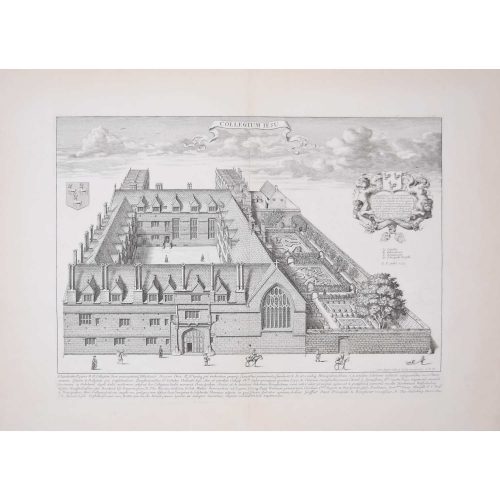
David Loggan (1634-1692)
Jesus College, Oxford
Engraving, 1675 30 x 41cm Loggan was born to English and Scottish parents, and was baptised in Danzig in 1634. After studying engraving in Danzig with Willem Hondius (1598-1652 or 1658), he moved to London in the late 1650s, going on to produce the engraved title-page for the folio 1662 Book of Common Prayer. He married in 1663 and moved to Nuffield in Oxfordshire in 1665. Loggan was appointed Public Sculptor to the nearby University of Oxford in the late 1660s, having been commissioned to produce bird’s-eye views of all the Oxford colleges. He lived in Holywell Street as he did this. The 'Oxonia Illustrata' was published in 1675, with the help of Robert White (1645-1704). Following its completion, Loggan began work on his equivalent work for Cambridge; the 'Cantabrigia Illustrata' was finally published in 1690, when he was made engraver to Cambridge University. The 'Oxonia Illustrata' also includes an engraving of Winchester College (Winchester and New College share William of Wykeham as their founder) whilst the 'Cantabrigia Illustrata' includes one of Eton College (which shares its founder, Henry VIII, with King’s College). Bird’s-eye views from this era required a particular talent as an architectural perspectivist; it was not until 1783 that it became possible for artists to ascend via hot air balloons and view the scenes they were depicting from above. Loggan thus had to rely on his imagination in conceiving the views. Loggan’s views constitute the first accurate depictions of the two Universities, in many ways unchanged today. Whilst the Oxford engravings were produced in reasonable numbers and ran to a second edition by Henry Overton (on thicker paper and with a plate number in Roman numerals in the bottom right-hand corner), those of Cambridge were printed in much smaller numbers. The Dutchman Pieter van der Aa published some miniature versions of the engravings for James Beverell’s guidebook to the UK, 'Les Delices de la Grande Bretagne' (c. 1708). The contemporary artist Andrew Ingamells (b.1956) has produced a highly-acclaimed series of etchings which bring Loggan’s original vision up to date. Condition: excellent. If you’d like to know more, please email info@manningfineart.co.uk or call us on 07929 749056. -
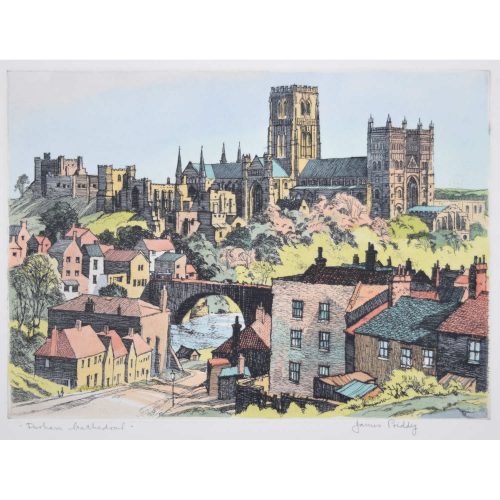
James Priddey (1916-1980) FRSA RBSA
Durham Cathedral Lithograph
27 x 36cm A Birmingham-based artist, educated at the Birmingham College of Art and a member of the Royal Birmingham Society of Artists, Priddey has a very distinctive style which he applies to his topographical watercolours. This striking view of Durham illustrates the city's river and cathedral. Condition: mounted to board. If you’d like to know more, please email info@manningfineart.co.uk or call us on 07929 749056. -
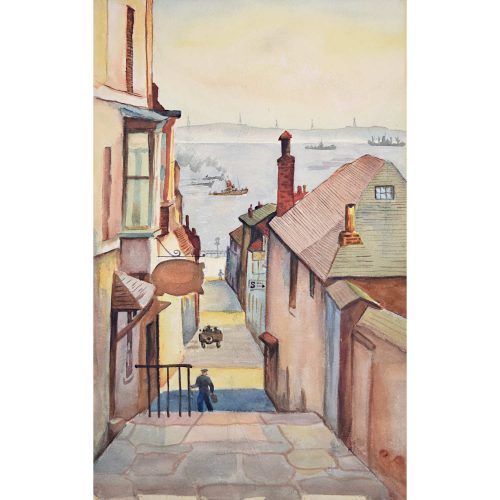
Falmouth, 1944 (unknown Modern British Artist)
Watercolour 46 x 30cm An evocative painting of Falmouth, the Cornish town shaped by its relationship to the sea. The artist leads us from the warm tones of the stone flags and empty buildings down towards a grey sea and a gently smouldering sky. Ships move in to the port, and a unit of pylons, starkly silhouetted, looks out over the bay. Condition: excellent. If you’d like to know more, please email info@manningfineart.co.uk or call us on 07929 749056. -
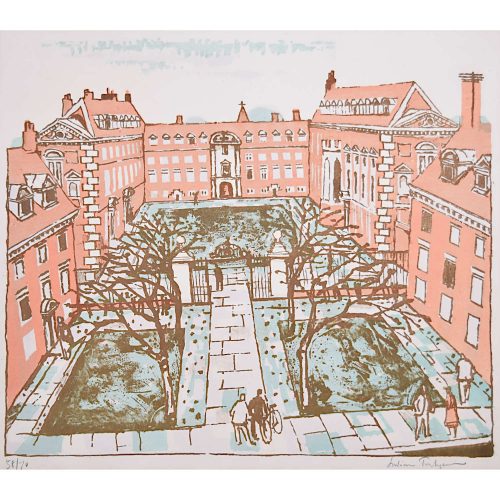
Julian Trevelyan (1910-1988) St Catharine's College, Cambridge
Etching and aquatint, signed, numbered 58/70 41 x 47 cm Nephew of the historian G M Trevelyan, Julian Trevelyan was educated at Bedales and then at Trinity College, Cambridge, where he read English. After moving to Paris, Trevelyan studied engraving at Stanley William Hayter’s school, working alongside artists such as Max Ernst, Joan Miro and Pablo Picasso. He married the potter Ursula Darwin in 1934, and in 1935 they moved to Hammersmith, buying Durham Wharf beside the River Thames which was Trevelyan’s studio – and home – for the rest of his life. His wartime service was – like so many artists – as a camoufleur. A Royal Engineer from 1940-43, he served in North Africa and Palestine, forcing the German Afrika Korps to use resources against a dummy army whilst real tanks were disguised as more harmless equipment. In the desert, nothing could be hidden - but it could be disguised. Following the dissolution of his marriage in 1950, he married the painter Mary Fedden. Teaching at Chelsea School of Art, Trevelyan eventually became head of the Etching Department and his pupils included David Hockney and Peter Ackroyd. Condition: Some toning to paper. If you’d like to know more, please email info@manningfineart.co.uk or call us on 07929 749056. -
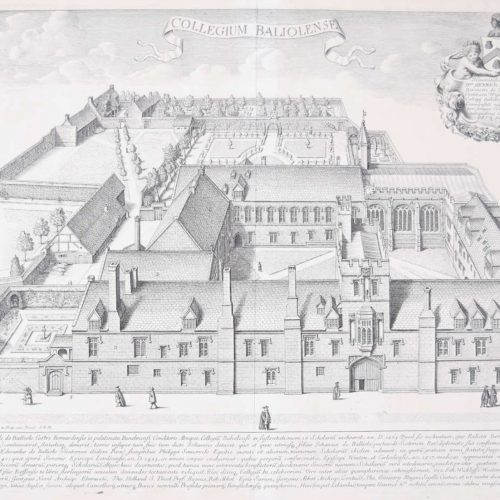
David Loggan (1634-1692)
Balliol College, Oxford
Engraving, 1675 30x40cm Loggan was born to English and Scottish parents, and was baptised in Danzig in 1634. After studying engraving in Danzig with Willem Hondius (1598-1652 or 1658), he moved to London in the late 1650s, going on to produce the engraved title-page for the folio 1662 Book of Common Prayer. He married in 1663 and moved to Nuffield in Oxfordshire in 1665. Loggan was appointed Public Sculptor to the nearby University of Oxford in the late 1660s, having been commissioned to produce bird’s-eye views of all the Oxford colleges. He lived in Holywell Street as he did this. The 'Oxonia Illustrata' was published in 1675, with the help of Robert White (1645-1704). Following its completion, Loggan began work on his equivalent work for Cambridge; the 'Cantabrigia Illustrata' was finally published in 1690, when he was made engraver to Cambridge University. The 'Oxonia Illustrata' also includes an engraving of Winchester College (Winchester and New College share William of Wykeham as their founder) whilst the 'Cantabrigia Illustrata' includes one of Eton College (which shares its founder, Henry VIII, with King’s College). Bird’s-eye views from this era required a particular talent as an architectural perspectivist; it was not until 1783 that it became possible for artists to ascend via hot air balloons and view the scenes they were depicting from above. Loggan thus had to rely on his imagination in conceiving the views. Loggan’s views constitute the first accurate depictions of the two Universities, in many ways unchanged today. Whilst the Oxford engravings were produced in reasonable numbers and ran to a second edition by Henry Overton (on thicker paper and with a plate number in Roman numerals in the bottom right-hand corner), those of Cambridge were printed in much smaller numbers. The Dutchman Pieter van der Aa published some miniature versions of the engravings for James Beverell’s guidebook to the UK, 'Les Delices de la Grande Bretagne' (c. 1708). The contemporary artist Andrew Ingamells (b.1956) has produced a highly-acclaimed series of etchings which bring Loggan’s original vision up to date. If you’d like to know more, please email info@manningfineart.co.uk or call us on 07929 749056. Condition: Generally good. -
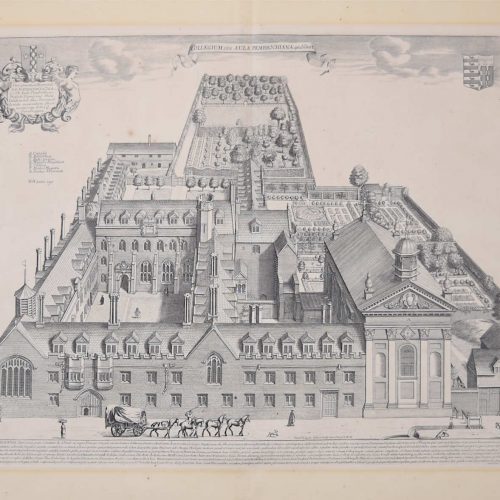
David Loggan (1634-1692)
Pembroke College, Cambridge
Engraving, 1690 36x45cm Loggan was born to English and Scottish parents, and was baptised in Danzig in 1634. After studying engraving in Danzig with Willem Hondius (1598-1652 or 1658), he moved to London in the late 1650s, going on to produce the engraved title-page for the folio 1662 Book of Common Prayer. He married in 1663 and moved to Nuffield in Oxfordshire in 1665. Loggan was appointed Public Sculptor to the nearby University of Oxford in the late 1660s, having been commissioned to produce bird’s-eye views of all the Oxford colleges. He lived in Holywell Street as he did this. The 'Oxonia Illustrata' was published in 1675, with the help of Robert White (1645-1704). Following its completion, Loggan began work on his equivalent work for Cambridge; the 'Cantabrigia Illustrata' was finally published in 1690, when he was made engraver to Cambridge University. The 'Oxonia Illustrata' also includes an engraving of Winchester College (Winchester and New College share William of Wykeham as their founder) whilst the 'Cantabrigia Illustrata' includes one of Eton College (which shares its founder, Henry VIII, with King’s College). Bird’s-eye views from this era required a particular talent as an architectural perspectivist; it was not until 1783 that it became possible for artists to ascend via hot air balloons and view the scenes they were depicting from above. Loggan thus had to rely on his imagination in conceiving the views. Loggan’s views constitute the first accurate depictions of the two Universities, in many ways unchanged today. Whilst the Oxford engravings were produced in reasonable numbers and ran to a second edition by Henry Overton (on thicker paper and with a plate number in Roman numerals in the bottom right-hand corner), those of Cambridge were printed in much smaller numbers. The Dutchman Pieter van der Aa published some miniature versions of the engravings for James Beverell’s guidebook to the UK, 'Les Delices de la Grande Bretagne' (c. 1708). The contemporary artist Andrew Ingamells (b.1956) has produced a highly-acclaimed series of etchings which bring Loggan’s original vision up to date. If you’d like to know more, please email info@manningfineart.co.uk or call us on 07929 749056. Condition: Some staining to margins outside platemark. -
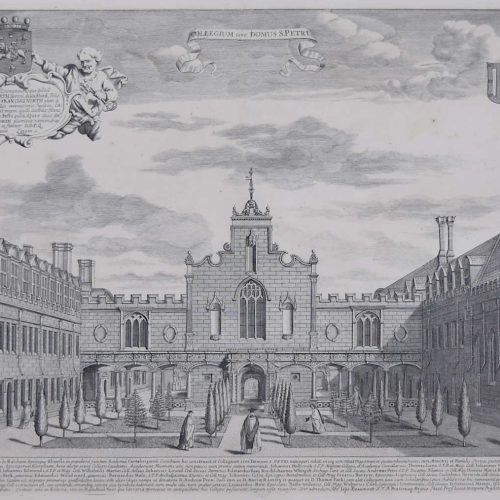
David Loggan (1634-1692)
Peterhouse, Cambridge
Engraving, 1690 30x40cm, framed Loggan was born to English and Scottish parents, and was baptised in Danzig in 1634. After studying engraving in Danzig with Willem Hondius (1598-1652 or 1658), he moved to London in the late 1650s, going on to produce the engraved title-page for the folio 1662 Book of Common Prayer. He married in 1663 and moved to Nuffield in Oxfordshire in 1665. Loggan was appointed Public Sculptor to the nearby University of Oxford in the late 1660s, having been commissioned to produce bird’s-eye views of all the Oxford colleges. He lived in Holywell Street as he did this. The 'Oxonia Illustrata' was published in 1675, with the help of Robert White (1645-1704). Following its completion, Loggan began work on his equivalent work for Cambridge; the 'Cantabrigia Illustrata' was finally published in 1690, when he was made engraver to Cambridge University. The 'Oxonia Illustrata' also includes an engraving of Winchester College (Winchester and New College share William of Wykeham as their founder) whilst the 'Cantabrigia Illustrata' includes one of Eton College (which shares its founder, Henry VIII, with King’s College). Bird’s-eye views from this era required a particular talent as an architectural perspectivist; it was not until 1783 that it became possible for artists to ascend via hot air balloons and view the scenes they were depicting from above. Loggan thus had to rely on his imagination in conceiving the views. Loggan’s views constitute the first accurate depictions of the two Universities, in many ways unchanged today. Whilst the Oxford engravings were produced in reasonable numbers and ran to a second edition by Henry Overton (on thicker paper and with a plate number in Roman numerals in the bottom right-hand corner), those of Cambridge were printed in much smaller numbers. The Dutchman Pieter van der Aa published some miniature versions of the engravings for James Beverell’s guidebook to the UK, 'Les Delices de la Grande Bretagne' (c. 1708). The contemporary artist Andrew Ingamells (b.1956) has produced a highly-acclaimed series of etchings which bring Loggan’s original vision up to date. If you’d like to know more, please email info@manningfineart.co.uk or call us on 07929 749056. Condition: Generally excellent. -
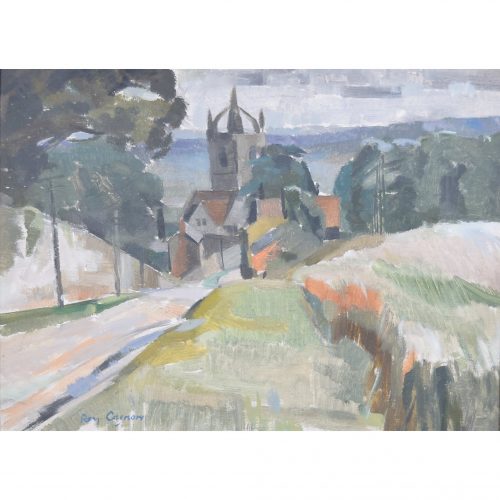
Roy Carnon (1911-2002)
All Hallows Church, Tillington, near Petworth
Oil on board 31 x 42cm Signed; in the artist's original frame Condition: excellent. Click to view biographical details and other works by the artist. Carnon attended Chiswick Art School becoming an illustrator. In 1965 he was responsible for visualising spacecraft for "2001: A Space Odyssey", being designer of the iconic 'wheel' spacestation. These drawings are now in the Kubrick archives at UAL. -

Fredda Brilliant (1903-1999)
The Young Atlas
Patinated bronze 52.5 x 41.5 x 27.5 cm ; 16kg. On wooden base Fredda Brilliant was a Polish sculptor and actress, born in Łódź, Poland. She worked in a variety of media and is recognized as an accomplished sculptor, writer, actor, singer and script writer. Throughout her career she traveled extensively working in England, USA, Australia, India, Poland and Russia. Brilliant sculpted some of the greatest figures of her time including Jawaharlal Nehru, V.K. Krishna Menon, Indira Gandhi, U.S. President John F Kennedy, and Buckminster Fuller. She also sculpted her husband, the writer Herbert Marshall. Brilliant's most famous work is a bronze statue of Mahatma Gandhi which is the centerpiece of the park in Tavistock Square, London, UK. Condition: excellent. -
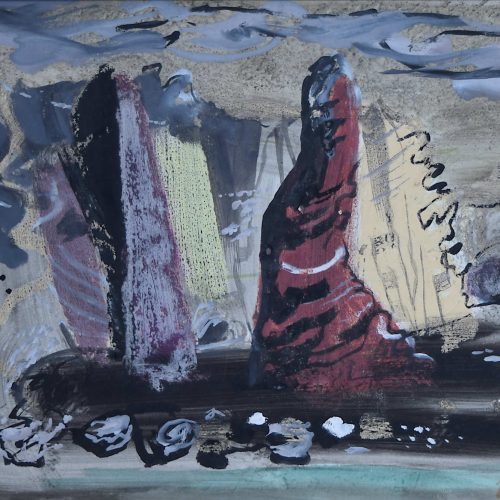
John Piper (1903-1992)
Bullslaughter Bay
Watercolour, gouache and pastel on paper 27.5 x 35.5cm John Piper CH was an English painter, printmaker, and designer of stained-glass windows. His work often focused on the British landscape, especially churches and monuments, and included tapestry designs, book jackets, screen-prints, photography, fabrics and ceramics. Piper spent a considerable amount of time in Pembrokeshire, frequently returning to the landscape of Bullslaughter Bay; this painting was probably produced there in the mid-1950s. The artist captures an animated, capricious bay, characterised by a distinctive colour palette and stamped with irregular rock formations. Condition: generally excellent. For other works by the artist and biographical details, click here. If you are interested email info@manningfineart.co.uk or call us on 07929 749056. -
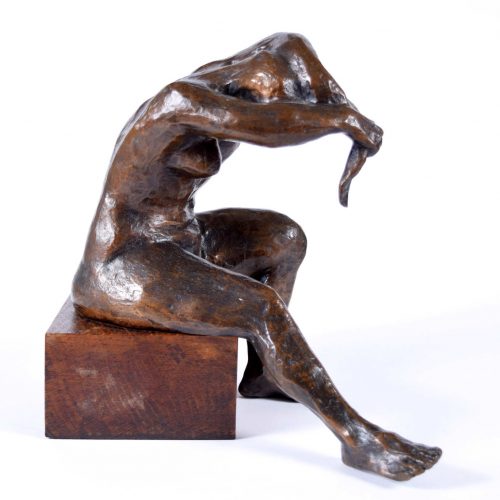 Michael Ayrton (1921-1975) Girl Wringing out her Hair Patinated bronze, 1962 26cm in height Michael Ayrton was a British artist and writer, renowned as a painter, printmaker, sculptor and designer, and also as a critic, broadcaster and novelist. This sculpture, rendered in patinated bronze, is a portrayal of an unposed nude, one of Ayrton's favourite subjects. In his book "Drawings and Sculpture", Ayrton muses on his studies of bathers: 'I like to study the nude when he or she is untroubled by my observation, and bathers in general are the only nudes, or semi-nudes, who are not particularly interested in the onlooker.' Provenance: Acquired directly from the Artist by Nigel Balchin, a close friend of Ayrton's, thence by descent to the previous owner. Sotheby's, Lot 128, 11 July 2013. Literature: Michael Ayrton, Drawings and Sculpture, with a Forward by C. P. Snow, Cory, Adams & Mackay, London, 1962, illustrated pl.73 (another cast). If you'd ike to know more, please email info@manningfineart.co.uk or call us on 07929 749056.
 -
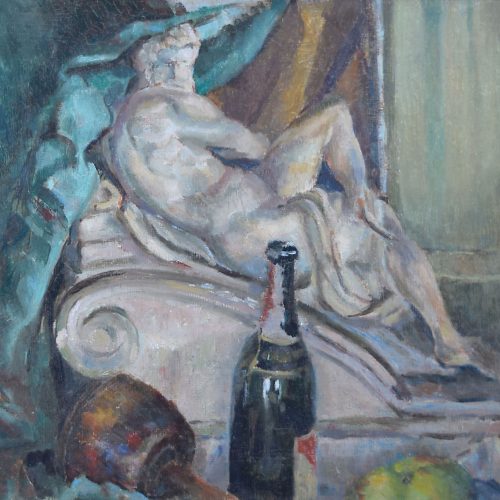 Sir Terry Frost (1915-2003) Bottle and Statue Oil on board c. 1947 38 x 46cm A distinctive still life featuring bottle, statue, and drapery. Terry Frost was a prominent British abstract artist. Frost is most noted for his simplistic abstract forms and unusual colour; he worked alongside the St Ives group and as Barbara Hepworth's assistant for several years, his artistic style being heavily influenced by them. In 1992 he became a Royal Academician, and he was made Sir Terry Frost in 1998. Bottle and Statue highlights Frost's unique compositional skill. His brushwork makes the statue seem like a real nude, who, framed by turquoise and ochre draperies, examines the still life in the foreground. An early work, painted shortly after the War and prior to his adoption of abstraction. For other works by Frost and biographical details please click here. Condition: A little craquelure in the oil above the statue's head.
 -

Blair Hughes-Stanton (1902-1981) Reclining Nude, c. 1936
Tempera on canvas 76.5 x 102cm Signed lower right 'Blair H S'. Provenance: The estate of the artist. A magnificent abstract nude rendered in a dynamic colour palette. This is probably Hughes-Stanton's most important work, and belongs to the nation's great, if brief, period of British Surrealism. The three major elements are distinct: the pastel tones of the window view and wall, the sensual curvatures of the pale nude, and the bold foreground featuring a fantastically accomplished still life of a fruit bowl (which could be a painting in and of itself) and the impressively phallic chair back. This is a brilliant example of erotic modernist abstraction. Blair Hughes-Stanton, son of the artist Sir Herbert Hughes-Stanton, was a noted British artist of the interwar period. At the age of 13 he joined the Royal Navy training ship HMS Coway, but at 19 - advised by his father - he abandoned the sea for his paintbox. He studied art at Byam Shaw School (1919-1922) where he was influenced by Leon Underwood (who was a major influence throughout his studying), Royal Academy Schools (1922-23), and Leon Underwood's School (1923-25). He was celebrated mostly for his skills as an engraver, and was a founding member of the English Wood Engraving Society when it was established in 1925. His first wife was the printmaker Gertrude Hermes with whom he illustrated John Bunyan's The Pilgrim's Progress in 1928. In 1931 he became head of the Gregynog Press, later establishing the Gemini Press with his second wife Ida Graves. During the course of his career he worked in various media, though his art frequently focused on the female nude. He taught at Westminster School of Art (1934-39), Colchester School of Art (1945-47); St Martin's School of Art (1947-48); and Central School of Arts and Crafts (1948-80). His teaching career was interrupted by the Second World War, during which he served as a camofleur and then joined the Royal Engineers (ignoring his earlier life in the Navy). Serving in Greece, he was captured as a prisoner of war and was imprisoned in a camp. He returned to England after the war. If you’d like to know more, please email info@manningfineart.co.uk or call us on 07929 749056. -
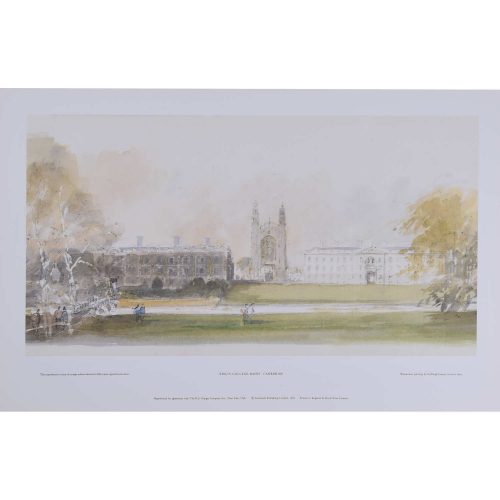 Sir Hugh Casson (1910-1999) King's College from the Backs 22 x 41cm Unsigned proof print Sir Hugh Casson was educated at Eastbourne College, St John’s College Cambridge and the Bartlett School of Architecture. Trained in the 1930s in the early modernist style, he taught at the Cambridge School of Architecture. After employment as a camoufleur during World War 2 by the Air Ministry, in 1948 he was appointed as director of architecture for the Festival of Britain. A close friend of the Royal Family, he undertook designs for the 1953 coronation, designed the interior of the Royal Yacht Britannia (“The overall idea was to give the impression of a country house at sea”), and taught the Prince of Wales to paint in watercolours. Amongst his architectural achievements are the Elephant House at London Zoo, the 1978 redevelopment of Bristol Docks, the Raised Faculty Building for The University of Cambridge, and a building for the Royal College of Art. He published a number of illustrated books, of which Casson’s Oxford and Casson’s Cambridge are probably the best known. A limited edition series of prints was produced from the paintings. King's College is a constituent college of the University of Cambridge in Cambridge, England. Formally The King's College of Our Lady and Saint Nicholas in Cambridge, the college lies beside the River Cam and faces out onto King's Parade in the centre of the city.
 -
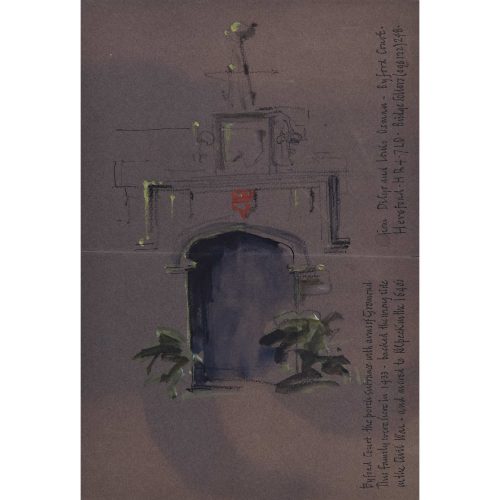 Louis Osman (1914-1996) Christmas Card, Byford Court, 1985 22 x 31cm Gouache and ink on paper This characterful card was sent by Louis Osman and his wife Dilys, whom he had married in 1940. Written and painted in 1985, it features an ink sketch and gouache painting of the porch entrance to Byford Court, with handwritten notes about the house's significance. Osman moved to Byford Court in 1976, following a brief brush with bankruptcy. Osman attended the Bartlett School of Architecture and the Slade School of Art, and became a Donaldson Medallist of RIBA in 1935. In the late 1930s he took part in the British Museum and British School of Archaeology expeditions to Syria. After war service he worked in London designing buildings, furniture, tapestries, and glass including work in Westminster Abbey, Lincoln, Ely, Exeter and Lichfield Cathedrals. He also did work for the National Trust at Staunton Harold Church in Ashby de la Zouch. Before moving to Byford Court, Osman and his wife lived at Canons Ashby House in Northamptonshire. Whilst there, they made the crown used at the investiture of Charles, Prince of Wales. In 1976, they also made the gold enamelled casket holding the Magna Carta on view in the United States Capitol, Washington, DC for the United States Bicentennial. Some discolouration to paper.
 -
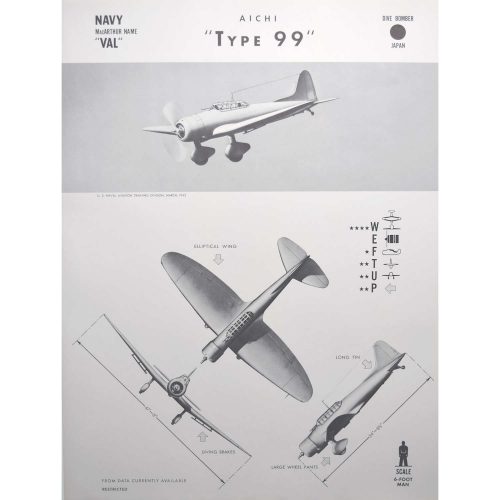
1942 MacArthur name "Val" Aichi "Type 99"
World War II Japanese dive bomber plane
Original aeroplane identification poster, 1942 63 x 47 cm A particularly unusual style of aeroplane identification poster, owing to the very arty images. Most such posters rely on very plain silhouettes, this series - and we have many in this series - have a much more arty approach to the task with shading and an interesting angle view. The Aichi D3A Type 99 Carrier Bomber (Allied reporting name "Val") was a World War II carrier-borne dive bomber. It was the primary dive bomber of the Imperial Japanese Navy (IJN) and was involved in almost all IJN actions, including the attack on Pearl Harbor. The Aichi D3A was the first Japanese aircraft to bomb American targets in the war, commencing with Pearl Harbor and U.S. bases in the Philippines, such as the Clark Air Force Base. They sank more Allied warships than any other Axis aircraft. If you'd like to know more, please email info@manningfineart.co.uk or call us on 07929 749056. -
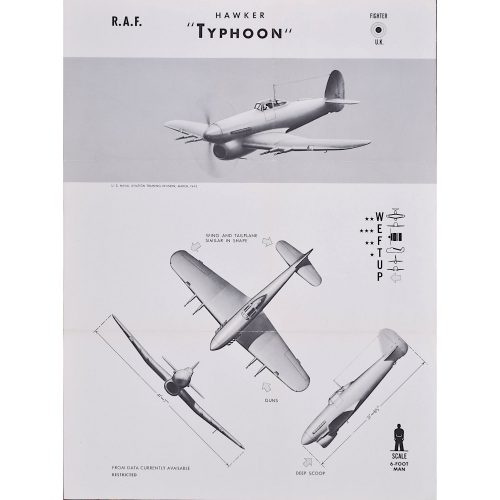
US Naval Aviation Training Division
RAF Hawker Typhoon World War 2 US airplane
Original aeroplane identification poster, 1942 63x47cm A particularly unusual style of aeroplane identification poster, owing to the very arty images. Most such posters rely on very plain silhouettes, this series - and we have several in this series (click here) - have a much more arty approach to the task with shading and an interesting angle view. The Typhoon is a single-seat fighter-bomber nicknamed the 'Tiffy'. Designed as a replacement for the Hawker Hurricane it never completely satisfied this expectation. However it was the only RAF fighter capable of catching the Fw 190 at low altitudes when the latter came into service in 1941. It became one of the most effective ground-attack aircraft of the Second World War. 3317 were produced and only one complete Typhoon still exists which belongs to the Royal Air Force Museum in Hendon. If you are interested email info@manningfineart.co.uk or call us on 07929 749056. -
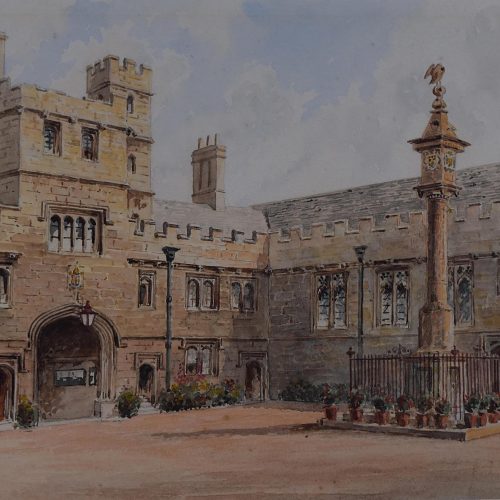
Francis Philip Barraud RA (1834-1901)
Corpus Christi College, Oxford
Watercolour 23 x 33cm Signed lower right. Barraud came from a family of painters. William and Henry were brothers, born in 1810 and 1811 respectively, the former a painter of equine subjects and hounds, the latter a landscape painter, and unusually the two of them made a habit of painting joint commissions. Francis, born in 1824, was a noted topographical artist, being well known for his views of Oxford in particular. Here he handles the old stonework of the College very capably, impressionistic flowers enhancing the scene. If you are interested email info@manningfineart.co.uk or call us on 07929 749056. -
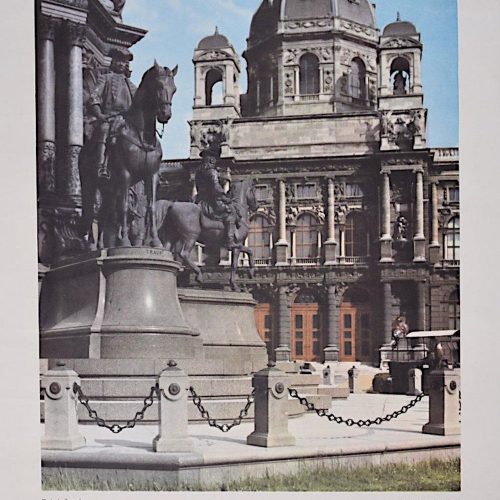
Albert Herndl (photographer)
Musée des Beaux Arts, Vienna, Austria / Osterreich (c.1950s)
Original lithographic poster 61x43cm -
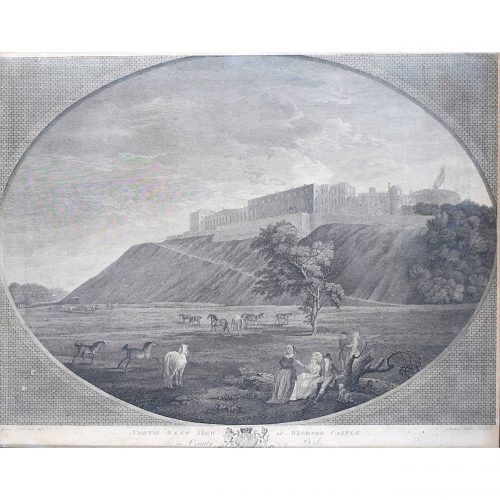
James Fittler (1758-1835) after George Robertson (1748-1788)
North West View of Windsor Castle in the County of Berks (1782)
47x58cm London: Published by John Boydell Fittler engraved two views of Windsor by Robertson. Trained at Royal Academy Schools, he was a skilled engraver and etcher and joined the mid-18th century trend for recording the landscape of the British Isles, producing and selling prints to tourists. A copy of this print is in the National Trust's collection at Anglesea Abbey, from Lord Fairhaven's extraordinary collection of views of Windsor Castle. -
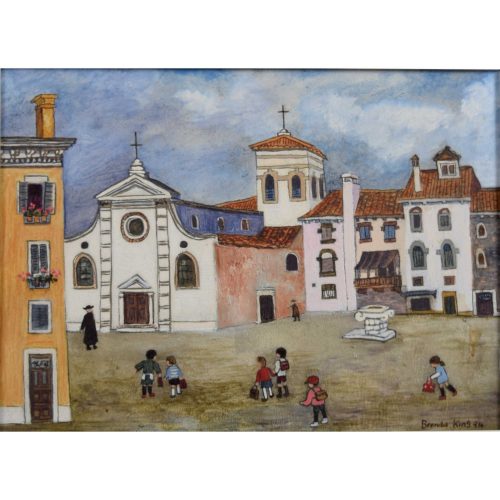
Brenda King (1934-2011)
Venetian Schoolchildren (1974)
Oil on board 16.5.x 20.5 cm Signed and dated lower right. Naive scene of school children in a Venetian square in a distinctive 1970s frame. Brenda King was born in Cumbria in 1934. She enrolled at the Lancaster College of Art from 1950 to 1954 before enrolling at the Royal Academy from 1954 to 1957, indeed, going on to exhibit frequently at the RA summer exhibition. She moved to Cornwall in 1975 with her landscape painter husband Jeremy King (b.1933), and the pair shared a studio in St Just, Lands End. Her distinctively naive and playful style, often capturing incidental figures in quaint, pastoral British scenes, is said to have been strongly influenced by the oils and watercolours of Helen Bradley (1900-1979), another Lancastrian. If you are interested e-mail info@manningfineart.co.uk or call us on 07929 749056 Condition: Generally excellent, original 1970s frame shows some wear. -
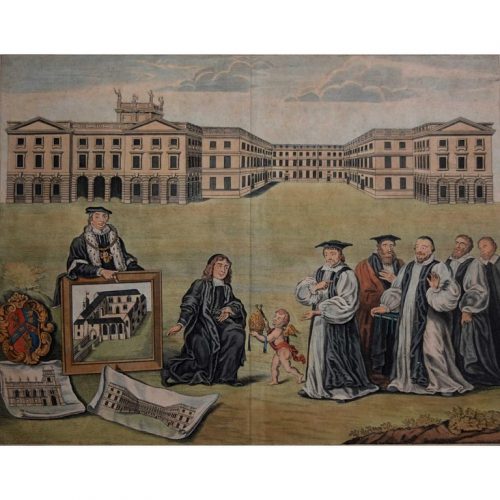
Artist unknown The Founder and Benefactors of Trinity College
Early 18th century Hand coloured engraving 36.5 x 47.5 cm Rare - we have been unable to identify another copy of this print. This beautifully tinted engraving was originally produced for the 1732 Oxford University Almanack. The founder of Trinity College, Sir Thomas Pope, is pictured holding an image based on John Bereblock’s 1566 engraving; it depicts the quadrangle known today as Durham Quad. Also pictured are Ralph Bathurst (President of Trinity 1664-1704), the archbishop of Canterbury, Gilbert Sheldon; the bishop of Worcester, Robert Skinner, and the bishop of Chester, Nicholas Stratford. Perhaps what is most notable about this engraving is, however, the background of the college landscape. By 1732 Trinity was well underway in developing a highly elaborate garden, with geometric paths, an avenue of limes, yew hedges trimmed to resemble panelling, and so on. None of this is represented here and the quadrangle is instead exponentially extended. Although these plans ultimately never came to fruition, ideas of a vast expansion persisted throughout the reign of George II and the plans were replicated in the Almanack for 1756. Complete with vibrant colours and sharp lines, this rare engraving offers a unique historical insight into the transformation of and ambitions for Trinity College, Oxford. Condition:Generally good with some spotting and slight overall toning. Trimmed to just within platemark at top and bottom. If you are interested email info@manningfineart.co.uk or call us on 07929 749056. -

Take Care! Official Secrets Act WW2 Poster (c.1940)
Lithographic poster 18 x 51 cm Printed for the HM Stationary Office by Gothic Press, London. -
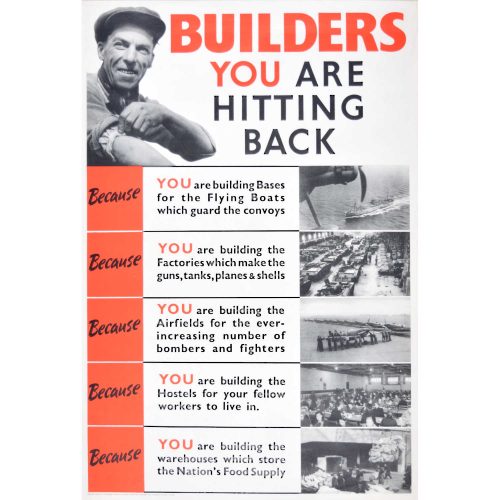
Builders YOU Are Hitting Back Original WW2 Poster (c.1940)
'Builders - YOU Are Hitting Back' Original WW2 Poster (c.1940) 76 x 50.5 cm Lithograph and letterpress (on paper) Printed by Lowe and Brydone Printers Ltd, London NW10. Published by HM Stationery Office. Because: You are building bases for the Flying Boats which guard the convoys You are building the Factories which makes the guns, tanks, planes & shells You are building the Airfields for the ever increasing number of bombers and fighters - Spitfire You are building the Hostels for your fellow workers to live in You are building the warehouses which store the Nation's Food Supply