-
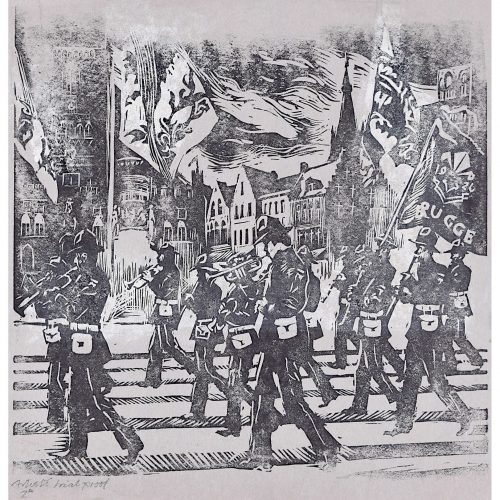
Percy Drake Brookshaw (1907-1993) Marching Band
Linocut c. 1930s 30x30 cm Inscribed 'Artist's trial proof 1A' Provenance: the family of the artist, by descent. Brookshaw was born in Southwark, in London, and educated at the Central School of Arts and Crafts. He was a particularly accomplished lithographer, skilled also as a painter in both oil and watercolour. Identifying the former talent, F Gregory Brown - the poster and textile designer - encouraged him to become an illustrator and poster designer. Producing posters for London Transport and Shell, inter alia, between 1928 and 1958, many of his posters depict sporting events. His two posters for the annual University Boat Race are well known and highly sought after, and his wonderful posters often evoke a feeling of movement, whether rowers straining on their oars, or horses or greyhounds racing. In this carefully executed linocut, Brookshaw brings the band members to life with the same skill and enthusiasm he brings to his posters. If you are interested email info@manningfineart.co.uk or call us on 07929 749056. Condition: Generally very good, some spotting to external margins outside image area. -
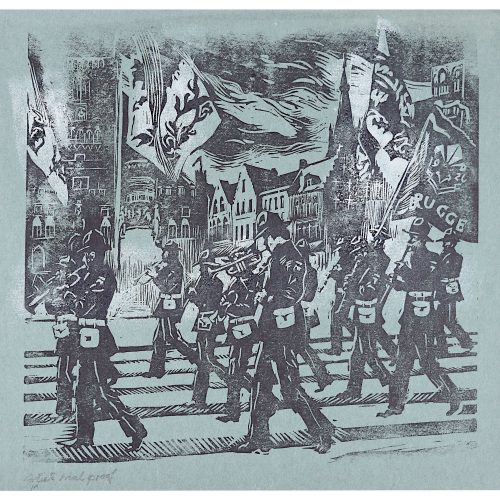
Percy Drake Brookshaw (1907-1993) Marching Band
Linocut c. 1930s 30x30 cm Inscribed 'Artist's trial proof 1A' Provenance: the family of the artist, by descent. Brookshaw was born in Southwark, in London, and educated at the Central School of Arts and Crafts. He was a particularly accomplished lithographer, skilled also as a painter in both oil and watercolour. Identifying the former talent, F Gregory Brown - the poster and textile designer - encouraged him to become an illustrator and poster designer. Producing posters for London Transport and Shell, inter alia, between 1928 and 1958, many of his posters depict sporting events. His two posters for the annual University Boat Race are well known and highly sought after, and his wonderful posters often evoke a feeling of movement, whether rowers straining on their oars, or horses or greyhounds racing. In this carefully executed linocut, Brookshaw brings the band members to life with the same skill and enthusiasm he brings to his posters. If you are interested email info@manningfineart.co.uk or call us on 07929 749056. Condition: Generally very good, some spotting to external margins outside image area. -
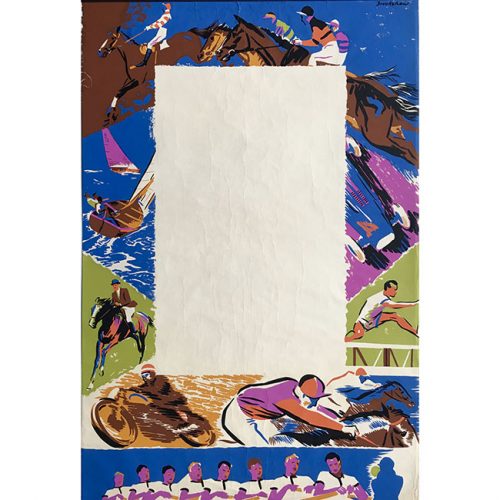
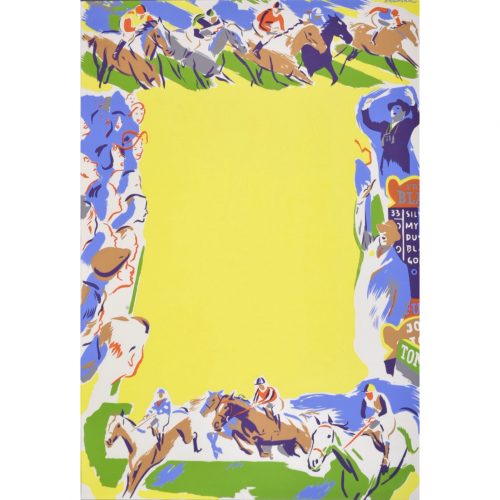
Percy Drake Brookshaw (1907-1993)
‘The Season’ Coach Poster
Lithographic poster illustrating The Season - rowing, racing, athletics, sailing and other suitable summer sports. 76x50cm Click here for biographical details and other works by the artist. If you are interested email info@manningfineart.co.uk or call us on 07929 749056. -
Out of stock
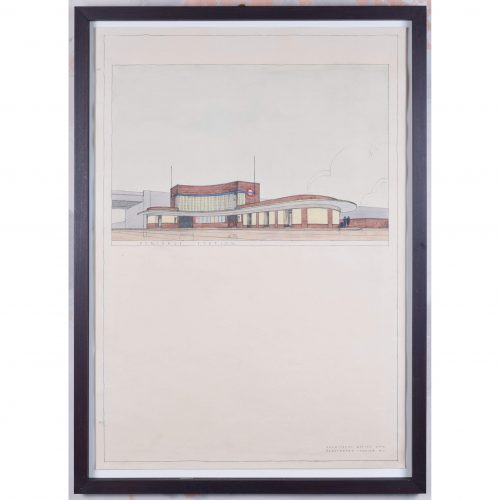
Brian Bannatyne Lewis (1906 - 1991)
Perivale Station (1938)
Pen, ink and watercolour 70 x 50 cm A 1938 design for the new Perivale tube station, commissioned by the Great Western Railway (GWR) for its proposed western extension to the Central Line. The design's Art Deco lettering befits London Transport's aesthetic in the 1930s. Lewis brings his designs to life by including smartly-dressed characters entering and leaving the stations. The Central line opened in 1900, between Shepherd's Bush and Bank; it extended westwards to Ealing Broadway in 1920. Two years after the formation of London Transport in 1933, an extensive New Works Programme began, proposing a westwards extension of the line to Denham. Brian Lewis created designs for nine stations in early 1938, but the Second World War broke out before they could be built. By the time the extension had been built, Lewis was no longer chief architect of the GWR - the stations were modified and completed by Frederick Francis Charles Curtis instead. The extension to Greenford opened in 1947 and finally reached West Ruislip in 1948. Denham never actually became part of the tube line, owing to the establishment of the green belt. Brian Lewis was born in Tasmania, attended school in Melbourne, and subsequently obtained a Diploma in Architecture in 1928 from the University of Melbourne. He then moved to the UK to study at the Liverpool School of Architecture, winning scholarships in each of his three years of study to fund extensive European travel. He married a fellow Liverpool architectural student, Hilary Archer. After moving to London, he took up employment with the GWR in their architects’ office; he also lectured at a local polytechnic, and moonlighted with his wife at home on mainly residential commissions – rather different projects from the hotels and stations which GWR commissioned from him. He exhibited frequently at the Royal Academy of Arts, showing superb measured drawings of historic buildings. In the Second World War he enlisted with the Second Imperial Australian Force, serving in the Middle East, then transferred to the Royal Australian Engineers where he became a Captain. In 1943 he was sent to London to help GWR repair bomb damage. Lewis became Chief Architect of GWR in 1945 (following the retirement of the noted Percy Emerson Culverhouse), and the first Chair of Architecture at Melbourne University in 1947. He also became the consulting architect for the major buildings of the Australian National University in Canberra, producing an imaginative site plan and designing University House, which was awarded the Sulman medal in 1954. He also designed the Risdon Prison Complex in 1960. He retired in 1971 to paint watercolours and write his memoirs. Condition: generally very good; a few handling marks and two holes from filing. Handsomely framed. If you are interested, please email info@manningfineart.co.uk or call us on 07929 749056. Click here to view the other station designs in the set. -
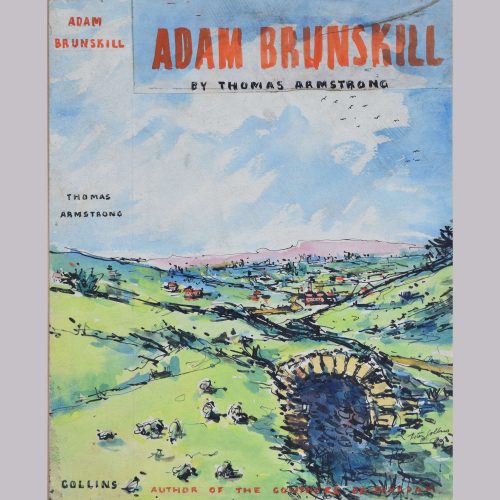
Peter Collins ARCA (1923-2001) Adam Brunskill Book Jacket Design
for Collins publishers (no relation) Watercolour and collage 22x17cm Provenance: The Artist's Studio Sale Signed lower right Peter Collins Typical Collins, with his bright colours and captivating scene, very reminiscent of his travel posters. This was a proposal for the dust jacket, in the end a slightly different design by Collins was chosen for the first edition. A great one for the Adam Brunskill fans! Click here for other items by the artist and for biographical details. If you are interested email info@manningfineart.co.uk or call us on 07929 749056. -
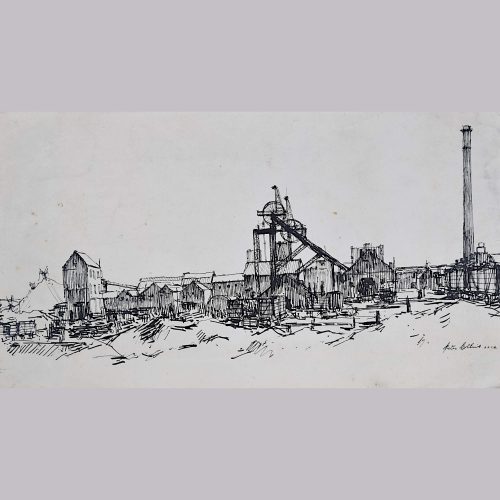
Peter Collins ARCA (1923-2001) Colliery Mining Scene
Pen, ink 20x35cm Provenance: The Artist's Studio The use of pen ank ink creates a powerful image, emphasising the stark nature of the colliery. Yet the scene is softened by the presence of figures, dwarfed against the mighty machinery. The strong vertical lines on the timber-clad buildings emphasise the vertical lines of the pit machinery, and suggest the depths of the earth to which the mine reaches; yet at the same time the horizontal nature of the drawing provides a contrast. Click here for other items by the artist and for biographical details. If you are interested email info@manningfineart.co.uk or call us on 07929 749056. -

Peter Collins ARCA (1923-2001) Design for BEA Holiday Brochure 1966 BEA Panorama Holidays
Mixed media on paper 30x21cm Provenance: The Artist's Studio As a graphic designer, Collins produced many brochures such as these. With his fondness for life drawing, he was perhaps a natural choice for the bikini-clad inhabitants of the pages of a holiday brochure. Click here for other items by the artist and for biographical details. If you are interested email info@manningfineart.co.uk or call us on 07929 749056. -
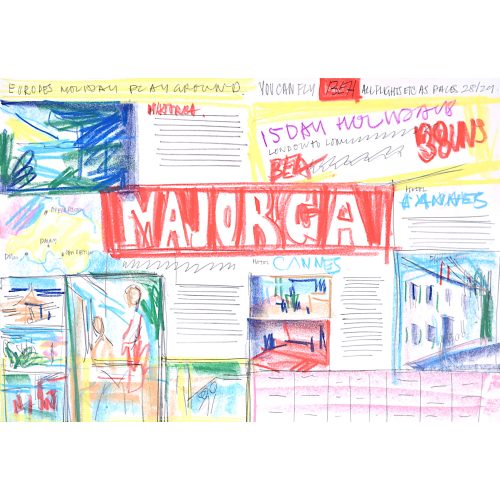
Peter Collins ARCA (1923-2001) Design for Holiday Brochure for Majorca 3 (for BEA Panorama Holidays)
Mixed media 30x45cm Provenance: The Artist's Studio As a graphic designer, Collins produced many brochures such as these. With his fondness for life drawing, he was perhaps a natural choice for the bikini-clad inhabitants of the pages of a holiday brochure. Collins's first job was at an advertising agency, in the commercial studio, whilst he attended evening art classes. World War II interrupted his career and he joined the Royal Artillery (of the British Army), teaching painting and drawing in the Education Corps - whilst simultaneously teaching at St Martin's School of Art, part time. Following the war Collins studied at the Royal College of Art, winning a scholarship. Leaving in 1950 he then worked as a commercial artist producing some well-known posters for clients including British Railways and British European Airways. He was the Art Director at Odhams Press and spent time designing for both ICI and Shell. With his wife Georgette he created the 'Bacombe Galleries' in Sussex, converting a group of buildings. In 1975 they again converted buildings, this time Stanley Studios in Chelsea which were scheduled for redevelopment; many artists had worked there, probably the most famous being Elizabeth Frink. Combining an artist's studio and a single residence at Stanley Studios the Collinses were immersed in Chelsea's art scene and proceeded to fill the place with art, antiques, sculpture and curios. If you are interested email info@manningfineart.co.uk or call us on 07929 749056. Condition: Generally very good. -
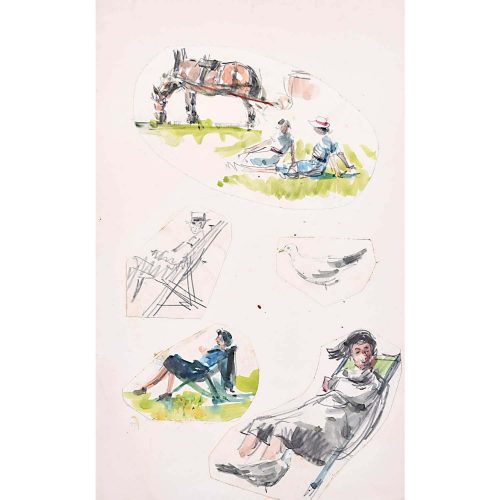
Peter Collins ARCA (1923-200 Elegant Figures in Deckchairs with Boaters and Hats
Mixed Media, Collage, Watercolour, Pencil etc. 29x18cm Provenance: The Artist's Studio As a graphic designer, Collins produced many drawings such as these and we invite you to look at our other drawings and sketches by him. Click here for other items by the artist and for biographical details. If you are interested email info@manningfineart.co.uk or call us on 07929 749056. -
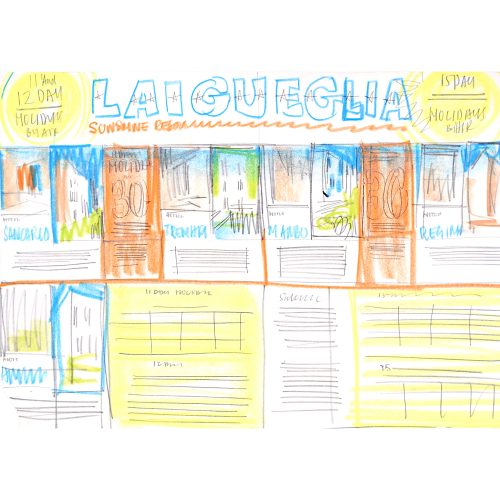
Peter Collins ARCA (1923-2001) Design for Holiday Brochure for Laigueglia Italy (for BEA Panorama Holidays)
Mixed media 30x45cm Provenance: The Artist's Studio As a graphic designer, Collins produced many brochures such as these. With his fondness for life drawing, he was perhaps a natural choice for the bikini-clad inhabitants of the pages of a holiday brochure. Collins's first job was at an advertising agency, in the commercial studio, whilst he attended evening art classes. World War II interrupted his career and he joined the Royal Artillery (of the British Army), teaching painting and drawing in the Education Corps - whilst simultaneously teaching at St Martin's School of Art, part time. Following the war Collins studied at the Royal College of Art, winning a scholarship. Leaving in 1950 he then worked as a commercial artist producing some well-known posters for clients including British Railways and British European Airways. He was the Art Director at Odhams Press and spent time designing for both ICI and Shell. With his wife Georgette he created the 'Bacombe Galleries' in Sussex, converting a group of buildings. In 1975 they again converted buildings, this time Stanley Studios in Chelsea which were scheduled for redevelopment; many artists had worked there, probably the most famous being Elizabeth Frink. Combining an artist's studio and a single residence at Stanley Studios the Collinses were immersed in Chelsea's art scene and proceeded to fill the place with art, antiques, scupture and curios. If you are interested email info@manningfineart.co.uk or call us on 07929 749056. Condition: Generally very good. -
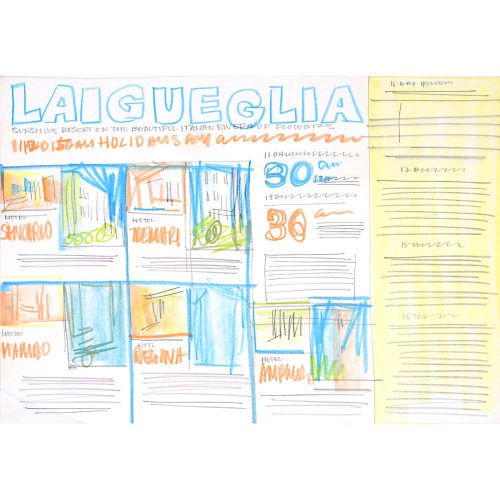
Peter Collins ARCA (1923-2001) Design for Holiday Brochure for Laigueglia Italy (for BEA Panorama Holidays) 2
Mixed media 30x45cm Provenance: The Artist's Studio As a graphic designer, Collins produced many brochures such as these. With his fondness for life drawing, he was perhaps a natural choice for the bikini-clad inhabitants of the pages of a holiday brochure. Collins's first job was at an advertising agency, in the commercial studio, whilst he attended evening art classes. World War II interrupted his career and he joined the Royal Artillery (of the British Army), teaching painting and drawing in the Education Corps - whilst simultaneously teaching at St Martin's School of Art, part time. Following the war Collins studied at the Royal College of Art, winning a scholarship. Leaving in 1950 he then worked as a commercial artist producing some well-known posters for clients including British Railways and British European Airways. He was the Art Director at Odhams Press and spent time designing for both ICI and Shell. With his wife Georgette he created the 'Bacombe Galleries' in Sussex, converting a group of buildings. In 1975 they again converted buildings, this time Stanley Studios in Chelsea which were scheduled for redevelopment; many artists had worked there, probably the most famous being Elizabeth Frink. Combining an artist's studio and a single residence at Stanley Studios the Collinses were immersed in Chelsea's art scene and proceeded to fill the place with art, antiques, scupture and curios. If you are interested email info@manningfineart.co.uk or call us on 07929 749056. Condition: Generally very good. -
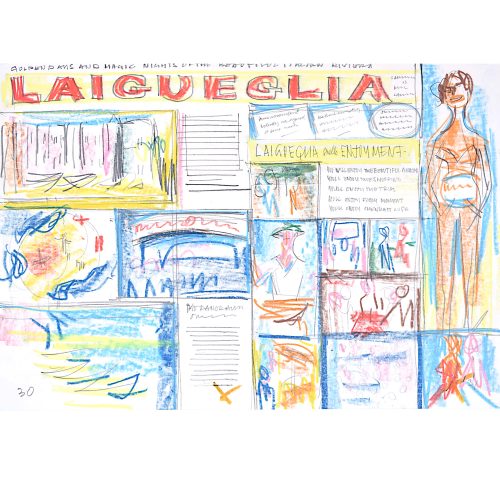
Peter Collins ARCA (1923-2001) Design for Holiday Brochure for Laigueglia Italy (for BEA Panorama Holidays) 3
Mixed media 30x45cm Provenance: The Artist's Studio As a graphic designer, Collins produced many brochures such as these. With his fondness for life drawing, he was perhaps a natural choice for the bikini-clad inhabitants of the pages of a holiday brochure. Collins's first job was at an advertising agency, in the commercial studio, whilst he attended evening art classes. World War II interrupted his career and he joined the Royal Artillery (of the British Army), teaching painting and drawing in the Education Corps - whilst simultaneously teaching at St Martin's School of Art, part time. Following the war Collins studied at the Royal College of Art, winning a scholarship. Leaving in 1950 he then worked as a commercial artist producing some well-known posters for clients including British Railways and British European Airways. He was the Art Director at Odhams Press and spent time designing for both ICI and Shell. With his wife Georgette he created the 'Bacombe Galleries' in Sussex, converting a group of buildings. In 1975 they again converted buildings, this time Stanley Studios in Chelsea which were scheduled for redevelopment; many artists had worked there, probably the most famous being Elizabeth Frink. Combining an artist's studio and a single residence at Stanley Studios the Collinses were immersed in Chelsea's art scene and proceeded to fill the place with art, antiques, scupture and curios. If you are interested email info@manningfineart.co.uk or call us on 07929 749056. Condition: Generally very good. -
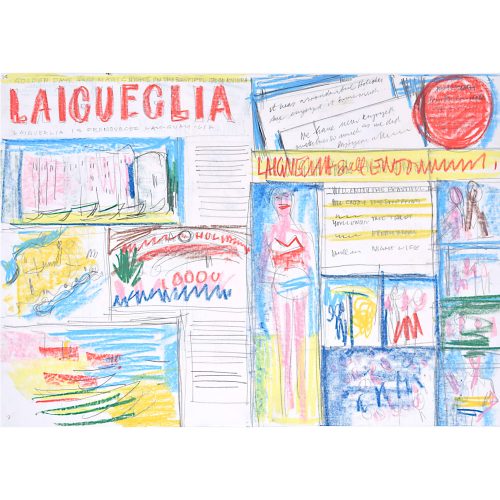
Peter Collins ARCA (1923-2001) Design for Holiday Brochure for Laigueglia Italy (for BEA Panorama Holidays) 4
Mixed media 30x45cm Provenance: The Artist's Studio As a graphic designer, Collins produced many brochures such as these. With his fondness for life drawing, he was perhaps a natural choice for the bikini-clad inhabitants of the pages of a holiday brochure. Collins's first job was at an advertising agency, in the commercial studio, whilst he attended evening art classes. World War II interrupted his career and he joined the Royal Artillery (of the British Army), teaching painting and drawing in the Education Corps - whilst simultaneously teaching at St Martin's School of Art, part time. Following the war Collins studied at the Royal College of Art, winning a scholarship. Leaving in 1950 he then worked as a commercial artist producing some well-known posters for clients including British Railways and British European Airways. He was the Art Director at Odhams Press and spent time designing for both ICI and Shell. With his wife Georgette he created the 'Bacombe Galleries' in Sussex, converting a group of buildings. In 1975 they again converted buildings, this time Stanley Studios in Chelsea which were scheduled for redevelopment; many artists had worked there, probably the most famous being Elizabeth Frink. Combining an artist's studio and a single residence at Stanley Studios the Collinses were immersed in Chelsea's art scene and proceeded to fill the place with art, antiques, scupture and curios. If you are interested email info@manningfineart.co.uk or call us on 07929 749056. Condition: Generally very good. -
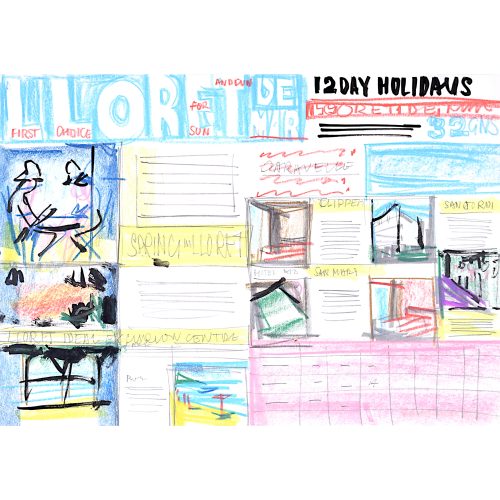
Peter Collins ARCA (1923-2001) Lloret, Spain - Design for Holiday Brochure (for BEA Panorama Holidays)
Mixed media 30x45cm Provenance: The Artist's Studio As a graphic designer, Collins produced many brochures such as these. With his fondness for life drawing, he was perhaps a natural choice for the bikini-clad inhabitants of the pages of a holiday brochure. Collins's first job was at an advertising agency, in the commercial studio, whilst he attended evening art classes. World War II interrupted his career and he joined the Royal Artillery (of the British Army), teaching painting and drawing in the Education Corps - whilst simultaneously teaching at St Martin's School of Art, part time. Following the war Collins studied at the Royal College of Art, winning a scholarship. Leaving in 1950 he then worked as a commercial artist producing some well-known posters for clients including British Railways and British European Airways. He was the Art Director at Odhams Press and spent time designing for both ICI and Shell. With his wife Georgette he created the 'Bacombe Galleries' in Sussex, converting a group of buildings. In 1975 they again converted buildings, this time Stanley Studios in Chelsea which were scheduled for redevelopment; many artists had worked there, probably the most famous being Elizabeth Frink. Combining an artist's studio and a single residence at Stanley Studios the Collinses were immersed in Chelsea's art scene and proceeded to fill the place with art, antiques, scupture and curios. If you are interested email info@manningfineart.co.uk or call us on 07929 749056. Condition: Generally very good. -
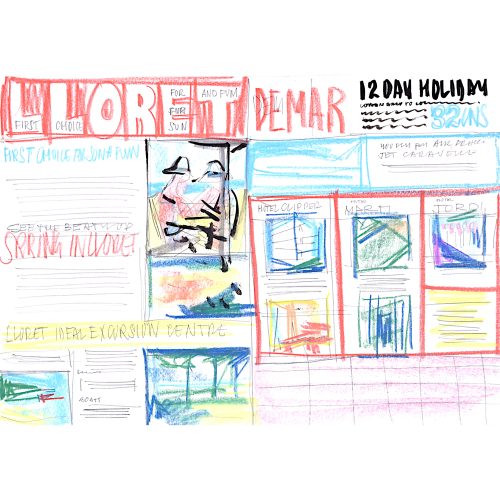
Peter Collins ARCA (1923-2001) Lloret, Spain 2 - Design for Holiday Brochure (for BEA Panorama Holidays)
Mixed media 30x45cm Provenance: The Artist's Studio As a graphic designer, Collins produced many brochures such as these. With his fondness for life drawing, he was perhaps a natural choice for the bikini-clad inhabitants of the pages of a holiday brochure. Collins's first job was at an advertising agency, in the commercial studio, whilst he attended evening art classes. World War II interrupted his career and he joined the Royal Artillery (of the British Army), teaching painting and drawing in the Education Corps - whilst simultaneously teaching at St Martin's School of Art, part time. Following the war Collins studied at the Royal College of Art, winning a scholarship. Leaving in 1950 he then worked as a commercial artist producing some well-known posters for clients including British Railways and British European Airways. He was the Art Director at Odhams Press and spent time designing for both ICI and Shell. With his wife Georgette he created the 'Bacombe Galleries' in Sussex, converting a group of buildings. In 1975 they again converted buildings, this time Stanley Studios in Chelsea which were scheduled for redevelopment; many artists had worked there, probably the most famous being Elizabeth Frink. Combining an artist's studio and a single residence at Stanley Studios the Collinses were immersed in Chelsea's art scene and proceeded to fill the place with art, antiques, scupture and curios. If you are interested email info@manningfineart.co.uk or call us on 07929 749056. Condition: Generally very good. -
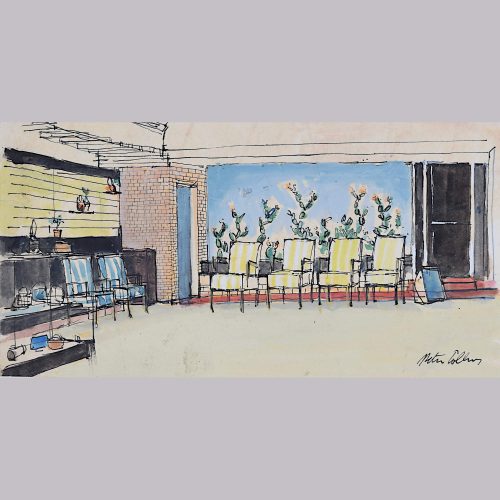
Peter Collins ARCA (1923-2001) Mid Century Modern Lounge Interior
Pen, ink and watercolour 10.5x20.5cm Signed Peter Collins lower right Provenance: The Artist's Studio A stongly-painted image, with a wonderful sense of the light and brightness of a modernist interior. Whether the scene on the back wall is intended to be an extraordinary wallpaper, or whether the view to the garden, we do not know. But the viewer is encouraged to take a seat in an interior that at the time will have felt modern yet comfortable. Click here for other items by the artist and for biographical details. If you are interested email info@manningfineart.co.uk or call us on 07929 749056. -
Out of stock

Peter Collins ARCA (1923-2001) Still Life with Green Apples and Bottle
Oil on Board 49x59cm Provenance: The Artist's Studio A stongly-painted image, with a generous use of skilfully executed impasto and bright tones. A bowl of green fruit, probably apples, and with perhaps some lemons sits besides a slender and partly-drunk bottle, with an abstract tablecloth in red, white and blue behind. Click here for other items by the artist and for biographical details. -
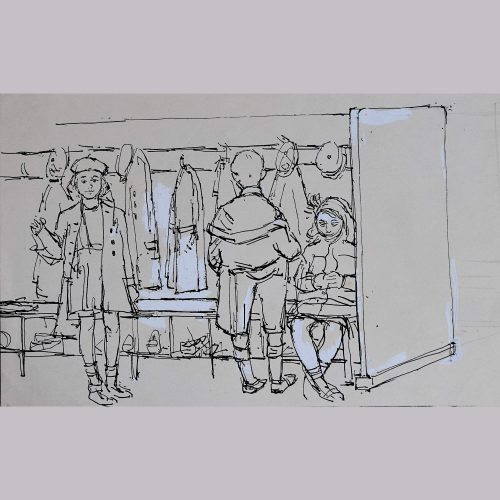
Peter Collins ARCA (1923-2001) School Children in a Cloakroom
Pen, ink and whitening 15x24cm Provenance: The Artist's Studio A stongly-painted image, ensuite with Collins' schoolroom scene that we have listed with a wonderful sense of the light available in a new, post-war school. The schoolboy wears short trousers and - together with schoolgirls - is engaged in the task of time immemorial of waiting in the cloakroom. Shoes are stacked under the benches and coats hang from the hooks. Click here for other items by the artist and for biographical details. If you are interested email info@manningfineart.co.uk or call us on 07929 749056. -
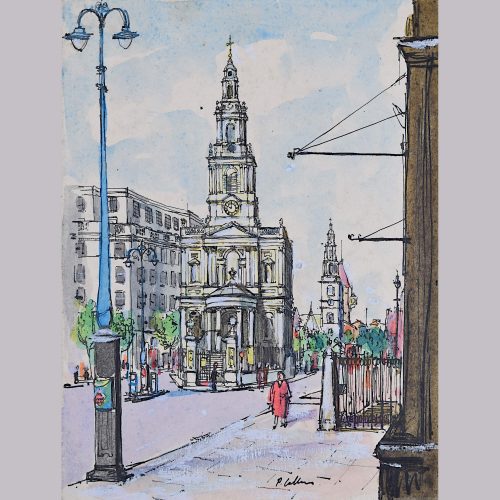
Peter Collins ARCA (1923-2001) St Mary le Strand Church
Watercolour 17 x 21 cm Signed lower right. Provenance: The artist's studio. Typical Collins, with his bright colours and captivating scene, reminiscent of his travel posters, here a passerby in red walks purposely towards the foreground. Click here for other items by the artist and for biographical details. If you are interested email info@manningfineart.co.uk or call us on 07929 749056. -
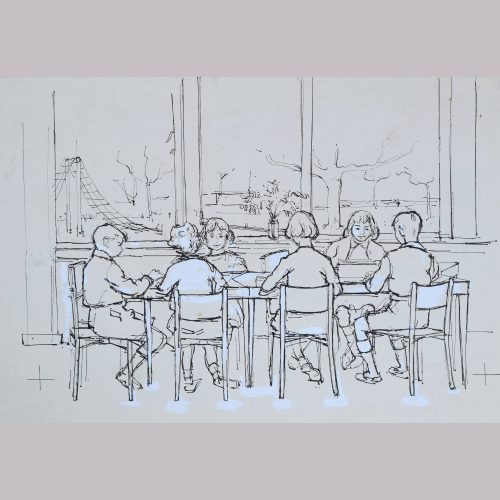
Peter Collins ARCA (1923-2001) The Schoolroom
Pen, ink and whitening 19x27cm Provenance: The Artist's Studio A stongly-painted image, with a wonderful sense of the light available in a new, post-war classroom. The schoolboys wear short trousers and - together with schoolgirls - are engrossed in a task. Click here for other items by the artist and for biographical details. If you are interested email info@manningfineart.co.uk or call us on 07929 749056. -
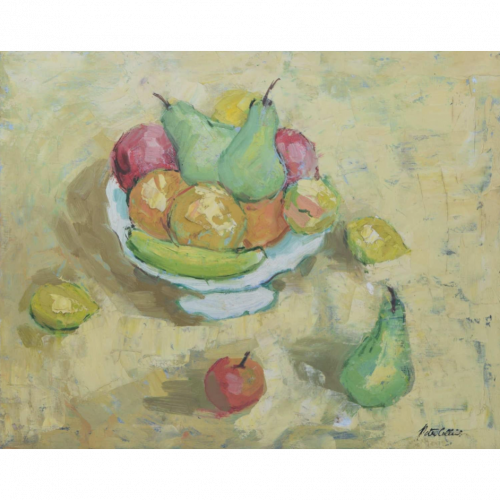
Peter Collins ARCA (1923-2001)
Still Life of a Fruit Bowl (c. 1960s)
Oil on canvas 40 x 51 cm Signed lower right. A stylish mid-century still life with fruit. Collins's first job was at an advertising agency, in the commercial studio. World War II interrupted his career and he joined the Royal Artillery (of the British Army), teaching painting and drawing in the Education Corps - whilst simultaneously teaching at St Martin's School of Art, part time. Following the war, Collins studied at the Royal College of Art, winning a scholarship. He then worked as a commercial artist, producing some well-known posters for clients including British Railways and British European Airways. He was the Art Director at Odhams Press and spent time designing for both ICI and Shell. With his wife Georgette, he created the 'Bacombe Galleries' in Sussex, converting a group of buildings into a gallery space. In 1975 they developed the Stanley Studios in Chelsea, which were scheduled for redevelopment, into a combined artists' studio and residence. Moving into the Stanley Studios allowed the Collinses to immerse themselves in Chelsea's art scene, and they proceeded to fill the studios with art, antiques, scupture, and other curios. Provenance: the artist's studio sale 2017, lot 2050. Condition: very good. -
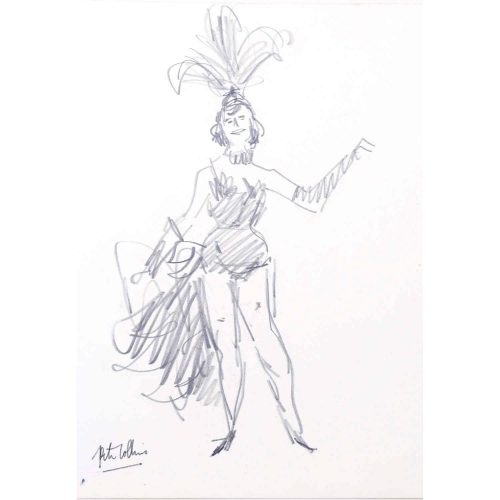
Peter Collins ARCA (1923-200 Exotic Dancer
Pencil 25x17cm Provenance: The Artist's Studio If you are interested email info@manningfineart.co.uk or call us on 07929 749056. Condition: Generally good, a little gentle spotting. Click here for other items by the artist and for biographical details. -
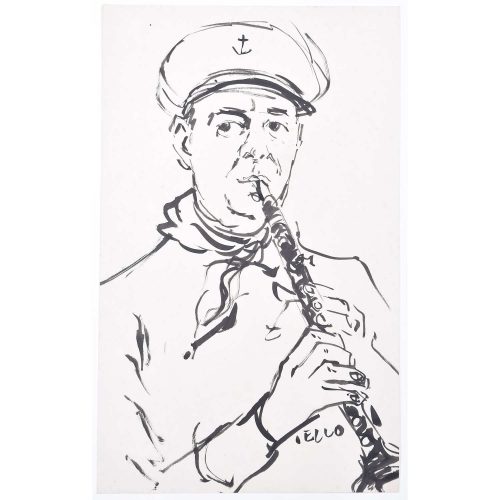
Peter Collins ARCA (1923-200 Royal Naval Bandsman
Black paint 44x27cm Provenance: The Artist's Studio If you are interested email info@manningfineart.co.uk or call us on 07929 749056. Condition: Generally good, a little gentle spotting. Click here for other items by the artist and for biographical details. -
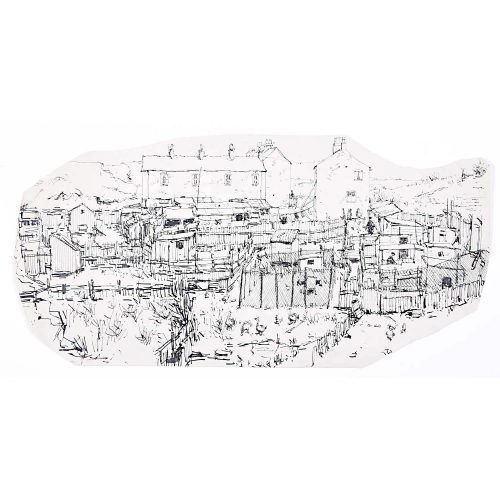
Peter Collins ARCA (1923-2001) Town scene
Pen and ink 21x44cm (irregular) Provenance: The Artist's Studio As a graphic designer, Collins produced many drawings such as these and we invite you to look at our other drawings and sketches by him. If you are interested email info@manningfineart.co.uk or call us on 07929 749056. Condition: Good, size is irregular. Click here for other items by the artist and for biographical details. -

Pieter van der Aa (1659 - 1733), after David Loggan (1634 - 1692)
Peterhouse College, Cambridge (1727)
Engraving 13 x 17 cm An eighteenth-century view of Peterhouse College, Cambridge, engraved by Pieter van der Aa after David Loggan, the noted engraver, draughtsman, and painter. Pieter van der Aa of Leiden was a Dutch publisher best known for preparing maps and atlases, though he also printed editions of foreign bestsellers and illustrated volumes. He is noted for the many engravings he produced after David Loggan's series of Oxford and Cambridge colleges and costumes. In 1727 Van Der Aa illustrated "Les Delices de la Grande Bretagne & de L'Irelande" by James Beeverell, the book in which this engraving appears. Condition: very good. If you are interested, please email info@manningfineart.co.uk or call us on 07929 749056. Click here for other views of Peterhouse College, Cambridge -
 Daniel Havell (1785 - 1822) after Augustus Charles Pugin (1762 - 1832) Peterhouse: 'Chapel of St Peter's College' (1815) Aquatint with original hand colouring 27 x 21 cm Published by Rudolph Ackermann (1764 - 1834). An engraving of the chapel of Peterhouse, Cambridge, formerly known as St Peter's College. Engraved for Ackermann's 'A History of the University of Cambridge, Its Colleges, Halls and Public Buildings'. Augustus Charles Pugin was an Anglo-French artist and architectural draughtsman. Pugin produced views of London, jointly creating the illustrations for the 'Microcosm of London' published by Rudolph Ackermann in 1811, followed by plates for Ackermann's books about Westminster Abbey, Oxford and Cambridge universities, and Winchester College. His later works included illustrations for Specimens of Gothic Architecture (1821–1823), The Royal Pavilion at Brighton (1826), Architectural Antiquities of Great Britain (1826), Specimens of the Architectural Antiquities of Normandy (1827), Illustrations of the Public Buildings of London (1825 to 1828), Paris and its Environs (1829 to 1831), and Examples of Gothic Architecture (1831). He also produced a book of furniture designs called Gothic Furniture, and assisted architects with detailing for their gothic designs. He ran a drawing school at his house in Bloomsbury. Daniel Havell was a member of the Havell family of Reading, Berkshire, England, which included a number of notable engravers, etchers and painters, as well as writers, publishers, educators, and musicians. Daniel and his brother Robert set up in partnership as aquatint engravers. Soon Daniel began to work independently, engraving plates for Rudolph Ackermann's History of Cambridge (1815) and hid history of various public schools including Eton, Winchester, and Rugby (1816), as well as a celebrated views of St Paul's Cathedral (1818) and various other London landmarks for Ackermann's Repository of Arts. Rudolph Ackermann was an Anglo-German bookseller, inventor, lithographer, publisher and businessman. In 1795 he established a print-shop and drawing-school at 96 Strand. Here Ackermann set up a lithographic press and began a trade in prints. He later began to manufacture colours and thick carton paper for landscape and miniature painters. Within three years the premises had become too small and he moved to 101 Strand, in his own words "four doors nearer to Somerset House", the seat of the Royal Academy of Arts. Between 1797 and 1800 Ackermann rapidly developed his print and book publishing business, encompassing many different genres including topography, caricature, portraits, transparencies and decorative prints. Condition: Generally very good; slight toning to within platemark.
If you would like to know more, please email info@manningfineart.co.uk or call us on 07929 749056.
-

Joseph Constantine Stadler (1755 - 1828) after William Westall (1781 - 1850) Peterhouse: 'Part of St Peter's College' (1815)
Aquatint with original hand colouring 28 x 21 cm Published by Rudolph Ackermann (1764 - 1834). An engraving of Peterhouse, Cambridge, formerly known as St Peter's College. Engraved for Ackermann's 'A History of the University of Cambridge, Its Colleges, Halls and Public Buildings'. Joseph Constantine Stadler was a prolific German émigré engraver of images after his contemporaries - here, 18th-century English landscape painter and diarist Joseph Farington. Stadler's engravings are wide-ranging in subject matter and include landscapes, seascapes and portraits, as well as military, sporting and decorative subjects. Stadler was employed by the leading print publisher of the time, John Boydell. Stadler lived in Knightsbridge when he died at the age of 73. William Westall was a British landscape artist. He was born in Hertford and enrolled at the Royal Academy schools in 1799. He later became the draughtsman for a voyage to Australia and the South Seas. After being shipwrecked, he travelled to Canton in China and to India, staying in Bombay for several months. He returned to England in 1805 but later set off for Madeira and Jamaica. He became a member of the Society of Painters in Water Colours (1811) and an associate of the Academy (1812). Following a mental breakdown, he regularly visited the Lake District and published ‘Views of the Valley and Vale of Keswick’ (1820). His series of aquatints of the Thames, the great universities, and England's public schools for Ackermann are among his most popular works. Rudolph Ackermann was an Anglo-German bookseller, inventor, lithographer, publisher and businessman. In 1795 he established a print-shop and drawing-school at 96 Strand. Here Ackermann set up a lithographic press and began a trade in prints. He later began to manufacture colours and thick carton paper for landscape and miniature painters. Within three years the premises had become too small and he moved to 101 Strand, in his own words "four doors nearer to Somerset House", the seat of the Royal Academy of Arts. Between 1797 and 1800 Ackermann rapidly developed his print and book publishing business, encompassing many different genres including topography, caricature, portraits, transparencies and decorative prints. Condition: Toning within platemark.If you would like to know more, please email info@manningfineart.co.uk or call us on 07929 749056.
-
Out of stock
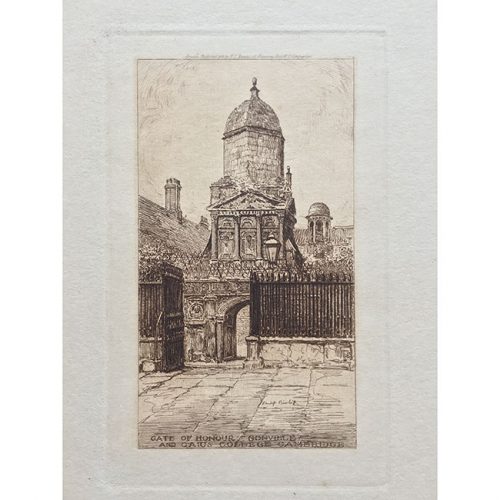
Philip Pimlott
Gate of Honour, Gonville and Caius College, Cambridge
Etching 17x10.5cm If you are interested email info@manningfineart.co.uk or call us on 07929 749056. Condition: Good. -
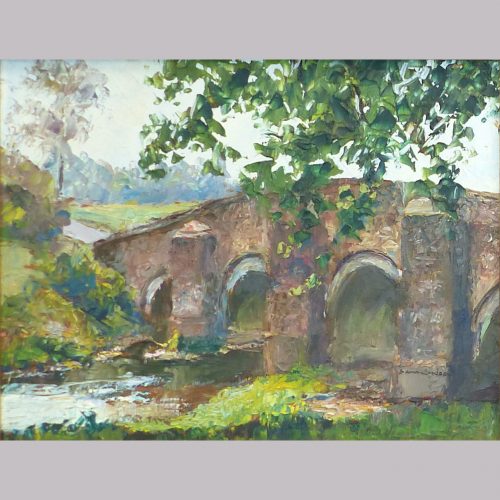
Piero Sansalvadore (1892-1955)
Chithurst Bridge Surrey
Signed Sansalvadore. Titled to verso. Oil on wood panel 21.5 x 28cm (8.5 x 11 in) Provenance: Stacy-Marks Gallery, Eastbourne, c. late 1940s An Italian who arrived in London around 1930, the Museum of London and City of London have a series of pictures Sansalvadore painted of war-damaged London. Click here for other works by the artist. If you are interested email info@manningfineart.co.uk or call us on 07929 749056. -
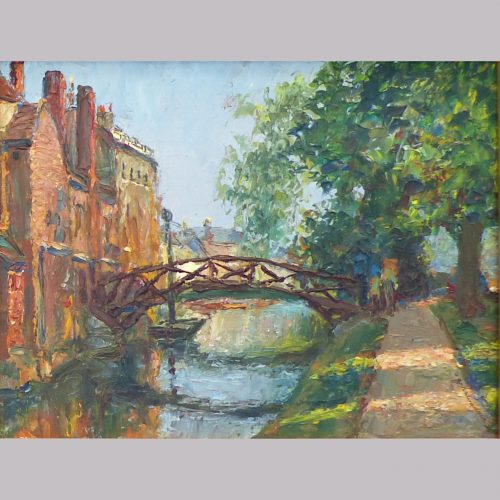
Piero Sansalvadore (1892-1955)
Queens’ College Cambridge
Signed Sansalvadore. Titled to verso. Oil on wood panel 21.5 x 28cm (8.5 x 11 in) £1850 Provenance: Stacy-Marks Gallery, Eastbourne, c. late 1940s An Italian who arrived in London around 1930, the Museum of London and City of London have a series of pictures Sansalvadore painted of war-damaged London. Click here for other works by the artist. If you are interested email info@manningfineart.co.uk or call us on 07929 749056. -
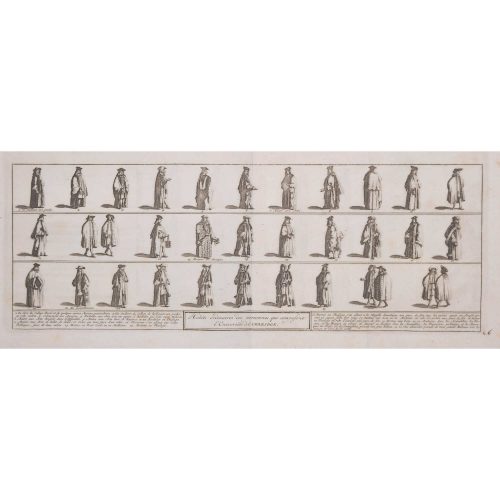
Pieter van der Aa (1659-1733), after David Loggan (1634-1692)
The Costumes of the University of Cambridge
Engraving, 14 x 36 cm Early 18th century This engraving by van der Aa (based on a prior design by David Loggan) illustrates the various forms of academic dress worn by members of the University of Cambridge. Pieter van der Aa of Leiden was a Dutch publisher best known for preparing maps and atlases, though he also printed editions of foreign bestsellers and illustrated volumes. He is noted for the many engravings he produced after David Loggan's series of Oxford and Cambridge colleges and costumes. Condition: Generally very good; slight age toning, and spotting to margins. -
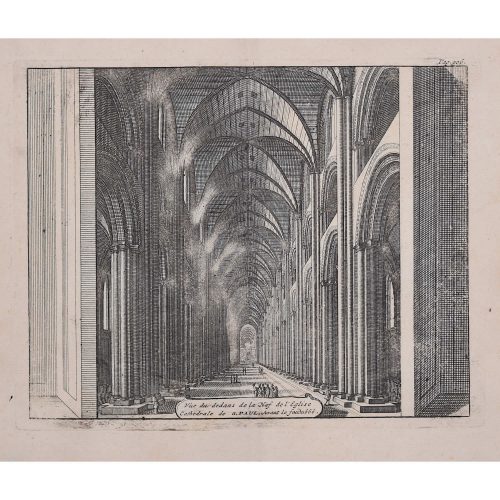
Pieter van der Aa (1659-1733), after Jan Kip (1652/3-1722)
Old St Paul's Cathedral (1707)
Engraving, 14 x 17 cm A view of the nave of Old St Paul's Cathedral, engraved by Pieter van der Aa after Johannes 'Jan' Kip, the Dutch draftsman, engraver and print dealer. Pieter van der Aa of Leiden was a Dutch publisher best known for preparing maps and atlases, though he also printed editions of foreign bestsellers and illustrated volumes. He is noted for the many engravings he produced after David Loggan's series of Oxford and Cambridge colleges and costumes. In 1727 Van Der Aa illustrated "Les Delices de la Grande Bretagne & de L'Irelande" by James Beeverell, the book in which this engraving appears. Condition: Generally very good. -
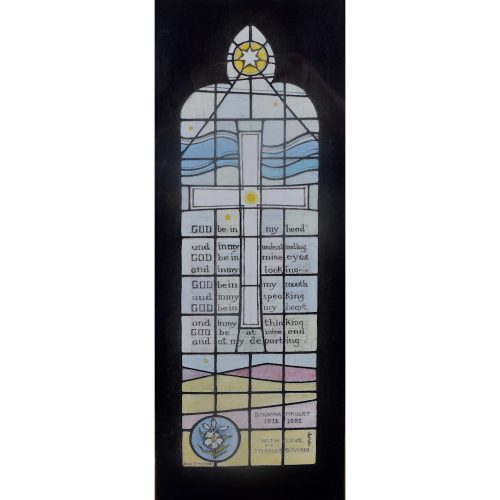
Jane Gray (b.1931)
Pishill Church, Henley-on-Thames, Design for Stained Glass Memorial Window (1983)
Watercolour 21 x 7.5 cmSigned, dated and artist label verso.
Pishill Church is a highly unusual T-shaped, flint and stone Norman church that was built in the early 12th century but underwent substantial interior alterations in the Early English and Decorated Styles in the 19th century. The church is charmingly situated on a hilltop overlooking the Stonor Valley and Hamlet of Pishill, and boasts several spectacular stained glass windows, including one designed by John Piper in 1967. This design commemorates Gray’s favourite Aunt who requested a memorial window in Pishill Church upon her death in 1981. This simple arrangement used acid-etched lettering to quote Gray’s aunt’s favourite prayers against a plain background representing the elements. The window was installed in 1985.
Provenance: the artist’s studio sale. Literature: Jane Gray, Playing with Rainbows. (Shropshire: Ellingham Press, 2011), p.24, 78. Condition: very good. If you are interested, please email info@manningfineart.co.uk or call us on 07929 749056. For other works by Jane Gray and more information about her, please click here. -
 James Basire & Henry Emlyn Plan and Elevation of the Rood Loft in St George's Chapel at Windsor Engraving 47 x 55 cm This engraving was originally published by the Society of Antiquaries of London, an organisation dedicated to studying and preserving historical monuments. The society commissioned a series of architectural engravings by James Basire, this one based on a drawing by Henry Emlyn. In doing so, the Antiquaries hoped to preserve and disseminate knowledge of England’s architectural heritage. This engraving depicts the plan and elevation of the rood loft in St George's Chapel in Windsor. The strong lines and striking shapes stand out in this work, with the two cross sections of each column leaving a particularly strong impression. Condition: Generally very good.
If you would like to know more, please email info@manningfineart.co.uk or call us on 07929 749056.
-
 Samuel Alken Coursing Scene Watercolour on green-grey wove paper Probably a contemporary copy of a rabbiting plate Bears signature to bottom left 25 x 42 cm Samuel Alken Jr. (1784–1825) was a British artist and engraver, part of the prominent Alken family of painters and engravers, known for their sporting and hunting scenes. He was the son of Samuel Alken Sr. and contributed significantly to the family's artistic legacy. Like his father, Alken Jr. worked primarily in engraving and painting, specialising in aquatint and other printmaking techniques. Inkeeping with family tradition, Alken Jr. often depicted sporting subjects such as horse racing, hunting, and other outdoor pursuits in his engravings and paintings. As such, his works have been praised for their dynamic composition and attention to detail. This particular edition depicts a trio of men poaching rabbits in the countryside. One dog buries into the rabbit burrow, another dog waits eagerly for its master's command, other dogs rush around, excited by the kill. The painting originally featured in 'Delineations of British Field Sports - Together with the various methods of painting. A series published by Alken's in 1822, the coloured issue ranks as one of the rarest sporting books of the period. There is only one record of a second coloured copy, which is 'untraceable' according to Schwerdt. Schwerdt also notes that the vigorous style of these plates made them eminently suitable for framing, and accounts in part for their rarity; 'twenty years' search has not enabled us to make up a complete set'. Condition: Probably a contemporary copy of the rabbiting plate. If you would like to know more, please email info@manningfineart.co.uk or call us on 07929 749056.
 -

Robyn Denny (1930-2014) Portrait Series (1)
Screenprint 80 x 58 cm Signed to the bottom right and blind stamped Numbered 23/30 ‘No painting should reveal all it has to say as a kind of instant impact. Abstract painting, that is painting that is not about subject matter, if it is any good should be as diverse, and complex, and strange and unaccountable and unnameable as an experience, as any painting of any consequence has been in the past. ‘ - Robyn Denny, ISIS art journal interview, 1964 Denny, a prominent British abstract artist, was known for his minimalist and geometric style. In Portraits Series A, he employed vibrant colours and structured forms, reflecting his interest in the visual language of urban environments and modernity. These works exemplify his approach during the early 1970s, a period when he was gaining significant recognition, culminating in a solo retrospective at the Tate Gallery in 1973. Denny led an illustrious career over more than 50 years. Born in Surrey, England, he studied at the Royal College of Art, where he became a leading figure in the rise of postwar abstraction in Britain. Emerging in the 1950s and 60s, Denny’s work moved away from traditional painterly gestures, embracing a sleek, modern aesthetic influenced by urban environments, advertising, and contemporary architecture. His paintings often featured large-scale, hard-edged forms, creating a dynamic interplay between structure and depth. He was also deeply involved in printmaking, producing influential series like Portraits Series A (1973). Denny gained international recognition, representing Britain at the Venice Biennale in 1966, and his work was celebrated in a major retrospective at Tate Gallery in 1973. Over the decades, his art evolved, but he remained committed to exploring the relationship between form, colour, and movement. Today, his work is held in prestigious collections, including Tate Britain and the Victoria & Albert Museum, securing his legacy as one of the most important British abstract painters of his time. Who knows... you might have even seen his public art work of coloured lines in Embankment tube station. Condition: Generally very good.If you would like to know more, please email info@manningfineart.co.uk or call us on 07929 749056.
-

Robyn Denny (1930-2014) Portrait Series (2)
Screenprint 80 x 58 cm Signed to the bottom right and blind stamped Numbered 23/30 ‘No painting should reveal all it has to say as a kind of instant impact. Abstract painting, that is painting that is not about subject matter, if it is any good should be as diverse, and complex, and strange and unaccountable and unnameable as an experience, as any painting of any consequence has been in the past. ‘ - Robyn Denny, ISIS art journal interview, 1964 Denny, a prominent British abstract artist, was known for his minimalist and geometric style. In Portraits Series A, he employed vibrant colours and structured forms, reflecting his interest in the visual language of urban environments and modernity. These works exemplify his approach during the early 1970s, a period when he was gaining significant recognition, culminating in a solo retrospective at the Tate Gallery in 1973. Denny led an illustrious career over more than 50 years. Born in Surrey, England, he studied at the Royal College of Art, where he became a leading figure in the rise of postwar abstraction in Britain. Emerging in the 1950s and 60s, Denny’s work moved away from traditional painterly gestures, embracing a sleek, modern aesthetic influenced by urban environments, advertising, and contemporary architecture. His paintings often featured large-scale, hard-edged forms, creating a dynamic interplay between structure and depth. He was also deeply involved in printmaking, producing influential series like Portraits Series A (1973). Denny gained international recognition, representing Britain at the Venice Biennale in 1966, and his work was celebrated in a major retrospective at Tate Gallery in 1973. Over the decades, his art evolved, but he remained committed to exploring the relationship between form, colour, and movement. Today, his work is held in prestigious collections, including Tate Britain and the Victoria & Albert Museum, securing his legacy as one of the most important British abstract painters of his time. Who knows... you might have even seen his public art work of coloured lines in Embankment tube station. Condition: Generally very good.If you would like to know more, please email info@manningfineart.co.uk or call us on 07929 749056.
-

Robyn Denny (1930-2014) Portrait Series (3)
Screenprint 80 x 58 cm Signed to the bottom right and blind stamped Numbered 27/30 ‘No painting should reveal all it has to say as a kind of instant impact. Abstract painting, that is painting that is not about subject matter, if it is any good should be as diverse, and complex, and strange and unaccountable and unnameable as an experience, as any painting of any consequence has been in the past. ‘ - Robyn Denny, ISIS art journal interview, 1964 Denny, a prominent British abstract artist, was known for his minimalist and geometric style. In Portraits Series A, he employed vibrant colours and structured forms, reflecting his interest in the visual language of urban environments and modernity. These works exemplify his approach during the early 1970s, a period when he was gaining significant recognition, culminating in a solo retrospective at the Tate Gallery in 1973. Denny led an illustrious career over more than 50 years. Born in Surrey, England, he studied at the Royal College of Art, where he became a leading figure in the rise of postwar abstraction in Britain. Emerging in the 1950s and 60s, Denny’s work moved away from traditional painterly gestures, embracing a sleek, modern aesthetic influenced by urban environments, advertising, and contemporary architecture. His paintings often featured large-scale, hard-edged forms, creating a dynamic interplay between structure and depth. He was also deeply involved in printmaking, producing influential series like Portraits Series A (1973). Denny gained international recognition, representing Britain at the Venice Biennale in 1966, and his work was celebrated in a major retrospective at Tate Gallery in 1973. Over the decades, his art evolved, but he remained committed to exploring the relationship between form, colour, and movement. Today, his work is held in prestigious collections, including Tate Britain and the Victoria & Albert Museum, securing his legacy as one of the most important British abstract painters of his time. Who knows... you might have even seen his public art work of coloured lines in Embankment tube station. Condition: Generally very good.If you would like to know more, please email info@manningfineart.co.uk or call us on 07929 749056.
-

Robyn Denny (1930-2014) Portrait Series (4)
Screenprint 80 x 58 cm Signed to the bottom right and blind stamped Numbered 27/30 ‘No painting should reveal all it has to say as a kind of instant impact. Abstract painting, that is painting that is not about subject matter, if it is any good should be as diverse, and complex, and strange and unaccountable and unnameable as an experience, as any painting of any consequence has been in the past. ‘ - Robyn Denny, ISIS art journal interview, 1964 Denny, a prominent British abstract artist, was known for his minimalist and geometric style. In Portraits Series A, he employed vibrant colours and structured forms, reflecting his interest in the visual language of urban environments and modernity. These works exemplify his approach during the early 1970s, a period when he was gaining significant recognition, culminating in a solo retrospective at the Tate Gallery in 1973. Denny led an illustrious career over more than 50 years. Born in Surrey, England, he studied at the Royal College of Art, where he became a leading figure in the rise of postwar abstraction in Britain. Emerging in the 1950s and 60s, Denny’s work moved away from traditional painterly gestures, embracing a sleek, modern aesthetic influenced by urban environments, advertising, and contemporary architecture. His paintings often featured large-scale, hard-edged forms, creating a dynamic interplay between structure and depth. He was also deeply involved in printmaking, producing influential series like Portraits Series A (1973). Denny gained international recognition, representing Britain at the Venice Biennale in 1966, and his work was celebrated in a major retrospective at Tate Gallery in 1973. Over the decades, his art evolved, but he remained committed to exploring the relationship between form, colour, and movement. Today, his work is held in prestigious collections, including Tate Britain and the Victoria & Albert Museum, securing his legacy as one of the most important British abstract painters of his time. Who knows... you might have even seen his public art work of coloured lines in Embankment tube station. Condition: Generally very good.If you would like to know more, please email info@manningfineart.co.uk or call us on 07929 749056.
-

Robyn Denny (1930-2014) Portrait Series (5)
Screenprint 80 x 58 cm Signed to the bottom right and blind stamped Numbered 23/30 ‘No painting should reveal all it has to say as a kind of instant impact. Abstract painting, that is painting that is not about subject matter, if it is any good should be as diverse, and complex, and strange and unaccountable and unnameable as an experience, as any painting of any consequence has been in the past. ‘ - Robyn Denny, ISIS art journal interview, 1964 Denny, a prominent British abstract artist, was known for his minimalist and geometric style. In Portraits Series A, he employed vibrant colours and structured forms, reflecting his interest in the visual language of urban environments and modernity. These works exemplify his approach during the early 1970s, a period when he was gaining significant recognition, culminating in a solo retrospective at the Tate Gallery in 1973. Denny led an illustrious career over more than 50 years. Born in Surrey, England, he studied at the Royal College of Art, where he became a leading figure in the rise of postwar abstraction in Britain. Emerging in the 1950s and 60s, Denny’s work moved away from traditional painterly gestures, embracing a sleek, modern aesthetic influenced by urban environments, advertising, and contemporary architecture. His paintings often featured large-scale, hard-edged forms, creating a dynamic interplay between structure and depth. He was also deeply involved in printmaking, producing influential series like Portraits Series A (1973). Denny gained international recognition, representing Britain at the Venice Biennale in 1966, and his work was celebrated in a major retrospective at Tate Gallery in 1973. Over the decades, his art evolved, but he remained committed to exploring the relationship between form, color, and movement. Today, his work is held in prestigious collections, including Tate Britain and the Victoria & Albert Museum, securing his legacy as one of the most important British abstract painters of his time. Who knows... you might have even seen his public art work of coloured lines in Embankment tube station. Condition: Generally very good, tiny edge tear to left hand side.If you would like to know more, please email info@manningfineart.co.uk or call us on 07929 749056.
-
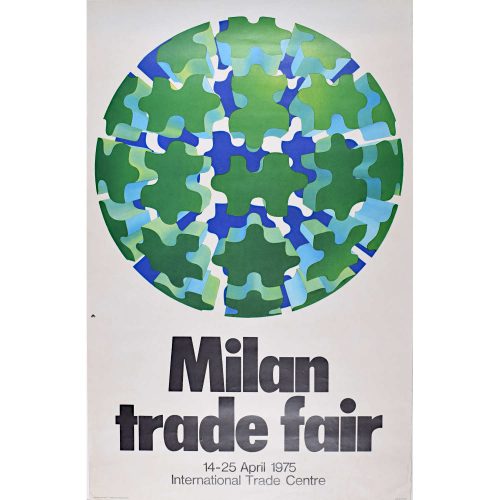
Anonymous Milan Trade Fair 1975
Original Vintage Poster 98x61cm A cool poster design from Italy, that home of mid-century modern design. We have been unable to trace any other copy of this poster; it is quite possibly the sole survivor. If you are interested email info@manningfineart.co.uk or call us on 07929 749056. Condition: Some gentle creasing, generally good condition. -

A. E. Halliwell (1905-1987) Presents for George, Mary & Gladys
Gouache and collage 46 x 33 cm c.1930 Provenance: Family of the artist A.E. Halliwell (1905–1986) was a British artist, illustrator, and designer best known for his vibrant poster designs created for British railway companies during the mid-20th century. Born in Southport, Halliwell developed a strong foundation in art and design early in life. He studied at the Southport School of Art from 1923 to 1926 before graduating to the Royal College of Art in London and subsequently practising as a professional designer from the 1930s. Following his studies, Halliwell married Doris Doyle in Strood Kent, and went on to have a significant teaching career himself, most notably as a lecturer at the Central School of Arts and Crafts (later part of Central Saint Martins), where he influenced a new generation of designers and illustrators. Halliwell is perhaps best remembered for his vibrant and engaging poster designs created for British railway companies during the 1930s. His work was characterised by a bright, graphic style that balanced charm with clarity, often depicting idealised scenes of British holiday destinations—from sunny seaside towns to tranquil countryside vistas. Beyond posters, his artistic output included book illustration, commercial design, and stage costume sketches, showcasing his versatility across mediums. His posters continue to remain enduring symbols of a golden age of British travel and design and are displayed in major collections including the London Transport Museum. This playful and visually rhythmic poster design features an abstract arrangement of wrapped gift boxes rendered in a bold, geometric style. Using a limited yet striking colour palette, Halliwell emphasises pattern and contrast—each present decorated with distinct motifs like stripes, chevrons, waves, triangles, and polka dots. Gift tags labeled “George,” “Mary,” and “Gladys” dangle from the boxes, adding a personal, almost whimsical touch to the structured composition while vertical black and white streaks create a layered sense of depth and motion, as if the presents are seen through strips of curtain or light. Bringing together symbols of the Christmas period, Halliwell expertly captures the festive spirit with sophistication and graphic precision. Condition: Generally very good.If you would like to know more, please email info@manningfineart.co.uk or call us on 07929 749056.
-

John Samuel Agar (1773 - 1858) after John Uwins (1782 - 1857) Proctor (1814)
Aquatint with original hand colouring 27 x 21 cm Published by Rudolph Ackermann (1764 - 1834). A Proctor of the University of Oxford, splendacious in academic dress. Thomas Uwins RA RWS was a British painter in watercolour and oil, and a book illustrator. He became a full member of the Old Watercolour Society and a Royal Academician, and held a number of high-profile art appointments including the librarian of the Royal Academy, Surveyor of Pictures to Queen Victoria and the Keeper of the National Gallery. In the late 1790s he began producing work for Ackermann's collections. John Samuel Agar was an English portrait painter and engraver, who exhibited his works at the Royal Academy from 1796 to 1806 and at the British Institution until 1811. He was at one time president of the Society of Engravers. Rudolph Ackermann published many of his engravings. Ackermann was an Anglo-German bookseller, inventor, lithographer, publisher and businessman. He attended the Latin school in Stollberg, but his wish to study at the university was made impossible by lack of financial means, and he therefore became a saddler like his father. He worked as a saddler and coach-builder in different German cities, moved from Dresden to Basel and Paris, and then, 23 years old, settled in London. He established himself in Long Acre, the centre of coach-making in London and close to the market at Covent Garden. Ackermann then moved to Little Russell Street where he published Imitations of Drawings of Fashionable Carriages (1791) to promote his coach-making. Other publications followed. In 1795 he established a print-shop and drawing-school at 96 Strand. Here Ackermann set up a lithographic press and began a trade in prints. He later began to manufacture colours and thick carton paper for landscape and miniature painters. Within three years the premises had become too small and he moved to 101 Strand, in his own words "four doors nearer to Somerset House", the seat of the Royal Academy of Arts. Between 1797 and 1800 Ackermann rapidly developed his print and book publishing business, encompassing many different genres including topography, caricature, portraits, transparencies and decorative prints. During the Napoleonic wars, Ackermann was an energetic supporter of the Allied cause and made significant contributions to British propaganda through his publication of anti-Napoleonic prints and military manuals. He became a naturalised British citizen in March 1809. As one of the pioneers of modern publishing methods, Ackermann developed an international distribution network for his publications and came to have significant commercial interests in South America. The business he founded in London flourished throughout the 19th century under the management of his descendants. He was buried at St. Clement Danes in the Strand, London. In 2020, the St. Louis Mercantile Library wrote that: "Ackermann excelled in the creation of landscape and architectural engravings. He created beautiful illustrations of the city of London, his adopted home, as well as two volumes of classic views of Westminster Abbey, along with exquisite views of river scenes. One of our favorite collections are four massive volumes of lovingly illustrated exterior and interior landmarks of Oxford and Cambridge Universities created just over two hundred years ago. These publications show Ackermann’s hand at every turn of the page along with the team of assistant designers and engravers he employed to create these works. Perhaps they were a way by which the artist could lay to rest his own regret at not being able to attend [an Oxbridge] college himself in a fondly depicted idyll to learning which these prints so aptly represent." Condition: Generally very good.If you would like to know more, please email info@manningfineart.co.uk or call us on 07929 749056.
-
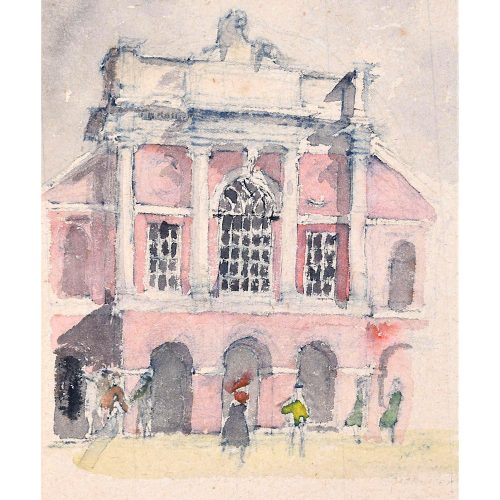
Prof. Sir Albert Richardson PRA (1880-1964) A Classical Building with elegant figures
28x43cm watercolour Signed, with further detail to backboard (title, date etc.) Sir Albert Edward Richardson K.C.V.O., F.R.I.B.A, F.S.A., P.R.A. (1880-1964) was a traditionalist, renowned for his distaste of modern architecture. Rooted firmly in the classical period, he lived a Georgian life, refusing to have electricity in his Georgian house – until his wife finally insisted. Professor of Architecture at UCL’s Bartlett School of Architecture from 1929-1955, this was evacuated to Cambridge during the war and he became a fellow of St Catharine’s College. Amongst his other achievements, Richardson was President of the RA, editor of Architect’s Journal and founder of the Georgian Group. For pleasure he painted architectural fantasies; capriccios of buildings he pictured in his mind. If you are interested email info@manningfineart.co.uk or call us on 07929 749056. Condition: Some toning to paper. -
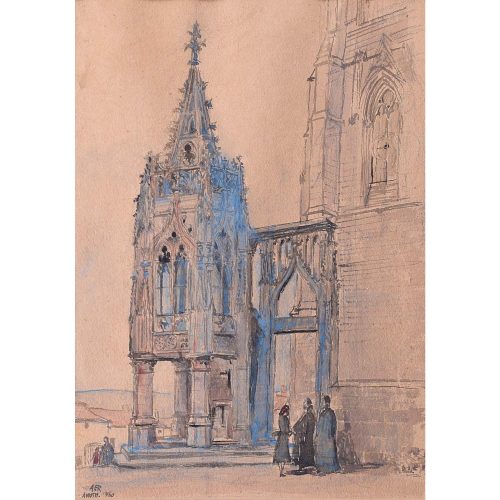
Prof Sir Albert Richardson PRA Avioth La Recevresse
1960 Watercolour 29.5x20cm Signed with initials and dated lower left Avioth is in the Meuse region of France, on the Belgian border. The city was founded in the twelfth century, when a villager miraculously found a wooden statue of the Virgin Mary in a thorn bush. A chapel built on the site soon became a place of pilgrimage and the church on the site - dedicated to Notre Dame - was created a Basilica by Pope John Paul II in 1983. Beside the Basilica stands the Recevresse, a piece of stone lacework. Its original function is unknown; it was more recently a place where pilgrims' offerings were received. It was registered as a historical monument in 1840 by the French authorities. Sir Albert Edward Richardson K.C.V.O., F.R.I.B.A, F.S.A., P.R.A. (1880-1964) was a traditionalist, renowned for his distaste of modern architecture. Rooted firmly in the classical period, he lived a Georgian life, refusing to have electricity in his Georgian house – until his wife finally insisted. Professor of Architecture at UCL’s Bartlett School of Architecture from 1929-1955, this was evacuated to Cambridge during the war and he became a fellow of St Catharine’s College. Amongst his other achievements, Richardson was President of the RA, editor of Architect’s Journal and founder of the Georgian Group. If you are interested email info@manningfineart.co.uk or call us on 07929 749056. Condition: Good. -
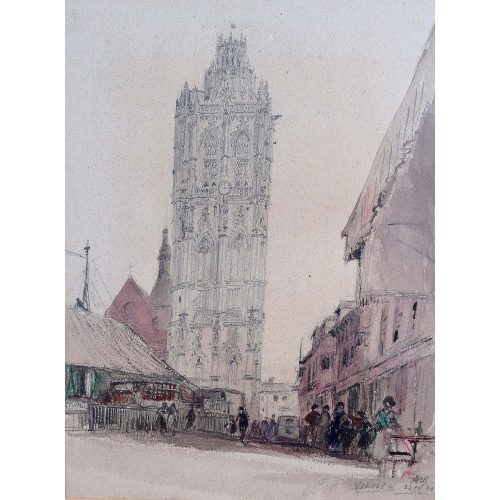
Prof Sir Albert Richardson Verneuil
1954 Watercolour 37.5x27.5cm Signed with initials and dated lower right 27/08/1954 Sir Albert Edward Richardson K.C.V.O., F.R.I.B.A, F.S.A., P.R.A. (1880-1964) was a traditionalist, renowned for his distaste of modern architecture. Rooted firmly in the classical period, he lived a Georgian life, refusing to have electricity in his Georgian house – until his wife finally insisted. Professor of Architecture at UCL’s Bartlett School of Architecture from 1929-1955, this was evacuated to Cambridge during the war and he became a fellow of St Catharine’s College. Amongst his other achievements, Richardson was President of the RA, editor of Architect’s Journal and founder of the Georgian Group. If you are interested email info@manningfineart.co.uk or call us on 07929 749056. Condition: Good. -
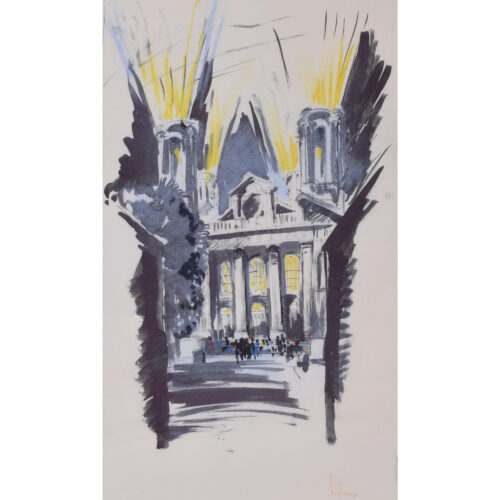
Louis Osman FRIBA (1914 - 1996)
Proposal for St John's Smith Square (1953)
Watercolour 62 x 37 cm Signed in red crayon lower right. Louis Osman's proposal for the post-war, post-bombing redevelopment of St John's church on Smith Square. Osman had envisioned an interior with a ceiling painted by Picasso; sadly, this project was never executed. The church was bombed in 1941 and gutted by fire; subsequently, the church was a ruin open to the sky for over 20 years. It was saved by Lady Parker of Waddington, who formed the Friends of St John's in 1962 to raise money and restore the church to its former glory - a reconstruction in the style of the church's original architect, Thomas Archer. Osman was as much an artist as an architect. This is a piece of architectural history as well as a beautiful Osman design. Osman was awarded a First Class degree and the Donaldson Medal of the RIBA (for the best result in his year group) by the Bartlett where he studied, and then went on to the Slade School of Art. He subsequently trained with Sir Albert Richardson - we also have several Richardson works in our collection. After the war, Osman busied himself as an architect. His work included contributions to Westminster Abbey, and Lincoln, Exeter, Ely, and Lichfield Cathedrals, Staunton Harold Church in Ashby de la Zouch for the National Trust, and of course his folly: the Grade I listed Elizabethan manor house, Canons Ashby in Northamptonshire, now a National Trust property. At Canons Ashby he established a workshop and had a team of silversmiths and goldsmiths working for him. In 1976 he made the gold enamelled coffin that holds the copy of the Magna Carta on view in the United States Capitol, Washington, DC. Condition: generally very good. If you’d like to know more, please email info@manningfineart.co.uk or call us on 07929 749056.