-
 Vivan Bewick Searchlight Battery Pencil and gouache 22 x 13 cm Signed and dated to lower left. This striking multimedia composition depicts two operators working as part of a searchlight battery, a specialised unit tasked with operating the powerful searchlights in the air defence systems of the Second World War. His use of clean horizontal and perpendicular lines gives a certain depth to this unique work. In addition to this, the contrast between Bewick's use of dark gouache and the white of the flash lights creates a strong impression of illumination, making this piece stand out in any room. Vivian Bewick (1912–1999) was a British artist and educator, notable for his contributions to mid-20th-century art and his role as a tutor at the Buckhurst Hill Community Association (BHCA). He was also a descendant of Thomas Bewick, the renowned 19th-century engraver celebrated for his depictions of birds and animals. While fulfilling his military duties in the Royal Artillery during the Second World War, Bewick maintained his artistic pursuits. He contributed to the wall-newspaper "Swillbin," a tradition from the First World War, and designed army Christmas cards. Additionally, he illustrated technical manuals and conducted art classes and exhibitions, with critiques by James Bateman R.A. After the war, Bewick continued his artistic education and career, spending five years at St. Martin’s School of Art and London University. He also engaged in part-time teaching of adults in art clubs, societies, and colleges and exhibited at the Royal Academy, the Paris Salon, the Royal Institute of Painters in Watercolours, and the Royal Society of British Artists. Condition: Generally very good. If you are interested, please email info@manningfineart.co.uk or call us on 07929 749056.
 -

Vivan Bewick Anti-tank gun in action
Gouache 24 x 32 cm Signed and dated to lower right. This striking gouache depicts, according to the artist, 'an anti-tank gun, with Australian crew, on the road to Damascus with a Vichy tank burning in the background.' The low-level angle and side profile of the soldiers creates a sense of drama, with the rimmed hat of the standing soldier recalling the Wild West, lending a certain heroic quality to this piece. With the heavy billowing smoke and the men poised to shoot, Bewick masterfully captures a moment of wartime suspense. Vivian Bewick (1912–1999) was a British artist and educator, notable for his contributions to mid-20th-century art and his role as a tutor at the Buckhurst Hill Community Association (BHCA). He was also a descendant of Thomas Bewick, the renowned 19th-century engraver celebrated for his depictions of birds and animals. While fulfilling his military duties in the Royal Artillery during the Second World War, Bewick maintained his artistic pursuits. He contributed to the wall-newspaper "Swillbin," a tradition from the First World War, and designed army Christmas cards. Additionally, he illustrated technical manuals and conducted art classes and exhibitions, with critiques by James Bateman R.A. After the war, Bewick continued his artistic education and career, spending five years at St. Martin’s School of Art and London University. He also engaged in part-time teaching of adults in art clubs, societies, and colleges and exhibited at the Royal Academy, the Paris Salon, the Royal Institute of Painters in Watercolours, and the Royal Society of British Artists. Condition: Generally very good. If you are interested, please email info@manningfineart.co.uk or call us on 07929 749056. -
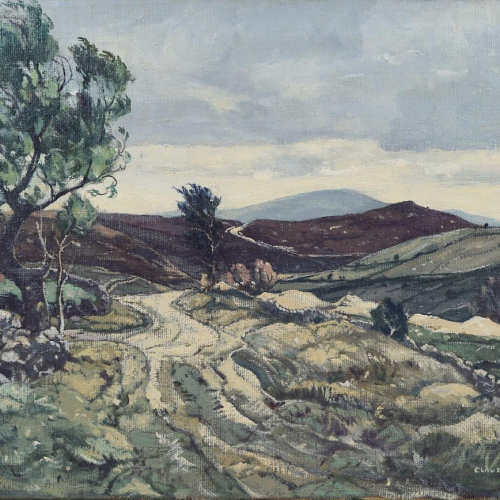
Claude Muncaster Moor above Llangollen
Oil on canvas 36 x 51 cm Condition: Excellent, recently cleaned and revarnished. Signed lower right. Click here for biographical details and other works by the artist. If you are interested, email info@manningfineart.co.uk or call us on 07929 749056. -
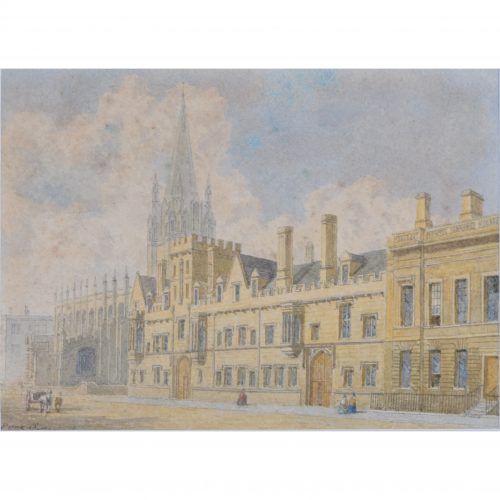
George Pyne (1800 - 1884) The High, Oxford
Watercolour 15 x 21 cm Signed and dated indiscriminately lower left. A 19th-century view of the High Street, Oxford. The spire of the University Church of St Mary the Virgin towers over the street; a horse and cart and brightly-dressed pedestrians pass by. George Pyne was related to two founders of the Society of Painters in Watercolours – William Henry Pyne was his father, and John Varley his father-in-law. Pyne trained as an architectural draughtsman and lived in Oxford from the 1850s until his death in 1884, specialising in views of the city and its colleges. His Oxford pictures are both architecturally-minded and romantically creative, often combining intensely detailed depictions of college buildings with imagined pedestrian scenes. Pyne was also noted for his views of Cambridge and Eton, and for his drawing manuals ‘A Rudimentary and Practical Treatise on Perspective for Beginners’ (1848) and ‘Practical Rules on Drawing for the Operative Builder, and Young Student in Architecture’ (1854); the latter texts offer an insight into his method of depicting architecture and its surroundings. Condition: generally good; some spotting and toning to sky. If you’d like to know more, please email info@manningfineart.co.uk or call us on 07929 749056. -
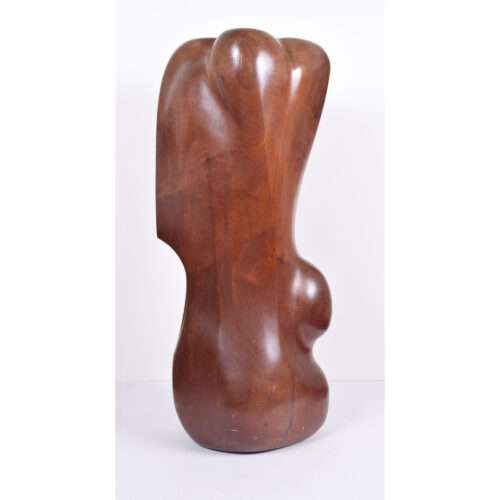
John Robert Murray McCheyne (1911 - 1982)
Metamorphosis (1969)
Polished redwood 96 cm high Provenance: the artist's estate. A significant work by the artist. This sensual mid-century modern nude conveys a sense of monumental abstraction through its sloping curvatures. It swells and recedes, demonstrating not only the sinuous possibilities of the human figure, but also those of the Hepworth- and Moore-influenced abstract form. John Murray McCheyne was a sculptor and teacher. He studied under the sculptor Alexander Carrick at the Edinburgh College of Art between 1930 and 1935. In the 1950s and 1960s he became Master of Sculpture at King’s College, University of Newcastle, and began to work on public sculpture commissions while there. He exhibited at the Palace of Arts' Empire Exhibition Scotland in 1938, and was a regular exhibitor at the Royal Scottish Academy, and the Royal Glasgow Institute. Condition: generally very good; one or two very small scratches. If you are interested, please email info@manningfineart.co.uk or call us on 07929 749056. Click here for other Modern British Sculpture. -
 William Matthison (1853-1926) Spires of Oxford from the Canal Watercolour 22 x 55 cm Signed lower right. A charming watercolour of the spires of Oxford as seen from the canal. Matthison expertly captures the light of a warm summer's evening. He depicts a charming scene in this watercolour, with cows drinking from the canal, a canal boat quietly drifting by and a young girl leading her friend along the path on a horse. Matthison was born near Birmingham and attended King Edward’s School in the city. He learned drawing at the Birmingham Central School of Art and then became a pupil of Birmingham artist Edward Watson. He became a professional artist in 1875 and moved to Oxfordshire a few years after; this was where he had the opportunity to produce many of the Oxford views for which he is known today. In 1902 he moved to Park Town in Oxford and was commissioned by Robert Peel to paint more than seventy views of the University of Oxford, which were subsequently made into postcards. Priced at seven for a shilling, they were only available from E Cross of Pembroke Street (a long-since closed business). Raphael Tuck & Sons also commissioned him to produce postcard scenes of Cambridge. Matthison’s views of Oxford were later printed in Fifty Watercolour Drawings of Oxford, published in 1912 by Alden & Co. Condition: Generally very good.
If you would like to know more, please email info@manningfineart.co.uk or call us on 07929 749056.
For other general views of Oxford, click here. -
 William Matthison (1853-1926) Spires of Oxford from the Canal Watercolour 22 x 55 cm Signed lower right. A charming watercolour of the spires of Oxford as seen from the canal. Matthison expertly captures the light of a cool winter evening. He depicts a charming scene in this watercolour: the sun is setting, sheep are grazing on the banks of the canal, steam rises out the chimney of one canal boat, another moves slowly through the water and a young girl guides her horse along the path. Matthison was born near Birmingham and attended King Edward’s School in the city. He learned drawing at the Birmingham Central School of Art and then became a pupil of Birmingham artist Edward Watson. He became a professional artist in 1875 and moved to Oxfordshire a few years after; this was where he had the opportunity to produce many of the Oxford views for which he is known today. In 1902 he moved to Park Town in Oxford and was commissioned by Robert Peel to paint more than seventy views of the University of Oxford, which were subsequently made into postcards. Priced at seven for a shilling, they were only available from E Cross of Pembroke Street (a long-since closed business). Raphael Tuck & Sons also commissioned him to produce postcard scenes of Cambridge. Matthison’s views of Oxford were later printed in Fifty Watercolour Drawings of Oxford, published in 1912 by Alden & Co. Condition: Generally very good.
If you would like to know more, please email info@manningfineart.co.uk or call us on 07929 749056.
For other general views of Oxford, click here. -
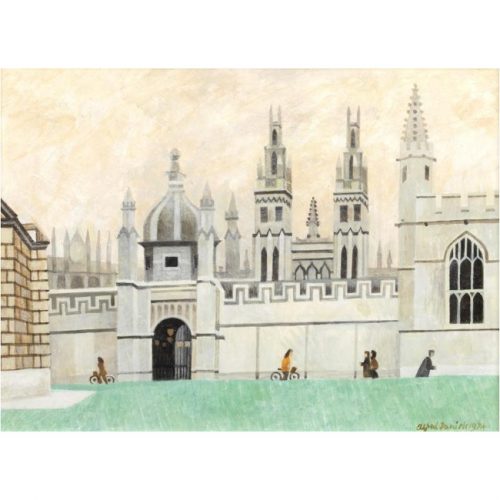 Alfred Daniels RBA RWS (1924-2015) All Souls, Oxford Acrylic on paper In a hand-finished white frame. 22x29.5cm (8.6x11.6 inches) Click here for biographical details and other works by the artist. If you are interested email info@manningfineart.co.uk or call us on 07929 749056.
 -
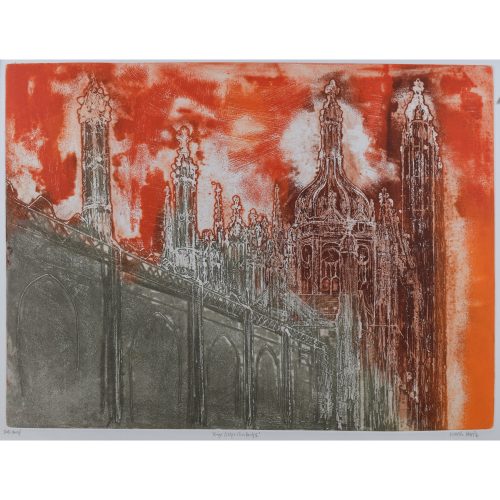
Walter Hoyle (1922 - 2000)
King's College Chapel, Cambridge in red (1965)
Linocut Cambridge Series State Proof, Signed and Titled in pencil. Printed by the artist at Editions Alecto51x69cm Condition: Excellent Click here for biographical details and other works by the artist. If you are interested email info@manningfineart.co.uk or call us on 07929 749056. -

Ethel Louise Rawlins (1880 – 1940)
A Garden Below the South Downs
Oil on canvas51 x 61 cmSigned lower right.Rawlins was a painter who studied at the Slade School of Fine Art and in Newlyn, Cornwall. She settled in Sussex in the early 1920s, and often painted the rolling hills of the Sussex landscape. Here, blue hills and a grey sky serve as the background for an extensive garden complete with stone urns, flowers, and slanting shadows created by the late afternoon sun. -
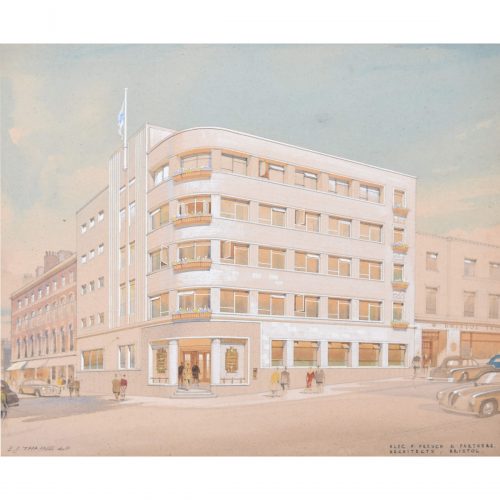
Edmund J Thring (1906 - 1985)
Design for St Nicholas House, High Street, Bristol
Gouache 46 x 54 cm Signed lower left and inscribed 'Alec F French & Partners, Architects, Bristol' (home to the Commercial Union Group and remodelled in 1959 by Alec French and partners). An architectural drawing of St Nicholas House, a 1930s Art Deco building on the corner of St Nicholas Street and High Street in the heart of Bristol. It was originally built as a banking headquarters, and is recognisable for its curved facade. Today St Nicholas House is a co-working space owned by The Office Group; the interiors have been remodelled in an Art Deco-inspired style, in honour of the building's architectural origins. Edmund J Thring was an architectural perspectivist who produced over 2,500 perspectives in his lifetime. He spent much of the Second WorId War in the Photographic Reconnaissance Interpretation Unit at RAF Nuneham Park, interpreting aerial photographs and making models. In 'A History of Architectural Model Making in Britain', David Lund notes that Thring was the chief instructor for the hundred or so recruits in the model-making department. He was described as ‘a sweetly patient man with a merciless eye and inflexible standards of quality’ who pushed his recruits hard. The team made over four hundred models for the D-Day invasion, and a thousand further models over the rest of the war. Pilots bombing German warships in Norwegian fjords found maps almost useless, so carried cardboard models of the topography in their cockpits. Thring also served with the Observer Corps, scanning the English Channel from the Sussex coast. Following the war, he began taking commissions for architectural perspectives (there were plenty of these available on account of the extensive postwar rebuilding works). We are grateful to the artist’s daughter for providing this information. Condition: generally very good, mounted to board, old time-staining to very margins under mount area. If you are interested, please email info@manningfineart.co.uk or call us on 07929 749056. Click here for our other architectural drawings. -
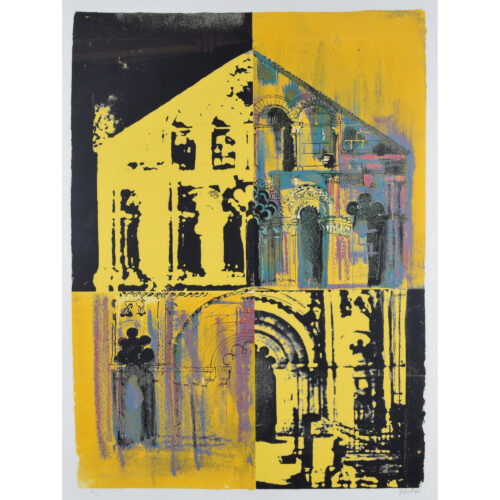
John Piper (1903-1992)
Le Petit Palais (1972)
Screenprint Signed and numbered 18/25 in pencil. Piper's print of the Saint-Pierre de Cornemps church in Petit-Palais in shades of yellow. The Saint-Pierre de Cornemps church is found in the commune Petit-Palais-et-Cornemps in the Gironde department of southwestern France. The church itself dates back to the 13th century and features an impressive romanesque western façade with polylobed arcades and sculpted capitals. Piper's print captures the charm of this provincial church, adeptly highlighting its unique architectural details. John Piper CH was an English painter, printmaker, and designer of stained-glass windows. His work often focused on the British landscape, especially churches and monuments, and included tapestry designs, book jackets, screen-prints, photography, fabrics and ceramics. Condition: generally very good; mounted to board. If you are interested, please email info@manningfineart.co.uk or call us on 07929 749056. Click here for other works by John Piper. -
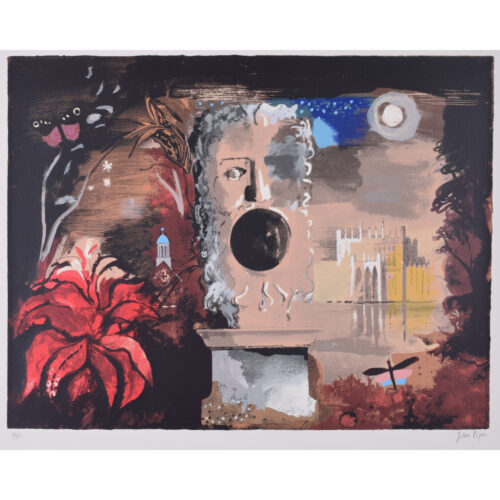
John Piper (1903 - 1992)
Façade (1987)
Lithograph 45 x 60 cm Numbered 96/108 lower left and signed lower right, both in pencil. Printed by Piper and the screenprinter Chris Prater in 1987 after the original designs from 1942. 'Façade' was a sequence of poems written by the English poet Edith Sitwell. They were set to music by William Walton in 1922, four years after they were first written. 'Façade' premiered in 1923 in London, and was praised for its experimental modernist style. The choreographer Frederick Ashton made Façade into a ballet in 1931; Sitwell did not wish her poems to be included, but Walton's orchestral arrangements were used. John Piper was commissioned as set designer for a 1942 performance of Facade in 1942. This lithograph is the design for the performance's curtain; the poetry and music of the performance were played behind the curtain, unseen by the audience. The Gothic house to the right was inspired by Eaton Hall in Cheshire, and we also see a folly, lake, and wood typical of an English country house. The moon, butterfly, and dragonfly lend themselves to the scene's dreamlike aspects, and the mask in the centre of the design highlights the collaborative nature of Façade - a salute to poetry, music, art, and even architecture. John Piper CH was an English painter, printmaker, and designer of stained-glass windows. His work often focused on the British landscape, especially churches and monuments, and included tapestry designs, book jackets, screen-prints, photography, fabrics and ceramics. Condition: very good. If you are interested, please email info@manningfineart.co.uk or call us on 07929 749056. Click here for other works by John Piper. -

Exeter College, Oxford (1898)
Watercolour 23 x 27 cm Initialled CP and dated '98 lower right. A well-executed watercolour of Exeter College, after the manner of George Pyne, complete with horse-drawn cab and members of the University in academic dress. Condition: very good. If you are interested, please email info@manningfineart.co.uk or call us on 07929 749056. Click here for other views of Exeter College, Oxford. -

David Loggan (1634-1692)
Prospectus Cantabrigiae Orientalis & Occidentalis
Engraving 32 x 46 cm Loggan was born to English and Scottish parents, and was baptised in Danzig in 1634. After studying engraving in Danzig with Willem Hondius (1598-1652 or 1658), he moved to London in the late 1650s, going on to produce the engraved title-page for the folio 1662 Book of Common Prayer. He married in 1663 and moved to Nuffield in Oxfordshire in 1665. Loggan was appointed Public Sculptor to the nearby University of Oxford in the late 1660s, having been commissioned to produce bird’s-eye views of all the Oxford colleges. He lived in Holywell Street as he did this. The 'Oxonia Illustrata' was published in 1675, with the help of Robert White (1645-1704). Following its completion, Loggan began work on his equivalent work for Cambridge; the 'Cantabrigia Illustrata' was finally published in 1690, when he was made engraver to Cambridge University. The 'Oxonia Illustrata' also includes an engraving of Winchester College (Winchester and New College share William of Wykeham as their founder) whilst the 'Cantabrigia Illustrata' includes one of Eton College (which shares its founder, Henry VIII, with King’s College). Bird’s-eye views from this era required a particular talent as an architectural perspectivist; it was not until 1783 that it became possible for artists to ascend via hot air balloons and view the scenes they were depicting from above. Loggan thus had to rely on his imagination in conceiving the views. Loggan’s views constitute the first accurate depictions of the two Universities, in many ways unchanged today. Whilst the Oxford engravings were produced in reasonable numbers and ran to a second edition by Henry Overton (on thicker paper and with a plate number in Roman numerals in the bottom right-hand corner), those of Cambridge were printed in much smaller numbers. The Dutchman Pieter van der Aa published some miniature versions of the engravings for James Beverell’s guidebook to the UK, 'Les Delices de la Grande Bretagne' (c. 1708). The contemporary artist Andrew Ingamells (b.1956) has produced a highly-acclaimed series of etchings which bring Loggan’s original vision up to date. This particular edition represents a unique view of Cambridge from the east and the west. Notable landmarks including King's Chapel and Great St Mary's Church are visible in this fine David Loggan engraving. Condition: Good; five small invisibly repaired holes to image If you are interested, please email info@manningfineart.co.uk or call us on 07929 749056. For other general views of Cambridge, click here. -
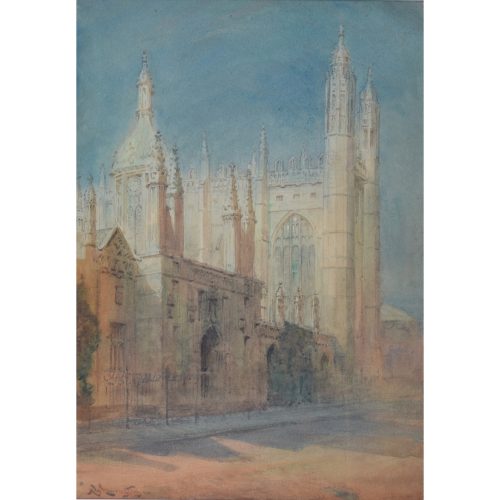
Alexander Wallace Rimington (1854–1918)
King’s College, Cambridge
Signed with initials and dated 1906 Watercolour 33x24cm (12.9×9.4 inches) Alexander Wallace Rimington A.R.E., R.B.A., Hon. F.S.A was Professor of Fine Arts at Queen's College, London. An etcher, illustrator, painter, and author he was most famous for inventing a musical instrument, the 'colour organ' that projected different colours in harmony with music. His first Summer Exhibition at the Royal Academy was in 1880, over subsequent years he exhibited thirty-four works there, mostly topographical works related to his travels around Europe. He had regular shows at the Fine Art Society - seven between 1893 and 1912 - showing a hundred or more watercolours. If you are interested email info@manningfineart.co.uk or call us on 07929 749056. -
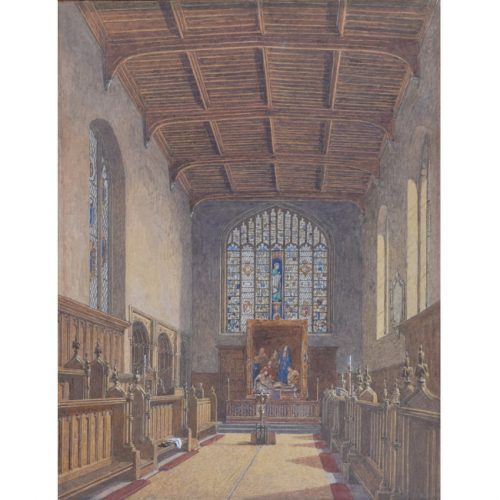
George Pyne (1800 - 1884)
St John's College, Cambridge Old Chapel
Watercolour 35 x 23 cm A view of the Old Chapel of St John’s College, Cambridge before its demolition. In 1861, the Fellows of St John’s agreed to mark the seven hundredth jubilee of their college by building a new chapel. Sir George Gilbert Scott was appointed to carry out the work, and Dr James Wood (a previous Master of the college) bequeathed the huge sum of £20,000 for the purpose of the new chapel. George Pyne was related to two founders of the Society of Painters in Watercolours – William Henry Pyne was his father, and John Varley his father-in-law. Pyne trained as an architectural draughtsman and lived in Oxford from the 1850s until his death in 1884, specialising in views of the city and its colleges. His Oxford pictures are both architecturally-minded and romantically creative, often combining intensely detailed depictions of college buildings with imagined pedestrian scenes. Pyne was also noted for his views of Cambridge and Eton, and for his drawing manuals ‘A Rudimentary and Practical Treatise on Perspective for Beginners’ (1848) and ‘Practical Rules on Drawing for the Operative Builder, and Young Student in Architecture’ (1854); the latter texts offer an insight into his method of depicting architecture and its surroundings. Condition: very good. If you are interested, please email info@manningfineart.co.uk or call us on 07929 749056. Click here for other views of St John's College, Cambridge. -
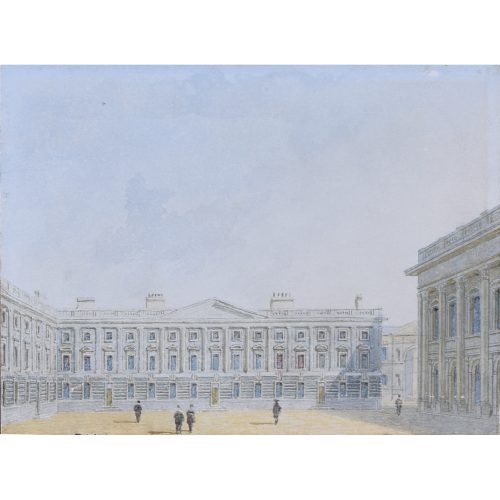
George Pyne
Peckwater Quad, Christ Church, Oxford
Watercolour 13x18cm Click here for biographical details and other works by the artist. If you are interested email info@manningfineart.co.uk or call us on 07929 749056. -
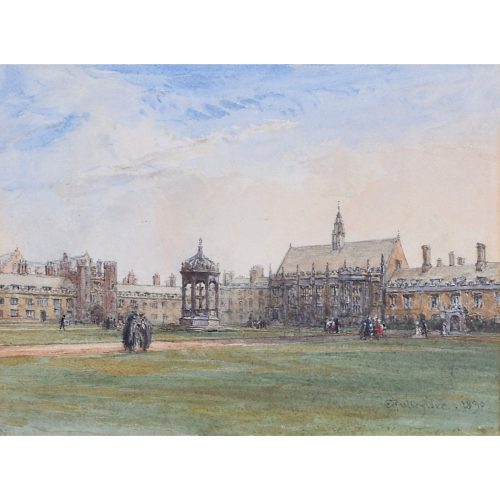
John Fulleylove (1845-1908) Trinity College, Cambridge - Great Court
Watercolour 13x17cm Born in Leicester, John Fulleylove trained as an architect with a Leicester firm before becoming a full-time painter. He exhibited widely in the UK, at such venues as the Royal Academy, the Fine Art Society, and the Royal Society of British Artists. His paintings were the subject of illustrated topographical books, including one on ‘Oxford’ published by the Fine Art Society. If you are interested email info@manningfineart.co.uk or call us on 07929 749056. Condition: Good. -
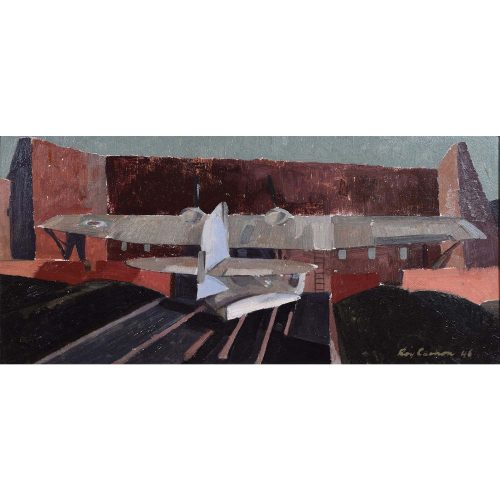
Roy Carnon (1911-2002) Derelict Catalina Redhills Lake near Madras
'Used in Stocks for Gunnery Practice' Oil on board, artist's painted frame Signed and dated 1946 and inscribed with title to reverse Click here for other works by Carnon. This 1946 painting of a derelict Second World War aircraft is a portrait of postwar disillusionment. The battered Catalinas which had survived the war became useful only as ground-based objects for target practice. Carnon's brooding colours and impasto application of paint illustrate how the technologies which helped the Allies to win the war became, overnight, unnecessary. The airmen based in India similarly became unnecessary, but unable to be demobilised they initiated the so-called RAF Mutiny in January 1946. Carnon attended Chiswick Art School becoming an illustrator. In 1965 he was responsible for visualising spacecraft for 2001: A Space Odyssey, being designer of the iconic 'wheel' spacestation. These drawings are now in the Kubrick archives at UAL. If you are interested email info@manningfineart.co.uk or call us on 07929 749056. Condition: Excellent, recently cleaned and in artist's original frame. -
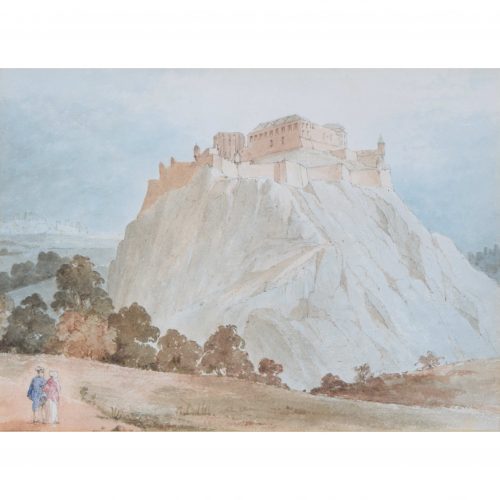
Richard Westmacott (1775 - 1856)
Edinburgh Castle (1800)
Watercolour 29 x 41 cm A watercolour depicting Edinburgh Castle. A Georgian couple gaze up at the immensity of Castle Rock, and the 11th-century fortress perched upon it. Richard Westmacott was British artist who primarily worked as a sculptor. Westmacott studied with his father, also named Richard Westmacott, at his studio in Mount Street, off Grosvenor Square in London, before going to Rome in 1793 to study under Antonio Canova. Upon his return to London in 1797, he established his own studio. He exhibited at the Royal Academy between 1797 and 1839 and was elected an associate of the Royal Academy in 1805, and a full academician in 1811. Condition: very good; handsomely framed. If you’d like to know more, please email info@manningfineart.co.uk or call us on 07929 749056. -
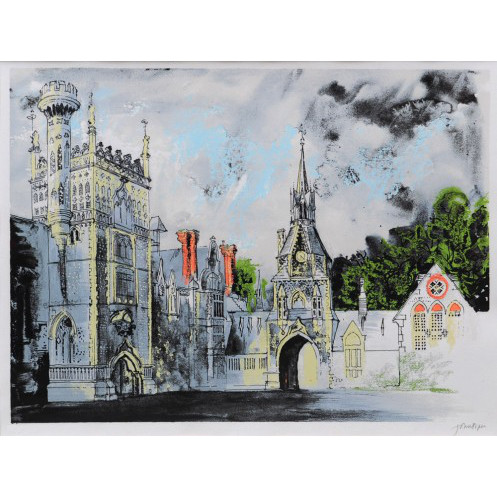
John Piper C.H. (BRITISH, 1903-1992)
Shadwell Park
(Levinson 277) Screenprint in colours, on Arches, signed and numbered. Printed by Kelpra Studio and published by Marlborough Fine Art, London. 510 x 690mm From the 'Victorian Dream Palaces' series of prints by Piper. Click here for biographical details and other works by the artist. If you are interested email info@manningfineart.co.uk or call us on 07929 749056. Condition: generally very good. A little discolouration to extreme margins hidden under mount. In hand-finished black-painted frame. -
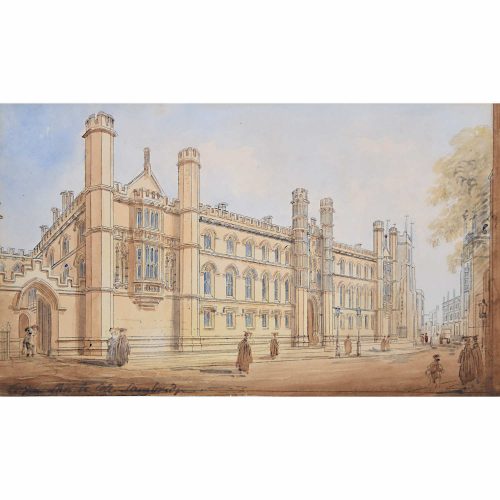
View of Corpus Christi College, Cambridge
Watercolour on paper 13.5 x 23cm A charming view of Corpus Christi College and assorted denizens of Cambridge. The college is notable as the only one founded by Cambridge townspeople; it was established in 1352 by the Guild of Corpus Christi and the Guild of the Blessed Virgin Mary, making it the sixth-oldest college in Cambridge. With around 250 undergraduates and 200 postgraduates, it also has the second smallest student body of the traditional colleges of the University, after Peterhouse. The College has traditionally been one of the more academically successful colleges in the University of Cambridge. It also ranks among the wealthiest Cambridge colleges in terms of fixed assets, being exceptionally rich in silver. Unsigned; labelled 'Corpus Christi Coll. Cambridge' in ink, lower left. If you’d like to know more, please email info@manningfineart.co.uk or call us on 07929 749056. -
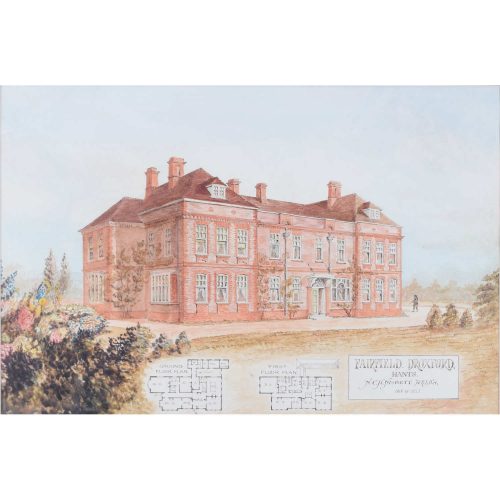
Norman Clayton Hadlow Nisbet ARIBA
Design for Fairfield House, Droxford, Hampshire (c. 1910)
Watercolour and pencil 33 x 51 cm Signed and extensively inscribed. Exhibited at the Royal Academy, 1910. A fine design for an Edwardian country house in England by Norman Nisbet ARIBA, an architect who at the time was practising at 45 Jewry Street, Winchester. The house still stands today, although it is subject to proposals for extension and conversion to a hotel. Condition: very good. -
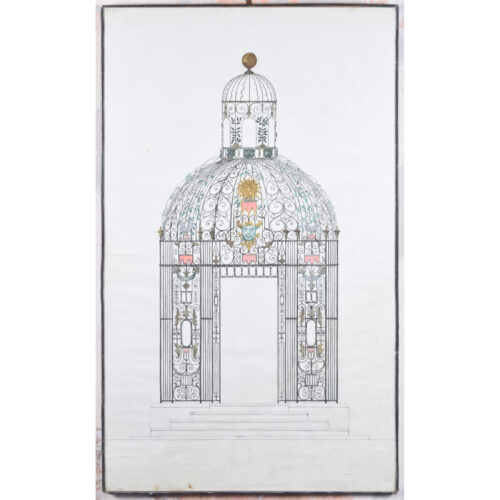
Louis Osman FRIBA (1914 - 1996)
Design for the Restoration of the 'Bird Cage' Arbour, Melbourne Hall, Derbyshire
Mixed media, including pen, ink, watercolour, and gold leaf 108 x 63 cm Provenance: the artist's daughter. In 1958 Osman was commissioned to advise on the restoration of a metal arbour, originally designed in 1708 by Robert Blackwell for the grounds of Melbourne Hall in Derbyshire. The arbour is known as the 'Bird Cage' and was originally painted in a dreamy array of vivid colours; Osman extensively researched Blackwell's work and consulted his original plans for the metalwork in order to restore the arbour to its former glory. The paint was stripped and the iron repainted as per Blackwell's original scheme. The ironwork specialists George Lister & Sons Ltd worked with Osman on the project. This large design features watercolour and gold leaf to illustrate the embellishments Osman had in mind. Osman was as much an artist as an architect. This is likely a portfolio piece from his time studying at the Bartlett School of Architecture, and is as such a piece of architectural history as well as a beautiful Osman design. Osman was awarded a First Class degree and the Donaldson Medal of the RIBA (for the best result in his year group) by the Bartlett, and then went on to the Slade School of Art. He subsequently trained with Sir Albert Richardson - we also have several Richardson works in our collection. After the war, Osman busied himself as an architect. His work included contributions to Westminster Abbey, and Lincoln, Exeter, Ely, and Lichfield Cathedrals, Staunton Harold Church in Ashby de la Zouch for the National Trust, and of course his folly: the Grade I listed Elizabethan manor house, Canons Ashby in Northamptonshire, now a National Trust property. At Canons Ashby he established a workshop and had a team of silversmiths and goldsmiths working for him. In 1976 he made the gold enamelled coffin that holds the copy of the Magna Carta on view in the United States Capitol, Washington, DC. Condition: generally very good; one or two small brown spots to periphery. In artist's original lead-edged frame. If you’d like to know more, please email info@manningfineart.co.uk or call us on 07929 749056. -
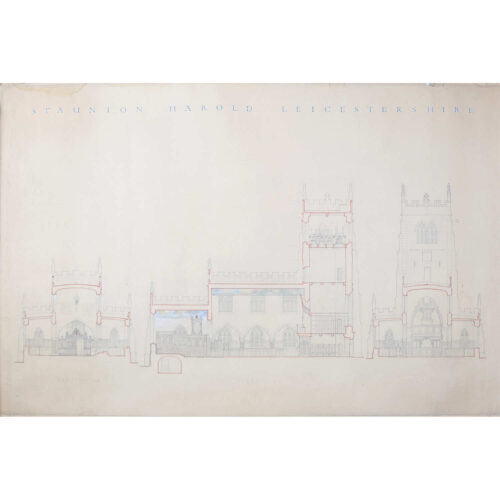
Louis Osman (1914-1996)
Architectural Section of Staunton Harold Church, Leicestershire
Pencil, pen, watercolour, &c. 97 x 146 cm Provenance: artist's studio sale A charmingly rendered section of Staunton Harold Church, drawn by the architect Louis Osman. The drawing is partially outlined in red, with touches of clear blue, yellow, and white pigment in the details. The church, known as the Chapel of the Holy Trinity and a part of the Staunton Harold estate, was built in 1653 in a late expression of Gothic taste. It was commissioned by Sir Robert Shirley, one of a family of Anglicans and Royalists; a certain connection might be made between the ornate, luxuriant design of the chapel, and Sir Robert's imprisonment under the austere regime of Oliver Cromwell. The section is undated, but probably dates to circa the 1950s or 1960s. Condition: good, with some handling marks and slight water staining at the upper left-hand corner. If you are interested, please email info@manningfineart.co.uk or call us on 07929 749056. Click here for other works by the artist. -
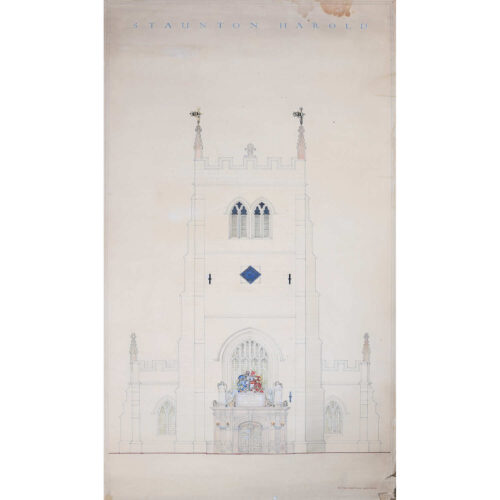
Louis Osman (1914-1996)
West Facade of Staunton Harold Church, Leicestershire
Pencil, pen, watercolour, &c. 152 x 77 cm Provenance: artist's studio sale A charming view of the west facade of Staunton Harold Church, drawn by the architect Louis Osman and signed in red ink at the lower right-hand corner. Parts of the drawing are adorned with watercolour; notable is the armorial detailing above the doors, which is vibrantly rendered in red, blue, and gold. The church, known as the Chapel of the Holy Trinity and a part of the Staunton Harold estate, was built in 1653 in a late expression of Gothic taste. It was commissioned by Sir Robert Shirley, one of a family of Anglicans and Royalists; on this facade, the Shirley coat of arms is impaled with that of Katherine Okeover, whom Sir Robert had married in 1646. A certain connection might be made between the ornate, luxuriant design of the chapel, and Sir Robert’s imprisonment under the austere regime of Oliver Cromwell. The drawing is undated, but probably dates to circa the 1950s or 1960s. Condition: good, with some handling marks, a water stain at the upper right-hand corner, and some damage to the lower right-hand corner (which does not affect the signature). If you are interested, please email info@manningfineart.co.uk or call us on 07929 749056. Click here for other works by the artist. -
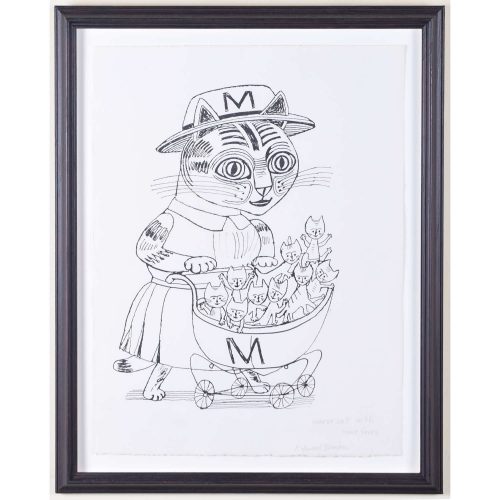
Edward Bawden (1903-1989)
Nurse Cat with Nine Lives
Pen and ink 38 x 27 cm Signed and inscribed lower right. Bawden developed a love of cats at a young age, copying Louis Wain's cat pictures. In his later years, his drawings of cats became yet more frequent; his cat Emma featured in much of his work. In an interview with House and Garden in 1987 he said: "No cat will suffer being lifted up and dropped into an empty space intended for her to occupy; that procedure led inevitably to Emma, tail up, walking away at once, so I had to wait patiently until Emma had enjoyed a good meal of Coley and was ready to choose her daily sleeping place, wherever it might be. I would then spring into action." Doubtless he found it easier to draw an imaginary cat, such as this one. For other cats - and other works - by Bawden, please click here. If you are interested, please email info@manningfineart.co.uk or call us on 07929 749056. -
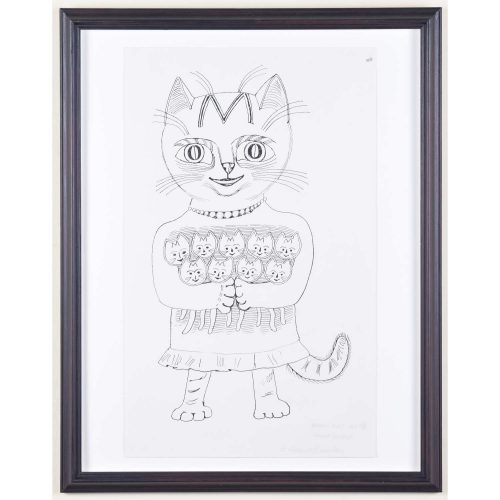
Edward Bawden (1903-1989)
Mum Cat with Nine Lives
Pen and ink 38 x 27 cm Signed and inscribed lower right. Bawden developed a love of cats at a young age, copying Louis Wain's cat pictures. In his later years, his drawings of cats became yet more frequent; his cat Emma featured in much of his work. In an interview with House and Garden in 1987 he said: "No cat will suffer being lifted up and dropped into an empty space intended for her to occupy; that procedure led inevitably to Emma, tail up, walking away at once, so I had to wait patiently until Emma had enjoyed a good meal of Coley and was ready to choose her daily sleeping place, wherever it might be. I would then spring into action." Doubtless he found it easier to draw an imaginary cat, such as this one. For other cats - and other works - by Bawden, please click here. If you are interested, please email info@manningfineart.co.uk or call us on 07929 749056. -
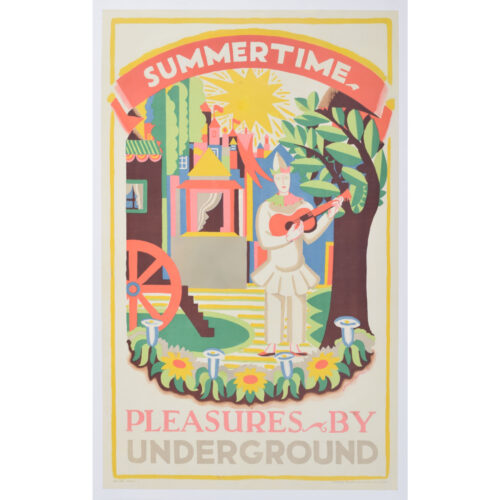
Edward McKnight Kauffer (1890 - 1954)
Summertime - Pleasures by Underground (1925)
Original vintage poster 101 x 63 cm Signed and dated in plate. Issued by the Underground Electric Railways Co. of London, Ltd., 1925. This is one of a series of posters designed by Edward McKnight Kauffer bearing the legend 'Summertime - Pleasures by Underground'. A doleful Pierrot figure (a lovestruck clown character from commedia dell'arte) plays a lute before a castle with streaming pennants; a country caravan, daffodils, leafy trees and a bright yellow sun complete the scene. Other posters from the series include similar traditional folk characters, such as a Jack-in-the-green. Edward McKnight Kauffer was an American artist and graphic designer who lived for much of his life in the United Kingdom. He is mainly known for his work in poster design, but was also active as a painter, book illustrator and theatre designer. He studied art at the California School of Design from 1910 to 1912 and then at the Académie Moderne in Paris until 1914 (via a six month stint at the Art Institute of Chicago). He moved to London upon the start of the First World War and produced 140 poster for London Underground and London Transport. He created posters for Shell Oil, the Great Western Railway and other commercial clients, and also illustrated books and book covers. Later he also became interested in textiles, interior design, and theatrical design. He returned to New York City in 1940 and began designing posters for American Airlines (his primary client until his death) in 1947 .In 1952 he designed the book jacket for Ralph Ellison's novel Invisible Man - arguably Kauffer's most famous work. Condition: generally very good; backed to linen. If you are interested, please email info@manningfineart.co.uk or call us on 07929 749056. Click here for other original vintage London Transport posters. -

David Garland Keble College Chapel
Watercolour 28 x 38 cm This richly coloured watercolour was painted by David Garland for the 1971 edition of the 'Oxford Almanack.' This almanac was published annually by the Oxford University Press for the University of Oxford from 1674 to 2019. These almanacs traditionally included engravings and information about Oxford University, including the Heads of Colleges and a university calendar. This painting was a warm and colourful contribution to the edition, capturing the distinctively striated red bricks of Keble College. Condition: Generally very good.If you would like to know more, please email info@manningfineart.co.uk or call us on 07929 749056.
-
 George Pyne (1800 - 1884) Brasenose College Quadrangle Watercolour 16 x 22 cm Signed and dated to lower right A well-executed watercolour of the quadrangle at Brasenose College, Oxford. Pyne expertly depicts the main gate with the Radcliffe Camera behind and the spire of the University Church of St Mary shrouded in a light mist. He also intriguingly captures the smaller details of the scene: a scholar in academic dress wandering around the periphery of the quad, the shadows and relief of a statue which no longer stands in the Old Court, the reflections in the old single-glazed windows. In doing so, he captures the unique charm of Brasenose College on this sunny day in the late 19th Century. George Pyne was related to two founders of the Society of Painters in Watercolours – William Henry Pyne was his father, and John Varley his father-in-law. Pyne trained as an architectural draughtsman and lived in Oxford from the 1850s until his death in 1884, specialising in views of the city and its colleges. His Oxford pictures are both architecturally-minded and romantically creative, often combining intensely detailed depictions of college buildings with imagined pedestrian scenes. Pyne was also noted for his views of Cambridge and Eton, and for his drawing manuals ‘A Rudimentary and Practical Treatise on Perspective for Beginners’ (1848) and ‘Practical Rules on Drawing for the Operative Builder, and Young Student in Architecture’ (1854); the latter texts offer an insight into his method of depicting architecture and its surroundings. Condition: Generally very good, a couple of spots to the sky.
If you would like to know more, please email info@manningfineart.co.uk or call us on 07929 749056.
-

A. E. Halliwell (1905-1987) The Jewel that is London
Airbrush and gouache 26 x 33 cm c.1930 Provenance: Family of the artist A.E. Halliwell (1905–1986) was a British artist, illustrator, and designer best known for his vibrant poster designs created for British railway companies during the mid-20th century. Born in Southport, Halliwell developed a strong foundation in art and design early in life. He studied at the Southport School of Art from 1923 to 1926 before graduating to the Royal College of Art in London and subsequently practising as a professional designer from the 1930s. Following his studies, Halliwell married Doris Doyle in Strood Kent, and went on to have a significant teaching career himself, most notably as a lecturer at the Central School of Arts and Crafts (later part of Central Saint Martins), where he influenced a new generation of designers and illustrators. Halliwell is perhaps best remembered for his vibrant and engaging poster designs created for British railway companies during the 1930s. His work was characterised by a bright, graphic style that balanced charm with clarity, often depicting idealised scenes of British holiday destinations—from sunny seaside towns to tranquil countryside vistas. Beyond posters, his artistic output included book illustration, commercial design, and stage costume sketches, showcasing his versatility across mediums. His posters continue to remain enduring symbols of a golden age of British travel and design and are displayed in major collections including the London Transport Museum. This eye-catching poster design by A. E. Halliwell features an image of Big Ben lit up against the night sky, painted at the centre of a diamond with the inscription 'The jewel that is London. Illuminations every night during September.' The angular geometric shapes and bold colour gradients of yellow, blue, and black give the piece a modernist sparkle, evoking both glamour and excitement. With playful typography and a whimsical pun ("Travel by Underground – Alight at Westminster"), the poster cleverly combines elegance with charm to promote London’s September illuminations as a must-see spectacle. Condition: Generally very good.If you would like to know more, please email info@manningfineart.co.uk or call us on 07929 749056.
-

A. E. Halliwell (1905-1987) Smithfield Cattle Show
Airbrush and gouache 26 x 33 cm c.1930 Provenance: Family of the artist A.E. Halliwell (1905–1986) was a British artist, illustrator, and designer best known for his vibrant poster designs created for British railway companies during the mid-20th century. Born in Southport, Halliwell developed a strong foundation in art and design early in life. He studied at the Southport School of Art from 1923 to 1926 before graduating to the Royal College of Art in London and subsequently practising as a professional designer from the 1930s. Following his studies, Halliwell married Doris Doyle in Strood Kent, and went on to have a significant teaching career himself, most notably as a lecturer at the Central School of Arts and Crafts (later part of Central Saint Martins), where he influenced a new generation of designers and illustrators. Halliwell is perhaps best remembered for his vibrant and engaging poster designs created for British railway companies during the 1930s. His work was characterised by a bright, graphic style that balanced charm with clarity, often depicting idealised scenes of British holiday destinations—from sunny seaside towns to tranquil countryside vistas. Beyond posters, his artistic output included book illustration, commercial design, and stage costume sketches, showcasing his versatility across mediums. His posters continue to remain enduring symbols of a golden age of British travel and design and are displayed in major collections including the London Transport Museum. This striking poster by A. E. Halliwell boldly advertises the Smithfield Cattle Show with a powerful, symmetrical design. At its centre is a stylised, almost regal bull’s head, perfectly aligned and framed by the iconic London Underground roundel. The rich, earthy tones of the bull contrast sharply with the vibrant background of red, yellow, and electric blue, creating a vivid and modern aesthetic. Condition: Generally very good.If you would like to know more, please email info@manningfineart.co.uk or call us on 07929 749056.
-

A. E. Halliwell (1905-1987) Royal Air Force Display, 'Book to Colindale'
Gouache 26 x 32 cm 1928 Signed and dated 1928, inscribed 'Roughs Submitted for the 1929 Air Display'; with documentation from publisher. A.E. Halliwell (1905–1986) was a British artist, illustrator, and designer best known for his vibrant poster designs created for British railway companies during the mid-20th century. Born in Southport, Halliwell developed a strong foundation in art and design early in life. He studied at the Southport School of Art from 1923 to 1926 before graduating to the Royal College of Art in London and subsequently practising as a professional designer from the 1930s. Following his studies, Halliwell married Doris Doyle in Strood Kent, and went on to have a significant teaching career himself, most notably as a lecturer at the Central School of Arts and Crafts (later part of Central Saint Martins), where he influenced a new generation of designers and illustrators. Halliwell is perhaps best remembered for his vibrant and engaging poster designs created for British railway companies during the 1930s. His work was characterised by a bright, graphic style that balanced charm with clarity, often depicting idealised scenes of British holiday destinations—from sunny seaside towns to tranquil countryside vistas. Beyond posters, his artistic output included book illustration, commercial design, and stage costume sketches, showcasing his versatility across mediums. His posters continue to remain enduring symbols of a golden age of British travel and design and are displayed in major collections including the London Transport Museum and the V & A. Featuring stylised swallows soaring alongside a sleek aircraft, the design captures the excitement and elegance of early aviation. Clean lines, geometric forms, and a limited palette of red, blue, black, and white evoke speed and modernity, while the playful cloud outlines add a sense of lightness. Condition: Generally very good.If you would like to know more, please email info@manningfineart.co.uk or call us on 07929 749056.
-

A. E. Halliwell (1905-1987) Hendon Air Display 'Loop the Loop' Gouache
26 x 32 cm 1928 Inscribed 'rough' to the lower right and stamped to reverse A.E. Halliwell Provenance: Family of the artist A.E. Halliwell (1905–1986) was a British artist, illustrator, and designer best known for his vibrant poster designs created for British railway companies during the mid-20th century. Born in Southport, Halliwell developed a strong foundation in art and design early in life. He studied at the Southport School of Art from 1923 to 1926 before graduating to the Royal College of Art in London and subsequently practising as a professional designer from the 1930s. Following his studies, Halliwell married Doris Doyle in Strood Kent, and went on to have a significant teaching career himself, most notably as a lecturer at the Central School of Arts and Crafts (later part of Central Saint Martins), where he influenced a new generation of designers and illustrators. Halliwell is perhaps best remembered for his vibrant and engaging poster designs created for British railway companies during the 1930s. His work was characterised by a bright, graphic style that balanced charm with clarity, often depicting idealised scenes of British holiday destinations—from sunny seaside towns to tranquil countryside vistas. Beyond posters, his artistic output included book illustration, commercial design, and stage costume sketches, showcasing his versatility across mediums. His posters continue to remain enduring symbols of a golden age of British travel and design and are displayed in major collections including the London Transport Museum and the V & A. With bold curves and crisp, minimalist style, this artwork captures the daring loop-the-loop of an aircraft against a sunlit sky. Both functional and artistic, the poster exemplifies the era’s art deco fusion of design and public service messaging. Condition: Generally very good.If you would like to know more, please email info@manningfineart.co.uk or call us on 07929 749056.
-
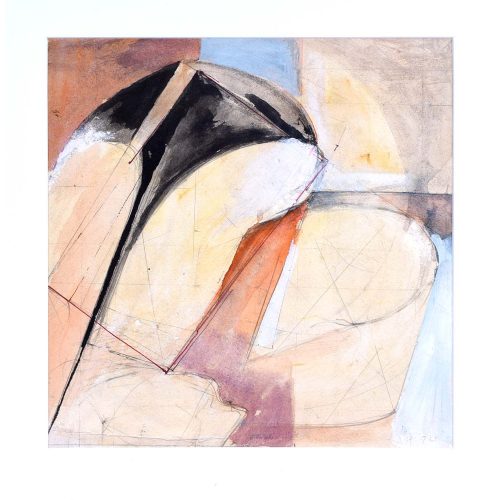
Adrian Heath Abstract Study I (1970)
Gouache & ink 35x33cm Heath was born in Burma in 1920 and arrived in England aged five. In 1938 he studied art under Stanhope Forbes at Newlyn and later at the Slade School of Art. While serving in WWII, he was captured and placed in a prisoner-of-war camp in Bavaria. Heath attempted to escape from the camp but was recaptured and placed in solitary confinement; this isolation proved crucial to the development of his artistic style, as he spent much of his time there experimenting with abstract forms. When released from confinement, Heath befriended a fellow prisoner of war: Terry Frost. Together they explored the methods of painting which they had developed during their time in the camps, and following the war both became celebrated artists. We have several Terry Frost pieces available too. In 1949 and 1951, Heath returned to Cornwall. He spent time with artists like Ben Nicholson, Victor Pasmore, and Anthony Hill, and became the main link between the emerging St Ives School of artists and the British Constructivist movement back in London. He is further credited with promoting British abstract art through informal exhibitions in his studio on Fitzroy Street, as well as his manifesto-like text entitled 'Abstract Art: Its Origins and Meaning', which was published in 1953. Over time, Heath's paintings of abstract geometry and symmetry became increasingly dynamic and heavily textured, the result of layering paint on paint over the course of several days. Here, his colour palette surrenders to the compelling geometry of the painting's abstract forms. If you'd like to know more, please email info@manningfineart.co.uk or call us on 07929 749056. Condition: Good. -
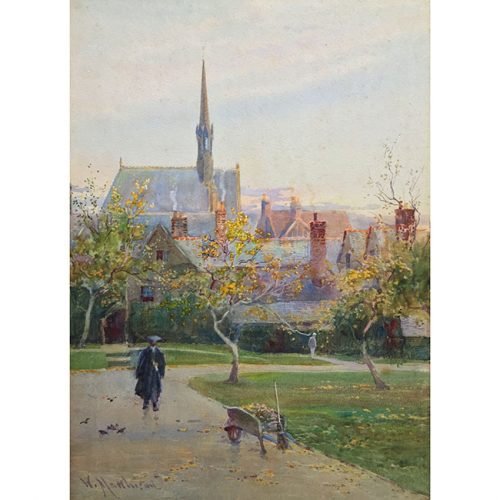
William Matthison (1853-1926)
Trinity Front Quad with Exeter College Chapel, Oxford
Watercolour 36.5 x 26cm Matthison was born near Birmingham and attended King Edward’s School in the city. He learned drawing at the Birmingham Central School of Art and then became a pupil of Birmingham artist Edward Watson. He became a professional artist in 1875 and moved to Oxfordshire a few years after; this was where he had the opportunity to produce many of the Oxford views for which he is known today. In 1902 he moved to Park Town in Oxford and was commissioned by Robert Peel to paint more than seventy views of the University of Oxford, which were subsequently made into postcards. Priced at seven for a shilling, they were only available from E Cross of Pembroke Street (a long-since closed business). Raphael Tuck & Sons also commissioned him to produce postcard scenes of Cambridge. Matthison’s views of Oxford were later printed in Fifty Watercolour Drawings of Oxford, published in 1912 by Alden & Co. Click here for other works by the artist. If you are interested, please email info@manningfineart.co.uk or call us on 07929 749056. -
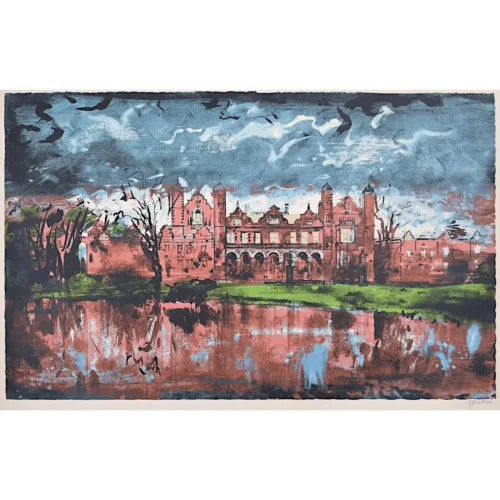
John Piper (1903-1992)
Capesthorne Hall (1977)
Screenprint 64 x 102 cm Piper captures here, in his usual fanciful colours, the Cheshire stately home of Capesthorne Hall. Built in neoclassical style by William Smith and his son Francis, the hall today is used for weddings and other civil occasions. John Piper CH was an English painter, printmaker, and designer of stained-glass windows. His work often focused on the British landscape, especially churches and monuments, and included tapestry designs, book jackets, screen-prints, photography, fabrics and ceramics. Condition: very good; a little old discolouration to edges under mount. If you are interested, please email info@manningfineart.co.uk or call us on 07929 749056. Click here for other works by John Piper. -
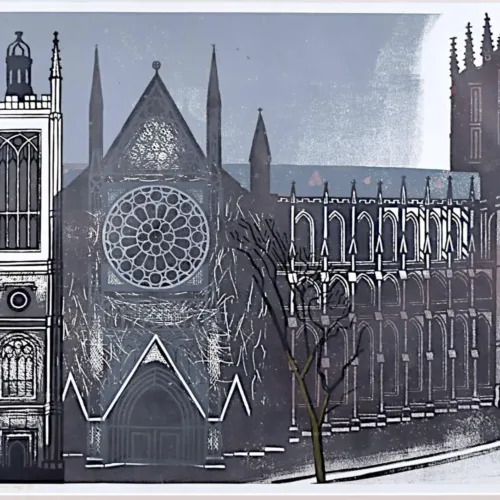
Edward Bawden (1903 - 1989)
Westminster Abbey (1966)
Linocut print 52 x 68 cm (92 x 107 framed) Signed, titled, inscribed 'Artist's Proof' and numbered 42/75 (Bawden inscribed 'Artist's Proof on all of his prints). Bawden's view of Westminster Abbey, cast in shades of blue, grey, and black.Edward Bawden was an English painter, illustrator and graphic artist, known for his prints, book covers, posters, and garden metalwork furniture. Bawden taught at the Royal College of Art, where he had been a student, worked as a commercial artist, and served as a war artist in World War II. He illustrated several books and painted various public murals, and his work and career are often associated with that of his contemporary, Eric Ravilious.Condition: generally very good. Inscription slightly faded. If you are interested, please email info@manningfineart.co.uk or call us on 07929 749056. Click here for other work by the artist. -
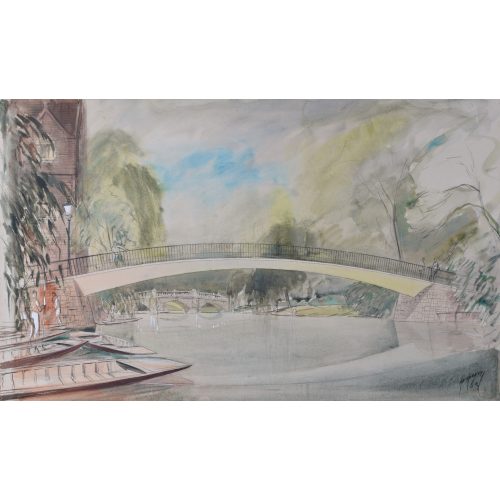
John Dean Monroe Harvey (1895-1978)
Garret Hostel Bridge, Cambridge, Trinity Hall and Clare College behind
38x61cm Watercolour and pencil For biographical details and more works by JDM Harvey, please click here. If you are interested email info@manningfineart.co.uk or call us on 07929 749056. -
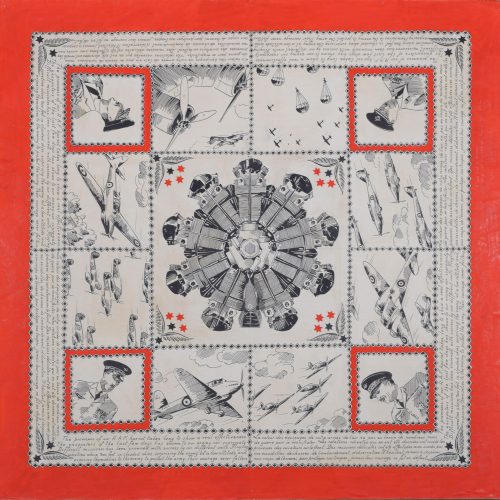
Design for Bianchini Ferier, Lyon for a scarf
Pen and Gouache c. 1940 75cm x 75cm "The prowess of our R.A.F. has not taken long to show a real effectiveness. The encounters of the last few days has sown to our enemy our supremacy. Difficult missions have been crowned with success by our different units. Flying sometime above 7000 feet in clouded skies surprising the enemy at a low altitude and exposing themselves to the enemy to protect the army. Their courage never falters." In the months prior to the Fall of France in May 1940 - before the Battle of Britain began - the RAF was in action in the skies above France and this design for a scarf depicts aeroplanes and pilots of the RAF. -
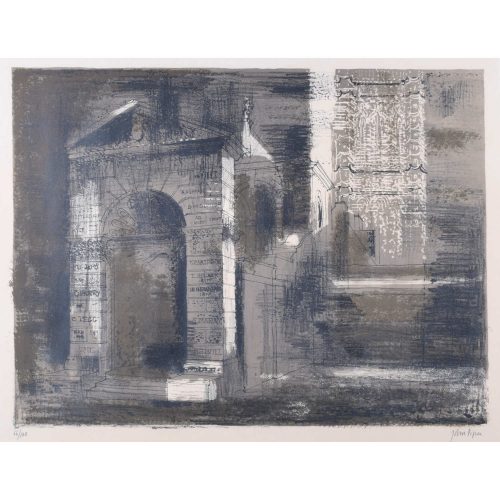
John Piper (1903-1992)
Westminster School I (1961)
49 x 63 cm Signed lower right and numbered 66/100 lower left in pencil. Piper's skilled and characterful rendering of Westminster School's gateway, sometimes known as Burlington's Arch. The historic entrance to the school dates from 1734 and is carved with the names of former pupils. John Piper CH was an English painter, printmaker, and designer of stained-glass windows. His work often focused on the British landscape, especially churches and monuments, and included tapestry designs, book jackets, screen-prints, photography, fabrics and ceramics. Condition: Generally very good, gentle even toning to the paper. If you’d like to know more, please email info@manningfineart.co.uk or call us on 07929 749056. -
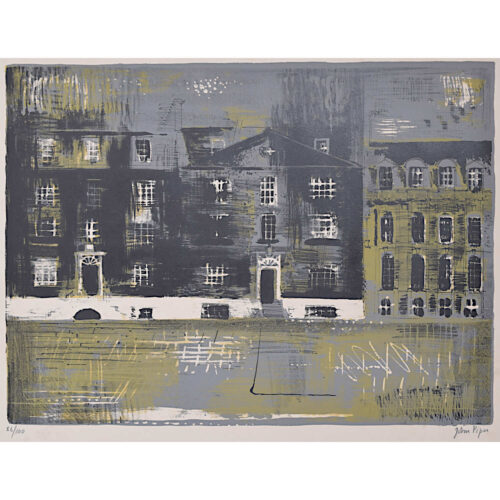
John Piper (1903-1992)
Westminster School II (1961)
42 x 59 cm Signed lower right and numbered 86/100 lower left in pencil. Piper’s second view of Westminster School; both views were commissioned by the school in 1981. Here he depicts Grant's House, with College on the far left and Rigaud’s House on the right. The view is serene and silent, set against a night sky the colour of stone, mimicking the buildings below. John Piper CH was an English painter, printmaker, and designer of stained-glass windows. His work often focused on the British landscape, especially churches and monuments, and included tapestry designs, book jackets, screen-prints, photography, fabrics and ceramics. Condition: generally very good; a little age toning. A few spots to margins. If you’d like to know more, please email info@manningfineart.co.uk or call us on 07929 749056. Click here for other works by John Piper CH. -
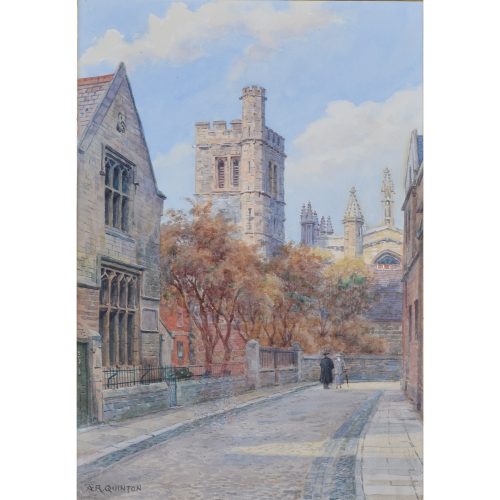
A R Quinton (1853-1934) - Alfred Robert Quinton
New College Bell Tower, Oxford
Signed lower left Watercolour 25x17cm Between 1904 and his death over 2000 of Quinton's paintings were published. Well known for his paintings of landscapes and townscapes of Britain many of his paintings were produced as postcards during the postcard craze of the first decade of the twentieth century; numerous views of Oxford were featured. We have not yet been able to identify a postcard derived from this particular view. If you are interested email info@manningfineart.co.uk or call us on 07929 749056. -
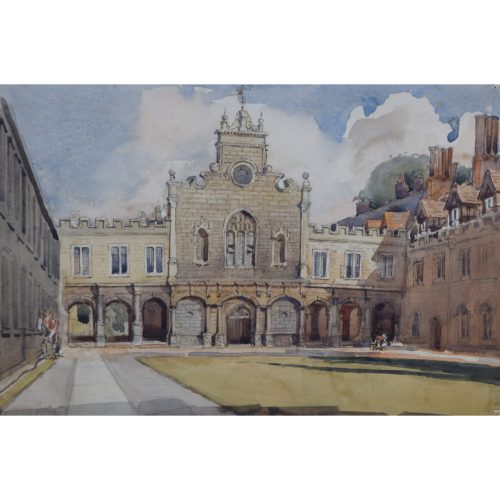
William Thomas Martin Hawksworth (1853-1935)
Peterhouse Cambridge
Watercolour, framed. 17.5 x 26cm. Provenance: with Thomas Agnew & Sons, London A Londoner, Hawksworth was a member of both the RI and RBA. The V&A and British Museum both hold examples of his watercolours. If you are interested email info@manningfineart.co.uk or call us on 07929 749056. -
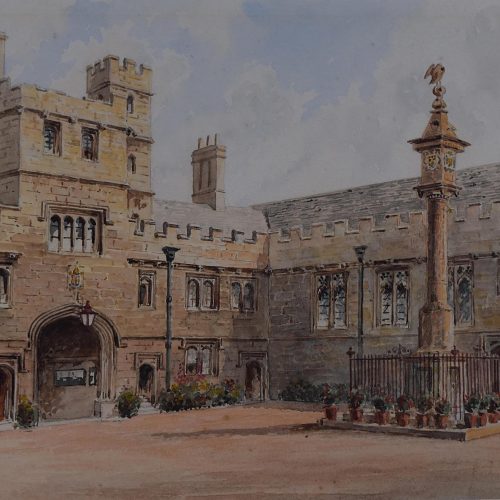
Francis Philip Barraud RA (1834-1901)
Corpus Christi College, Oxford
Watercolour 23 x 33cm Signed lower right. Barraud came from a family of painters. William and Henry were brothers, born in 1810 and 1811 respectively, the former a painter of equine subjects and hounds, the latter a landscape painter, and unusually the two of them made a habit of painting joint commissions. Francis, born in 1824, was a noted topographical artist, being well known for his views of Oxford in particular. Here he handles the old stonework of the College very capably, impressionistic flowers enhancing the scene. If you are interested email info@manningfineart.co.uk or call us on 07929 749056. -
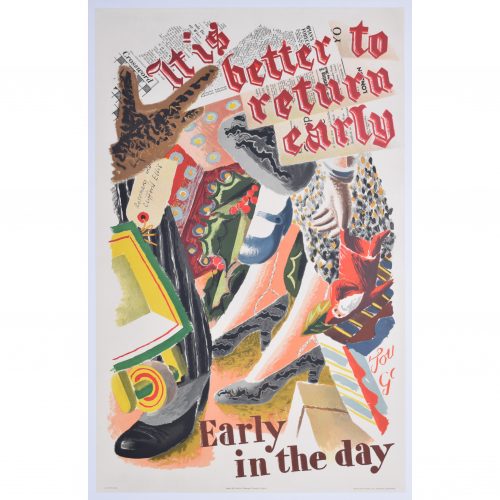
Clifford and Rosemary Ellis
It Is Better To Return Early
Lithographic poster 102 x 61 cm Printed by Waterlow & Sons Ltd for London Transport. This original vintage poster was designed for London Transport and encourages shoppers to head home earlier in the day to avoid congestion on the London Underground and buses. The well-heeled customers in the poster sport smart 1930s shoes, and jostle against their purchases (a Father Christmas puppet and red-berried holly leaves mark the design as published in time for Christmas). The pinstripe-suited gentleman's newspaper serves as the background for the first line of the poster's text, which is slanted in the synthetic cubist style (synthetic cubists were keen to explore collage in their work, often employing collage, especially of newsprint). London Transport was the forerunner of London Underground. During the 1930s London Transport commissioned over forty posters a year from well-known artists such as Laura Knight, CRW Nevinson, Edward Wadsworth, Eric Ravilious, Paul Nash, Graham Sutherland, and Edward McKnight Kauffer – a bold policy that did much to popularise avant-garde artistic styles that stemmed from Cubism, Futurism and Abstraction. Condition: very good, backed to linen. If you are interested, please email info@manningfineart.co.uk or call us on 07929 749056. Click here for other works by Clifford and Rosemary Ellis.