-
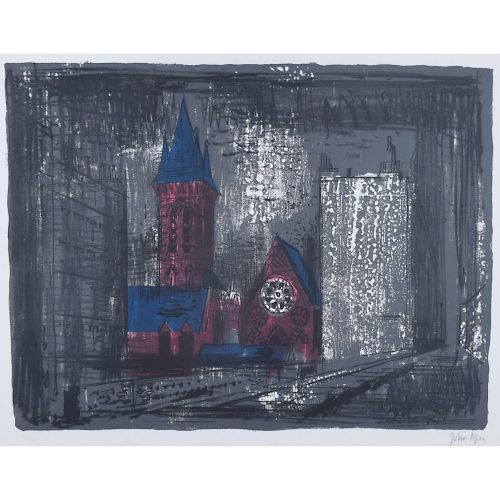
John Piper (1903-1992)
St James the Less, Westminster
Screenprint 65 x 49 cm From the 'Retrospect of Churches' series, numbered 24/70. Generally very good. Signed in pencil. John Piper CH was an English painter, printmaker, and designer of stained-glass windows. His work often focused on the British landscape, especially churches and monuments, and included tapestry designs, book jackets, screen-prints, photography, fabrics and ceramics. A Retrospect of Churches was issued as a suite of 24 original colour lithographs in colour, in an edition of 70 copies (70 numbered copies plus five artist's proofs). This poignant and dramatic representation of St James the Less is an evocative depiction of this part of London in the evening: wet pavements reflect the bright lights of the buildings, and the church is a warm, moody reddish-purple against the deep black of a dark night. Condition: Generally very good. -
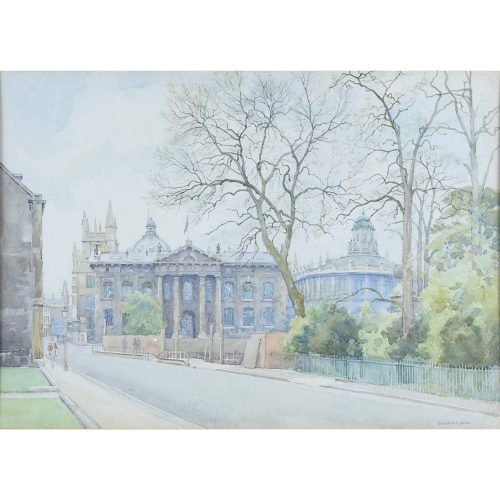
Bernard Cecil Gotch (1876-1964)
Clarendon Building and Sheldonian Theatre, Oxford
Watercolour 27 x 39 cm Signed lower right. Gotch's wintry view of the Clarendon and the Sheldonian captures both the most illustrious architecture of the University of Oxford, and the building works taking place to build a new library. Gotch paints his scene from a viewpoint just in front of Wadham College; the Radcliffe Camera and the spire of the University Church of St Mary the Virgin are visible behind the Sheldonian's roof. The building site visible across from Wadham is the site where the New Bodleian now stands. Bernard Cecil Gotch was a Winchester born artist who is best known for his atmospheric watercolours of Britain's towns and cities (most notably Oxford). He moved to Oxford in 1927, painting many watercolours of the interiors and exteriors of Oxford’s many buildings. His works concentrate on the grand exteriors and interiors of the University's colleges, and he exhibited frequently - including an exhibition every term at Oriel College. His first notable commission was for the publisher Methuen, illustrating 'A Shepherd’s Life' by W H Hudson. Whilst in London he was invited to illustrate a book on the Public Schools of England (which was sadly never completed). He exhibited watercolours at the Fine Art Society and Lincolns Inn, and also exhibited at the Royal Academy. In 1952 Gotch was given an Honorary MA by the University of Oxford, and, after his death in 1963, a memorial was held for him at Oriel. Condition: very good; original oak frame. -
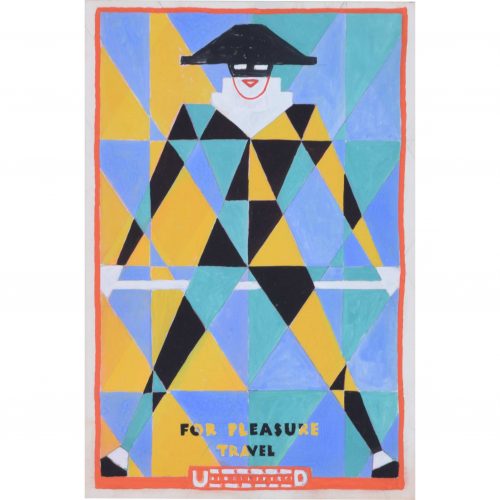
Gerald Mac Spink (flourished 1920 - 1940)
For Pleasure, Travel by Underground (c. 1930)
Gouache 26 x 18 cm Original design for a London Transport poster. Framed. A dynamic Art Deco poster design by Mac Spink. A boldly-coloured harlequin figure encourages travel via the London Underground. Spink was a skilled artist and designer who produced a series of posters in the inter-war period for companies including the London Underground, Southern Railways, LNER, Hawker Engineering, and British Steel. He won a prize in 1933 from the Imperial Institute for his poster artwork. He also worked as an aeronautical engineer in Kingston-on-Thames for Hawker Engineering; his greatest achievement was the creation of the 'Squanderbug', a 500cc racing car which he built in 1947, and which races even to this day. Provenance: the artist's estate. Condition: good; a few small scuffs to gouache, as visible in photographs. Handsomely framed. If you’d like to know more, please email info@manningfineart.co.uk or call us on 07929 749056. -
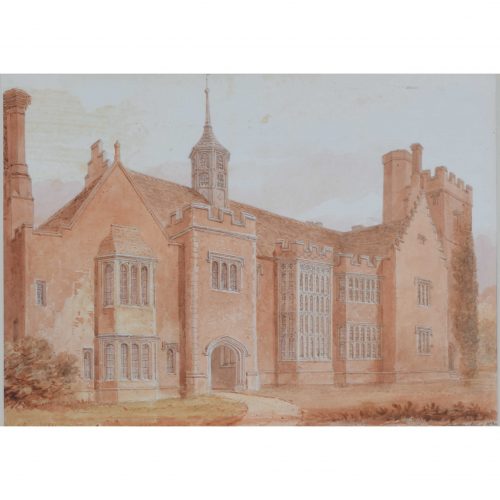
John Chessell Buckler (1793 - 1894)
Horham Hall, Essex (1830)
Watercolour 25 x 34 cm Signed and dated lower right; titled below. Horham Hall was built in Thaxted, Essex by Sir John Cutte in the early sixteenth century. The original hall was a timber-framed moated manor house built circa 1470, but it was largely demolished by Cutte, who built the present house between 1510 and 1515. Cutte was under-treasurer in the households of Henry VII and Henry VIII. The mansion was built in brick in two storeys in a quadrilateral layout with a gatehouse and incorporated some elements of the former building. The house was visited three times by Elizabeth I as the guest of Sir John Cutte. It is believed that the Tower was built for her to watch the local hunt. It was while staying at Horham in 1578 that the Queen received the envoy of the Duke of Alençon proposing marriage. John Chessell Buckler was a British architect, the eldest son of the architect John Buckler. His work included restorations of country houses and at the University of Oxford. Buckler received art lessons from the painter Francis Nicholson. He began working for his father's architectural practice in 1810, and ran it from 1830 onwards with his younger brother George. They worked in partnership until 1842. Buckler did a lot of work in Oxford, carrying out repairs and additions to St. Mary's Church, and Oriel, Brasenose, Magdalen, and Jesus Colleges. He also restored Oxburgh Hall, Norfolk, and Hengrave Hall, Suffolk, and designed Dunston Hall, Norfolk, and Butleigh Court in Somerset. In 1836 he came second, behind Charles Barry, in the competition to rebuild the Palace of Westminster following its destruction by fire. Buckler's writings included the text accompanying his father's engravings of Views of the Cathedral Churches of England and Wales (1822). In 1823 he published 'Observations on the Original Architecture of St. Mary Magdalen College, Oxford', in which he expressed his hostility towards changes in the quadrangle of Magdalen College. Some of his later writings, such as 'A History of the Architecture of the Abbey Church of St Alban' (1847), were written in collaboration with his own son, Charles Alban Buckler. He wrote a further polemical work, 'A Description And Defense Of The Restorations Of The Exterior Of Lincoln Cathedral' (1866), a scathing response to accusations that, in capacity as honorary architect to Lincoln Cathedral, he had overseen a damaging restoration involving the 'scraping' of the cathedral fabric. He died at the grand old age of 100 in 1894. Condition: good. Some spots to the sky, as visible in photograph. If you’d like to know more, please email info@manningfineart.co.uk or call us on 07929 749056. -
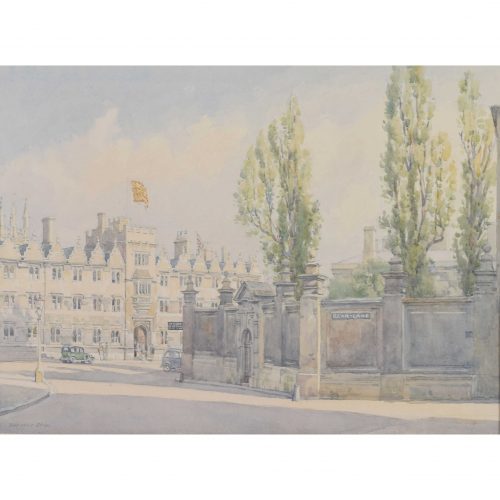
Bernard Cecil Gotch (1876-1964)
Oriel Square, Oxford, at the entrance to Bear Lane
Watercolour 27 x 36.5 cm Signed in pencil lower left. Oriel Square in the afternoon. Two undergraduates lean against the walls of Oriel College, talking, and another group make their way inside. Vintage cars (dating the picture to the 1920s, or 1930s?) are parked outside its gates, and the Oriel flag flies high. Bernard Cecil Gotch was a Winchester-born artist who is best known for his atmospheric watercolours of Britain's towns and cities (most notably Oxford). He moved to Oxford in 1927, painting many watercolours of the interiors and exteriors of Oxford’s many buildings. His works concentrate on the grand exteriors and interiors of the University's colleges, and he exhibited frequently - including an exhibition every term at Oriel College. His first notable commission was for the publisher Methuen, illustrating 'A Shepherd’s Life' by W H Hudson. Whilst in London he was invited to illustrate a book on the Public Schools of England (which was sadly never completed). He exhibited watercolours at the Fine Art Society and Lincolns Inn, and also exhibited at the Royal Academy. In 1952 Gotch was given an Honorary MA by the University of Oxford, and, after his death in 1963, a memorial was held for him at Oriel. Condition: very good. If you’d like to know more, please email info@manningfineart.co.uk or call us on 07929 749056. -
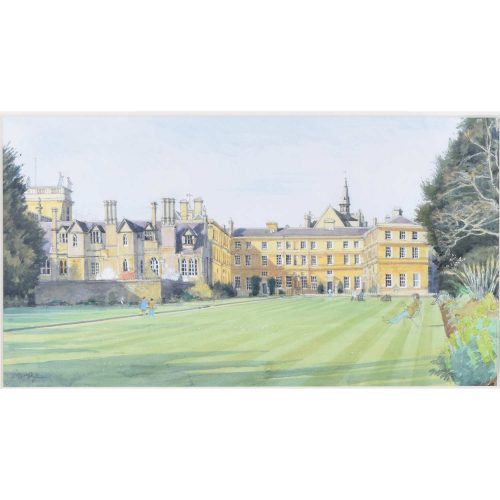
John Doyle (born 1928)
Trinity College, Oxford
Watercolour 24 x 46 cm Signed lower left. Doyle's striking portrayal of Trinity's architecture, complete with undergraduates variously strolling, sitting, and reading in the foreground. Afternoon sun slants over the immaculately mown lawns. John Doyle was born in London and works in watercolours, pastels, and oils. He studied at the Maidstone School of Art in his 30s, later showing at the Royal Academy Summer Exhibition. Much of his work focuses on landscape and architecture; he has produced a series of views of Oxford and its colleges. Condition: excellent. If you’d like to know more, please email info@manningfineart.co.uk or call us on 07929 749056. Click here for more views of Trinity College, Oxford. -
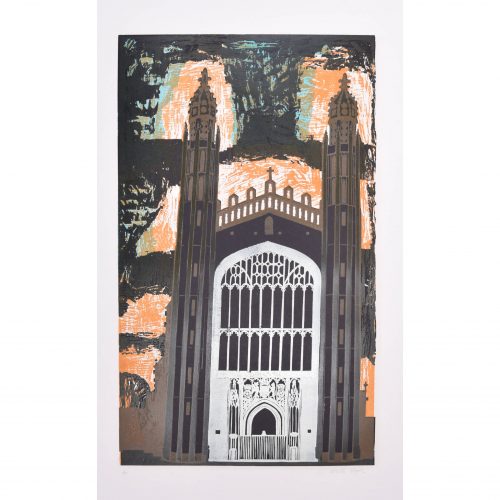
Walter Hoyle (1922 - 2000)
King's College Chapel, Cambridge (Cambridge Series 1956 - 66)
Linocut 72 x 41 cm Signed and inscribed A/P in pencil. Hoyle depicts King's College Chapel as both indomitable and delicate. The bold composition sees the chapel's spires surrounded by a fiery orange light against the black night of the background; at the same time, the western facade looks like it could have been cut from paper, or crafted from lace. Hoyle trained at Beckenham School of Art and the Royal College of Art. At the latter he was strongly influenced by Edward Bawden, one of Britain’s greatest linocut printers. Bawden had been commissioned by the 1951 Festival of Britain to produce a mural for the South Bank, and chose Hoyle to assist on account of his great talent. Hoyle moved to Great Bardfield in Essex, becoming a part of the Great Bardfield group of artists; diverse in style, they created figurative work, in stark contrast to the abstract art of the St Ives artists at the opposite end of the country. Hoyle taught at St Martin’s School of Art from 1951-60, the Central School of Arts and Crafts from 1960-64, and the Cambridge School of Art from 1964-1985, during which time he launched Cambridge Print Editions. His work is held in the collections of the Tate Gallery, the Victoria and Albert Museum, The British Museum, Kettle’s Garden and the Fry Art Gallery. Provenance: family of the artist. Condition: generally very good; a few handling marks to margins. If you are interested, please email info@manningfineart.co.uk or call us on 07929 749056. Click here for other views of King's College, Cambridge. -
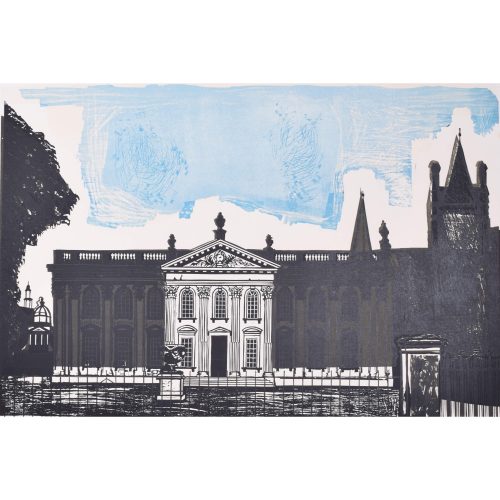
Walter Hoyle (1922 - 2000)
Senate House, Cambridge (Cambridge Series 1956 - 66)
Linocut 46 x 70 cm Trial print aside from the series, with different colourway. Senate House, under a lively blue sky. Hoyle trained at Beckenham School of Art and the Royal College of Art. At the latter he was strongly influenced by Edward Bawden, one of Britain’s greatest linocut printers. Bawden had been commissioned by the 1951 Festival of Britain to produce a mural for the South Bank, and chose Hoyle to assist on account of his great talent. Hoyle moved to Great Bardfield in Essex, becoming a part of the Great Bardfield group of artists; diverse in style, they created figurative work, in stark contrast to the abstract art of the St Ives artists at the opposite end of the country. Hoyle taught at St Martin’s School of Art from 1951-60, the Central School of Arts and Crafts from 1960-64, and the Cambridge School of Art from 1964-1985, during which time he launched Cambridge Print Editions. His work is held in the collections of the Tate Gallery, the Victoria and Albert Museum, The British Museum, Kettle’s Garden and the Fry Art Gallery. Provenance: family of the artist. Condition: generally very good; a few handling marks and areas of discolouration to extreme margins, extraneous ink to right hand side, and a very small brown spot to very top right beyond the blue sky. If you are interested, please email info@manningfineart.co.uk or call us on 07929 749056. Click here for other general views of Cambridge. -
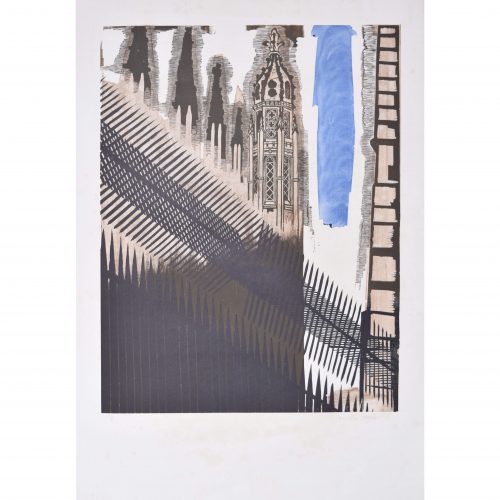
Walter Hoyle (1922 - 2000)
King's College, Cambridge (Cambridge Series 1956 - 66)
Linocut 56 x 43 cm Signed and inscribed A/P in pencil. Possibly unique. Hoyle's view of King's College, Cambridge, with a slice of blue sky behind. Hoyle trained at Beckenham School of Art and the Royal College of Art. At the latter he was strongly influenced by Edward Bawden, one of Britain’s greatest linocut printers. Bawden had been commissioned by the 1951 Festival of Britain to produce a mural for the South Bank, and chose Hoyle to assist on account of his great talent. Hoyle moved to Great Bardfield in Essex, becoming a part of the Great Bardfield group of artists; diverse in style, they created figurative work, in stark contrast to the abstract art of the St Ives artists at the opposite end of the country. Hoyle taught at St Martin’s School of Art from 1951-60, the Central School of Arts and Crafts from 1960-64, and the Cambridge School of Art from 1964-1985, during which time he launched Cambridge Print Editions. His work is held in the collections of the Tate Gallery, the Victoria and Albert Museum, The British Museum, Kettle’s Garden and the Fry Art Gallery. Provenance: family of the artist. Condition: generally very good; a few handling marks and a little age toning to the margins. Vertical impressins within and below the blue vertical area which are probably part of the artist's working technique. If you are interested, please email info@manningfineart.co.uk or call us on 07929 749056. Click here for other views of King's College, Cambridge. -
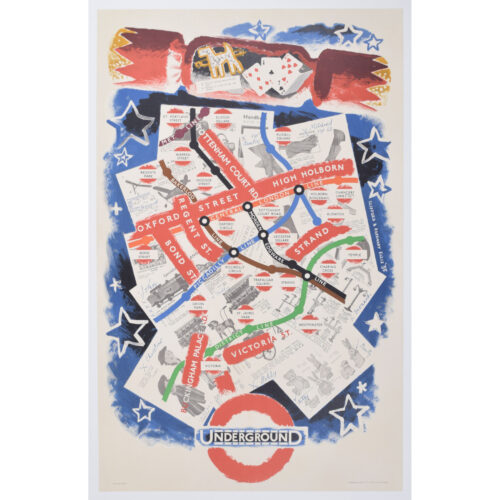
Clifford and Rosemary Ellis
London Underground Map (1935)
Original vintage poster 103 x 64 cm Signed in the plate 'Clifford & Rosemary Ellis '35". Printed by Waterlow & Sons Ltd for London Transport. Provenance: the artists' studio. This marvellous original vintage poster was designed for London Transport and encourages shoppers to use the Tube to do their Christmas shopping. The map of London's streets of shops, including Oxford Street, Regent Street, and Bond Street, are set on the background of a Christmas shopping list and various items to be purchased. The cross-section of a Christmas cracker at the top of the poster includes the joke: 'Why is a railway timetable like life?' - 'Because it is full of ups and downs. London Transport was the forerunner of London Underground. During the 1930s London Transport commissioned over forty posters a year from well-known artists such as Laura Knight, CRW Nevinson, Edward Wadsworth, Eric Ravilious, Paul Nash, Graham Sutherland, and Edward McKnight Kauffer – a bold policy that did much to popularise avant-garde artistic styles that stemmed from Cubism, Futurism and Abstraction. Condition: very good; backed to linen. If you are interested, please email info@manningfineart.co.uk or call us on 07929 749056. Click here for other original vintage London Transport posters. -
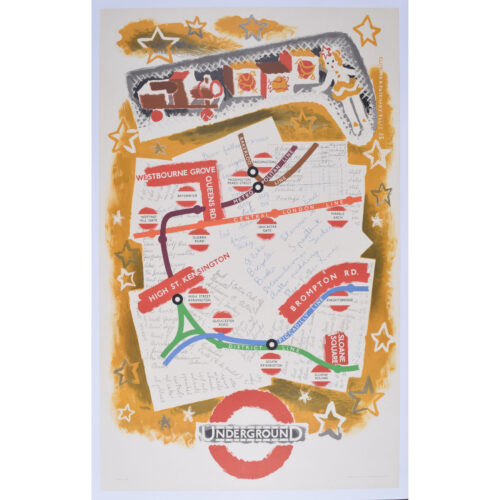
Clifford and Rosemary Ellis
London Underground Map (1935)
Original vintage poster 103 x 64 cm Signed in the plate 'Clifford & Rosemary Ellis '35". Printed by Waterlow & Sons Ltd for London Transport. Provenance: the artists' studio. This marvellous original vintage poster was designed for London Transport and encourages shoppers to use the Tube to do their Christmas shopping. The map of London's streets of shops, including High Street Kensington, Westbourne Grove, and the Brompton Road, are set on the background of Christmas wishlists and shopping lists. The cross-section of a Christmas stocking at the top of the poster includes a doll and a toy train amongst other stocking fillers. London Transport was the forerunner of London Underground. During the 1930s London Transport commissioned over forty posters a year from well-known artists such as Laura Knight, CRW Nevinson, Edward Wadsworth, Eric Ravilious, Paul Nash, Graham Sutherland, and Edward McKnight Kauffer – a bold policy that did much to popularise avant-garde artistic styles that stemmed from Cubism, Futurism and Abstraction. Condition: very good; backed to linen. If you are interested, please email info@manningfineart.co.uk or call us on 07929 749056. Click here for other original vintage London Transport posters. -
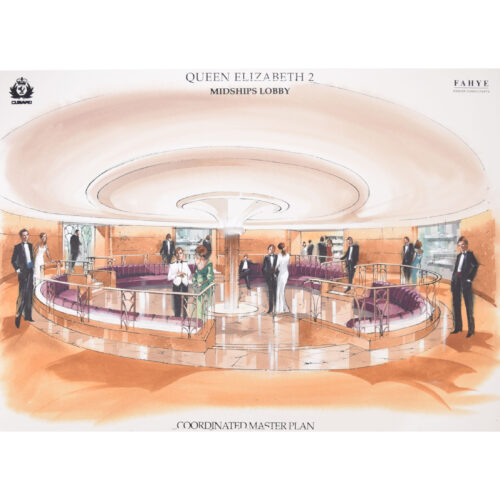
Fahye Design Consultants for Cunard
Queen Elizabeth 2 - Midships Lobby
Gouache and lettraset 59 x 83 cm A fabulously mid-century design for a lobby in the QE2, a luxury ocean liner operated by Cunard from 1969 to 2008. Glamorous passengers in black tie mingle in the lobby before dinner. A sunken conversation pit marks the mid-century interior style of the ship. The Queen Elizabeth 2 was designed in Cunard's offices in Liverpool and Southampton and built in Clydebank, Scotland. She was retired in 2018 and is now a floating hotel in Dubai. Condition: very good; mounted to foamboard. If you are interested, please email info@manningfineart.co.uk or call us on 07929 749056. -
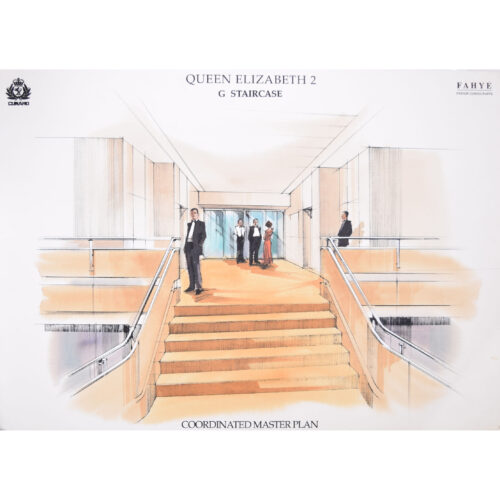
Fahye Design Consultants for Cunard
Queen Elizabeth 2 - Staircase G
Gouache and lettraset 59 x 83 cm A fabulously mid-century design for a staircase in the QE2, a luxury ocean liner operated by Cunard from 1969 to 2008. Glamorous passengers in black tie mingle on the staircase landing before dinner. Fahye's gouache designs illustrate the mid-century modern aesthetic of the golden age of ocean travel. The Queen Elizabeth 2 was designed in Cunard's offices in Liverpool and Southampton and built in Clydebank, Scotland. She was retired in 2018 and is now a floating hotel in Dubai. Condition: very good; mounted to foamboard. If you are interested, please email info@manningfineart.co.uk or call us on 07929 749056. -

David Loggan (1634 - 1692)
Habitus Acamedici in Universitate Oxoniensi - Oxford Academical Dress
Engraving 39 x 52 cm Loggan was born to English and Scottish parents, and was baptised in Danzig in 1634. After studying engraving in Danzig with Willem Hondius (1598-1652 or 1658), he moved to London in the late 1650s, going on to produce the engraved title-page for the folio 1662 Book of Common Prayer. He married in 1663 and moved to Nuffield in Oxfordshire in 1665. Loggan was appointed Public Sculptor to the nearby University of Oxford in the late 1660s, having been commissioned to produce bird’s-eye views of all the Oxford colleges. He lived in Holywell Street as he did this. The 'Oxonia Illustrata' was published in 1675, with the help of Robert White (1645-1704). Following its completion, Loggan began work on his equivalent work for Cambridge; the 'Cantabrigia Illustrata' was finally published in 1690, when he was made engraver to Cambridge University. The 'Oxonia Illustrata' also includes an engraving of Winchester College (Winchester and New College share William of Wykeham as their founder) whilst the 'Cantabrigia Illustrata' includes one of Eton College (which shares its founder, Henry VIII, with King’s College). Bird’s-eye views from this era required a particular talent as an architectural perspectivist; it was not until 1783 that it became possible for artists to ascend via hot air balloons and view the scenes they were depicting from above. Loggan thus had to rely on his imagination in conceiving the views. Loggan’s views constitute the first accurate depictions of the two Universities, in many ways unchanged today. Whilst the Oxford engravings were produced in reasonable numbers and ran to a second edition by Henry Overton (on thicker paper and with a plate number in Roman numerals in the bottom right-hand corner), those of Cambridge were printed in much smaller numbers. The Dutchman Pieter van der Aa published some miniature versions of the engravings for James Beverell’s guidebook to the UK, 'Les Delices de la Grande Bretagne' (c. 1708). The contemporary artist Andrew Ingamells (b.1956) has produced a highly-acclaimed series of etchings which bring Loggan’s original vision up to date. This particular edition strays from his familiar aerial views of the Oxford and Cambridge colleges and instead represents a parade of scholars in academical dress. Condition: Good, repaired tear approx 6" long bottom right towards centre; trimmed just within platemark to bottom, a few short edge tears, mostly 5mm or so. If you’d like to know more, please email info@manningfineart.co.uk or call us on 07929 749056. Click here for other depictions of Oxford. -

David Loggan (1634-1692)
Clare College, Cambridge (aerial view)
Engraving 36 x 42 cm Loggan was born to English and Scottish parents, and was baptised in Danzig in 1634. After studying engraving in Danzig with Willem Hondius (1598-1652 or 1658), he moved to London in the late 1650s, going on to produce the engraved title-page for the folio 1662 Book of Common Prayer. He married in 1663 and moved to Nuffield in Oxfordshire in 1665. Loggan was appointed Public Sculptor to the nearby University of Oxford in the late 1660s, having been commissioned to produce bird’s-eye views of all the Oxford colleges. He lived in Holywell Street as he did this. The 'Oxonia Illustrata' was published in 1675, with the help of Robert White (1645-1704). Following its completion, Loggan began work on his equivalent work for Cambridge; the 'Cantabrigia Illustrata' was finally published in 1690, when he was made engraver to Cambridge University. The 'Oxonia Illustrata' also includes an engraving of Winchester College (Winchester and New College share William of Wykeham as their founder) whilst the 'Cantabrigia Illustrata' includes one of Eton College (which shares its founder, Henry VIII, with King’s College). Bird’s-eye views from this era required a particular talent as an architectural perspectivist; it was not until 1783 that it became possible for artists to ascend via hot air balloons and view the scenes they were depicting from above. Loggan thus had to rely on his imagination in conceiving the views. Loggan’s views constitute the first accurate depictions of the two Universities, in many ways unchanged today. Whilst the Oxford engravings were produced in reasonable numbers and ran to a second edition by Henry Overton (on thicker paper and with a plate number in Roman numerals in the bottom right-hand corner), those of Cambridge were printed in much smaller numbers. The Dutchman Pieter van der Aa published some miniature versions of the engravings for James Beverell’s guidebook to the UK, 'Les Delices de la Grande Bretagne' (c. 1708). The contemporary artist Andrew Ingamells (b.1956) has produced a highly-acclaimed series of etchings which bring Loggan’s original vision up to date. This particular edition represents a unique aerial view of Clare College, Cambridge. Condition: Generally very good, trimmed close to plate mark, in vintage frame. If you are interested, please email info@manningfineart.co.uk or call us on 07929 749056. For other views of Clare College, Cambridge. -

Louis Osman (1914 - 1996)
Proposal for Aubrey Walk
Pencil on tracing paper 71 x 200 cm Provenance: artist's studio sale Louis Osman (30 January 1914 – 11 April 1996) was an architect, artist, goldsmith, silversmith and medallist. Few people matched his creations as a goldsmith, and consequently he was chosen to make the crown for the Investiture of the Prince of Wales in 1968. Many of his other works are in public collections in the UK and worldwide. After Hele’s school in Exeter he studied at the Bartlett School of Architecture – part of University College London – from 1931. Also attending the Slade, he left the Bartlett being awarded the top first, which brings with it the Donaldson Medal of the RIBA. Following the war he was busy as an architect, works including for Westminster Abbey, and Lincoln, Exeterm, Ely and Lichfield Cathedrals. Staunton Harold Church in Ashby de la Zouch for the National Trust, and of course his own folly, the Grade I listed Elizabethan manor house, Canons Ashby in Northamptonshire – which was given to the National Trust in 1981 when Osman was not able to keep the tenancy any longer. These architectural sketches show Osman's proposal for Aubrey Walk, including a striking brutalist column and tower. Condition: Generally very good, some old tape stains and handling wear to edges If you are interested, please email info@manningfineart.co.uk or call us on 07929 749056. Click here for other works by the artist. -

Hubert Finney (1905 – 1991) Blitz Site with St Paul's Cathedral
Charcoal, coloured pencil and pastel 35 x 52 cm A reclusive figure whose work has remained largely unseen, Finney studied under Eric Gill before winning a scholarship to the Royal College of Art in the early 1920’s. Finney had the good fortune to attend the RCA as part of a golden generation, many of whom went on to become some of Britain’s best loved artists (amongst them Ravilious, Bawden, Hepworth, Moore, Dunbar, Sorrell, and Piper). After a travelling scholarship to Rome, in 1929, Finney returned to become a teacher at Chelsea School of Art – working alongside Henry Moore who was in charge of the Sculpture Department and Graham Sutherland, the Department of Design. It was during the Second World War, when Finney was working for the Light Rescue Service of the Civil Defence that this charcoal piece was created. Depicting a bomb site during the blitz, Finney's skilful blend of charcoal, coloured pencil and pastel creates pops of colour and conveys the smoky atmosphere of London in the 1940s. -

Hubert Finney (1905 – 1991) Soldiers Waiting
Charcoal 37 x 55 cm A reclusive figure whose work has remained largely unseen, Finney studied under Eric Gill before winning a scholarship to the Royal College of Art in the early 1920’s. Finney had the good fortune to attend the RCA as part of a golden generation, many of whom went on to become some of Britain’s best loved artists (amongst them Ravilious, Bawden, Hepworth, Moore, Dunbar, Sorrell, and Piper). After a travelling scholarship to Rome, in 1929, Finney returned to become a teacher at Chelsea School of Art – working alongside Henry Moore who was in charge of the Sculpture Department and Graham Sutherland, the Department of Design. It was during the Second World War, when Finney was working for the Light Rescue Service of the Civil Defence that this charcoal piece was created. Depicting a bomb site during the blitz, Finney's skilful blend of charcoal, coloured pencil and pastel creates pops of colour and conveys the smoky atmosphere of London in the 1940s. -

Cyril Kenneth Bird ‘Fougasse’ (1887 - 1965) Concerto da Camera
Ballpoint pen and ink 35 x 24 cm Sold with original catalogue and invoice. "Concerto da Camera. I suppose I'm hopelessly unmusical, but I still sometimes sigh for the days when one could sit peacefully in one's seat and listen to the music, instead of having to spend the entire performance swooping about all over the studio with the TV cameraman." The cartoon "Concerto da Camera" was published in Punch magazine on October 22, 1952. This piece humorously reflects on the experience of attending televised concerts, expressing a nostalgic preference for the days when one could sit peacefully and listen to music without the distractions of television production. It exemplifies Fougasse's signature style, characterised by minimalist line work and insightful commentary on contemporary life, providing a lighthearted yet poignant critique of societal changes. Fougasse was a British cartoonist. He was art editor of Punch between 1937 and 1949, and subsequently editor until 1953. He is best known for his ‘Careless Talk Costs Lives’ series of posters, and the other posters for the Ministry of Information and London Transport. As the Second World War progressed, the Ministry of Information’s poster campaign had become less and less effective. There were posters instructing the population to save old clothes for rags, turn off the lights, save food, dig for victory, watch out for spies, and keep calm and carry on. With this instruction overload, the population had ceased paying attention to the posters. Fougasse noticed this, and offered his services unpaid to the Ministry of Information, with a view to bringing a touch of humour to the posters. His amusing designs with pithy captions, reminiscent of newspaper cartoons, helped to get the Ministry's messages across in a novel way. -

David Loggan (1634 - 1692) Sidney Sussex College, Cambridge
Engraving 33 x 45 cm An eighteenth-century view of Sidney Sussex, Cambridge, engraved by David Loggan, the noted engraver, draughtsman, and painter. Loggan was born to English and Scottish parents, and was baptised in Danzig in 1634. After studying engraving in Danzig with Willem Hondius (1598-1652 or 1658), he moved to London in the late 1650s, going on to produce the engraved title-page for the folio 1662 Book of Common Prayer. He married in 1663 and moved to Nuffield in Oxfordshire in 1665. Loggan was appointed Public Sculptor to the nearby University of Oxford in the late 1660s, having been commissioned to produce bird’s-eye views of all the Oxford colleges. He lived in Holywell Street as he did this. The 'Oxonia Illustrata' was published in 1675, with the help of Robert White (1645-1704). Following its completion, Loggan began work on his equivalent work for Cambridge; the 'Cantabrigia Illustrata' was finally published in 1690, when he was made engraver to Cambridge University. The 'Oxonia Illustrata' also includes an engraving of Winchester College (Winchester and New College share William of Wykeham as their founder) whilst the 'Cantabrigia Illustrata' includes one of Eton College (which shares its founder, Henry VIII, with King’s College). Bird’s-eye views from this era required a particular talent as an architectural perspectivist; it was not until 1783 that it became possible for artists to ascend via hot air balloons and view the scenes they were depicting from above. Loggan thus had to rely on his imagination in conceiving the views. Loggan’s views constitute the first accurate depictions of the two Universities, in many ways unchanged today. Whilst the Oxford engravings were produced in reasonable numbers and ran to a second edition by Henry Overton (on thicker paper and with a plate number in Roman numerals in the bottom right-hand corner), those of Cambridge were printed in much smaller numbers. The Dutchman Pieter van der Aa published some miniature versions of the engravings for James Beverell’s guidebook to the UK, 'Les Delices de la Grande Bretagne' (c. 1708). The contemporary artist Andrew Ingamells (b.1956) has produced a highly-acclaimed series of etchings which bring Loggan’s original vision up to date. Condition: Generally very good.If you would like to know more, please email info@manningfineart.co.uk or call us on 07929 749056.
For other views of Sidney Sussex, please click here. -

David Loggan (1634 - 1692) Queens' College, Cambridge
Engraving 33 x 45 cm An eighteenth-century view of Queens' College, Cambridge, engraved by David Loggan, the noted engraver, draughtsman, and painter. Loggan was born to English and Scottish parents, and was baptised in Danzig in 1634. After studying engraving in Danzig with Willem Hondius (1598-1652 or 1658), he moved to London in the late 1650s, going on to produce the engraved title-page for the folio 1662 Book of Common Prayer. He married in 1663 and moved to Nuffield in Oxfordshire in 1665. Loggan was appointed Public Sculptor to the nearby University of Oxford in the late 1660s, having been commissioned to produce bird’s-eye views of all the Oxford colleges. He lived in Holywell Street as he did this. The 'Oxonia Illustrata' was published in 1675, with the help of Robert White (1645-1704). Following its completion, Loggan began work on his equivalent work for Cambridge; the 'Cantabrigia Illustrata' was finally published in 1690, when he was made engraver to Cambridge University. The 'Oxonia Illustrata' also includes an engraving of Winchester College (Winchester and New College share William of Wykeham as their founder) whilst the 'Cantabrigia Illustrata' includes one of Eton College (which shares its founder, Henry VIII, with King’s College). Bird’s-eye views from this era required a particular talent as an architectural perspectivist; it was not until 1783 that it became possible for artists to ascend via hot air balloons and view the scenes they were depicting from above. Loggan thus had to rely on his imagination in conceiving the views. Loggan’s views constitute the first accurate depictions of the two Universities, in many ways unchanged today. Whilst the Oxford engravings were produced in reasonable numbers and ran to a second edition by Henry Overton (on thicker paper and with a plate number in Roman numerals in the bottom right-hand corner), those of Cambridge were printed in much smaller numbers. The Dutchman Pieter van der Aa published some miniature versions of the engravings for James Beverell’s guidebook to the UK, 'Les Delices de la Grande Bretagne' (c. 1708). The contemporary artist Andrew Ingamells (b.1956) has produced a highly-acclaimed series of etchings which bring Loggan’s original vision up to date. Condition: Generally very good.If you would like to know more, please email info@manningfineart.co.uk or call us on 07929 749056.
For other views of Queens' College, please click here. -

David Loggan (1634 - 1692) Sidney Sussex College, Cambridge
Engraving 33 x 45 cm An eighteenth-century view of Queens' College, Cambridge, engraved by David Loggan, the noted engraver, draughtsman, and painter. Loggan was born to English and Scottish parents, and was baptised in Danzig in 1634. After studying engraving in Danzig with Willem Hondius (1598-1652 or 1658), he moved to London in the late 1650s, going on to produce the engraved title-page for the folio 1662 Book of Common Prayer. He married in 1663 and moved to Nuffield in Oxfordshire in 1665. Loggan was appointed Public Sculptor to the nearby University of Oxford in the late 1660s, having been commissioned to produce bird’s-eye views of all the Oxford colleges. He lived in Holywell Street as he did this. The 'Oxonia Illustrata' was published in 1675, with the help of Robert White (1645-1704). Following its completion, Loggan began work on his equivalent work for Cambridge; the 'Cantabrigia Illustrata' was finally published in 1690, when he was made engraver to Cambridge University. The 'Oxonia Illustrata' also includes an engraving of Winchester College (Winchester and New College share William of Wykeham as their founder) whilst the 'Cantabrigia Illustrata' includes one of Eton College (which shares its founder, Henry VIII, with King’s College). Bird’s-eye views from this era required a particular talent as an architectural perspectivist; it was not until 1783 that it became possible for artists to ascend via hot air balloons and view the scenes they were depicting from above. Loggan thus had to rely on his imagination in conceiving the views. Loggan’s views constitute the first accurate depictions of the two Universities, in many ways unchanged today. Whilst the Oxford engravings were produced in reasonable numbers and ran to a second edition by Henry Overton (on thicker paper and with a plate number in Roman numerals in the bottom right-hand corner), those of Cambridge were printed in much smaller numbers. The Dutchman Pieter van der Aa published some miniature versions of the engravings for James Beverell’s guidebook to the UK, 'Les Delices de la Grande Bretagne' (c. 1708). The contemporary artist Andrew Ingamells (b.1956) has produced a highly-acclaimed series of etchings which bring Loggan’s original vision up to date. Condition: Generally very good.If you would like to know more, please email info@manningfineart.co.uk or call us on 07929 749056.
For other views of Sidney Sussex, please click here. -
Out of stock

John Hoyland (1934-2011) Brown, Beige, Pink (1971)
Screenprint 52 x 70 cm Signed and dated to lower right, numbered 95/100 'Brown, Beige, Pink' is an intriguing composition, featuring an abstract mass of gentle tones. It exemplifies Hoyland's exploration of colour and form, featuring bold geometric shapes in earthy tones juxtaposed against vibrant hues. The composition invites viewers to engage with the interplay of colours and the spatial tension between the forms. The work itself is part of a limited edition series, with known editions held in prestigious collections such as the Yale Center for British Art, the Tate, and the Carnegie Museum of Art. John Hoyland was a leading British abstract artist, renowned for his bold use of color and dynamic compositions. Born on October 12, 1934, in Sheffield, England, he studied at Sheffield School of Art before attending the Royal Academy Schools in London. Initially influenced by figurative painting, he transitioned to abstraction after being inspired by American Abstract Expressionists such as Mark Rothko and Barnett Newman. Hoyland gained recognition in the 1960s, becoming one of Britain’s foremost abstract painters. His work is characterised by vibrant, large-scale canvases with striking geometric and gestural elements. In 1967, he represented Britain at the São Paulo Biennale, and in 1982, he was elected a Royal Academician. His career spanned decades, with major exhibitions at institutions like the Tate and the Royal Academy of Arts. Hoyland remained a committed advocate for non-figurative painting, rejecting minimalism in favour of emotional depth and expressive colour. He passed away on July 31, 2011, leaving behind a legacy as one of Britain’s most significant post-war abstract artists. -
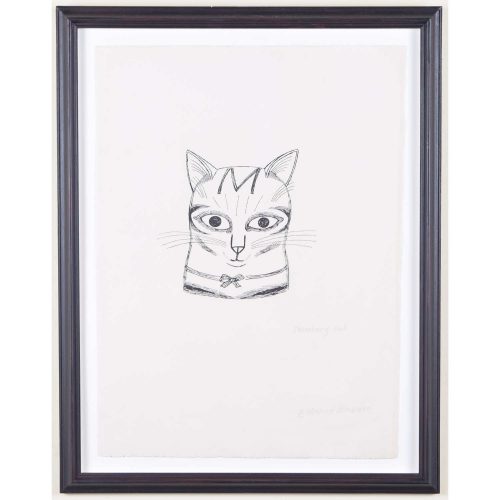
Edward Bawden (1903-1989)
Secretary Cat
Pen and ink 38 x 27 cm Signed and inscribed lower right. Bawden developed a love of cats at a young age, copying Louis Wain's cat pictures. In his later years, his drawings of cats became yet more frequent; his cat Emma featured in much of his work. In an interview with House and Garden in 1987 he said: "No cat will suffer being lifted up and dropped into an empty space intended for her to occupy; that procedure led inevitably to Emma, tail up, walking away at once, so I had to wait patiently until Emma had enjoyed a good meal of Coley and was ready to choose her daily sleeping place, wherever it might be. I would then spring into action." Doubtless he found it easier to draw an imaginary cat, such as this one. For other cats - and other works - by Bawden, please click here. If you are interested, please email info@manningfineart.co.uk or call us on 07929 749056. -
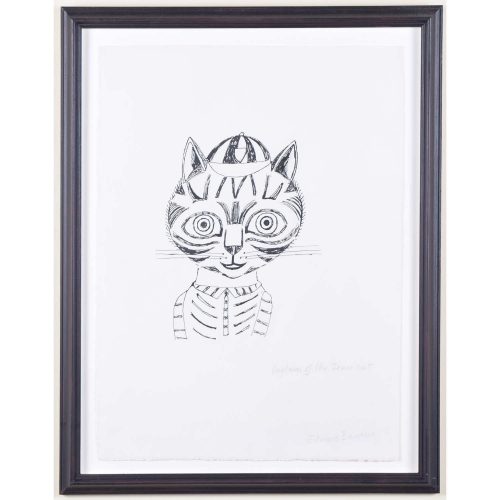
Edward Bawden (1903-1989)
Captain of the Team Cat
Pen and ink 38 x 27 cm Signed and inscribed lower right. Bawden developed a love of cats at a young age, copying Louis Wain's cat pictures. In his later years, his drawings of cats became yet more frequent; his cat Emma featured in much of his work. In an interview with House and Garden in 1987 he said: "No cat will suffer being lifted up and dropped into an empty space intended for her to occupy; that procedure led inevitably to Emma, tail up, walking away at once, so I had to wait patiently until Emma had enjoyed a good meal of Coley and was ready to choose her daily sleeping place, wherever it might be. I would then spring into action." Doubtless he found it easier to draw an imaginary cat, such as this one. For other cats - and other works - by Bawden, please click here. If you are interested, please email info@manningfineart.co.uk or call us on 07929 749056. -
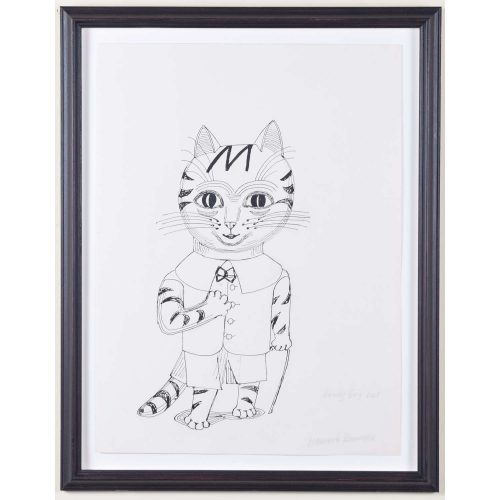
Edward Bawden (1903-1989)
Dandy Boy Cat
Pen and ink 38 x 27 cm Signed and inscribed lower right. Bawden developed a love of cats at a young age, copying Louis Wain's cat pictures. In his later years, his drawings of cats became yet more frequent; his cat Emma featured in much of his work. In an interview with House and Garden in 1987 he said: "No cat will suffer being lifted up and dropped into an empty space intended for her to occupy; that procedure led inevitably to Emma, tail up, walking away at once, so I had to wait patiently until Emma had enjoyed a good meal of Coley and was ready to choose her daily sleeping place, wherever it might be. I would then spring into action." Doubtless he found it easier to draw an imaginary cat, such as this one. For other cats - and other works - by Bawden, please click here. If you are interested, please email info@manningfineart.co.uk or call us on 07929 749056. -
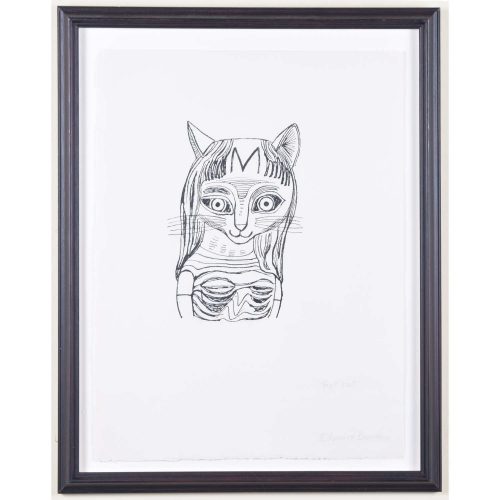
Edward Bawden (1903-1989)
Hot Cat
Pen and ink 38 x 27 cm Signed and inscribed lower right. Bawden developed a love of cats at a young age, copying Louis Wain's cat pictures. In his later years, his drawings of cats became yet more frequent; his cat Emma featured in much of his work. In an interview with House and Garden in 1987 he said: "No cat will suffer being lifted up and dropped into an empty space intended for her to occupy; that procedure led inevitably to Emma, tail up, walking away at once, so I had to wait patiently until Emma had enjoyed a good meal of Coley and was ready to choose her daily sleeping place, wherever it might be. I would then spring into action." Doubtless he found it easier to draw an imaginary cat, such as this one. For other cats - and other works - by Bawden, please click here. If you are interested, please email info@manningfineart.co.uk or call us on 07929 749056. -
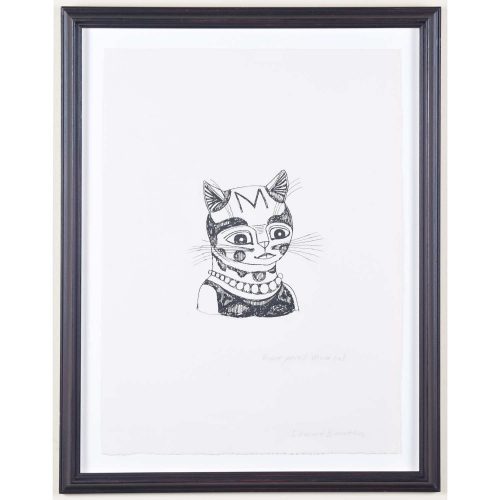
Edward Bawden (1903-1989)
House Proud Mum Cat
Pen and ink 38 x 27 cm Signed and inscribed lower right. Bawden developed a love of cats at a young age, copying Louis Wain's cat pictures. In his later years, his drawings of cats became yet more frequent; his cat Emma featured in much of his work. In an interview with House and Garden in 1987 he said: "No cat will suffer being lifted up and dropped into an empty space intended for her to occupy; that procedure led inevitably to Emma, tail up, walking away at once, so I had to wait patiently until Emma had enjoyed a good meal of Coley and was ready to choose her daily sleeping place, wherever it might be. I would then spring into action." Doubtless he found it easier to draw an imaginary cat, such as this one. For other cats - and other works - by Bawden, please click here. If you are interested, please email info@manningfineart.co.uk or call us on 07929 749056. -
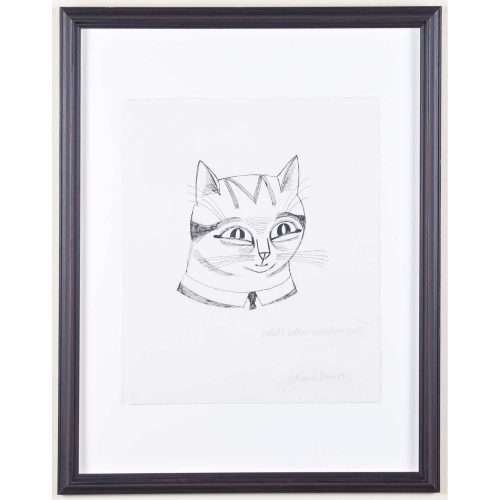
Edward Bawden (1903-1989)
White Collar Worker Cat
Pen and ink 27 x 23 cm Signed and inscribed lower right. Bawden developed a love of cats at a young age, copying Louis Wain's cat pictures. In his later years, his drawings of cats became yet more frequent; his cat Emma featured in much of his work. In an interview with House and Garden in 1987 he said: "No cat will suffer being lifted up and dropped into an empty space intended for her to occupy; that procedure led inevitably to Emma, tail up, walking away at once, so I had to wait patiently until Emma had enjoyed a good meal of Coley and was ready to choose her daily sleeping place, wherever it might be. I would then spring into action." Doubtless he found it easier to draw an imaginary cat, such as this one. For other cats - and other works - by Bawden, please click here. If you are interested, please email info@manningfineart.co.uk or call us on 07929 749056. -
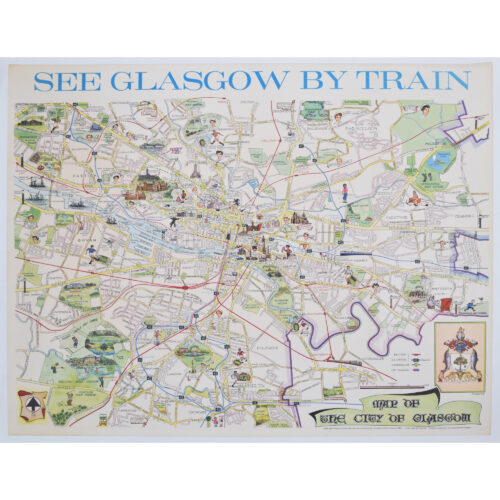
Elizabeth Scott
See Glasgow by Train
Original vintage poster 102 x 127 cm Signed lower right in the plate. Printed in Scotland for the Corporation of Glasgow. Based on an Ordnance Survey map, Scott's poster uses added illustrated details to encourage us to explore the riches of Glasgow via rail. The Glasgow City and District Railway was electrified in 1960 and use of the line was encouraged by the city. Condition: generally very good. Backed to linen. If you are interested, please email info@manningfineart.co.uk or call us on 07929 749056. Click here for other original vintage posters. -

A. E. Halliwell (1905-1987) Take the Underground to the RA
Gouache c.1930 23 x 30 cm Provenance: the family of A. E. Halliwell A.E. Halliwell (1905–1986) was a British artist, illustrator, and designer best known for his vibrant poster designs created for British railway companies during the mid-20th century. Born in Southport, Halliwell developed a strong foundation in art and design early in life. He studied at the Southport School of Art from 1923 to 1926 before graduating to the Royal College of Art in London and subsequently practising as a professional designer from the 1930s. Following his studies, Halliwell married Doris Doyle in Strood Kent, and went on to have a significant teaching career himself, most notably as a lecturer at the Central School of Arts and Crafts (later part of Central Saint Martins), where he influenced a new generation of designers and illustrators. Halliwell is perhaps best remembered for his vibrant and engaging poster designs created for British railway companies during the 1930s. His work was characterised by a bright, graphic style that balanced charm with clarity, often depicting idealised scenes of British holiday destinations—from sunny seaside towns to tranquil countryside vistas. Beyond posters, his artistic output included book illustration, commercial design, and stage costume sketches, showcasing his versatility across mediums. His posters continue to remain enduring symbols of a golden age of British travel and design and are displayed in major collections including the London Transport Museum and the V & A. This playful work features a man, clad in tartan trousers and puffing away at a pipe, marching steadfastly with the roundel of the London Underground in two. The roundel is adorned with the ornate decoration that surrounds the stylised letters of the R and A of the Royal Academy, suggesting that the man is marching straight towards the Academy. In classic Halliwell style, the design features a play on words, the man is not just taking the underground, as you do, he is physically and literally bringing the Underground with him to the exhibition, adding a mischievous flare to the piece. Condition: Generally very good.If you would like to know more, please email info@manningfineart.co.uk or call us on 07929 749056.
-

A Searle Royal Richmond Horse Show
c.1940 26 x 30 cm Signed to lower right Provenance: Family of A. E. Halliwell Little is known about A Searle beyond the fact that he studied under A E Halliwell, though the fact that Halliwell collected this painting suggests that he thought highly of his student. This playful Underground poster design advertises the Royal Richmond Horse Show. It features a horse and flags with an abstracted jockey. The whole composition is somewhat musical, with colourful lines behind the text evoking a musical stave and the body of the jockey calling to mind musical notes. Painted in the lower right in muted greens is the iconic Underground roundel, signalling the poster's original purpose. Condition: Generally very good.If you would like to know more, please email info@manningfineart.co.uk or call us on 07929 749056.
-
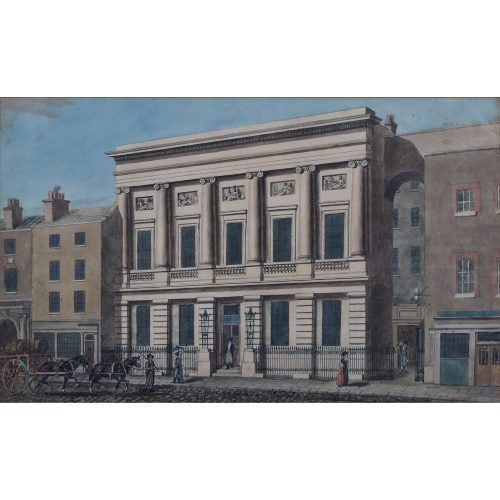
Schnebbelie (Robert Blemmell, circa 1785-1849) The Commercial Sale Rooms, Mincing Lane, City of London (c. 1814)
Pencil, pen, ink & watercolour 25 x 42 cm Captioned to mount, "Used as the Custom House after the Original House was Burnt from 1814 to 1817". With engraving of the same image pasted to reverse of frame, published by James Whittle & Richard H. Laurie, Jan. 16th, 1815. Schnebbelie was an English painter and illustrator who produced many views of London. His father, Jacob, was a confectioner who was subsequently employed by the Society of Antiquaries of London as a draughtsman, but who died at the age of 31. Following his death, Robert took up his father's profession. Between 1803 and 1821 he exhibited at the Royal Academy; Engravings based on his drawings were widely published - most notably in Robert Wilkinson's Londina Illustrata (1808-1825), David Hughson's Description of London and the Gentleman's Magazine. His works are in the collections inter alia of the Museum of London, the Guildhall Art Gallery and the Huntington Museum of Art in West Virginia. If you are interested email info@manningfineart.co.uk or call us on 07929 749056. -
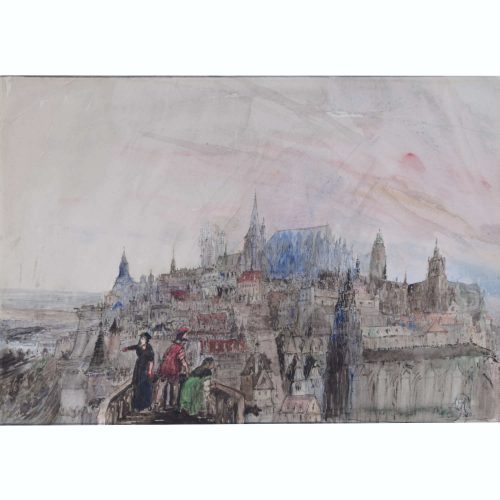
Sir Albert Edward Richardson K.C.V.O., F.R.I.B.A, F.S.A., P.R.A. (1880-1964)
The Dawn of the Renaissance in Central Europe, A Caprice
28x43cm watercolour Signed, with further detail to backboard (title, date etc.) Sir Albert Edward Richardson K.C.V.O., F.R.I.B.A, F.S.A., P.R.A. (1880-1964) was a traditionalist, renowned for his distaste of modern architecture. Rooted firmly in the classical period, he lived a Georgian life, refusing to have electricity in his Georgian house – until his wife finally insisted. Professor of Architecture at UCL’s Bartlett School of Architecture from 1929-1955, this was evacuated to Cambridge during the war and he became a fellow of St Catharine’s College. Amongst his other achievements, Richardson was President of the RA, editor of Architect’s Journal and founder of the Georgian Group. For pleasure he painted architectural fantasies; capriccios of buildings he pictured in his mind. Richardson was recipient of the Architectural Association’s Professor Bannister Fletcher Medal in 1902 which was an award for the study of post-Fire London architecture. Amongst his achievements were Professor of Architecture at University College London, President of the RA, editor of Architect’s Journal and founder of the Georgian Group. Click here for other works by the artist and biographical details. If you are interested email info@manningfineart.co.uk or call us on 07929 749056. -
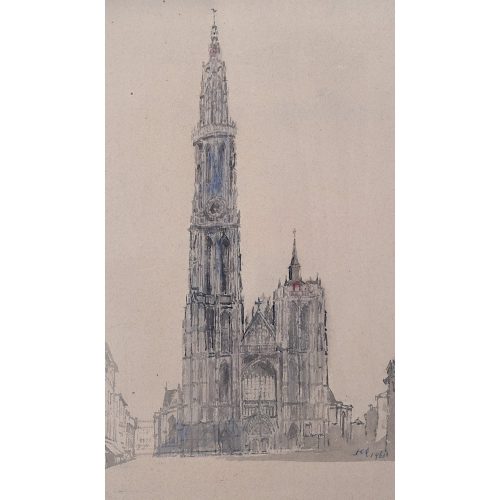
Sir Albert Edward Richardson K.C.V.O., F.R.I.B.A, F.S.A., P.R.A. (1880-1964)
Antwerp Cathedral
33x20cm Watercolour Sir Albert Edward Richardson K.C.V.O., F.R.I.B.A, F.S.A., P.R.A. (1880-1964) was a traditionalist, renowned for his distaste of modern architecture. Rooted firmly in the classical period, he lived a Georgian life, refusing to have electricity in his Georgian house – until his wife finally insisted. Professor of Architecture at UCL’s Bartlett School of Architecture from 1929-1955, this was evacuated to Cambridge during the war and he became a fellow of St Catharine’s College. Amongst his other achievements, Richardson was President of the RA, editor of Architect’s Journal and founder of the Georgian Group. For pleasure he painted architectural fantasies; capriccios of buildings he pictured in his mind. Richardson was recipient of the Architectural Association’s Professor Bannister Fletcher Medal in 1902 which was an award for the study of post-Fire London architecture. Amongst his achievements were Professor of Architecture at University College London, President of the RA, editor of Architect’s Journal and founder of the Georgian Group. Click here for other works by the artist and biographical details. If you are interested email info@manningfineart.co.uk or call us on 07929 749056. -

Braun & Hogenberg
Map of Cambridge
Engraving with later hand colouring 34 x 45 cm This map is taken from the Civitates Orbit Terrarium, also known as the ‘Braun & Hogenberg.’ This work is the culmination of a fifty year collaboration between Braun and Hogenberg, containing 546 prospects, bird’s-eye views and maps of cities from all around the world. Of these 546 works, 363 were engravings and this particular edition stands out as one of the beautiful and vibrant maps treated to meticulous hand-colouring. Georg Braun was born in Cologne in 1541 and worked as a topo-geographer. As principal editor of the work, he acquired the tables, hired the artists and cartographers and wrote the texts, including the Latin article on ‘Cantabrigia’ found on the reverse of this engraving. He died as an octogenarian in 1622, the only survivor of the original team to witness the publication of volume VI. Frans Hogenberg was born in 1535 in Mechelen in Flanders and worked as a painter, engraver and mapmaker. He was notably exiled from Antwerp in 1568 by the Duke of Alva because he was Protestant and had printed engravings sympathising with the Beeldenstorm (the Great Iconoclasm, a historical event in which many forms of church fittings and decoration were destroyed as part of the Protestant Reformation). He then moved to London for a brief period before settling in Cologne, where he worked with Braun on the Civitates. Condition: Generally very good. For other general views of Cambridge, click here. -
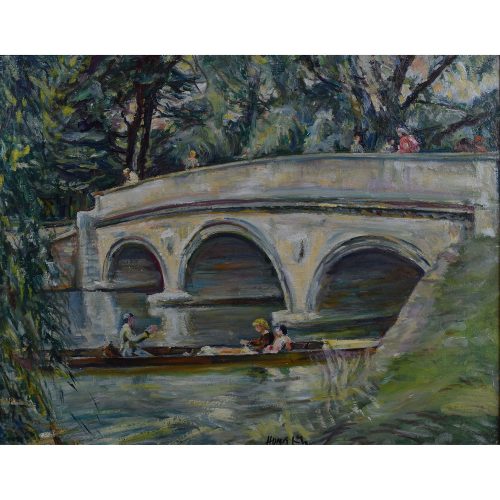
Nancy Weir Huntly (1890-1963)
Trinity College Bridge Cambridge
Oil on canvas; framed in an antique-white-finished frame with gilt slip. Signed 'Huntly' 50x61cm Born in India, in Nusserabad, she studied art at the Royal Academy Schools in Dusseldorf. She lived in Welwyn Garden City, in Hertfordshire, with her daughter, Faith Sheppard, also a painter. She also painted under the name Nancy Sheppard. If you are interested email info@manningfineart.co.uk or call us on 07929 749056. -
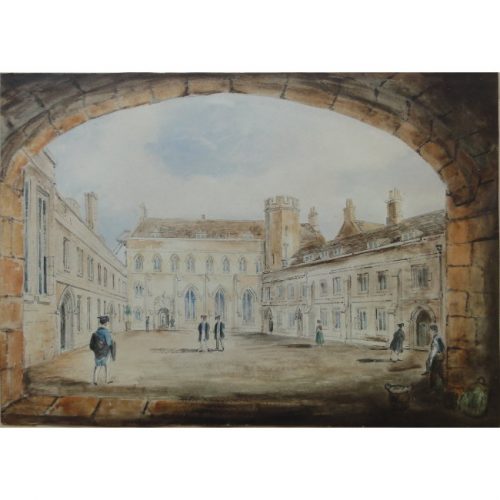
Attributed to Richard Bankes Harraden (1778–1862)
First Court, Pembroke College, Cambridge c1830
Watercolour, unsigned 27.5x39cm Pembroke prior to the demolition of the south range of Old Court in 1874 by Alfred Waterhouse. (His plans for the near-complete rebuilding of the College included the demolition of Wren’s chapel, but the Fellows’ caution prevented this.) If you are interested email info@manningfineart.co.uk or call us on 07929 749056. -
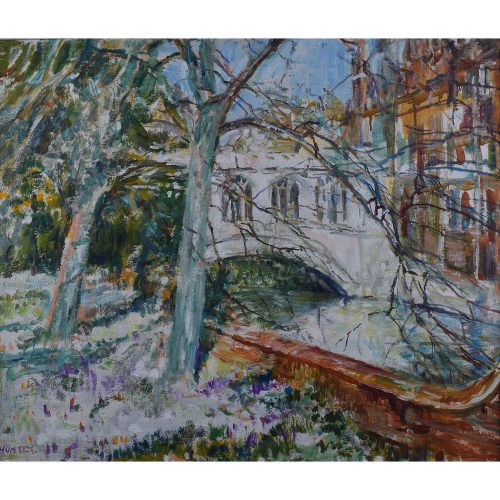
Nancy Weir Huntly (1890-1963)
St John's College Bridge of Sighs Cambridge
Oil on canvas; framed. Signed 'Huntly' 50x61cm Born in India, in Nusserabad, she studied art at the Royal Academy Schools in Dusseldorf. She lived in Welwyn Garden City, in Hertfordshire, with her daughter, Faith Sheppard, also a painter. She also painted under the name Nancy Sheppard. If you are interested email info@manningfineart.co.uk or call us on 07929 749056. -
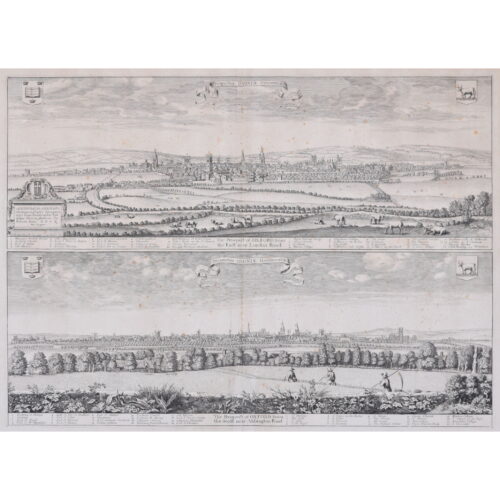
David Loggan (1634-1692)
Prospectus Oxoniae Orientalis & Meridionalis
Engraving 33 x 46 cm Loggan's prospect of Oxford as seen from the East, from the 'Oxonia Illustrata'. Loggan was born to English and Scottish parents, and was baptised in Danzig in 1634. After studying engraving in Danzig with Willem Hondius (1598-1652 or 1658), he moved to London in the late 1650s, going on to produce the engraved title-page for the folio 1662 Book of Common Prayer. He married in 1663 and moved to Nuffield in Oxfordshire in 1665. Loggan was appointed Public Sculptor to the nearby University of Oxford in the late 1660s, having been commissioned to produce bird’s-eye views of all the Oxford colleges. He lived in Holywell Street as he did this. The 'Oxonia Illustrata' was published in 1675, with the help of Robert White (1645-1704). Following its completion, Loggan began work on his equivalent work for Cambridge; the 'Cantabrigia Illustrata' was finally published in 1690, when he was made engraver to Cambridge University. The 'Oxonia Illustrata' also includes an engraving of Winchester College (Winchester and New College share William of Wykeham as their founder) whilst the 'Cantabrigia Illustrata' includes one of Eton College (which shares its founder, Henry VIII, with King’s College). Bird’s-eye views from this era required a particular talent as an architectural perspectivist; it was not until 1783 that it became possible for artists to ascend via hot air balloons and view the scenes they were depicting from above. Loggan thus had to rely on his imagination in conceiving the views. Loggan’s views constitute the first accurate depictions of the two Universities, in many ways unchanged today. Whilst the Oxford engravings were produced in reasonable numbers and ran to a second edition by Henry Overton (on thicker paper and with a plate number in Roman numerals in the bottom right-hand corner), those of Cambridge were printed in much smaller numbers.The Dutchman Pieter van der Aa published some miniature versions of the engravings for James Beverell’s guidebook to the UK, 'Les Delices de la Grande Bretagne' (circa 1708). The contemporary artist Andrew Ingamells (born 1956) has produced a highly-acclaimed series of etchings which bring Loggan’s original vision up to date.Condition: generally good; a little staining to margins and some spotting primarily visible in the sky. If you are interested, please email info@manningfineart.co.uk or call us on 07929 749056. Click here for other David Loggan views. -
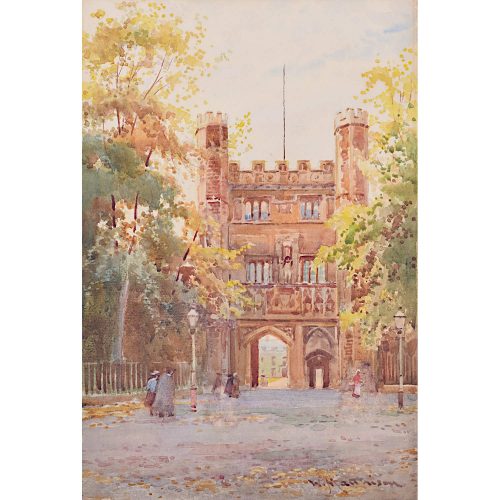
William Matthison (1853-1926)
Trinity College Cambridge Great Gate
Watercolour 36.5 x 26 cm Matthison was born near Birmingham and attended King Edward’s School in the city. He learned drawing at the Birmingham Central School of Art and then became a pupil of Birmingham artist Edward Watson. He became a professional artist in 1875 and moved to Oxfordshire a few years after; this was where he had the opportunity to produce many of the Oxford views for which he is known today. In 1902 he moved to Park Town in Oxford and was commissioned by Robert Peel to paint more than seventy views of the University of Oxford, which were subsequently made into postcards. Priced at seven for a shilling, they were only available from E Cross of Pembroke Street (a long-since closed business). Raphael Tuck & Sons also commissioned him to produce postcard scenes of Cambridge. Matthison’s views of Oxford were later printed in Fifty Watercolour Drawings of Oxford, published in 1912 by Alden & Co. Click here for other works by the artist. If you are interested, please email info@manningfineart.co.uk or call us on 07929 749056. -
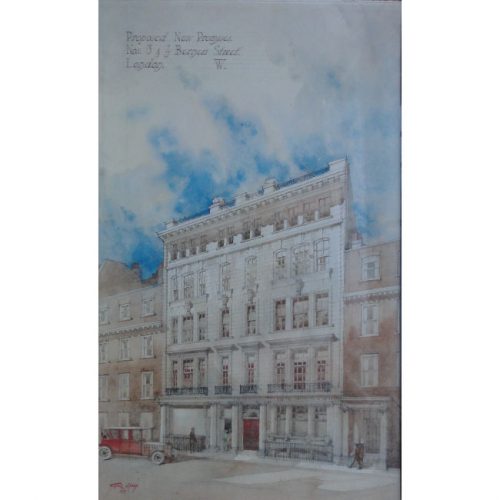
Cyril Farey (1888-1954)
Berners Street
Signed ‘Cyril A Farey’ and inscribed ‘Proposed New Premises Nos 3 & 4 Berners Street London W.’ Pencil and watercolour 39.5 x 23.5 cm Biographical details and other works by Cyril Farey can be found here. If you are interested email info@manningfineart.co.uk or call us on 07929 749056. -
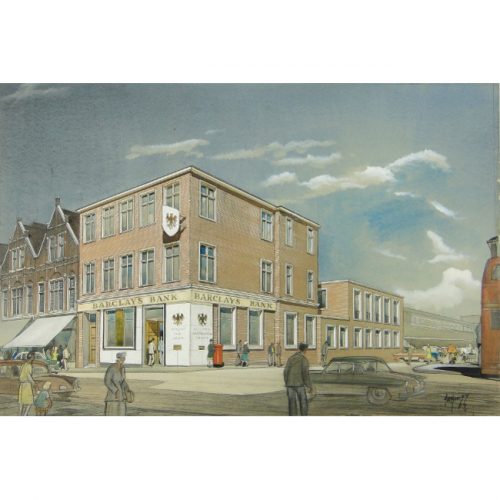
John Dean Monroe Harvey (1895-1978)
A design for Barclays Bank, Walthamstow (1964)
Signed and dated ‘J D M Harvey 64.’ Gouache on paper. A very fine architectural perspective by Harvey with his customary distinctive clouds and elegant people. The scheme was built, but the ground floor has since been rebuilt in a rather less satisfactory fashion. 41 x 60 cm (16 x 23 inches) For biographical details and more works by JDM Harvey, please click here. If you are interested email info@manningfineart.co.uk or call us on 07929 749056. -
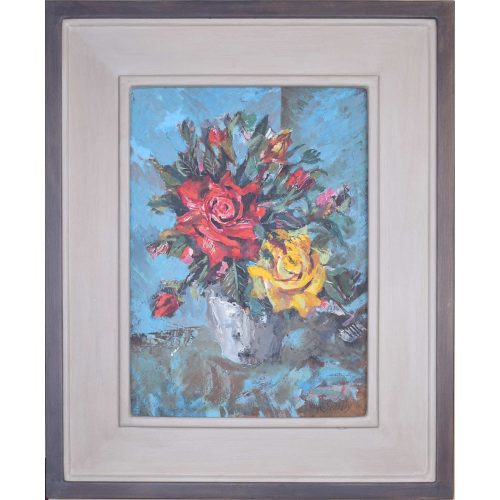
Rowland Suddaby (1912-1972) English Roses - Still Life
Oil on board 39x29cm (frame 58x46cm) c. 1950s Artist's label to reverse In a fine hand-finished frame Born in Kimberworth, Yorkshire, Suddaby commenced study in 1926 at the Sheffield College of Art on a scholarship, coming to London at nineteen in 1931. Following an early marriage and an initial struggle as an artist his first successful show was at the Wertheim Gallery in London in 1935, followed by a series of shows at the Redfern Gallery from 1936. For the latter he was their replacement for Christopher Wood (who had sadly killed himself in 1930 by jumping under a train) and he painted assured oils and watercolours - some showing Wood influences - in London and Cornwall. Popular with both art critics and the buying public he had great success. Early in World War Two, Suddaby moved - with his family - to the Suffolk countryside near Sudbury to become curator of the Gainsborough's House Museum, East Anglia providing him with the foundations for the pictures for which he is now well known. In 1940 he was chosen for the 'Recording Britain' project. Showing something of the influence of John Nash, his distinctive depiction of the East Anglian countryside, with its hedges and fences is instantly recognisable. His still life paintings which he also painted in the 1940s and 50s were exhibited at the Leger Galleries and at the Colchester Art Society of which he was a founder member. By the 1960s he had evolved his style towards abstraction. He was also a noted designer, producing textiles and furnishings and designing posters for Shell. His work is in many major collections such as the V&A Museum and the Government Art Collection If you are interested email info@manningfineart.co.uk or call us on 07929 749056. Condition: Good. -
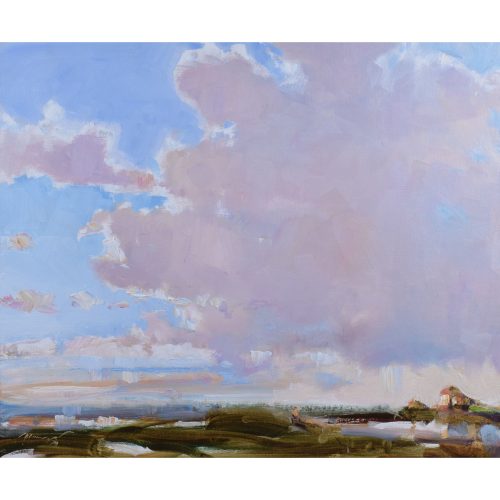
Ken Moroney (British, 1948-) The Fens, Norfolk (c. 1990)
Oil on canvas board 48 x 58 cm Provenance: Bonhams (2003) Of Anglo-Irish parentage, Moroney was born in South London, and showed early artistic talent. His Irish father, finding it unmanly, encouraged him to box, and whilst a teenager Moroney won a gold medal. However this did not distract him from art, and once his boxing hobby came to an end the paints continued to show his flair. Self-taught, his impressionistic style, with bold use of colour, has found widespread favour and his works now hang in many important collections. Here he captures the many colours often visible in a fenland sky, where the flat landscape makes for huge skies. If you are interested email info@manningfineart.co.uk or call us on 07929 749056. Condition: Excellent. -
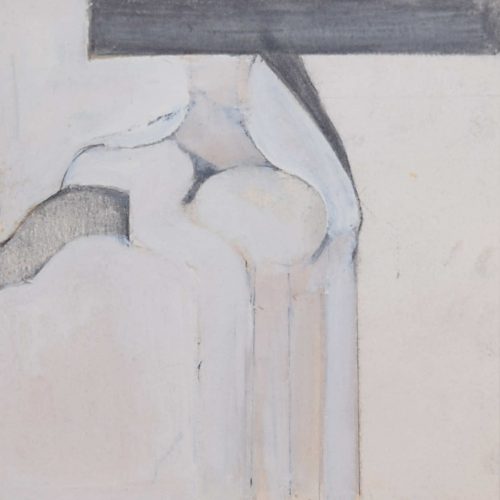
Adrian Heath Abstract Study III (1975)
Acrylic and pencil on paper 22 x 22cm Heath was born in Burma in 1920 and arrived in England aged five. In 1938 he studied art under Stanhope Forbes at Newlyn and later at the Slade School of Art. While serving in WWII, he was captured and placed in a prisoner-of-war camp in Bavaria. Heath attempted to escape from the camp but was recaptured and placed in solitary confinement; this isolation proved crucial to the development of his artistic style, as he spent much of his time there experimenting with abstract forms. When released from confinement, Heath befriended a fellow prisoner of war: Terry Frost. Together they explored the methods of painting which they had developed during their time in the camps, and following the war both became celebrated artists. We have several Terry Frost pieces available too. In 1949 and 1951, Heath returned to Cornwall. He spent time with artists like Ben Nicholson, Victor Pasmore, and Anthony Hill, and became the main link between the emerging St Ives School of artists and the British Constructivist movement back in London. He is further credited with promoting British abstract art through informal exhibitions in his studio on Fitzroy Street, as well as his manifesto-like text entitled 'Abstract Art: Its Origins and Meaning', which was published in 1953. Over time, Heath's paintings of abstract geometry and symmetry became increasingly dynamic and heavily textured, the result of layering paint on paint over the course of several days. This study features a muted colour palette and abstract asymmetric form. If you'd like to know more, please email info@manningfineart.co.uk or call us on 07929 749056. Condition: Good. Signed lower right. -
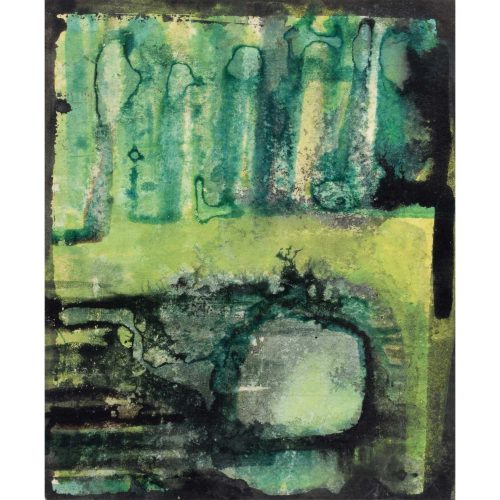
John Piper (1903-1992)
Study for the Piper Building mural
Gouache 14.5x11.5cm Provenance: P Manzareli (who built the fibreglass murals for Piper), gift from the artist; Milne & Moller Fine Art; Katharine House Gallery; private collection, Scotland. This study is a fascinating part of London's architectural history. The Piper Building is a mid-century architectural icon in Fulham. Built in the 1950s as 'Watson House', it was a laboratory complex for the North Thames Gas Board and has an innovative concrete structure. Piper was commissioned to produce the murals surrounding the building. The Gas Board moved out in the mid 1980s. Scheduled for demolition in the 1990s, the building was instead converted into seventy apartments and renamed the Piper Building. With double-height ceilings, the apartments were sold as shells, and purchasers were free to commission their own architects and builders. Condition: Generally excellent; framed. For other works by the artist and biographical details, click here. If you are interested email info@manningfineart.co.uk or call us on 07929 749056.