-
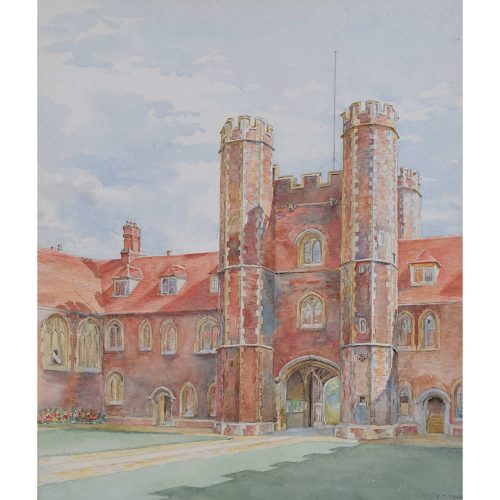
E. T. Talbot
St John's College, Cambridge, showing the First Court and Chapel
Watercolour 30 x 25 cm A richly-coloured watercolour painting of the First Court of St John's. First Court was built in 1511-20 to the south of the old Hospital of St John the Evangelist, and was designed to contain living quarters, chapel, library, hall, and kitchens. The version of First Court which Talbot paints looks markedly different to the college today - the chapel on the far left of the picture was demolished after the new chapel was completed in 1869. -
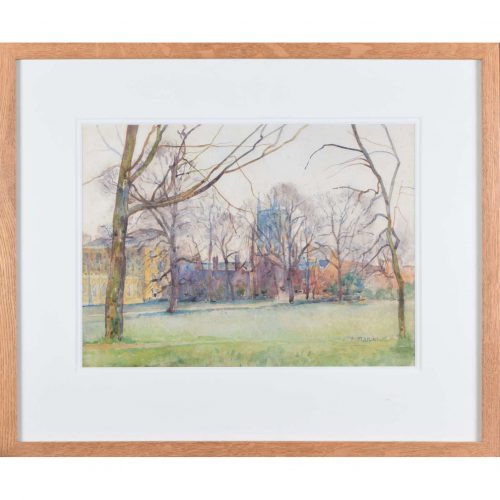
James Bolivar Manson (1879 - 1945) St John's College, Cambridge
Watercolour 29 x 40 cm Signed lower right. A wintry view of St John's College, Cambridge. The chapel tower nestles behind bare trees, set against a white sky. Manson was an artist who worked at the Tate Gallery and was its Director from 1930 to 1938. His time there was clouded by his frustrated ambitions as a painter and his descent into alcoholism. His professional career began as an office boy - leaving Alleyn's School in Dulwich at 16 - with the publisher George Newnes, and then as a bank clerk. He simultaneously studied painting at Heatherley School of Fine Art, commencing in 1890, and then Lambeth School of Art - much encouraged by Lilian Laugher, a violinist who came to stay in the Manson household. He married her in 1903 - the same year he abandoned his bank job. They moved to Paris for a year. Manson shared a studio with Jacob Epstein, who became a lifelong friend. When they returned to London, Manson joined the Camden Town Group, becoming Secretary. Lilian was a close friend of the Director of the Tate and ensured that Manson, aged 33, became Tate Clerk. Manson continued to paint feverishly at the weekend. The Tate website describes Manson as its 'least succesful' director. Kenneth Clark described him with "a flushed face, white hair and a twinkle in his eye; and this twinkling got him out of scrapes that would have sunk a worthier man without trace." His painting continued to show promise, and he joined the London Group in 1914 and showed with the New England Art Club from 1915. His first solo show was at the Leicester Galleries in 1923 and he became a member of the NEAC in 1927. He attended a dinner at the Hotel George V in Paris in 1938 to celebrate the British Exhibition at the Louvre. Clive Bell wrote to his wife, "Manson arrived at the déjeuner given by the minister of Beaux Arts fantastically drunk - punctuated the ceremony with cat-calls and cock-a-doodle-doos, and finally staggered to his feet, hurled obscene insults at the company in general and the minister in particular, and precipitated himself on the ambassadress, Lady Phipps, some say with amorous intent; others with lethal intent." Bell concluded: "The guests fled, ices uneaten, coffee undrunk... I hope an example will be made, and that they will seize the opportunity for turning the sot out of the Tate, not because he is a sot, but because he has done nothing but harm to modern painting." The Director of the Tate was arbiter as to whether imported items amounted to art (which would make them exempt from customs duty). This caused controversy when Peggy Guggenheim imported sculpture by Marcel Duchamp and others. Manson pronounced Constantin Brâncuși's Sculpture for the Blind (a large, smooth, egg-shaped marble) to be "idiotic" and "not art", and therefore subject to duty. Letters were written to the press and the matter reached the House of Commons, where Manson was criticised and eventually had to back down. He retired at the age of 58. By his own account, "my doctor has warned me that my nerves will not stand any further strain... I have begun to have blackouts, in which my actions become automatic. Sometimes these periods last several hours.... I had one of these blackouts at an official luncheon in Paris recently, and startled guests by suddenly crowing like a cock...." His successor was Sir John Rothenstein, who discovered that the staff referred to artwork in the basement as 'Director's Stock'. It transpired that Manson had been selling it to boost his salary. His work now hangs in the Tate, as well as in many other galleries in Britain and abroad. Condition: Good. If you’d like to know more, please email info@manningfineart.co.uk or call us on 07929 749056. Click here for more views of St John's College, Cambridge. -
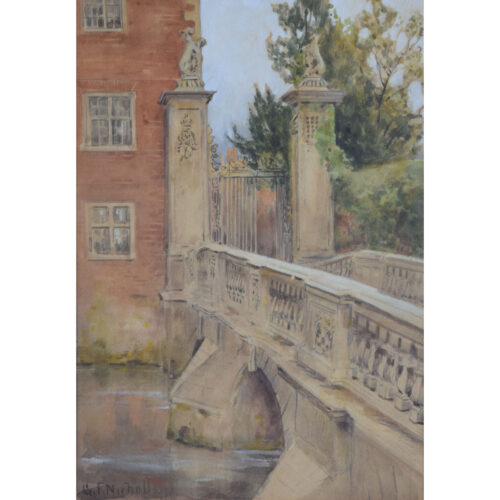
George Frederick Nicholls (1850 - 1935)
Wren Bridge, St John's College, Cambridge
Watercolour 37 x 24 cm Many of Nicholls' paintings are of the Cotswolds and Oxford. He painted the illustrations for a series of county books for A & C Black, including Cornwall (1915) and Cotswolds (1920). Condition: very good. If you are interested, please email info@manningfineart.co.uk or call us on 07929 749056. Click here for other views of St John’s College, Cambridge. -
Out of stock

Hugh Casson (1910 - 1999) St John's College, Cambridge
Lithograph 29 x 37 cm Signed and numbered 427/500, both in pencil. Sir Hugh Casson was educated at Eastbourne College; St John’s College, Cambridge; and the Bartlett School of Architecture. Trained in the 1930s in the early modernist style, he taught at the Cambridge School of Architecture. After employment as a camoufleur during World War 2 by the Air Ministry, in 1948 he was appointed as director of architecture for the Festival of Britain. A close friend of the Royal Family, he undertook designs for the 1953 coronation, designed the interior of the Royal Yacht Britannia (“The overall idea was to give the impression of a country house at sea”), and taught the young Charles III to paint in watercolours. Amongst his architectural achievements are the Elephant House at London Zoo, the 1978 redevelopment of Bristol Docks, the Raised Faculty Building for The University of Cambridge, and a building for the Royal College of Art. He published a number of illustrated books, of which Casson’s Oxford and Casson’s Cambridge are probably the best known. A limited edition series of prints was produced from the paintings. This lithograph depicts a view over Kitchen Bridge in St John's College. As is typical in many of his works, Casson expertly captures the architecture of this Cambridge college, while also portraying the everyday comings-and-goings of college life. In this case, a punt floats past a group of students basking in the sun and another group crosses over the bridge, perhaps on their way to get their lunch from the cafe. Condition: Generally very good.If you would like to know more, please email info@manningfineart.co.uk or call us on 07929 749056.
For other views of St John's College, click here. -
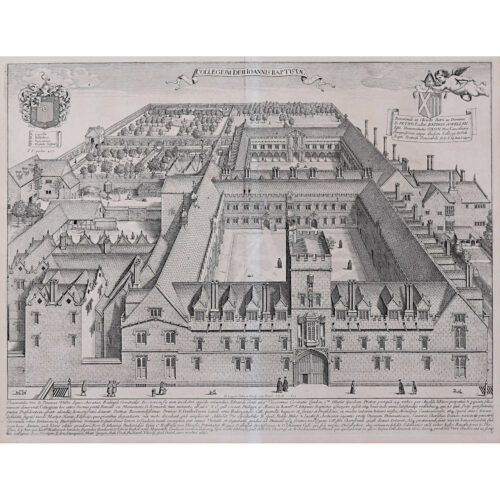
David Loggan (1634 - 1692)
St John's College, Oxford (1675)
Engraving 32 x 41 cm Loggan's view of St John's from the 'Oxonia Illustrata'. Loggan was born to English and Scottish parents, and was baptised in Danzig in 1634. After studying engraving in Danzig with Willem Hondius (1598-1652 or 1658), he moved to London in the late 1650s, going on to produce the engraved title-page for the folio 1662 Book of Common Prayer. He married in 1663 and moved to Nuffield in Oxfordshire in 1665. Loggan was appointed Public Sculptor to the nearby University of Oxford in the late 1660s, having been commissioned to produce bird’s-eye views of all the Oxford colleges. He lived in Holywell Street as he did this. The 'Oxonia Illustrata' was published in 1675, with the help of Robert White (1645-1704). Following its completion, Loggan began work on his equivalent work for Cambridge; the 'Cantabrigia Illustrata' was finally published in 1690, when he was made engraver to Cambridge University. The 'Oxonia Illustrata' also includes an engraving of Winchester College (Winchester and New College share William of Wykeham as their founder) whilst the 'Cantabrigia Illustrata' includes one of Eton College (which shares its founder, Henry VIII, with King’s College). Bird’s-eye views from this era required a particular talent as an architectural perspectivist; it was not until 1783 that it became possible for artists to ascend via hot air balloons and view the scenes they were depicting from above. Loggan thus had to rely on his imagination in conceiving the views. Loggan’s views constitute the first accurate depictions of the two Universities, in many ways unchanged today. Whilst the Oxford engravings were produced in reasonable numbers and ran to a second edition by Henry Overton (on thicker paper and with a plate number in Roman numerals in the bottom right-hand corner), those of Cambridge were printed in much smaller numbers. The Dutchman Pieter van der Aa published some miniature versions of the engravings for James Beverell’s guidebook to the UK, 'Les Delices de la Grande Bretagne' (circa 1708). The contemporary artist Andrew Ingamells (born 1956) has produced a highly-acclaimed series of etchings which bring Loggan’s original vision up to date. Condition: generally very good; mostly-even all-over toning save to extreme margins. If you are interested, please email info@manningfineart.co.uk or call us on 07929 749056. Click here for other views of St John’s College, Oxford. -
Out of stock
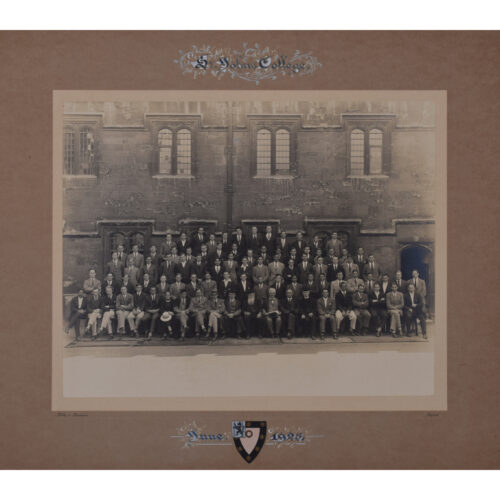
Hills and Saunders
St John's College, Oxford (1925)
Silver gelatin photograph with extensive hand-decoration of mount 43 x 49 cm A photograph taken of St John's College students and tutors in 1925. Hills & Saunders was one of the leading Victorian social photography firms. Robert Hills and Henry Saunders started the firm together in 1860 and had studios in Oxford, Cambridge, and London during the course of their partnership, as well as near certain army bases and public schools. They were given a Royal Warrant in 1867. Condition: generally very good. If you are interested, please email info@manningfineart.co.uk or call us on 07929 749056. Click here for more St John's pictures. -
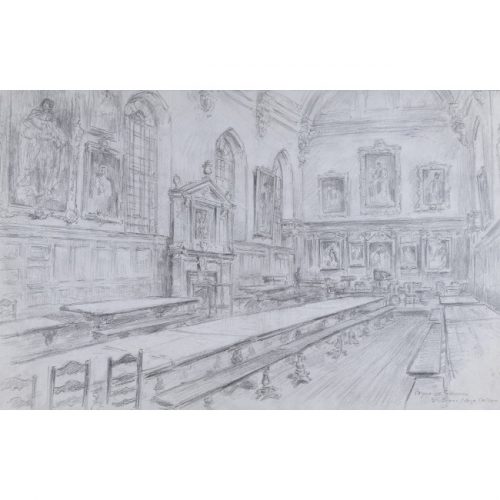
Bryan de Grineau (1883 - 1957)
The Hall, St John’s College, Oxford
Pencil 34 x 56 cm Signed and titled lower right. Drawing published in The Illustrated London News, 18 June 1955. Condition: very good. Click here for other views of St John’s College by this artist and biographical details. If you are interested, please email info@manningfineart.co.uk or call us on 07929 749056. -
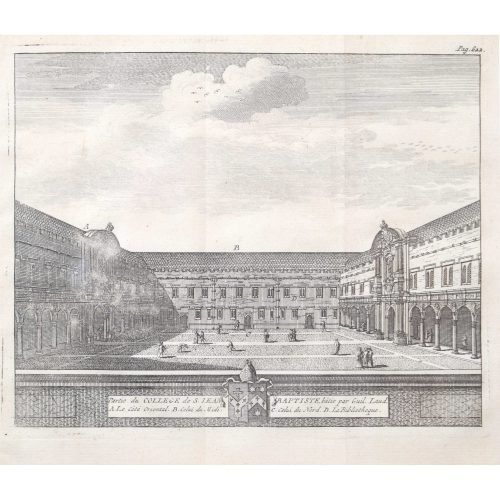
Pieter van der Aa (1659-1733), after David Loggan (1634–1692)
St John's College, Oxford (1727)
Engraving 12 x 16 cm An eighteenth-century view of Canterbury Quad, St John's, engraved by Pieter van der Aa after David Loggan, the noted engraver, draughtsman, and painter. Pieter van der Aa of Leiden was a Dutch publisher best known for preparing maps and atlases, though he also printed editions of foreign bestsellers and illustrated volumes. He is noted for the many engravings he produced after David Loggan's series of Oxford and Cambridge colleges and costumes. In 1727 Van Der Aa illustrated "Les Delices de la Grande Bretagne & de L'Irelande" by James Beeverell, the book in which this engraving appears. Condition: a good impression. If you’d like to know more, please email info@manningfineart.co.uk or call us on 07929 749056. -
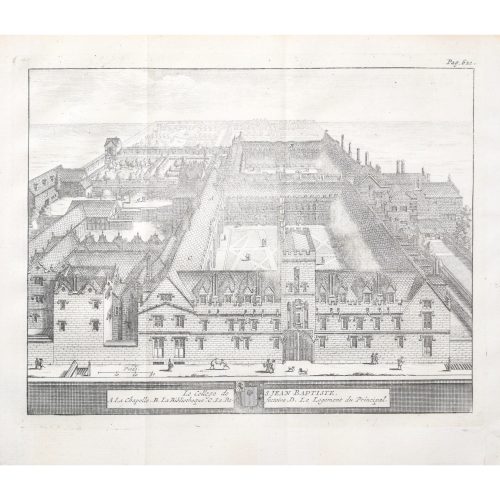
Pieter van der Aa (1659-1733), after David Loggan (1634–1692)
St John's College, Oxford (1727)
Engraving 12 x 16 cm An eighteenth-century view of St John's, engraved by Pieter van der Aa after David Loggan, the noted engraver, draughtsman, and painter. Pieter van der Aa of Leiden was a Dutch publisher best known for preparing maps and atlases, though he also printed editions of foreign bestsellers and illustrated volumes. He is noted for the many engravings he produced after David Loggan's series of Oxford and Cambridge colleges and costumes. In 1727 Van Der Aa illustrated "Les Delices de la Grande Bretagne & de L'Irelande" by James Beeverell, the book in which this engraving appears. Condition: a good impression. If you’d like to know more, please email info@manningfineart.co.uk or call us on 07929 749056. -

William Nicholson (1872 - 1949)
St John's College, Oxford II
Lithograph 21 x 36 cm Signed in ink, illegibly inscribed (by Nicholson), and with Stafford Gallery blindstamp to bottom right. S ir William Nicholson was a British painter and printmaker. He is also known as an illustrator, author of children’s books, stained glass designer, and theatre set designer. Between 1902 and 1904 William Nicholson lived in Woodstock; during this period he made several architectural studies of Oxford's colleges and other University buildings. It was during this period that he produced this lithograph of a bucolic scene at St John's. The grass is green, the trees are blowing in the wind and the charm of this Oxford college radiates throughout. Condition: Generally very good, slight even toning to paper; old tape stain to margin which will be under the mount If you are interested, please email info@manningfineart.co.uk or call us on 07929 749056. Click here for other views of St John's College, Oxford. -

Hugh Casson (1910 - 1999)
St John's College, Oxford (1989)
Lithograph 30 x 24 cm Casson's charming view of Canterbury Quad, St John's College, Oxford. Sir Hugh Casson was educated at Eastbourne College; St John’s College, Cambridge; and the Bartlett School of Architecture. Trained in the 1930s in the early modernist style, he taught at the Cambridge School of Architecture. After employment as a camoufleur during World War 2 by the Air Ministry, in 1948 he was appointed as director of architecture for the Festival of Britain. A close friend of the Royal Family, he undertook designs for the 1953 coronation, designed the interior of the Royal Yacht Britannia (“The overall idea was to give the impression of a country house at sea”), and taught the young Charles III to paint in watercolours. Amongst his architectural achievements are the Elephant House at London Zoo, the 1978 redevelopment of Bristol Docks, the Raised Faculty Building for The University of Cambridge, and a building for the Royal College of Art. He published a number of illustrated books, of which Casson’s Oxford and Casson’s Cambridge are probably the best known. A limited edition series of prints was produced from the paintings. Condition: very good; mounted to board. If you are interested, please email info@manningfineart.co.uk or call us on 07929 749056. Click here for other views of St John’s College, Oxford. -

William Nicholson (1872 - 1949)
St John's College, Oxford
Lithograph 39 x 28 cm Signed in ink, numbered 123, and with Stafford Gallery blindstamp to bottom right. Sir William Nicholson was a British painter and printmaker. He is also known as an illustrator, author of children’s books, stained glass designer, and theatre set designer. Between 1902 and 1904 William Nicholson lived in Woodstock; during this period he made several architectural studies of Oxford's colleges and other University buildings. It was during this period that he produced this striking lithograph of St John's College, capturing a dark academic aura through his use of sombre hues. Condition: Generally very good, slight even toning to paper; old tape stain to margin which will be under the mount If you are interested, please email info@manningfineart.co.uk or call us on 07929 749056. Click here for other views of St John's College, Oxford. -

T B Miller St John's College, Oxford (1908)
Watercolour 35 x 25 cm Signed and dated 'after ? 1908' lower left and titled lower right in pencil (in artist's hand). Condition: generally very good; mounted to card. If you are interested, please email info@manningfineart.co.uk or call us on 07929 749056. Click here for other views of St John’s College, Oxford. -
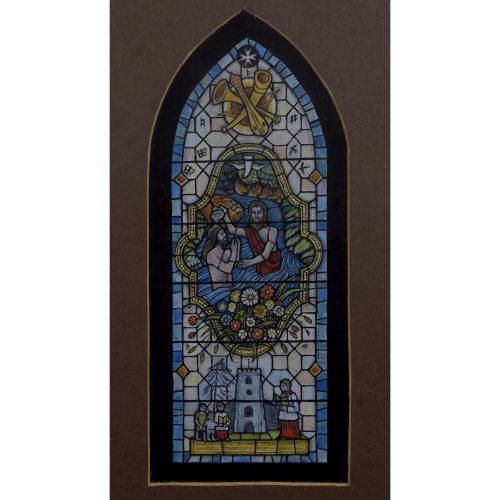
Jane Gray (b.1931)
St John’s Church, Broughton, Design for Stained Glass Window (1983)
Watercolour 20 x 9 cmStudio label verso.
St John’s Church, in rural Preston, began as a wooden family chapel for the Lord of the Manor in the 12th century. This chapel, however, was demolished in 1823. Since then, the rebuilt sandstone church has been remodelled a number of times, the oldest part of the existing church, the tower, dating back to 1533 during Henry VIII’s reign. This window centres on the baptism of Christ by St John and features symbolic imagery of music, flowers, harvest, birds, insects, choristers, schoolchildren, and the church itself. The window was installed in 1985.
Provenance: the artist’s studio sale. Literature: Jane Gray, Playing with Rainbows. (Shropshire: Ellingham Press, 2011), p.78. Condition: very good. If you are interested, please email info@manningfineart.co.uk or call us on 07929 749056. For other works by Jane Gray and more information about her, please click here. -
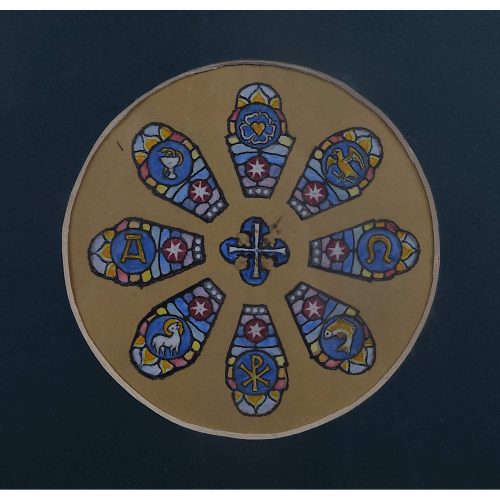
Jane Gray (b.1931)
St John’s Church, Pool Quay, Design for Stained Glass Roundel (2005)
Watercolour D.14 cmSigned and studio stamp verso.
St John's Church was built in 1861 under the patronage of the third Earl of Powys to provide for the religious needs of the largely industrial population of Pool Quay. The church was originally designed in the Early English style but was extensively restored first in 1956 and again in 2003/4. Despite this, it still retains its unique charm, built in the instantly recognisable red Sweeney Mountain sandstone, and features stained glass windows by Winfield of Birmingham (1891) and Camm of Smethwick (1899). This design by Gray features eight lights containing attributes of St John and other Christian symbols.
Provenance: the artist’s studio sale. Literature: Jane Gray, Playing with Rainbows. (Shropshire: Ellingham Press, 2011), p.89. Condition: very good. If you are interested, please email info@manningfineart.co.uk or call us on 07929 749056. For other works by Jane Gray and more information about her, please click here. -
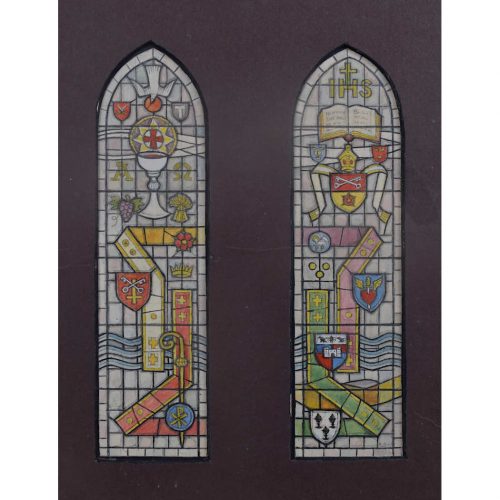
Jane Gray (b.1931)
St John’s Church, Read, Nr. Burnley, Lancashire, Design for Stained Glass Memorial Window (1980)
Watercolour 18 x 10 cm Signed, dated and studio label verso.St John’s Church in Read, Lancashire is a parish church that was dedicated to St John Evangelist in 1884 by Henry Ross of Accrington. The parish also notably includes Read Hall and Park, the seat of the Nowell family from the 14th century, Roger Nowell being a key magistrate at the time of the Lancashire Witches in 1612 sending them to Lancaster for trial and eventual execution. This window was installed in 1981.
Provenance: the artist’s studio sale. Literature: Jane Gray, Playing with Rainbows. (Shropshire: Ellingham Press, 2011), p.76. Condition: very good. If you are interested, please email info@manningfineart.co.uk or call us on 07929 749056. For other works by Jane Gray and more information about her, please click here. -
Anonymous
St John’s College, Cambridge
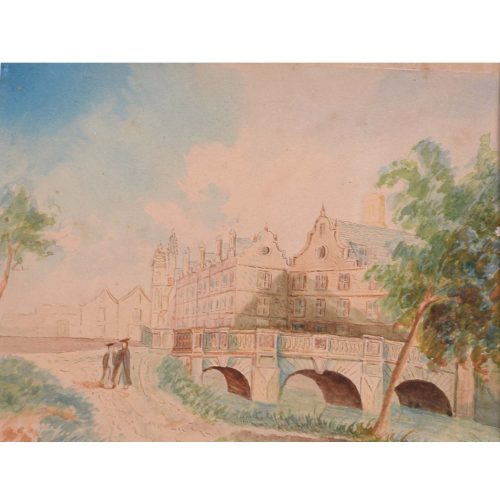
Watercolour and pencil 13x18cm Probably early 19th century. This watercolour depicts St John’s prior to construction of Hutchinson’s 1831 New Court buildings; two figures wearing gowns and square caps are engaged in conversation by the Wren Bridge. If you are interested email info@manningfineart.co.uk or call us on 07929 749056. Condition: Good. -
St. John’s College Chapel Cambridge (1895)
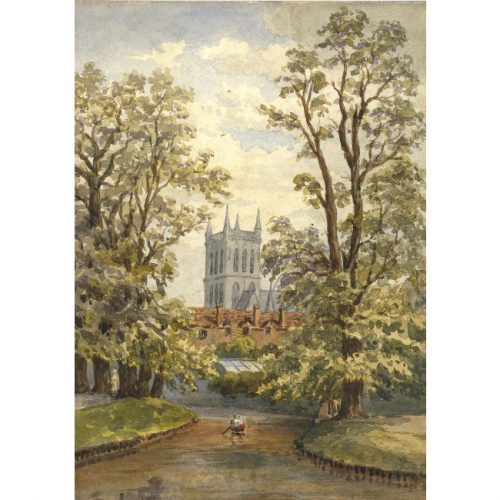
Watercolour 34×24.5cm Click to see King’s College by the same hand. If you are interested email info@manningfineart.co.uk or call us on 07929 749056. -
Bryan de Grineau (1883 - 1957)
Canterbury Quad, St John’s College, Oxford
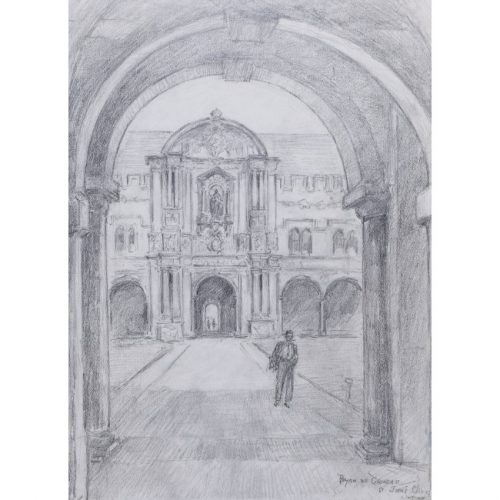
Pencil 46 x 34 cm Signed and titled lower right. Drawing published in The Illustrated London News, 1955. Click here for other views of St John’s College by this artist and biographical details. Condition: very good. If you are interested, please email info@manningfineart.co.uk or call us on 07929 749056. Click here for other views of St John's College, Oxford. -
Jane Gray (b.1931)
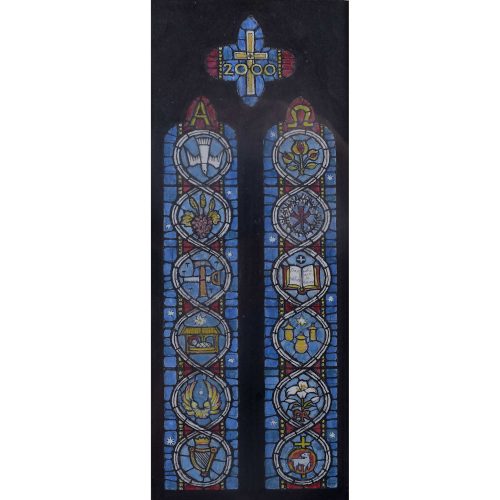
St Lawrence Church, Weston under Penyard, Design for Stained Glass Window (1999)
Watercolour 21.5 x 8.5 cmSigned, dated and studio stamp verso.
St Catherine’s Church, Penrith is a Puginian Gothic town church, built by Fr George Haydock of Cottam and other Catholic notables in the early 19th century in the 14th century Gothic style. The church and its substantial presbytery, built in 1853, adjoin the churchyard of the Anglican parish church. This window was installed in 1992.
Provenance: the artist’s studio sale. Literature: Jane Gray, Playing with Rainbows. (Shropshire: Ellingham Press, 2011), p.87. Condition: very good. If you are interested, please email info@manningfineart.co.uk or call us on 07929 749056. For other works by Jane Gray and more information about her, please click here. -
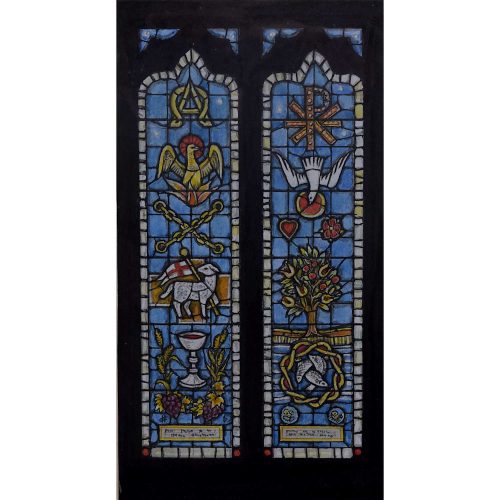
Jane Gray (b.1931)
St Leonards Church, Stagsden, Bedfordshire, Design for Stained Glass Window (1998)
Watercolour 19 x 10 cmSigned and dated verso.
Stagsden receives mention in the Domesday Book, suggesting the likely existence of a church here in the 11th century, St Leonard’s church is, however, first recorded in the 13th century, the vicar in 1229 being Reginald de Stacheden (Stagsden). The nave and the chancel of the present church date back to a similar period. Additions and renovations have since taken place, including the late 14th/early 15th century addition of the north chapel. This window was installed in 2000.
Provenance: the artist’s studio sale. Literature: Jane Gray, Playing with Rainbows. (Shropshire: Ellingham Press, 2011), p.86. Condition: very good. If you are interested, please email info@manningfineart.co.uk or call us on 07929 749056. For other works by Jane Gray and more information about her, please click here. -
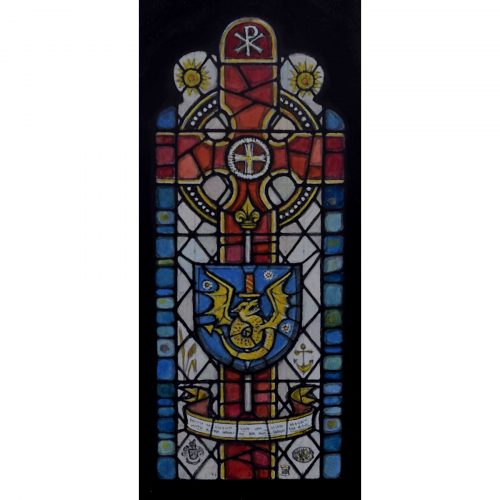
Jane Gray (b.1931)
St Margaret’s Church, Downham, Billericay, Essex, Design for Stained Glass Window
Watercolour 15.5 x 7.5 cmSigned and studio stamp verso.
It is likely that Christians have worshiped at this site for over a thousand years, but it wasn’t until the mid13th century that the first recorded church appeared. The church is dedicated to St Margaret of Antioch, a dragon slayer and patron saint of child bearing. Devotion Saint Margaret of Antioch became popular in the 13th century and there are around 80 churches today that share this dedication from the 13th century. The oldest part of the present church is the tower which dates from c.1470. The nave was rebuilt in the nineteenth century using much of the material from the thirteenth century church. An arson attack in March 1977 resulted in the gutting of the church, resulting in a highly modern interior. This window features the symbol of St Margaret and a red Cross on quarry background. The window was installed in 1988.
Provenance: the artist’s studio sale. Literature: Jane Gray, Playing with Rainbows. (Shropshire: Ellingham Press, 2011), p.79. Condition: very good. If you are interested, please email info@manningfineart.co.uk or call us on 07929 749056. For other works by Jane Gray and more information about her, please click here. -
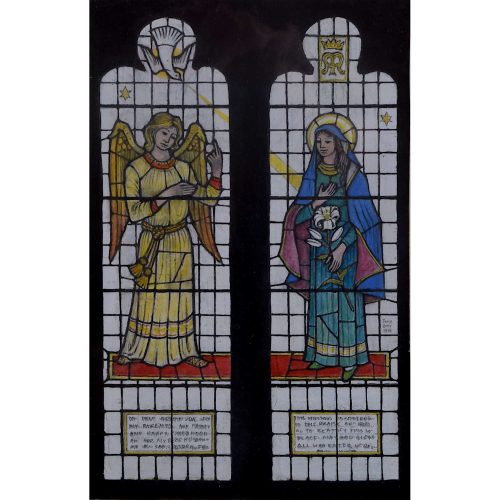
Jane Gray (b.1931)
St Mary the Virgin, Ebony, Tenterden, Design for Stained Glass Window (1983)
Watercolour 15.5 x 10 cmDated in artist's hand and artist label verso.
Worship at Ebony has taken place for some one thousand years but St Mary the Virgin Church, as it exists today, was not built until 1858. A church had previously existed on the island of Ebony where, standing 30 metres above sea level and visible for miles around, it provided a prominent landmark to ships coming up the sea creek. This church, however, was devastated by a fire in the 16th century, and from its ruins, a much smaller church, built in a simple rectangle of Kentish ragstone, was erected, serving the parish until 1858. In this year, the church was taken down, stone by stone, and moved to the nearby hamlet of Reading Street where it stands today. Gray’s design centres on the Anunciation, featuring the figures of Mary and Gabriel, and was installed in the church in 1984.
Provenance: the artist’s studio sale. Literature: Jane Gray, Playing with Rainbows. (Shropshire: Ellingham Press, 2011), p.78. Condition: very good. If you are interested, please email info@manningfineart.co.uk or call us on 07929 749056. For other works by Jane Gray and more information about her, please click here. -

Frederick Christian Lewis (1779 - 1856) after Frederick Nash (1782 - 1856) St Mary's Church, Oxford (1813)
Aquatint with original hand colouring 21 x 27 cm Published by Rudolph Ackermann (1764 - 1834). Frederick Nash was born in Lambeth. He studied architectural drawing under Thomas Malton and then enrolled at the Royal Academy of Arts. From 1801 to 1809 he worked with the antiquarians John Britton and Edward Wedlake Brayley, subsequently becoming a member of the Society of Painters in Watercolours - a group of painters who had left the Royal Academy following complaints of under-recognition of their works. Nash became primarily a landscape painter and toured the rivers of Germany. Frederick Christian Lewis was an English etcher, aquatint and stipple engraver, landscape and portrait painter. He studied under J. C. Stadler and in the schools of the Royal Academy and aquatinted most of Thomas Girtin's etchings of Paris, 1803. His superlative skills as engraver led to frequent commissions from Royalty, and to his contribution to J. M. W. Turner's Liber Studiorum, a collection of seventy-one etchings with mezzotint, greatly influencing landscape painting. Rudolph Ackermann was an Anglo-German bookseller, inventor, lithographer, publisher and businessman. In 1795 he established a print-shop and drawing-school at 96 Strand. Here Ackermann set up a lithographic press and began a trade in prints. He later began to manufacture colours and thick carton paper for landscape and miniature painters. Within three years the premises had become too small and he moved to 101 Strand, in his own words "four doors nearer to Somerset House", the seat of the Royal Academy of Arts. Between 1797 and 1800 Ackermann rapidly developed his print and book publishing business, encompassing many different genres including topography, caricature, portraits, transparencies and decorative prints. -
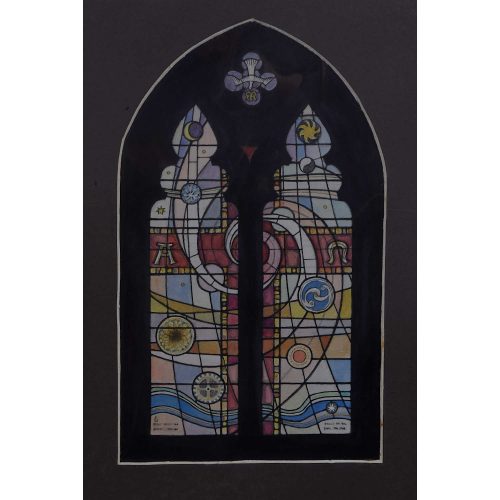
Jane Gray (b.1931)
St Mary’s Church, Bushbury, Wolverhampton, Design for Stained Glass Window (1989)
Watercolour 23 x 13.5 cmSigned, dated and studio stamp verso.
St Mary’s Church was built in the mid 14th century but underwent substantial renovations in the 19th century to the designs of Wolverhampton architect, Edward Banks with advice from the notable, Sir Gilbert Scott. St Mary’s is thought to have inspired the church at ‘M’ visited by Borrow and the Petulengroes in Chapter VIII of George Borrow’s 1857 novel, The Romany Rye. One of Gray’s most interesting and beautiful designs, this stained glass window demonstrates the artist’s distinctly modern approach, capturing something of her artistic predecessor, Hilma af Klint’s characteristic geometric style and colour palette.
Provenance: the artist’s studio sale. Condition: very good. If you are interested, please email info@manningfineart.co.uk or call us on 07929 749056. For other works by Jane Gray and more information about her, please click here. -
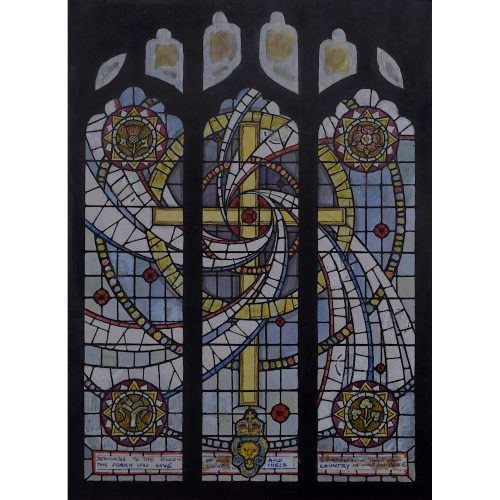
Jane Gray (b.1931)
St Mary’s Church, Chirk, Design for Stained Glass Window Dedicated to the Royal British Legion (1992)
Watercolour 28 x 20.5 cmSigned, dated and studio stamp verso.
The first stone church in Chirk was erected during the early 11th Century by the Normans, however, the site of St Mary’s church is originally thought to be a llan—a Welsh phrase that denotes a walled enclosure containing a chapel, hermit’s huts and burials—dedicated to Saint Tysilio. The church was re-dedicated to Saint Mary in the late 15th or early 16th century and remained part of the Church of England until the disestablishment of the Welsh Church in 1921. Gray’s stained glass design commemorates the 50th Anniversary of the D-Day Landings in her inimitably modern style and features the archetypal motif of red poppies, scattered across the three window panels. The leek, rose, thistle, and shamrock roundels nod to the key symbols of the British Isles. The window was installed and dedicated by the Archbishop of Wales in 1994.
Provenance: the artist’s studio sale. Literature: Jane Gray, Playing with Rainbows. (Shropshire: Ellingham Press, 2011), p.50, 83. Condition: very good. If you are interested, please email info@manningfineart.co.uk or call us on 07929 749056. For other works by Jane Gray and more information about her, please click here. -
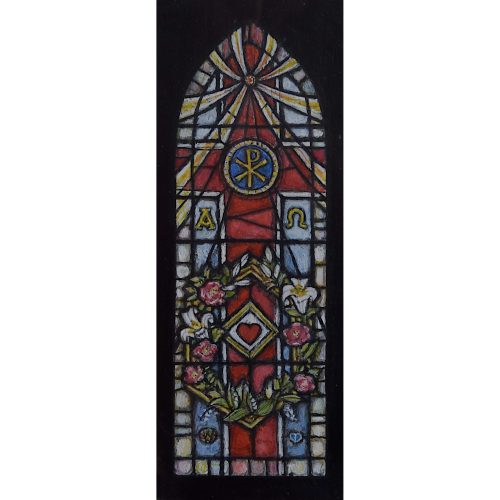
Jane Gray (b.1931)
St Mary’s Church, Harmondsworth, Design for Stained Glass Window (1982)
Watercolour 11.5 x 4.5 cmStudio stamp verso.
St Mary’s Church, the Parish Church of Harmondsworth, dates from the 12th-15th centuries. The South aisle, with its massive Norman columns, and the entrance are the oldest parts of the building still intact today. The North aisle dates from the 13th Century, the North Chapel the 14th Century, the chancel was remodelled in the 15th Century, and the tower was built in 1500. In the 19th century the church underwent extensive restoration and a porch and vestry were added but the original Norman font still exists today. This window features a red Cross and a wreath of flowers, and was installed in the church in 1983.
Provenance: the artist’s studio sale. Literature: Jane Gray, Playing with Rainbows. (Shropshire: Ellingham Press, 2011), p.77. Condition: very good. If you are interested, please email info@manningfineart.co.uk or call us on 07929 749056. For other works by Jane Gray and more information about her, please click here. -
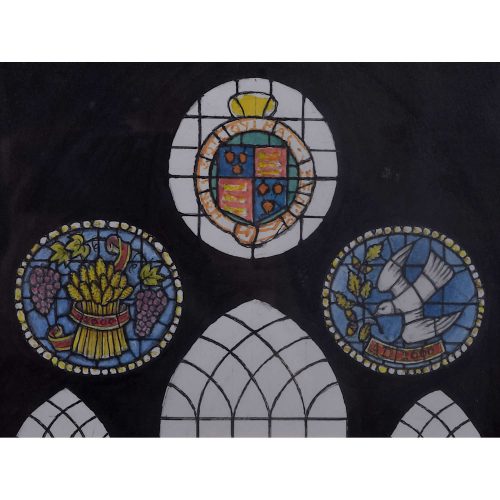
Jane Gray (b.1931)
St Mary’s Church, Longnor, Shropshire, Design for Stained Glass Millennium Commemoration Window (2000)
Watercolour 12.5 x 17.5 cmSigned, dated and studio stamp verso.
St Mary’s Church, Longnor, was originally built as a chapel to Condover around 1280 A.D. It was then a private chapel to the Corbett family of Longnor Hall, before becoming the parish church. These designs for two stained glass roundel windows in the East window were commissioned to commemorate the Millennium. This window was installed in 2001.
Provenance: the artist’s studio sale. Literature: Jane Gray, Playing with Rainbows. (Shropshire: Ellingham Press, 2011), p.87. Condition: very good. If you are interested, please email info@manningfineart.co.uk or call us on 07929 749056. For other works by Jane Gray and more information about her, please click here. -
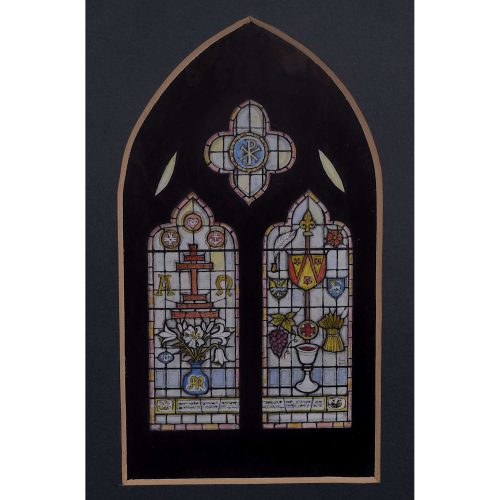
Jane Gray (b.1931)
St Mary’s Church, Penwortham, Lancashire, Design for Stained Glass Window Dedicated to the Royal British Legion (1984)
Watercolour 19.5 x 11 cmDated and artist label verso.
St Mary’s Church, set in the midst of ancient woodland, is the parish church of the Ancient Parish of Penwortham and dates from the 14th century. The church Nave and Chancel contain several memorial windows and tablets sacred to the memory of parishioners who have died; most are Victorian, such as memorial to John Horrocks, a prominent industrialist in the golden age of the Lancashire cotton industry who founded the textile company Horrockses, Miller, & Co., but the North wall features Gray’s traditional design for a window dedicated to the Royal British Legion.
Provenance: the artist’s studio sale. Condition: very good. If you are interested, please email info@manningfineart.co.uk or call us on 07929 749056. For other works by Jane Gray and more information about her, please click here. -
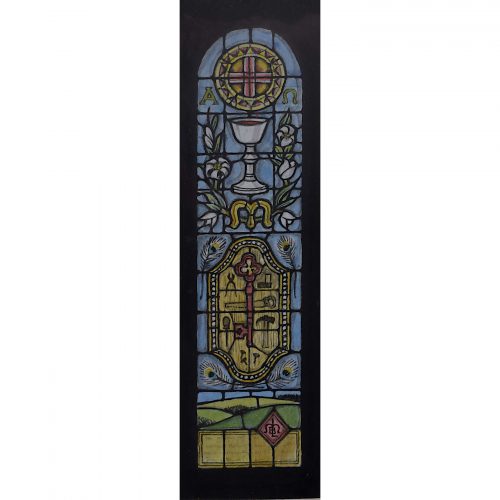
Jane Gray (b.1931)
St Mary’s Church, Sullington, Design for Stained Glass Window (1992)
Watercolour 18 x 5 cmSigned, dated and studio stamp verso.
The little church of St Mary’s, Sullington, has laid nestled beneath the Sussex Downs for almost a thousand years, within the bounds of an even older yew grove. The tower and the nave date back to c.1050 but were altered in the Norman period and again in thee 12th and 13th centuries.This small window pays remembrance to the local carpenter and verger. The design incorporates carpenters’ tools, peacock feathers from the peacocks in the neighbouring Manor House who often joined the church services, the Church’s communion chalice, and a view of the Sussex Downs. This window was installed in 1992.
Provenance: the artist’s studio sale. Literature: Jane Gray, Playing with Rainbows. (Shropshire: Ellingham Press, 2011), pp.51, 82. Condition: very good. If you are interested, please email info@manningfineart.co.uk or call us on 07929 749056. For other works by Jane Gray and more information about her, please click here. -
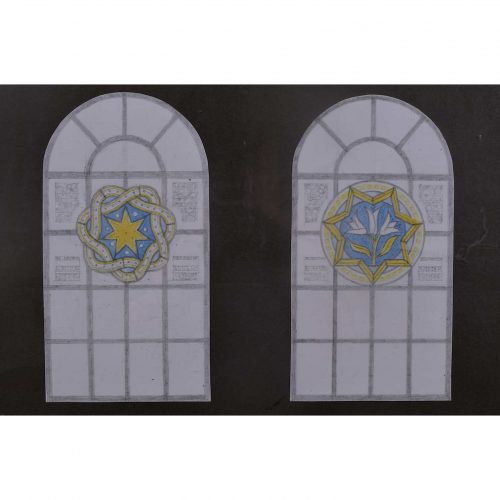
Jane Gray (b.1931)
St Mary’s Church, Twickenham, Middlesex, Design for Stained Glass Memorial Windows (1988)
Watercolour 15.5 x 17 cmSigned, dated and studio stamp verso.
St Mary’s Church stands on the site of an earlier church in Twickenham, a short distance from York House and the banks of the River Thames, and incorporates a 15th-century, medieval tower. St Mary's has an impressive and illustrious history of notable parishioners including the painter Godfrey Kneller who, after the collapse of the ancient church's 14th-century nave in 1714, took active involvement in redesigning the church in the Neo-classical style alongside local architect John James, as well as Henry Fielding and Alfred Lord Tennyson whose sons were both baptised here. Gray had a personal connection to St Mary’s, her great grandfather having been the vicar some years before. These windows held especial personal meaning for Gray as they commemorated the death of her parents in 1982 and 1985 respectively. The windows were installed in 1989.
Provenance: the artist’s studio sale. Literature: Jane Gray, Playing with Rainbows. (Shropshire: Ellingham Press, 2011), pp.42-3, 80. Condition: very good. If you are interested, please email info@manningfineart.co.uk or call us on 07929 749056. For other works by Jane Gray and more information about her, please click here. -
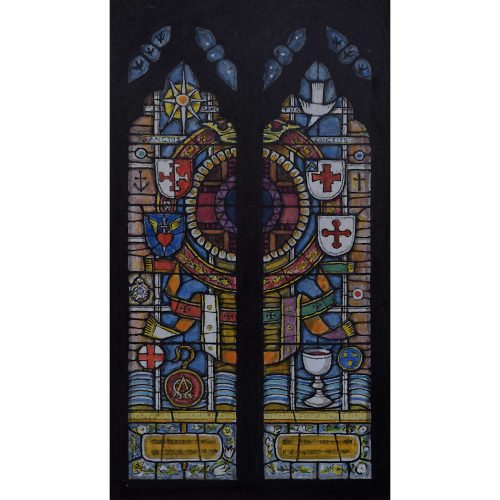
Jane Gray (b.1931)
St Michael and All Angels Church, Craven Arms, Shropshire, Design for Stained Glass Window (1995)
Watercolour 18.5 x 10.5 cmSigned, dated and studio stamp verso.
St Michael and All Angels is a Norman church that dates back to the 12th century. In 1902, it was sympathetically restored by the renowned early 20th century architect, Detmar Blow in his characteristic Arts and Crafts style, but is perhaps best known for housing both a significant fragment of a medieval wall painting, and the oldest Perpendicular pulpit (with Jacobean additions) in Shropshire.
Provenance: the artist’s studio sale. Condition: very good. If you are interested, please email info@manningfineart.co.uk or call us on 07929 749056. For other works by Jane Gray and more information about her, please click here. -
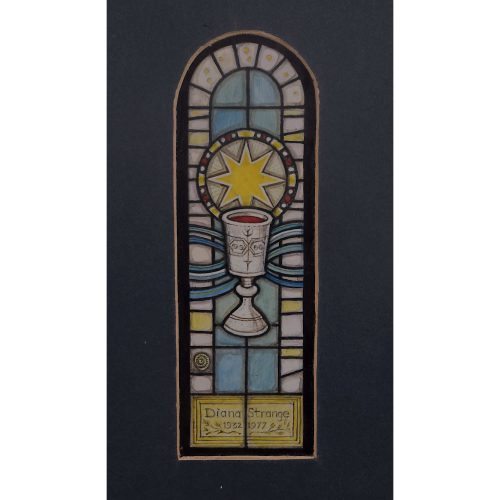
Jane Gray (b.1931)
St Nicholas Church, Worth Matravers, Dorset, Design for Memorial Stained Glass Window (1978)
Watercolour 15.5 x 5 cmDated and detailed in artist’s hand with studio label verso.
St Nicholas Church in Worth Matravers is one of the oldest churches in Dorset. It was built around the year 1100 AD. Though the majority of the church is Norman, some of the stonework appears to come from an earlier building, suggesting that there was a church here in the late Saxon period. This memorial window commemorates Diana Strange who died tragically in 1977. It was commissioned by her husband who was a keen admirer of Gray’s work and centres on the Elizabethan chalice used in St Nicholas’ Church. The window directly opposite contains another memorial window designed by Gray for Diana’s Husband, John Strange, who died seven years later. Diana's memorial window was installed in 1979.
Provenance: the artist’s studio sale. Literature: Jane Gray, Playing with Rainbows. (Shropshire: Ellingham Press, 2011), pp.22, 75. Condition: very good. If you are interested, please email info@manningfineart.co.uk or call us on 07929 749056. For other works by Jane Gray and more information about her, please click here. -
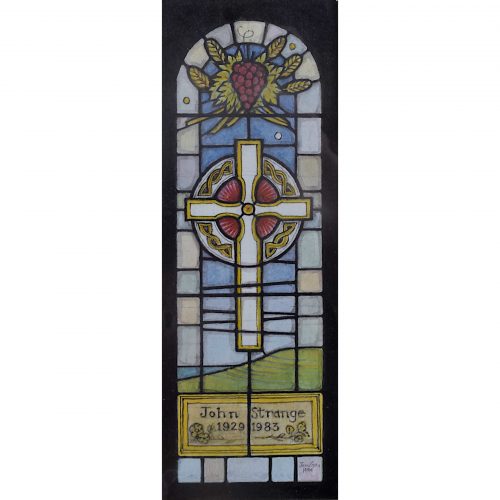
Jane Gray (b.1931)
St Nicholas Church, Worth Matravers, Dorset, Design for Memorial Stained Glass Window (1983)
Watercolour 17 x 6.5 cm Dated, detailed in artist’s hand and studio label verso.St Nicholas Church in Worth Matravers is one of the oldest churches in Dorset. It was built around the year 1100 AD. Though the majority of the church is Norman, some of the stonework appears to come from an earlier building, suggesting that there was a church here in the late Saxon period.This memorial window commemorates John Strange who died in 1984. It was commissioned in advance by John, a keen admirer of Gray’s work, after his wife, Diana, died tragically in 1977. John asked that his window included the sea view from their home, and the vine of grapes in the top panes nods to the full chalice in Diana’s window which sits directly opposite John’s and was also designed by Gray. John’s window was installed in the church in 1986.
Provenance: the artist’s studio sale. Literature: Jane Gray, Playing with Rainbows. (Shropshire: Ellingham Press, 2011), p.22, 75. Condition: very good. If you are interested, please email info@manningfineart.co.uk or call us on 07929 749056. For other works by Jane Gray and more information about her, please click here. -
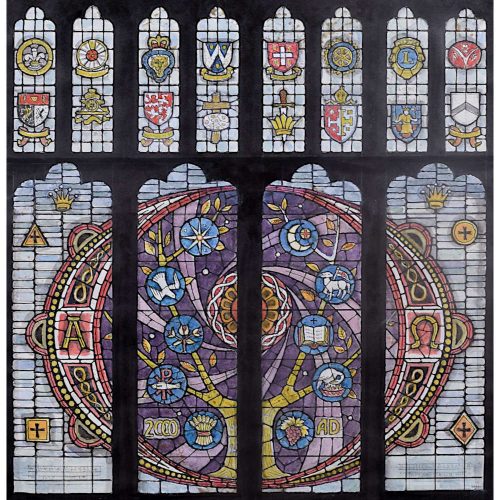
Jane Gray (b.1931)
St Oswald’s Church, Oswestry, Shropshire, Design for Stained Glass Window (2001)
Watercolour 28 x 27 cmSigned, dated and studio stamp verso.
St Oswald’s Church in Oswestry, Shropshire has been a place of worship for nearly 1000 years and commands a prominent position in the Town Centre. The church has a rich history, with William Morgan, who famously translated the whole Bible into Welsh, appointed Vicar of Oswestry in 1599, and the renowned Victorian architect G E Street substantially renovating the church between 1872-74. The church and town receive their names from Saint Oswald, the Christian King of Northumbria, who was killed at the Battle of Maserfield in 642 AD by the pagan King of Mercia, a mere 400 metres from the site of the present church. One of Oswald’s severed arms was allegedly snatched by a raven and dropped “a bowshot” away, causing a well to spring up that would be visited for centuries for healing and still exists today. The present-day name of Oswestry is a corruption of the original name Oswald’s Tree, which derives from Oswald's body being nailed to a tree in mock crucifixion. In Gray’s design, a large O fills the central four windows, a continuum (symbolising eternity) depicted at its centre, and a tree branching out across the central lights. Within them are also small roundels representing groups connected with Oswestry, including: Cambrian Railways, Round Table, Royal British Legion, Shropshire County Council, Oswestry Town Council, Rotary International, Lions International, Women’s Royal Voluntary Service, Orthopaedic Hospital, Royal Artillery, and Oswestry Borough Council. This window was installed and dedicated in 2004.
Provenance: the artist’s studio sale. Literature: Jane Gray, Playing with Rainbows. (Shropshire: Ellingham Press, 2011), pp.63, 88-9. Condition: very good. If you are interested, please email info@manningfineart.co.uk or call us on 07929 749056. For other works by Jane Gray and more information about her, please click here. -
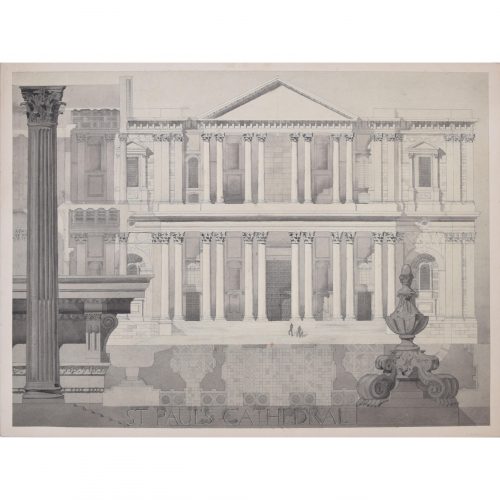
S Clapham (active 1940 - 1960)
St Paul's Cathedral
Watercolour 51 x 68 cm Signed lower right. This architectural watercolour is a panegyric to the English Baroque grandeur of St Paul's Cathedral. Three small figures climb the steps, emphasising the size and magnificence of the architecture around them. St Paul's was built between 1675 and 1711 by Sir Christopher Wren. The foundation stone was laid in 1675 when Wren was 43 years old, and the building works were completed 35 years later by Wren's son. Its construction was part of a major rebuilding programme in the city after the Great Fire of London. Clapham was an architect based in Stockwell in London. Condition: generally very good; a couple of spots. Mounted to board by artist and signed to board. If you are interested, please email info@manningfineart.co.uk or call us on 07929 749056. Click here for other works by the artist. -
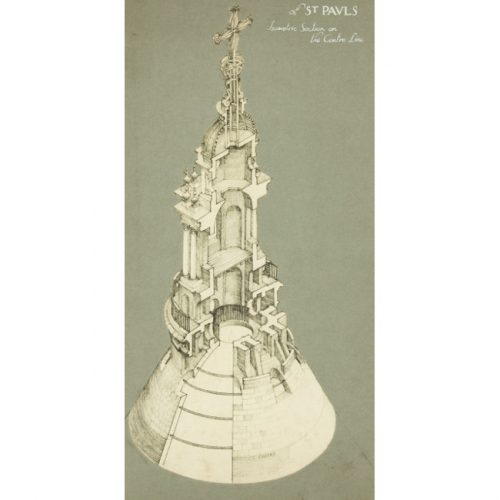
John Charles Rogers RIBA (1888-1939)
The Lantern, St Paul's Cathedral, London
41 x 18 cm (61 x 7") Graphite on paper Signed JC Rogers Inscribed 'Isometric section on the centre line'. Rogers was a practising architect who trained at Regent Street Polytechnic and was then assistant to Messrs Harvey & Potter. -

Anonymous St Paul's Survives, Night Blitz in London - 1940
Lithograph For Macmillan's History Pictures, c. 1960 42 x 54 cm This striking lithograph depicts St Paul's Cathedral in London peaking through the swathes of smoke engulfing the city after a night of bombing during the blitz. The sky is illuminated by floodlights and flames, but the cathedral itself seems to provide its own light source, standing out against the destruction surrounding it. Although the source of this lithograph is unknown, it was likely produced after Herbert Mason's photograph 'St Paul's Survives', taken during the night air raid of the 29th-30th of December 1940, the night of the 'Second Great Fire of London.' The photograph has become a symbol of British resilience and courage, and is considered one of the iconic images of the Blitz. It became "instantly famous", and turned the Cathedral into "a symbol of togetherness, survival and suffering". During the Second World War, Winston Churchill declared that St Paul's must be protected at all costs to preserve morale. As a result, a team of 300 volunteers came together under the name of 'the St Paul's Watch' and, armed with sandbags and hoses, worked to extinguish the incendiaries raining down on the cathedral. -
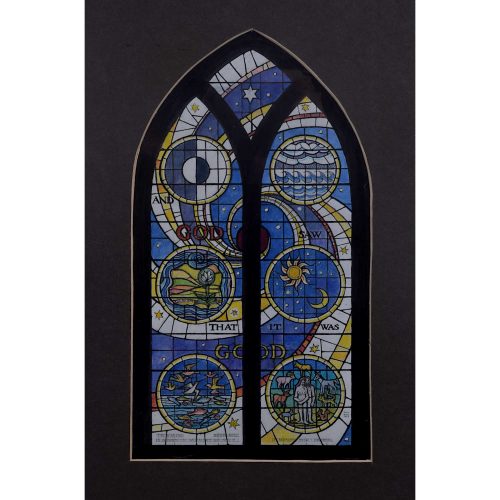
Jane Gray (b.1931)
St Paul’s Church, Marton, Design for Stained Glass Window (1984)
Watercolour 25.5 x 14 cmSigned, dated and artist label verso.
Worship at Marton, a township-chapelry in Poulton-le-Fylde parish, Lancashire, began in 1760 but it wasn’t until 1800 that Marton got it’s own church dedicated to St Paul. Gray’s vibrant design for the church’s south wall window depicts the stages of creation against a swirling night sky and features the biblical line, ‘and God saw that it was good’, from Genesis 1:31. This design fantastically demonstrates Gray’s modernist style, with her simple yet detailed, geometrical delineation of her subjects.
Provenance: the artist’s studio sale. Condition: very good. If you are interested, please email info@manningfineart.co.uk or call us on 07929 749056. For other works by Jane Gray and more information about her, please click here. -
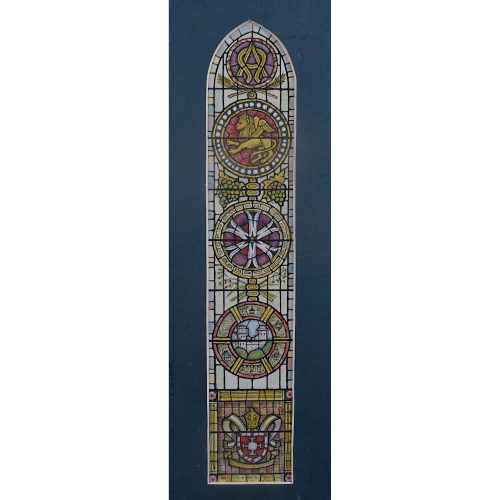
Jane Gray (b.1931)
St Paul’s Church, Warwick, Design for One of Two Stained Glass Windows (1991)
Watercolour 27.5 x 5 cmStudio stamp and notes in artist's hand verso.
Rapid population expansion in Warwick in the early 1800s, due to the opening of the canal and industrialisation, saw the churchyards of St Mary and St Nicholas unable to cope. In 1823 both churches petitioned the Bishop of Worcester for extra burial space, but it wasn’t until 1918 that the Coventry diocese was finally created. A cemetery and chapel, known as St Mary’s Episcopal Chapel were built in 1824 on the site where St Paul’s sits today but was used exclusively for burials. In 1844 the Parish of St Paul's was formed and the church was consecrated on 26th July 1844 by the Bishop of Worcester. This window was installed in 1992.
Provenance: the artist’s studio sale. Literature: Jane Gray, Playing with Rainbows. (Shropshire: Ellingham Press, 2011), p.81. Condition: very good. If you are interested, please email info@manningfineart.co.uk or call us on 07929 749056. For other works by Jane Gray and more information about her, please click here. -
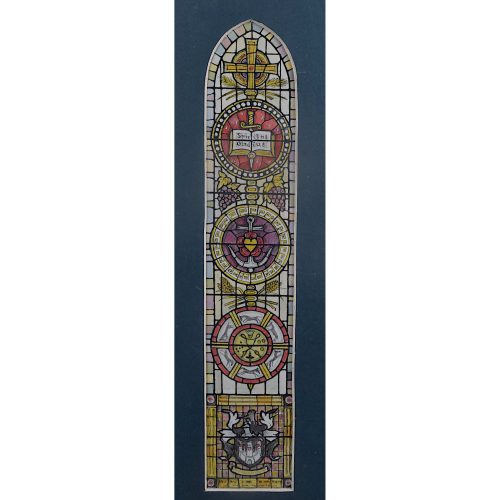
Jane Gray (b.1931)
St Paul’s Church, Warwick, Design for One of Two Stained Glass Windows (1991)
Watercolour 27.5 x 5 cmSigned, dated and studio stamp verso.
Rapid population expansion in Warwick in the early 1800s, due to the opening of the canal and industrialisation, saw the churchyards of St Mary and St Nicholas unable to cope. In 1823 both churches petitioned the Bishop of Worcester for extra burial space, but it wasn’t until 1918 that the Coventry diocese was finally created. A cemetery and chapel, known as St Mary’s Episcopal Chapel were built in 1824 on the site where St Paul’s sits today but was used exclusively for burials. In 1844 the Parish of St Paul's was formed and the church was consecrated on 26th July 1844 by the Bishop of Worcester. This window was installed in 1992.
Provenance: the artist’s studio sale. Literature: Jane Gray, Playing with Rainbows. (Shropshire: Ellingham Press, 2011), p.81. Condition: very good. If you are interested, please email info@manningfineart.co.uk or call us on 07929 749056. For other works by Jane Gray and more information about her, please click here. -
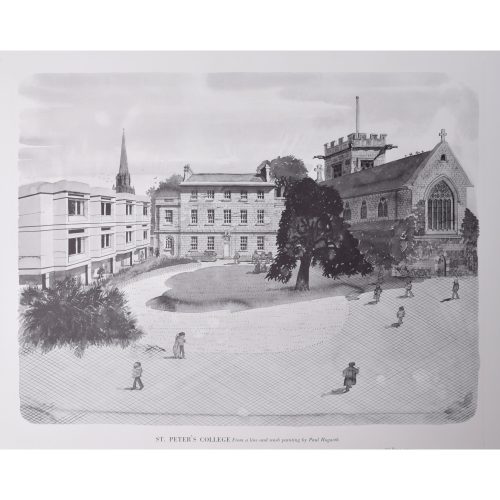
Paul Hogarth
St Peter's College, Oxford (1982)
Lithograph 33 x 46 cm A lithograph of St Peter's, from a line and wash painting by Paul Hogarth. Hogarth's view shows Linton Quad, with the chapel on the right; the chapel was built in 1874 and incorporated some of the stone of an earlier church on the site. Dons and undergraduates pace across the quad, and birds fly over the Latter Building and past the city's dreaming spires. Hogarth's line and wash painting was reproduced as a lithograph in 1982, to be published in the "Oxford Almanack". The Oxford Almanack was an annual almanac published by the Oxford University Press for the University of Oxford from 1674 through 2019 (when printing sadly ceased due to "dwindling interest"). The almanac traditionally included engravings or lithographs of the University and information about the upcoming year. Other almanac artists have included James Basire, Michael Burghers, J. M. W. Turner, and John Piper. Condition: very good. If you’d like to know more, please email info@manningfineart.co.uk or call us on 07929 749056. -
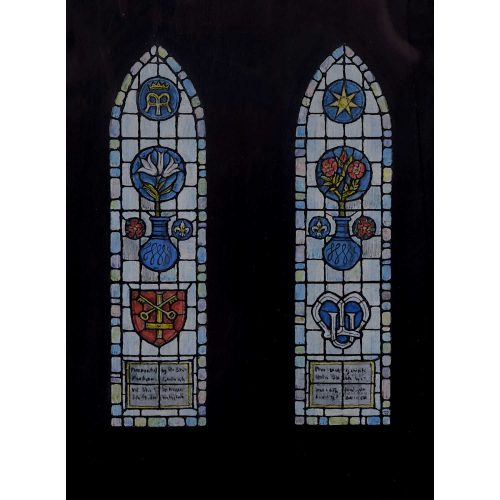
Jane Gray (b.1931)
St Peter’s Church, Chorley, Lancashire, Design for Stained Glass Window (1987)
Watercolour 18 x 13 cmSigned, dated and studio stamp verso.
St Peter’s Church was designed by the Liverpudlian architect, Charles Reed in the Early English style and built in 1850 with stone donated from Lady Hoghton’s nearby quarry. Reed wrote, ‘The general effect is expected to be very quaint and beautiful, while its elevated situation will make it a charming landmark from every side’. The church was consecrated on St Mark’s Day, 1851 by the first Bishop of Manchester, the Rt. Revd. James Prince Lee. This window was installed in 1988.
Provenance: the artist’s studio sale. Literature: Jane Gray, Playing with Rainbows. (Shropshire: Ellingham Press, 2011), p.79. Condition: very good. If you are interested, please email info@manningfineart.co.uk or call us on 07929 749056. For other works by Jane Gray and more information about her, please click here. -
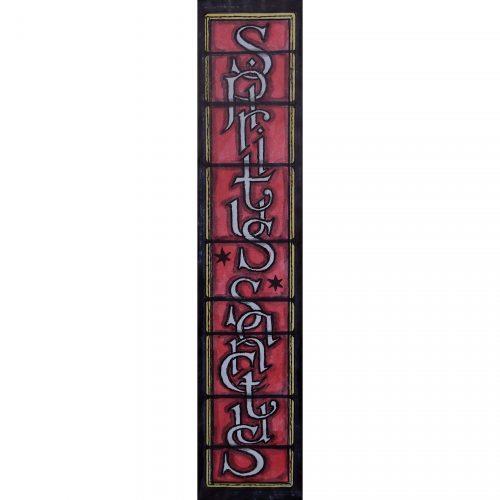
Jane Gray (b.1931)
St Peter’s Church, Cound, Shropshire, Design for Stained Glass Lettered Panel (1999)
Watercolour 24.5 x 5 cmStudio stamp verso.
St Peter’s Church, Cound lies in the grounds of the Cound Hall estate and is dedicated to St Peter because of its medieval association with Shrewsbury Abbey (dedicated to Saints Peter and Paul). The oldest part of the present church dates back to the 13th century but it has been renovated several times since then, with additions from the 14th, 15th and 19th centuries. This unique design by Gray highlights her modern style, the simple lettered panel, bearing the Latin name for the holy spirit, brimming with vibrant energy.
Provenance: the artist’s studio sale. Literature: Jane Gray, Playing with Rainbows. (Shropshire: Ellingham Press, 2011), p.86. Condition: very good. If you are interested, please email info@manningfineart.co.uk or call us on 07929 749056. For other works by Jane Gray and more information about her, please click here. -
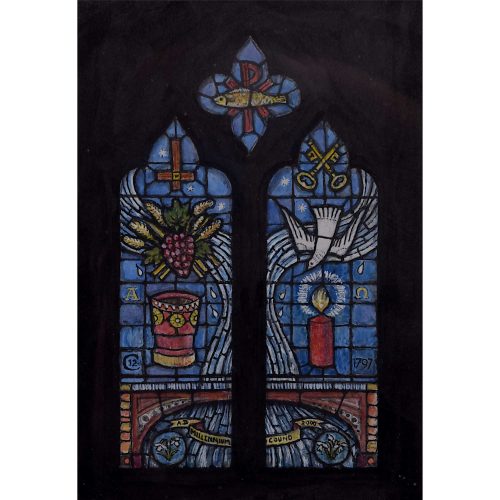
Jane Gray (b.1931)
St Peter’s Church, Cound, Shropshire, Design for Stained Glass Window (1999)
Watercolour 16.5 x 11.5 cmSigned, dated and studio stamp verso.
Proposed design for a window on the south wall, over the font. St Peter’s Church, Cound lies in the grounds of the Cound Hall estate and is dedicated to St Peter because of its medieval association with Shrewsbury Abbey (dedicated to Saints Peter and Paul). The oldest part of the present church dates back to the 13th century but it has been renovated several times since then, with additions from the 14th, 15th and 19th centuries.
Provenance: the artist’s studio sale. Condition: very good. If you are interested, please email info@manningfineart.co.uk or call us on 07929 749056. For other works by Jane Gray and more information about her, please click here. -
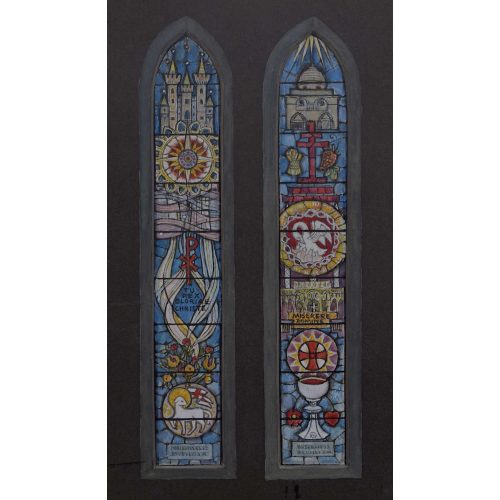
Jane Gray (b.1931)
St Peter’s Church, Martindale Design for Stained Glass Windows (1976)
Watercolour 17.5 x 6 cmStudio label verso.
St Peter’s Church was built in Martindale, Cumbria in 1880 by a local craftsman using stone from the surrounding area. The church is situated in an enchanting rural oasis and has connections to the acclaimed modern poet, Kathleen Raine, who lived in the Old Vicarage, as well as William and Dorothy Wordsworth who visited the area on one of their Cumbrian excursions. Gray’s ‘Martindale Era’ lasted from 1974-1981, in which time, she designed and installed fifteen stained glass windows in St Peter’s Church. These window designs are for Resurrection and Passion windows on the north-side of the church.
Provenance: the artist’s studio sale. Literature: Jane Gray, Playing with Rainbows. (Shropshire: Ellingham Press, 2011), pp.17, 74. Condition: very good. If you are interested, please email info@manningfineart.co.uk or call us on 07929 749056. For other works by Jane Gray and more information about her, please click here. -
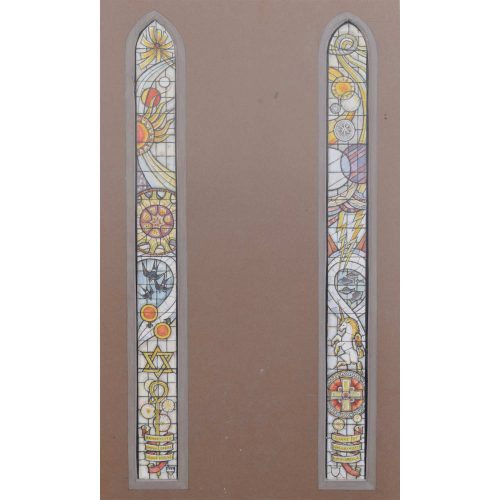
Jane Gray (b.1931)
St Peter’s Church, Martindale, Design for Benedicite Stained Glass Windows (1975-77)
Watercolour 32.5 x 8 cmSt Peter’s Church was built in Martindale, Cumbria in 1880 by a local craftsman using stone from the surrounding area. The church is situated in an enchanting rural oasis and has connections to the acclaimed modern poet, Kathleen Raine, who lived in the Old Vicarage, as well as William and Dorothy Wordsworth who visited the area on one of their Cumbrian excursions. Gray’s ‘Martindale Era’ lasted from 1974-1981, in which time, she designed and installed fifteen stained glass windows in St Peter’s Church. This pair of windows were commissioned as Gray was constructing her fifth, and supposedly last, window; the church had received a gift from an American donor who shared the name ‘Martindale’ and the vicar decided to commission two more windows on the them of the Benedicite.
Provenance: the artist’s studio sale. Literature: Jane Gray, Playing with Rainbows. (Shropshire: Ellingham Press, 2011), pp.17-18, 74. Condition: very good. If you are interested, please email info@manningfineart.co.uk or call us on 07929 749056. For other works by Jane Gray and more information about her, please click here.