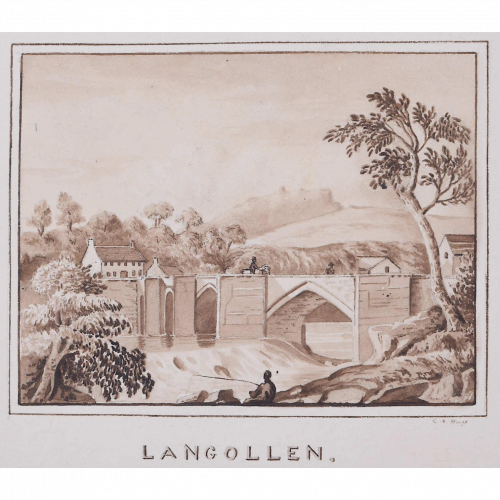
-
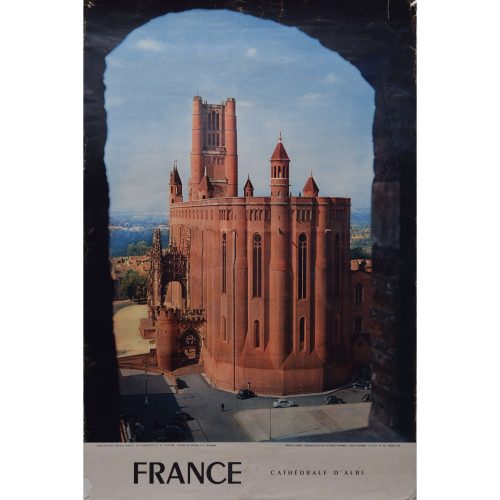
France - Cathedrale d'Albi, Toulouse
Original vintage poster 60 x 40 cm The Basilique Cathédrale Sainte-Cécile d'Albi (Cathedral Basilica of Saint Cecilia), also known as Albi Cathedral, is the seat of the Catholic Archbishop of Albi. First built in the aftermath of the Albigensian Crusade, the grim exterior resembles a fortress, but the interior is lavishly decorated with art and sculpture, a very ornate choir screen, and walls in bright blues and golds, in the Toulousian or Southern French Gothic. It was begun in 1282 and was under construction for 200 years. It is claimed to be the largest brick building in the world. In 2010 the cathedral, along with its episcopal buildings, was designated a UNESCO World Heritage Site because of its unique architecture and the remarkable consistency in its design. Condition: small tear to lower left corner; some wear to corners. If you’d like to know more, please email info@manningfineart.co.uk or call us on 07929 749056. -
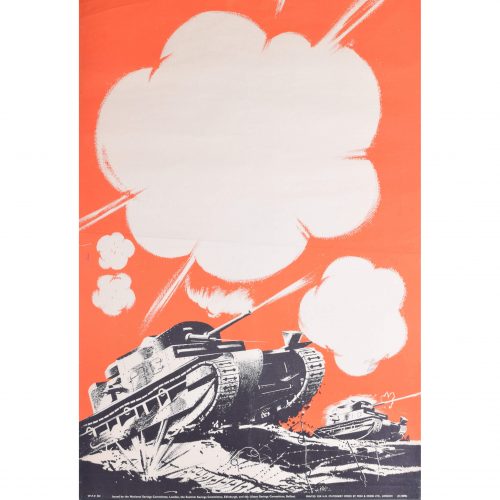
Tanks (1939 - 1945)
Original vintage poster 74 x 51 cm A copy of this poster is held by the Victoria and Albert Museum (E.2134-1946). Issued by the National Savings Committee, London, the Scottish Savings Committee, Edinburgh, and the Ulster Savings Committee, Belfast. Printed for HM Stationery Office by Fosh & Cross Ltd, London. This poster was designed during the Second World War and published by the Government to promote saving. Posters like this encouraged people to save via National Savings, with the promise that the funds saved would be used to support the war effort. Condition: generally very good, a couple of short repaired edge tears and crease to middle. If you are interested, please email info@manningfineart.co.uk or call us on 07929 749056. Click here for other original vintage posters. -

George Leech Victory Procession Down The Mall, 1946
Lithograph For Macmillan's History Pictures, c. 1960 43 x 54 cm This colourful lithograph depicts a momentous parade down the mall, held as part of the London Victory Celebrations of 1946 following the defeat of Nazi Germany and Japan in the Second World War. The celebrations took place in London on the 8th of June 1946, and consisted mainly of a military parade through the city and a night time fireworks display. The parade itself assembled the Chiefs of Staff, a mechanised column stretching 4 miles long and containing more than 500 military vehicles, and a marching column headed by the flags of the Allied nations which took part in the parade, as shown in this lithograph. In this depiction, King George VI can be seen saluting, alongside his wife, Elizabeth, and their two daughters, the queen-to-be Elizabeth and Margaret. Born in 1894, George Leech was a British painter and etcher. He studied both at the Lambeth and Putney Schools of Art and worked for some years as a magazine editor. Alongside this, he also exhibited widely, including at the Royal Academy of Art. -

John Bluck (early 19th century) after Augustus Charles Pugin (1762 - 1832) Old Gate of Magdalen College (1814)
Aquatint with original hand colouring 27 x 21 cm Published by Rudolph Ackermann (1764 - 1834). An engraving of the Old Gate of Magdalen College, Oxford, from Ackermann's 'History of Oxford'. Augustus Charles Pugin was an Anglo-French artist and architectural draughtsman. Pugin produced views of London, jointly creating the illustrations for the 'Microcosm of London' published by Rudolph Ackermann in 1811, followed by plates for Ackermann's books about Westminster Abbey, Oxford and Cambridge universities, and Winchester College. His later works included illustrations for Specimens of Gothic Architecture (1821–1823), The Royal Pavilion at Brighton (1826), Architectural Antiquities of Great Britain (1826), Specimens of the Architectural Antiquities of Normandy (1827), Illustrations of the Public Buildings of London (1825 to 1828), Paris and its Environs (1829 to 1831), and Examples of Gothic Architecture (1831). He also produced a book of furniture designs called Gothic Furniture, and assisted architects with detailing for their gothic designs. He ran a drawing school at his house in Bloomsbury. John Bluck was an aquatint engraver, mainly of topographical views, but also of marine and sporting subjects after his contemporaries. He produced plates for numerous publications. Rudolph Ackermann was an Anglo-German bookseller, inventor, lithographer, publisher and businessman. In 1795 he established a print-shop and drawing-school at 96 Strand. Here Ackermann set up a lithographic press and began a trade in prints. He later began to manufacture colours and thick carton paper for landscape and miniature painters. Within three years the premises had become too small and he moved to 101 Strand, in his own words "four doors nearer to Somerset House", the seat of the Royal Academy of Arts. Between 1797 and 1800 Ackermann rapidly developed his print and book publishing business, encompassing many different genres including topography, caricature, portraits, transparencies and decorative prints. Condition: Generally very good; the title has been moved from elsewhere in the book and pasted onto the bottom of the picture.If you would like to know more, please email info@manningfineart.co.uk or call us on 07929 749056.
-

John Bluck (early 19th century) after William Westall (1781 - 1850) Queens' College from the Private Walk (1814)
Aquatint with original hand colouring 19 x 28 cm Published by Rudolph Ackermann (1764 - 1834). William Westall was a British landscape artist. He was born in Hertford and enrolled at the Royal Academy schools in 1799. He later became the draughtsman for a voyage to Australia and the South Seas. After being shipwrecked, he travelled to Canton in China and to India, staying in Bombay for several months. He returned to England in 1805 but later set off for Madeira and Jamaica. He became a member of the Society of Painters in Water Colours (1811) and an associate of the Academy (1812). Following a mental breakdown, he regularly visited the Lake District and published ‘Views of the Valley and Vale of Keswick’ (1820). His series of aquatints of the Thames, the great universities, and England's public schools for Ackermann are among his most popular works. John Bluck was an aquatint engraver, mainly of topographical views, but also of marine and sporting subjects after his contemporaries. He produced plates for numerous publications. Rudolph Ackermann was an Anglo-German bookseller, inventor, lithographer, publisher and businessman. In 1795 he established a print-shop and drawing-school at 96 Strand. Here Ackermann set up a lithographic press and began a trade in prints. He later began to manufacture colours and thick carton paper for landscape and miniature painters. Within three years the premises had become too small and he moved to 101 Strand, in his own words "four doors nearer to Somerset House", the seat of the Royal Academy of Arts. Between 1797 and 1800 Ackermann rapidly developed his print and book publishing business, encompassing many different genres including topography, caricature, portraits, transparencies and decorative prints. Condition: Colours very good, mounted to board, old mount staining to margins within platemark, a little toning to paper.If you would like to know more, please email info@manningfineart.co.uk or call us on 07929 749056.
-

Joseph Constantine Stadler (1755 - 1828) after William Westall (1781 - 1850) Queen's College (1814)
Aquatint with original hand colouring 19 x 28 cm Published by Rudolph Ackermann (1764 - 1834). Engraved for Ackermann's 'A History of the University of Cambridge, Its Colleges, Halls and Public Buildings'. Joseph Constantine Stadler was a prolific German émigré engraver of images after his contemporaries - here, William Westall. Stadler's engravings are wide-ranging in subject matter and include landscapes, seascapes and portraits, as well as military, sporting and decorative subjects. Stadler was employed by the leading print publisher of the time, John Boydell. Stadler lived in Knightsbridge when he died at the age of 73. William Westall was a British landscape artist. He was born in Hertford and enrolled at the Royal Academy schools in 1799. He later became the draughtsman for a voyage to Australia and the South Seas. After being shipwrecked, he travelled to Canton in China and to India, staying in Bombay for several months. He returned to England in 1805 but later set off for Madeira and Jamaica. He became a member of the Society of Painters in Water Colours (1811) and an associate of the Academy (1812). Following a mental breakdown, he regularly visited the Lake District and published ‘Views of the Valley and Vale of Keswick’ (1820). His series of aquatints of the Thames, the great universities, and England's public schools for Ackermann are among his most popular works. Rudolph Ackermann was an Anglo-German bookseller, inventor, lithographer, publisher and businessman. In 1795 he established a print-shop and drawing-school at 96 Strand. Here Ackermann set up a lithographic press and began a trade in prints. He later began to manufacture colours and thick carton paper for landscape and miniature painters. Within three years the premises had become too small and he moved to 101 Strand, in his own words "four doors nearer to Somerset House", the seat of the Royal Academy of Arts. Between 1797 and 1800 Ackermann rapidly developed his print and book publishing business, encompassing many different genres including topography, caricature, portraits, transparencies and decorative prints. Condition: Colours very good, mounted to board, old mount staining to margins within platemark, a little toning to paper.If you would like to know more, please email info@manningfineart.co.uk or call us on 07929 749056.
-
Out of stock
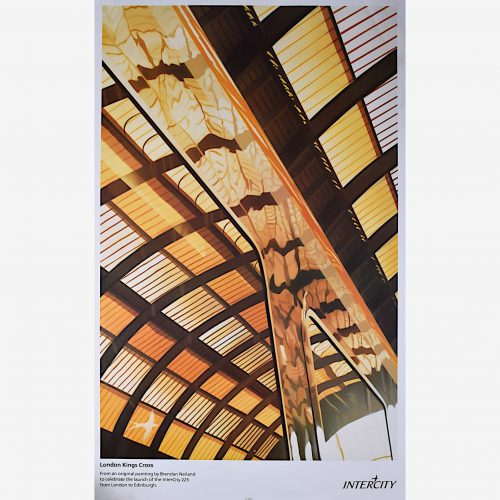
Brendan Neiland (b.1941)
Kings Cross Intercity Poster
Original Vintage Poster - lithograph 102x64cm (40×25 inches) each 1991 Click here for biographical details and other works by the artist. If you are interested email info@manningfineart.co.uk or call us on 07929 749056. -
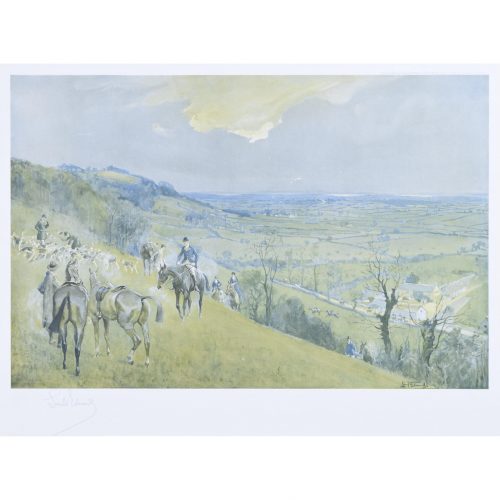
Lionel Edwards (1878 - 1966)
The Beaufort Hunt. Kill Above Sodbury Vale. (1925)
Lithograph 38 x 52 cm Signed in plate lower right and in pencil lower left outside the plate. Printed and Published by Eyre and Spottiswoode. A Lionel Edwards lithograph depicting the Beaufort - part of the artist's 1925 'Hunting Countries' series. The Beaufort's hunt dress is peculiar to the country in that the Huntsman and Whippers-In wear green and the subscribers a blue coat with buff facings. The earliest records of hounds being kennelled at Badminton date back to 1640 when the then Marquis of Worcester hunted mainly deer, but hare and fox as well. Dukes of Beaufort have either hunted hounds themselves or have been in the Mastership since the title was created in 1682 and the hounds, kennels and stables still belong to them. The 10th Duke was master from 1924 to 1984 and so great was his contribution to foxhunting he became universally known as "Master". The Beaufort is one of the few remaining private packs. Lionel Edwards was a British artist who specialised in pictures of country life, particularly horses, and provided illustrations for Country Life. He is best known for his hunting scenes but also painted pictures of horse racing, shooting and fishing. Condition: generally very good; some fading to the clouds. If you are interested, please email info@manningfineart.co.uk or call us on 07929 749056. Click here for other hunting pictures. -
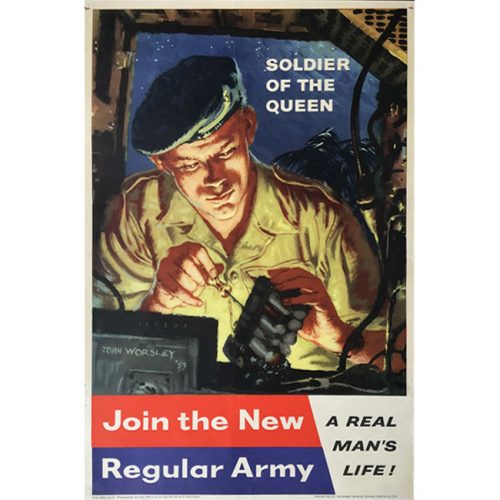
John Worsley (1919-2000)
Join the Regular Army
Printed for H.M. Stationary Office by Leonard Ripley & Co. (1959) Lithographic poster 76x51cm Worsley was a war artist during World War II who was captured by the Germans and then an illustrator for Eagle comic. Click here for further biographical details and other posters by Worsley. This image is titled A Royal Signals Technician Repairing a Radio and the original oil painting is in the Royal Signals Museum in Blandford Forum. If you are interested email info@manningfineart.co.uk or call us on 07929 749056. -
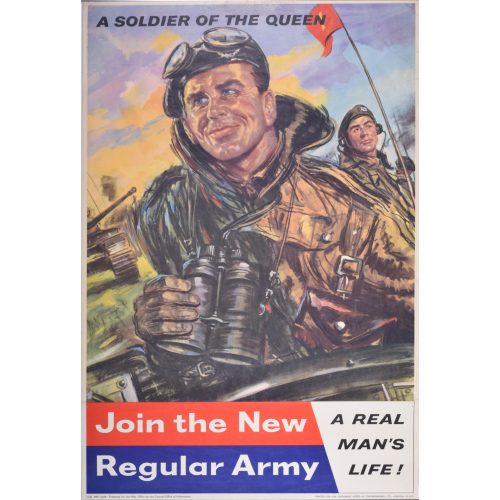
Attributed to John Worsley
Join the New Regular Army - A Real Man's Life
Published by Her Majesty’s Stationery Office. Printed by Chromoworks Limited, 1959 Lithographic poster 75x50cm Worsley was a war artist during World War II who was captured by the Germans and then an illustrator for Eagle comic. Click here for further biographical details and other posters by Worsley. The Soldier of the Queen depicted is a tank commander. At the time the poster was printed the main location for deployment of tanks was West Germany. In 1946 the British Army of the Rhine was created to protect Germany - and indeed Europe - from a Soviet invasion. Numbering up to 80,000 soldiers it was estimated that in the event of war the life expectancy of a tank commander would be less than two days. A Real Man's Life indeed. If you are interested email info@manningfineart.co.uk or call us on 07929 749056. -
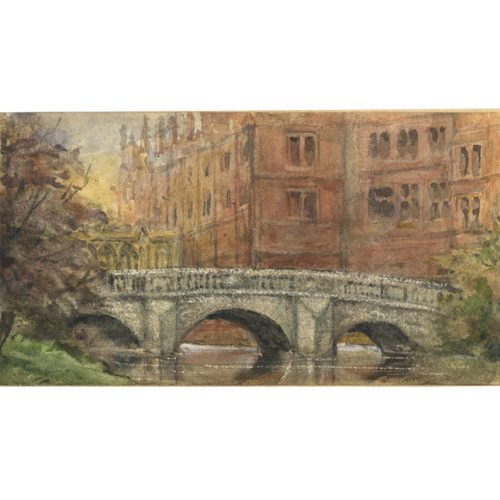
Anonymous
Wren Bridge St. John’s College Cambridge
Watercolour and pencil 8.8×16.7cm A charmingly painted watercolour c. last quarter 19th century If you are interested email info@manningfineart.co.ukor call us on 07929 749056. Condition: Good. -
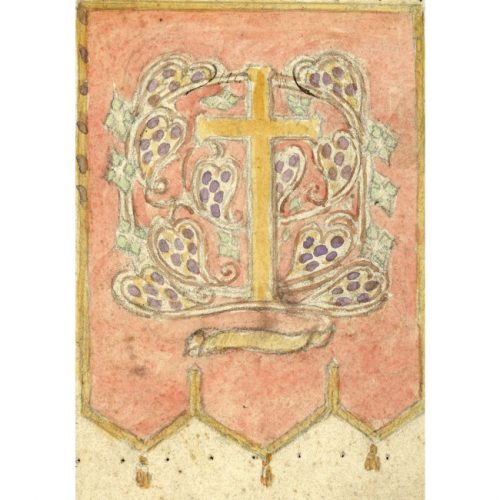
Reginald Hallward (1858-1948)
Design for celebratory flag with cross
Pencil with gouache Click here for biographical details and other works by the artist. If you are interested email info@manningfineart.co.uk or call us on 07929 749056. -
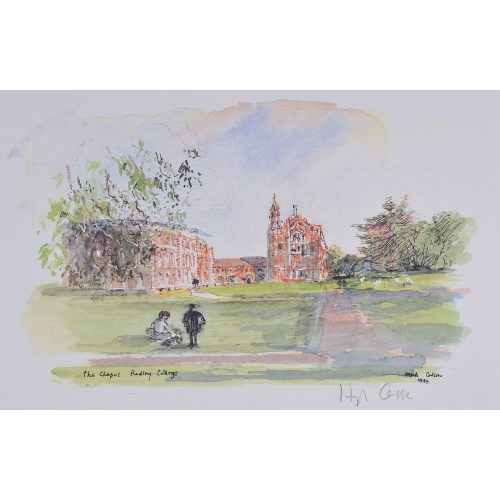
Sir Hugh Casson (1910-1999)
The Chapel at Radley College
Lithographic print signed in pencil and numbered 18/250. Provenance: the artist’s estate. 28 x 35 cm (11 x 14 in) If you are interested email info@manningfineart.co.uk or call us on 07929 749056. For biographical details and other works by the artist click here. -
Sir Hugh Casson (1910-1999)
The Chapel at Radley College
Lithographic print signed in pencil. Proof print aside from series. Provenance: the artist’s estate. 28 x 35 cm (11 x 14 in) If you are interested email info@manningfineart.co.uk or call us on 07929 749056. For biographical details and other works by the artist click here. -
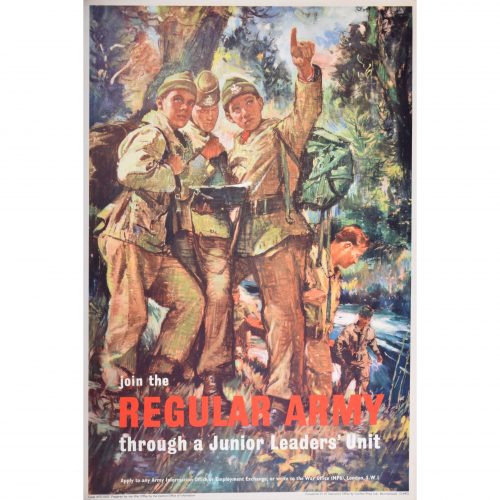
John Worsley (1919-2000) (attributed)
Join the Regular Army through a Junior Leaders' Unit
Printed for H.M. Stationary Office by Carillon Press Ltd, Bournemouth. (c. 1959) Prepared for the War Office by the Central Office of Information Lithographic poster 76x51cm Young soldiers in a clearing in a forest read a map as a canoe is lowered into the river behind them. Worsley was a war artist during World War II who was captured by the Germans and then an illustrator for Eagle comic. Click here for further biographical details and other posters by Worsley. If you are interested email info@manningfineart.co.uk or call us on 07929 749056. -
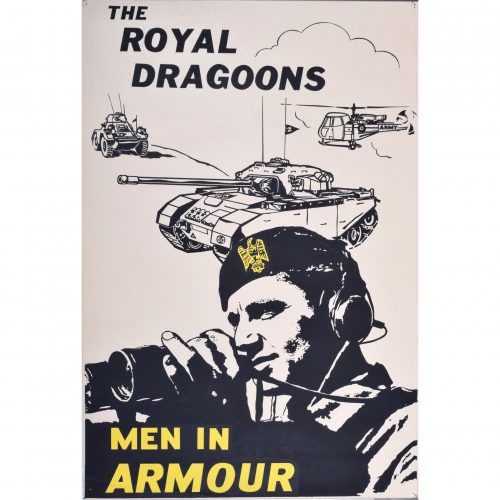
The Royal Dragoons - Men in Armour
c. 1960 Lithographic poster 76x51cm A soldier, headphones to his ear, binoculars in his hand, and beret on his head is shown before a tank, an army helicopter, and an armoured vehicle. Worsley was a war artist during World War II who was captured by the Germans and then an illustrator for Eagle comic. Click here for further biographical details and other posters by Worsley. If you are interested email info@manningfineart.co.uk or call us on 07929 749056. -
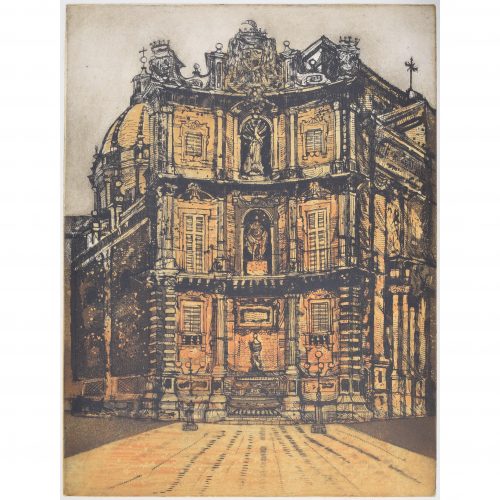
Richard Beer (1928-2017)
Quattro Canti (1966)
Coloured etching and aquatint on Velin Arches, published by Editions Alecto 60.2x45cm (23.7×17.7 inches) Proof print A copy of this print is in the Government Art Collection. Click here for biography and other works by this artist. If you are interested email info@manningfineart.co.uk or call us on 07929 749056. -
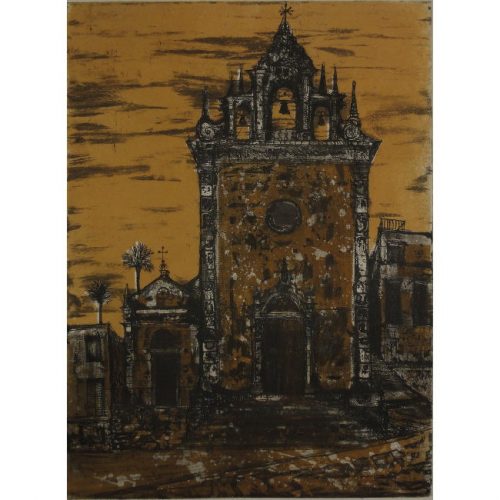
Richard Beer (1928-2017)
Piazza Amerina II (1966)
Colour etching and aquatint on Velin Arches, published by Editions Alecto 60.2x45cm (23.7×17.7 inches) Unsigned proof print - trial proof in yellow A copy of this print is in the Government Art Collection. Click here for biography and other works by this artist. If you are interested email info@manningfineart.co.uk or call us on 07929 749056. -
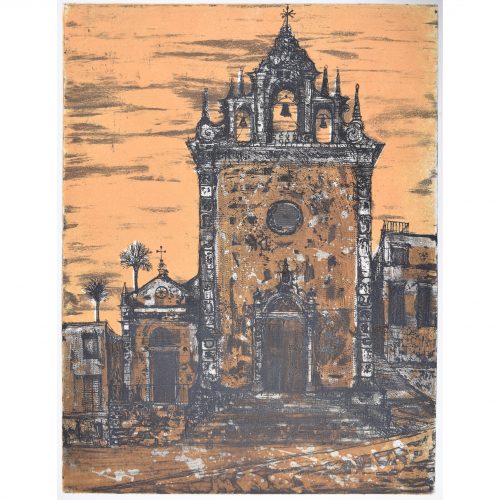
Richard Beer (1928-2017)
Piazza Amerina II (1966)
Colour etching and aquatint on Velin Arches, published by Editions Alecto 60.2x45cm (23.7×17.7 inches) Proof print - trial proof in pink A copy of this print is in the Government Art Collection. Click here for biography and other works by this artist. If you are interested email info@manningfineart.co.uk or call us on 07929 749056. -
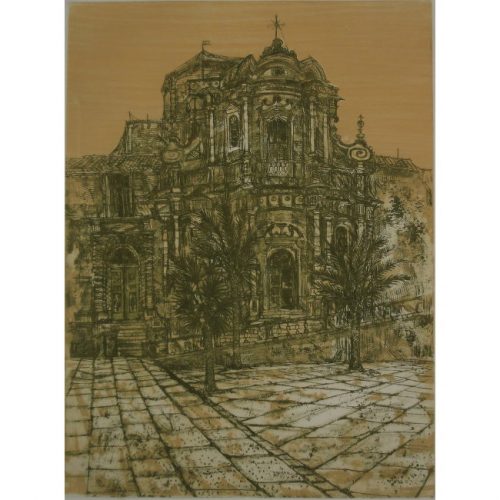
Richard Beer (1928-2017)
Noto II (1966)
Colour etching and aquatint on Velin Arches, published by Editions Alecto 60x45cm (23.6×17.9 inches) Proof print A copy of this print is in the Government Art Collection. Click here for biography and other works by this artist. If you are interested email info@manningfineart.co.uk or call us on 07929 749056. -
Out of stock
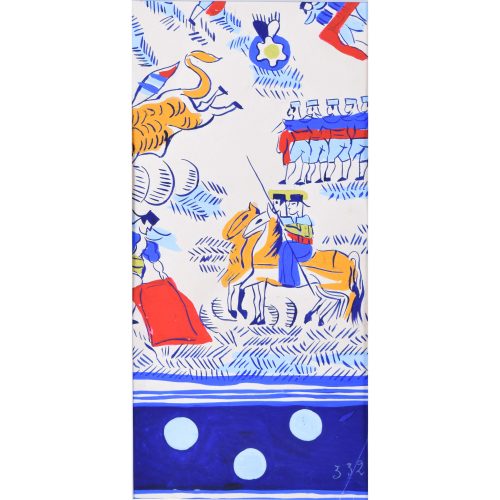
Robert Bonfils (French: 1886-1972)
Designs for scarf for Bianchini Ferrier Bull Fighting 31x15cm Gouache and pencil Provenance: Christies, 25-27 July 2001 Bianchini Textiles sale Born in Paris, Bonfils spent between 1903-1909 at various Parisian art schools: the École Germain Pilon, the École Nationale Supérieure des Arts Décoratifs (where he subsequently taught for thirty-two years), and the École des Beaux Arts. From 1909 he exhibited regularly at the Salon d'Automne, by 1912 he was exhibiting at Salon des Artistes Décorateurs and then subsequently at Tuileries and abroad. He was an organiser of the 1925 Paris International Exposition of Modern Industrial and Decorative Arts, and the 1937 Exposition. His relationship with Bianchini commenced in 1915 who produced many of his textile designs. He was made Chevalier de la Légion d'honneur in 1926, being promoted to Officier in 1938. -
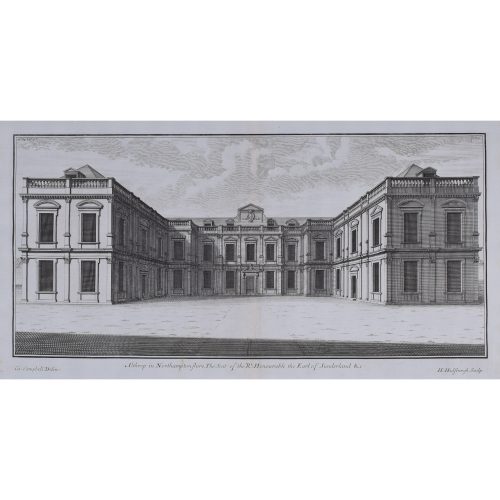
Colen Campbell (1676-1729)
Althrop Hall in Northamptonshire the Seat of the Rt Honourable The Earl of Sunderland & co.
35x50cm Engraving (1715-1725) from 'Vitruvius Britannicus, or the British Architect...' Althorp Hall - as it is now written, but still pronounced 'Althrop' - is the seat of the Earl Spencer and the location of the grave of Diana, Princess of Wales. Colen Campbell was a Scottish architect and architectural writer, renowned for being a founder of the Georgian style. His major published work was 'Vitruvius Britannicus' which was a catalogue of design, containing a series of engravings of English buildings by Inigo Jones, Sir Christopher Wren, Campbell himself and other prominent architects of the era. It was published in three volumes between 1715 and 1725. -
Out of stock
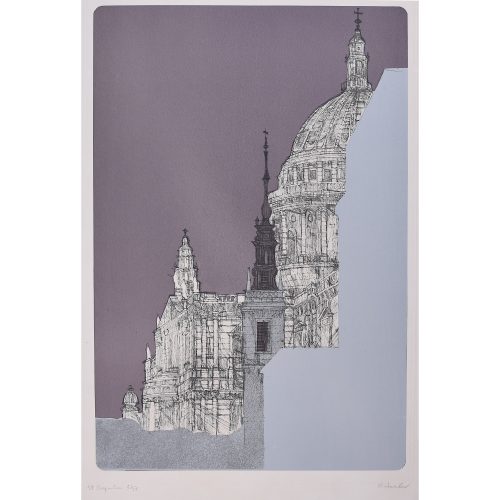
Richard Beer (1928-2017)
St Augustine's Church Watling Street London
Coloured etching and screen print Signed and numbered 57/75 to lower margin Plate size 63 x 43cm From 'Ten Wren Churches' St Augustine's Watling Street was first recorded in the 12th century, destroyed by the Great Fire of London in 1666 and then rebuilt as part of Christopher Wren's rebuilding of London. During the Second World War it was again destroyed, and the tower - restored in 1954 - is now a part of St Paul's Cathedral Choir School. Condition: slight toning to sheet and some discolouration to margins. A copy of this print is in the Government Art Collection. Click here for biography and other works by this artist. If you are interested email info@manningfineart.co.uk or call us on 07929 749056. -
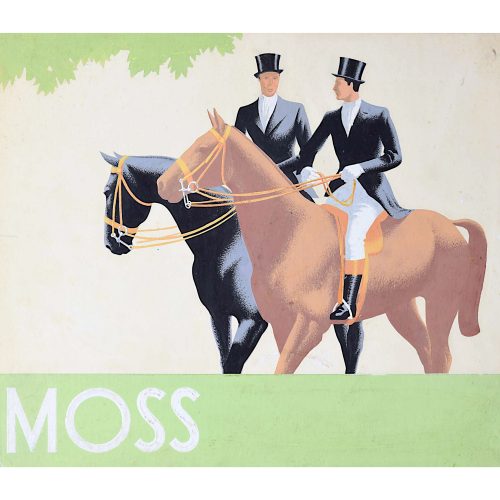
Anonymous Moss Gouache original design for poster
30x33cm c. 1930s Sadly the artist is unknown, but this rather good example of commercial artwork cleverly places the images of two impeccably dressed horse riders upon tremendously handsome horses. If you are interested email info@manningfineart.co.uk or call us on 07929 749056. Condition: Generally good condition, a few old losses as may be seen in picture. -
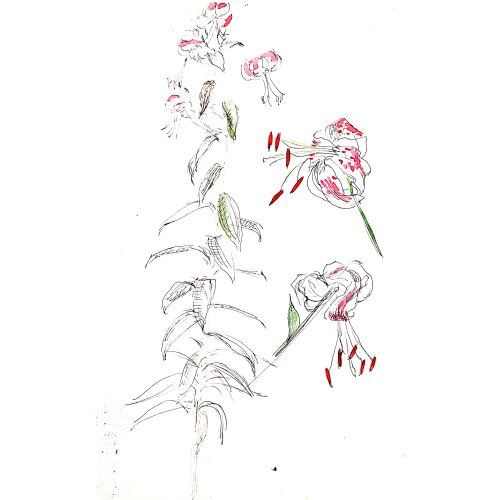
Rosemary Ellis (1910-1988) Lily
36x23cm Pen, ink and watercolour Provenance: the family of the artist, by descent. ROSEMARY ELLIS (1910-1988) Born in North London in 1910, Rosemary’s father died in the Spanish Flu epidemic in 1919 and the family moved in with her mother’s parents in the New Forest. This was an environment where she grew to love nature and animals, constant themes in her artistic works. In 1928 she began studying art at the Regent Street Polytechnic, meeting her tutor Clifford Ellis – a mere three years her senior, who was to become her husband and life-long artistic collaborator. They married in 1931 and after this date almost all their freelance work bears both their signatures. They developed a joint cipher, C&RE, which includes their names in alphabetical order, not representing any order of seniority. They produced posters in the 1930s for big clients such as London Transport, Shell, and The Empire Marketing Board. Clifford Ellis became head of Bath School of Art, and then served during the Second World War as camoufleur and official war artist – with the Grenadier Guards. Rosemary was also an official war artist, working on the Recording Britain project whereby artists were set to record the buildings and landscape of Britain lest it be permanently damaged by the Germans. Following the war Lyons Tearooms chose the Ellises to produce one of their famous lithographs, to be hung in their tearooms and the Ellises chose a view of Teignmouth – we have some views of Teignmouth for sale painted from this time. If you are interested email info@manningfineart.co.uk or call us on 07929 749056. Condition: Old fold to centre as visible in photograph. -
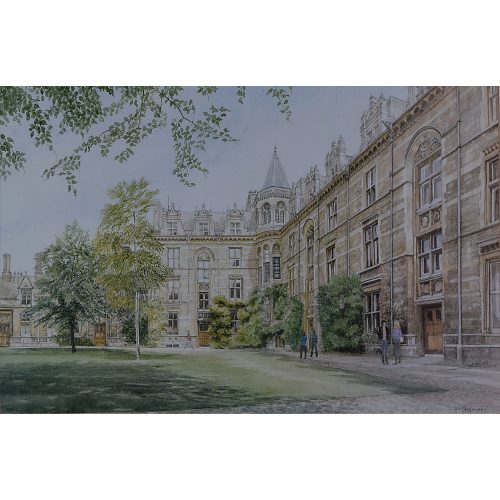
Jane Carpanini RWS RWA RCA (1949-) Gonville and Caius College, Cambridge
30x45cm Digital Limited Edition Print 77/350 Bornin Bedfordshire, Carpanini studied at Brighton College of Art and the University of Reading. Since the start of her career she has been known for meticulous architectural paintings. Wales has been a favourite subject and she has paintings in the collections of the National Library of Wales and National Museum of Wales. Her renowned series of views of Oxford and Cambridge Colleges were published by Contemporary Watercolours. If you are interested email info@manningfineart.co.uk or call us on 07929 749056. Condition: Excellent. -
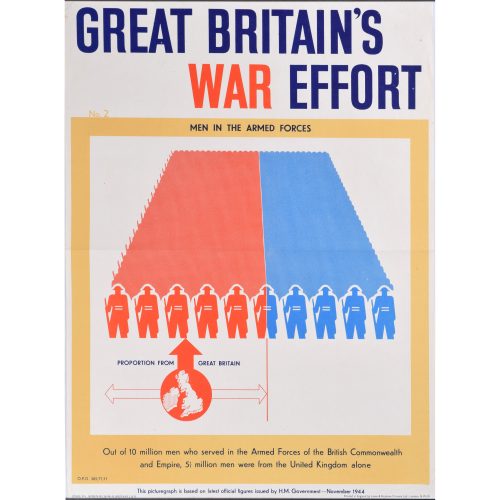
Printed by Lowe & Brydone Printers (1944)
Great Britain's War Effort No. 2 (Men in the armed forces)
50x37cm "Of the ten million men who served in the Commonwealth's Armed Forces five-and-a-half million men were from the United Kingdom alone. This picturegraph is based on latest official figures issued by HM Government November 1944." The population of the Empire had to be persuaded that Britain was pulling her weight in World War 2. By this poster and others similar could the message be put across. If you are interested email info@manningfineart.co.uk or call us on 07929 749056. Condition: Folds as issued, otherwise generally excellent. -
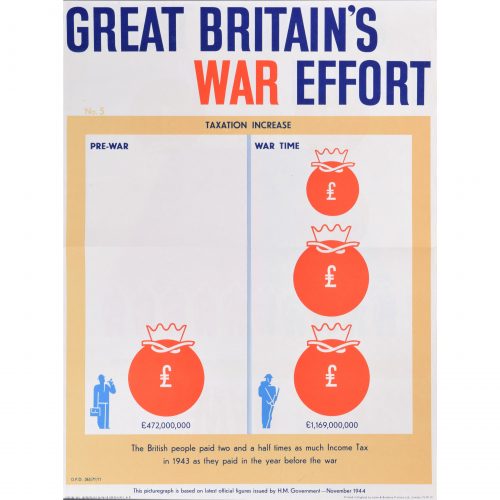
Printed by Lowe & Brydone Printers (1944)
Great Britain's War Effort No. 5 (Taxation)
50x37cm "The British people paid two and a half times as much Income Tax in 1943 as they paid in the year before the war. This picturegraph is based on latest official figures issued by HM Government November 1944." Pre-war taxation: £472,000,000 War-time £1,169,000,000 The population of the Empire had to be persuaded that Britain was pulling her weight in World War 2. By this poster and others similar could the message be put across. If you are interested email info@manningfineart.co.uk or call us on 07929 749056. Condition: Folds as issued, otherwise generally excellent. -
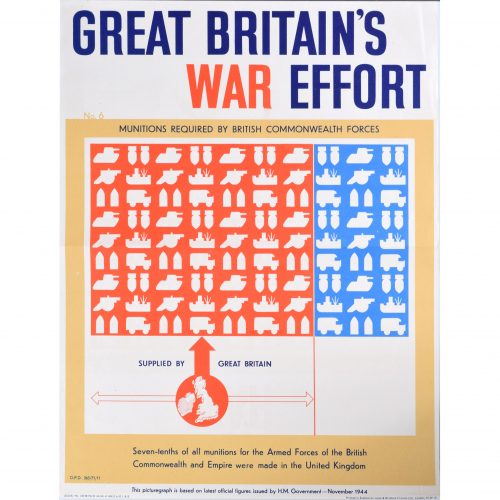
Printed by Lowe & Brydone Printers (1944)
Great Britain's War Effort No. 6 (Munitions)
50x37cm "Seven-tenths of all munitions for the Armed Forces of the British Commonwealth and Empire were made in the United Kingdom. This picturegraph is based on latest official figures issued by HM Government November 1944." The population of the Empire had to be persuaded that Britain was pulling her weight in World War 2. Bu this poster and others similar could the message be put across. The fine stylised tanks, bombs, ships, guns and other vehicles are stacked up on the left-hand side showing the British contribution. If you are interested email info@manningfineart.co.uk or call us on 07929 749056. Condition: Folds as issued, otherwise generally excellent. -

Hermann Kauschke Alpspitze, Zugspitze und Waxenstein (1938)
Watercolour 14.5 x 19.5 cm Inscribed "Alpspitze, Zugspitze u. Waxenstein - original Aquarell". Signed and dated. A beautiful snowy scene depicting three Bavarian mountains: the Alpspitze, Zugspitze, and Waxenstein. Kauschke's view emphasises the wintry quietude of the snow-covered trees and mountains. The winter sun reflects on the freshly fallen snow, and a pair of ski tracks disappear into the distance. If you are interested, please email info@manningfineart.co.uk or call us on 07929 749056. Condition: excellent. -
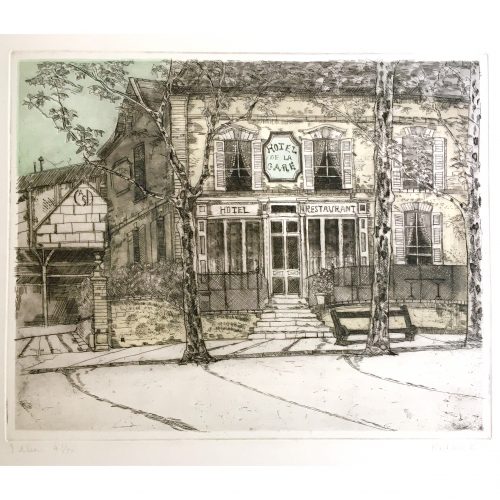
Richard Beer (1928 - 2017) Hôtel de la Gare, Illiers-Combray, France
Etching and aquatint 57 x 75 cm Titled and number 41/70 lower left, and signed lower right, all in pencil. Richard Beer was a painter and printmaker who focused on architecture and landscapes. He studied at the Slade School of Art from 1945 to 1950 and then studied at the École des Beaux Arts in Paris on a French Government Scholarship. He then worked and studied at Atelier 17, an art school and studio run by the artist Stanley William Hayter (arguably one of the most significant printmakers of the 20th century). The atelier was highly influential in the study and promotion of 20th-century printmaking, and it was here that Beer developed his etching skills. Beer then went on to work for the Royal Ballet choreographer John Cranko, designing the sets and costumes for "The Lady and the Fool" at the Royal Opera House in Covent Garden. He also produced several book illustrations and book jacket designs. Beer taught printmaking at the Chelsea School of Art for 40 years and was also a founding member of the Printmakers' Council. He travelled widely through Italy, France, Spain, and Morocco, sketching prolifically and painting rural and architectural landscapes. Beer would then make etchings and paintings in his Primrose Hill studio, inspired by the landscapes he had sketched and seen while travelling. Probably his greatest work was a collaboration with John Betjeman to produce a portfolio of prints of ten Wren Churches in the City of London for Editions Alecto, copies of which are in The Government Art Collection. That collection contains a total of 54 prints by Beer, and the Tate Gallery’s collection holds another seven. His series of Oxford architectural engravings was also produced for Editions Alecto, as was a series of predominantly architectural views in Southern Europe. Condition: very good. If you are interested, please email info@manningfineart.co.uk or call us on 07929 749056. Click here for other works by the artist. -
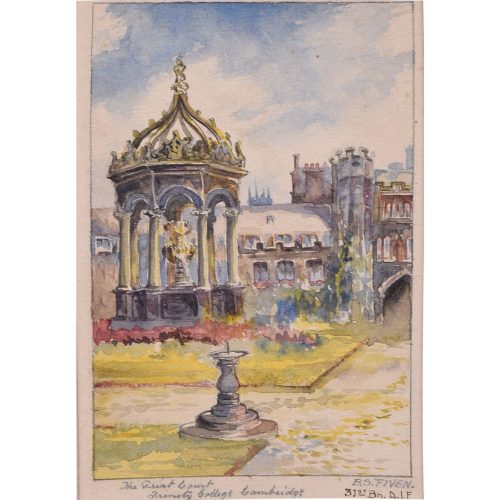
Bertie Studley Fiven (Australian, 1889-1958) Trinity College, Cambridge
14.5 x 9.5 cm Watercolour c. 1917 Born in Carlton, Victoria, Australia, Fiven enlisted in 1915 in C Company of the 31st Australian Infantry Battalion in July 1915. In November 1915 he embarked on either HMAT Wandilla or HMAT Bakara from Melbourne. Whilst on board the '31st Recorder' newspaper was produced (it ran to only one issue, published in the middle of the Indian Ocean on 1st December 1915) and Fiven produced the illustration for the front cover. He then served in Egypt defending the Suez Canal from the Turks. The Battalion then served in France in the Battle of Fromelles in July 1916, suffering 500 casualties and serving no further part in the war until 1917, where it was on the edge of the Battle of Passchendale in September. The Battalion being disbanded in March 1919, Fiven returned to Australia, returning as a Lieutenant on 15 May 1919 to the relief of his mother Mary and his sweetheart May Moore - whom he married on 16 August 1919. There was a policy of rotating troops away from the front line, and Fiven will have spent some rest time in Cambridge when he painted this picture. He died in Heidelberg in Australia in 1958. If you are interested email info@manningfineart.co.ukor call us on 07929 749056. Condition: Good. -
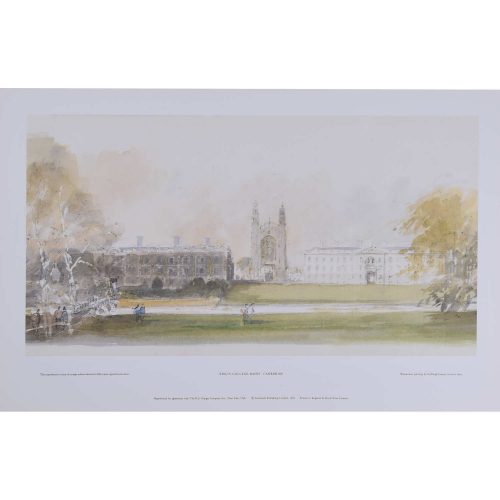 Sir Hugh Casson (1910-1999) King's College from the Backs 22 x 41cm Unsigned proof print Sir Hugh Casson was educated at Eastbourne College, St John’s College Cambridge and the Bartlett School of Architecture. Trained in the 1930s in the early modernist style, he taught at the Cambridge School of Architecture. After employment as a camoufleur during World War 2 by the Air Ministry, in 1948 he was appointed as director of architecture for the Festival of Britain. A close friend of the Royal Family, he undertook designs for the 1953 coronation, designed the interior of the Royal Yacht Britannia (“The overall idea was to give the impression of a country house at sea”), and taught the Prince of Wales to paint in watercolours. Amongst his architectural achievements are the Elephant House at London Zoo, the 1978 redevelopment of Bristol Docks, the Raised Faculty Building for The University of Cambridge, and a building for the Royal College of Art. He published a number of illustrated books, of which Casson’s Oxford and Casson’s Cambridge are probably the best known. A limited edition series of prints was produced from the paintings. King's College is a constituent college of the University of Cambridge in Cambridge, England. Formally The King's College of Our Lady and Saint Nicholas in Cambridge, the college lies beside the River Cam and faces out onto King's Parade in the centre of the city.
 -
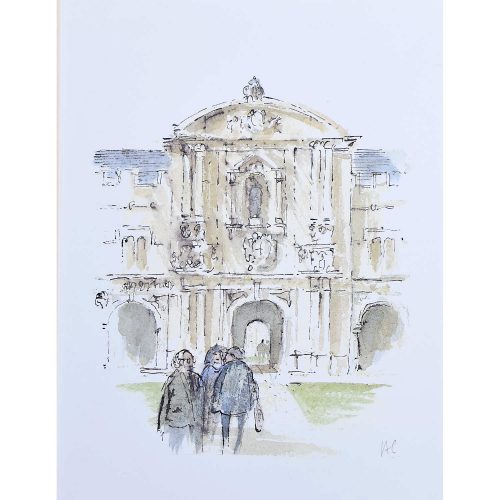
Hugh Casson (1910 - 1999)
St John's College, Oxford
Initalled in pencil 25 x 20 cm From Casson’s ever-popular Oxford and Cambridge series of prints. Sir Hugh Casson was educated at Eastbourne College; St John’s College, Cambridge; and the Bartlett School of Architecture. Trained in the 1930s in the early modernist style, he taught at the Cambridge School of Architecture. After employment as a camoufleur during World War 2 by the Air Ministry, in 1948 he was appointed as director of architecture for the Festival of Britain. A close friend of the Royal Family, he undertook designs for the 1953 coronation, designed the interior of the Royal Yacht Britannia (“The overall idea was to give the impression of a country house at sea”), and taught the Prince of Wales to paint in watercolours. Amongst his architectural achievements are the Elephant House at London Zoo, the 1978 redevelopment of Bristol Docks, the Raised Faculty Building for The University of Cambridge, and a building for the Royal College of Art. He published a number of illustrated books, of which Casson’s Oxford and Casson’s Cambridge are probably the best known. A limited edition series of prints was produced from the paintings. Condition: excellent. If you’d like to know more, please email info@manningfineart.co.uk or call us on 07929 749056. -
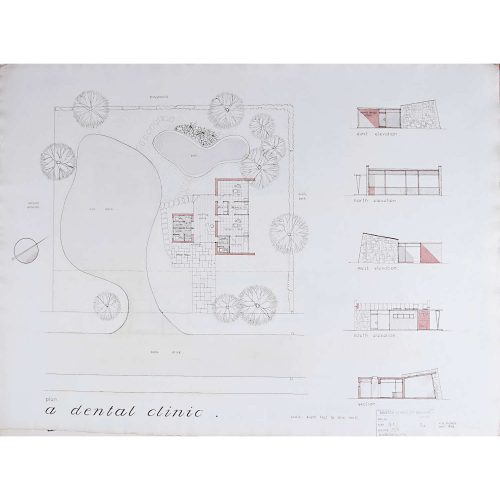
V A Hards (British, c. 1930-c. 2012) Design for Modernist dental surgery (1956)
Watercolour on wove 77 x 55 cm Signed and dated 1956. Hards was educated at Brixton School of Building and Woolwich Polytechnic between 1948 and 1956, during which period he produced some very competent work, including this rather fun modernist design for a dentist's surgery. Brixton School of Building was incorporated into the Polytechnic of the South Bank - now London South Bank University. Condition: some edge wear and isolated spots - see photographs. Stamped and marked with 'Brixton School of Building' stamp. Condition: some edge wear and isolated spots - see photographs. Stamped and marked with 'Brixton School of Building' stamp. If you’d like to know more, please email info@manningfineart.co.uk or call us on 07929 749056. -
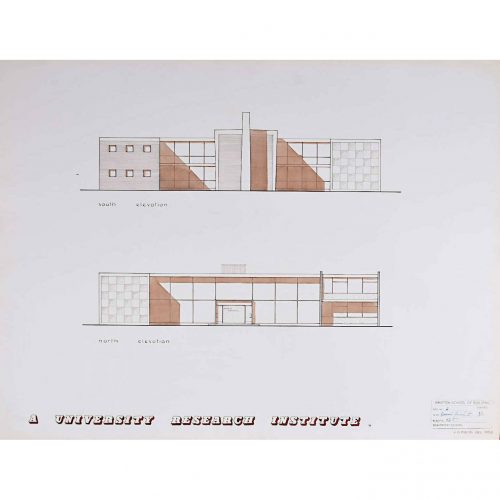
V A Hards (British, c. 1930-c. 2012) Design for Modernist Brutalist University Institute IV (1956)
Watercolour on wove 77 x 55 cm Signed and dated 1956. Hards was educated at Brixton School of Building and Woolwich Polytechnic between 1948 and 1956, during which period he produced some very competent work, including this design for a university's brutalist building. Brixton School of Building was incorporated into the Polytechnic of the South Bank - now London South Bank University. Condition: some edge wear and isolated spots - see photographs. Stamped and marked with 'Brixton School of Building' stamp. If you’d like to know more, please email info@manningfineart.co.uk or call us on 07929 749056. -
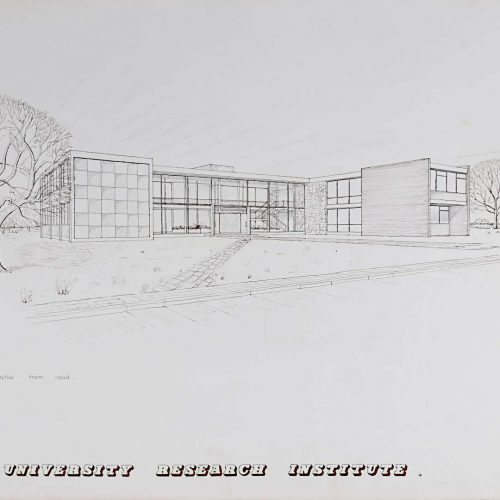
V A Hards (British, c. 1930-c. 2012) Exterior for a University Research Institute (1956)
Watercolour on wove 77 x 55 cm Signed and dated 1956. Hards was educated at Brixton School of Building and Woolwich Polytechnic between 1948 and 1956, during which period he produced some very competent work, including this design for a brutalist University Institute's exterior. Brixton School of Building was incorporated into the Polytechnic of the South Bank - now London South Bank University. Condition: some edge wear and isolated spots - see photographs. Stamped and marked with 'Brixton School of Building' stamp. If you’d like to know more, please email info@manningfineart.co.uk or call us on 07929 749056. -
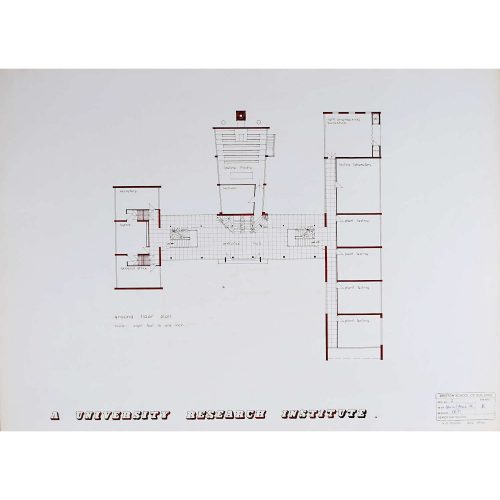
V A Hards (British, c. 1930-c. 2012) Design for Modernist Brutalist University Institute I (1956)
Watercolour on wove 77 x 55 cm Signed and dated 1956. Hards was educated at Brixton School of Building and Woolwich Polytechnic between 1948 and 1956, during which period he produced some very competent work, including this design for a university's brutalist building. Brixton School of Building was incorporated into the Polytechnic of the South Bank - now London South Bank University. Condition: some edge wear and isolated spots - see photographs. Stamped and marked with 'Brixton School of Building' stamp. If you’d like to know more, please email info@manningfineart.co.uk or call us on 07929 749056. -
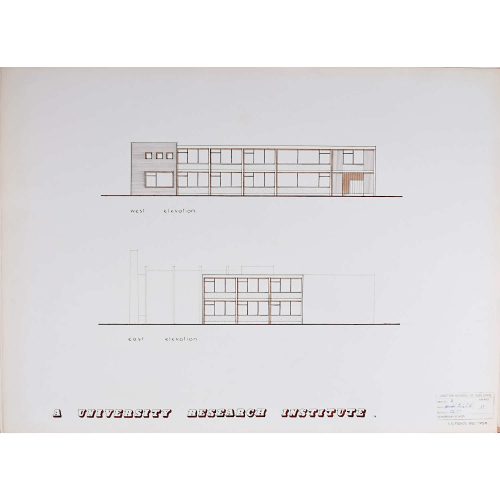
V A Hards (British, c. 1930-c. 2012) Design for Modernist Brutalist University Institute II (1956)
Watercolour on wove 77 x 55 cm Signed and dated 1956. Hards was educated at Brixton School of Building and Woolwich Polytechnic between 1948 and 1956, during which period he produced some very competent work, including this design for a university's brutalist building. Brixton School of Building was incorporated into the Polytechnic of the South Bank - now London South Bank University. Condition: some edge wear and isolated spots - see photographs. Stamped and marked with 'Brixton School of Building' stamp. If you’d like to know more, please email info@manningfineart.co.uk or call us on 07929 749056. -
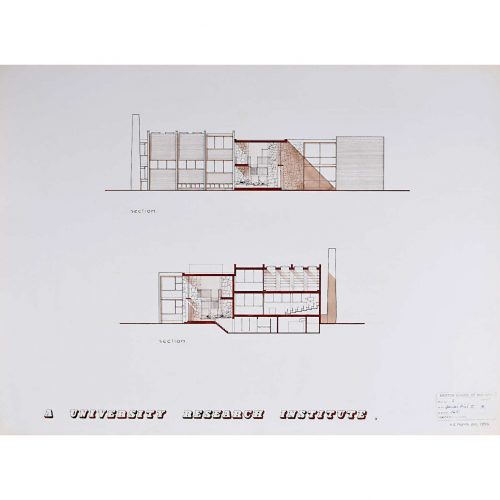
V A Hards (British, c. 1930-c. 2012) Design for Modernist Brutalist University Institute III (1956)
Watercolour on wove 77 x 55 cm Signed and dated 1956. Hards was educated at Brixton School of Building and Woolwich Polytechnic between 1948 and 1956, during which period he produced some very competent work, including this design for a university's brutalist building. Brixton School of Building was incorporated into the Polytechnic of the South Bank - now London South Bank University. Condition: some edge wear and isolated spots - see photographs. Stamped and marked with 'Brixton School of Building' stamp. If you’d like to know more, please email info@manningfineart.co.uk or call us on 07929 749056. -
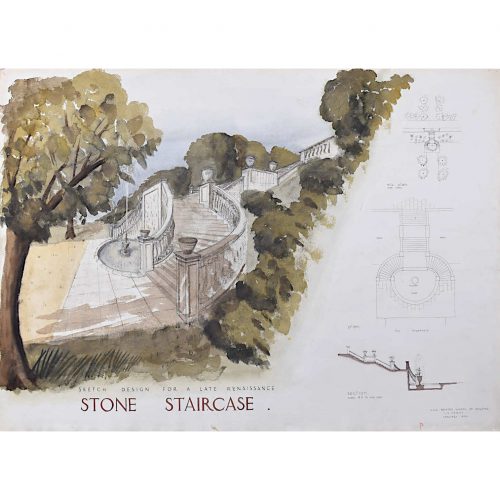
V A Hards (British, c. 1930-c. 2012) Design for a late Renaissance stone staircase (1956)
Watercolour on wove 77 x 55 cm Signed and dated 1956. Hards was educated at Brixton School of Building and Woolwich Polytechnic between 1948 and 1956, during which period he produced some very competent work, including this architectural design for a late Renaissance stone staircase. Brixton School of Building was incorporated into the Polytechnic of the South Bank - now London South Bank University. Condition: some edge wear and isolated spots - see photographs. Stamped and marked with 'Brixton School of Building' stamp. If you’d like to know more, please email info@manningfineart.co.uk or call us on 07929 749056. -
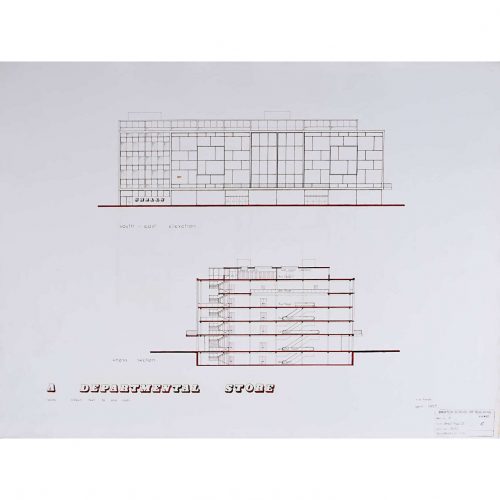
V A Hards (British, c. 1930-c. 2012) Design for a Departmental Store (1956)
Watercolour on wove 77 x 55 cm Signed and dated 1956. Hards was educated at Brixton School of Building and Woolwich Polytechnic between 1948 and 1956, during which period he produced some very competent work, including this architectural design for a modernist department store. Brixton School of Building was incorporated into the Polytechnic of the South Bank - now London South Bank University. Condition: some edge wear and isolated spots - see photographs. Stamped and marked with 'Brixton School of Building' stamp. If you’d like to know more, please email info@manningfineart.co.uk or call us on 07929 749056. -
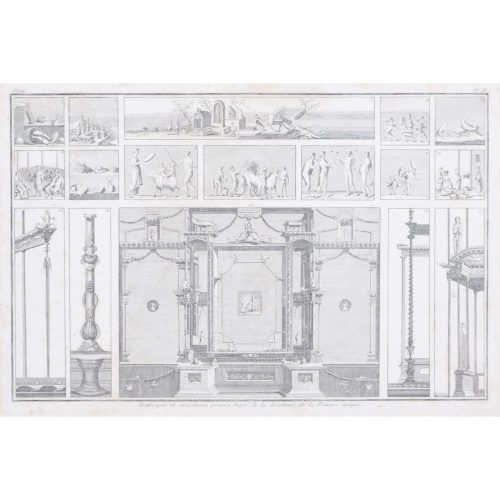
Arabesques and caricatures
Engraving 24.5 x 36 cm Condition: good. If you’d like to know more, please email info@manningfineart.co.uk or call us on 07929 749056. -
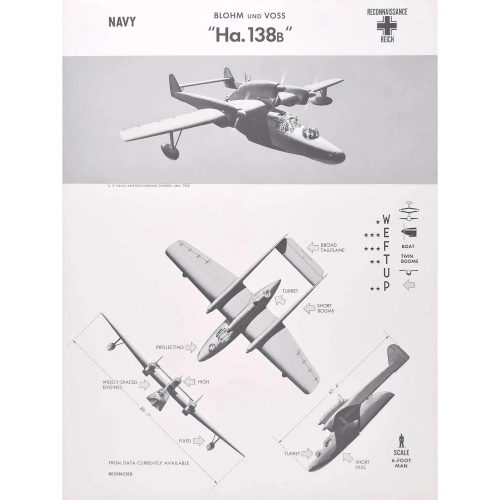
1943 Blohm und Voss "Ha. 138B"
World War II German Reich reconnaissance plane Original aeroplane recognition poster (1943) 63 x 47 cm A particularly unusual style of aeroplane identification poster, owing to the very arty images. Most such posters rely on very plain silhouettes, this series - and we have several in this series; view them here - have a much more arty approach to the task with shading and an interesting angle view. Condition: generally very good, occasional handling marks. If you’d like to know more, please email info@manningfineart.co.uk or call us on 07929 749056. -
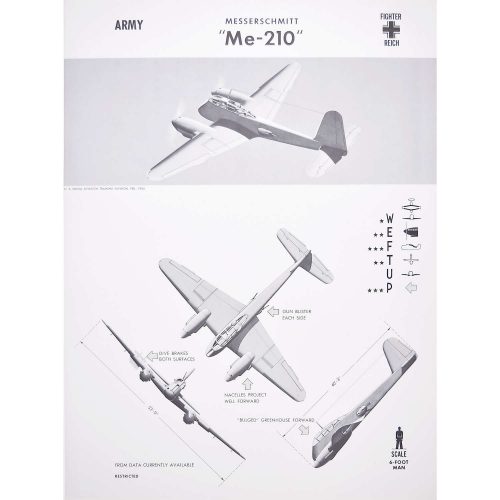
US Naval Aviation Training Division
Messerschmitt BF 210
Aeroplane identification poster, published 1942 63 x 47 cm A particularly unusual style of aeroplane identification poster, owing to the very arty images. Most such posters rely on very plain silhouettes, this series - and we have several in this series; view them here - have a much more arty approach to the task with shading and an interesting angle view. The Messerschmitt Me 210 was a two-seater German heavy fighter and ground-attack aircraft of World War II. Initial development of the 210 was started by Messerschmitt in 1938 at the request of the Luftwaffe. Condition: generally very good. If you are interested, please email info@manningfineart.co.uk or call us on 07929 749056. -
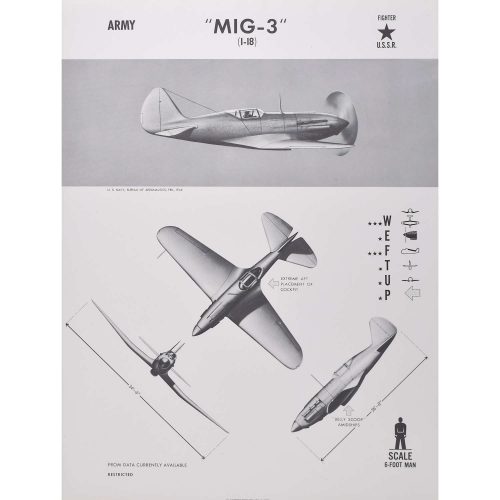
US Naval Aviation Training Division
MIG-3
Aeroplane identification poster, published 1942 63 x 47 cm A particularly unusual style of aeroplane identification poster, owing to the very arty images. Most such posters rely on very plain silhouettes, this series - and we have several in this series; view them here - have a much more arty approach to the task with shading and an interesting angle view. The Mikoyan-Gurevich MIG-3 was a Soviet fighter and interceptor aircraft used during World War II. It was a development of the MIG-1 by the Experimental Design Department of Factory No. 1 to remedy problems found during the MIG-1's development and operations. On 22 June 1941, at the beginning of Operation Barbarossa, some 981 MIG-3s were in service with the Soviet Air Forces, the Soviet Air Defence Forces, and Soviet Naval Aviation. The MIG-3 was difficult to fly in peacetime and much more so in combat. Originally designed as a high-altitude fighter-interceptor, combat over the Eastern Front was generally at lower altitudes, where it was inferior to the German Messerschmitt Bf 109 (a poster of which is available in our storefront) as well as most of its Soviet contemporaries. It was also pressed into service as a fighter-bomber during the autumn of 1941 but it was equally unsuited for this. The losses suffered in combat were very high, in percentage the highest among all the VVS fighters, with 1,432 shot down. Condition: generally very good. If you are interested, please email info@manningfineart.co.uk or call us on 07929 749056. -
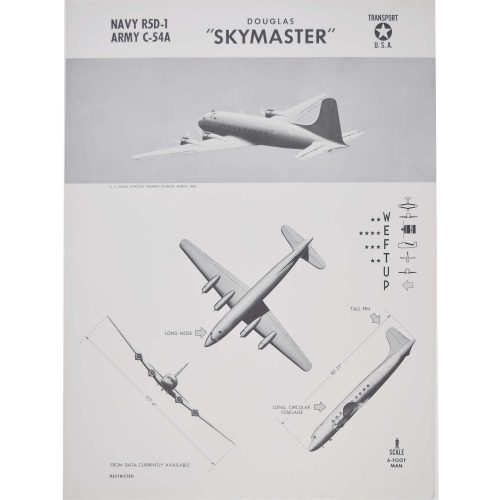
1942 Navy R5D-1 Army C-54A Douglas "Skymaster"
Aeroplane identification poster, published 1942 63 x 47 cm A particularly unusual style of aeroplane identification poster, owing to the very arty images. Most such posters rely on very plain silhouettes, this series - and we have several in this series; view them here - have a much more arty approach to the task with shading and an interesting angle view. The Douglas Skymaster was a four-engine transport aircraft used by the United States Army Air Forces in World War II and the Korean War. Like the Douglas C-47 Skytrain (the Skytrain poster from the same series is also available in our storefront), the Skymaster was derived from a civilian airliner, the Douglas DC-4. To meet military requirements, the first civil production aircraft had four additional auxiliary fuel tanks in the main cabin which reduced the passenger seats to 26. The following batch of aircraft, designated C-54A, were built with a stronger floor and a cargo door with a hoist and winch. The first C-54A was delivered in February 1943. Skymasters used by the United States Navy were designated Douglas R5D. As well as being used for cargo transport, the C-54 also carried presidents, prime ministers, and military staff. Dozens of variants of the C-54 were employed in a wide variety of non-combat roles such as air-sea rescue, scientific and military research, and missile tracking and recovery. During the Berlin Airlift it hauled coal and food supplies to West Berlin. After the Korean War it continued to be used for military and civilian uses by more than 30 countries. Condition: generally very good. If you are interested, please email info@manningfineart.co.uk or call us on 07929 749056.