-
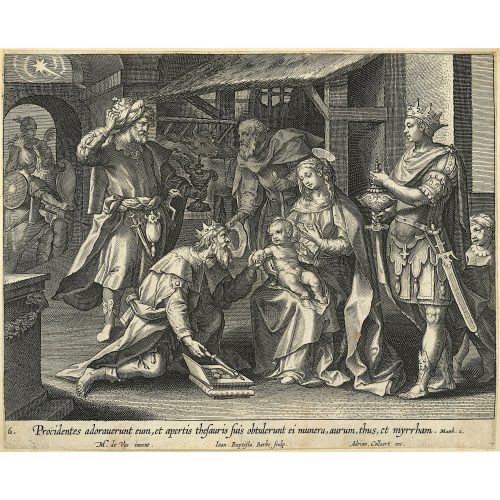
Jean Baptist Barbé (1578?-1649) Adriaen Collaert (c. 1560-1618) after Maerten de Vos (1532 - 1603) 6. "Procidentes adoravuerunt eum, et apertis thesauris suis obtulerunt ei munera, aurum, thus, et myrrham" - Matth 2
Engraving From Vita, Passio, et Resurrectio Iesu Christi first published 1598, this a later edition published by Joannes Galle (1600-1676) 16.5x21.8cm From the Gospel of Matthew, Chapter 2 Verse 11 - and fell down and worshipped him: and when they had opened their treasures, they presented unto him gifts; gold, and frankincense and myrrh. The star hangs over the stable door, as the three Magi present their treasures to Our Lord, sitting upon Mary's knee, St Joseph in attendance behind. Adriaen Collaert was born in Antwerp between 1555 and 1565, becoming wijnmeester of the Guild of St Luke in 1580 - a title reserved for the sons of guild members. The guild of St Luke was generally the city guild for artists. Working for Philip Galle, a Dutch publisher best known for his old master prints, he married Galle's daughter Justa. After learning the principles of engraving in the Netherlands, he spent some years in Italy improving his skill. Upon returning to Flanders he engraved, in accomplished fashion, a great number of plates. His brother, Jan Collaert II, his son, Jan Baptist Collaert II and a grandson were all printmakers. These particular plates are after paintings by Maerten de Vos, a Flemish painter and draughtsman. His father was Pieter de Vos, from whom he learned. From 1550 - 1558 he travelled in Italy, visiting Rome and Venice and becoming master of the Antwerp Guild of St Luke upon his return in 1558. After 1575 he was mainly engaged in producing print designs. If you are interested email info@manningfineart.co.uk or call us on 07929 749056. Condition: Trimmed to plate margins, generally good condition commensurate with age, slight age toning and handling marks as evident from image. -
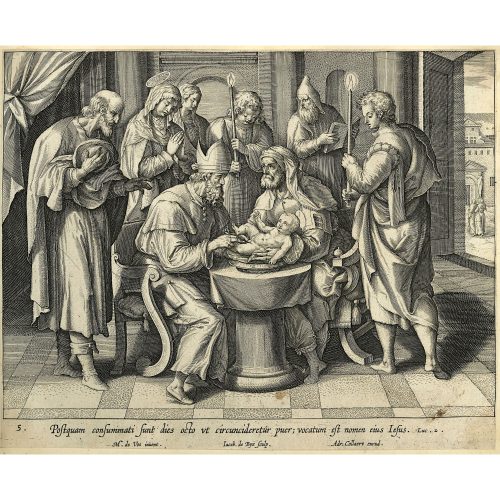
Adriaen Collaert (c. 1560-1618) after Maerten de Vos (1532 - 1603) 5. "Postquam consummati sunt dies octo ut circuncideretur puer; vocatum est nomen eius Iesus" - Luke 2
Engraving, From Vita, Passio, et Resurrectio Iesu Christi first published 1598, this a later edition published by Joannes Galle (1600-1676) 16.5x21.8cm From the Gospel of Luke, Chapter 2 Verse 21 - And when eight days were accomplished for the circumcising of the child, his name was called Jesus. Adriaen Collaert was born in Antwerp between 1555 and 1565, becoming wijnmeester of the Guild of St Luke in 1580 - a title reserved for the sons of guild members. The guild of St Luke was generally the city guild for artists. Working for Philip Galle, a Dutch publisher best known for his old master prints, he married Galle's daughter Justa. After learning the principles of engraving in the Netherlands, he spent some years in Italy improving his skill. Upon returning to Flanders he engraved, in accomplished fashion, a great number of plates. His brother, Jan Collaert II, his son, Jan Baptist Collaert II and a grandson were all printmakers. These particular plates are after paintings by Maerten de Vos, a Flemish painter and draughtsman. His father was Pieter de Vos, from whom he learned. From 1550 - 1558 he travelled in Italy, visiting Rome and Venice and becoming master of the Antwerp Guild of St Luke upon his return in 1558. After 1575 he was mainly engaged in producing print designs. If you are interested email info@manningfineart.co.uk or call us on 07929 749056. Condition: Trimmed to plate margins, generally good condition commensurate with age, slight age toning and handling marks as evident from image. -
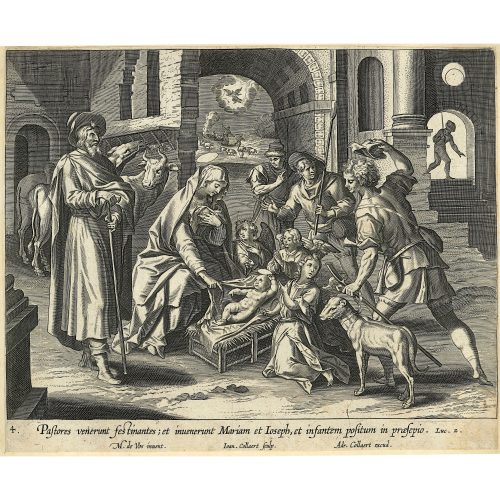
Adriaen Collaert (c. 1560-1618) after Maerten de Vos (1532 - 1603) "Pastores venerunt festinantes; et inuenerunt Mariam et Ioseph, et infantem positum in praesepio" - Luke 2
Engraving, From Vita, Passio, et Resurrectio Iesu Christi first published 1598, this a later edition published by Joannes Galle (1600-1676) 16.5x21.8cm From the Gospel of Luke, Chapter 2 Verse 16 - And the shepherds came with haste, and found Mary, and Joseph, and the babe lying in a manger. Adriaen Collaert was born in Antwerp between 1555 and 1565, becoming wijnmeester of the Guild of St Luke in 1580 - a title reserved for the sons of guild members. The guild of St Luke was generally the city guild for artists. Working for Philip Galle, a Dutch publisher best known for his old master prints, he married Galle's daughter Justa. After learning the principles of engraving in the Netherlands, he spent some years in Italy improving his skill. Upon returning to Flanders he engraved, in accomplished fashion, a great number of plates. His brother, Jan Collaert II, his son, Jan Baptist Collaert II and a grandson were all printmakers. These particular plates are after paintings by Maerten de Vos, a Flemish painter and draughtsman. His father was Pieter de Vos, from whom he learned. From 1550 - 1558 he travelled in Italy, visiting Rome and Venice and becoming master of the Antwerp Guild of St Luke upon his return in 1558. After 1575 he was mainly engaged in producing print designs. If you are interested email info@manningfineart.co.uk or call us on 07929 749056. Condition: Trimmed to plate margins, generally good condition commensurate with age, slight age toning and handling marks as evident from image. -
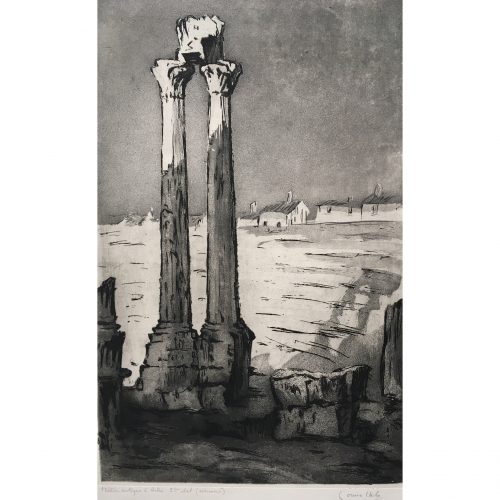
Louise Ibels (1891-1965) 'Théâtre Antique à Arles'
Etching and aquatint Signed and titled in pencil to margin 3rd state proof Approx. 39 x 25cm (plate) A French artist known for her charming etchings, here she captures the romance of the Roman Theatre in Arles. Built at the time of Augustus (27BC-14AD) it had seating for 8,000 across thirty-three tiers of steps. During the early Middle Ages it was plundered for its stone to build the town walls. These days the only part of the rear wall of the stage that survives are the two columns depicted in the print. Re-emphasised by the presence of their shadow, the rest of the view disappears softly into the distant background. If you are interested email info@manningfineart.co.uk or call us on 07929 749056. Condition: Excellent. -
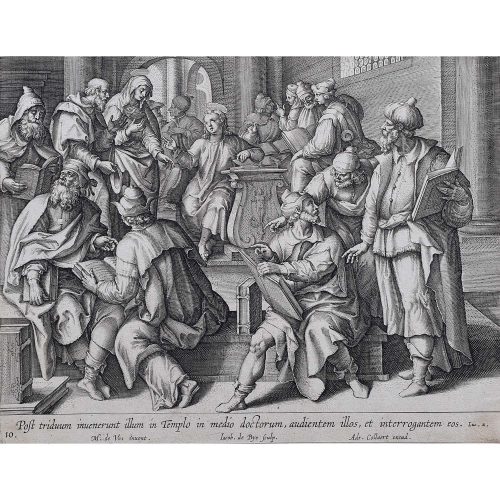
Jean Baptist Barbé (1578?-1649) Adriaen Collaert (c. 1560-1618) after Maerten de Vos (1532 - 1603) 10. Post triduum invenerunt illum in templo in medio doctorum, audientem illos, et interrogante eos. Luc. 2
Engraving From Vita, Passio, et Resurrectio Iesu Christi first published 1598, this a later edition published by Joannes Galle (1600-1676) 16.5x21.8cm From the Gospel of Luke, Chapter 2 After three days they found him in the temple among the doctors, listening to them and asking them questions. Adriaen Collaert was born in Antwerp between 1555 and 1565, becoming wijnmeester of the Guild of St Luke in 1580 - a title reserved for the sons of guild members. The guild of St Luke was generally the city guild for artists. Working for Philip Galle, a Dutch publisher best known for his old master prints, he married Galle's daughter Justa. After learning the principles of engraving in the Netherlands, he spent some years in Italy improving his skill. Upon returning to Flanders he engraved, in accomplished fashion, a great number of plates. His brother, Jan Collaert II, his son, Jan Baptist Collaert II and a grandson were all printmakers. These particular plates are after paintings by Maerten de Vos, a Flemish painter and draughtsman. His father was Pieter de Vos, from whom he learned. From 1550 - 1558 he travelled in Italy, visiting Rome and Venice and becoming master of the Antwerp Guild of St Luke upon his return in 1558. After 1575 he was mainly engaged in producing print designs. If you are interested email info@manningfineart.co.uk or call us on 07929 749056. Condition: Trimmed to plate margins, generally good condition commensurate with age, slight age toning and handling marks as evident from image. -
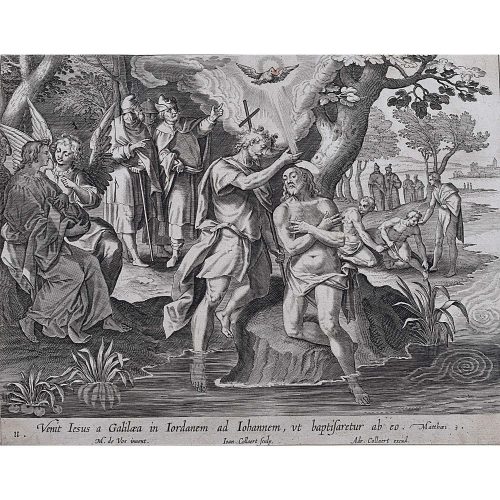
Jean Baptist Barbé (1578?-1649) Adriaen Collaert (c. 1560-1618) after Maerten de Vos (1532 - 1603) 11. Verit Iesus a Galilaea in Iordanem ad Iohannem, vt baptifartur ab eo. Matthew. 3.
Engraving From Vita, Passio, et Resurrectio Iesu Christi first published 1598, this a later edition published by Joannes Galle (1600-1676) 16.5x21.8cm From the Gospel of Matthew, chapter 3 "Then Jesus came from Galilee to the Jordan to be baptized by John." Adriaen Collaert was born in Antwerp between 1555 and 1565, becoming wijnmeester of the Guild of St Luke in 1580 - a title reserved for the sons of guild members. The guild of St Luke was generally the city guild for artists. Working for Philip Galle, a Dutch publisher best known for his old master prints, he married Galle's daughter Justa. After learning the principles of engraving in the Netherlands, he spent some years in Italy improving his skill. Upon returning to Flanders he engraved, in accomplished fashion, a great number of plates. His brother, Jan Collaert II, his son, Jan Baptist Collaert II and a grandson were all printmakers. These particular plates are after paintings by Maerten de Vos, a Flemish painter and draughtsman. His father was Pieter de Vos, from whom he learned. From 1550 - 1558 he travelled in Italy, visiting Rome and Venice and becoming master of the Antwerp Guild of St Luke upon his return in 1558. After 1575 he was mainly engaged in producing print designs. If you are interested email info@manningfineart.co.uk or call us on 07929 749056. Condition: Trimmed to plate margins, generally good condition commensurate with age, slight age toning and handling marks as evident from image. -
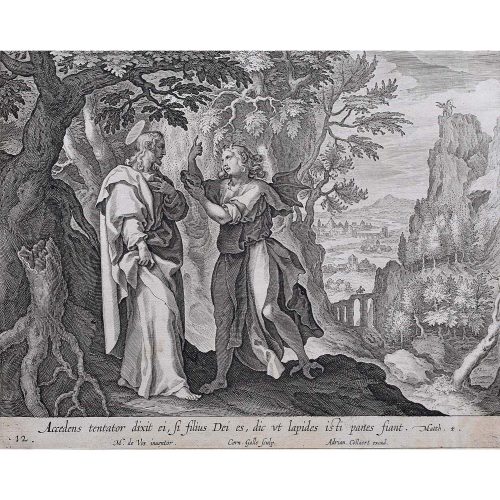
Jean Baptist Barbé (1578?-1649) Adriaen Collaert (c. 1560-1618) after Maerten de Vos (1532 - 1603) 12. Accedens tentator dixit ei fi lius, Dei es, dic vt lapides isti panes fiant. Matt. 4.
Engraving From Vita, Passio, et Resurrectio Iesu Christi first published 1598, this a later edition published by Joannes Galle (1600-1676) 16.5x21.8cm From the Gospel of Matthew, chapter 4 "If thou be the Son of God, command that these stones be made bread" Adriaen Collaert was born in Antwerp between 1555 and 1565, becoming wijnmeester of the Guild of St Luke in 1580 - a title reserved for the sons of guild members. The guild of St Luke was generally the city guild for artists. Working for Philip Galle, a Dutch publisher best known for his old master prints, he married Galle's daughter Justa. After learning the principles of engraving in the Netherlands, he spent some years in Italy improving his skill. Upon returning to Flanders he engraved, in accomplished fashion, a great number of plates. His brother, Jan Collaert II, his son, Jan Baptist Collaert II and a grandson were all printmakers. These particular plates are after paintings by Maerten de Vos, a Flemish painter and draughtsman. His father was Pieter de Vos, from whom he learned. From 1550 - 1558 he travelled in Italy, visiting Rome and Venice and becoming master of the Antwerp Guild of St Luke upon his return in 1558. After 1575 he was mainly engaged in producing print designs. If you are interested email info@manningfineart.co.uk or call us on 07929 749056. Condition: Trimmed to plate margins, generally good condition commensurate with age, slight age toning and handling marks as evident from image. -
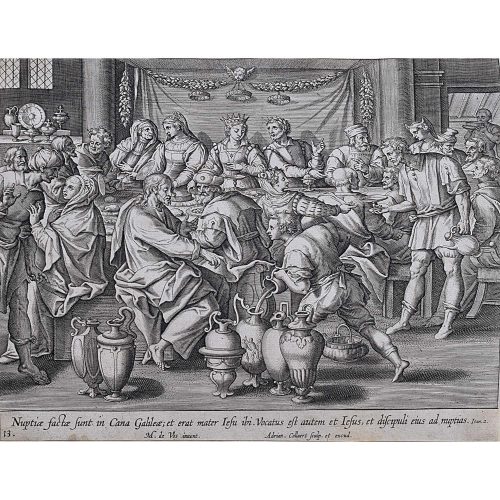
Jean Baptist Barbé (1578?-1649) Adriaen Collaert (c. 1560-1618) after Maerten de Vos (1532 - 1603) 13. nuptia facta sunt in cana galilaeae; et erat mater Iefu ibi. Vocatus eft autem et Iefus, et difcipuli eius ad nuptias. Ioan. 2.
Engraving From Vita, Passio, et Resurrectio Iesu Christi first published 1598, this a later edition published by Joannes Galle (1600-1676) 16.5x21.8cm From the Gospel of John, chapter 2 "On the third day a wedding took place at Cana in Galilee. Jesus’ mother was there, and Jesus and His disciples had also been invited to the wedding. When the wine ran out, Jesus’ mother said to Him, “They have no more wine." Adriaen Collaert was born in Antwerp between 1555 and 1565, becoming wijnmeester of the Guild of St Luke in 1580 - a title reserved for the sons of guild members. The guild of St Luke was generally the city guild for artists. Working for Philip Galle, a Dutch publisher best known for his old master prints, he married Galle's daughter Justa. After learning the principles of engraving in the Netherlands, he spent some years in Italy improving his skill. Upon returning to Flanders he engraved, in accomplished fashion, a great number of plates. His brother, Jan Collaert II, his son, Jan Baptist Collaert II and a grandson were all printmakers. These particular plates are after paintings by Maerten de Vos, a Flemish painter and draughtsman. His father was Pieter de Vos, from whom he learned. From 1550 - 1558 he travelled in Italy, visiting Rome and Venice and becoming master of the Antwerp Guild of St Luke upon his return in 1558. After 1575 he was mainly engaged in producing print designs. If you are interested email info@manningfineart.co.uk or call us on 07929 749056. Condition: Trimmed to plate margins, generally good condition commensurate with age, slight age toning and handling marks as evident from image. -
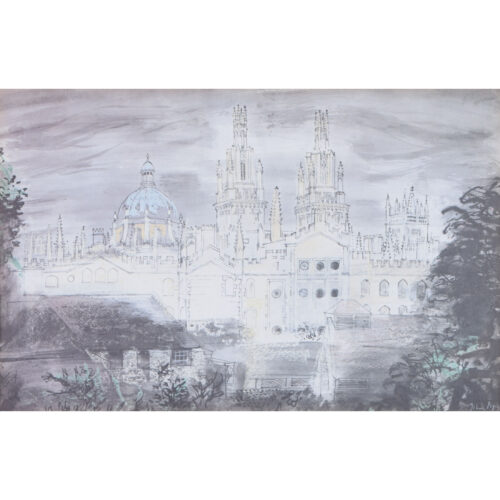
after John Piper (1903 - 1992)
View from the Upper Common Room, The Queen's College - Oxford Almanac 1972 (cropped)
Lithograph 17 x 26 cm A lithograph featuring Oxford's skyline, including the towers of All Souls and the Radcliffe Camera, set against a blustery Piper sky. Piper's painting was reproduced as a lithograph in 1972, to be published in the "Oxford Almanack". The Oxford Almanack was an annual almanac published by the Oxford University Press for the University of Oxford from 1674 through 2019 (when printing sadly ceased due to "dwindling interest"). The almanac traditionally included engravings or lithographs of the University and information about the upcoming year. Other almanac artists have included James Basire, Michael Burghers, J. M. W. Turner, and Michael Oelman. John Piper CH was an English painter, printmaker, and designer of stained-glass windows. His work often focused on the British landscape, especially churches and monuments, and included tapestry designs, book jackets, screen-prints, photography, fabrics and ceramics. Condition: very good. If you are interested, please email info@manningfineart.co.uk or call us on 07929 749056. Click here for other views of All Souls. -

Joseph Constantine Stadler (1755 - 1828) after Frederick Mackenzie (1788 - 1854) Chapel of Caius College, Cambridge (1815)
Aquatint with original hand colouring 24 x 21 cm Published by Rudolph Ackermann (1764 - 1834). Frederick Mackenzie (circa 1788 - 1854) was a British watercolourist and architectural draughtsman. He first exhibited at the Royal Academy in 1804, and contributed eleven drawings between that year and 1828. He contributed to the Society of Painters in Water Colours exhibitions from 1813, becoming an associate in 1822, and a full member the following year. From 30 November 1831 until, his death he was treasurer to the society. In later life Mackenzie was no longer commissioned to illustrate books. Joseph Constantine Stadler was a prolific German émigré engraver of images after his contemporaries - here, 18th-century English landscape painter and diarist Joseph Farington. Stadler's engravings are wide-ranging in subject matter and include landscapes, seascapes and portraits, as well as military, sporting and decorative subjects. Stadler was employed by the leading print publisher of the time, John Boydell. Stadler lived in Knightsbridge when he died at the age of 73. Rudolph Ackermann was an Anglo-German bookseller, inventor, lithographer, publisher and businessman. In 1795 he established a print-shop and drawing-school at 96 Strand. Here Ackermann set up a lithographic press and began a trade in prints. He later began to manufacture colours and thick carton paper for landscape and miniature painters. Within three years the premises had become too small and he moved to 101 Strand, in his own words "four doors nearer to Somerset House", the seat of the Royal Academy of Arts. Between 1797 and 1800 Ackermann rapidly developed his print and book publishing business, encompassing many different genres including topography, caricature, portraits, transparencies and decorative prints. Condition: Generally very good.If you would like to know more, please email info@manningfineart.co.uk or call us on 07929 749056.
-
Out of stock

John Bluck (early 19th century) after Frederick Mackenzie (1788 - 1854) Chapel of Trinity College, Cambridge (1814)
Aquatint with original hand colouring 27 x 21 cm Published by Rudolph Ackermann (1764 - 1834). Frederick Mackenzie (1788 - 1854) was a British watercolourist and architectural draughtsman. He first exhibited at the Royal Academy in 1804, and contributed eleven drawings between that year and 1828. He contributed to the Society of Painters in Water Colours exhibitions from 1813, becoming an associate in 1822, and a full member the following year. From 30 November 1831 till his death he was treasurer to the society. In later life Mackenzie was no longer commissioned to illustrate books. John Bluck was an aquatint engraver, mainly of topographical views, but also of marine and sporting subjects after his contemporaries. He produced plates for numerous publications. Rudolph Ackermann was an Anglo-German bookseller, inventor, lithographer, publisher and businessman. In 1795 he established a print-shop and drawing-school at 96 Strand. Here Ackermann set up a lithographic press and began a trade in prints. He later began to manufacture colours and thick carton paper for landscape and miniature painters. Within three years the premises had become too small and he moved to 101 Strand, in his own words "four doors nearer to Somerset House", the seat of the Royal Academy of Arts. Between 1797 and 1800 Ackermann rapidly developed his print and book publishing business, encompassing many different genres including topography, caricature, portraits, transparencies and decorative prints. Condition: Generally very good; slight toning within platemark.If you would like to know more, please email info@manningfineart.co.uk or call us on 07929 749056.
-

Frederick Christian Lewis (1779 - 1856) after Frederick Mackenzie (1788 - 1854) Divinity School (1813)
Hand-coloured aquatint 24 x 29 cm Published by Rudolph Ackermann (1764 - 1834). Oxford's medieval Divinity School, which was once the beating heart of theological studies at the University. Frederick Mackenzie (circa 1788 - 1854) was a British watercolourist and architectural draughtsman. He first exhibited at the Royal Academy in 1804, and contributed eleven drawings between that year and 1828. He contributed to the Society of Painters in Water Colours exhibitions from 1813, becoming an associate in 1822, and a full member the following year. From 30 November 1831 until, his death he was treasurer to the society. In later life Mackenzie was no longer commissioned to illustrate books. Frederick Christian Lewis was an English etcher, engraver, and painter. He studied under Joseph Stadler and at the Royal Academy and produced the plates for the publisher John Chamberlaine's 'Original Designs of the most celebrated Masters in the Royal Collection' in 1812. His superlative skills as engraver led to frequent commissions from Royalty, and to his contribution to J. M. W. Turner's Liber Studiorum, a collection of seventy-one etchings with mezzotint, greatly influencing landscape painting. Rudolph Ackermann was an Anglo-German bookseller, inventor, lithographer, publisher and businessman. In 1795 he established a print-shop and drawing-school at 96 Strand. Here Ackermann set up a lithographic press and began a trade in prints. He later began to manufacture colours and thick carton paper for landscape and miniature painters. Within three years the premises had become too small and he moved to 101 Strand, in his own words "four doors nearer to Somerset House", the seat of the Royal Academy of Arts. Between 1797 and 1800 Ackermann rapidly developed his print and book publishing business, encompassing many different genres including topography, caricature, portraits, transparencies and decorative prints. Condition: Generally very good.If you would like to know more, please email info@manningfineart.co.uk or call us on 07929 749056.
-

John Bluck (early 19th century) after Frederick Mackenzie (1788 - 1854) The Radcliffe Library (1814)
Aquatint with original hand colouring 24 x 29 cm Published by Rudolph Ackermann (1764 - 1834). Frederick Mackenzie (1788 - 1854) was a British watercolourist and architectural draughtsman. He first exhibited at the Royal Academy in 1804, and contributed eleven drawings between that year and 1828. He contributed to the Society of Painters in Water Colours exhibitions from 1813, becoming an associate in 1822, and a full member the following year. From 30 November 1831 till his death he was treasurer to the society. In later life Mackenzie was no longer commissioned to illustrate books. John Bluck was an aquatint engraver, mainly of topographical views, but also of marine and sporting subjects after his contemporaries. He produced plates for numerous publications. Rudolph Ackermann was an Anglo-German bookseller, inventor, lithographer, publisher and businessman. In 1795 he established a print-shop and drawing-school at 96 Strand. Here Ackermann set up a lithographic press and began a trade in prints. He later began to manufacture colours and thick carton paper for landscape and miniature painters. Within three years the premises had become too small and he moved to 101 Strand, in his own words "four doors nearer to Somerset House", the seat of the Royal Academy of Arts. Between 1797 and 1800 Ackermann rapidly developed his print and book publishing business, encompassing many different genres including topography, caricature, portraits, transparencies and decorative prints. Condition: Generally very good.If you would like to know more, please email info@manningfineart.co.uk or call us on 07929 749056.
-
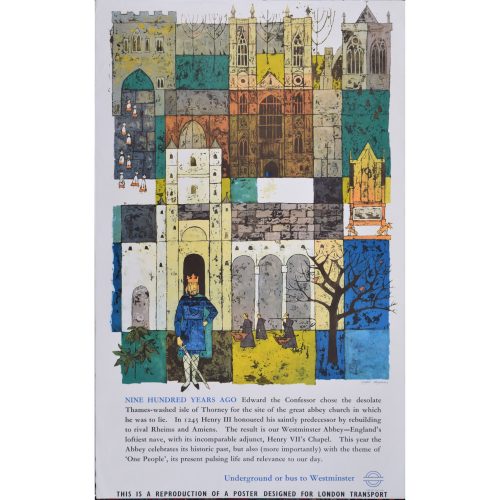
Gaynor Chapman (1935-2000)
Nine Hundred Years Ago
1966 Lithographic poster for London Transport From the original printing but sold at the time in the London Transport poster shop hence overprinted 'This is a reproduction of a poster designed for London Transport." 101×63.5cm Chapman attended the Epsom School of Art and the RCA where she studied illustration and graphics. Her posters for London Transport are amongst her best works. If you are interested email info@manningfineart.co.uk or call us on 07929 749056. -
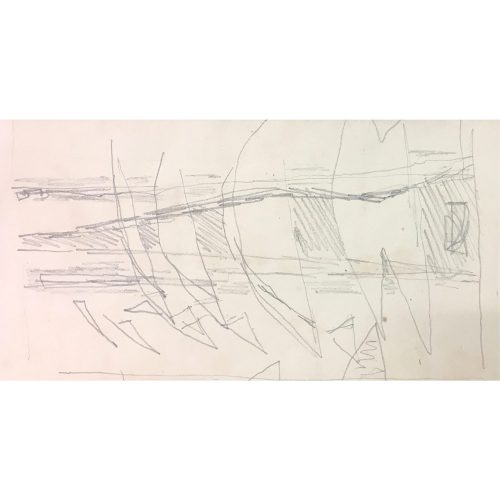
Clifford Ellis (1907-1985)
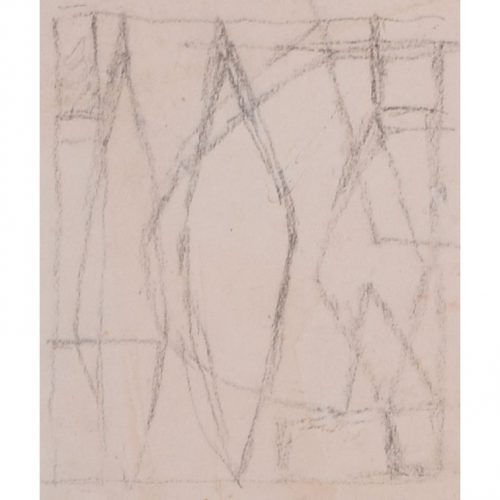
Sketch for Sailing Boats I
Pencil 9x17cm Provenance: the family of the artist, by descent. Click here for biographical details and other works by the artist. If you are interested email info@manningfineart.co.uk or call us on 07929 749056. -
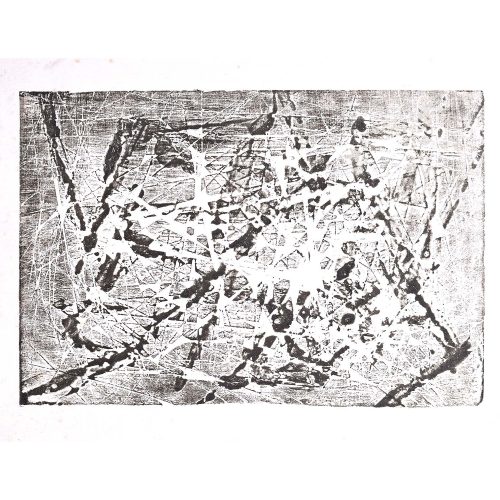
Henry Cliffe (1919-1983) Constellations II
Etching Mid 20th Century 16x24cm Click here for biographical details and other pictures by the artist. If you are interested email info@manningfineart.co.uk or call us on 07929 749056. Condition: Good. -
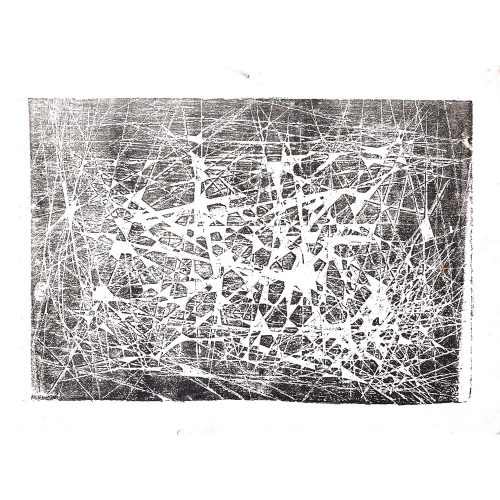
Henry Cliffe (1919-1983) Constellations I
Etching Mid 20th Century 9x16.5cm Click here for biographical details and other pictures by the artist. If you are interested email info@manningfineart.co.uk or call us on 07929 749056. Condition: Good. -
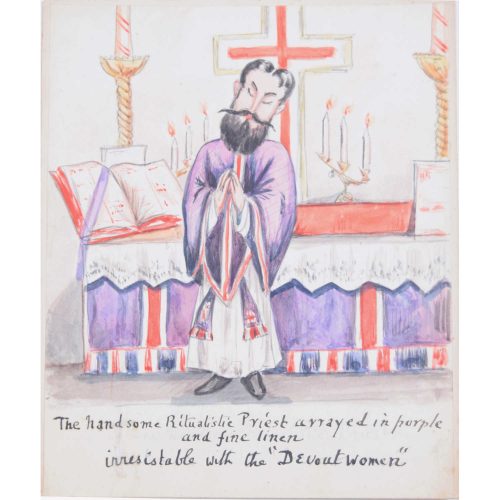
Anonymous, c.1850
'The handsome Ritualistic Priest, arrayed in purple and fine linen irresistible with the "Devout Women"' Caricature
Pen, ink and watercolour 20 x 24 cm By repute this item was found in the rooms of John Keble (1792-1866) at the Hermitage Hotel in Eastbourne after his death in 1866, together with another caricature watercolour of the 'Cotton-ia Worcester-ienisis' which we also have for sale. Condition: Generally very good, slight toning to paper. -

Mabel Oliver Rae
Great Court, Trinity College, Cambridge
Etching, circa 1920 20 x 27cm Signed lower left. Mabel Oliver Rae was born in Cambridge, Cambridgeshire, and trained at the Slade School of Fine Art between 1888 and 1890. Rae is known for her skilled etchings of various rural scenes and townscapes, particularly those of the colleges of Oxford and Cambridge. She signed works with the pseudonym 'M.Oliver Rae', a ruse to conceal the fact she was a female artist, so as not to reduce her chances with commercial dealers and agents. Condition: Generally very good. -
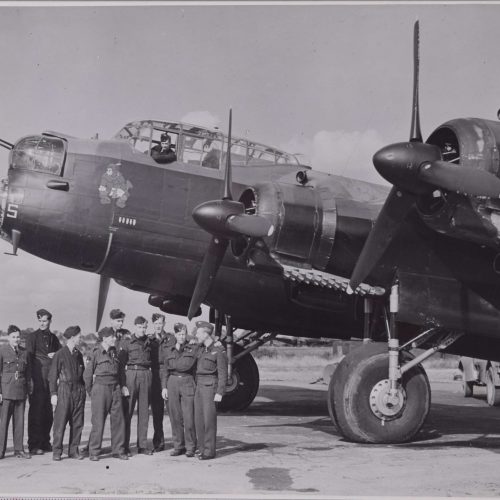
Lancaster Bomber with Crew
Original silver gelatin photograph c. 1943 16 x 21 cm Stamped to reverse 'This Photograph has been Passed by Censor' and 'Copyright Aeroplane [Magazine]' A photograph of the ground- and air-crew of DS689. The engine fitter second from left is Samuel Greisman. That the aeroplane has five operations marked on its nose suggests a date of late August or early September for the photograph. This photograph was published in 'Jews in Uniform' by Michael Greisman, published by Aster Publishing. DS689 OW-S (identified from this photograph on account of the nose art) served with 426 (Thunderbird) Squadron RCAF, based in Linton-on-Ouse (north of York). The Thunderbird featured inthe squadron crest is a North American native symbol signifying disaster and death to anybody who perceives it. The squadron converted to the Hercules-powered Lancaster II on 17 August 1943. Lancaster IIs were fitted with radial Bristol Hercules engines as it was feared there might be a shortage of Rolls-Royce Merlin engines. This particular aircraft was also able to carry 'cookies' with its extended bomb bay. DS689 was shot down by night-fighter on 8 October 1943 - prior to the date of publication of this photograph - near Rachecourt-sur-Blaise. It was on a 323-bomber mission to bomb Stuttgart in Germany, piloted by P/OMB Summers and equipped with the Airborne Cigar jamming system (ABC for short). This was the first operation using the ABC(3) jamming system, and only a small number of aircraft was lost on this raid. ABC jammed the airways and made night-fighter communications almost impossible. The Germans referred to is as 'dudelsack' (bagpipes) owing to the warbling sound. No 101 Squadron was the prime operator of this equipment and as a consequence of not maintaining radio silence suffered very high losses during the war; moreover its aircraft were on almost every bombing raid. A German-speaking operator identified the channels the night fighter operators were using and loud noise was played on that channel. Stuttgart was cloud covered and severe fog set in later, so bombs were dropped over a scattered area, destroying 344 houses and damaging a further 4,568. On its home run DS689 was intercepted by Oblt. Ferdinland Christiner from 5./NJG4at 3,800m and shot down (Christiner himself was shot down on 5/6 July 1944). Two crew members bailed out, the rest of the crew died in the crash and are buried in the local churchyard, click here to see photographs. The funeral was attended by the whole village and residents of the surrounding countryside and La Marsellaise was sung - to the annoyance of the Germans. The funeral was recorded by a photographer (click here) Condition: generally good. Provenance: from the collection of Philip J R Moyes, author of many books on the RAF, most notably The Pictorial History which ran to several volumes. -
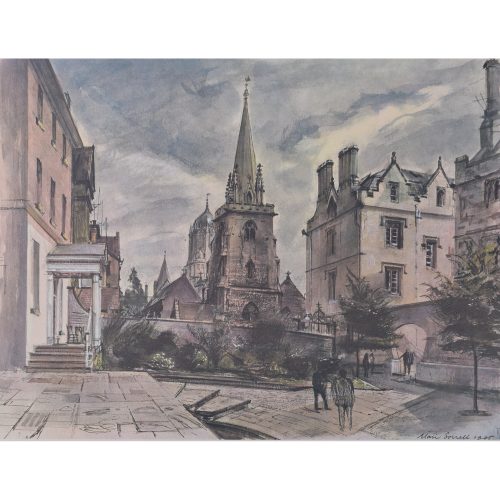
Alan Sorrell (1904 - 1974)
Pembroke College, View from the North Quadrangle (1966)
Lithograph 36 x 50 cm A lithograph of Pembroke's North Quad, from a drawing by Alan Sorrell. The artist's striking use of perspective and nebulously sketched figures make it a good example of Sorrell's style. Sorrell's 1965 etching was reproduced as a lithograph a year later, to be published in the "Oxford Almanack". The Oxford Almanack was an annual almanac published by the Oxford University Press for the University of Oxford from 1674 through 2019 (when printing sadly ceased due to "dwindling interest"). The almanac traditionally included engravings or lithographs of the University and information about the upcoming year. Other almanac artists have included James Basire, Michael Burghers, J. M. W. Turner, and John Piper. Alan Ernest Sorrell was an English artist and writer best remembered for his archaeological illustrations, particularly his detailed reconstructions of Roman Britain. Sorrell trained at the Southend municipal school of art and, after a brief spell as a commercial artist in London, he attended the Royal College of Art between 1924 and 1927. He was a Senior Assistant Instructor of Drawing there between 1931 and 1939, and again between 1946 and 1948. In 1937 he had been elected a member of the Royal Watercolour Society, and during the war served as a camofleur. After the war, Sorrell's archaeological and architectural work became their focus. Condition: very good. If you’d like to know more, please email info@manningfineart.co.uk or call us on 07929 749056. -
Out of stock
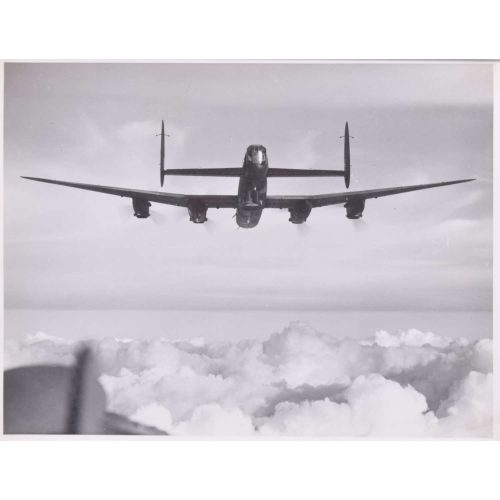
Charles E Brown (1896-1982)
AVRO Lancaster Bomber in Flight from Tail
Original Silver Gelatin photograph, c. 1944 16 x 21 cm Charles E Brown was a famous photographer of aircraft whose father was a butcher in Wimbledon, London. Young Charles was given a camera for his 14th birthday and in 1911 photographed an Edwardian gentleman in trouble landing his balloon in neighbouring Southfields. This photograph was published in the Daily Mirror – the fee being half a crown – and Brown was encouraged to join the Daily Mirror’s photography department upon leaving school at 16. Towards the end of the First World War he served with the Royal Air Force at their official London Photographic Centre. Following the war, he took to photographing trains, and captured a famous photograph of a Southern Railway locomotive that was used for the following ten years in railway posters. The income from this allowed him to pursue his passion of aviation photography in the 1920s and 1930s, from which commissions from the Air Ministry and Fleet Air Arm followed. During the war his work included commissions for Aeronautics magazine. Provenance: from the collection of Philip J R Moyes, author of many books on the RAF, most notably The Pictorial History which ran to several volumes. Condition: Very good, old glue marks to reverse -
Out of stock
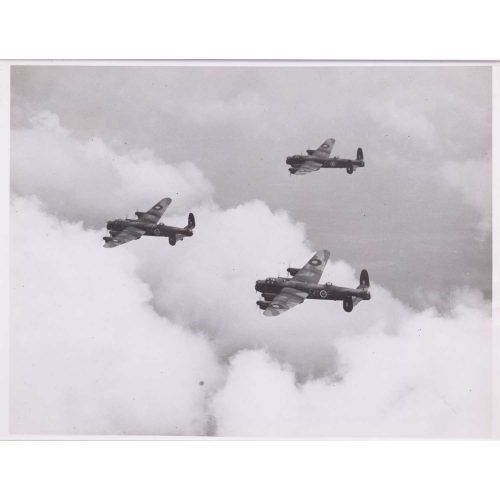
Charles E Brown (1896-1982)
Three AVRO Lancaster Bombers in Flight
Original Silver Gelatin photograph, c. 1944 16 x 21 cm Photograph 20 June 1942 above Cranwell EM-A EM-C and EM-F of 207 Squadron The RAF info website details the various Lancaster bombers of 207 Squadron. EM-C was a Lancaster I with serial number R5695 . It took off on 25 November 1942 from Langar, on a mission to Haselunne. The pilot was an Alfred Parkyn of the RCAF - whose parents lived in New Jersey. The aircraft was lost without trace and the crew are commemorated on the Runneymede Memorial. EM-A was another Lancaster I with serial number ED604. It took off from Langar on 12 March 1943 on a night mission (with 42% moon) to Essen, piloted by the 22-year-old F/O Michael Doble DFC. It crashed near Bottrop on the outskirts of Essen, with the loss of all its crew who are buried in the Reichswald Forest War Cemetery. Doble's DFC was gazetted on 31 July 1942, following an action in which 12 DFCs and one DSO were awarded. The citation reads: "The KING has- been graciously pleased to approve the following awards in recognition of gallantry displayed in flying operations against the enemy: —On 11th July, 1942, a force of bombers was detailed to make an attack on the submarine works at Danzig. The operation, which necessitated a high degree of skill and fortitude, was undertaken in extremely adverse weather. Despite this, the objective was reached by dusk, carefullyidentified and, in the face of strong oppositionfrom the ground defences, subjected to a most determined attack. Bombs were released at varying heights, some as low as 1,000 feet. Many hits were obtained. Searchlight posts were also machine-gunned and many searchlights extinguished. The success achieved reflects the greatest credit on the following personnel who participated in various capacities as leaders and members of aircraft crews." EM-F was a Lancaster I serial number R5694, piloted by Flight Lieutenant Raymund Joseph Hannan DFC which hit high ground in bad visibility at Easton, Lincs, home-bound from Bad Zwischenahn (Vechta) killing all the crew on 25 November 1942. Hannan was a New Zealander who had served for a year with the RNZAF prior to volunteering in September 1939 for the RAF. Following training he undertook a tour of 29 operations with 49 Squadron in the Handley Page Hampden, and after this served as an instructor in 25 Operational Training Unit. His DFC was gazetted on 24 October 1941. In September 1942 he was posted to 207 Squadron, flying four missions prior to that of 25 November 1942. This latter mission lasted only three hours - probably long enough to reach the Dutch coast and return to the UK, and certainly not long enough for the Luftwaffe aerodrome at Bad Zwischenahn. Upon return to base the aeroplane was unable to land owing to bad weather. It crashed near Goadby Marwood, the local history society of which have published an extensive history of the crew members at https://www.goadby-marwood-history.co.uk/the-crew-of-r5694-em-f . Five of the crew, including Hannan, are buried in St Mary's Churchyard in Bottesford. The crash site was discovered in 2021, a full report here: https://www.goadby-marwood-history.co.uk/_files/ugd/bc525f_aedab371f8794f2eab2c0c9ea9721720.pdf The grave sites of the crew members are detailed here https://aviationtrails.wordpress.com/tag/r5694/ Charles E Brown was a famous photographer of aircraft whose father was a butcher in Wimbledon, London. Young Charles was given a camera for his 14th birthday and in 1911 photographed an Edwardian gentleman in trouble landing his balloon in neighbouring Southfields. This photograph was published in the Daily Mirror – the fee being half a crown – and Brown was encouraged to join the Daily Mirror’s photography department upon leaving school at 16. Towards the end of the First World War he served with the Royal Air Force at their official London Photographic Centre. Following the war, he took to photographing trains, and captured a famous photograph of a Southern Railway locomotive that was used for the following ten years in railway posters. The income from this allowed him to pursue his passion of aviation photography in the 1920s and 1930s, from which commissions from the Air Ministry and Fleet Air Arm followed. During the war his work included commissions for Aeronautics magazine. Provenance: from the collection of Philip J R Moyes, author of many books on the RAF, most notably The Pictorial History which ran to several volumes. Condition: Generally very good. -
Out of stock
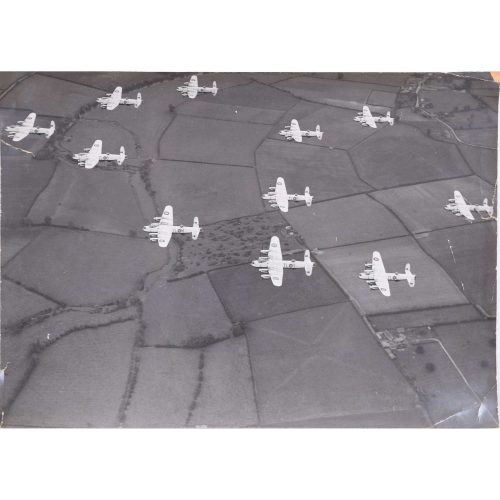
Charles E Brown (1896-1982)
AVRO Lancasters of 35 Sqdn in Flight
Original Silver Gelatin photograph, 1940s 19 x 27 cm Formed in 1916, the Squadron spent 1917 and 1918 in France flying the FK8. In support of the Spring Offensive of March 1918, it dropped 118 25lb bombs - which would have made up one third of the bombing load of a Lancaster. In 1940 the Squadron was reformed as the first Halifax squadron, pilots including Leonard Cheshire and James Brian Tait - both subsequently of 617 'Dambusters' Squadron. In 1944 the Squadron converted to the Lancasters to be seen in this photograph. Sqd Ldr Alec Panton Cranswick DFC DSO was shot down in 1944 on his 107th bombing mission - a record for any British airman. Following the War, the Squadron engaged in both the Victory flypast over London and a goodwill tour of the United States. Subsequently disbanded and reformed several times, it operated the Boeing Washington, the Canberra, and for twenty years the Vulcan. Charles E Brown was a famous photographer of aircraft whose father was a butcher in Wimbledon, London. Young Charles was given a camera for his 14th birthday and in 1911 photographed an Edwardian gentleman in trouble landing his balloon in neighbouring Southfields. This photograph was published in the Daily Mirror – the fee being half a crown – and Brown was encouraged to join the Daily Mirror’s photography department upon leaving school at 16. Towards the end of the First World War he served with the Royal Air Force at their official London Photographic Centre. Following the war, he took to photographing trains, and captured a famous photograph of a Southern Railway locomotive that was used for the following ten years in railway posters. The income from this allowed him to pursue his passion of aviation photography in the 1920s and 1930s, from which commissions from the Air Ministry and Fleet Air Arm followed. During the war his work included commissions for Aeronautics magazine. Provenance: from the collection of Philip J R Moyes, author of many books on the RAF, most notably The Pictorial History which ran to several volumes. Condition: Marginal creases, losses, short tear to left edge, very short tear to right edge, generally good, -
Out of stock
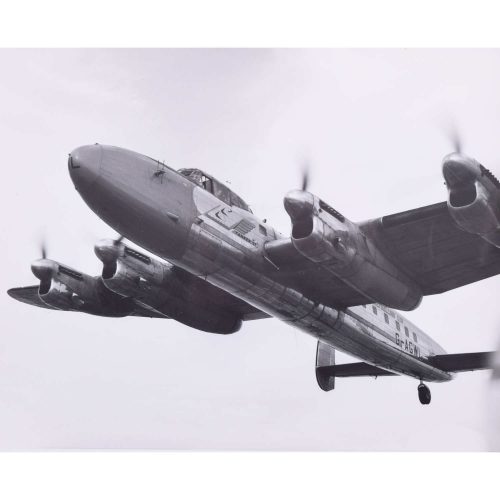
Charles E Brown (1896-1982)
BSAA Lancastrian G-AGWL 'Star Guide'
Original Silver Gelatin photograph, 1940s 19 x 24 cm Stamped to reverse 'Charles E Brown' with address and 6337-13 reference number. The Lancastrian was developed from the Lancaster bomber with armaments and armour removed, and a new - streamlined - nose. The first batch were made by converting Lancaster bombers, latter batches made from scratch. The Lancaster had been designed to carry bombs rather than passengers, and so the space available meant that whilst the Lancastrian was not suitable for large numbers of passengers it was admirably suited to carrying mail and other perishable goods. G-AGWL ‘Star Guide’ was registered 28/11/45. Its first flight was on 1/2/46 for the Ministry of Supply & Aircraft Production (MoSAP), being delivered in February to British South American Airlines (BSAA) as ‘Star Guide’. In January 1949 it was bought by Flight Refuelling Ltd subsequently being used on the Berlin Airlift and was scrapped 26/9/51 at Tarrant Rushton. Charles E Brown was a famous photographer of aircraft whose father was a butcher in Wimbledon, London. Young Charles was given a camera for his 14th birthday and in 1911 photographed an Edwardian gentleman in trouble landing his balloon in neighbouring Southfields. This photograph was published in the Daily Mirror – the fee being half a crown – and Brown was encouraged to join the Daily Mirror’s photography department upon leaving school at 16. Towards the end of the First World War he served with the Royal Air Force at their official London Photographic Centre. Following the war, he took to photographing trains, and captured a famous photograph of a Southern Railway locomotive that was used for the following ten years in railway posters. The income from this allowed him to pursue his passion of aviation photography in the 1920s and 1930s, from which commissions from the Air Ministry and Fleet Air Arm followed. During the war his work included commissions for Aeronautics magazine. Condition: Generally very good. -
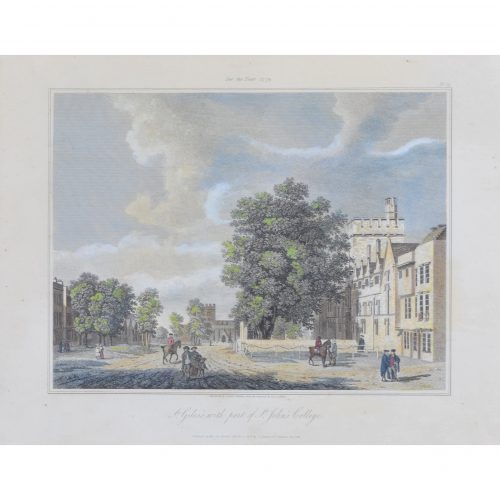
Joseph Constantine Stadler (1755 - 1828) after Michael Angelo Rooker (1743/6 - 1801)
St Giles's with a part of St John's College (1813)
Engraving with later hand-colouring 25 x 32 cm An engraving of St Giles, including the famous St Giles Church, with the front of St John's to the right. Joseph Constantine Stadler was a prolific German émigré engraver of images after his contemporaries. Stadler's engravings are wide-ranging in subject matter and include landscapes, seascapes and portraits, as well as military, sporting and decorative subjects. Stadler was employed by the leading print publisher of the time, John Boydell. Stadler lived in Knightsbridge when he died at the age of 73. Michael Angelo Rooker ARA was an English oil and watercolour painter of architecture and landscapes, illustrator, and engraver. Condition: good. Some gentle age toning. If you are interested, please email info@manningfineart.co.uk or call us on 07929 749056. Click here for other views of St John’s College, Oxford. -
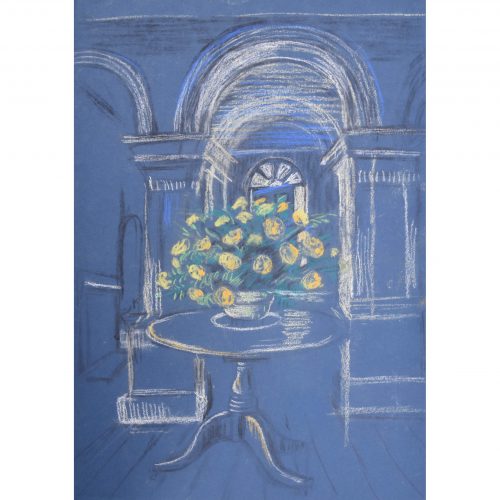
Hilary Hennes (née Hilary Miller) (1919 - 1993)
Flowers on a Table
Chalks 56 x 38 cm A chalk drawing depicting a vase of bright flowers on a table in a high-ceilinged room with elegant architectural features. Hilary Miller was born in London, where her father was a curator at the South London Art Gallery. She attended Blackheath High School and, from 1936 to 1940, studied at the Blackheath School of Art, and then for a further three years at the Royal College of Art. After graduating, she taught at the South East Sussex Technical College and in 1946 married the artist Hubert Hennes. The couple lived in Oxford, where they both held teaching posts at the Oxford School of Art. Between 1948 and 1967 Miller frequently exhibited paintings at the Royal Academy in London, and also illustrated a number of books on gardening and natural history, such as 'The Living World' and 'Boff's Book of Gardening'. Provenance: the artist's studio sale. Condition: generally very good. Drawing of a standing nude to the reverse (see photographs). If you are interested, please email info@manningfineart.co.uk or call us on 07929 749056. Click here for other works by the artist. -
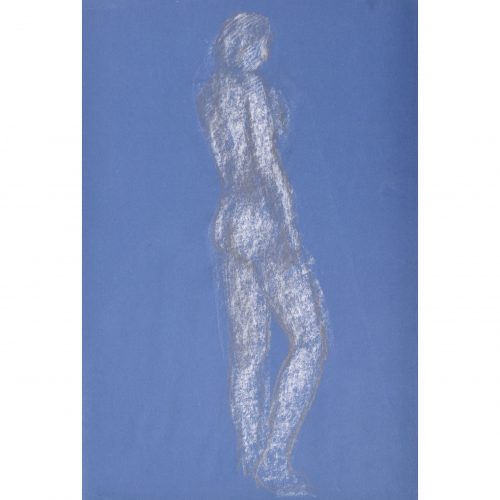
Hilary Hennes (née Hilary Miller) (1919 - 1993)
Standing Nude
Chalks 56 x 38 cm A chalk drawing of a standing female nude. The reverse of Hennes' drawing Flowers on a Table. Hilary Miller was born in London, where her father was a curator at the South London Art Gallery. She attended Blackheath High School and, from 1936 to 1940, studied at the Blackheath School of Art, and then for a further three years at the Royal College of Art. After graduating, she taught at the South East Sussex Technical College and in 1946 married the artist Hubert Hennes. The couple lived in Oxford, where they both held teaching posts at the Oxford School of Art. Between 1948 and 1967 Miller frequently exhibited paintings at the Royal Academy in London, and also illustrated a number of books on gardening and natural history, such as 'The Living World' and 'Boff's Book of Gardening'. Provenance: the artist's studio sale. Condition: generally very good. The reverse of Hennes' drawing Flowers on a Table (see photograph above). If you are interested, please email info@manningfineart.co.uk or call us on 07929 749056. Click here for other works by the artist. -
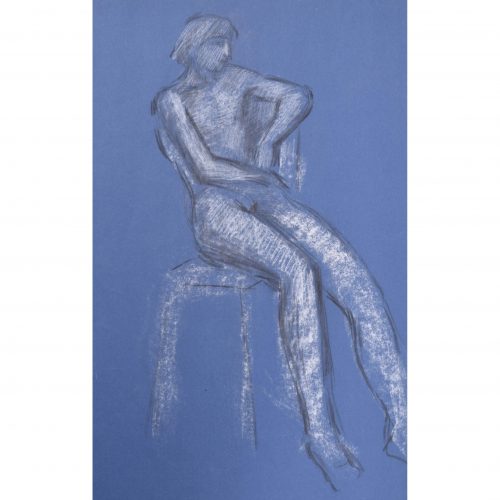
Hilary Hennes (née Hilary Miller) (1919 - 1993)
Seated Nude
Chalks 56 x 38 cm A chalk drawing of a seated female nude, with contemplative pose and expression. Hilary Miller was born in London, where her father was a curator at the South London Art Gallery. She attended Blackheath High School and, from 1936 to 1940, studied at the Blackheath School of Art, and then for a further three years at the Royal College of Art. After graduating, she taught at the South East Sussex Technical College and in 1946 married the artist Hubert Hennes. The couple lived in Oxford, where they both held teaching posts at the Oxford School of Art. Between 1948 and 1967 Miller frequently exhibited paintings at the Royal Academy in London, and also illustrated a number of books on gardening and natural history, such as 'The Living World' and 'Boff's Book of Gardening'. Provenance: the artist's studio sale. Condition: generally very good. If you are interested, please email info@manningfineart.co.uk or call us on 07929 749056. Click here for other works by the artist. -
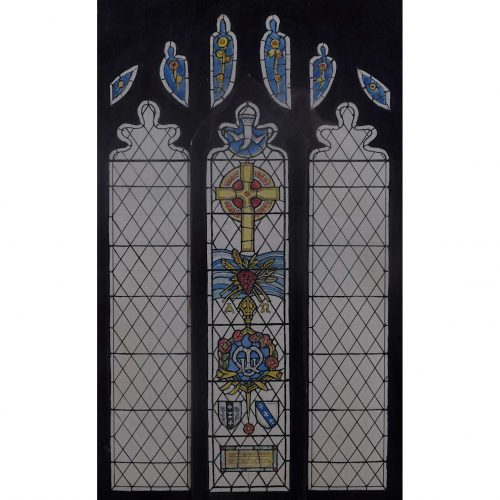
Jane Gray (b.1931)
Christ Church, Charnock Richard, Lancashire Design for Stained Glass Window (1989)
Watercolour 25.5 x 15.5 cmSigned, dated and studio stamp verso.
Christ Church was built in 1860 at the heart of the 13th century country village of Charnock Richard. Alongside its stained glass windows, the church boasts historic tile work and an exceptional marble memorial to the original benefactor’s wife, Frances Darlington. This window was installed in 1990.
Provenance: the artist’s studio sale. Literature: Jane Gray, Playing with Rainbows. (Shropshire: Ellingham Press, 2011), p.80. Condition: very good. If you are interested, please email info@manningfineart.co.uk or call us on 07929 749056. For other works by Jane Gray and more information about her, please click here. -
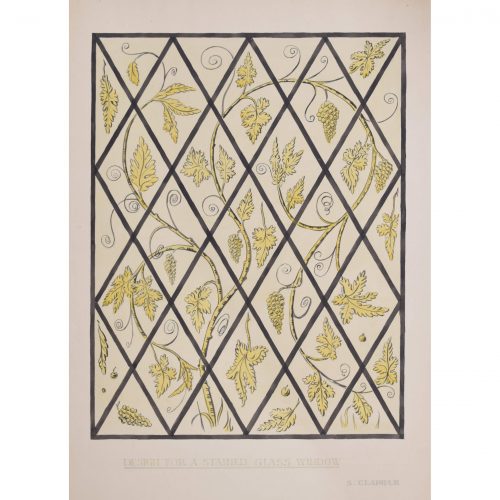
S Clapham (active 1940 - 1960)
Designs for a Stained Glass Window
Watercolour 71 x 56 cm Signed lower right. A beautiful stained glass window design in the medievalist Arts and Crafts style popularised by William Morris in the 1890s. Clapham was an architect based in Stockwell in London. Condition: very good. If you are interested, please email info@manningfineart.co.uk or call us on 07929 749056. Click here for other works by the artist. -
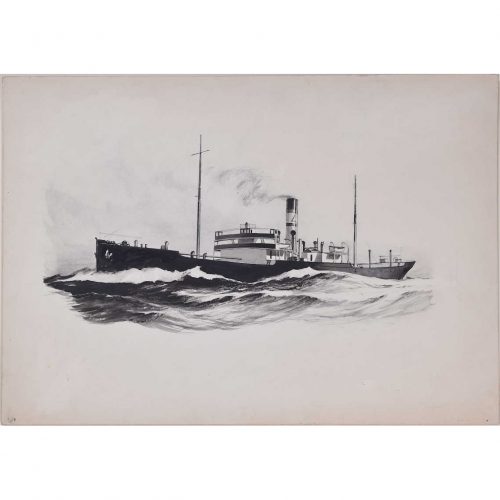
Laurence Dunn (1910-2006)
Coastal Tramp
36 x 50.5 cm
Ink on paper Signed versoLaurence Dunn (1910-2006) was a well-known British marine artist and writer known for his depictions of ships. He grew up in Devon, where he practised drawing passing ships, and went on to study at the Central School of Art. He then worked for shipbuilding firm John I. Thornycroft & Company Limited, where he contributed to the design of the Royal Yacht. During the Second World War, Dunn worked in naval intelligence. In the early 1960s, he created many line drawings of Atlantic ocean liners.
Upon his death in 2006, the World Ship Society published the following obituary:
DUNN, Laurence. [December 15 2006 — Lloyds List] Many readers will be saddened by the death of well-known marine artist and writer Laurence Dunn in his 97th year. A man of encyclopaedic knowledge, he began his lifelong love of ships in Brixham, where he meticulously recorded passing traffic with the exquisitely accurate line drawings which later became something of a trademark. While studying at London’s Central School of Art his work was noticed by the Southern Railway, which commissioned profiles of its fleet, and this in turn led to work for Orient Line, where he also designed the well-known corn-coloured hull, and later Thorneycroft, where he helped with shaping draft plans for a new royal yacht. During the second world was he worked for naval intelligence at the Admiralty, where his technique did much to improve recognition standards, and greatly expanded his shipping clientele, becoming personally known to many chairmen. As well as the shipping press he worked for mainstream publications such as Everybody’s, Sphere and the upmarket comic Eagle. Through his many contacts he enjoyed going to sea in a great variety of ships from aircraft carriers to colliers. Laurence wrote several books, starting with ship recognition titles which introduced new standards of layout, but his best known work was probably Passenger Liners, which was widely taken up by the travel trade. His love of Greece, where he was an early publicist of island cruising, let to involvement in reshaping various passenger liners beginning with Greek Line’s OLYMPIA. In later life he designed several sets of shipping stamps for the Crown Agents, produced photographic volumes on Thames and Mediterranean shipping and still found time to enjoy the passing Thames traffic. Our sympathies go to his wife Jennifer, who provided succour to the many ship lovers who beat a path to the welcoming door of their Gravesend home.
-
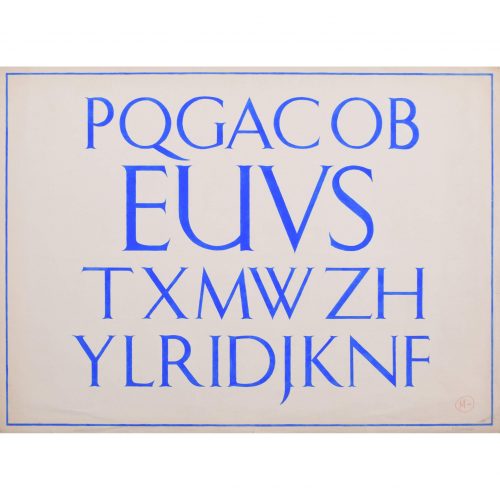
S Clapham (active 1940 - 1960)
Lettering Design
Watercolour 53 x 75 cm Examiner's mark 'M-' (likely 'lower merit') lower right within border. Signed lower right without border in pencil. A trainee architect's lettering design. It was crucial that an architectural draughtsman be skilled in depicting lettering which might appear on a building commission, and here is one of Clapham's stylish efforts, marked by an examiner. Condition: generally good, a few repaired very short edge tears not into image, with examiner's mark to bottom right. If you are interested, please email info@manningfineart.co.uk or call us on 07929 749056. Click here for other works by the artist. -
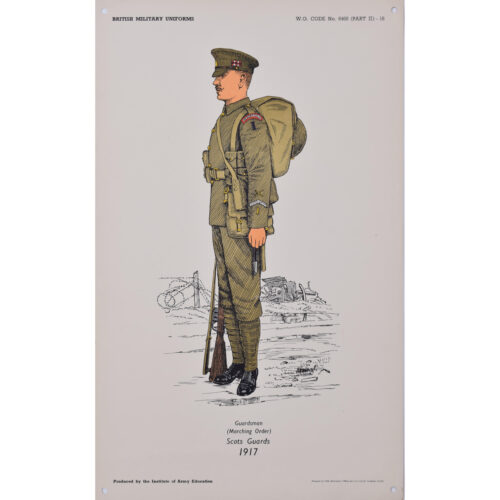
Scots Guards Guardsman (Marching Order) 1917 uniform
Lithograph 50 x 31 cm Produced for the Institute of Army Education. Printed for HM Stationery Office by I A Limited, Southall 51. These posters were produced by the Institute of Army Education, likely for display in barracks. Created in the 1950s, they illustrate the 'vintage' uniforms worn by the Corps during the First World War. Condition: punched holes to corners as issued; otherwise generally very good. If you are interested, please email info@manningfineart.co.uk or call us on 07929 749056. Click here for other original vintage Institute of Army Education uniform posters. -
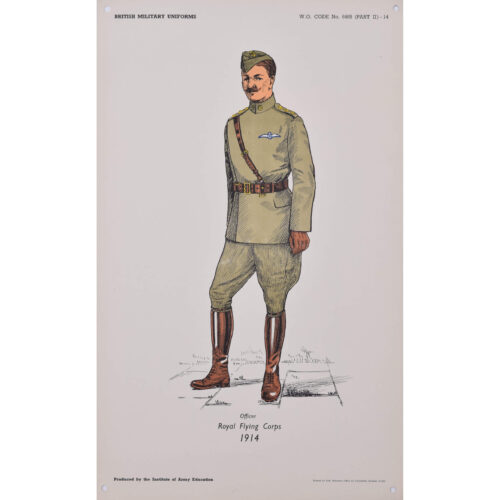
Royal Flying Corps (RAF) Officer 1914 uniform
Lithograph 50 x 31 cm Produced for the Institute of Army Education. Printed for HM Stationery Office by I A Limited, Southall 51. These posters were produced by the Institute of Army Education, likely for display in barracks. Created in the 1950s, they illustrate the 'vintage' uniforms worn by the Corps during the First World War. Condition: punched holes to corners as issued; otherwise generally very good. If you are interested, please email info@manningfineart.co.uk or call us on 07929 749056. Click here for other original vintage Institute of Army Education uniform posters. -
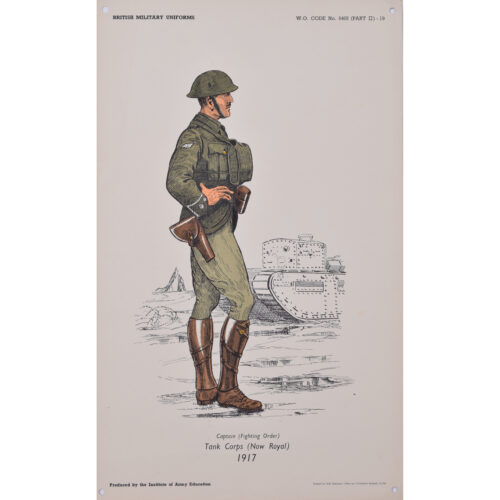
Tank Corps (now Royal) Captain (Fighting Order) 1917 uniform
Lithograph 50 x 31 cm Produced for the Institute of Army Education. Printed for HM Stationery Office by I A Limited, Southall 51. These posters were produced by the Institute of Army Education, likely for display in barracks. Created in the 1950s, they illustrate the 'vintage' uniforms worn by the Corps during the First World War. Condition: punched holes to corners as issued; otherwise generally very good. If you are interested, please email info@manningfineart.co.uk or call us on 07929 749056. Click here for other original vintage Institute of Army Education uniform posters. -
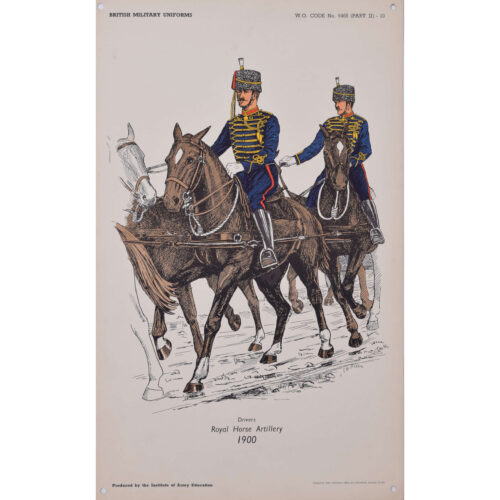
Royal Horse Artillery Drivers 1900 uniform
Lithograph 50 x 31 cm Produced for the Institute of Army Education. Printed for HM Stationery Office by I A Limited, Southall 51. These posters were produced by the Institute of Army Education, likely for display in barracks. Created in the 1950s, they illustrate the 'vintage' uniforms worn by the Corps during the First World War. Condition: punched holes to corners as issued; otherwise generally very good. If you are interested, please email info@manningfineart.co.uk or call us on 07929 749056. Click here for other original vintage Institute of Army Education uniform posters. -

Sir Eduardo Paolozzi CBE RA (1924-2005) Striated Construction
Plaster of Paris 5 x 5 x 6 cm Paolozzi’s fascination with anatomy, machine parts, and the idiom of classical statuary is evident in his modernist sculptural forms. 'Striated Construction' is an intriguing piece, characterised by clean lines and strong forms. The work is both architectural and natural, whereby the layers both evoke steps and the geological striations of the natural world. Sir Eduardo Luigi Paolozzi CBE RA was a Scottish artist, known for his sculpture and graphic works. He is widely considered to be one of the pioneers of pop art. Paolozzi studied at the Edinburgh College of Art in 1943, briefly at Saint Martin's School of Art in 1944, and then at the Slade School of Fine Art at University College London from 1944 to 1947, after which he worked in Paris. While in Paris from 1947 to 1949, Paolozzi became acquainted with Alberto Giacometti, Jean Arp, Constantin Brâncuși, Georges Braque and Fernand Léger. This period became an important influence for his later work. For example, the influence of Giacometti and many of the original Surrealists he met in Paris can be felt in the group of lost-wax sculptures made by Paolozzi in the mid-1950s. Their surfaces, studded with found objects and machine parts, were to gain him recognition. He taught sculpture and ceramics at several institutions, including the Hochschule für bildende Künste Hamburg (1960–62), University of California, Berkeley (in 1968) and at the Royal College of Art. Paolozzi had a long association with Germany, having worked in Berlin from 1974 as part of the Berlin Artist Programme of the German Academic Exchange Programme. He was a professor at the Fachhochschule in Cologne from 1977 to 1981, and later taught sculpture at the Akademie der Bildenden Künste in Munich. Paolozzi was fond of Munich and many of his works and concept plans were developed in a studio he kept there, including the mosaics of the Tottenham Court Road Station in London. He took a stab at industrial design in the 1970s with a 500-piece run of the upscale Suomi tableware by Timo Sarpaneva that Paolozzi decorated for the German Rosenthal porcelain maker's Studio Linie. Condition: Generally very good, occasional inclusions etc., as expected. If you'd like to know more, please email info@manningfineart.co.uk or call us on 07929 749056. -
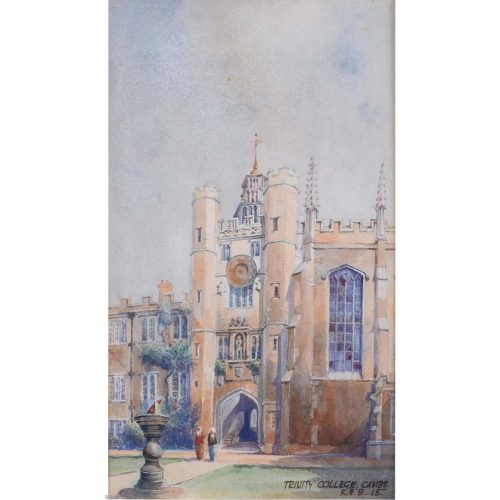
R.H.B Trinity College, Cambridge
22.5x13cm 1915 If you are interested email info@manningfineart.co.ukor call us on 07929 749056. Condition: Good. -
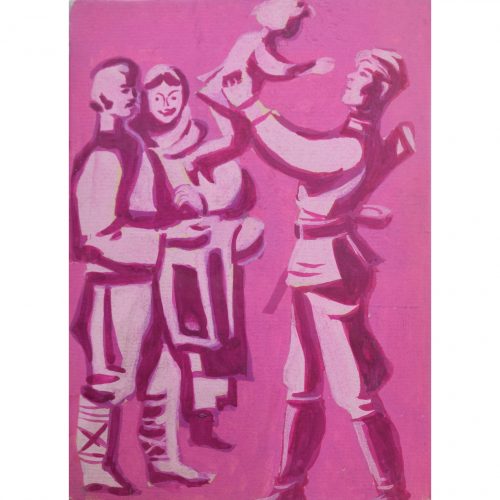
Bulgarian pro-natalist propaganda poster design (circa 1950s)
Gouache on board 17 x 12 cm After a Communist takeover in 1945, Bulgaria was a Soviet ally during the Cold War, and maintained good relationships with Russia until the Revolutions of 1989. From 1945 to 1948, the country became entrenched within the Soviet sphere of influence under the control of the Bulgarian Communist Party (BCP) which oversaw a program of Stalinization in the late 1940s and 1950s. Both countries are Slavic nations, and are bound together by a common Orthodox Christian culture. This poster design, painted in warm pink-purple tones and depicting a Bulgarian soldier holding a toddler aloft, was designed as post-war pro-natalist propaganda (likely from the 1950s). Bulgaria and its Soviet allies had lost a huge number of men during the war, and this design for a poster was intended to encourage Bulgarians to have more children. Condition: very good. If you’d like to know more, please email info@manningfineart.co.uk or call us on 07929 749056. -
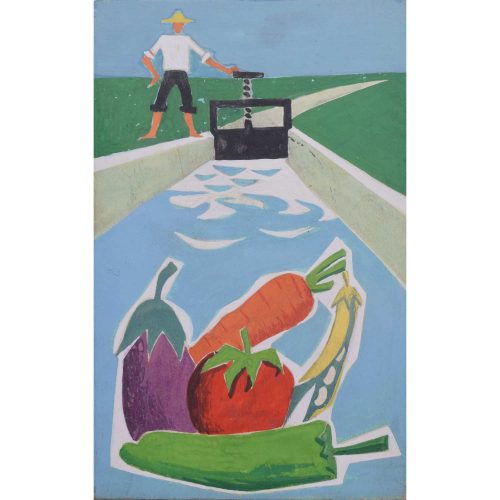
Soviet Union socialist irrigation Bulgarian propaganda poster design (circa 1950s)
Gouache on board 18 x 11 cm After a Communist takeover in 1945, Bulgaria was a Soviet ally during the Cold War, and maintained good relationships with Russia until the Revolutions of 1989. From 1945 to 1948, the country became entrenched within the Soviet sphere of influence under the control of the Bulgarian Communist Party (BCP) which oversaw a program of Stalinization in the late 1940s and 1950s. Both countries are Slavic nations, and are bound together by a common Orthodox Christian culture. This poster design features huge juicy vegetables, grown as the result of newly-implemented irrigation systems. Socialist farming practices in Bulgaria were commonplace during its time as a Soviet ally or 'satellite'; the government was keen to encourage well-yielding farming practices and to be seen as a protector of agricultural infrastructure turing this turbulent period of the 20th century. Condition: very good. If you’d like to know more, please email info@manningfineart.co.uk or call us on 07929 749056. -
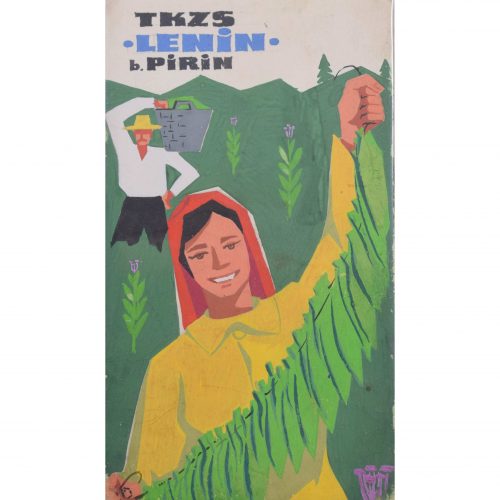
Soviet Union pro-Lenin Marxist Bulgarian propaganda poster design (circa 1950s)
Gouache on board 20 x 11.5 cm After a Communist takeover in 1945, Bulgaria was a Soviet ally during the Cold War, and maintained good relationships with Russia until the Revolutions of 1989. From 1945 to 1948, the country became entrenched within the Soviet sphere of influence under the control of the Bulgarian Communist Party (BCP) which oversaw a program of Stalinization in the late 1940s and 1950s. Both countries are Slavic nations, and are bound together by a common Orthodox Christian culture. This poster design is a piece of Leninist propaganda, designed to make Bulgarians associate Lenin and Soviet Marxist rule with efficiency and plenty. It is inscribed to the reverse in Bulgarian 'To grow plants in rows next to each other - the thickest row with straight cobs'. The Pirin Mountains referred to in the top left-hand corner are a mountain range in southwestern Bulgaria. Condition: very good. If you’d like to know more, please email info@manningfineart.co.uk or call us on 07929 749056. -

G Lewis after Frederick Mackenzie (1788 - 1854) Chapel of Lincoln College from the Ante Chapel (1814)
Hand-coloured aquatint 29 x 24 cm Published by Rudolph Ackermann (1764 - 1834). Frederick Mackenzie (circa 1788 - 1854) was a British watercolourist and architectural draughtsman. He first exhibited at the Royal Academy in 1804, and contributed eleven drawings between that year and 1828. He contributed to the Society of Painters in Water Colours exhibitions from 1813, becoming an associate in 1822, and a full member the following year. From 30 November 1831 until, his death he was treasurer to the society. In later life Mackenzie was no longer commissioned to illustrate books. Rudolph Ackermann was an Anglo-German bookseller, inventor, lithographer, publisher and businessman. In 1795 he established a print-shop and drawing-school at 96 Strand. Here Ackermann set up a lithographic press and began a trade in prints. He later began to manufacture colours and thick carton paper for landscape and miniature painters. Within three years the premises had become too small and he moved to 101 Strand, in his own words "four doors nearer to Somerset House", the seat of the Royal Academy of Arts. Between 1797 and 1800 Ackermann rapidly developed his print and book publishing business, encompassing many different genres including topography, caricature, portraits, transparencies and decorative prints. Condition: Generally very good.If you would like to know more, please email info@manningfineart.co.uk or call us on 07929 749056.
-
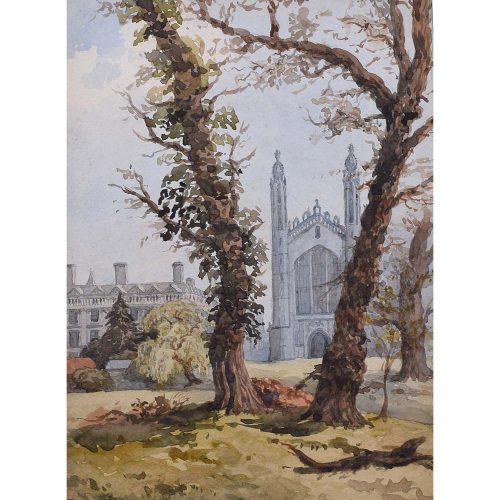
King’s College Chapel Cambridge
King’s College Chapel Cambridge (1895) Watercolour 35×24.5cm Click to see St John's College by the same hand. If you are interested email info@manningfineart.co.ukor call us on 07929 749056. -
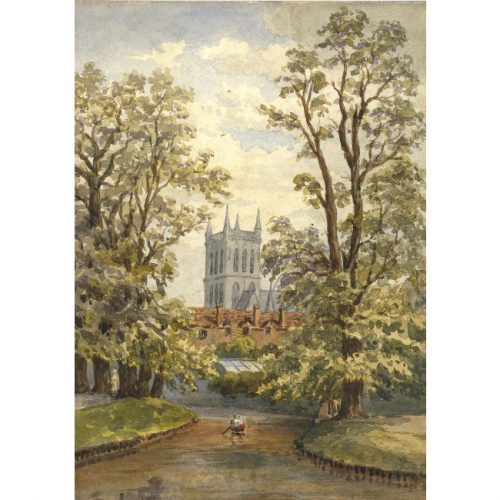
St. John’s College Chapel Cambridge (1895)
Watercolour 34×24.5cm Click to see King’s College by the same hand. If you are interested email info@manningfineart.co.uk or call us on 07929 749056. -
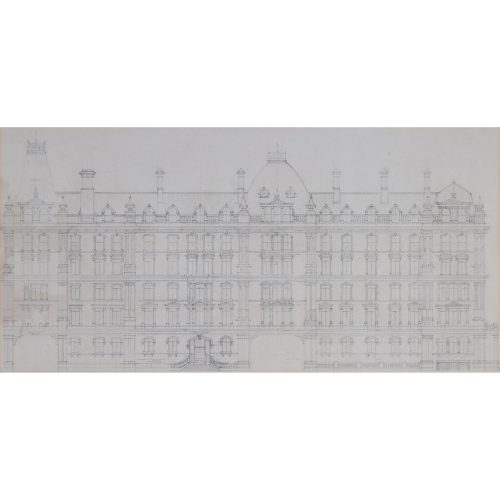
A Design for The Midland Hotel Manchester
Pencil drawing 20x41cm Provenance: British Railways If you are interested email info@manningfineart.co.uk or call us on 07929 749056. -
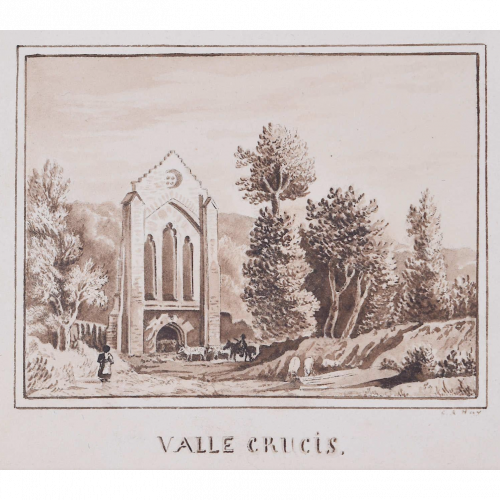
C.A. Hay
Valle Crucis Abbey, Wales (early 19th century)
Pen, ink and monochrome watercolour 8 x 12 cm Valle Crucis is a Cistercian abbey located in Llantysilio in Denbighshire, Wales. The abbey was built in 1201 by Madog ap Gruffydd Maelor, Prince of Powys Fadog. In 1537, at the height of Henry VIII's Dissolution of the Monasteries, Valle Crucis was dissolved and fell into disrepair. The abbey is now a ruin, though large parts of the original structure still survive. We also have in stock an en-suite watercolour of the nearby Llangollen Bridge; it is likely that some of the abbey's stone was used to build the bridge after the abbey had been dissolved. Condition: Generally very good. Signed lower right.