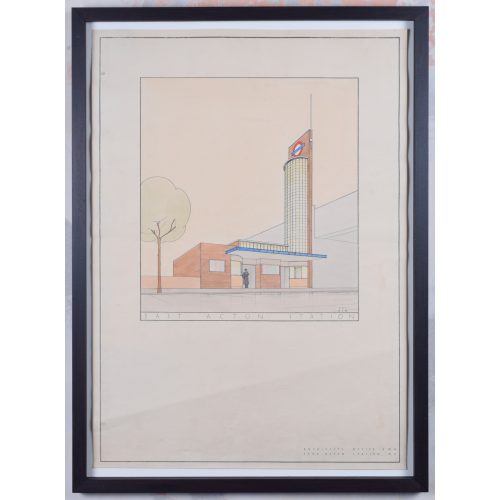
-

A. E. Halliwell (1905-1987) Easter Excursions from London
Gouache 26 x 15 cm c.1930 Provenance: Family of the artist A.E. Halliwell (1905–1986) was a British artist, illustrator, and designer best known for his vibrant poster designs created for British railway companies during the mid-20th century. Born in Southport, Halliwell developed a strong foundation in art and design early in life. He studied at the Southport School of Art from 1923 to 1926 before graduating to the Royal College of Art in London and subsequently practising as a professional designer from the 1930s. Following his studies, Halliwell married Doris Doyle in Strood Kent, and went on to have a significant teaching career himself, most notably as a lecturer at the Central School of Arts and Crafts (later part of Central Saint Martins), where he influenced a new generation of designers and illustrators. Halliwell is perhaps best remembered for his vibrant and engaging poster designs created for British railway companies during the 1930s. His work was characterised by a bright, graphic style that balanced charm with clarity, often depicting idealised scenes of British holiday destinations—from sunny seaside towns to tranquil countryside vistas. Beyond posters, his artistic output included book illustration, commercial design, and stage costume sketches, showcasing his versatility across mediums. His posters continue to remain enduring symbols of a golden age of British travel and design and are displayed in major collections including the London Transport Museum. This colourful poster design by A.E. Halliwell for a train provider promotes Easter excursions from London. In his signature bold style, Halliwell brings together recognisable symbols of spring and places them against a striking background, using blocks of colour to create visual segments on the poster. The blooming crocus is arguably the most striking element of this composition, standing out against its black background and hinting at Halliwell's appreciation for William Morris and the Arts and Crafts movement more generally. Condition: Generally very good.If you would like to know more, please email info@manningfineart.co.uk or call us on 07929 749056.
-
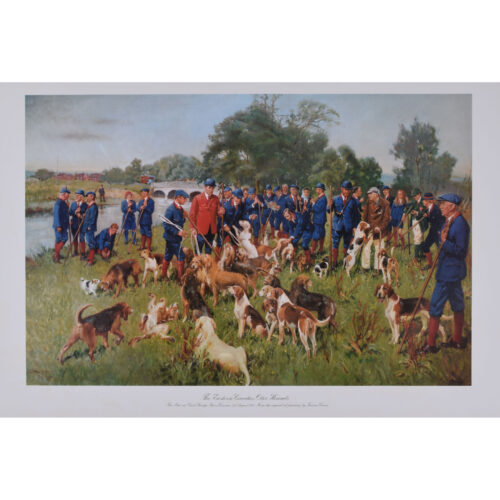
Terrence Cuneo (1907 - 1996)
Eastern Counties Otter Hounds (1971)
Lithograph 56 x 80 cm The meet at Guist Bridge, River Wensum, 31 August 1970. Terence Tenison Cuneo CVO OBE RGI FGRA trained at the Slade School of Art. He worked for the War Artists' Advisory Committee during the Second World War and also produced anti-Nazi propaganda. He most known for his postwar pictures of railways, locomotives, and industry. He was the official artist for the Coronation of Queen Elizabeth II in 1953. Condition: very good. Unsigned proof copy. If you are interested, please email info@manningfineart.co.uk or call us on 07929 749056. Click here for other hunting pictures. -
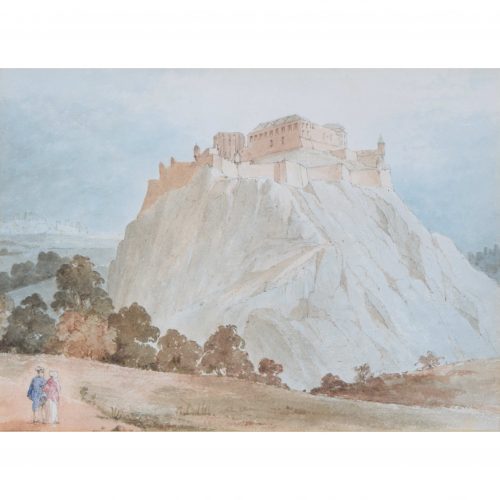
Richard Westmacott (1775 - 1856)
Edinburgh Castle (1800)
Watercolour 29 x 41 cm A watercolour depicting Edinburgh Castle. A Georgian couple gaze up at the immensity of Castle Rock, and the 11th-century fortress perched upon it. Richard Westmacott was British artist who primarily worked as a sculptor. Westmacott studied with his father, also named Richard Westmacott, at his studio in Mount Street, off Grosvenor Square in London, before going to Rome in 1793 to study under Antonio Canova. Upon his return to London in 1797, he established his own studio. He exhibited at the Royal Academy between 1797 and 1839 and was elected an associate of the Royal Academy in 1805, and a full academician in 1811. Condition: very good; handsomely framed. If you’d like to know more, please email info@manningfineart.co.uk or call us on 07929 749056. -
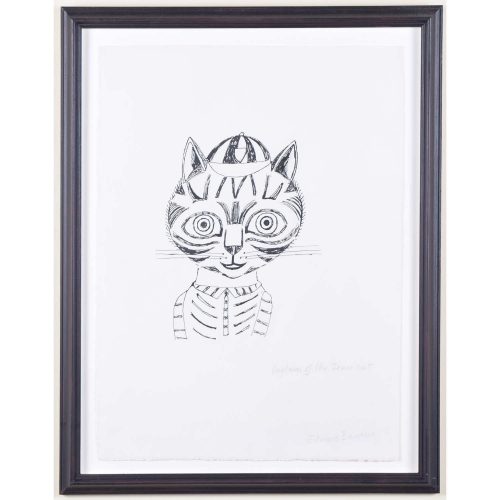
Edward Bawden (1903-1989)
Captain of the Team Cat
Pen and ink 38 x 27 cm Signed and inscribed lower right. Bawden developed a love of cats at a young age, copying Louis Wain's cat pictures. In his later years, his drawings of cats became yet more frequent; his cat Emma featured in much of his work. In an interview with House and Garden in 1987 he said: "No cat will suffer being lifted up and dropped into an empty space intended for her to occupy; that procedure led inevitably to Emma, tail up, walking away at once, so I had to wait patiently until Emma had enjoyed a good meal of Coley and was ready to choose her daily sleeping place, wherever it might be. I would then spring into action." Doubtless he found it easier to draw an imaginary cat, such as this one. For other cats - and other works - by Bawden, please click here. If you are interested, please email info@manningfineart.co.uk or call us on 07929 749056. -
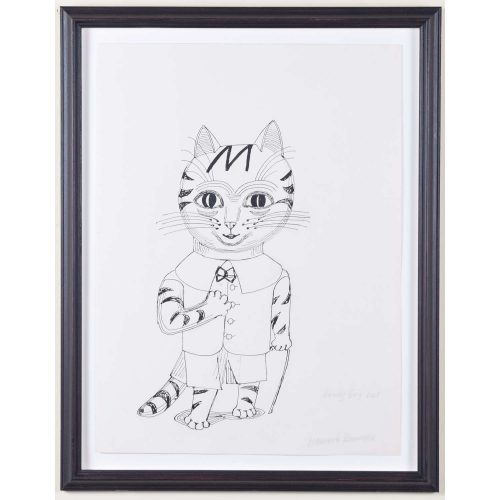
Edward Bawden (1903-1989)
Dandy Boy Cat
Pen and ink 38 x 27 cm Signed and inscribed lower right. Bawden developed a love of cats at a young age, copying Louis Wain's cat pictures. In his later years, his drawings of cats became yet more frequent; his cat Emma featured in much of his work. In an interview with House and Garden in 1987 he said: "No cat will suffer being lifted up and dropped into an empty space intended for her to occupy; that procedure led inevitably to Emma, tail up, walking away at once, so I had to wait patiently until Emma had enjoyed a good meal of Coley and was ready to choose her daily sleeping place, wherever it might be. I would then spring into action." Doubtless he found it easier to draw an imaginary cat, such as this one. For other cats - and other works - by Bawden, please click here. If you are interested, please email info@manningfineart.co.uk or call us on 07929 749056. -
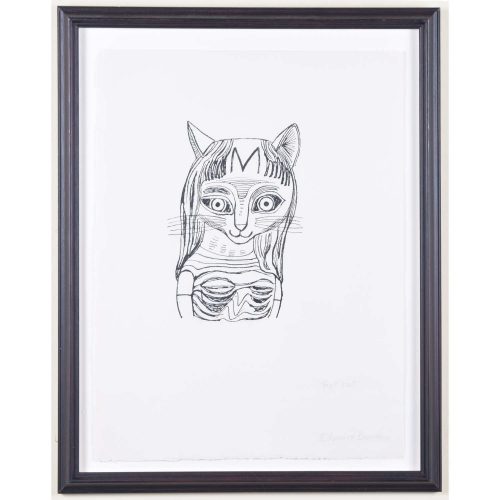
Edward Bawden (1903-1989)
Hot Cat
Pen and ink 38 x 27 cm Signed and inscribed lower right. Bawden developed a love of cats at a young age, copying Louis Wain's cat pictures. In his later years, his drawings of cats became yet more frequent; his cat Emma featured in much of his work. In an interview with House and Garden in 1987 he said: "No cat will suffer being lifted up and dropped into an empty space intended for her to occupy; that procedure led inevitably to Emma, tail up, walking away at once, so I had to wait patiently until Emma had enjoyed a good meal of Coley and was ready to choose her daily sleeping place, wherever it might be. I would then spring into action." Doubtless he found it easier to draw an imaginary cat, such as this one. For other cats - and other works - by Bawden, please click here. If you are interested, please email info@manningfineart.co.uk or call us on 07929 749056. -
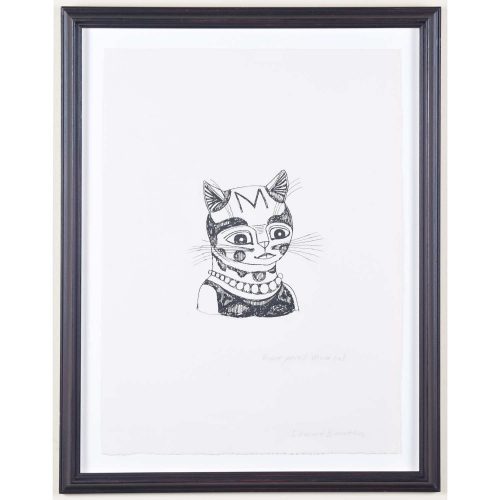
Edward Bawden (1903-1989)
House Proud Mum Cat
Pen and ink 38 x 27 cm Signed and inscribed lower right. Bawden developed a love of cats at a young age, copying Louis Wain's cat pictures. In his later years, his drawings of cats became yet more frequent; his cat Emma featured in much of his work. In an interview with House and Garden in 1987 he said: "No cat will suffer being lifted up and dropped into an empty space intended for her to occupy; that procedure led inevitably to Emma, tail up, walking away at once, so I had to wait patiently until Emma had enjoyed a good meal of Coley and was ready to choose her daily sleeping place, wherever it might be. I would then spring into action." Doubtless he found it easier to draw an imaginary cat, such as this one. For other cats - and other works - by Bawden, please click here. If you are interested, please email info@manningfineart.co.uk or call us on 07929 749056. -
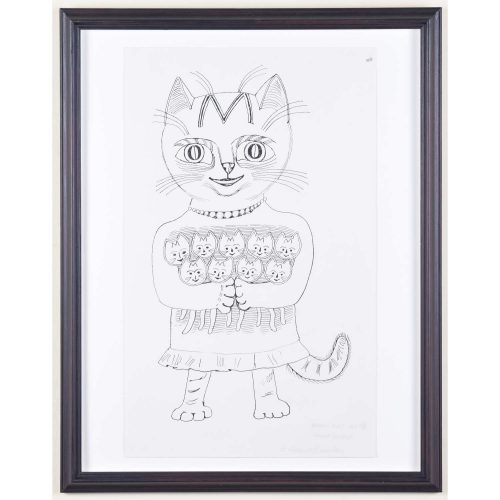
Edward Bawden (1903-1989)
Mum Cat with Nine Lives
Pen and ink 38 x 27 cm Signed and inscribed lower right. Bawden developed a love of cats at a young age, copying Louis Wain's cat pictures. In his later years, his drawings of cats became yet more frequent; his cat Emma featured in much of his work. In an interview with House and Garden in 1987 he said: "No cat will suffer being lifted up and dropped into an empty space intended for her to occupy; that procedure led inevitably to Emma, tail up, walking away at once, so I had to wait patiently until Emma had enjoyed a good meal of Coley and was ready to choose her daily sleeping place, wherever it might be. I would then spring into action." Doubtless he found it easier to draw an imaginary cat, such as this one. For other cats - and other works - by Bawden, please click here. If you are interested, please email info@manningfineart.co.uk or call us on 07929 749056. -
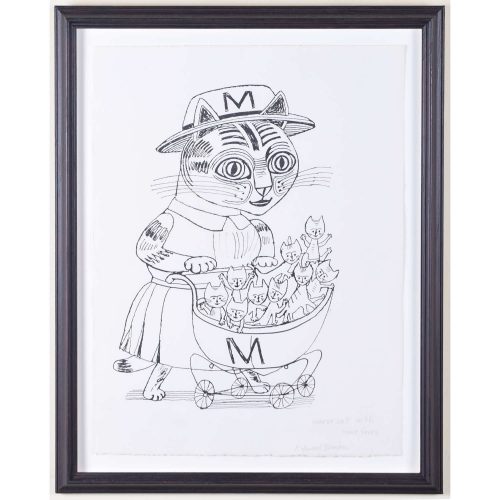
Edward Bawden (1903-1989)
Nurse Cat with Nine Lives
Pen and ink 38 x 27 cm Signed and inscribed lower right. Bawden developed a love of cats at a young age, copying Louis Wain's cat pictures. In his later years, his drawings of cats became yet more frequent; his cat Emma featured in much of his work. In an interview with House and Garden in 1987 he said: "No cat will suffer being lifted up and dropped into an empty space intended for her to occupy; that procedure led inevitably to Emma, tail up, walking away at once, so I had to wait patiently until Emma had enjoyed a good meal of Coley and was ready to choose her daily sleeping place, wherever it might be. I would then spring into action." Doubtless he found it easier to draw an imaginary cat, such as this one. For other cats - and other works - by Bawden, please click here. If you are interested, please email info@manningfineart.co.uk or call us on 07929 749056. -
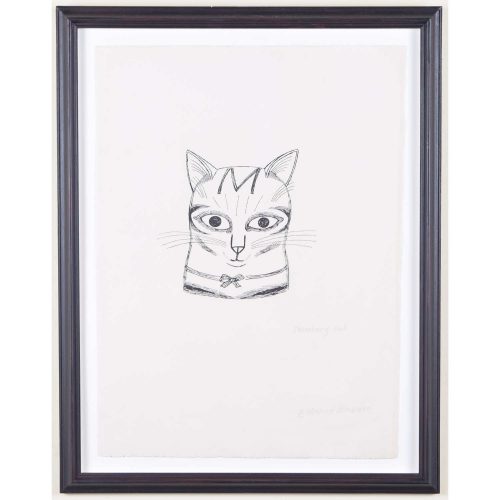
Edward Bawden (1903-1989)
Secretary Cat
Pen and ink 38 x 27 cm Signed and inscribed lower right. Bawden developed a love of cats at a young age, copying Louis Wain's cat pictures. In his later years, his drawings of cats became yet more frequent; his cat Emma featured in much of his work. In an interview with House and Garden in 1987 he said: "No cat will suffer being lifted up and dropped into an empty space intended for her to occupy; that procedure led inevitably to Emma, tail up, walking away at once, so I had to wait patiently until Emma had enjoyed a good meal of Coley and was ready to choose her daily sleeping place, wherever it might be. I would then spring into action." Doubtless he found it easier to draw an imaginary cat, such as this one. For other cats - and other works - by Bawden, please click here. If you are interested, please email info@manningfineart.co.uk or call us on 07929 749056. -
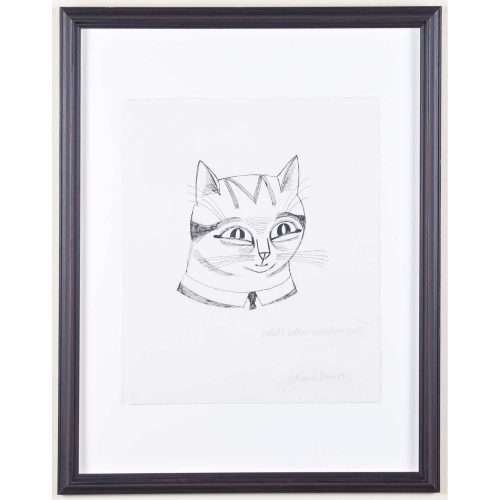
Edward Bawden (1903-1989)
White Collar Worker Cat
Pen and ink 27 x 23 cm Signed and inscribed lower right. Bawden developed a love of cats at a young age, copying Louis Wain's cat pictures. In his later years, his drawings of cats became yet more frequent; his cat Emma featured in much of his work. In an interview with House and Garden in 1987 he said: "No cat will suffer being lifted up and dropped into an empty space intended for her to occupy; that procedure led inevitably to Emma, tail up, walking away at once, so I had to wait patiently until Emma had enjoyed a good meal of Coley and was ready to choose her daily sleeping place, wherever it might be. I would then spring into action." Doubtless he found it easier to draw an imaginary cat, such as this one. For other cats - and other works - by Bawden, please click here. If you are interested, please email info@manningfineart.co.uk or call us on 07929 749056. -
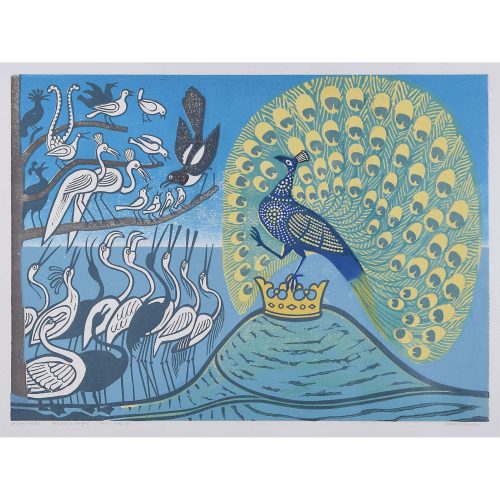
Edward Bawden (1903 - 1989)
Aesop's Fables: Peacock and Magpie (1970)
Linocut print 63 x 75 cm Signed, numbered 11/50, and titled in pencil. A delightful print illustrating Aesop's fable of the Peacock and Magpie. In the fable, the birds are searching for a king, and the Peacock puts himself forward. The birds are about to make him king because of his charming plumage, but a Magpie asks the Peacock how he might defend the birds from predators. The Peacock has no answer. Aesop's moral is that those in power must be suited to the task, and not just vain pretenders. The artist's use of vibrant colour brings the tale to life. Edward Bawden was an English painter, illustrator and graphic artist, known for his prints, book covers, posters, and garden metalwork furniture. Bawden taught at the Royal College of Art, where he had been a student, worked as a commercial artist, and served as a war artist in World War II. He illustrated several books and painted various public murals, and his work and career are often associated with that of his contemporary, Eric Ravilious. Condition: generally very good; small stain to extremity that will be hidden under mount. If you’d like to know more, please email info@manningfineart.co.uk or call us on 07929 749056. -
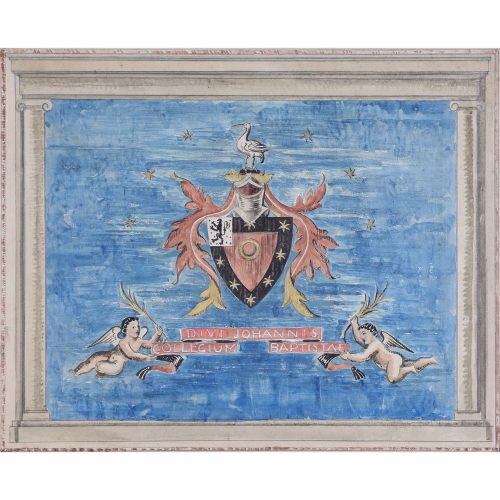
Sir Edward Brantwood Maufe KBE RA FRIBA (1882-1974)
Heraldic Design for a carpet for the Senior Common Room, St John’s College Oxford
Watercolour and ink Signed and inscribed Provenance: The estate of Bernard Bumpus If you are interested email info@manningfineart.co.uk or call us on 07929 749056. 37x46cm (14.5×18.1 inches) Maufe designed buildings for his old Oxford College, St John’s, over an extended period, starting with two memorial slabs in 1923, and was made honorary fellow in 1943. His most major works were the Rawlinson Building extension (1933) and Dolphin Quad (1947). This design relates to the 1936 remodelling of the smoking room of the Senior Common Room. Click here for biographical details and other works by the artist. -
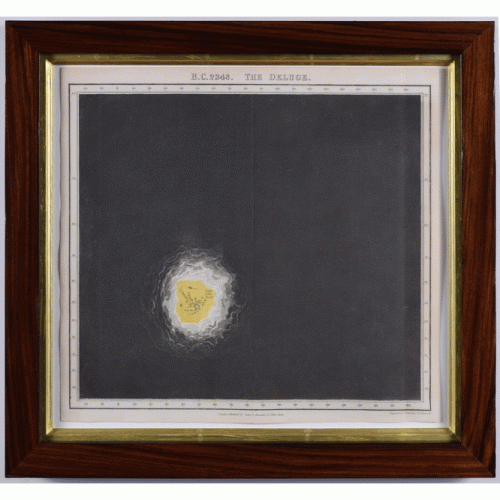
Edward Quin (British 1794-1828)
Twenty-one maps from An Historical Atlas in a Series of Maps of the World As Known at Different Periods.
Twenty-one hand-coloured engraved maps, various sizes, presented in fine hand-finished rosewood veneer frames. Click on the image to see all twenty-one maps. 15 approx 40 x 31 cm 5 approx 62 x 31 cm Seeley and Burnside np. nd. [London c. 1830] Scroll down for further information. -
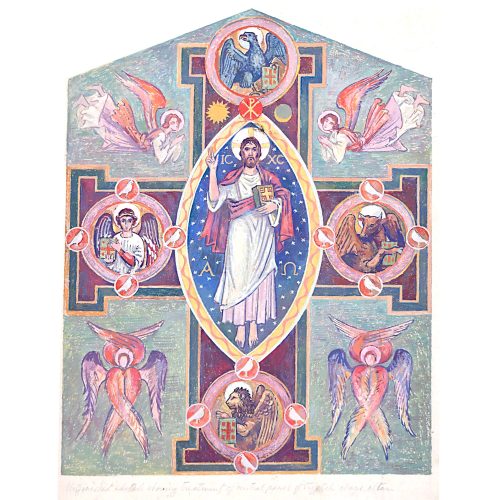
Anonymous Design for Triptych Above Alta
British, c. 1920s Gouache 38x28.5cm Christ Pantocrator stands in the middle of the design, surrounded by the four evangelists - represented by the Eagle, Bull, Lion and Angel - together with two seraphim. This is a well executed design for an as-yet unidentified location. At the bottom is a pencil description as an 'unfinished sketch'. Condition: Generally very good condition. If you are interested email info@manningfineart.co.uk or call us on 07929 749056. -
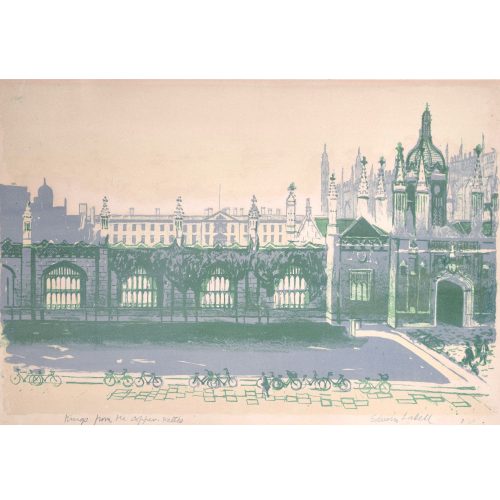
Edwin La Dell (1914-1970) King's College from the Copper Kettle, Cambridge
Signed in pencil and titled 32x48cm A copy of this print is in the Government Art Collection. Lithograph Born in Coventry, La Dell's father was a Sheffield-born bookbinder. After study at Sheffield School of Art, he was the winner of a scholarship to the Royal College of Art where the head of print making was John Nash (from 1934 to 1940). La Dell became head of lithography there from 1948 until his death. During the war he was an official war artist and a camofleur, but he is probably best known for his lithographs of Oxford and Cambridge that he published himself, together with those he published for the School Prints scheme and Lyons Tea Rooms. His works are widely held in the public collections, including the Royal Academy and the Government Art Collection, the latter having a copy of this print. If you are interested email info@manningfineart.co.uk or call us on 07929 749056. Condition: In conservation mount, some age toning to print as visible in photograph. -
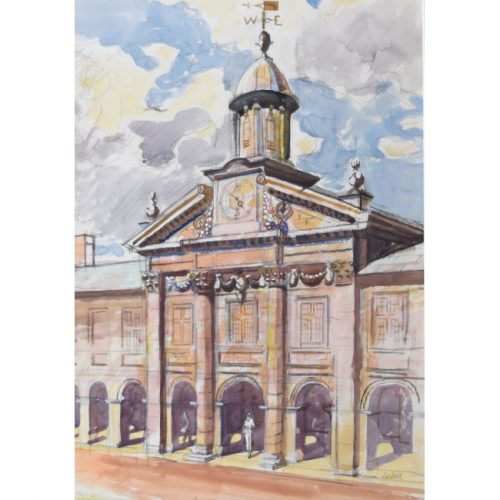 Edwin La Dell ARA (1914-1970) Emmanuel College Cambridge Signed Watercolour
46x32cm (18.11 X 12.6 in)
In fine original hand-finished painted frame.
Click here for biographical details and other works by the artist. If you are interested email info@manningfineart.co.ukor call us on 07929 749056. -
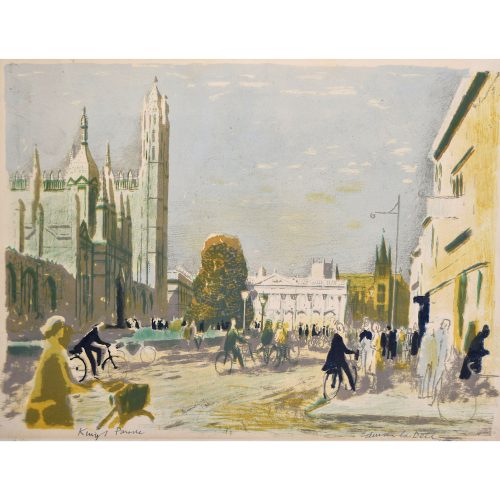
Edwin La Dell (1914-1970) King's Parade, Cambridge
Signed in pencil and titled 35x47cm A copy of this print is in the Government Art Collection. Lithograph Born in Coventry, La Dell's father was a Sheffield-born bookbinder. After study at Sheffield School of Art, he was the winner of a scholarship to the Royal College of Art where the head of print making was John Nash (from 1934 to 1940). La Dell became head of lithography there from 1948 until his death. During the war he was an official war artist and a camofleur, but he is probably best known for his lithographs of Oxford and Cambridge that he published himself, together with those he published for the School Prints scheme and Lyons Tea Rooms. His works are widely held in the public collections, including the Royal Academy and the Government Art Collection, the latter having a copy of this print. If you are interested email info@manningfineart.co.uk or call us on 07929 749056. Condition: In conservation mount, some age toning to print as visible in photograph. -
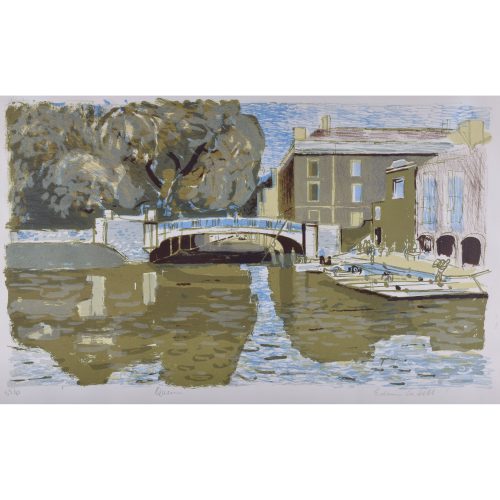
Edwin La Dell
Queens' College, Cambridge
Lithograph Signed in pencil and numbered 33/50 21x46.5cm A copy of this print is in the Government Art Collection. Click here for biographical details and other works by the artist. If you are interested email info@manningfineart.co.uk or call us on 07929 749056. -
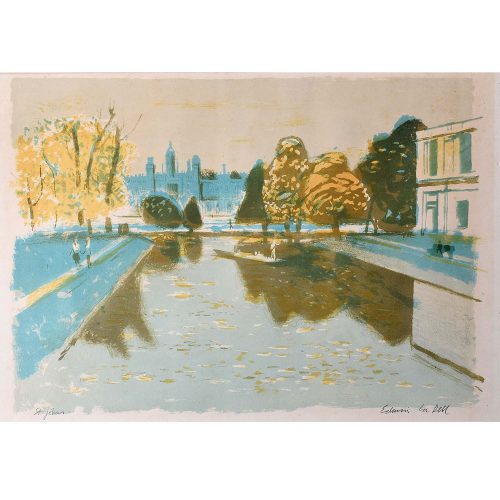
Edwin La Dell ARA (1914-1970)
St John's College Cambridge
Signed and titled Lithograph (1959)35x46.5cm
Click here for biographical details and other works by the artist. If you are interested email info@manningfineart.co.ukor call us on 07929 749056. Condition: Good. -
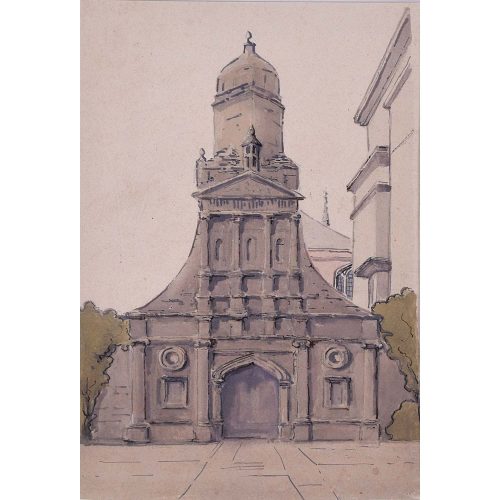
Effie Colbbelt
Gate of Honour, Gonville and Caius College, Cambridge
Watercolour 32x20cm If you are interested email info@manningfineart.co.uk or call us on 07929 749056. Condition: Good. -
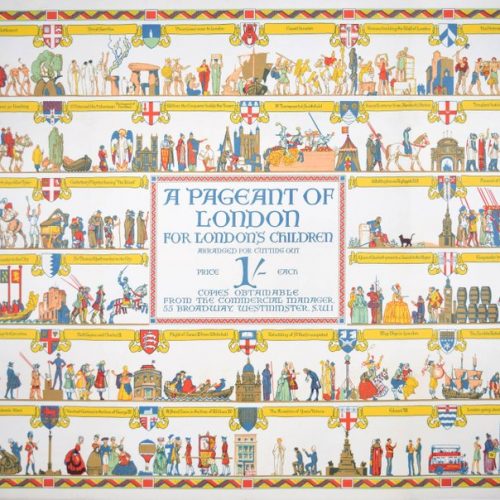
Elijah Albert Cox (1876–1955)
Pageant of London (1926)
Original London Transport Underground posterLithograph102 x 127 cmThis fantastic poster illustrates London-related events from British history, and advertises a cutting-out book designed for children.Cox was born in Islington and studied at Whitechapel People's Palace and then the London College of Printing. Having worked as an assistant to Frank Brangwyn, and as a designer for a manufacturing chemist, he became a mural and poster designer. Elected to the Royal Society of British Artists in 1915, commissions came from London Underground, the Empire Marketing Board and others. He also illustrated books - mostly historical and heroic adventures.If you are interested, please email info@manningfineart.co.uk or call us on 07929 749056. -

Elizabeth de Clare, Foundress of Clare College, Cambridge
Hand-coloured aquatint 18 x 16 cm Published by Rudolph Ackermann (1764 - 1834). Rudolph Ackermann was an Anglo-German bookseller, inventor, lithographer, publisher and businessman. In 1795 he established a print-shop and drawing-school at 96 Strand. Here Ackermann set up a lithographic press and began a trade in prints. He later began to manufacture colours and thick carton paper for landscape and miniature painters. Within three years the premises had become too small and he moved to 101 Strand, in his own words "four doors nearer to Somerset House", the seat of the Royal Academy of Arts. Between 1797 and 1800 Ackermann rapidly developed his print and book publishing business, encompassing many different genres including topography, caricature, portraits, transparencies and decorative prints. Condition: Generally very good.If you would like to know more, please email info@manningfineart.co.uk or call us on 07929 749056.
-
Out of stock
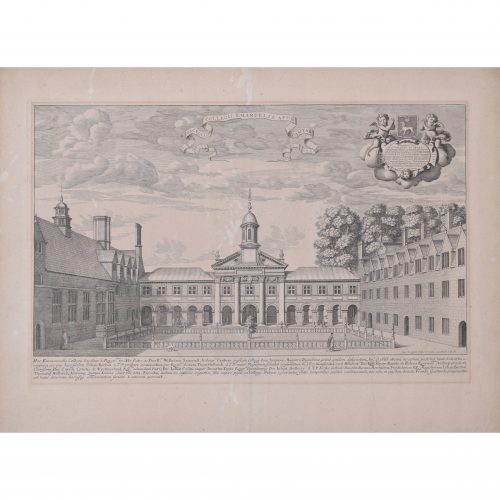
David Loggan (1634 - 1692)
Emmanuel College, Cambridge (1690)
Engraving 31 x 47 cm Loggan was born to English and Scottish parents, and was baptised in Danzig in 1634. After studying engraving in Danzig with Willem Hondius (1598-1652 or 1658), he moved to London in the late 1650s, going on to produce the engraved title-page for the folio 1662 Book of Common Prayer. He married in 1663 and moved to Nuffield in Oxfordshire in 1665. Loggan was appointed Public Sculptor to the nearby University of Oxford in the late 1660s, having been commissioned to produce bird’s-eye views of all the Oxford colleges. He lived in Holywell Street as he did this. The 'Oxonia Illustrata' was published in 1675, with the help of Robert White (1645 - 1704). Following its completion, Loggan began work on his equivalent work for Cambridge; the 'Cantabrigia Illustrata' was finally published in 1690, when he was made engraver to Cambridge University. The 'Oxonia Illustrata' also includes an engraving of Winchester College (Winchester and New College share William of Wykeham as their founder) whilst the 'Cantabrigia Illustrata' includes one of Eton College (which shares its founder, Henry VIII, with King’s College). Bird’s-eye views from this era required a particular talent as an architectural perspectivist; it was not until 1783 that it became possible for artists to ascend via hot air balloons and view the scenes they were depicting from above. Loggan thus had to rely on his imagination in conceiving the views. Loggan’s views constitute the first accurate depictions of the two Universities, in many ways unchanged today. Whilst the Oxford engravings were produced in reasonable numbers and ran to a second edition by Henry Overton (on thicker paper and with a plate number in Roman numerals in the bottom right-hand corner), those of Cambridge were printed in much smaller numbers. The Dutchman Pieter van der Aa published some miniature versions of the engravings for James Beverell’s guidebook to the UK, 'Les Delices de la Grande Bretagne' (circa 1708). The contemporary artist Andrew Ingamells has produced a highly-acclaimed series of etchings which bring Loggan’s original vision up to date. Condition: generally very good; mostly even all-over toning. If you’d like to know more, please email info@manningfineart.co.uk or call us on 07929 749056. -

Pieter van der Aa (1659 - 1733), after David Loggan (1634 - 1692)
Emmanuel College, Cambridge (1727)
Engraving 13 x 17 cm An eighteenth-century view of Emmanuel College, Cambridge, engraved by Pieter van der Aa after David Loggan, the noted engraver, draughtsman, and painter. Pieter van der Aa of Leiden was a Dutch publisher best known for preparing maps and atlases, though he also printed editions of foreign bestsellers and illustrated volumes. He is noted for the many engravings he produced after David Loggan's series of Oxford and Cambridge colleges and costumes. In 1727 Van Der Aa illustrated "Les Delices de la Grande Bretagne & de L'Irelande" by James Beeverell, the book in which this engraving appears. Condition: very good. If you are interested, please email info@manningfineart.co.uk or call us on 07929 749056. Click here for other views of Emmanuel College, Cambridge -

Pieter van der Aa (1659 - 1733), after David Loggan (1634 - 1692)
Emmanuel College, Cambridge (1727)
Engraving 13 x 17 cm An eighteenth-century view of Emmanuel College, Cambridge, engraved by Pieter van der Aa after David Loggan, the noted engraver, draughtsman, and painter. Pieter van der Aa of Leiden was a Dutch publisher best known for preparing maps and atlases, though he also printed editions of foreign bestsellers and illustrated volumes. He is noted for the many engravings he produced after David Loggan's series of Oxford and Cambridge colleges and costumes. In 1727 Van Der Aa illustrated "Les Delices de la Grande Bretagne & de L'Irelande" by James Beeverell, the book in which this engraving appears. Condition: very good. If you are interested, please email info@manningfineart.co.uk or call us on 07929 749056. Click here for other views of Emmanuel College, Cambridge -
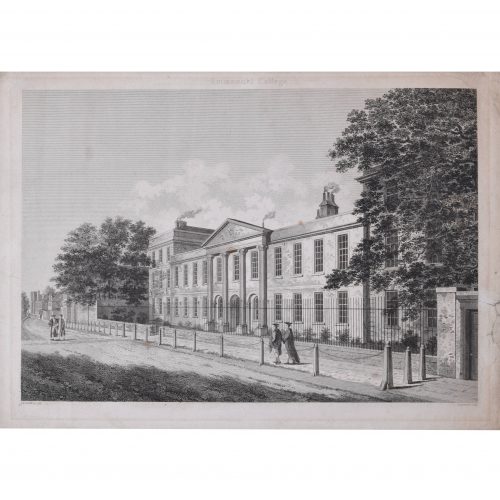
Samuel Sparrow (active 1800) after John Kirby Baldrey (1750 - 1823)
Emmanuel College, Cambridge
Engraving 35 x 49 cm An engraving of Emmanuel College's neoclassical facade, complete with strolling undergraduates in pairs. The engraving was printed in the Cambridge Almanack in 1806. Samuel Sparrow was a British engraver of landscapes and architectural scenes after his fellow artists, often published as bookplates. John Kirkby Baldrey was a draughtsman and engraver who provided designs for the Cambridge University Almanack between 1803 and 1810. Condition: generally very good; some age toning. If you’d like to know more, please email info@manningfineart.co.uk or call us on 07929 749056. -
Walter Hoyle (1922 - 2000)
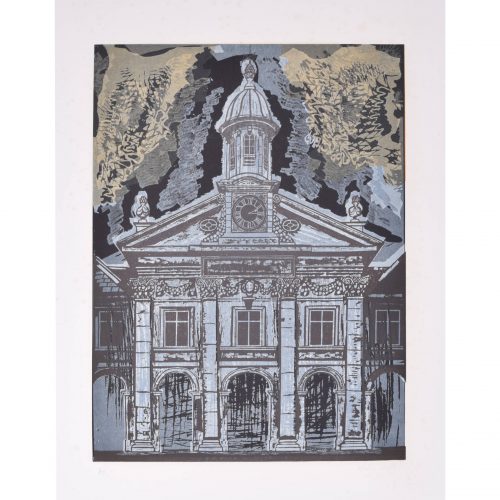
Emmanuel College, Cambridge (Cambridge Series 1956 - 66)
Linocut 55 x 43 cm Signed and inscribed A/P in pencil. Hoyle's view of Emmanuel's Front Court bleaches the gold of the chapel's Ketton Stone into an icy blue, and situates it beneath a tempestuous yellow sky. Hoyle trained at Beckenham School of Art and the Royal College of Art. At the latter he was strongly influenced by Edward Bawden, one of Britain’s greatest linocut printers. Bawden had been commissioned by the 1951 Festival of Britain to produce a mural for the South Bank, and chose Hoyle to assist on account of his great talent. Hoyle moved to Great Bardfield in Essex, becoming a part of the Great Bardfield group of artists; diverse in style, they created figurative work, in stark contrast to the abstract art of the St Ives artists at the opposite end of the country. Hoyle taught at St Martin’s School of Art from 1951-60, the Central School of Arts and Crafts from 1960-64, and the Cambridge School of Art from 1964-1985, during which time he launched Cambridge Print Editions. His work is held in the collections of the Tate Gallery, the Victoria and Albert Museum, The British Museum, Kettle’s Garden and the Fry Art Gallery. Provenance: family of the artist. Condition: generally very good; a few handling marks and areas of discolouration to extreme margins, extraneous ink to right hand side, and a very small brown spot to very top right beyond the blue sky. If you are interested, please email info@manningfineart.co.uk or call us on 07929 749056. Click here for other views of Emmanuel College, Cambridge. -
Margaret Souttar (1914 - 1987)
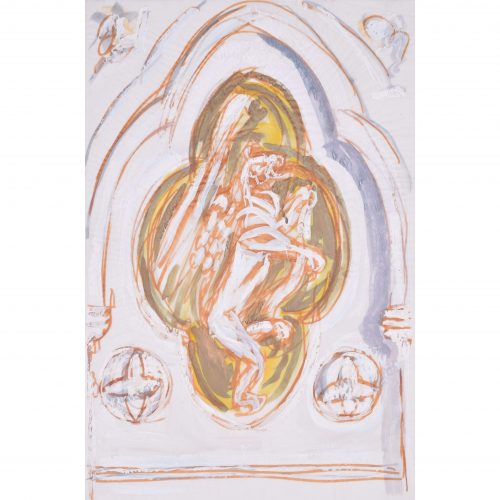
Emmanuel College, Cambridge Lion Rampant (1960)
Acrylic paint 74 x 50 cm Signed and dated lower right. Souttar was a Scottish painter and printmaker known for her images of town- and cityscapes. In the early 1960s, she was commissioned to produce a series of prints of the Cambridge colleges. She captures the modernity and optimism of 1960s Cambridge; the fact that a female artist was commissioned to create the prints reflects the changing attitudes of the University towards women. These views highlight the layers of history and architectural styles which make up a Cambridge college. Provenance: the artist's studio sale. Condition: generally very good; some crinkling as a result of using water-based paints on thin paper. If you are interested, please email info@manningfineart.co.uk or call us on 07929 749056. Click here for other views of Emmanuel College, Cambridge. -
Margaret Souttar (1914 - 1987)
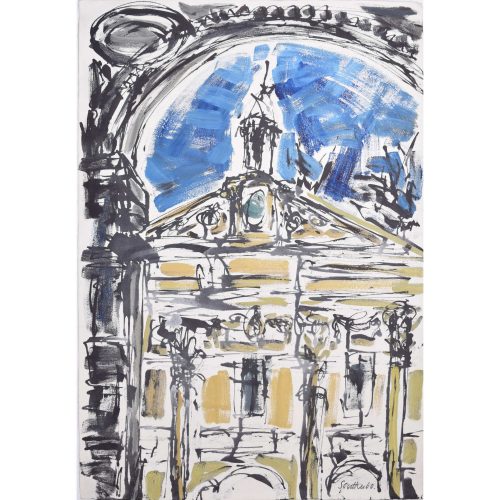
Emmanuel College, Cambridge (1960)
Acrylic paint 102 x 69 cm Signed and dated lower right. Souttar was a Scottish painter and printmaker known for her images of town- and cityscapes. In the early 1960s, she was commissioned to produce a series of prints of the Cambridge colleges. She captures the modernity and optimism of 1960s Cambridge; the fact that a female artist was commissioned to create the prints reflects the changing attitudes of the University towards women. These views highlight the layers of history and architectural styles which make up a Cambridge college. Provenance: the artist's studio sale. Condition: generally very good. If you are interested, please email info@manningfineart.co.uk or call us on 07929 749056. Click here for other views of Emmanuel College, Cambridge. -
Margaret Souttar (1914 - 1987)
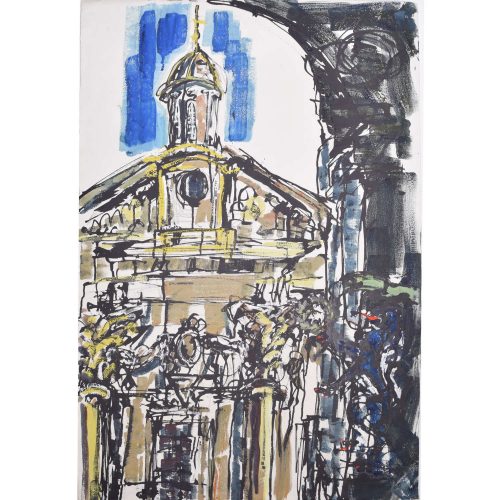
Emmanuel College, Cambridge with Lion Rampant (1960)
Acrylic paint 102 x 69 cm Signed and dated lower right. Souttar was a Scottish painter and printmaker known for her images of town- and cityscapes. In the early 1960s, she was commissioned to produce a series of prints of the Cambridge colleges. She captures the modernity and optimism of 1960s Cambridge; the fact that a female artist was commissioned to create the prints reflects the changing attitudes of the University towards women. These views highlight the layers of history and architectural styles which make up a Cambridge college. Provenance: the artist's studio sale. Condition: generally very good. If you are interested, please email info@manningfineart.co.uk or call us on 07929 749056. Click here for other views of Emmanuel College, Cambridge. -

George Bissill (1896-1973) English rural scene
Watercolour 18 x 28 cm Born in 1896, George Bissill was a British miner, painter and furniture designer. Raised in the mining village of Langley Mill, Derbyshire, Bissill became a miner at the age of 13, before leaving to join the war effort in 1915. Upon his return from the war after being gassed, Bissill chose to become a pavement artist outside the newly erected Bush House in Aldwych, painting from his memory and his sketch book the uncompromising underground world he had inhabited. In 1935 he moved to the countryside near Newbury, where he lived and worked as a landscape painter, art restorer and dealer until his death in 1973. This painting forms part of a larger collection, 'unseen since they were taken from George Bissil's studio in 1983' and restored by Kate Pattinson. A series of planned exhibitions were cancelled due to Covid, but two shows, one in Oxford and one in Ilkeston, did take place. Through such exhibitions, Pattinson hoped to 'restore the reputation of an artist who, through mighty endeavour, conquered the art world in the 1920s with his powerful, authentic and experimental pictures.' Bissill's paintings are also held in a number of important public collections, including the Tate Gallery, National Museum of Ireland and the Manchester Art Gallery. This watercolour depicts an English rural landscape. Fields with small stablesoccupy the foreground of the painting, while the red roofs of the village are discernible in the background. This watercolour also intriguingly includes a seemingly preparatory sketch of the village church, suspended mid-air and providing a valuable insight into Bissill's working process. Condition: Generally very good.If you would like to know more, please email info@manningfineart.co.uk or call us on 07929 749056.
-

18th Century View of Cambridge
Engraving 15 x 20 cm This detailed engraving captures an 18th century view of Cambridge from the West. Green expanses dominate the piece, featuring scholars pictured resting or wandering in the foreground. In the background, the Cambridge skyline is clearly visible, where the view over the Backs is unmistakeable. From King's College Chapel, to Trinity's world famous Wren Library, Great St Mary's Church and the medieval spire of Queen's College, many of the historical Cambridge landmarks still recognisable today are to be found in this intriguing composition. Condition: Generally very good, some age toning to paper. If you’d like to know more, please email info@manningfineart.co.uk or call us on 07929 749056. For other views of Cambridge, click here. -
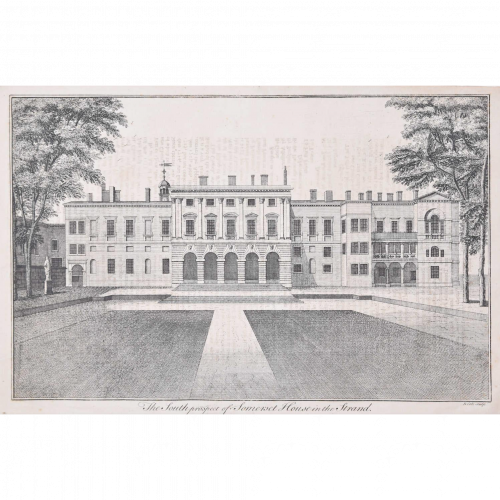
Benjamin Cole (1697-1783)
South Prospect of Somerset House (c. 1753)
Engraving 24 x 37 cm Stow's Survey of London, a ward-by-ward topographical and historical tour of the City of London giving an account of buildings, social conditions and customs, was first published in 1598. Cole's architectural view of Somerset House illustrates the clean neoclassical proportions for which it is known. Condition: Trimmed by the binder's knife within plate marks; some offsetting from facing page; occasional soft creases; generally good. -
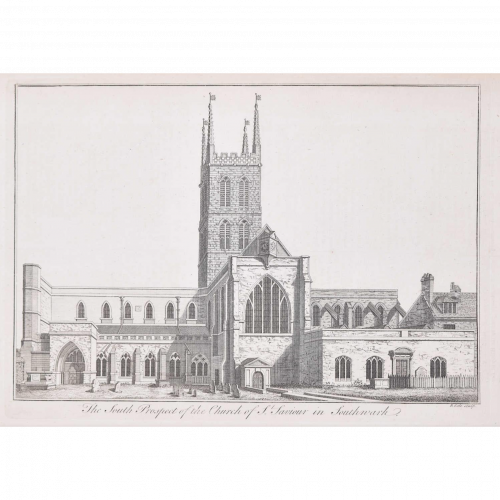
Benjamin Cole (1697-1783)
Southwark Cathedral (c. 1753)
Engraving 24 x 33 cm Stow's Survey of London, a ward-by-ward topographical and historical tour of the City of London giving an account of buildings, social conditions and customs, was first published in 1598. This view of Southwark Cathedral, labelled here as 'the South Prospect of the Church of St Saviour in Southwark', offers a charming perspective of the building's architecture and churchyard. Condition: Generally very good; slight offsetting from facing page and old library stamp to reverse. -
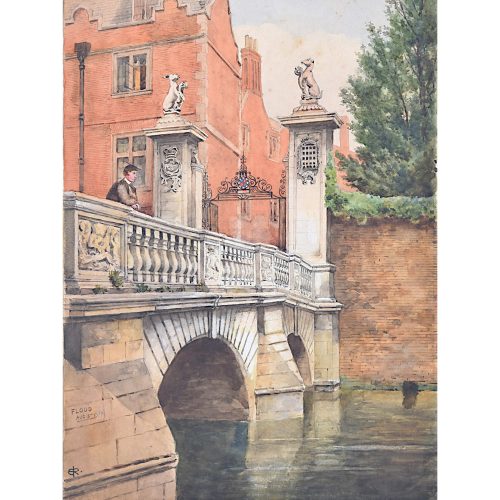
'ER' Monogrammist St John's College Cambridge, the Wren Bridge from the River Cam
Watercolour c. 1900 35x25cm A highly accomplished watercolour of the Kitchen Bridge at St John's College. The artist has clearly had a change of heart, and visibly moved the person standing on the bridge, bringing a sense of movement to what is otherwise a still painting. Moreover the richness of the colour he has chosen for the brickwork brings a further element of surprise to the viewer. If you are interested email info@manningfineart.co.uk or call us on 07929 749056. Condition: Mounted to board, the occasional tiny spot to the sky as visible in photograph. -

E. T. Talbot Erasmus' Tower, Queens' College Cambridge
Watercolour 35 x 21 cm Signed, dated and inscribed to the reverse. A richly-coloured watercolour painting of Erasmus' Tower, Queens' College Cambridge. Part of the Old Court of Queens' College, dating back to the 16th century, Erasmus' tower was named after the humanist and scholar Desiderius Erasmus, who lived in the college in the early 16th century. It remains a symbol of the college’s rich academic history and its connections to the Renaissance scholar. Talbot expertly captures the charm of this medieval tower, using careful brushstrokes to depict the voluminous greenery. Condition: Generally very good, mounted to board.If you would like to know more, please email info@manningfineart.co.uk or call us on 07929 749056.
-
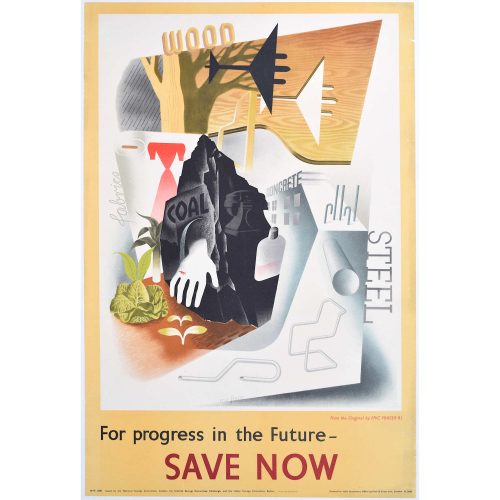
Eric Fraser For Progress in the Future Save Now
75x51cm Original Vintage Poster Issued by the National Savings Committee If you are interested email info@manningfineart.co.uk or call us on 07929 749056. Condition: Backed to linen, small edge tears to right side as visibile in image. -
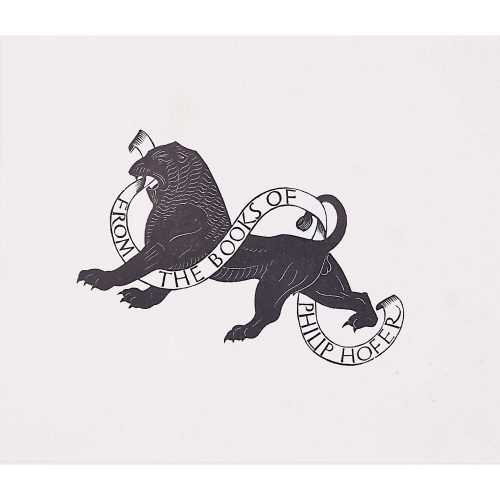
Eric Gill
From the Books of Philip Hofer Woodblock Print
Published Hague & Gill 1934 in an unnumbered edition of 300 23x21cm Following Chichester Technical and Art School, Gill moved to London in 1900 to train with the ecclesiastical architects W D Caroe. Finding architecture somewhat pedestrian he took stonemasonry lessons at Westminster Technical Institute and calligraphy lessons at the Central School of Arts and Crafts, coming under the influence of Edward Johnson, the designer of the London Underground's own typeface. In 1903 he ceased his attempts to become an architect, instead becoming a monumental mason, letter-cutter and calligrapher. Based in Ditchling, he began direct carving of stone figures, the semi-abstract figures taking their influence from mediaeval statuary, mixed with influences from Classical statuary from the Greeks and Romans, with a little post-Impressionism added in. With major commissions from Westminster Cathedral for its Stations of the Cross (1914), a series of War Memorials including the Grade II* memorial in Trumpington, and three of the sculptures for Charles Holden's 1928 headquarters of London Underground at 55 Broadway, St James's, and a series of sculptures for the new 1932 Broadcasting House. The list continues. Never one to rest on his laurels, he was at the same time engaged in typographical adventures. He had collaborated with Edward Johnson on the latter's initial thoughts on his London Transport typeface, but in 1925 designed Perpetua on his own, and Gill Sans between 1927-30. For the Golden Cockerel Press he created, in 1929, a bolder typeface to complement wood engravings. And of course Gill was publishing decorated books. His 1929 Canterbury Tales was an epic work, with a whole series of beautiful wood engravings such as this one. The present print is from the 1934 edition for Faber & Faber ('Engravings 1928-1933 by Eric Gill') he printed with his son-in-law, Rene Hague, produced with the original engraved wood blocks. Philip Hofer was a curator and collector, and commissioned this fine Ex Libris plate from Gill. If you are interested email info@manningfineart.co.uk or call us on 07929 749056. Condition: Generally very good condition. -
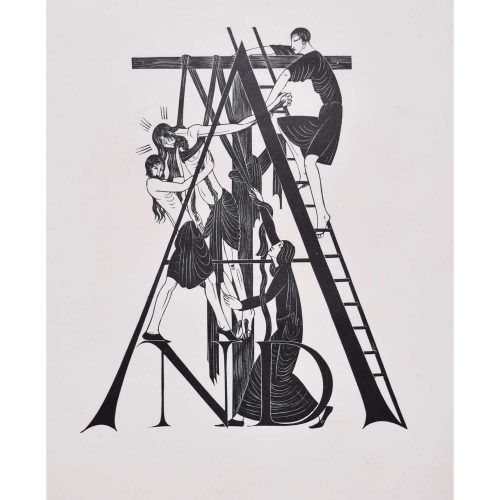
Eric Gill (1882-1940) The Deposition from the Cross
Woodblock Print Published Hague & Gill 1934 23x21cm Christ's body is taken down from the Cross, Mary assists by holding the ropes, and two men - Joseph of Arimathea and Nicodemus climb the ladder - one of the instruments of the passion. Click here for biographical details and other prints by Gill. If you are interested email info@manningfineart.co.uk or call us on 07929 749056. -
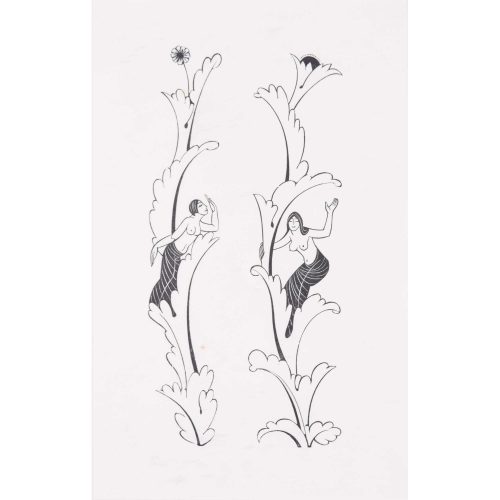
Eric Gill (1882-1940) Canterbury Tales Border - Two nudes i
Woodblock Print Published Hague & Gill 1934 23x21cm Condition: very good Click here for biographical details and other prints by Gill. If you are interested email info@manningfineart.co.uk or call us on 07929 749056. -
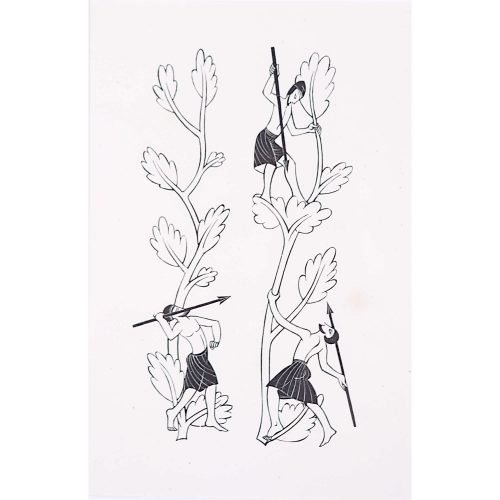
Eric Gill
Border for The Canterbury Tales (1929) - Three Men with Spears
Woodblock Print Published Hague & Gill 1934 in an unnumbered edition of 300 23x21cm Following Chichester Technical and Art School, Gill moved to London in 1900 to train with the ecclesiastical architects W D Caroe. Finding architecture somewhat pedestrian he took stonemasonry lessons at Westminster Technical Institute and calligraphy lessons at the Central School of Arts and Crafts, coming under the influence of Edward Johnson, the designer of the London Underground's own typeface. In 1903 he ceased his attempts to become an architect, instead becoming a monumental mason, letter-cutter and calligrapher. Based in Ditchling, he began direct carving of stone figures, the semi-abstract figures taking their influence from mediaeval statuary, mixed with influences from Classical statuary from the Greeks and Romans, with a little post-Impressionism added in. With major commissions from Westminster Cathedral for its Stations of the Cross (1914), a series of War Memorials including the Grade II* memorial in Trumpington, and three of the sculptures for Charles Holden's 1928 headquarters of London Underground at 55 Broadway, St James's, and a series of sculptures for the new 1932 Broadcasting House. The list continues. Never one to rest on his laurels, he was at the same time engaged in typographical adventures. He had collaborated with Edward Johnson on the latter's initial thoughts on his London Transport typeface, but in 1925 designed Perpetua on his own, and Gill Sans between 1927-30. For the Golden Cockerel Press he created, in 1929, a bolder typeface to complement wood engravings. And of course Gill was publishing decorated books. His 1929 Canterbury Tales was an epic work, with a whole series of beautiful wood engravings such as this one. The present print is from the 1934 edition for Faber & Faber ('Engravings 1928-1933 by Eric Gill') he printed with his son-in-law, Rene Hague, produced with the original engraved wood blocks. If you are interested email info@manningfineart.co.uk or call us on 07929 749056. Condition: Generally very good condition. -
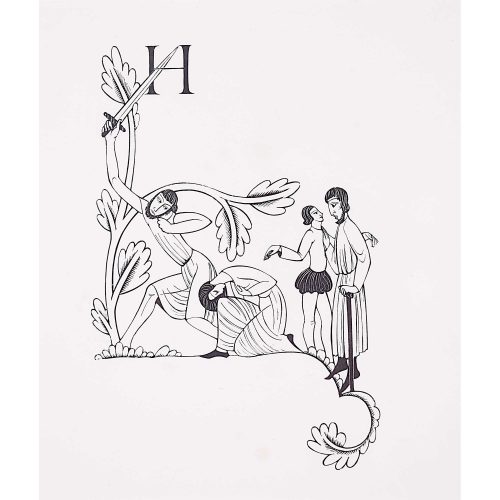
Eric Gill
Initial Letter 'H' for The Canterbury Tales (1929) - The Doctor's Tale
Woodblock Print Published Hague & Gill 1934 in an unnumbered edition of 300 23x21cm Following Chichester Technical and Art School, Gill moved to London in 1900 to train with the ecclesiastical architects W D Caroe. Finding architecture somewhat pedestrian he took stonemasonry lessons at Westminster Technical Institute and calligraphy lessons at the Central School of Arts and Crafts, coming under the influence of Edward Johnson, the designer of the London Underground's own typeface. In 1903 he ceased his attempts to become an architect, instead becoming a monumental mason, letter-cutter and calligrapher. Based in Ditchling, he began direct carving of stone figures, the semi-abstract figures taking their influence from mediaeval statuary, mixed with influences from Classical statuary from the Greeks and Romans, with a little post-Impressionism added in. With major commissions from Westminster Cathedral for its Stations of the Cross (1914), a series of War Memorials including the Grade II* memorial in Trumpington, and three of the sculptures for Charles Holden's 1928 headquarters of London Underground at 55 Broadway, St James's, and a series of sculptures for the new 1932 Broadcasting House. The list continues. Never one to rest on his laurels, he was at the same time engaged in typographical adventures. He had collaborated with Edward Johnson on the latter's initial thoughts on his London Transport typeface, but in 1925 designed Perpetua on his own, and Gill Sans between 1927-30. For the Golden Cockerel Press he created, in 1929, a bolder typeface to complement wood engravings. And of course Gill was publishing decorated books. His 1929 Canterbury Tales was an epic work, with a whole series of beautiful wood engravings such as this one. The present print is from the 1934 edition for Faber & Faber ('Engravings 1928-1933 by Eric Gill') he printed with his son-in-law, Rene Hague, produced with the original engraved wood blocks. In Chaucer's Tales, the Summoner's Tale tells the story of the man who summonsed people to the ecclesiastical courts. It satirises the friar, considering him to be corrupt. Philip Hofer was a curator and collector, and commissioned this fine Ex Libris plate from Gill. If you are interested email info@manningfineart.co.uk or call us on 07929 749056. Condition: Generally very good condition. -
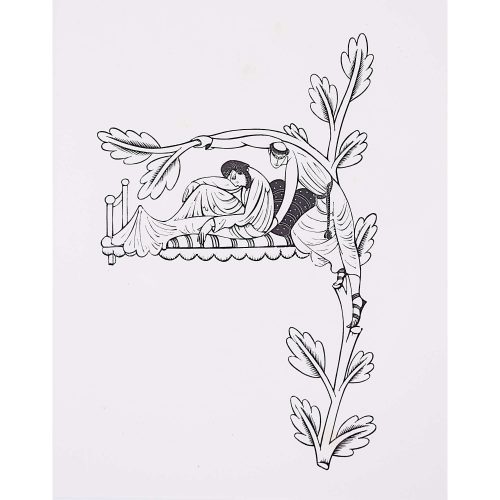
Eric Gill
Canterbury Tales The Summoner's Tale
Woodblock Print Published Hague & Gill 1934 in an unnumbered edition of 300 23x21cm Following Chichester Technical and Art School, Gill moved to London in 1900 to train with the ecclesiastical architects W D Caroe. Finding architecture somewhat pedestrian he took stonemasonry lessons at Westminster Technical Institute and calligraphy lessons at the Central School of Arts and Crafts, coming under the influence of Edward Johnson, the designer of the London Underground's own typeface. In 1903 he ceased his attempts to become an architect, instead becoming a monumental mason, letter-cutter and calligrapher. Based in Ditchling, he began direct carving of stone figures, the semi-abstract figures taking their influence from mediaeval statuary, mixed with influences from Classical statuary from the Greeks and Romans, with a little post-Impressionism added in. With major commissions from Westminster Cathedral for its Stations of the Cross (1914), a series of War Memorials including the Grade II* memorial in Trumpington, and three of the sculptures for Charles Holden's 1928 headquarters of London Underground at 55 Broadway, St James's, and a series of sculptures for the new 1932 Broadcasting House. The list continues. Never one to rest on his laurels, he was at the same time engaged in typographical adventures. He had collaborated with Edward Johnson on the latter's initial thoughts on his London Transport typeface, but in 1925 designed Perpetua on his own, and Gill Sans between 1927-30. For the Golden Cockerel Press he created, in 1929, a bolder typeface to complement wood engravings. And of course Gill was publishing decorated books. His 1929 Canterbury Tales was an epic work, with a whole series of beautiful wood engravings such as this one. The present print is from the 1934 edition for Faber & Faber ('Engravings 1928-1933 by Eric Gill') he printed with his son-in-law, Rene Hague, produced with the original engraved wood blocks. In Chaucer's Tales, the Summoner's Tale tells the story of the man who summonsed people to the ecclesiastical courts. It satirises the friar, considering him to be corrupt. Philip Hofer was a curator and collector, and commissioned this fine Ex Libris plate from Gill. If you are interested email info@manningfineart.co.uk or call us on 07929 749056. Condition: Generally very good condition. -
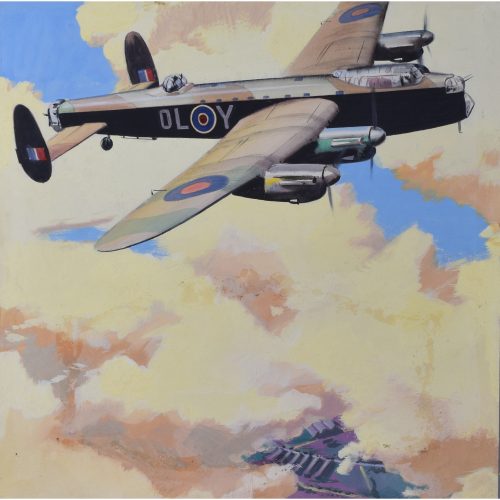
Ernest Bendell-Bayly Lancaster Bomber
Oil on paper laid on board 39x38cm Design for a poster 1940s If you are interested email info@manningfineart.co.uk or call us on 07929 749056. Ernest Bendell-Bayly was a partner in the Bayly-Souster advertising agency, employer of, amongst others, Owen Miller. They produced many posters for the Ministry of Aircraft Production during the war. -
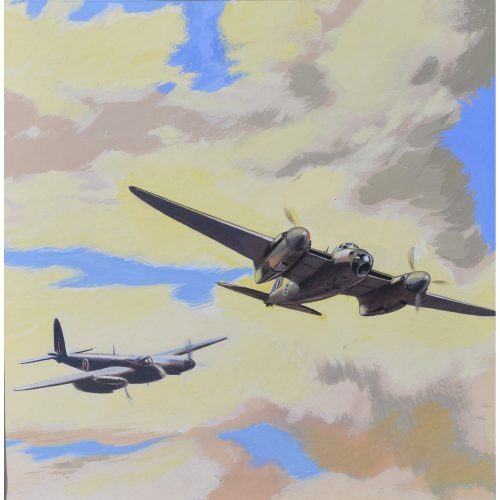
Ernest Bendell-Bayly Mosquito Fighter Bomber
Oil on paper laid on board Design for poster 32x31cm 1940s Ernest Bendell-Bayly was a partner in the Bayly-Souster advertising agency, employer of, amongst others, Owen Miller. If you are interested email info@manningfineart.co.uk or call us on 07929 749056.