-
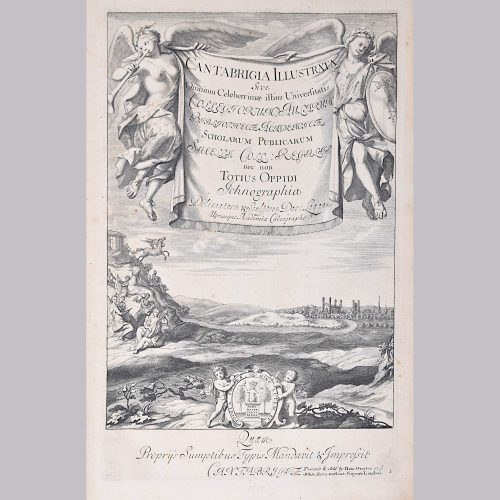
David Loggan (1634-1692) View of Cambridge
Engraving after 1690, this is a slightly later Henry Overton printing, shortly after 1700 35x51cm Baptised in Danzig in 1634 Loggan's parents were English and Scottish. Studying engraving in Danzig with Willem Hondius (1598-1652 or 1658) he moved to London in the late 1650s producing the engraved title-page for the folio 1662 Book of Common Prayer. Marrying in 1663 he moved to Nuffield, Oxfordshire in 1665 to avoid the Plague and was in 1668/9 appointed Public Sculptor to the nearby University of Oxford having been commissioned to produce bird’s-eye views of all the Oxford Colleges. He lived in Holywell Street as he did this. Oxonia illustrata was published in 1675, with the help of Robert White (1645-1704). Following its completion he commenced work on his equivalent work for Cambridge, Cantabrigia Illustrata which was finally published in 1690 when he was made engraver to Cambridge University. Oxonia illustrata also includes an engraving of Winchester College (sharing its founder – William of Wykeham – with New College) whilst Cantabrigia illustrata includes one of Eton College (which shares its founder – Henry VIII – with King’s College). Bird’s-eye views required a particular talent as an architectural perspectivist of that era as it was not until 1783 that the first living thing (a sheep, named Montauciel ‘climb to the sky’) was sent aloft by the Mongolfier brothers in a balloon. Loggan thus had to rely on his imagination in conceiving the views. Loggan’s views constitute the first accurate depictions of the two Universities, in many ways unchanged today. Whilst the Oxford engravings were produced in reasonable numbers and ran to a second edition by Henry Overton (on thicker paper and with a plate number in the bottom right-hand corner), those of Cambridge were printed in smaller numbers and it is thought largely no second edition was produced, although this frontispiece proudly claims to have been published by Overton and a pencil note on the print suggests 1715 as a date. The Dutchman Pieter van der Aa published some miniature versions of the engravings for James Beverell’s guidebook to the UK Les Delices de la Grande Bretagne c. 1708. Edmund Hort New (1871-1931) produced a series of pen-and-ink drawings of views of Oxford that paid homage to Loggan showing the development of the city in the following two hundred years. They were turned into photoengravings by Emery Walker who published the series between . Probably no more than two hundred of each engraving were produced and the plates were destroyed in the blitz. The contemporary artist Andrew Ingamells (b.1956) has produced a highly-acclaimed series of etchings again bringing Loggan’s vision up to date. If you are interested email info@manningfineart.co.uk or call us on 07929 749056. Condition: Good. Some age toning as visible in photograph; usual handling wear and marks to edges. -
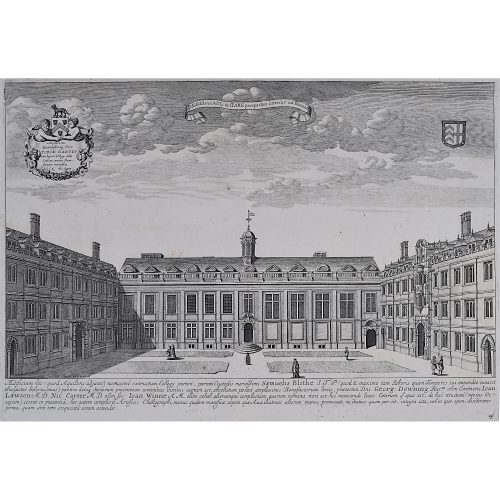
David Loggan (1634-1692)
Clare College, Cambridge
Engraving Originally published 1690, this is a slightly later edition, by Henry Overton, shortly after 1700. 35x51cm For biographical details and other works by the artist please click here. If you are interested email info@manningfineart.co.uk or call us on 07929 749056. -

David Loggan (1634-1692)
Clare College, Cambridge (aerial view)
Engraving 36 x 42 cm Loggan was born to English and Scottish parents, and was baptised in Danzig in 1634. After studying engraving in Danzig with Willem Hondius (1598-1652 or 1658), he moved to London in the late 1650s, going on to produce the engraved title-page for the folio 1662 Book of Common Prayer. He married in 1663 and moved to Nuffield in Oxfordshire in 1665. Loggan was appointed Public Sculptor to the nearby University of Oxford in the late 1660s, having been commissioned to produce bird’s-eye views of all the Oxford colleges. He lived in Holywell Street as he did this. The 'Oxonia Illustrata' was published in 1675, with the help of Robert White (1645-1704). Following its completion, Loggan began work on his equivalent work for Cambridge; the 'Cantabrigia Illustrata' was finally published in 1690, when he was made engraver to Cambridge University. The 'Oxonia Illustrata' also includes an engraving of Winchester College (Winchester and New College share William of Wykeham as their founder) whilst the 'Cantabrigia Illustrata' includes one of Eton College (which shares its founder, Henry VIII, with King’s College). Bird’s-eye views from this era required a particular talent as an architectural perspectivist; it was not until 1783 that it became possible for artists to ascend via hot air balloons and view the scenes they were depicting from above. Loggan thus had to rely on his imagination in conceiving the views. Loggan’s views constitute the first accurate depictions of the two Universities, in many ways unchanged today. Whilst the Oxford engravings were produced in reasonable numbers and ran to a second edition by Henry Overton (on thicker paper and with a plate number in Roman numerals in the bottom right-hand corner), those of Cambridge were printed in much smaller numbers. The Dutchman Pieter van der Aa published some miniature versions of the engravings for James Beverell’s guidebook to the UK, 'Les Delices de la Grande Bretagne' (c. 1708). The contemporary artist Andrew Ingamells (b.1956) has produced a highly-acclaimed series of etchings which bring Loggan’s original vision up to date. This particular edition represents a unique aerial view of Clare College, Cambridge. Condition: Generally very good, trimmed close to plate mark, in vintage frame. If you are interested, please email info@manningfineart.co.uk or call us on 07929 749056. For other views of Clare College, Cambridge. -

David Loggan (1634-1692)
Prospectus Cantabrigiae Orientalis & Occidentalis
Engraving 32 x 46 cm Loggan was born to English and Scottish parents, and was baptised in Danzig in 1634. After studying engraving in Danzig with Willem Hondius (1598-1652 or 1658), he moved to London in the late 1650s, going on to produce the engraved title-page for the folio 1662 Book of Common Prayer. He married in 1663 and moved to Nuffield in Oxfordshire in 1665. Loggan was appointed Public Sculptor to the nearby University of Oxford in the late 1660s, having been commissioned to produce bird’s-eye views of all the Oxford colleges. He lived in Holywell Street as he did this. The 'Oxonia Illustrata' was published in 1675, with the help of Robert White (1645-1704). Following its completion, Loggan began work on his equivalent work for Cambridge; the 'Cantabrigia Illustrata' was finally published in 1690, when he was made engraver to Cambridge University. The 'Oxonia Illustrata' also includes an engraving of Winchester College (Winchester and New College share William of Wykeham as their founder) whilst the 'Cantabrigia Illustrata' includes one of Eton College (which shares its founder, Henry VIII, with King’s College). Bird’s-eye views from this era required a particular talent as an architectural perspectivist; it was not until 1783 that it became possible for artists to ascend via hot air balloons and view the scenes they were depicting from above. Loggan thus had to rely on his imagination in conceiving the views. Loggan’s views constitute the first accurate depictions of the two Universities, in many ways unchanged today. Whilst the Oxford engravings were produced in reasonable numbers and ran to a second edition by Henry Overton (on thicker paper and with a plate number in Roman numerals in the bottom right-hand corner), those of Cambridge were printed in much smaller numbers. The Dutchman Pieter van der Aa published some miniature versions of the engravings for James Beverell’s guidebook to the UK, 'Les Delices de la Grande Bretagne' (c. 1708). The contemporary artist Andrew Ingamells (b.1956) has produced a highly-acclaimed series of etchings which bring Loggan’s original vision up to date. This particular edition represents a unique view of Cambridge from the east and the west. Notable landmarks including King's Chapel and Great St Mary's Church are visible in this fine David Loggan engraving. Condition: Good; five small invisibly repaired holes to image If you are interested, please email info@manningfineart.co.uk or call us on 07929 749056. For other general views of Cambridge, click here. -
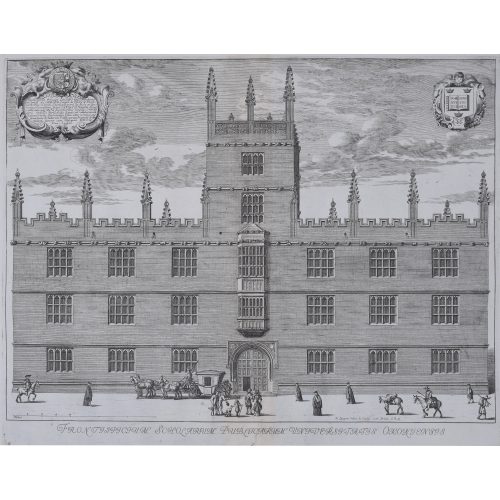
David Loggan (1634-1692)
Frontispiece Public Schools Oxford
Engraving 33x42cm If you are interested email info@manningfineart.co.uk or call us on 07929 749056. -
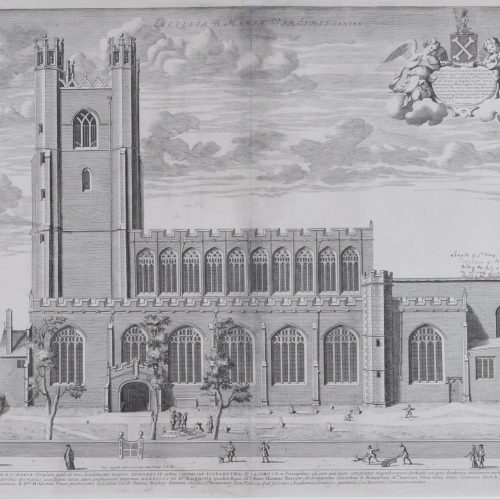
David Loggan (1634-1692) Great St Mary's Church, Cambridge University Church (1690)
Engraving 35 x 50 cm Loggan was born to English and Scottish parents, and was baptised in Danzig in 1634. After studying engraving in Danzig with Willem Hondius (1598-1652 or 1658), he moved to London in the late 1650s, going on to produce the engraved title-page for the folio 1662 Book of Common Prayer. He married in 1663 and moved to Nuffield in Oxfordshire in 1665. Loggan was appointed Public Sculptor to the nearby University of Oxford in the late 1660s, having been commissioned to produce bird’s-eye views of all the Oxford colleges. He lived in Holywell Street as he did this. The 'Oxonia Illustrata' was published in 1675, with the help of Robert White (1645-1704). Following its completion, Loggan began work on his equivalent work for Cambridge; the 'Cantabrigia Illustrata' was finally published in 1690, when he was made engraver to Cambridge University. The 'Oxonia Illustrata' also includes an engraving of Winchester College (Winchester and New College share William of Wykeham as their founder) whilst the 'Cantabrigia Illustrata' includes one of Eton College (which shares its founder, Henry VIII, with King’s College). Bird’s-eye views from this era required a particular talent as an architectural perspectivist; it was not until 1783 that it became possible for artists to ascend via hot air balloons and view the scenes they were depicting from above. Loggan thus had to rely on his imagination in conceiving the views. Loggan’s views constitute the first accurate depictions of the two Universities, in many ways unchanged today. Whilst the Oxford engravings were produced in reasonable numbers and ran to a second edition by Henry Overton (on thicker paper and with a plate number in Roman numerals in the bottom right-hand corner), those of Cambridge were printed in much smaller numbers. The Dutchman Pieter van der Aa published some miniature versions of the engravings for James Beverell’s guidebook to the UK, 'Les Delices de la Grande Bretagne' (c. 1708). The contemporary artist Andrew Ingamells (b.1956) has produced a highly-acclaimed series of etchings which bring Loggan’s original vision up to date. If you’d like to know more, please email info@manningfineart.co.uk or call us on 07929 749056. Condition: has been cleaned; scholarly observations in ink; crease in paper lower left before printing. Usual handling wear and marks to edges. -
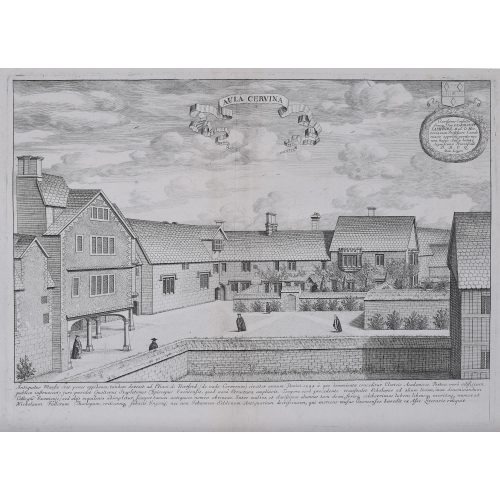
David Loggan (1634-1692)
Hart Hall Oxford, now Hertford College (Aula Cervinia)
Engraving (1675) 28x39cm If you are interested email info@manningfineart.co.uk or call us on 07929 749056. -
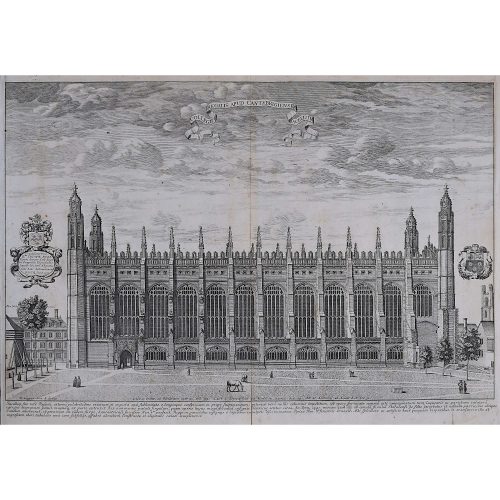
David Loggan (1634-1692)
King's College, Cambridge Chapel South Front
Engraving Published 1690 40x55cm For biographical details and other works by the artist please click here. If you are interested email info@manningfineart.co.uk or call us on 07929 749056. -
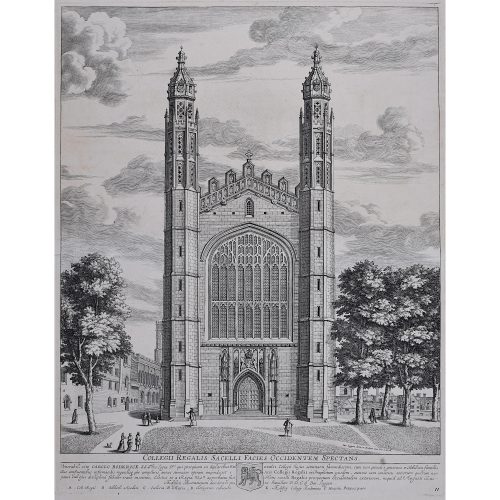
David Loggan (1634-1692)
King's College, Cambridge Chapel West Front
Engraving Published 1690 45x35cm For biographical details and other works by the artist please click here. If you are interested email info@manningfineart.co.uk or call us on 07929 749056. -
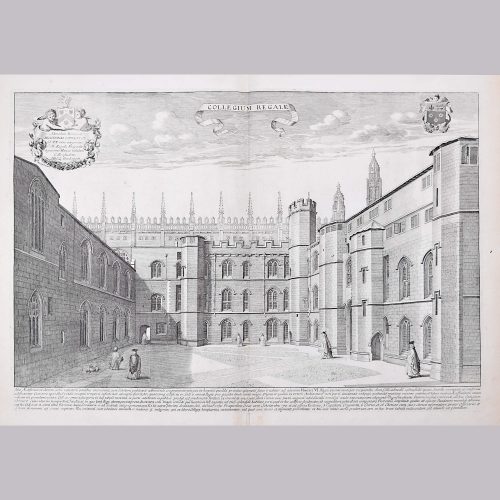
David Loggan (1634-1692) King's College Cambridge
Engraving 1690 40x51cm Baptised in Danzig in 1634 Loggan's parents were English and Scottish. Studying engraving in Danzig with Willem Hondius (1598-1652 or 1658) he moved to London in the late 1650s producing the engraved title-page for the folio 1662 Book of Common Prayer. Marrying in 1663 he moved to Nuffield, Oxfordshire in 1665 to avoid the Plague and was in 1668/9 appointed Public Sculptor to the nearby University of Oxford having been commissioned to produce bird’s-eye views of all the Oxford Colleges. He lived in Holywell Street as he did this. Oxonia illustrata was published in 1675, with the help of Robert White (1645-1704). Following its completion he commenced work on his equivalent work for Cambridge, Cantabrigia Illustrata which was finally published in 1690 when he was made engraver to Cambridge University. Oxonia illustrata also includes an engraving of Winchester College (sharing its founder – William of Wykeham – with New College) whilst Cantabrigia illustrata includes one of Eton College (which shares its founder – Henry VIII – with King’s College). Bird’s-eye views required a particular talent as an architectural perspectivist of that era as it was not until 1783 that the first living thing (a sheep, named Montauciel ‘climb to the sky’) was sent aloft by the Mongolfier brothers in a balloon. Loggan thus had to rely on his imagination in conceiving the views. Loggan’s views constitute the first accurate depictions of the two Universities, in many ways unchanged today. Whilst the Oxford engravings were produced in reasonable numbers and ran to a second edition by Henry Overton (on thicker paper and with a plate number in the bottom right-hand corner), those of Cambridge were printed in smaller numbers and it is thought largely no second edition was produced. The Dutchman Pieter van der Aa published some miniature versions of the engravings for James Beverell’s guidebook to the UK Les Delices de la Grande Bretagne c. 1708. Edmund Hort New (1871-1931) produced a series of pen-and-ink drawings of views of Oxford that paid homage to Loggan showing the development of the city in the following two hundred years. They were turned into photoengravings by Emery Walker who published the series between . Probably no more than two hundred of each engraving were produced and the plates were destroyed in the blitz. The contemporary artist Andrew Ingamells (b.1956) has produced a highly-acclaimed series of etchings again bringing Loggan’s vision up to date. If you are interested email info@manningfineart.co.uk or call us on 07929 749056. Condition: Some age toning as visible in photograph; usual handling wear and marks to edges, generally very good. -
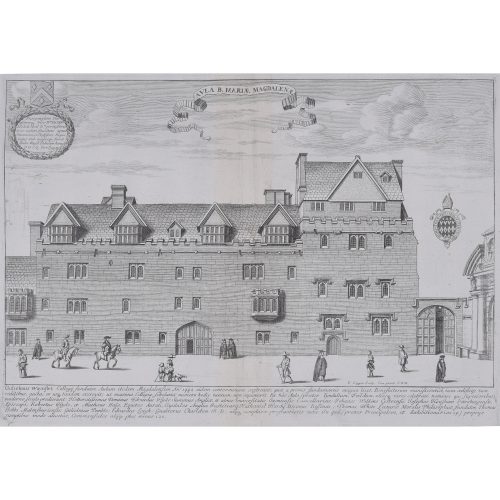
David Loggan (1634-1692)
Magdalen Hall Oxford
Engraving, 1690 35x25cm If you are interested email info@manningfineart.co.uk or call us on 07929 749056. -
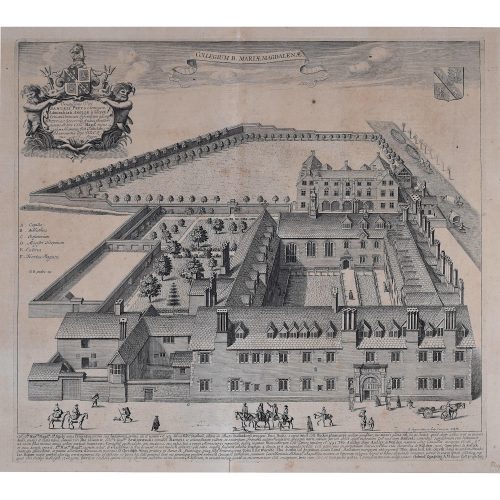
David Loggan (1634-1692)
Magdalene College, Cambridge
Engraving Published 1690 39x42cm For biographical details and other works by the artist please click here. If you are interested email info@manningfineart.co.uk or call us on 07929 749056. -
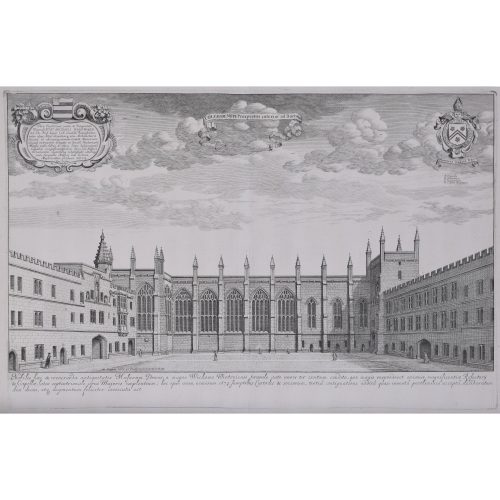
David Loggan (1634-1692) New College, Oxford
Collegium Novum Engraving (1690) mounted to board 32x49cm To see biographical details and other works by the artist please click here. If you are interested email info@manningfineart.co.uk or call us on 07929 749056. Condition: Good. -
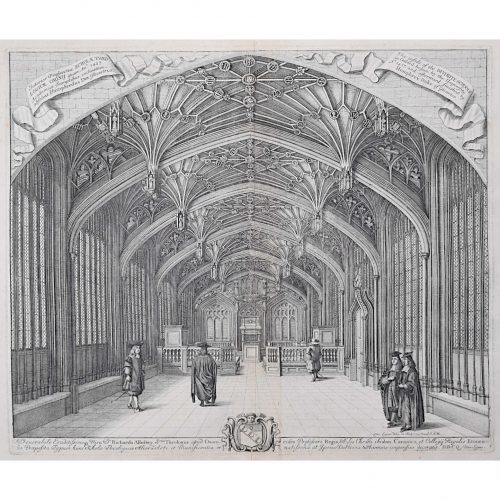
David Loggan (1634-1692)
Scholae Theologicae Oxford
Engraving (1675) 34x41cm To view biographical details and other prints by Loggan click here. Condition: Generally good condition, short edge tears and staining to margins outside platemark. If you are interested email info@manningfineart.co.uk or call us on 07929 749056. -
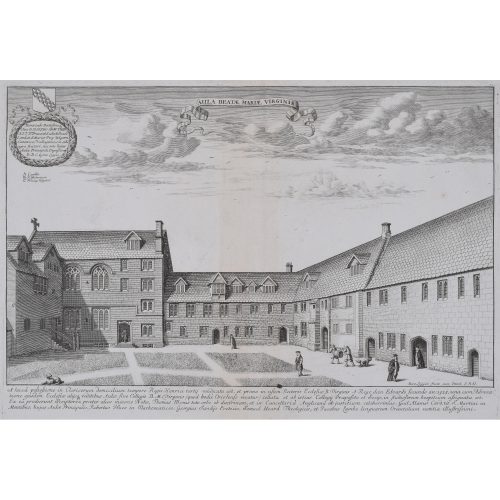
David Loggan (1634-1692)
Hall of the Blessed Virgin Oxford Engraving 25x35cm If you are interested email info@manningfineart.co.uk or call us on 07929 749056. -
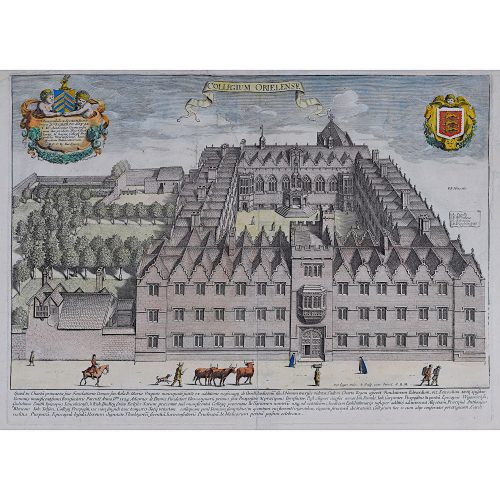
David Loggan (1634-1692)
Oriel College Oxford
Engraving (1675) 34x42cm If you are interested email info@manningfineart.co.uk or call us on 07929 749056. -
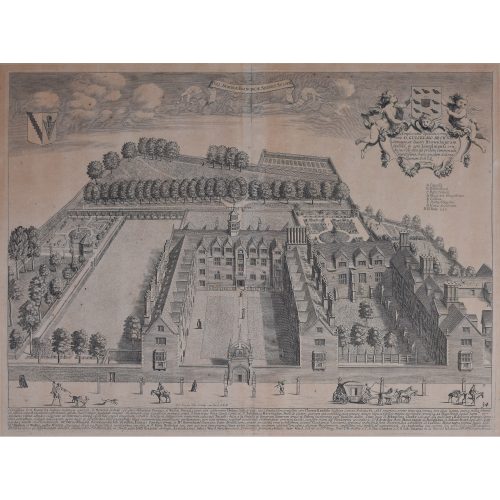
David Loggan (1634-1692)
Sidney Sussex College, Cambridge
Engraving Published 1690 34x45cm For biographical details and other works by the artist please click here. If you are interested email info@manningfineart.co.uk or call us on 07929 749056. -
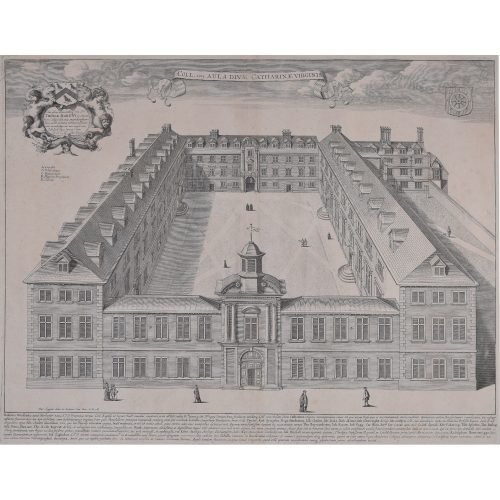
David Loggan (1634-1692)
St Catharine's College, Cambridge
Engraving Published 1690 35x51cm For biographical details and other works by the artist please click here. If you are interested email info@manningfineart.co.uk or call us on 07929 749056. -
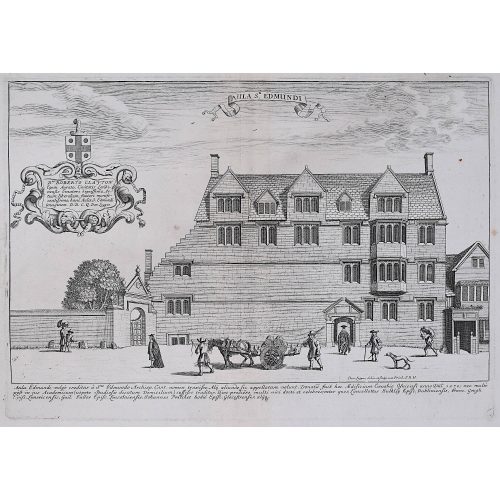
David Loggan (1634-1692)
St Edmund Hall Oxford
Engraving (1675) 25x35cm If you are interested email info@manningfineart.co.uk or call us on 07929 749056. -
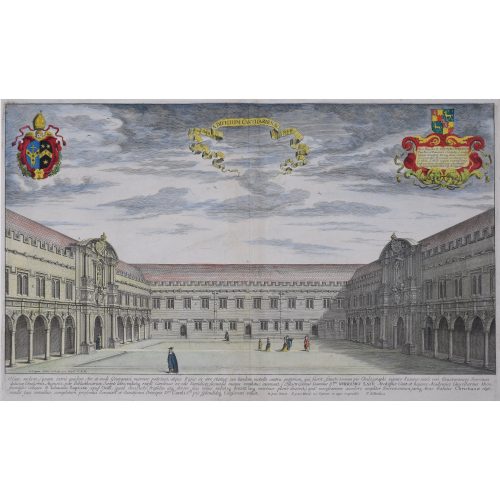
David Loggan (1634-1692)
St John's College Oxford, Canterbury Quad
Engraving (1675) with later hand colouring 31x50cm If you are interested email info@manningfineart.co.uk or call us on 07929 749056. -
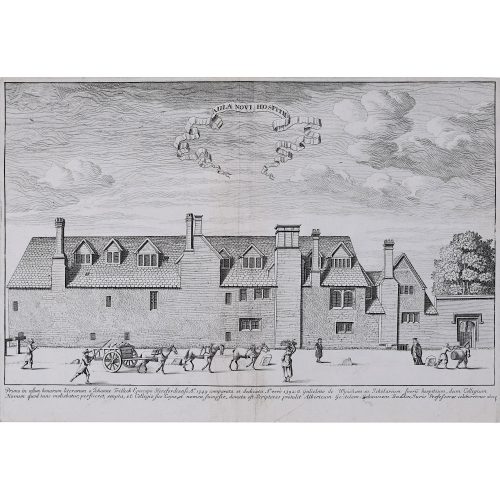
David Loggan (1634-1692)
Aula Novi Hospitii
Engraving, 1675 25x36cm If you are interested email info@manningfineart.co.uk or call us on 07929 749056. -
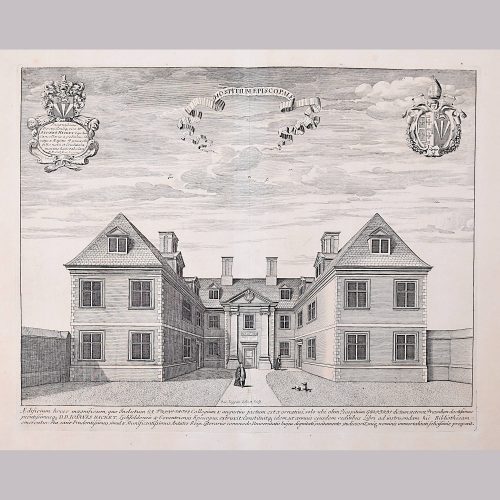
David Loggan (1634-1692) The Bishop's Hostal, Trinity College Cambridge
Engraving 1690 35x50cm Loggan was born to English and Scottish parents, and was baptised in Danzig in 1634. After studying engraving in Danzig with Willem Hondius (1598-1652 or 1658), he moved to London in the late 1650s, going on to produce the engraved title-page for the folio 1662 Book of Common Prayer. He married in 1663 and moved to Nuffield in Oxfordshire in 1665. Loggan was appointed Public Sculptor to the nearby University of Oxford in the late 1660s, having been commissioned to produce bird’s-eye views of all the Oxford colleges. He lived in Holywell Street as he did this. The 'Oxonia Illustrata' was published in 1675, with the help of Robert White (1645-1704). Following its completion, Loggan began work on his equivalent work for Cambridge; the 'Cantabrigia Illustrata' was finally published in 1690, when he was made engraver to Cambridge University. The 'Oxonia Illustrata' also includes an engraving of Winchester College (Winchester and New College share William of Wykeham as their founder) whilst the 'Cantabrigia Illustrata' includes one of Eton College (which shares its founder, Henry VIII, with King’s College). Bird’s-eye views from this era required a particular talent as an architectural perspectivist; it was not until 1783 that it became possible for artists to ascend via hot air balloons and view the scenes they were depicting from above. Loggan thus had to rely on his imagination in conceiving the views. Loggan’s views constitute the first accurate depictions of the two Universities, in many ways unchanged today. Whilst the Oxford engravings were produced in reasonable numbers and ran to a second edition by Henry Overton (on thicker paper and with a plate number in Roman numerals in the bottom right-hand corner), those of Cambridge were printed in much smaller numbers. The Dutchman Pieter van der Aa published some miniature versions of the engravings for James Beverell’s guidebook to the UK, 'Les Delices de la Grande Bretagne' (c. 1708). The contemporary artist Andrew Ingamells (b.1956) has produced a highly-acclaimed series of etchings which bring Loggan’s original vision up to date. If you are interested email info@manningfineart.co.uk or call us on 07929 749056. Condition: Some age toning as visible in photograph; usual handling wear and marks to edges, generally very good. -
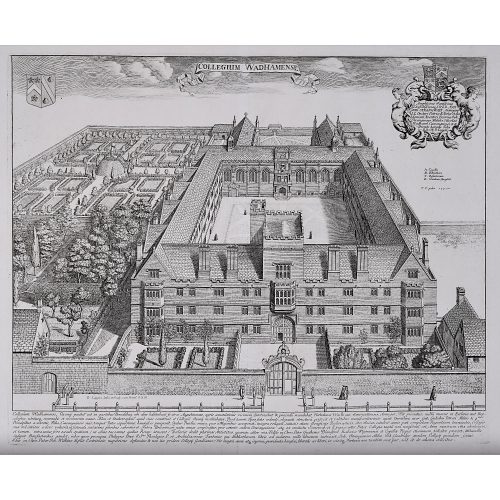
David Loggan (1634-1692)
Wadham College Oxford
Engraving (1675) 34x42cm If you are interested email info@manningfineart.co.uk or call us on 07929 749056. -
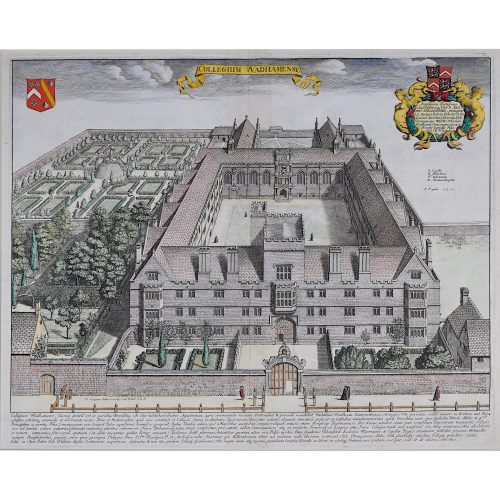
David Loggan (1634-1692)
Wadham College Oxford
Engraving (1675) with later hand colouring. 34x42cm If you are interested email info@manningfineart.co.uk or call us on 07929 749056. -
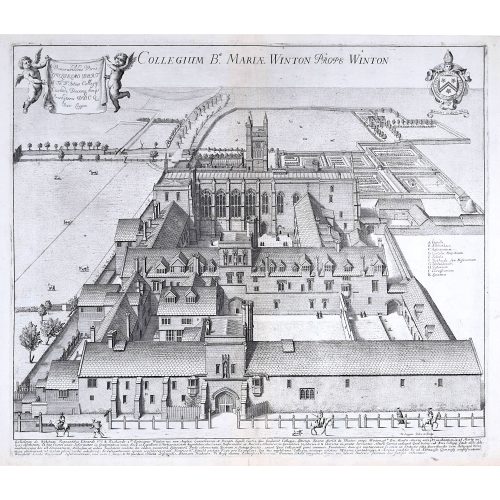
David Loggan (1634-1692) Winchester College
Engraving 1675 40x46cm Baptised in Danzig in 1634 Loggan's parents were English and Scottish. Studying engraving in Danzig with Willem Hondius (1598-1652 or 1658) he moved to London in the late 1650s producing the engraved title-page for the folio 1662 Book of Common Prayer. Marrying in 1663 he moved to Nuffield, Oxfordshire in 1665 to avoid the Plague and was in 1668/9 appointed Public Sculptor to the nearby University of Oxford having been commissioned to produce bird’s-eye views of all the Oxford Colleges. He lived in Holywell Street as he did this. Oxonia illustrata was published in 1675, with the help of Robert White (1645-1704). Following its completion he commenced work on his equivalent work for Cambridge, Cantabrigia Illustrata which was finally published in 1690 when he was made engraver to Cambridge University. Oxonia illustrata also includes an engraving of Winchester College (sharing its founder – William of Wykeham – with New College) whilst Cantabrigia illustrata includes one of Eton College (which shares its founder – Henry VIII – with King’s College). Bird’s-eye views required a particular talent as an architectural perspectivist of that era as it was not until 1783 that the first living thing (a sheep, named Montauciel ‘climb to the sky’) was sent aloft by the Mongolfier brothers in a balloon. Loggan thus had to rely on his imagination in conceiving the views. Loggan’s views constitute the first accurate depictions of the two Universities, in many ways unchanged today. Whilst the Oxford engravings were produced in reasonable numbers and ran to a second edition (on thicker paper and with a plate number in the bottom right-hand corner), those of Cambridge were printed in smaller numbers and no second edition was produced. The Dutchman Pieter van der Aa published some miniature versions of the engravings for James Beverell’s guidebook to the UK Les Delices de la Grande Bretagne c. 1708. Edmund Hort New (1871-1931) produced a series of pen-and-ink drawings of views of Oxford that paid homage to Loggan showing the development of the city in the following two hundred years. They were turned into photoengravings by Emery Walker who published the series. Probably no more than two hundred of each engraving were produced and the plates were destroyed in the blitz. The contemporary artist Andrew Ingamells (b.1956) has produced a highly-acclaimed series of etchings again bringing Loggan’s vision up to date. If you are interested email info@manningfineart.co.uk or call us on 07929 749056. Condition: Centre fold, as issued. Some age toning as visible in photograph; usual handling wear and marks to edges. Generally very good. -

David Loggan (1634 - 1692)
Habitus Acamedici in Universitate Oxoniensi - Oxford Academical Dress
Engraving 39 x 52 cm Loggan was born to English and Scottish parents, and was baptised in Danzig in 1634. After studying engraving in Danzig with Willem Hondius (1598-1652 or 1658), he moved to London in the late 1650s, going on to produce the engraved title-page for the folio 1662 Book of Common Prayer. He married in 1663 and moved to Nuffield in Oxfordshire in 1665. Loggan was appointed Public Sculptor to the nearby University of Oxford in the late 1660s, having been commissioned to produce bird’s-eye views of all the Oxford colleges. He lived in Holywell Street as he did this. The 'Oxonia Illustrata' was published in 1675, with the help of Robert White (1645-1704). Following its completion, Loggan began work on his equivalent work for Cambridge; the 'Cantabrigia Illustrata' was finally published in 1690, when he was made engraver to Cambridge University. The 'Oxonia Illustrata' also includes an engraving of Winchester College (Winchester and New College share William of Wykeham as their founder) whilst the 'Cantabrigia Illustrata' includes one of Eton College (which shares its founder, Henry VIII, with King’s College). Bird’s-eye views from this era required a particular talent as an architectural perspectivist; it was not until 1783 that it became possible for artists to ascend via hot air balloons and view the scenes they were depicting from above. Loggan thus had to rely on his imagination in conceiving the views. Loggan’s views constitute the first accurate depictions of the two Universities, in many ways unchanged today. Whilst the Oxford engravings were produced in reasonable numbers and ran to a second edition by Henry Overton (on thicker paper and with a plate number in Roman numerals in the bottom right-hand corner), those of Cambridge were printed in much smaller numbers. The Dutchman Pieter van der Aa published some miniature versions of the engravings for James Beverell’s guidebook to the UK, 'Les Delices de la Grande Bretagne' (c. 1708). The contemporary artist Andrew Ingamells (b.1956) has produced a highly-acclaimed series of etchings which bring Loggan’s original vision up to date. This particular edition strays from his familiar aerial views of the Oxford and Cambridge colleges and instead represents a parade of scholars in academical dress. Condition: Good, repaired tear approx 6" long bottom right towards centre; trimmed just within platemark to bottom, a few short edge tears, mostly 5mm or so. If you’d like to know more, please email info@manningfineart.co.uk or call us on 07929 749056. Click here for other depictions of Oxford. -
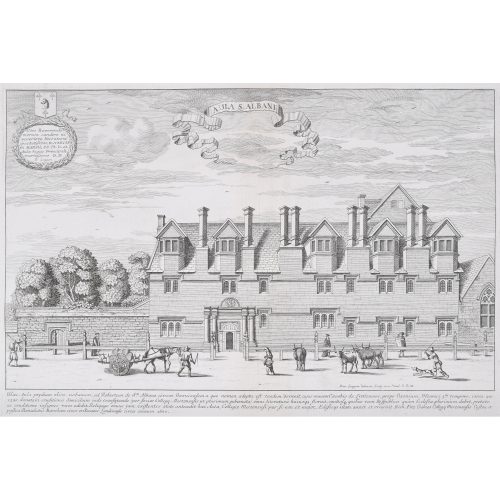
David Loggan (1634-1692)
St Alban's Hall, Oxford
Engraving, 1675 25x35cm Now a part of Merton College For biographical details and other works by the artist click here. If you are interested email info@manningfineart.co.uk or call us on 07929 749056. -
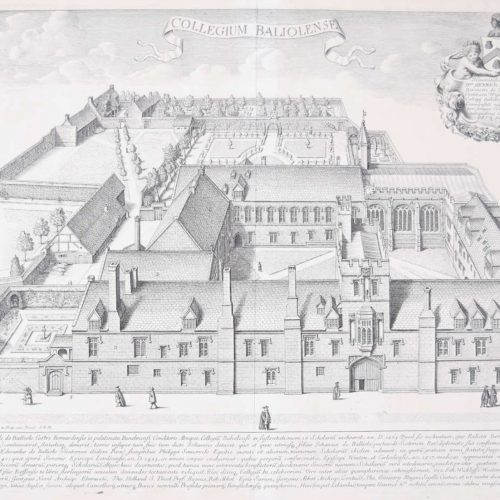
David Loggan (1634-1692)
Balliol College, Oxford
Engraving, 1675 30x40cm Loggan was born to English and Scottish parents, and was baptised in Danzig in 1634. After studying engraving in Danzig with Willem Hondius (1598-1652 or 1658), he moved to London in the late 1650s, going on to produce the engraved title-page for the folio 1662 Book of Common Prayer. He married in 1663 and moved to Nuffield in Oxfordshire in 1665. Loggan was appointed Public Sculptor to the nearby University of Oxford in the late 1660s, having been commissioned to produce bird’s-eye views of all the Oxford colleges. He lived in Holywell Street as he did this. The 'Oxonia Illustrata' was published in 1675, with the help of Robert White (1645-1704). Following its completion, Loggan began work on his equivalent work for Cambridge; the 'Cantabrigia Illustrata' was finally published in 1690, when he was made engraver to Cambridge University. The 'Oxonia Illustrata' also includes an engraving of Winchester College (Winchester and New College share William of Wykeham as their founder) whilst the 'Cantabrigia Illustrata' includes one of Eton College (which shares its founder, Henry VIII, with King’s College). Bird’s-eye views from this era required a particular talent as an architectural perspectivist; it was not until 1783 that it became possible for artists to ascend via hot air balloons and view the scenes they were depicting from above. Loggan thus had to rely on his imagination in conceiving the views. Loggan’s views constitute the first accurate depictions of the two Universities, in many ways unchanged today. Whilst the Oxford engravings were produced in reasonable numbers and ran to a second edition by Henry Overton (on thicker paper and with a plate number in Roman numerals in the bottom right-hand corner), those of Cambridge were printed in much smaller numbers. The Dutchman Pieter van der Aa published some miniature versions of the engravings for James Beverell’s guidebook to the UK, 'Les Delices de la Grande Bretagne' (c. 1708). The contemporary artist Andrew Ingamells (b.1956) has produced a highly-acclaimed series of etchings which bring Loggan’s original vision up to date. If you’d like to know more, please email info@manningfineart.co.uk or call us on 07929 749056. Condition: Generally good. -
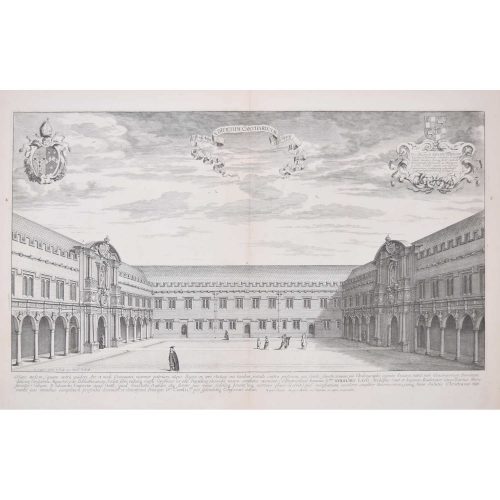
David Loggan (1634-1692)
Canterbury Quad, St John's College, Oxford
Engraving, 1675 32 x 51cm Loggan was born to English and Scottish parents, and was baptised in Danzig in 1634. After studying engraving in Danzig with Willem Hondius (1598-1652 or 1658), he moved to London in the late 1650s, going on to produce the engraved title-page for the folio 1662 Book of Common Prayer. He married in 1663 and moved to Nuffield in Oxfordshire in 1665. Loggan was appointed Public Sculptor to the nearby University of Oxford in the late 1660s, having been commissioned to produce bird’s-eye views of all the Oxford colleges. He lived in Holywell Street as he did this. The 'Oxonia Illustrata' was published in 1675, with the help of Robert White (1645-1704). Following its completion, Loggan began work on his equivalent work for Cambridge; the 'Cantabrigia Illustrata' was finally published in 1690, when he was made engraver to Cambridge University. The 'Oxonia Illustrata' also includes an engraving of Winchester College (Winchester and New College share William of Wykeham as their founder) whilst the 'Cantabrigia Illustrata' includes one of Eton College (which shares its founder, Henry VIII, with King’s College). Bird’s-eye views from this era required a particular talent as an architectural perspectivist; it was not until 1783 that it became possible for artists to ascend via hot air balloons and view the scenes they were depicting from above. Loggan thus had to rely on his imagination in conceiving the views. Loggan’s views constitute the first accurate depictions of the two Universities, in many ways unchanged today. Whilst the Oxford engravings were produced in reasonable numbers and ran to a second edition by Henry Overton (on thicker paper and with a plate number in Roman numerals in the bottom right-hand corner), those of Cambridge were printed in much smaller numbers. The Dutchman Pieter van der Aa published some miniature versions of the engravings for James Beverell’s guidebook to the UK, 'Les Delices de la Grande Bretagne' (c. 1708). The contemporary artist Andrew Ingamells (b.1956) has produced a highly-acclaimed series of etchings which bring Loggan’s original vision up to date. Condition: excellent. If you’d like to know more, please email info@manningfineart.co.uk or call us on 07929 749056. -
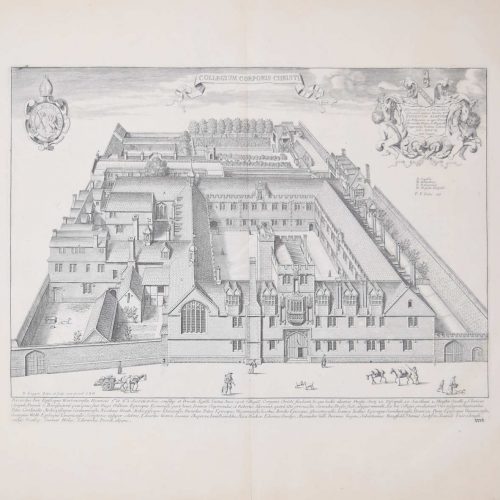 David Loggan (1634-1692) Corpus Christi College, Oxford Engraving, 1675 30x41cm Loggan was born to English and Scottish parents, and was baptised in Danzig in 1634. After studying engraving in Danzig with Willem Hondius (1598-1652 or 1658), he moved to London in the late 1650s, going on to produce the engraved title-page for the folio 1662 Book of Common Prayer. He married in 1663 and moved to Nuffield in Oxfordshire in 1665. Loggan was appointed Public Sculptor to the nearby University of Oxford in the late 1660s, having been commissioned to produce bird’s-eye views of all the Oxford colleges. He lived in Holywell Street as he did this. The 'Oxonia Illustrata' was published in 1675, with the help of Robert White (1645-1704). Following its completion, Loggan began work on his equivalent work for Cambridge; the 'Cantabrigia Illustrata' was finally published in 1690, when he was made engraver to Cambridge University. The 'Oxonia Illustrata' also includes an engraving of Winchester College (Winchester and New College share William of Wykeham as their founder) whilst the 'Cantabrigia Illustrata' includes one of Eton College (which shares its founder, Henry VIII, with King’s College). Bird’s-eye views from this era required a particular talent as an architectural perspectivist; it was not until 1783 that it became possible for artists to ascend via hot air balloons and view the scenes they were depicting from above. Loggan thus had to rely on his imagination in conceiving the views. Loggan’s views constitute the first accurate depictions of the two Universities, in many ways unchanged today. Whilst the Oxford engravings were produced in reasonable numbers and ran to a second edition by Henry Overton (on thicker paper and with a plate number in Roman numerals in the bottom right-hand corner), those of Cambridge were printed in much smaller numbers. The Dutchman Pieter van der Aa published some miniature versions of the engravings for James Beverell’s guidebook to the UK, 'Les Delices de la Grande Bretagne' (c. 1708). The contemporary artist Andrew Ingamells (b.1956) has produced a highly-acclaimed series of etchings which bring Loggan’s original vision up to date. If you’d like to know more, please email info@manningfineart.co.uk or call us on 07929 749056. Condition: Good, some spots, repair to central fold.
 -
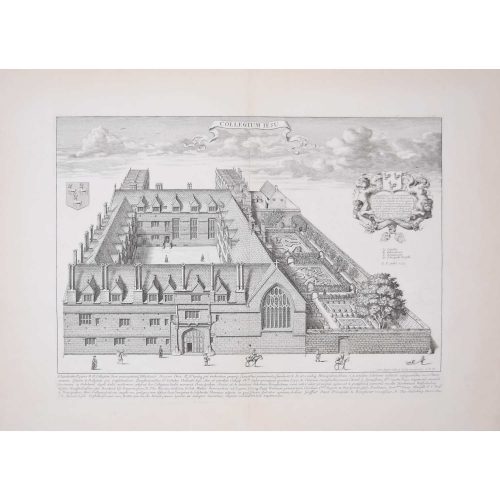
David Loggan (1634-1692)
Jesus College, Oxford
Engraving, 1675 30 x 41cm Loggan was born to English and Scottish parents, and was baptised in Danzig in 1634. After studying engraving in Danzig with Willem Hondius (1598-1652 or 1658), he moved to London in the late 1650s, going on to produce the engraved title-page for the folio 1662 Book of Common Prayer. He married in 1663 and moved to Nuffield in Oxfordshire in 1665. Loggan was appointed Public Sculptor to the nearby University of Oxford in the late 1660s, having been commissioned to produce bird’s-eye views of all the Oxford colleges. He lived in Holywell Street as he did this. The 'Oxonia Illustrata' was published in 1675, with the help of Robert White (1645-1704). Following its completion, Loggan began work on his equivalent work for Cambridge; the 'Cantabrigia Illustrata' was finally published in 1690, when he was made engraver to Cambridge University. The 'Oxonia Illustrata' also includes an engraving of Winchester College (Winchester and New College share William of Wykeham as their founder) whilst the 'Cantabrigia Illustrata' includes one of Eton College (which shares its founder, Henry VIII, with King’s College). Bird’s-eye views from this era required a particular talent as an architectural perspectivist; it was not until 1783 that it became possible for artists to ascend via hot air balloons and view the scenes they were depicting from above. Loggan thus had to rely on his imagination in conceiving the views. Loggan’s views constitute the first accurate depictions of the two Universities, in many ways unchanged today. Whilst the Oxford engravings were produced in reasonable numbers and ran to a second edition by Henry Overton (on thicker paper and with a plate number in Roman numerals in the bottom right-hand corner), those of Cambridge were printed in much smaller numbers. The Dutchman Pieter van der Aa published some miniature versions of the engravings for James Beverell’s guidebook to the UK, 'Les Delices de la Grande Bretagne' (c. 1708). The contemporary artist Andrew Ingamells (b.1956) has produced a highly-acclaimed series of etchings which bring Loggan’s original vision up to date. Condition: excellent. If you’d like to know more, please email info@manningfineart.co.uk or call us on 07929 749056. -
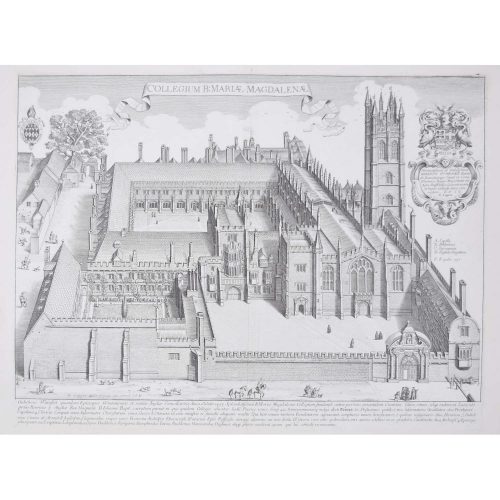
David Loggan (1634-1692)
Magdalen College, Oxford (1674)
Engraving, 32 x 42cm Loggan was born to English and Scottish parents, and was baptised in Danzig in 1634. After studying engraving in Danzig with Willem Hondius (1598-1652 or 1658), he moved to London in the late 1650s, going on to produce the engraved title-page for the folio 1662 Book of Common Prayer. He married in 1663 and moved to Nuffield in Oxfordshire in 1665. Loggan was appointed Public Sculptor to the nearby University of Oxford in the late 1660s, having been commissioned to produce bird’s-eye views of all the Oxford colleges. He lived in Holywell Street as he did this. The 'Oxonia Illustrata' was published in 1675, with the help of Robert White (1645-1704). Following its completion, Loggan began work on his equivalent work for Cambridge; the 'Cantabrigia Illustrata' was finally published in 1690, when he was made engraver to Cambridge University. The 'Oxonia Illustrata' also includes an engraving of Winchester College (Winchester and New College share William of Wykeham as their founder) whilst the 'Cantabrigia Illustrata' includes one of Eton College (which shares its founder, Henry VIII, with King’s College). Bird’s-eye views from this era required a particular talent as an architectural perspectivist; it was not until 1783 that it became possible for artists to ascend via hot air balloons and view the scenes they were depicting from above. Loggan thus had to rely on his imagination in conceiving the views. Loggan’s views constitute the first accurate depictions of the two Universities, in many ways unchanged today. Whilst the Oxford engravings were produced in reasonable numbers and ran to a second edition by Henry Overton (on thicker paper and with a plate number in Roman numerals in the bottom right-hand corner), those of Cambridge were printed in much smaller numbers. The Dutchman Pieter van der Aa published some miniature versions of the engravings for James Beverell’s guidebook to the UK, 'Les Delices de la Grande Bretagne' (c. 1708). The contemporary artist Andrew Ingamells (b.1956) has produced a highly-acclaimed series of etchings which bring Loggan’s original vision up to date. Condition: generally very good. If you’d like to know more, please email info@manningfineart.co.uk or call us on 07929 749056. -
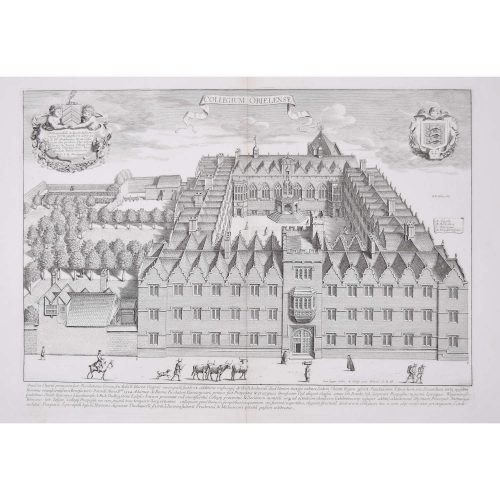
David Loggan (1634-1692)
Oriel College, Oxford (1674)
Engraving, 40 x 26.7cm Loggan was born to English and Scottish parents, and was baptised in Danzig in 1634. After studying engraving in Danzig with Willem Hondius (1598-1652 or 1658), he moved to London in the late 1650s, going on to produce the engraved title-page for the folio 1662 Book of Common Prayer. He married in 1663 and moved to Nuffield in Oxfordshire in 1665. Loggan was appointed Public Sculptor to the nearby University of Oxford in the late 1660s, having been commissioned to produce bird’s-eye views of all the Oxford colleges. He lived in Holywell Street as he did this. The 'Oxonia Illustrata' was published in 1675, with the help of Robert White (1645-1704). Following its completion, Loggan began work on his equivalent work for Cambridge; the 'Cantabrigia Illustrata' was finally published in 1690, when he was made engraver to Cambridge University. The 'Oxonia Illustrata' also includes an engraving of Winchester College (Winchester and New College share William of Wykeham as their founder) whilst the 'Cantabrigia Illustrata' includes one of Eton College (which shares its founder, Henry VIII, with King’s College). Bird’s-eye views from this era required a particular talent as an architectural perspectivist; it was not until 1783 that it became possible for artists to ascend via hot air balloons and view the scenes they were depicting from above. Loggan thus had to rely on his imagination in conceiving the views. Loggan’s views constitute the first accurate depictions of the two Universities, in many ways unchanged today. Whilst the Oxford engravings were produced in reasonable numbers and ran to a second edition by Henry Overton (on thicker paper and with a plate number in Roman numerals in the bottom right-hand corner), those of Cambridge were printed in much smaller numbers. The Dutchman Pieter van der Aa published some miniature versions of the engravings for James Beverell’s guidebook to the UK, 'Les Delices de la Grande Bretagne' (c. 1708). The contemporary artist Andrew Ingamells (b.1956) has produced a highly-acclaimed series of etchings which bring Loggan’s original vision up to date. Condition: generally very good. If you’d like to know more, please email info@manningfineart.co.uk or call us on 07929 749056. -
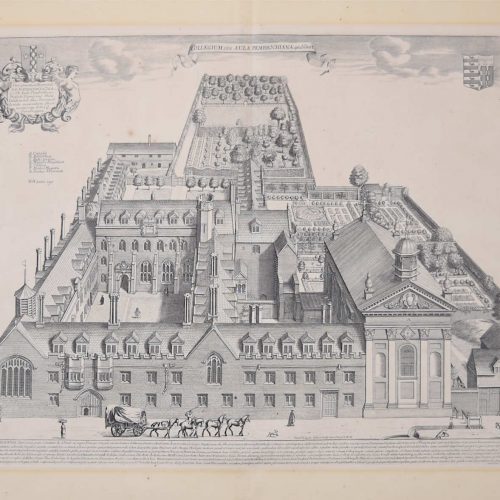
David Loggan (1634-1692)
Pembroke College, Cambridge
Engraving, 1690 36x45cm Loggan was born to English and Scottish parents, and was baptised in Danzig in 1634. After studying engraving in Danzig with Willem Hondius (1598-1652 or 1658), he moved to London in the late 1650s, going on to produce the engraved title-page for the folio 1662 Book of Common Prayer. He married in 1663 and moved to Nuffield in Oxfordshire in 1665. Loggan was appointed Public Sculptor to the nearby University of Oxford in the late 1660s, having been commissioned to produce bird’s-eye views of all the Oxford colleges. He lived in Holywell Street as he did this. The 'Oxonia Illustrata' was published in 1675, with the help of Robert White (1645-1704). Following its completion, Loggan began work on his equivalent work for Cambridge; the 'Cantabrigia Illustrata' was finally published in 1690, when he was made engraver to Cambridge University. The 'Oxonia Illustrata' also includes an engraving of Winchester College (Winchester and New College share William of Wykeham as their founder) whilst the 'Cantabrigia Illustrata' includes one of Eton College (which shares its founder, Henry VIII, with King’s College). Bird’s-eye views from this era required a particular talent as an architectural perspectivist; it was not until 1783 that it became possible for artists to ascend via hot air balloons and view the scenes they were depicting from above. Loggan thus had to rely on his imagination in conceiving the views. Loggan’s views constitute the first accurate depictions of the two Universities, in many ways unchanged today. Whilst the Oxford engravings were produced in reasonable numbers and ran to a second edition by Henry Overton (on thicker paper and with a plate number in Roman numerals in the bottom right-hand corner), those of Cambridge were printed in much smaller numbers. The Dutchman Pieter van der Aa published some miniature versions of the engravings for James Beverell’s guidebook to the UK, 'Les Delices de la Grande Bretagne' (c. 1708). The contemporary artist Andrew Ingamells (b.1956) has produced a highly-acclaimed series of etchings which bring Loggan’s original vision up to date. If you’d like to know more, please email info@manningfineart.co.uk or call us on 07929 749056. Condition: Some staining to margins outside platemark. -
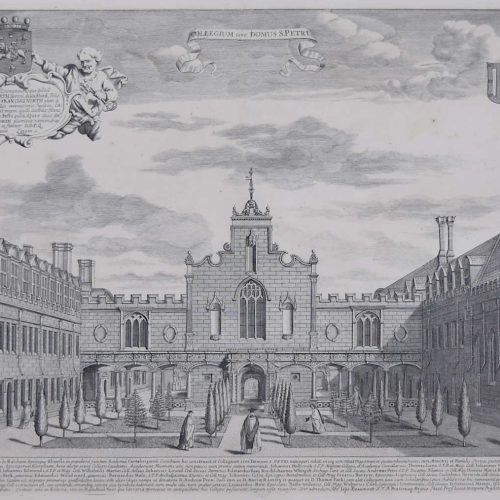
David Loggan (1634-1692)
Peterhouse, Cambridge
Engraving, 1690 30x40cm, framed Loggan was born to English and Scottish parents, and was baptised in Danzig in 1634. After studying engraving in Danzig with Willem Hondius (1598-1652 or 1658), he moved to London in the late 1650s, going on to produce the engraved title-page for the folio 1662 Book of Common Prayer. He married in 1663 and moved to Nuffield in Oxfordshire in 1665. Loggan was appointed Public Sculptor to the nearby University of Oxford in the late 1660s, having been commissioned to produce bird’s-eye views of all the Oxford colleges. He lived in Holywell Street as he did this. The 'Oxonia Illustrata' was published in 1675, with the help of Robert White (1645-1704). Following its completion, Loggan began work on his equivalent work for Cambridge; the 'Cantabrigia Illustrata' was finally published in 1690, when he was made engraver to Cambridge University. The 'Oxonia Illustrata' also includes an engraving of Winchester College (Winchester and New College share William of Wykeham as their founder) whilst the 'Cantabrigia Illustrata' includes one of Eton College (which shares its founder, Henry VIII, with King’s College). Bird’s-eye views from this era required a particular talent as an architectural perspectivist; it was not until 1783 that it became possible for artists to ascend via hot air balloons and view the scenes they were depicting from above. Loggan thus had to rely on his imagination in conceiving the views. Loggan’s views constitute the first accurate depictions of the two Universities, in many ways unchanged today. Whilst the Oxford engravings were produced in reasonable numbers and ran to a second edition by Henry Overton (on thicker paper and with a plate number in Roman numerals in the bottom right-hand corner), those of Cambridge were printed in much smaller numbers. The Dutchman Pieter van der Aa published some miniature versions of the engravings for James Beverell’s guidebook to the UK, 'Les Delices de la Grande Bretagne' (c. 1708). The contemporary artist Andrew Ingamells (b.1956) has produced a highly-acclaimed series of etchings which bring Loggan’s original vision up to date. If you’d like to know more, please email info@manningfineart.co.uk or call us on 07929 749056. Condition: Generally excellent. -
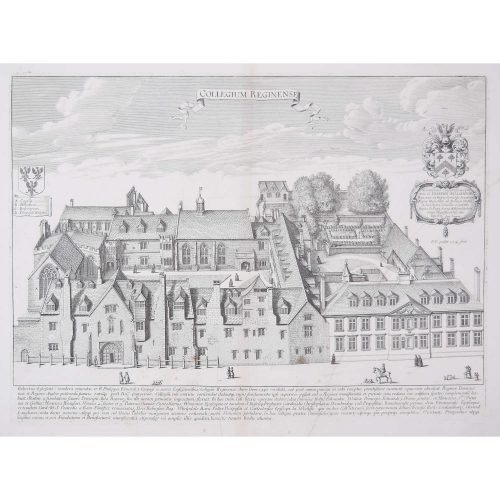
David Loggan (1634-1692)
Queen's College, Oxford (1674)
Engraving, 30 x 41cm Loggan was born to English and Scottish parents, and was baptised in Danzig in 1634. After studying engraving in Danzig with Willem Hondius (1598-1652 or 1658), he moved to London in the late 1650s, going on to produce the engraved title-page for the folio 1662 Book of Common Prayer. He married in 1663 and moved to Nuffield in Oxfordshire in 1665. Loggan was appointed Public Sculptor to the nearby University of Oxford in the late 1660s, having been commissioned to produce bird’s-eye views of all the Oxford colleges. He lived in Holywell Street as he did this. The 'Oxonia Illustrata' was published in 1675, with the help of Robert White (1645-1704). Following its completion, Loggan began work on his equivalent work for Cambridge; the 'Cantabrigia Illustrata' was finally published in 1690, when he was made engraver to Cambridge University. The 'Oxonia Illustrata' also includes an engraving of Winchester College (Winchester and New College share William of Wykeham as their founder) whilst the 'Cantabrigia Illustrata' includes one of Eton College (which shares its founder, Henry VIII, with King’s College). Bird’s-eye views from this era required a particular talent as an architectural perspectivist; it was not until 1783 that it became possible for artists to ascend via hot air balloons and view the scenes they were depicting from above. Loggan thus had to rely on his imagination in conceiving the views. Loggan’s views constitute the first accurate depictions of the two Universities, in many ways unchanged today. Whilst the Oxford engravings were produced in reasonable numbers and ran to a second edition by Henry Overton (on thicker paper and with a plate number in Roman numerals in the bottom right-hand corner), those of Cambridge were printed in much smaller numbers. The Dutchman Pieter van der Aa published some miniature versions of the engravings for James Beverell’s guidebook to the UK, 'Les Delices de la Grande Bretagne' (c. 1708). The contemporary artist Andrew Ingamells (b.1956) has produced a highly-acclaimed series of etchings which bring Loggan’s original vision up to date. Condition: good, crease bottom right hand corner. If you’d like to know more, please email info@manningfineart.co.uk or call us on 07929 749056. -
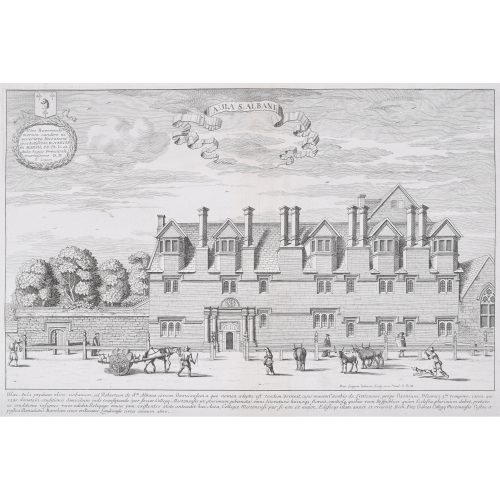
David Loggan (1634-1692) St Alban Hall, Merton College, Oxford
Aula St Albani Engraving (1675) 25x35cm St Alban's Quad was originally St Alban Hall, a medieval student residence that survived as an independent Hall of the University until 1882, when it was incorporated with Merton College. John Henry Newman briefly held the position of vice-principal in 1825. The St Alban's Hall buildings were reconstructed by Basil Champneys in 1905-1910. If you are interested, please email info@manningfineart.co.uk or call us on 07929 749056. -
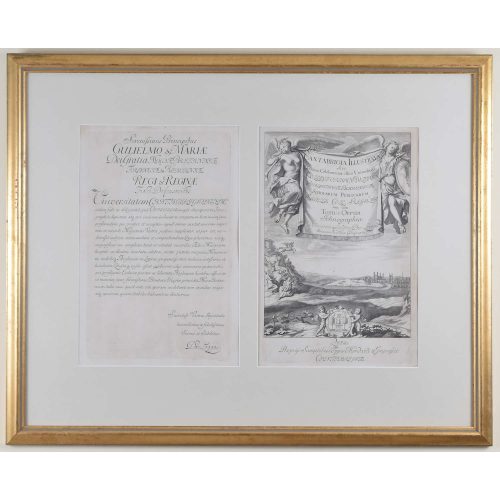 David Loggan (1634-1692) University of Cambridge Frontispiece and Dedication for Cantabrigia Illustrata (1690) Engraving 38 x 55 cm Loggan was born to English and Scottish parents, and was baptised in Danzig in 1634. After studying engraving in Danzig with Willem Hondius (1598-1652 or 1658), he moved to London in the late 1650s, going on to produce the engraved title-page for the folio 1662 Book of Common Prayer. He married in 1663 and moved to Nuffield in Oxfordshire in 1665. Loggan was appointed Public Sculptor to the nearby University of Oxford in the late 1660s, having been commissioned to produce bird’s-eye views of all the Oxford colleges. He lived in Holywell Street as he did this. The 'Oxonia Illustrata' was published in 1675, with the help of Robert White (1645-1704). Following its completion, Loggan began work on his equivalent work for Cambridge; the 'Cantabrigia Illustrata' was finally published in 1690, when he was made engraver to Cambridge University. The 'Oxonia Illustrata' also includes an engraving of Winchester College (Winchester and New College share William of Wykeham as their founder) whilst the 'Cantabrigia Illustrata' includes one of Eton College (which shares its founder, Henry VIII, with King’s College). Bird’s-eye views from this era required a particular talent as an architectural perspectivist; it was not until 1783 that it became possible for artists to ascend via hot air balloons and view the scenes they were depicting from above. Loggan thus had to rely on his imagination in conceiving the views. Loggan’s views constitute the first accurate depictions of the two Universities, in many ways unchanged today. Whilst the Oxford engravings were produced in reasonable numbers and ran to a second edition by Henry Overton (on thicker paper and with a plate number in Roman numerals in the bottom right-hand corner), those of Cambridge were printed in much smaller numbers. The Dutchman Pieter van der Aa published some miniature versions of the engravings for James Beverell’s guidebook to the UK, 'Les Delices de la Grande Bretagne' (c. 1708). The contemporary artist Andrew Ingamells (b.1956) has produced a highly-acclaimed series of etchings which bring Loggan’s original vision up to date.
 -
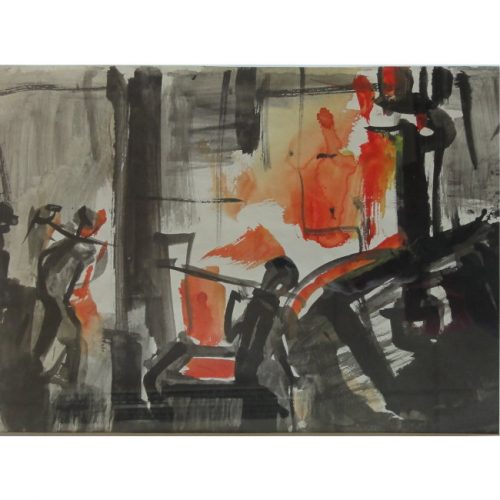 David Smith RE (1920-1999) Sulzer Engineering Works Switzerland Watercolour 26×36.5cm Please note we have two works in this series, click here for the other one. Here abstract, modernist figures filled with energy, hinting towards perhaps Epstein-like characteristics, are illuminated by the forge providing a splash of colour. Born in Lowestoft he served in Bomber Command during the war and was commissioned to sketch on bombing raids over Germany. After the war, he taught at Chelsea School of Art and Camden Arts Centre. His biggest commissions were for Trinity House, recording Lighthouses, and Sulzer Engineering in Switzerland. If you are interested email info@manningfineart.co.uk or call us on 07929 749056.
 -
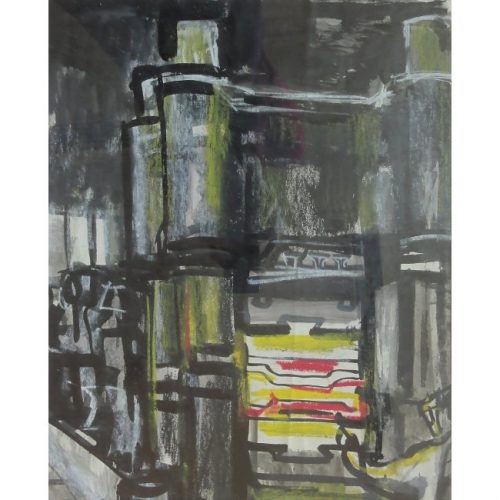
David Smith RE (1920-1999)
Sulzer Engineering Works Switzerland II
Mixed media 40x33cm Please note we have two works in this series which are available, click here for the other. Framed in a grey wood frame. Born in Lowestoft he served in Bomber Command during the war and was commissioned to sketch on bombing raids over Germany. After the war, he taught at Chelsea School of Art and Camden Arts Centre. His biggest commissions were for Trinity House, recording Lighthouses, and Sulzer Engineering in Switzerland. If you are interested email info@manningfineart.co.uk or call us on 07929 749056. -

Davos, Parsenn Region, Switzerland Vintage Ski Poster (1968)
67 x 53 cm Printed by LooArt Press, Colorado Springs, Colorado, 1968 1960s poster for Davos ski resort in Parsenn, Switzerland, featuring a photograph of a skiier jumping off the slope into powder snow. Direct from the surplus stock of the printers, LooArt Press, which closed in the early 1970s. Condition: Excellent -
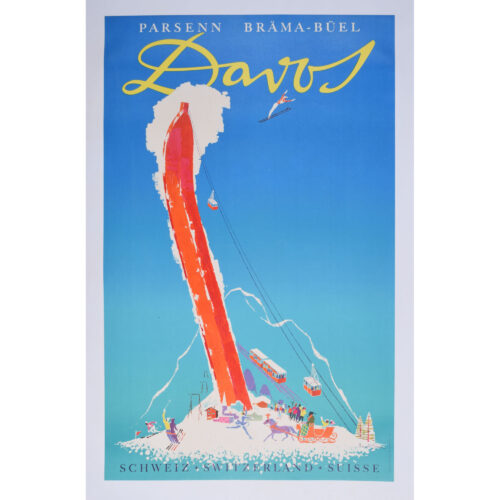
Donald Brun (1909-1999)
Davos (1970s)
Original vintage poster 102 x 64 cm Donald Brun produced his famous series of posters for Switzerland as global travel became more popular. Davos is depicted as a marvellous and brightly-coloured resort full of beauteous skiers, pony sleds, and ice skaters. Cable cars travel up to the tip of a bright red ski, and a bold skier launches himself into the wide blue yonder. Condition: very good. Backed to linen. If you are interested, please email info@manningfineart.co.uk or call us on 07929 749056. Click here for other original vintage skiing posters. -

Student of the National Art Training School (now Royal College of Art)
Decorative Vase
Gouache 40 x 26 cm Stamped 'ESK' ('Examined South Kensington) to reverse. This gouache study of a vase was made by a Royal College of Art (then known as the National Art Training School) student for their examinations. Condition: generally very good; a little discolouration to paper. In attractive frame made from period moulding. If you are interested, please email info@manningfineart.co.uk or call us on 07929 749056. -
 Samuel Alken Delineations of British Field Sports Lithograph series 25 x 42 cm Samuel Alken Jr. (1784–1825) was a British artist and engraver, part of the prominent Alken family of painters and engravers, known for their sporting and hunting scenes. He was the son of Samuel Alken Sr. and contributed significantly to the family's artistic legacy. Like his father, Alken Jr. worked primarily in engraving and painting, specialising in aquatint and other printmaking techniques. In-keeping with family tradition, Alken Jr. often depicted sporting subjects such as horse racing, hunting, and other outdoor pursuits in his engravings and paintings. As such, his works have been praised for their dynamic composition and attention to detail. This lithograph series originally featured in 'Delineations of British Field Sports - Together with the various methods of painting. A series published by Alken's in 1822, the coloured issue ranks as one of the rarest sporting books of the period. There is only one record of a second coloured copy, which is 'untraceable' according to Schwerdt. Schwerdt also notes that the vigorous style of these plates made them eminently suitable for framing, and accounts in part for their rarity; 'twenty years' search has not enabled us to make up a complete set'. This extensive series comprises (as pictured): Death of the Fox Gamekeepers shooting a buck Race Horses in Training Poachers Netting Partridges Coursing the Hare Drawing the Badger Death of the Hare Pheasant Poaching Stag Hunting Coursing scene. Condition: Generally very good. If you would like to know more, please email info@manningfineart.co.uk or call us on 07929 749056.
 -
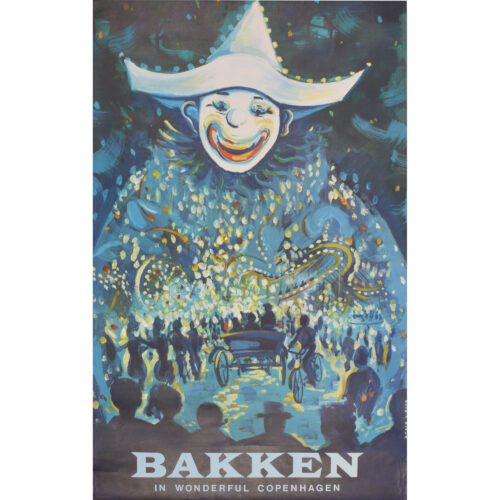
Henrik Bloch (born 1931)
Bakken in Wonderful Copenhagen (1965)
Original vintage poster 100 x 63 cm Bakken (short for Dyrehavsbakken) is the world's oldest amusement park, located just out of Copenhagen. This poster was designed to promote tourism to Copenhagen and Denmark more widely, and features a pierrot clown smiling above a happy crowd of Bakken visitors. Condition: generally very good; a few very short edge tears and a little soft creasing bottom right. Not backed. If you are interested, please email info@manningfineart.co.uk or call us on 07929 749056. Click here for more original vintage posters. -
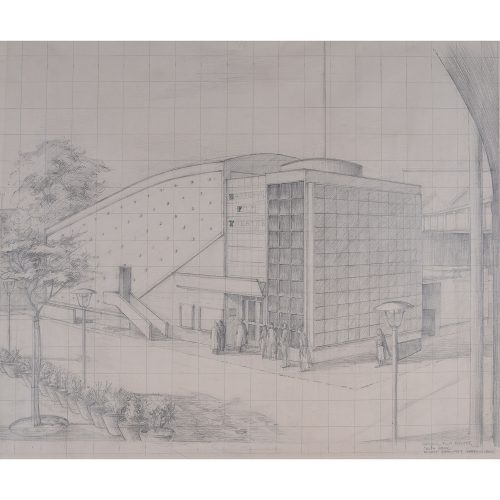
Derek Wicrow
The Telecinema - Telekinema - National Film Theatre Southbank (1957)
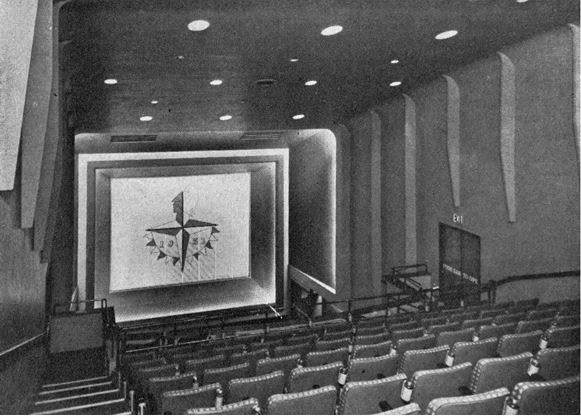
Pencil drawing, squared for transfer. 40x51cm If you are interested email info@manningfineart.co.uk or call us on 07929 749056. The Telecinema was built for the 1951 Festival of Britain, situated between Waterloo Station and the Royal Festival Hall. Whilst press releases referred to the Telecinema, the outside of the building proclaimed Telekinema. Wells Coates were the architect, creating - in the words of Today's Cinema - "A fly-away linear design [with a ] gay façade and bold modern stare". Seating 410 people it was the first cinema in Britain with both 3D sound - provided by an array of speakers behind the screen and allowing the sound to come from the direction of the person speaking - and 3D vision. It was demolished in 1957 when the National Film Theatre moved to its current location - renamed in 2007 as BFI Southbank.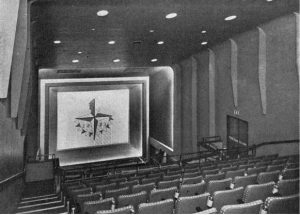
The interior of the Telecinema
-
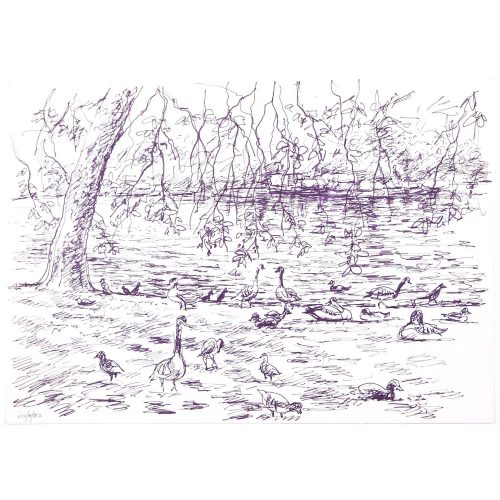
Derrick Latimer Sayer (British: 1917-1992) Ducks for Beverly Nichols' Cats' ABC
30x21cm Pen and ink Dated 8 vi 1982 Sayer illustrated Beverley Nichols' 'Cats' A.B.C.' and we are delighted to present some of his preparatory drawings here. Search for 'Sayer' in our stock to see more of these utterly charming illustrations - mostly of cats. If you are interested email info@manningfineart.co.uk or call us on 07929 749056. Condition: Good. Two punched holes. For biographical details and other works by the artist please click here.