-

'Zero' Hans Schleger
London Transport Bus Stop Poster
Lithographic poster 16x14" Printed for London Transport If you are interested email info@manningfineart.co.uk or call us on 07929 749056. -

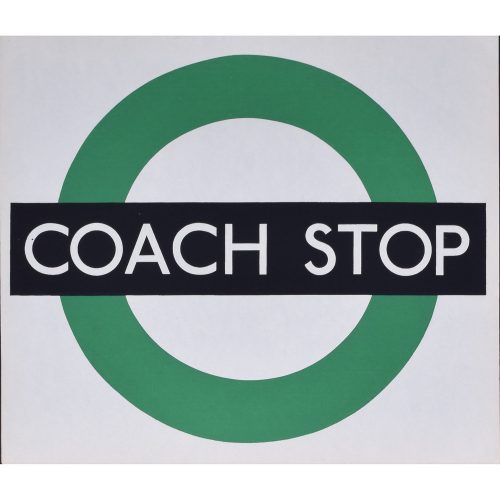
'Zero' Hans Schleger
London Transport Coach Stop/ Bus Stop Poster
Screenprint poster c. 1970s 16x14" Printed for London Transport Includes hand-finished black frame. If you are interested email info@manningfineart.co.uk or call us on 07929 749056. -
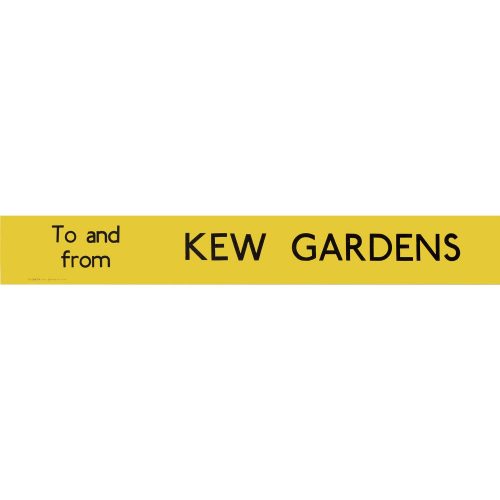
Anon.
Kew Gardens Routemaster
Slipboard Poster c.1970 Screenprint poster 64x9cm In a black hand-finished frame. Printed for London Transport for use on Routemaster or RT buses. If you are interested email info@manningfineart.co.uk or call us on 07929 749056. Condition: Excellent. -
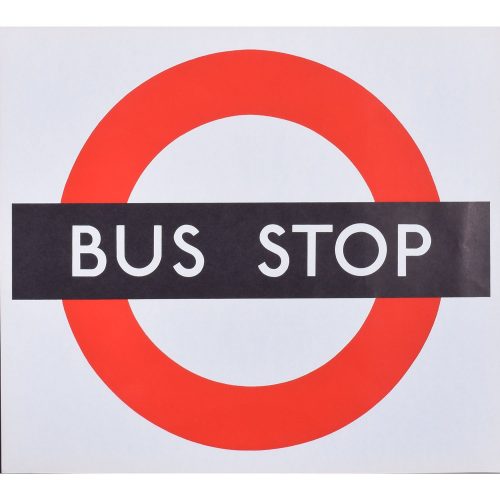
'Zero' Hans Schleger
London Transport Bus Stop Poster
Screenprint poster c. 1970s 16x14" Printed for London Transport Includes hand-finished black frame. If you are interested email info@manningfineart.co.uk or call us on 07929 749056. -
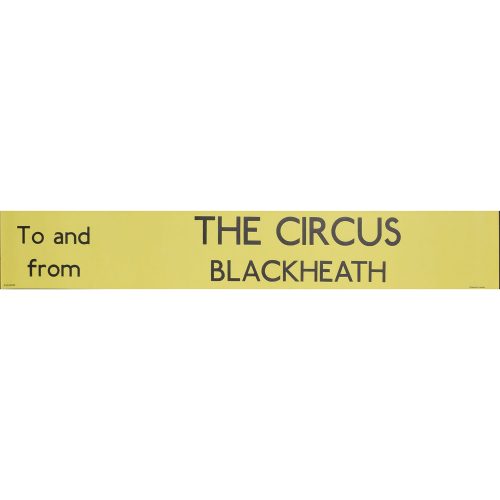
Blackheath Routemaster Slipboard Poster c1970
Screenprint poster 64x9cm In a black hand-finished frame. Printed for London Transport for use on Routemaster or RT buses. If you are interested email info@manningfineart.co.uk or call us on 07929 749056. -
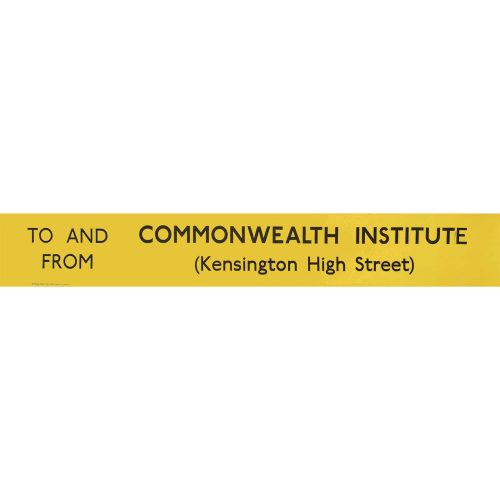
Anon.
Commonwealth Institute Kensington High Street
Routemaster Slipboard Poster C.1970 Screenprint poster 64x9cm In a black hand-finished frame. Printed for London Transport for use on Routemaster or RT buses. If you are interested email info@manningfineart.co.uk or call us on 07929 749056. Condition: Excellent -
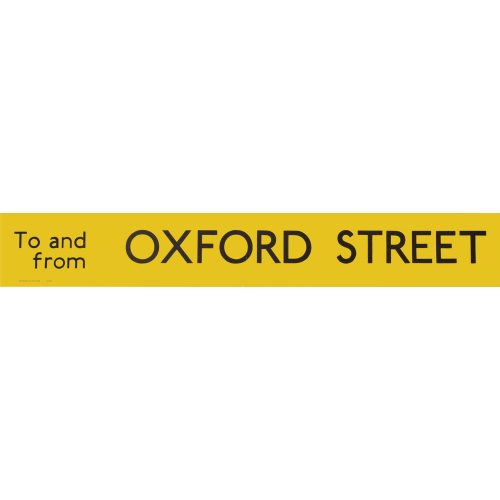
Anon.
Oxford Street Routemaster
Slipboard Poster c.1970 Screenprint poster 64x9cm In a black hand-finished frame. Printed for London Transport for use on Routemaster or RT buses. If you are interested email info@manningfineart.co.uk or call us on 07929 749056. Condition: Excellent. -
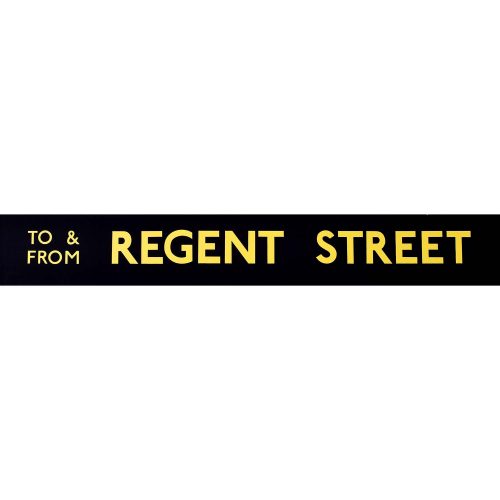
Anon.
Regent Street Routemaster
Slipboard Poster c.1970 Screenprint poster 64x9cm In a black hand-finished frame. Printed for London Transport for use on Routemaster or RT buses. If you are interested email info@manningfineart.co.uk or call us on 07929 749056. Condition: Excellent. -

Anon.
Tate Gallery Routemaster
Slipboard Poster c.1970 Screenprint poster 64x9cm In a black hand-finished frame. Printed for London Transport for use on Routemaster or RT busses. If you are interested email info@manningfineart.co.uk or call us on 07929 749056. Condition: Excellent. -

Anon.
Camden Festival Routemaster
Slipboard Poster c.1970 Screenprint poster 64x9cm In a black hand-finished frame. Printed for London Transport for use on Routemaster or RT buses. If you are interested email info@manningfineart.co.uk or call us on 07929 749056. Condition: Excellent. -

Anon.
Farnborough Hospital Routemaster
Slipboard Poster c.1970 Screenprint poster 64x9cm In a black hand-finished frame. Printed for London Transport for use on Routemaster or RT buses. If you are interested email info@manningfineart.co.uk or call us on 07929 749056. Condition: Excellent. -

Anon.
Strand Routemaster
Slipboard Poster c.1970 Screenprint poster 64x9cm In a black hand-finished frame. Printed for London Transport for use on Routemaster or RT busses. If you are interested email info@manningfineart.co.uk or call us on 07929 749056. Condition: Excellent. -
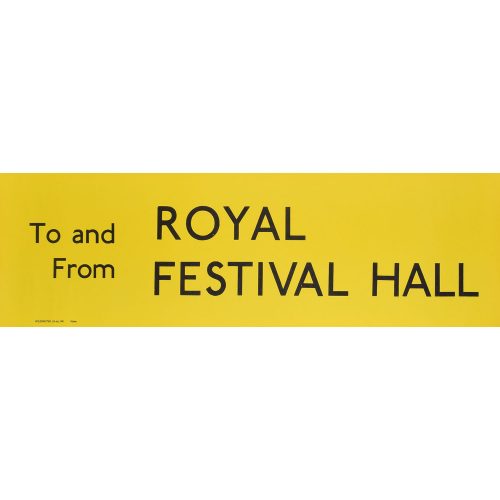
Royal Festival Hall Routemaster Slipboard Poster c1970
Screenprint poster 64x19cm In a black hand-finished frame. Printed for London Transport for use on Routemaster or RT busses. If you are interested email info@manningfineart.co.uk or call us on 07929 749056. -
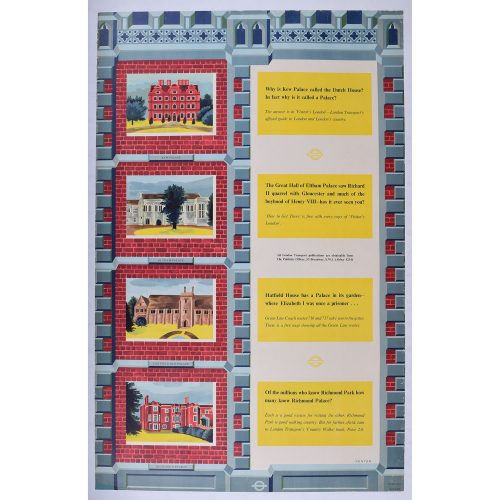
Ernest William Fenton (b. 1922)
Transport for London: Kew Palace, Eltham Palace, Hatfield Old Palace, Richmond Palace
Printed for London Transport Lithographic poster 40x25 inches Educated at Selby College of Art, Leeds College of Art and the Royal College of Art, William Fenton designed posters for London Transport from 1952-1976. If you are interested email info@manningfineart.co.ukor call us on 07929 749056. -
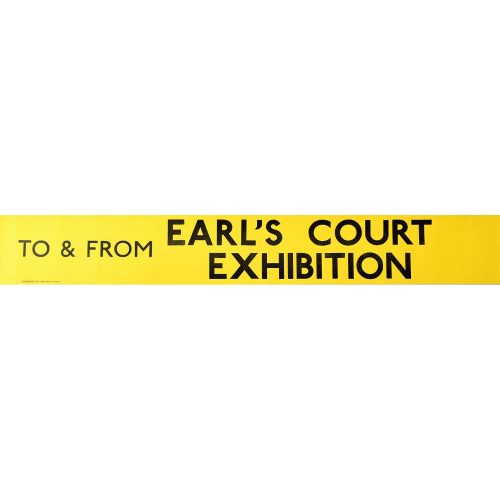
Earl's Court Exhibition Routemaster Slipboard Poster c1970
Screenprint poster 64x9cm Printed for London Transport for use on Routemaster or RT buses - the traditional red London bus with open platform and hop-on-hop-off facility. If you are interested email info@manningfineart.co.uk or call us on 07929 749056. Condition: Excellent. -
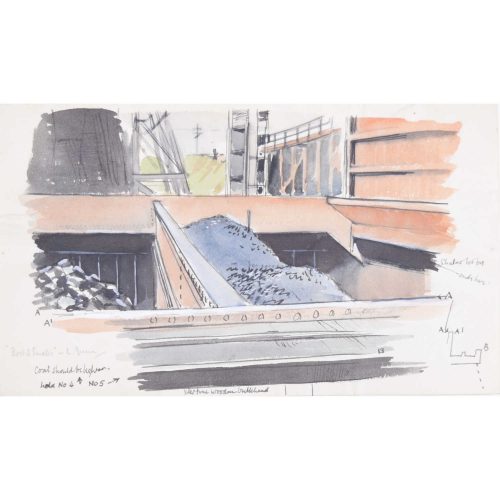
Laurence Dunn (1910-2006)
Coal Barge (c.1950)
12.5 x 25 cm Watercolour and ink Signed 'L Dunn' lower left Extensively inscribed to bottom corners, including comments 'coal should be lighter' indicating this is a preliminary watercolour for a future painting. He also makes reference to the continued existence of a 'wartime wooden bulkhead' - added to make the ship more resilient in the event of enemy action. Laurence Dunn (1910-2006) was a well-known British marine artist and writer. The World Ship Society published the following obituary for Dunn: DUNN, Laurence. [December 15 2006 — Lloyds List] Many readers will be saddened by the death of well-known marine artist and writer Laurence Dunn in his 97th year. A man of encyclopaedic knowledge, he began his lifelong love of ships in Brixham, where he meticulously recorded passing traffic with the exquisitely accurate line drawings which later became something of a trademark. While studying at London’s Central School of Art his work was noticed by the Southern Railway, which commissioned profiles of its fleet, and this in turn led to work for Orient Line, where he also designed the well-known corn-coloured hull, and later Thorneycroft, where he helped with shaping draft plans for a new royal yacht. During the second world was he worked for naval intelligence at the Admiralty, where his technique did much to improve recognition standards, and greatly expanded his shipping clientele, becoming personally known to many chairmen. As well as the shipping press he worked for mainstream publications such as Everybody’s, Sphere and the upmarket comic Eagle. Through his many contacts he enjoyed going to sea in a great variety of ships from aircraft carriers to colliers. Laurence wrote several books, starting with ship recognition titles which introduced new standards of layout, but his best known work was probably Passenger Liners, which was widely taken up by the travel trade. His love of Greece, where he was an early publicist of island cruising, let to involvement in reshaping various passenger liners beginning with Greek Line’s OLYMPIA. In later life he designed several sets of shipping stamps for the Crown Agents, produced photographic volumes on Thames and Mediterranean shipping and still found time to enjoy the passing Thames traffic. Our sympathies go to his wife Jennifer, who provided succour to the many ship lovers who beat a path to the welcoming door of their Gravesend home. -
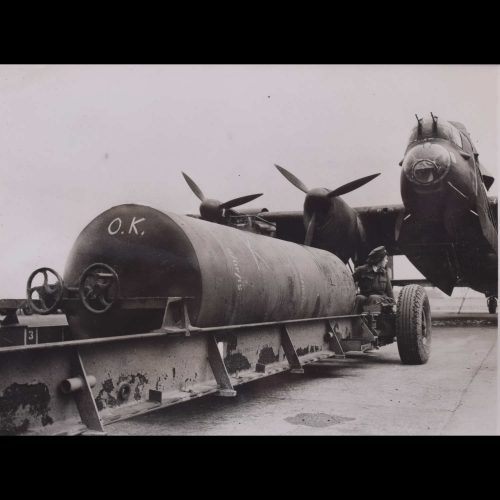
Lancaster Bomber with 8000lb cookie bomb
Original Silver Gelatin photograph, September 1943 19 x 25 cm Stamped to reverse 'Copyright this photograph must not be reproduced without the written permission of The Aeroplane.' BRITISH OFFICIAL PHOTOGRAPH CH 10939(WK) Air Ministry Photo- Crown Copyright Reserved (Picture issued September 1943) THE RAF's EIGHT THOUSAND POUND BOMB Stamped to reverse 'British Official Photograph, Crown Copyright Reserved, Supplied by BIPPA, Passed for publication by Ministry of Information'. The press release states: First official photographs of the RAF's 8,000 lb and 4,000 lb bombs are now released. Their weight has been felt with devastating effect on enemy targets in Italy and Germany. Picture shows:- Close-up of an 8,000 lb bomb in front of the Lancaster which will carry it on the night's raid. The 8000 lb 'super cookie' was a 'blockbuster' bomb, so-called because it could destroy an entire block of flats on its own. The Germans called these large bombs 'Luftminen' - airmines - as during the Blitz the large bombs used by the Luftwaffe were adapted marine mines. Judging by the length of the hair of the person sitting by the bomb, this is a member of the WAAF. WAAFs were often used to drive tractors on aerodromes during the war. Condition: generally good Provenance: from the collection of Philip J R Moyes, author of many books on the RAF, most notably The Pictorial History which ran to several volumes. -
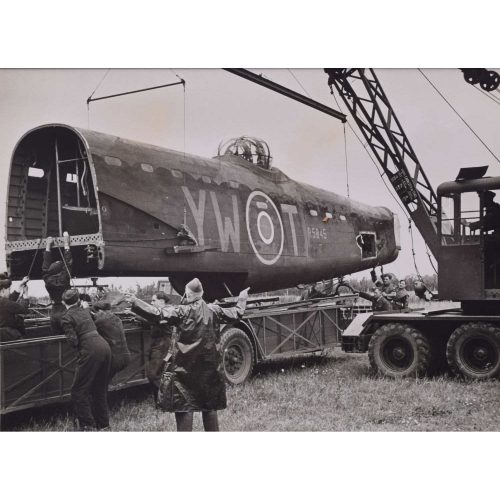
Lancaster Bomber R5845 YW-T
Original Silver Gelatin photograph 19 x 25 cm Stamped to reverse "Copyright Hulton Press Ltd" The RAF Maintenance Unit are recovering R5845 which was on the strength of 1660 Heavy Conversion Unit Winthorpe in October 1943 from the runway. Newark Air Museum have another photograph - included in the attached photographs, but not available for sale - of the entire aeroplane on a string of Queen Mary trailers. R5845 was finally written off on the night of 18/19 July 1944 on a mission to destroy a railway junction at Revigny in France. With 11 x 1000lb and 3 x 500lb bombs nothing was heard of the aircraft after takeoff and it failed to return to base. Following the war it was established that it was intercepted by a night fighter on its way home. Four of the crew evaded capture, and one was made PoW, the Pilot F/O TEW Davis of RAAF being buried in the churchyard at Heiltz-le-Maurupt, Marne, France. Provenance: from the collection of Philip J R Moyes, author of many books on the RAF, most notably The Pictorial History which ran to several volumes. Condition: mostly good. -
Out of stock
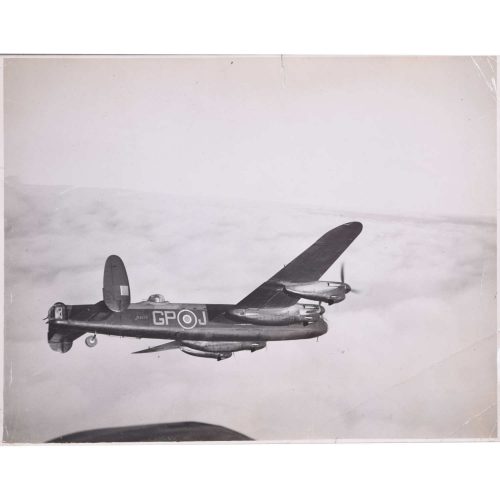
Lancaster Bomber W4113 GP-J
Original Silver Gelatin photograph, c. 1944 19 x 24 cm Published in Aeroplane Magazine, 4 February 1944. Stamped to reverse 'Wanted by 31 Janary' making this the original photograph used by the editing team at Aeroplane; and 'T[emple] P[ress] Ltd'. Photograph in official Air Ministry Second World War Collection, glass plate negative taken by F/O S A Devon. Lancaster B Mark I, W4113 ‘GP-J’, of No. 1661 Heavy Conversion Unit based at Winthorpe, Nottinghamshire, in flight. W4113 was a veteran aircraft having flown on a number of raids with Nos. 49 and 156 Squadrons RAF in 1942 and 1943, and was sent to a Heavy Conversion Unit where airmen were trained to operate the Lancaster. Became 4969M on 9/12/44, being reclassified as a ground instruction aircraft. W4113 took part in the following bombing raids: No. 49 Squadron; 1) Düsseldorf, 15-16/08/42; 2) Osnabrück, 17-18/08/42; 3) Flensburg, 18-19/08/42; 4) Gardening, Bornholm, 20-21/08/42; 5) Kassel, 27-28/08/42; 6) Saarbrücken, 01-02/09/42; 7) Duisburg, 06-07/09/42; 8.) Frankfurt, 08-09/09/42; 9) Bremen, 13-14/09/42; 10) Wilhelmshaven, 14-15/09/42; 11) Gardening, Kattegatt, 18-19/09/42; 12) Wismar, 01-02/10/42; 13) Aachen, 05-06/10/42; 14) Wismar, 12-13/10/42; 15) Kiel, 13-14/10/42; 16) Cologne, 15-16/10/42; 17) Genoa, 22-23/10/42; 18.) Genoa, 07-08/11/42; 19) Hamburg, 09/10/11/42; 20) Genoa, 15-16/11/42; 21) Stuttgart, 22-23/11/42; 22) Turin, 28-29/11/42; 23) Mannheim, 06-07/12/42, 24) 20-21/12/42. No. 156 Squadron.: a) Nuremburg, 25-26/02/43. It was produced in the third production batch of 207 aircraft ordered from A. V. Roe Co., Ltd., as part of Contract No. B69274/40 (as extended) under Works Order No. 7671, W4102-W4140, W4154-W4201, W4230-4279, W4301-W4340 and W4355-W4384. Deliveries commenced 07/42, completed 11/42 (average rate of production, approximately 13 aircraft per week). Merlin XX and XXII engines. Original Contract covered 453 aircraft in this batch but 243 were cancelled (W4385-W4900, W4414-4463, W4481-W4524, W4537-W4385, W4600-W4641 and W4655-W4700). Provenance: from the collection of Philip J R Moyes, author of many books on the RAF, most notably The Pictorial History which ran to several volumes. Condition: a couple of old edge tears and creases, visible in image. -
Out of stock
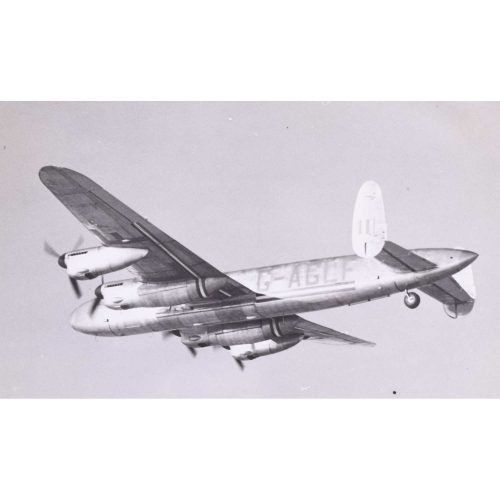
Lancastrian airliner G-AGLF
Original Silver Gelatin photograph, c. 1945 20 x 29 cm Stamped to reverse 'Daily Herald, 2 Chester Street, Oxford Road, Manchester; Copyright photo' In 1945, deliveries commenced of 30 British-built Lancastrians for BOAC. On a demonstration flight on 23 April 1945, G-AGLF flew 13,500 mi (21,700 km) from England to Auckland, New Zealand in three days, 14 hours at an average speed of 220 mph (354 km/h). G-AGLF's last flight was on Sunday 11 May 1947 when it crashed while landing at a pipeline station in the desert between Cairo and Busreh. The Lancastrian was fast, had a long range, and was capable of carrying a heavy load, but space inside was very limited as the Lancaster had been designed with space for its seven crew dispersed throughout the fuselage, and with the majority of the load being carried in the 33 ft (10.05 m) long bomb bay. Consequently, as passengers are bulky but low in weight, it was not suited to carry large numbers of passengers, but was suitable for mail and a small number of VIP passengers. BOAC used it for flights between England and Australia from 31 May 1945. It also served with the RAF; RAF Lancaster I serial number PD328, was converted to a Lancastrian and renamed Aries, as well as serving with Qantas and Flota Aérea Mercante Argentina. Lancastrians were used during the Berlin Airlift to transport petrol; 15 aircraft made over 5,000 trips. In 1946 a Lancastrian operated by BSAA was the first aircraft to make a scheduled flight from the then-newly opened London Heathrow Airport. Provenance: from the collection of Philip J R Moyes, author of many books on the RAF, most notably The Pictorial History which ran to several volumes. Condition: Marginal creases, a little foxing to reverse -
Out of stock
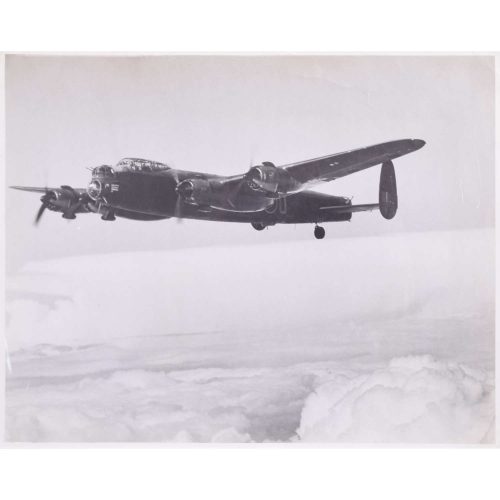
Lancaster bomber
Original Silver Gelatin photograph, 1944 19 x 24 cm Published in Aeroplane Magazine August 18 1944 p175 Press release label to reverse reads: "CL 561 British Official Photograph: Crown Copyright Reserved. "RAF Bomber Command Lancasters Attack Flying Bomb Bases. On 27.4.44 Lancasters of RAF Bomber Command attacked flying bomb bases in Norther France. Picture shows:- RAF Lancaster flies back to base after bombing flying bomb sites in Northern France." Condition: Generally very good, small loss to top outside image -

Joseph Constantine Stadler (1755 - 1828) after William Westall (1781 - 1850) Peterhouse: 'Part of St Peter's College' (1815)
Aquatint with original hand colouring 28 x 21 cm Published by Rudolph Ackermann (1764 - 1834). An engraving of Peterhouse, Cambridge, formerly known as St Peter's College. Engraved for Ackermann's 'A History of the University of Cambridge, Its Colleges, Halls and Public Buildings'. Joseph Constantine Stadler was a prolific German émigré engraver of images after his contemporaries - here, 18th-century English landscape painter and diarist Joseph Farington. Stadler's engravings are wide-ranging in subject matter and include landscapes, seascapes and portraits, as well as military, sporting and decorative subjects. Stadler was employed by the leading print publisher of the time, John Boydell. Stadler lived in Knightsbridge when he died at the age of 73. William Westall was a British landscape artist. He was born in Hertford and enrolled at the Royal Academy schools in 1799. He later became the draughtsman for a voyage to Australia and the South Seas. After being shipwrecked, he travelled to Canton in China and to India, staying in Bombay for several months. He returned to England in 1805 but later set off for Madeira and Jamaica. He became a member of the Society of Painters in Water Colours (1811) and an associate of the Academy (1812). Following a mental breakdown, he regularly visited the Lake District and published ‘Views of the Valley and Vale of Keswick’ (1820). His series of aquatints of the Thames, the great universities, and England's public schools for Ackermann are among his most popular works. Rudolph Ackermann was an Anglo-German bookseller, inventor, lithographer, publisher and businessman. In 1795 he established a print-shop and drawing-school at 96 Strand. Here Ackermann set up a lithographic press and began a trade in prints. He later began to manufacture colours and thick carton paper for landscape and miniature painters. Within three years the premises had become too small and he moved to 101 Strand, in his own words "four doors nearer to Somerset House", the seat of the Royal Academy of Arts. Between 1797 and 1800 Ackermann rapidly developed his print and book publishing business, encompassing many different genres including topography, caricature, portraits, transparencies and decorative prints. Condition: Toning within platemark.If you would like to know more, please email info@manningfineart.co.uk or call us on 07929 749056.
-

John Samuel Agar (1773 - 1858) after John Uwins (1782 - 1857) Proctor (1814)
Aquatint with original hand colouring 27 x 21 cm Published by Rudolph Ackermann (1764 - 1834). A Proctor of the University of Oxford, splendacious in academic dress. Thomas Uwins RA RWS was a British painter in watercolour and oil, and a book illustrator. He became a full member of the Old Watercolour Society and a Royal Academician, and held a number of high-profile art appointments including the librarian of the Royal Academy, Surveyor of Pictures to Queen Victoria and the Keeper of the National Gallery. In the late 1790s he began producing work for Ackermann's collections. John Samuel Agar was an English portrait painter and engraver, who exhibited his works at the Royal Academy from 1796 to 1806 and at the British Institution until 1811. He was at one time president of the Society of Engravers. Rudolph Ackermann published many of his engravings. Ackermann was an Anglo-German bookseller, inventor, lithographer, publisher and businessman. He attended the Latin school in Stollberg, but his wish to study at the university was made impossible by lack of financial means, and he therefore became a saddler like his father. He worked as a saddler and coach-builder in different German cities, moved from Dresden to Basel and Paris, and then, 23 years old, settled in London. He established himself in Long Acre, the centre of coach-making in London and close to the market at Covent Garden. Ackermann then moved to Little Russell Street where he published Imitations of Drawings of Fashionable Carriages (1791) to promote his coach-making. Other publications followed. In 1795 he established a print-shop and drawing-school at 96 Strand. Here Ackermann set up a lithographic press and began a trade in prints. He later began to manufacture colours and thick carton paper for landscape and miniature painters. Within three years the premises had become too small and he moved to 101 Strand, in his own words "four doors nearer to Somerset House", the seat of the Royal Academy of Arts. Between 1797 and 1800 Ackermann rapidly developed his print and book publishing business, encompassing many different genres including topography, caricature, portraits, transparencies and decorative prints. During the Napoleonic wars, Ackermann was an energetic supporter of the Allied cause and made significant contributions to British propaganda through his publication of anti-Napoleonic prints and military manuals. He became a naturalised British citizen in March 1809. As one of the pioneers of modern publishing methods, Ackermann developed an international distribution network for his publications and came to have significant commercial interests in South America. The business he founded in London flourished throughout the 19th century under the management of his descendants. He was buried at St. Clement Danes in the Strand, London. In 2020, the St. Louis Mercantile Library wrote that: "Ackermann excelled in the creation of landscape and architectural engravings. He created beautiful illustrations of the city of London, his adopted home, as well as two volumes of classic views of Westminster Abbey, along with exquisite views of river scenes. One of our favorite collections are four massive volumes of lovingly illustrated exterior and interior landmarks of Oxford and Cambridge Universities created just over two hundred years ago. These publications show Ackermann’s hand at every turn of the page along with the team of assistant designers and engravers he employed to create these works. Perhaps they were a way by which the artist could lay to rest his own regret at not being able to attend [an Oxbridge] college himself in a fondly depicted idyll to learning which these prints so aptly represent." Condition: Generally very good.If you would like to know more, please email info@manningfineart.co.uk or call us on 07929 749056.
-

Daniel Havell (1785 - 1822) after Augustus Charles Pugin (1762 - 1832) Hall of Sidney College
Aquatint with original hand colouring 24 x 29 cm Published by Rudolph Ackermann (1764 - 1834). An engraving of the hall of Sidney Sussex College, Cambridge, from Ackermann's 'A History of the University of Cambridge, Its Colleges, Halls and Public Buildings'. Augustus Charles Pugin was an Anglo-French artist and architectural draughtsman. Pugin produced views of London, jointly creating the illustrations for the 'Microcosm of London' published by Rudolph Ackermann in 1811, followed by plates for Ackermann's books about Westminster Abbey, Oxford and Cambridge universities, and Winchester College. His later works included illustrations for Specimens of Gothic Architecture (1821–1823), The Royal Pavilion at Brighton (1826), Architectural Antiquities of Great Britain (1826), Specimens of the Architectural Antiquities of Normandy (1827), Illustrations of the Public Buildings of London (1825 to 1828), Paris and its Environs (1829 to 1831), and Examples of Gothic Architecture (1831). He also produced a book of furniture designs called Gothic Furniture, and assisted architects with detailing for their gothic designs. He ran a drawing school at his house in Bloomsbury. Daniel Havell was a member of the Havell family of Reading, Berkshire, England, which included a number of notable engravers, etchers and painters, as well as writers, publishers, educators, and musicians. Daniel and his brother Robert set up in partnership as aquatint engravers. Soon Daniel began to work independently, engraving plates for Rudolph Ackermann's History of Cambridge (1815) and hid history of various public schools including Eton, Winchester, and Rugby (1816), as well as a celebrated views of St Paul's Cathedral (1818) and various other London landmarks for Ackermann's Repository of Arts. Rudolph Ackermann was an Anglo-German bookseller, inventor, lithographer, publisher and businessman. In 1795 he established a print-shop and drawing-school at 96 Strand. Here Ackermann set up a lithographic press and began a trade in prints. He later began to manufacture colours and thick carton paper for landscape and miniature painters. Within three years the premises had become too small and he moved to 101 Strand, in his own words "four doors nearer to Somerset House", the seat of the Royal Academy of Arts. Between 1797 and 1800 Ackermann rapidly developed his print and book publishing business, encompassing many different genres including topography, caricature, portraits, transparencies and decorative prints. Condition: Paper slightly toned within platemark.If you would like to know more, please email info@manningfineart.co.uk or call us on 07929 749056.
-
Out of stock

Daniel Havell (1785 - 1822) after Frederick Mackenzie (1788 - 1854) King's College Chapel (1815)
Aquatint with original hand colouring 18 x 27 cm Published by Rudolph Ackermann (1764 - 1834). An engraving of the south side of King's College Chapel overlooking the lawn. Engraved for publication in Ackermann's 'History of Cambridge'. Frederick Mackenzie (circa 1788 - 1854) was a British watercolourist and architectural draughtsman. He first exhibited at the Royal Academy in 1804, and contributed eleven drawings between that year and 1828. He contributed to the Society of Painters in Water Colours exhibitions from 1813, becoming an associate in 1822, and a full member the following year. From 30 November 1831 until, his death he was treasurer to the society. In later life Mackenzie was no longer commissioned to illustrate books. Daniel Havell was a member of the Havell family of Reading, Berkshire, England, which included a number of notable engravers, etchers and painters, as well as writers, publishers, educators, and musicians. Daniel and his brother Robert set up in partnership as aquatint engravers. Soon Daniel began to work independently, engraving plates for Rudolph Ackermann's History of Cambridge (1815) and hid history of various public schools including Eton, Winchester, and Rugby (1816), as well as a celebrated views of St Paul's Cathedral (1818) and various other London landmarks for Ackermann's Repository of Arts. Rudolph Ackermann was an Anglo-German bookseller, inventor, lithographer, publisher and businessman. In 1795 he established a print-shop and drawing-school at 96 Strand. Here Ackermann set up a lithographic press and began a trade in prints. He later began to manufacture colours and thick carton paper for landscape and miniature painters. Within three years the premises had become too small and he moved to 101 Strand, in his own words "four doors nearer to Somerset House", the seat of the Royal Academy of Arts. Between 1797 and 1800 Ackermann rapidly developed his print and book publishing business, encompassing many different genres including topography, caricature, portraits, transparencies and decorative prints. Condition: Toning within platemark.If you would like to know more, please email info@manningfineart.co.uk or call us on 07929 749056.
-

John Samuel Agar (1773 - 1858) after John Uwins (1782 - 1857) Vice Chancellor, Esquire Beadle, Yeoman Beadle (1814)
Aquatint with original hand colouring 27 x 21 cm Published by Rudolph Ackermann (1764 - 1834). A Vice Chancellor, Esquire Beadle, and Yeoman Beadle of the University of Oxford, apparently en route to a ceremony. Thomas Uwins RA RWS was a British painter in watercolour and oil, and a book illustrator. He became a full member of the Old Watercolour Society and a Royal Academician, and held a number of high-profile art appointments including the librarian of the Royal Academy, Surveyor of Pictures to Queen Victoria and the Keeper of the National Gallery. In the late 1790s he began producing work for Ackermann's collections. John Samuel Agar was an English portrait painter and engraver, who exhibited his works at the Royal Academy from 1796 to 1806 and at the British Institution until 1811. He was at one time president of the Society of Engravers. Rudolph Ackermann published many of his engravings. Ackermann was an Anglo-German bookseller, inventor, lithographer, publisher and businessman. He attended the Latin school in Stollberg, but his wish to study at the university was made impossible by lack of financial means, and he therefore became a saddler like his father. He worked as a saddler and coach-builder in different German cities, moved from Dresden to Basel and Paris, and then, 23 years old, settled in London. He established himself in Long Acre, the centre of coach-making in London and close to the market at Covent Garden. Ackermann then moved to Little Russell Street where he published Imitations of Drawings of Fashionable Carriages (1791) to promote his coach-making. Other publications followed. In 1795 he established a print-shop and drawing-school at 96 Strand. Here Ackermann set up a lithographic press and began a trade in prints. He later began to manufacture colours and thick carton paper for landscape and miniature painters. Within three years the premises had become too small and he moved to 101 Strand, in his own words "four doors nearer to Somerset House", the seat of the Royal Academy of Arts. Between 1797 and 1800 Ackermann rapidly developed his print and book publishing business, encompassing many different genres including topography, caricature, portraits, transparencies and decorative prints. During the Napoleonic wars, Ackermann was an energetic supporter of the Allied cause and made significant contributions to British propaganda through his publication of anti-Napoleonic prints and military manuals. He became a naturalised British citizen in March 1809. As one of the pioneers of modern publishing methods, Ackermann developed an international distribution network for his publications and came to have significant commercial interests in South America. The business he founded in London flourished throughout the 19th century under the management of his descendants. He was buried at St. Clement Danes in the Strand, London. In 2020, the St. Louis Mercantile Library wrote that: "Ackermann excelled in the creation of landscape and architectural engravings. He created beautiful illustrations of the city of London, his adopted home, as well as two volumes of classic views of Westminster Abbey, along with exquisite views of river scenes. One of our favorite collections are four massive volumes of lovingly illustrated exterior and interior landmarks of Oxford and Cambridge Universities created just over two hundred years ago. These publications show Ackermann’s hand at every turn of the page along with the team of assistant designers and engravers he employed to create these works. Perhaps they were a way by which the artist could lay to rest his own regret at not being able to attend [an Oxbridge] college himself in a fondly depicted idyll to learning which these prints so aptly represent." Condition: Generally very good.If you would like to know more, please email info@manningfineart.co.uk or call us on 07929 749056.
-
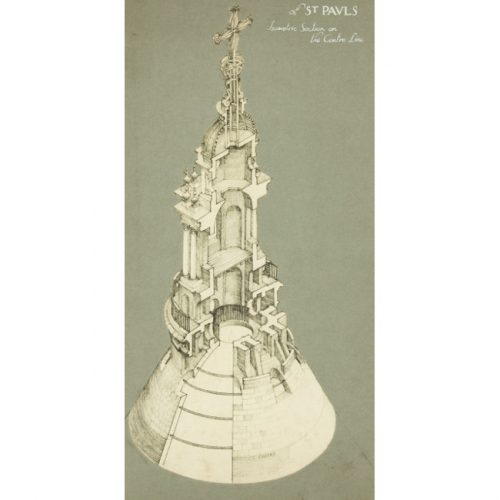
John Charles Rogers RIBA (1888-1939)
The Lantern, St Paul's Cathedral, London
41 x 18 cm (61 x 7") Graphite on paper Signed JC Rogers Inscribed 'Isometric section on the centre line'. Rogers was a practising architect who trained at Regent Street Polytechnic and was then assistant to Messrs Harvey & Potter. -
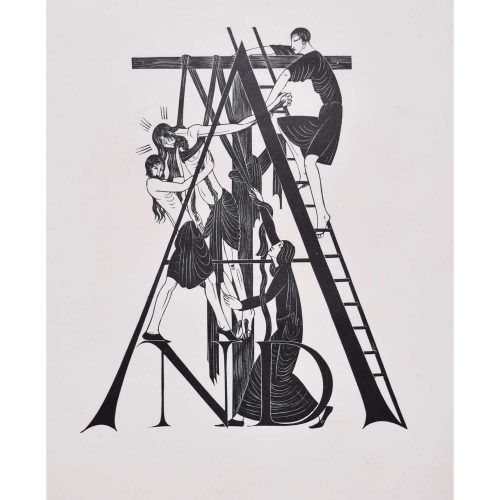
Eric Gill (1882-1940) The Deposition from the Cross
Woodblock Print Published Hague & Gill 1934 23x21cm Christ's body is taken down from the Cross, Mary assists by holding the ropes, and two men - Joseph of Arimathea and Nicodemus climb the ladder - one of the instruments of the passion. Click here for biographical details and other prints by Gill. If you are interested email info@manningfineart.co.uk or call us on 07929 749056. -
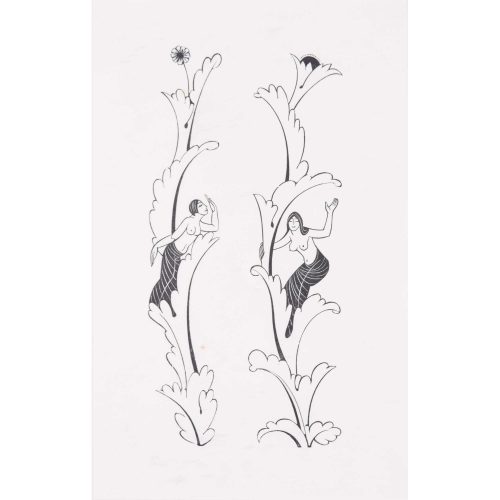
Eric Gill (1882-1940) Canterbury Tales Border - Two nudes i
Woodblock Print Published Hague & Gill 1934 23x21cm Condition: very good Click here for biographical details and other prints by Gill. If you are interested email info@manningfineart.co.uk or call us on 07929 749056. -
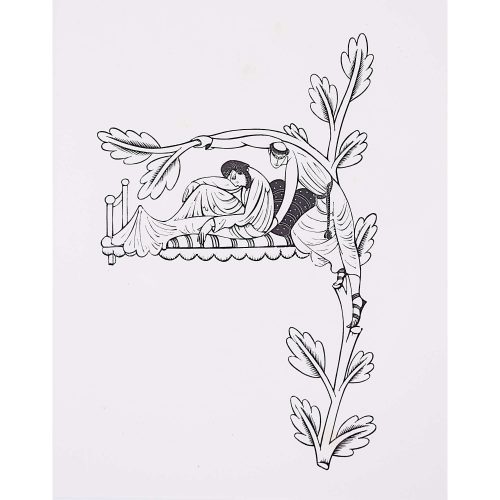
Eric Gill
Canterbury Tales The Summoner's Tale
Woodblock Print Published Hague & Gill 1934 in an unnumbered edition of 300 23x21cm Following Chichester Technical and Art School, Gill moved to London in 1900 to train with the ecclesiastical architects W D Caroe. Finding architecture somewhat pedestrian he took stonemasonry lessons at Westminster Technical Institute and calligraphy lessons at the Central School of Arts and Crafts, coming under the influence of Edward Johnson, the designer of the London Underground's own typeface. In 1903 he ceased his attempts to become an architect, instead becoming a monumental mason, letter-cutter and calligrapher. Based in Ditchling, he began direct carving of stone figures, the semi-abstract figures taking their influence from mediaeval statuary, mixed with influences from Classical statuary from the Greeks and Romans, with a little post-Impressionism added in. With major commissions from Westminster Cathedral for its Stations of the Cross (1914), a series of War Memorials including the Grade II* memorial in Trumpington, and three of the sculptures for Charles Holden's 1928 headquarters of London Underground at 55 Broadway, St James's, and a series of sculptures for the new 1932 Broadcasting House. The list continues. Never one to rest on his laurels, he was at the same time engaged in typographical adventures. He had collaborated with Edward Johnson on the latter's initial thoughts on his London Transport typeface, but in 1925 designed Perpetua on his own, and Gill Sans between 1927-30. For the Golden Cockerel Press he created, in 1929, a bolder typeface to complement wood engravings. And of course Gill was publishing decorated books. His 1929 Canterbury Tales was an epic work, with a whole series of beautiful wood engravings such as this one. The present print is from the 1934 edition for Faber & Faber ('Engravings 1928-1933 by Eric Gill') he printed with his son-in-law, Rene Hague, produced with the original engraved wood blocks. In Chaucer's Tales, the Summoner's Tale tells the story of the man who summonsed people to the ecclesiastical courts. It satirises the friar, considering him to be corrupt. Philip Hofer was a curator and collector, and commissioned this fine Ex Libris plate from Gill. If you are interested email info@manningfineart.co.uk or call us on 07929 749056. Condition: Generally very good condition. -
Out of stock
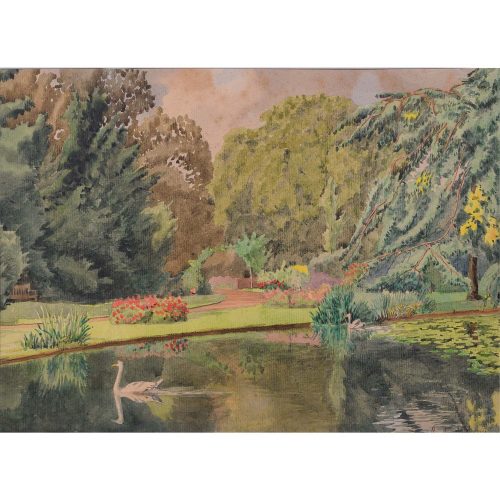
Major F A Molony
Fellows’ Garden Emmanuel College Cambridge (19th century)
Watercolour 22x30cm In the Royal Engineers, Major F A Molony was an accomplished watercolourist who published several views of Cambridge. If you are interested email info@manningfineart.co.ukor call us on 07929 749056. Condition: Good. -
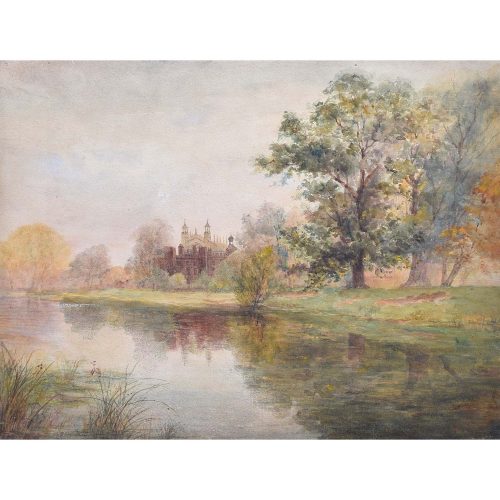
Anon. Eton College
Watercolour 31.5x40.5cm If you are interested email info@manningfineart.co.uk or call us on 07929 749056. Condition: Good. -
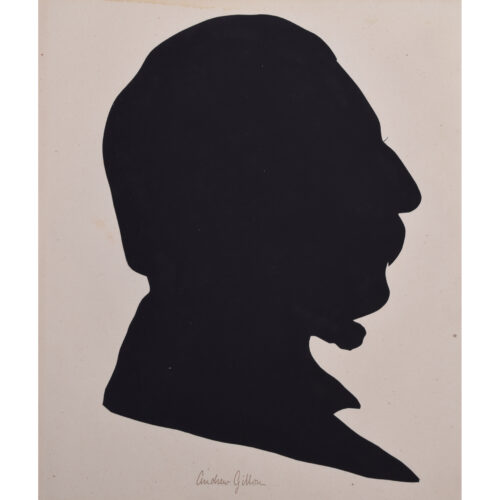
Silhouette (circa 1870)
Andrew Gillon
Gouache, pen, and ink 52 x 44 cm Prior to photography, silhouettes were the easiest way of recording a person's appearance. This set might record the group present at a country house party, a wedding, or other similar convivial occasion. Condition: generally good; some staining to upper edge. If you are interested, please email info@manningfineart.co.uk or call us on 07929 749056. Click here for other silhouettes. -
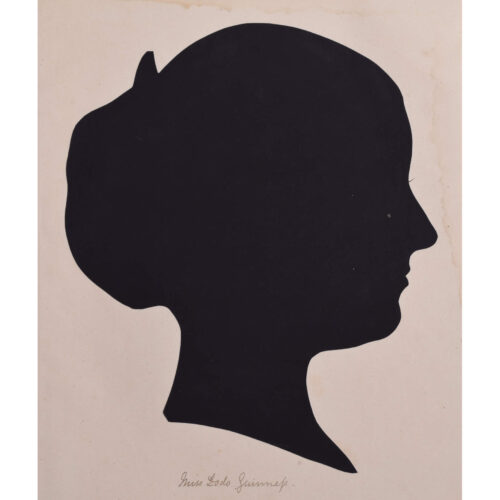
Silhouette (circa 1870)
Miss Dodo Guinness
Gouache, pen, and ink 52 x 44 cm Adelaide Maud Guinness, nicknamed 'Dodo', was descended from the banking line of Guinnesses. Her father was the barrister and MP Richard Samuel Guinness. Dodo married Edward Cecil Guinness, the 1st Earl of Iveagh and her third cousin, in 1873. Edward's father had died in 1868, after which Edward inherited a share of the famous Guinness brewery. The Guinness family seat is Elveden Hall in Suffolk. Prior to photography, silhouettes were the easiest way of recording a person's appearance. This set might record the group present at a country house party, a wedding, or other similar convivial occasion. Condition: generally good; some staining to upper edge. If you’d like to know more, please email info@manningfineart.co.uk or call us on 07929 749056. -
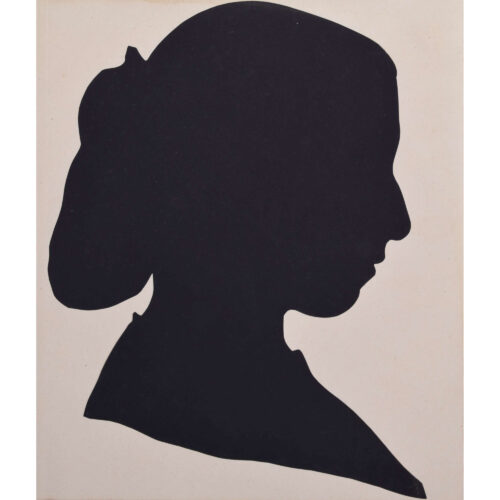
Silhouette of Lady I (circa 1870)
Gouache, pen, and ink 52 x 44 cm Prior to photography, silhouettes were the easiest way of recording a person's appearance. This set might record the group present at a country house party, a wedding, or other similar convivial occasion. Condition: generally good; some staining to upper edge. If you are interested, please email info@manningfineart.co.uk or call us on 07929 749056. Click here for other silhouettes. -
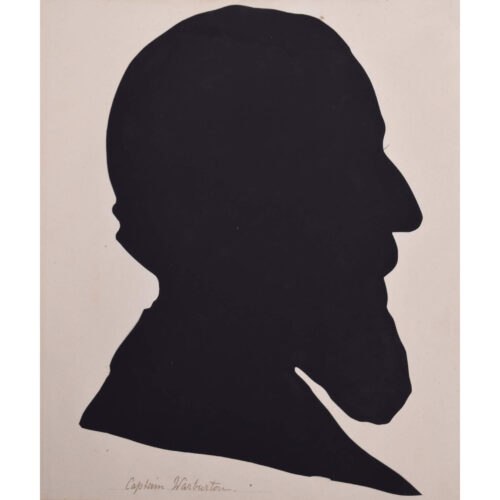
Silhouette (circa 1870)
Captain Warburton
Gouache, pen, and ink 52 x 44 cm Prior to photography, silhouettes were the easiest way of recording a person's appearance. This set might record the group present at a country house party, a wedding, or other similar convivial occasion. Condition: generally very good; occasional spots. If you are interested, please email info@manningfineart.co.uk or call us on 07929 749056. Click here for other silhouettes. -
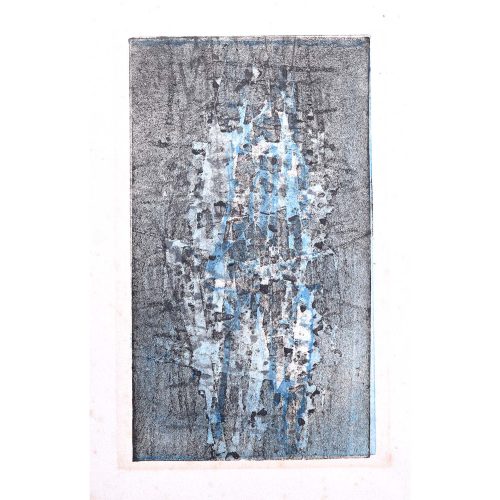
Henry Cliffe (1919-1983) Blue Figures
Etching Mid 20th Century 9.5x16.5cm Click here for biographical details and other pictures by the artist. If you are interested email info@manningfineart.co.uk or call us on 07929 749056. Condition: Good. -
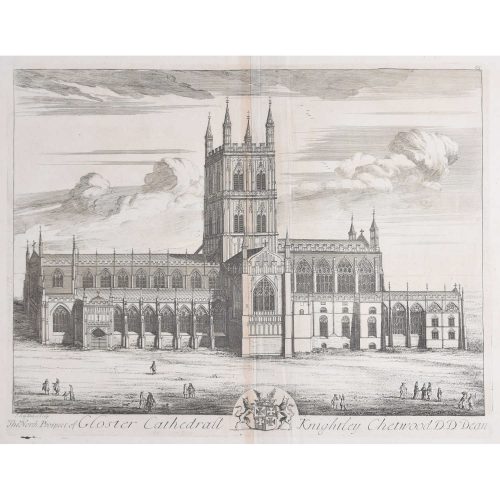
Johannes 'Jan' Kip (1652/3 - 1722)
The North Prospect of Gloster Cathedral (c.1716)
43 x 47 cm Copper engraving Johannes "Jan" Kip was a Dutch engraver, draughtsman and print dealer. After producing works for the court of William of Orange in Amsterdam, Kip followed William and Mary to London, settling in Farringdon and selling prints. Later, Kip collaborated with draughtsman and painter Leonard Knyff, and together they made a popular series of engraved views of English country houses. This print is from Sir Robert Atkyn's 'The Ancient and Present State of Gloucestershire'. In his usual manner - Kip was probably the foremost engraver of his time in England - he has placed figures before the Cathedral to give life - and scale - to the building. Condition: Generally very good with central vertical fold and adjacent parallel creases; one diagonal crease mid left to bottom centre. Will look very good when framed. -
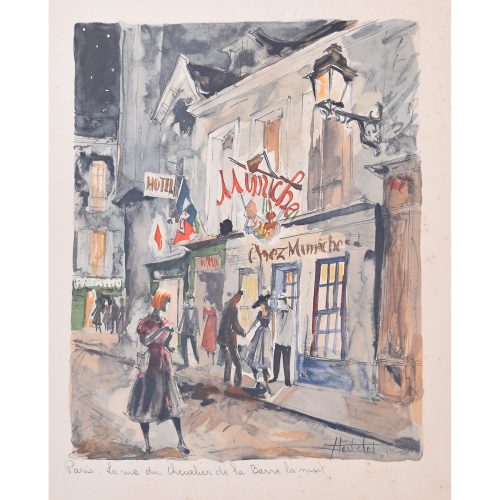 Franz Herbelot (French, active 1940s-1950s) Paris: La Rue de Chevalier de la Barre la nuit Lithograph 28 x 22 cm A fantastic lithograph by Herbelot which brilliantly captures the spirit of mid-century Paris. Little is known of Herbelot's life, but he is most notable for his views of Paris. The Rue de Chevalier de la Barre is a street in Montmartre named after the Knight de la Barre, François-Jean Lefebvre de la Barre, who died in 1766. Here, we see the street as it was in the 20th century, brimming with ladies and gentlemen dressed à la mode, bathed in the warm light of thriving bistros and hotels.
 -
Out of stock
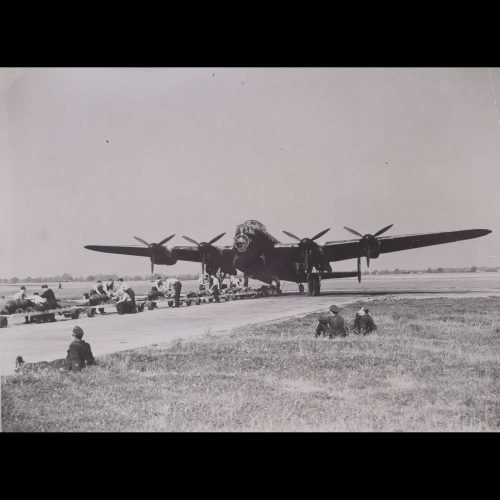
Lancaster Bomber being armed
Original Silver Gelatin photograph, c. 1942 16 x 21 cm Stamped to reverse 'Copyright this photograph must not be reproduced without the permission of Aeroplane' and 'This photograph has been passed by censor'. The photograph of the Swinderby based 50 Sqn - was taken in 1942. Either at the June reopening of the aerodrome with its new concrete runways (replacing grass) or in August when the photographers descended on the aerodrome again to take photographs for aircraft recognition purposes. Everitt survived the war - having flown 56 operations for which he was decorated three times, subsequently he was a bombing instructor, commanded a V-bomber squadron, and played golf into his nineties. He died in 2012 and the Telegraph published an excellent obituary. Provenance: from the collection of Philip J R Moyes, author of many books on the RAF, most notably The Pictorial History which ran to several volumes. -
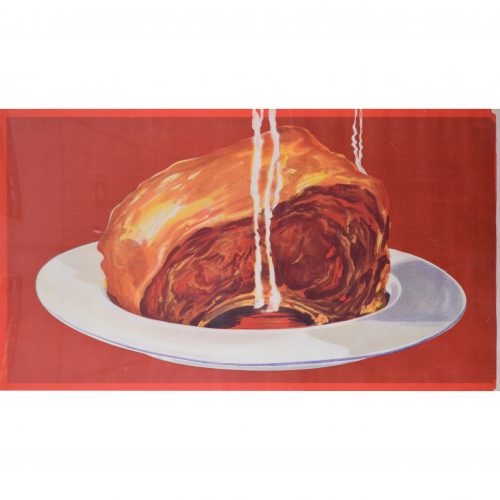
Rib of Beef
Original vintage poster 56 x 97 cm An original poster produced by Bisto to to advertise their gravy granules. With no lettering, the deep red poster is a bold and compelling advert which relies on the public's understanding that Bisto is the only choice. Condition: backed to linen, very good; a few repaired tears to right side. If you are interested, please email info@manningfineart.co.uk or call us on 07929 749056. Click here for other original vintage posters. -
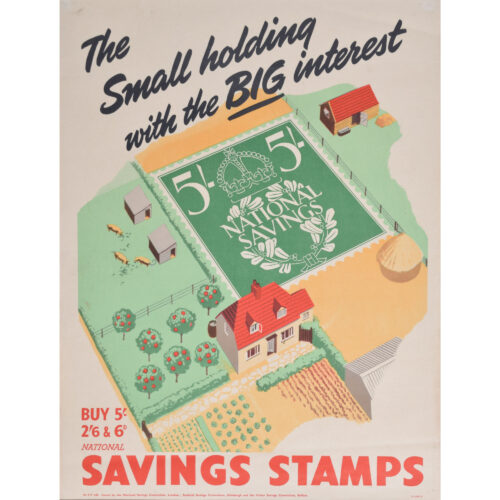
Savings Stamps - the Small Holding with the Big Interest
Original vintage poster 51 x 38 cm Issued by the National Savings Committee, London, the Scottish Savings Committee, Edinburgh, and the Ulster Savings Committee, Belfast. An original vintage WW2 poster encouraging Britons to save via the National Savings scheme. Condition: generally very good; few tiny edge tears, repaired; two pin holes to top corners; old fold as issued; and a couple of light creases. Not backed. If you are interested, please email info@manningfineart.co.uk or call us on 07929 749056. Click here for other original vintage National Savings posters. -
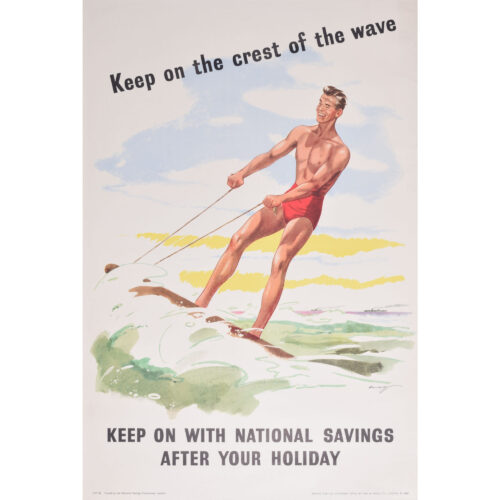
Keep on the Crest of the Wave
Original vintage poster 76 x 51 cm Issued by the National Savings Committee, London. Printed for HM Stationery Office by Fosh & Cross Ltd. An original vintage WW2 poster encouraging Britons to save via the National Savings scheme - like the cheery and composed surfer, we must keep saving to stay on the crest of the wave. Condition: generally very good; slight wear to right-hand margin. Not backed. If you are interested, please email info@manningfineart.co.uk or call us on 07929 749056. Click here for other original vintage National Savings posters. -

We've Got To Keep On Saving
Original vintage poster 38 x 26 cm Issued by the National Savings Committee, London, the Scottish Savings Committee, Edinburgh, the Ulster Savings Committee, Belfast. Printed for HM Stationery Office by Flemings, Leicester. RAF bomber crews run towards four Short Stirling bomber aircraft, ready on a runway. The poster illustrates how money saved with the National Savings Committee might help to finance the war effort. Condition: generally very good; fold as issued 1cm repared tear to left side; and a couple of old gentle creases. If you are interested, please email info@manningfineart.co.uk or call us on 07929 749056. Click here for other original vintage National Savings posters. -
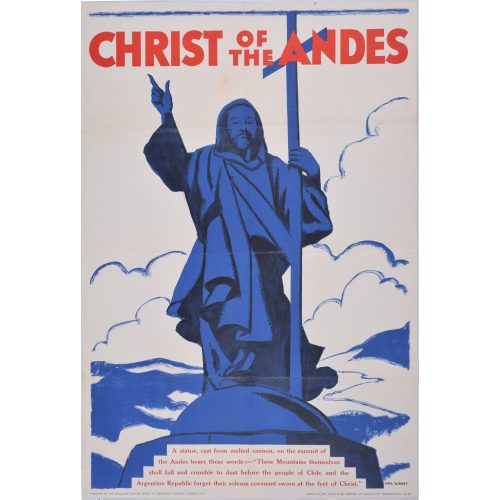 Hal Woolf Christ of the Andes Lithographic poster 76x50cm Printed by the David Allen Printing Co (London) Ltd., Wandsworth, SW18 Published by the League of Nations Union, 15 Crosvenor Crescent, London SW1 A statue, cast from melted cannon, on the summit of the Andes bears these words: "These Mountains themselves shall fall and crumble to dust before the people of Chile and the Argentine Republic forget their solemn covenant sworn at the feet of Christ." The League of Nations Union was formed in 2018 to promote international justice based upon the ideals of the League of Nations. Membership peaked in 1931 at over 400,000. In 1948 it was superseded by the United Nations Association. The statue of 'Christ the Redeemer of the Andes' is a monument unveiled in 1904 to celebrate the peaceful resolution of the border dispute between Argentina and Chile. If you are interested email info@manningfineart.co.uk or call us on 07929 749056.
 -
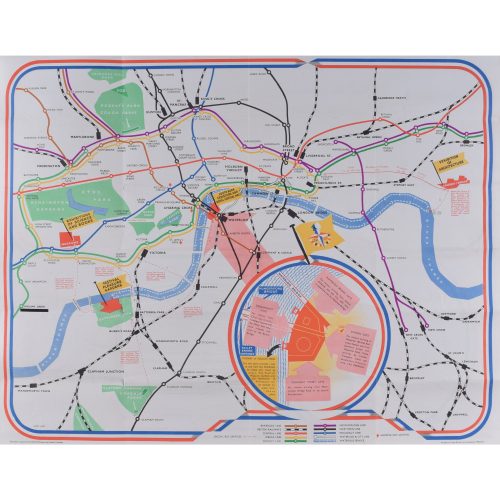
James Hart
Festival of Britain
Lithographic poster map 45 x 58 cm Folding map published for London Transport and British Railways for visitors to the 1951 Festival of Britain, featuring the Abram Games logo, details of water bus services, a detailed plan of the Lambeth exhibition area by Waterloo Bridge. If you are interested email info@manningfineart.co.uk or call us on 07929 749056. -

Dig for Victory Now
Norman Wilson, c1940
Dig for Victory Now Lithograph 18x12cm (7×4.7 inches), price includes frame. When rationing was at its height, what could be more appealing than a basket of fresh vegetables. What more incentive could be required to Dig For Victory Now? If you are interested email info@manningfineart.co.uk or call us on 07929 749056.