-
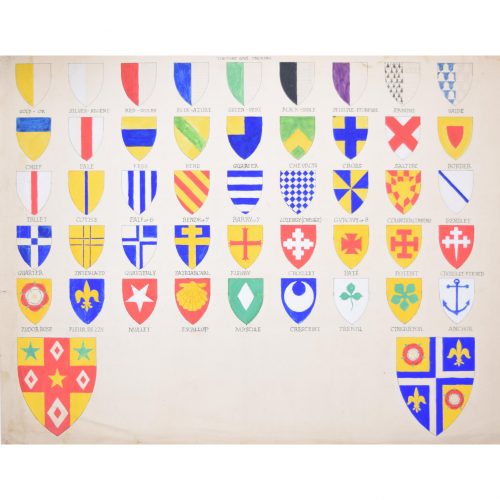
S Clapham (active 1940 - 1960)
A Heraldic Primer
Gouache and pencil 53 x 67 cm A delightful, brightly-coloured study of the various elements of heraldic shields. Condition: good; a few short and neatly-repaired marginal tears. If you are interested, please email info@manningfineart.co.uk or call us on 07929 749056. Click here for other works by the artist. -
Out of stock
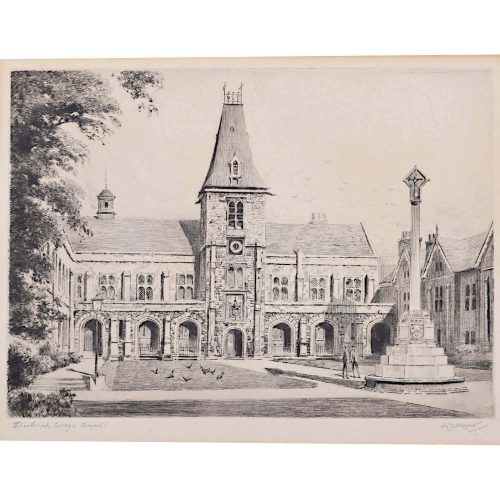
A J Meyer (British, fl 1900-1930) Dulwich College
Etching 22x30cm Sadly little is known of Meyer, an accomplished artist and particularly producer of etchings. He was one of many artists to join the craze for etchings started by Whistler and that died out after the 1929 Wall Street crash. If you are interested email info@manningfineart.co.uk or call us on 07929 749056. Condition: Mounted to board; generally good to very good. -
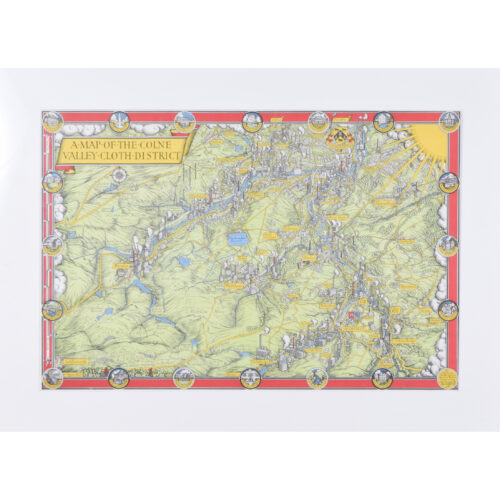
Leslie Macdonald "Max" Gill (1884 - 1947)
A Map of the Colne Valley Cloth District (1946)
Engraving with later hand-colouring 32 x 48 cm Signed in the plate and dated 1946. Produced for Huddersfield and District Woollen Export Group. Gill's vibrant and detailed map depicts the Colne Valley District. The Colne Valley was a loom-weaving area which played a significant role in the development of the Industrial Revolution when water-powered textile mills were brought in. Born in Brighton, Max Gill was the second son in a family of thirteen children; his elder brother was Eric Gill, the typographer and sculptor. Both Gills exhibited significant talent at a young age. Max Gill’s first map was made for a school map-drawing project following which he entered maps into competitions in boys’ magazines. In 1903 he moved to London as assistant to the ecclesiastical architects Sir Charles Nicholson and Hubert Corlette. By 1908 he had started his own architectural practice, but in 1909 Sir Edwin Lutyens commissioned Gill to paint a “wind dial” map for Nashdom, a large house in Buckinghamshire. The wind dial was set over the fireplace and attached to a weather vane on the roof, allowing the occupant to know the direction of the wind from the comfort of the house. He produced seven further wind dials including for Lutyens’s Lindisfarne Castle and for the Allhusen Room at Trinity College, Cambridge. Although Gill continued to practice as an architect, Frank Pick commissioned him to create seven pictorial maps for the Underground, the first being the famous 1913 ‘Wonderground Map of London Town.’ In 1917 he joined the Imperial War Graves Commission’s headstone design committee, designing the typeface and regimental badges. Gill’s memorials for the fallen in the First World War include for Balliol and Worcester Colleges and Christ Church in Oxford. During the 1920s and 30s Gill undertook many commercial commissions for advertising materials. The Empire Marketing Board and Shell-Mex as well as further maps for the Underground. He designed in 1922 the first diagrammatic map of the Underground which provided the foundation for Beck’s more famous map. By the 1930s his major works were murals. Those of the Arctic and Antarctic on the ceilings of the Scott Polar Research Institute in Cambridge are beautiful, but the most impressive is the map of the North Atlantic in the first-class dining room of the Queen Mary (maiden voyage: 1936, now moored at Long Beach, California). During the Second World War he created a series of propaganda posters for the Ministry of Information. Condition: very good. In new hand-finished frame. If you are interested, please email info@manningfineart.co.uk or call us on 07929 749056. Click here for other decorative maps. -
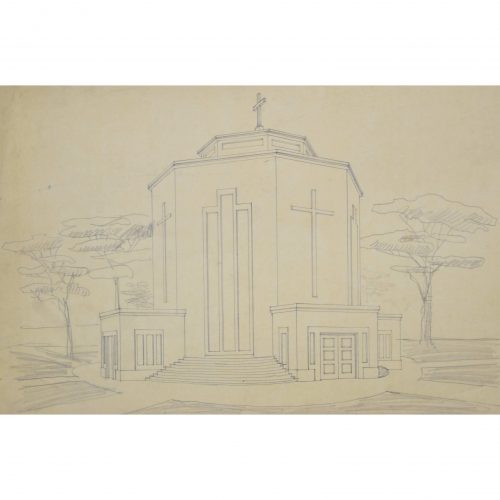
S Clapham (active 1940 - 1960)
A Modernist Church
Pencil 29 x 43 cm A design for an octagonal church in the modernist mid-century style. Clapham was an architect based in Stockwell in London. Condition: generally very good. If you are interested, please email info@manningfineart.co.uk or call us on 07929 749056. Click here for other works by the artist. -

George Bissill (1896-1973) Four Gloucestershire Cottages
Pencil sketch 28 x 38 cm Born in 1896, George Bissill was a British miner, painter and furniture designer. Raised in the mining village of Langley Mill, Derbyshire, Bissill became a miner at the age of 13, before leaving to join the war effort in 1915. Upon his return from the war after being gassed, Bissill chose to become a pavement artist outside the newly erected Bush House in Aldwych, painting from his memory and his sketch book the uncompromising underground world he had inhabited. In 1935 he moved to the countryside near Newbury, where he lived and worked as a landscape painter, art restorer and dealer until his death in 1973. This painting forms part of a larger collection, 'unseen since they were taken from George Bissil's studio in 1983' and restored by Kate Pattinson. A series of planned exhibitions were cancelled due to Covid, but two shows, one in Oxford and one in Ilkeston, did take place. Through such exhibitions, Pattinson hoped to 'restore the reputation of an artist who, through mighty endeavour, conquered the art world in the 1920s with his powerful, authentic and experimental pictures.' Bissill's paintings are also held in a number of important public collections, including the Tate Gallery, National Museum of Ireland and the Manchester Art Gallery. This pencil sketch depicts a series of four Gloucestershire cottages in Southrop and East Leach. Interestingly a more traditional cottage scene is also drawn to the reverse. Due to the handwriting on this piece not matching Bissill's own, it is likely that Bissill only contributed to this drawing, perhaps most notably in the tree to the right of the cottage. Born in 1896, George Bissill was a British miner, painter and furniture designer. Raised in the mining village of Langley Mill, Derbyshire, Bissill became a miner at the age of 13, before leaving to join the war effort in 1915. Upon his return from the war after being gassed, Bissill chose to become a pavement artist outside the newly erected Bush House in Aldwych, painting from his memory and his sketch book the uncompromising underground world he had inhabited. In 1935 he moved to the countryside near Newbury, where he lived and worked as a landscape painter, art restorer and dealer until his death in 1973. This sketch forms part of a larger collection, 'unseen since they were taken from George Bissil's studio in 1983' and restored by Kate Pattinson. A series of planned exhibitions were cancelled due to Covid, but two shows, one in Oxford and one in Ilkeston, did take place. Through such exhibitions, Pattinson hoped to 'restore the reputation of an artist who, through mighty endeavour, conquered the art world in the 1920s with his powerful, authentic and experimental pictures.' Bissill's paintings are also held in a number of important public collections, including the Tate Gallery, National Museum of Ireland and the Manchester Art Gallery. This pencil sketch depicts a series of four Gloucestershire cottages in Southrop and East Leach. Interestingly a more traditional cottage scene is also drawn to the reverse. Due to the handwriting on this piece not matching Bissill's own, it is likely that Bissill only contributed to this drawing, perhaps most notably in the tree to the right of the cottage. -
Out of stock
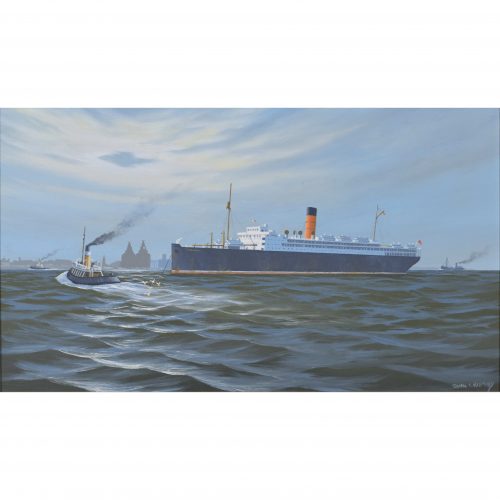
John Cromby (20th century)
A Passenger Ship in Liverpool Harbour
Oil on board 34 x 59 cm Signed lower right. A liner steers between a bright blue sky and a deep blue sea. Small steamships sail nearby, and seagulls wind their way among the various vessels. In the background, Liverpool's skyline is silhouetted. Cromby was a Liverpool-based artist, renowned for his paintings of Liverpool docks. Condition: excellent. If you’d like to know more, please email info@manningfineart.co.uk or call us on 07929 749056. -

Richard Dighton (1795-1880) A View from Brazen Nose College (1808)
Hand coloured engraving 28 x 22 cm Richard Dighton (1795–1880) was a prominent English artist and caricaturist, best known for his elegant profile portraits of early 19th-century society figures. The son of caricaturist Robert Dighton, he developed a distinctive style that balanced satire with sophistication, moving away from the exaggerated grotesquery of earlier caricatures. His finely drawn etchings and later lithographs and watercolours captured the refined yet often pompous airs of Regency London’s fashionable elite—politicians, lawyers, military men, and dandies alike. With clean lines, elongated forms, and a sharp eye for personality, Dighton’s work offers a witty yet insightful glimpse into the characters of his time. His legacy lived on through his sons, who continued in the family’s artistic tradition. This hand-coloured engraving portrays a rotund academic in full scholarly robes, captured in Dighton’s signature profile style. With a stern expression, powdered wig, and traditional cap, the figure stands in a dignified pose, one hand placed on his chest. The simple background and muted tones draw attention to the character’s form and posture, blending gentle satire with respectful observation of academic life. Condition: Generally very good.If you would like to know more, please email info@manningfineart.co.uk or call us on 07929 749056.
-

Richard Dighton (1795-1880) A View from Merton College (1808)
Hand coloured engraving 28 x 22 cm Richard Dighton (1795–1880) was a prominent English artist and caricaturist, best known for his elegant profile portraits of early 19th-century society figures. The son of caricaturist Robert Dighton, he developed a distinctive style that balanced satire with sophistication, moving away from the exaggerated grotesquery of earlier caricatures. His finely drawn etchings and later lithographs and watercolours captured the refined yet often pompous airs of Regency London’s fashionable elite—politicians, lawyers, military men, and dandies alike. With clean lines, elongated forms, and a sharp eye for personality, Dighton’s work offers a witty yet insightful glimpse into the characters of his time. His legacy lived on through his sons, who continued in the family’s artistic tradition. This engraving captures the quirky elegance of an Oxford academic in Dighton’s signature caricature style. The tall, gaunt figure is shown in profile, dressed in flowing academic robes and a square cap, with exaggerated features and a solemn, slightly comic expression. Set against a minimal background, the figure stands out as a gently satirical yet respectful portrait of university life in the early 19th century. Condition: Generally very good.If you would like to know more, please email info@manningfineart.co.uk or call us on 07929 749056.
-

Richard Dighton (1795-1880) A View from St John's College (1809)
Hand coloured engraving 28 x 22 cm Richard Dighton (1795–1880) was a prominent English artist and caricaturist, best known for his elegant profile portraits of early 19th-century society figures. The son of caricaturist Robert Dighton, he developed a distinctive style that balanced satire with sophistication, moving away from the exaggerated grotesquery of earlier caricatures. His finely drawn etchings and later lithographs and watercolours captured the refined yet often pompous airs of Regency London’s fashionable elite—politicians, lawyers, military men, and dandies alike. With clean lines, elongated forms, and a sharp eye for personality, Dighton’s work offers a witty yet insightful glimpse into the characters of his time. His legacy lived on through his sons, who continued in the family’s artistic tradition. This hand-coloured engraving is a quintessential example of Dighton's signature style—capturing character through exaggerated yet elegant profile. The figure, likely an academic or clergyman, is portrayed in full stride, dressed in a long, dark academic gown, white stockings, and buckled shoes. Dighton masterfully exaggerates the man's posture and expression, giving a sense of motion, personality, and perhaps even a touch of comic solemnity as he emphasises the man's eccentric presence and stylised mannerisms. The fine line work and subtle water colour washes blur the line, however, between caricature and portraiture, making this not just a humorous rendering, but also a social observation of Cambridge life in the early 19th century. -

Abram Games (1914-1996)
Guinness 5 Million Daily
Original vintage poster 152 x 102 cm This advertising poster dates from the early 1960s. It features a playful use of text, with the correct orientation of the poster varying depending on whether you first read 'Guinness' or '5 Million daily.' In a further act of advertising mischief, it also disguises a simple illustration of a pint of Guinness within the text. This masterful use of typography is typical of his broader practice, as his works are characterised by his use of striking colour, bold graphic ideas, and beautifully integrated typography. Throughout the 20th century, Abram Games distinguished himself as one of the greatest British graphic designers of the time and his oeuvre now offers a scintillating record of social history. Other notable works of his include the 'Blonde Bombshell’ ATS poster of 1941 and the 'Festival Star', designed for the 1951 Festival of Britain. If you are interested, please email info@manningfineart.co.uk or call us on 07929 749056. -

M R Webb Abstract Form
21 x 26 cm Signed to lower right Provenance: Family of A. E. Halliwell Little is known about M R Webb beyond the fact that he studied under A E Halliwell, though the fact that Halliwell collected this painting suggests that he thought highly of his student. This abstract composition provides few clues as to what exactly it is depicting... Is it an Underground roundel? Perhaps some kind of animal, a cockerel maybe? Webb leaves it to his viewer to decide. In any case, the colours and swirling forms offer a sense of motion and excitement in this dynamic piece. Condition: Generally very good.If you would like to know more, please email info@manningfineart.co.uk or call us on 07929 749056.
-
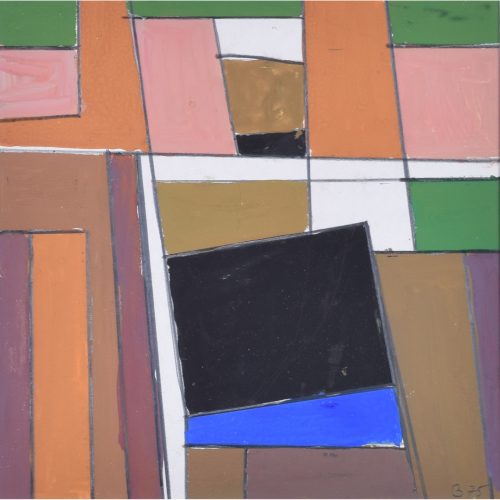
John Barnicoat MA ARCA (1924 - 2013) Harbour (1975)
Tempera on card 26 x 26 cm Initialled B and dated '75. John Barnicoat was a painter of oils and works on paper using tempera, conté, acrylic, pen, and ink. He was brought up in Cornwall and educated at King’s College, Taunton. He joined the Royal Naval Volunteer Reserves and took part in D-Day, aged 29. He went on to read history at Lincoln College, Oxford, and also studied at the Ruskin School of Drawing. He attended the Royal College of Art in the early 1950s, eventually becoming the Senior Tutor at the RCA Painting School between 1976 and 1980. He was the head of Falmouth School of Art 1972 - 1976 and Head of the Chelsea School of Art 1980 - 1989. He wrote 'Posters: a Concise History' in 1972, and organised and curated exhibitions in the UK and Russia on the art of poster design. From 1989 onwards he produced numerous drawings and oils of the bridges of London, women’s heads, acrylic and conté works on paper, and pen and wash drawings of women dressing. His work is represented in both government and private collections, and was recently shown at The Belgrave Gallery, St Ives (2017 - 2022). Provenance: the artist's estate. Condition: generally very good; in hand-finished frame. If you are interested, please email info@manningfineart.co.uk or call us on 07929 749056. Click here for other Modern British original paintings. -

Colin Fifield (1940-2022) Abstract landscape
Watercolour 26 x 36 cm Colin Fifield was a British artist specialising in painting and pottery. He trained at the Camberwell School of Arts and Crafts before specialising in painting and etching at the Slade School of Art. Over the course of his long career, Fifield displayed a variety of interests, ranging from landscape paintings in oils, watercolours and acrylics to pen and ink drawings. Many of his paintings take inspiration from the landscapes of Kent in South East England, featuring the bucolic pastures and fields. This painting is characteristic of Fifield's artistic output. He playfully depicts a rural landscape scene, incorporating wavy shapes and bright colours. In doing so, he brings the painting to life. The waves through the long crops and grasses evoke the wind breezing through them. The hazy clouds in the sky seem to be moving, and a man-- simplistic in form--walks down the country-lane, appreciating the tranquility of the moment. -
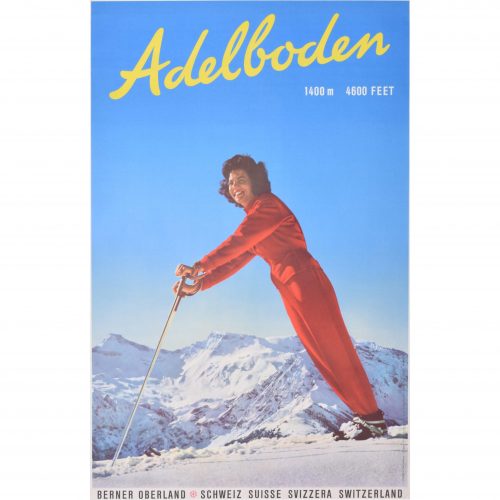
Adelboden
Original vintage poster 104 x 63 cm A fantastic original vintage poster advertising the Swiss ski resort of Adelboden, tucked away in the Bernese Oberland. Printed in Switzerland by Brügger AG. The photograph was taken by the Swiss photographers Emanuel Gyger and Arnold Klopfenstein. The pair were renowned for their captivating skiing images. Condition: generally very good. If you are interested, please email info@manningfineart.co.uk or call us on 07929 749056. Click here for more original vintage skiing posters. -
Out of stock

Adelboden
Lithograph 100 x 65 cm A fantastic original vintage poster advertising the Swiss ski resort of Adelboden, tucked away in the Bernese Oberland. Printed in Switzerland by the historic printing house A. Trüb & Cie, the poster showcases Adelboden’s stunning alpine scenery, with green meadows, wooden chalets, a waterfall, and snow-capped mountains in the background. The poster also evokes a sense of glamour, as an elegantly dressed woman watches over the pristine lido and idyllic landscape. Condition: Few very short repaired edge tears, no longer than 10mm.If you would like to know more, please email info@manningfineart.co.uk or call us on 07929 749056.
-
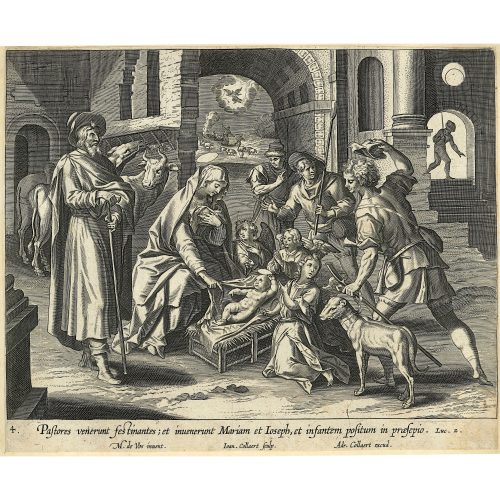
Adriaen Collaert (c. 1560-1618) after Maerten de Vos (1532 - 1603) "Pastores venerunt festinantes; et inuenerunt Mariam et Ioseph, et infantem positum in praesepio" - Luke 2
Engraving, From Vita, Passio, et Resurrectio Iesu Christi first published 1598, this a later edition published by Joannes Galle (1600-1676) 16.5x21.8cm From the Gospel of Luke, Chapter 2 Verse 16 - And the shepherds came with haste, and found Mary, and Joseph, and the babe lying in a manger. Adriaen Collaert was born in Antwerp between 1555 and 1565, becoming wijnmeester of the Guild of St Luke in 1580 - a title reserved for the sons of guild members. The guild of St Luke was generally the city guild for artists. Working for Philip Galle, a Dutch publisher best known for his old master prints, he married Galle's daughter Justa. After learning the principles of engraving in the Netherlands, he spent some years in Italy improving his skill. Upon returning to Flanders he engraved, in accomplished fashion, a great number of plates. His brother, Jan Collaert II, his son, Jan Baptist Collaert II and a grandson were all printmakers. These particular plates are after paintings by Maerten de Vos, a Flemish painter and draughtsman. His father was Pieter de Vos, from whom he learned. From 1550 - 1558 he travelled in Italy, visiting Rome and Venice and becoming master of the Antwerp Guild of St Luke upon his return in 1558. After 1575 he was mainly engaged in producing print designs. If you are interested email info@manningfineart.co.uk or call us on 07929 749056. Condition: Trimmed to plate margins, generally good condition commensurate with age, slight age toning and handling marks as evident from image. -
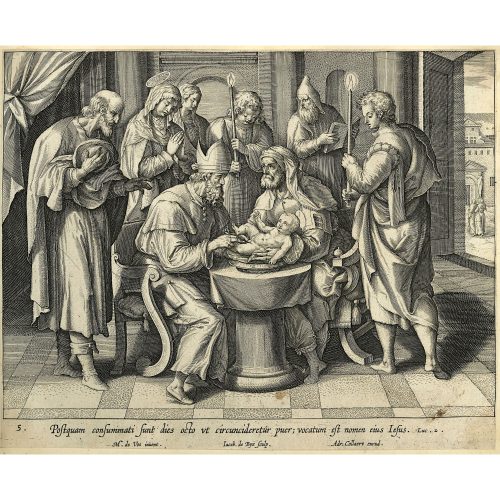
Adriaen Collaert (c. 1560-1618) after Maerten de Vos (1532 - 1603) 5. "Postquam consummati sunt dies octo ut circuncideretur puer; vocatum est nomen eius Iesus" - Luke 2
Engraving, From Vita, Passio, et Resurrectio Iesu Christi first published 1598, this a later edition published by Joannes Galle (1600-1676) 16.5x21.8cm From the Gospel of Luke, Chapter 2 Verse 21 - And when eight days were accomplished for the circumcising of the child, his name was called Jesus. Adriaen Collaert was born in Antwerp between 1555 and 1565, becoming wijnmeester of the Guild of St Luke in 1580 - a title reserved for the sons of guild members. The guild of St Luke was generally the city guild for artists. Working for Philip Galle, a Dutch publisher best known for his old master prints, he married Galle's daughter Justa. After learning the principles of engraving in the Netherlands, he spent some years in Italy improving his skill. Upon returning to Flanders he engraved, in accomplished fashion, a great number of plates. His brother, Jan Collaert II, his son, Jan Baptist Collaert II and a grandson were all printmakers. These particular plates are after paintings by Maerten de Vos, a Flemish painter and draughtsman. His father was Pieter de Vos, from whom he learned. From 1550 - 1558 he travelled in Italy, visiting Rome and Venice and becoming master of the Antwerp Guild of St Luke upon his return in 1558. After 1575 he was mainly engaged in producing print designs. If you are interested email info@manningfineart.co.uk or call us on 07929 749056. Condition: Trimmed to plate margins, generally good condition commensurate with age, slight age toning and handling marks as evident from image. -
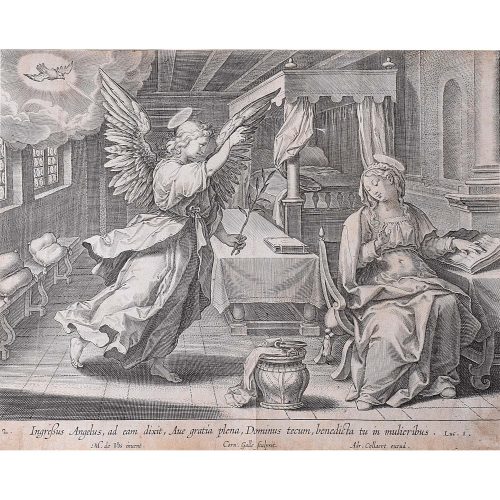
Adriaen Collaert (c. 1560-1618) Cornelius Galle (1576-1650) after Maerten de Vos (1532 - 1603) 2. Ingressus angelus, ad eam dixit, Aue gratia plana, Dominus tecum, benedicta tu in mulieribus. Luke. 1.
Engraving From Vita, Passio, et Resurrectio Iesu Christi first published 1598, this a later edition published by Joannes Galle (1600-1676) 17.5x22cm Hand-finished black frame included (UK shipping only) From the Gospel of Luke, chapter 1 "And the angel came in unto her, and said, Hail, thou that art highly favoured, the lord is with thee". Adrian Collaert was born in Antwerp between 1555 and 1565, becoming wijnmeester of the Guild of St Luke in 1580 - a title reserved for the sons of guild members. The guild of St Luke was generally the city guild for artists. Working for Philip Galle, a Dutch publisher best known for his old master prints, he married Galle's daughter Justa. After learning the principles of engraving in the Netherlands, he spent some years in Italy improving his skill. Upon returning to Flanders he engraved, in accomplished fashion, a great number of plates. His brother, Jan Collaert II, his son, Jan Baptist Collaert II and a grandson were all printmakers. These particular plates are after paintings by Maerten de Vos, a Flemish painter and draughtsman. His father was Pieter de Vos, from whom he learned. From 1550 - 1558 he travelled in Italy, visiting Rome and Venice and becoming master of the Antwerp Guild of St Luke upon his return in 1558. After 1575 he was mainly engaged in producing print designs. If you are interested email info@manningfineart.co.uk or call us on 07929 749056. Condition: Trimmed to plate margins, generally good condition commensurate with age, slight age toning and handling marks as evident from image. -
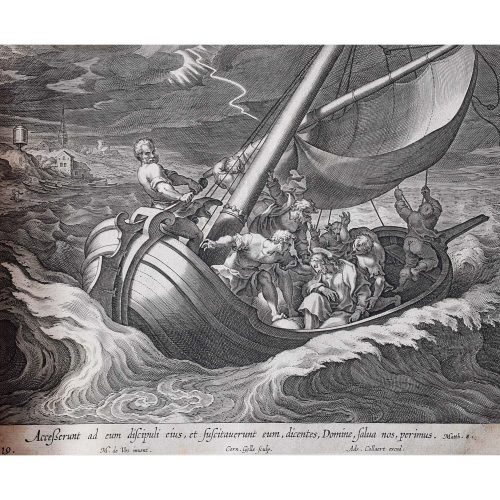
Adriaen Collaert (c. 1560-1618) John de Barbe (1578–1649) after Maerten de Vos (1532 - 1603) 19. Accesserunt ad eum discipuli eius, et suscitaverunt eum, dicentes, Domine, salua nos, perimus. Matth. 8.
Engraving From Vita, Passio, et Resurrectio Iesu Christi first published 1598, this a later edition published by Joannes Galle (1600-1676) 17.5x22cm From the Gospel of Matthew, chapter 8 "Then His disciples came to Him and awoke Him, saying, “Lord, save us! We are perishing!” Adrian Collaert was born in Antwerp between 1555 and 1565, becoming wijnmeester of the Guild of St Luke in 1580 - a title reserved for the sons of guild members. The guild of St Luke was generally the city guild for artists. Working for Philip Galle, a Dutch publisher best known for his old master prints, he married Galle's daughter Justa. After learning the principles of engraving in the Netherlands, he spent some years in Italy improving his skill. Upon returning to Flanders he engraved, in accomplished fashion, a great number of plates. His brother, Jan Collaert II, his son, Jan Baptist Collaert II and a grandson were all printmakers. These particular plates are after paintings by Maerten de Vos, a Flemish painter and draughtsman. His father was Pieter de Vos, from whom he learned. From 1550 - 1558 he travelled in Italy, visiting Rome and Venice and becoming master of the Antwerp Guild of St Luke upon his return in 1558. After 1575 he was mainly engaged in producing print designs. If you are interested email info@manningfineart.co.uk or call us on 07929 749056. Condition: Trimmed to plate margins, generally good condition commensurate with age, slight age toning and handling marks as evident from image. -
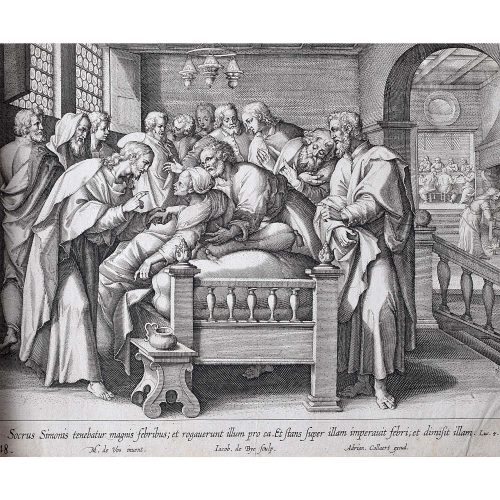
Adriaen Collaert (c. 1560-1618) John de Barbe (1578–1649) after Maerten de Vos (1532 - 1603) 18. Socrus simonis tenebatur magnis febribus; et rogauerunt illum pro ea. Et stans super illum imperauit febri; et dimiset illum. Luke. 4.
Engraving From Vita, Passio, et Resurrectio Iesu Christi first published 1598, this a later edition published by Joannes Galle (1600-1676) 17.5x22cm From the Gospel of Luke, chapter 4 "Simon’s mother-in-law was very sick. She had a high fever. They asked Jesus to do something to help her. He stood very close to her and ordered the sickness to go away". Adrian Collaert was born in Antwerp between 1555 and 1565, becoming wijnmeester of the Guild of St Luke in 1580 - a title reserved for the sons of guild members. The guild of St Luke was generally the city guild for artists. Working for Philip Galle, a Dutch publisher best known for his old master prints, he married Galle's daughter Justa. After learning the principles of engraving in the Netherlands, he spent some years in Italy improving his skill. Upon returning to Flanders he engraved, in accomplished fashion, a great number of plates. His brother, Jan Collaert II, his son, Jan Baptist Collaert II and a grandson were all printmakers. These particular plates are after paintings by Maerten de Vos, a Flemish painter and draughtsman. His father was Pieter de Vos, from whom he learned. From 1550 - 1558 he travelled in Italy, visiting Rome and Venice and becoming master of the Antwerp Guild of St Luke upon his return in 1558. After 1575 he was mainly engaged in producing print designs. If you are interested email info@manningfineart.co.uk or call us on 07929 749056. Condition: Trimmed to plate margins, generally good condition commensurate with age, slight age toning and handling marks as evident from image. -
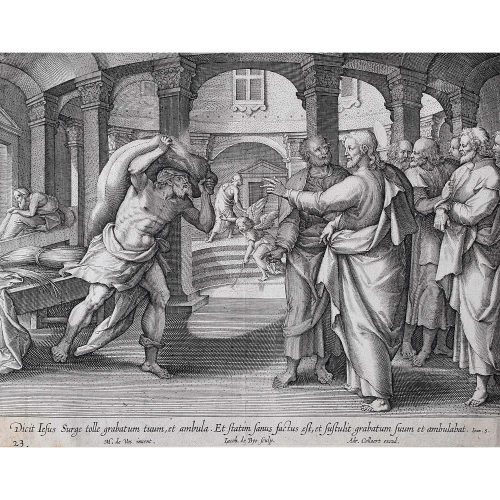
Adriaen Collaert (c. 1560-1618) Jacob de Bye (1581–1640) after Maerten de Vos (1532 - 1603) 23. Dicit iesus Surge tolle grabatum tuum, et ambula. Et statim sanus factus est, et sustulit grabatum suum et ambulabat. John. 5.
Engraving From Vita, Passio, et Resurrectio Iesu Christi first published 1598, this a later edition published by Joannes Galle (1600-1676) 17.5x22cm From the Gospel of John, chapter 5 "He says Rise, take up your bed and walk. He immediately became well, and picked up his bed and walked.” Adrian Collaert was born in Antwerp between 1555 and 1565, becoming wijnmeester of the Guild of St Luke in 1580 - a title reserved for the sons of guild members. The guild of St Luke was generally the city guild for artists. Working for Philip Galle, a Dutch publisher best known for his old master prints, he married Galle's daughter Justa. After learning the principles of engraving in the Netherlands, he spent some years in Italy improving his skill. Upon returning to Flanders he engraved, in accomplished fashion, a great number of plates. His brother, Jan Collaert II, his son, Jan Baptist Collaert II and a grandson were all printmakers. These particular plates are after paintings by Maerten de Vos, a Flemish painter and draughtsman. His father was Pieter de Vos, from whom he learned. From 1550 - 1558 he travelled in Italy, visiting Rome and Venice and becoming master of the Antwerp Guild of St Luke upon his return in 1558. After 1575 he was mainly engaged in producing print designs. If you are interested email info@manningfineart.co.uk or call us on 07929 749056. Condition: Trimmed to plate margins, generally good condition commensurate with age, slight age toning and handling marks as evident from image. -
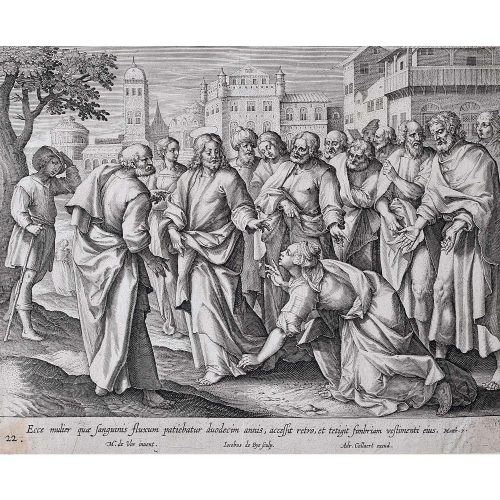
Adriaen Collaert (c. 1560-1618) Jacob de Bye (1581–1640) after Maerten de Vos (1532 - 1603) 22. Ecce mulier quat sanguinis fluxum patiebatur duodecim annis, accessit retro, et tetigit fimbriam vestimenti eius. Matth. 9.
Engraving From Vita, Passio, et Resurrectio Iesu Christi first published 1598, this a later edition published by Joannes Galle (1600-1676) 17.5x22cm From the Gospel of Matthew, chapter 9 "And suddenly, a woman who had a flow of blood for twelve years came from behind and touched the hem of His garment.” Adrian Collaert was born in Antwerp between 1555 and 1565, becoming wijnmeester of the Guild of St Luke in 1580 - a title reserved for the sons of guild members. The guild of St Luke was generally the city guild for artists. Working for Philip Galle, a Dutch publisher best known for his old master prints, he married Galle's daughter Justa. After learning the principles of engraving in the Netherlands, he spent some years in Italy improving his skill. Upon returning to Flanders he engraved, in accomplished fashion, a great number of plates. His brother, Jan Collaert II, his son, Jan Baptist Collaert II and a grandson were all printmakers. These particular plates are after paintings by Maerten de Vos, a Flemish painter and draughtsman. His father was Pieter de Vos, from whom he learned. From 1550 - 1558 he travelled in Italy, visiting Rome and Venice and becoming master of the Antwerp Guild of St Luke upon his return in 1558. After 1575 he was mainly engaged in producing print designs. If you are interested email info@manningfineart.co.uk or call us on 07929 749056. Condition: Trimmed to plate margins, generally good condition commensurate with age, slight age toning and handling marks as evident from image. -
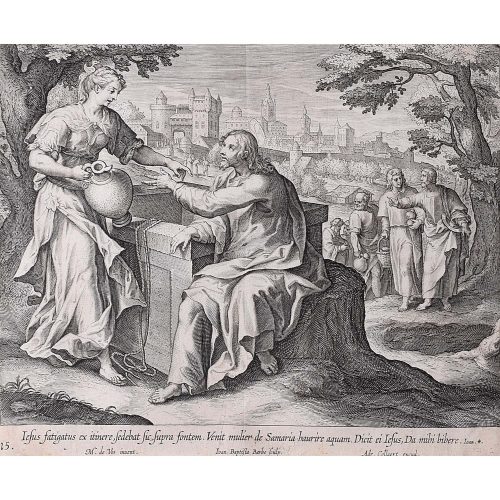
Adriaen Collaert (c. 1560-1618) John de Barbe (1578–1649) after Maerten de Vos (1532 - 1603) 15. Iesus fatigatus ex itinere, sedebat sic supra fontem. Uenit mulier de Samaria haurire aquam. Dicit ei Iesus, Da mihi bibere. John 4.
Engraving From Vita, Passio, et Resurrectio Iesu Christi first published 1598, this a later edition published by Joannes Galle (1600-1676) 17.5x22cm Hand-finished black frame included (UK shipping only) From the Gospel of John, chapter 4 "Jesus, being wearied from his journey, was sitting thus on the well. A Samaritan woman came to draw water. Jesus said to her, “Will you give me a drink?” Adrian Collaert was born in Antwerp between 1555 and 1565, becoming wijnmeester of the Guild of St Luke in 1580 - a title reserved for the sons of guild members. The guild of St Luke was generally the city guild for artists. Working for Philip Galle, a Dutch publisher best known for his old master prints, he married Galle's daughter Justa. After learning the principles of engraving in the Netherlands, he spent some years in Italy improving his skill. Upon returning to Flanders he engraved, in accomplished fashion, a great number of plates. His brother, Jan Collaert II, his son, Jan Baptist Collaert II and a grandson were all printmakers. These particular plates are after paintings by Maerten de Vos, a Flemish painter and draughtsman. His father was Pieter de Vos, from whom he learned. From 1550 - 1558 he travelled in Italy, visiting Rome and Venice and becoming master of the Antwerp Guild of St Luke upon his return in 1558. After 1575 he was mainly engaged in producing print designs. If you are interested email info@manningfineart.co.uk or call us on 07929 749056. Condition: Trimmed to plate margins, generally good condition commensurate with age, slight age toning and handling marks as evident from image. -
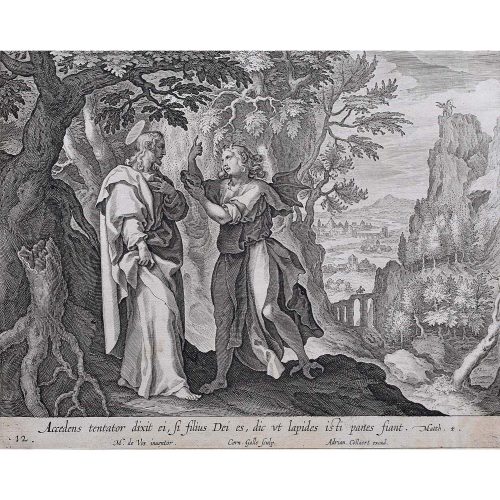
Jean Baptist Barbé (1578?-1649) Adriaen Collaert (c. 1560-1618) after Maerten de Vos (1532 - 1603) 12. Accedens tentator dixit ei fi lius, Dei es, dic vt lapides isti panes fiant. Matt. 4.
Engraving From Vita, Passio, et Resurrectio Iesu Christi first published 1598, this a later edition published by Joannes Galle (1600-1676) 16.5x21.8cm From the Gospel of Matthew, chapter 4 "If thou be the Son of God, command that these stones be made bread" Adriaen Collaert was born in Antwerp between 1555 and 1565, becoming wijnmeester of the Guild of St Luke in 1580 - a title reserved for the sons of guild members. The guild of St Luke was generally the city guild for artists. Working for Philip Galle, a Dutch publisher best known for his old master prints, he married Galle's daughter Justa. After learning the principles of engraving in the Netherlands, he spent some years in Italy improving his skill. Upon returning to Flanders he engraved, in accomplished fashion, a great number of plates. His brother, Jan Collaert II, his son, Jan Baptist Collaert II and a grandson were all printmakers. These particular plates are after paintings by Maerten de Vos, a Flemish painter and draughtsman. His father was Pieter de Vos, from whom he learned. From 1550 - 1558 he travelled in Italy, visiting Rome and Venice and becoming master of the Antwerp Guild of St Luke upon his return in 1558. After 1575 he was mainly engaged in producing print designs. If you are interested email info@manningfineart.co.uk or call us on 07929 749056. Condition: Trimmed to plate margins, generally good condition commensurate with age, slight age toning and handling marks as evident from image. -
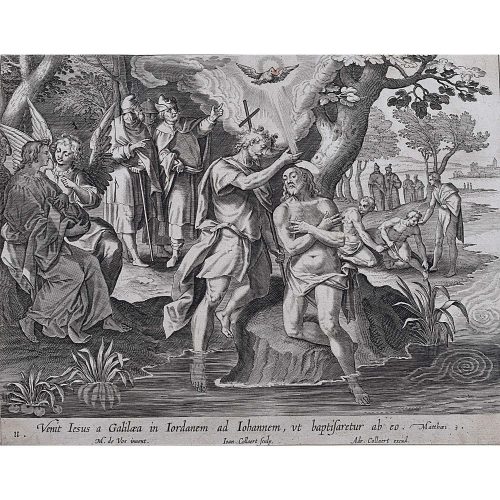
Jean Baptist Barbé (1578?-1649) Adriaen Collaert (c. 1560-1618) after Maerten de Vos (1532 - 1603) 11. Verit Iesus a Galilaea in Iordanem ad Iohannem, vt baptifartur ab eo. Matthew. 3.
Engraving From Vita, Passio, et Resurrectio Iesu Christi first published 1598, this a later edition published by Joannes Galle (1600-1676) 16.5x21.8cm From the Gospel of Matthew, chapter 3 "Then Jesus came from Galilee to the Jordan to be baptized by John." Adriaen Collaert was born in Antwerp between 1555 and 1565, becoming wijnmeester of the Guild of St Luke in 1580 - a title reserved for the sons of guild members. The guild of St Luke was generally the city guild for artists. Working for Philip Galle, a Dutch publisher best known for his old master prints, he married Galle's daughter Justa. After learning the principles of engraving in the Netherlands, he spent some years in Italy improving his skill. Upon returning to Flanders he engraved, in accomplished fashion, a great number of plates. His brother, Jan Collaert II, his son, Jan Baptist Collaert II and a grandson were all printmakers. These particular plates are after paintings by Maerten de Vos, a Flemish painter and draughtsman. His father was Pieter de Vos, from whom he learned. From 1550 - 1558 he travelled in Italy, visiting Rome and Venice and becoming master of the Antwerp Guild of St Luke upon his return in 1558. After 1575 he was mainly engaged in producing print designs. If you are interested email info@manningfineart.co.uk or call us on 07929 749056. Condition: Trimmed to plate margins, generally good condition commensurate with age, slight age toning and handling marks as evident from image. -
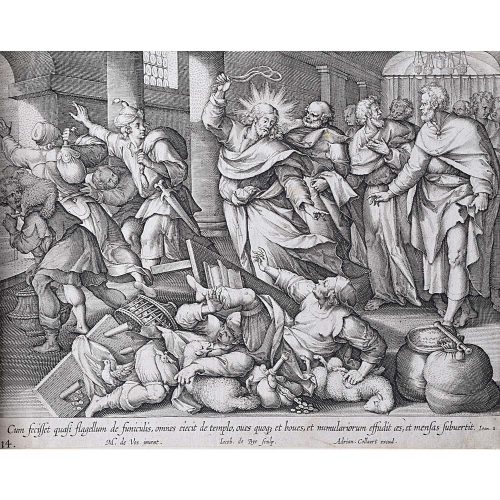
Adriaen Collaert (c. 1560-1618) John de Barbe (1578–1649) after Maerten de Vos (1532 - 1603) 14. Cum fecisset quasi flagellum de funiculis, omnes eiecit de templo, oues quoq et boues, et numulariorum effudit aes, et mensas subuertit. John. 2.
Engraving From Vita, Passio, et Resurrectio Iesu Christi first published 1598, this a later edition published by Joannes Galle (1600-1676) 17.5x22cm Hand-finished black frame included (UK shipping only) From the Gospel of John, chapter 2 "So he made a whip out of cords, and drove all from the temple courts, both sheep and cattle; he scattered the coins of the money changers and overturned their tables”. Adrian Collaert was born in Antwerp between 1555 and 1565, becoming wijnmeester of the Guild of St Luke in 1580 - a title reserved for the sons of guild members. The guild of St Luke was generally the city guild for artists. Working for Philip Galle, a Dutch publisher best known for his old master prints, he married Galle's daughter Justa. After learning the principles of engraving in the Netherlands, he spent some years in Italy improving his skill. Upon returning to Flanders he engraved, in accomplished fashion, a great number of plates. His brother, Jan Collaert II, his son, Jan Baptist Collaert II and a grandson were all printmakers. These particular plates are after paintings by Maerten de Vos, a Flemish painter and draughtsman. His father was Pieter de Vos, from whom he learned. From 1550 - 1558 he travelled in Italy, visiting Rome and Venice and becoming master of the Antwerp Guild of St Luke upon his return in 1558. After 1575 he was mainly engaged in producing print designs. If you are interested email info@manningfineart.co.uk or call us on 07929 749056. Condition: Trimmed to plate margins, generally good condition commensurate with age, slight age toning and handling marks as evident from image. -
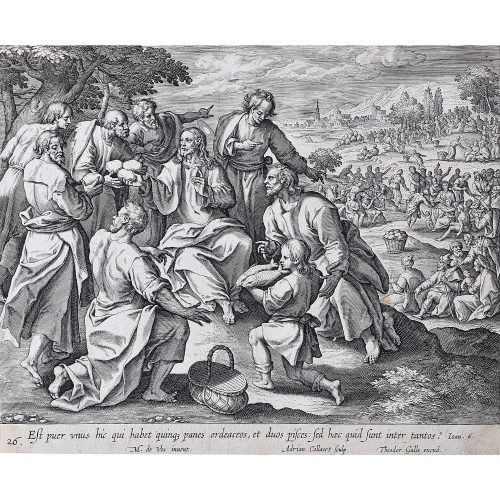
Adriaen Collaert (c. 1560-1618) Theodoor Galle (1571–1633) after Maerten de Vos (1532 - 1603) 26. Est puer vnus hic qui habet quinq panes ordeaceos, et duos: sed haec quid funt tantos? Iohn. 6.
Engraving From Vita, Passio, et Resurrectio Iesu Christi first published 1598, this a later edition published by Joannes Galle (1600-1676) 17.5x22cm From the Gospel of John, chapter 6 "There is a lad here, which hath five barley loaves, one, and two, but what are these for so many?” Adrian Collaert was born in Antwerp between 1555 and 1565, becoming wijnmeester of the Guild of St Luke in 1580 - a title reserved for the sons of guild members. The guild of St Luke was generally the city guild for artists. Working for Philip Galle, a Dutch publisher best known for his old master prints, he married Galle's daughter Justa. After learning the principles of engraving in the Netherlands, he spent some years in Italy improving his skill. Upon returning to Flanders he engraved, in accomplished fashion, a great number of plates. His brother, Jan Collaert II, his son, Jan Baptist Collaert II and a grandson were all printmakers. These particular plates are after paintings by Maerten de Vos, a Flemish painter and draughtsman. His father was Pieter de Vos, from whom he learned. From 1550 - 1558 he travelled in Italy, visiting Rome and Venice and becoming master of the Antwerp Guild of St Luke upon his return in 1558. After 1575 he was mainly engaged in producing print designs. If you are interested email info@manningfineart.co.uk or call us on 07929 749056. Condition: Trimmed to plate margins, generally good condition commensurate with age, slight age toning and handling marks as evident from image. -
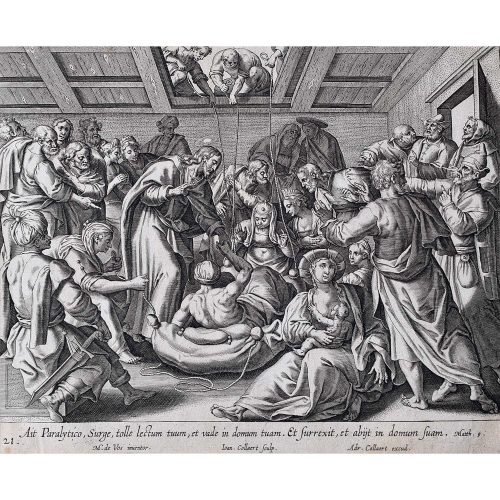
Adriaen Collaert (c. 1560-1618) Jan Collaert (1545–1628) after Maerten de Vos (1532 - 1603) 21. Ait Paralytico, Surge, tolle lectum, et vade in domum tuam. Et surrexit, et abijt in doman suam. Matth. 9.
Engraving From Vita, Passio, et Resurrectio Iesu Christi first published 1598, this a later edition published by Joannes Galle (1600-1676) 17.5x22cm From the Gospel of Matthew, chapter 9 "Get up, pick up your mat, and go home. And the man got up and went home.” Adrian Collaert was born in Antwerp between 1555 and 1565, becoming wijnmeester of the Guild of St Luke in 1580 - a title reserved for the sons of guild members. The guild of St Luke was generally the city guild for artists. Working for Philip Galle, a Dutch publisher best known for his old master prints, he married Galle's daughter Justa. After learning the principles of engraving in the Netherlands, he spent some years in Italy improving his skill. Upon returning to Flanders he engraved, in accomplished fashion, a great number of plates. His brother, Jan Collaert II, his son, Jan Baptist Collaert II and a grandson were all printmakers. These particular plates are after paintings by Maerten de Vos, a Flemish painter and draughtsman. His father was Pieter de Vos, from whom he learned. From 1550 - 1558 he travelled in Italy, visiting Rome and Venice and becoming master of the Antwerp Guild of St Luke upon his return in 1558. After 1575 he was mainly engaged in producing print designs. If you are interested email info@manningfineart.co.uk or call us on 07929 749056. Condition: Trimmed to plate margins, generally good condition commensurate with age, slight age toning and handling marks as evident from image. -
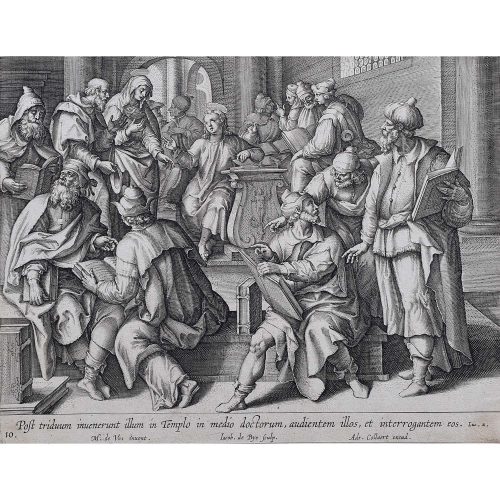
Jean Baptist Barbé (1578?-1649) Adriaen Collaert (c. 1560-1618) after Maerten de Vos (1532 - 1603) 10. Post triduum invenerunt illum in templo in medio doctorum, audientem illos, et interrogante eos. Luc. 2
Engraving From Vita, Passio, et Resurrectio Iesu Christi first published 1598, this a later edition published by Joannes Galle (1600-1676) 16.5x21.8cm From the Gospel of Luke, Chapter 2 After three days they found him in the temple among the doctors, listening to them and asking them questions. Adriaen Collaert was born in Antwerp between 1555 and 1565, becoming wijnmeester of the Guild of St Luke in 1580 - a title reserved for the sons of guild members. The guild of St Luke was generally the city guild for artists. Working for Philip Galle, a Dutch publisher best known for his old master prints, he married Galle's daughter Justa. After learning the principles of engraving in the Netherlands, he spent some years in Italy improving his skill. Upon returning to Flanders he engraved, in accomplished fashion, a great number of plates. His brother, Jan Collaert II, his son, Jan Baptist Collaert II and a grandson were all printmakers. These particular plates are after paintings by Maerten de Vos, a Flemish painter and draughtsman. His father was Pieter de Vos, from whom he learned. From 1550 - 1558 he travelled in Italy, visiting Rome and Venice and becoming master of the Antwerp Guild of St Luke upon his return in 1558. After 1575 he was mainly engaged in producing print designs. If you are interested email info@manningfineart.co.uk or call us on 07929 749056. Condition: Trimmed to plate margins, generally good condition commensurate with age, slight age toning and handling marks as evident from image. -
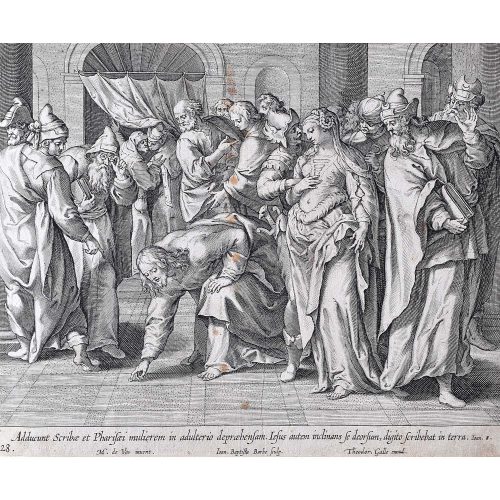
Theodoor Galle (c. 1571-1633) Jean Baptiste Barbe (1578-1649) after Maerten de Vos (1532 - 1603) 28. Adducunt Scibe et Pharisaei mulierem in adulterio deprehensam. Iesus autem inclinans se deorsum, digito scribebat in terra. Iohn. 8.
Engraving From Vita, Passio, et Resurrectio Iesu Christi first published 1598, this a later edition published by Joannes Galle (1600-1676) 17.5x22cm From the Gospel of John, chapter 8 "The scribes and the Pharisees brought a woman who had been caught in adultery, and placing her in the midst they said to him, “Teacher, this woman has been caught in the act of adultery". Jesus bent down and wrote with his finger on the ground.” Adrian Collaert was born in Antwerp between 1555 and 1565, becoming wijnmeester of the Guild of St Luke in 1580 - a title reserved for the sons of guild members. The guild of St Luke was generally the city guild for artists. Working for Philip Galle, a Dutch publisher best known for his old master prints, he married Galle's daughter Justa. After learning the principles of engraving in the Netherlands, he spent some years in Italy improving his skill. Upon returning to Flanders he engraved, in accomplished fashion, a great number of plates. His brother, Jan Collaert II, his son, Jan Baptist Collaert II and a grandson were all printmakers. These particular plates are after paintings by Maerten de Vos, a Flemish painter and draughtsman. His father was Pieter de Vos, from whom he learned. From 1550 - 1558 he travelled in Italy, visiting Rome and Venice and becoming master of the Antwerp Guild of St Luke upon his return in 1558. After 1575 he was mainly engaged in producing print designs. If you are interested email info@manningfineart.co.uk or call us on 07929 749056. Condition: Trimmed to plate margins, generally good condition commensurate with age, slight age toning and handling marks as evident from image. -
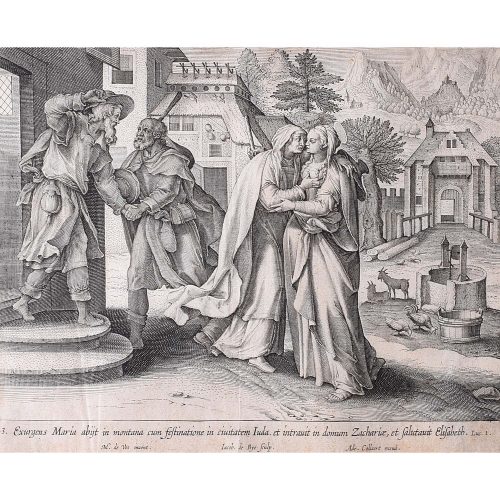
Adriaen Collaert (c. 1560-1618) Jacob de Bye (1581-1640) after Maerten de Vos (1532 - 1603) 3. Exurgens maria abjit in montana cum festinatione in ciuitatem Iuda et intrauit in domum Zacharie, et salutauit Elisabeth . Luc 1.
Engraving From Vita, Passio, et Resurrectio Iesu Christi first published 1598, this a later edition published by Joannes Galle (1600-1676) 17.5x22cm Hand-finished black frame included (UK shipping only) From the Gospel of Luke, chapter 1 "And Mary arose in those days, and went into the hill country with haste, into a city of Juda. And entered into the house of Zacharias, and saluted Elizabeth". Adrian Collaert was born in Antwerp between 1555 and 1565, becoming wijnmeester of the Guild of St Luke in 1580 - a title reserved for the sons of guild members. The guild of St Luke was generally the city guild for artists. Working for Philip Galle, a Dutch publisher best known for his old master prints, he married Galle's daughter Justa. After learning the principles of engraving in the Netherlands, he spent some years in Italy improving his skill. Upon returning to Flanders he engraved, in accomplished fashion, a great number of plates. His brother, Jan Collaert II, his son, Jan Baptist Collaert II and a grandson were all printmakers. These particular plates are after paintings by Maerten de Vos, a Flemish painter and draughtsman. His father was Pieter de Vos, from whom he learned. From 1550 - 1558 he travelled in Italy, visiting Rome and Venice and becoming master of the Antwerp Guild of St Luke upon his return in 1558. After 1575 he was mainly engaged in producing print designs. If you are interested email info@manningfineart.co.uk or call us on 07929 749056. Condition: Trimmed to plate margins, generally good condition commensurate with age, slight age toning and handling marks as evident from image. -
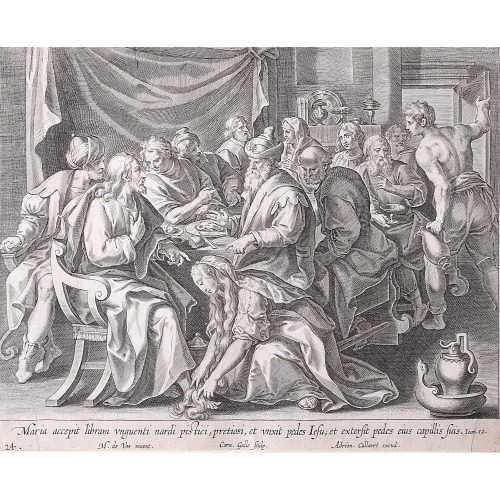
Adriaen Collaert (c. 1560-1618) Cornelius Galle (1576-1650) after Maerten de Vos (1532 - 1603) 24. aria accepit libram unguenti nardi pistici, pretiosti, et vnxit pedes Iefu; et extersit pedes eius capillis suis. John. 12.
Engraving From Vita, Passio, et Resurrectio Iesu Christi first published 1598, this a later edition published by Joannes Galle (1600-1676) 17.5x22cm Hand-finished black frame included (UK shipping only) From the Gospel of John, chapter 12 " Mary therefore took a pound of expensive ointment made from pure nard, and anointed the feet of Jesus and wiped his feet with her hair". Adrian Collaert was born in Antwerp between 1555 and 1565, becoming wijnmeester of the Guild of St Luke in 1580 - a title reserved for the sons of guild members. The guild of St Luke was generally the city guild for artists. Working for Philip Galle, a Dutch publisher best known for his old master prints, he married Galle's daughter Justa. After learning the principles of engraving in the Netherlands, he spent some years in Italy improving his skill. Upon returning to Flanders he engraved, in accomplished fashion, a great number of plates. His brother, Jan Collaert II, his son, Jan Baptist Collaert II and a grandson were all printmakers. These particular plates are after paintings by Maerten de Vos, a Flemish painter and draughtsman. His father was Pieter de Vos, from whom he learned. From 1550 - 1558 he travelled in Italy, visiting Rome and Venice and becoming master of the Antwerp Guild of St Luke upon his return in 1558. After 1575 he was mainly engaged in producing print designs. If you are interested email info@manningfineart.co.uk or call us on 07929 749056. Condition: Trimmed to plate margins, generally good condition commensurate with age, slight age toning and handling marks as evident from image. -
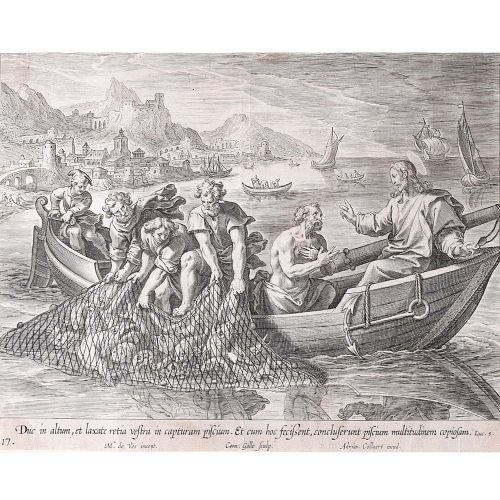
Adriaen Collaert (c. 1560-1618) Cornelius Galle (1576-1650) after Maerten de Vos (1532 - 1603) 17. Duc in altum, et laxate retia vestra in capturam piscium. Et cum hoc fecissent, concluserunt piscium multitudium copiosum. Luke. 5.
Engraving From Vita, Passio, et Resurrectio Iesu Christi first published 1598, this a later edition published by Joannes Galle (1600-1676) 17.5x22cm Hand-finished black frame included (UK shipping only) From the Gospel of Luke, chapter 5 "Put out into the deep and let down your nets for a catch. When they had done this, they enclosed a great quantity of fish". Adrian Collaert was born in Antwerp between 1555 and 1565, becoming wijnmeester of the Guild of St Luke in 1580 - a title reserved for the sons of guild members. The guild of St Luke was generally the city guild for artists. Working for Philip Galle, a Dutch publisher best known for his old master prints, he married Galle's daughter Justa. After learning the principles of engraving in the Netherlands, he spent some years in Italy improving his skill. Upon returning to Flanders he engraved, in accomplished fashion, a great number of plates. His brother, Jan Collaert II, his son, Jan Baptist Collaert II and a grandson were all printmakers. These particular plates are after paintings by Maerten de Vos, a Flemish painter and draughtsman. His father was Pieter de Vos, from whom he learned. From 1550 - 1558 he travelled in Italy, visiting Rome and Venice and becoming master of the Antwerp Guild of St Luke upon his return in 1558. After 1575 he was mainly engaged in producing print designs. If you are interested email info@manningfineart.co.uk or call us on 07929 749056. Condition: Trimmed to plate margins, generally good condition commensurate with age, slight age toning and handling marks as evident from image. -
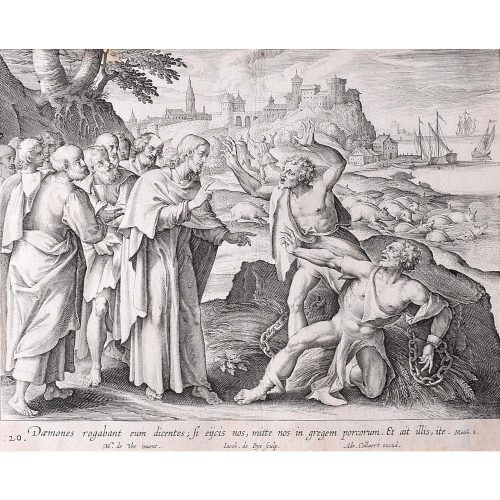
Adriaen Collaert (c. 1560-1618) Jacob de Bye (1581-1640) after Maerten de Vos (1532 - 1603) 20. Daemones rogabant eum dicentes ; si eijcis nos, mitte nos in gregem porcorum. Et ait illis, ite. Matth. 8.
Engraving From Vita, Passio, et Resurrectio Iesu Christi first published 1598, this a later edition published by Joannes Galle (1600-1676) 16.5x21.8cm Hand-finished black frame included (UK shipping only) From the Gospel of Matthew, chapter 8 "The demons begged Jesus, “If you drive us out, send us into the herd. He said to them, “Go!" Adriaen Collaert was born in Antwerp between 1555 and 1565, becoming wijnmeester of the Guild of St Luke in 1580 - a title reserved for the sons of guild members. The guild of St Luke was generally the city guild for artists. Working for Philip Galle, a Dutch publisher best known for his old master prints, he married Galle's daughter Justa. After learning the principles of engraving in the Netherlands, he spent some years in Italy improving his skill. Upon returning to Flanders he engraved, in accomplished fashion, a great number of plates. His brother, Jan Collaert II, his son, Jan Baptist Collaert II and a grandson were all printmakers. These particular plates are after paintings by Maerten de Vos, a Flemish painter and draughtsman. His father was Pieter de Vos, from whom he learned. From 1550 - 1558 he travelled in Italy, visiting Rome and Venice and becoming master of the Antwerp Guild of St Luke upon his return in 1558. After 1575 he was mainly engaged in producing print designs. If you are interested email info@manningfineart.co.uk or call us on 07929 749056. Condition: Trimmed to plate margins, generally good condition commensurate with age, slight age toning and handling marks as evident from image. -
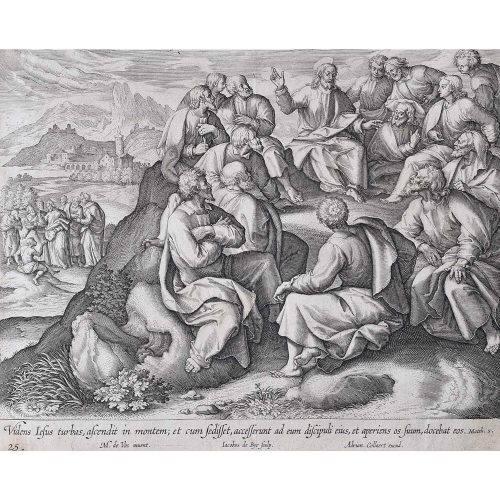
Adriaen Collaert (c. 1560-1618) Jacob de Bye (1581–1640) after Maerten de Vos (1532 - 1603) 25. Videns Iesus turbas, ascendit in montem; et cum sedisset, accesserunt ad eum discipuli eius, et aperiens os suum, docebat eos. Matth. 5.
Engraving From Vita, Passio, et Resurrectio Iesu Christi first published 1598, this a later edition published by Joannes Galle (1600-1676) 17.5x22cm From the Gospel of Matthew, chapter 5 "And seeing the multitudes, He went up on a mountain, and when He was seated His disciples came to Him.” Adrian Collaert was born in Antwerp between 1555 and 1565, becoming wijnmeester of the Guild of St Luke in 1580 - a title reserved for the sons of guild members. The guild of St Luke was generally the city guild for artists. Working for Philip Galle, a Dutch publisher best known for his old master prints, he married Galle's daughter Justa. After learning the principles of engraving in the Netherlands, he spent some years in Italy improving his skill. Upon returning to Flanders he engraved, in accomplished fashion, a great number of plates. His brother, Jan Collaert II, his son, Jan Baptist Collaert II and a grandson were all printmakers. These particular plates are after paintings by Maerten de Vos, a Flemish painter and draughtsman. His father was Pieter de Vos, from whom he learned. From 1550 - 1558 he travelled in Italy, visiting Rome and Venice and becoming master of the Antwerp Guild of St Luke upon his return in 1558. After 1575 he was mainly engaged in producing print designs. If you are interested email info@manningfineart.co.uk or call us on 07929 749056. Condition: Trimmed to plate margins, generally good condition commensurate with age, slight age toning and handling marks as evident from image. -
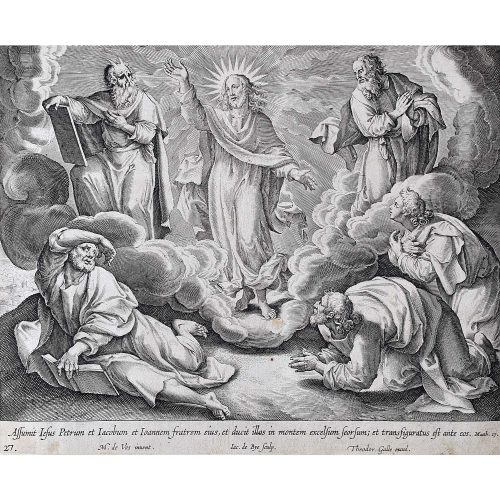
Adriaen Collaert (c. 1560-1618) Jacob de Bye (1685-?) after Maerten de Vos (1532 - 1603) 27. Assumit Iesus Petrum et Iacobum et Ioannem fratrem eius, et ducit illos in montem excelsum seorsum; et transfiguratus est eos. Matth. 17.
Engraving From Vita, Passio, et Resurrectio Iesu Christi first published 1598, this a later edition published by Joannes Galle (1600-1676) 17.5x22cm From the Gospel of Matthew, chapter 17 "After six days Jesus took with him Peter, James and John the brother of James, and led them up a high mountain by themselves. There he was transfigured before them.” Adrian Collaert was born in Antwerp between 1555 and 1565, becoming wijnmeester of the Guild of St Luke in 1580 - a title reserved for the sons of guild members. The guild of St Luke was generally the city guild for artists. Working for Philip Galle, a Dutch publisher best known for his old master prints, he married Galle's daughter Justa. After learning the principles of engraving in the Netherlands, he spent some years in Italy improving his skill. Upon returning to Flanders he engraved, in accomplished fashion, a great number of plates. His brother, Jan Collaert II, his son, Jan Baptist Collaert II and a grandson were all printmakers. These particular plates are after paintings by Maerten de Vos, a Flemish painter and draughtsman. His father was Pieter de Vos, from whom he learned. From 1550 - 1558 he travelled in Italy, visiting Rome and Venice and becoming master of the Antwerp Guild of St Luke upon his return in 1558. After 1575 he was mainly engaged in producing print designs. If you are interested email info@manningfineart.co.uk or call us on 07929 749056. Condition: Trimmed to plate margins, generally good condition commensurate with age, slight age toning and handling marks as evident from image. -
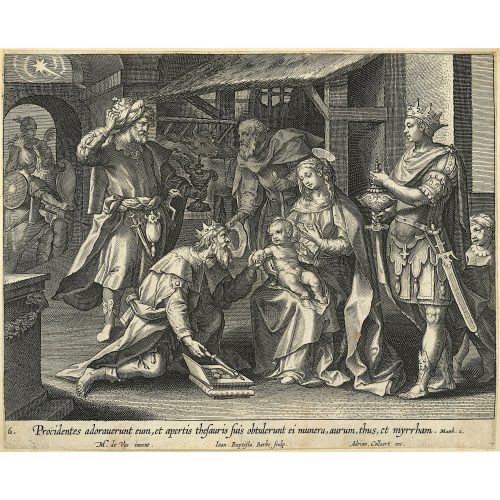
Jean Baptist Barbé (1578?-1649) Adriaen Collaert (c. 1560-1618) after Maerten de Vos (1532 - 1603) 6. "Procidentes adoravuerunt eum, et apertis thesauris suis obtulerunt ei munera, aurum, thus, et myrrham" - Matth 2
Engraving From Vita, Passio, et Resurrectio Iesu Christi first published 1598, this a later edition published by Joannes Galle (1600-1676) 16.5x21.8cm From the Gospel of Matthew, Chapter 2 Verse 11 - and fell down and worshipped him: and when they had opened their treasures, they presented unto him gifts; gold, and frankincense and myrrh. The star hangs over the stable door, as the three Magi present their treasures to Our Lord, sitting upon Mary's knee, St Joseph in attendance behind. Adriaen Collaert was born in Antwerp between 1555 and 1565, becoming wijnmeester of the Guild of St Luke in 1580 - a title reserved for the sons of guild members. The guild of St Luke was generally the city guild for artists. Working for Philip Galle, a Dutch publisher best known for his old master prints, he married Galle's daughter Justa. After learning the principles of engraving in the Netherlands, he spent some years in Italy improving his skill. Upon returning to Flanders he engraved, in accomplished fashion, a great number of plates. His brother, Jan Collaert II, his son, Jan Baptist Collaert II and a grandson were all printmakers. These particular plates are after paintings by Maerten de Vos, a Flemish painter and draughtsman. His father was Pieter de Vos, from whom he learned. From 1550 - 1558 he travelled in Italy, visiting Rome and Venice and becoming master of the Antwerp Guild of St Luke upon his return in 1558. After 1575 he was mainly engaged in producing print designs. If you are interested email info@manningfineart.co.uk or call us on 07929 749056. Condition: Trimmed to plate margins, generally good condition commensurate with age, slight age toning and handling marks as evident from image. -
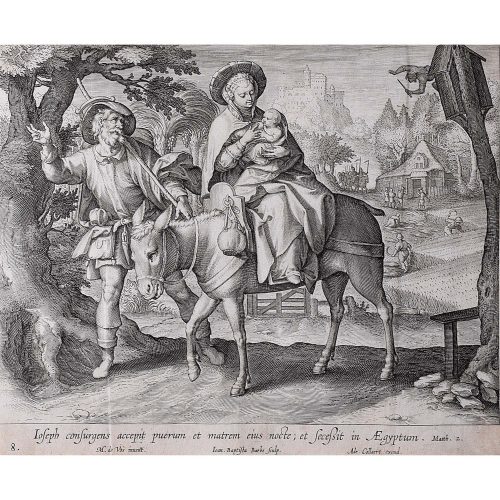
Adriaen Collaert (c. 1560-1618) John de Barbe (1578–1649) after Maerten de Vos (1532 - 1603) 8. Ioseph consurgens accepit puerum et matrem eius nocte; et secessit in Aegyptum. Matth. 2.
Engraving From Vita, Passio, et Resurrectio Iesu Christi first published 1598, this a later edition published by Joannes Galle (1600-1676) 17.5x22cm Hand-finished black frame included (UK shipping only) From the Gospel of Matthew, chapter 2 "Joseph arose, he took the young child and his mother by night; and left for Egypt". Adrian Collaert was born in Antwerp between 1555 and 1565, becoming wijnmeester of the Guild of St Luke in 1580 - a title reserved for the sons of guild members. The guild of St Luke was generally the city guild for artists. Working for Philip Galle, a Dutch publisher best known for his old master prints, he married Galle's daughter Justa. After learning the principles of engraving in the Netherlands, he spent some years in Italy improving his skill. Upon returning to Flanders he engraved, in accomplished fashion, a great number of plates. His brother, Jan Collaert II, his son, Jan Baptist Collaert II and a grandson were all printmakers. These particular plates are after paintings by Maerten de Vos, a Flemish painter and draughtsman. His father was Pieter de Vos, from whom he learned. From 1550 - 1558 he travelled in Italy, visiting Rome and Venice and becoming master of the Antwerp Guild of St Luke upon his return in 1558. After 1575 he was mainly engaged in producing print designs. If you are interested email info@manningfineart.co.uk or call us on 07929 749056. Condition: Trimmed to plate margins, generally good condition commensurate with age, slight age toning and handling marks as evident from image. -
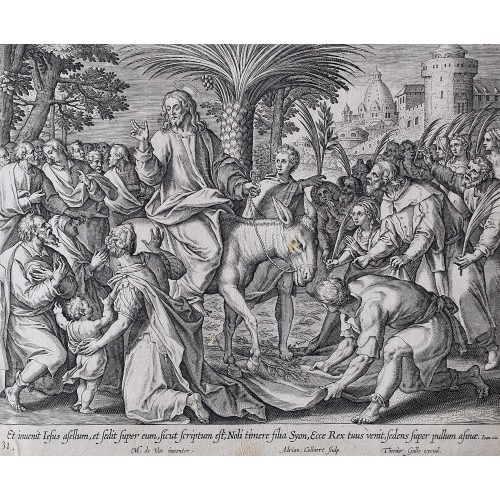
Adrian Collaert (1560–1618) Theodoor Galle (c. 1571-1633) after Maerten de Vos (1532 - 1603) 31. Et inuenit Iesus afellum, et sedit super eum, sicut scriptum est; Noli timere filia Syon, Ecce Rex tuus venit, sedens super pullion asine. Iohn. 12.
Engraving From Vita, Passio, et Resurrectio Iesu Christi first published 1598, this a later edition published by Joannes Galle (1600-1676) 17.5x22cm From the Gospel of John, chapter 12 "Finding a young donkey, Jesus sat on it, as it is written: Fear not, daughter of Zion; Behold, your King is coming, Sitting on a donkey’s colt." Adrian Collaert was born in Antwerp between 1555 and 1565, becoming wijnmeester of the Guild of St Luke in 1580 - a title reserved for the sons of guild members. The guild of St Luke was generally the city guild for artists. Working for Philip Galle, a Dutch publisher best known for his old master prints, he married Galle's daughter Justa. After learning the principles of engraving in the Netherlands, he spent some years in Italy improving his skill. Upon returning to Flanders he engraved, in accomplished fashion, a great number of plates. His brother, Jan Collaert II, his son, Jan Baptist Collaert II and a grandson were all printmakers. These particular plates are after paintings by Maerten de Vos, a Flemish painter and draughtsman. His father was Pieter de Vos, from whom he learned. From 1550 - 1558 he travelled in Italy, visiting Rome and Venice and becoming master of the Antwerp Guild of St Luke upon his return in 1558. After 1575 he was mainly engaged in producing print designs. If you are interested email info@manningfineart.co.uk or call us on 07929 749056. Condition: Trimmed to plate margins, generally good condition commensurate with age, slight age toning and handling marks as evident from image. -
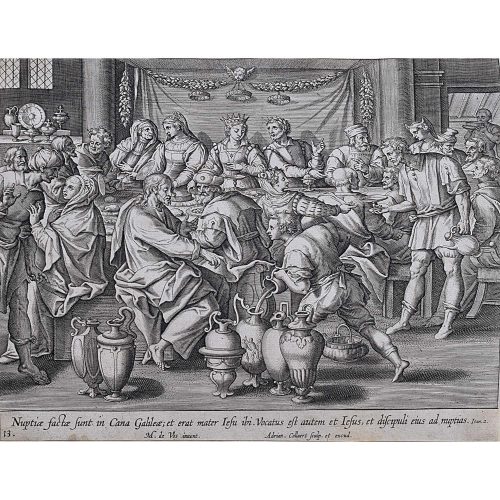
Jean Baptist Barbé (1578?-1649) Adriaen Collaert (c. 1560-1618) after Maerten de Vos (1532 - 1603) 13. nuptia facta sunt in cana galilaeae; et erat mater Iefu ibi. Vocatus eft autem et Iefus, et difcipuli eius ad nuptias. Ioan. 2.
Engraving From Vita, Passio, et Resurrectio Iesu Christi first published 1598, this a later edition published by Joannes Galle (1600-1676) 16.5x21.8cm From the Gospel of John, chapter 2 "On the third day a wedding took place at Cana in Galilee. Jesus’ mother was there, and Jesus and His disciples had also been invited to the wedding. When the wine ran out, Jesus’ mother said to Him, “They have no more wine." Adriaen Collaert was born in Antwerp between 1555 and 1565, becoming wijnmeester of the Guild of St Luke in 1580 - a title reserved for the sons of guild members. The guild of St Luke was generally the city guild for artists. Working for Philip Galle, a Dutch publisher best known for his old master prints, he married Galle's daughter Justa. After learning the principles of engraving in the Netherlands, he spent some years in Italy improving his skill. Upon returning to Flanders he engraved, in accomplished fashion, a great number of plates. His brother, Jan Collaert II, his son, Jan Baptist Collaert II and a grandson were all printmakers. These particular plates are after paintings by Maerten de Vos, a Flemish painter and draughtsman. His father was Pieter de Vos, from whom he learned. From 1550 - 1558 he travelled in Italy, visiting Rome and Venice and becoming master of the Antwerp Guild of St Luke upon his return in 1558. After 1575 he was mainly engaged in producing print designs. If you are interested email info@manningfineart.co.uk or call us on 07929 749056. Condition: Trimmed to plate margins, generally good condition commensurate with age, slight age toning and handling marks as evident from image. -
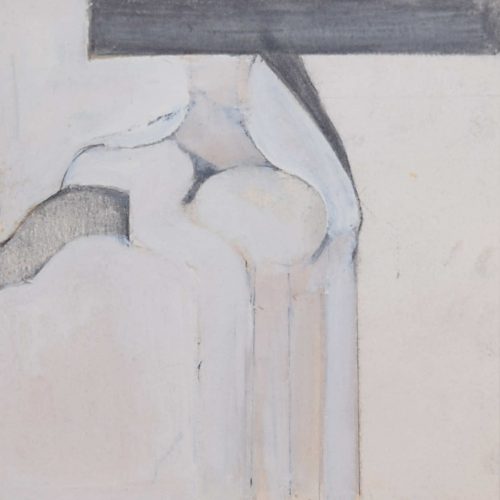
Adrian Heath Abstract Study III (1975)
Acrylic and pencil on paper 22 x 22cm Heath was born in Burma in 1920 and arrived in England aged five. In 1938 he studied art under Stanhope Forbes at Newlyn and later at the Slade School of Art. While serving in WWII, he was captured and placed in a prisoner-of-war camp in Bavaria. Heath attempted to escape from the camp but was recaptured and placed in solitary confinement; this isolation proved crucial to the development of his artistic style, as he spent much of his time there experimenting with abstract forms. When released from confinement, Heath befriended a fellow prisoner of war: Terry Frost. Together they explored the methods of painting which they had developed during their time in the camps, and following the war both became celebrated artists. We have several Terry Frost pieces available too. In 1949 and 1951, Heath returned to Cornwall. He spent time with artists like Ben Nicholson, Victor Pasmore, and Anthony Hill, and became the main link between the emerging St Ives School of artists and the British Constructivist movement back in London. He is further credited with promoting British abstract art through informal exhibitions in his studio on Fitzroy Street, as well as his manifesto-like text entitled 'Abstract Art: Its Origins and Meaning', which was published in 1953. Over time, Heath's paintings of abstract geometry and symmetry became increasingly dynamic and heavily textured, the result of layering paint on paint over the course of several days. This study features a muted colour palette and abstract asymmetric form. If you'd like to know more, please email info@manningfineart.co.uk or call us on 07929 749056. Condition: Good. Signed lower right. -
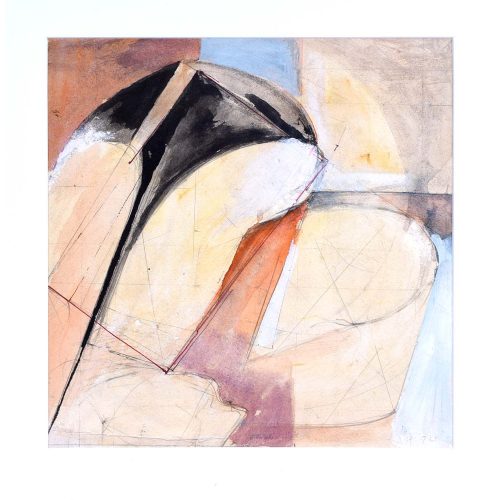
Adrian Heath Abstract Study I (1970)
Gouache & ink 35x33cm Heath was born in Burma in 1920 and arrived in England aged five. In 1938 he studied art under Stanhope Forbes at Newlyn and later at the Slade School of Art. While serving in WWII, he was captured and placed in a prisoner-of-war camp in Bavaria. Heath attempted to escape from the camp but was recaptured and placed in solitary confinement; this isolation proved crucial to the development of his artistic style, as he spent much of his time there experimenting with abstract forms. When released from confinement, Heath befriended a fellow prisoner of war: Terry Frost. Together they explored the methods of painting which they had developed during their time in the camps, and following the war both became celebrated artists. We have several Terry Frost pieces available too. In 1949 and 1951, Heath returned to Cornwall. He spent time with artists like Ben Nicholson, Victor Pasmore, and Anthony Hill, and became the main link between the emerging St Ives School of artists and the British Constructivist movement back in London. He is further credited with promoting British abstract art through informal exhibitions in his studio on Fitzroy Street, as well as his manifesto-like text entitled 'Abstract Art: Its Origins and Meaning', which was published in 1953. Over time, Heath's paintings of abstract geometry and symmetry became increasingly dynamic and heavily textured, the result of layering paint on paint over the course of several days. Here, his colour palette surrenders to the compelling geometry of the painting's abstract forms. If you'd like to know more, please email info@manningfineart.co.uk or call us on 07929 749056. Condition: Good. -
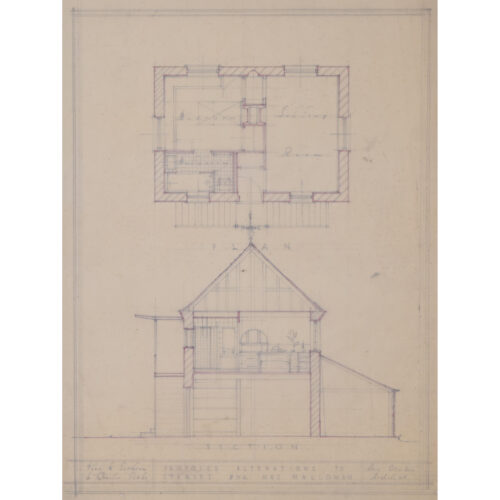
Louis Osman FRIBA (1914 - 1996)
Proposed alterations for Stables for Mrs Mallowan (Agatha Christie)
Pencil on tracing paper 41 x 30 cm Signed in red crayon lower right. A smart architectural design to improve famed author Agatha Christie's stable block. Christie became Lady Mallowan when she married her second husband, Sir Max Edgar Lucien Mallowan. The church was bombed in 1941 and gutted by fire; subsequently, the church was a ruin open to the sky for over 20 years. It was saved by Lady Parker of Waddington, who formed the Friends of St John's in 1962 to raise money and restore the church to its former glory - a reconstruction in the style of the church's original architect, Thomas Archer. Osman was as much an artist as an architect. This is likely a portfolio piece from his time studying at the Bartlett School of Architecture, and is as such a piece of architectural history as well as a beautiful Osman design. Osman was awarded a First Class degree and the Donaldson Medal of the RIBA (for the best result in his year group) by the Bartlett, and then went on to the Slade School of Art. He subsequently trained with Sir Albert Richardson - we also have several Richardson works in our collection. After the war, Osman busied himself as an architect. His work included contributions to Westminster Abbey, and Lincoln, Exeter, Ely, and Lichfield Cathedrals, Staunton Harold Church in Ashby de la Zouch for the National Trust, and of course his folly: the Grade I listed Elizabethan manor house, Canons Ashby in Northamptonshire, now a National Trust property. At Canons Ashby he established a workshop and had a team of silversmiths and goldsmiths working for him. In 1976 he made the gold enamelled coffin that holds the copy of the Magna Carta on view in the United States Capitol, Washington, DC. Condition: generally very good. If you’d like to know more, please email info@manningfineart.co.uk or call us on 07929 749056. -

Air France Vacances - Espagne
Original vintage poster 100 x 66 cm This Air France poster encourages French tourists to travel to Spain. Pictured is a woman dressed in traditional Spanish dress, holding a flag with the insignia of the airline. Conditi0n: Generally very good; small repaired areas to two top corners, approx 1 sq cm, small old tape stains to reverse at bottom corners. If you are interested, please email info@manningfineart.co.uk or call us on 07929 749056. Click here for other original vintage travel posters. -

Air France Vacances - Allemagne
Original vintage poster 100 x 66 cm This Air France poster encourages French tourists to travel to Germany. Pictured is the Römer in Frankfurt, a medieval building which has served as the town's city hall for over six hundred years. Condition: generally very good; a few little edge creases top right. If you are interested, please email info@manningfineart.co.uk or call us on 07929 749056. Click here for other original vintage travel posters. -
 Anonymous Air Raid Charcoal sketch 34 x 43 cm At first glance, this charcoal sketch seems fairly innocuous, after all it seems to simply depict a series of parked military vehicles at an operational centre. Look more closely, however, and you will notice the fleet of German bombers flying in formation, swooping through the air. Look even closer and you will notice the clusters of lines radiating outwards: bombs are falling, buildings are being hit and dust is clouding the air. The base has been hit no less than four times and the chaos seems to stretch beyond the narrow frames of this sketch as the bombers fly into the horizon. Condition: generally very good.
If you would like to know more, please email info@manningfineart.co.uk or call us on 07929 749056.
-
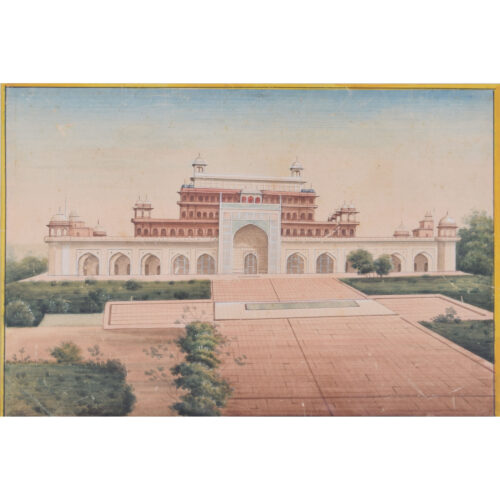
Akbar's Tomb, Agra
Watercolour 13 x 20 cmA 20th century watercolour by an unknown artist of Akbar's Tomb, Agra, the mausoleum of the Mughal emperor Akbar. We have three other Indian architectural views by the same artist available.Condition: generally very good; one or two small scratches as visible in photographs. If you are interested, please email info@manningfineart.co.uk or call us on 07929 749056. Click here for other works from the same series.