-
Out of stock
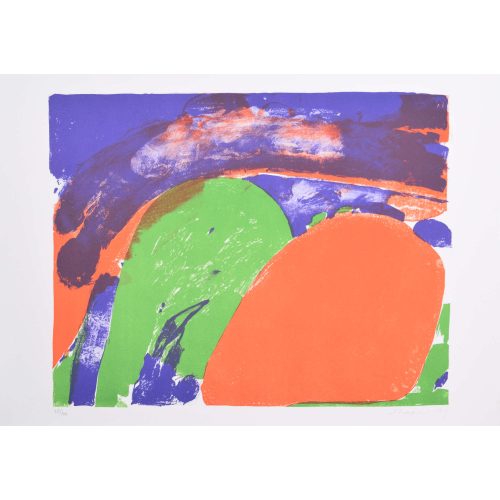
Shmuel Shapiro (1924 - 1983) Two Lovers (1966)
Original lithograph on handmade Barcham Green paper 34 x 44 cm (sheet size 40 x 57 cm) Signed, dated, and numbered 75/100 in pencil. Published and printed at the Curwen Studio, London, in 1966. Shapiro was an American Jewish artist. This typically emotive but unusually colourful work conveys the passion that accompanies true love, with the green and orange forms pressing desperately against one another. An example of this lithograph is held in the Tate Gallery's permanent print collection. Provenance: acquired directly from the Curwen Archive. Condition: excellent. If you’d like to know more, please email info@manningfineart.co.uk or call us on 07929 749056. -
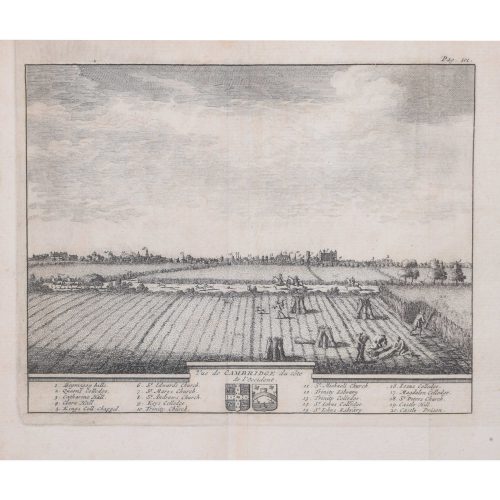
Pieter van der Aa (1659-1733), after David Loggan (1634–1692)
Cambridge from the East (1727)
Engraving 12 x 16 cm An eighteenth-century view of Cambridge from the East, engraved by Pieter van der Aa after David Loggan, the noted engraver, draughtsman, and painter who specialised in engravings of Oxford and Cambridge. A wide Cambridgeshire sky opens out over the harvest scene; in the background, the spires of the city's skyline are numbered, and identified below. A fascinating engraving which muses on the relationship between the city and its University. Pieter van der Aa of Leiden was a Dutch publisher best known for preparing maps and atlases, though he also printed editions of foreign bestsellers and illustrated volumes. He is noted for the many engravings he produced after David Loggan's series of Oxford and Cambridge colleges and costumes. In 1727 Van Der Aa illustrated "Les Delices de la Grande Bretagne & de L'Irelande" by James Beeverell, the book in which this engraving appears. Condition: generally very good. If you’d like to know more, please email info@manningfineart.co.uk or call us on 07929 749056. -
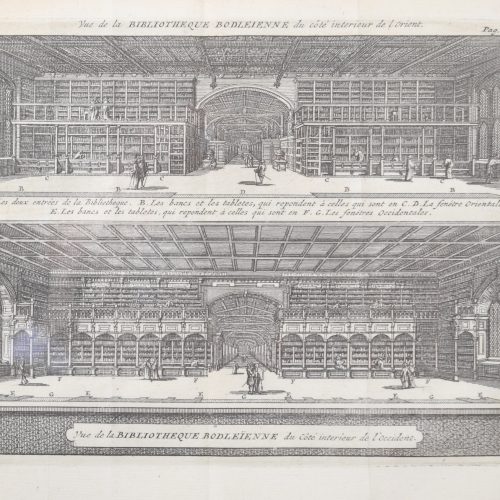
Pieter van der Aa (1659-1733), after David Loggan (1634–1692)
The Bodleian Library, University of Oxford
Engraving (1727) 12 x 16 cm An eighteenth-century view of the interior of the Bodleian Library, engraved by Pieter van der Aa after David Loggan, the noted engraver, draughtsman, and painter. Pieter van der Aa of Leiden was a Dutch publisher best known for preparing maps and atlases, though he also printed editions of foreign bestsellers and illustrated volumes. He is noted for the many engravings he produced after David Loggan's series of Oxford and Cambridge colleges and costumes. In 1727 Van Der Aa illustrated "Les Delices de la Grande Bretagne & de L'Irelande" by James Beeverell, the book in which this engraving appears. Condition: a good impression. If you are interested, please email info@manningfineart.co.uk or call us on 07929 749056. -
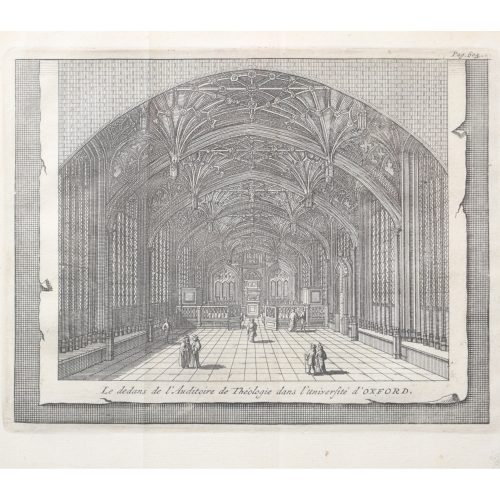
Pieter van der Aa (1659-1733), after David Loggan (1634–1692)
The Divinity School, University of Oxford
Engraving (1727) 12 x 16 cm An eighteenth-century view of Oxford's medieval Divinity School, which was once the beating heart of theological studies at the University. The scene is engraved by Pieter van der Aa after David Loggan, the noted engraver, draughtsman, and painter. Of particular interest here is the trompe l'oeil piece of torn paper which frames the Divinity School view. Pieter van der Aa of Leiden was a Dutch publisher best known for preparing maps and atlases, though he also printed editions of foreign bestsellers and illustrated volumes. He is noted for the many engravings he produced after David Loggan's series of Oxford and Cambridge colleges and costumes. In 1727 Van Der Aa illustrated "Les Delices de la Grande Bretagne & de L'Irelande" by James Beeverell, the book in which this engraving appears. Condition: a good impression. If you are interested, please email info@manningfineart.co.uk or call us on 07929 749056. -
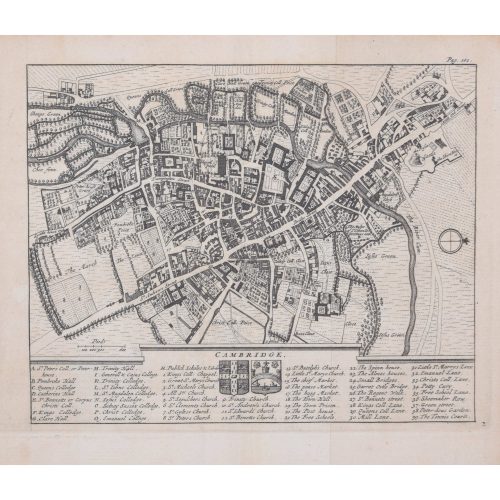
Pieter van der Aa (1659-1733), after David Loggan (1634–1692)
Map of Cambridge
Engraving (1727) 12 x 16 cm An eighteenth-century map of Cambridge engraved by Pieter van der Aa after David Loggan, the noted engraver, draughtsman, and painter who specialised in engravings of Oxford and Cambridge. Loggan's vision illustrates the inimitable layout of Cambridge; the River Cam, Bridge Street, and Trumpington Street bend across the map like arteries. Pieter van der Aa of Leiden was a Dutch publisher best known for preparing maps and atlases, though he also printed editions of foreign bestsellers and illustrated volumes. He is noted for the many engravings he produced after David Loggan's series of Oxford and Cambridge colleges and costumes. In 1727 Van Der Aa illustrated "Les Delices de la Grande Bretagne & de L'Irelande" by James Beeverell, the book in which this engraving appears. If you are interested, please email info@manningfineart.co.uk or call us on 07929 749056. -
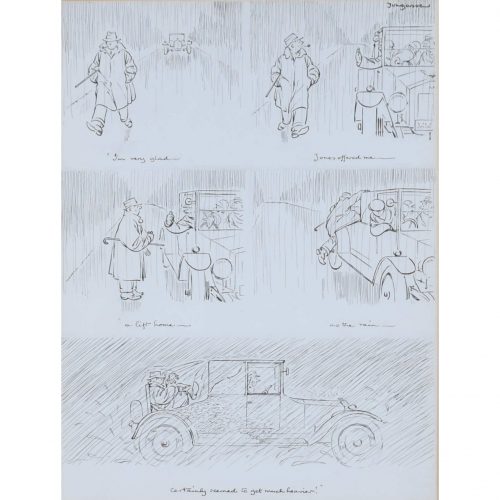
Fougasse (Cyril Kenneth Bird, 1887 - 1965)
'I'm very glad Jones offered me a lift home as the rain certainly seemed to get much heavier!' (1966)
Pen and ink 32 x 24 cm Signed upper right. Cyril Kenneth Bird, under the name Fougasse, was a British cartoonist. He was art editor of Punch 1937 - 1949, and subsequently editor until 1953. He is best known for his ‘Careless Talk Costs Lives’ series of posters, and produced many other posters for the Ministry of Information and London Underground. His pen and ink cartoons for Punch are some of his gentlest and funniest works. Provenance: The Fine Art Society Ltd., 148 New Bond Street, June 1966. If you’d like to know more, please email info@manningfineart.co.uk or call us on 07929 749056. -
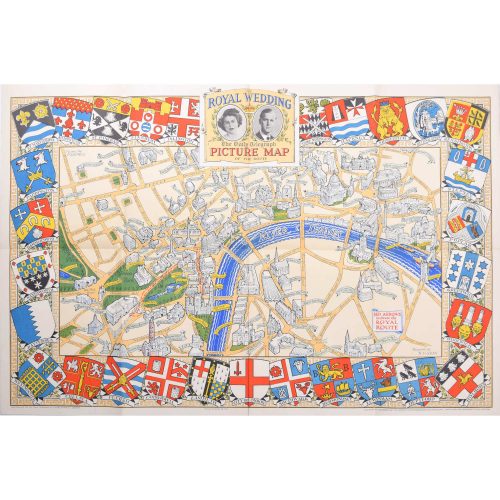
N. V. Gray
The Royal Wedding: Picture Map of the Route through London (1947)
Lithograph 50 x 76 cm Produced by H.A. & W.L. Pitkin Ltd for the Daily Telegraph and published by Geographia Ltd., of Hutchinson & Co. Signed in plate lower right. Complete with slip showing the genealogy of the two parties. Princess Elizabeth (later Her Majesty Queen Elizabeth II) and Prince Philip married on Thursday 20th November 1947 at Westminster Abbey in London. This map, commissioned and sold by the Daily Telegraph newspaper, was designed by N. V. Gray. It depicts the route the carriage processions took on the way to the Abbey; Princess Elizabeth and her father King George Vi travelled in the magnificent Irish State Coach. Crests of London's boroughs border this delightfully coloured map. If you’d like to know more, please email info@manningfineart.co.uk or call us on 07929 749056. -
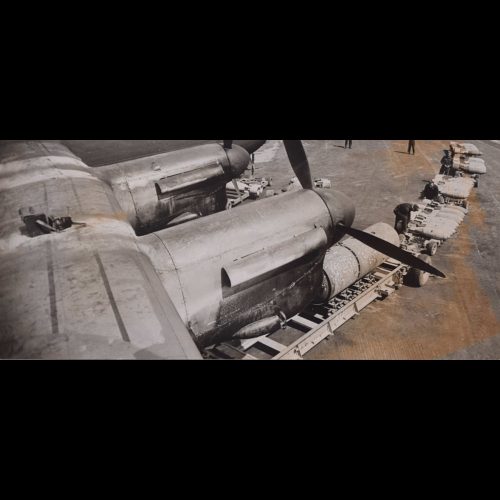
Lancaster Bomber Arming D-Day + 1
Original Silver Gelatin photograph, c. 1944 11 x 25 cm Stamped to reverse "Certified by Fox Photos Ltd as passed by censor, Press and Censorship Bureau" "Thousands of Planes Keep Up the Offensive "Thousands of planes are continuously taking part in the new offensive for the liberation of Europe. "Photograph shows: Ground staff loading up a Lancaster with a cookie and 1,000 lb bombs, ready for the new offensive. The air crew and bomb train are dwarfed when seen on the ground from one of the huge bombers. "Fox June 7 '44." D-Day was 6 June 1944 Provenance: from the collection of Philip J R Moyes, author of many books on the RAF, most notably The Pictorial History which ran to several volumes. Condition: photograph has discoloured in some areas. -
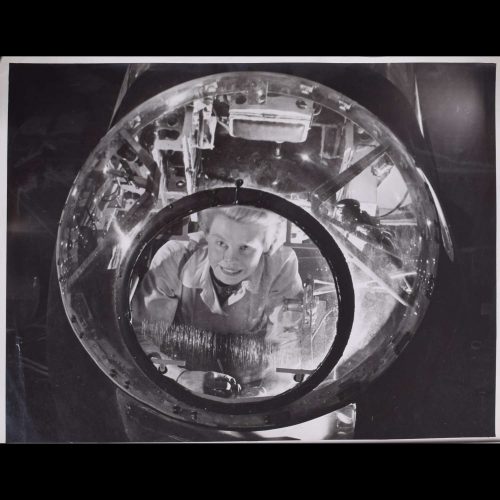
Birth of a Lancaster
Original Silver Gelatin photograph, 1942 19 x 25 cm Stamped to reverse "Topical Press Agency Limited, Red Lion Court, Fleet Street London" and (partially obscured) "Certified by Topical Press Agency as passed by censor" "The Avro Lancaster - the fastest and greatest load carrier of all the world's heavy bombers, and scourge of the Germans from Cologne to Gdynia, Rostock to Augsburg near Munich, is now being produced so speedily that fresh squadrons are being equipped weekly, and nightly spread terror and destruction through the German industrial centres. "Photo shown: a girl inspector goes over every detail of fitting work in the bomber's nose. She is occupying the position that the bomb aimer will take on operational work. Every small part of the plane has undergone stringent inspection. "Ref number Y7119 Topical Press 2/9/42" There is nothing new in the world, a pretty girl always captures the attention of the photographer. In war-torn Britain, of course, the contribution of women to the war effort was hugely important, replacing men in factories so that the men could go off to war. Provenance: from the collection of Philip J R Moyes, author of many books on the RAF, most notably The Pictorial History which ran to several volumes. Condition: mostly good. -
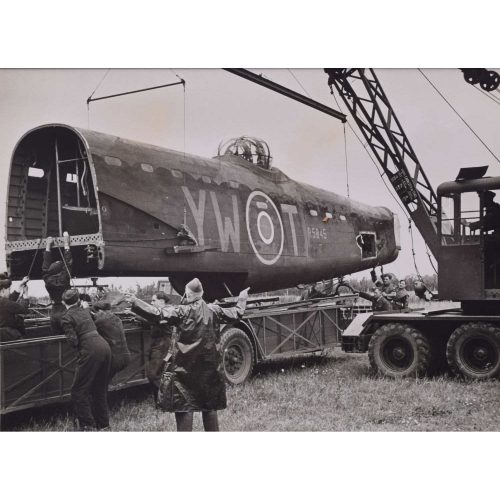
Lancaster Bomber R5845 YW-T
Original Silver Gelatin photograph 19 x 25 cm Stamped to reverse "Copyright Hulton Press Ltd" The RAF Maintenance Unit are recovering R5845 which was on the strength of 1660 Heavy Conversion Unit Winthorpe in October 1943 from the runway. Newark Air Museum have another photograph - included in the attached photographs, but not available for sale - of the entire aeroplane on a string of Queen Mary trailers. R5845 was finally written off on the night of 18/19 July 1944 on a mission to destroy a railway junction at Revigny in France. With 11 x 1000lb and 3 x 500lb bombs nothing was heard of the aircraft after takeoff and it failed to return to base. Following the war it was established that it was intercepted by a night fighter on its way home. Four of the crew evaded capture, and one was made PoW, the Pilot F/O TEW Davis of RAAF being buried in the churchyard at Heiltz-le-Maurupt, Marne, France. Provenance: from the collection of Philip J R Moyes, author of many books on the RAF, most notably The Pictorial History which ran to several volumes. Condition: mostly good. -
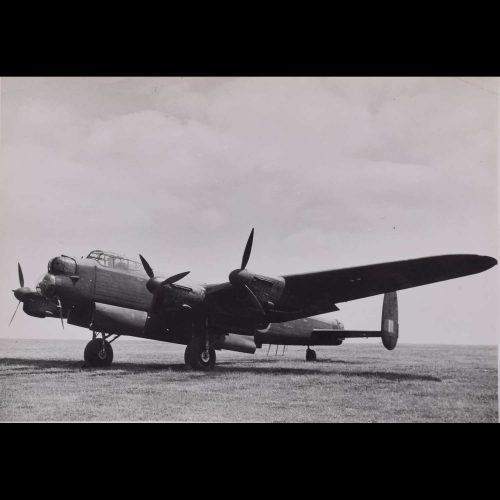
Lancaster HK543
Original Silver Gelatin photograph 19 x 25 cm Stamped to reverse "Copyright 'the Aeroplane'" 23 July 1945 HK543 was a Lancaster III, probably produced in 1943. Here she is shown in July 1945, she was recorded photgraphically on bombing trials from Boscombe Down that month, this photograph may reasonably be assumed to be from that event. Provenance: from the collection of Philip J R Moyes, author of many books on the RAF, most notably The Pictorial History which ran to several volumes. Condition: mostly good. -
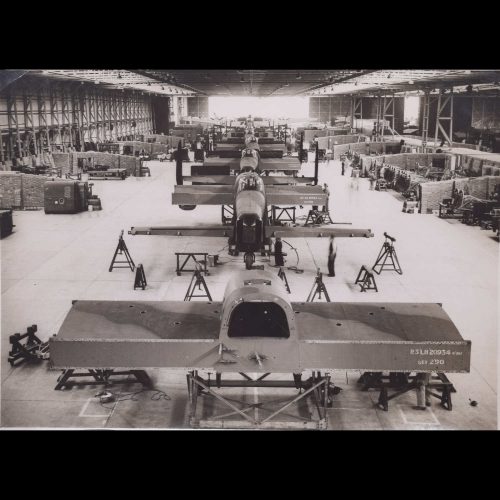
Lancaster Bombers under Construction
Original Silver Gelatin photograph 17 x 21 cm Stamped to reverse 'Certified by Photographic News Agencies Ltd as passed by Censor' '23 Oct 1942' This photograph shows the parts of a Lancaster bomber being assembled. At the back of the photograph, facing away from the viewer, are two nearly or newly completed aircraft, their airscrews visible attached to the wings. The factory buzzes with activity as important war work is undertaken. We have been unable to trace any other copy of this photograph. Provenance: from the collection of Philip J R Moyes, author of many books on the RAF, most notably The Pictorial History which ran to several volumes. -
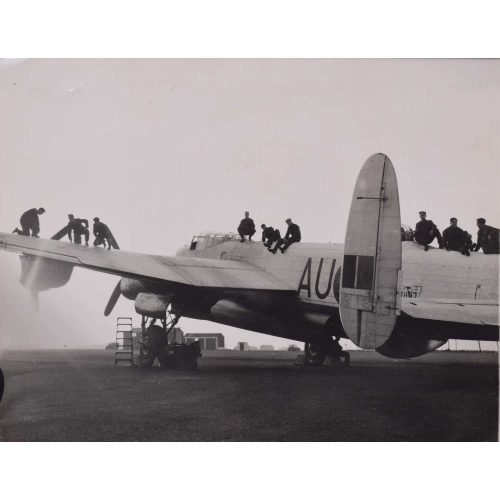
Lancaster Bomber AU-Q loading bombs
Original Silver Gelatin photograph 21 x 25 cm Stamped to reverse 'Copyright Associated Press Photograph' Press release states:LAST MINUTE PREPARATIONS FOR TOMORROW'S ATTACK ON THE FLEET At RAF Station Upwood, Hunts, today, Dec 8th last minute preparations were being carried out for tomorrow's attack on the fleet. Photo shows a Lancaster being made ready for a dawn take off tomorrow photographed this evening against the setting sun. WOR 339889 Associated Press Photo Provenance: from the collection of Philip J R Moyes, author of many books on the RAF, most notably The Pictorial History which ran to several volumes. -
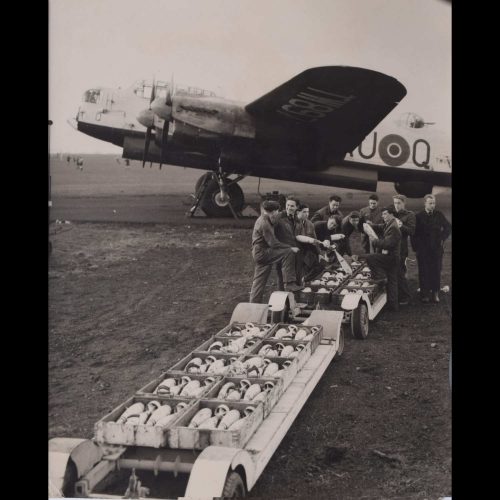
Lancaster Bomber AU-Q loading bombs
Original Silver Gelatin photograph 25 x 20 cm Stamped to reverse 'Copyright Associated Press Photograph' Press release states:LAST MINUTE PREPARATIONS FOR TOMORROW'S ATTACK ON THE FLEET At RAF Station Upwood, Hunts, today, Dec 8th last minute preparations were being carried out for tomorrow's attack on the fleet. Photo shows airmen of 148 Squadron no 3 Bomber Command look over smoke bombs with a Lancaster in background. WOR 339888 Provenance: from the collection of Philip J R Moyes, author of many books on the RAF, most notably The Pictorial History which ran to several volumes. Condition: generally good. -
Out of stock
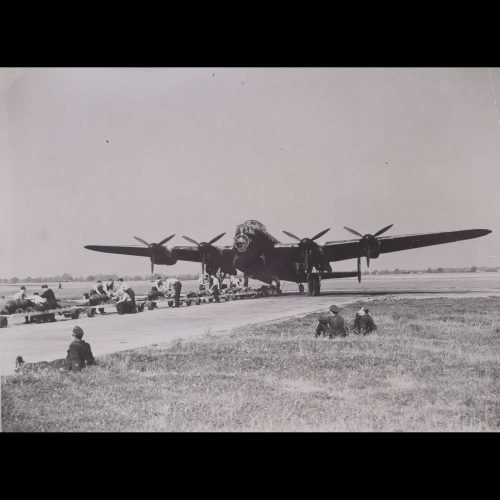
Lancaster Bomber being armed
Original Silver Gelatin photograph, c. 1942 16 x 21 cm Stamped to reverse 'Copyright this photograph must not be reproduced without the permission of Aeroplane' and 'This photograph has been passed by censor'. The photograph of the Swinderby based 50 Sqn - was taken in 1942. Either at the June reopening of the aerodrome with its new concrete runways (replacing grass) or in August when the photographers descended on the aerodrome again to take photographs for aircraft recognition purposes. Everitt survived the war - having flown 56 operations for which he was decorated three times, subsequently he was a bombing instructor, commanded a V-bomber squadron, and played golf into his nineties. He died in 2012 and the Telegraph published an excellent obituary. Provenance: from the collection of Philip J R Moyes, author of many books on the RAF, most notably The Pictorial History which ran to several volumes. -
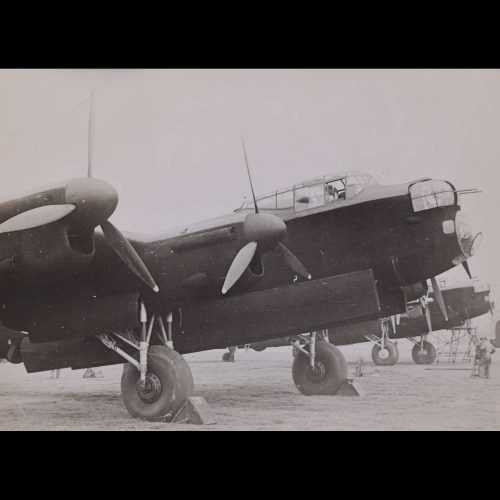
Lancaster Bombers
Original Silver Gelatin photograph for Aeroplane magazine 16 x 21 cm Stamped to reverse 'Copyright This photograph must not be reproduced without permission of Aeroplane'. -
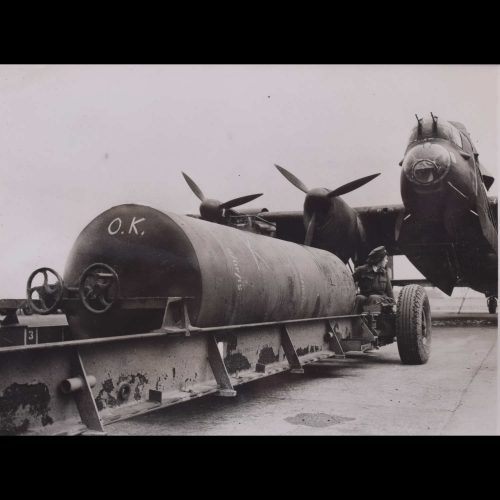
Lancaster Bomber with 8000lb cookie bomb
Original Silver Gelatin photograph, September 1943 19 x 25 cm Stamped to reverse 'Copyright this photograph must not be reproduced without the written permission of The Aeroplane.' BRITISH OFFICIAL PHOTOGRAPH CH 10939(WK) Air Ministry Photo- Crown Copyright Reserved (Picture issued September 1943) THE RAF's EIGHT THOUSAND POUND BOMB Stamped to reverse 'British Official Photograph, Crown Copyright Reserved, Supplied by BIPPA, Passed for publication by Ministry of Information'. The press release states: First official photographs of the RAF's 8,000 lb and 4,000 lb bombs are now released. Their weight has been felt with devastating effect on enemy targets in Italy and Germany. Picture shows:- Close-up of an 8,000 lb bomb in front of the Lancaster which will carry it on the night's raid. The 8000 lb 'super cookie' was a 'blockbuster' bomb, so-called because it could destroy an entire block of flats on its own. The Germans called these large bombs 'Luftminen' - airmines - as during the Blitz the large bombs used by the Luftwaffe were adapted marine mines. Judging by the length of the hair of the person sitting by the bomb, this is a member of the WAAF. WAAFs were often used to drive tractors on aerodromes during the war. Condition: generally good Provenance: from the collection of Philip J R Moyes, author of many books on the RAF, most notably The Pictorial History which ran to several volumes. -
Out of stock
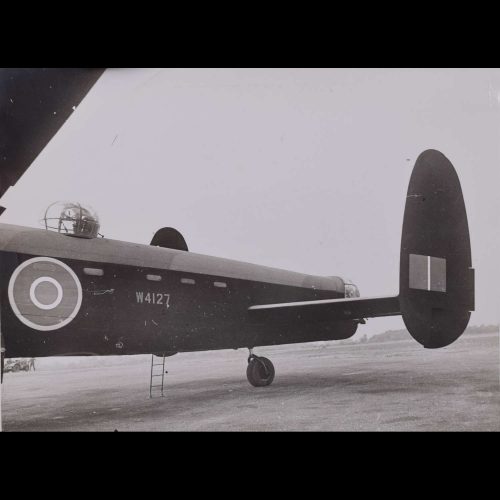
Lancaster Bomber W4127
Original Silver Gelatin photograph 16 x 21 cm Stamped to reverse 'Copyright this photograph must not be reproduced without the written permission of The Aeroplane.' W4127, of Sqn 419 (RCAF) was lost on the night of 20/21 April 1944 whilst returning from a mission to bomb the railway yards at La Chappelle. Having taken off from Dunholme Lodge at 22.07 and completed its bombing raid, it was attacked by a night fighter, suffering a fire in one wing, crashing north of Paris. The yards were badly damaged by the bombing, the mission a success. Six of the crew were killed and are buried in Poix de la Somme churchyard, whilst one, Bob Hortie, evaded escape. The Comet line - the escape line that took downed airmen to Spain whereby they could return to England - found it hard to operate with the destruction of rail and road infrastructure in the period leading up to D-Day and the invasion of Europe. Airey Neave of MI9 therefore set up three camps in isolated forests in Northern France where downed airmen could await the invading allied forces. The camps were supplied - and manned - by the allies through parachute drops. Hortie was one of 152 allied airmen to be in the camp at Fréteval - codenamed 'Sherwood Camp'. Neave went to France in the middle of August, to Le Mans which was controlled by the Americans and was 75 miles from Sherwood Camp. The Americans distrusted Neave and refused to provide him with transport. He managed to come up with some trucks and buses, which - decked out with flowers and French flags and guarded by a civilians armed with rifles and a handful of SAS men - set out to Fréteval on 14 August 1944 returning the same day with 132 airmen. A further 20 were recovered the following day. Most returned to active service and 38 died before the end of the war. A souvenir from the camp is published here on the internet. The camps were due to be set up by a team that included Belgian resistance member Michelle Dumon, who at the age of 22 (with an identity card that showed she was 16) had exfiltrated 250 airmen by this point. However she unmasked a German infiltrator into the Comet line just as the camps were being set up and was therefore sought by the Gestapo and had to flee to England. That seemingly simple journey of course meant a perilous journey across France to Spain, crossing the Pyrenees on foot, and being rescued by the RAF. In this photograph L4127 is without its squadron letters, suggesting that it is fresh out of the factory at the time of the photograph. -
Out of stock
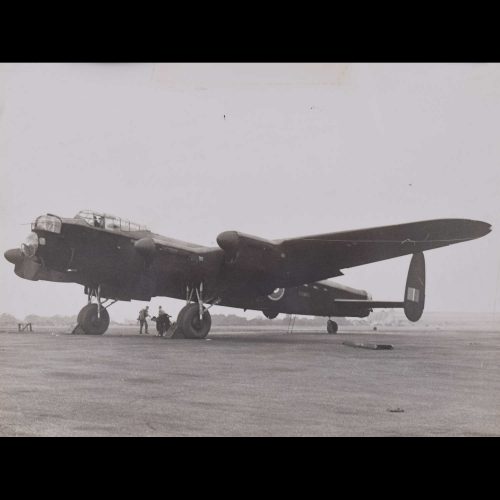
Lancaster Bomber at RAF Waddington
Original Silver Gelatin photograph 16 x 22 cm Stamped to reverse 'Passed by censor' and 'Copyright This photograph must not be reproduced without permission of 'The Aeroplane.' Unfortunately the serial number of the aeroplane is unclear. It may be RAF Waddington-based R5905 of 44 Sqn which crash landed near Madum in Denmark on 24 September 1942. The crew all survived the landing and were taken prisoner, spending the rest of the war in a PoW camp (where one died in March 1945) before returning home. Further details regarding their exploits are here. Alternatively it is R5903 also of 44 Sqn which crashed at Klosterholte on 7 October 1942 having left RAF Waddington; five of the crew survived the crash, with the two airgunners dying. -
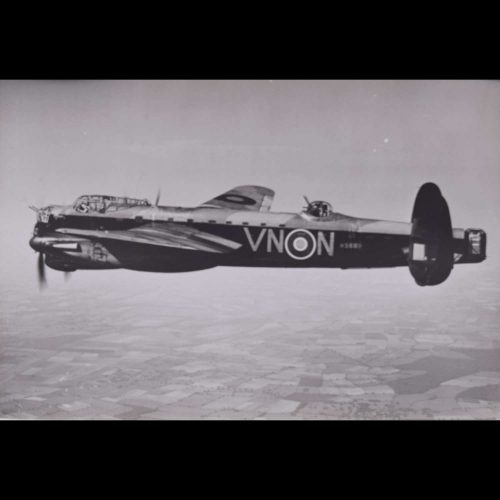
Lancaster Bomber VN-N R5689
Original Silver Gelatin photograph 11 x 16 cm Stamped to reverse 'This TP Copyright illustration from 'The Aeroplane' must not be reproduced without the written permission of Temple Press.' The photograph - and several others of the Swinderby based R5689 of 50 Sqn - was taken on the base open day in June 1942, a week or so after the aerodrome had reopened having been improved with concrete - rather than grass - runways. R5689 was destroyed on the night of 18/19 September that year. It had been on a sea mining mission and crashed on landing when both port engines failed. Four crew members were killed and three further were injured. It is also proposed that R5689 be imortalised by the Bomber Gateway Trust with a lifesize replica spraying poppies across the country, just a short distance from its crash site in Lincolnshire. Further funding is required before the project can be completed. They have 'colourised' a copy of this photograph on their website, see here. Condition: the photograph has discoloured and taken on a sepia hue as may be seen in the image. Provenance: from the collection of Philip J R Moyes, author of many books on the RAF, most notably The Pictorial History which ran to several volumes. -
Out of stock
Lancaster Bomber VN-N R5689
Original Silver Gelatin photograph 11 x 16 cm Stamped to reverse 'This TP Copyright illustration from 'The Aeroplane' must not be reproduced without the written permission of Temple Press.' The photograph - and several others of the Swinderby based R5689 of 50 Sqn - was taken on 28 August 1942. The pilot was Sqn Ldr Hugh Everitt. One of the most photographed Lancasters of the RAF's fleet, it was utilised for literature that trained aircrew to recognise the Lancaster. It is also proposed that it be imortalised by the Bomber Gateway Trust with a lifesize replica spraying poppies across the country, just a short distance from its crash site in Lincolnshire. Further funding is required before the project can be completed. R5689 was destroyed on the night of 18/19 September that year. It had been on a sea mining mission and crashed on landing when both port engines failed. Four crew members were killed and three further were injured. Everitt was not flying R5689 on the night it crashed. He survived the war - having flown 56 operations for which he was decorated three times, commanded a V-bomber squadron and played golf into his nineties. He died in 2012 and the Telegraph published an obituary. We have another photograph that includes him sitting on the grass in front of a Lancaster that is being armed. -
Out of stock
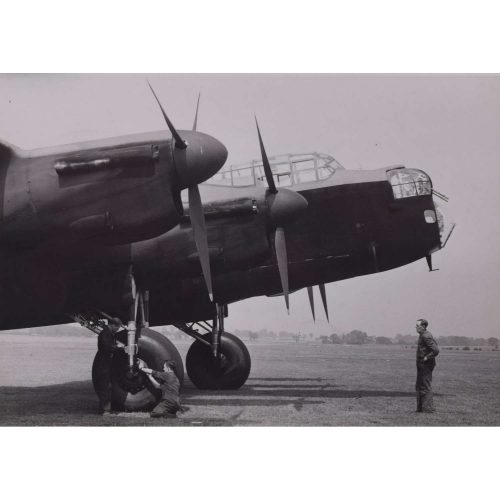
Lancaster Bomber
Original Silver Gelatin photograph, July 1942 11 x 16 cm Stamped to reverse 'Passed for Publication 2 July 1942 Press and Censorship Bureau', 'Public Relations Branch MAP'. A fine photograph; two erks are adjusting the starboard undercarriage of a Lancaster bomber whilst being supervised - the supervisor apparently with his hands in his pockets in very unmilitary fashion! The sun is high in the sky, casting a rather fine shadow under the bomber. -
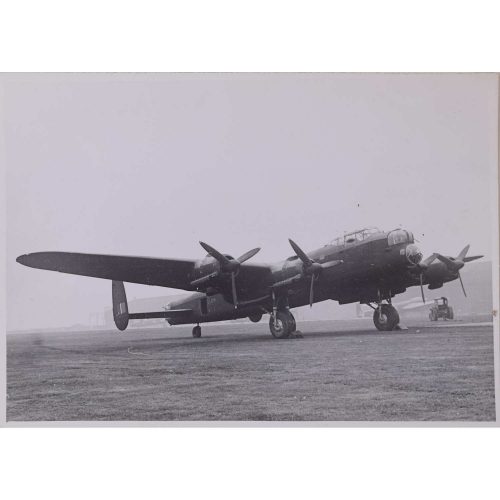
Lancaster LL678 'Lily Mars' - 2
Original Silver Gelatin photograph, December 1943 12 x 16 cm Stamped to reverse 'The Photograph has been passed by Censor' 'Copyright This TP copyright illustration from "The Aeroplane" must not be reproduced without the written permission of Temple Press Ltd'. 'Lancaster II heavy bombers are now flying with RAF BOMBER COMMAND.' 300 Lancaster II aeroplanes were made, fitted with Bristol Hercules radial engines, as there was a worry that there would be a shortage of Merlin engines, reserved for the Spitfire and Hurricane. Lily Mars was named after the 1943 American musical starring Judy Garland and was based at RAF Waterbeach, in Cambridgeshire. A podcast (click) gives details of the final flight on 13 June 1944 which was to be the final raid of the crew's tour. The bombing raid was of 303 Lancasters against the Nordstern synthetic oil plant at Gelsenkichen in the Ruhr, deep inside Germany and the aircraft took off at 23.12 hrs. On the home run LL678 was intercepted and shot down by a night fighter capitained by Oberleutnant Schmidt in a Bf 110 at 01.24 hrs at Zuidloo, a small hamlet, where five of the eight crew are buried; the other three crew members baled out and escaped. A memorial plaque was laid on 4 May 2016 and a Lancaster flypast was arranged. Owing to technical problems a Dakota from the BBMF was sent instead. On 4 May 2022 the Lancaster of the BBMF undertook a flypast which can be seen here. Dietrich Schmidt (1919-?) had 29 confirmed night kills by the time of LL678, achieving 41 kills by the end of the war off 171 missions and was awarded the Ritterkreuz - Knight's Cross. In 1999 the living crewmembers, Dutch resistance, and Schmidt and his wireless operator met in the Netherlands. Provenance: from the collection of Philip J R Moyes, author of many books on the RAF, most notably The Pictorial History which ran to several volumes. -
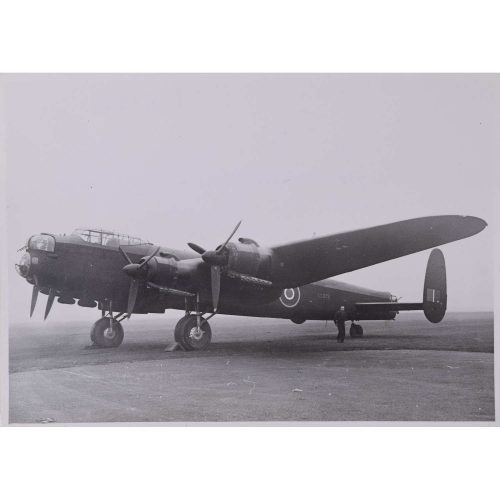
Lancaster LL678 'Lily Mars' - 1
Silver Gelatin photograph, December 1943 12 x 16 cm Stamped to reverse 'The Photograph has been passed by Censor' 'Copyright This TP copyright illustration from "The Aeroplane" must not be reproduced without the written permission of Temple Press Ltd'. 'A general view of an Avro Lancaster II with Hercules radial motors.' 300 Lancaster II aeroplanes were made, fitted with Bristol Hercules radial engines, as there was a worry that there would be a shortage of Merlin engines, reserved for the Spitfire and Hurricane. Lily Mars was named after the 1943 American musical starring Judy Garland and was based at RAF Waterbeach, in Cambridgeshire. An excellent podcast (click) gives details of the final flight on 13 June 1944 which was to be the final raid of the crew's tour. The bombing raid was of 303 Lancasters against the Nordstern synthetic oil plant at Gelsenkichen in the Ruhr, deep inside Germany and the aircraft took off at 23.12 hrs. On the home run LL678 was intercepted and shot down by a night fighter capitained by Oberleutnant Schmidt in a Bf 110 at 01.24 hrs at Zuidloo, a small hamlet, where five of the eight crew are buried; the other three crew members baled out and escaped. A memorial plaque was laid on 4 May 2016 and a Lancaster flypast was arranged. Owing to technical problems a Dakota from the BBMF was sent instead. On 4 May 2022 the Lancaster of the BBMF undertook a flypast which can be seen here. Dietrich Schmidt (1919-?) had 29 confirmed night kills by the time of LL678, achieving 41 kills by the end of the war off 171 missions and was awarded the Ritterkreuz - Knight's Cross. In 1999 the living crewmembers, Dutch resistance and Schmidt and his wireless operator met in the Netherlands. -
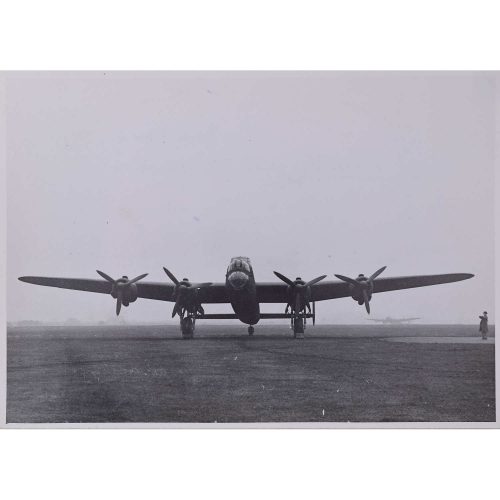
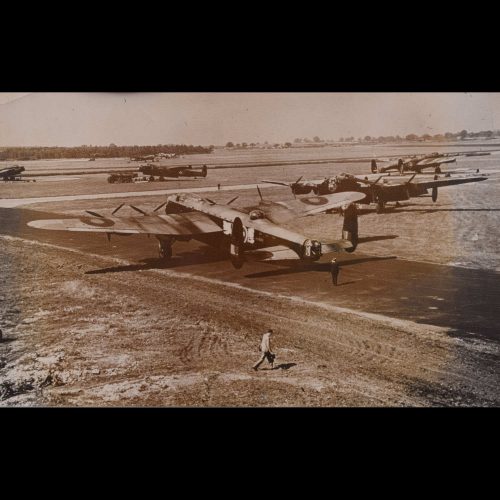
An Avro Lancaster II at its dispersal point
Silver gelatin print 12 x 16 cm Stamped to reverse 'This photograph has been passed by censor' 'Copyright. The TP copyright illustration from 'The Aeroplane' must not be reproduced without the written permission of Temple Press Ltd.' December 1943 The Avro Lancaster II was fitted with the rotary Bristol Hercules engine. There was a fear that there would be a shortage of Rolls-Royce Merlin engines, therefore 300 were produced by Armstrong Whitworth in Coventry with an alternative engine. Here it is pictured at an airfield, coming out of the mist. Somewhere probably in East Anglia, an area prone to fog, this atmospheric shot is enhanced by the second Lancaster bomber that is just about visible in the background and the human figure, dwarfed by the aeroplane, standing on concrete to the right. Condition: good. Provenance: from the collection of Philip J R Moyes, author of many books on the RAF, most notably The Pictorial History which ran to several volumes. -
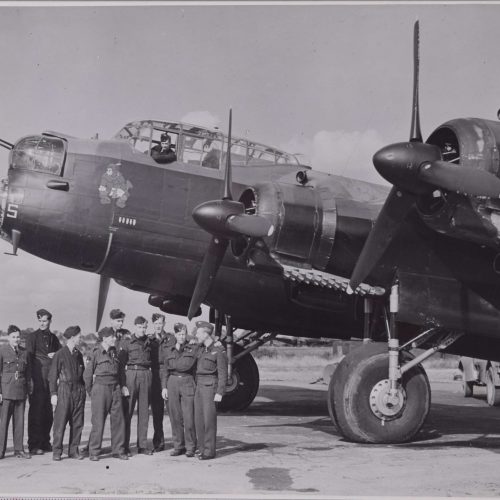
Lancaster Bomber with Crew
Original silver gelatin photograph c. 1943 16 x 21 cm Stamped to reverse 'This Photograph has been Passed by Censor' and 'Copyright Aeroplane [Magazine]' A photograph of the ground- and air-crew of DS689. The engine fitter second from left is Samuel Greisman. That the aeroplane has five operations marked on its nose suggests a date of late August or early September for the photograph. This photograph was published in 'Jews in Uniform' by Michael Greisman, published by Aster Publishing. DS689 OW-S (identified from this photograph on account of the nose art) served with 426 (Thunderbird) Squadron RCAF, based in Linton-on-Ouse (north of York). The Thunderbird featured inthe squadron crest is a North American native symbol signifying disaster and death to anybody who perceives it. The squadron converted to the Hercules-powered Lancaster II on 17 August 1943. Lancaster IIs were fitted with radial Bristol Hercules engines as it was feared there might be a shortage of Rolls-Royce Merlin engines. This particular aircraft was also able to carry 'cookies' with its extended bomb bay. DS689 was shot down by night-fighter on 8 October 1943 - prior to the date of publication of this photograph - near Rachecourt-sur-Blaise. It was on a 323-bomber mission to bomb Stuttgart in Germany, piloted by P/OMB Summers and equipped with the Airborne Cigar jamming system (ABC for short). This was the first operation using the ABC(3) jamming system, and only a small number of aircraft was lost on this raid. ABC jammed the airways and made night-fighter communications almost impossible. The Germans referred to is as 'dudelsack' (bagpipes) owing to the warbling sound. No 101 Squadron was the prime operator of this equipment and as a consequence of not maintaining radio silence suffered very high losses during the war; moreover its aircraft were on almost every bombing raid. A German-speaking operator identified the channels the night fighter operators were using and loud noise was played on that channel. Stuttgart was cloud covered and severe fog set in later, so bombs were dropped over a scattered area, destroying 344 houses and damaging a further 4,568. On its home run DS689 was intercepted by Oblt. Ferdinland Christiner from 5./NJG4at 3,800m and shot down (Christiner himself was shot down on 5/6 July 1944). Two crew members bailed out, the rest of the crew died in the crash and are buried in the local churchyard, click here to see photographs. The funeral was attended by the whole village and residents of the surrounding countryside and La Marsellaise was sung - to the annoyance of the Germans. The funeral was recorded by a photographer (click here) Condition: generally good. Provenance: from the collection of Philip J R Moyes, author of many books on the RAF, most notably The Pictorial History which ran to several volumes. -
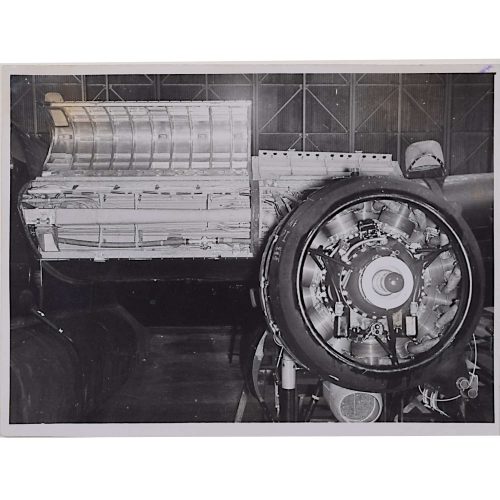
Lancaster Bomber De-icing System
Silver Gelatin photograph 1943 12 x 16 cm Stamped to reverse 'This photograph has been passed by censor. 17 Dec 1943' 'Copyright This TP copyright illustration from "The Aeroplane" must not be reproduced without the written permission of Temple Press Ltd.' 'De-icing system. - Cold air is passed into the flame-trap exhaust and forces hot air into wing leading edge.' Condition: good. Provenance: from the collection of Philip J R Moyes, author of many books on the RAF, most notably The Pictorial History which ran to several volumes. -
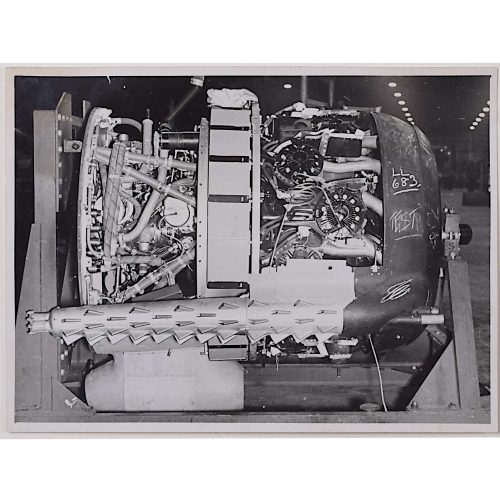
Lancaster bomber LL683 General View of Hercules Power Egg
Silver Gelatin photograph 17 December 1943 12 x 16 cm LL683 JI-P was a Lancaster II and therefore fitted with Bristol Hercules engines rather than the Rolls-Royce Merlin. 350 aircraft were outfitted thus, as a result of fears of shortages of the Merlin. The Hercules came complete as a 'power egg' which is a modular engine installation including ancillary equipment which could be swapped over rapidly for maintenance purposes. LL683 was assigned to 514 Squadron RAF, stationed at Waterbeach from December 1943 with an operational strength of thirty aircraft. The squadron eventually received sixty-seven such Lancasters (fifty-nine of which were destroyed by enemy action or accident). Stationed at Waterbeach from December 1943, the squadron had previously been stationed at RAF Foulsham in Norfolk. Three of the bombers made the move between the two airfields via a bombing raid on Berlin, the crew members' kit - including bicycles - also travelling via Berlin. LL683, serving with 514 Squadron RAF and stationed at Waterbeach had John Clare Gilbertson-Pritchard as pilot for a bombing raid on Stuttgart on the night of 01/02 March 1944. Back in action on 30/31 March for a 795-bomber raid raid on Nurnberg and piloted by W/O WL McGown, the aeroplane suffered a forced landing at Sawbridgeworth; all crew members survived though one broke his back and never flew again. Condition: good. Provenance: from the collection of Philip J R Moyes, author of many books on the RAF, most notably The Pictorial History which ran to several volumes. -
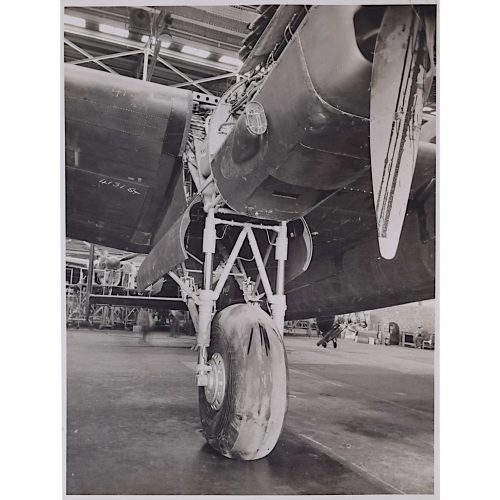
Lancaster Bomber W4131 Undercarriage
Original silver gelatin photograph c. 1943 21 x 16 cm Stamped 'Copyright Aeroplane Magazine' Stamped 'Passed by Censor' Rare; we have been unable to trace another copy of this photograph in any collection. W4131 served with 50 Squadron, based at Swinderby. On 18 August 1942 W4131 crash landed at Swinderby on return from a training flight at 17.15. The wheels were retracted too soon on take-off by pilot SGT PH Blaskey, damaging the undercarriage. The pilot and crew were uninjured. It is possible that this photograph records repairs to the undercarriage following this incident. On 28 March 1943 W4131 was involved in another incident, again at Swinderby. Although the aeroplane landed safely, the airframe was found to have been strained during a fighter affiliation exercise as a result of violent movements. On 1 June 1943 while serving with 1660 HCU (Heavy Conversion Unit) the undercarriage collapsed following an engine failure during take-off from Swinderby. The aircraft was written off on 12 June 1943. Condition: good. Provenance: from the collection of Philip J R Moyes, author of many books on the RAF, most notably The Pictorial History which ran to several volumes. -
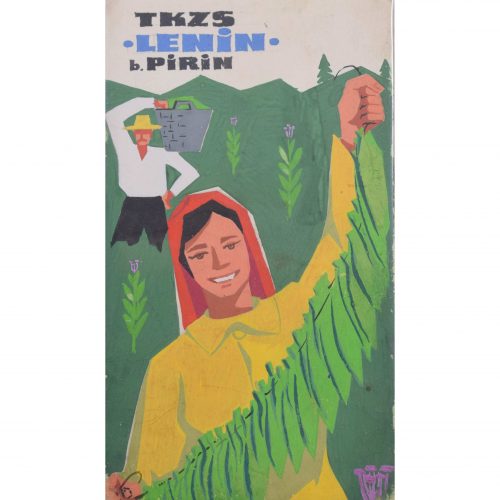
Soviet Union pro-Lenin Marxist Bulgarian propaganda poster design (circa 1950s)
Gouache on board 20 x 11.5 cm After a Communist takeover in 1945, Bulgaria was a Soviet ally during the Cold War, and maintained good relationships with Russia until the Revolutions of 1989. From 1945 to 1948, the country became entrenched within the Soviet sphere of influence under the control of the Bulgarian Communist Party (BCP) which oversaw a program of Stalinization in the late 1940s and 1950s. Both countries are Slavic nations, and are bound together by a common Orthodox Christian culture. This poster design is a piece of Leninist propaganda, designed to make Bulgarians associate Lenin and Soviet Marxist rule with efficiency and plenty. It is inscribed to the reverse in Bulgarian 'To grow plants in rows next to each other - the thickest row with straight cobs'. The Pirin Mountains referred to in the top left-hand corner are a mountain range in southwestern Bulgaria. Condition: very good. If you’d like to know more, please email info@manningfineart.co.uk or call us on 07929 749056. -
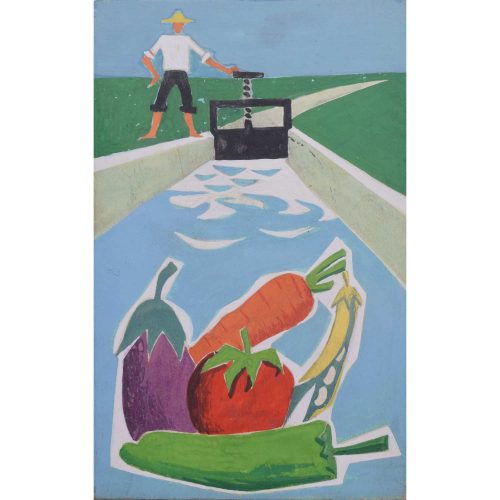
Soviet Union socialist irrigation Bulgarian propaganda poster design (circa 1950s)
Gouache on board 18 x 11 cm After a Communist takeover in 1945, Bulgaria was a Soviet ally during the Cold War, and maintained good relationships with Russia until the Revolutions of 1989. From 1945 to 1948, the country became entrenched within the Soviet sphere of influence under the control of the Bulgarian Communist Party (BCP) which oversaw a program of Stalinization in the late 1940s and 1950s. Both countries are Slavic nations, and are bound together by a common Orthodox Christian culture. This poster design features huge juicy vegetables, grown as the result of newly-implemented irrigation systems. Socialist farming practices in Bulgaria were commonplace during its time as a Soviet ally or 'satellite'; the government was keen to encourage well-yielding farming practices and to be seen as a protector of agricultural infrastructure turing this turbulent period of the 20th century. Condition: very good. If you’d like to know more, please email info@manningfineart.co.uk or call us on 07929 749056. -
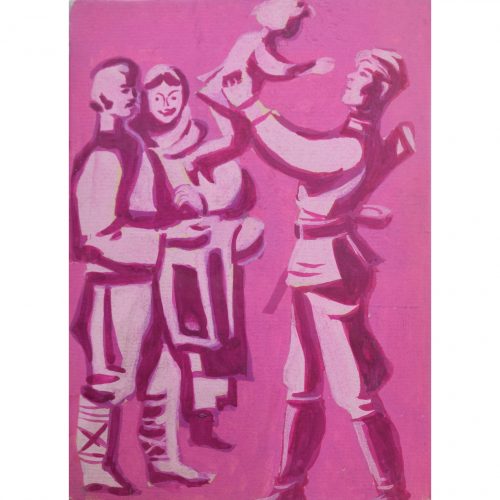
Bulgarian pro-natalist propaganda poster design (circa 1950s)
Gouache on board 17 x 12 cm After a Communist takeover in 1945, Bulgaria was a Soviet ally during the Cold War, and maintained good relationships with Russia until the Revolutions of 1989. From 1945 to 1948, the country became entrenched within the Soviet sphere of influence under the control of the Bulgarian Communist Party (BCP) which oversaw a program of Stalinization in the late 1940s and 1950s. Both countries are Slavic nations, and are bound together by a common Orthodox Christian culture. This poster design, painted in warm pink-purple tones and depicting a Bulgarian soldier holding a toddler aloft, was designed as post-war pro-natalist propaganda (likely from the 1950s). Bulgaria and its Soviet allies had lost a huge number of men during the war, and this design for a poster was intended to encourage Bulgarians to have more children. Condition: very good. If you’d like to know more, please email info@manningfineart.co.uk or call us on 07929 749056. -
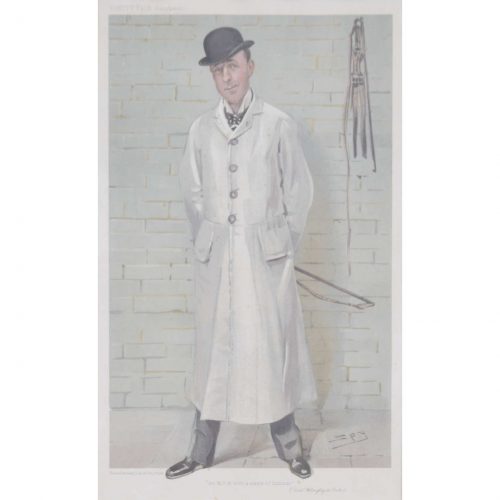
Sir Leslie 'Spy' Ward for Vanity Fair Magazine
An MFH with a sense of humour (1905)
Lithograph 36 x 21 cm Published in Vanity Fair on 23rd November 1905. The 'MFH with a sense of humour' depicted here is Richard Greville Verney, 19th Baron Willoughby de Broke (1869 - 1923), British peer, Conservative politician, and Master of Foxhounds. Verney was the son of Colonel Henry Verney, 18th Baron Willoughby de Broke and Geraldine Smith-Barry, and was educated at Eton College and New College, Oxford. The historian George Dangerfield described Verney as "a genial and sporting young peer, whose face bore a pleasing resemblance to the horse. ... He had quite a gift for writing, thought clearly, and was not more than two hundred years behind his time." He wrote a book on foxhunting called "Hunting the Fox", which was published in 1921 and remains an acclaimed text on the sport today. Verney represented Rugby, Warwickshire, as an MP from 1895–1900. In 1902 he succeeded his father as 19th Baron Willoughby de Broke. Condition: very good. If you’d like to know more, please email info@manningfineart.co.uk or call us on 07929 749056. -
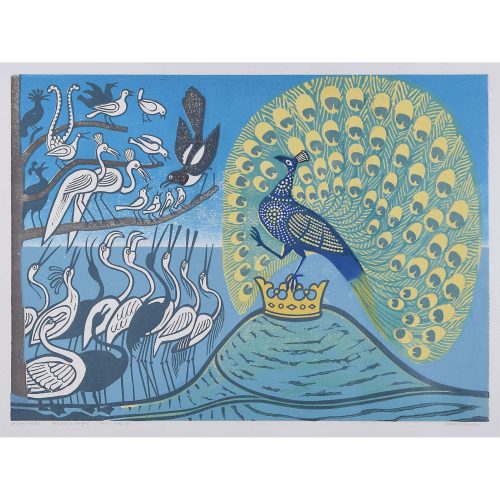
Edward Bawden (1903 - 1989)
Aesop's Fables: Peacock and Magpie (1970)
Linocut print 63 x 75 cm Signed, numbered 11/50, and titled in pencil. A delightful print illustrating Aesop's fable of the Peacock and Magpie. In the fable, the birds are searching for a king, and the Peacock puts himself forward. The birds are about to make him king because of his charming plumage, but a Magpie asks the Peacock how he might defend the birds from predators. The Peacock has no answer. Aesop's moral is that those in power must be suited to the task, and not just vain pretenders. The artist's use of vibrant colour brings the tale to life. Edward Bawden was an English painter, illustrator and graphic artist, known for his prints, book covers, posters, and garden metalwork furniture. Bawden taught at the Royal College of Art, where he had been a student, worked as a commercial artist, and served as a war artist in World War II. He illustrated several books and painted various public murals, and his work and career are often associated with that of his contemporary, Eric Ravilious. Condition: generally very good; small stain to extremity that will be hidden under mount. If you’d like to know more, please email info@manningfineart.co.uk or call us on 07929 749056. -
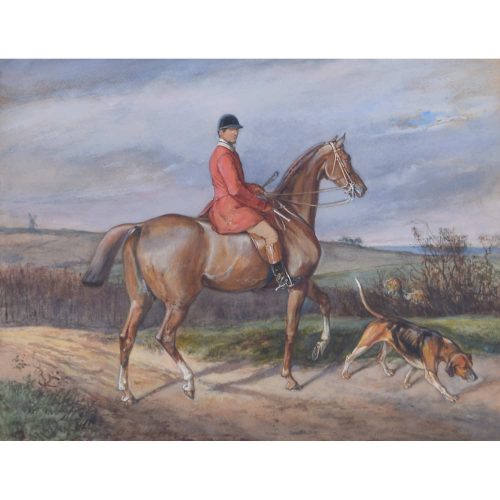
H. Fluiss
Charles Payne, Huntsman to the Pytchley Hounds on Redtape with the hound Trueman (1862)
Watercolour with body colour 36 x 43 cm A mid-nineteenth century watercolour depicting Charles Payne (1884–1967), huntsman to the Pytchley. Condition: very good. If you are interested, please email info@manningfineart.co.uk or call us on 07929 749056. -
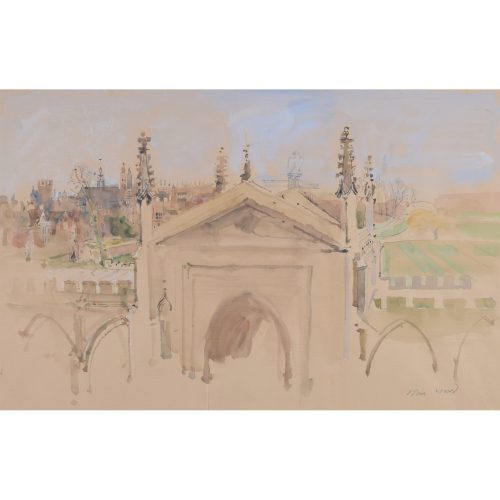
John Stanton Ward CBE (1917 - 2007)
St John's College, Cambridge
Watercolour 30 x 47 cm John Stanton Ward CBE was an English portrait artist, landscape painter and illustrator. This view of St John's highlights the dreamlike quality of the college and its city. Ward depicts Cambridge on a winter afternoon; the trees are bare, and the afternoon sun sets gently over the city's lawns and high spires. Condition: very good. -
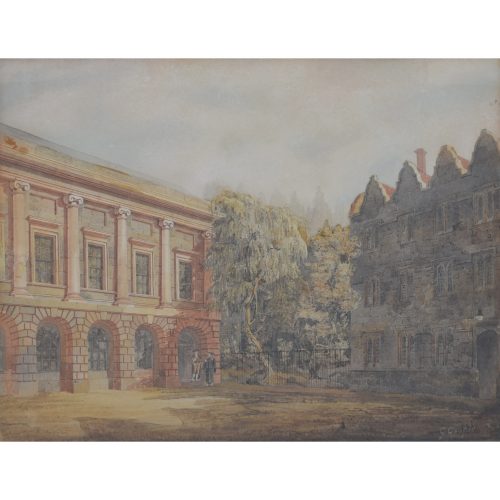
G. Cooper
Oriel College, Oxford
Watercolour 27 x 35 cm A view of Oriel's Second Quad, featuring the Wyatt Building on the left. Designed in the Neoclassical style by James Wyatt, it was built between 1788 and 1796 when the College's library doubled in size thanks to a generous gift by Edward, Baron Leigh, formerly High Steward of the university and an alumnus of Oriel. The building has rusticated arches on the ground floor and a row of Ionic columns above, dividing the façade into seven bays. Cooper's watercolour focuses on the architectural merit of the building, highlighting the sandy tone of Oxford's famous Headington stone. Two figures in academic dress take part in a spirited discussion just outside the building. Condition: generally very good. -
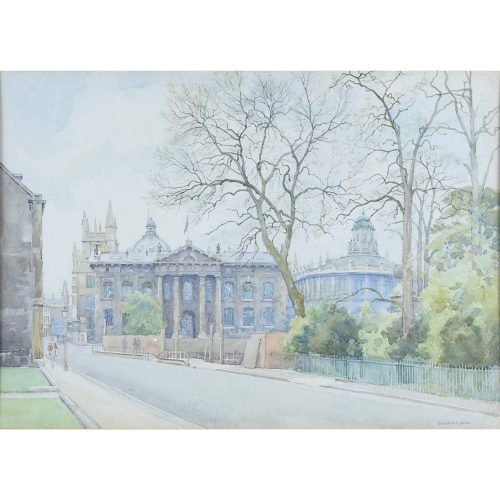
Bernard Cecil Gotch (1876-1964)
Clarendon Building and Sheldonian Theatre, Oxford
Watercolour 27 x 39 cm Signed lower right. Gotch's wintry view of the Clarendon and the Sheldonian captures both the most illustrious architecture of the University of Oxford, and the building works taking place to build a new library. Gotch paints his scene from a viewpoint just in front of Wadham College; the Radcliffe Camera and the spire of the University Church of St Mary the Virgin are visible behind the Sheldonian's roof. The building site visible across from Wadham is the site where the New Bodleian now stands. Bernard Cecil Gotch was a Winchester born artist who is best known for his atmospheric watercolours of Britain's towns and cities (most notably Oxford). He moved to Oxford in 1927, painting many watercolours of the interiors and exteriors of Oxford’s many buildings. His works concentrate on the grand exteriors and interiors of the University's colleges, and he exhibited frequently - including an exhibition every term at Oriel College. His first notable commission was for the publisher Methuen, illustrating 'A Shepherd’s Life' by W H Hudson. Whilst in London he was invited to illustrate a book on the Public Schools of England (which was sadly never completed). He exhibited watercolours at the Fine Art Society and Lincolns Inn, and also exhibited at the Royal Academy. In 1952 Gotch was given an Honorary MA by the University of Oxford, and, after his death in 1963, a memorial was held for him at Oriel. Condition: very good; original oak frame. -
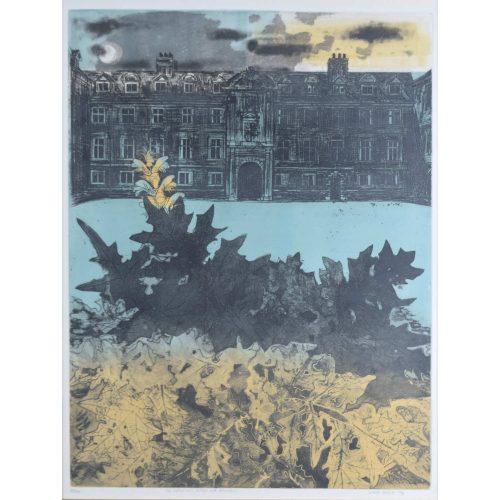
Walter Hoyle (1922-2000)
St Catharine's College, Cambridge (1973)
Linocut 72 x 56 cm Signed and dated '73 lower right, numbered 85 / 200 lower left, and signed below. Hoyle trained at Beckenham School of Art and the Royal College of Art. At the RA, he was strongly influenced by Edward Bawden, one of Britain’s greatest linocut printers. Bawden had been commissioned by the 1951 Festival of Britain to produce a mural for the South Bank, and chose Hoyle, a promising student, as his assistant. Hoyle moved to Great Bardfield in Essex and became part of the Great Bardfield group of artists: diverse in style, they created figurative work in stark contrast to the abstract art of the St Ives artists at the other end of the country. Hoyle taught at St Martin’s School of Art from 1951 - 1960, the Central School of Arts and Crafts from 1960 - 1964, and the Cambridge School of Art from 1964 - 1985, during which time he launched Cambridge Print Editions. His work is held in the collections of the Tate Gallery, the Victoria and Albert Museum, The British Museum, Kettle’s Yard, and the Fry Art Gallery. Condition: very good. If you are interested, please email info@manningfineart.co.uk or call us on 07929 749056. -
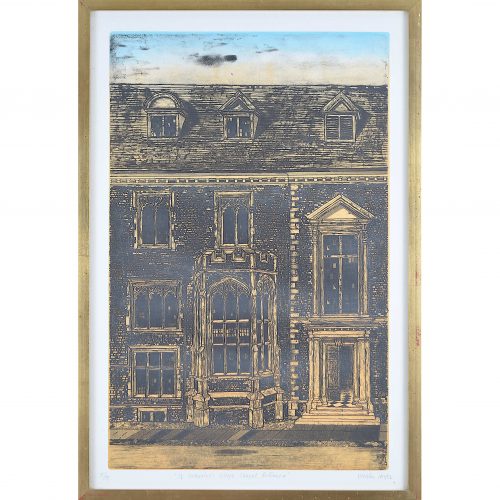
Walter Hoyle (1922-2000)
St Catharine's College, Cambridge (1956-66)
Linocut 59 x 39 cm Signed lower right; inscribed and numbered 35/75 in pencil. Hoyle trained at Beckenham School of Art and the Royal College of Art. At the latter he was strongly influenced by Edward Bawden, one of Britain’s greatest linocut printers. Bawden had been commissioned by the 1951 Festival of Britain to produce a mural for the South Bank, and chose Hoyle to assist on account of his great talent. Hoyle moved to Great Bardfield in Essex, becoming a part of the Great Bardfield group of artists; diverse in style, they created figurative work, in stark contrast to the abstract art of the St Ives artists at the opposite end of the country. Hoyle taught at St Martin’s School of Art from 1951-60, the Central School of Arts and Crafts from 1960-64, and the Cambridge School of Art from 1964-1985, during which time he launched Cambridge Print Editions. His work is held in the collections of the Tate Gallery, the Victoria and Albert Museum, The British Museum, Kettle’s Yard and the Fry Art Gallery. Condition: very good. -
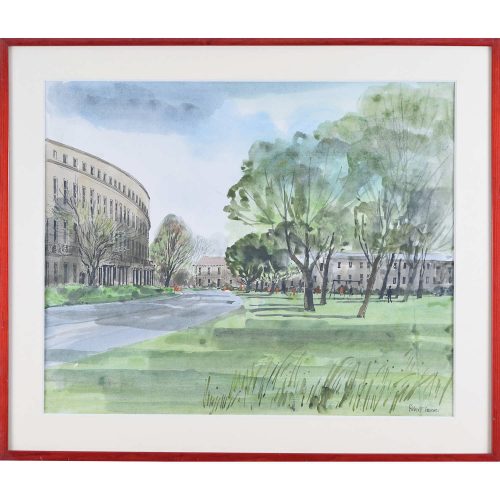
Robert Tavener (1920 - 2004)
Lansdown Parade, Cheltenham
Watercolour and pen 38 x 46 cm Signed lower right. The thin watercolour wash of the lawns and the fine ink pen expression of the college's architecture create a contrast between the natural and the man-made in this picture by Tavener. He painted several views of the city of Cheltenham and its architectural landmarks, including of Cheltenham College (this picture is available here). Condition: generally very good. -
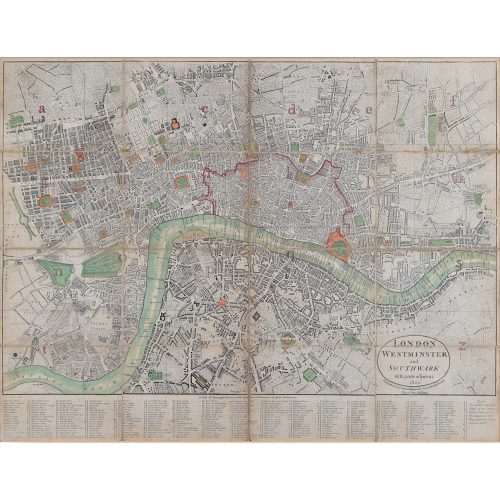
Darton and Harvey (publisher)
Map of London, Southwark, and parts adjacent (1800)
Engraving 42 x 56 cm Condition: generally very good; backed to linen with some evidence of use. -
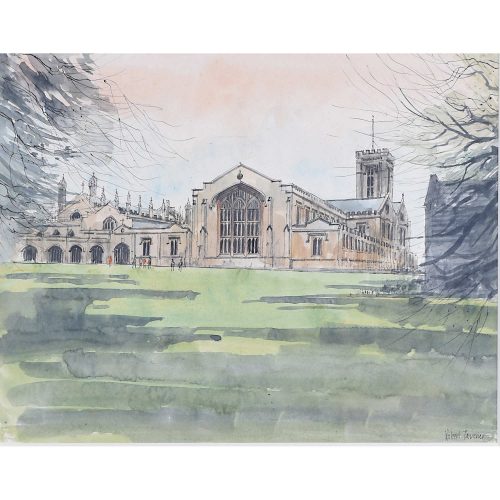
Robert Tavener (1920 - 2004)
Cheltenham College
Watercolour and pen 28 x 35 cm Signed lower right. What is particularly interesting about this picture is the contrast between the rugged watercolour wash of the lawn and the fine pen expression of the college's architecture. Tavener painted several views of the city of Cheltenham and its architectural landmarks; Cheltenham College is a public school just outside the city, and Tavener expertly elicits its mid-nineteenth century architectural style here. -
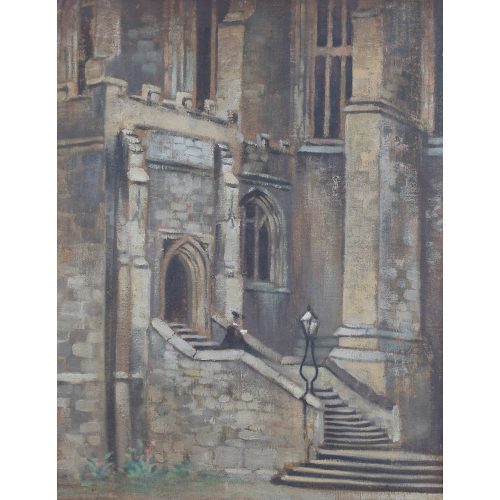
'Eton College, a scholar on the steps' (early 20th century)
Oil on canvas 62 x 49 One of our favourite paintings. A lone scholar descends the Chapel steps, a human focal point in an oil painting primarily concerned with the College's fine architecture. A blur of green and red sprouts at the bottom of the wall - flowers. In a handsome period hardwood frame. Condition: very good. -
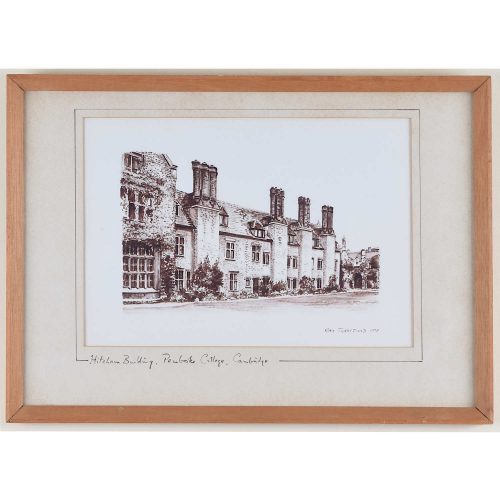
Ray Turrefield (active late 20th century)
Hitcham Building, Pembroke College, Cambridge (1978)
Print 18 x 25 cm Signed and dated lower right. A print of Pembroke College, Cambridge's Hitcham Building. Built in 1659, the Hitcham Building marks the first instance in Pembroke of the Classical Style, which was soon to find full expression in Wren’s Chapel. The building was intended for the Master’s use and was originally connected to the former Master’s Lodge. Both the poet Thomas Gray and the Prime Minister William Pitt lived in the building during their times at Pembroke. Condition: very good. -
Out of stock
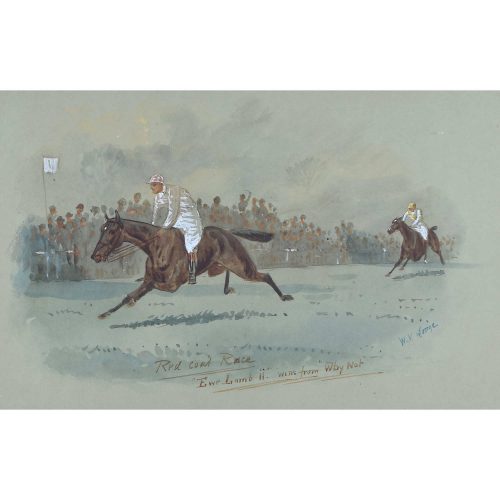
William Verner Longe (1857-1924)
Cottenham, December 1904
Watercolour 29 x 45 cm Signed and inscribed 'Red Coat Race, "Ewe Lamb ii" wins from "Why Not"'. A lively racing scene by William Verner Longe, and English artist noted for his scenes of racing, hunting, and other equestrian activities. He was educated at the Ipswich School of Arts and then the Royal Academy of Fine Arts in Antwerp. Condition: generally very good; original frame with antique glass. Some discolouration to margins. -
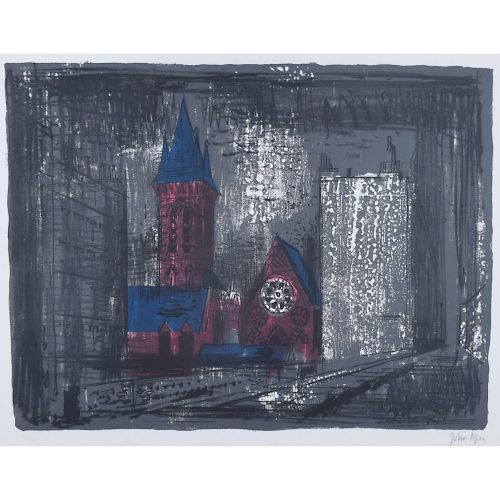
John Piper (1903-1992)
St James the Less, Westminster
Screenprint 65 x 49 cm From the 'Retrospect of Churches' series, numbered 24/70. Generally very good. Signed in pencil. John Piper CH was an English painter, printmaker, and designer of stained-glass windows. His work often focused on the British landscape, especially churches and monuments, and included tapestry designs, book jackets, screen-prints, photography, fabrics and ceramics. A Retrospect of Churches was issued as a suite of 24 original colour lithographs in colour, in an edition of 70 copies (70 numbered copies plus five artist's proofs). This poignant and dramatic representation of St James the Less is an evocative depiction of this part of London in the evening: wet pavements reflect the bright lights of the buildings, and the church is a warm, moody reddish-purple against the deep black of a dark night. Condition: Generally very good.