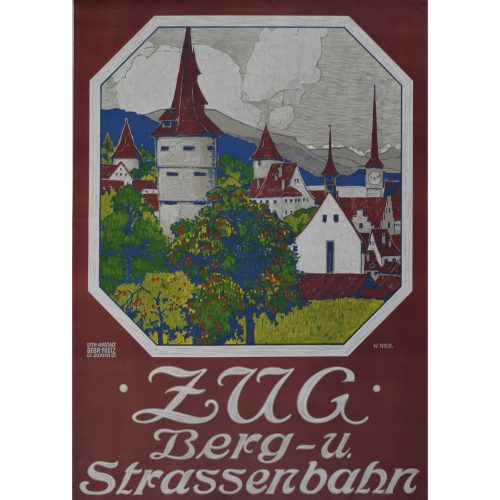
-
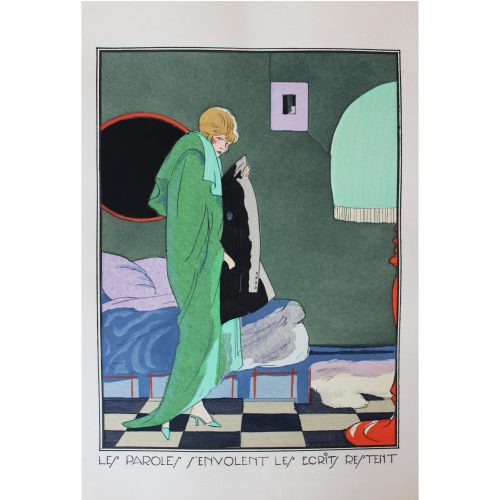
After Ettore Tito (1859-1941) c.1920s A set of four pochoir prints: 'Les paroles s'envolent les ecrits restent'; 'On a souvent besoin d'un plus petit que soi'; 'Qui trop embrasse...'; 'Aide-toi le ciel t'aidera'
23.5 x 16.5 cm (to mount) Ettore Tito (1859-1941) Tito trained at the Accademia di Belle Arti in Venice and later became a professor there, known for his landscapes and scenes of traditional life in the Veneto region, as well as producing several larger mythological murals notably for the Villa Berlinghieri in Rome and the Chiesa degli Scalzi in Venice. He associated with an expatriate artistic milieu that included John Singer Sargent and Isabella Stewart Gardner. However, in the 1920s he also produced these pochoir prints of emancipated women for a French magazine which were considered rather risqué at the time! If you are interested email info@manningfineart.co.ukor call us on 07929 749056. Condition: Excellent, mounted. -
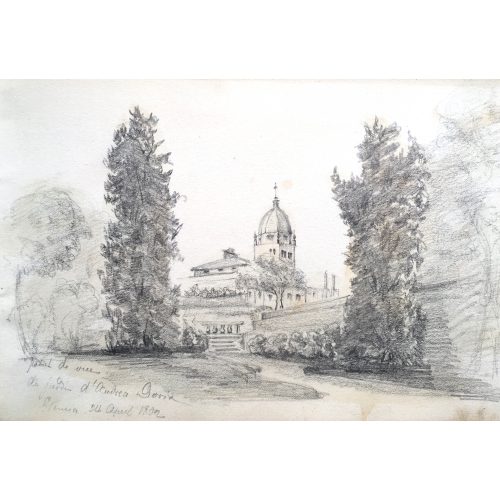
Oscar Andreae (fl.1860-1880) Garden
Pencil drawing 1862 12 x 18.5cm approx. Andreae spent much of the 1860s exploring Europe - the invention of the railways having made undertaking a Grand Tour rather easier than it had been half a century earlier - and recorded the places he visited. If you are interested email info@manningfineart.co.uk or call us on 07929 749056. Condition: Good. -
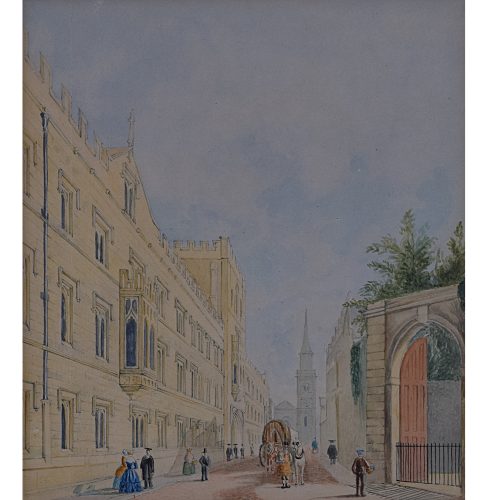
George Pyne (1800-1884) Exeter College, Oxford
Watercolour 22x18.5cm Pyne was the elder son of William Henry Pyne, the publisher artist behind the monumental History of the Royal Residences, and son-in-law of John Varley – two founders of the Society of Painters in Watercolours. Living in Oxford from the 1850s until his death, he brought the hand of an architectural draughtsman to his views of Oxford, the works for which he is best known, but with an artist’s ability to represent the romance of old stone. His views of Cambridge and Eton also contribute to his valuable and historical record of the period. If you are interested email info@manningfineart.co.uk or call us on 07929 749056. Condition: Generally excellent condition. -
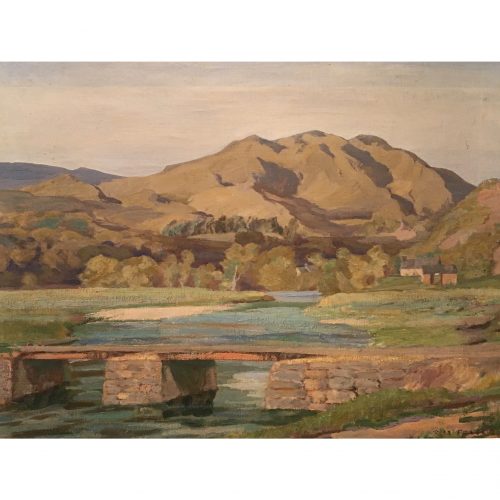
Robert MacDonald Fraser (1870-1947) 'Landscape with Footbridge'
Oil on canvas Signed 20" x 24" (50.5 x 61cm) Though of Scottish descent, an Englishman who was born, lived and died in and around Liverpool. He is believed to have become interested in painting during his secondary school years at the Liverpool Institute and Art School (where the principal was the distinguished landscape artist John Finnie), however his early career was in commerce. By the age of thirty he was well established in Liverpool's art circles but it was to be another decade before he took to painting full time. Between 1910 and 1938 he showed approximately fifty paintings at the Walker Art Gallery in Liverpool, also having seven paintings accepted for the Royal Academy's summer exhibitions. He additionally exhibited at the Manchester Art Gallery, Liverpool Bluecoat and Royal Cambrian Academy, becoming - in 1929 - Vice President of the Liverpool 'Artists' Club.' He mostly painted the landscapes of North Wales and the North West of England. His family owned holiday cottages in North Wales, and Snowdonia provided him with much inspiration, it is believed that this painting is of a Snowdonia scene. If you are interested email info@manningfineart.co.uk or call us on 07929 749056. Condition: Excellent. -
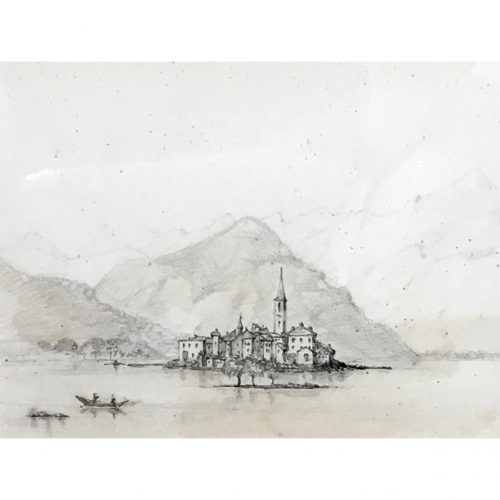
Oscar Andreae (fl.1860-1880) Isola Pescatori, Italy
1862 Pencil drawing Sheet 12 x 16.5cm Andreae spent much of the 1860s exploring Europe - the invention of the railways having made undertaking a Grand Tour rather easier than it had been half a century earlier - and recorded the places he visited. Here, visiting the Lago Maggiore in northern Italy he depicts the Isola Pescatori (the fishermen's island) - or Isola Superiore. If you are interested email info@manningfineart.co.uk or call us on 07929 749056. Condition: Good. -
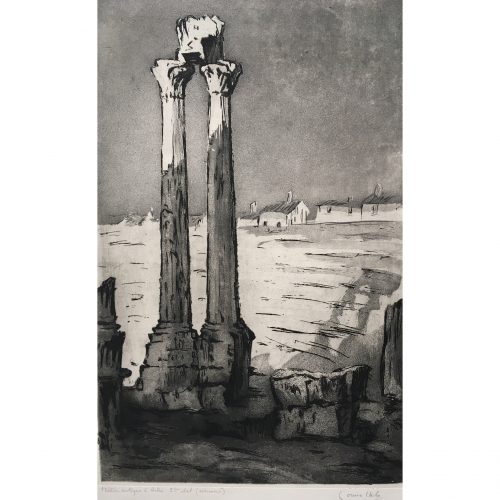
Louise Ibels (1891-1965) 'Théâtre Antique à Arles'
Etching and aquatint Signed and titled in pencil to margin 3rd state proof Approx. 39 x 25cm (plate) A French artist known for her charming etchings, here she captures the romance of the Roman Theatre in Arles. Built at the time of Augustus (27BC-14AD) it had seating for 8,000 across thirty-three tiers of steps. During the early Middle Ages it was plundered for its stone to build the town walls. These days the only part of the rear wall of the stage that survives are the two columns depicted in the print. Re-emphasised by the presence of their shadow, the rest of the view disappears softly into the distant background. If you are interested email info@manningfineart.co.uk or call us on 07929 749056. Condition: Excellent. -
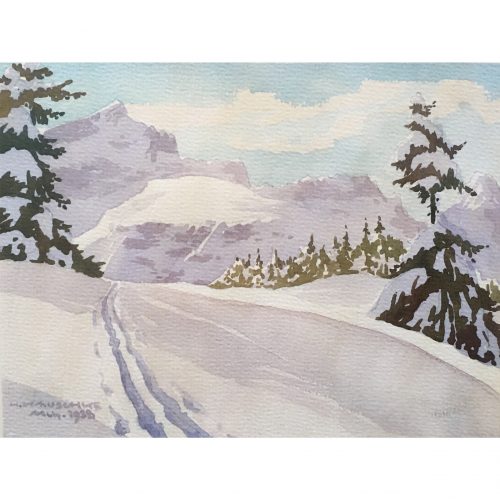
Hermann Kauschke Alpspitze, Zugspitze und Waxenstein (1938)
Watercolour 14.5 x 19.5 cm Inscribed "Alpspitze, Zugspitze u. Waxenstein - original Aquarell". Signed and dated. A beautiful snowy scene depicting three Bavarian mountains: the Alpspitze, Zugspitze, and Waxenstein. Kauschke's view emphasises the wintry quietude of the snow-covered trees and mountains. The winter sun reflects on the freshly fallen snow, and a pair of ski tracks disappear into the distance. If you are interested, please email info@manningfineart.co.uk or call us on 07929 749056. Condition: excellent. -
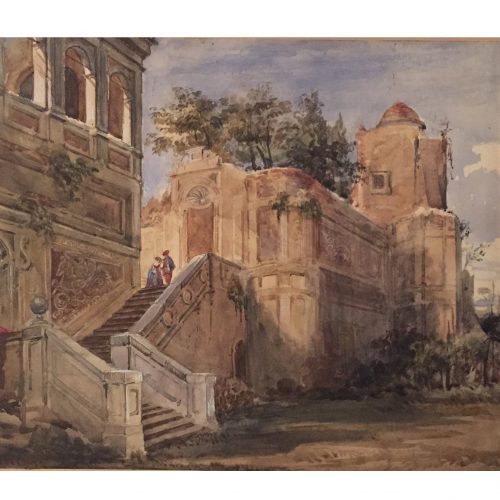
Attributed to Joseph Nash (1808-1878) 'Ruins of an Italian Villa'
Watercolour 24 x 29cm If you are interested email info@manningfineart.co.uk or call us on 07929 749056. Condition: Excellent. -
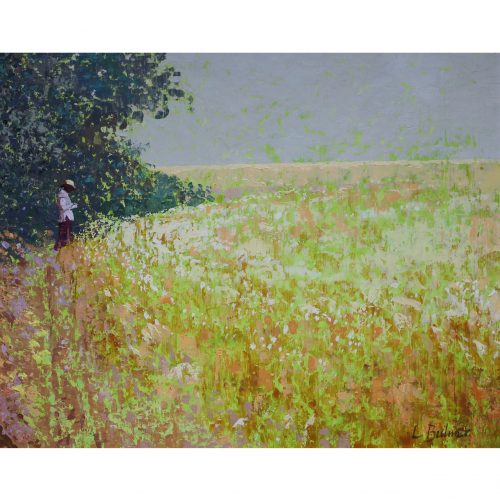
Lionel Bulmer (1919-1992) 'The Edge of the Field' (c. 1950s)
Oil on board 43 x 51 cm Signed lower right. Lionel Bulmer (1919-1992) attended Clapham art school before war intervened; after the war he started again at the Royal College of Art which had been relocated during the conflict to Ambleside in the Lake District. Here he met his lifelong partner Margaret Green who provided the model for many of his works. They returned to London where they studied under painters such as Ruskin Spear and Carel Weight, successors to the Camden Town and Euston Road schools. In the 1950s they moved to West Suffolk and much of Bulmer's work from this point on documents the Suffolk landscape and the coast at Aldeburgh and Walberswick. If you are interested email info@manningfineart.co.uk or call us on 07929 749056. Condition: Excellent. -
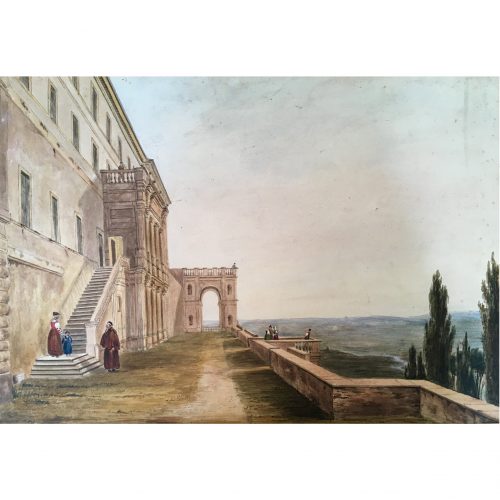
Anonymous
'View from an Italian Villa'
19th century Watercolour 31.5 x 44cm If you are interested email info@manningfineart.co.uk or call us on 07929 749056. Condition: Good. A few foxing spots to top right. -
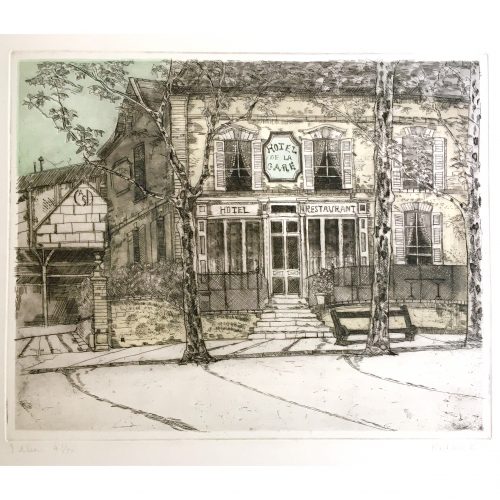
Richard Beer (1928 - 2017) Hôtel de la Gare, Illiers-Combray, France
Etching and aquatint 57 x 75 cm Titled and number 41/70 lower left, and signed lower right, all in pencil. Richard Beer was a painter and printmaker who focused on architecture and landscapes. He studied at the Slade School of Art from 1945 to 1950 and then studied at the École des Beaux Arts in Paris on a French Government Scholarship. He then worked and studied at Atelier 17, an art school and studio run by the artist Stanley William Hayter (arguably one of the most significant printmakers of the 20th century). The atelier was highly influential in the study and promotion of 20th-century printmaking, and it was here that Beer developed his etching skills. Beer then went on to work for the Royal Ballet choreographer John Cranko, designing the sets and costumes for "The Lady and the Fool" at the Royal Opera House in Covent Garden. He also produced several book illustrations and book jacket designs. Beer taught printmaking at the Chelsea School of Art for 40 years and was also a founding member of the Printmakers' Council. He travelled widely through Italy, France, Spain, and Morocco, sketching prolifically and painting rural and architectural landscapes. Beer would then make etchings and paintings in his Primrose Hill studio, inspired by the landscapes he had sketched and seen while travelling. Probably his greatest work was a collaboration with John Betjeman to produce a portfolio of prints of ten Wren Churches in the City of London for Editions Alecto, copies of which are in The Government Art Collection. That collection contains a total of 54 prints by Beer, and the Tate Gallery’s collection holds another seven. His series of Oxford architectural engravings was also produced for Editions Alecto, as was a series of predominantly architectural views in Southern Europe. Condition: very good. If you are interested, please email info@manningfineart.co.uk or call us on 07929 749056. Click here for other works by the artist. -
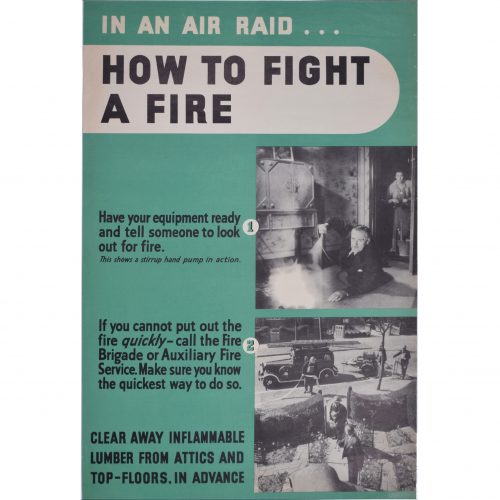
In an Air Raid... How to fight a fire World War 2 Vintage Poster
30x20" [HMSO, London] nd. np. A householder, dressed in a tie, is shown spraying water onto a fire, as his wife pumps water out of a bucket using a stirrup hand pump. Instructions are given to call the Fire Brigade if the fire cannot be extinguished. Householders are warned to clear away inflammable lumber from attics and top-floors, in advance. If you are interested email info@manningfineart.co.uk or call us on 07929 749056. Condition: Generally excellent, slight edge wear as usual. -
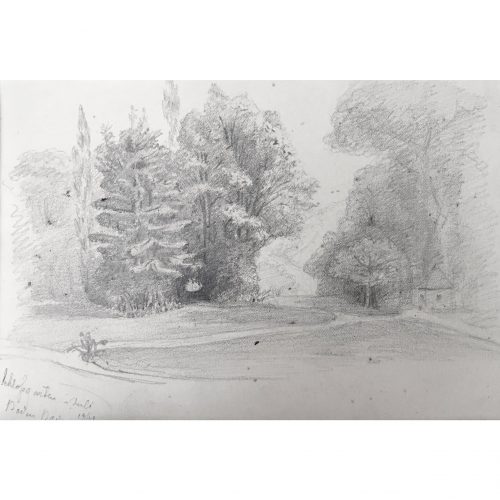
Oscar Andreae (fl.1860-1880) Inscribed 'Schlossgarten - Juli 1861/ Baden Baden'
Pencil Drawing Sheet 11 x 18.5cm Andreae spent much of the 1860s exploring Europe - the invention of the railways having made undertaking a Grand Tour rather easier than it had been half a century earlier - and recorded the places he visited. Here he records what is thought to be the gardens of the Neues Schloss in Baden Baden, the former residence of the Margraves of Baden. Baden Baden is an old spa town - with two thermal baths - on the edge of the Black Forest in the south west of Germany. If you are interested email info@manningfineart.co.uk or call us on 07929 749056. Condition: Good. -
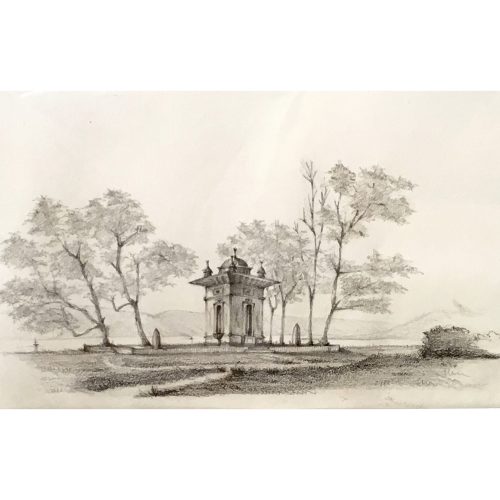
Oscar Andreae (fl.1860-1880) Kiosk on the Bosphorus
Pencil drawing Dated 4 April 1866 13 x 19.5cm approx. Andreae spent much of the 1860s exploring Europe - the invention of the railways having made undertaking a Grand Tour rather easier than it had been half a century earlier - and recorded the places he visited. Here he is in Turkey, recording a Kiosk - or Köşkü - on the shores of the Bosphorus, the strait of water in northwestern Turkey that links the Black Sea to the Mediterranean. If you are interested email info@manningfineart.co.uk or call us on 07929 749056. Condition: Good. -
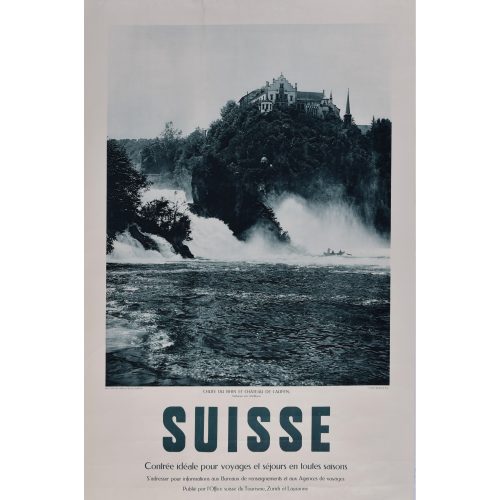
Suisse Chutes du Rhin
Original lithographic poster (1925) 40x25" If you are interested email info@manningfineart.co.uk or call us on 07929 749056. Condition: Generally good, a little edge wear. -
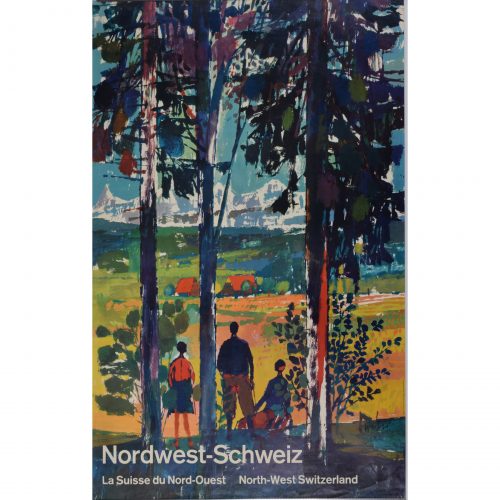
Hugo Wetli (1916-1972) Nordwest-Schweiz North-West Switzerland La Suisse du Nord-Ouest
Original Poster c. 1960s If you are interested email info@manningfineart.co.uk or call us on 07929 749056. Condition: Excellent. -
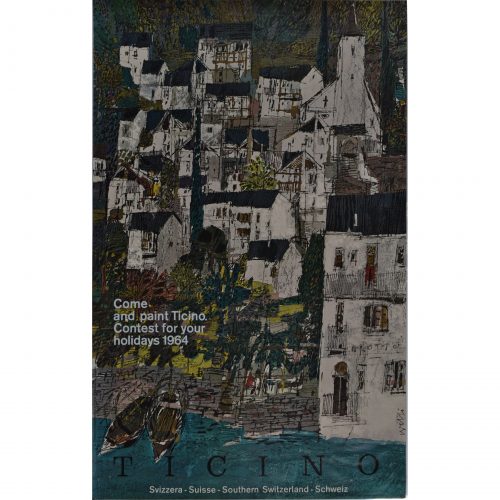
Hugo Wetli (1916-1972) Ticino - Come and Paint Ticino Contest for your holidays 1964
Original Poster 1964 If you are interested email info@manningfineart.co.uk or call us on 07929 749056. Condition: Excellent. -
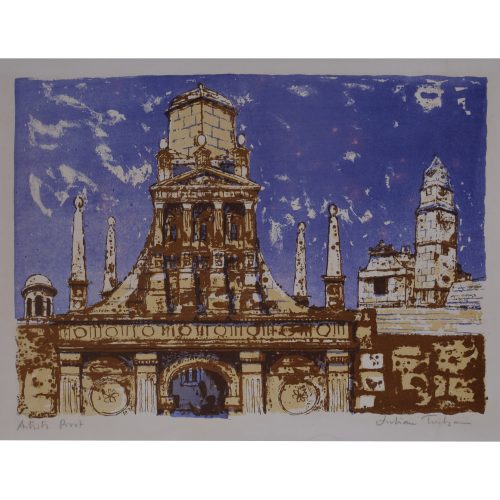
Julian Otto Trevelyan, RA (1910 -1988) Caius College II, Cambridge (1959/1962)
Signed by the artist and inscribed in pencil Artist's Proof, aside from the edition of 70. The edition consisted of 70 numbered proofs and 30 artist’s proofs. We also have listed one of the 70 numbered proof prints, which is in a purple colourway - rather than the blue here. 37x51cm (14.5×20 inches) This comes from Julian Trevelyan’s Cambridge Suite which consisted of 10 lithographs: Caius College, Caius College II, Christ’s College, Corpus Christi College, Downing College, Emmanuel College, Jesus College, Peterhouse, St Catharine’s College and Sidney Sussex College. The Government Art Collection has copies of several of the prints in this series. If you are interested email info@manningfineart.co.uk or call us on 07929 749056. Condition: Good. Old crease that runs from top to bottom has been restored and is barely perceptible - see photograph. -
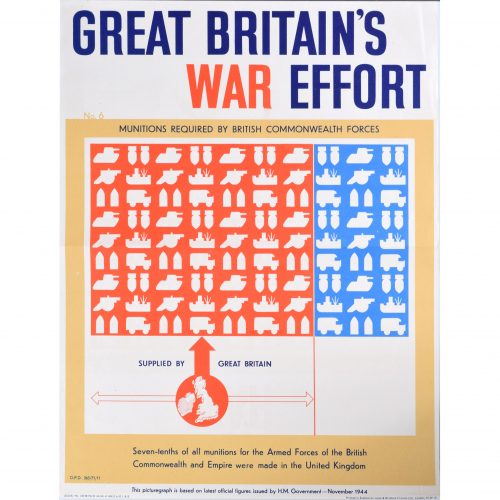
Printed by Lowe & Brydone Printers (1944)
Great Britain's War Effort No. 6 (Munitions)
50x37cm "Seven-tenths of all munitions for the Armed Forces of the British Commonwealth and Empire were made in the United Kingdom. This picturegraph is based on latest official figures issued by HM Government November 1944." The population of the Empire had to be persuaded that Britain was pulling her weight in World War 2. Bu this poster and others similar could the message be put across. The fine stylised tanks, bombs, ships, guns and other vehicles are stacked up on the left-hand side showing the British contribution. If you are interested email info@manningfineart.co.uk or call us on 07929 749056. Condition: Folds as issued, otherwise generally excellent. -
Printed by Lowe & Brydone Printers (1944)
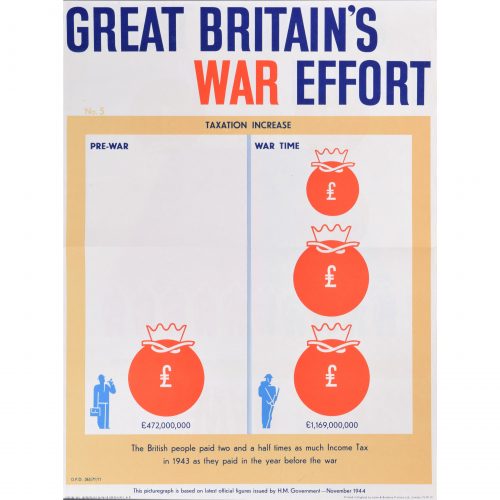
Great Britain's War Effort No. 5 (Taxation)
50x37cm "The British people paid two and a half times as much Income Tax in 1943 as they paid in the year before the war. This picturegraph is based on latest official figures issued by HM Government November 1944." Pre-war taxation: £472,000,000 War-time £1,169,000,000 The population of the Empire had to be persuaded that Britain was pulling her weight in World War 2. By this poster and others similar could the message be put across. If you are interested email info@manningfineart.co.uk or call us on 07929 749056. Condition: Folds as issued, otherwise generally excellent. -
Printed by Lowe & Brydone Printers (1944)
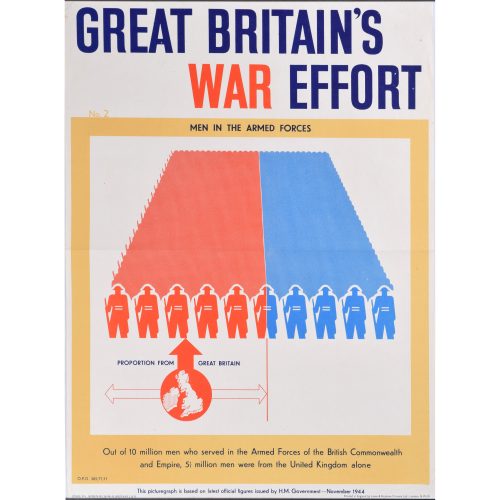
Great Britain's War Effort No. 2 (Men in the armed forces)
50x37cm "Of the ten million men who served in the Commonwealth's Armed Forces five-and-a-half million men were from the United Kingdom alone. This picturegraph is based on latest official figures issued by HM Government November 1944." The population of the Empire had to be persuaded that Britain was pulling her weight in World War 2. By this poster and others similar could the message be put across. If you are interested email info@manningfineart.co.uk or call us on 07929 749056. Condition: Folds as issued, otherwise generally excellent. -
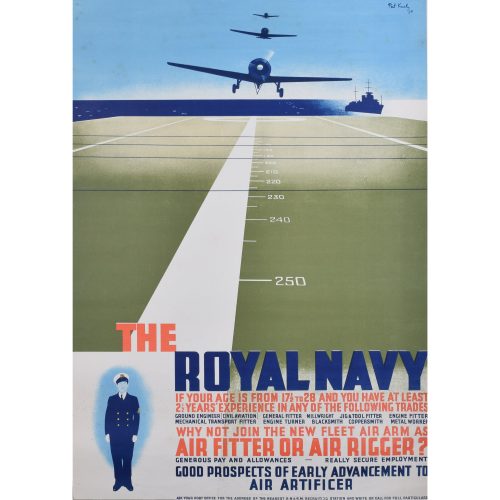
Pat Keely (d. 1970) The Royal Navy
75x51cm Original lithographic poster 1939 Printed for HMSO by Vincent Brooks, Day & Son Ltd, London If your age is from 17 1/2 to 28 and you have at least 2 1/2 years' experience in any of the following trades: Ground Engineer (Civil Aviation) General Fitter Millwright Jig & Tool Fitter etc. Why not join the new Fleet Air Arm as Air Fitter or Air Rigger Generous Pay and Allowances - Really Secure Employment Good Prospects of Early Advancement to Air Artificer Little is known of the life of the rather private Pat Keely, a prolific and excellent designer of posters. He designed the World Scout Jamboree 4d stamp in 1957 and produced many posters for the British Government. In this excellent poster three aeroplanes are seen landing on the deck of an aircraft carrier; although somewhat stylised they are likely to be the Blackburn Skua. If you are interested email info@manningfineart.co.uk or call us on 07929 749056. Condition: Generally very good. -
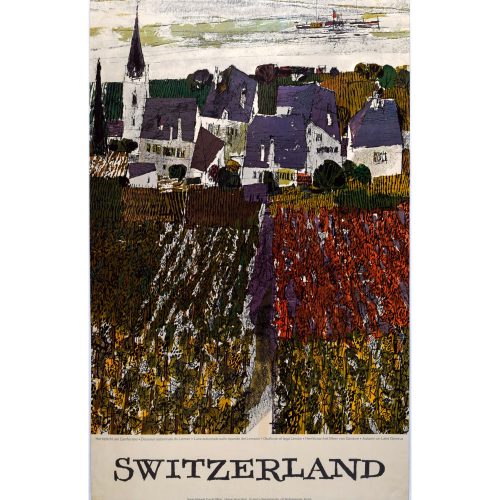
Hugo Wetli (1916-1972) Autumn on Lake Geneva Herbst am Genfersee Douceur automnale du Léman
Original Poster c. 1960s 40x25" If you are interested email info@manningfineart.co.uk or call us on 07929 749056. Condition: Pinholes to corners, some soft creases, not backed, generally good. -
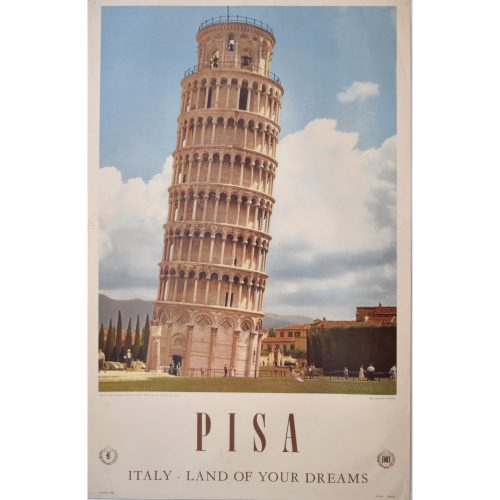
Ente Nazionale Italiano per il Turismo (The Italian Government Tourist Board)
PISA - ITALY - LAND OF YOUR DREAMS
Lithographic poster 101 x 63.5 cm If you are interested, please email info@manningfineart.co.uk or call us on 07929 749056. Condition: Good. Pin-holes to corners; not backed. -
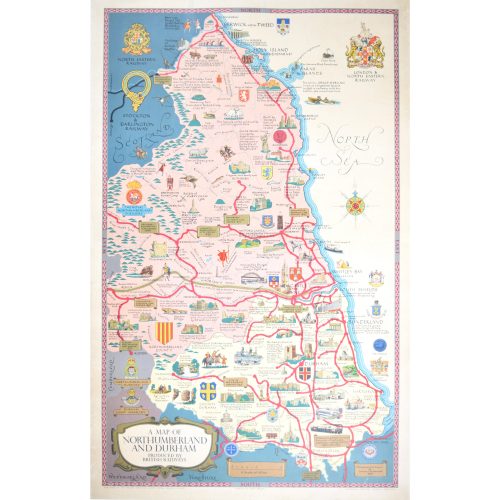
Lance Cottermole A Map of Northumberland & Durham, UK
1949 Lithographic poster Published for Railway Executive 102x63cm If you are interested email info@manningfineart.co.uk or call us on 07929 749056. Condition: Good. Backed to linen, repaired tear, presents very well. -
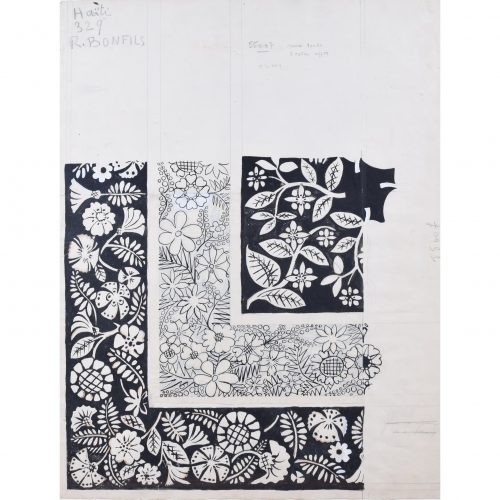
Robert Bonfils (French: 1886-1972) Design for scarf for Bianchini Ferrier
'Haiti' 66x50cm Gouache and pencil Provenance: Christies, 25-27 July 2001 Bianchini Textiles sale Born in Paris, Bonfils spent between 1903-1909 at various Parisian art schools: the École Germain Pilon, the École Nationale Supérieure des Arts Décoratifs (where he subsequently taught for thirty-two years), and the École des Beaux Arts. From 1909 he exhibited regularly at the Salon d'Automne, by 1912 he was exhibiting at Salon des Artistes Décorateurs and then subsequently at Tuileries and abroad. He was an organiser of the 1925 Paris International Exposition of Modern Industrial and Decorative Arts, and the 1937 Exposition. His relationship with Bianchini commenced in 1915 who produced many of his textile designs. He was made Chevalier de la Légion d'honneur in 1926, being promoted to Officier in 1938. If you are interested email info@manningfineart.co.uk or call us on 07929 749056. Condition; Good. -
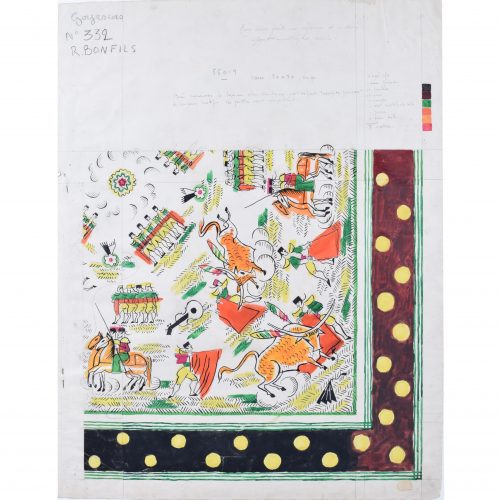
Robert Bonfils (French: 1886-1972) Design for scarf for Bianchini Ferrier
No.332 Goyescas 65x50cm Gouache and pencil Provenance: Christies, 25-27 July 2001 Bianchini Textiles sale Born in Paris, Bonfils spent between 1903-1909 at various Parisian art schools: the École Germain Pilon, the École Nationale Supérieure des Arts Décoratifs (where he subsequently taught for thirty-two years), and the École des Beaux Arts. From 1909 he exhibited regularly at the Salon d'Automne, by 1912 he was exhibiting at Salon des Artistes Décorateurs and then subsequently at Tuileries and abroad. He was an organiser of the 1925 Paris International Exposition of Modern Industrial and Decorative Arts, and the 1937 Exposition. His relationship with Bianchini commenced in 1915 who produced many of his textile designs. He was made Chevalier de la Légion d'honneur in 1926, being promoted to Officier in 1938. If you are interested email info@manningfineart.co.uk or call us on 07929 749056. Condition; Good. -
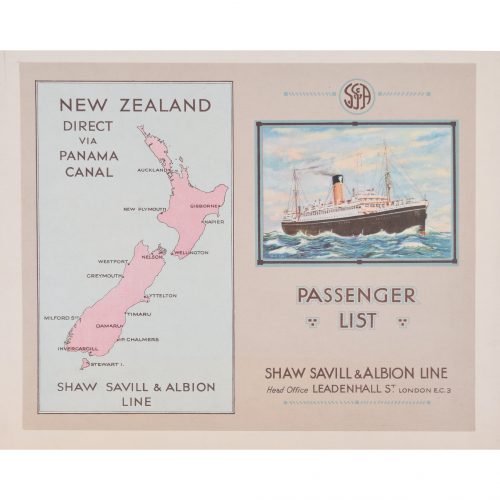
A E Agar (artist) Original passenger list brochure for Shaw Savill Albion Line, c. 1940s or 1950s.
24x34cm (approx) Provenance: the artist's estate As new, unissued printer's proof. Could be trimmed to the brochure size if desired. Fine image of ocean liner to front cover, map - via Panama Canal - to back cover. From the great age of Ocean Liners. If you are interested email info@manningfineart.co.uk or call us on 07929 749056. Condition: Excellent. -
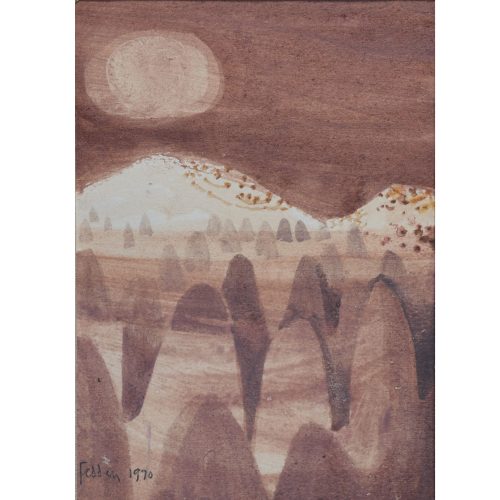
Mary Fedden (1915-2012) Moonlight at Cappadocia (1970)
Watercolour 18 x 13 cm Signed and dated lower left Lonely Planet says of Cappadocia, "As if plucked from a whimsical fairytale and set down upon the stark Anatolian plains, Cappadocia is a geological oddity of honeycombed hills and towering boulders of otherworldly beauty." Here Fedden presents an almost surreal landscape, where the forms of rocks, sky, and moonlight swim out of a subtle palette. If you are interested, please email info@manningfineart.co.uk or call us on 07929 749056. Condition: Excellent. In original frame with replacement mount in the style of the original. -
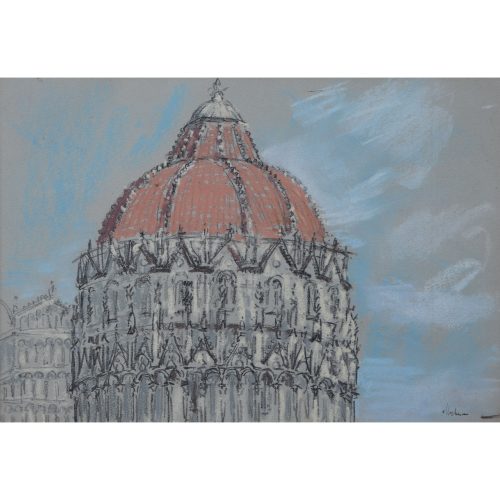
Paul Ashford, Lord Methuen (1886-1974) The Baptistry, Pisa,
1956 Signed bottom right Pastel 18 x 26cm -
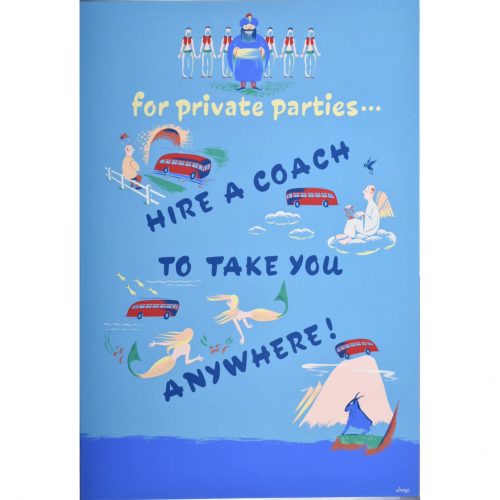
"Jacqs" (British, 20th century) For Private Parties... Hire a Coach to Take You Anywhere
Original Poster c. 1960s 75x50cm If you are interested email info@manningfineart.co.uk or call us on 07929 749056. Condition: Excellent. -
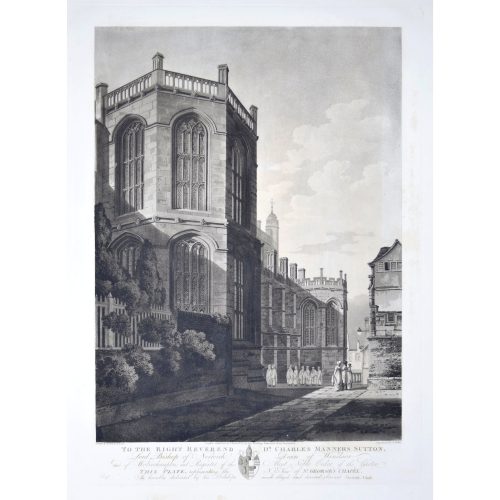
Frederick Nash (1782-1856) Drawn and etched Engraved by F C Lewis North East View of St George's Chapel, Windsor
To the Right Reverend the Lord Bishop of Norwich and Dean of Windsor London Published by F Nash, No 6 Asylum Buildings, Westminster Road July 12 1804 55x40cm Frederick Nash was born in Lambeth. Initially studying architectural drawing under Thomas Malton he subsequently enrolled at the Royal Academy of Arts. From 1801 to 1809 he worked with the antiquarians John Britton and Edward Wedlake Brayley, subsequently becoming a member of the Society of Painters in Watercolours - a group of painters who had left the Royal Academy following complaints of under-recognition of their works. Latterly primarily a landscape painter he toured the rivers of Germany. Prints from this series are in the British Museum and also in the collection of Anglesea Abbey, a National Trust property outside Cambridge, England, with a very large collection of views of Windsor Castle. If you are interested email info@manningfineart.co.uk or call us on 07929 749056. Condition: A good impression In generally very good condition. Not trimmed. -
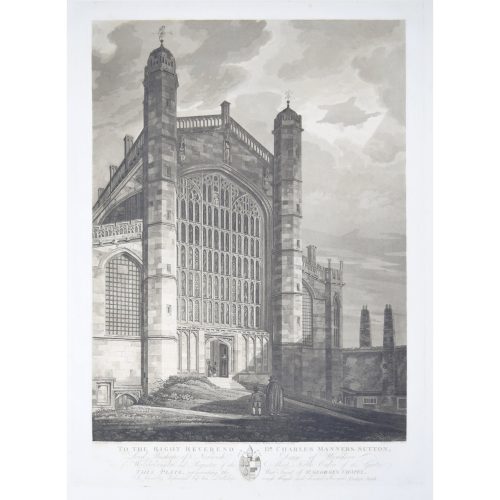
Frederick Nash (1782-1856) Drawn and etched Engraved by F C Lewis West Front of St George's Chapel, Windsor
To the Right Reverend the Lord Bishop of Norwich and Dean of Windsor London Published by F Nash, No 6 Asylum Buildings, Westminster Road July 12 1804 55x40cm Frederick Nash was born in Lambeth. Initially studying architectural drawing under Thomas Malton he subsequently enrolled at the Royal Academy of Arts. From 1801 to 1809 he worked with the antiquarians John Britton and Edward Wedlake Brayley, subsequently becoming a member of the Society of Painters in Watercolours - a group of painters who had left the Royal Academy following complaints of under-recognition of their works. Latterly primarily a landscape painter he toured the rivers of Germany. Prints from this series are in the British Museum and also in the collection of Anglesea Abbey, a National Trust property outside Cambridge, England, with a very large collection of views of Windsor Castle. If you are interested email info@manningfineart.co.uk or call us on 07929 749056. Condition: A good impression In generally very good condition. Not trimmed. -
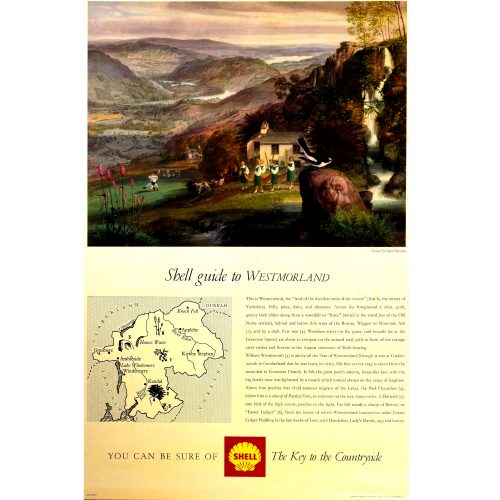
Claude Harrison Shell Guide to Westmoreland
Original poster for Shell Oil c. 1960s 76x51cm Shell commissioned a series of posters to go with their County Guide books, and they commissioned paintings by the leading artists of the day. Claude Harrison studied at Preston College of Art (1939-1941) and Liverpool College of Art (1941-2) after which he enlisted in the RAF for five years. On his return, he continued studies at Royal College of Art (1947-50). Harrison’s work consisted of murals, portraits, conversation pieces and mystical figure compositions - which are seen here in the Westmoreland poster. He was a member of the Royal Academy and his work has regularly been exhibited in the annual summer exhibition. If you are interested email info@manningfineart.co.uk or call us on 07929 749056. Condition: Fair. Short edge tears which are hidden by mount/mat; some age toning. Metal hanger removed to allow matting. See photograph for more information -
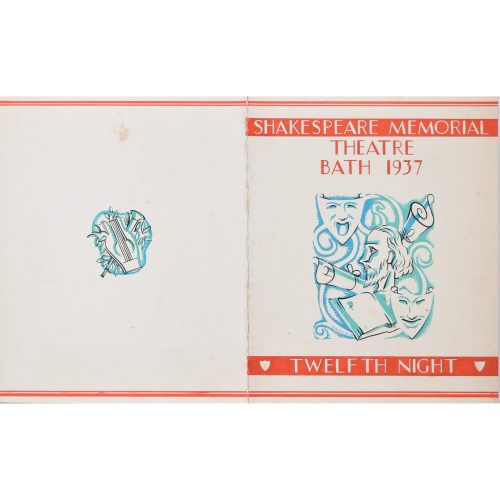
Hammond (British, fl. 1920s) Original artwork for Design for Shakespeare Twelfth Night programme to be held in Bath
26x21 cm Gouache, 1937 Sadly nothing is known of the life of the artist of thes series of rather fine Art Deco designs we have listed. If you are interested email info@manningfineart.co.uk or call us on 07929 749056. Condition: Generally good; small stain to reverse as illustrated in photograph; fold to centre as intended by artist. -
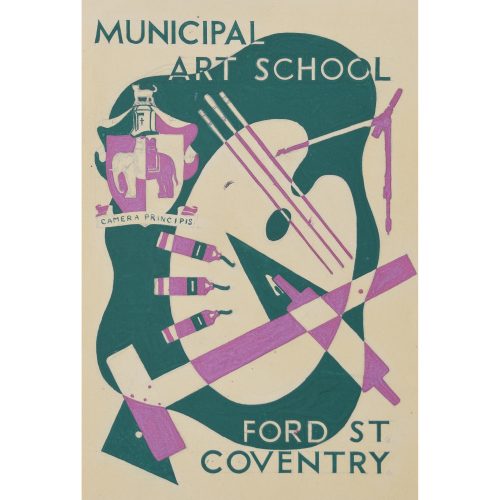
Hammond (British, fl. 1920s) Original artwork for brochure for Municipal Art School, Ford St, Coventry, England UK
21.5x14 cm Gouache, c. 1937 Sadly nothing is known of the life of the artist of thes series of rather fine Art Deco designs we have listed. If you are interested email info@manningfineart.co.uk or call us on 07929 749056. Condition: Generally very good. -
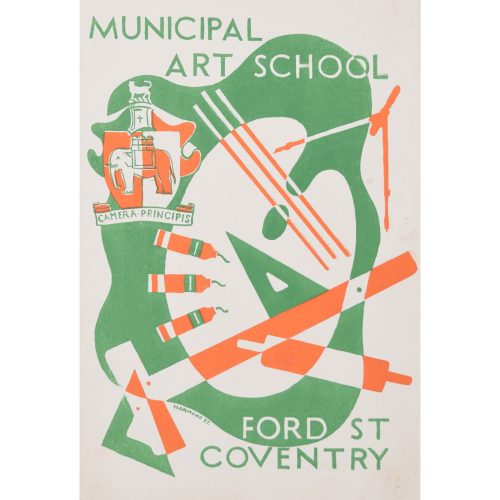
Hammond (British, fl. 1930s) Design for Municipal Art School Brochure
21.5x18 cm Lithograph drawn directly to stone, 1937 Sadly nothing is known of the life of the artist of this series of rather fine Art Deco designs we have listed. This is drawn directly onto the stone, a considerable skill in itself, and in just two colours in order to limit the cost of the lithography. If you are interested email info@manningfineart.co.uk or call us on 07929 749056. Condition: Generally very good. -
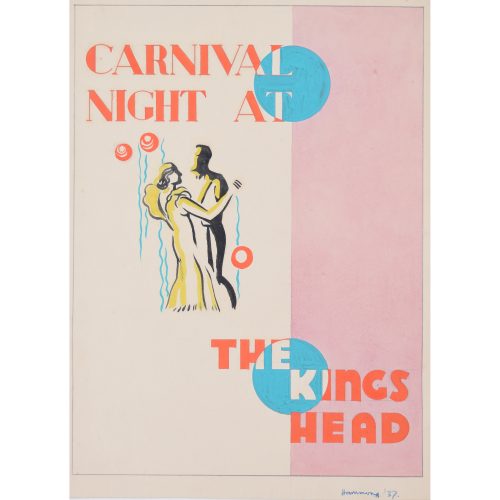
Hammond (British, fl. 1930s) Original design for poster and flyer for Carnival Night at the King's Head
26x19 cm Gouache, 1937 Sadly nothing is known of the life of the artist of this series of rather fine Art Deco designs we have listed. An elegant couple dance in this well composed design. Designed to be lithographed, the artist has restricted himself to four colours. If you are interested email info@manningfineart.co.uk or call us on 07929 749056. Condition: Generally very good. -
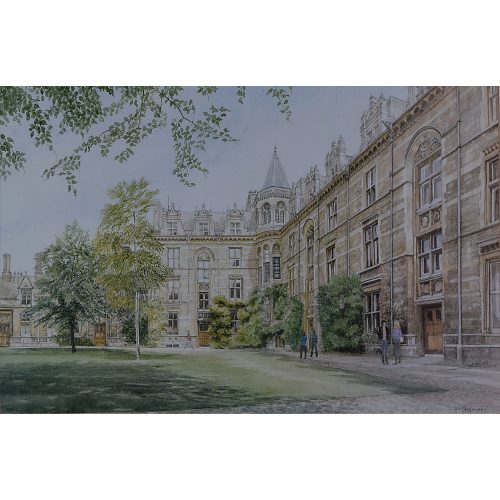
Jane Carpanini RWS RWA RCA (1949-) Gonville and Caius College, Cambridge
30x45cm Digital Limited Edition Print 77/350 Bornin Bedfordshire, Carpanini studied at Brighton College of Art and the University of Reading. Since the start of her career she has been known for meticulous architectural paintings. Wales has been a favourite subject and she has paintings in the collections of the National Library of Wales and National Museum of Wales. Her renowned series of views of Oxford and Cambridge Colleges were published by Contemporary Watercolours. If you are interested email info@manningfineart.co.uk or call us on 07929 749056. Condition: Excellent. -
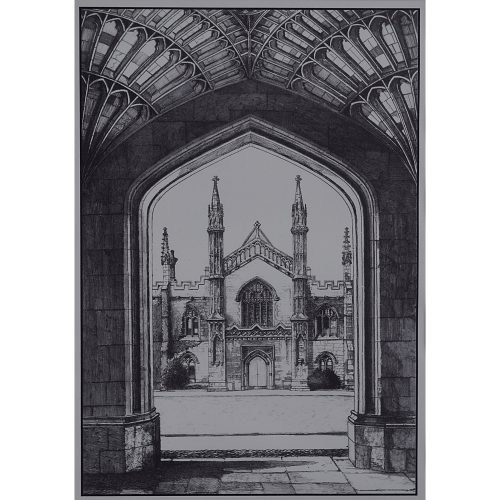
Tony Broderick (British, late 20th Century) Corpus Christi College Cambridge
Print 35x25cm A Lincoln-based artist, known for his portrayal of Lincoln and also of the Cambridge Colleges. If you are interested email info@manningfineart.co.uk or call us on 07929 749056. Condition: Excellent. -
Out of stock
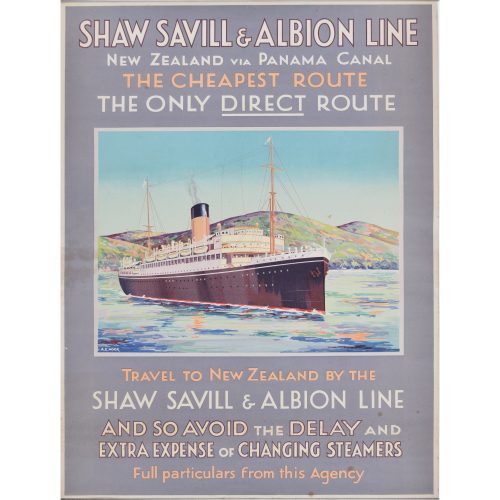
A E Agar (artist) Original advertising poster for Shaw Savill Albion Line, c. 1940s or 1950s.
51x38cm Provenance: the artist's estate Fine image of ocean liner. From the great age of Ocean Liners. If you are interested email info@manningfineart.co.uk or call us on 07929 749056. Condition: Good. -
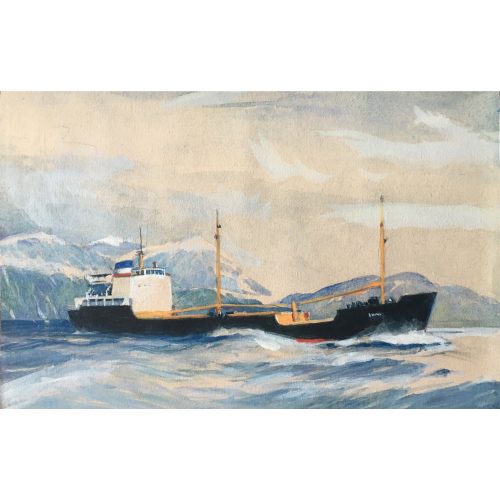
Laurence Dunn (1910-2006) Otra
Gouache 11.5x18cm Inscribed to reverse 'Rough sketch for painting of "Otra" commissioned for Capt. F.E. Eagle, whose favourite command she was' and signed 'Laurence Dunn' The World Ship Society published the following obituary for Dunn: DUNN, Laurence. [December 15 2006 — Lloyds List] Many readers will be saddened by the death of well-known marine artist and writer Laurence Dunn in his 97th year. A man of encyclopaedic knowledge, he began his lifelong love of ships in Brixham, where he meticulously recorded passing traffic with the exquisitely accurate line drawings which later became something of a trademark. While studying at London’s Central School of Art his work was noticed by the Southern Railway, which commissioned profiles of its fleet, and this in turn led to work for Orient Line, where he also designed the well-known corn-coloured hull, and later Thorneycroft, where he helped with shaping draft plans for a new royal yacht. During the second world was he worked for naval intelligence at the Admiralty, where his technique did much to improve recognition standards, and greatly expanded his shipping clientele, becoming personally known to many chairmen. As well as the shipping press he worked for mainstream publications such as Everybody’s, Sphere and the upmarket comic Eagle. Through his many contacts he enjoyed going to sea in a great variety of ships from aircraft carriers to colliers. Laurence wrote several books, starting with ship recognition titles which introduced new standards of layout, but his best known work was probably Passenger Liners, which was widely taken up by the travel trade. His love of Greece, where he was an early publicist of island cruising, let to involvement in reshaping various passenger liners beginning with Greek Line’s OLYMPIA. In later life he designed several sets of shipping stamps for the Crown Agents, produced photographic volumes on Thames and Mediterranean shipping and still found time to enjoy the passing Thames traffic. Our sympathies go to his wife Jennifer, who provided succour to the many ship lovers who beat a path to the welcoming door of their Gravesend home. If you are interested email info@manningfineart.co.uk or call us on 07929 749056. Condition: Excellent. -
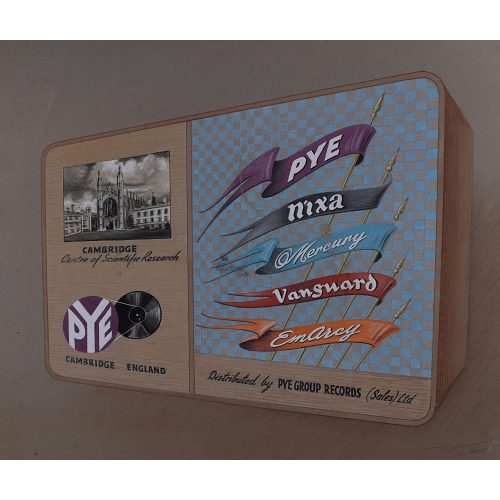
Bowens (British, fl. mid 20th Century) Cambridge: Centre of Scientific Research
Pye Group Records Pye - Nixa - Mercury - Vanguard - EmArcy c. mid-late 1950s Haig Road in Cambridge, where Pye had their factory, was subsumed into Elizabeth Way and was a long way from King's College chapel. However that iconic building is used to illustrate the Cambridge connection. EmArcy Records is a jazz record label founded in 1954 by Mercury Records. Mercury Record Corporation was founded in Chicago in 1945 Pye Records was a British record label; it had started life manufacturing televisions and radios, with its main plant off Haig Road in Cambridge. It purchased Nixa Records in 1953 Vanguard Records is a US record label set up in 1950 primarily as a classical label. If you are interested email info@manningfineart.co.uk or call us on 07929 749056. Condition: Good. -
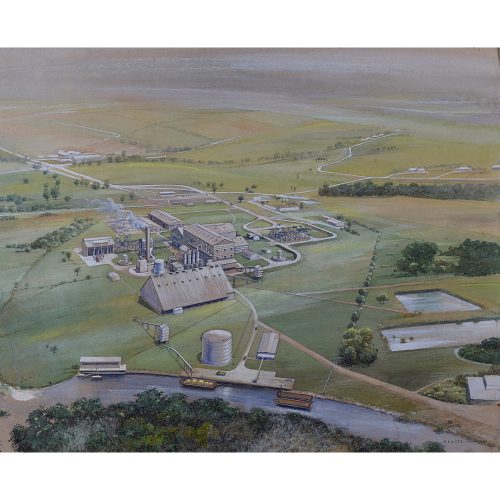
W. A. A. Cox ARIBA Architectural Design for a Factory in the United Kingdom
Watercolour, pencil 53x64 cm Signed and dated, lower right 'W. A. A. Cox ARIBA 1966' If you are interested email info@manningfineart.co.uk or call us on 07929 749056. Condition: Good. -
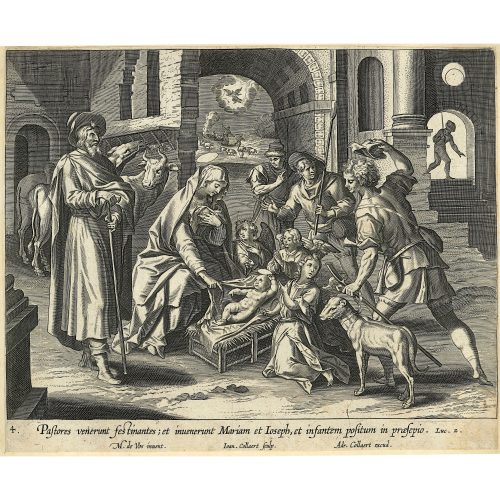
Adriaen Collaert (c. 1560-1618) after Maerten de Vos (1532 - 1603) "Pastores venerunt festinantes; et inuenerunt Mariam et Ioseph, et infantem positum in praesepio" - Luke 2
Engraving, From Vita, Passio, et Resurrectio Iesu Christi first published 1598, this a later edition published by Joannes Galle (1600-1676) 16.5x21.8cm From the Gospel of Luke, Chapter 2 Verse 16 - And the shepherds came with haste, and found Mary, and Joseph, and the babe lying in a manger. Adriaen Collaert was born in Antwerp between 1555 and 1565, becoming wijnmeester of the Guild of St Luke in 1580 - a title reserved for the sons of guild members. The guild of St Luke was generally the city guild for artists. Working for Philip Galle, a Dutch publisher best known for his old master prints, he married Galle's daughter Justa. After learning the principles of engraving in the Netherlands, he spent some years in Italy improving his skill. Upon returning to Flanders he engraved, in accomplished fashion, a great number of plates. His brother, Jan Collaert II, his son, Jan Baptist Collaert II and a grandson were all printmakers. These particular plates are after paintings by Maerten de Vos, a Flemish painter and draughtsman. His father was Pieter de Vos, from whom he learned. From 1550 - 1558 he travelled in Italy, visiting Rome and Venice and becoming master of the Antwerp Guild of St Luke upon his return in 1558. After 1575 he was mainly engaged in producing print designs. If you are interested email info@manningfineart.co.uk or call us on 07929 749056. Condition: Trimmed to plate margins, generally good condition commensurate with age, slight age toning and handling marks as evident from image. -
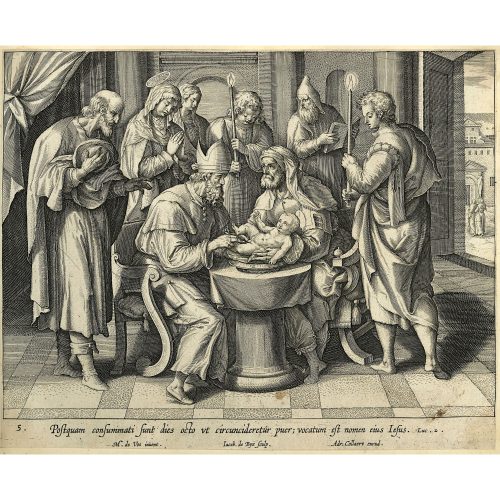
Adriaen Collaert (c. 1560-1618) after Maerten de Vos (1532 - 1603) 5. "Postquam consummati sunt dies octo ut circuncideretur puer; vocatum est nomen eius Iesus" - Luke 2
Engraving, From Vita, Passio, et Resurrectio Iesu Christi first published 1598, this a later edition published by Joannes Galle (1600-1676) 16.5x21.8cm From the Gospel of Luke, Chapter 2 Verse 21 - And when eight days were accomplished for the circumcising of the child, his name was called Jesus. Adriaen Collaert was born in Antwerp between 1555 and 1565, becoming wijnmeester of the Guild of St Luke in 1580 - a title reserved for the sons of guild members. The guild of St Luke was generally the city guild for artists. Working for Philip Galle, a Dutch publisher best known for his old master prints, he married Galle's daughter Justa. After learning the principles of engraving in the Netherlands, he spent some years in Italy improving his skill. Upon returning to Flanders he engraved, in accomplished fashion, a great number of plates. His brother, Jan Collaert II, his son, Jan Baptist Collaert II and a grandson were all printmakers. These particular plates are after paintings by Maerten de Vos, a Flemish painter and draughtsman. His father was Pieter de Vos, from whom he learned. From 1550 - 1558 he travelled in Italy, visiting Rome and Venice and becoming master of the Antwerp Guild of St Luke upon his return in 1558. After 1575 he was mainly engaged in producing print designs. If you are interested email info@manningfineart.co.uk or call us on 07929 749056. Condition: Trimmed to plate margins, generally good condition commensurate with age, slight age toning and handling marks as evident from image. -
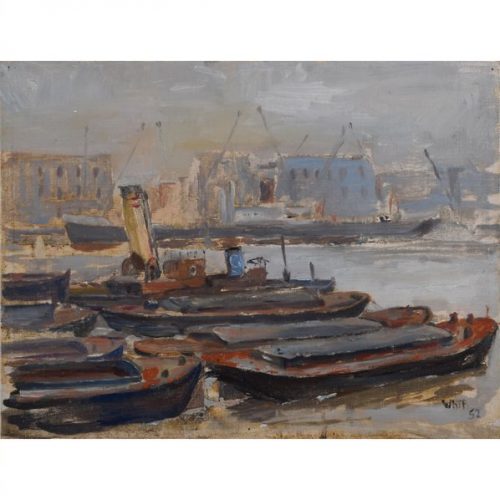
Roy M Whittenbury (fl. 1920-1955) The Pool of London
Oil on canvasboard 29 x 39.5 cm Whittenbury concentrated on marine subjects. Here he captures the Pool of London - that stretch of the River Thames from London Bridge to just below Tower Bridge which is controlled by the Port of London. Although no longer the busy port depicted in the painting, it is one of the reasons for London's political and economical pre-eminence over the last thousand years. If you are interested email info@manningfineart.co.uk or call us on 07929 749056. Condition: Good. -
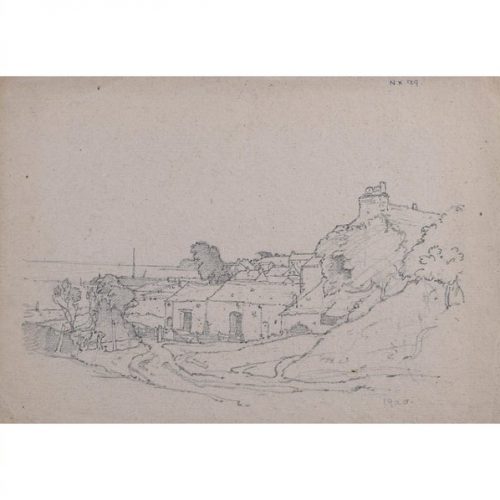
Claude Muncaster (1903-1974) Canal Foot, The Ulverston Canal
1920 Inscribed to reverse and numbered NX129 in the artist's catalogue Pencil Sketch 21x30cm Provenance: The estate of the artist and by descent Muncaster's watercolours capture the English countryside feel with great competence. Here he records the old swing bridge across the lock at the foot of the now-derelict Ulverston Canal. It was Britain's straightest canal, running two miles from Morecambe Bay to Ulverston but has long stood unused. Oliver Hall, Muncaster's father, lived at Ulverston in his latter years. Claude Grahame Muncaster, RWS, ROI, RBA, SMA was the son of Oliver Hall RA. At the age of fifteen his career as a landscape painter began, and he soon took to the seas, spending the 1920s and 30s travelling the world with his sketchbook in a series of vessels. With the outbreak of war and he joined the RNVR training as a navigator. Having left school at fifteen his mathematics was very weak and it was a relief for all when his artistic talents meant he was recruited as a camofleur. A master of capturing seascapes he was therefore able to hide huge ships ‘in plain sight’ with clever disguises. After the war he painted for the Royal Family and was a frequent guest at Sandringham. Claude Muncaster was a watercolourist known for his landscapes and maritime scenes. He was born Grahame Hall, the son of the Royal Academician Oliver Hall who taught his son to paint from an early age; Grahame first exhibited his work aged 15 and a few years later was showing at the RA. However, he adopted the name Claude Muncaster in 1922 to dissociate his career from that of his father. Muncaster’s primary choice of subject matter came from a genuine love of the sea. He made several long-distance sea voyages, including one around the Horn as a deckhand in the windjammer Olivebank in 1931, which he described in ‘Rolling Round the Horn’, published in 1933. Armed with a sketchbook, his aim was to be able to ‘paint ships and the sea with greater authority’. This he certainly achieved, perfectly capturing the limpid first light of morning over the Port of Aden, the choppy rain-grey waters of the Bay of Biscay and a streak of sunlight through gathering storm clouds at dusk in Exeter. He became an Associate of the Royal Watercolour Society in 1931 and was a founder member, and later President, of the Royal Society of Marine Artists. During the Second World War, Muncaster served in the Royal Naval Volunteer Reserve (RNVR) from 1940-44, training as a navigator before going on to advise on the camouflage of ships, and also worked as an official war artist. In ‘Still Morning at Aden’ (1944) he depicts Allied warships in this safe anchorage in the Middle East; the back is stamped with Admiralty approval. In 1946-7 he was commissioned by the Queen to produce watercolours of the royal residences at Windsor, Sandringham and Balmoral; the Duke of Edinburgh, in a foreword to a biography of Muncaster, recalls looking at these and considering the artist’s ‘unerring instinct for a subject’, his sense of atmosphere. Other commissions included large panoramas of the Thames and of Bradford. His career also included work as an etcher, illustrator, writer, lecturer and broadcaster, and his paintings can be found in the Royal Academy, Tate, National Maritime Museum Cornwall, National Railway Museum and Royal Air Force Museum. If you are interested email info@manningfineart.co.uk or call us on 07929 749056. Condition: Good. Conservation mounted and wrapped in transparent sleeve for protection -
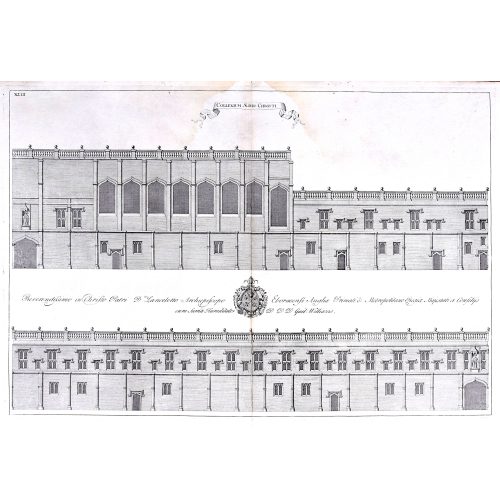
William Williams (Welsh, fl. 1724-1733) Christ Church, Oxford
Engraving c. 1732 for Oxonia Depicta (pub. London 1732-33) 41x60cm If you are interested email info@manningfineart.co.uk or call us on 07929 749056. Condition: Fair, gentle staining towards top and usual handling marks to margins, as illustrated. -
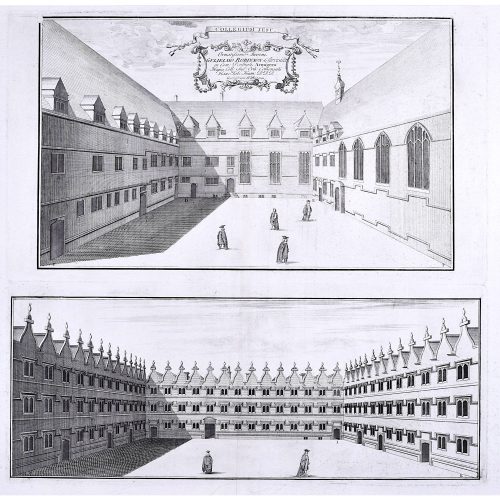
William Williams (Welsh, fl. 1724-1733) Jesus College, Oxford
Engraving c. 1732 for Oxonia Depicta (pub. London 1732-33) 43x44cm If you are interested email info@manningfineart.co.uk or call us on 07929 749056. Condition: Fair, gentle staining towards top and usual handling marks to margins, as illustrated. -
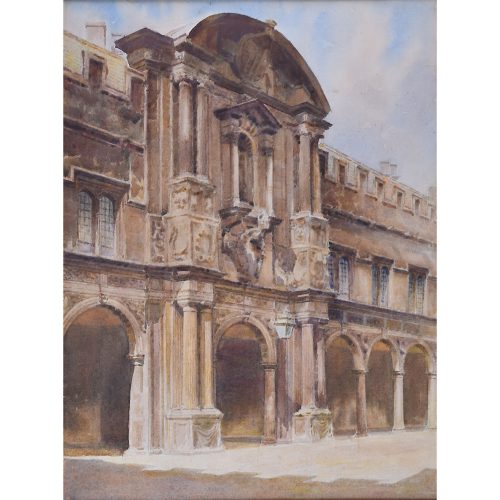
John Fulleylove (1845-1908) attributed Canterbury Quad, St John's College Oxford
Watercolour over pencil, unsigned 40.5x30.5cm Born in Leicester, John Fulleylove trained as an architect with a Leicester firm before becoming a full-time painter. He exhibited widely in the UK, at such venues as the Royal Academy, the Fine Art Society, and the Royal Society of British Artists. His paintings were the subject of illustrated topographical books, including one on ‘Oxford’ published by the Fine Art Society. If you are interested email info@manningfineart.co.uk or call us on 07929 749056. Condition: Laid to thick card support; generally very good, two small spots to sky visible in photograph. -
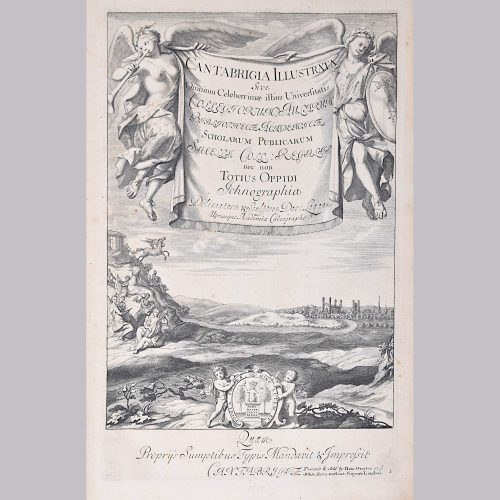
David Loggan (1634-1692) View of Cambridge
Engraving after 1690, this is a slightly later Henry Overton printing, shortly after 1700 35x51cm Baptised in Danzig in 1634 Loggan's parents were English and Scottish. Studying engraving in Danzig with Willem Hondius (1598-1652 or 1658) he moved to London in the late 1650s producing the engraved title-page for the folio 1662 Book of Common Prayer. Marrying in 1663 he moved to Nuffield, Oxfordshire in 1665 to avoid the Plague and was in 1668/9 appointed Public Sculptor to the nearby University of Oxford having been commissioned to produce bird’s-eye views of all the Oxford Colleges. He lived in Holywell Street as he did this. Oxonia illustrata was published in 1675, with the help of Robert White (1645-1704). Following its completion he commenced work on his equivalent work for Cambridge, Cantabrigia Illustrata which was finally published in 1690 when he was made engraver to Cambridge University. Oxonia illustrata also includes an engraving of Winchester College (sharing its founder – William of Wykeham – with New College) whilst Cantabrigia illustrata includes one of Eton College (which shares its founder – Henry VIII – with King’s College). Bird’s-eye views required a particular talent as an architectural perspectivist of that era as it was not until 1783 that the first living thing (a sheep, named Montauciel ‘climb to the sky’) was sent aloft by the Mongolfier brothers in a balloon. Loggan thus had to rely on his imagination in conceiving the views. Loggan’s views constitute the first accurate depictions of the two Universities, in many ways unchanged today. Whilst the Oxford engravings were produced in reasonable numbers and ran to a second edition by Henry Overton (on thicker paper and with a plate number in the bottom right-hand corner), those of Cambridge were printed in smaller numbers and it is thought largely no second edition was produced, although this frontispiece proudly claims to have been published by Overton and a pencil note on the print suggests 1715 as a date. The Dutchman Pieter van der Aa published some miniature versions of the engravings for James Beverell’s guidebook to the UK Les Delices de la Grande Bretagne c. 1708. Edmund Hort New (1871-1931) produced a series of pen-and-ink drawings of views of Oxford that paid homage to Loggan showing the development of the city in the following two hundred years. They were turned into photoengravings by Emery Walker who published the series between . Probably no more than two hundred of each engraving were produced and the plates were destroyed in the blitz. The contemporary artist Andrew Ingamells (b.1956) has produced a highly-acclaimed series of etchings again bringing Loggan’s vision up to date. If you are interested email info@manningfineart.co.uk or call us on 07929 749056. Condition: Good. Some age toning as visible in photograph; usual handling wear and marks to edges. -
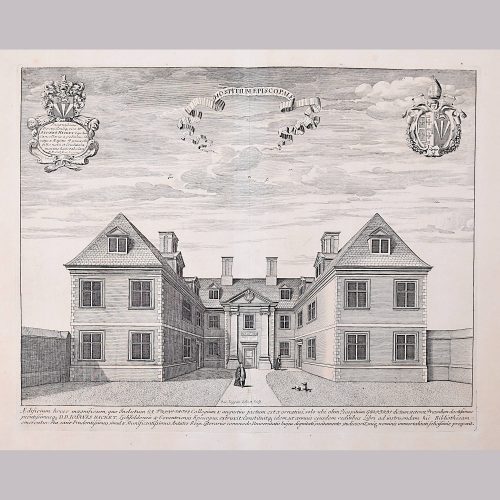
David Loggan (1634-1692) The Bishop's Hostal, Trinity College Cambridge
Engraving 1690 35x50cm Loggan was born to English and Scottish parents, and was baptised in Danzig in 1634. After studying engraving in Danzig with Willem Hondius (1598-1652 or 1658), he moved to London in the late 1650s, going on to produce the engraved title-page for the folio 1662 Book of Common Prayer. He married in 1663 and moved to Nuffield in Oxfordshire in 1665. Loggan was appointed Public Sculptor to the nearby University of Oxford in the late 1660s, having been commissioned to produce bird’s-eye views of all the Oxford colleges. He lived in Holywell Street as he did this. The 'Oxonia Illustrata' was published in 1675, with the help of Robert White (1645-1704). Following its completion, Loggan began work on his equivalent work for Cambridge; the 'Cantabrigia Illustrata' was finally published in 1690, when he was made engraver to Cambridge University. The 'Oxonia Illustrata' also includes an engraving of Winchester College (Winchester and New College share William of Wykeham as their founder) whilst the 'Cantabrigia Illustrata' includes one of Eton College (which shares its founder, Henry VIII, with King’s College). Bird’s-eye views from this era required a particular talent as an architectural perspectivist; it was not until 1783 that it became possible for artists to ascend via hot air balloons and view the scenes they were depicting from above. Loggan thus had to rely on his imagination in conceiving the views. Loggan’s views constitute the first accurate depictions of the two Universities, in many ways unchanged today. Whilst the Oxford engravings were produced in reasonable numbers and ran to a second edition by Henry Overton (on thicker paper and with a plate number in Roman numerals in the bottom right-hand corner), those of Cambridge were printed in much smaller numbers. The Dutchman Pieter van der Aa published some miniature versions of the engravings for James Beverell’s guidebook to the UK, 'Les Delices de la Grande Bretagne' (c. 1708). The contemporary artist Andrew Ingamells (b.1956) has produced a highly-acclaimed series of etchings which bring Loggan’s original vision up to date. If you are interested email info@manningfineart.co.uk or call us on 07929 749056. Condition: Some age toning as visible in photograph; usual handling wear and marks to edges, generally very good. -
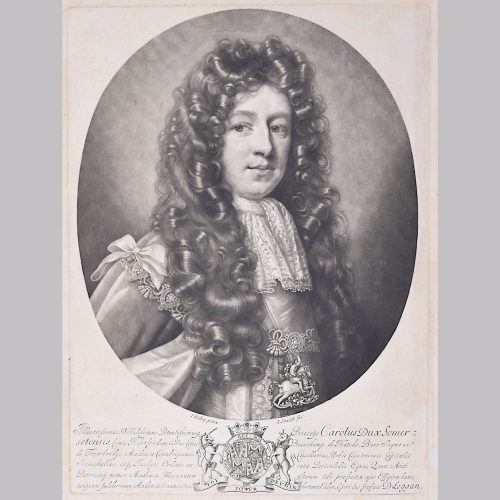
David Loggan (1634-1692) Charles Duke of Somerset
Mezzotint 1690 35x25cm Chancellor of Cambridge University, the Duke of Somerset's portrait was in Loggan's Cantabrigia Illustrata. Baptised in Danzig in 1634 Loggan's parents were English and Scottish. Studying engraving in Danzig with Willem Hondius (1598-1652 or 1658) he moved to London in the late 1650s producing the engraved title-page for the folio 1662 Book of Common Prayer. Marrying in 1663 he moved to Nuffield, Oxfordshire in 1665 to avoid the Plague and was in 1668/9 appointed Public Sculptor to the nearby University of Oxford having been commissioned to produce bird’s-eye views of all the Oxford Colleges. He lived in Holywell Street as he did this. Oxonia illustrata was published in 1675, with the help of Robert White (1645-1704). Following its completion he commenced work on his equivalent work for Cambridge, Cantabrigia Illustrata which was finally published in 1690 when he was made engraver to Cambridge University. Oxonia illustrata also includes an engraving of Winchester College (sharing its founder – William of Wykeham – with New College) whilst Cantabrigia illustrata includes one of Eton College (which shares its founder – Henry VIII – with King’s College). Bird’s-eye views required a particular talent as an architectural perspectivist of that era as it was not until 1783 that the first living thing (a sheep, named Montauciel ‘climb to the sky’) was sent aloft by the Mongolfier brothers in a balloon. Loggan thus had to rely on his imagination in conceiving the views. Loggan’s views constitute the first accurate depictions of the two Universities, in many ways unchanged today. Whilst the Oxford engravings were produced in reasonable numbers and ran to a second edition by Henry Overton (on thicker paper and with a plate number in the bottom right-hand corner), those of Cambridge were printed in smaller numbers and it is thought largely no second edition was produced, although this frontispiece proudly claims to have been published by Overton and a pencil note on the print suggests 1715 as a date. The Dutchman Pieter van der Aa published some miniature versions of the engravings for James Beverell’s guidebook to the UK Les Delices de la Grande Bretagne c. 1708. Edmund Hort New (1871-1931) produced a series of pen-and-ink drawings of views of Oxford that paid homage to Loggan showing the development of the city in the following two hundred years. They were turned into photoengravings by Emery Walker who published the series between . Probably no more than two hundred of each engraving were produced and the plates were destroyed in the blitz. The contemporary artist Andrew Ingamells (b.1956) has produced a highly-acclaimed series of etchings again bringing Loggan’s vision up to date. If you are interested email info@manningfineart.co.uk or call us on 07929 749056. Condition: Good. -
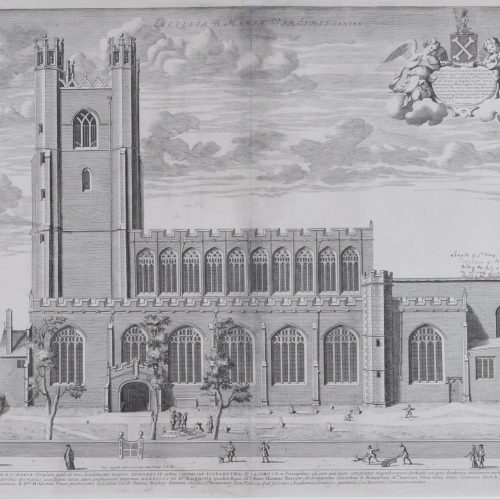
David Loggan (1634-1692) Great St Mary's Church, Cambridge University Church (1690)
Engraving 35 x 50 cm Loggan was born to English and Scottish parents, and was baptised in Danzig in 1634. After studying engraving in Danzig with Willem Hondius (1598-1652 or 1658), he moved to London in the late 1650s, going on to produce the engraved title-page for the folio 1662 Book of Common Prayer. He married in 1663 and moved to Nuffield in Oxfordshire in 1665. Loggan was appointed Public Sculptor to the nearby University of Oxford in the late 1660s, having been commissioned to produce bird’s-eye views of all the Oxford colleges. He lived in Holywell Street as he did this. The 'Oxonia Illustrata' was published in 1675, with the help of Robert White (1645-1704). Following its completion, Loggan began work on his equivalent work for Cambridge; the 'Cantabrigia Illustrata' was finally published in 1690, when he was made engraver to Cambridge University. The 'Oxonia Illustrata' also includes an engraving of Winchester College (Winchester and New College share William of Wykeham as their founder) whilst the 'Cantabrigia Illustrata' includes one of Eton College (which shares its founder, Henry VIII, with King’s College). Bird’s-eye views from this era required a particular talent as an architectural perspectivist; it was not until 1783 that it became possible for artists to ascend via hot air balloons and view the scenes they were depicting from above. Loggan thus had to rely on his imagination in conceiving the views. Loggan’s views constitute the first accurate depictions of the two Universities, in many ways unchanged today. Whilst the Oxford engravings were produced in reasonable numbers and ran to a second edition by Henry Overton (on thicker paper and with a plate number in Roman numerals in the bottom right-hand corner), those of Cambridge were printed in much smaller numbers. The Dutchman Pieter van der Aa published some miniature versions of the engravings for James Beverell’s guidebook to the UK, 'Les Delices de la Grande Bretagne' (c. 1708). The contemporary artist Andrew Ingamells (b.1956) has produced a highly-acclaimed series of etchings which bring Loggan’s original vision up to date. If you’d like to know more, please email info@manningfineart.co.uk or call us on 07929 749056. Condition: has been cleaned; scholarly observations in ink; crease in paper lower left before printing. Usual handling wear and marks to edges. -
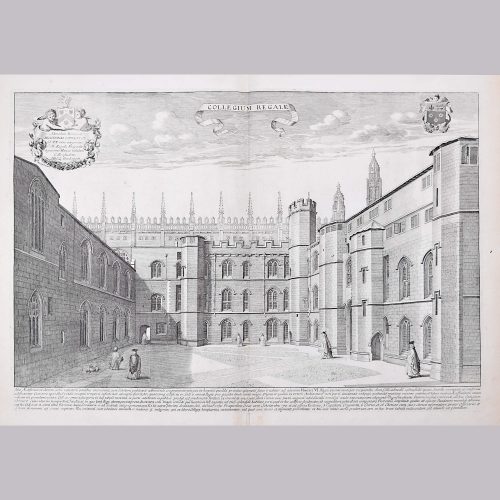
David Loggan (1634-1692) King's College Cambridge
Engraving 1690 40x51cm Baptised in Danzig in 1634 Loggan's parents were English and Scottish. Studying engraving in Danzig with Willem Hondius (1598-1652 or 1658) he moved to London in the late 1650s producing the engraved title-page for the folio 1662 Book of Common Prayer. Marrying in 1663 he moved to Nuffield, Oxfordshire in 1665 to avoid the Plague and was in 1668/9 appointed Public Sculptor to the nearby University of Oxford having been commissioned to produce bird’s-eye views of all the Oxford Colleges. He lived in Holywell Street as he did this. Oxonia illustrata was published in 1675, with the help of Robert White (1645-1704). Following its completion he commenced work on his equivalent work for Cambridge, Cantabrigia Illustrata which was finally published in 1690 when he was made engraver to Cambridge University. Oxonia illustrata also includes an engraving of Winchester College (sharing its founder – William of Wykeham – with New College) whilst Cantabrigia illustrata includes one of Eton College (which shares its founder – Henry VIII – with King’s College). Bird’s-eye views required a particular talent as an architectural perspectivist of that era as it was not until 1783 that the first living thing (a sheep, named Montauciel ‘climb to the sky’) was sent aloft by the Mongolfier brothers in a balloon. Loggan thus had to rely on his imagination in conceiving the views. Loggan’s views constitute the first accurate depictions of the two Universities, in many ways unchanged today. Whilst the Oxford engravings were produced in reasonable numbers and ran to a second edition by Henry Overton (on thicker paper and with a plate number in the bottom right-hand corner), those of Cambridge were printed in smaller numbers and it is thought largely no second edition was produced. The Dutchman Pieter van der Aa published some miniature versions of the engravings for James Beverell’s guidebook to the UK Les Delices de la Grande Bretagne c. 1708. Edmund Hort New (1871-1931) produced a series of pen-and-ink drawings of views of Oxford that paid homage to Loggan showing the development of the city in the following two hundred years. They were turned into photoengravings by Emery Walker who published the series between . Probably no more than two hundred of each engraving were produced and the plates were destroyed in the blitz. The contemporary artist Andrew Ingamells (b.1956) has produced a highly-acclaimed series of etchings again bringing Loggan’s vision up to date. If you are interested email info@manningfineart.co.uk or call us on 07929 749056. Condition: Some age toning as visible in photograph; usual handling wear and marks to edges, generally very good. -
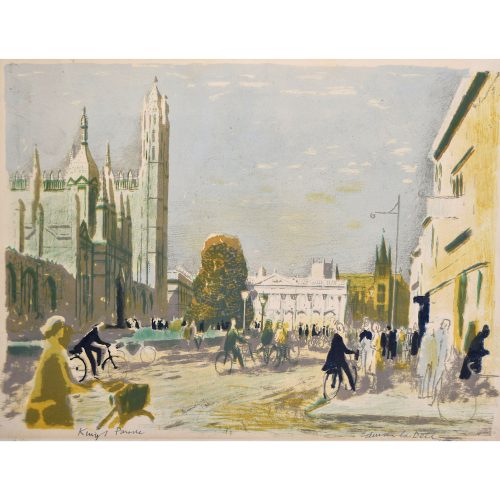
Edwin La Dell (1914-1970) King's Parade, Cambridge
Signed in pencil and titled 35x47cm A copy of this print is in the Government Art Collection. Lithograph Born in Coventry, La Dell's father was a Sheffield-born bookbinder. After study at Sheffield School of Art, he was the winner of a scholarship to the Royal College of Art where the head of print making was John Nash (from 1934 to 1940). La Dell became head of lithography there from 1948 until his death. During the war he was an official war artist and a camofleur, but he is probably best known for his lithographs of Oxford and Cambridge that he published himself, together with those he published for the School Prints scheme and Lyons Tea Rooms. His works are widely held in the public collections, including the Royal Academy and the Government Art Collection, the latter having a copy of this print. If you are interested email info@manningfineart.co.uk or call us on 07929 749056. Condition: In conservation mount, some age toning to print as visible in photograph. -
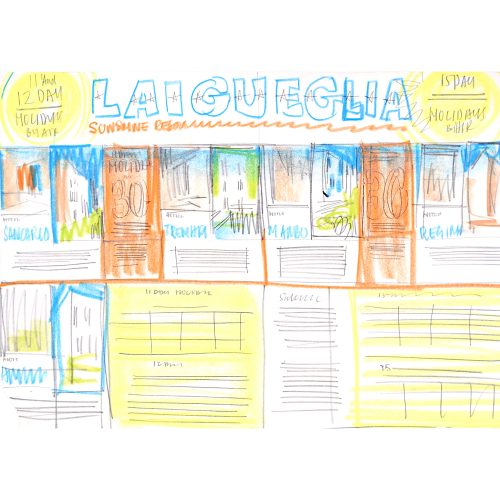
Peter Collins ARCA (1923-2001) Design for Holiday Brochure for Laigueglia Italy (for BEA Panorama Holidays)
Mixed media 30x45cm Provenance: The Artist's Studio As a graphic designer, Collins produced many brochures such as these. With his fondness for life drawing, he was perhaps a natural choice for the bikini-clad inhabitants of the pages of a holiday brochure. Collins's first job was at an advertising agency, in the commercial studio, whilst he attended evening art classes. World War II interrupted his career and he joined the Royal Artillery (of the British Army), teaching painting and drawing in the Education Corps - whilst simultaneously teaching at St Martin's School of Art, part time. Following the war Collins studied at the Royal College of Art, winning a scholarship. Leaving in 1950 he then worked as a commercial artist producing some well-known posters for clients including British Railways and British European Airways. He was the Art Director at Odhams Press and spent time designing for both ICI and Shell. With his wife Georgette he created the 'Bacombe Galleries' in Sussex, converting a group of buildings. In 1975 they again converted buildings, this time Stanley Studios in Chelsea which were scheduled for redevelopment; many artists had worked there, probably the most famous being Elizabeth Frink. Combining an artist's studio and a single residence at Stanley Studios the Collinses were immersed in Chelsea's art scene and proceeded to fill the place with art, antiques, scupture and curios. If you are interested email info@manningfineart.co.uk or call us on 07929 749056. Condition: Generally very good. -
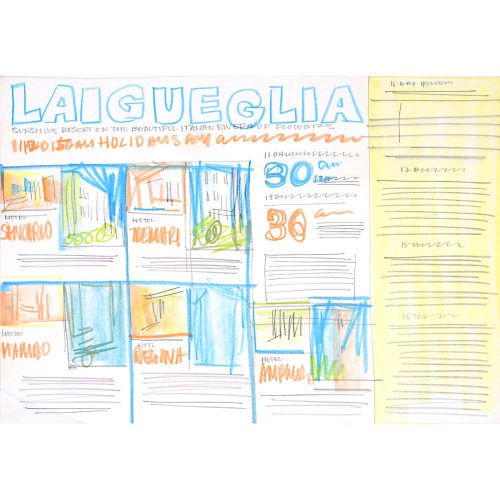
Peter Collins ARCA (1923-2001) Design for Holiday Brochure for Laigueglia Italy (for BEA Panorama Holidays) 2
Mixed media 30x45cm Provenance: The Artist's Studio As a graphic designer, Collins produced many brochures such as these. With his fondness for life drawing, he was perhaps a natural choice for the bikini-clad inhabitants of the pages of a holiday brochure. Collins's first job was at an advertising agency, in the commercial studio, whilst he attended evening art classes. World War II interrupted his career and he joined the Royal Artillery (of the British Army), teaching painting and drawing in the Education Corps - whilst simultaneously teaching at St Martin's School of Art, part time. Following the war Collins studied at the Royal College of Art, winning a scholarship. Leaving in 1950 he then worked as a commercial artist producing some well-known posters for clients including British Railways and British European Airways. He was the Art Director at Odhams Press and spent time designing for both ICI and Shell. With his wife Georgette he created the 'Bacombe Galleries' in Sussex, converting a group of buildings. In 1975 they again converted buildings, this time Stanley Studios in Chelsea which were scheduled for redevelopment; many artists had worked there, probably the most famous being Elizabeth Frink. Combining an artist's studio and a single residence at Stanley Studios the Collinses were immersed in Chelsea's art scene and proceeded to fill the place with art, antiques, scupture and curios. If you are interested email info@manningfineart.co.uk or call us on 07929 749056. Condition: Generally very good. -
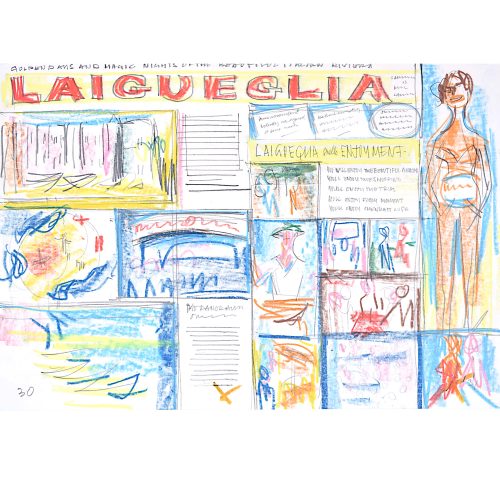
Peter Collins ARCA (1923-2001) Design for Holiday Brochure for Laigueglia Italy (for BEA Panorama Holidays) 3
Mixed media 30x45cm Provenance: The Artist's Studio As a graphic designer, Collins produced many brochures such as these. With his fondness for life drawing, he was perhaps a natural choice for the bikini-clad inhabitants of the pages of a holiday brochure. Collins's first job was at an advertising agency, in the commercial studio, whilst he attended evening art classes. World War II interrupted his career and he joined the Royal Artillery (of the British Army), teaching painting and drawing in the Education Corps - whilst simultaneously teaching at St Martin's School of Art, part time. Following the war Collins studied at the Royal College of Art, winning a scholarship. Leaving in 1950 he then worked as a commercial artist producing some well-known posters for clients including British Railways and British European Airways. He was the Art Director at Odhams Press and spent time designing for both ICI and Shell. With his wife Georgette he created the 'Bacombe Galleries' in Sussex, converting a group of buildings. In 1975 they again converted buildings, this time Stanley Studios in Chelsea which were scheduled for redevelopment; many artists had worked there, probably the most famous being Elizabeth Frink. Combining an artist's studio and a single residence at Stanley Studios the Collinses were immersed in Chelsea's art scene and proceeded to fill the place with art, antiques, scupture and curios. If you are interested email info@manningfineart.co.uk or call us on 07929 749056. Condition: Generally very good. -
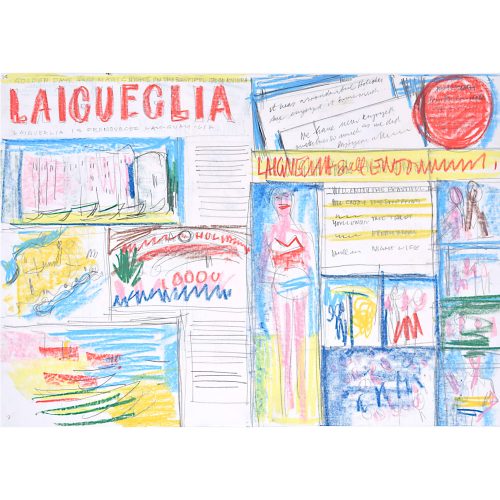
Peter Collins ARCA (1923-2001) Design for Holiday Brochure for Laigueglia Italy (for BEA Panorama Holidays) 4
Mixed media 30x45cm Provenance: The Artist's Studio As a graphic designer, Collins produced many brochures such as these. With his fondness for life drawing, he was perhaps a natural choice for the bikini-clad inhabitants of the pages of a holiday brochure. Collins's first job was at an advertising agency, in the commercial studio, whilst he attended evening art classes. World War II interrupted his career and he joined the Royal Artillery (of the British Army), teaching painting and drawing in the Education Corps - whilst simultaneously teaching at St Martin's School of Art, part time. Following the war Collins studied at the Royal College of Art, winning a scholarship. Leaving in 1950 he then worked as a commercial artist producing some well-known posters for clients including British Railways and British European Airways. He was the Art Director at Odhams Press and spent time designing for both ICI and Shell. With his wife Georgette he created the 'Bacombe Galleries' in Sussex, converting a group of buildings. In 1975 they again converted buildings, this time Stanley Studios in Chelsea which were scheduled for redevelopment; many artists had worked there, probably the most famous being Elizabeth Frink. Combining an artist's studio and a single residence at Stanley Studios the Collinses were immersed in Chelsea's art scene and proceeded to fill the place with art, antiques, scupture and curios. If you are interested email info@manningfineart.co.uk or call us on 07929 749056. Condition: Generally very good. -
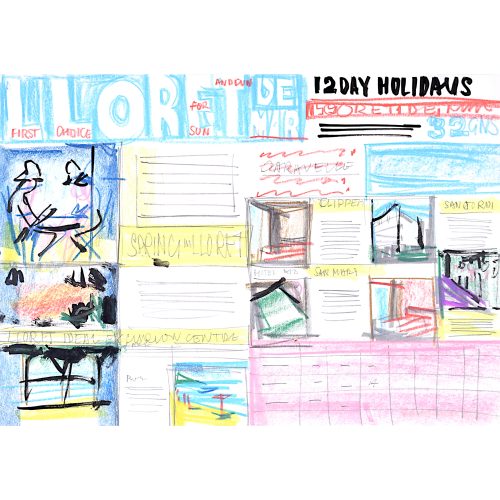
Peter Collins ARCA (1923-2001) Lloret, Spain - Design for Holiday Brochure (for BEA Panorama Holidays)
Mixed media 30x45cm Provenance: The Artist's Studio As a graphic designer, Collins produced many brochures such as these. With his fondness for life drawing, he was perhaps a natural choice for the bikini-clad inhabitants of the pages of a holiday brochure. Collins's first job was at an advertising agency, in the commercial studio, whilst he attended evening art classes. World War II interrupted his career and he joined the Royal Artillery (of the British Army), teaching painting and drawing in the Education Corps - whilst simultaneously teaching at St Martin's School of Art, part time. Following the war Collins studied at the Royal College of Art, winning a scholarship. Leaving in 1950 he then worked as a commercial artist producing some well-known posters for clients including British Railways and British European Airways. He was the Art Director at Odhams Press and spent time designing for both ICI and Shell. With his wife Georgette he created the 'Bacombe Galleries' in Sussex, converting a group of buildings. In 1975 they again converted buildings, this time Stanley Studios in Chelsea which were scheduled for redevelopment; many artists had worked there, probably the most famous being Elizabeth Frink. Combining an artist's studio and a single residence at Stanley Studios the Collinses were immersed in Chelsea's art scene and proceeded to fill the place with art, antiques, scupture and curios. If you are interested email info@manningfineart.co.uk or call us on 07929 749056. Condition: Generally very good. -
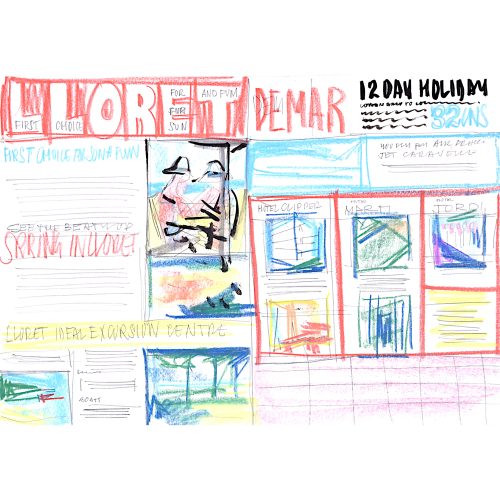
Peter Collins ARCA (1923-2001) Lloret, Spain 2 - Design for Holiday Brochure (for BEA Panorama Holidays)
Mixed media 30x45cm Provenance: The Artist's Studio As a graphic designer, Collins produced many brochures such as these. With his fondness for life drawing, he was perhaps a natural choice for the bikini-clad inhabitants of the pages of a holiday brochure. Collins's first job was at an advertising agency, in the commercial studio, whilst he attended evening art classes. World War II interrupted his career and he joined the Royal Artillery (of the British Army), teaching painting and drawing in the Education Corps - whilst simultaneously teaching at St Martin's School of Art, part time. Following the war Collins studied at the Royal College of Art, winning a scholarship. Leaving in 1950 he then worked as a commercial artist producing some well-known posters for clients including British Railways and British European Airways. He was the Art Director at Odhams Press and spent time designing for both ICI and Shell. With his wife Georgette he created the 'Bacombe Galleries' in Sussex, converting a group of buildings. In 1975 they again converted buildings, this time Stanley Studios in Chelsea which were scheduled for redevelopment; many artists had worked there, probably the most famous being Elizabeth Frink. Combining an artist's studio and a single residence at Stanley Studios the Collinses were immersed in Chelsea's art scene and proceeded to fill the place with art, antiques, scupture and curios. If you are interested email info@manningfineart.co.uk or call us on 07929 749056. Condition: Generally very good. -
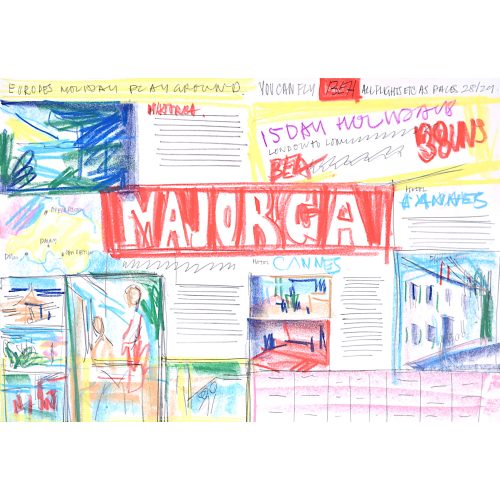
Peter Collins ARCA (1923-2001) Design for Holiday Brochure for Majorca 3 (for BEA Panorama Holidays)
Mixed media 30x45cm Provenance: The Artist's Studio As a graphic designer, Collins produced many brochures such as these. With his fondness for life drawing, he was perhaps a natural choice for the bikini-clad inhabitants of the pages of a holiday brochure. Collins's first job was at an advertising agency, in the commercial studio, whilst he attended evening art classes. World War II interrupted his career and he joined the Royal Artillery (of the British Army), teaching painting and drawing in the Education Corps - whilst simultaneously teaching at St Martin's School of Art, part time. Following the war Collins studied at the Royal College of Art, winning a scholarship. Leaving in 1950 he then worked as a commercial artist producing some well-known posters for clients including British Railways and British European Airways. He was the Art Director at Odhams Press and spent time designing for both ICI and Shell. With his wife Georgette he created the 'Bacombe Galleries' in Sussex, converting a group of buildings. In 1975 they again converted buildings, this time Stanley Studios in Chelsea which were scheduled for redevelopment; many artists had worked there, probably the most famous being Elizabeth Frink. Combining an artist's studio and a single residence at Stanley Studios the Collinses were immersed in Chelsea's art scene and proceeded to fill the place with art, antiques, sculpture and curios. If you are interested email info@manningfineart.co.uk or call us on 07929 749056. Condition: Generally very good. -
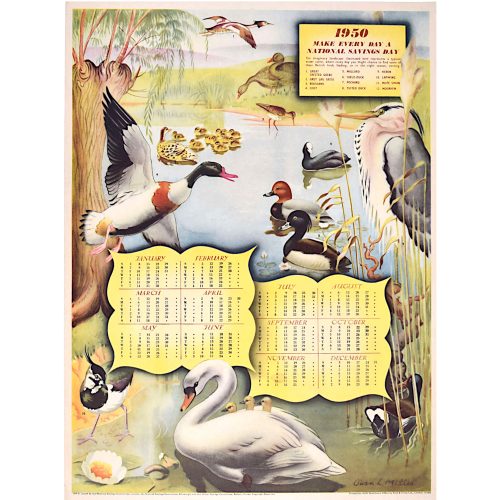
Owen Miller (1907-1960) Owen Miller National Savings original vintage calendar poster (1950)
Lithographic poster 50 x 37 cm Printed for HMSO by Fosh & Cross. A fantastic original lithographic poster advertising the National Savings scheme and featuring a calendar for the year 1950. Born in Auckland and educated at Wellington College, Miller worked as an artist in New Zealand. His illustrations often appeared in Wellington newspapers. He found life difficult in New Zealand during the Depression, and eventually signed on to a boat as a deckhand, working his passage to the UK. When he arrived at the Port of London, he had only £5 to his name. His first job was an illustrator for J Lyons & Co; his greatest work there was to decorate the directors’ dining room as an aircraft interior. When the Second World War began, Miller started work for the Ministry of Aircraft Production. Following the war, Collins produced several posters advertising National Savings. If you are interested, please email info@manningfineart.co.uk or call us on 07929 749056. Condition: Generally very good. -
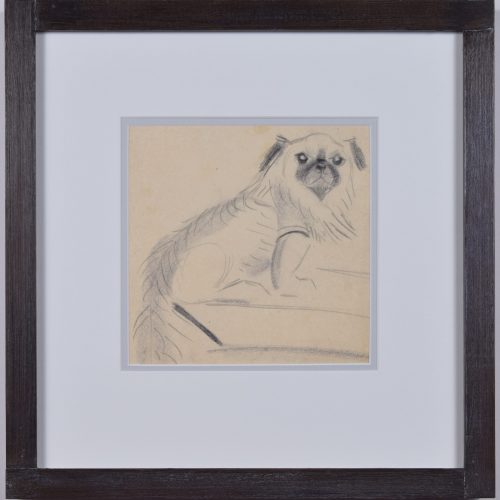
Clifford Ellis (1907-1985) William the Pug - on the Table
36x25cm including frame 17x17cm excluding frame Pencil sketch Provenance: the family of the artist, by descent. Born in Bognor in Sussex and trained at St Martin’s School of Art and Regent Street Polytechnic, Ellis was a graphic artist and illustrator who is best known for the posters he produced for London Transport during the 1930s. He generally collaborated with his wife Rosemary – whom he married in 1931 – on their posters. The General Post Office, Shell, and The Empire Marketing Board were also clients for their posters. They signed their posters C&RE, their initials being in alphabetical order and they are readily recognisable by their ebullient use of colour and form. Employed during the war as a camoufleur, along with so many other artists, Clifford was also an official war artist, serving with the Grenadier Guards. Rosemary, meanwhile, was an artist for the Recording Britain project. Following the war they trained art teachers at Bath Academy of Art. They also designed a series of nearly one hundred book jackets for Collins New Naturalist series, published between 1945 and 1982 and were always fascinated by animals and natural history, as with this sketch. If you are interested email info@manningfineart.co.uk or call us on 07929 749056. Condition: Good. In hand-finished Nicholson butt-jointed frame. Some toning to paper. -
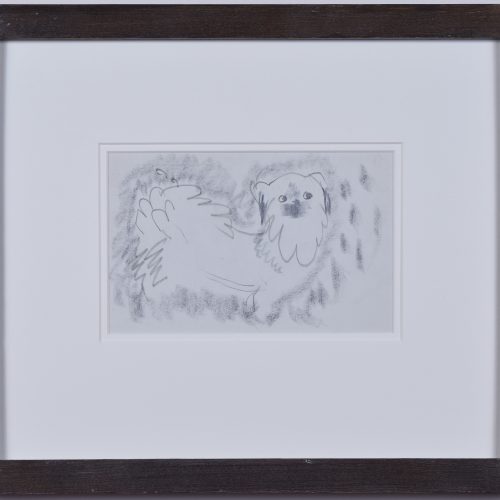
Clifford Ellis (1907-1985) William the Pug - facing right
31x36cm including frame 13x19cm excluding frame Pencil sketch Provenance: the family of the artist, by descent. Born in Bognor in Sussex and trained at St Martin’s School of Art and Regent Street Polytechnic, Ellis was a graphic artist and illustrator who is best known for the posters he produced for London Transport during the 1930s. He generally collaborated with his wife Rosemary – whom he married in 1931 – on their posters. The General Post Office, Shell, and The Empire Marketing Board were also clients for their posters. They signed their posters C&RE, their initials being in alphabetical order and they are readily recognisable by their ebullient use of colour and form. Employed during the war as a camoufleur, along with so many other artists, Clifford was also an official war artist, serving with the Grenadier Guards. Rosemary, meanwhile, was an artist for the Recording Britain project. Following the war they trained art teachers at Bath Academy of Art. They also designed a series of nearly one hundred book jackets for Collins New Naturalist series, published between 1945 and 1982 and were always fascinated by animals and natural history, as with this sketch. If you are interested email info@manningfineart.co.uk or call us on 07929 749056. Condition: Good. In hand-finished Nicholson butt-jointed frame. -
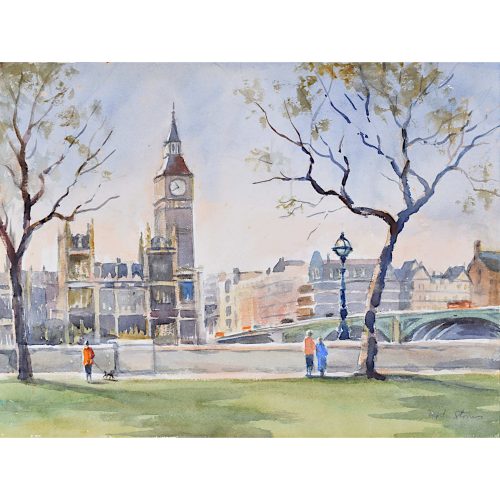
Angela Stones (1914-1995) Westminster Bridge and the Houses of Parliament
Watercolour 31x41 cm Stones was a member of an artistic dynasty. Her mother Dorothy Bradshaw (1893-1983) studied under Jack Merriott - the artist famous for his British Rail posters, and her son, Christopher Assheton-Stones (1947-1999) was probably the foremost pastel artist of his time. If you are interested email info@manningfineart.co.uk or call us on 07929 749056. Condition: Good. -
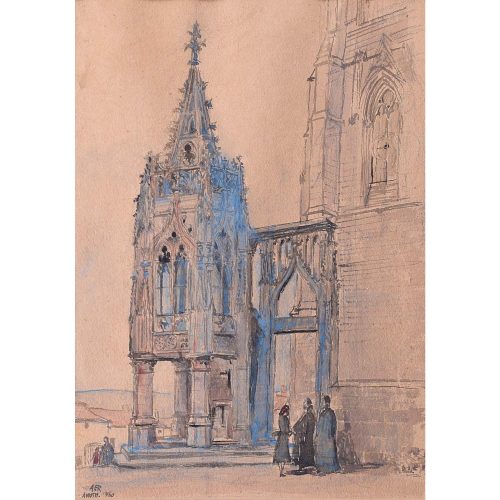
Prof Sir Albert Richardson PRA Avioth La Recevresse
1960 Watercolour 29.5x20cm Signed with initials and dated lower left Avioth is in the Meuse region of France, on the Belgian border. The city was founded in the twelfth century, when a villager miraculously found a wooden statue of the Virgin Mary in a thorn bush. A chapel built on the site soon became a place of pilgrimage and the church on the site - dedicated to Notre Dame - was created a Basilica by Pope John Paul II in 1983. Beside the Basilica stands the Recevresse, a piece of stone lacework. Its original function is unknown; it was more recently a place where pilgrims' offerings were received. It was registered as a historical monument in 1840 by the French authorities. Sir Albert Edward Richardson K.C.V.O., F.R.I.B.A, F.S.A., P.R.A. (1880-1964) was a traditionalist, renowned for his distaste of modern architecture. Rooted firmly in the classical period, he lived a Georgian life, refusing to have electricity in his Georgian house – until his wife finally insisted. Professor of Architecture at UCL’s Bartlett School of Architecture from 1929-1955, this was evacuated to Cambridge during the war and he became a fellow of St Catharine’s College. Amongst his other achievements, Richardson was President of the RA, editor of Architect’s Journal and founder of the Georgian Group. If you are interested email info@manningfineart.co.uk or call us on 07929 749056. Condition: Good. -
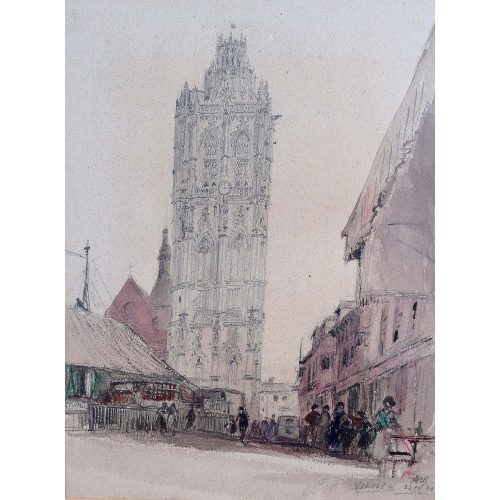
Prof Sir Albert Richardson Verneuil
1954 Watercolour 37.5x27.5cm Signed with initials and dated lower right 27/08/1954 Sir Albert Edward Richardson K.C.V.O., F.R.I.B.A, F.S.A., P.R.A. (1880-1964) was a traditionalist, renowned for his distaste of modern architecture. Rooted firmly in the classical period, he lived a Georgian life, refusing to have electricity in his Georgian house – until his wife finally insisted. Professor of Architecture at UCL’s Bartlett School of Architecture from 1929-1955, this was evacuated to Cambridge during the war and he became a fellow of St Catharine’s College. Amongst his other achievements, Richardson was President of the RA, editor of Architect’s Journal and founder of the Georgian Group. If you are interested email info@manningfineart.co.uk or call us on 07929 749056. Condition: Good. -
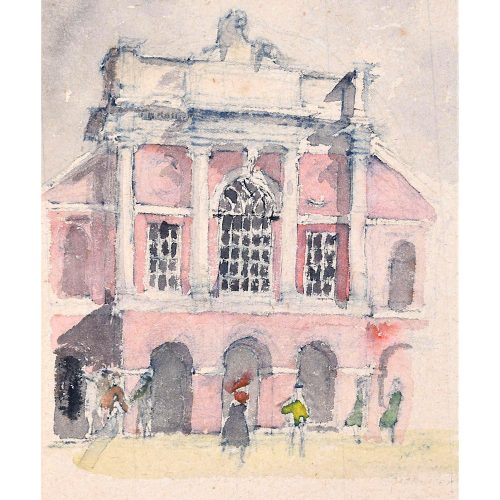
Prof. Sir Albert Richardson PRA (1880-1964) A Classical Building with elegant figures
28x43cm watercolour Signed, with further detail to backboard (title, date etc.) Sir Albert Edward Richardson K.C.V.O., F.R.I.B.A, F.S.A., P.R.A. (1880-1964) was a traditionalist, renowned for his distaste of modern architecture. Rooted firmly in the classical period, he lived a Georgian life, refusing to have electricity in his Georgian house – until his wife finally insisted. Professor of Architecture at UCL’s Bartlett School of Architecture from 1929-1955, this was evacuated to Cambridge during the war and he became a fellow of St Catharine’s College. Amongst his other achievements, Richardson was President of the RA, editor of Architect’s Journal and founder of the Georgian Group. For pleasure he painted architectural fantasies; capriccios of buildings he pictured in his mind. If you are interested email info@manningfineart.co.uk or call us on 07929 749056. Condition: Some toning to paper. -
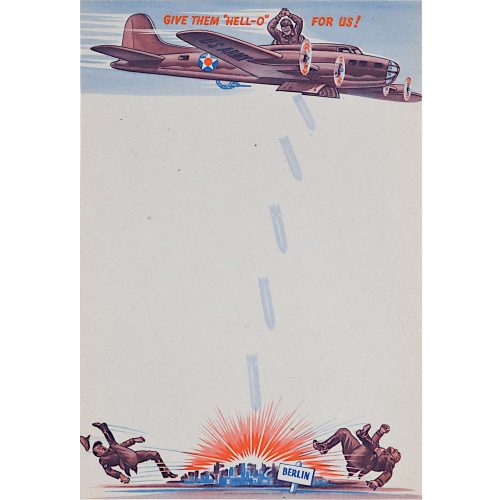
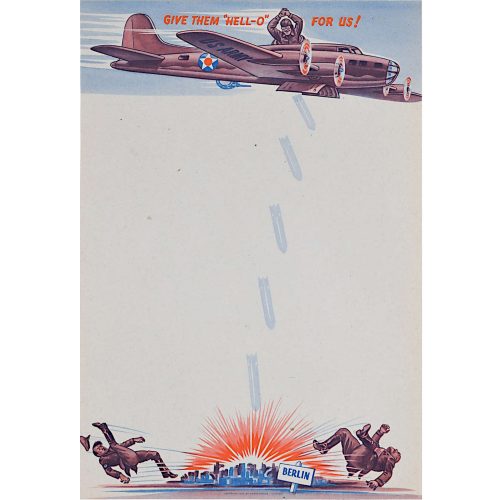
Porto-Service, Chicago Give them "Hell-o from us!"
Lithograph 26.5x18cm 1942 What better writing paper to send to a serving serviceman than one encouraging him to fight. Porto-Service of Chicago published a series of illustrated writing resources for sweethearts and friends to write to their brave servicemen, in this case in a four-engined bomber over Berlin. Lavishly produced and printed, the Americans brought some much-needed colour and glamour to dull war-torn Britain. If you are interested email info@manningfineart.co.uk or call us on 07929 749056. Condition: Very good. -
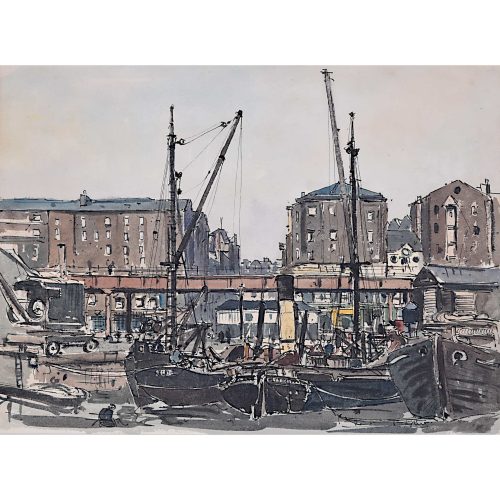
Claude Muncaster (1903-1974) Liverpool Docks
Dated 1928 Inscribed to reverse Watercolour 28x37cm Muncaster's watercolours capture the English countryside feel with great competence and feeling. Here he records the docks at Liverpool, a busy scene with splashes of bright paint enlivening the otherwise dull smoky port. Liverpool Claude Grahame Muncaster, RWS, ROI, RBA, SMA was the son of Oliver Hall RA. At the age of fifteen his career as a landscape painter began, and he soon took to the seas, spending the 1920s and 30s travelling the world with his sketchbook in a series of vessels. With the outbreak of war and he joined the RNVR training as a navigator. Having left school at fifteen his mathematics was very weak and it was a relief for all when his artistic talents meant he was recruited as a camofleur. A master of capturing seascapes he was therefore able to hide huge ships ‘in plain sight’ with clever disguises. After the war he painted for the Royal Family and was a frequent guest at Sandringham. Claude Muncaster was a watercolourist known for his landscapes and maritime scenes. He was born Grahame Hall, the son of the Royal Academician Oliver Hall who taught his son to paint from an early age; Grahame first exhibited his work aged 15 and a few years later was showing at the RA. However, he adopted the name Claude Muncaster in 1922 to dissociate his career from that of his father. Muncaster’s primary choice of subject matter came from a genuine love of the sea. He made several long-distance sea voyages, including one around the Horn as a deckhand in the windjammer Olivebank in 1931, which he described in ‘Rolling Round the Horn’, published in 1933. Armed with a sketchbook, his aim was to be able to ‘paint ships and the sea with greater authority’. This he certainly achieved, perfectly capturing the limpid first light of morning over the Port of Aden, the choppy rain-grey waters of the Bay of Biscay and a streak of sunlight through gathering storm clouds at dusk in Exeter. He became an Associate of the Royal Watercolour Society in 1931 and was a founder member, and later President, of the Royal Society of Marine Artists. During the Second World War, Muncaster served in the Royal Naval Volunteer Reserve (RNVR) from 1940-44, training as a navigator before going on to advise on the camouflage of ships, and also worked as an official war artist. In ‘Still Morning at Aden’ (1944) he depicts Allied warships in this safe anchorage in the Middle East; the back is stamped with Admiralty approval. In 1946-7 he was commissioned by the Queen to produce watercolours of the royal residences at Windsor, Sandringham and Balmoral; the Duke of Edinburgh, in a foreword to a biography of Muncaster, recalls looking at these and considering the artist’s ‘unerring instinct for a subject’, his sense of atmosphere. Other commissions included large panoramas of the Thames and of Bradford. His career also included work as an etcher, illustrator, writer, lecturer and broadcaster, and his paintings can be found in the Royal Academy, Tate, National Maritime Museum Cornwall, National Railway Museum and Royal Air Force Museum. If you are interested email info@manningfineart.co.uk or call us on 07929 749056. Condition: Conservation mounted and wrapped in transparent sleeve for protection; slight toning to extremities and possibly some loss of colour from sky. -
Porto-Service, Chicago Keep 'em Running Right off the Map!
Lithograph 26.5x18cm 1942 What better writing paper to send to a serving serviceman than that encouraging him to fight. Porto-Service of Chicago published a series of illustrated writing resources for sweethearts and friends to write to their brave servicemen, in this case teasing the three Axis dictators. Lavishly produced and printed, the Americans brought some much-needed colour and glamour to dull war-torn Britain. If you are interested email info@manningfineart.co.uk or call us on 07929 749056. Condition: Very good. -
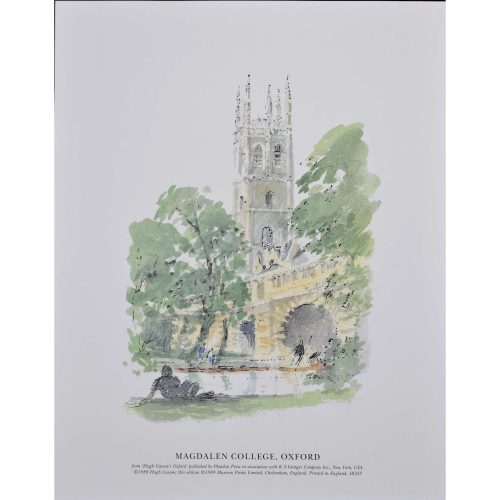
Sir Hugh Casson (1910-1999) Magdalen College Oxford
Unsigned proof print 25x20cm From Casson’s ever-popular Oxford series of prints. Sir Hugh Casson was educated at Eastbourne College, St John’s College Cambridge and the Bartlett School of Architecture. Trained in the 1930s in the early modernist style, he taught at the Cambridge School of Architecture. After employment as a camoufleur during World War 2 by the Air Ministry, in 1948 he was appointed as director of architecture for the Festival of Britain. A close friend of the Royal Family, he undertook designs for the 1953 coronation, designed the interior of the Royal Yacht Britannia (“The overall idea was to give the impression of a country house at sea”), and taught the Prince of Wales to paint in watercolours. Amongst his architectural achievements are the Elephant House at London Zoo, the 1978 redevelopment of Bristol Docks, the Raised Faculty Building for The University of Cambridge, and a building for the Royal College of Art. He published a number of illustrated books, of which Casson’s Oxford and Casson’s Cambridge are probably the best known. A limited edition series of prints was produced from the paintings. If you are interested email info@manningfineart.co.uk or call us on 07929 749056. Condition: Excellent. -

Robert Thomson (British, 20th Century) Trinity College Cambridge - Trinity Bridge over the River Cam with Punts
22 x 32 cm Watercolour Signed in pencil 'Thomson' to bottom right An old favourite view, painted in a bold and confident fashion by Robert Thomson, capturing the carefree spirit of an afternoon's punting, and the bold and clear architecture of Cambridge's biggest and wealthiest College. If you are interested email info@manningfineart.co.uk or call us on 07929 749056. Condition: Excellent. -
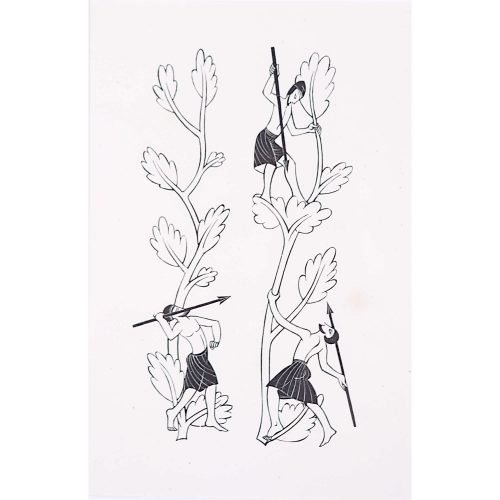
Eric Gill
Border for The Canterbury Tales (1929) - Three Men with Spears
Woodblock Print Published Hague & Gill 1934 in an unnumbered edition of 300 23x21cm Following Chichester Technical and Art School, Gill moved to London in 1900 to train with the ecclesiastical architects W D Caroe. Finding architecture somewhat pedestrian he took stonemasonry lessons at Westminster Technical Institute and calligraphy lessons at the Central School of Arts and Crafts, coming under the influence of Edward Johnson, the designer of the London Underground's own typeface. In 1903 he ceased his attempts to become an architect, instead becoming a monumental mason, letter-cutter and calligrapher. Based in Ditchling, he began direct carving of stone figures, the semi-abstract figures taking their influence from mediaeval statuary, mixed with influences from Classical statuary from the Greeks and Romans, with a little post-Impressionism added in. With major commissions from Westminster Cathedral for its Stations of the Cross (1914), a series of War Memorials including the Grade II* memorial in Trumpington, and three of the sculptures for Charles Holden's 1928 headquarters of London Underground at 55 Broadway, St James's, and a series of sculptures for the new 1932 Broadcasting House. The list continues. Never one to rest on his laurels, he was at the same time engaged in typographical adventures. He had collaborated with Edward Johnson on the latter's initial thoughts on his London Transport typeface, but in 1925 designed Perpetua on his own, and Gill Sans between 1927-30. For the Golden Cockerel Press he created, in 1929, a bolder typeface to complement wood engravings. And of course Gill was publishing decorated books. His 1929 Canterbury Tales was an epic work, with a whole series of beautiful wood engravings such as this one. The present print is from the 1934 edition for Faber & Faber ('Engravings 1928-1933 by Eric Gill') he printed with his son-in-law, Rene Hague, produced with the original engraved wood blocks. If you are interested email info@manningfineart.co.uk or call us on 07929 749056. Condition: Generally very good condition. -
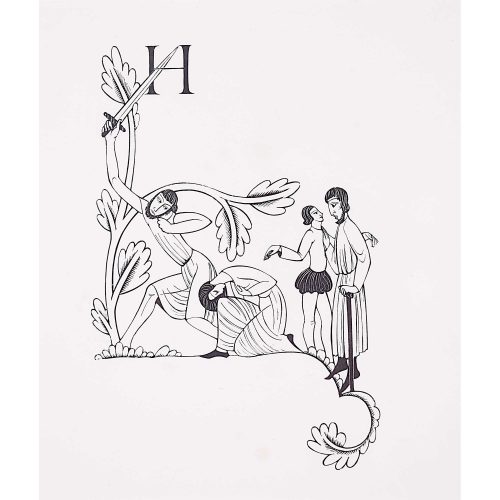
Eric Gill
Initial Letter 'H' for The Canterbury Tales (1929) - The Doctor's Tale
Woodblock Print Published Hague & Gill 1934 in an unnumbered edition of 300 23x21cm Following Chichester Technical and Art School, Gill moved to London in 1900 to train with the ecclesiastical architects W D Caroe. Finding architecture somewhat pedestrian he took stonemasonry lessons at Westminster Technical Institute and calligraphy lessons at the Central School of Arts and Crafts, coming under the influence of Edward Johnson, the designer of the London Underground's own typeface. In 1903 he ceased his attempts to become an architect, instead becoming a monumental mason, letter-cutter and calligrapher. Based in Ditchling, he began direct carving of stone figures, the semi-abstract figures taking their influence from mediaeval statuary, mixed with influences from Classical statuary from the Greeks and Romans, with a little post-Impressionism added in. With major commissions from Westminster Cathedral for its Stations of the Cross (1914), a series of War Memorials including the Grade II* memorial in Trumpington, and three of the sculptures for Charles Holden's 1928 headquarters of London Underground at 55 Broadway, St James's, and a series of sculptures for the new 1932 Broadcasting House. The list continues. Never one to rest on his laurels, he was at the same time engaged in typographical adventures. He had collaborated with Edward Johnson on the latter's initial thoughts on his London Transport typeface, but in 1925 designed Perpetua on his own, and Gill Sans between 1927-30. For the Golden Cockerel Press he created, in 1929, a bolder typeface to complement wood engravings. And of course Gill was publishing decorated books. His 1929 Canterbury Tales was an epic work, with a whole series of beautiful wood engravings such as this one. The present print is from the 1934 edition for Faber & Faber ('Engravings 1928-1933 by Eric Gill') he printed with his son-in-law, Rene Hague, produced with the original engraved wood blocks. In Chaucer's Tales, the Summoner's Tale tells the story of the man who summonsed people to the ecclesiastical courts. It satirises the friar, considering him to be corrupt. Philip Hofer was a curator and collector, and commissioned this fine Ex Libris plate from Gill. If you are interested email info@manningfineart.co.uk or call us on 07929 749056. Condition: Generally very good condition. -
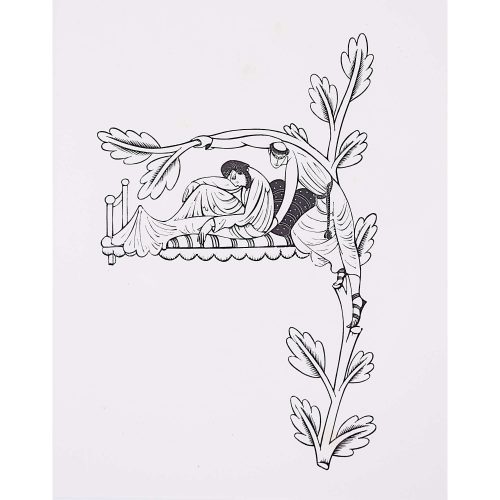
Eric Gill
Canterbury Tales The Summoner's Tale
Woodblock Print Published Hague & Gill 1934 in an unnumbered edition of 300 23x21cm Following Chichester Technical and Art School, Gill moved to London in 1900 to train with the ecclesiastical architects W D Caroe. Finding architecture somewhat pedestrian he took stonemasonry lessons at Westminster Technical Institute and calligraphy lessons at the Central School of Arts and Crafts, coming under the influence of Edward Johnson, the designer of the London Underground's own typeface. In 1903 he ceased his attempts to become an architect, instead becoming a monumental mason, letter-cutter and calligrapher. Based in Ditchling, he began direct carving of stone figures, the semi-abstract figures taking their influence from mediaeval statuary, mixed with influences from Classical statuary from the Greeks and Romans, with a little post-Impressionism added in. With major commissions from Westminster Cathedral for its Stations of the Cross (1914), a series of War Memorials including the Grade II* memorial in Trumpington, and three of the sculptures for Charles Holden's 1928 headquarters of London Underground at 55 Broadway, St James's, and a series of sculptures for the new 1932 Broadcasting House. The list continues. Never one to rest on his laurels, he was at the same time engaged in typographical adventures. He had collaborated with Edward Johnson on the latter's initial thoughts on his London Transport typeface, but in 1925 designed Perpetua on his own, and Gill Sans between 1927-30. For the Golden Cockerel Press he created, in 1929, a bolder typeface to complement wood engravings. And of course Gill was publishing decorated books. His 1929 Canterbury Tales was an epic work, with a whole series of beautiful wood engravings such as this one. The present print is from the 1934 edition for Faber & Faber ('Engravings 1928-1933 by Eric Gill') he printed with his son-in-law, Rene Hague, produced with the original engraved wood blocks. In Chaucer's Tales, the Summoner's Tale tells the story of the man who summonsed people to the ecclesiastical courts. It satirises the friar, considering him to be corrupt. Philip Hofer was a curator and collector, and commissioned this fine Ex Libris plate from Gill. If you are interested email info@manningfineart.co.uk or call us on 07929 749056. Condition: Generally very good condition. -
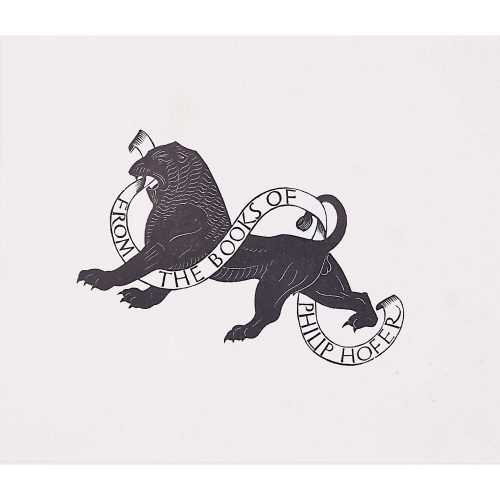
Eric Gill
From the Books of Philip Hofer Woodblock Print
Published Hague & Gill 1934 in an unnumbered edition of 300 23x21cm Following Chichester Technical and Art School, Gill moved to London in 1900 to train with the ecclesiastical architects W D Caroe. Finding architecture somewhat pedestrian he took stonemasonry lessons at Westminster Technical Institute and calligraphy lessons at the Central School of Arts and Crafts, coming under the influence of Edward Johnson, the designer of the London Underground's own typeface. In 1903 he ceased his attempts to become an architect, instead becoming a monumental mason, letter-cutter and calligrapher. Based in Ditchling, he began direct carving of stone figures, the semi-abstract figures taking their influence from mediaeval statuary, mixed with influences from Classical statuary from the Greeks and Romans, with a little post-Impressionism added in. With major commissions from Westminster Cathedral for its Stations of the Cross (1914), a series of War Memorials including the Grade II* memorial in Trumpington, and three of the sculptures for Charles Holden's 1928 headquarters of London Underground at 55 Broadway, St James's, and a series of sculptures for the new 1932 Broadcasting House. The list continues. Never one to rest on his laurels, he was at the same time engaged in typographical adventures. He had collaborated with Edward Johnson on the latter's initial thoughts on his London Transport typeface, but in 1925 designed Perpetua on his own, and Gill Sans between 1927-30. For the Golden Cockerel Press he created, in 1929, a bolder typeface to complement wood engravings. And of course Gill was publishing decorated books. His 1929 Canterbury Tales was an epic work, with a whole series of beautiful wood engravings such as this one. The present print is from the 1934 edition for Faber & Faber ('Engravings 1928-1933 by Eric Gill') he printed with his son-in-law, Rene Hague, produced with the original engraved wood blocks. Philip Hofer was a curator and collector, and commissioned this fine Ex Libris plate from Gill. If you are interested email info@manningfineart.co.uk or call us on 07929 749056. Condition: Generally very good condition. -
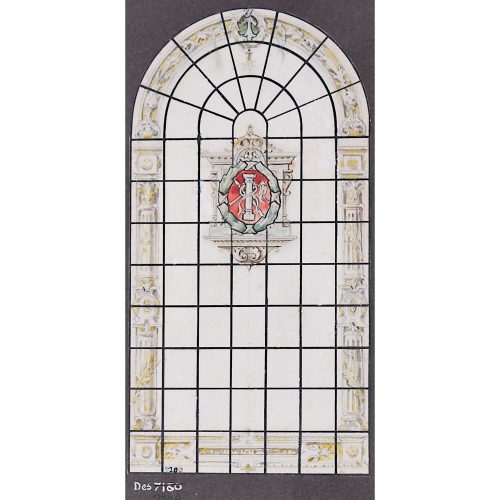
Florence Camm (1874-1960) Design for stained glass window 'The Instruments of the Passion'
Watercolour 20x10 cm Design for TW Camm & Co., Smethwick, Birmingham embossed with their stamp to bottom Numbered 7180/7200 The Camms were stained glass designers who exhibited 48 times at the Royal Academy and also exhibited at The Walker Art Gallery in Liverpool, The Royal Scottish Academy and Royal Birmingham Society of Artists. Following the death of her father, Florence Camm became chief designer at TW Camm with many commissions both nationally and internationally. Florence Camm was the daughter of Thomas William Camm (1839-1912) who founded the stained glass business T W Camm in High Street Smethwick. From 1892-1911 she studied at The Birmingham Municipal School of Art which, unusually for the time, encouraged girls to attend the life drawing classes – drawing fully nude female models and partially draped male models – thus explaining Camm’s skill with the human figure. Students were encouraged to execute their drawings for designs, thus giving them the skills to set up as manufacturers in Birmingham’s Jewellery Quarter. The arts and crafts designer Henry Payne was an influential tutor for Camm, being one of the most influential teachers at the BMSA who was working as a stained glass designer at the time; one of his most notable commissions was a painted mural illustrating Tudor History for the Houses of Parliament in 1908. Following the death of TW Camm, Florence and her brothers – Walter and Robert – took over the business and Florence did most of the designing. If you are interested email info@manningfineart.co.uk or call us on 07929 749056. Conditon: Good. In plastic sleeve for protection. -
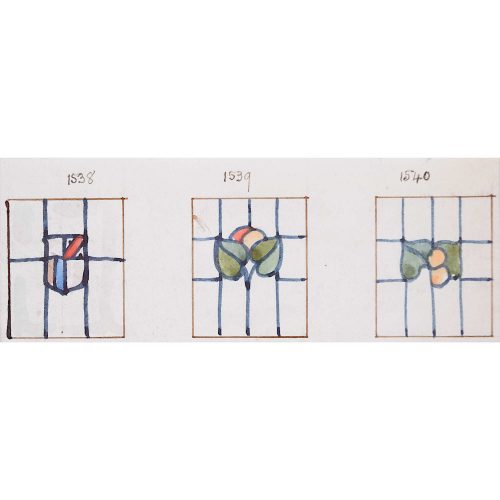
Florence Camm (1874-1960) Design for domestic stained glass window
Watercolour 14x5 cm Design for TW Camm & Co., Smethwick, Birmingham Numbered 1538,1539,1540 The Camms were stained glass designers who exhibited 48 times at the Royal Academy and also exhibited at The Walker Art Gallery in Liverpool, The Royal Scottish Academy and Royal Birmingham Society of Artists. Following the death of her father, Florence Camm became chief designer at TW Camm with many commissions both nationally and internationally. Florence Camm was the daughter of Thomas William Camm (1839-1912) who founded the stained glass business T W Camm in High Street Smethwick. From 1892-1911 she studied at The Birmingham Municipal School of Art which, unusually for the time, encouraged girls to attend the life drawing classes – drawing fully nude female models and partially draped male models – thus explaining Camm’s skill with the human figure. Students were encouraged to execute their drawings for designs, thus giving them the skills to set up as manufacturers in Birmingham’s Jewellery Quarter. The arts and crafts designer Henry Payne was an influential tutor for Camm, being one of the most influential teachers at the BMSA who was working as a stained glass designer at the time; one of his most notable commissions was a painted mural illustrating Tudor History for the Houses of Parliament in 1908. Following the death of TW Camm, Florence and her brothers – Walter and Robert – took over the business and Florence did most of the designing. If you are interested email info@manningfineart.co.uk or call us on 07929 749056. Conditon: Good. In conservation mount and in plastic sleeve for protection. -
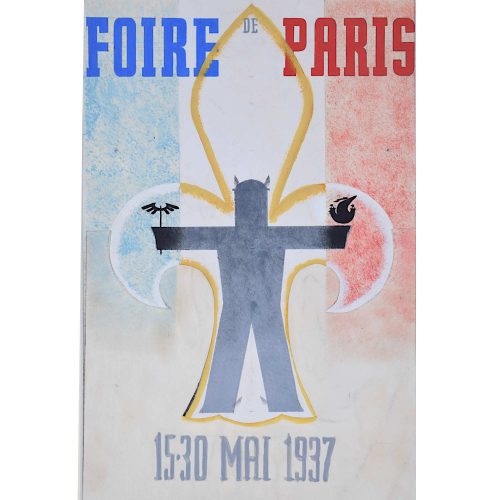
Anonymous Foire de Paris
15-30 May 1937 Watercolour 29x18cm A fine Art Deco design for a poster for the 1937 Foire de Paris. With Tricolore and Fleur de Lys what could be more redolent of a Parisian Fair? The designer is unknown, but it has been carrried out with a great deal of care and skill. If you are interested email info@manningfineart.co.uk or call us on 07929 749056. Condition: Generally very good condition. -
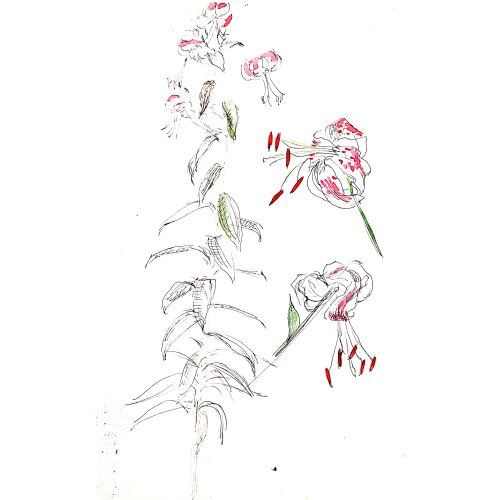
Rosemary Ellis (1910-1988) Lily
36x23cm Pen, ink and watercolour Provenance: the family of the artist, by descent. ROSEMARY ELLIS (1910-1988) Born in North London in 1910, Rosemary’s father died in the Spanish Flu epidemic in 1919 and the family moved in with her mother’s parents in the New Forest. This was an environment where she grew to love nature and animals, constant themes in her artistic works. In 1928 she began studying art at the Regent Street Polytechnic, meeting her tutor Clifford Ellis – a mere three years her senior, who was to become her husband and life-long artistic collaborator. They married in 1931 and after this date almost all their freelance work bears both their signatures. They developed a joint cipher, C&RE, which includes their names in alphabetical order, not representing any order of seniority. They produced posters in the 1930s for big clients such as London Transport, Shell, and The Empire Marketing Board. Clifford Ellis became head of Bath School of Art, and then served during the Second World War as camoufleur and official war artist – with the Grenadier Guards. Rosemary was also an official war artist, working on the Recording Britain project whereby artists were set to record the buildings and landscape of Britain lest it be permanently damaged by the Germans. Following the war Lyons Tearooms chose the Ellises to produce one of their famous lithographs, to be hung in their tearooms and the Ellises chose a view of Teignmouth – we have some views of Teignmouth for sale painted from this time. If you are interested email info@manningfineart.co.uk or call us on 07929 749056. Condition: Old fold to centre as visible in photograph. -
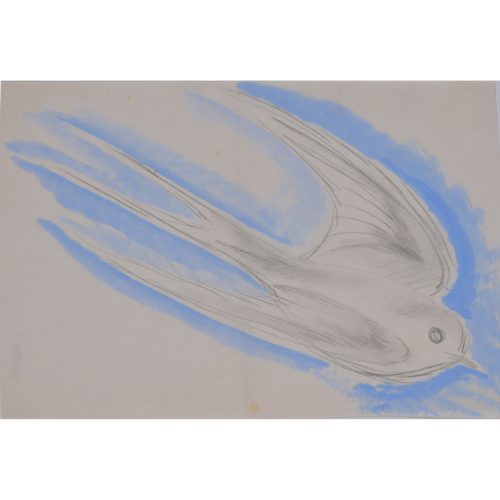
Clifford Ellis (1907-1985) Swallow
16x25cm Watercolour and pencil Provenance: the family of the artist, by descent. Born in Bognor in Sussex and trained at St Martin’s School of Art and Regent Street Polytechnic, Ellis was a graphic artist and illustrator who is best known for the posters he produced for London Transport during the 1930s. He generally collaborated with his wife Rosemary – whom he married in 1931 – on their posters. The General Post Office, Shell, and The Empire Marketing Board were also clients for their posters. They signed their posters C&RE, their initials being in alphabetical order and they are readily recognisable by their ebullient use of colour and form. Employed during the war as a camoufleur, along with so many other artists, Clifford was also an official war artist, serving with the Grenadier Guards. Rosemary, meanwhile, was an artist for the Recording Britain project. Following the war they trained art teachers at Bath Academy of Art. They also designed a series of nearly one hundred book jackets for Collins New Naturalist series, published between 1945 and 1982 and were always fascinated by animals and natural history, as with this sketch. If you are interested email info@manningfineart.co.uk or call us on 07929 749056. Condition: Generally very good. -
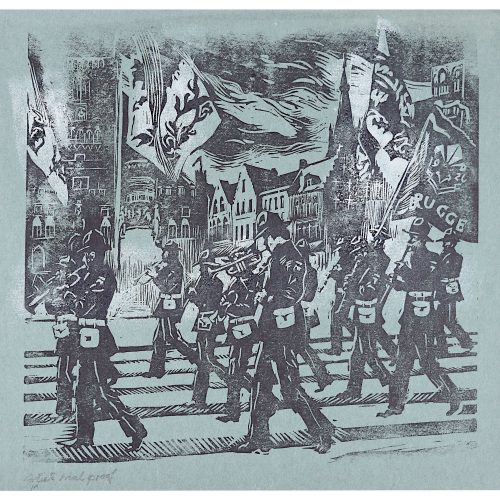
Percy Drake Brookshaw (1907-1993) Marching Band
Linocut c. 1930s 30x30 cm Inscribed 'Artist's trial proof 1A' Provenance: the family of the artist, by descent. Brookshaw was born in Southwark, in London, and educated at the Central School of Arts and Crafts. He was a particularly accomplished lithographer, skilled also as a painter in both oil and watercolour. Identifying the former talent, F Gregory Brown - the poster and textile designer - encouraged him to become an illustrator and poster designer. Producing posters for London Transport and Shell, inter alia, between 1928 and 1958, many of his posters depict sporting events. His two posters for the annual University Boat Race are well known and highly sought after, and his wonderful posters often evoke a feeling of movement, whether rowers straining on their oars, or horses or greyhounds racing. In this carefully executed linocut, Brookshaw brings the band members to life with the same skill and enthusiasm he brings to his posters. If you are interested email info@manningfineart.co.uk or call us on 07929 749056. Condition: Generally very good, some spotting to external margins outside image area. -
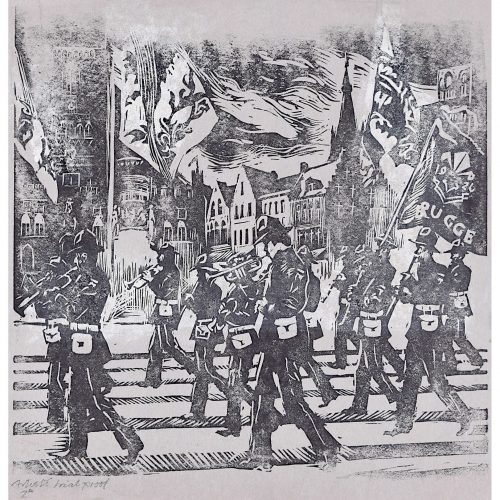
Percy Drake Brookshaw (1907-1993) Marching Band
Linocut c. 1930s 30x30 cm Inscribed 'Artist's trial proof 1A' Provenance: the family of the artist, by descent. Brookshaw was born in Southwark, in London, and educated at the Central School of Arts and Crafts. He was a particularly accomplished lithographer, skilled also as a painter in both oil and watercolour. Identifying the former talent, F Gregory Brown - the poster and textile designer - encouraged him to become an illustrator and poster designer. Producing posters for London Transport and Shell, inter alia, between 1928 and 1958, many of his posters depict sporting events. His two posters for the annual University Boat Race are well known and highly sought after, and his wonderful posters often evoke a feeling of movement, whether rowers straining on their oars, or horses or greyhounds racing. In this carefully executed linocut, Brookshaw brings the band members to life with the same skill and enthusiasm he brings to his posters. If you are interested email info@manningfineart.co.uk or call us on 07929 749056. Condition: Generally very good, some spotting to external margins outside image area. -
Out of stock
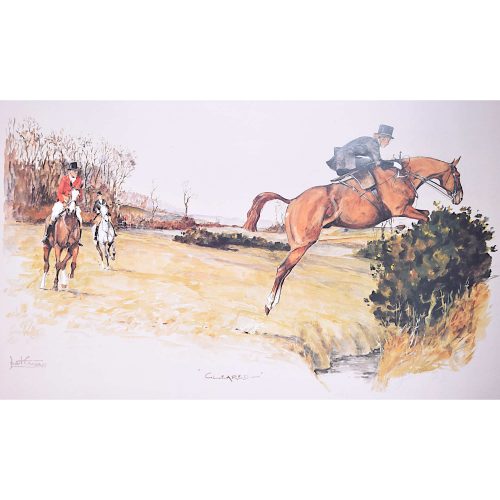
Daniel Crane (b. 1969) 'Cleared'
Limited edition print Signed in pencil and numbered 168/250 40x60cm One of the UK's leading sporting artists, Crane was born in Norfolk and is the youngest son of a hunting family. He grew up with a love of animals, the countryside and fieldsports, acquiring a particular passion for fox hunting in his late teens. He has been whipper-in, Master and Field Master and therefore understands the whole hunting process, allowing his paintings to reflect his knowledge and love of the sport. He is artist in residence for the Household Cavalry, and has many prestigious commissions to his name including Frankel - the greatest racehorse of all time - and Valegro the World and Olympic Champion. In this print, Crane captures the thrill and exhilaration that comes from clearing a hedge in fine style. If you are interested email info@manningfineart.co.uk or call us on 07929 749056. Condition: Never previously framed and in excellent condition. -
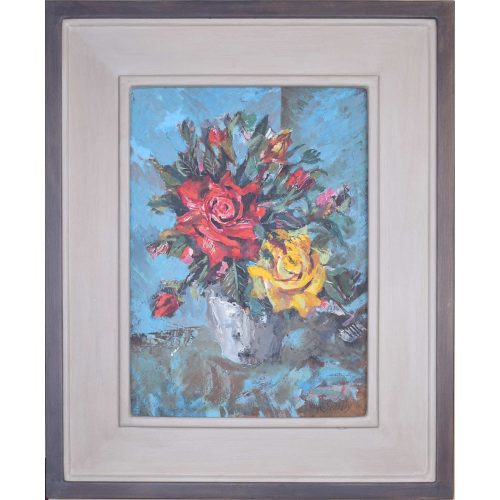
Rowland Suddaby (1912-1972) English Roses - Still Life
Oil on board 39x29cm (frame 58x46cm) c. 1950s Artist's label to reverse In a fine hand-finished frame Born in Kimberworth, Yorkshire, Suddaby commenced study in 1926 at the Sheffield College of Art on a scholarship, coming to London at nineteen in 1931. Following an early marriage and an initial struggle as an artist his first successful show was at the Wertheim Gallery in London in 1935, followed by a series of shows at the Redfern Gallery from 1936. For the latter he was their replacement for Christopher Wood (who had sadly killed himself in 1930 by jumping under a train) and he painted assured oils and watercolours - some showing Wood influences - in London and Cornwall. Popular with both art critics and the buying public he had great success. Early in World War Two, Suddaby moved - with his family - to the Suffolk countryside near Sudbury to become curator of the Gainsborough's House Museum, East Anglia providing him with the foundations for the pictures for which he is now well known. In 1940 he was chosen for the 'Recording Britain' project. Showing something of the influence of John Nash, his distinctive depiction of the East Anglian countryside, with its hedges and fences is instantly recognisable. His still life paintings which he also painted in the 1940s and 50s were exhibited at the Leger Galleries and at the Colchester Art Society of which he was a founder member. By the 1960s he had evolved his style towards abstraction. He was also a noted designer, producing textiles and furnishings and designing posters for Shell. His work is in many major collections such as the V&A Museum and the Government Art Collection If you are interested email info@manningfineart.co.uk or call us on 07929 749056. Condition: Good. -
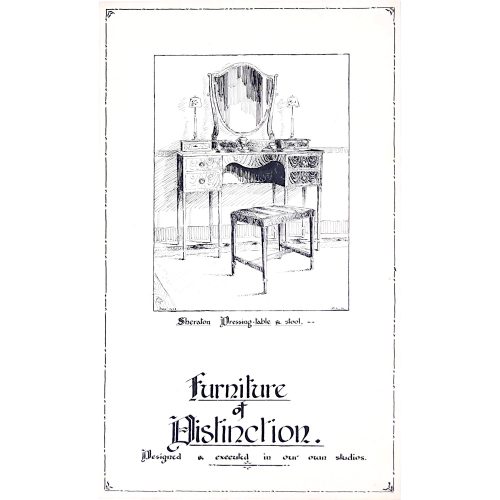
Douglas L Hadden (British, 20th century) Design for Poster/Showcard 'Furniture of Distinction'
33x20cm Pen and ink c. 1930 Hadden was a senior designer for Geo M Hammer, designers and retailers of school and ecclesiastical furniture. Their lift-top school desks are particularly well regarded, and always carried their brass name plate. Hammer were renowned for their interior woodwork, they were commissioned to undertake the choir stalls in Sir Basil Spence’s ground-breaking Coventry Cathedral. Dick Russell (brother of Gordon Russell and who worked for his brother before World War Two) famously designed the chairs to be used by the congregation; as all-wood stacking chairs they were innovative at the time. As senior designer, Hadden was at the heart of the Coventry project. Hadden was educated at the Wycombe School of Art and quickly rose to the position of chief designer at Burkles, early in his career. During the World War Two he worked as an air warden in Cowley and later within the Royal Artillery, before returning to work for the Italian firm BIANOS, helping to shift its production of spitfires propellers back to peace-time wood-work. For his 7th and finale job he worked as chief designer for one of the largest and oldest firms in Britain, Geo. M Hammer. With a wide experience of designing furniture to a high standard, Hadden worked for colleges, universities, schools, libraries, monasteries and nunneries, churches and abbeys, cathedrals, synagogues and private houses. In addition to furnishings, Hadden took pride in producing fine pianos for many of these residences. Through Geo M Hammer, Hadden's designs can be found across the British Isles today, with many further appearing in America. If you are interested email info@manningfineart.co.uk or call us on 07929 749056. Condition : Good. -
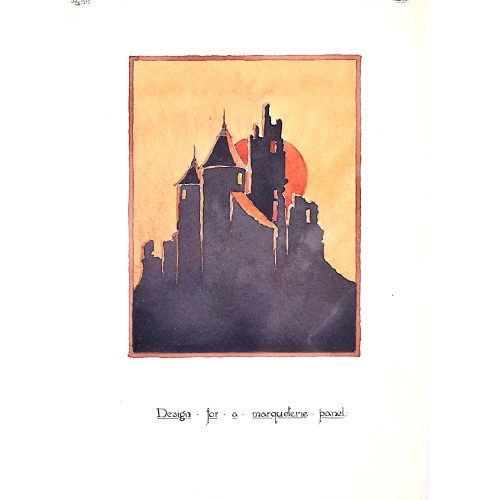
Douglas L Hadden (British, 20th century) Design for a Marquetry Panels for furniture for Geo. M Hammer with castle
25x18cm Watercolour signed and dated 1927 Hadden was a senior designer for Geo M Hammer, designers and retailers of school and ecclesiastical furniture. Their lift-top school desks are particularly well regarded, and always carried their brass name plate. Hammer were renowned for their interior woodwork, they were commissioned to undertake the choir stalls in Sir Basil Spence’s ground-breaking Coventry Cathedral. Dick Russell (brother of Gordon Russell and who worked for his brother before World War Two) famously designed the chairs to be used by the congregation; as all-wood stacking chairs they were innovative at the time. As senior designer, Hadden was at the heart of the Coventry project. Hadden was educated at the Wycombe School of Art and quickly rose to the position of chief designer at Burkles, early in his career. During the World War Two he worked as an air warden in Cowley and later within the Royal Artillery, before returning to work for the Italian firm BIANOS, helping to shift its production of spitfires propellers back to peace-time wood-work. For his 7th and finale job he worked as chief designer for one of the largest and oldest firms in Britain, Geo. M Hammer. With a wide experience of designing furniture to a high standard, Hadden worked for colleges, universities, schools, libraries, monasteries and nunneries, churches and abbeys, cathedrals, synagogues and private houses. In addition to furnishings, Hadden took pride in producing fine pianos for many of these residences. Through Geo M Hammer, Hadden's designs can be found across the British Isles today, with many further appearing in America. If you are interested email info@manningfineart.co.uk or call us on 07929 749056. Condition : Good. Wrapped in transparent sleeve for protection. -
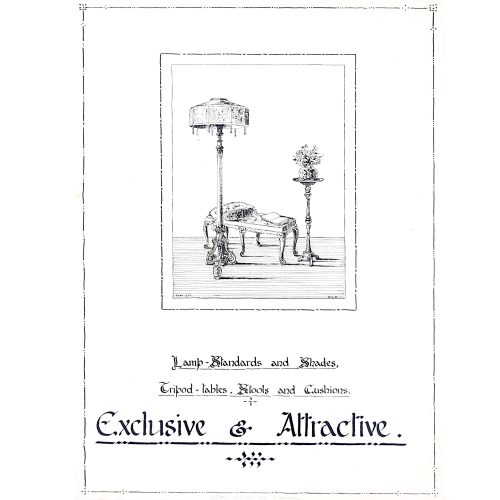
Douglas L Hadden (British, 20th century) Design for Poster/Showcard 'Attractive & Exclusive'
32x24cm Pen and ink c. 1930 Hadden was a senior designer for Geo M Hammer, designers and retailers of school and ecclesiastical furniture. Their lift-top school desks are particularly well regarded, and always carried their brass name plate. Hammer were renowned for their interior woodwork, they were commissioned to undertake the choir stalls in Sir Basil Spence’s ground-breaking Coventry Cathedral. Dick Russell (brother of Gordon Russell and who worked for his brother before World War Two) famously designed the chairs to be used by the congregation; as all-wood stacking chairs they were innovative at the time. As senior designer, Hadden was at the heart of the Coventry project. Hadden was educated at the Wycombe School of Art and quickly rose to the position of chief designer at Burkles, early in his career. During the World War Two he worked as an air warden in Cowley and later within the Royal Artillery, before returning to work for the Italian firm BIANOS, helping to shift its production of spitfires propellers back to peace-time wood-work. For his 7th and finale job he worked as chief designer for one of the largest and oldest firms in Britain, Geo. M Hammer. With a wide experience of designing furniture to a high standard, Hadden worked for colleges, universities, schools, libraries, monasteries and nunneries, churches and abbeys, cathedrals, synagogues and private houses. In addition to furnishings, Hadden took pride in producing fine pianos for many of these residences. Through Geo M Hammer, Hadden's designs can be found across the British Isles today, with many further appearing in America. If you are interested email info@manningfineart.co.uk or call us on 07929 749056. Condition : Good. -
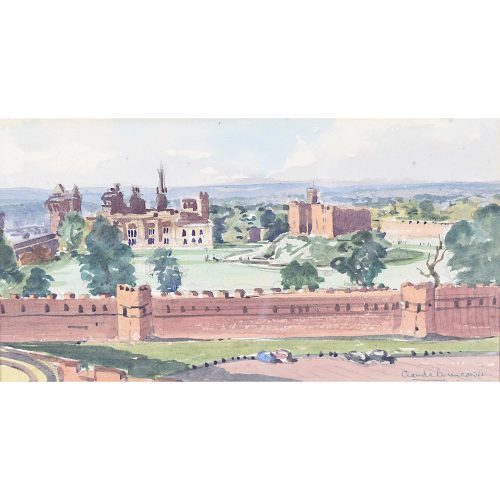
Claude Muncaster (1903-1974) Cardiff Castle Wales
Dated May 1962 Signed lower right Watercolour 14x26cm Muncaster's watercolours capture the British countryside feel with great competence and passion. Here the ancient scheduled monument of Cardiff castle is made to feel both grand and imposing, yet reflecting the softness of the countryside. A few elegant motorcars are parked before it. Claude Grahame Muncaster, RWS, ROI, RBA, SMA was the son of Oliver Hall RA. At the age of fifteen his career as a landscape painter began, and he soon took to the seas, spending the 1920s and 30s travelling the world with his sketchbook in a series of vessels. With the outbreak of war and he joined the RNVR training as a navigator. Having left school at fifteen his mathematics was very weak and it was a relief for all when his artistic talents meant he was recruited as a camofleur. A master of capturing seascapes he was therefore able to hide huge ships ‘in plain sight’ with clever disguises. After the war he painted for the Royal Family and was a frequent guest at Sandringham. Claude Muncaster was a watercolourist known for his landscapes and maritime scenes. He was born Grahame Hall, the son of the Royal Academician Oliver Hall who taught his son to paint from an early age; Grahame first exhibited his work aged 15 and a few years later was showing at the RA. However, he adopted the name Claude Muncaster in 1922 to dissociate his career from that of his father. Muncaster’s primary choice of subject matter came from a genuine love of the sea. He made several long-distance sea voyages, including one around the Horn as a deckhand in the windjammer Olivebank in 1931, which he described in ‘Rolling Round the Horn’, published in 1933. Armed with a sketchbook, his aim was to be able to ‘paint ships and the sea with greater authority’. This he certainly achieved, perfectly capturing the limpid first light of morning over the Port of Aden, the choppy rain-grey waters of the Bay of Biscay and a streak of sunlight through gathering storm clouds at dusk in Exeter. He became an Associate of the Royal Watercolour Society in 1931 and was a founder member, and later President, of the Royal Society of Marine Artists. During the Second World War, Muncaster served in the Royal Naval Volunteer Reserve (RNVR) from 1940-44, training as a navigator before going on to advise on the camouflage of ships, and also worked as an official war artist. In ‘Still Morning at Aden’ (1944) he depicts Allied warships in this safe anchorage in the Middle East; the back is stamped with Admiralty approval. In 1946-7 he was commissioned by the Queen to produce watercolours of the royal residences at Windsor, Sandringham and Balmoral; the Duke of Edinburgh, in a foreword to a biography of Muncaster, recalls looking at these and considering the artist’s ‘unerring instinct for a subject’, his sense of atmosphere. Other commissions included large panoramas of the Thames and of Bradford. His career also included work as an etcher, illustrator, writer, lecturer and broadcaster, and his paintings can be found in the Royal Academy, Tate, National Maritime Museum Cornwall, National Railway Museum and Royal Air Force Museum. If you are interested email info@manningfineart.co.uk or call us on 07929 749056. Conditon: Conservation mounted and wrapped in transparent sleeve for protection. Generally good condition. -
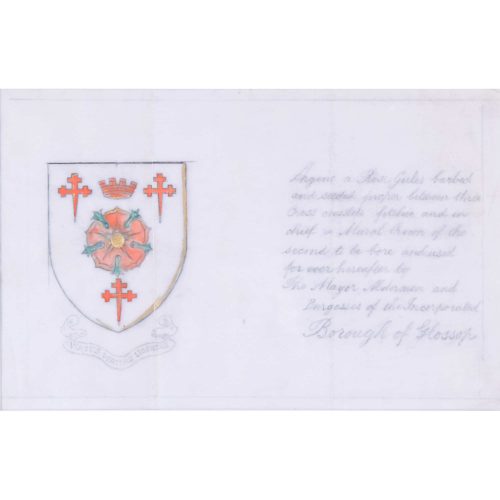
Florence Camm (1874-1960) Design for stained glass window for the Arms of the Borough of Glossop
Watercolour on tracing paper 18x28 cm Design for TW Camm & Co., Smethwick, Birmingham The Camms were stained glass designers who exhibited 48 times at the Royal Academy and also exhibited at The Walker Art Gallery in Liverpool, The Royal Scottish Academy and Royal Birmingham Society of Artists. Following the death of her father, Florence Camm became chief designer at TW Camm with many commissions both nationally and internationally. Florence Camm was the daughter of Thomas William Camm (1839-1912) who founded the stained glass business T W Camm in High Street Smethwick. From 1892-1911 she studied at The Birmingham Municipal School of Art which, unusually for the time, encouraged girls to attend the life drawing classes – drawing fully nude female models and partially draped male models – thus explaining Camm’s skill with the human figure. Students were encouraged to execute their drawings for designs, thus giving them the skills to set up as manufacturers in Birmingham’s Jewellery Quarter. The arts and crafts designer Henry Payne was an influential tutor for Camm, being one of the most influential teachers at the BMSA who was working as a stained glass designer at the time; one of his most notable commissions was a painted mural illustrating Tudor History for the Houses of Parliament in 1908. Following the death of TW Camm, Florence and her brothers – Walter and Robert – took over the business and Florence did most of the designing. If you are interested email info@manningfineart.co.uk or call us on 07929 749056. Condition: In conservation mount and in plastic sleeve for protection. -
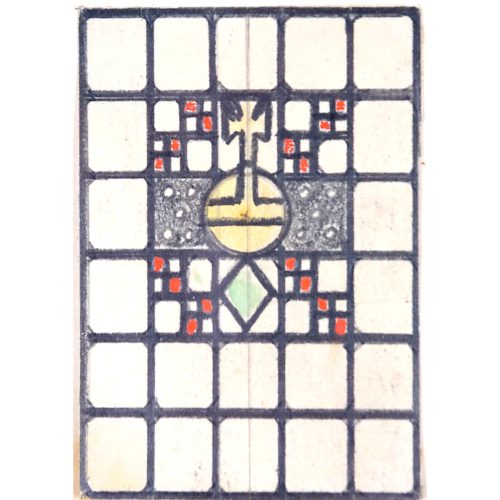
Florence Camm (1874-1960) Design for stained glass window with orb and cross
Watercolour 7x5 cm Design for TW Camm & Co., Smethwick, Birmingham The Camms were stained glass designers who exhibited 48 times at the Royal Academy and also exhibited at The Walker Art Gallery in Liverpool, The Royal Scottish Academy and Royal Birmingham Society of Artists. Following the death of her father, Florence Camm became chief designer at TW Camm with many commissions both nationally and internationally. Florence Camm was the daughter of Thomas William Camm (1839-1912) who founded the stained glass business T W Camm in High Street Smethwick. From 1892-1911 she studied at The Birmingham Municipal School of Art which, unusually for the time, encouraged girls to attend the life drawing classes – drawing fully nude female models and partially draped male models – thus explaining Camm’s skill with the human figure. Students were encouraged to execute their drawings for designs, thus giving them the skills to set up as manufacturers in Birmingham’s Jewellery Quarter. The arts and crafts designer Henry Payne was an influential tutor for Camm, being one of the most influential teachers at the BMSA who was working as a stained glass designer at the time; one of his most notable commissions was a painted mural illustrating Tudor History for the Houses of Parliament in 1908. Following the death of TW Camm, Florence and her brothers – Walter and Robert – took over the business and Florence did most of the designing. If you are interested email info@manningfineart.co.uk or call us on 07929 749056. Condition: In conservation mount and in plastic sleeve for protection.