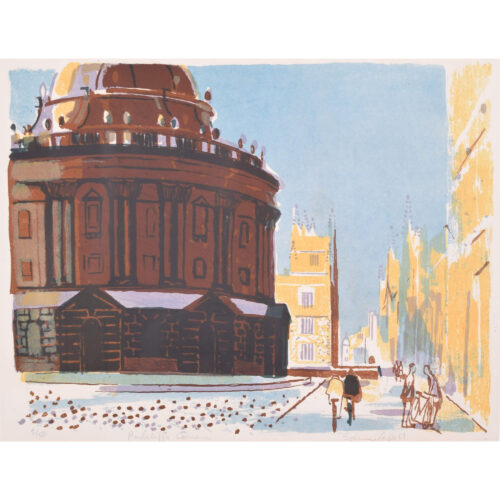
-
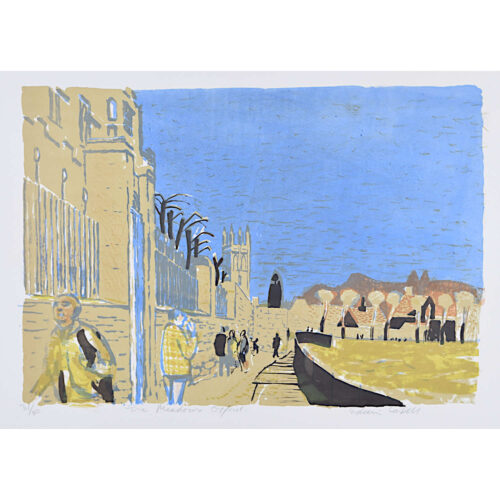
Edwin La Dell (1914-1970)
The Meadows, Oxford
Lithograph 40 x 55 cm Signed, titled, and numbered 31/80 in pencil. A bright blue winter sky looks over Christ Church Meadows, complete with pedestrians waltzing down Deadman's Walk. La Dell studied at the Sheffield School of Art, where he won a scholarship to the Royal College of Art. From 1934 to 1940 John Nash was the head of printmaking there, and taught La Dell. La Dell himself became head of lithography there in 1948, and remained in post until his death. During the war La Dell was an official war artist and a camofleur, but he is probably best known for his lithographs of Oxford and Cambridge that he published himself. His works are widely held in the public collections, including the Royal Academy and the Government Art Collection, the latter of which holds many of his views of Cambridge. Condition: very good. Backed to linen. If you are interested, please email info@manningfineart.co.uk or call us on 07929 749056. Click here for other views of Christ Church. -
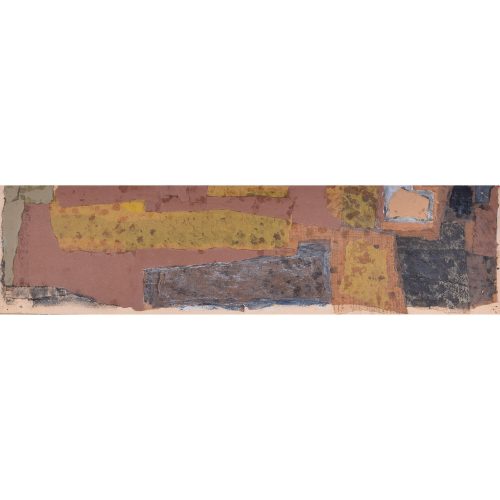
Clifford Ellis (1907-1985)
Collage I
Collage 13x56cm Click here for biographical details and other works by the artist If you are interested email info@manningfineart.co.uk or call us on 07929 749056. -
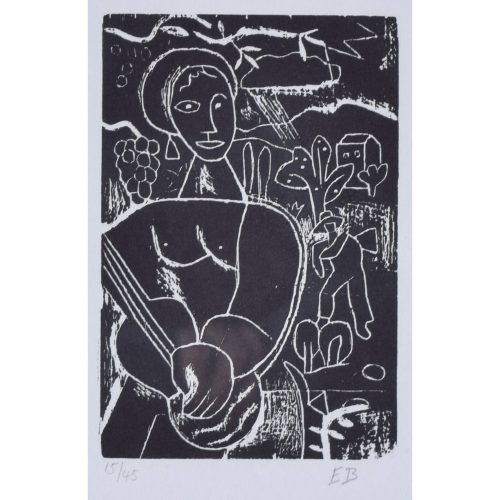
Edward Burra (1905 - 1976)
The Guitar Player
(1928 - 1929, this edition published 1971) Woodcut 15 x 10 cm; sheet size 34 x 24 cm Numbered 15/45 lower left and initialled EB lower right. Burra's woodcut of a female guitar player surrounded by a landscape of cacti. A bunch of grapes is pendent beside her triangular earring, and a male figure in a wide-brimmed hats stands in the field nearby. Edward Burra was an English painter, draughtsman, and printmaker. He travelled to Italy in 1925, the same year he met the noted British Surrealist Paul Nash, and both of these influences are evident in this woodcut. Nash introduced Burra to woodcut-making in 1928, the same year that Burra began this woodcut series. His first solo show was held at the Leicester Galleries in April 1929, and he exhibited with the English Surrealists in the 1930s. Condition: Excellent. If you’d like to know more, please email info@manningfineart.co.uk or call us on 07929 749056. -
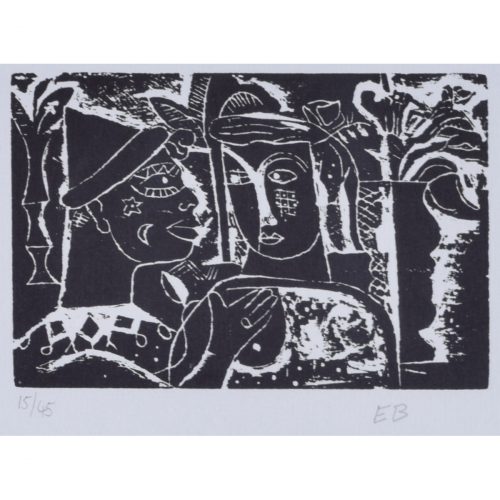
Edward Burra (1905 - 1976)
Café
(1928 - 1929, this edition published 1971) Woodcut 10 x 15 cm; sheet size 24 x 34 cm Numbered 15/45 lower left and initialled EB lower right. Published by the Nicholas Treadwell Gallery in 1971. Burra's woodcut of a male and a female figure, entitled 'Café'. The two figures, seemingly a couple, gaze at one another intensely and intimately, giving the impression of having been interrupted by the viewer. Both figures' faces bear tattoo-like markings: he a star and the moon, she a geometric design resembling a noughts-and-crosses board. The "café" in which they sit is a dreamily abstract landscape full of palms and other plants from the tropics. Edward Burra was an English painter, draughtsman, and printmaker. He travelled to Italy in 1925, the same year he met the noted British Surrealist Paul Nash, and both of these influences are evident in this woodcut. Nash introduced Burra to woodcut-making in 1928, the same year that Burra began this woodcut series. His first solo show was held at the Leicester Galleries in April 1929, and he exhibited with the English Surrealists in the 1930s. Condition: Excellent. If you’d like to know more, please email info@manningfineart.co.uk or call us on 07929 749056. -

Cecil King (1881-1942)
The Thames and Tower Bridge
Watercolour 26 x 37 cm Cecil King was a British painter. He studied at the Goldsmiths’ Institute College School of Art, the Westminster School of Art, and in Paris with Jean-Paul Laurens and Théophile Steinlen. King notably competed in the art competition of the 1928 Summer Olympics held in Amsterdam. The 1928 competition went down in Olympic memory as being particularly well celebrated, spanning multiple categories, art competitions were, however, part of the Olympic programme between 1912 and 1948. This particular watercolour depicts London industrial docks with the Thames and Tower Bridge in the background, capturing the unique atmosphere of London in the early 20th century. -

George Bissill (1896-1973) 'Two Woodcutters'
Watercolour 29 x 39 cm Born in 1896, George Bissill was a British miner, painter and furniture designer. Raised in the mining village of Langley Mill, Derbyshire, Bissill became a miner at the age of 13, before leaving to join the war effort in 1915. Upon his return from the war after being gassed, Bissill chose to become a pavement artist outside the newly erected Bush House in Aldwych, painting from his memory and his sketch book the uncompromising underground world he had inhabited. In 1935 he moved to the countryside near Newbury, where he lived and worked as a landscape painter, art restorer and dealer until his death in 1973. This painting forms part of a larger collection, 'unseen since they were taken from George Bissil's studio in 1983' and restored by Kate Pattinson. A series of planned exhibitions were cancelled due to Covid, but two shows, one in Oxford and one in Ilkeston, did take place. Through such exhibitions, Pattinson hoped to 'restore the reputation of an artist who, through mighty endeavour, conquered the art world in the 1920s with his powerful, authentic and experimental pictures.' Bissill's paintings are also held in a number of important public collections, including the Tate Gallery, National Museum of Ireland and the Manchester Art Gallery. This watercolour depicts two woodcutters, preparing timber in a woodland area. The cool colours and leafless trees suggest a wintry scene, while the men at work evoke Bissill's earlier paintings of miner's labouring in the pits. Through his typical paired back style and strong lines, Bissell skilfully achieves what he does so well: the freezing of an everyday moment in time. Condition: Generally very good.If you would like to know more, please email info@manningfineart.co.uk or call us on 07929 749056.
-

George Bissill (1896-1973) 'Lone Woodcutter'
Watercolour 39 x 48 cm Born in 1896, George Bissill was a British miner, painter and furniture designer. Raised in the mining village of Langley Mill, Derbyshire, Bissill became a miner at the age of 13, before leaving to join the war effort in 1915. Upon his return from the war after being gassed, Bissill chose to become a pavement artist outside the newly erected Bush House in Aldwych, painting from his memory and his sketch book the uncompromising underground world he had inhabited. In 1935 he moved to the countryside near Newbury, where he lived and worked as a landscape painter, art restorer and dealer until his death in 1973. This painting forms part of a larger collection, 'unseen since they were taken from George Bissil's studio in 1983' and restored by Kate Pattinson. A series of planned exhibitions were cancelled due to Covid, but two shows, one in Oxford and one in Ilkeston, did take place. Through such exhibitions, Pattinson hoped to 'restore the reputation of an artist who, through mighty endeavour, conquered the art world in the 1920s with his powerful, authentic and experimental pictures.' Bissill's paintings are also held in a number of important public collections, including the Tate Gallery, National Museum of Ireland and the Manchester Art Gallery. This watercolour depicts a lone woodcutter, preparing timber in a woodland area. The warm colours and soft tones suggest a summer evening, while the strong lines of the man's form evoke Bissill's earlier paintings of miners labouring in the pits. Through his typical paired back style and strong lines, Bissell skilfully achieves what he does so well: the freezing of an everyday moment in time. Condition: Generally very good.If you would like to know more, please email info@manningfineart.co.uk or call us on 07929 749056.
-

George Bissill (1896-1973) Rural Landscape Scene
Watercolour 39 x 48 cm Born in 1896, George Bissill was a British miner, painter and furniture designer. Raised in the mining village of Langley Mill, Derbyshire, Bissill became a miner at the age of 13, before leaving to join the war effort in 1915. Upon his return from the war after being gassed, Bissill chose to become a pavement artist outside the newly erected Bush House in Aldwych, painting from his memory and his sketch book the uncompromising underground world he had inhabited. In 1935 he moved to the countryside near Newbury, where he lived and worked as a landscape painter, art restorer and dealer until his death in 1973. This painting forms part of a larger collection, 'unseen since they were taken from George Bissil's studio in 1983' and restored by Kate Pattinson. A series of planned exhibitions were cancelled due to Covid, but two shows, one in Oxford and one in Ilkeston, did take place. Through such exhibitions, Pattinson hoped to 'restore the reputation of an artist who, through mighty endeavour, conquered the art world in the 1920s with his powerful, authentic and experimental pictures.' Bissill's paintings are also held in a number of important public collections, including the Tate Gallery, National Museum of Ireland and the Manchester Art Gallery. This watercolour depicts a rural landscape. Fields occupy the foreground of the painting, while the background is filled with Bissill's fluffy watercolour clouds. Yellow fields suggest a rapeseed crop ready to harvest, bringing with it long and warm summer days. Condition: Generally very good.If you would like to know more, please email info@manningfineart.co.uk or call us on 07929 749056.
-

A. E. Halliwell (1905-1987) Defending the Wicket
Airbrush and pen 13 x 13 cm c.1930 Signed to the bottom right Provenance: Family of the artist A.E. Halliwell (1905–1986) was a British artist, illustrator, and designer best known for his vibrant poster designs created for British railway companies during the mid-20th century. Born in Southport, Halliwell developed a strong foundation in art and design early in life. He studied at the Southport School of Art from 1923 to 1926 before graduating to the Royal College of Art in London and subsequently practising as a professional designer from the 1930s. Following his studies, Halliwell married Doris Doyle in Strood Kent, and went on to have a significant teaching career himself, most notably as a lecturer at the Central School of Arts and Crafts (later part of Central Saint Martins), where he influenced a new generation of designers and illustrators. Halliwell is perhaps best remembered for his vibrant and engaging poster designs created for British railway companies during the 1930s. His work was characterised by a bright, graphic style that balanced charm with clarity, often depicting idealised scenes of British holiday destinations—from sunny seaside towns to tranquil countryside vistas. Beyond posters, his artistic output included book illustration, commercial design, and stage costume sketches, showcasing his versatility across mediums. His posters continue to remain enduring symbols of a golden age of British travel and design and are displayed in major collections including the London Transport Museum and the V&A. This striking poster design by A. E. Halliwell features a young man defending the wickets during a cricket match. Halliwell creates a strong sense of contrast in this design, using the airbrush technique to create a dense background of spots and to emphasise shadow, and then leaving the cricketer's whites plain by contrast. This creates an eye-catching effect, suggesting the brightness of the whites reflecting the sun on a warm summer's day. Condition: Generally very good.If you would like to know more, please email info@manningfineart.co.uk or call us on 07929 749056.
-
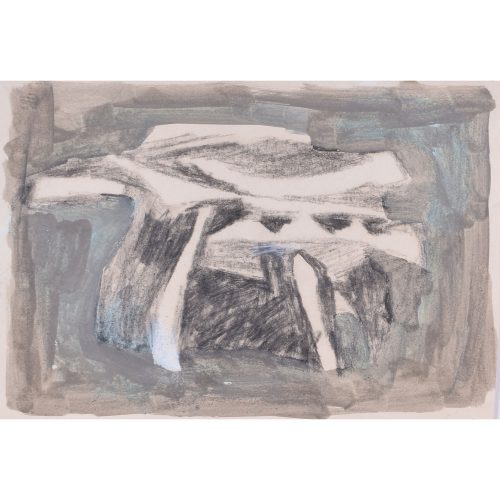
Clifford Ellis (1907-1985)
Form
Gouache 21x30cm Provenance: the family of the artist, by descent. Click here for biographical details and other works by the artist. If you are interested email info@manningfineart.co.uk or call us on 07929 749056. -
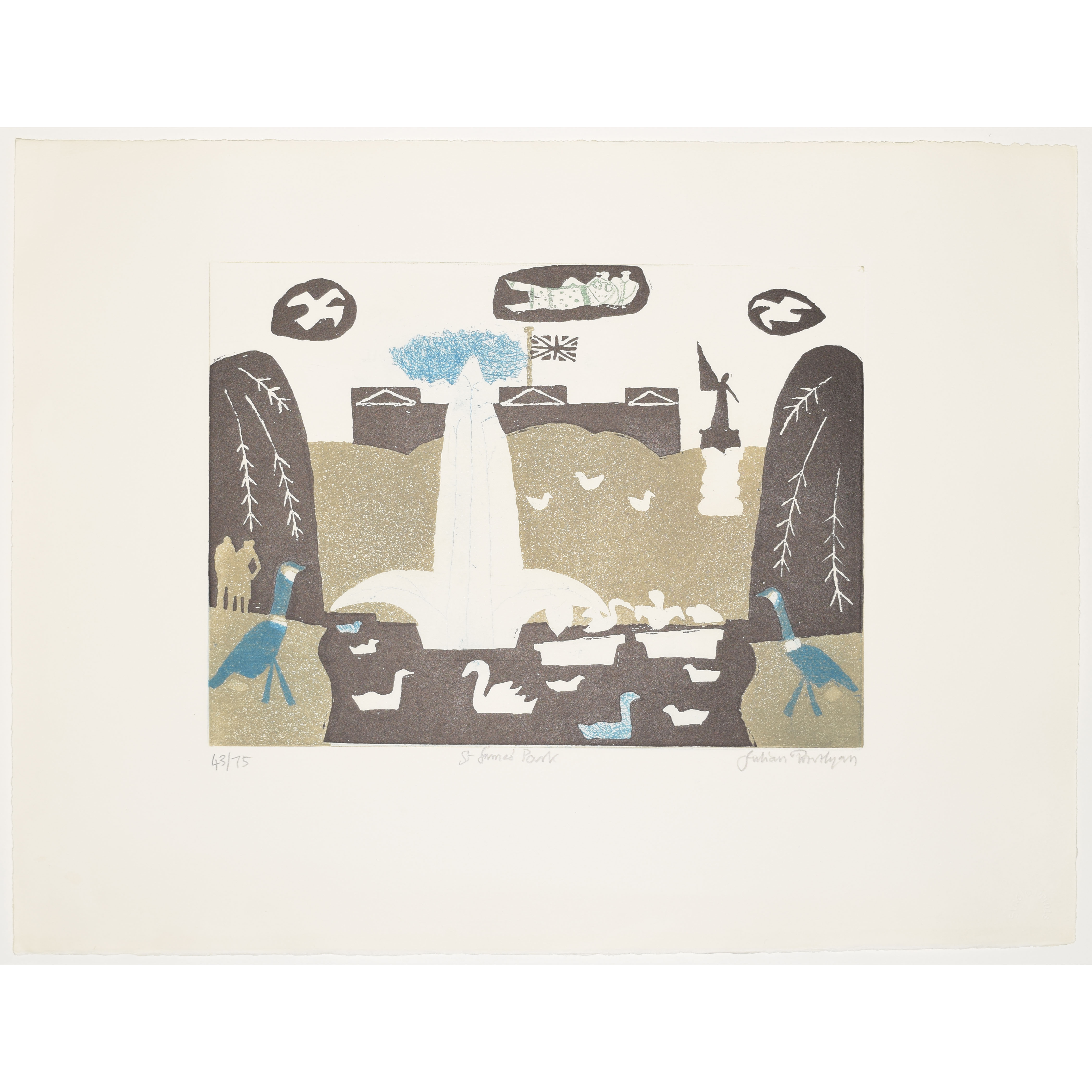
Julian Trevelyan (1910-1988)
St James' Park (1969-70)
Etching and aquatint, signed, numbered 48/75 35x48cm Click here for biographical details and other works by the artist. If you are interested email info@manningfineart.co.uk or call us on 07929 749056. -
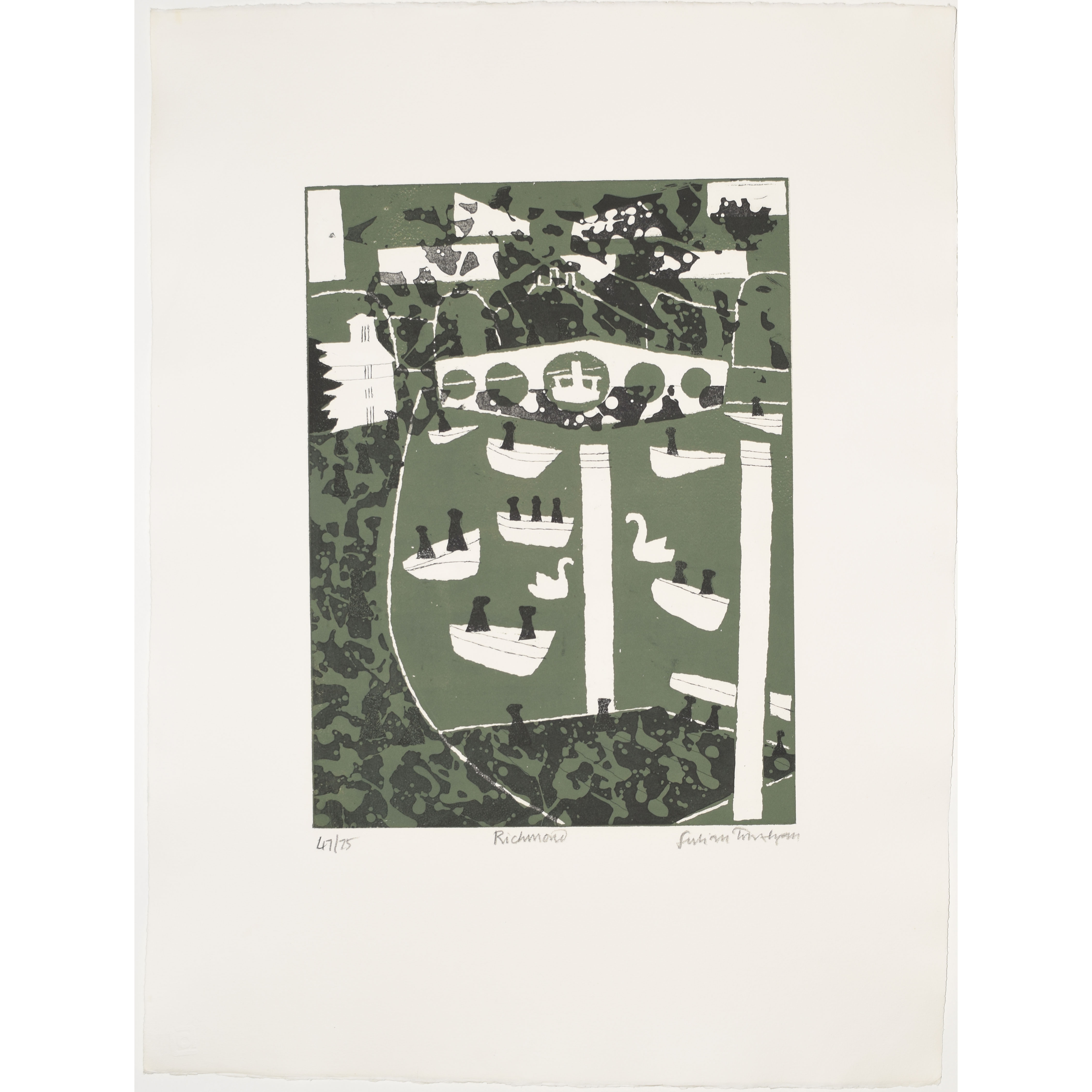
Julian Trevelyan (1910-1988)
Richmond (1969)
Etching and aquatint, signed, numbered 47/75 48x35cm Click here for biographical details and other works by the artist. If you are interested email info@manningfineart.co.uk or call us on 07929 749056. -
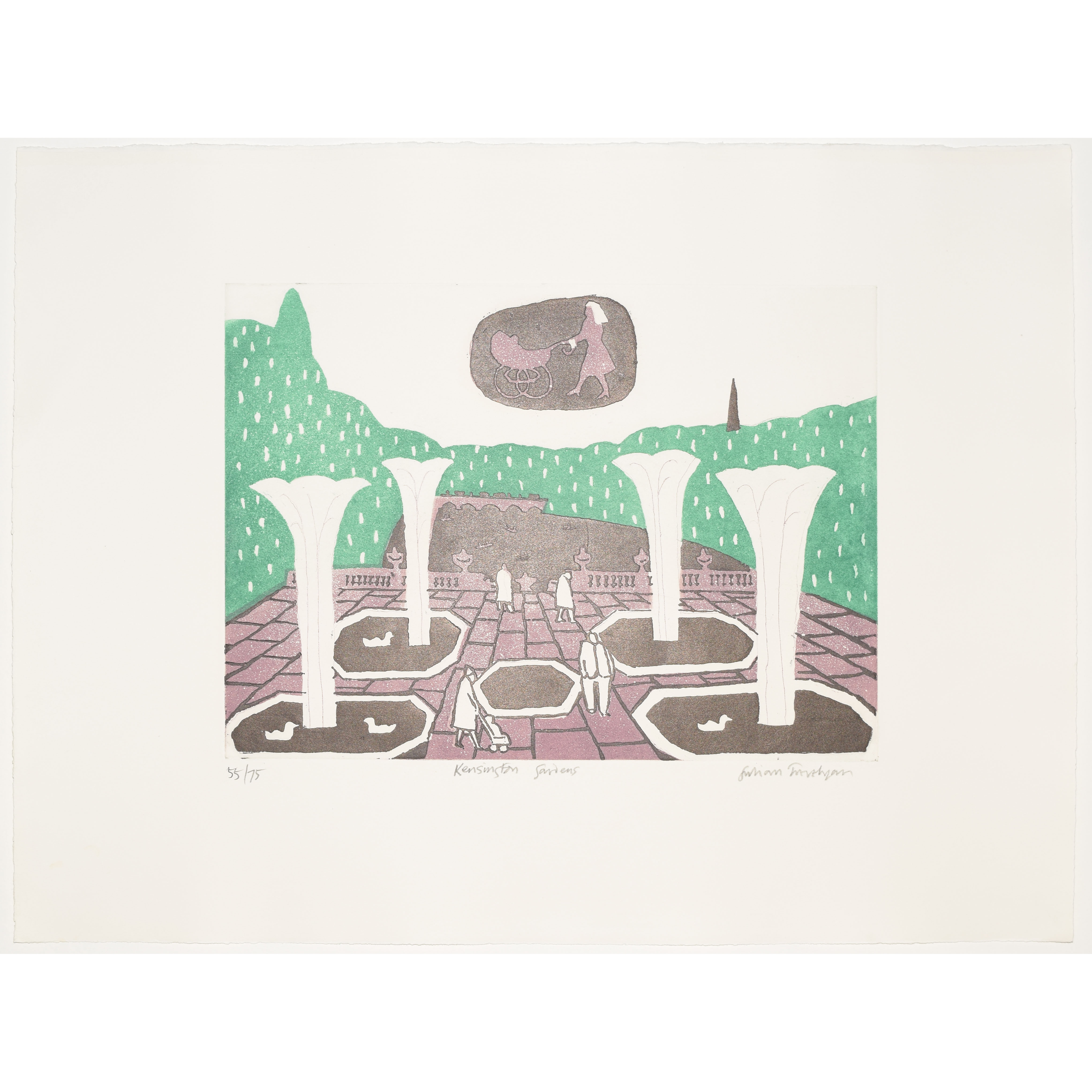
Julian Trevelyan (1910-1988)
Kensington Gardens (1969)
Etching and aquatint, signed, numbered 55/75 35x48cm Click here for biographical details and other works by the artist. If you are interested email info@manningfineart.co.uk or call us on 07929 749056. -
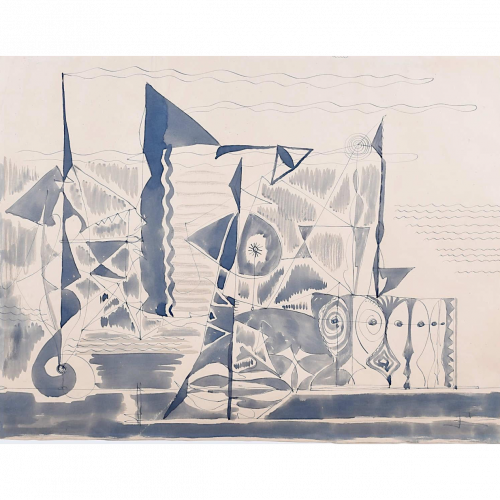
Charles Pulsford ARSA (1912-1989)
Abstract Harbour
Watercolour 36 x 46 cm Signed lower right. Pulsford was born in Staffordshire to Scottish parents. His family returned to Dunfermline when he was a child, and he subsequently attended Edinburgh College of Art (ECA) between 1933 and 1937. He, along with other prominent Scottish artists, embraced modernism and abstraction following the end of the war. Alan Davie, William Turnbull, William Gear and Eduardo Paolozzi are the key artists of the group with which he was association, and the National Galleries of Scotland regard Pulsford as the 'fifth man' of the group. Between 1952 and 1960 he taught at ECA and then at Canterbury College of Art. Provenance: the artist, the residual stock of William Hardie Gallery. Condition: Generally very good, in fine hand-finished frame. If you are interested, email info@manningfineart.co.uk or call us on 07929 749056. -
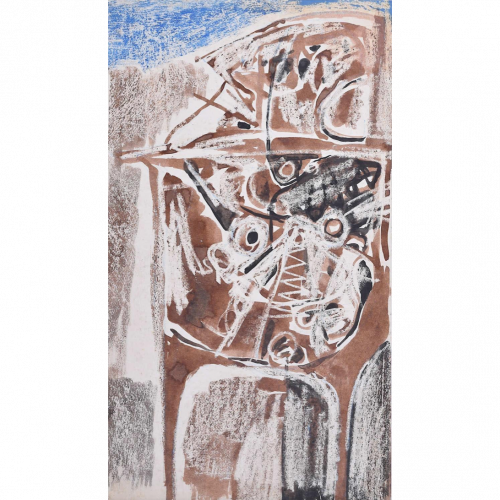
Charles Pulsford ARSA (1912-1989)
Abstract Landscape
Watercolour with wax resist 55 x 31 cm Provenance: the artist; the residual stock of William Hardie. Pulsford was born in Staffordshire to Scottish parents. His family returned to Dunfermline when he was a child, and he subsequently attended Edinburgh College of Art (ECA) between 1933 and 1937. He, along with other prominent Scottish artists, embraced modernism and abstraction following the end of the war. Alan Davie, William Turnbull, William Gear and Eduardo Paolozzi are the key artists of the group with which he was association, and the National Galleries of Scotland regard Pulsford as the 'fifth man' of the group. Between 1952 and 1960 he taught at ECA and then at Canterbury College of Art. Condition: Generally very good. If you are interested, please email info@manningfineart.co.uk or call us on 07929 749056.