-

Julian Trevelyan (1910 - 1988)
Tower Bridge
Etching & Aquatint 47 x 34 cm Numbered 47/75 lower left and signed lower right, both in pencil. Nephew of the historian G M Trevelyan, Julian Trevelyan was educated at Bedales and then at Trinity College, Cambridge, where he read English. After moving to Paris, Trevelyan studied engraving at Stanley William Hayter’s school, working alongside artists such as Max Ernst, Joan Miro and Pablo Picasso. He married the potter Ursula Darwin in 1934, and in 1935 they moved to Hammersmith, buying Durham Wharf beside the River Thames which was Trevelyan’s studio – and home – for the rest of his life. His wartime service was – like so many artists – as a camoufleur. A Royal Engineer from 1940-43, he served in North Africa and Palestine, forcing the German Afrika Korps to use resources against a dummy army whilst real tanks were disguised as more harmless equipment. In the desert, nothing could be hidden - but it could be disguised. Following the dissolution of his marriage in 1950, he married the painter Mary Fedden. Teaching at Chelsea School of Art, Trevelyan eventually became head of the Etching Department and his pupils included David Hockney and Peter Ackroyd. Condition: generally very good. If you are interested, please email info@manningfineart.co.uk or call us on 07929 749056. Click here for other works by Julian Trevelyan. -

Julian Trevelyan (1910 - 1988)
Trafalgar Square
Etching & Aquatint 35 x 48 cm Numbered 27/75 lower left and signed lower right, both in pencil. Nephew of the historian G M Trevelyan, Julian Trevelyan was educated at Bedales and then at Trinity College, Cambridge, where he read English. After moving to Paris, Trevelyan studied engraving at Stanley William Hayter’s school, working alongside artists such as Max Ernst, Joan Miro and Pablo Picasso. He married the potter Ursula Darwin in 1934, and in 1935 they moved to Hammersmith, buying Durham Wharf beside the River Thames which was Trevelyan’s studio – and home – for the rest of his life. His wartime service was – like so many artists – as a camoufleur. A Royal Engineer from 1940-43, he served in North Africa and Palestine, forcing the German Afrika Korps to use resources against a dummy army whilst real tanks were disguised as more harmless equipment. In the desert, nothing could be hidden - but it could be disguised. Following the dissolution of his marriage in 1950, he married the painter Mary Fedden. Teaching at Chelsea School of Art, Trevelyan eventually became head of the Etching Department and his pupils included David Hockney and Peter Ackroyd. This particular edition shows a vibrant print of a classic view of Trafalgar Square, notably including Nelson's Column and the iconic fountains. Condition: generally very good. If you are interested, please email info@manningfineart.co.uk or call us on 07929 749056. Click here for other works by Julian Trevelyan. -

A. E. Halliwell (1905-1987) War is War
Gouache 21 x 19 cm (full sheet size 38 x 28 cm) c.1930 With signature and title from applied support paper Provenance: Family of the artist A.E. Halliwell (1905–1986) was a British artist, illustrator, and designer best known for his vibrant poster designs created for British railway companies during the mid-20th century. Born in Southport, Halliwell developed a strong foundation in art and design early in life. He studied at the Southport School of Art from 1923 to 1926 before graduating to the Royal College of Art in London and subsequently practising as a professional designer from the 1930s. Following his studies, Halliwell married Doris Doyle in Strood Kent, and went on to have a significant teaching career himself, most notably as a lecturer at the Central School of Arts and Crafts (later part of Central Saint Martins), where he influenced a new generation of designers and illustrators. Halliwell is perhaps best remembered for his vibrant and engaging poster designs created for British railway companies during the 1930s. His work was characterised by a bright, graphic style that balanced charm with clarity, often depicting idealised scenes of British holiday destinations—from sunny seaside towns to tranquil countryside vistas. Beyond posters, his artistic output included book illustration, commercial design, and stage costume sketches, showcasing his versatility across mediums. His posters continue to remain enduring symbols of a golden age of British travel and design and are displayed in major collections including the London Transport Museum and the V & A. Halliwell produced this book dust cover design for the novel 'War is War', written by Alfred Burrage and published in 1930. In War is War, Burrage recounts his experiences as a private soldier in France during the First World War, his reactions to abnormal conditions and his general observations-- all in an effort to offer a true representation of what war is really like. In this account, written of necessity under a pseudonym, he covers the wide canvas of war, from off duty moments in grubby estaminets and brothels, to life in shell torn trenches, going over the top with equally terrified yet resigned comrades, being a casualty, to periods of numbing boredom. Halliwell's design is sombre and impactful, using minimal colour and abstract forms to evoke the horrors and futility of war. Condition: Generally very good.If you would like to know more, please email info@manningfineart.co.uk or call us on 07929 749056.
-

A. E. Halliwell (1905-1987) Design for Underground Poster
Gouache 15 x 12 cm 1927 Signed, dated and inscribed "Design for Underground Poster, executed 30" x 20", A. E. Halliwell '27" Provenance: Family of the artist A.E. Halliwell (1905–1986) was a British artist, illustrator, and designer best known for his vibrant poster designs created for British railway companies during the mid-20th century. Born in Southport, Halliwell developed a strong foundation in art and design early in life. He studied at the Southport School of Art from 1923 to 1926 before graduating to the Royal College of Art in London and subsequently practising as a professional designer from the 1930s. Following his studies, Halliwell married Doris Doyle in Strood Kent, and went on to have a significant teaching career himself, most notably as a lecturer at the Central School of Arts and Crafts (later part of Central Saint Martins), where he influenced a new generation of designers and illustrators. Halliwell is perhaps best remembered for his vibrant and engaging poster designs created for British railway companies during the 1930s. His work was characterised by a bright, graphic style that balanced charm with clarity, often depicting idealised scenes of British holiday destinations—from sunny seaside towns to tranquil countryside vistas. Beyond posters, his artistic output included book illustration, commercial design, and stage costume sketches, showcasing his versatility across mediums. His posters continue to remain enduring symbols of a golden age of British travel and design and are displayed in major collections including the London Transport Museum and the V & A. Dominated by two stylised figures dressed in theatrical costume, this striking poster design calls to mind the vibrancy of London's West End. As an underground train emerges from the woman's flowing garments, Halliwell creates a playfully burlesque scene. Their clothes rendered in bold yellow, black, and blue, then visually merge with the motion and perspective of the speeding trains below, whose converging tracks create a dramatic vanishing point. Condition: Generally very good.If you would like to know more, please email info@manningfineart.co.uk or call us on 07929 749056.
-
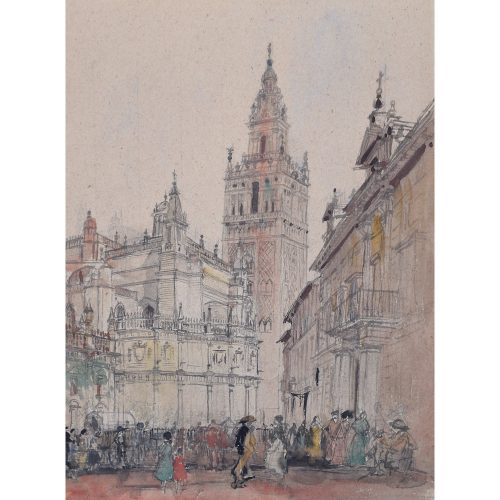
Sir Albert Edward Richardson K.C.V.O., F.R.I.B.A, F.S.A., P.R.A. (1880-1964)
La Giralda Seville
38x28cm Watercolour Sir Albert Edward Richardson K.C.V.O., F.R.I.B.A, F.S.A., P.R.A. (1880-1964) was a traditionalist, renowned for his distaste of modern architecture. Rooted firmly in the classical period, he lived a Georgian life, refusing to have electricity in his Georgian house – until his wife finally insisted. Professor of Architecture at UCL’s Bartlett School of Architecture from 1929-1955, this was evacuated to Cambridge during the war and he became a fellow of St Catharine’s College. Amongst his other achievements, Richardson was President of the RA, editor of Architect’s Journal and founder of the Georgian Group. For pleasure he painted architectural fantasies; capriccios of buildings he pictured in his mind. Richardson was recipient of the Architectural Association’s Professor Bannister Fletcher Medal in 1902 which was an award for the study of post-Fire London architecture. Amongst his achievements were Professor of Architecture at University College London, President of the RA, editor of Architect’s Journal and founder of the Georgian Group. Click here for other works by the artist and biographical details. If you are interested email info@manningfineart.co.uk or call us on 07929 749056. -
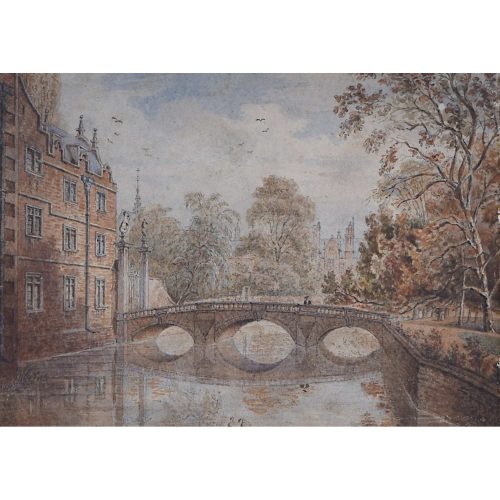
Sarah Orange (19th century)
The Kitchen Bridge, St John's College, Cambridge (c. 1830)
Watercolour 14 x 20 cm Provenance: Bene't Gallery, Cambridge. This 19th century watercolour depicts the Kitchen Bridge at John's. A scholar in gown and mortarboard stands alone in the bridge's centre, gazing meditatively into the glassy water below. -
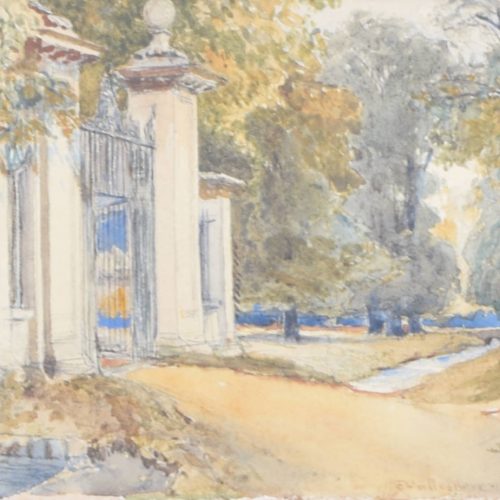
John Fulleylove RI, ROI (1845 - 1908)
Clare College Gates, Cambridge (1890)
Watercolour 11.5 x 17cm Signed lower right. John Fulleylove was an English landscape artist and illustrator. He was apprenticed to a firm of architects in Leicester, and later became a full-time painter in watercolour and oils. He exhibited widely in the UK, at such venues as the Royal Academy, the Fine Art Society, and the Royal Society of British Artists. Abroad, he painted in France, Italy, Greece, and the Middle East; his predilection for travel and his interest in architecture provided him with plenty of subjects for themed exhibitions. He exhibited watercolour views of Oxford in 1888 and of Cambridge in 1890, of Paris and Versailles in 1894, and of the Holy Land in 1902. Condition: very good. If you are interested, please email info@manningfineart.co.uk or call us on 07929 749056. Click here for other views of Clare. -
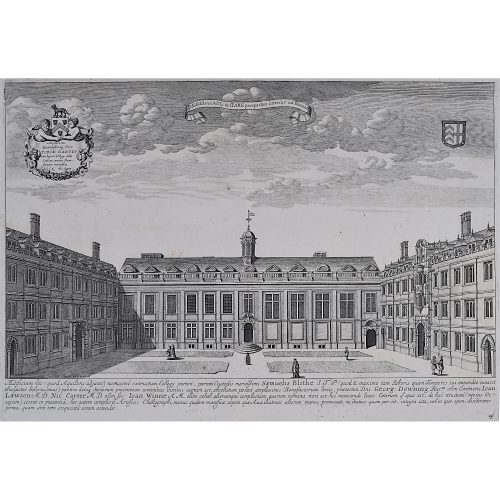
David Loggan (1634-1692)
Clare College, Cambridge
Engraving Originally published 1690, this is a slightly later edition, by Henry Overton, shortly after 1700. 35x51cm For biographical details and other works by the artist please click here. If you are interested email info@manningfineart.co.uk or call us on 07929 749056. -
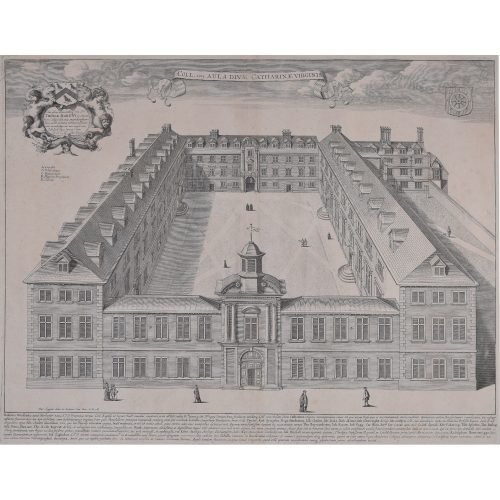
David Loggan (1634-1692)
St Catharine's College, Cambridge
Engraving Published 1690 35x51cm For biographical details and other works by the artist please click here. If you are interested email info@manningfineart.co.uk or call us on 07929 749056. -
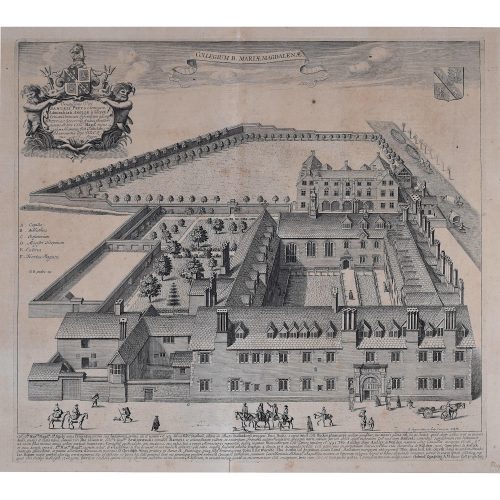
David Loggan (1634-1692)
Magdalene College, Cambridge
Engraving Published 1690 39x42cm For biographical details and other works by the artist please click here. If you are interested email info@manningfineart.co.uk or call us on 07929 749056. -
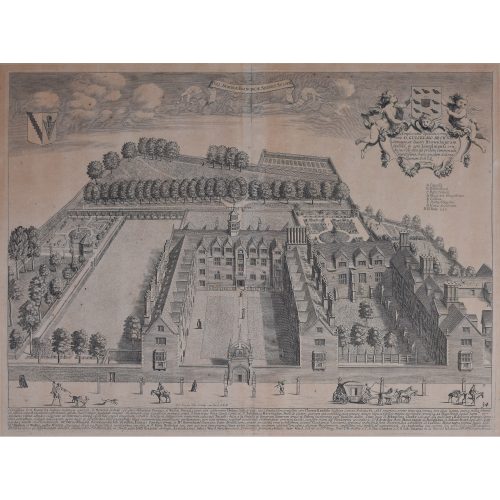
David Loggan (1634-1692)
Sidney Sussex College, Cambridge
Engraving Published 1690 34x45cm For biographical details and other works by the artist please click here. If you are interested email info@manningfineart.co.uk or call us on 07929 749056. -
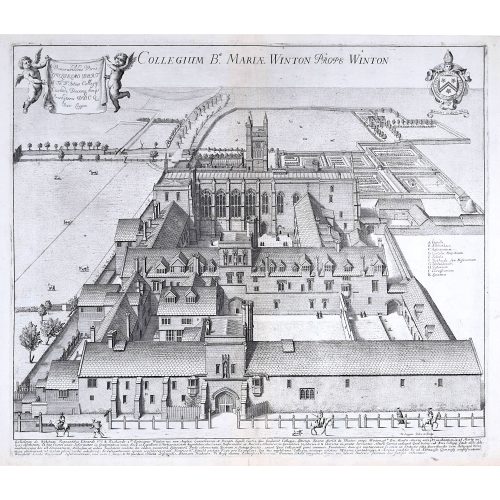
David Loggan (1634-1692) Winchester College
Engraving 1675 40x46cm Baptised in Danzig in 1634 Loggan's parents were English and Scottish. Studying engraving in Danzig with Willem Hondius (1598-1652 or 1658) he moved to London in the late 1650s producing the engraved title-page for the folio 1662 Book of Common Prayer. Marrying in 1663 he moved to Nuffield, Oxfordshire in 1665 to avoid the Plague and was in 1668/9 appointed Public Sculptor to the nearby University of Oxford having been commissioned to produce bird’s-eye views of all the Oxford Colleges. He lived in Holywell Street as he did this. Oxonia illustrata was published in 1675, with the help of Robert White (1645-1704). Following its completion he commenced work on his equivalent work for Cambridge, Cantabrigia Illustrata which was finally published in 1690 when he was made engraver to Cambridge University. Oxonia illustrata also includes an engraving of Winchester College (sharing its founder – William of Wykeham – with New College) whilst Cantabrigia illustrata includes one of Eton College (which shares its founder – Henry VIII – with King’s College). Bird’s-eye views required a particular talent as an architectural perspectivist of that era as it was not until 1783 that the first living thing (a sheep, named Montauciel ‘climb to the sky’) was sent aloft by the Mongolfier brothers in a balloon. Loggan thus had to rely on his imagination in conceiving the views. Loggan’s views constitute the first accurate depictions of the two Universities, in many ways unchanged today. Whilst the Oxford engravings were produced in reasonable numbers and ran to a second edition (on thicker paper and with a plate number in the bottom right-hand corner), those of Cambridge were printed in smaller numbers and no second edition was produced. The Dutchman Pieter van der Aa published some miniature versions of the engravings for James Beverell’s guidebook to the UK Les Delices de la Grande Bretagne c. 1708. Edmund Hort New (1871-1931) produced a series of pen-and-ink drawings of views of Oxford that paid homage to Loggan showing the development of the city in the following two hundred years. They were turned into photoengravings by Emery Walker who published the series. Probably no more than two hundred of each engraving were produced and the plates were destroyed in the blitz. The contemporary artist Andrew Ingamells (b.1956) has produced a highly-acclaimed series of etchings again bringing Loggan’s vision up to date. If you are interested email info@manningfineart.co.uk or call us on 07929 749056. Condition: Centre fold, as issued. Some age toning as visible in photograph; usual handling wear and marks to edges. Generally very good. -
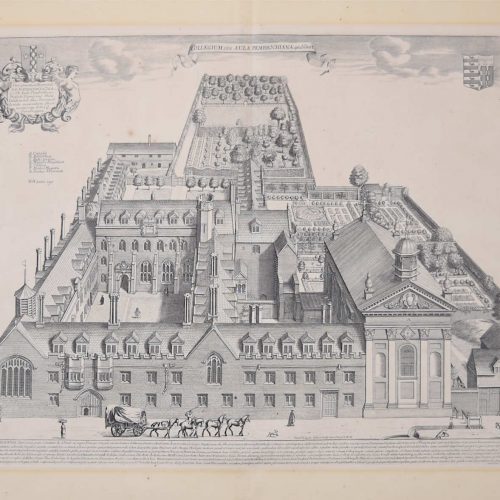
David Loggan (1634-1692)
Pembroke College, Cambridge
Engraving, 1690 36x45cm Loggan was born to English and Scottish parents, and was baptised in Danzig in 1634. After studying engraving in Danzig with Willem Hondius (1598-1652 or 1658), he moved to London in the late 1650s, going on to produce the engraved title-page for the folio 1662 Book of Common Prayer. He married in 1663 and moved to Nuffield in Oxfordshire in 1665. Loggan was appointed Public Sculptor to the nearby University of Oxford in the late 1660s, having been commissioned to produce bird’s-eye views of all the Oxford colleges. He lived in Holywell Street as he did this. The 'Oxonia Illustrata' was published in 1675, with the help of Robert White (1645-1704). Following its completion, Loggan began work on his equivalent work for Cambridge; the 'Cantabrigia Illustrata' was finally published in 1690, when he was made engraver to Cambridge University. The 'Oxonia Illustrata' also includes an engraving of Winchester College (Winchester and New College share William of Wykeham as their founder) whilst the 'Cantabrigia Illustrata' includes one of Eton College (which shares its founder, Henry VIII, with King’s College). Bird’s-eye views from this era required a particular talent as an architectural perspectivist; it was not until 1783 that it became possible for artists to ascend via hot air balloons and view the scenes they were depicting from above. Loggan thus had to rely on his imagination in conceiving the views. Loggan’s views constitute the first accurate depictions of the two Universities, in many ways unchanged today. Whilst the Oxford engravings were produced in reasonable numbers and ran to a second edition by Henry Overton (on thicker paper and with a plate number in Roman numerals in the bottom right-hand corner), those of Cambridge were printed in much smaller numbers. The Dutchman Pieter van der Aa published some miniature versions of the engravings for James Beverell’s guidebook to the UK, 'Les Delices de la Grande Bretagne' (c. 1708). The contemporary artist Andrew Ingamells (b.1956) has produced a highly-acclaimed series of etchings which bring Loggan’s original vision up to date. If you’d like to know more, please email info@manningfineart.co.uk or call us on 07929 749056. Condition: Some staining to margins outside platemark. -
Out of stock
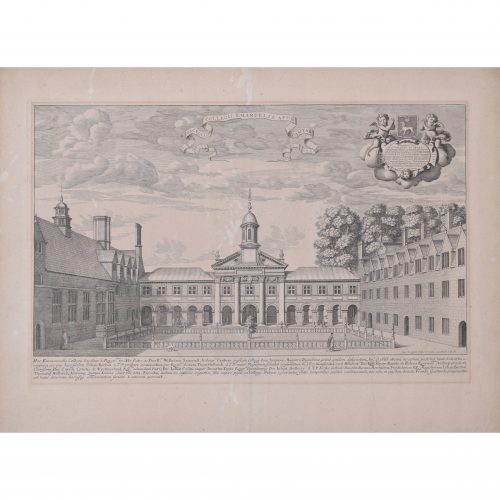
David Loggan (1634 - 1692)
Emmanuel College, Cambridge (1690)
Engraving 31 x 47 cm Loggan was born to English and Scottish parents, and was baptised in Danzig in 1634. After studying engraving in Danzig with Willem Hondius (1598-1652 or 1658), he moved to London in the late 1650s, going on to produce the engraved title-page for the folio 1662 Book of Common Prayer. He married in 1663 and moved to Nuffield in Oxfordshire in 1665. Loggan was appointed Public Sculptor to the nearby University of Oxford in the late 1660s, having been commissioned to produce bird’s-eye views of all the Oxford colleges. He lived in Holywell Street as he did this. The 'Oxonia Illustrata' was published in 1675, with the help of Robert White (1645 - 1704). Following its completion, Loggan began work on his equivalent work for Cambridge; the 'Cantabrigia Illustrata' was finally published in 1690, when he was made engraver to Cambridge University. The 'Oxonia Illustrata' also includes an engraving of Winchester College (Winchester and New College share William of Wykeham as their founder) whilst the 'Cantabrigia Illustrata' includes one of Eton College (which shares its founder, Henry VIII, with King’s College). Bird’s-eye views from this era required a particular talent as an architectural perspectivist; it was not until 1783 that it became possible for artists to ascend via hot air balloons and view the scenes they were depicting from above. Loggan thus had to rely on his imagination in conceiving the views. Loggan’s views constitute the first accurate depictions of the two Universities, in many ways unchanged today. Whilst the Oxford engravings were produced in reasonable numbers and ran to a second edition by Henry Overton (on thicker paper and with a plate number in Roman numerals in the bottom right-hand corner), those of Cambridge were printed in much smaller numbers. The Dutchman Pieter van der Aa published some miniature versions of the engravings for James Beverell’s guidebook to the UK, 'Les Delices de la Grande Bretagne' (circa 1708). The contemporary artist Andrew Ingamells has produced a highly-acclaimed series of etchings which bring Loggan’s original vision up to date. Condition: generally very good; mostly even all-over toning. If you’d like to know more, please email info@manningfineart.co.uk or call us on 07929 749056. -
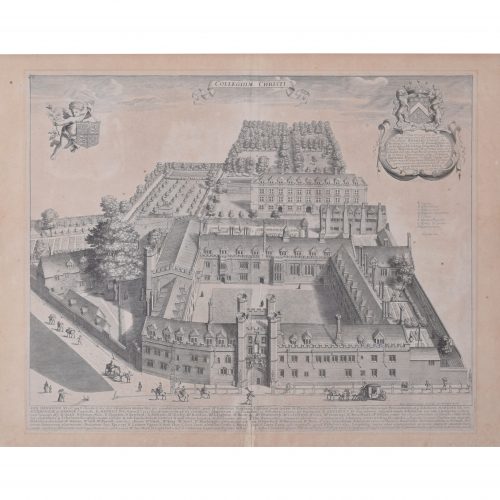
David Loggan (1634 - 1692)
Christ's College, Cambridge (1690)
Engraving 39 x 48 cm Loggan was born to English and Scottish parents, and was baptised in Danzig in 1634. After studying engraving in Danzig with Willem Hondius (1598-1652 or 1658), he moved to London in the late 1650s, going on to produce the engraved title-page for the folio 1662 Book of Common Prayer. He married in 1663 and moved to Nuffield in Oxfordshire in 1665. Loggan was appointed Public Sculptor to the nearby University of Oxford in the late 1660s, having been commissioned to produce bird’s-eye views of all the Oxford colleges. He lived in Holywell Street as he did this. The 'Oxonia Illustrata' was published in 1675, with the help of Robert White (1645 - 1704). Following its completion, Loggan began work on his equivalent work for Cambridge; the 'Cantabrigia Illustrata' was finally published in 1690, when he was made engraver to Cambridge University. The 'Oxonia Illustrata' also includes an engraving of Winchester College (Winchester and New College share William of Wykeham as their founder) whilst the 'Cantabrigia Illustrata' includes one of Eton College (which shares its founder, Henry VIII, with King’s College). Bird’s-eye views from this era required a particular talent as an architectural perspectivist; it was not until 1783 that it became possible for artists to ascend via hot air balloons and view the scenes they were depicting from above. Loggan thus had to rely on his imagination in conceiving the views. Loggan’s views constitute the first accurate depictions of the two Universities, in many ways unchanged today. Whilst the Oxford engravings were produced in reasonable numbers and ran to a second edition by Henry Overton (on thicker paper and with a plate number in Roman numerals in the bottom right-hand corner), those of Cambridge were printed in much smaller numbers. The Dutchman Pieter van der Aa published some miniature versions of the engravings for James Beverell’s guidebook to the UK, 'Les Delices de la Grande Bretagne' (circa 1708). The contemporary artist Andrew Ingamells has produced a highly-acclaimed series of etchings which bring Loggan’s original vision up to date. Condition: generally even all-over toning; old repair to lower central fold with small loss. If you’d like to know more, please email info@manningfineart.co.uk or call us on 07929 749056. -
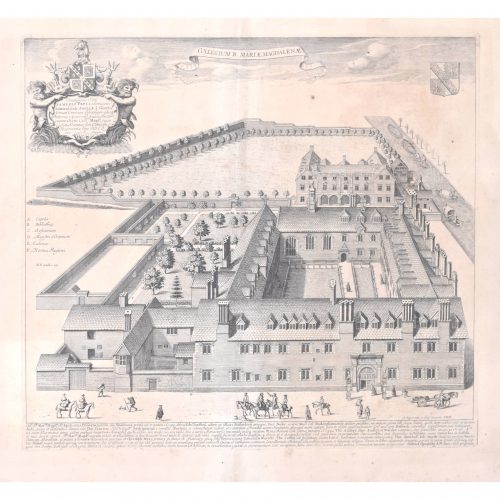
David Loggan (1634 - 1692)
Magdalene College, Cambridge (1690)
Engraving 38 x 43 cm Loggan was born to English and Scottish parents, and was baptised in Danzig in 1634. After studying engraving in Danzig with Willem Hondius (1598-1652 or 1658), he moved to London in the late 1650s, going on to produce the engraved title-page for the folio 1662 Book of Common Prayer. He married in 1663 and moved to Nuffield in Oxfordshire in 1665. Loggan was appointed Public Sculptor to the nearby University of Oxford in the late 1660s, having been commissioned to produce bird’s-eye views of all the Oxford colleges. He lived in Holywell Street as he did this. The 'Oxonia Illustrata' was published in 1675, with the help of Robert White (1645 - 1704). Following its completion, Loggan began work on his equivalent work for Cambridge; the 'Cantabrigia Illustrata' was finally published in 1690, when he was made engraver to Cambridge University. The 'Oxonia Illustrata' also includes an engraving of Winchester College (Winchester and New College share William of Wykeham as their founder) whilst the 'Cantabrigia Illustrata' includes one of Eton College (which shares its founder, Henry VIII, with King’s College). Bird’s-eye views from this era required a particular talent as an architectural perspectivist; it was not until 1783 that it became possible for artists to ascend via hot air balloons and view the scenes they were depicting from above. Loggan thus had to rely on his imagination in conceiving the views. Loggan’s views constitute the first accurate depictions of the two Universities, in many ways unchanged today. Whilst the Oxford engravings were produced in reasonable numbers and ran to a second edition by Henry Overton (on thicker paper and with a plate number in Roman numerals in the bottom right-hand corner), those of Cambridge were printed in much smaller numbers. The Dutchman Pieter van der Aa published some miniature versions of the engravings for James Beverell’s guidebook to the UK, 'Les Delices de la Grande Bretagne' (circa 1708). The contemporary artist Andrew Ingamells has produced a highly-acclaimed series of etchings which bring Loggan’s original vision up to date. Condition: enerally even all-over toning; old repair to lower central fold with small loss. If you’d like to know more, please email info@manningfineart.co.uk or call us on 07929 749056. -
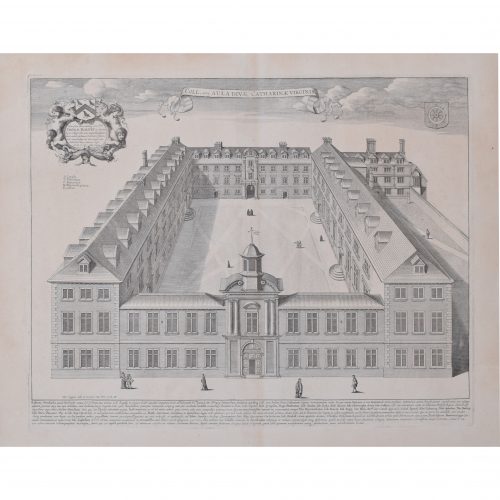
David Loggan (1634 - 1692)
St Catharine's College, Cambridge (1690)
Engraving 35 x 46 cm Loggan was born to English and Scottish parents, and was baptised in Danzig in 1634. After studying engraving in Danzig with Willem Hondius (1598-1652 or 1658), he moved to London in the late 1650s, going on to produce the engraved title-page for the folio 1662 Book of Common Prayer. He married in 1663 and moved to Nuffield in Oxfordshire in 1665. Loggan was appointed Public Sculptor to the nearby University of Oxford in the late 1660s, having been commissioned to produce bird’s-eye views of all the Oxford colleges. He lived in Holywell Street as he did this. The 'Oxonia Illustrata' was published in 1675, with the help of Robert White (1645 - 1704). Following its completion, Loggan began work on his equivalent work for Cambridge; the 'Cantabrigia Illustrata' was finally published in 1690, when he was made engraver to Cambridge University. The 'Oxonia Illustrata' also includes an engraving of Winchester College (Winchester and New College share William of Wykeham as their founder) whilst the 'Cantabrigia Illustrata' includes one of Eton College (which shares its founder, Henry VIII, with King’s College). Bird’s-eye views from this era required a particular talent as an architectural perspectivist; it was not until 1783 that it became possible for artists to ascend via hot air balloons and view the scenes they were depicting from above. Loggan thus had to rely on his imagination in conceiving the views. Loggan’s views constitute the first accurate depictions of the two Universities, in many ways unchanged today. Whilst the Oxford engravings were produced in reasonable numbers and ran to a second edition by Henry Overton (on thicker paper and with a plate number in Roman numerals in the bottom right-hand corner), those of Cambridge were printed in much smaller numbers. The Dutchman Pieter van der Aa published some miniature versions of the engravings for James Beverell’s guidebook to the UK, 'Les Delices de la Grande Bretagne' (circa 1708). The contemporary artist Andrew Ingamells has produced a highly-acclaimed series of etchings which bring Loggan’s original vision up to date. Condition: has previously been washed, otherwise generally very good. If you’d like to know more, please email info@manningfineart.co.uk or call us on 07929 749056. -

Louis Osman (1914 - 1996)
Oxford Skyline
Pencil on tracing paper 31 x 98 cm Provenance: artist's studio sale Louis Osman (30 January 1914 – 11 April 1996) was an architect, artist, goldsmith, silversmith and medallist. Few people matched his creations as a goldsmith, and consequently he was chosen to make the crown for the Investiture of the Prince of Wales in 1968. Many of his other works are in public collections in the UK and worldwide. After Hele’s school in Exeter he studied at the Bartlett School of Architecture – part of University College London – from 1931. Also attending the Slade, he left the Bartlett being awarded the top first, which brings with it the Donaldson Medal of the RIBA. Following the war he was busy as an architect, works including for Westminster Abbey, and Lincoln, Exeterm, Ely and Lichfield Cathedrals. Staunton Harold Church in Ashby de la Zouch for the National Trust, and of course his own folly, the Grade I listed Elizabethan manor house, Canons Ashby in Northamptonshire – which was given to the National Trust in 1981 when Osman was not able to keep the tenancy any longer. This architectural sketch depicts the Oxford skyline with his proposed brutalist tower at St Edmund Hall. Condition: Generally very good. If you are interested, please email info@manningfineart.co.uk or call us on 07929 749056. Click here for other works by the artist. -

Winston Churchill 'I avow my hope and faith...'
Lithograph 61 x 46 cm 'I avow my hope and faith, sure and inviolate, that in the days to come the British and American peoples will, for their own safety and the good of all, walk together in majesty, in justice and in peace.' Winston Churchill uttered these words during an address, 'before a Joint Session of Congress,' on the 26th of December, 1941. To put this piece into context, in the days after the Japanese attack on Pearl Harbour, the United States formally entered the Second World War, marking the end of Britain's solitary stand against Hitler's Germany, which it had sustained since the fall of France. Churchill immediately decided to travel to the United States, and on December 12, 1941 began the 10-day trip across the Atlantic. Churchill then addressed the U.S. Congress on the 26th and the Canadian Parliament on the 30th. Churchill's speech to Congress was sober, resolved, and eloquently defiant, but of course also featured the sparkle of Churchillian wit, irrepressible even in the dark hours of the war and the speech went down in history. -
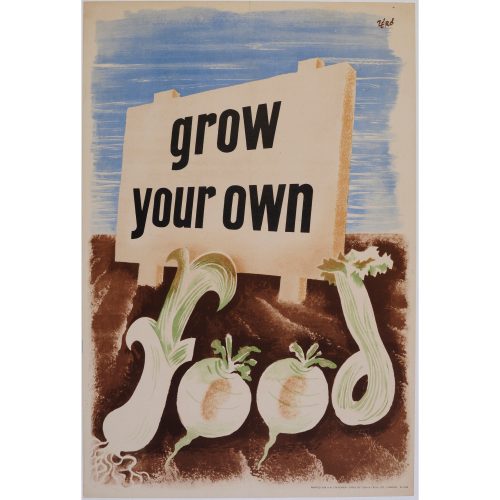
'Zero' Hans Schleger (1898-1976) Grow Your Own Food
Lithographic poster c. 1940 Printed by Fosh & Kosh Limited for HMSO 76x51cm A copy of this poster is in the collection of the Imperial War Museum. Click here for biographical details and other posters by Hans 'Zero' Schleger. Provenance: the estate of the artist. If you are interested email info@manningfineart.co.uk or call us on 07929 749056. -
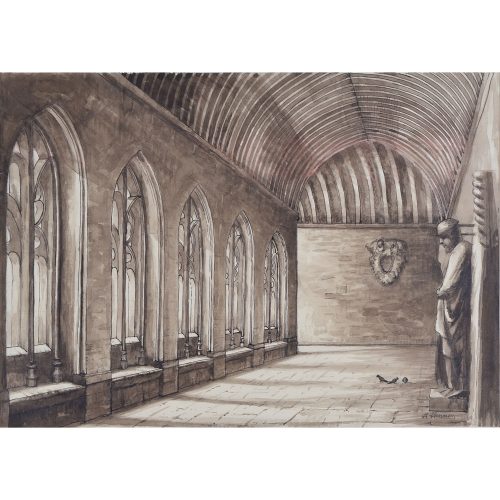
Hubert Hennes (b.1907)
New College, Oxford
Watercolour 30x42cm If you are interested email info@manningfineart.co.uk or call us on 07929 749056. -
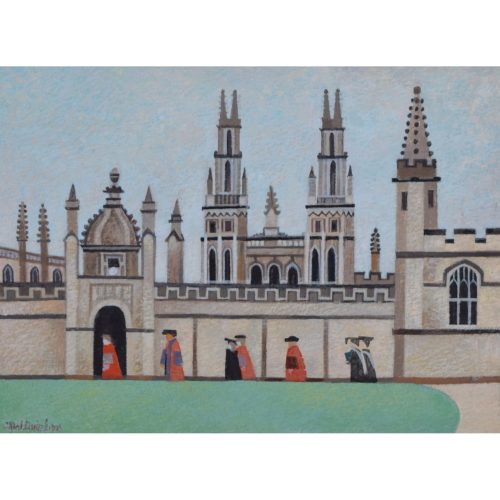 Alfred Daniels RBA RWS (1924-2015) All Souls, Oxford Signed and dated 1998. Watercolour 18 x 24 cm (7 x 9.5 in.) Click here for biographical details and other works by the artist. If you are interested email info@manningfineart.co.uk or call us on 07929 749056.
 -
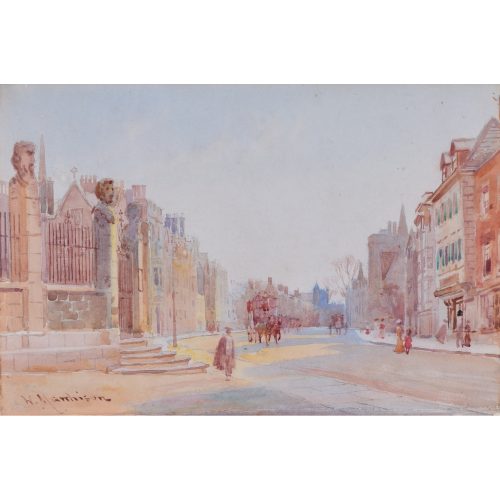
William Matthison (1853-1926)
The Sheldonian Theatre, Oxford
Watercolour 18 x 28 cm Matthison was born near Birmingham and attended King Edward's School in the city. He learned drawing at the Birmingham Central School of Art and then became a pupil of Birmingham artist Edward Watson. He became a professional artist in 1875 and moved to Oxfordshire a few years after; this was where he had the opportunity to produce many of the Oxford views for which he is known today. In 1902 he moved to Park Town in Oxford and was commissioned by Robert Peel to paint more than seventy views of the University of Oxford, which were subsequently made into postcards. Priced at seven for a shilling, they were only available from E Cross of Pembroke Street (a long-since closed business). Raphael Tuck & Sons also commissioned him to produce postcard scenes of Cambridge. Matthison's views of Oxford were later printed in Fifty Watercolour Drawings of Oxford, published in 1912 by Alden & Co. Click here for other works by the artist. If you are interested email info@manningfineart.co.uk or call us on 07929 749056. -
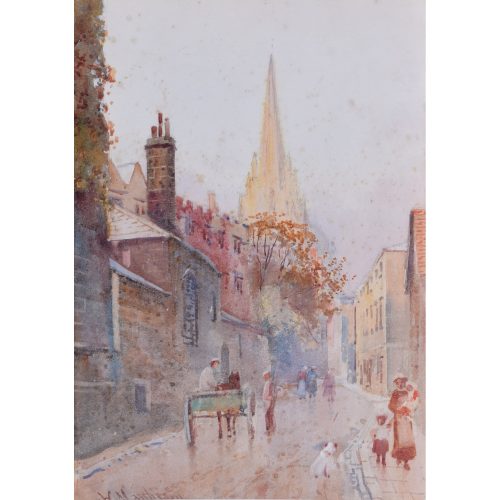
William Matthison (1853-1926)
Oriel Street, Oxford and St. Mary's Church
Watercolour 26 x 17 cm Matthison was born near Birmingham and attended King Edward’s School in the city. He learned drawing at the Birmingham Central School of Art and then became a pupil of Birmingham artist Edward Watson. He became a professional artist in 1875 and moved to Oxfordshire a few years after; this was where he had the opportunity to produce many of the Oxford views for which he is known today. In 1902 he moved to Park Town in Oxford and was commissioned by Robert Peel to paint more than seventy views of the University of Oxford, which were subsequently made into postcards. Priced at seven for a shilling, they were only available from E Cross of Pembroke Street (a long-since closed business). Raphael Tuck & Sons also commissioned him to produce postcard scenes of Cambridge. Matthison’s views of Oxford were later printed in Fifty Watercolour Drawings of Oxford, published in 1912 by Alden & Co. Click here for other works by the artist. If you are interested, please email info@manningfineart.co.uk or call us on 07929 749056. -
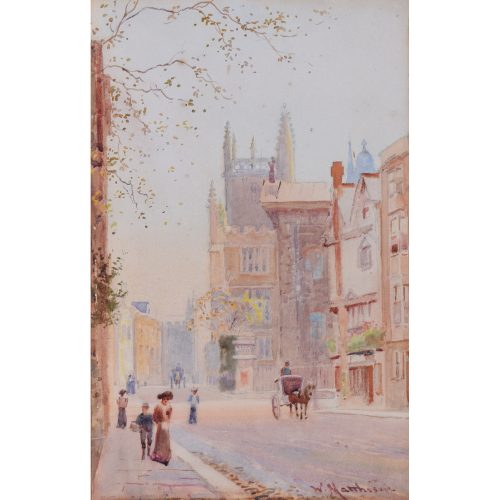
William Matthison (1853-1926)
Exeter and Balliol from the Sheldonian Theatre, Oxford
Watercolour 26 x 17 cm Matthison was born near Birmingham and attended King Edward’s School in the city. He learned drawing at the Birmingham Central School of Art and then became a pupil of Birmingham artist Edward Watson. He became a professional artist in 1875 and moved to Oxfordshire a few years after; this was where he had the opportunity to produce many of the Oxford views for which he is known today. In 1902 he moved to Park Town in Oxford and was commissioned by Robert Peel to paint more than seventy views of the University of Oxford, which were subsequently made into postcards. Priced at seven for a shilling, they were only available from E Cross of Pembroke Street (a long-since closed business). Raphael Tuck & Sons also commissioned him to produce postcard scenes of Cambridge. Matthison’s views of Oxford were later printed in Fifty Watercolour Drawings of Oxford, published in 1912 by Alden & Co. Click here for other works by the artist. If you are interested, please email info@manningfineart.co.uk or call us on 07929 749056. -
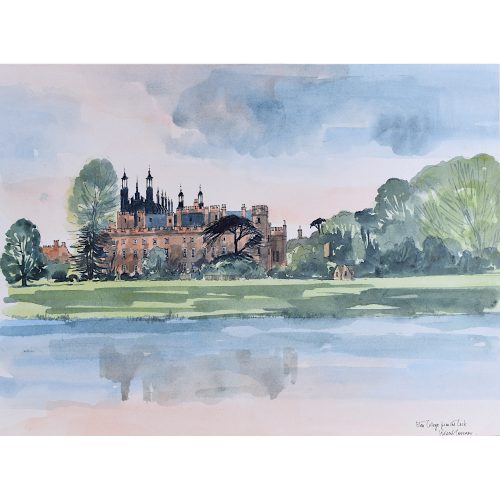
Robert Tavener (1920-2004)
Eton College from the Lock
Watercolour 36x48cm Signed and inscribed Please click here for biographical details and other works by the artist. If you are interested email info@manningfineart.co.uk or call us on 07929 749056. -
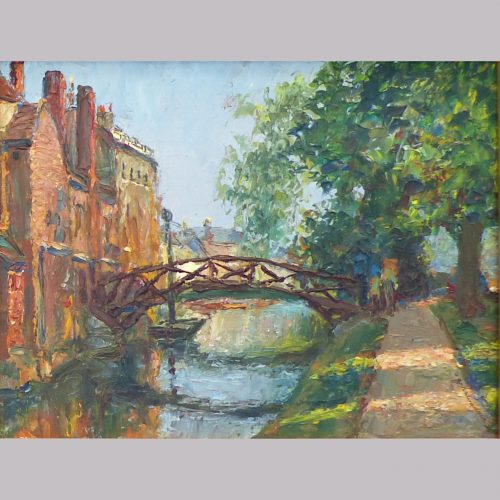
Piero Sansalvadore (1892-1955)
Queens’ College Cambridge
Signed Sansalvadore. Titled to verso. Oil on wood panel 21.5 x 28cm (8.5 x 11 in) £1850 Provenance: Stacy-Marks Gallery, Eastbourne, c. late 1940s An Italian who arrived in London around 1930, the Museum of London and City of London have a series of pictures Sansalvadore painted of war-damaged London. Click here for other works by the artist. If you are interested email info@manningfineart.co.uk or call us on 07929 749056. -
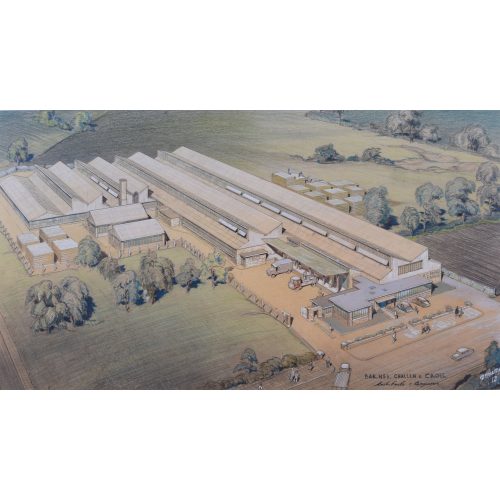
John Dean Monroe Harvey (1895 – 1978) Architectural Drawing: Design for a factory for VC Bond
for Barnes Challen & Cross, Architects and Engineers Mixed Media 38x68cm Even the factory commissioned by the manufacturers of a furniture company deserved the attention of a drawing by the famous JDM Harvey in the Board Room. Unusually, perhaps, for Harvey, here he is drawing fields, carefully catching the texture of a ploughed field with the confident diagonal strokes of his hand. The factory is busily occupied, men are unstacking great piles of timber at the back of the building. A further lorry-load of raw materials enters through the gate and the Directors' fine saloon cars are parked towards the front. Even in this obviously rural environment Harvey draws his usual pedestrians. All these aspects give life to what in the hands of a lesser man would probably be a rather clinical drawing - instead of a picture of which to be proud. Probably unrivalled as an architectural perspectivist working after the second World War, Harvey trained as an architect but after 1944 worked almost solely on drawing architectural perspectives for other architects. “The architectural draughtsman who is equally competent at drawing such incidentals [as landscape and figures] is as rare as the landscape or figure painter who is equally competent at architecture. Harvey was one of those rare men. He would draw a building with a slightly freer hand than an architect would, and his landscape in a slightly more architectural manner than that of a painter.” Perspective in Perspective, Lawrence Wright (Routledge 1983) p234. Harvey was born in Newfoundland, where his father was a railway engineer, and came to England aged 17, studying at St Paul’s School, London and at the School of Architecture, University College London 1914-1918, being awarded the Donaldson medal. In 1920 he went into practice on his own, designing several interiors with J A Bowden. Amongst his works were the reconstruction and interior decoration of 4 Cleveland Place, London (1936-37), and a house – including all furnishings – in Herne Hill for Dr M I Elliot (1938). After 1944 he primarily worked as a perspective artist and illustrator, a role to which he was particularly well suited. During the war he was a member of St Paul’s Watch, a group of over one hundred architects and surveyors and artists who kept watch over St Paul’s Cathedral during the blitz, extinguishing fires and helping St Paul’s to survive the war virtually unscathed. The Watch was described as the ‘Best dining club in London’ on account of its influential members. He retired to Italy, living on the shore of Lake Como, and enjoying the local red wine. If you are interested email info@manningfineart.co.uk or call us on 07929 749056. Condition: Excellent. In original frame (which has been repolished and with new mount). Glass will be removed for overseas shipping, or subject to a significant shipping surcharge. -
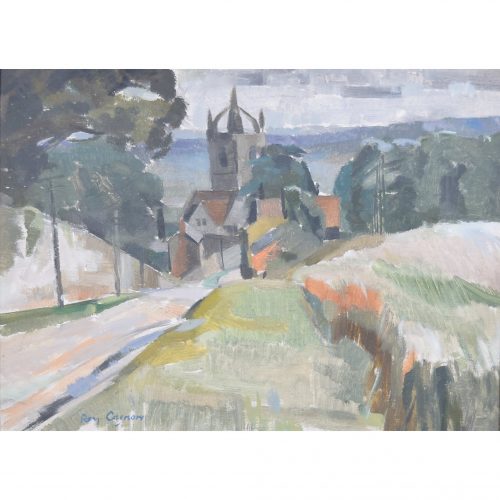
Roy Carnon (1911-2002)
All Hallows Church, Tillington, near Petworth
Oil on board 31 x 42cm Signed; in the artist's original frame Condition: excellent. Click to view biographical details and other works by the artist. Carnon attended Chiswick Art School becoming an illustrator. In 1965 he was responsible for visualising spacecraft for "2001: A Space Odyssey", being designer of the iconic 'wheel' spacestation. These drawings are now in the Kubrick archives at UAL. -
Out of stock
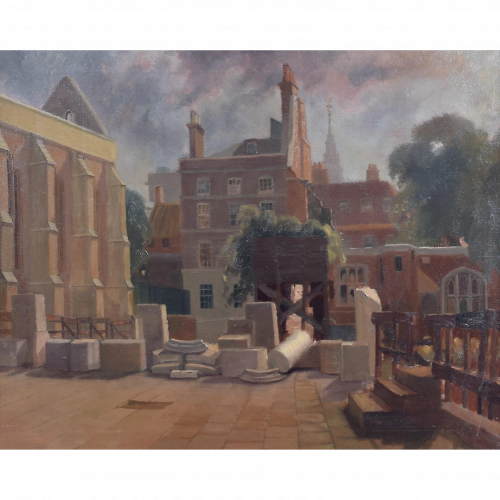
Clifford Charman (1910-1993)
Temple Church, London, after Bombing
Oil on canvas 39 x 49 cm Provenance: The Artist's Studio Sale, Bonhams, London (18 March 1993); Peter Constant Fine Art. Born in Bexleyheath in Kent, Charman studied at Regent Street Polytechnic just before, and just after, the Second World War. He exhibited widely, including at the Royal Academy, the RBA, Chelsea Arts Society, and abroad. Elected in 1954 to the ROI, he also won the James Bourlet Prize in 1982. His work is in collections including that of the Guildhall. If you'd like to know more, please email info@manningfineart.co.uk or call us on 07929 749056. Condition: Generally very good. -
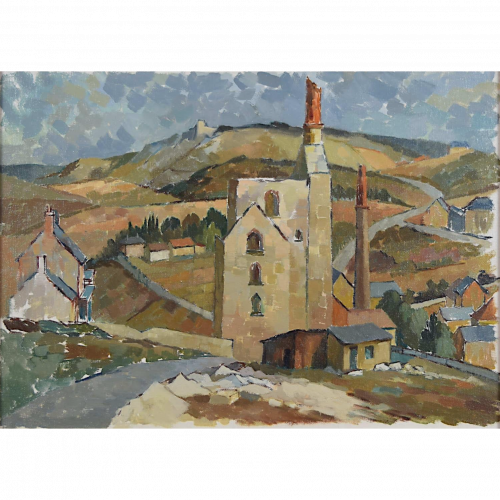
Clifford Charman (1910-1993)
Landscape with Farmhouses
Oil on canvas 38 x 55 cm Provenance: the artist's studio sale, Bonhams, London 1993. Born in Bexleyheath in Kent, Charman studied at Regent Street Polytechnic just before, and just after, the Second World War. He exhibited widely, including at the Royal Academy, the RBA, Chelsea Arts Society, and abroad. Elected in 1954 to the ROI, he also won the James Bourlet Prize in 1982. His work is in collections including that of the Guildhall. If you'd like to know more, please email info@manningfineart.co.uk or call us on 07929 749056. Condition: Generally very good. -
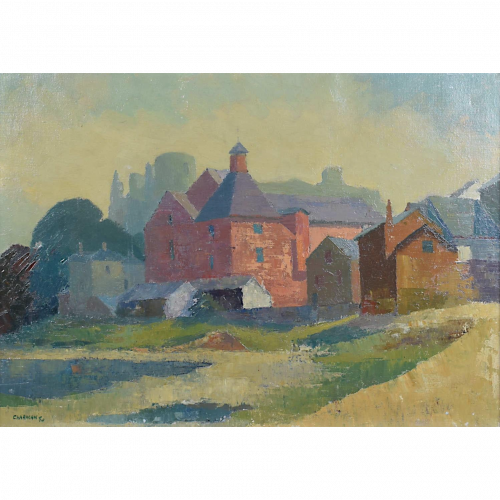
Clifford Charman (1910-1993)
Brewery and Ruined Castle, Cockermouth
Oil on canvas 38 x 55 cm Signed and dated lower left. Provenance: The Artist's Studio Sale, Bonhams, London (18 March 1993); Peter Constant Fine Art. Born in Bexleyheath in Kent, Charman studied at Regent Street Polytechnic just before, and just after, the Second World War. He exhibited widely, including at the Royal Academy, the RBA, Chelsea Arts Society, and abroad. Elected in 1954 to the ROI, he also won the James Bourlet Prize in 1982. His work is in collections including that of the Guildhall. If you'd like to know more, please email info@manningfineart.co.uk or call us on 07929 749056. Condition: Generally very good. Signed lower left. -
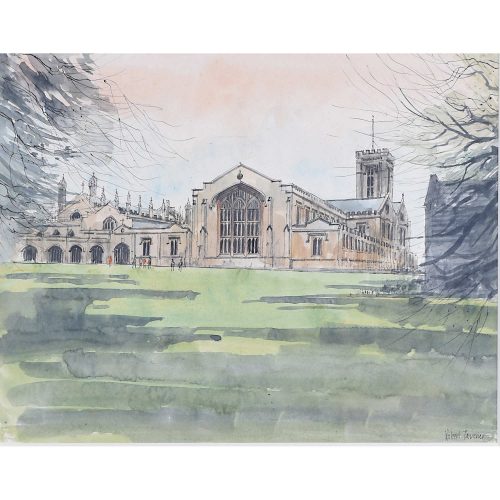
Robert Tavener (1920 - 2004)
Cheltenham College
Watercolour and pen 28 x 35 cm Signed lower right. What is particularly interesting about this picture is the contrast between the rugged watercolour wash of the lawn and the fine pen expression of the college's architecture. Tavener painted several views of the city of Cheltenham and its architectural landmarks; Cheltenham College is a public school just outside the city, and Tavener expertly elicits its mid-nineteenth century architectural style here. -
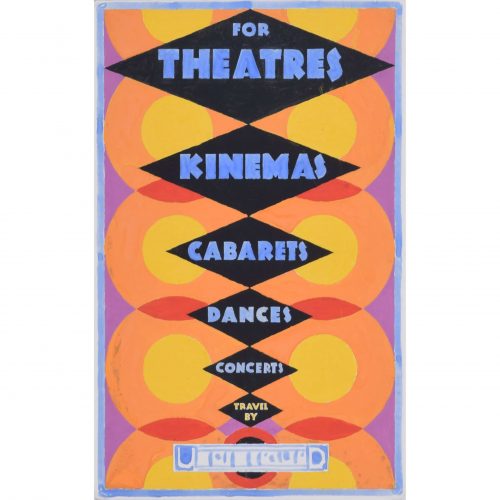
Gerald Mac Spink (flourished 1920 - 1940)
For Theatres, Kinemas, Cabarets, Dances, Concerts, Travel by Underground (c. 1930)
Gouache 30 x 19 cm Original design for a London Transport poster. Framed. A fantastic gouache design by Spink for a London Underground poster. The artist's striking Art Deco design and heady use of colour advertises the glamour of travelling by Tube to various evening entertainments around London. Spink was a skilled artist and designer who produced a series of posters in the inter-war period for companies including the London Underground, Southern Railways, LNER, Hawker Engineering, and British Steel. He won a prize in 1933 from the Imperial Institute for his poster artwork. He also worked as an aeronautical engineer in Kingston-on-Thames for Hawker Engineering; his greatest achievement was the creation of the 'Squanderbug', a 500cc racing car which he built in 1947, and which races even to this day. Provenance: the artist's estate. Condition: good; a few small scuffs to gouache, as visible in photographs. Handsomely framed. If you’d like to know more, please email info@manningfineart.co.uk or call us on 07929 749056. -
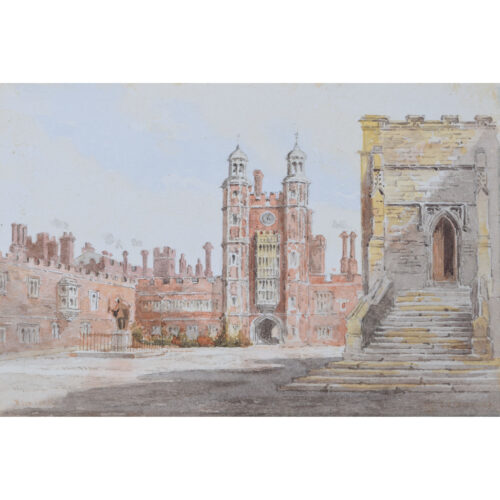
FP Barraud (1856 - 1924)
Eton College
Watercolour 12 x 18 cm Inscribed faintly lower left 'Eton Coll.' and signed lower right. Condition: generally very good; mounted to board. If you are interested, please email info@manningfineart.co.uk or call us on 07929 749056. Click here for other views of Eton College. -

Sir Albert Richardson PRA View of Durham Cathedral from Palace Green
Watercolour with pen and gouache 21 x 25 cm A unique multimedia composition depicting the magnificent Durham Cathedral from Palace Green. Richardson's use of gouache produces splashes of colour, introducing the luscious greenery of this World Heritage Site into this work, bringing the composition to life. Sir Albert Richardson (1880-1964) was a leading architect, teacher and architectural historian in the 20th century. In Durham, he is best known for his involvement in the designs of Durham University's buildings and for his work on the Durham Castle and Cathedral area. Richardson's contributions were part of a broader movement of restoring and enhancing historical buildings, while also integrating new designs that respected the local architectural style. He was notably part of a wider team of architects and restorers who worked to maintain the cathedral's status as a UNESCO World Heritage site. Condition: Generally very good, painted on blue paper, slight age toning. -

Sir Albert Richardson PRA Panoramic view across Durham
Monochrome Wash 22 x 33 cm A unique monochrome wash composition depicting a panoramic view across the Durham skyline. Richardson painted this view of Durham Cathedral, potentially from where Milburngate Bridge now stands. Rolling hills and church spires populate the foreground, while the magnificent cathedral looms over the rest of the city. Sir Albert Richardson (1880-1964) was a leading architect, teacher and architectural historian in the 20th century. In Durham, he is best known for his involvement in the designs of Durham University's buildings and for his work on the Durham Castle and Cathedral area. Richardson's contributions were part of a broader movement of restoring and enhancing historical buildings, while also integrating new designs that respected the local architectural style. He was notably part of a wider team of architects and restorers who worked to maintain the cathedral's status as a UNESCO World Heritage site. Condition: Generally very good, some age toning and a little faint spotting to paper, painted on rough Whatman. -

Vivan Bewick Anti-aircraft battery in action
Gouache 28 x 20 cm Signed and dated in bottom left hand corner. This striking gouache depicts an anti-aircraft battery in action: shots are being fired, smoke is billowing, the night sky is illuminated by the flashes of artillery. Through his skilful creation of silhouettes, Bewick fosters an undeniable feeling of suspense, as is characteristic of his wartime work. Vivian Bewick (1912–1999) was a British artist and educator, notable for his contributions to mid-20th-century art and his role as a tutor at the Buckhurst Hill Community Association (BHCA). He was also a descendant of Thomas Bewick, the renowned 19th-century engraver celebrated for his depictions of birds and animals. While fulfilling his military duties in the Royal Artillery during the Second World War, Bewick maintained his artistic pursuits. He contributed to the wall-newspaper "Swillbin," a tradition from the First World War, and designed army Christmas cards. Additionally, he illustrated technical manuals and conducted art classes and exhibitions, with critiques by James Bateman R.A. After the war, Bewick continued his artistic education and career, spending five years at St. Martin’s School of Art and London University. He also engaged in part-time teaching of adults in art clubs, societies, and colleges and exhibited at the Royal Academy, the Paris Salon, the Royal Institute of Painters in Watercolours, and the Royal Society of British Artists. Condition: Generally very good. If you are interested, please email info@manningfineart.co.uk or call us on 07929 749056. -

Vivian Bewick Allegory of St Michael slaying the Dragon
Gouache 22 x 13 cm Signed to reverse along with the Golden Hinde, probably for publication in Swillbin or similar. This gouache depicts a striking allegory of St Michael slaying the dragon. In this configuration a valiant soldier stands in for St Michael as he stakes a spear through the heart of Hitler, and therefore fascism. Bold lines, colour and strong forms tell a story, bringing this work to life and distinguishing it from Bewick's other pieces. Vivian Bewick (1912–1999) was a British artist and educator, notable for his contributions to mid-20th-century art and his role as a tutor at the Buckhurst Hill Community Association (BHCA). He was also a descendant of Thomas Bewick, the renowned 19th-century engraver celebrated for his depictions of birds and animals. While fulfilling his military duties in the Royal Artillery during the Second World War, Bewick maintained his artistic pursuits. He contributed to the wall-newspaper "Swillbin," a tradition from the First World War, and designed army Christmas cards. Additionally, he illustrated technical manuals and conducted art classes and exhibitions, with critiques by James Bateman R.A. After the war, Bewick continued his artistic education and career, spending five years at St. Martin’s School of Art and London University. He also engaged in part-time teaching of adults in art clubs, societies, and colleges and exhibited at the Royal Academy, the Paris Salon, the Royal Institute of Painters in Watercolours, and the Royal Society of British Artists. If you are interested, please email info@manningfineart.co.uk or call us on 07929 749056. -

Vivan Bewick British light tanks
Gouache 17 x 25 cm This striking gouache depicts two British light tanks in formation. Bewick captures the details of these vehicles seemingly with ease, using contrasts between lighter and darker colours to create a sense of depth. In this unique composition, he also exploits gouache as a medium, exploiting its opaqueness as he depicts the tanks whipping up the sand beneath them. Vivian Bewick (1912–1999) was a British artist and educator, notable for his contributions to mid-20th-century art and his role as a tutor at the Buckhurst Hill Community Association (BHCA). He was also a descendant of Thomas Bewick, the renowned 19th-century engraver celebrated for his depictions of birds and animals. While fulfilling his military duties in the Royal Artillery during the Second World War, Bewick maintained his artistic pursuits. He contributed to the wall-newspaper "Swillbin," a tradition from the First World War, and designed army Christmas cards. Additionally, he illustrated technical manuals and conducted art classes and exhibitions, with critiques by James Bateman R.A. After the war, Bewick continued his artistic education and career, spending five years at St. Martin’s School of Art and London University. He also engaged in part-time teaching of adults in art clubs, societies, and colleges and exhibited at the Royal Academy, the Paris Salon, the Royal Institute of Painters in Watercolours, and the Royal Society of British Artists. Condition: Generally very good, slight age toning, mounted to board. If you are interested, please email info@manningfineart.co.uk or call us on 07929 749056. -
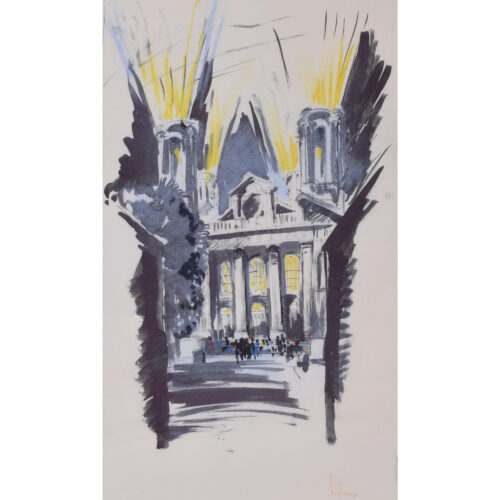
Louis Osman FRIBA (1914 - 1996)
Proposal for St John's Smith Square (1953)
Watercolour 62 x 37 cm Signed in red crayon lower right. Louis Osman's proposal for the post-war, post-bombing redevelopment of St John's church on Smith Square. Osman had envisioned an interior with a ceiling painted by Picasso; sadly, this project was never executed. The church was bombed in 1941 and gutted by fire; subsequently, the church was a ruin open to the sky for over 20 years. It was saved by Lady Parker of Waddington, who formed the Friends of St John's in 1962 to raise money and restore the church to its former glory - a reconstruction in the style of the church's original architect, Thomas Archer. Osman was as much an artist as an architect. This is a piece of architectural history as well as a beautiful Osman design. Osman was awarded a First Class degree and the Donaldson Medal of the RIBA (for the best result in his year group) by the Bartlett where he studied, and then went on to the Slade School of Art. He subsequently trained with Sir Albert Richardson - we also have several Richardson works in our collection. After the war, Osman busied himself as an architect. His work included contributions to Westminster Abbey, and Lincoln, Exeter, Ely, and Lichfield Cathedrals, Staunton Harold Church in Ashby de la Zouch for the National Trust, and of course his folly: the Grade I listed Elizabethan manor house, Canons Ashby in Northamptonshire, now a National Trust property. At Canons Ashby he established a workshop and had a team of silversmiths and goldsmiths working for him. In 1976 he made the gold enamelled coffin that holds the copy of the Magna Carta on view in the United States Capitol, Washington, DC. Condition: generally very good. If you’d like to know more, please email info@manningfineart.co.uk or call us on 07929 749056. -
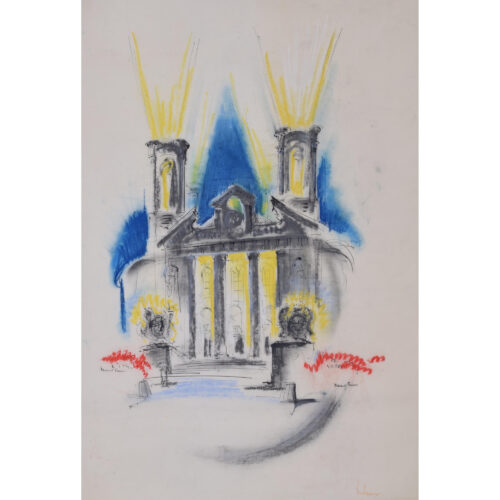
Louis Osman FRIBA (1914 - 1996)
Proposal for St John's Smith Square (1953)
Watercolour 70 x 52 cm Signed in red crayon lower right. Louis Osman's proposal for the post-war, post-bombing redevelopment of St John's church on Smith Square. Osman had envisioned an interior with a ceiling painted by Picasso; sadly, this project was never executed. The church was bombed in 1941 and gutted by fire; subsequently, the church was a ruin open to the sky for over 20 years. It was saved by Lady Parker of Waddington, who formed the Friends of St John's in 1962 to raise money and restore the church to its former glory - a reconstruction in the style of the church's original architect, Thomas Archer. Osman was as much an artist as an architect. This is a piece of architectural history as well as a beautiful Osman design. Osman was awarded a First Class degree and the Donaldson Medal of the RIBA (for the best result in his year group) by the Bartlett where he studied, and then went on to the Slade School of Art. He subsequently trained with Sir Albert Richardson - we also have several Richardson works in our collection. After the war, Osman busied himself as an architect. His work included contributions to Westminster Abbey, and Lincoln, Exeter, Ely, and Lichfield Cathedrals, Staunton Harold Church in Ashby de la Zouch for the National Trust, and of course his folly: the Grade I listed Elizabethan manor house, Canons Ashby in Northamptonshire, now a National Trust property. At Canons Ashby he established a workshop and had a team of silversmiths and goldsmiths working for him. In 1976 he made the gold enamelled coffin that holds the copy of the Magna Carta on view in the United States Capitol, Washington, DC. Condition: generally very good. If you’d like to know more, please email info@manningfineart.co.uk or call us on 07929 749056. -
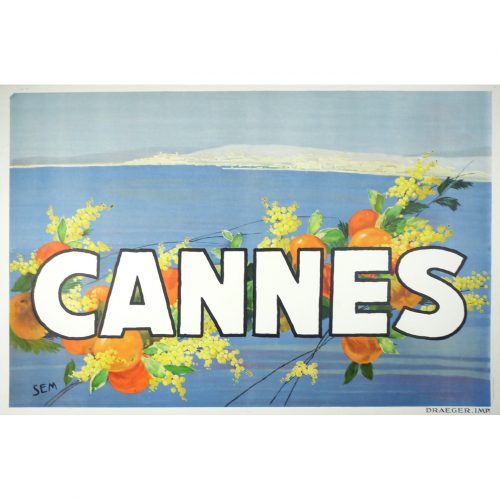
SEM (Georges Goursat) (1863-1934)
Cannes
Lithographic poster in colours, printed by Draeger, Paris c. 1930. 121x81cm (48×32 inches); backed on linen (condition A-) If you are interested email info@manningfineart.co.uk or call us on 07929 749056. -
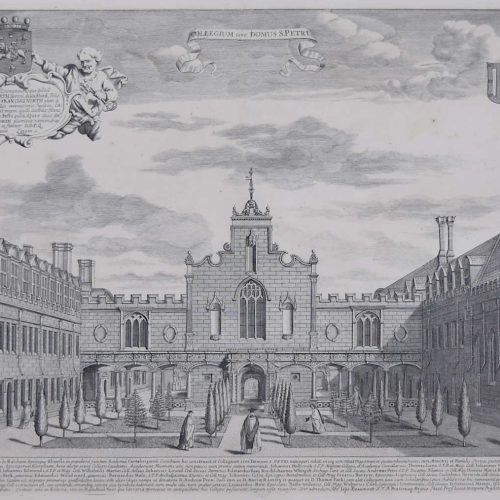
David Loggan (1634-1692)
Peterhouse, Cambridge
Engraving, 1690 30x40cm, framed Loggan was born to English and Scottish parents, and was baptised in Danzig in 1634. After studying engraving in Danzig with Willem Hondius (1598-1652 or 1658), he moved to London in the late 1650s, going on to produce the engraved title-page for the folio 1662 Book of Common Prayer. He married in 1663 and moved to Nuffield in Oxfordshire in 1665. Loggan was appointed Public Sculptor to the nearby University of Oxford in the late 1660s, having been commissioned to produce bird’s-eye views of all the Oxford colleges. He lived in Holywell Street as he did this. The 'Oxonia Illustrata' was published in 1675, with the help of Robert White (1645-1704). Following its completion, Loggan began work on his equivalent work for Cambridge; the 'Cantabrigia Illustrata' was finally published in 1690, when he was made engraver to Cambridge University. The 'Oxonia Illustrata' also includes an engraving of Winchester College (Winchester and New College share William of Wykeham as their founder) whilst the 'Cantabrigia Illustrata' includes one of Eton College (which shares its founder, Henry VIII, with King’s College). Bird’s-eye views from this era required a particular talent as an architectural perspectivist; it was not until 1783 that it became possible for artists to ascend via hot air balloons and view the scenes they were depicting from above. Loggan thus had to rely on his imagination in conceiving the views. Loggan’s views constitute the first accurate depictions of the two Universities, in many ways unchanged today. Whilst the Oxford engravings were produced in reasonable numbers and ran to a second edition by Henry Overton (on thicker paper and with a plate number in Roman numerals in the bottom right-hand corner), those of Cambridge were printed in much smaller numbers. The Dutchman Pieter van der Aa published some miniature versions of the engravings for James Beverell’s guidebook to the UK, 'Les Delices de la Grande Bretagne' (c. 1708). The contemporary artist Andrew Ingamells (b.1956) has produced a highly-acclaimed series of etchings which bring Loggan’s original vision up to date. If you’d like to know more, please email info@manningfineart.co.uk or call us on 07929 749056. Condition: Generally excellent. -
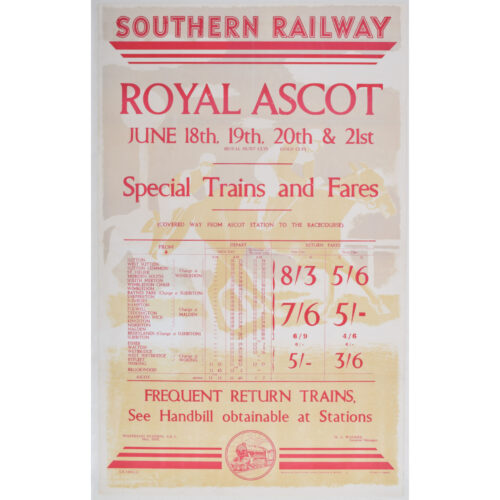
Graham Sutherland (1903 - 1980)
Royal Ascot (1935)
Original vintage poster 101 x 63 cm A text poster advertising Southern Railway as a means of travelling to and from Royal Ascot. Graham Sutherland OM was an English artist known for his romantic, abstract landscapes and portraits of public figures, including Churchill and the Queen Mother. Sutherland spent the 1920s mostly making landscape prints, but, following the collapse of the print market in the early 1930s branched out into watercolours. He also undertook a few commercial commissions for posters, working for London Transport, Shell and others. He served as an official war artist in the Second World War, painting industrial scenes on the British home front. After the war he worked in oils and explored figurative painting. Condition: generally very good; backed to linen. If you are interested, please email info@manningfineart.co.uk or call us on 07929 749056. Click here for other original vintage London Transport posters. -
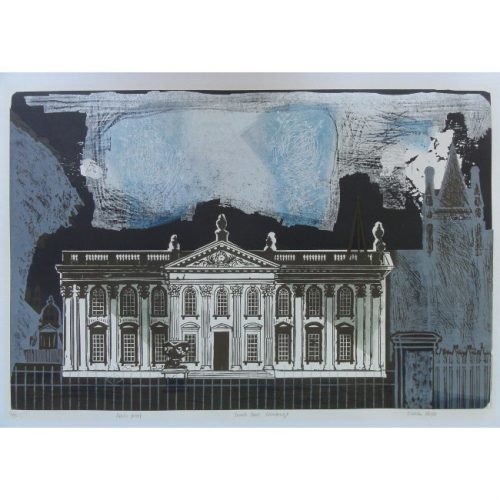
Walter Hoyle (1922-2000)
Senate House, Cambridge (Cambridge Series 1956-6)
Block print 72/75 Artist’s proof, published by Editions Alecto, London, 1966 46x89cm Click here for biographical details and other works by the artist. If you are interested email info@manningfineart.co.uk or call us on 07929 749056. -
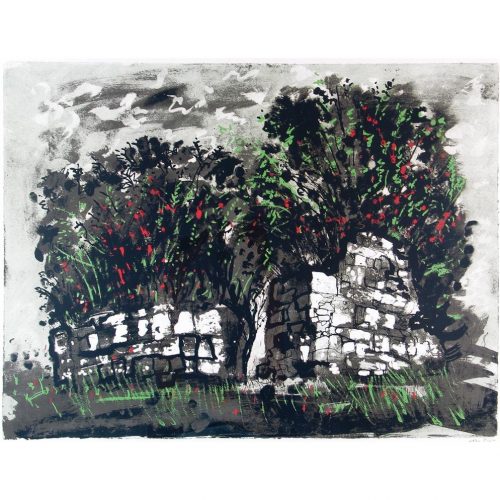
John Piper
Skeabost, Skye 1975
Screenprint by Curwen Studio Printed on Arches by Kelpra Studio and published by Marlborough Fine Art 68x89cm Signed in crayon; an un-numbered proof print aside from the edition of 70. Levinson 250 From the Series 'Five Scottish Chapels (in ruins)' If you are interested email info@manningfineart.co.uk or call us on 07929 749056.