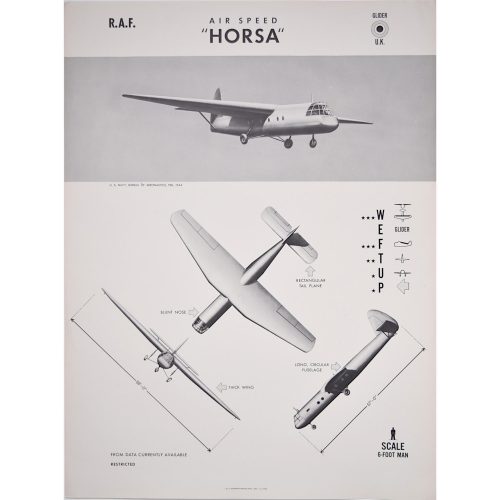
-
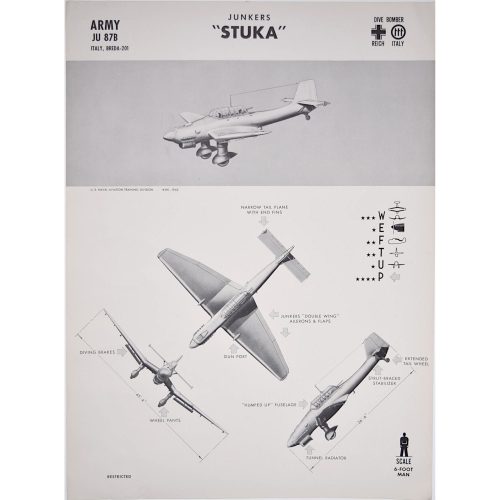
US Naval Aviation Training Division
Junkers Ju87 Stuka Dive Bomber - World War II aeroplane
Original aeroplane identification poster, 1943 63x47cm A particularly unusual style of aeroplane identification poster, owing to the very arty images. Most such posters rely on very plain silhouettes, this series - and we have several in this series (click here) - have a much more arty approach to the task with shading and an interesting angle view. Making its combat debut in 1937 with the Condor Legion during the Spanish Civil War it had a very distinctive silhouette as may be seen here. Essential to the rapid conquest of Norway, the Netherlands, Belgium and France in 1940 the Stuka was very effective against ground targets but vulnerable to fighter aircraft. It remained in service until the end of the War. If you are interested email info@manningfineart.co.uk or call us on 07929 749056. -
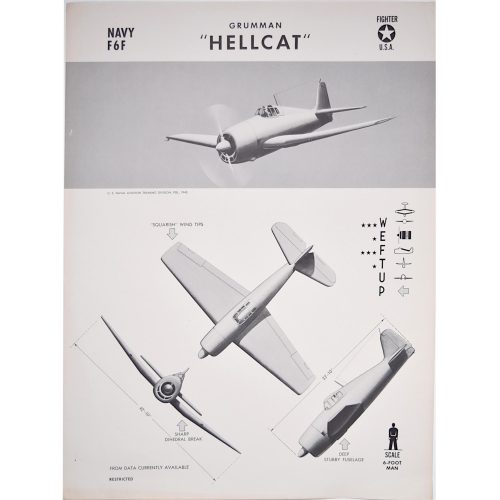
US Naval Aviation Training Division
Grumann F6F Hellcat World War 2 US airplane
Original aeroplane identification poster, 1943 63 x 47 cm The Grumman Hellcat was developed for the US Navy for the latter half of World War 2, becoming the dominant carrier-based aircraft being able to outperform the A6M Mitsubishi Zero. 12,275 were built in just over two years, being credited with 5,223 enemy kills - more than any other Allied naval aircraft. If you are interested, please email info@manningfineart.co.uk or call us on 07929 749056. -
US Naval Aviation Training Division
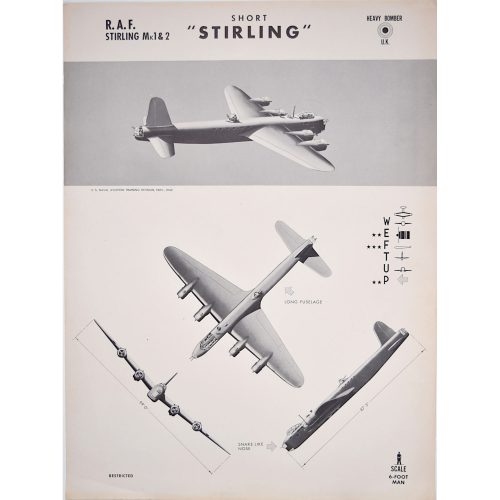
Short Stirling World War 2 US airplane
Aeroplane identification poster, 1943 63 x 47 cm A particularly unusual style of aeroplane identification poster, owing to the very arty images. Most such posters rely on very plain silhouettes, this series - and we have several in this series (click here) - have a much more arty approach to the task with shading and an interesting angle view. Designed by Short Brothers, this was the RAF's first four-engined bomber entering service in 1941. Pilots liked its handling characteristics but the altitude ceiling was a matter of criticism and it was relegated to second-line duties in 1943 when the Halifax and Lancaster were available in sufficient numbers. It was subsequently used for mining harbours, as a glider tug and a supply aircraft. If you are interested, please email info@manningfineart.co.uk or call us on 07929 749056. -
US Naval Aviation Training Division
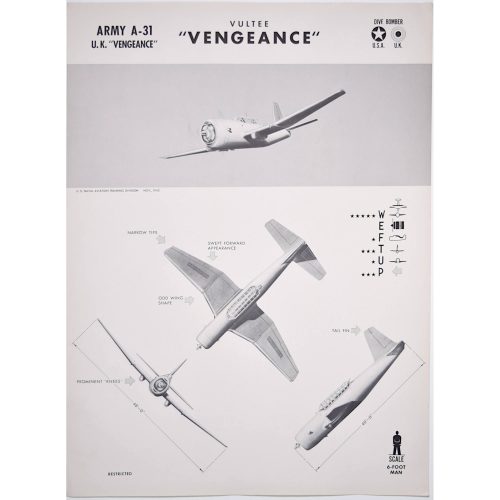
1943 Vultee Vengeance World War 2 US airplane
Aeroplane identification poster, 1943 63 x 47 cm A particularly unusual style of aeroplane identification poster, owing to the very arty images. Most such posters rely on very plain silhouettes, this series - and we have several in this series (click here) - have a much more arty approach to the task with shading and an interesting angle view. Designed in 1940 as a single-engined dive bomber for the French Armée de l'Air, with deliveries scheduled for October 1940. With the fall of France in June 1940 the order was cancelled, but the British Royal Air Force ordered 200 of these dive bombers having been impressed by the Stuka. It was a reliable aircraft, stable in flight and in a dive. It was much used in Burma, this forgotten theatre of the war being regarded as a repository for otherwise unpopular and unwanted equipment, but where it proved very effective in bombing Japanese positions. If you are interested, please email info@manningfineart.co.uk or call us on 07929 749056. -
US Naval Aviation Training Division
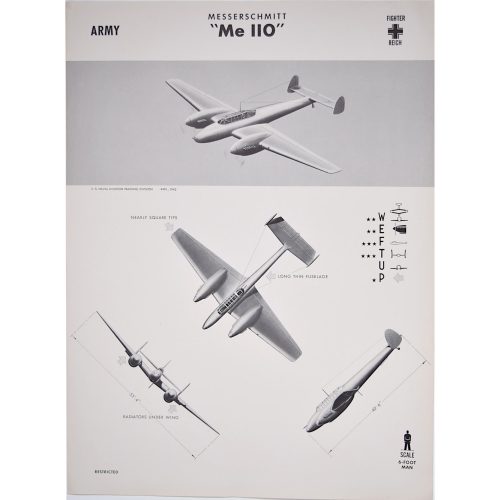
Messerschmitt Bf 110 - World War II aeroplane
Aeroplane identification poster, 1943 63x47cm A particularly unusual style of aeroplane identification poster, owing to the very arty images. Most such posters rely on very plain silhouettes, this series - and we have several in this series (click here) - have a much more arty approach to the task with shading and an interesting angle view. A two-engined heavy fighter and fighter-bomber developed in German in the 1930s which saw service until the end of the war in 1945. It was a formidable radar-equipped night fighter with the top night-fighter ace Major Heinz-Wolfgang Schnaufer claiming 121 victories from 164 sorties. If you are interested email info@manningfineart.co.uk or call us on 07929 749056. -
US Naval Aviation Training Division
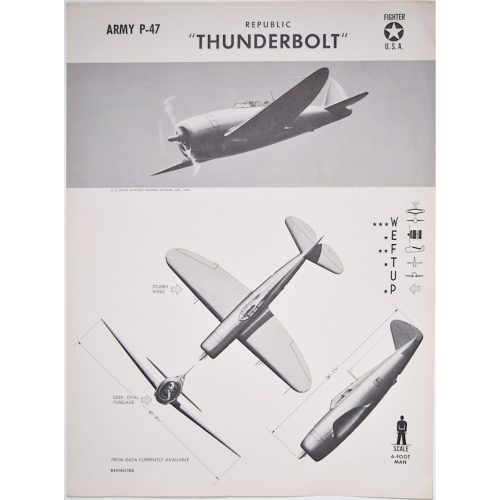
Republic P47 Thunderbolt World War 2 US airplane
Aeroplane identification poster, 1943 63 x 47 cm A particularly unusual style of aeroplane identification poster, owing to the very arty images. Most such posters rely on very plain silhouettes, this series - and we have several in this series (click here) - have a much more arty approach to the task with shading and an interesting angle view. The Thunderbolt was produced between 1941 and 1945 as a fighter-bomber ground-attack airplane. POwered by a Pratt & Whitney R-2800 Double-Wasp engine it was successful both in European and Pacific theatres as one of the main USAAF fighters of the Second World War. Many remain airworthy, it being a popular 'warbird'. If you are interested, please email info@manningfineart.co.uk or call us on 07929 749056. -
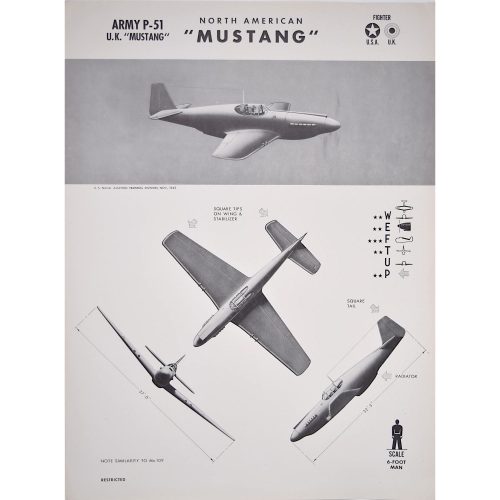
US Naval Aviation Training Division
North American Mustang P-51 World War 2 US airplane
Aeroplane identification poster, 1943 63x47cm A particularly unusual style of aeroplane identification poster, owing to the very arty images. Most such posters rely on very plain silhouettes, this series - and we have several in this series (click here) - have a much more arty approach to the task with shading and an interesting angle view. The Mustang is a long-range single-seat fighter/fighter-bomber that saw service during both the Second World War and Korean War. It was designed in 1940 by North American Aviation when they were commissioned to build Curtiss P-40 fighters under licence for the British Royal Air Force. Rather than build an old design, they designed this new aeroplane; the prototype was rolled out 102 days after the contract was signed. Powered by a Rolls-Royce Merlin engine over 15,000 were built with their most important role being escorting bombers over Germany. During World War II Mustang pilots accounted for a claimed 4,950 enemy aircraft. Today many survive and are a very popular 'warbird'. If you are interested email info@manningfineart.co.uk or call us on 07929 749056. -
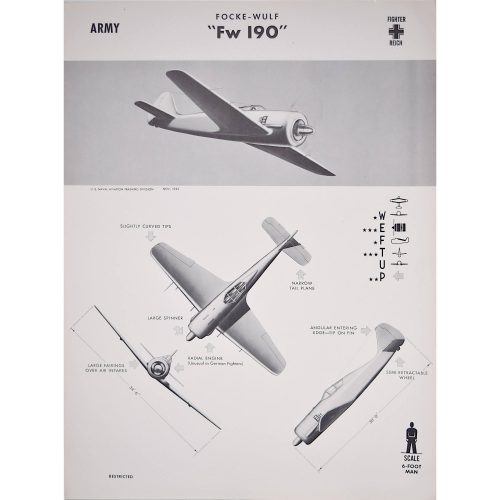
US Naval Aviation Training Division
Luftwaffe Focke-Wulf Fw190 - World War II aeroplane
Aeroplane identification poster, 1943 63 x 47cm A particularly unusual style of aeroplane identification poster, owing to the very arty images. Most such posters rely on very plain silhouettes, this series - and we have several in this series (click here) - have a much more arty approach to the task with shading and an interesting angle view. The Würger (in English, Shrike) is a single-seat single-engined fighter airplane widely used during World War II by the Germans. Designed in 1936 over 20,000 were built, beginning operations in August 1941 outclassing the Spitfire Mk V - remaining so until the Spitfire Mk IX was introduced. Both the French Air Force and French Navy purchased and operated the Fw 190 following the end of the war. Today some 28 examples survive, plus 20 modern reproductions. If you are interested, please email info@manningfineart.co.uk or call us on 07929 749056. -
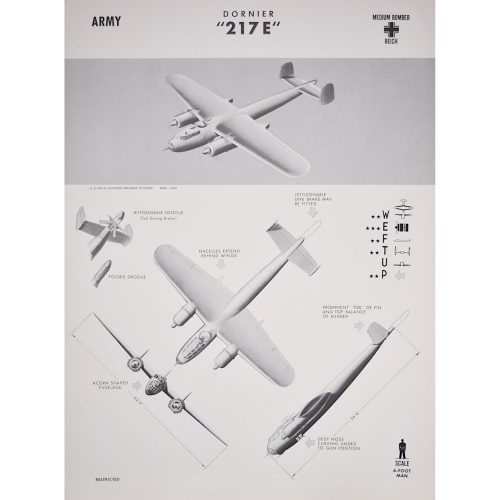
US Naval Aviation Training Division
Luftwaffe Dornier Do 217 Medium/Heavy Bomber
Aeroplane identification poster, 1943 63x47cm A particularly unusual style of aeroplane identification poster, owing to the very arty images. Most such posters rely on very plain silhouettes, this series - and we have several in this series (click here) - have a much more arty approach to the task with shading and an interesting angle view. A two-engined heavy bomber developed in German in the late 1930s for short-range bombing and as a more powerful development of the Do 17 - the flying pencil. It saw service until the end of the war in 1945. A versatile aircraft it was used as a night fighter, torpedo bomber, strategic bomber and reconnaissance aircraft. No complete example survives to this day despite a production of 1,925. If you are interested email info@manningfineart.co.uk or call us on 07929 749056. -
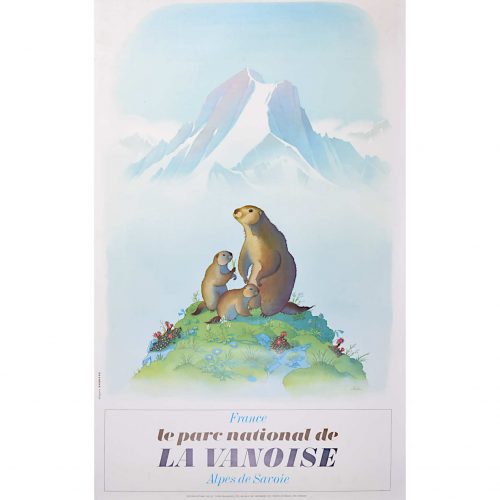
'Samivel' Paul Gayet-Tancrède (1907-1992)
Le Parc National de la Vanoise, Alpes de Savoie
Editions Mythra SA Chamonix Original Vintage Ski Poster 99x62cm Condition: Excellent, with four small glue marks to reverse not affecting image. With the ever-popular topic of skiing, Samivel here catches a Marmot atop a Vanoise hill, a mountain peak in the background. The Marmot, a squirrel-like rodent, is always a sign of the impending end of the ski season as it comes out with the warmer weather as spring approaches. Click here to see other posters by Samivel. Samivel was a writer, an artist, a photographer, an explorer and more. In 1948 he accompanied Paul Émile Victor on the first French Greenland expedition, making three documentary films in the process. His friends included Théodore Monod and Gilbert André - the latter the mayor of Bonneval-sur-Arc and one of the founders of the Vanoise National Park - and with them and others he spent his whole life aiming for the protection of the imperilled countryside. The graphic artist side of him had a life-long fascination with high mountains, and his illustrated books and series of posters of the French Alps have long been popular. If you are interested email info@manningfineart.co.uk or call us on 07929 749056. -
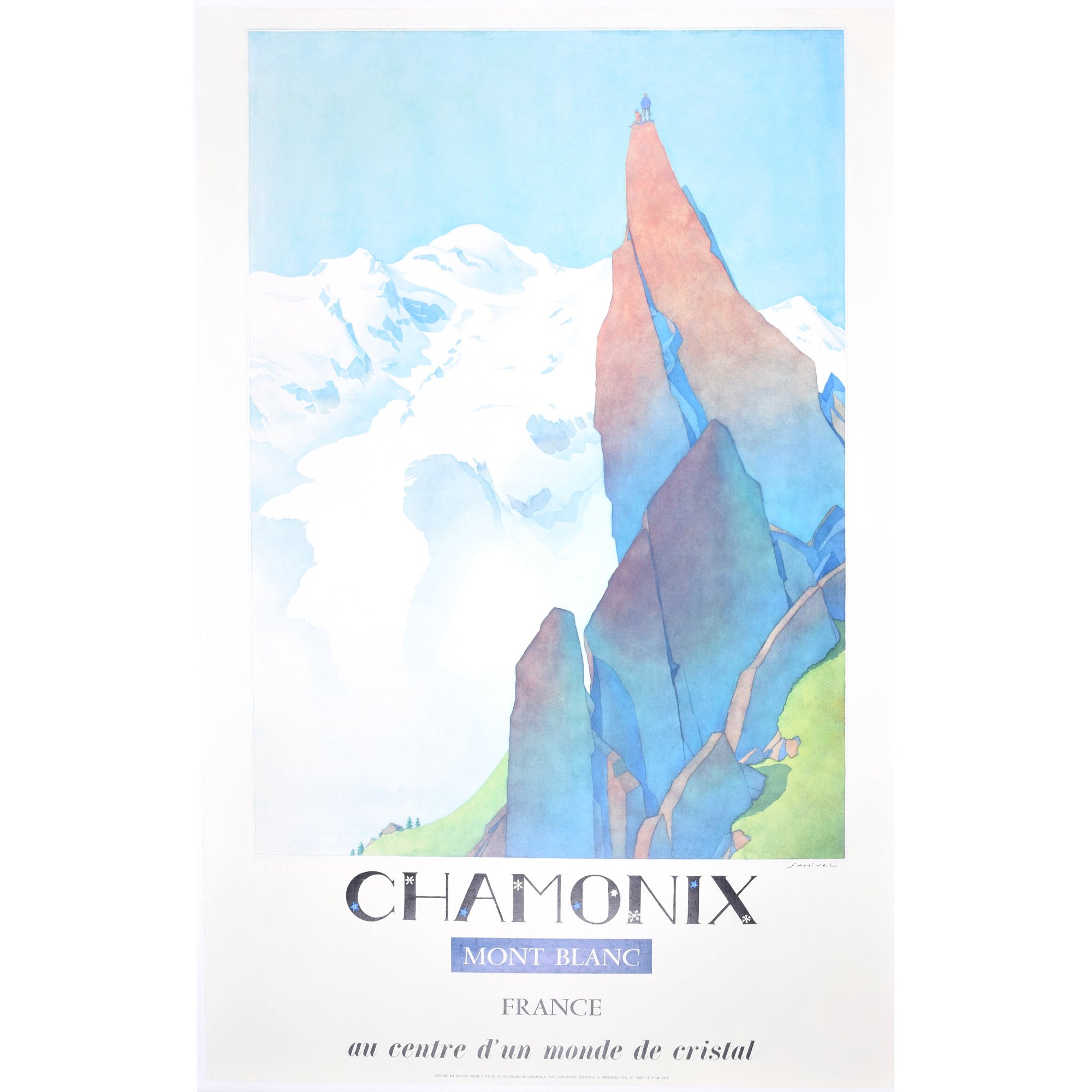
'Samivel' Paul Gayet-Tancrède (1907-1992)
Chamonix Mont Blanc, France - au centre d'un monde de cristal
Imprimé en France pour l'office du tourisme de Chamonix par l'imprimerie generale a Grenoble Original Vintage Ski Poster 99x62cm Condition: excellent With the ever-popular topic of mountains for climbing and skiing, Samivel here draws one of the Aiguille or Aiguillettes - needles - in Chamonix which are famous for climbers. Samivel was a writer, an artist, a photographer, an explorer and more. In 1948 he accompanied Paul Émile Victor on the first French Greenland expedition, making three documentary films in the process. His friends included Théodore Monod and Gilbert André - the latter the mayor of Bonneval-sur-Arc and one of the founders of the Vanoise National Park - and with them and others he spent his whole life aiming for the protection of the imperilled countryside. The graphic artist side of him had a life-long fascination with high mountains, and his illustrated books and series of posters of the French Alps have long been popular. Click here to see other posters by Samivel. If you are interested email info@manningfineart.co.uk or call us on 07929 749056. -
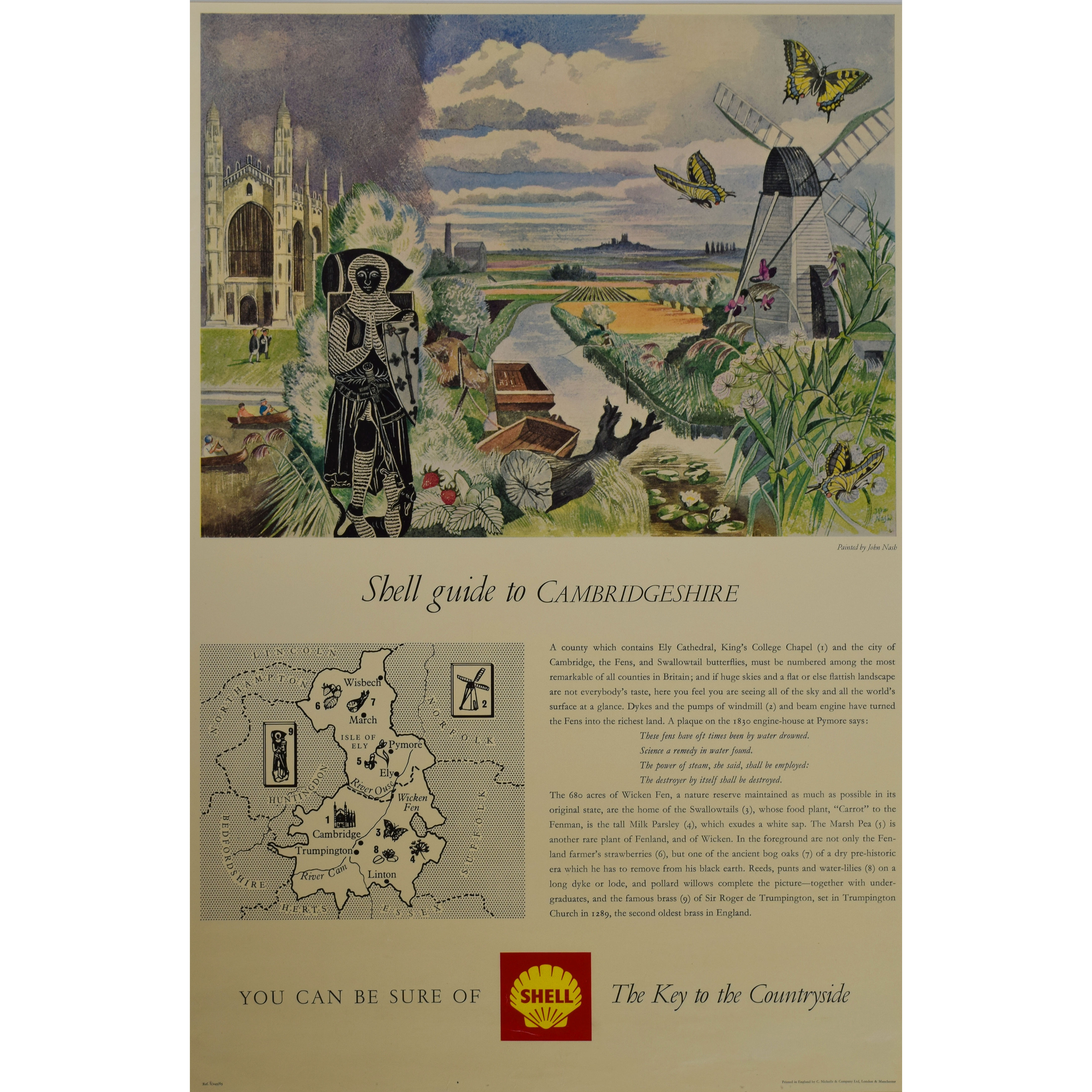
John Nash
Shell Guide to Cambridgeshire Original poster c. 1960s 76x51cm Shell commissioned a series of posters to go with their County Guide books, and they commissioned paintings by the leading artists of the day. Nash needs no introduction as an artist. A painter of landscapes and still-lives and illustrator - particularly of botanic works - who worked extensively with wood engravings, he was a natural choice for Shell. His most famous work is probably 'Over the Top' which hangs in the Imperial War Museum, relating to a counter-attack by 1st Battalion Artists' Rifles at Welsh Ridge on 30 December 1917. Of the eighty men who went over the top, sixty-eight were killed or wounded within the first few minutes. Nash escaped and painted the picture three months later. The Tate holds his 1918 painting 'The Cornfield' which was his first non-war painting (he only started painting in oils in 1914). Condition: mounted in conservation mount and wrapped in plastic sleeve (mount hides short edge tears). -
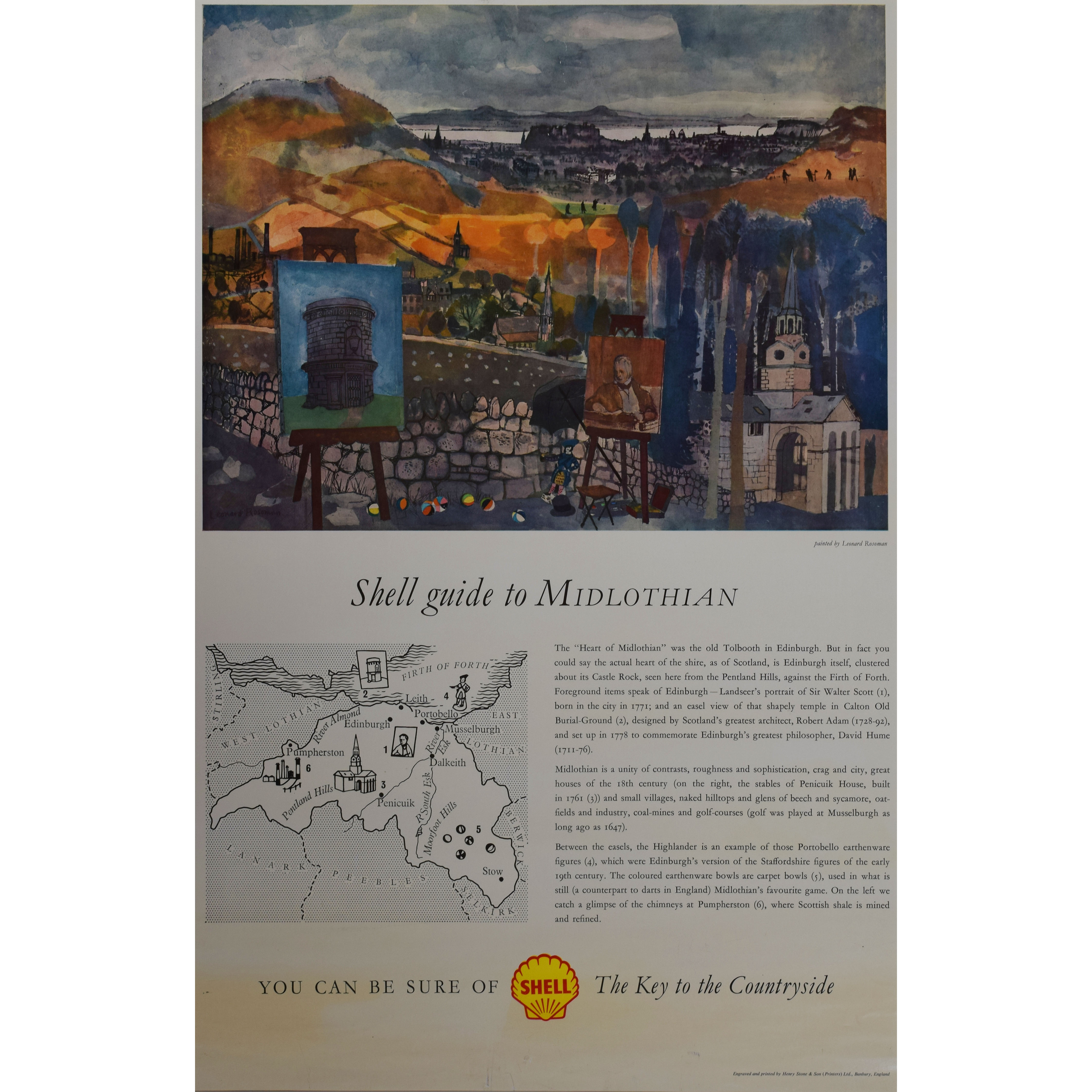
Leonard Rosoman
Shell Guide to Midlothian Original poster c. 1960s 76x51cm Shell commissioned a series of posters to go with their County Guide books, and they commissioned paintings by the leading artists of the day. Born in London, Rosoman studied at the Royal Academy Schools and then the Central School. His first major commission was to illustrate the popular children's book 'My Friend Mr Leakey' in 1937. Joining the Auxiliary Fire Service during World War II, he painted many scenes from the Blitz, some of which are in the Imperial War Museum collection. Seconded to the War Office in 1943 to illustrate books on fire-fighting the War Artists' Advisory Committee gave him a full-time post with the British Pacific Fleet, sailing with HMS Formidable the aircraft carrier. After the war he taught at Camberwell College of Art. He painted a mural for the Festival of Britain in 1951, murals for the British Pavilion at the 1958 Brussels International Exhibition, and for the restaurant at the Royal Academy's Burlington House - becoming RA in 1969. Condition: mounted in conservation mount and wrapped in plastic sleeve (mount hides short edge tears). -
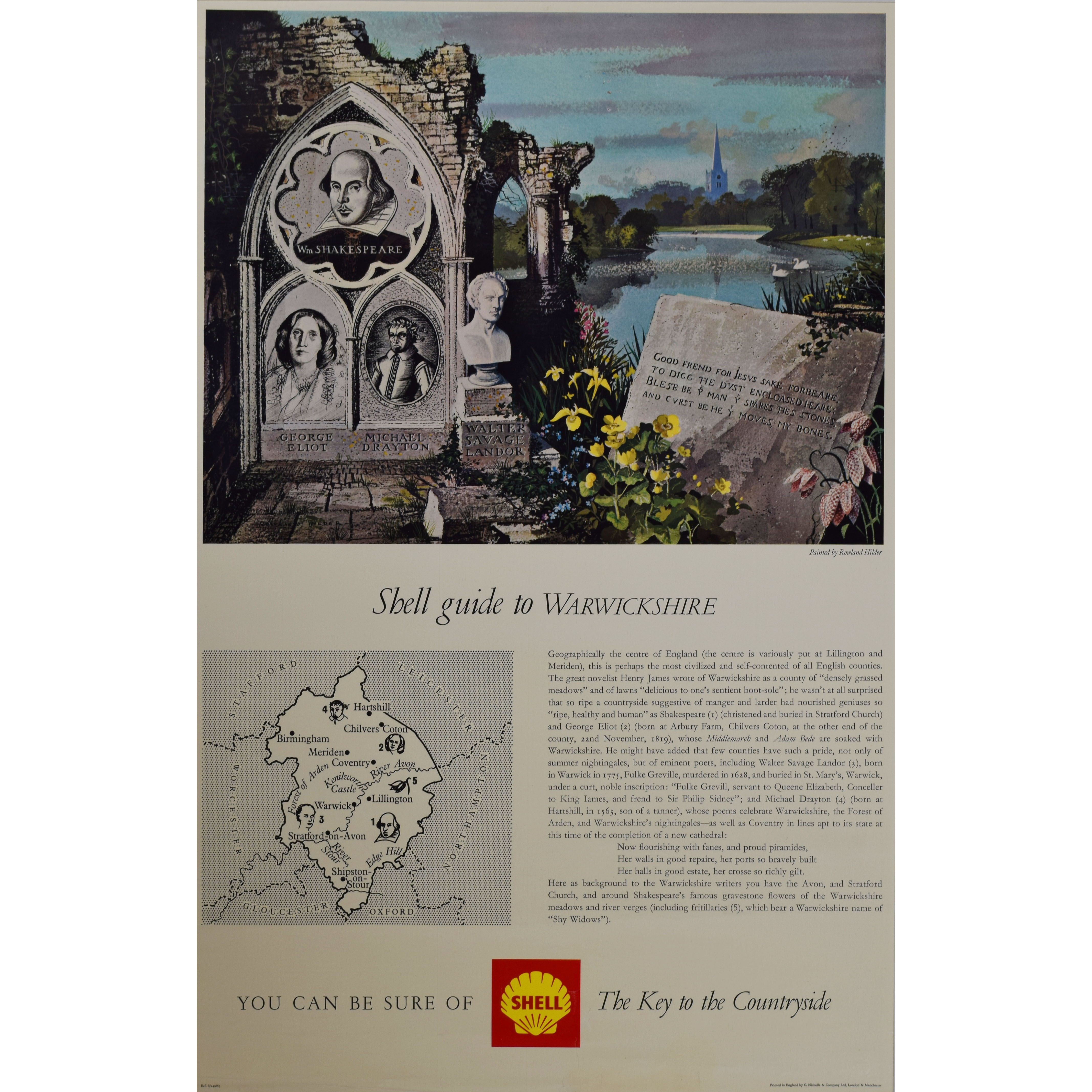
Rowland Hilder
Shell Guide to Warwickshire Original poster c. 1960s 76x51cm Shell commissioned a series of posters to go with their County Guide books, and they commissioned paintings by the leading artists of the day. Rowland Hilder was a well known landscape artist and book illustrator. Born in New York state, his English father moved the family to Kent, England in 1915. It was here his natural talent for drawing was noticed by his school. Later Hilder went to study at Goldsmith’s College in London. He was well known as an accomplished watercolorist, particularly in his sensitive handling of the sky and earth. Between 1964 and 1974 he was president of England’s Royal Institute of Painters in Watercolours. Condition: mounted in conservation mount and wrapped in plastic sleeve (mount hides short edge tears). -
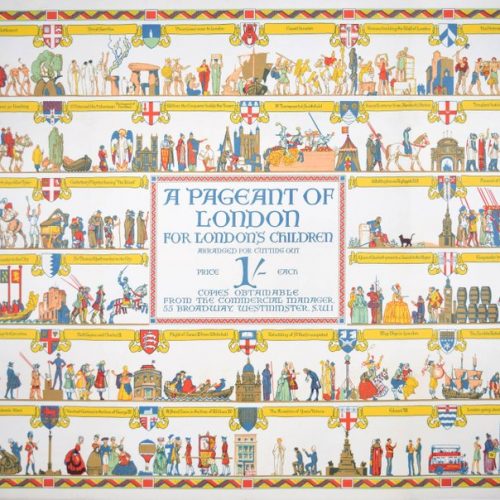
Elijah Albert Cox (1876–1955)
Pageant of London (1926)
Original London Transport Underground posterLithograph102 x 127 cmThis fantastic poster illustrates London-related events from British history, and advertises a cutting-out book designed for children.Cox was born in Islington and studied at Whitechapel People's Palace and then the London College of Printing. Having worked as an assistant to Frank Brangwyn, and as a designer for a manufacturing chemist, he became a mural and poster designer. Elected to the Royal Society of British Artists in 1915, commissions came from London Underground, the Empire Marketing Board and others. He also illustrated books - mostly historical and heroic adventures.If you are interested, please email info@manningfineart.co.uk or call us on 07929 749056.