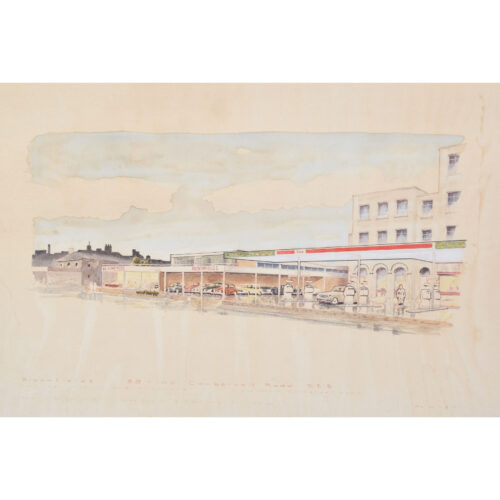
-
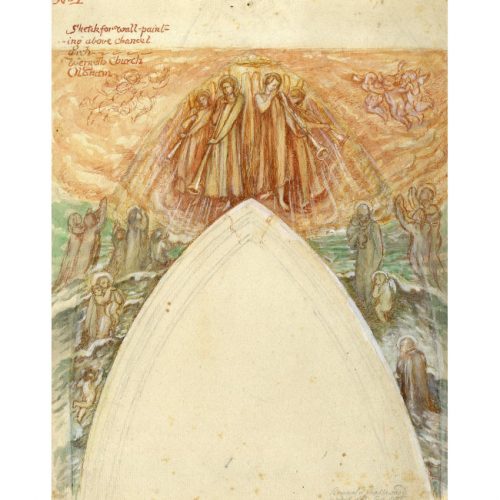
Reginald Hallward (1858-1948)
Design for wall painting at Werneth Church, Oldham
Watercolour with highlights 22 x 16 cm Click here for biographical details and other works by the artist. If you are interested email info@manningfineart.co.uk or call us on 07929 749056. -

M R A Hollis The Old Bluecoat School
Pencil drawing 56 x 77 cm Professor Malcolm A Hollis was a chartered surveyor, arbitrator and professor of Building Pathology. He produced this architectural sketch while studying at the Liverpool College of Building. The work is characterised by clean lines and a strong sense of architectural perspective. His appreciation of architecture and attention to detail particularly shine through, however, in his careful depiction of the plaster mouldings on the columns. The Bluecoat School is the oldest building in both central Liverpool and the city's UNESCO World Heritage Site. It was originally built in 1717 to house the Blue Coat School for Orphans. After almost 200 years, the school moved to a different premises in 1906 and in 1907 the Sandon Studios Society, a breakaway from University of Liverpool’s School of Applied Art, moved into the vacant building, establishing one of the first dedicated art centres in the world. It continues to serve this purpose today and celebrated its 300 year anniversary in 2017. -

M R A Hollis The Old Bluecoat School
Pencil drawing 56 x 77 cm Professor Malcolm A Hollis was a chartered surveyor, arbitrator and professor of Building Pathology. He produced this architectural sketch while studying at the Liverpool College of Building. The study depicts a frontal view of the Bluecoat School, showcasing its grand 18th-century architecture and is characterised by clean lines and a strong sense of architectural perspective. The Bluecoat School is the oldest building in both central Liverpool and the city's UNESCO World Heritage Site. It was originally built in 1717 to house the Blue Coat School for Orphans. After almost 200 years, the school moved to a different premises in 1906 and in 1907 the Sandon Studios Society, a breakaway from University of Liverpool’s School of Applied Art, moved into the vacant building, establishing one of the first dedicated art centres in the world. It continues to serve this purpose today and celebrated its 300 year anniversary in 2017. -

M R A Hollis Rufford Old Hall, Charles II Wing
Pencil drawing 56 x 77 cm Professor Malcolm A Hollis was a chartered surveyor, arbitrator and professor of Building Pathology. He produced this architectural sketch while studying at the Liverpool College of Building. The study depicts a view of the Charles II Wing at Rufford Old Hall. As is typical of Hollis' drawings, the sketch is characterised by extremely clean lines, attention to detail and a strong architectural perspective. Particular attention is paid to the grouting of the brick work and the building's crest, signalling that it was originally built in 1662. Rufford Old Hall is a historic Tudor manor house in Rufford, Lancashire, England. It was built in the 16th century and was the home of the Hesketh family for over 400 years. It is also notable as a stomping ground for the young William Shakespeare. It is now managed as a National Trust property and is a popular tourist attraction. -

M R A Hollis Rufford Old Hall, Door Details
Pencil drawing 56 x 77 cm Professor Malcolm A Hollis was a chartered surveyor, arbitrator and professor of Building Pathology. He produced this architectural sketch while studying at the Liverpool College of Building. The study depicts details of the door at Rufford Old Hall. Hollis' accuracy is impressive: the clean lines all seem to be perfectly spaced, the presumably metal detailing on the door symmetrical and aesthetically pleasing. His commendable precision make this a striking piece. Rufford Old Hall is a historic Tudor manor house in Rufford, Lancashire, England. It was built in the 16th century and was the home of the Hesketh family for over 400 years. It is also notable as a stomping ground for the young William Shakespeare. It is now managed as a National Trust property and is a popular tourist attraction. -
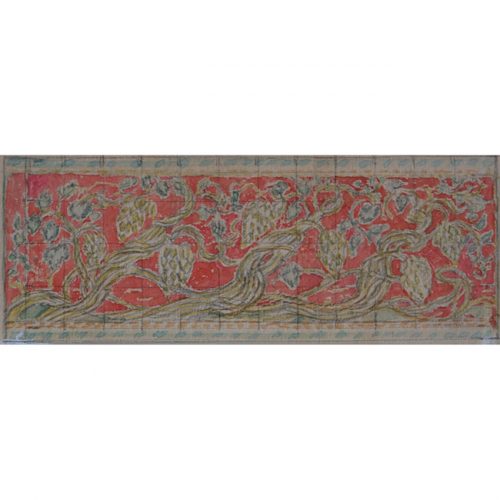
Reginald Hallward Grapevine Altar Cloth Design
Reginald Hallward Grapevine Altar Cloth Design Watercolour and pencil Click here for biographical details and other works by the artist. If you are interested email info@manningfineart.co.uk or call us on 07929 749056. -
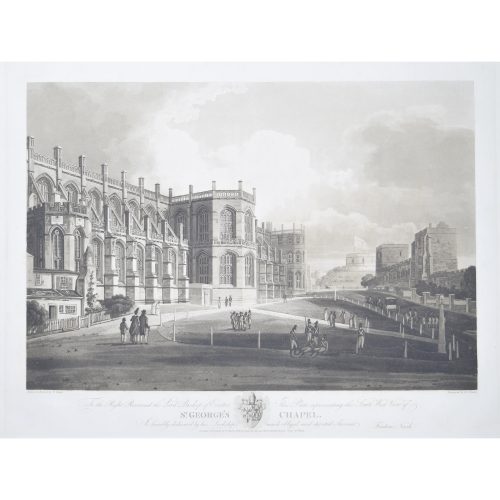
Frederick Nash (1782-1856) Drawn and etched
Engraved by F C LewisSouth West View of St George's Chapel, Windsor
To the Right Reverend the Lord Bishop of Exeter London Published by F Nash, No 6 Asylum Buildings, Westminster Road July 12 1804 39.5x52cm Frederick Nash was born in Lambeth. Initially studying architectural drawing under Thomas Malton he subsequently enrolled at the Royal Academy of Arts. From 1801 to 1809 he worked with the antiquarians John Britton and Edward Wedlake Brayley, subsequently becoming a member of the Society of Painters in Watercolours - a group of painters who had left the Royal Academy following complaints of under-recognition of their works. Latterly primarily a landscape painter he toured the rivers of Germany. -
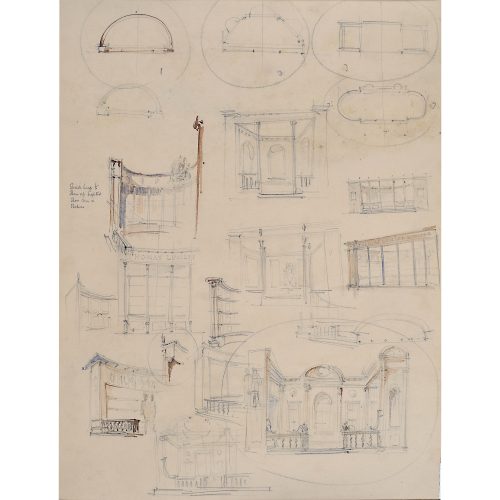
Louis Osman (1914-1996)
Thomas Lumley Architectural Design ii
45x55cm Pen and ink with wash and heightening in white Provenance: from the artist's estate Click for biographical details and other works by Osman. Lumley Castle was built in 1389 and today is a four star hotel that belongs to the Earl of Scarborough. Thomas Lumley was an eighteenth century soldier and statesman, and the third Earl of Scarborough. -
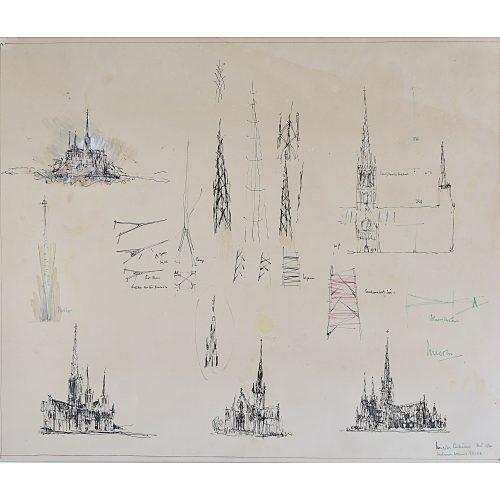
Louis Osman (1914-1996)
Lincoln Cathedral Architectural Design
45x55cm Pen and ink with wash and heightening in white Signed 'Louis Osman BA (Hons) FRIBA' and inscribed 'Lincoln Cathedral' lower right Dated Nov. 1960 Provenance: from the artist's estate Click for biographical details and other works by Osman. Osman worked on Lincoln Cathedral, amongst other cathedrals. If you are interested email info@manningfineart.co.uk or call us on 07929 749056. -
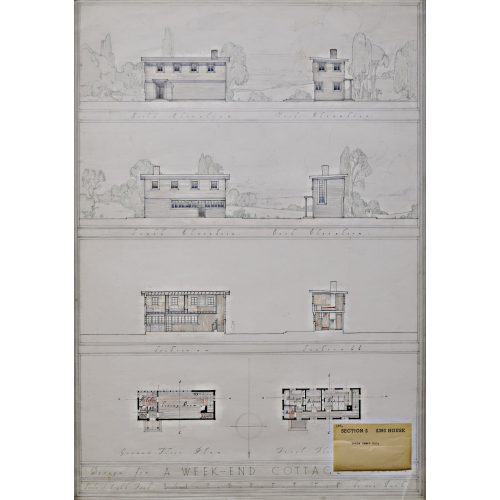
Louis Osman (1914-1996)
A £350 Modernist House Weekend Cottage - Architectural drawing
75x52cm Watercolour and pencil Inscribed Provenance: from the artist's estate Click for biographical details and other works by Osman. From Osman's time as an architectural student at the Bartlett School of Architecture. The examiner has graded the piece to the face. Osman was even more an artist than an architect, which shows with the quality of the shading and calligraphy. If you are interested email info@manningfineart.co.uk or call us on 07929 749056. -
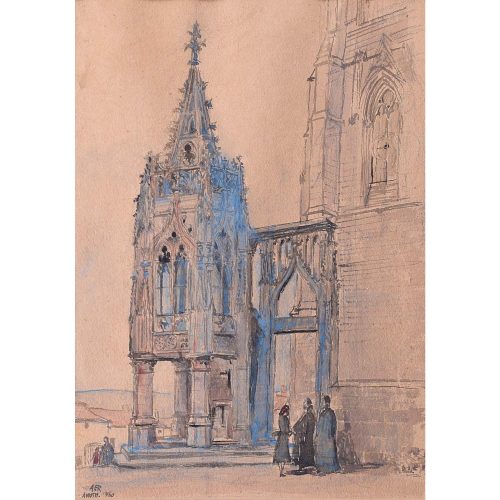
Prof Sir Albert Richardson PRA Avioth La Recevresse
1960 Watercolour 29.5x20cm Signed with initials and dated lower left Avioth is in the Meuse region of France, on the Belgian border. The city was founded in the twelfth century, when a villager miraculously found a wooden statue of the Virgin Mary in a thorn bush. A chapel built on the site soon became a place of pilgrimage and the church on the site - dedicated to Notre Dame - was created a Basilica by Pope John Paul II in 1983. Beside the Basilica stands the Recevresse, a piece of stone lacework. Its original function is unknown; it was more recently a place where pilgrims' offerings were received. It was registered as a historical monument in 1840 by the French authorities. Sir Albert Edward Richardson K.C.V.O., F.R.I.B.A, F.S.A., P.R.A. (1880-1964) was a traditionalist, renowned for his distaste of modern architecture. Rooted firmly in the classical period, he lived a Georgian life, refusing to have electricity in his Georgian house – until his wife finally insisted. Professor of Architecture at UCL’s Bartlett School of Architecture from 1929-1955, this was evacuated to Cambridge during the war and he became a fellow of St Catharine’s College. Amongst his other achievements, Richardson was President of the RA, editor of Architect’s Journal and founder of the Georgian Group. If you are interested email info@manningfineart.co.uk or call us on 07929 749056. Condition: Good. -

Louis Osman
Lumley Castle - sketch I
Pen, ink, pencil and coloured wash 63 x 48 cm Louis Osman (30 January 1914 – 11 April 1996) was an architect, artist, goldsmith, silversmith and medallist. Few people matched his creations as a goldsmith, and consequently he was chosen to make the crown for the Investiture of the Prince of Wales in 1968. Many of his other works are in public collections in the UK and worldwide. After Hele’s school in Exeter he studied at the Bartlett School of Architecture – part of University College London – from 1931. Also attending the Slade, he left the Bartlett being awarded the top first, which brings with it the Donaldson Medal of the RIBA. Following the war he was busy as an architect, works including for Westminster Abbey, and Lincoln, Exeterm, Ely and Lichfield Cathedrals. Staunton Harold Church in Ashby de la Zouch for the National Trust, and of course his own folly, the Grade I listed Elizabethan manor house, Canons Ashby in Northamptonshire – which was given to the National Trust in 1981 when Osman was not able to keep the tenancy any longer. These architectural sketches showcase Osman's ideas for the refit of Lumley Castle. Located in the North-East of England, Lumley Castle was originally built in 1389 and today is a four star hotel and wedding venue that belongs to the Earl of Scarborough. Thomas Lumley was an eighteenth century soldier and statesman, and the third Earl of Scarborough. Condition: Very good, slight toning to paper Provenance: From the artist's estate. Click here for other works by Louis Osman. -

Louis Osman
Lumley Castle - sketch II
Pen, ink, pencil and coloured wash 44 x 45 cm Louis Osman (30 January 1914 – 11 April 1996) was an architect, artist, goldsmith, silversmith and medallist. Few people matched his creations as a goldsmith, and consequently he was chosen to make the crown for the Investiture of the Prince of Wales in 1968. Many of his other works are in public collections in the UK and worldwide. After Hele’s school in Exeter he studied at the Bartlett School of Architecture – part of University College London – from 1931. Also attending the Slade, he left the Bartlett being awarded the top first, which brings with it the Donaldson Medal of the RIBA. Following the war he was busy as an architect, works including for Westminster Abbey, and Lincoln, Exeterm, Ely and Lichfield Cathedrals. Staunton Harold Church in Ashby de la Zouch for the National Trust, and of course his own folly, the Grade I listed Elizabethan manor house, Canons Ashby in Northamptonshire – which was given to the National Trust in 1981 when Osman was not able to keep the tenancy any longer. These architectural sketches showcase Osman's ideas for the refit of Lumley Castle. Located in the North-East of England, Lumley Castle was originally built in 1389 and today is a four star hotel and wedding venue that belongs to the Earl of Scarborough. Thomas Lumley was an eighteenth century soldier and statesman, and the third Earl of Scarborough. Condition: Full sheet 68 x 48; owing to staining at top, 44 x 45 cm; generally good Provenance: From the artist's estate. Click here for other works by Louis Osman. -

Louis Osman
Lumley Castle - sketch III
Pen, ink, pencil and coloured wash 62 x 48 cm Louis Osman (30 January 1914 – 11 April 1996) was an architect, artist, goldsmith, silversmith and medallist. Few people matched his creations as a goldsmith, and consequently he was chosen to make the crown for the Investiture of the Prince of Wales in 1968. Many of his other works are in public collections in the UK and worldwide. After Hele’s school in Exeter he studied at the Bartlett School of Architecture – part of University College London – from 1931. Also attending the Slade, he left the Bartlett being awarded the top first, which brings with it the Donaldson Medal of the RIBA. Following the war he was busy as an architect, works including for Westminster Abbey, and Lincoln, Exeterm, Ely and Lichfield Cathedrals. Staunton Harold Church in Ashby de la Zouch for the National Trust, and of course his own folly, the Grade I listed Elizabethan manor house, Canons Ashby in Northamptonshire – which was given to the National Trust in 1981 when Osman was not able to keep the tenancy any longer. These architectural sketches showcase Osman's ideas for the refit of Lumley Castle. Located in the North-East of England, Lumley Castle was originally built in 1389 and today is a four star hotel and wedding venue that belongs to the Earl of Scarborough. Thomas Lumley was an eighteenth century soldier and statesman, and the third Earl of Scarborough. Condition: Very good; on a rich dark-green paper which has not really shown up in the photographs, nor have the extensive pencil sketches Provenance: From the artist's estate. Click here for other works by Louis Osman. -

Louis Osman
Lumley Castle - sketch IV
Pen, ink, pencil and coloured wash 62 x 48 cm Louis Osman (30 January 1914 – 11 April 1996) was an architect, artist, goldsmith, silversmith and medallist. Few people matched his creations as a goldsmith, and consequently he was chosen to make the crown for the Investiture of the Prince of Wales in 1968. Many of his other works are in public collections in the UK and worldwide. After Hele’s school in Exeter he studied at the Bartlett School of Architecture – part of University College London – from 1931. Also attending the Slade, he left the Bartlett being awarded the top first, which brings with it the Donaldson Medal of the RIBA. Following the war he was busy as an architect, works including for Westminster Abbey, and Lincoln, Exeterm, Ely and Lichfield Cathedrals. Staunton Harold Church in Ashby de la Zouch for the National Trust, and of course his own folly, the Grade I listed Elizabethan manor house, Canons Ashby in Northamptonshire – which was given to the National Trust in 1981 when Osman was not able to keep the tenancy any longer. These architectural sketches showcase Osman's ideas for the refit of Lumley Castle. Located in the North-East of England, Lumley Castle was originally built in 1389 and today is a four star hotel and wedding venue that belongs to the Earl of Scarborough. Thomas Lumley was an eighteenth century soldier and statesman, and the third Earl of Scarborough. Condition: Very good; on a rich dark-green paper which has not really shown up in the photographs, nor have the extensive pencil sketches Provenance: From the artist's estate. Click here for other works by Louis Osman.