-
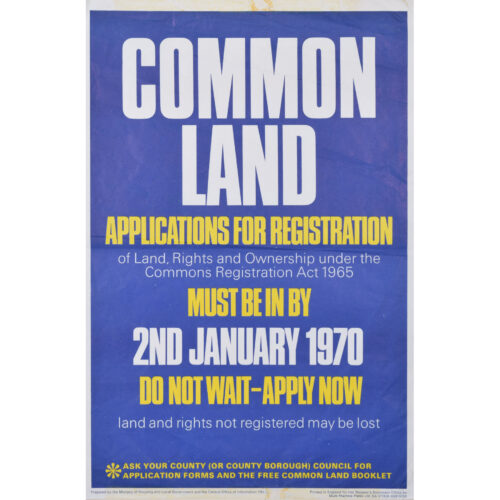
Common Land Applications for Registration (1969)
Lithograph 37 x 25 cm Prepared by the Ministry of Housing and Local Government and the Central Office of Information. Printed in England for Her Majesty's Stationery Office by Multi Machine Plates Ltd. "COMMON LAND: APPLICATIONS FOR REGISTRATION of Land, Rights and Ownership under the Commons Registration Act 1965 MUST BE IN BY 2ND JANUARY 1970. DO NOT WAIT - APPLY NOW - land and rights not registered may be lost." The Commons Registration Act 1965 (c. 64) is an act of Parliament in the United Kingdom enacted in 1965 that concerns the registration of rights to common land, town greens, and village greens in England and Wales. Condition: generally good; a few old creases and two small tape stains. If you are interested, please email info@manningfineart.co.uk or call us on 07929 749056. Click here for other original vintage posters. -
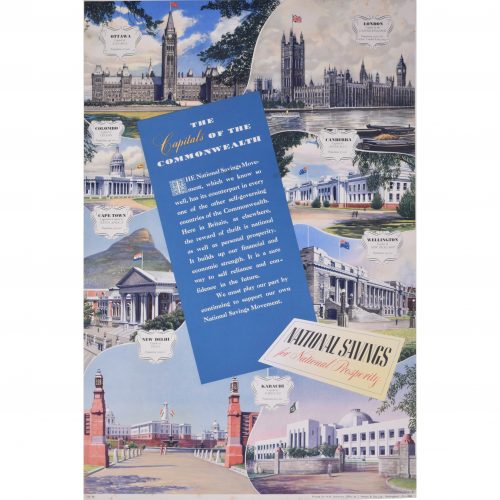
Commonwealth Capitals
Anonymous
Commonwealth Capitals Poster
Printed for HSMO by J.Howitt & Son c. 1950 Lithograph 76x50cm If you are interested email info@manningfineart.co.uk or call us on 07929 749056. -
Anon.
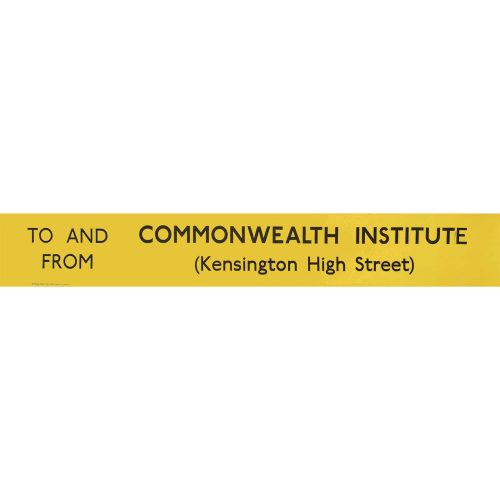
Commonwealth Institute Kensington High Street
Routemaster Slipboard Poster C.1970 Screenprint poster 64x9cm In a black hand-finished frame. Printed for London Transport for use on Routemaster or RT buses. If you are interested email info@manningfineart.co.uk or call us on 07929 749056. Condition: Excellent -

Cyril Kenneth Bird ‘Fougasse’ (1887 - 1965) Concerto da Camera
Ballpoint pen and ink 35 x 24 cm Sold with original catalogue and invoice. "Concerto da Camera. I suppose I'm hopelessly unmusical, but I still sometimes sigh for the days when one could sit peacefully in one's seat and listen to the music, instead of having to spend the entire performance swooping about all over the studio with the TV cameraman." The cartoon "Concerto da Camera" was published in Punch magazine on October 22, 1952. This piece humorously reflects on the experience of attending televised concerts, expressing a nostalgic preference for the days when one could sit peacefully and listen to music without the distractions of television production. It exemplifies Fougasse's signature style, characterised by minimalist line work and insightful commentary on contemporary life, providing a lighthearted yet poignant critique of societal changes. Fougasse was a British cartoonist. He was art editor of Punch between 1937 and 1949, and subsequently editor until 1953. He is best known for his ‘Careless Talk Costs Lives’ series of posters, and the other posters for the Ministry of Information and London Transport. As the Second World War progressed, the Ministry of Information’s poster campaign had become less and less effective. There were posters instructing the population to save old clothes for rags, turn off the lights, save food, dig for victory, watch out for spies, and keep calm and carry on. With this instruction overload, the population had ceased paying attention to the posters. Fougasse noticed this, and offered his services unpaid to the Ministry of Information, with a view to bringing a touch of humour to the posters. His amusing designs with pithy captions, reminiscent of newspaper cartoons, helped to get the Ministry's messages across in a novel way. -

British Airways Holidays
Concorde Vacations (1999)
Original Vintage Lithographic Poster 92 x 61 cm Original vintage travel poster, advertising Concorde Vacations by British Airways Holidays and featuring an image of an iconic Concorde plane flying through the night. This unique edition a stunning image of the supersonic passenger plane Concorde, set against a night-time backdrop and framed almost as if a rocket shooting through space. The aircraft was originally developed and manufactured jointly between the British Aircraft Corporation and the French airline company Sud-Aviation. The aircraft was capable of flying at a maximum speed over twice the speed of sound (taking less than 3.5 hours to fly the London to New York route but costing over 30 times more than a regular plane ticket). Although the venture ultimately ended in tragedy, with the fatal crash in July 2000, their speed and luxury distinguished the planes as an icon of modernity. -

Laurence Dunn (1910 - 2006) Container Ship
Pencil drawing 41 x 21 cm Laurence Dunn was a well-known British marine artist and writer known for his depictions of ships. He grew up in Devon, where he practised drawing passing ships, and went on to study at the Central School of Art. He then worked for shipbuilding firm John I. Thornycroft & Company Limited, where he contributed to the design of the Royal Yacht. During the Second World War, Dunn worked in naval intelligence. In the early 1960s, he created many line drawings of Atlantic ocean liners. Upon his death in 2006, the World Ship Society published the following obituary: DUNN, Laurence. [December 15 2006 — Lloyds List] Many readers will be saddened by the death of well-known marine artist and writer Laurence Dunn in his 97th year. A man of encyclopaedic knowledge, he began his lifelong love of ships in Brixham, where he meticulously recorded passing traffic with the exquisitely accurate line drawings which later became something of a trademark. While studying at London’s Central School of Art his work was noticed by the Southern Railway, which commissioned profiles of its fleet, and this in turn led to work for Orient Line, where he also designed the well-known corn-coloured hull, and later Thorneycroft, where he helped with shaping draft plans for a new royal yacht. During the second world was he worked for naval intelligence at the Admiralty, where his technique did much to improve recognition standards, and greatly expanded his shipping clientele, becoming personally known to many chairmen. As well as the shipping press he worked for mainstream publications such as Everybody’s, Sphere and the upmarket comic Eagle. Through his many contacts he enjoyed going to sea in a great variety of ships from aircraft carriers to colliers. Laurence wrote several books, starting with ship recognition titles which introduced new standards of layout, but his best known work was probably Passenger Liners, which was widely taken up by the travel trade. His love of Greece, where he was an early publicist of island cruising, let to involvement in reshaping various passenger liners beginning with Greek Line’s OLYMPIA. In later life he designed several sets of shipping stamps for the Crown Agents, produced photographic volumes on Thames and Mediterranean shipping and still found time to enjoy the passing Thames traffic. Our sympathies go to his wife Jennifer, who provided succour to the many ship lovers who beat a path to the welcoming door of their Gravesend home. -
Brownbridge (flourished 1930s - 1940s)
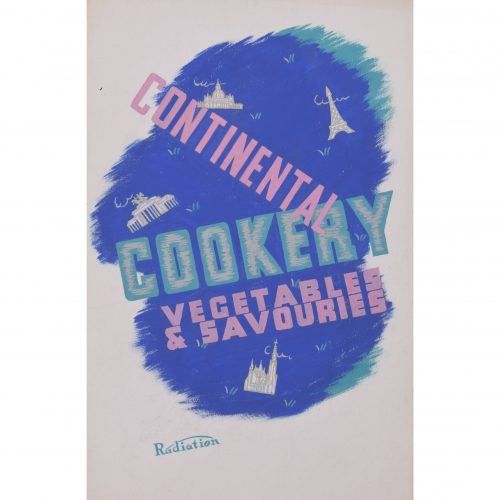
Continental Cookery Radiation cooker brochure design
Gouache 21.5 x 14 cm From a small archive of works by Brownbridge, a member of the Society of Industrial Artists. A beautiful original gouache design for a brochure of continental recipes, created to advertise Radiation cookers (innovative gas cookers which were sold in Britain in the 1920s and 1930s). Brownbridge's brightly-coloured design includes boldly slanted text in pink and turquoise, set over a deep blue background; he also highlights architectural gems of Europe, such as the Eiffel Tower. By cooking with a Radiation cooker, the cover suggests, you too can experience the cultural and culinary delights of Europe from the comfort of your own home. Society of Industrial Artists correspondance (photographed above) is not included; please enquire separately. Condition: generally very good. If you are interested, please email info@manningfineart.co.uk or call us on 07929 749056. Click here for other designs by Brownbridge. -

Rowland Hilder Convoy Your Country To Victory
Lithograph 75 x 51 cm This poster was a British propaganda piece issued during World War II by the National Savings Committee. It was part of the broader campaign to encourage citizens to invest in National Savings Certificates, War Bonds, and Defence Bonds to financially support the war effort. The poster features a convoy of merchant ships sailing under the Union Jack, emphasising the vital role of maritime trade and supply lines in the war effort. Its slogan, 'convoy your country to victory', also instills a strong sense of patriotism as it draws a direct link between the public's purchase of saving bonds and national war victory. Rowland Hilder was a well known landscape artist and book illustrator. Born in New York state, his English father moved the family to Kent, England in 1915. It was here his natural talent for drawing was noticed by his school. Later Hilder went to study at Goldsmith’s College in London. He was well known as an accomplished watercolourist, particularly in his sensitive handling of the sky and earth. Between 1964 and 1974 he was president of England’s Royal Institute of Painters in Watercolours. Condition: Generally very good, couple of short repaired edge tears. Generally very good, couple of short repaired edge tears. -
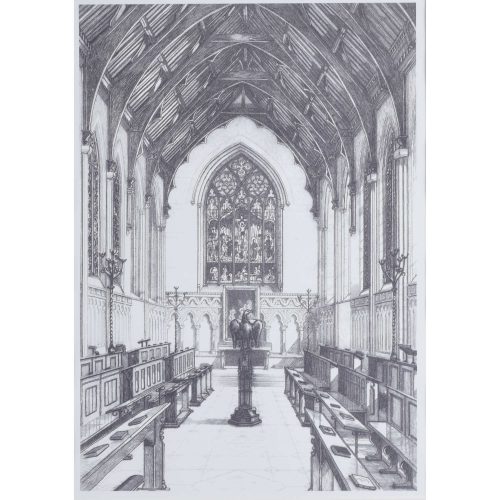
Tony Broderick (late 20th century) Chapel of Corpus Christi College, Cambridge
Print 37 x 25 cm A Lincoln-based artist known for his pictures of Lincoln and also of Cambridge's colleges. Condition: very good. If you’d like to know more, please email info@manningfineart.co.uk or call us on 07929 749056. Click here for other views of Corpus Christi. -

Pieter van der Aa (1659 - 1733), after David Loggan (1634 - 1692)
Corpus Christi College, Cambridge (1727)
Engraving 13 x 17 cm An eighteenth-century view of Corpus Christi College, Cambridge, engraved by Pieter van der Aa after David Loggan, the noted engraver, draughtsman, and painter. Pieter van der Aa of Leiden was a Dutch publisher best known for preparing maps and atlases, though he also printed editions of foreign bestsellers and illustrated volumes. He is noted for the many engravings he produced after David Loggan's series of Oxford and Cambridge colleges and costumes. In 1727 Van Der Aa illustrated "Les Delices de la Grande Bretagne & de L'Irelande" by James Beeverell, the book in which this engraving appears. Condition: very good. If you are interested, please email info@manningfineart.co.uk or call us on 07929 749056. Click here for other views of Corpus Christi College, Cambridge -
Hugh Casson (1910 - 1999)
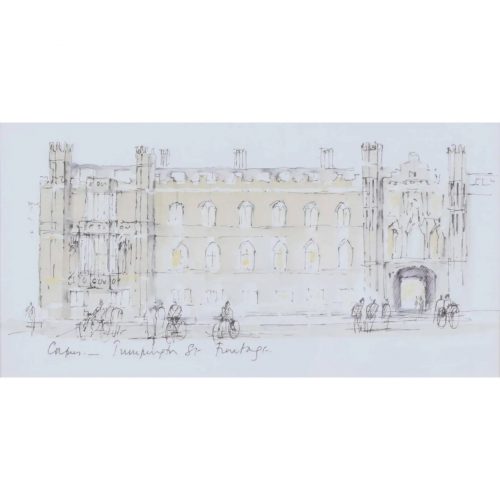
Corpus Christi College, Cambridge
Watercolour 11 x 21 cm A beautiful original water of Corpus. Casson juxtaposes the sparely painted figures of undergraduates and academics with the majesty of the pale stone used to build much of the college. This watercolour was used in Casson's book "Hugh Casson's Cambridge." Sir Hugh Casson was educated at Eastbourne College; St John’s College, Cambridge; and the Bartlett School of Architecture. Trained in the 1930s in the early modernist style, he taught at the Cambridge School of Architecture. After employment as a camoufleur during World War 2 by the Air Ministry, in 1948 he was appointed as director of architecture for the Festival of Britain. A close friend of the Royal Family, he undertook designs for the 1953 coronation, designed the interior of the Royal Yacht Britannia (“The overall idea was to give the impression of a country house at sea”), and taught the young Charles III to paint in watercolours. Amongst his architectural achievements are the Elephant House at London Zoo, the 1978 redevelopment of Bristol Docks, the Raised Faculty Building for The University of Cambridge, and a building for the Royal College of Art. He published a number of illustrated books, of which Casson’s Oxford and Casson’s Cambridge are probably the best known. A limited edition series of prints was produced from the paintings. Condition: very good. If you’d like to know more, please email info@manningfineart.co.uk or call us on 07929 749056. -
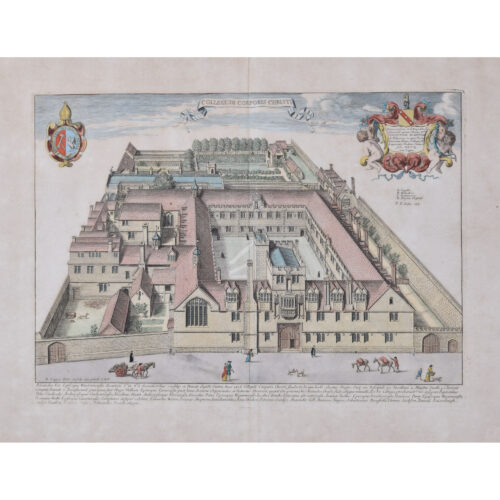
David Loggan (1634 - 1692)
Corpus Christi College, Oxford (1675)
Engraving 30 x 41 cm Loggan's view of Corpus from the 'Oxonia Illustrata', with later hand colouring. Loggan was born to English and Scottish parents, and was baptised in Danzig in 1634. After studying engraving in Danzig with Willem Hondius (1598-1652 or 1658), he moved to London in the late 1650s, going on to produce the engraved title-page for the folio 1662 Book of Common Prayer. He married in 1663 and moved to Nuffield in Oxfordshire in 1665. Loggan was appointed Public Sculptor to the nearby University of Oxford in the late 1660s, having been commissioned to produce bird’s-eye views of all the Oxford colleges. He lived in Holywell Street as he did this. The 'Oxonia Illustrata' was published in 1675, with the help of Robert White (1645-1704). Following its completion, Loggan began work on his equivalent work for Cambridge; the 'Cantabrigia Illustrata' was finally published in 1690, when he was made engraver to Cambridge University. The 'Oxonia Illustrata' also includes an engraving of Winchester College (Winchester and New College share William of Wykeham as their founder) whilst the 'Cantabrigia Illustrata' includes one of Eton College (which shares its founder, Henry VIII, with King’s College). Bird’s-eye views from this era required a particular talent as an architectural perspectivist; it was not until 1783 that it became possible for artists to ascend via hot air balloons and view the scenes they were depicting from above. Loggan thus had to rely on his imagination in conceiving the views. Loggan’s views constitute the first accurate depictions of the two Universities, in many ways unchanged today. Whilst the Oxford engravings were produced in reasonable numbers and ran to a second edition by Henry Overton (on thicker paper and with a plate number in Roman numerals in the bottom right-hand corner), those of Cambridge were printed in much smaller numbers. The Dutchman Pieter van der Aa published some miniature versions of the engravings for James Beverell’s guidebook to the UK, 'Les Delices de la Grande Bretagne' (circa 1708). The contemporary artist Andrew Ingamells (born 1956) has produced a highly-acclaimed series of etchings which bring Loggan’s original vision up to date. Condition: generally very good; a little discolouration to paper. Later hand colouring. If you are interested, please email info@manningfineart.co.uk or call us on 07929 749056. Click here for other views of Corpus Christi College, Cambridge. -
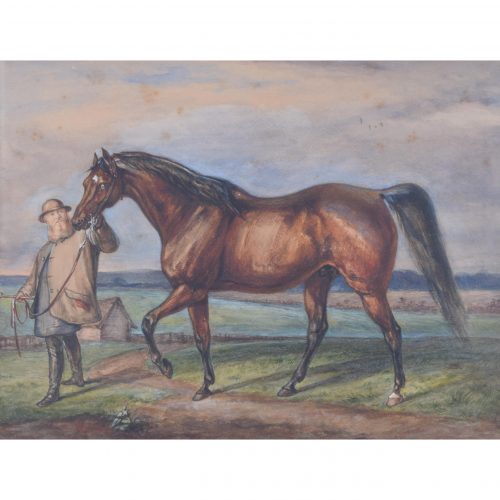
H. Fluiss
Cotherstone with stud groom "Wilson" (1862)
Watercolour 30 x 39 cm A late-nineteenth century watercolour depicting Cotherstone, the British Thoroughbred racehorse and sire. In a career that lasted from September 1841 to July 1843, he ran eleven times and won eight races. Provenance: Christie's South Kensington (2002). Condition: generally very good; couple of faint spots to sky. Frame in "country house" condition. If you are interested, please email info@manningfineart.co.uk or call us on 07929 749056. -

George Bissill (1896-1973)
Cottage View
Watercolour 20 x 28 cm Born in 1896, George Bissill was a British miner, painter and furniture designer. Raised in the mining village of Langley Mill, Derbyshire, Bissill became a miner at the age of 13, before leaving to join the war effort in 1915. Upon his return from the war after being gassed, Bissill chose to become a pavement artist outside the newly erected Bush House in Aldwych, painting from his memory and his sketch book the uncompromising underground world he had inhabited. In 1935 he moved to the countryside near Newbury, where he lived and worked as a landscape painter, art restorer and dealer until his death in 1973. This watercolour forms part of a larger collection, 'unseen since they were taken from George Bissil's studio in 1983' and restored by Kate Pattinson. A series of planned exhibitions were cancelled due to Covid, but two shows, one in Oxford and one in Ilkeston, did take place. Through such exhibitions, Pattinson hoped to 'restore the reputation of an artist who, through mighty endeavour, conquered the art world in the 1920s with his powerful, authentic and experimental pictures.' Bissill's paintings are also held in a number of important public collections, including the Tate Gallery, National Museum of Ireland and the Manchester Art Gallery. This watercolour depicts a quaint scene: a traditional thatched cottage with a small country road running by. The scene is dominated by greenery with grass, trees and a lovely English garden. In contrast to the the more flowing use of watercolour in the trees, Bissill uses strong lines, shading and careful detailing to create a sense of architectural perspective, allowing his idyllic cottage to stand out from its surroundings. Condition: generally very good, slight spotting to paper.If you would like to know more, please email info@manningfineart.co.uk or call us on 07929 749056.
-

George Bissill (1896-1973) Country lane with bird of prey
Pencil sketch 27 x 33 cm Born in 1896, George Bissill was a British miner, painter and furniture designer. Raised in the mining village of Langley Mill, Derbyshire, Bissill became a miner at the age of 13, before leaving to join the war effort in 1915. Upon his return from the war after being gassed, Bissill chose to become a pavement artist outside the newly erected Bush House in Aldwych, painting from his memory and his sketch book the uncompromising underground world he had inhabited. In 1935 he moved to the countryside near Newbury, where he lived and worked as a landscape painter, art restorer and dealer until his death in 1973. This painting forms part of a larger collection, 'unseen since they were taken from George Bissil's studio in 1983' and restored by Kate Pattinson. A series of planned exhibitions were cancelled due to Covid, but two shows, one in Oxford and one in Ilkeston, did take place. Through such exhibitions, Pattinson hoped to 'restore the reputation of an artist who, through mighty endeavour, conquered the art world in the 1920s with his powerful, authentic and experimental pictures.' Bissill's paintings are also held in a number of important public collections, including the Tate Gallery, National Museum of Ireland and the Manchester Art Gallery. This pencil sketch depicts a view down a country lane. Leafy trees line the path and nearby a bird of prey circles. Bissill captures the peaceful nature of this scene beautifully, where the typically sketched character of the trees suggests a sense of motion, a gentle breeze blowing through the leaves, while the bird of prey catches this breeze in the distance, watching out for movement in the grass down below. Condition: generally very good.If you would like to know more, please email info@manningfineart.co.uk or call us on 07929 749056.
-
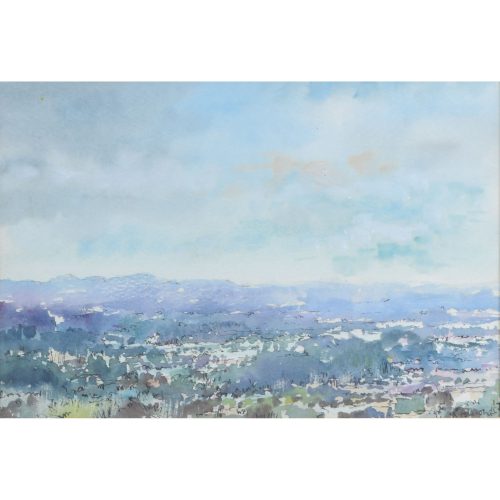
K Edmonds
Countryside Scene
Watercolour 24 x 35 cm Signed lower right. A blue- and green-hued landscape, where earth blends into sky. Condition: very good. If you are interested, please email info@manningfineart.co.uk or call us on 07929 749056. -

George Bissill (1896-1973) Countryside view
Watercolour & gouache 28 x 40 cm Born in 1896, George Bissill was a British miner, painter and furniture designer. Raised in the mining village of Langley Mill, Derbyshire, Bissill became a miner at the age of 13, before leaving to join the war effort in 1915. Upon his return from the war after being gassed, Bissill chose to become a pavement artist outside the newly erected Bush House in Aldwych, painting from his memory and his sketch book the uncompromising underground world he had inhabited. In 1935 he moved to the countryside near Newbury, where he lived and worked as a landscape painter, art restorer and dealer until his death in 1973. This watercolour forms part of a larger collection, 'unseen since they were taken from George Bissil's studio in 1983' and restored by Kate Pattinson. A series of planned exhibitions were cancelled due to Covid, but two shows, one in Oxford and one in Ilkeston, did take place. Through such exhibitions, Pattinson hoped to 'restore the reputation of an artist who, through mighty endeavour, conquered the art world in the 1920s with his powerful, authentic and experimental pictures.' Bissill's paintings are also held in a number of important public collections, including the Tate Gallery, National Museum of Ireland and the Manchester Art Gallery. This watercolour depicts a view over the English countryside. It is a striking piece in which Bissill pushes the limits of representation. His brash and impulsive use of gouache against the monochrome palette not only creates structuring highlights in this piece, allowing the viewer to more clearly discern the rural scene with the farmhouse in the background, it also conveys a sense of his gesture and speed of working. It offers, therefore, a unique and unfiltered insight into his creative processes. Condition: generally very good.If you would like to know more, please email info@manningfineart.co.uk or call us on 07929 749056.
-
 Samuel Alken Coursing Scene Lithograph with hand colouring 25 x 42 cm Samuel Alken Jr. (1784–1825) was a British artist and engraver, part of the prominent Alken family of painters and engravers, known for their sporting and hunting scenes. He was the son of Samuel Alken Sr. and contributed significantly to the family's artistic legacy. Like his father, Alken Jr. worked primarily in engraving and painting, specialising in aquatint and other printmaking techniques. Inkeeping with family tradition, Alken Jr. often depicted sporting subjects such as horse racing, hunting, and other outdoor pursuits in his engravings and paintings. As such, his works have been praised for their dynamic composition and attention to detail. This particular edition depicts greyhounds closing in on a hare. Unable to keep pace, the huntsmen follow behind on horses. Rolling hills and greenery form the background of this etching, where the hand colouring captures the gentle hues of this landscape. Condition: Generally good, mounted to board, even toning to paper
If you would like to know more, please email info@manningfineart.co.uk or call us on 07929 749056.
-
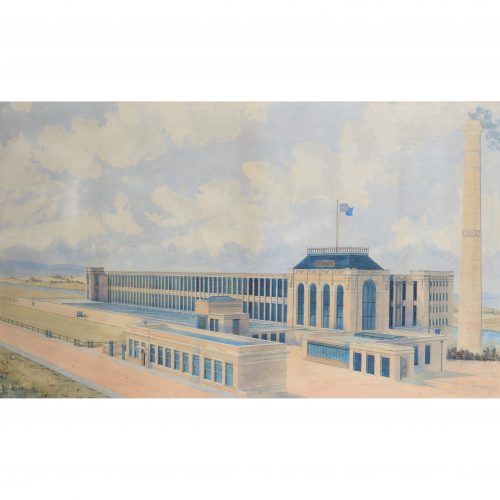
Crest Mill, Castleton, Rochdale, Lancashire (1906)
Watercolour 56 x 96 cm Crest Mill in Castleton, Rochdale, was built in 1906. It was designed by Sir Philip Sidney Stott, the English architect, civil engineer and surveyor. Crest Mill was demolished long ago. The mill engines were sent to the United States, but the ship carrying them sank in the Atlantic. Scott's mill chimneys all had two distinctive bands towards the top. Stott was born in Chadderton, Lancashire, and joined the family firm of architects upon leaving school. In 1883, he set up his own business, P. S. Stott, specialising in the design of cotton mills - he designed 22 mills in Oldham and 55 elsewhere in the county, plus many more in Europe, India and the Far East, amounting to 124 in total. He became a baronet in 1920, and was elected a Fellow of the Society of Architects and a member of the Royal Institute of British Architects. He was a significant figure in Lancashire mills, being responsible for 40% of the spindles laid down in Oldham between 1887 and 1914, and 44% of the increase in Lancashire's spinning capacity between 1887 and 1925. He retired a wealthy man having accumulated shares in the mills he designed. Condition: generally very good; some slight staining marks to mount, and possible faint time staining in areas. If you are interested, please email info@manningfineart.co.uk or call us on 07929 749056. Click here for more architectural perspectives. -

A. E. Halliwell (1905-1987) Defending the Wicket
Airbrush and pen 13 x 13 cm c.1930 Signed to the bottom right Provenance: Family of the artist A.E. Halliwell (1905–1986) was a British artist, illustrator, and designer best known for his vibrant poster designs created for British railway companies during the mid-20th century. Born in Southport, Halliwell developed a strong foundation in art and design early in life. He studied at the Southport School of Art from 1923 to 1926 before graduating to the Royal College of Art in London and subsequently practising as a professional designer from the 1930s. Following his studies, Halliwell married Doris Doyle in Strood Kent, and went on to have a significant teaching career himself, most notably as a lecturer at the Central School of Arts and Crafts (later part of Central Saint Martins), where he influenced a new generation of designers and illustrators. Halliwell is perhaps best remembered for his vibrant and engaging poster designs created for British railway companies during the 1930s. His work was characterised by a bright, graphic style that balanced charm with clarity, often depicting idealised scenes of British holiday destinations—from sunny seaside towns to tranquil countryside vistas. Beyond posters, his artistic output included book illustration, commercial design, and stage costume sketches, showcasing his versatility across mediums. His posters continue to remain enduring symbols of a golden age of British travel and design and are displayed in major collections including the London Transport Museum and the V&A. This striking poster design by A. E. Halliwell features a young man defending the wickets during a cricket match. Halliwell creates a strong sense of contrast in this design, using the airbrush technique to create a dense background of spots and to emphasise shadow, and then leaving the cricketer's whites plain by contrast. This creates an eye-catching effect, suggesting the brightness of the whites reflecting the sun on a warm summer's day. Condition: Generally very good.If you would like to know more, please email info@manningfineart.co.uk or call us on 07929 749056.
-

John Bluck (early 19th century) after Frederick Nash (1782 - 1856) Crypt of St Peter's Church, Oxford (1813)
Aquatint with original hand colouring 21 x 27 cm Published by Rudolph Ackermann (1764 - 1834). Frederick Nash was born in Lambeth. He studied architectural drawing under Thomas Malton and then enrolled at the Royal Academy of Arts. From 1801 to 1809 he worked with the antiquarians John Britton and Edward Wedlake Brayley, subsequently becoming a member of the Society of Painters in Watercolours - a group of painters who had left the Royal Academy following complaints of under-recognition of their works. Nash became primarily a landscape painter and toured the rivers of Germany. John Bluck was an aquatint engraver, mainly of topographical views, but also of marine and sporting subjects after his contemporaries. He produced plates for numerous publications. Rudolph Ackermann was an Anglo-German bookseller, inventor, lithographer, publisher and businessman. In 1795 he established a print-shop and drawing-school at 96 Strand. Here Ackermann set up a lithographic press and began a trade in prints. He later began to manufacture colours and thick carton paper for landscape and miniature painters. Within three years the premises had become too small and he moved to 101 Strand, in his own words "four doors nearer to Somerset House", the seat of the Royal Academy of Arts. Between 1797 and 1800 Ackermann rapidly developed his print and book publishing business, encompassing many different genres including topography, caricature, portraits, transparencies and decorative prints. Condition: Generally very good; trimmed close to platemark at bottom.If you would like to know more, please email info@manningfineart.co.uk or call us on 07929 749056.
-
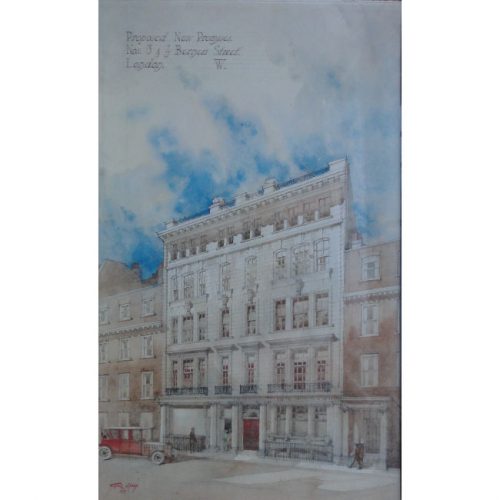
Cyril Farey (1888-1954)
Berners Street
Signed ‘Cyril A Farey’ and inscribed ‘Proposed New Premises Nos 3 & 4 Berners Street London W.’ Pencil and watercolour 39.5 x 23.5 cm Biographical details and other works by Cyril Farey can be found here. If you are interested email info@manningfineart.co.uk or call us on 07929 749056. -
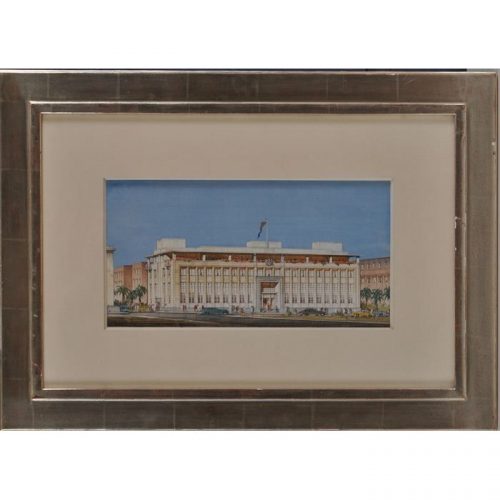
Cyril A. Farey (1888-1954)
National Bank of India, Aden
Watercolour 44x60cm (frame) 17.5×33.5cm (6.8×13.1 inches) Biographical details and other works by Cyril Farey can be found here. In 1839 Aden was taken by the East India Company as a recoaling point between India and the UK. Aden came under the control of the Government of Bombay. In 1937, recognising the geographical distinction between India and Aden it ceased to be a part of British India and became a Crown Colony with its own Governor. If you are interested email info@manningfineart.co.uk or call us on 07929 749056. -
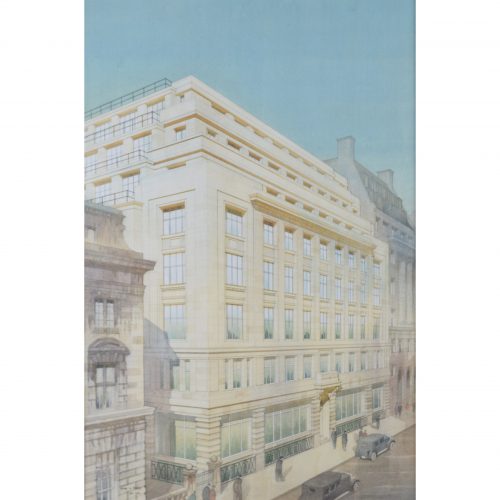
Cyril A. Farey
Design for an Art Deco office building, (1932)
Signed ‘Cyril A Farey Del 1932’ Pencil and watercolour 23 x 16 in A glorious and large drawing of an as-yet unidentified art deco building. This picture is classic Farey, with the reflections in the foreground and the bright blue sky. Biographical details and other works by Cyril Farey can be found here. If you are interested email info@manningfineart.co.uk or call us on 07929 749056. -
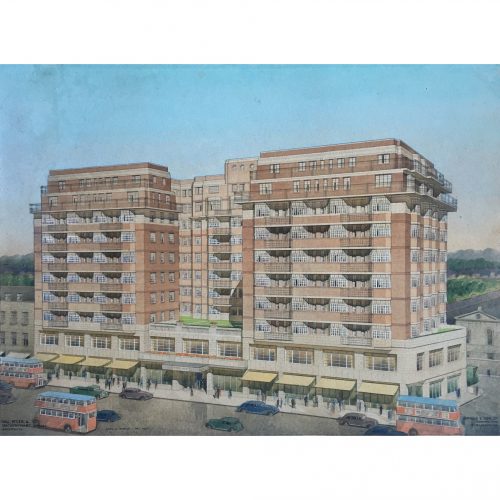
Cyril Farey (1888-1954)
Design for Princes Court Knightsbridge (1947)
Pencil and watercolour 56x76cm Inscribed (lower left) ‘Val Myer & Watson-Hart F.F.R.I.B.A. Architects’; (centre) ‘Cyril A Farey Del 1947’; and (right) ‘Griggs & Son, Ltd Contractors of Westminster’. Opposite Harrods, on Knightsbridge, this design for a fine block of apartments shows Farey at his most expressive. The Mediterranean blue sky is unmistakable, and the plethora of buses and cars assisting the many people to go about their daily activity. -
Out of stock
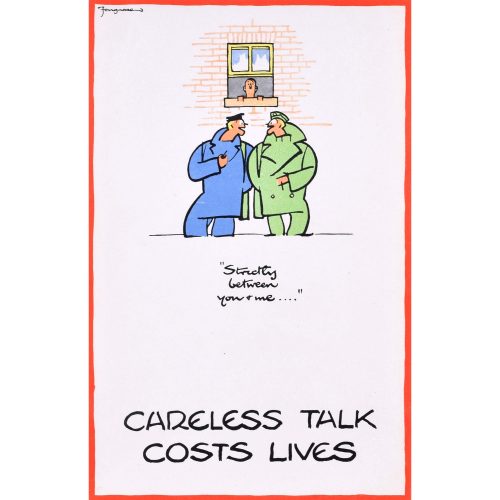
Cyril Kenneth Bird ‘Fougasse’ (British, 1887-1965) Careless Talk Costs Lives
Lithographic poster c.1940 32 x 20 cm (12.5 x 8 in) The cartoonist Fougasse, was a British cartoonist who was art editor of Punch 1937-1949, and subsequently editor until 1953. He is best known for his ‘Careless Talk Costs Lives’ series of posters, and the other posters both for the Ministry of Information, London Underground and others. The Ministry of Information’s wartime poster campaign was soon regarded as dull and uninspiring on account of its hectoring messages such as ‘Keep Calm and Carry On.’ There were posters telling the population how to conduct virtually every minute of their daily lives – for instance by saving old clothes for rags, turning off the lights, saving food, digging for victory, or watching out for spies. With this instruction overload the population ceased paying attention to the posters, so Fougasse offered his services to the Ministry of Information unpaid, with a view to bringing a touch of humour to serious messages. An amusing picture and a pithy caption helped to get the message across to the reader. His distinctive style, with the red border, was adopted by other Ministry artists. If you are interested email info@manningfineart.co.uk or call us on 07929 749056. Condition: Excellent. -
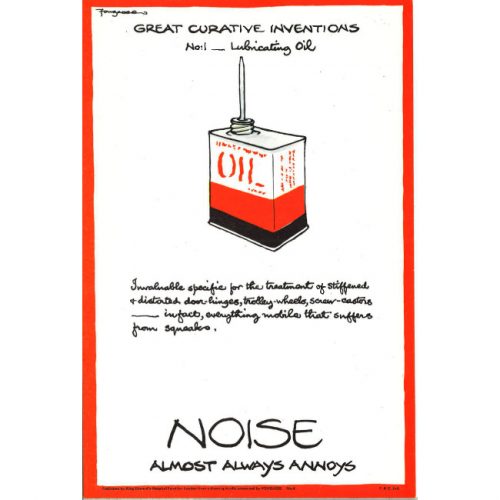
Cyril Kenneth Bird ‘Fougasse’ (British 1887-1965)
Noise Almost Always Annoys
Lithographic poster c1940 29.5 x 19.6 cm (11.5 x 7.5 in) printed by Fosh & Cross Ltd. “Published by King Edward’s Hospital Fund for London from a drawing kindly presented by Fougasse. No. 6. F&C Ltd.” Further biographical details and items by Fougasse are available here. If you are interested email info@manningfineart.co.uk or call us on 07929 749056. -
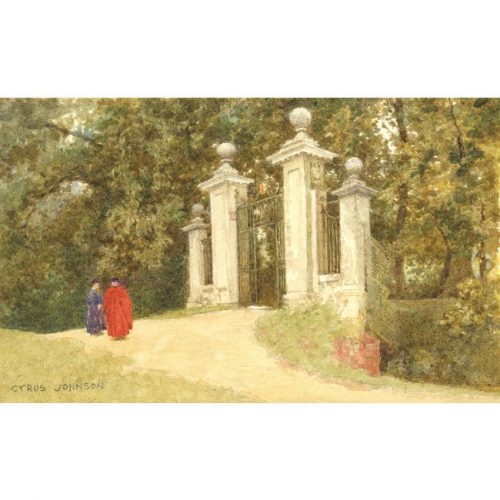
Cyrus Johnson (1848-1925)
Two Dons Engaged in Conversation by Clare College Back Gates, Cambridge
Watercolour 13x22cm If you are interested email info@manningfineart.co.uk or call us on 07929 749056. -
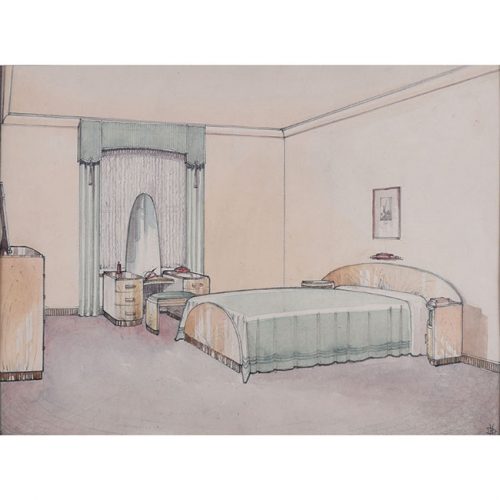
D L Hadden
Bedroom Interior
Pencil and watercolour 23x31.5cm For biographical details and other works by the artist click here. If you are interested email info@manningfineart.co.uk or call us on 07929 749056. -
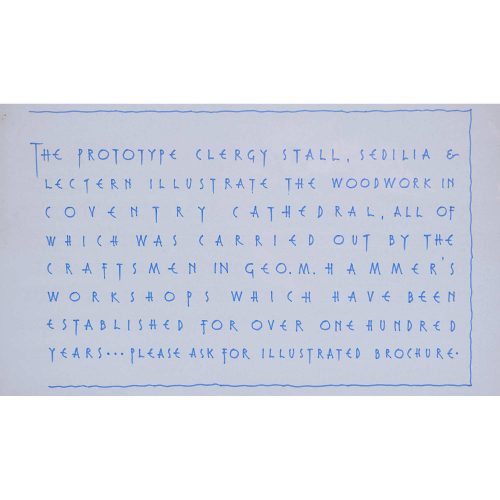
D L Hadden
Calligraphy for George M Hammer Coventry Cathedral Fittings
Pen and ink 20x35cm c. 1950 Hadden was a senior designer for Geo M Hammer, designers and retailers of school and ecclesiastical furniture. Their lift-top school desks are particularly well regarded, and always carried their brass name plate. Hammer were renowned for their interior woodwork, they were commissioned to undertake the choir stalls in Sir Basil Spence’s ground-breaking Coventry Cathedral. Dick Russell (brother of Gordon Russell and who worked for his brother before World War Two) famously designed the chairs to be used by the congregation; as all-wood stacking chairs they were innovative at the time. As senior designer, Hadden was at the heart of the Coventry project. Coventry's great place in the world of calligraphy comes from the Ralph Beyer typeface (or font) which surely has had an influence on Hadden's calligraphy here - see our matching card that refers to London Churches. For biographical details and other works by the artist click here. If you are interested email info@manningfineart.co.uk or call us on 07929 749056. -
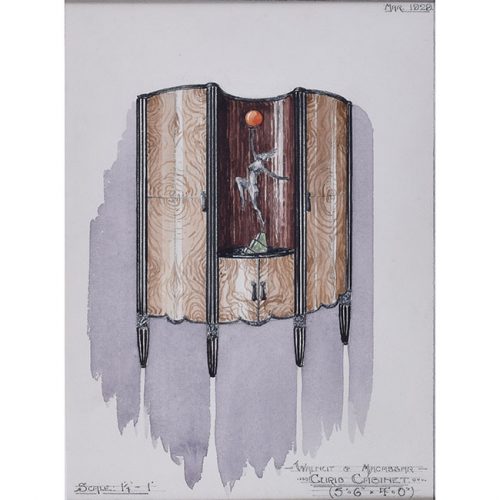
D L Hadden
Curio Cabinet Design (1929)
Pencil and watercolour 29.5x21.5cm For biographical details and other works by the artist click here. If you are interested email info@manningfineart.co.uk or call us on 07929 749056. -
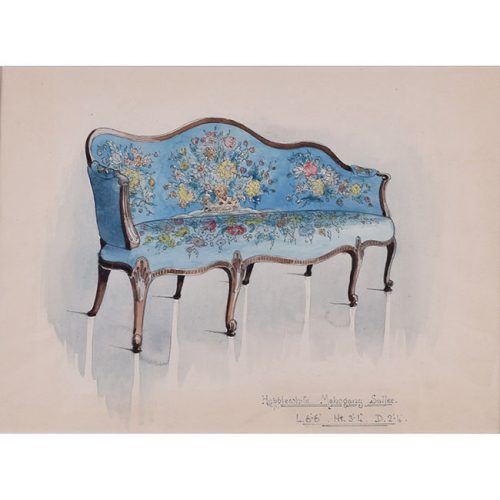
D L Hadden
Design for Hepplewhite Mahogany Settee
Watercolour and pencil 18x26cm For biographical details and other works by the artist click here. If you are interested email info@manningfineart.co.uk or call us on 07929 749056. -
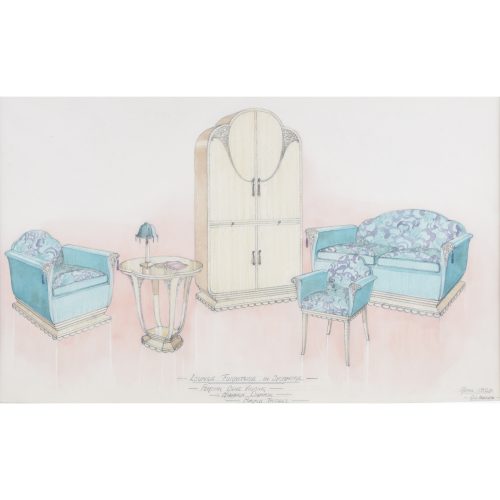
D L Hadden
Design for Lounge Furniture in Sycamore (1929)
Pencil and watercolour 29x49cm For biographical details and other works by the artist click here. If you are interested email info@manningfineart.co.uk or call us on 07929 749056. -
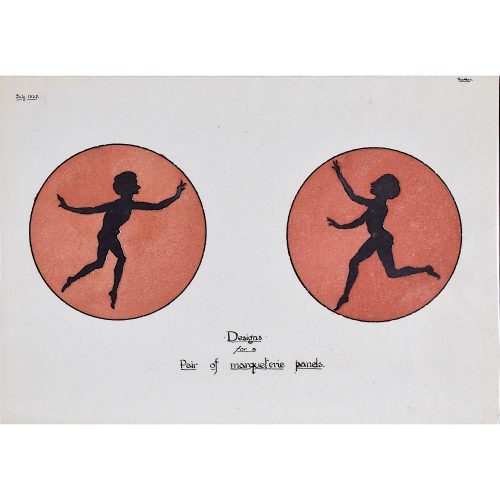
D L Hadden
Design for a Pair of Marquetrie Panels for Geo. M Hammer with two dancing figures
Watercolour and pen and ink 23x31.5cm For biographical details and other works by the artist click here. If you are interested email info@manningfineart.co.uk or call us on 07929 749056. -
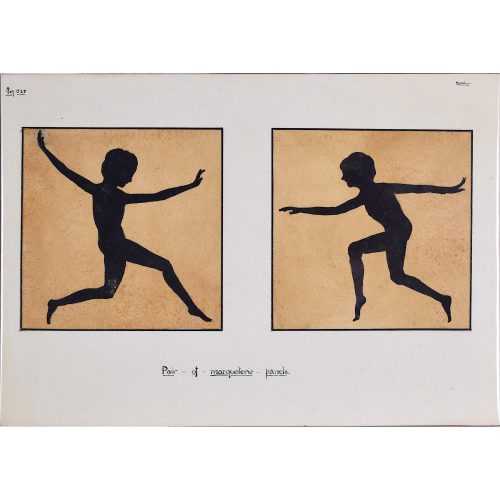
D L Hadden
Design for a Pair of Marquetrie Panels for Geo. M Hammer with two dancing figures
Watercolour and pen and ink 23x31.5cm For biographical details and other works by the artist click here. If you are interested email info@manningfineart.co.uk or call us on 07929 749056. -
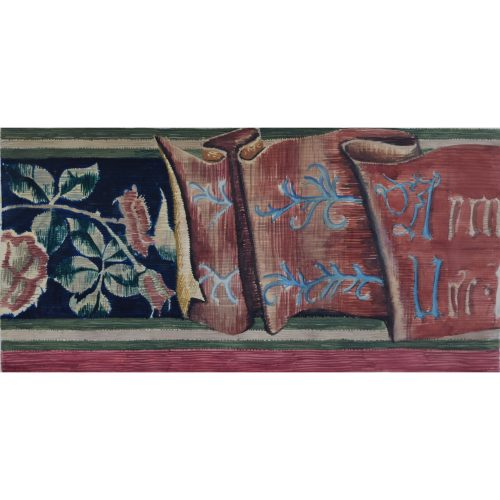
D. L. Hadden
Design for tapestry
Watercolour 25x50cm If you are interested email info@manningfineart.co.uk or call us on 07929 749056. -
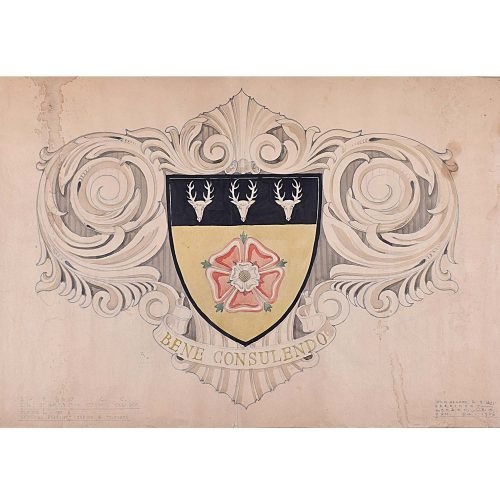
D.L Hadden
Design for Coat of Arms for Council Chambers
Watercolour and pencil 52x74.5cm Signed and dated 1959 A traditional coat of arms design for the city council chambers with directions by the artist that it is to be carved in lime and coloured as depicted. One of the many works Hadden produced during his time as senior designer at Geo M Hammer. For biographical details and other works by the artist click here. If you are interested email info@manningfineart.co.uk or call us on 07929 749056. Condition: Generally good, some water staining as visible in image. -
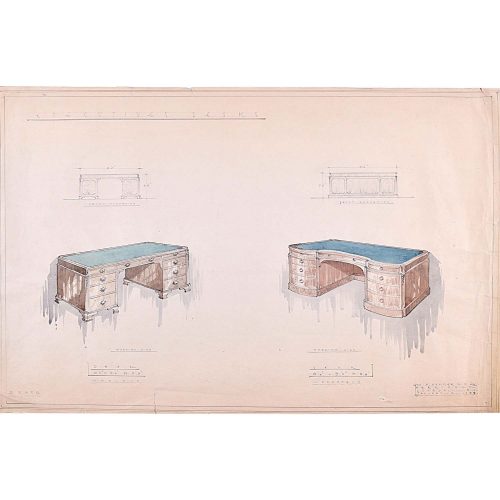
D.L Hadden
Design for Executive Desks Geo.M.Hammer
Watercolour and pencil 41x51cm Signed and dated 1959 Two beautifully detailed executive desks designs with sketches front elevations. Hadden's flair with woodwork design is evident in this masterful drawing. For biographical details and other works by the artist click here. If you are interested email info@manningfineart.co.uk or call us on 07929 749056. Condition: Generally good, some soft creases round the margins. -
Out of stock
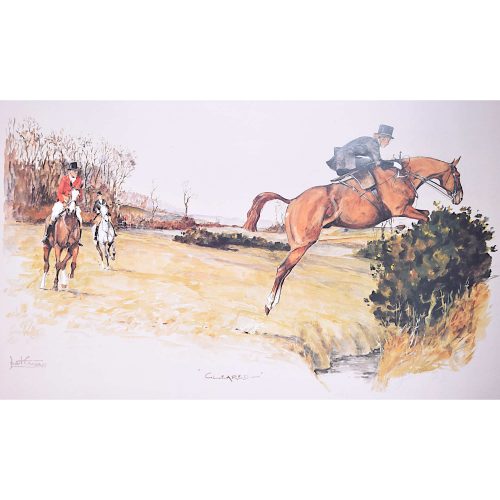
Daniel Crane (b. 1969) 'Cleared'
Limited edition print Signed in pencil and numbered 168/250 40x60cm One of the UK's leading sporting artists, Crane was born in Norfolk and is the youngest son of a hunting family. He grew up with a love of animals, the countryside and fieldsports, acquiring a particular passion for fox hunting in his late teens. He has been whipper-in, Master and Field Master and therefore understands the whole hunting process, allowing his paintings to reflect his knowledge and love of the sport. He is artist in residence for the Household Cavalry, and has many prestigious commissions to his name including Frankel - the greatest racehorse of all time - and Valegro the World and Olympic Champion. In this print, Crane captures the thrill and exhilaration that comes from clearing a hedge in fine style. If you are interested email info@manningfineart.co.uk or call us on 07929 749056. Condition: Never previously framed and in excellent condition. -
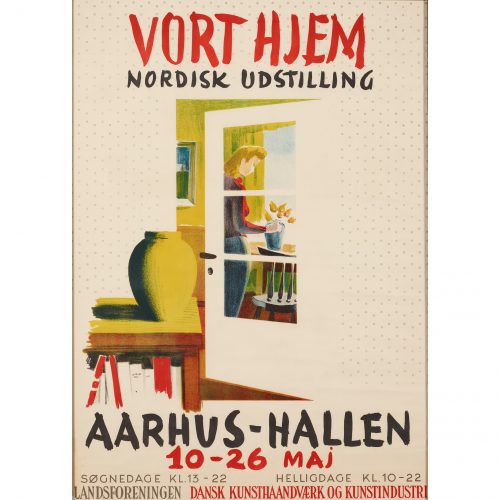
Danish Society of Arts and Crafts
'Vort Hjem', "Our Home" poster (c. 1950)
Lithographic poster 80.5 x 57 cm A poster advertising the 'Vort Hjem Nordisk Udstilling' - the "Our Home: Nordic Exhibition". The exhibition explored Nordic interior design and was commissioned by the Danish Society of Arts and Crafts. The poster presents a domestic scene of a woman arranging flowers; we see her through the glass panels of an ajar door, which invites us into the typically Danish interior. If you'd like to know more, please email info@manningfineart.co.uk or call us on 07929 749056. Condition: Excellent. -
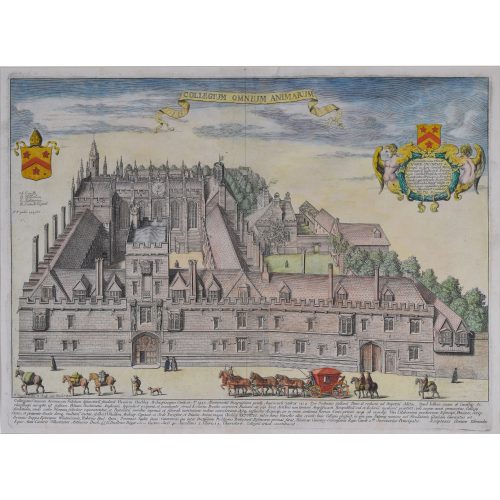
David Loggan (1634-1692)
All Souls College, Oxford
Engraving (1675) with later hand colouring 30x40cm If you are interested email info@manningfineart.co.uk or call us on 07929 749056. -
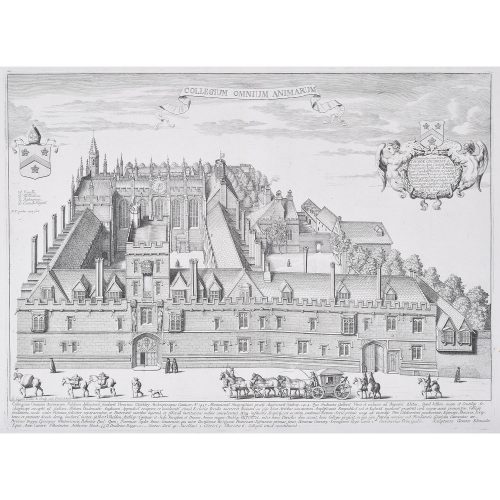
David Loggan (1634-1692) All Souls College, Oxford
Collegium Omnium Animarum Engraving (1675) 30x40cm If you are interested email info@manningfineart.co.uk or call us on 07929 749056. -
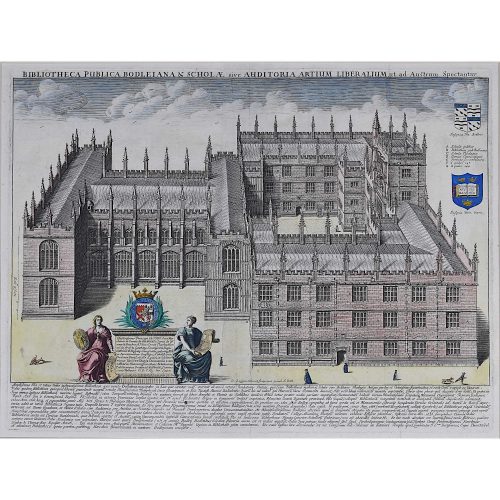
David Loggan (1634-1692) Bodleian Library Oxford - aerial view
Engraving (1675) with later hand colouring 30x40cm If you are interested email info@manningfineart.co.uk or call us on 07929 749056. -
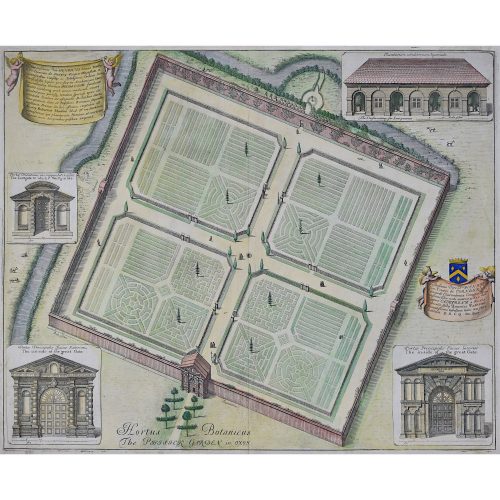
David Loggan (1634-1692) Botanic Gardens Oxford
Engraving (1675) with later hand colouring 30x40cm Loggan was born to English and Scottish parents, and was baptised in Danzig in 1634. After studying engraving in Danzig with Willem Hondius (1598-1652 or 1658), he moved to London in the late 1650s, going on to produce the engraved title-page for the folio 1662 Book of Common Prayer. He married in 1663 and moved to Nuffield in Oxfordshire in 1665. Loggan was appointed Public Sculptor to the nearby University of Oxford in the late 1660s, having been commissioned to produce bird’s-eye views of all the Oxford colleges. He lived in Holywell Street as he did this. The 'Oxonia Illustrata' was published in 1675, with the help of Robert White (1645-1704). Following its completion, Loggan began work on his equivalent work for Cambridge; the 'Cantabrigia Illustrata' was finally published in 1690, when he was made engraver to Cambridge University. The 'Oxonia Illustrata' also includes an engraving of Winchester College (Winchester and New College share William of Wykeham as their founder) whilst the 'Cantabrigia Illustrata' includes one of Eton College (which shares its founder, Henry VIII, with King’s College). Bird’s-eye views from this era required a particular talent as an architectural perspectivist; it was not until 1783 that it became possible for artists to ascend via hot air balloons and view the scenes they were depicting from above. Loggan thus had to rely on his imagination in conceiving the views. Loggan’s views constitute the first accurate depictions of the two Universities, in many ways unchanged today. Whilst the Oxford engravings were produced in reasonable numbers and ran to a second edition by Henry Overton (on thicker paper and with a plate number in Roman numerals in the bottom right-hand corner), those of Cambridge were printed in much smaller numbers. The Dutchman Pieter van der Aa published some miniature versions of the engravings for James Beverell’s guidebook to the UK, 'Les Delices de la Grande Bretagne' (c. 1708). The contemporary artist Andrew Ingamells (b.1956) has produced a highly-acclaimed series of etchings which bring Loggan’s original vision up to date. If you’d like to know more, please email info@manningfineart.co.uk or call us on 07929 749056. -
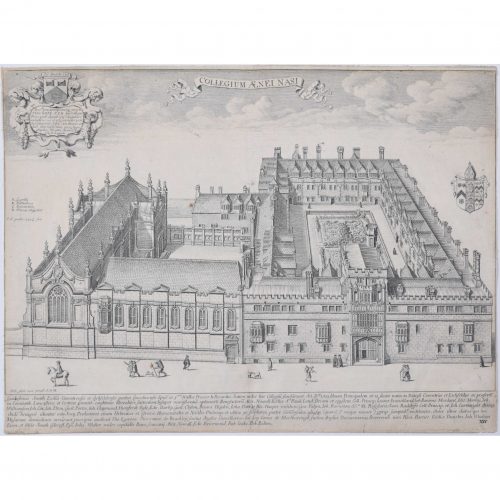
David Loggan (1634-1692)
Brasenose College Oxford
Engraving (1675) 30x40cm To view biographical details and other prints by Loggan click here. Trimmed to within platemark and backed to linen (very many years ago). Otherwise generally good condition. If you are interested email info@manningfineart.co.uk or call us on 07929 749056.